Category: A-B Page 13 of 23

Authors A-B

Pub Day Repost: Lessons From Lucy by Dave Barry: America’s Funniest Human Tries to Learn a Few New Tricks from an Old Dog

Lessons From LucyLessons From Lucy: The Simple Joys of an Old, Happy Dog

by Dave BarryeARC, 208 pg.
Simon & Schuster, 2018
Read: July 19, 2018

Before I say anything else, Barry has set up an Instagram page (well, probably not him, actually — he states in the book he doesn’t understand Instagram) for his dog, Lucy. You should absolutely check it out and then come back to read what I have to say about the book. Dog Pictures > my blog. Pretty near always.

With that out of the way . . . Dave Barry has been a dog person for most of his life, one of the many reasons I like him. I distinctly, and fondly, remember columns and/or references to Earnest and Zippy (the emergency backup dog) years ago. Those two make a brief appearance in this book, but they aren’t the focus. The focus (if you can’t tell from the title) is his dog, Lucy. At the time of writing, Barry and Lucy are the same age — 70 (or 7 times 10 in her case), which means that both of them have many fewer days ahead of them than behind — which sounds awfully morbid for Dave Barry to talk about, but he does so frequently and purposefully.

As they’re at similar stages in life, Barry notices a huge difference between the two — Lucy is far happier and seemingly better adjusted than he is. So he sets out to try to learn a few lessons about life from her, which he passes on to his readers. Things like Pay Attention to the People You Love; Don’t Let Your Happiness Depend on Things; and Don’t Stop Having Fun. None of these, Barry knows, are original or ground-breaking — they’re pretty much common sense. Yet, they’re the kind of common sense things that he (like many/most humans) doesn’t actually do a great job at.

The result is a mixture of a Self-Help book and a Humor book — humor about himself, his life, as well as dogs. Sometimes the swing between the two genres can be jarring, but that’s pretty rare. For the most part, he moves easily between the two, taking the readers along with him on this ride. I can’t tell you how many times I went from grinning, chuckling or laughing out loud to getting misty-eyed within a couple of pages. It seems that Barry has learned a little bit about writing over the decades.

I’ve loved Barry’s humor longer than either of us would probably care to admit. One of his strengths is finding a way to take an old joke, or at least a joke everyone’s made before — like, say, I dunno, dogs sniffing each other’s hind-quarters — and make it feel fresh and new. More importantly, funny. He’s also able to make jumps from premise to punchline that no one expects. There is, for example, a Hugh Hefner joke where one doesn’t even come close to belonging — and it works perfectly. Even knowing that, you won’t see it coming until you’re snickering at it.

As for the heart-felt material? It works pretty well, too. I don’t think anyone will walk away from this book thinking “Wow! That was insightful. I never would have thought of it on my own!” Nor do I think Barry was trying for it. But, readers will appreciate the reminders to live like Lucy (or their own dog), and the way Barry phrases things might add some freshness to the concept. Which is all anyone can really ask.

I really don’t know if this is Barry’s best — but it’s up there. The ratio of Attempted Joke to Funny Joke is pretty high, I’m not sure if I can think of a higher one in his ouvre. Lessons From Lucy is, without a doubt, his most mature, thoughtful and touching work (that’s a pretty low bar, I realize — a bar he’s worked hard to keep low, too). Couple that with me being a sucker for a Dog Book — even if it is a semi-Self Help book — and I can’t help but give it 5 Stars. This is a winner, no matter what.

—–

5 Stars

Disclaimer: I received this eARC from Simon & Schuster via NetGalley in exchange for this post — which is my honest opinion and pleasure to give — thanks to both for this.

A Few Thoughts on Changes (Audiobook) by Jim Butcher, James Marsters

Changes (Audiobook)Changes

by Jim Butcher, James Marsters (Narrator)
Series: The Dresden Files, #12

Unabridged Audiobook, 15 hrs., 28 mins.
Penguin Audio, 2010
Read: October 4 – October 10, 2018

Spoilers to follow. This isn’t one of my typical posts, so my typical rules don’t apply.

After starting a few months back, I’ve pretty much stopped posting about listening to the Dresden Files audiobooks — there are only so many ways to say, “I’d forgotten how much I like this story” and “Wow! James Marsters did a fantastic job!” Not only does it get dull to read, it gets pretty dull to write. (okay, there is a challenge on finding a new way to say it, but . . . I’m too lazy to find that enticing).

But I listened to Changes this week and how can I not talk about that?This is one of my favorite novels ever — Top 10, Deserted Island Must-Have kind of thing — highs, lows (and things lower than lows), laughs, tears, anger, shock, joy. Changes has it all (at least for those who’ve been with Harry for a few books — preferably 11).

Listening to the book was a great way for me to experience it again — if for no other reason, I couldn’t race through it and accidentally skim over things in my haste to get to X or Y plot point.

It’s silly as I’ve read everything that comes after this a couple of times, but seeing all the compromises and deals Harry made as his life is dismantled piece by piece really hit me hard. Yet, Harry makes his choices freely and for the best reason imaginable. All for Maggie. The ramifications of his choices and agreements are wide, huge and so-far we don’t know all of them — and Harry’d do it all again, and there’s not a fan in the world that would blame him.

And Marsters? He gets better and better with every book — and this was fantastic. I loved where Mouse got to “talk” — it was the next best thing to reading it for the first time. And, when he got to those lines? You know the ones I’m talking about:

And I . . .I used the knife.

I saved a child.

I won a war.

God forgive me.

I had to hit pause for a couple of minutes before I could keep going.

Sometimes as a book blogger, you get wrapped up in numbers, ratings, book tours, promotion, and all the other stuff — but every now and then it’s great to remember what it is about fiction that gets you into it in the first place. This treat by Butcher and Marsters did just that for me — I was entertained, I was moved, I was a little inspired.

—–

5 Stars5 Stars

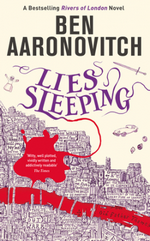
Lies Sleeping by Ben Aaronovitch: Things get Intense in the Ongoing Conflict between The Faceless Man and The Folly.

Lies SleepingLies Sleeping

by Ben Aaronovitch
Series: The Rivers of London, #7

eARC, 304 pg.
Daw Books, 2018
Read: October 3 – 5, 2018

I’ve got to say, I’d much rather be talking about this book in detail with someone else who had read the series than talking about it in spoiler-free form, so much of what I feel strongest about with this book cannot be discussed. Aaronovitch has outdone himself this time — it’s the best book of the series thus far, and that’s no mean feat.

It’s easy — far too easy — when thinking about this series to think of the lighter aspects — the humor, the heart, Peter’s growing pains, the snark, the pop culture references, and whatnot. That’s typically where my mind goes, anyway. But time after time, when picking up the latest novel, or even rereading one, I’m struck by how carefully written, how detailed everything is, how layered the text is — and I feel bad for underestimating Aaronovitch. Not that I have anything against breezy, jokey prose — but there are differences. Nor am I saying these books are drudgery — at all — the stories are fun, the voice is strong, and the narration will make you grin (at the very least, probably laugh a few times, too). In Lies Sleeping part of that care, part of the thoroughness of this novel is how there is a tie — character, event, call-back, allusion — to every novel, novella, comic arc involved in the Rivers of London up to this point — if you haven’t read everything, it won’t detract from your understanding of the novel — but if you have read them all, if you catch the references — it makes it just that much richer.

So what is this novel about? Well, after years of chasing The Faceless Man (and The Faceless Man II), Peter Grant (now a Detective Constable) and Nightengale have his identity, have several leads to follow to track him down — or at least his supporters and accessories (willingly or not). Better yet — the Metropolitan Police Force have given them the manpower they need to truly track him down and interfere with his funding and activities.

During this operation, Peter, Guleed and Nightengale become convinced that Martin Chorley (and, of course, former PC Lesley May) are preparing for something major. They’re not sure what it is, but the kind of magic involved suggests that the results would be calamitous. How do you prepare for that? How do you counter the unexpected, but dangerous? There are two paths you follow: thorough, careful, borderline-tedious policework; and bold, creative, innovative thinking. The two of those employed together lead to some great results — and if Peter Grant isn’t the embodiment of both, he’s . . . okay, he’s not perfect at the former, but he can pretend frequently (and has colleagues who can pick up the slack).

Not only do we get time with all our old friends and foes — we meet some new characters — including a River unlike anyone that Father or Mama Thames as yet introduced to. Mr. Punch is more involved in this story than he has been since Midnight Riot, but in a way we haven’t seen before. Most of the character things I want to talk about fit under the “spoiler” category, so I’ll just say that I enjoyed and/or loved the character development and growth demonstrated in every returning character.

There’s more action/combat kind of scenes in this book than we’re used to. I couldn’t be happier — Peter’s grown enough in his abilities and control to not need Nightengale to bail him out of everything. Nightengale and Peter working together in a fast-paced battle scene is something I’ve been waiting to read for 7 years. It was worth the wait.

As I said before, Lies Sleeping is the best and most ambitious of the series — the richness of the writing, the audacity of the action, the widening scope of the novel, the Phineas and Ferb reference, the epic battle scenes, the growth in Peter, Bev, and Guleed (and maybe even Lesley), the ending rivals Broken Homes‘ — all add up to a fantastic read. Yeah, I’m a fanboy when it comes to this series, and Lies Sleeping made me a happy fanboy. I have no idea how Aaronovitch moves on from this point with these books, but I cannot wait to find out.

—–

5 Stars
Disclaimer: I received this eARC from Berkley Publishing Group via NetGalley in exchange for this post — thanks to both for this.

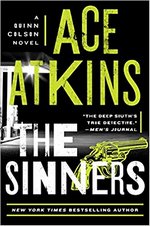
The Sinners by Ace Atkins: Atkins’ take on the Dukes of Hazzard(??) is another stellar installment in the Quinn Colson series.

The SinnersThe Sinners

by Ace Atkins
Series: Quinn Colson, #8


Hardcover, 365 pg.
G.P. Putnam’s Sons, 2018

Read: September 4 -5, 2018

They sat there in silence for a bit, enjoying the warm breeze, the empty, quite sounds of the hot wind through the trees. He and Boom could be together for a long while without saying a damn word, same as it had been hunting and fishing when they were kids. They didn’t feel the need to fill that silence with: bunch of empty-headed talk.

“This place is a lot different from when you got back,” Boom said.

“People in town said for me to burn the house down,” Quinn said.

“Took us two days just to clear out your uncle’s trash,“ Boom said. “Nothing good in here but some old records and guns.”

“And a suede coat and a bottle of Fine bourbon from Johnny Stagg.”

Boom nodded, silent again for a while. Quinn drank his beer watching Hondo, now just a flitting dark speck among the cows as he worked them a little, letting them know who was in charge. Nearly ten years Quinn’d been back and he wasn’t sure he’d made a damn bit of difference.

On the one hand, it’s easy to argue that with Quinn — even just one of the seven preceding novels would tell you that. But, it’s easy to see where he’d get to thinking that way — Tibbehah County is a very much poster child for The More Things Change, The More They Stay The Same Club. The Sinners is full of nice little moments like this — quiet, reflective moments with Quinn and Boom, Quinn and Lilly, Quinn and Maggie. While it’d be easy (and understandable) to focus on the storylines featuring the Pritchards or Boom Kimbrough — the heart of this novel is in these moments. You want to know what Quinn Colson, or this series is about? Focus on these conversations, the quiet in the midst of the storms.

But that doesn’t mean we should ignore the storms.

The first story (not in the book, but here) focuses on Boom Kimbrough, Quinn’s oldest friend. Unwelcome at his old job keeping the Sheriff Department’s vehicles running (among other things), thanks to the county supervisor we met in last year’s The Fallen, Boom’s moved on to doing some interstate trucking. Convinced (wrongly?) that a black man with one arm isn’t going to be hired by anyone else, he’s stuck with one particular company. And once he becomes suspicious about the cargo he’s sometimes carrying, he’s ready to quit — but despondent and frustrated about what he’ll do as an alternative. His boss doesn’t want him to leave — and uses a couple of tough looking employees to convey that to Boom (Boom’s not the only one they’ll threaten — Fannie Hathcock is also a target). Clearly, they don’t know enough about Boom, and before you know it, Quinn is informed about it all. Which brings in FBI agent, Nat Wilkins (more about her in a second). Things get hairy from there. This is the secondary story — and gets that kind of space — but it’s really the more interesting of the two major plots, mostly because it’s what forces Fannie and the Dixie Mafia toughs to get involved in the other story.

The major plotline involves the anti-Bo and Luke Duke. Tyler and Cody Pritchard are a couple of good ol’ boys concerned with racing their stock car, women, and growing/selling the best weed in The South. Things are going fine for them, by and large: they race, they grow and sell, which funds the racing, enabling them to attract women. Sure, they’ve double-crossed Fannie a bit, but that’s really nothing major. Until their Uncle Heath gets out of prison after doing 25 for his part in laying the groundwork of their marijuana growing. Heath, too, is an anti-Duke. He got caught, for one, and he’s not in the habit of keeping his nephews out of trouble, in fact, he makes things worse for them and spurs them into bigger and worse crimes than they’d been accustomed to.

Now, long-time readers will have done the math here — Heath did 25 years, Quinn’s been around for almost 10, having taken over for . . . that’s right, his Uncle, Hamp Beckett. Hamp and Heath apparently were quite the cat and mouse for a while (Hamp perhaps being spurred on by his “Boss Hogg,” Johnny Stagg — I swear I’m done with the Dukes now) until he finally got the goods on Heath and sent him away. That story kicks off this book and is a great way to open. To say that Heath has got a chip on his shoulder toward Hamp and his nephew would be understating things a wee bit.

So we’ve got Heath dragging his nephews into bigger and badder felonies, making them targets for the Dixie Mafia, who are having troubles with things at Fannie’s, and one of their transportation venues is being scrutinized thanks to Boom. Oh, yeah, and Quinn and Maggie are a couple of weeks away from tying the knot and Quinn’s mother is becoming a pest about the ceremony and reception. It’s set to be a good time in Tibbehah.

This is told with Atkins’ typical skill, eye for detail, good timing and atmosphere. It’s hard to find something new to comment on. One thing I really appreciated was how clever he had Quinn act when it came to putting the pieces together. We’re all accustomed (especially in film or television) for the police to be close to figuring things out, but needing a vital piece of information from an unconscious, unavailable, or non-communicative witness until the last second. By the time the unconscious witness woke up and started providing the clues and identities needed to put anyone away for their crimes, Quinn had already sussed it out and was in the middle of making the necessary moves. One more Hazzard reference, I lied, get over it — Quinn is very much the anti-Sheriff Rosco P. Coltrane.

I spent so much time feeling bad for Tyler and Cody — they aren’t characters I’d typically like. There’s little to commend them — they’re not that bright, not that talented, not that nice, I can’t imagine why any woman would want to spend time with them (not that we have proof that any do), and seem destined to lead quiet little lives of no consequence. But once their uncle forces them into things, I just wanted them to find a way back to their petty little pot farm.

I spent more than a little time worried for Fannie, too. She’s as despicable as they come, too, but as characters go, I like having her around. The way she’s treated by her superiors shows how tentative her situation is — and Quinn could be facing someone worse than her or Stagg pretty soon.

Speaking of worries — I spent most of the novel very concerned about the health, well-being and longevity of a character that’s been around since The Ranger. I don’t think for a second that Atkins feels the need to keep any one of these characters alive. Frankly, it’s be easy to make the Quinn Colson novels the Tibbehah County Chronicles or the Lilly Virgil novels — no one is safe, including Quinn. Making it very easy for me to spend a lot of time worried about someone I like. Obviously, I won’t tell you how right I was on that front — but I wasn’t wrong.

Naturally, Atkins gets the characters right. You know from the beginning how worthless Heath Pritchard is, how nasty the Dixie Mafia toughs are, how lame the Pritchard boys would be without prodding (lame, but amusing). We meet new federal officer here — Agent Nat Wilkins. I’m glad that Quinn isn’t wholly dependent on the DEA Agent (whose name escapes me for the moment) for outside support anymore. But more than that, I’m glad that Wilkins is who we get to see in this role. She’s brash, she’s smart, she’s fun — she really isn’t like any Law Enforcement type we’ve met in this series to date. I’m sure we’ll see her again, hopefully soon. I’m not saying I need to see her next year, but if I don’t see her again by 2020, Atkins can expect me to lead an online riot.

It was good to spend time back in this troubled county, checking in with our old friends and some new ones (I’m really liking Maggie, and hope she sticks around). As much as I enjoyed Atkins’, Old Black Magic, I think this is his better work this year. As satisfied as I was with the story, I’m already impatiently waiting for the next installment — between how much I liked The Sinners and the way that Fannie’s last line promised to make the next book a doozy, it can’t come soon enough.

—–

4 Stars

2018 Library Love Challenge

Lessons From Lucy by Dave Barry: America’s Funniest Human Tries to Learn a Few New Tricks from an Old Dog

Lessons From LucyLessons From Lucy: The Simple Joys of an Old, Happy Dog

by Dave Barry

eARC, 208 pg.
Simon & Schuster, 2018
Read: July 19, 2018

Before I say anything else, Barry has set up an Instagram page (well, probably not him, actually — he states in the book he doesn’t understand Instagram) for his dog, Lucy. You should absolutely check it out and then come back to read what I have to say about the book. Dog Pictures > my blog. Pretty near always.

With that out of the way . . . Dave Barry has been a dog person for most of his life, one of the many reasons I like him. I distinctly, and fondly, remember columns and/or references to Earnest and Zippy (the emergency backup dog) years ago. Those two make a brief appearance in this book, but they aren’t the focus. The focus (if you can’t tell from the title) is his dog, Lucy. At the time of writing, Barry and Lucy are the same age — 70 (or 7 times 10 in her case), which means that both of them have many fewer days ahead of them than behind — which sounds awfully morbid for Dave Barry to talk about, but he does so frequently and purposefully.

As they’re at similar stages in life, Barry notices a huge difference between the two — Lucy is far happier and seemingly better adjusted than he is. So he sets out to try to learn a few lessons about life from her, which he passes on to his readers. Things like Pay Attention to the People You Love; Don’t Let Your Happiness Depend on Things; and Don’t Stop Having Fun. None of these, Barry knows, are original or ground-breaking — they’re pretty much common sense. Yet, they’re the kind of common sense things that he (like many/most humans) doesn’t actually do a great job at.

The result is a mixture of a Self-Help book and a Humor book — humor about himself, his life, as well as dogs. Sometimes the swing between the two genres can be jarring, but that’s pretty rare. For the most part, he moves easily between the two, taking the readers along with him on this ride. I can’t tell you how many times I went from grinning, chuckling or laughing out loud to getting misty-eyed within a couple of pages. It seems that Barry has learned a little bit about writing over the decades.

I’ve loved Barry’s humor longer than either of us would probably care to admit. One of his strengths is finding a way to take an old joke, or at least a joke everyone’s made before — like, say, I dunno, dogs sniffing each other’s hind-quarters — and make it feel fresh and new. More importantly, funny. He’s also able to make jumps from premise to punchline that no one expects. There is, for example, a Hugh Hefner joke where one doesn’t even come close to belonging — and it works perfectly. Even knowing that, you won’t see it coming until you’re snickering at it.

As for the heart-felt material? It works pretty well, too. I don’t think anyone will walk away from this book thinking “Wow! That was insightful. I never would have thought of it on my own!” Nor do I think Barry was trying for it. But, readers will appreciate the reminders to live like Lucy (or their own dog), and the way Barry phrases things might add some freshness to the concept. Which is all anyone can really ask.

I really don’t know if this is Barry’s best — but it’s up there. The ratio of Attempted Joke to Funny Joke is pretty high, I’m not sure if I can think of a higher one in his ouvre. Lessons From Lucy is, without a doubt, his most mature, thoughtful and touching work (that’s a pretty low bar, I realize — a bar he’s worked hard to keep low, too). Couple that with me being a sucker for a Dog Book — even if it is a semi-Self Help book — and I can’t help but give it 5 Stars. This is a winner, no matter what.

—–

5 Stars

Disclaimer: I received this eARC from Simon & Schuster via NetGalley in exchange for this post — which is my honest opinion and pleasure to give — thanks to both for this.

This Thing of Darkness by Harry Bingham: DC Fiona Griffiths solves a impossible crime or two in this compelling read

I didn’t do justice to my notes below — just took too many of them –but I’m hoping I did justice to the book. If there’s something you think needs expanding — well, that’s just one reason for the comment section…

This Thing of DarknessThis Thing of Darkness

by Harry Bingham
Series: Fiona Griffiths, #4

Kindle Edition, 576 pg.
Orion, 2015
Read: June 13 – 16, 2018

I think police rules matter and I’ll try to abide by them. But the dead matter more. Their rules are sacred and they last for ever.

For a change, Fiona Griffiths is making a serious, concerted effort to act the way that a Detective Constable is supposed to — crossing Ts, dotting Is, using warrants, court orders, rules of evidence, and so on — I’m not saying she’s successful at it, but she made an effort. Sure, she had to set the rules to the side in the beginning, and the had to put them in the dustbin towards the end — but during that middle part? She came awfully close to being a proper DC from Planet Normal.

So, Fiona is assigned to help out in Evidence Collection — going through all the gathered evidence, cataloging, tracking, documenting the chain of custody, etc. for a major sexual assault case. She has no use for the lead investigator — and the feeling is mutual — but she’s quite skilled at this sort of thing, so she has to stay on the case. Meanwhile, she’s also studying for the Detective Sergeant’s exam (or she’s supposed to be) — her superiors have very high expectations for her. Oh, and she’s been given a stack of cold cases to leaf through to keep her mind engaged. Two of this stack of cases catch her eye — and because she’s Fiona Griffiths, it turns out that her curiosity was piqued by cases that turn out to be more than anyone expected.

In one case, some very valuable art was stolen from the second floor of a home — all the security was located on the first floor, and there’s absolutely no indication that the first floor was accessed at all. Yet (with no obvious sign of break in), the second floor was picked pretty clean. There’s also an accidental death as the result of a fall from a rocky path near a cliff where a man who’d been drinking was walking at night. It’s not long before she’s able to demonstrate one solid explanation for the break-in, why it happened the way it did; she’s able to demonstrate that the accidental death wasn’t one, and is able to identify similar crimes. From there…well, things get complicated.

On the one hand, what Fiona and her colleagues uncovers is one of the most outlandish, hard to believe schemes I can remember in crime fiction. On the other hand, I just know that there are probably actual crimes that make this look pedestrian, and it wouldn’t surprise me if there are real life analogues to the crimes in this book. Also, when Fiona starts putting pieces together and explaining things to her superiors, it all makes sense in a way that you can’t believe you didn’t figure it out a dozen pages before her.

Naturally, this book puts Fiona in a couple of very difficult situations — and both make what she’s gone through before seem somewhat tame. Part of this takes place on a fishing boat in the Atlantic — I make no bones about it, I need to be on land. I cannot handle being on anything in the ocean for longer than…4 minutes. Reading those portions of this book were pure horror for me. I’m not going to slap a Trigger Warning on this or anything, but you might want to consider popping a Dramamine. Watching Fiona endure these extremes, while keeping her wits (mostly?) about her, planning her way out of them, and dealing with her mental health issues — it makes for great reading. Pure and simple.

Meanwhile, Fiona is making strides in her personal life, growing as a person — finding her relationships with her exes evolve and mature. Forging new relationships, realizing how to recognize attraction to someone, forging friendships, etc. She is getting closer to her goal (whether or not she’ll ever reach it, I don’t know, but she’s closer) of a “normal” life. Also, thanks to the mentorship and guidance (frequently firm) of her superiors, she’s advancing at work. Sure, she spends a lot of time stuck processing evidence — but that just adds fuel to her creative fire when she is investigating and coming up against brick walls. Also, the last chapter features some of the most overtly “fun” writing in the series — and that’s due to the relationships with her superiors developing the way they do.

It would’ve been very easy for Bingham to crank out a few books about the quirky and charmingly unbalanced Fiona acting like a maverick cop, investigating on her own and finding ways to justify everything for the brass. Instead, we see Fiona wrestling with her condition, making progress (and then regressing) with it — yet finding ways to integrate professionally and personally with others.

Not only that, but Fiona makes significant progress on the two ongoing investigations she’s been handling on her own since the first book — there’s been some incremental progress when it comes to tracing her personal history, and her campaign to learn more about those who were tied to the ringleader in Talking to the Dead in the last couple of books — but she makes strides greater than I really ever wondered if she would in this book — and I know she’s not done yet.

That reminds me — this novel revisits (in at least some small way) the victims and perpetrators of the cases in the firs three books in the series. Not many mysteries do that, but Bingham makes sure that Fiona can’t shake the ghosts of the cases she’s worked — no matter how they resolved.

There’s really very little that Bingham and Fiona don’t do well in this layered novel — whether we’re dealing with one of the many criminal investigations, her personal grown, or just understanding herself better, this book does a great job with everything. I am always forgetting how much I like these books, and just how good Bingham is — I’m not sure why it’s something I need reminding of. The balance of mystery, thriller, and character study is really outstanding. Obviously, if you watch Fiona’s growth from the get go, you will appreciate what happens in these pages better. But this would work as a jumping on point, too.
Definitely recommended.

—–

4 Stars

Brief Cases by Jim Butcher: ‘Scuse me while I unleash my inner fanboy

If you’re a Dresden fan still working their way through the series and haven’t gotten to the end of Skin Game yet, DO NOT READ this post. Go catch up first.

Brief CasesBrief Cases

by Jim Butcher
Series: The Dresden Files, #15.1

Hard Cover, 448 pg.
Ace Books, 2018
Read: June 13 – 16, 2018

Being a wizard is all about being prepared. Well, that and magic, obviously.

Generally, when I start a book, my question is: how much am I going to like this? (Occasionally, the question is: I’m not going to hate this, am I?) But there are a few authors that I ask a different question with: How much am I going to love this book? Jim Butcher is probably at the top of the latter list, and the answers are typically: a lot, a considerable amount, and WOW, SO, SO, SO MUCH. I make no bones about it, I don’t pretend to be anything like objective. I know he’s not everyone’s cup of tea, and I’m not looking to convince anyone to give him another shot (but I’m willing to give it a shot if someone wants me to), but for many, many reasons, I’m an unabashed and unashamed Jim Butcher fan and Brief Cases gives several reasons why I continue to be one.

Incidentally, I started this collection assuming the answer would be “a lot.” It ended up being on the other end of the spectrum of love. I’ll explain that shortly.

This is not a novel (alas!), it’s another collection of short stories and novellas, like Side Jobs. It’s been awhile since I’ve read or thought about that collection much, but I believe that this is a stronger batch on the whole. I’ve only read “Cold Case” from Shadowed Souls before, so this was a lot of new material for me — and I enjoyed it immensely. It was great spending a few days in the pages and world of probably my favorite ongoing series.

Five of the twelve stories here were told from the point of view of a supporting character in the series. Anastasia Luccio told “A Fistful of Warlocks” about a little adventure she had in Dodge City, which opened the collection on a fun note; we got to know “Gentleman” John Marcone a little better than we wanted to in “Even Hand,” (which doesn’t mean I didn’t enjoy the story). Molly got to shine in “Bombshells” and the aforementioned “Cold Case.” And Waldo Butters’ opening lines to “Day One” — the tale of his first adventure as a Knight — will go down as one of my favorite opening lines of 2018. I really got a kick out of all of these — “Bombshells” and “Day One” were probably the most effective for me, but I’m not going to complain about any of the rest. Actually, after reading “Day One,” I figured I got most of my money’s worth just for that one.

Which leaves us with seven others from Harry’s perspective — there are the three Bigfoot stories that were published in various collections and then in Working for Bigfoot. I’ve been kicking myself for a while for being too budget-conscious to get that collection when it came out, yet unable to bring myself to get the e-book. Thankfully, I have them now — and they were great. Not worth the $80 that used copies seem to go for now, but still pretty good. I really liked the characters in these stories and would gladly see them again. “Curses,” was a lot of fun; “AAAA Wizardry,” was a good story that I’m glad I read, but I can’t say it was great; and “Jury Duty” was okay, but had its moments.

Which leaves us with “Zoo Day” — the only original piece in this anthology, a novella about Harry taking Maggie and Mouse to the Zoo. And it was great. Just great. I know I’ve got a healthy dose of recency bias working here, but I think in 5 years if you ask me for my favorite pieces of Butcher writing that it will be in the Top 10 — maybe Top 5. Watching Harry try to figure out how to be a good dad, while watching Maggie try to not drive him away, while Mouse just wants the two of them to understand each other . . . it just melts your heart. Yes, there’s still supernatural and dark things afoot — many of which we’ve never encountered before that could really mess things up for all three of these characters (and the rest of the Dresden Files cast, come to think of it) — and there’s at least one scene that creeped me out in a serious way. But mostly? I just loved the characters interacting with each other. My “Day One” affection and excitement remain intact, but they pale compared to what I thought about this novella. My notes (again, recency bias may play a role here) read, “A little slice of perfection. I didn’t know a 50 page story could make me so misty-eyed and so happy all on its own.” But it did, and I feel the heart-strings being tugged again as I write this.

Simply, this was a joy for me, and I imagine most Dresden Files fans would feel the same way. If you haven’t read Jim Butcher’s books about a Wizard P.I. yet, and have somehow read this far into the blog post, you really, really should. This collection isn’t the place to start — but it’s a great place to hurry up and get to.

Loved it, loved it, loved it.

—–

5 Stars

Towel Day ’18: Do You Know Where Your Towel Is?

The Hitchhiker’s Guide to the Galaxy has a few things to say on the subject of towels.

A towel, it says, is about the most massively useful thing an interstellar hitchhiker can have. Partly it has great practical value. You can wrap it around you for warmth as you bound across the cold moons of Jaglan Beta; you can lie on it on the brilliant marble-sanded beaches of Santraginus V, inhaling the heady sea vapors; you can sleep under it beneath the stars which shine so redly on the desert world of Kakrafoon; use it to sail a miniraft down the slow heavy River Moth; wet it for use in hand-to-hand-combat; wrap it round your head to ward off noxious fumes or avoid the gaze of the Ravenous Bugblatter Beast of Traal (such a mind-bogglingly stupid animal, it assumes that if you can’t see it, it can’t see you); you can wave your towel in emergencies as a distress signal, and of course dry yourself off with it if it still seems to be clean enough.

More importantly, a towel has immense psychological value. For some reason, if a strag (strag: non-hitch hiker) discovers that a hitch hiker has his towel with him, he will automatically assume that he is also in possession of a toothbrush, face flannel, soap, tin of biscuits, flask, compass, map, ball of string, gnat spray, wet weather gear, space suit etc., etc. Furthermore, the strag will then happily lend the hitch hiker any of these or a dozen other items that the hitch hiker might accidentally have “lost”. What the strag will think is that any man who can hitch the length and breadth of the galaxy, rough it, slum it, struggle against terrible odds, win through, and still knows where his towel is is clearly a man to be reckoned with.

Hence a phrase that has passed into hitchhiking slang, as in “Hey, you sass that hoopy Ford Prefect? There’s a frood who really knows where his towel is.” (Sass: know, be aware of, meet, have sex with; hoopy: really together guy; frood: really amazingly together guy.)

One of my long-delayed goals is to write up a good all-purpose Tribute to Douglas Adams post, and another Towel Day has come without me doing so. Belgium.

Next year . . . or later.

Adams is one of those handful of authors that I can’t imagine I’d be the same without having encountered/read/re-read/re-re-re-re-read, and so I do my best to pay a little tribute to him each year, even if it’s just carrying around a towel (I’ve only been able to get one of my sons into Adams, he’s the taller, thinner one in the picture from a couple of years ago below).

TowelDay.org is the best collection of resources on the day, recently posted this pretty cool video, shot on the ISS by astronaut Samantha Cristoforetti.

Even better — Here’s an appearance by Douglas Adams himself from the old Letterman show — so glad someone preserved this:

Love the anecdote (Also, I want this tie.)

The Fairies of Sadieville by Alex Bledsoe: I hate to say good-bye to the Tufa, but this is the way to do it.

I’ve got to stop doing this. I had most of a post written about this book for yesterday, didn’t like it and trashed the whole thing. This isn’t as analytical as I wanted to be, but it does a better job capturing what I felt about the experience, and I think I happier about that than I’d have been with my planned post.

The Fairies of SadievilleThe Fairies of Sadieville

by Alex Bledsoe
Series: Tufa, #6

Kindle Edition, 368 pg.
Tor Books, 2018

Read: May 9 – 11, 2018

For many years [the Tufa] were on the wrong side of the South’s color line, and suffered for it. Their secretive ways and legendary musical aptitude spawned rumor and legend, which in turn prompted more and more withdrawal.

But now the twenty-first century, with its pervasive interconnectedness, pushed against this isolation. More and more Tufa risked the consequences of leaving and sought their way in the world. They all knew they would someday have to come back, since all Tufa were inextricably tied to Needsville. But they also knew that the seclusion of the past was no longer practical. Like it or not, the world now knocked on their door.

Such a depressing thought, but a pretty good summary of the State of the Tufa.

I still remember some of the reactions I had back in 2011 during my first read of The Hum and the Shiver and met the Tufa. There was something otherworldly, ethereal and haunting — and yet, very human, and even fun. It was, in short, magic. I thought the same when I re-read it before the sequel, and maybe it impressed me more that time. Each book since has felt the same — not all have them as successful as the first, but they’ve all had that same core magic.

When it was announced a couple of months ago that this was going to be the final novel in the series I was struck by two thoughts — the first, and strongest, was lament. The second was, “how?” There’s not an overarching narrative that needs tieing up, a goal to meet or anything. Partway through this book, I started to understand how Bledsoe was wrapping things up and concluding the series — and it felt perfect. I should add at this point that I was wrong about what he was doing, and that the reality was better than my guess.

As it’s the final book, all bets are off — the first novel contained many hints about the nature of the Tufa, but the successive books were less and less subtle in that regard, and ended up telling more than the previous. At this point, there’s no hinting, no suggesting — not only that, Bledsoe answers many questions readers have had since the beginning, and probably a few we should’ve had. And he does so in a way that enriches the series and the Tufa, not just something that reveals. There were so many little tidbits that came out that just made me smile or utter a quiet “Ah ha!”

I actually haven’t talked much about the plot yet — how odd. There are a couple of graduate students from a university in Tennessee — one in psychology (would be parapsychology if she could get away with it) and one in English with a focus in folk music as a way to improve his own music (minor spoiler: I spent a few pages waiting for him to be revealed to be a Tufa — nope, just a kindred spirit). These two have come across an old film — silent film old — shot near Needsville, showing a young woman losing her glamour and flying off on wings. There’s no way that it could be silent film quality FX, it’s a woman with wings. This town it was filmed in, Sadiesville, disappeared shortly afterwards. The two want to find this town and explore what happened to it.

Which brings them into contact with the people of Needsville — and the night winds have instructed them to help these two find what they’re looking for, despite the fact that no one in Needsville has a clue about the town. For readers, the idea that Tufa have forgotten anything that happened in their area is pretty astounding the kind of thing that piques your curiosity.

What happens next is wonderful, and horrible, and beautiful — awful in every sense, archaic and otherwise. I loved it and hated it while admiring how Bledsoe played this out. Structurally, tonally, thematically different from the rest (as each book in this series has been), yet undeniably part of the series. I loved seeing friends who’ve been around since The Hum and the Shiver or those as fresh as Gather Her Round just one last time (not that the new characters are slouches. For example, Veronica, our aspiring parapsychologist, is someone I’d hope to see if there was going to be a book 7).

There are a million little touches here — none of which I can talk about without ruining something, that make this good-bye the best installment of this series since The Hum and the Shiver. This is a must for Tufa fans (not that they need me to say it), and one more chance for me to suggest that people who haven’t started the series yet get on it. I don’t believe in actual magic — but Bledsoe’s series make me want to, especially if it looked like this. I hate to say good-bye to this series, but this is the way to do it.

Bravo.

—–

5 Stars

Robert B. Parker’s Old Black Magic by Ace Atkins: Atkins delivers a solid dose of Old Boston Magic

Old Black MagicRobert B. Parker’s Old Black Magic

by Ace Atkins
Series: Spenser, #46

Hardcover, 319 pg.
G.P. Putnam’s Sons, 2018
Read: May 2 – 3, 2018

Wow. The Forty-Sixth Spenser novel. Atkins’ seventh, too — it’s hard to believe. I can still remember some of these as clearly as if I read them yesterday — I’m a little vague on some of them, I have to admit (sorry Bad Business and Painted Ladies), but by and large, this is one of those series that’s defined me as a reader. This is one of those that in years to come that I’m going to remember pretty clearly, too, I’m glad to report.

Also, I’m pretty sure that 46 books in, nothing I say here is going to get the series a new reader. Still, I want to talk about it some.

So here’s the pitch: Locke, an older P.I. and friend/associate of Spenser, comes to him for help — he’d like Spenser to take over one of his cases, as she’s fighting a losing battle with a medical problem. Twenty years ago, a Boston museum was robbed — two paintings and one Picasso sketch were stolen. The Boston Police, the FBI and he have turned over every rock they can think of, he’s traveled the word just to find them. But he’s gotten no where — but there’s some new information coming to light — and with the statute of limitations about to kick in, there’s probably no better time to find the painting then now. Spenser agree and plunges right into the hunt.

Whether you’re Spenser or Nero Wolfe, the worst type of client has to be a committee or board* — a committee that’s not entirely sure they want you to work for them is even worse. The museum committee is led by a classic stuffed shirt, Spenser’s always fun to read when he’s antagonizing the pompous. We’ve also got another Spenser trope — a tough, no-nonsense, hard-to-impress client that Spenser slowly wins over — in the museum director. Putting the two of those together is a good combination. The committee has their own replacement for Locke — an anti-Spenser. British, polished, cultured (he’s probably forgotten more about art than Spenser has ever known), not obviously prone to violence, with an approach to this case that’s very different from Spenser’s. As much as I disliked him, I wish we’d gotten a little more time with him.

This is a novel largely dependent on the non-regular characters — clients, witnesses, sources, suspects. There’s no Hawk, no Sixkill, limited Susan, not enough Pearl — so who does Spenser talk to? Henry (a little more than usual), Frank, Quirk, and Rita — and a couple of chats with Vinnie Morris. Things are still not good with Vinnie, but there might be room in that direction — and common enemies can help a lot. Given the Gino Fish connection, of course we have to have a lot of Vinnie.

Spenser’s approach to this case is classic — he goes around talking to every witness, suspect that he can — annoying some, charming some, learning a very little. Then he moves on to the next and the next, and then circles back to the first. Prying a little more, and a little more. This is a very talk-y book. There’s the threat of violence — and even some actual violence — but most of the actual violence was associated with the original burglars, so we hear about it, but don’t see it. Atkin’s solid take on Parker-dialgoue means that this is a fast, fun read. And that’s fine with me.

Back when Robert B. Parker was writing multiple series, one of the fun aspects was watching characters from one series (typically the longer-running, Spenser books) show up in one of the others. Watching Capt. Healy’s interactions with Jesse Stone, for example, provided an interesting counter-point to the way Healy and Spenser got along. Now that there are three authors actively writing the Spenser-verse series, there’s an added twist to that. Recently (long enough ago that I don’t feel too bad saying it), Reed Farrel Coleman killed off Gino Fish. There are huge chunks of this book that are little else than seeing the effects of that death in Boston’s criminal society (for lack of a better term).

How do we get to Gino Fish? When it comes to Art Crimes — especially higher-end stuff — and the resulting fencing, at that time in Boston everything came through Gino’s fingers. Between the references to the late Gino and the fact that the crime in question took place two decades ago, there’s a lot of history covered here as Spenser talks to various criminals/criminal associates while hunting for these paintings. I do mean a lot of history — going back to events in Mortal Stakes (my first encounter with the series) and characters from The Godwulf Manuscript (the first in the series). Yes, there’s a certain element of this being fan-service-y nostalgia on Atkins part. As a serviced-fan, I’m not complaining. But I think it’s more, it’s the kind of series that Parker and Atkins have given us — one that is very aware of its past and draws on it always. (there’s an interesting contrast to be made with the Jesse Stone series on this front).

If you’re looking at this as a mystery novel, or focusing on the plot — I’m not sure how successful it is (better than many, but I’m not sure it’s up to Atkins’ typical standards). But, if you look at it as some time with old friends — Spenser primarily, but even Quirk, Belson, Henry, etc. — it gets better, especially if you’ve got as much history with these characters as many readers do. Throw in the atmosphere, the perfect voice, the longer-term character moves, and you’ve got yourself a heckuva read. Spenser #46 is as entertaining as you could ask for and I’m already looking forward to #47.


* Yes, it bothers me that I can only come up with two names for this truncated list. I can’t imagine that other P. I.’s are immune to this kind of client, but I can’t think of another example. I’ll probably lose sleep over this memory failure.

—–

4 Stars

Page 13 of 23

Powered by WordPress & Theme by Anders Norén