Category: A-B Page 17 of 23

Authors A-B

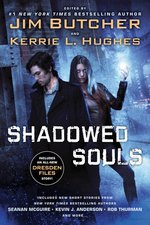
Shadowed Souls edited by Jim Butcher, Kerrie L. Hughes

Shadowed SoulsShadowed Souls

edited by Jim Butcher, Kerrie L. Hughes
Series: The Dresden Files, #14.5; InCryptid, #531; Simon Canderous, #0.5 (I’m guessing) ; and some others that I don’t have a tag for right now

Paperback, 330 pg.
Roc, 2016

Read: January 10, 2017


This is a collection of stories

based on the idea that good and evil are just two aspects of a complicated and very human story . . . [with plots that] play with the concept and invite the reader to explore the edges of their own darkness.

Eleven of the best Urban Fantasy authors working today contributed to this book, each bringing their worlds to life from that basis.

I’m not going to talk about each story, just about those from authors I talk a lot about here — I don’t have the time and energy to talk about Kevin J. Anderson, Kat Richardson, Tanya Huff or the others. If for no other reason, I feel like I should read more of these series/characters/authors before talking about them — many of whom are on my “Try Out Sometime” list.

We, like the book, have to start with “Cold Case” by Jim Butcher. Harry’s former apprentice, Molly, gets to shine in this story. This is one of her first tasks in her new role as Winter Lady — in Alaska, fittingly enough. There’s a large amount of on-the-job training going on for her — more than she bargains for, really. We also get to spend some time with Warden Carlos Martinez — been too long since we saw him. Perfect mix of action, humor and atmosphere — we also get a good idea what’s in store for poor ol’ Molly.

We got to meet another member of the Price family in Seanan McGuire’s “Sleepover”. Elsie Harrington is a half-succubus cousin to Verity, Alex and Antimony. Their presence is felt in the story, but other than a couple of name-drops, they don’t factor into things, it’s just in that series’ universe. Elsie’s watching Antimony in a roller derby match and finds herself kidnapped. Not for any nefarious reasons — just because some people needed her help and are bad at asking for favors. Elsie has a very Price-like voice and outlook on life, but she’s got her own way of doing things. I really enjoyed this — even if the ending felt abrupt.

Anton Strout got to revisit the series that gave him his start in “Solus,” which featured Simon Canderous as a rookie DEA Agent dealing with a haunted house. His partner/mentor, Connor Christos, has almost no use for him at this point and seems to have no interest at all in working with him/training him. Maybe I’m not remembering the character as clearly as I thought, but I thought I liked him as a person more. Still, this was early enough in the relationship that it was probably the right way to deal with it. Other than happening before I was ready for it, I really enjoyed the conclusion of this story. In short, “Solus” was good, it reminded me why I liked the series and why I miss it.

My one complaint about all these stories (save for “Cold Case”), was that they were too short. It’s not just Strout and McGuire. In all the stories, just as things started to get going, they resolved. I’m not saying I wanted a collection of novellas, but another 5-10 pages each, maybe?

Yeah, like all collections, you’re going to get some that just don’t work for a particular reader, and others that are going to get a reader pumped – and maybe one that’ll make you wonder why you bothered. Your lists of each will be different from mine — but there’ll be more than enough of the good ones to make it worth your while. You may even find a new series/author to check out.

—–

3 Stars

2017 Library Love Challenge

The Best Novels I Read in 2016

Yeah, I should’ve done this earlier, but I just needed a break from 2016 for a couple of days. Most people do this in mid-December or so, but a few years ago (before this blog), the best novel I read that year was also the last. Ever since then, I just can’t pull the trigger until January 1.

I truly enjoyed all but a couple of books this year (at least a little bit), but narrowing the list down to those in this post was a little easier than I expected (‘tho there’s a couple of books I do feel bad about ignoring). I stand by my initial ratings, there are some in the 5-Star group that aren’t as good as some of the 4 and 4½ books, although for whatever reason, I ranked them higher (entertainment value, sentimental value…liked the ending better…etc.). Anyway, I came up with a list I think I can live with.

(in alphabetical order by author)

Morning StarMorning Star

by Pierce Brown
My original post
I was a little surprised (but not really) today to see that every book in the trilogy made my year-end Best-Of list — so it makes sense that this one occupies a space. But it’s more than that, this book was an exciting emotional wringer that ended the trilogy in a perfect way. I can’t recommend this one enough (but only for those who’ve read the first two). When I was informed a month ago that there was going to be a follow-up series? I let out a whoop, thankfully none of my family noticed, so I don’t have to feel too silly.
5 Stars

A Star-Reckoner's LotA Star-Reckoner’s Lot

by Darrell Drake
My original post
I’m afraid if I start talking about this one that I’ll spill a few hundred words. Let me just slightly modify something I already wrote and spare us all the effort (that could be better spent actually reading these books). I’m afraid I’ll overuse the word imaginative if I tried to describe what Drake has done here in the depth I want to in this book about pre-Islamic Iran. You haven’t read a fantasy novel like this one before — almost certainly, anyway — but you should.
4 1/2 Stars

Blood of the EarthBlood of the Earth

by Faith Hunter
My original post
This probably should be a dual entry with Blood of the Earth and Curse on the Land, but that felt like cheating. Between the two, I thought that this was a slightly better work, so it got the spot. While remaining true to the Jane Yellowrock world that this springs from, Hunter has created a fantastic character, new type of magic, and basis of a series. I love these characters already (well, except for those I wasn’t crazy about previously) and can’t wait for a return trip.
4 1/2 Stars

BurnedBurned

by Benedict Jacka
My original post
I’m just going to quote myself here: I’ve seen people call this the Changes of the Alex Verus series — and it absolutely is. I’d also call it the Staked in terms with the protagonists coming to grips with the effects that his being in the lives of his nearest and dearest has on their life, and what that means for his future involvement with them. Which is not to say that Jacka’s latest feels anything like Butcher’s or Hearne’s books — it feels like Verus just turned up half a notch. It’s just such a great read — it grabs you on page 2 and drags you along wherever it wants to take you right up until the “He is not actually doing this” moment — which are followed by a couple more of them.
5 Stars

Fate BallFate Ball

by Adam W. Jones
My original post
Since the Spring when I read this, I periodically reminded myself to keep this in mind for my Top 10, I was that afraid I’d forget this quiet book. It’s not a perfect novel, there are real problems with it — but it was really effective. I fell for Ava, just the way Able did — not as hard (and only in a way that my wife wouldn’t mind) — but just as truly. This one worked about as well as any author could hope one would.
4 1/2 Stars

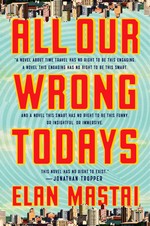
All Our Wrong TodaysAll Our Wrong Todays

by Elan Mastai
My original post
My all-time favorite time-travel novel, just a fun read, too. I will over-hype this one if I’m not careful. So, so good.
5 Stars

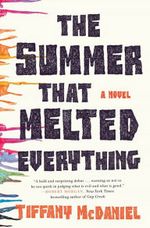
The Summer that Melted EverythingThe Summer that Melted Everything

by Tiffany McDaniel
My original post
I’m not sure what I can say about this book that others haven’t — this trip into a magical realism version of the 1980’s Mid-West will get you on every level — it’s entertaining, it’s thought-provoking, the language is gorgeous, the characters are flawed in all the right ways. I wish this was getting the attention (and sales!) that it deserves — I really hope its audience finds it.
5 Stars

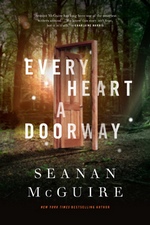
Every Heart a DoorwayEvery Heart a Doorway

by Seanan McGuire
My original post
Here’s a book that doesn’t have to worry about attention or audience, it has one — and it’s probably growing. It deserves it. Short, sweet (and not-sweet) and to the point. I may have to buy a two copies of the sequel so I don’t have to fight my daughter for it when it’s released.
5 Stars

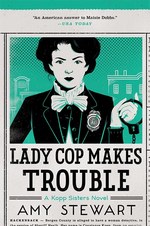
Lady Cop Makes TroubleLady Cop Makes Trouble

by Amy Stewart
My original post
Stewart took the really good historical crime novel she wrote last year and built on that foundation one that’s far more entertaining without sacrificing anything that had come before. We’ll be reading about the Kopp sisters for a while, I think.
4 Stars

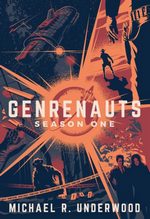
Genrenauts: The Complete Season One CollectionGenrenauts: The Complete Season One Collection

by Michael R. Underwood
My original post
Yeah, here I am again, flogging Underwood’s Genrenaut stories — whether in individual novellas, audiobooks, or in this collection — you need to get your hands on this series about story specialists who travel to alternate dimensions where stories are real and what happens in them impacts our world — Underwood has a special alchemy of Leverage + The Librarians + Quantum Leap + Thursday Next going on here, and I love it.
5 Stars

There were a few that almost made the list — almost all of them did make the Top 10 for at least a minute, actually. I toyed with a Top 17 in 2016 but that seemed stupid — and I’ve always done 10, I’m going to stick with it. But man — these were all close, and arguably better than some of those on my list. Anyway here they are: What You Break by Reed Farrel Coleman (my original post), Children of the Different by SC Flynn (my original post), Thursday 1:17 p.m. by Michael Landweber (my original post), We’re All Damaged by Matthew Norman (my original post), A Hundred Thousand Worlds by Bob Proehl (my original post), and Mechanical Failure by Joe Zieja (my original post).

I hope your 2016 reads were as good as these.

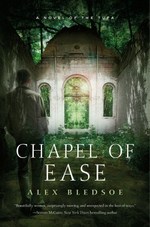
Chapel of Ease by Alex Bledsoe

Chapel of EaseChapel of Ease

by Alex Bledsoe
Series: Tufa, #4

Hardcover, 315 pg.
Tor Books, 2016

Read: November 19, 2016

“Sometimes the best mysteries are never solved, because the mystery is too important to lose. This is the story about one of those mysteries. Most of it’s true, and the parts that ain’t, well, they still sound true.”

It’s time to return to Needsville, TN, the home of the Tufa for the latest installment in one of the best ongoing Fantasy around. One of the best things about this series is how every book is completely different from its predecessors, but they all clearly belong to the same series.

After a quick tease, we enter the story in New York City where an up-and-coming musical writer/composer and a well-established director are casting for an off-Broadway musical (the opening line of which was quoted above). There’s something about the story and songs penned by Ray Parrish that draws everyone who reads and/or hears them in as surely as moths to a flame. One such person was Matt Johanssen, who becomes friends with Ray as well as one of the more dedicated cast members.

The twist in this tale comes from the source of Ray’s material — old (and not-so-old) Tufa stories and music. As anyone who knows these people realizes, people back home are not going to look kindly on this. There are a couple of people on the fringes of Ray’s world that make it clear that the Tufa want something out of Ray — ideally, a cessation of any musical or play or anything ending up in public. Ray will not be dissuaded, this is the story he wants to tell — whether people in Needsville want him to or not.

Just before the much-talked about play opens, Ray dies in his sleep and it falls upon Matt to bring his ashes home to his family. While there, he has the opportunity to look into the places and people this play is based on — and maybe get an idea what the central mystery of the play is about. Ray’d played his cards close to the chest on this topic and without him around to tell the cast, someone has to do some first-hand research. So, while mourning his friend and getting to know his family, Matt finds himself on the verge of instigating a feud while doing his research.

Now, it’s not unusual for a Tufa novel to feature an outsider’s first encounter with the Tufa. But this time, the book is just about that — there’s so little action outside of this story that it really doesn’t merit attention (at least not now). In these pages we have a first person narrator as the person encountering the culture. This gives everything an immediacy, an intimacy that we don’t normally get to these. Also, the narrow concentration keeps the reader focused on what’s going on with the Parrishes and Matt, without worrying about the Tufa politics, shifting power, and so on (it’s there, and there are changes in town, but that’s not what the novel is about).

In many ways, it’s not a novel about the Tufa — it just happens that they’re around, it’s a novel about Matt and Ray. But once you throw the Tufa in, you end up with something that’s not your typical story about a dancer/actor from NYC returning his friends’ ashes to the Appalachian town he grew up in.

I thought Matt was great — as was his dawning realization that he wasn’t in the world he knew anymore, and how he reacted to that realization. The way he stepped into parts of the culture he was exposed to was well handled, second only to the way he went about fighting against or struggling with the rest.

You do get to see your favorite recurring characters and they make references to events in the other novels, so readers of the series do get to check in on things other than the Parrishes — please don’t misunderstand. The novel’s focus isn’t on that, however.

If you even glance at the cover blurb, you know that someone has to die so that there’s an urn for Matt to bring to Cloud County, but Ray’s inevitable death was a doozy — and the memorial service held for him was one of the more moving things I’ve read this year (the impromptu memorial in New York held by friends/cast, that is — the wake the Tufa held was a different kind of experience). Making you care about a guy you know is going to die before you open the book and meet him that much takes a special kind of writer — and that’s what Alex Bledsoe is. Naturally, that doesn’t just apply to Ray; it works for Matt, the Parrishes, C. C. and several others who actually survive the book (and one that doesn’t).

I feel like I’m in danger of becoming the Chris Farley talk show host character here, “Remember that part in the book where Matt does ____? That was cool.” I really don’t know what to say about this book — or the others in the series — that I haven’t before. It’s a great setting, with a culture and people you want to see again and again, for both understanding and entertainment. Plus the overwhelming desire to actually hear the music they keep talking about. This is Bledsoe at the top of his game, you should be sure not to miss it.

And, like the play itself — it all sounds true.

—–

4 1/2 Stars

The Hanging Tree by Ben Aaronovitch

I really hadn’t intended to make this a Rivers of London day, but I had notes and partial drafts for those other two, so I figured I might as well as a way to lead up to this. Which, sadly, is going up later than I wanted, but Dadding before blogging, right?

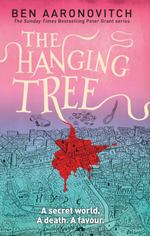
The Hanging TreeThe Hanging Tree

by Ben Aaronovitch
Series: The Rivers of London, #6

eARC, 336 pg.
DAW, 207

Read: November 11 – 15, 2016

I lost track of how many times a certain retailer let me know that my pre-order for this had been rescheduled, but now a little more than 2 years after The Rivers of London most recently flowed through these books, The Hanging Tree is out (in parts of the world, anyway). I’m firmly in the camp of those willing to let authors take their time to get the book right, but I’m just as firmly in the camp wanting authors of my favorite series to hurry up. Thankfully, whatever delayed this publication gave Aaronovitch the time he needed to deliver his best yet.

Peter’s pushed into investigating a drug-related death, which soon shows itself to actually need a man of his particular skills when one of the parties involved (perhaps very involved) is the daughter of Lady Tyburn herself. Mostly anonymous teens up to illegal things, an overbearing mother to a suspect/witness, and the natural teenage disinclination to telling the police anything and you’ve got yourself a mess — particularly when the overbearing mother isn’t your biggest fan, and is a deity of sorts.

Poor Peter.

Along the way, Peter and Nightingale find the trail of a lost Newton masterpiece, a couple of interesting allies, and the return of some familiar, but not recently seen, foes. Some of what happens with returning adversaries will surprise, please, and frustrate long-time readers.

For series like this, more important than the plot are the characters — and Aaronovitch did everything right on this front. A few notes on this Peter’s more confident — professionally and personally. He’s coming along pretty well with his magic — yay! At the same time, you can see the way that he’s bringing change to the Folly little mannerisms and activities with Nightingale and Molly that you know they weren’t going to be up to until Peter moved in. I liked how Bev was used — even if she wasn’t around as much as usual — and the way their relationship is developing; her sister Lady Tyburn is probably used better here than ever before. There’s a new assistant for Dr. Walid, Dr. Jennifer Vaughan — we don’t get a lot of her, but there’s promise (and I like the fact that this universe is expanding). Lastly, I need to talk about Guleed — I know she’s been around awhile, but I didn’t really click with her until this book (as much as I enjoyed her in Body Work) — I like the way she works with Peter, the flavor she brings to things — I hope we see a lot more of her.

Oh yeah, I almost forgot, there’s a brief appearance by an author of note early on in the book — I’d love for him to show up again in some context where Peter doesn’t have to be so diplomatic with him. I chuckled a lot, and would love to hear Aaronovitch talk about this character and any real-life models he drew upon.

Not only do we get the typical Aaronovich-level stories and action, we get a big expansion in the number, types, and nationalities of magic users in this book. Not only are there the official practitioners of magic that The Folly is aware of, there are those they’re not tracking (but probably should start). Just this shift alone in the universe makes this book a winner — adding it to the rest is just frosting.

I’m really glad, incidentally, that I recently listened to the first audiobook in the series — there’s some significant call-backs to it throughout this book. I’d probably have been okay relying on memory, but the connections worked better for me with everything fresh in my head. Ditto for the number of references to Body Work – I’d have been fine not understanding the references made to it, they’re not integral to anything, but it was fun knowing what Peter was talking about.

This took me too long to read — which isn’t Aaronovitch’s fault, it’s just been one of those weeks, every time I started to really get into this book, I was interrupted by something — and it drove me crazy. Do what you can — kill the phone, lock the door, grab some snacks and a beverage of your choice and settle in for Aaronovich’s best yet, you won’t want to put it down. I can’t say enough good things about this.

Disclaimer: I received this eARC from DAW via NetGalley in exchange for this post — thanks to both for this.

—–

4 1/2 Stars

Midnight Riot (Audiobook) by Ben Aaronovitch, Kobna Holdbrook-Smith

Midnight Riot (Audiobook) Midnight Riot

by Ben Aaronovitch, Kobna Holdbrook-Smith (Narrator)
Series: The Rivers of London, #1

Unabridged Audiobook, 9 hrs., 57 min.
Tantor Media, 2012
Read: October 11 – 14, 2016


The best part about listening to this was being reminded just how good this novel was — sure, I remember liking it a lot (if for no other reason than I’ve read five more plus a collection of comics), but I didn’t remember it being this good.

Briefly — in this we’re introduced to a probationary constable named Peter Grant who’s approached by an odd witness to an odder (and disturbing) murder. What makes the witness odd? Well, he’s been dead for a couple of centuries. Soon thereafter, Peter’s meets a Chief Inspector who happens to be the last wizard in England. Peter’s transferred to his unit (doubling the size), taken on as an apprentice and thrust into a type of policing he wouldn’t have believed existed a week ago.

The investigation into this murder turns into an investigation for several murders — and a few other assorted crimes. Which, of course, involves diving into the history of London and brokering peace between competing river deities. That old yarn. It’s a great mix of magic and police work, basic Latin and advanced bureaucracy.

Holdbrook-Smith did a fine job with the narration, very engaging, often compelling — capturing the feel of the novel in just the way that everyone wants in an audiobook. I’d be more than happy to hear more from him.

It’s dark, it’s funny, it’s pretty complex — and, in retrospect, — does a much better job laying the foundation for the series than I’d remembered. A good amount of wonder and action combined.

—–

4 Stars

Pub Day Repost: Curse on the Land by Faith Hunter

Curse on the LandCurse on the Land

by Faith Hunter
Series: Soulwood, #2eARC, 352 pg.
Roc, 2016
Read: October 13 – 15, 2016

Weeks after the events of Blood of the Earth, newly-minted PsyLED agent Nell Ingram comes back from the training center, “Spook School,” ready to dive into her new role. It seems she comes back just in time for a case that’s right up her alley — strange and magical things are up, and seem to be tied to land. Something big, something powerful and something no one’s really seen before — which sounds a lot like Nell. So instead of doing the grunt work, the Probie work, she’s in the front of this investigation.

The presence of Brother Ephriam in the Soulwood she lives is also still around and doing something that also seems to be involving the tree on her former Church’s compound. She needs to address this, she knows, but the threats to the general public and local wildlife take priority. She also seems reticent to deal with this problem and confront the actions that led to his presence in the wood, so she’s glad for the distraction posed by her job.

For all the regulations and devices that PsyLED brings to the investigation of magical goings-on, I appreciate how often those things fail to do anything to solve the problem. They’re helpful in guiding the agents, in informing their actions, decisions and conclusions — but it’s not the be all and end all. Throughout the novel, there’s this interesting intermingling of magic and technology that’s done in a way I’ve not really seen before (although, I think it’s what Ben Aaronovitch’s Peter Grant wants, but he’s a long way from getting it).

Nell’s continued obsession with foods that cannot be found at a Farmer’s Market and her growing familiarity with pop culture (particularly movies) continue to be fun — they ground the character as well as provide much-needed comic relief.

I think Nell could be the best new character I’ve read this year. She’s not your typical kick-ass heroine, nor is she the (possibly more) typical damaged-yet-kick-ass heroine. She’s a strong woman, determined, and stubborn. Her strength doesn’t come from her magic powers, her job, or anything else. She’s always been strong, but the circumstances of her life have slowly revealed to both herself and those around her, just how strong she is (from what I gather, the stubbornness and determination have been evident all her life). Which is not to say she’s all strength — she’s a nurturer (not just of her plants), she’s caring, and she’s nowhere near invulnerable (physically or emotionally). She’s also pretty clever and as her education moves beyond the solely autodidactic, we’ll see that demonstrated more and more.

While this series (at least so far) is ultimately about Nell, the characters she’s surrounded by shouldn’t be ignored. In Blood of the Earth, Nell’s embraced by her PsyLED team as part of a family, an intact and nurturing alternative to her blood-relatives. It almost seemed like an idealized replacement, but the events of this novel make it clear that it’s nowhere near ideal. Several members of the team are effected by the events here in ways that will not be able to be glossed over — both as a result of their work on the case and from arcs that carry over from the Jane Yellowrock series. The latter, I found particularly satisfying, while the former intrigue me and I’m eager to see how they play out.

We can’t forget Nell’s literal dysfunctional family, either. However strange and foreign they may seem to us (odd that these humans seem less familiar than the nonhumans in the books), the efforts on their part to restore and repair their relationships with Nell — while she does the same — are encouraging and heartwarming. Her brother, in particular, is fast becoming a favorite. Their new openness to the culture around them and the . . . lack of overt hostility and aggression to the magic and magical beings in Nell’s life is great to see, while they retain much of their religious/cultic faith. I hope there are a few bumps along the path, just to make it more realistic, however.

I almost forgot to talk about Hunter’s writing — it’s as great as ever. I think her use of magic — particularly large-scale workings — in these two books works better than it does in the Yellowrock books. Her characters, settings, dialogue, and other writerly demonstrations make this world rich and real. She’s among the best and most consistent in the UF field these days and I’m eager to get my hands on whatever she’s got coming out next.

I left Blood of the Earth wondering how Hunter could make this into a series –and I’m still wondering how this works long-term, there are only so many things you can do to the earth/plants/trees in an area, right? Can Nell function hundreds of miles (or more) from Soulwood? Is she much use in a skirmish between rival Vampire clans or the like? Sure, she was able to do some damage to the creatures in the first book, but at what cost? While I don’t see how it’d work for a full novel (this is where Hunter proves me wrong), it’d good to see Nell acting in a more supportive role on the team — getting coffee, filing reports, etc. — while the weres take down some monsters, or something. I do see how these books function as a series when it comes to the characters, however — it’s just how to keep the stories/cases interesting that I don’t see long-term, but I’m looking forward to Hunter educating me.

Disclaimer: I received this eARC from Roc via NetGalley in exchange for this post — thanks to both for this. And would’ve received it from Let’s Talk! Promotions, too, if I hadn’t already downloaded it. So I guess I should thank them, too.

—–

4 1/2 Stars

The Key to the Coward’s Spell by Alex Bledsoe

The Key to the Coward's SpellThe Key to the Coward’s Spell

by Alex Bledsoe
Series: Eddie LaCrosse, #?

Kindle Edition, 27 pg.
Tor Books, 2016

Read: September 3, 2016


This over-before-you-realize-it short story is a welcome dip of the toe back into the world of Eddie LaCrosse, sword jockey (i.e., medieval private eye). Bledsoe’s Tufa series is one of the best things around, but man, I enjoy this series so much.

LaCrosse has been hired by a local blacksmith to find his kidnapped son. LaCrosse is sporting a broken arm, so he’s going to need a little more help than normal, Jane Argo, for one — and some new faces, too. There’s really not a lot to say, here — half of the action takes place before the story starts. LaCrosse gets a little more intel, and then jumps into action.

The action is brief and to the point — with a nice twist or two along the way. Nothing special, but it’s a good couple of sequences. And a brief reminder that no matter what you dress it up in — modern time/tech/clothing, generic fantasy tropes, SF, whatever — there are some forms of evil that transcend those details and are just evil that need to be fought in whatever little way we can.

Yeah, it was fun to spend some time in this world and with LaCrosse and everyone. But man, just as you get into it, the story’s over. Just not enough to really satisfy, but it was a fun taste. I don’t know that this is a good intro to the character (it might be), but it’s a good reminder for those who’ve met him before that they want to read more about him.

—–

3 Stars

Reread Project: Mostly Harmless by Douglas Adams

Mostly HarmlessMostly Harmless

by Douglas Adams
Series: The Hitchhiker’s Guide to the Galaxy Trilogy, #5

Hardcover, 278 pg.
Harmony Books, 1992

Read: July 7 – 12, 2016

1 Stars

I was dreading this one — typically, like X-Men: The Last Stand, or The Highlander sequels, I prefer to pretend this doesn’t exist. It’s the only one of the series that I haven’t bought my son, and I don’t plan on changing that. Which doesn’t mean I couldn’t be won over — after 4 or 5 tries, Dirk Gently’s Holistic Detective Agency finally clicked with me, I keep hoping this will.

But it didn’t this time (I think my 5th reading).

Which is not to say there aren’t some parts that don’t deserve to be celebrated — almost everything Ford does (for example) is great. There’s a little bit with Trillian, a bit of Tricia McMillan (no, really, I meant to list those separately) and a smidgen of the Arthur material that’s okay. But not much. Don’t get me started on Random.

There’s some really clever bits here and there, some great lines — and some bits that are clearly attempts to recapture the spirit/zaniness of the earlier books, but without the heart. The narrative as a whole (after such a huge leap forward with So Long) was worthless, the story didn’t work. And the ending? Flummery. It was like Adams was just trying to get away from the series and put it in his rearview mirror. Which I get, I absolutely understand, he wanted to do something other than just crank out another Hitchhiker’s after another after another. But this was not the way to do it.

Just avoid this one, don’t bother. But if you think I’m wrong — tell me why! I’d love to be convinced that Adams couldn’t write a bad book.

—–

1 Star

The Innocents by Ace Atkins

The InnocentsThe Innocents

by Ace Atkins
Series: Quinn Colson, #6

Hardcover, 367 pg.
G.P. Putnam’s Sons, 2016

Read: July 25 – 26, 2016

“I never met this girl or knew her family,” [Ophelia] said. “But, holy shit, this is a horror among horrors. I try to not focus on Old Testament stuff. But . . . I hope there’s some revenge out there somewhere. I don’t know if there’s another way to make it right.”

“You can’t make shit like this right,” Quinn said.

But before we get to the horror, we get one of the funniest openings that Tibbehah County has given us — a meth-head steals a shotgun and a four-wheeler, and is apprehended by the acting Sheriff, Lillie Virgil(!!), in a very effective, but not that orthodox a manner. And then, of course, after Atkins gets you chuckling he introduces you to the murder victim. It’s not unheard of in a crime novel, but we spent a decent amount of time getting to know her before she died in one the worst ways I remember reading. Reading as many Detective/Crime/etc novels as I do, I’ve read some evil ways to kill some one, and some really sick things — see Val McDermid, Thomas Harris, Stieg Larsson –but this ranks up there with the worst. And it felt real, like something that could happen down the road, not the victim of diseased mind like the psychos those listed above write about. In fact, Ophelia Bundren, the coroner (who, incidentally has some of the best lines in the book — and not just what was quoted above) spoke for just about everyone in the county there (including some of the least-upstanding members of the community who will echo her). It’s a good thing that Tibbehah County has their most capable law enforcement officer in forever at the helm (and she hires a certain former Sheriff as temporary help).

It took no time at all to know how did it (or at least who was largely responsible) — actually, pretty sure I’d identified the perpetrator and the motive before the killing — but that didn’t stop this from being one of Atkins’ most compelling crime stories.

Along with all that, there are plenty of other goings on . . .

Lillie Virgil is acting as Sheriff, and isn’t dealing well with the politics. She deals well with the policing, but that’s it — between being a woman, having almost no people skills and not backing down when people want her to, things aren’t going too well for her. Which is a shame, still, it’s nice to see her in the spotlight.

Johnny Stagg’s in federal prison, and learning just who his friends are. Not surprisingly, there are fewer than he’s used to. Someone else has taken over the Booby Trap, given it a better name (finally!) and a make over. All in all, it’s a better class of strip club and the owner appears slightly less despicable.

Jason Colson has a new pipe dream and he looks to be sucking Quinn into helping out — honestly, my patience with this character is pretty low — I think the only person in the world who likes him less is Quinn’s mother, Jason’s ex. He’s not as destructive a force as the storm that just about wiped out the town a couple of years ago, but it’s a close race.

And things with Anna Lee are in a pivotal spot. That’s enough about that.

Quinn’s still in that same period of decision after losing the election a year or so ago — the man needs a little direction in his life and hopefully he gets it soon.

The power of small-town High School football, convenient racism, small town crime, Real World Evil, friendship, and personal history — as usual, Atkins brings it all and delivers it with skill, charm and aplomb. I thoroughly enjoyed this trip to Mississippi and look forward to my next trip there.

—–

4 Stars

Reread Project: So Long, and Thanks For All The Fish by Douglas Adams

So Long, and Thanks For All The FishSo Long, and Thanks For All The Fish

by Douglas Adams
Series: The Hitchhiker’s Guide to the Galaxy Trilogy, #4

Mass Market Paperback, 214 pg.
Del Rey, 1999
Read: June 14, 2016

Arthur had a swordfish steak and said it made him angry. He grabbed a passing waitress by the arm and berated her.

“Why’s this fish so bloody good?” he demanded, angrily.

“Please excuse my friend,” said Fenchurch to the startled waitress. “I think he’s having a nice day at last.”

I’ve said it before, I’ll say it again: this is my favorite Douglas Adams novel. Sure, The Hitchhiker’s Guide is fantastic and I love it and you can make a strong case that at least one of the Dirk Gently novels is his best (I expect I’ll be doing so in a couple of months) — but this is the one that does it for me.

Unlike the previous three, there is an actual narrative here — it’s not a collection of scenes, jokes, and vignettes loosely tied together. Arthur Dent arrives on Earth (no, really) after traipsing from one end of the galaxy to the next; from the end of the universe, to the beginnings of life on Earth; basically all throughout time and space (sadly, without the blue box). And now he’s trying to re-acclimate to life at home. Which has somehow not been destroyed, neither has his house. In fact, everything’s pretty much like it was before.

Just with everyone convinced that the Vogon Constructor Fleet was a CIA-induced Mass Hallucination. Not everyone believes it, but most do. Two people who don’t believe that are a man named Wonko the Sane and Fenchurch. Both of whom are pretty cool characters.

I’ll skip Wonko, because the name says everything. Fenchurch, on the other hand, is perfect. She’s everything that Trillian never got the chance to be (except in the semi-disastrous final chapters of Life, the Universe, and Everything. She’s funny, smart, sexy — just what Arthur needs. I’d happily read a book just about her.

There’s a mention of Zaphod — briefly — but that’s it. So the zaniness fell into Ford’s capable lap. I’ve always liked Ford better, anyway. And he’s able (as always) to pull off the zaniness, the comedy, the . . . everything without being quite the obnoxious twit that Zaphod is.

Ford’s his usual delusional, clueless, charming, drunken self.

Here was something that Ford felt he could speak about with authority.

“Life,” he said, “is like a grapefruit.”

“Er, how so?”

Well, it’s sort of orangy-yellow and dimpled on the outside, wet and squidgy the middle. It’s got pips inside, too. Oh, and some people have half a one for breakfast.”

“Is there anyone else out there I can talk to?”

Arthur comes out of this one looking pretty good, too. He’s not whining, he’s not just getting pulled around by his dressing gown wherever whim strikes Ford (or Zaphod). He’s mature, capable, witty. He sees a problem or two and solves them (even if one of those problems is just “who was that girl I almost met the other day”?). He’s almost a wholly different guy when he’s home. Which makes him a lot like the rest of us — which is sort of the point of Arthur since we first met him.

One of the highlights of the last book was the section about flying, I’m pretty sure I said that. The section here about flying is better — Arthur teaching Fenchurch, Arthur remembering how to do it in the first place — and then the two of them flying around. It’s just about perfect.

And, of course, there are little bits like:

Of course, one never has the slightest notion what size or shape different species are going to turn out to be, but if you were to take the findings of the latest Mid-Galactic Census report as any kind of accurate guide to statistical averages you would probably guess that the craft would hold about six people, and you would be right.

You’d probably guessed that anyway. The Census report, like most such surveys, had cost an awful lot of money and told nobody anything they didn’t already know — except that every single person in the Galaxy had 2.4 legs and owned a hyena. Since this was clearly not true the whole thing eventually had to be scrapped.

    There’s a few things I’d love to go on and on about, but no one wants to read me gushing and gushing and gushing, so here are the assorted highlights:

  • The zig at the end of the Prologue.
  • Arthur’s biscuit/train station story. Seriously, I just love this.
  • Rob Mckenna
  • Wonko the Sane naming the world The Asylum and his house Outside the Asylum.
  • Wonko the Sane’s name.
  • All the California jokes. Clearly, he’d been vacationing there too much.
  • The whole thing about the lizard government and democracy is both funny and relevant.
  • Chapter 25 is just dandy.

The last chapter or two are a little weak, pretty close to the older books in tone and style. But they work, they are tied into the narrative and star Marvin. So who’s going to complain? Not me.

Really, I’ve got nothing but positive things to say about this. I love it. One of the easiest 5-star ratings I’ve ever given.

—–

5 Stars

Page 17 of 23

Powered by WordPress & Theme by Anders Norén