Category: A-B Page 5 of 23

Authors A-B

COVER REVEAL: Partial Function by JCM Berne

I’m very pleased to welcome Day 2 of the Cover Reveal for JCM Berne’s Partial Function to The Irresponsible Reader this morning! This means you’ve likely seen it already, but just in case…also, it’s such a cool cover, for such a cool book (as i’ll hopefully expand upon in a day or three), how could I say no? Before we get to revealing the cover, let’s learn a little bit about the book and author, shall we? I won’t take too much of your time, and then we can lay our eyes on the cover.

Book Details:

Book Title: Partial Function by JCM Berne
Genre: (wuxia-adjacent) Fantasy
Release Date: November 7, 2023

About the Book

If Taken starred Michelle Yeoh and was set on a Jurassic Park-inspired Cradle.

Monster hunter Akina Azure inherited the most powerful weapon in the martial world before retiring to a peaceful life raising her twin girls.

The Reaver has them kidnapped, thinking Akina will trade that weapon for their safe return.

Will she? Or will she use it to wreak a terrible retribution on the men who took her girls?

You get one guess.

About the Author

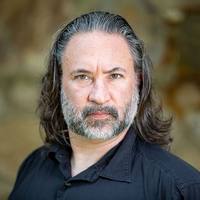
JCM BerneJCM Berne has reached middle age without outgrowing the notion that superheroes are cool. Code monkey by day, by night he slaves over a hot keyboard to prove that superhero stories can be engaging and funny without being dark or silly.

Linktree ~ Author Website ~ Twitter ~ Instagram ~ Facebook ~ Threads ~ BlueSky ~ Book Berne-ing authortube show ~ Free short story

and now…

The Cover

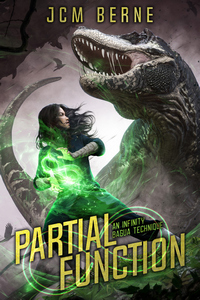
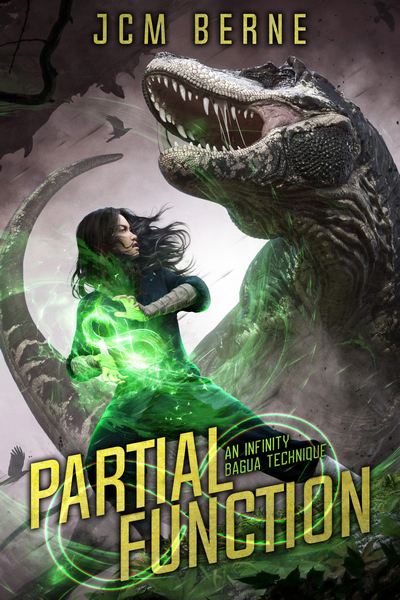
Partial Function Cover

That’s a spiffy cover, right? I’m telling ya, the book is even better.

It’s out November 7, be ready to jump on it then!

Irresponsible Reader Pilcrow Icon

I’m Curious: What Are Some of the Funniest Books You’ve Read?

I know, I know, this can be a moving target (and should be, depending on where you are in life)…

But I’m still going to ask: What is the funniest, or what books are amongst the funniest, you’ve read? I’m looking over the books I have coming up for the rest of the year, and by and large, we’re talking about some dark reading. I could use some laughs…so help me find an idea or three, will you?

Here’s my rather incomplete answer (that I ripped off from something I told K.R.R. Lockhaven last year). I should probably tweak this list before I publish, but I don’t have the time…

Off the top of my head…
bullet The Hitchhiker’s Guide to the Galaxy by Douglas Adams (well, everything Adams wrote)
bullet Mechanical Failure by Joe Zieja
bullet The Fran Lebowitz Reader
bullet The Android’s Dream by John Scalzi
bullet Heartburn by Nora Ephron
bullet Dave Barry Slept Here by Dave Barry
bullet The Spellman Files by Lisa Lutz
bullet White House Mess by Christopher Buckley
bullet Sir Apropos of Nothing by Peter David
bullet Is Everyone Hanging Out Without Me? by Mindy Kaling
bullet High Fidelity by Nick Hornby
bullet You’ll Never Believe What Happened to Lacey: Crazy Stories About Racism by Amber Ruffin,
Lacey Lamar
bullet The Tales of Pell by Delilah S. Dawson, Kevin Hearne

Incidentally, you should read the entire series of interviews Lockhaven did about humor in fiction–some great things were said, and then there was my entry, too.

I look forward to your recommendations!

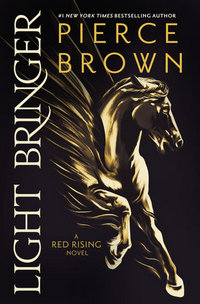
Some Disorganized Thoughts on the Excellence that is Light Bringer by Pierce Brown

Light BringerLight Bringer

by Pierce Brown

DETAILS:
Series: Red Rising, #6
Publisher: Del Rey Books
Publication Date: July 25, 2023
Format: Hardcover
Length: 672
Read Date: August 14-24, 2023
Buy from Bookshop.org Support Indie Bookstores

This Post

Yeah, this isn’t going to be my typical kind of post. I know deep in my bones, the way you know about a good melon, that if I tried my typical approach I’d probably finish this in December. And since I don’t have that kind of patience—and this book was due back at my library on August 19. I’m in deep sh…aving cream already.

So, I’m just going to mention a few things I think are worth saying—and hopefully think of a conclusion to wrap it all up (but no promises).

bullet I need to start with the fact that I went into this with a wrong assumption—I misunderstood something I saw Brown say on Twitter some months ago and thought that this was the finale of the series. I started wondering pretty soon how that was going to be the case, but it took me far too long to admit that I misunderstood him and shouldn’t expect any kind of bow to be put on things by the end of Light Bringer. Once I gave that up, most of my lingering questions about pacing and character went away.

bullet Lyria. If Brown had done nothing else impressive with the post-Morning Star books, what he’s done in creating and growing this character would justify the time reading them. I just cannot get over her. At this point, I enjoy her more than Darrow, Virginia, or the rest. Kavax and Sevro are the only characters that compete with her for my affection. Also, Brown did an excellent job of faking the reader out when it came to her character arc after the last book.

bullet Darrow grows more in these pages than he has since…maybe The Institute. Or probably with Lorn. And a lot of that has to do with the right book being given to him at the right time in his life. (maybe my libro-fixation makes me focus on that part, but, I’m right). I want to see this change in action more—but what Brown does here gives me a lot of hope for our hero. Assuming The Reaper is our hero by the end.

bullet I really, really, really, really want to know how long Brown has been plotting out the major events of this novel—has he been building up to them since Iron Gold or before? Or were they things that came into focus when he started planning Light Bringer? It won’t change what I think of them (devastating, brilliant, etc.)—it’ll just help me understand how he works.

bullet The bonds between so many of these characters are fantastic. Particularly between the classmates turned colleagues turned friends turned enemies turned uneasy allies turned brothers. (or relationships that follow similar paths) How these people can be bound up so tightly with each other after all they’ve gone through is something else. So many times I start off thinking, “There’s no way that Darrow/Lysander/Victra/Whoever is going to trust them is there?” And then they do—and I buy it every single time, just the way that Darrow/Lysander/Victra/Whoever does. And I’m caught as off-guard as they are in the significant percentage of times they end up getting betrayed.

bullet I cannot believe how often these people make me laugh—genuinely laugh. In the midst of all of the death, destruction, revenge, societal upheaval, and uncertainty—there’s a core humanity at work in them all.

bullet After all these thousands of pages (especially when I count re-reads and audiobook listens)…how can Brown completely surprise me the way he does? I can’t even count how many double-crosses that become triple-crosses then go awry and end up becoming alliances that are quadruple-crossed in this book alone. (And that’s not a spoiler, if you’ve read the series, you know that’s going to happen—and I likely left off at least 5 backstabbings).

bullet Speaking of stabbing…Brown’s action scenes—particularly when it comes to small groups of people fighting—one on one, two on two, one on five, etc.—are just great. He’s never been shabby at this, but it felt like he topped himself here. (as he has in each successive book).

bullet Sevro, Sevro, Sevro…I felt so bad for him through so much of this book. Even before he inadvertently found out what happened to his family in Dark Age. But you never want to count the Goblin out, right?

bullet Although, the fox Sophocles just might have done a better job of breaking my heart. Not that it’s a competition.

bullet There’s a fantastic potential spin-off series introduced around the mid-way point. I hope Brown doesn’t give it to us (although I’ll read it if he does), I think I’d prefer my imaginary version of it.

bullet The bond that I referred to earlier is seen in loyalty, forgiveness (and the ability to work together when that forgiveness hasn’t been granted), and best of all, a humor based on shared experiences and attitudes. The humor in this book is almost never situational (too grim for that), or physical (outside maybe of Sophocles)—it comes from old friends being rude to one another, making a joke in reference to something that happened a decade or more ago, etc. And it works—you can’t help but chuckle alongside these men—even when they’re likely saying goodbye for the last time, they can make you laugh. Well done, Mr. Brown.

Let’s See If I Can Wrap This Up

I really think I could just keep going flipping back and forth through the pages of the book and coming up with more and more bullet points to ramble about. But who wants to read that? (especially now that I see that I’ve repeated myself)

I really wish I spent time in discussion groups, fan sites, etc. for this series, so I’d have known that this wasn’t the ending before I started. That preconceived notion really skewed things for a while. Oh well. Like I said before, once I started thinking of this as penultimate—everything clicked.

I do think it’s time for Brown to tie this up—as much as I love this series, readers can only take so many Master Plans that go awry when they meet other Master Plans only to uncover someone else’s Deeper Master Plan working against both.

But it’s been—and will be—quite the ride. These characters are so full of honor, and nobility (of various types), that even when they’re “on the wrong side” it’s hard to think poorly of them until they’ve turned into hypocrites or something. Brown gives us a great picture of so many people working for the common good—if only they could agree with what that is. Chess masters vying against one another to help their picture of the best for society to come about. Sadly, their moves aren’t made with game pieces, but with thousands or millions of lives at a time.

I’m, of course, ignoring the few giant vacuums of decency with a hunger for power and destruction that are also running through the pages.

In Dark Age (and I’m going to be vague just in case someone hasn’t read it yet)—there’s a scene when someone holds down a dying foe, cuts out two giant strips from their back to reveal their ribcage and organs—and pour salt on the wounds. There are a couple of scenes in this book that felt like that. (except for the fact that I was in my recliner sipping on something cool while reading). And with at least one of those scenes the person I was having my heart torn up about was a character I either was bored by or didn’t bother to form an opinion of until this book. But over the course of the novel, Brown’s able to get every one of these modified humans to become a person practically as real as any flesh and blood creature you run into.

It took me less than 50 pages into Red Rising to be awed by Brown and thousands of pages later, he’s still doing it to me.

Go read this series.

5 Stars

This post contains an affiliate link. If you purchase from it, I will get a small commission at no additional cost to you. As always, the opinions expressed are my own.
Irresponsible Reader Pilcrow Icon

The Inside Scoop—A Q&A with JCM Berne About Self-Publishing

Inside Scoop logo
I’ve talked about him all week, and now it’s time to hear from the man himself, JCM Berne. Without his help, there’d have been a lot less for you to read and me to post this week. And as anyone who has read his fiction, watched his Youtube videos, or has interacted with him in any way will expect, this particular entry in the series is as fun to read as it is useful and informative. Without further ado:


Before we get into things, why don’t you give the reader a brief introduction to you and your work.
I am JCM Berne. I write superhero stories. For grownups. No, they’re not silly. No, they’re not deconstructions. Or anti-heroes. Or gritty. Or hyper violent. Yes, they’re for grownups, I said that already. Yes, I’m serious. Yes there are bears, and sentient space stations, and giant bug monsters. No, really, none of it is silly.

It’s a story about regret and redemption, humor and happiness, coffee and donuts. Some people call it slice-of-life, but there are some war crimes and mass murders, so it’s not exactly cozy fantasy.

My website: jcmberne.com (shocking, I know!)

My books can be found at: https://a.co/d/5LoNrHZ

Best place to talk to me is twitter (my DMs are open!): @joeberne1

What are some of the biggest misconceptions you find that readers have about self-published books?
I’ll summarize it like this: people know that in, say, fantasy, Tor, Baen, Orbit, and whoever else you consider the ‘real’ publishers are releasing a certain number of books each month. People imagine that those companies are actually getting the BEST books. That if those companies release 50 books, the BEST indie book that month is, at most, the 51st best book being released globally.

That is incredibly far from the truth. The major publishers are finding, at best, a fraction of the best books according to their own editorial taste.

If your taste doesn’t exactly align with the Tor (or Orbit or Baen) staff (and it probably doesn’t), the BEST book for you that month might be one that those companies have all passed over. Maybe you want something more original. Or less original! Or litRPG. Or a non-ironic superhero story! The big companies are only releasing books in a very narrow window of genre and style.

Additionally, the process of getting a book through slush piles and into an editor’s hands is so onerous and so luck-dependent that there’s a good chance the best book in any given month was never even looked at by an agent, let alone an acquiring editor at Tor.

If you can find review outlets that you trust, you might find that THEY find better books than Tor can ever manage.

The second set of misconceptions is that self-published books are low quality – more typos, ugly covers, poor editing, etc. This is absolutely true some of the time, but it’s not hard to find self-published books of higher objective quality than trades. It just varies more (the worst self-published books are much, much lower quality, because there’s no gatekeeping at all).

What kind of costs are associated with self-publishing a book? Do you hire one or more editors, or one editor for a couple of passes? Cover artist? Anyone to help with layout, design, etc.? Beta readers? Or do you take it all on yourself? Are you actually making any money at this, or are you still focused on breaking-even while building an audience?
Cover: as low as $50 – but you’d have to be very lucky to find one that cheap that matches your book and still looks decent. Really good covers are very findable in the $1000 range. I spend over $4k on mine (which is probably a really poor investment, but I’m not a smart businessperson).

Editing: Varies. Most self-published authors writing GOOD books are hiring a line editor and copy editor and getting some developmental editing done (I am an exception, I don’t use developmental editors, because I’m just that arrogant). Minimum $1000 for a book and usually closer to $2-4k.

Layout and design – some people hire this out, but there’s software like Atticus ($100 lifetime purchase) that make it really easy to do.

Beta readers – people do hire beta readers, who cost a lot less than editors (usually under $100 for a beta read). Hiring beta readers is a lot less common than just trading with other writers.

Audio narrator: some people do this themselves, but a good audio narrator is around $200+ per finished hour. My book, for example, was about 13 hours. You can go higher.

Marketing: That’s the open-ended part. Blog tours, ads on amazon, newsletters, etc. You can spend absolutely any amount.

I am not making any money at this. Some indie authors are. Some support themselves doing this – more often those in high volume genres, like romance. I hear about indie authors hitting seven figure incomes (I assume that’s US dollars, not rupees or anything). I personally am eager to one day come close to recouping what I’ve already spent (nowhere near it).

Are there tools, mentors, websites you’ve found to help you through this process? Or did you stumble through blindly on your own?
I figured out a lot of it myself. I had early mentors in Ande Li and Maurice Alvarez, who I talked to because they’re friends in real life who had been publishing books for a while!

Once I got a foothold in the community, I got a LOT more help from authors on various Discord servers. I’ve found self published authors very willing to share advice and strategies. It’s a bizarrely supportive community.

How do you juggle marketing/PR/etc. with writing new work? (along with day jobs, family, hobbies, etc., etc.)
I keep telling myself it’s cheaper, and less time consuming, than a drug addiction. Not sure it’s true, but that’s what I tell myself. (that’s the second time someone’s said that—or words to that effect—today. I’m not sure if that’s a good or a bad sign that multiple people think this way)

What made you decide that self-publishing was the direction you wanted to go? How often do you question that choice? How do you get through the self-doubt?
Honestly, I spent a small amount of time trying to find agents that might be interested in my book and got nowhere. It’s possible that some are out there and I just couldn’t find them. Believe me, if I thought I could have gotten a contract from Tor, I would have. I also feel my particular book doesn’t pitch well. I’ve never been able to come up with a brief (1 sentence) description that sounded anything other than a bit dumb. My strength obviously isn’t marketing!

I almost never question that choice, in the sense that to this day I still can’t come up with a good pitch for my book, and I don’t think there’s a route to a traditional contract that would have ever worked for me.

If I had held out for that, I’d be waiting still, and I wouldn’t have the readers I have, who I treasure.

Have you thought about trying to get a deal with major (or indie) publishers for upcoming works, or are you planning on sticking with self-publishing?
I have an independent book coming soon that pitches well (Taken, if it starred Michelle Yeoh and was set on Cradle – a retired monster hunter wrecks a continent when her children are kidnapped.) I tried to get a deal and failed. I’m not sure the patience for that anymore – especially when I’m in a position where I can get literally hundreds of people to read my next book with a few tweets.

Odds are, you’re doing this from love/passion, not to pay the bills. What keeps you going? I’m assuming there are more “who”s than “what”s, actually—who is it?
It creates plenty of bills… not paying any of them yet! While I do dream of making a profit at some point, I’m pretty happy with what’s going on right now.

I love to tell stories. I love crafting them, the slow reveal, figuring out ways to change the emotional impact. I constantly make up stories, even if it’s just in my own head.

Writing is, for me, incredibly fulfilling for that reason!

I tell people this: if you don’t have to write, don’t. It’s frustrating, time consuming, and difficult. If you aren’t driven to do it, don’t punish yourself! But if you’re compelled to write, then by all means, become an author. Just don’t quit your day job!

Self-publishing tends to have fewer external deadlines keeping one accountable. How do you maintain your work process or work ethic?
I have a system.

I book slots with my line editor, who usually fills her schedule 4-6 months in advance. Then I am forced to finish my books to get them to her.

Because I love my line editor (she makes my books more authentically mine than I can manage on my own), I am deeply afraid of disappointing her, so it works!

I do not recommend this system. Do as I say, not as I do.

If you were to start the process over with the experience you have now, what would you do differently?
I would probably write a different genre. Superheroes are a tough sell, much tougher than I expected, and getting readers to take my books seriously is hard (I’m surprised you read it, HC, given what you generally review) [Really? I loves me some good super-hero stuff, I need to do better at talking about that]. On the other hand, this genre is what I really love, so maybe I’d have decided to go with it regardless, and just had lowered expectations.

Maybe that’s what I’d do differently: moderate my expectations.

How do you decide a book is finally finished and ready? (or how do you avoid “perfection as the enemy of good”?)
This is the tricky thing!

I set a deadline – usually announcing things on twitter, or booking a slot with my line editor – and just try to get it as good as it can get before then. But you have to couple that sort of process with a willingness to bail (and eat the editorial cost, or kill some of the buzz you’ve generated) if the product you have really isn’t up to par.

So far, I haven’t done that. It helps that my goal is a really fulfilling series, not a really fulfilling book, and I remind myself that every series has some subpar entries. But really it just takes an enormous amount of confidence, earned or not, to release a book, and you just have to do it.

Thanks for your time and participation! Hope you enjoyed it! And do know that there are many of us out here who appreciate and applaud what you do (and our number is growing)!
Thank YOU so much! Reviewers and influencers are all that stand between relative obscurity and complete obscurity for us authors! (Sorry, I wrote that sentence wrong, then read what it said, and it’s too funny for me to fix). Writing is inherently communicative. Having readers who really understand what I was trying to do in my books is what makes writing them worthwhile, and to be honest, I only KNOW they ‘got’ the meaning when I can read an actual review. Not that a buy or a star rating aren’t great – they are – but it doesn’t mean as much.

Be sure to give The Hybrid Helix (and anything else Berne puts out) a try!

Self-Published Authors Appreciation Week Footer

Clker-Free-Vector-Images from Pixabay
The 2023 Self-Published Authors Appreciation Week Logo was made by Witty and Sarcastic Book Club


Towel Day ’23: Scattered Thoughts about Reading The Hitchhiker’s Guide to the Galaxy Trilogy


I’ve been trying for a few years now to come up with a tribute to Adams. This isn’t quite what I had in mind, but it’s a start. In my mind, this is a work in progress, but I’m posting it anyway. Next year’s version will be better—or at least more complete.


Some time in 7th or 8th grade (I believe), I was at a friend’s house and his brother let us try his copy of the text-based Hitchhiker’s Guide game, and we were no good at it at all. Really, it was embarrassing. However, his brother had a copy of the first novel, and we all figured that the novel held the keys we needed for success with the game (alas, it did not help us one whit). My friends all decided that I’d be the one to read the book and come back in a few days as an expert.

I fell in love with the book almost instantly and I quickly forgot about the game. Adams’ irreverent style rocked my world—could people actually get away with saying some of these things? His skewed take on the world, his style, his humor…and a depressed robot, too! It was truly love at first read. As I recall, I started re-reading it as soon as I finished it—the only time in my life I’ve done that sort of thing.

It was one of those experiences that, looking back, I can say shaped my reading and thinking for the rest of my life (make of that what you will). Were my life the subject of a Doctor Who or Legends of Tomorrow episode, it’d be one of those immutable fixed points. I got my hands on the next three books as quickly as I could (the idea of a four-volume trilogy was one of the funniest ideas I’d encountered up to that point), and devoured them. I do know that I didn’t understand all of the humor, several of the references shot past me at the speed of light, and I couldn’t appreciate everything that was being satirized. But what I did understand I thought was brilliant. Not only did I find it funny, the series taught me about comedy—how to construct a joke, how to twist it in ways a reader wouldn’t always expect, and when not to twist but to go for the obviously funny idea. The trilogy also helped me to learn to see the absurdity in life.

I read the books (particularly the first) so many times that I can quote significant portions of them, and frequently do so without noticing that I’m doing that. I have (at this time) two literary-inspired tattoos, one of which is the planet logo* featured on the original US covers. In essence, I’m saying that Adams and the series that made him famous have had an outsized influence on my life and are probably my biggest enduring fandom. If carrying around a (massively useful) piece of cloth for a day in some small way honors his memory? Sure, I’m in.

So, Happy Towel Day You Hoopy Froods.

* I didn’t know it at the time, but Adams didn’t like that guy. Whoops.

Douglas Adams’ London by Yvette Keller: The Map of London I Never Knew I Needed

Douglas Adams’ London Douglas Adams’ London

by Yvette Keller

DETAILS:
Publisher: Herb Lester Associates
Publication Date: April 15, 2023
Length: 2 pgs.
Read Date: May 6, 2023


What’s Douglas Adams’ London?

This is a map of important locations (42 of them, of course) in London for Douglas Adams, the Dirk Gently series, and/or the Hitchhiker’s Guide series.

The reverse side explains why the locations were selected and gives some biographical information about Adams’ relation to each spot. I loved learning something about Hotblack Desiato, Fenchurch’s apartment, the pizza place Dirk Gently talked about, and so on.

The Design/Art

The map itself has some nice little bits of art scattered throughout—cartoonish little sketches of things like a dolphin, a sperm whale, and a certain depressed android. Just fantastic illustrations that made an already interesting map into something you want to come back to time and again.

The people at Herb Lester Associates who put this together did a simply wonderful job.

So, what did I think about Douglas Adams’ London?

I’ve already given up on my dream of wandering around London—but, boy, howdy, this makes me want to go even more.

Keller is described as “the planet earth authority on Douglas Adams literary tourism,” and will soon publish a travel guide to London. Who better to put something like this together?

Douglas Adams’ London is a gem—even if you never get the chance to put this information into action, it’s great to have.

This post contains an affiliate link. If you purchase from it, I will get a small commission at no additional cost to you. As always, the opinions expressed are my own.

Towel Day ’23: Do You Know Where Your Towel Is?

(updated and revised this 5/25/23)

The Hitchhiker’s Guide to the Galaxy has a few things to say on the subject of towels.

A towel, it says, is about the most massively useful thing an interstellar hitchhiker can have. Partly it has great practical value. You can wrap it around you for warmth as you bound across the cold moons of Jaglan Beta; you can lie on it on the brilliant marble-sanded beaches of Santraginus V, inhaling the heady sea vapors; you can sleep under it beneath the stars which shine so redly on the desert world of Kakrafoon; use it to sail a miniraft down the slow heavy River Moth; wet it for use in hand-to-hand-combat; wrap it round your head to ward off noxious fumes or avoid the gaze of the Ravenous Bugblatter Beast of Traal (such a mind-bogglingly stupid animal, it assumes that if you can’t see it, it can’t see you); you can wave your towel in emergencies as a distress signal, and of course dry yourself off with it if it still seems to be clean enough.

More importantly, a towel has immense psychological value. For some reason, if a strag (strag: non-hitch hiker) discovers that a hitch hiker has his towel with him, he will automatically assume that he is also in possession of a toothbrush, face flannel, soap, tin of biscuits, flask, compass, map, ball of string, gnat spray, wet weather gear, space suit etc., etc. Furthermore, the strag will then happily lend the hitch hiker any of these or a dozen other items that the hitch hiker might accidentally have “lost”. What the strag will think is that any man who can hitch the length and breadth of the galaxy, rough it, slum it, struggle against terrible odds, win through, and still knows where his towel is is clearly a man to be reckoned with.

Hence a phrase that has passed into hitchhiking slang, as in “Hey, you sass that hoopy Ford Prefect? There’s a frood who really knows where his towel is.” (Sass: know, be aware of, meet, have sex with; hoopy: really together guy; frood: really amazingly together guy.)

Towel Day, for the few who don’t know, is the annual celebration of Douglas Adams’ life and work. It was first held two weeks after his death, fans were to carry a towel with them for the day to use as a talking point to encourage those who have never read HHGTTG to do so, or to just converse with someone about Adams. Adams is one of that handful of authors that I can’t imagine I’d be the same without having encountered/read/re-read/re-re-re-re-read, and so I do my best to pay a little tribute to him each year, even if it’s just carrying around a towel.

In commemoration of this date, here’s most of what I’ve written about Adams. I’ve struggled to come up with new material to share for Towel Day over the years, mostly sticking with updating and revising existing posts. But I do have a couple of new things coming today. But let’s start with the old material. A few years back, I did a re-read of all of Adams’ (completed) fiction. For reasons beyond my ken (or recollection), I didn’t get around to blogging about the Dirk Gently books, but I did do the Hitchhiker’s Trilogy:
bullet The Hitchhiker’s Guide to the Galaxy
bullet The Restaurant at the End of the Universe
bullet Life, The Universe and Everything
bullet So Long, and Thanks For All The Fish
bullet Mostly Harmless
bullet I had a thing or two to say about the 40th Anniversary of The Hitchhiker’s Guide to the Galaxy
bullet I took a look at the 42nd Anniversary Illustrated Edition of The Hitchhiker’s Guide to the Galaxy

Also, I should mention the one book Adams/Hitchhiker’s aficionado needs to read is Don’t Panic by Neil Gaiman, David K. Dickson and MJ Simpson. If you’re more in the mood for a podcast, I’d suggest The Waterstones Podcast How We Made: The Hitchhiker’s Guide to the Galaxy—I’ve listened to several podcast episodes about this book, and generally roll my eyes at them. But this is just fantastic. Were it available, I’d listen to a Peter Jackson-length version of the episode.

I’ve only been able to get one of my sons into Adams, he’s the taller, thinner one in the picture from a few years ago.
(although I did get he and his younger siblings to use their towels to make themselves safe from the Ravenous Bugblatter Beast of Traal a few years earlier:)

You really need to check out this comic from Sheldon Comics—part of the Anatomy of Authors series: The Anatomy of Douglas Adams.

Lit in a Nutshell gives this quick explanation of The Hitchiiker’s Guide:

TowelDay.org is the best collection of resources on the day. One of my favorite posts there is this pretty cool video, shot on the ISS by astronaut Samantha Cristoforetti.

Even better—here’s an appearance by Douglas Adams himself from the old Letterman show—I’m so glad someone preserved this:

Love the anecdote (Also, I want this tie.)

Swamp Story by Dave Barry: Florida. Just say it’s Florida.

Swamp StorySwamp Story

by Dave Barry

DETAILS:
Publisher: Simon & Schuster
Publication Date: May 2, 2023
Format: eARC
Length: 320 pg.
Read Date: April 19-21, 2023


What’s Swamp Story About?

This is hard to summarize, really. Which is part of the beauty of the book.

Most of the characters in this book aren’t what you’d call likable. They’re not really villains or antagonists, they’re just…people you don’t want to spend time with in real life, people with more greed/ambition than common sense (or decency). There are a couple of guys living in a cabin in the Everglades trying to assemble enough footage for a reality show pilot (basically, the good-looking one of the pair walking around shirtless interacting with native wildlife). Their weed dealer owns a failing convenience store/bait shop and has a “so stupid it just might work” plan to put his family’s store on the map. There’s a would-be talent agent (or just anything to ride the coattails of his buddy who happens to make a little money). Oh, and there’s a lawyer and a cabinet secretary/presidential aspirant, too—can’t forget them.

On the villainous side, there’s the weed dealer’s supplier—a former football player who is still large enough to intimidate active linemen who will not tolerate missed deadlines. Two ex-con brothers who are the textbook definition of nasty are also running around. There’s also an Eastern European gangster and some of his employees from the old country who should make everyone quake with fear.

On the likable side, you have the shirtless would-be star’s girlfriend and mother of his child (who really regrets ever giving him the time of day, no matter how pretty he is). The weed dealer’s brother who really needs something to motivate him to do more than play games on his phone, might have found that motivation in her. You’ve also got a couple of aides to the secretary, who really need a better job. An alcoholic ex-reporter desperate to make a buck is just what the weed dealer wants for his idea. I can’t forget either the aging TV reporter desperate to cling to her former relevance or the champion snake hunter.

Put all these characters in a small geographic region, throw in a large amount of buried Confederate gold and a couple of viral videos, shake well, and serve. Swamp Story is the result.

This Book Could’ve Been Shorter

Around the 70% mark (I’m keeping it vague because I don’t know how it’ll go in the final edition), a couple of the characters have an exchange that essentially goes along these lines:

Character A: I hope nothing else happens.
Character B: What else could happen?
Character A: …

and then there’s a map showing the immediate vicinity and some of the major buildings/landmarks of the story, making it very obvious that, based on what we know, all the characters are really near each other and that the likelihood of them running into each other in the very near future is pretty high. The reader will not be able to look at this map and not start imagining how all that running into each other is going to go.

I made a note at this point, that Barry could’ve ended the novel at that point—that exchange, the map, and the reader’s imagination—and it’d have been a fun and satisfying read.

However, odds are, your imagination isn’t as good as Barry’s is (mine sure isn’t), and as zany as I thought things were going to get from this point, the truth was far zanier. His conclusion to the novel (not just the immediate every character and storyline coming together in one spot, but everything that followed) was better than any of the ideas I came up with (and I liked most of my ideas a lot).

Still, there’s part of me that wishes he’d left things with that line and the map. I’d have laughed hard at that.

So, what did I think about Swamp Story?

I really enjoy reading Barry’s novels, and Swamp Story is no exception. It’s a different kind of humor (largely) than Barry’s columns or books, but it’s just as satisfying. I’d want to say that it’s more subtle, but that’s not true at all. There’s more character-based humor, and some of it’s the dialogue—which strikes you differently than the straight humor pieces he’s best known for.

Now, that said, there’s a scene at the beginning—involving a rich child’s birthday party, a couple of costumed performers, and a difficult-to-crack piñata, that absolutely cracked me up and I’ve been replaying it in my head since I read it—it’s perfect slapstick.

Putting aside the humor, all the story arcs worked really well and I can see toned-down versions of all the arcs working well together in a grim version of this story. I’ve argued recently that a good test of a comedic novel is if the plots would work without the laughs—in this case they largely wood. But they’re so much juicer and more enjoyable in this comic and heightened versions.

There are genuine bad guys, some actual threats, several characters in search of a good idea,* and a couple of people you hope catch a lucky break and escape from everything they’re surrounded by relatively intact. Throw in some good laughs, and some clever writing, and you’ve got yourself a fun few hours of reading. That’s likely what the reader looks for in a Dave Barry novel, and that’s what Swamp Story delivers. Strongly recommended.

* Apologies to Pirandello.


4 Stars

Disclaimer: I received this eARC from Simon & Schuster via NetGalley in exchange for this post—thanks to both for this.

This post contains an affiliate link. If you purchase from it, I will get a small commission at no additional cost to you. As always, the opinions expressed are my own.

Death at Paradise Palms by Steph Broadribb: The Detectives Show Their Fallibility In This Strong Follow-up

Death at Paradise PalmsDeath at Paradise Palms

by Steph Broadribb

DETAILS:
Series: The Retired Detectives Club, #2
Publisher: Thomas & Mercer
Publication Date: October 11, 2022
Format: eBook
Length: 303 pgs.
Read Date: March 16-17, 2023

What’s Death at Paradise Palms About?

After they solved a murder a few months earlier, the Retired Detectives Club has gained a certain amount of notoriety around the Homestead Retirement Community, so it’s not terribly surprising that when a resident has some concerns they call them for help. Particularly when that resident has had bad experiences with the police previously.

This particular resident is a retired movie star, Olivia Hamilton Ziegler. Her husband is missing, and she suspects foul play. They’re having no problems and it’s not like him to just not come home, not call, not pick up his phone, etc.

The Club jumps in, more than willing to help—they find a handful of decent suspects and start to dig into the background of each when a ransom demand shows up. Now they have a pressing deadline and more than a wife’s intuition. It’s time for these retired detectives to get to work.

Distracted Detectives

I’m not sure if this says something about Broadribb’s view of Americans, but in Death in the Sunshine we see that the three British retirees have things from their past that are hovering over them. I like that dynamic, but it’s good that not everyone has some deep, dark secret. Rick, our DEA retiree, seems to be baggage-free and easygoing. Maybe that just means we haven’t seen his baggage, or maybe Broadribb just thinks Americans are shallow.*

* I’m kidding. Probably.

With our British friends, however, things have happened to push these problems from hanging over their heads to being front-and-center in their minds. Normally this would be good, they’re working on the issues, dealing with the issues. However, when this club is the only one working on this kidnapping—the only outsiders aware of it—dealing with personal stuff becomes a distraction. Potentially a fatal one.

All three of these people make huge mistakes in the course of this investigation, easily observable mistakes (especially to the reader). And it’s not because they’re older, it’s not because their minds are slower, or their bodies aren’t up to what they used to be able to do—it’s because their heads aren’t in the game.

This makes for compelling storytelling, it’s great to see flawed characters battling with their flaws—but it’s a good thing they’re all retired because this is the kind of thing that should hurt a career.

The Series Arc

Ultimately, I think this series going to be telling the story of the shenanigans at the top of the Homestead Retirement Community. In Death in the Sunshine we see pretty clearly that TPTB filter the news and do what they can to prevent anything negative from getting out to the public or into the residents. And if it does show up, it’s quickly erased.

This takes work on the Social Media, old-school media, and possibly even law enforcement fronts—there’s no way that it’s all coincidental, unintentional, or any other excusable motivation. So the questions that need to be answered are why is this being done, who profits, who is hurt by this, and what actions are being taken/pressures applied, to get these various and sundry groups to quash the information.

Some of the residents see that this is going on—but (if you ask me) not enough seem that concerned—Moira sure is and is doing something about it. She’s working with a local reporter, although she has reason to believe that this is not the safest path for either of them to be taking. But that doesn’t seem to deter her.

I really hope that she’s able to get more of the Club on board with this soon—not that I want them distracted from their next big case. But she’s going to need some backup.

So, what did I think about Death at Paradise Palms?

I remember enjoying Death in the Sunshine, but I’d largely forgotten why. It was good to be reminded—this isn’t your typical elderly amateur detective series—this is a grittier take on that trend, full of people who are only amateur now, it wasn’t that long ago they were professionals, and they’ve still got the goods.

I did clock the Main Bad Guy instantly, and can only excuse the Club for not doing the same because of all their distractions (and because they’re not aware that they’re fictional characters, a lot of what tipped me off came from being a reader). So for me, the tension came from wanting to know how long it would take them to get around to discovering the truth—and how they’d use what they learned from the false trails to get there. That was enough for me—the good in this series doesn’t come from the whodunit—but from how they’re caught.

This, like all of Broadribb’s work, is a fast and fun read—it hooks you early and doesn’t let go until it’s good and ready to. Just buckle in and enjoy the ride. I can’t imagine I’ll let the next one of these sit ignored on my Kindle as I did this one.


3.5 Stars

This post contains an affiliate link. If you purchase from it, I will get a small commission at no additional cost to you. As always, the opinions expressed are my own.

My Favorite Non-Crime Fiction of 2022

2023 Favorite Non-Crime
Back when I started this site, I knew the content would be largely “genre”-oriented. I’d have wagered the content would be roughly 1/3 Mystery/Detective fiction, 1/3 Urban Fantasy, and slightly less than 1/3 SFF, with “non-genre” fiction, humor, and non-fiction being enough to make my one-thirds just an approximation (honestly, if you asked me what I read regularly, that’s pretty much how I’d describe it today). Actual numbers show that’s wrong—it’s almost 40% Crime/Thriller Fiction, the rest of fiction is around 30% combined. Which is just a long-winded way to get to these two points: because Crime Fiction takes such a big chunk of my reading, it gets its own “Favorite” list, but none of the others really garner enough numbers for their own.

When it comes to this list of favorites, I had to choose—top five or top eleven. There are six I just couldn’t choose between—but hey, it’s my list, so here are my favorite 11 non-Crime Fiction Novels of 2022. It took me very little time to regret trying to write anything new about these books—I’m supposed to cover these in a measly paragraph? I borrow from my original posts, and really say less than I wanted to (or this post would be about 5 times as long as it is).

As always, re-reads don’t count—only the works that were new to me.

(in alphabetical order by author)

Amongst Our WeaponsAmongst Our Weapons

by Ben Aaronovitch

My original post
Any installment in this series is a strong contender for a favorite of the year even before I open it, and this one is a great example of why. While telling a pretty strong story, Aaronovitch expands this world and the reader’s understanding of it, a whole new magic system, and seemingly introduces the next major story arc for the series. We get to see almost every major (and more than a few minor) characters, too. For a fan, this book was a heckuva treat.

4 1/2 Stars

Wistful AscendingWistful Ascending

by JCM Berne

My original post
This novel—a Space Opera/Super-Hero mashup—hit just about every button I have and probably installed a couple of new ones (talking space bears, for example). If I try to expand on that I’m not going to shut up anytime soon. Read my original post—or just read the book.

4 1/2 Stars

The Veiled Edge of ContactThe Veiled Edge of Contact

by James Brayken

My original post
Brayken’s debut surprised me more times than I thought was possible. Every time I thought I knew what direction Brayken was taking for the story, the protagonist (or major characters), tone, or even genre—he’d make a sharp turn and make the book better than I thought it was. I have questions and qualms about some aspects of the novel—but this is going down as a highlight of 2022 anyway.

4 Stars

The Art of ProphecyThe Art of Prophecy

by Wesley Chu

My original post
In my original post, I said, “I don’t know that I can really express how excited I am about this book. The last time I was this enthusiastic about a Fantasy novel was Kings of the Wyld, and I’ve read some really good Fantasy since then. But this is a whole different level.” It features my favorite new-to-me-character of the year. It’s just a glorious read. I’ve read (and enjoyed) a lot of Chu’s previous work and this is so far beyond those that it’s hard to describe.

5 Stars

The Iron GateThe Iron Gate

by Harry Connolly

My original post
Every Twenty Palaces novel is better than the last—and The Iron Gate is no exception. This novel is a better version of everything Connolly has delivered before. We get character growth in a character I’d have considered pretty unchangeable, a dynamite plot (two, actually), and a disturbing monster to boot. There’s just so much to commend here—both for this novel and what it promises for the future.

4 1/2 Stars

The Part About the Dragon Was (Mostly) TrueThe Part About the Dragon Was (Mostly) True

by Sean Gibson

My original post
This is not a book to read if you’re in a “find out what happened and get to the end of the story” frame of mind. This is a “enjoy the trip, not the destination”/”stop and smell the roses” kind of book. The destination/what happens is fully satisfying, but the getting-there is so much better. This Fantasy/Comedy sends up and celebrates so many Fantasy mainstays that fans (and detractors) of the genre will have a blast on that front alone. The cast of characters is a blast and the protagonist, the bard Heloise, is even better.

4 Stars

Final HeirFinal Heir

by Faith Hunter

My original post
The fifteenth Jane Yellowrock novel was the series finale and the series went down the way it should—with a lot of heart, a lot of love, a lot of violence, and so many buckets of blood. I’ve been reading these for so long that I really didn’t want to see the series end (but it was time). From the jaw-dropping first chapter to the last lines that genuinely made me misty, Final Heir was a great ride.

5 Stars

Kaiju Preservation SocietyThe Kaiju Preservation Society

by John Scalzi

My original post
This book delivers all the ridiculous fun that the title (and premise) promises. Scalzi calls it a pop song, I tend to compare it to a popcorn movie. It’s not meant to provoke thought, to be pondered over, or analyzed. It’s meant to be enjoyed, it’s meant to be light and entertaining. Consider this me writing on the literary equivalent of a bathroom stall, “For a good time…”


5 Stars

Station EternityStation Eternity

by Mur Lafferty

My original post
A Murder Mystery set on a living Space Station with only three human characters surrounded by some of the strangest alien species you’ve seen (those three humans are pretty odd, too). This novel is one for mystery fans open to aliens walking around, SF fans interested in a different kind of story, and readers who like good things. Social commentary, a twisty narrative, a clever mystery, and more chuckles than I expected to get from this. An inventive read that’ll leave you wanting more.

4 Stars

Theft of SwordsTheft of Swords

by Michael J. Sullivan

My original post
Multiple people over the years have told me to read this book (some multiple times). I finally did, and regret not paying attention to them earlier. It’s more “traditional” Fantasy than the others on this list, there’s almost nothing that someone who’s read/watched a handful of fantasy series hasn’t been exposed to before. It’s the way that Sullivan has assembled these tried and true elements that is going to make you happy. The sword fights are fantastic. The imagination showed in the magic system, the magical creatures, and the politics—between races, within the remnants of the human empire, and the ecclesiastical politics—are really well conceived and effectively portrayed. I can’t wait to dive into the rest of the trilogy.

4 1/2 Stars

Adult Assembly RequiredAdult Assembly Required

by Abbi Waxman

My original post
This novel starts in the same bookstore that Nina Hill works in, and she’s around a lot—but this isn’t her book. It’s the story of a woman who moved across the country to start her life over, and the results aren’t what she expected. Adult Assembly Required is funny, it’s sweet, it’s heartwarming, and will make you feel good all over. It’s full of the Waxman magic.
5 Stars

Page 5 of 23

Powered by WordPress & Theme by Anders Norén