Category: C-E Page 12 of 22

Authors C-E

The Hangman’s Sonnet by Reed Farrel Coleman

The Hangman's Sonnet Robert B. Parker’s The Hangman’s Sonnet

by Reed Farrel Coleman
Series: Jesse Stone, #16

eARC, 352 pg.
G.P. Putnam’s Sons, 2017

Read: July 3 – 5, 2017


On the one hand, I know that Coleman is a pro, and that he’s going to approach each series, each character from a different angle. But he’s so effective at writing a broken, grieving Gus Murphy, that you have to expect a grieving Jesse Stone to be written as effectively and with a similar depth. Which gave me a little pause when it came to cracking this one open — how much of a mess would Jesse be?

Big. A big mess.

Still, I was chuckling within a few pages — Jesse’s pursuing a path to self-destruction unlike any he’s had before, even that which cost him his career with the LAPD, but at his core he’s still the same guy we’ve been reading for 20 years. He may not care about himself (or at least he wants to punish himself), but Suit, Molly, and the rest of Paradise. When push comes to shove, he’ll do what he has to do. Some times he might need prompting, however.

But let’s set that aside for the moment — there are essentially two stories involving Jesse and the PPD. There’s the titular sonnet — a reference to a legendary lost recording by Massachusetts’ answer to Bob Dylan, Terry Jester. Sometime after this recording, Jester pulled a J. D. Salinger and disappeared from the public eye. Jester is about to turn 75, and a large birthday gala is being planned on Stiles Island. Jesse has to consult with Jester’s manager, PR agent and the chief of security for the island. Jesse can’t stand this idea — he can’t stand much to do with Stiles Island — he just doesn’t want to put up with the hassle, the celebrities, the distraction from the typical duties of PPD. But he doesn’t have much choice — for one, there will need to be something done to deal with the traffic, celebrities, and what not; but Jesse also has to deal with the mayor’s political aspirations. And you don’t get very far without the support (and money) of celebrities and the positive media coverage that kind of thing should bring.

On the other end of the spectrum, an elderly woman has been found dead in her bed, but under suspicious circumstances. She has deep ties to the history of Paradise, causing her death to grab more headlines than it might otherwise. Did I mention the mayor’s political aspirations? Well, the last thing she needs is an unsolved murder when she’s trying to cash in on the media attention that Jester’s celebration will bring. So she starts applying pressure to Jesse. When Jesse starts to think there’s a link between her death and the hunt for The Hangman’s Sonnet master recording, the pressure — and the urge to drink — increases for Paradise’s Police Chief. Thanks to the Law of Interconnected Monkey Business, the reader knew there was likely a link all along, so I don’t think I gave away too much there.

That right there would be enough to get me to read and probably recommend. But you add Coleman’s writing into the mix and you’ve got yourself a winner. There’s a wonderful passage where Jesse meditates on the beauty of the accessories to his drinking — the different glasses, the bottles, the rituals. The mystery was solid work — and I was close to figuring everything out, but not close enough. When the final reveal was made, I felt pretty stupid, all the pieces were there I just didn’t assemble them correctly. There were a couple of “red shirt” criminals early on that were so well written, that even when you know they’re not going to stick around too long, you get invested in them (one of them had a death scene fairly early that most writers would let be predictable — and the death was — but the way that Coleman wrote it got me highlighting and making notes). Coleman even does something that Parker said he couldn’t do.

I won’t say that everything that happened during Debt to Pay has been dealt with thoroughly — it hasn’t. But, most of the characters have been able to get a degree of resolution and closure that means they can move forward. Not perfectly, perhaps, but honestly. Jesse, in particular, might come back for book 17 in a significantly better place (or at least significantly different) — but the core will be there, and woe on any criminal that steps foot into Paradise.

Great character moments; slow, organic development; and top-notch writing. Coleman delivers again, continuing to take the foundation laid by Parker and building on it in a way that’s true to the spirit of the world Parker created, but brought to us with a newfound depth.

Disclaimer: I received this eARC from Putnam Books via NetGalley in exchange for this post — thanks to both for this.

—–

4 1/2 Stars

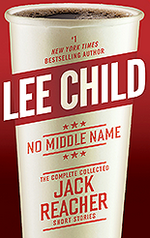
No Middle Name by Lee Child (corrected)

No Middle Name No Middle Name: The Complete Collected Jack Reacher Short Stories

by Lee Child
Series: Jack Reacher

Hardcover, 418 pg.
Random House Publishing Group, 2017

Read: May 31, 2017


Over the years, Lee Child has published a number of short stories/novellas featuring Jack Reacher, and finally they’re all published in one handy collection. Some are available in non-ebook format for the first time, too. Also, we have a brand-new novella to kick things off. For many, this is the first they’ve been able to access them — I haven’t read any of them before, but I’ve listened to most of them in audiobook format.

Now, as I’ve said before, short stories aren’t normally my bag — and that’s very true for the Reacher stories. He just works better in novel-length stories, generally speaking anyway. For those stories I’ve listened to already, my opinion of them didn’t really change as I read them — the couple I liked, I still liked. The others . . . well, I remained unimpressed — it’s good to know that it wasn’t the format or Dick Hill (the narrator) — it really was the length or story.

But enough about that — there are three stories that I want to talk about — the first two are short stories that I really enjoyed. They’re just the right length, which is nice, you don’t feel short-changed. They also don’t feature Reacher that prominently. The first is “James Penney’s New Identity” (which apparently was published in a shorter form originally), it’s a story about a man who’s the victim of changing economic times who has had enough — at a pivotal point for him, he meets Jack Reacher (still in the Army). By his words and actions, Reacher changes the rest of James Penny’s life — and Reacher doesn’t have to fight anyone to do it. This story leaves the reader with more questions than answers — but in a good way.

“Everyone Talks” is written from the POV of a new police detective who has the good(?) fortune to run into Reacher in a professional capacity on her first day. I really liked this one — Reacher was pretty ingenious here dealing with the problem he sticks his nose into in a way that shows more brains than brawn. I think I actually laughed out loud as soon as I realized what he was up to. Pretty clever.

Oddly. there are two Christmas-y stories — I don’t know why I find that so odd, but Reacher doesn’t feel like a Christmas character. I liked, but wasn’t wowed by, both of them.

Obviously, the big thing here is the new novella, Too Much Time. Reacher’s wandering through a town and gets peripherally involved in stopping a petty crime. He allows himself to be cajoled by the police into helping them out for a few minutes afterwards. Things go wrong just a few minutes later. This is as good a novella-length story that I can imagine for Reacher — there’s a pretty good fight, Reacher solving a puzzle while helping the authorities — and keeping himself out of trouble. A little bit cerebral, a little bit thug. The perfect Reacher recipe. If Andy Martin’s book has taught me anything, it’s that there’s some significance to the law enforcement officials having names that start with A, B, C and D. If I was more clever, I’d know why. Still, I liked it a lot.

A nice, solid collection — with some strong stand-outs. Reacher fans need to grab it.

—–

4 Stars

2017 Library Love Challenge

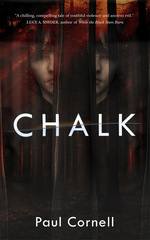
Chalk by Paul Cornell

ChalkChalk

by Paul Cornell

Kindle Edition, 206 pg.
Tor.com, 2017

Read: May 5 – 8, 2017

There are kids who went through school experiences like mine who will never watch football, and there are those who end up playing for Arsenal. Okay, who will end up with season tickets. Stockholm syndrome will only take you so far.

Enough about what I am now. That comes later.

Everyone keeps talking about this as a story about bullying — sure, there’s a little bullying here. But mostly, that’s like saying that Hannibal Lecter enjoys an unconventional diet. What happens to Andrew Waggoner is so far beyond bullying — it’s flat out assault (but with a psychological component that matches bullying). After a Halloween dance, Waggoner is forced into the woods by the school bullies and is assaulted. Somehow, his trauma links him to some long-dormant forces who take the opportunity to reassert themselves. One manifestation of the mystical/magical works with (compels? coerces? convinces?) Waggoner to take his revenge against those who permanently scarred him mentally and physically.

And over the next 12 months, that’s just what happens — Waggoner and/or his mystical companion (it’s never clear exactly how much is done by each) exact their revenge — Waggoner vacillates in his commitment to this project, and comes close to stopping on many occasions. In the midst of this, he becomes a writer and makes a friend based on shared interest, rather than just being social pariahs. In short, he starts growing up.

Meanwhile, the ancient forces tied to Waggoner are in open conflict with the dominant, more modern/contemporary, forces/beliefs. The school — and the students’ lives — become the major battleground for them, the final conflict coming on the anniversary of the attack that changed Waggoner’s life forever.

I kept seeing the school as the school from Sing Street (except, in the West Country, not Dublin — but roughly the same era), which I know is inaccurate, but I couldn’t stop myself. Pop music plays a large role in the story, and as it’s set in the early 80’s I didn’t have to google most of the songs (there were a couple of tunes that didn’t make it to Idaho that long ago) — which was a plus for me, and probably most readers.

You can tell (well, you can guess) that Cornell and Waggoner had similar experiences in their early lives — the language he uses to describe the bullying speaks to that. But more than that, the way he describes how the bullying shaped him, both then and when Waggoner reflects on those events from the vantage point of adulthood, resonated with me, and will with many readers.

The characters — bullies, victims, other children, or adults — were all wonderfully constructed. I’m not sure that I liked any of them (including Waggoner), but I was drawn into this world, and was very invested in what happened to each of them.

This was intense, gripping, strangely something (I want to say beautiful, but that doesn’t seem right) — there’s a je ne sais quoi about Chalk that inspires and repulses at the same time. I know I haven’t done a good job describing this book — I’m trying hard not to ruin anything for future readers. It was one of the more affecting, compelling books I’ve read this year. Cornell does a masterful job of mixing our reality with his fantasy — as he’s shown in the Shadow Police and Lychford books — this time you add in a layer of childhood horror and wonder to that combination.

This is something special, you won’t read much like it.

—–

4 Stars

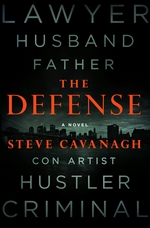
The Defense by Steve Cavanagh

The DefenseThe Defense

by Steve Cavanagh
Series: Eddie Flynn, #1

Hardcover, 306 pg.
Flatiron Books, 2016

Read: April 28 – May 1, 2017


Eddie Flynn is a con artist who went legit — mostly. There’s a lot of call in his new life for the skills he developed in his old. He’d been pretty successful until a horrible outcome tied to his last case sent Eddie around the bend — he’d vowed never to get back into the courtroom. He just couldn’t handle anything like what had happened again. Until the head of the Russian mob in New York is up on murder charges.

So what brings Eddie back to defending accused criminals? Well, it’s that old story that we’ve all heard a million times — he’s abducted by the Russian mafia, had a bomb thrown on to him and the only way that keeps that from blowing up is his continued compliance — but that’s not all: Eddie’s daughter has also been kidnapped and his being held hostage. All Eddie has to do is keep the case going long enough for the Prosecution to bring out its big witness from protective custody so that the bomb Eddie’s carrying can be used to kill the witness.

Not a plan Eddie’s crazy about, but it’s not like anyone consulted him. He dives into the defense like his life depends on it (oh, wait . . . ), and comes to a couple of conclusions: 1. He and his daughter are not going to live, no matter what the kidnappers said — unless he pulls a rabbit out of a hat; 2. there’s something strange going on with the case that just doesn’t make any sense; 3. there’s something strange going on with his client’s men; and 4. he just might know how to win the case without anyone having to be blown up.

While we see Eddie’s efforts to defend his client and to get freedom for himself and his daughter, we also get flashbacks to the calamity of the previous year, Eddie’s childhood and criminal career, his relationship with his daughter and more. Cavanagh handles the balancing act between the background and the ongoing action well — the past informing and shaping the present, while keeping things tense for the now. How Cavanagh pulls that off in 300 pages, I’ll never know. And it is tense throughout — Eddie barely gets a chance to breathe, it’s a good thing he has a lifetime of thinking quickly on his feet, or there’d be no hope for him.

I liked Eddie almost immediately — you have to, or you’re not going to enjoy this book. He’s one part Mickey Haller, one part Andy Carpenter, one part Nicholas Fox — a slick, clever and tough lawyer, basically. His friends were interesting and his opponents were just what you want in antagonists. There was real threat, real peril throughout, yet you always knew that Eddie Flynn had a trick or five up his sleeve.

The last chapter felt more like the wrap-up of a stand-alone thriller than it did the first novel in a series. Not that it precluded further adventures, it just didn’t point to them the way series generally do, but clearly Cavanagh didn’t let that stop him — book 3 comes out in a couple of weeks. I’m looking forward to spending more time with Eddie soon, myself.

—–

3.5 Stars

High Heat (Audiobook) by Lee Child, Dick Hill

High HeatHigh Heat

by Lee Child, Dick Hill (Narrator)
Series: Jack Reacher, #17.5
Unabridged Audiobook, 2 hrs., 27 mins.
Random House Audio, 2013

Read: March 16 – 17, 2017


Ahhh, finally — an actually satisfying shorter Jack Reacher story. It’s longer than the others I’ve tried — a novella, not just a short story. That’s probably a lot of it, but there’s something more to it — just don’t ask me what.

Reacher’s on summer vacation before his senior year — pretty much fully grown, has a good head on his shoulders, and is as arrogant and invincible feeling as most teenagers (he’s just big and tough enough to back it up). He’s visiting NYC for the day before going to visit his brother at West Point.

It’s 1977, a summer in NYC known for two things: incredible heat and Son of Sam. Both have an impact on this story (no, Reacher doesn’t stop the killer or anything — phew). Reacher flirts with some college girls, breaks up a fight with a mobster and an undercover FBI agent, survives a blackout, spends some quality time with one of the college girls and helps the FBI agent out — while engaging in a few solid fights.

The action takes place in one night — probably 14 hours or so, but Child manages to cram a lot into those hours. Is it realistic? No, not even by Reacher standards. Is it compelling — yup. Will it keep you interested? Oh, yeah.

Dick Hill sounded to me like he as having a lot of fun reading this one — which is fitting, it’s probably the most “fun” Reacher story I’ve come across (well, maybe the Reacher/Nick Heller story in FaceOff is a little more so). He does his typical job, satisfying in his delivery, keeps you engaged, doesn’t wow with technique.

It’s a fun story, nothing to get excited about, but something that Reacher fans will enjoy, in a complete-feeling story. Good enough for me.

—–

3.5 Stars

Not a Drill (Audiobook) by Lee Child, Dick Hill

Not a DrillNot a Drill

by Lee Child, Dick Hill (Narrator)
Series: Jack Reacher, #18.5
Unabridged Audiobook, 1 hr., 27 min.
Random House Audio, 2014

Read: March 14, 2017


Reacher sets out for the Canadian border, to make it as far north on this Interstate as possible, just because. Not too far south from there, he stops in a tourist-y town, a haven for backpackers, hikers, wilderness types in general. Before he leaves, a whole lot of military types show up and block access to the forest from the town (well, they try to — the forest is pretty big, it’s impossible to block access to the whole thing).

This gets Reacher’s curiosity piqued and he starts poking around to see if he can understand why.

I don’t want to sound bloodthirsty here, but not a single fight. No threat of violence breaking out. Mostly, it’s Reacher walking around and observing things before making a heck of a guess/deduction that proved to be right.

Dark, cynical ending — one of Child’s more political statements.

Hill was okay, not terribly interesting, but I think that’s Child’s fault this time.

It’s not bad. It’s just disappointing, short and . . . bleh. Proof that they can’t all be winners, I guess.

—–

2 1/2 Stars

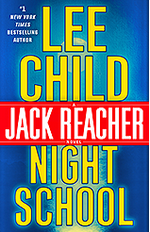
Night School by Lee Child

Night SchoolNight School

by Lee Child
Series: Jack Reacher, #21

Hardcover, 369 pg.
Delacorte Press, 2016

Read: January 5, 2016

One of the strengths of Lee Child’s Jack Reacher series is the way it bounces around in time — sometimes it’s Reacher’s post-military life, sometimes it’s while he’s serving, sometimes you get a couple of books in a row that are clearly tied together, sometimes it’s impossible to tell what chronological relationship a book has to the rest. The central character is what matters — is Reacher essentially the man we met in Killing Floor? As long as the answer is, “yes,” the rest of the details don’t matter that much.

So, following a successful classified mission, Major Jack Reacher is assigned to a training school. Which is just a flimsy cover for an inter-agency task force with Reacher, a FBI agent and a CIA analyst. The Intelligence and Defense world is trying to adjust to a post-Cold War reality, looking towards Middle East threats, rather than the Warsaw Pact. An undercover operative has indicated that something very big is on the verge of happening — no one is certain what, where, or when — but they know that a lot of money is exchanging hands to lead to it.

The White House’s directive is simple: find out what’s afoot and stop it. Whatever it takes.

Since this is Army-era Reacher, first thing he needs is Sgt. Frances Neagley, who continues to be just about as smart, possibly tougher, and more resourceful than Reacher. The CIA analyst and FBI agent are involved, but it doesn’t take long for Reacher to go his own way (with Neagley half a step behind). The other direction makes sense, but this is a Jack Reacher novel, so you know he’s right.

It’s a race against time and unknown calamity in a tense and taut thriller — just what Reacher fans want and expect. Not perfect, but a heckuva ride.

The thing that ties everything together for Reacher, allowing him to figure out what how the target pulled off what he pulled off was both entirely plausible and entirely hard to swallow. I have a hard time believing that no one before Reacher (or the target) figured it out before them. Even in the moment, with momentum driving the plot forward at top speed, I had to roll my eyes at it.

Despite the presence of Sgt. Neagley, Army-era Reacher books don’t work as well for me. He’s far better as a nomad, answerable to no one (save the occasional employer), not under any orders or required to follow certain regulations. Yes, given the setup for this one, he is able to disregard Army SOP, but only so much.

I liked it, but didn’t love it. I had a lot of fun, and was engaged throughout. But it was a little bit of a let-down after Make Me. A mediocre Reacher is still better than so many books — and this was both mediocre and better — I’m glad I read this, and can’t imagine how anyone who likes a suspense/thriller novel wouldn’t. Still, Child is capable of more, and I hope he delivers that next time.

—–

3.5 Stars

2017 Library Love Challenge

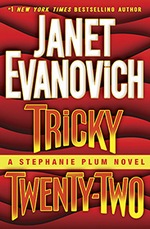
Tricky Twenty-Two by Janet Evanovich

Tricky Twenty-TwoTricky Twenty-Two

by Janet Evanovich

Series: Stephanie Plum, #22

Mass Market Paperback, 313 pg.
Bantam, 2016

Read: December 31, 2016

Stephanie’s on the hunt for a frat boy on the run, a lawn equipment thief, and a rapist. The latter two are pretty straightforward, but the frat boy, Ken “Gobbles” Globovic? Something’s not right with this one, and Stephanie puts on her deerstalker to try to figure that out.

Meanwhile, Ranger needs a woman for some security work, so naturally, Stephanie’s on the case. Things don’t go as well with that as it should’ve and bodies start to show up. That’s when things really start to get interesting.

Joe and Stephanie are both examining other career prospects, and watching Stephanie try out different ideas is good for a grin or two. I think I’d have preferred letting that play out a little more, honestly. She also could’ve played out the Grandma Mazur story longer, too — that’s something I almost never say. The former would’ve been easier than the latter, definitely. Still, there was a time when Evanovich seemed to drag out similar storylines longer than I’d like, so this “leave ’em wanting more” philosophy really works (“’em” roughly translates to The Irresponsible Reader here).

Ranger stood hands on hips and looked at me. “I’m completely enamored with you, and I have no idea why.”

“I’m cute?”

“Babe, there has to be more, but honestly, I don’t know what it is.”

I’m with him there, there are times I really wonder why I’ve read 22 of these (and plan on reading more). Now that I’m only reading one of these a year, it’s far easier to enjoy the Lula’s extremes (and/or Grandma Mazur), the same beats getting played out over and over, and so on — if anything, it’s comfortable. Part of the fun is to see the different ways that Evanvovich comes up with to hit these beats.

This time out, the stakes with Joe seem to be bigger than usual. And the crime that Stephanie uncovers during the course of her other investigations/hunts is bigger and more serious than usual. Not that serial killers and mafia bosses are the stuff of sitcoms, but we’ve seen them (in various TV/Book series) used in light ways pretty often lately.

In the end, this is a better than average Stephanie Plum adventure with enough of the old reliable characters and beats and some pretty good character moments. A satisfying read for new fans or old.

—–

3 Stars

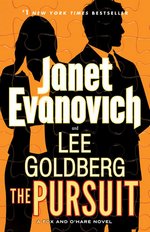
The Pursuit by Janet Evanovich and Lee Goldberg

Why this took me so long to post, I’ll never know…it’s bad enough that it took me a month and a half to read it.

The PursuitThe Pursuit

by Janet Evanovich and Lee Goldberg
Series: Fox and O’Hare, #5

Hardcover, 304 pg.
Bantam, 2016

Read: September 2, 2016

“I’ll send your money, but don’t think about running out on me,” Dragan said. “Or I’ll torture and kill both of you.”

Nick shook his head. “You can’t go ten minutes without making a threat, can you?”

“It’s called leadership,” Dragan said. “Stay in touch.”

Following the cliff-hanger ending to The Scam, I wondered if this book would shake off the fairly well-established outline for these books and instead, we’d get Kate globe-trotting from exotic locale to exotic locale hunting them down. Thankfully, Evanovich and Goldberg had something better in mind (not that something like my idea wouldn’t have been fun), while pretty much sticking to the typical outline.

Nick’s kidnapping ends up setting the stage for taking down an international thief and would-be terrorist. This thief, Dragan, is the anti-Nick. He’s about profit, violence, and more profit. There’s no style, no fun, no zest . . . But Dragan knows what he needs to accomplish a couple of his biggest heists: Nick.

Naturally, he gets more than he bargains for (and I don’t just mean Kate). Of the various criminals, masterminds, thieves and all around nasty folks that these two have taken down or encountered, Dragan is the worst. Thankfully, Evanovich and Goldberg are able to balance the threat and the humor, the romance and the robbery.

It all comes down to relationships: which is really why we come back to this series. Kate and Nick (I’m gladdened/relieved/a little surprised by where they have the relationship now). Nick and Jake. Kate and Jake. The rest of the team with Nick and/or Kate. Jake and anyone he comes into contact with (if we could get some young, active duty Jake stories, that’d be awesome). I like the way that their team is doing non-con work together — despite their best intentions, Nick and Kate have formed an actual team. There are a couple of additions this go-around (one is a blast from the past, but still, new to this side of the road).

I think there’s a misfire here — there’s a new foil introduced into Kate’s life, an FBI agent who is to work with her without knowing about this little side-project. He’s a little humorous, but mostly annoying. And his existence seems to run counter to the people at the top of the FBI sanctioning (however unofficially) what’s going on here. I’m prepared for them to convince me otherwise, but until they do, I’m going to groan whenever he shows up.

The writing is crisp as ever, it seems so smooth and effortless that it has to take a lot of work. There’s a great info-dump (because that’s actually a thing, rare as it may be) about an infectious disease. Not only does it inform the reader, but it’s written in a way to flesh out a character and add a sense of threat to the narrative.

There’s an editing blunder in the final few chapters that took me out of the moment (using Kate’s name instead of one of Dragan’s crew), that was oddly reassuring to me — even the big publishers stumble, not just the small press/self-pubbed guys like I’ve been reading so much lately.

I can’t recall if I’ve mentioned Harry Harrison’s Slippery Jim diGriz when talking about this series, but this is Nick Fox at his Slippery Jimmiest (Kate is a little like Angelina diGriz, too, come to think of it — but not as much). Fans of either should look into the other. The Pursuit is another solidly entertaining adventure in this series. Really looking forward to what’s next.

Oh, I should add that if you’re a fan of eggs, you might want to eat a few extra before reading this book, because it’ll be tough to eat one for a while. Trust me on this one.

—–

4 Stars

The Lost Child of Lychford by Paul Cornell

The Lost Child of LychfordThe Lost Child of Lychford

by Paul Cornell
Series: Witches of Lychford, #2

Kindle Edition, 144 pg.
Tor.com, 2016

Read: November 2 – 3, 2016


It’s been a few months since Reverend Lizzie Blackmore, Judith (the elderly witch), and Autumn (now her apprentice and her employer) fought off the supernaturally corrupt megastore (and probably mundanely corrupt, too, come to think of it) and life has moved on in a relatively normal way. The three have forged some sort of alliance — easy for Autumn and Lizzie, already close, but learning new things about each other; not so easy for Judith to be accepted and to accept them, I don’t think. Autumn’s learning from Judith, while getting some help in her shop (which seems like a small town version of Atticus O’Sullivan’s and Alex Verus’ shops combined). Judith’s got something to do, a way to pass on her knowledge, and Lizzie is super-busy with pre-Christmas activities in the church.

But given everything we learned about Lychford, it’s not terribly surprising that things won’t stay that way, it’s just a question of what kind of other-worldly strangeness will come calling first.

In this case, it’s a ghost — or ghost-like apparition — that came to Lizzie at church. A small child looking frightened and worse for wear, with a simple request of: “No hurting.” Now, our trio can’t all agree on what the apparition is, but they can all get behind the idea of “No hurting.” They just have to figure out if that’s something they can stop — and then they’ll worry about the how. Neither piece of that plan works the way that it’s supposed to, but it seems these three are pretty good at improvising. Autumn, in particular, seems particularly adept at that.

I appreciated the fact that each of these women make one significant mistake (and probably some smaller ones) — two that come from inexperience, one that proves that experience doesn’t equal infallibility. They’re all believable, they do more than just advance the plot, they are honest with the characters and situation. Too often in novels you’re left wondering why a protagonist would be so stupid as to do X — when really it comes down to they have to do X or the really cool Y thing can’t happen at the end. That doesn’t happen here — sure, the attentive reader might be able to see the blunder coming around the corner, but there’s no reason to think that our protagonists should until it’s too late. Because while these three are fictional characters, Cornell imbues them with a genuineness, a substantial-ness that’s fitting for a real person (sadly, not always present with them, however).

Man, I had to use DuckDuckGo a lot to get all the cultural details in these pages — I know next to nothing about Anglican Christmas festivities, and less about British Christmas Pop Music. I’m not sure how much I’ll benefit long-term from this research, but it was interesting. I might have been better off not knowing anything about Greg Lake and his song, though.

If there was such a thing as magic, it wouldn’t look like anything from Harry Potter, Harry Dresden or some other fantasy series starring a Harry. It’d look like this, I wager. Quiet; shadowy; right out in the open, yet somehow unseen. All substance, no flash. Oh, yeah, and creepy — can’t forget creepy and inexplicable. Which is pretty much everything that happened in this book — up to and including most of the things the trio does to prevent things from getting really out of hand. It’s hard to talk about realism in a fantasy novel, but Cornell’s one of those that make you do that.

The Witches of Lychford was thoroughly entertaining and did a great job of establishing this world. This novella took full advantage of that to tell a more compelling story. I don’t think it’s absolutely necessary to read Witches first, but it’d help a lot. “I Believe in Father Christmas,” notwithstanding, I thought The Lost Child of Lychford lived up to its predecessor and left me eager to return to this little village.

—–

4 Stars

Page 12 of 22

Powered by WordPress & Theme by Anders Norén