Category: F-J Page 4 of 27

Not Prepared by Matthew Hanover: This’ll Melt Your Heart and Bring a Smile to Your Face

Not PreparedNot Prepared

by Matthew Hanover

DETAILS:
Series: Wallflowers, #4
Publication Date: July 25, 2023
Format: eARC
Read Date: July 7-10, 2023

The Series

Let me start with this—I’ve labeled this as the fourth book in the Wallflowers series (I prefer to think of it as the Alli-verse, but whatever, I’ll go with Hanover’s title). This does not mean you need to read the other three first. There’s only the thinnest little thread tying these together and there’s no reason not to read them all as stand-alones.

What’s Not Prepared About?

Our protagonist, Neil, is a single photographer approaching 40. He’s fairly successful and comfortable with his life—which is primarily about his work and staying healthy. He enjoys a few romantic dalliances but stopped pursuing anything serious some time back. He’s fairly free and likes his life—outside of some family he rarely sees (largely due to circumstance, not preference), he really has no ties. Well, there’s the daughter of his childhood friend—Neil was named her godfather when she was born a little over a decade ago, shortly before his friend died. He’s seen her a few times over the years and babysat her occasionally, but that’s about it.

One night, the now 12-year-old Chloe shows up on his doorstep. Chloe says her mom dropped her off on her way out of town for a few days and that she needs to stay with Neil. It’s not really the most convenient or thoughtful way to do this, but Neil doesn’t begrudge Chloe for it—her mother, Sara, has never been thoughtful or responsible so it fits.

The next day, Neil takes Chloe to get some clothes—Sara left her without any. He’s not crazy about this, but it needs to happen. Neil’s really not crazy about helping her find underwear or a training bra. Thankfully, there’s a woman near them in the store who sees Neil’s predicament and comes to his aid.

Naturally, because it’s this kind of book, there’s a spark between this woman, Jenna, and Neil. A couple of days after their meet-cute, the two meet for coffee. The sparks are still there—and Jenna’s able to give Neil a hint or two about dealing with Chloe.

Neil’s going to need more than a hint or two because Chloe eventually comes clean with him—she has no idea where her mom went and when/if she’ll be coming home. Chloe’s looking for a new home and family, and she’s picked Neil (and would like Jenna to be part of it, too).

This is the last thing that Neil bargained for, but he’s drawn to the idea (about both Chloe and Jenna). Now the question is, can they make it work?

Chloe

When I posted about Hanover’s first book, Not Famous, I spent a lot of time talking about the protagonist’s younger sister. She wasn’t that integral to the plot, but brought out aspects of the central characters you wouldn’t have seen otherwise—but more than that, she’s a perfectly charming character that you wanted to see more of. In Not Prepared, Hanover takes a very similar character and makes her the focus of the novel.

If that’s all he did, I’d be a fan of the book—thankfully he does more (some of which I’ll talk about in a minute). But let’s focus on Chloe for a moment.

So, obviously, she’s a mess. Her mother abandoned her and it’s pretty clear that before she literally abandoned her, Sara put the minimal amount of effort (at best) in before that. She’s not used to being cared for, for having limits placed on her, for having a reliable presence of any kind—once she’s given those she responds well to them and flourishes (probably responds a bit too well, but we’re not looking for gritty realism here).

Chloe’s also obviously an intelligent and resourceful girl who sees her opportunity and seizes it. Not simply for her physical needs—but she’s long had an emotional tie to Neil and she makes the most of her time with him to feed and nurture that bond. It takes Neil a bit to understand just what he’s meant to her for so long, but once he does he reciprocates.

It’s both the portrayal of Chloe and the depiction of their relationship—in all of its ups and downs, flaws and strengths—that makes this book so strong

A Meeting of Anxieties

Neil suffers from health anxiety—a term he (understandably) prefers to hypochondria—which leads him to spend a lot of time in hospitals and doctor’s offices. He’s both very aware that he’s very likely completely healthy and yet he’s frequently convinced that he has any number of undiagnosed conditions or ailments, frequently exasperated by news reports or pharmaceutical commercials. This is something that’s impacted his life as long as he can remember—and having a dear friend die at a young age likely didn’t help. As a result of this, he’s rather health conscious, particularly when it comes to the food he buys and prepares. Which is exactly what a 12-year-old doesn’t want to hear or experience.

Jenna struggles with brumotactillophobia (a form of OCD relating to foods touching each other), which sounds like something to chuckle over, but for Jenna, it’s a serious and frequently embarrassing issue.

Neil’s lost relationships—short-term and incredibly serious—because of his anxiety. Jenna has, too—the number of first dates she’s had that have ended in disaster is the kind of thing to make anyone into a social hermit. Because they can relate to each other’s hardships—and because they’re basically decent people capable of empathy—both of them can understand and accept the other. In fact, it’s an early way for them to bond. There are points throughout the novel where they’re able to help each other with their anxiety, which just made me love them as a couple and like the book even more.

Chloe’s better for spending time with both of them and seeing how they cope and deal with their anxieties—she’s better than any of the characters in the book at supporting them through bumps in the road. As I type this, I realize it’s due in part to her having spent her entire life taking care of her mother, so maybe it’s not as heartwarming a point as I initially thought. Still, it endeared me to her.

Alli Conwell

For years, one aspect of Marvel (and related) movies that was a sure-fire pleaser was the inventive way that Stan Lee would show up in some sort of cameo. Hanover’s not quite at that point with the singer-songwriter that was at the center of his first novel, Not Famous, but it’s in sight.

I do enjoy seeing how Alli will pop up in the various books. And somehow—don’t ask me how, I’m worried it’s a sign of cognitive decline—when she does pop up I’m surprised.
Me: Oh, wow! That was great that he tied Alli into this.
Voice in My Head: You mean like he always does? Why weren’t you looking for it?
Me (grumbling): Shut up.

In a way that won’t bother anyone who’s never read a Hanover book before, her presence is felt throughout the novel, beginning with one of my favorite lines of the book.

Post-Credits Scene?

If Marvel (and other) movies* have taught us anything in the last 15 years, it’s that you don’t leave the movie theater until the credits have stopped rolling and all the lights have come up. Period. Sure, you’ll get a complete story if you do, but you’ll be missing something.

Hanover has provided his readers with a “post-credits” chapter—a bonus chapter that you can access for free. Now, if you don’t, you will get the entire story and you should be completely satisfied (I sure was). But the bonus chapter? That will make you happier and give you a better idea of what will happen to our characters. My ARC didn’t have the entire bonus chapter—but it had enough to give me that boost that a good-post credits scene does (and it gives me a reason to actually open the version I pre-ordered, so I can access the rest of it).

* That’s entirely too many Marvel movie references for a post here—particularly for a book bereft of super powers. Oops.

So, what did I think about Not Prepared?

This is the best thing that Hanover has published—it’s also my favorite so far. Any of the three central characters would be enough to qualify the book for the latter—but you throw them together, and it’s a lock.

Jenna is an independent, self-assured woman who knows her limitations, has a strong sense of self and her morality, and because of that, is able to let herself be vulnerable and open to those she wants to be vulnerable and open to. She makes room for Neil and Chloe because it’s her choice, not because she’s driven to, or needs something.

I’ve said enough about Chloe at this point that any more would be overkill—so I’ll leave it with saying that she’s an adorable kid that I want to read a sequel or three about (but not really, because I’d rather imagine what happens after this than know).

Then there’s Neil—a mature narrator/protagonist, rather than the twentysomething still trying to figure out what kind of life he wants. Neil has his life, he’s responsible, his career’s in a good place. Somewhat by force and a sense of duty (with a twinge of guilt), but primarily because he wants to—he changes his life to accommodate Chloe. This will ultimately prove to change his whole life for the better.

There are no easy answers in Not Prepared, nothing works out just the way that any of the characters are looking for or expect (no readers, I’d wager). But there’s hope, there’s possibility, there’s a solid base for good things for them all. I think this is as good a sign for Hanover’s storytelling as it is for the book itself—there’s some mature writing at work here.

Possibly my favorite thing here is that while this book is at heart a Rom-Com, the romantic story takes a backseat to the love story between the girl who needs a family and a bachelor who didn’t expect one. There’s still plenty of “rom”, and a good amount of “com” of a handful of stripes (particularly when it comes to a single man being thrust into dealing with a young girl at the cusp of puberty)—but there’s a lot more, too.

It’s all told with Hanover’s trademark wit, charm, and grace—prose that moves so smoothly you don’t realize how long you’ve spent sucked into his book. He won me over starting at the prologue, and I don’t know if I stopped grinning throughout (well, except to chuckle or smile). The emotions are real and grounded—both positively and negatively. His depictions of anxiety really impressed me, and there are scenes between Chloe and Neil that got me choked up.

I strongly recommend this warm comedy about an unorthodox way to start a family.

Disclaimer: I was given a copy of this ARC by the author in exchange for this post. Which gave me something to opine about, but otherwise didn’t influence my opinion.


4 1/2 Stars

My Favorite Non-Crime Fiction of 2022

2023 Favorite Non-Crime
Back when I started this site, I knew the content would be largely “genre”-oriented. I’d have wagered the content would be roughly 1/3 Mystery/Detective fiction, 1/3 Urban Fantasy, and slightly less than 1/3 SFF, with “non-genre” fiction, humor, and non-fiction being enough to make my one-thirds just an approximation (honestly, if you asked me what I read regularly, that’s pretty much how I’d describe it today). Actual numbers show that’s wrong—it’s almost 40% Crime/Thriller Fiction, the rest of fiction is around 30% combined. Which is just a long-winded way to get to these two points: because Crime Fiction takes such a big chunk of my reading, it gets its own “Favorite” list, but none of the others really garner enough numbers for their own.

When it comes to this list of favorites, I had to choose—top five or top eleven. There are six I just couldn’t choose between—but hey, it’s my list, so here are my favorite 11 non-Crime Fiction Novels of 2022. It took me very little time to regret trying to write anything new about these books—I’m supposed to cover these in a measly paragraph? I borrow from my original posts, and really say less than I wanted to (or this post would be about 5 times as long as it is).

As always, re-reads don’t count—only the works that were new to me.

(in alphabetical order by author)

Amongst Our WeaponsAmongst Our Weapons

by Ben Aaronovitch

My original post
Any installment in this series is a strong contender for a favorite of the year even before I open it, and this one is a great example of why. While telling a pretty strong story, Aaronovitch expands this world and the reader’s understanding of it, a whole new magic system, and seemingly introduces the next major story arc for the series. We get to see almost every major (and more than a few minor) characters, too. For a fan, this book was a heckuva treat.

4 1/2 Stars

Wistful AscendingWistful Ascending

by JCM Berne

My original post
This novel—a Space Opera/Super-Hero mashup—hit just about every button I have and probably installed a couple of new ones (talking space bears, for example). If I try to expand on that I’m not going to shut up anytime soon. Read my original post—or just read the book.

4 1/2 Stars

The Veiled Edge of ContactThe Veiled Edge of Contact

by James Brayken

My original post
Brayken’s debut surprised me more times than I thought was possible. Every time I thought I knew what direction Brayken was taking for the story, the protagonist (or major characters), tone, or even genre—he’d make a sharp turn and make the book better than I thought it was. I have questions and qualms about some aspects of the novel—but this is going down as a highlight of 2022 anyway.

4 Stars

The Art of ProphecyThe Art of Prophecy

by Wesley Chu

My original post
In my original post, I said, “I don’t know that I can really express how excited I am about this book. The last time I was this enthusiastic about a Fantasy novel was Kings of the Wyld, and I’ve read some really good Fantasy since then. But this is a whole different level.” It features my favorite new-to-me-character of the year. It’s just a glorious read. I’ve read (and enjoyed) a lot of Chu’s previous work and this is so far beyond those that it’s hard to describe.

5 Stars

The Iron GateThe Iron Gate

by Harry Connolly

My original post
Every Twenty Palaces novel is better than the last—and The Iron Gate is no exception. This novel is a better version of everything Connolly has delivered before. We get character growth in a character I’d have considered pretty unchangeable, a dynamite plot (two, actually), and a disturbing monster to boot. There’s just so much to commend here—both for this novel and what it promises for the future.

4 1/2 Stars

The Part About the Dragon Was (Mostly) TrueThe Part About the Dragon Was (Mostly) True

by Sean Gibson

My original post
This is not a book to read if you’re in a “find out what happened and get to the end of the story” frame of mind. This is a “enjoy the trip, not the destination”/”stop and smell the roses” kind of book. The destination/what happens is fully satisfying, but the getting-there is so much better. This Fantasy/Comedy sends up and celebrates so many Fantasy mainstays that fans (and detractors) of the genre will have a blast on that front alone. The cast of characters is a blast and the protagonist, the bard Heloise, is even better.

4 Stars

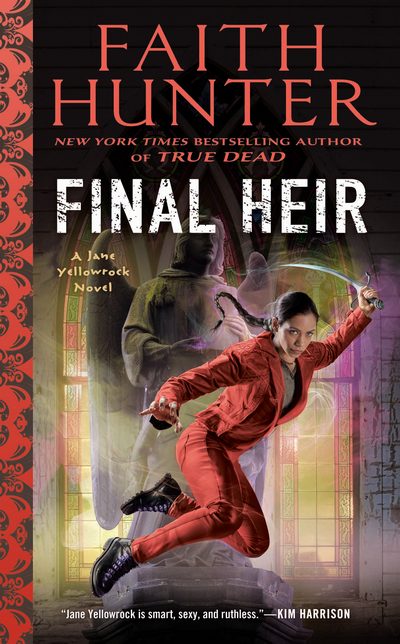
Final HeirFinal Heir

by Faith Hunter

My original post
The fifteenth Jane Yellowrock novel was the series finale and the series went down the way it should—with a lot of heart, a lot of love, a lot of violence, and so many buckets of blood. I’ve been reading these for so long that I really didn’t want to see the series end (but it was time). From the jaw-dropping first chapter to the last lines that genuinely made me misty, Final Heir was a great ride.

5 Stars

Kaiju Preservation SocietyThe Kaiju Preservation Society

by John Scalzi

My original post
This book delivers all the ridiculous fun that the title (and premise) promises. Scalzi calls it a pop song, I tend to compare it to a popcorn movie. It’s not meant to provoke thought, to be pondered over, or analyzed. It’s meant to be enjoyed, it’s meant to be light and entertaining. Consider this me writing on the literary equivalent of a bathroom stall, “For a good time…”

5 Stars

Station EternityStation Eternity

by Mur Lafferty

My original post
A Murder Mystery set on a living Space Station with only three human characters surrounded by some of the strangest alien species you’ve seen (those three humans are pretty odd, too). This novel is one for mystery fans open to aliens walking around, SF fans interested in a different kind of story, and readers who like good things. Social commentary, a twisty narrative, a clever mystery, and more chuckles than I expected to get from this. An inventive read that’ll leave you wanting more.

4 Stars

Theft of SwordsTheft of Swords

by Michael J. Sullivan

My original post
Multiple people over the years have told me to read this book (some multiple times). I finally did, and regret not paying attention to them earlier. It’s more “traditional” Fantasy than the others on this list, there’s almost nothing that someone who’s read/watched a handful of fantasy series hasn’t been exposed to before. It’s the way that Sullivan has assembled these tried and true elements that is going to make you happy. The sword fights are fantastic. The imagination showed in the magic system, the magical creatures, and the politics—between races, within the remnants of the human empire, and the ecclesiastical politics—are really well conceived and effectively portrayed. I can’t wait to dive into the rest of the trilogy.

4 1/2 Stars

Adult Assembly RequiredAdult Assembly Required

by Abbi Waxman

My original post
This novel starts in the same bookstore that Nina Hill works in, and she’s around a lot—but this isn’t her book. It’s the story of a woman who moved across the country to start her life over, and the results aren’t what she expected. Adult Assembly Required is funny, it’s sweet, it’s heartwarming, and will make you feel good all over. It’s full of the Waxman magic.
5 Stars

The Neil Gaiman at the End of the Universe (Audiobook) by Arvind Ethan David, Neil Gaiman, Jewel Staite: Let’s Keep this Short and Sweet

The Neil Gaiman at the End of the UniverseThe Neil Gaiman at the End of the Universe

by Arvind Ethan David, Neil Gaiman (Narrator), Jewel Staite (Narrator)

DETAILS:
Publisher: Audible
Publication Date: March 18, 2021
Format: Audible Original
Length: 29 min.
Read Date: December 28, 2022


This is a short story, so I’m not going to keep this short and sweet. Let’s go with a Pros and Cons list:

Pros Cons
Satisfying SF Story
Jewel Staite
Neil flippin’ Gaiman
Sound effects that are effective,
but a little too loud

It’s 29 minutes of entertaining goodness.

’nuff said.


4 Stars

Dead Lions by Mick Herron: An Overdue Read for Me, the Best of Both Worlds for Spy Fiction Fans

Dead LionsDead Lions

by Mick Herron

DETAILS:
Series: Slough House, #2
Publisher: Soho Crime
Publication Date: May 7, 2013
Format: Paperback
Length: 347 pg.
Read Date: November 21-24, 2022
Support Independent Bookstores - Visit IndieBound.org

…whatever we’re here for, Lamb’s not being punished. Or if he is, he’s enjoying it.”

“So what’s your point?”

He said, “That he knows where some bodies are buried. Probably buried a few himself.”

“Is that a metaphor?”

“I failed English. Metaphor’s a closed book to me.”

“So you think he’s handy?”

“Well, he’s overweight and drinks and smokes and I doubt he takes much exercise that doesn’t involve picking up a phone and calling out for a curry. But yeah, now you mention it, I think he’s handy.”

“He might’ve been once,” Shirley said. “But there’s not much point in being handy if you’re too slow to be any good at it.”

But Marcus disagreed. Being handy was a state of mind. Lamb could wear you down just standing in front of you, and you wouldn’t know he was a threat until he was walking away, and you were wondering who’d turned the lights out. Just Marcus’s opinion, of course. He’d been wrong before.

“I suppose,” he said, “if we stick around long enough, we might find out.”

Squirrel!

I read the first book in this series over 2 1/2 years ago. Since then, my friend Paul has been hounding me, nagging me, and generally pushing me to keep reading them. Insisting that I’m missing out. Etc. Etc. Etc. While I suspected he was right—and even if he wasn’t, I wanted to based on Slow Horses and everything I’d heard from Paul, Jeff at Barbican Station, and from several other fronts.

But we all know how easily distracted I can be. So…here we are 45 months later. And I know when I post this I’m going to get at least one text from Paul, saying things like: “I told you so!” and “It’s about time.”

I deserve both of those messages because he did tell me so; and yes, it is.

What’s Dead Lions About?

Jackson Lamb gets suspicious when an old, low-ranking spy from the Cold War era dies on a public bus. He follows Dickie Bow’s last movements and finds reason to indulge that hunch a little longer, bringing in one of Slough House’s new additions to do some more legwork. What they find doesn’t make him any happier—a bogey-man from the old days might be back. And that can’t be good.

Meanwhile, Spider—pardon me, James—Webb recruits Louisa Guy and Min Harper to help him with a little project he’s got going on. He’s trying to recruit a Russian oligarch—one with political aspirations—as an asset, and he needs some security work done by people who won’t get the attention of any of the bigwigs in MI5. Neither wants to work with Webb, but if they do, there’s a chance…not much of one…but a chance that at least one of them will be the first Slow Horse to move back to Regent’s Park. Both of them are ready to be that one—even at the expense of the other, no matter what relationship might be budding between the two of them.

Best of Both Worlds

While I have an appreciation for British Cold War Spy novels—they’re really not my thing. I’ve tried, both in print and on film—and they just don’t work. But that’s the kind of world that River’s grandfather, O.B., represents—and that Tavener and Lamb represent the end of. They have one foot in that world still, it defines them—but they’re both (especially Tavener) also part of the War on Terror, financial crimes/terrorism, etc. of our current moment. River, Ho, and the rest of the Slow Horses belong to the latter.

What this book does so well is to marry the two schools—we have a very Cold War holdover storyline, and a Putin-era storyline. Now, I can’t imagine that Herron is going to be able to pull this off regularly, but getting to do it in the second novel, solidifying the series’ identity as being able to work in both eras. I thought that was a great move that welcomes in fans of both eras of British Spy Fiction.

So, what did I think about Dead Lions?

So, back in 2019 when I read Slow Horses, I liked it and was impressed by it, but I only gave it 3 Stars. When I listened to the audiobook last year, I think I “got” what Herron was doing a little more. But I still wasn’t as impressed with this as everyone I knew seemed to be. I’m fine with that, but I wondered a bit if I was missing something.

I think I found whatever it was in the pages of Dead Lions. Because…wow. Herron does it all here—there’s some satire, there’s commentary on human existence, on the politics (and espionage) of the Cold War, on the politics (and espionage) of the 2000s, a real and slowly-building tension, there’s subtle wit, less-than-subtle wit, a plot that is impossible to predict, characters that are the most human you’ll find in spy fiction, dialogue and narration that are impossible not to endlessly quote…and fart jokes.

One lesson that readers of the first book should’ve picked up is that they shouldn’t get attached to anyone—look at the number of people assigned to Slough House at the beginning of the book and then at the end. Percentage-wise, it’s safer to be a George R.R. Martin character. Herron ensures that no reader of Dead Lions thinks that’s a fluke. Right now (and I’m ready to be disproven), I figure the only safe characters are Jackson Lamb and (sadly) James Webb—he seems to have the survival capabilities of a hardy cockroach.

Herron surprised me on multiple occasions—I think at this point, I’m going to just permanently suspend my reflex to predict what’s coming when I spend time with him. They weren’t just surprises—they were the kind that I absolutely didn’t even think of expecting—and then in retrospect, I don’t know how I could’ve imagined anything else happening at all.

From time to time, TV Critic Alan Sepinwall will recap an episode saying things like “if we only got X, that would be enough. If we only got Y, that would be enough,” and so on. I felt like that while thinking about this book. If we only got Lamb tracking the final movements of Dickie Bow, that would’ve been enough. If we only got the Louisa Guy/Min Harper storyline, that would’ve been enough. If we only got the Diana Tavener/Jason Webb scene, that would’ve been enough. If we only got River Cartwright going undercover, and everything he goes through…you see where I’m going. Any one of those would’ve been enough for me to realize I need to take this series seriously and get on with reading them all. You combine these points with all those that I decided not to list for space/spoiler reasons? I’m on the verge of being rabid.

Everything I thought was a bug about Slow Horses was a feature, and I see that now. Everything I thought was a fluke about Slow Horses wasn’t. Everything I thought was good about Slow Horses was at least a little bit great. How do I know that? I see all of those elements here and have a much better appreciation for them in Dead Lions so I can better understand its predecessor.

I had other things in my notes that I really wanted to cover. But…I’ve said the essentials, and am at the point where I’m trying to gild an already gilded lily. So, I’m going to leave all that unsaid. Yes, I may have overhyped this and doomed you to not appreciate it. I get that and apologize in advance. Just chalk this up to a new and rabid fanboy—go into this series expecting something good. And then when you’re ready to join the rabid throng, I’ll be waiting for you.

And now, I’ve got to start waiting for messages from Paul.


5 Stars
This post contains an affiliate link. If you purchase from it, I will get a small commission at no additional cost to you. As always, the opinions expressed are my own.

Gardens by Benedict Jacka: A Quick, Action Packed, Visit to the World of Verus

GardensGardens

by Benedict Jacka

DETAILS:
Series: Alex Verus, #12.1
Publication Date: October 31, 2022
Format: eBook
Length: 123 pg.
Read Date: November 3, 2022

What’s Gardens About?

This takes place about four months after Risen, and definitely should not be read by anyone who hasn’t read it (I’m not going to spoil anything though). We do get to catch up with the world of Mages, the Council, and the state of things with Adepts post-Risen, but we do so from a different perspective and with a largely new group of characters (they ultimately interact with some people we know though).

These characters are Daniel, Jess, and Emmanuel. They are youngish adepts with a little experience in thievery (although they really don’t like using that term) and are looking to expand. They’re hired by a mage to join a crew of others for a job to “retrieve” an object.

The object is in the possession of a mage, who they are told will be away from home for quite some time. All they need to do is open a lock (through an interesting application of wind magic that I don’t think I’ve seen before) and find the thing. Assuming they can get along with the other group of adepts hired for this job (which is clearly going to be an issue from the get-go), it sounds like an easy job.

But if it was an easy job, why would Jacka give us a novella about it?

So, what did I think about Gardens?

I had so much fun with this. It satisfied my desire to know more about this world and how things look after that fantastic finale—but was a different kind of story in it. Just not getting it told in Alex’s voice, but from a third-person narration, gave it a different feel immediately. Also, Jacka says that this is “a slightly different (but overlapping) genre to urban fantasy,” so that different feel is multiplied.

With all due respect to Jacka, I think it’s still UF. It is a darker form of it than we’re used to from him, though. But that’s just splitting hairs, and there are much better things to do with this novella.

Primarily we ought to just read and enjoy it—this is exactly what a heist-gone-wrong story told in the Verus-Verse should be. There’s in-fighting, double-crossing (maybe triple-crossing), lies, deception, unrequited love, and people in way over their head. Especially as we’ve been colored by Alex’s attitudes toward Adepts, it’s easy to forget what a great gulf there is between even a strong Adept and a Mage. Gardens does a great job of fixing that misapprehension. It’s a fast read with plenty of action—pound for pound, more than Jacka usually gives us, and I am here for it.

Is this a must-read for Alex Verus fans? No, not especially. But my friends, you will be missing out. You will be so glad you took an hour or so for this. This is definitely a must-not-read for people who haven’t read Risen (and if you haven’t read Risen, you likely haven’t read anything else in the series—which is something you should fix).


4 Stars

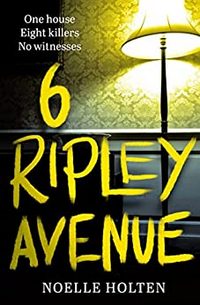
6 Ripley Avenue by Noelle Holten: One House. Eight Killers. No Witnesses.

6 Ripley Avenue6 Ripley Avenue

by Noelle Holten

DETAILS:
Publisher: One More Chapter
Publication Date: September 27, 2022
Format: eBook
Length: 378 pg.
Read Date: October 6-11, 2022

When you’re given the opportunity to confront your mother’s killer, do you take it?

I did.

No words were spoken though.

I just killed him.

Was it worth it?

Absolutely.

Do I have any regrets?

Only that I didn’t make him suffer longer.

What’s 6 Ripley Avenue About?

6 Ripley Avenue is a Probation Hostel—similar to what we call a halfway house in the U.S.—focusing on probationers convicted of violent crimes (including murder). It’s been plagued by controversy since before its opening two years ago. The concerns go beyond the typical NIMBY protests because of the violent nature of the residents.

Sloane Armstrong, a freelance investigative journalist, and Helen Burgess, an elderly woman who lives next door to the house, have been at the forefront of the effort to move and/or close Ripley House Approves Premises from the start. Their friendship was forged by this effort but has grown since then.

Now, a resident there—a convicted murderer—has been killed. The investigation into the murder highlights many of the concerns Helen has voiced and Sloane has published—poor staffing levels, inadequate security, malfunctioning CCTV, and more. Helen and Sloane see this as their opportunity to close the facility once and for all and work to uncover as much as they can about the crime and the systemic problems it exposes as possible for their purposes.

On the other hand, Jeanette Macy is the Senior Probation Officer on staff—she learns of the same problems (and more) during the investigation and sees this as the opportunity to improve things both at Ripley House and throughout the system.

The narrative bounces between the perspectives of these women as they investigate the happenings of that fateful night and interact with each other and the police during the inquiry. Will any of them be fast enough in their investigation to ensure the murderer is caught in time to save more lives?

It’s almost a locked-room mystery—but if you can’t trust the locks on the room…

The Prologue

I see a lot of hate/antagonism toward Prologues online lately. I’m not sure I get it, but if people want to skip them, I guess that’s their prerogative. However, anyone who is anti-prologue probably hasn’t read a Noelle Hotlen prologue—they’re consistently very good. This is one of her best—it’s not Dead Perfect—good, but it’s close.

If you read this book, don’t gloss over/skim/skip it.*

* I think that should apply to Prologues/Epilogues in general, but whatever. You do you.

On the Other Hand…

I think the last two chapters could be cut and the book would be stronger. I get (I’m pretty sure) the impulse for them, and they do make sure that some of what was suggested/implied in the text was nailed down. I also wonder if she answers a question or two that would be better left lingering. But I think most readers would either assume almost everything contained there—or wouldn’t care. It’s like watching deleted scenes from a movie and thinking “yeah, that was good to see, but I see why it didn’t make the final cut.”

Okay, the last six paragraphs of the penultimate chapter—they’re a distinct section—would’ve made a good, punchy last chapter on their own. But the rest felt like overkill.

Your results may vary, and it’s not like these chapters hurt the book significantly. But for me, they took a little of the luster off.

So, what did I think about 6 Ripley Avenue?

“Sometimes the places where you are meant to be safe are the ones you should fear the most.”

The violence in this book centers on those places you’re meant to be safe—home and family—and what happens when that safety is disrupted. The whodunit of the novel is the focus—but there’s a lot said about the ripple effects of (many, but not all, of) the crimes talked about. How the repercussions of a moment of violence or other dangerous choices are long-lasting and alter the lives of those only indirectly affected by them. Crime Fiction in general is getting better at showing this, and few do it as well as Holten does.

Holten’s signature style of terse chapters and paragraphs is well-evident here,* jumping from perspective to perspective to make sure the plot is always steadily advancing. This makes the pacing almost relentless and it’s hard to put the book down, no matter what the reason for doing so may be. I’m not saying that I burned any meal or let a pot boil over while reading this, but I’d absolutely understand why someone would. Thankfully, the style also makes it incredibly easy to pick back up and get fully immersed in the story immediately. You could easily read 6 Ripley Avenue in one sitting without intending to.**

* Really, does she draft on cocktail napkins? What would happen if she invested in a couple of reams of 8.5 x 11/A4?
**The fact that it took me as long as it did to read this is a commentary on my schedule this month, not the book.

The only problem with the pace is that we don’t get quite enough time to see enough of Helen and Sloane’s friendship—it’d be easy to see their relationship as Sloane exploiting the lonely woman for ammunition and Helen as desperate for an emotional connection. That’s what I saw it as initially. But as the novel progresses, we see actual affection between the two and it’d have been nice if circumstances had allowed us to see more of it. On the other hand, things do allow the reader to change their initial impression of Jeanette over the course of the novel (at least this one did).

This is one of those novels that is strengthened by the use of multiple POVs—the overlapping motives, agendas, and methods of the women looking into the crime and its repercussions, sometimes in alignment, sometimes at odds, but leading to getting at the truth was really well done. I’m not sure that, outside of the first bit of narrative from the Killer’s point-of-view that having their perspective present is that helpful—but I’d say that about at least 98% of those that I’ve read, so take that comment with a boulder-sized grain of salt.

This standalone solidifies Holten as an auto-buy for me, it’s a pleasant departure from Holten’s series work, displaying her already visible strengths and giving her a chance to show new ones. 6 Ripley Avenue is a fast, compelling, read that will stay with you for a while—you can’t ask for more than that.


4 Stars


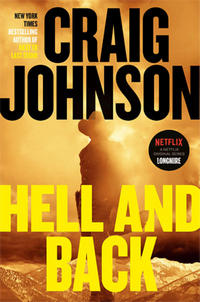
Hell and Back by Craig Johnson: They Say All Haunting is Regret

Hell and BackHell and Back

by Craig Johnson

DETAILS:
Series: Series: Walt Longmire, #18
Publisher: Viking
Publication Date: September 6, 2022
Format: Hardcover
Length: 336 pgs.
Read Date: September 21-22, 2022
Support Independent Bookstores - Visit IndieBound.org

“Something wrong?”

“I’m not sure, but I’m thinking I might’ve screwed things up.”

“How?”

“The way you always do, by doing a good deed.”

What’s Hell and Back About?

Recently, Walt has across repeated references to Fort Pratt—a military base and a school for natives there. Neither Walt nor Henry had heard of this place before, and it made him curious—he did a little looking and asking around about it and found one person who knew something.

And now…Walt wakes up in the middle of the street in that town. He doesn’t know who he is, or what he’s doing there, and keeps running into people he vaguely recognizes (or thinks he should) and readers do. Then he finds himself witnessing events surrounding that school’s destruction by fire—which killed the 31 boys living there.

Meanwhile, Henry Standing Bear and Vic are trying to track down Walt. He’s been on the hunt for a suspect in a murder and hasn’t checked in for a while—they get to the area he was last known to be and find some disturbing signs, but no Walt.

While they look for Walt, our favorite sheriff and the reader have to figure out where he is and why—and does it have anything to do with the Éveohtsé-heómėse, the Wandering Without, that Walt encountered in the last book?

Hmmm…

I wanted to give a section focusing on each of our main trio of characters—or at least the two main storylines. And I can’t. Anything I say would divulge so much of the plot/mechanics of the novel that I’d ruin something.

So why am I spending time talking about this? 1. I don’t want it to look like I’m harping on just one point (see the next section) and 2. to make a point—these threads are so tightly woven in this book that to look at any of them, you have to look at how it all plays out—from beginning to ending. Don’t decide—or try to decide—what you think of anything until the ending—you’ll be wasting time and effort.

Is Craig Johnson Taking a Stand?

A mixture of native Spirituality (beliefs, practices, and possible occurrences) have been around since the beginning of this series as a constant, but emphasized in books like Hell is Empty and last year’s Daughter of the Morning Star. But the novels have never really taken a stand on whether a spiritual entity/entities or powers are interacting with Walt and others or whether that’s one possible interpretation—and maybe Walt was hallucinating/dreaming due to physical injury, mental exhaustion, hypothermia, etc.

It really seems like Walt believes it’s true in the moment (sometimes he has to be convinced), but then brushes it away. Although a couple of times, I thought it was Henry who suggests an alternate explanation—Vic never seems to give a mystical idea any precedence.

If only for the amount of this book that appears not to transpire in our world, I think that Johnson’s not really pretending to be neutral anymore. Even Walt’s “but maybe…” take seemed halfhearted.

I think I’m fine with it—if only so we don’t have to have this discussion so often within the books. As long as Johnson isn’t trying to veer into Urban Fantasy or anything (and I don’t think he is), go for it. Let Walt be convinced by his experience, embrace them, and move forward that way. At least let him wrestle with it, not just brush it away.

Now, if Vic starts seeing Virgil White Buffalo or something like him…that might be a problem.

So, what did I think about Hell and Back?

In his Acknowledgements, Johnson says he attempted to create “a Western, gothic-romance with traces of horror.” “Traces” is a good word—it’s just a hint, like the hint of whatever fruit a particular can of La Croix tells you it has (maybe a little heavier). The rest seems like a good description of the result—I guess I’m not sold on “if” he should’ve tried, or at least tried in this way. I don’t want this series to turn into a bunch of cookie-cutter novels about Walt and the gang solving mysteries at home or in a nearby county. But…not all experiments are successful.

I’m torn. I enjoyed this, I like that Johnson is constantly trying to keep each novel from being a duplicate of a previous one and trying to do new things with well-established characters. I thought the ideas were great, I appreciate that Johnson wants to discuss things like the horrible conditions and events in “Indian schools.”

But I think this was a lousy Walt Longmire book. There were some strong character moments for Vic and Henry (and a moment or two that I’m not so sure about for each). I don’t think it was a good use of the character of Walt Longmire or the kind of story that’s good for the series. There are a couple of things that could spring from this for future books, but I think Johnson probably could’ve gotten there a different way.

Yes, I’m prepared to eat my words in that last sentence, but I feel pretty safe about it.

This was a good follow-up to the previous book, but it’s also a wholly unnecessary follow-up. It ended so well, and yet so ambiguously on one point that I thought was very effective. This book takes away that ambiguity and takes away the power/mystery from the conclusion.

Long-time fans will find enough to justify their time (there’s a moment where Vic reveals a lot of herself to another character that’s one of the most honest moments in the series for her, for example), but I expect most will be unsatisfied by the book as a whole. I think I was. Still, while this might not have been the most successful Walt Longmire book, I tip my cap to Johnson for giving it a shot.


3 Stars

This post contains an affiliate link. If you purchase from it, I will get a small commission at no additional cost to you. As always, the opinions expressed are my own.

The Friday 56 for 9/23/22: Hell and Back by Craig Johnson

The Friday 56This is a weekly bloghop hosted by Freda’s Voice.

RULES:
The Friday 56 Grab a book, any book.
The Friday 56 Turn to Page 56 or 56% on your ereader. If you have to improvise, that is okay.
The Friday 56 Find a snippet, short and sweet.
The Friday 56 Post it.

from Page 56 of:
Hell and Back

Hell and Back by Craig Johnson

We slowly drove through town. I could see the lights were still on in the library, and I felt a twinge of guilt about not having been able to lock it up. “I made a pass at your librarian.”

“He kept his eyes on the road. “You what?”

“Well, not the librarian exactly, but the one from the café that re-shelves books, Martha?”

He nodded. “Who else have you had contact with since “you’ve been in town?”

“What, you think I’m contagious?”

“I’m just curious as to what a fellow does after finding himself lying out there in the road during a blizzard.”

PUB DAY REPOST: Final Heir by Faith Hunter: It All Comes Down to This

Final Heir Banner

Final HeirFinal Heir

by Faith Hunter

DETAILS:
Series: Jane Yellowrock, #15
Publisher: Ace Books
Publication Date: September 5, 2022
Format: eARC
Length: 464 pg.
Read Date:  August 15-18, 2022
Support Independent Bookstores - Visit IndieBound.org

What’s Final Heir About?

The Vampire War in Europe is over—and the old guard seems to be defeated. Edmund is on his way to NOLA to be crowned and then some stability–and whatever passes for peace with the Mithrans should settle in for some time.

But first…there’s the Heir to deal with. The last hope of the Sons of Darkness, the old ways—and possibly a turn to a darker time for humanity—still needs to be dealt with. Years ago, Leo Pellissier was given a prophecy about the defeat of the Heir and after Jane came to work for him, he decided she was at the center of the prophecy. Jane, as the Dark Queen, could defeat him. So Leo set to work organizing things in the way that only he can.

Now it’s the endgame—time for the rest of the dominos that Leo set up to fall, for Jane to end the Heir, and change everything for the Mithrans. And possibly the rest of the supernatural world. Assuming she can. There’s no certainty about that. There’s also no certainty about who will survive this endgame—even if she manages to vanquish the Heir,* she may not survive the attempt. Even worse (in her mind) family, friends, and allies may die.

* He’s a significant enough power that I don’t feel too silly using a word like vanquish.

This isn’t going to be easy. This is for all the marbles—and that’s a great way to end a series.

The Youngers

Of all the characters we met along the way, I may miss Alex and Eli the most (as soon as I say that, I start to think about Angie, and question myself—but I really don’t have time to go into that). Eli hasn’t changed much since we first met him—he’s opened up a bit more, he may be a bit more emotionally mature, but he’s essentially the guy we met at the beginning. Faith Hunter’s answer to Joe Pike. He knows his business, he enjoys the work (as grim as it is)—maybe finds a peace in a fight that he can’t find elsewhere. He’s also incredibly loyal, he takes care of his people—first and foremost, his brother.

Aside from Jane, no character in the series has changed—grown, developed, and matured–than Alex Younger. He started off as a rebellious, unhygienic, hacker—focused only on what he could do with his computer. And maybe not letting his brother down (too much) again. He’s now an adult, he’s responsible, he can handle himself in a fight, and there are things/people he cares about in his life—he’s still a wiz with the computers, thankfully. He’s essentially a version of Alex with a different weapon-set.

Their humanity (Eli is still largely human) is one of the few lasting examples we have in the series at this point, and they keep things grounded in the middle of all the vampires, weres, witches, extradimensional beings, and whatnot. They’re great because of that, they’re great outside of that, too.

I do feel bad for poor Eli—in the last couple of books, he’s really taken a beating. It’s even worse in this novel. If he survives to the end (I’m carefully not answering), he’s going to have physical and psychological scars that are going to last. I know he wouldn’t have it any other way, he gets them doing what he thinks is right. But still, you can’t help but feel for the guy.

Beast

The Beast and Jane dialogue/interchanges in this novel were fantastic. I relished each of them.

Once again, Beast has her own agenda—as is her right and fitting for her character. But given the stakes here, some of the information she decides not to pass on to Jane is hard to believe. Sure, Beast may not get all the details, but I don’t see how she doesn’t understand the urgency and the importance of what’s going on.

But you know what? I just didn’t care. I like how Beast is her own creature—she comes through for Jane when the chips are down, but on her terms.

Homecoming Week

There are so many supporting characters in this book, that it’s really hard to fathom. There are so few characters from the series (that are still living/undead) that don’t at least get a named drop or a check-in. But several show up for more. There were characters that we’d lost track of—a couple that I’d forgotten even existed played a role in this book.

Hunter pulled out all the stops for this book.

I’m probably not alone in spending time reflecting on the series as a whole as I read this book, and bringing up so many names from the past (ones we may have regretted losing track of—and a couple we were probably happy to have lost) really helped with that.

The Chapter Titles

I don’t think I’ve talked about the chapter titles in these books before—and that’s a crying shame. I’m not a big fan of chapter titles in general, but this series has featured some doozies. Several of them in Final Heir are amongst the best in the series. I really don’t have a lot to say about them—but complimenting the chapter titles is overdue. There’s a lot that Hunter does right in these books, and this is just one of the more consistent and amusing.

Final Heir as a Series Finale

I’m not entirely sure it’s fair to do, but I can’t help but think about other series finales–particularly in the UF genre.* Last year, I compared the Alex Verus finale to the Iron Druid Chronicles. Final Heir doesn’t match up well with either of them–it’s more like the ending of the Kitty Norville series (and not dissimilar to the ending of The Hollows)—Jane and her friends and allies are up against a vampire (and his forces) bent on world domination in a final face-off. Okay, now that I start thinking about it, there are a lot of parallels between the two–but this isn’t the time for that.

* Benedict Jacka’s been talking about ending his series recently, and a lot of what he’s had to say is helpful when thinking about things like this. I’m not going to use his categories to talk about Final Heir because of spoilers, but if you haven’t read these posts (even if you haven’t read the Alex Verus series)—go check it out after you read Final Heir.

Hunter has spent several books lining things up for this confrontation—not unlike Leo Pellissier’s machinations in getting Jane to this point. Looking back at all the ins and outs from this perspective really is impressive. Final Heir is filled with combat and battles—maybe more than most novels in this series, they’re definitely more savage and meaningful. I don’t have a word-count, but I’d wager the final battle is longer than any we’ve yet encountered in the series. Hunter really gave her fans what they’ve been wanting (and will be missing). This is an epic villain, with giant stakes, it has to be an epic scene.

Better yet, following the battle, the novel’s dénouement also serves as one for the series—and if the final battle gave fans what they wanted, then they’re going to be knocked for a loop by the dénouement. We get the few dangling threads tied up and a good look at what the future offers for most of the characters.

I had expected a lot from the finale aspect of this book, and Hunter surpassed it.

So, what did I think about Final Heir?

I think this is a bit more rambling than I want to be—it’s also longer than it necessarily needs to be. Part of that is because there’s so much to talk about in this novel—and I’ve barely scratched the surface so I don’t give it all away. Part of the longer-than-usual nature of the post is also that there’s part of me that knows I’m pretty much done with these characters when I hit “Schedule.” Sure, I’ll listen to the audiobook sometime next year, and I’ll likely re-read/re-listen to the series sometime after that. But all of that is revisiting. Finishing here is finishing the series, so I’m trying to drag it out.

For the first four or five books, this series served to fill the time while I was waiting for other Urban Fantasy books to come out. But around then it took on the role of being something I needed filler for while waiting for the next Yellowrock book. And lately, it’s one of those series I organize my reading schedule around. Listening to the series on audio over the last year has really helped me see all the ways Hunter’s been preparing the characters and the readers for these events, and it’s truly impressive. As it now stands, the Jane Yellowrock series ranks near the top of the UF pantheon for me (completed or on-going series), beating out stiff competition.

But let’s set that aside for a moment and just focus on this book—it’s full of all the action, the heart, the magic, and sense of family we’ve grown accustomed to. Jane Yellowrock finally finds her place in this world (sure, she found it before, but it’s more solidified now), her priorities are intact, she’s doing good in ways she hasn’t been able to before–and those that she cares about (many she’d never have considered caring for 15 books ago) are in good places. Just for the character work alone around Jane, this book is worth the time.

I think someone new to this series would come away from this one entertained and impressed—I don’t know why someone would do that, but I’m sure someone will.

From the jaw-dropping (whoa, Hunter’s taking no prisoners!) first chapter to the last lines that genuinely made me misty, Final Heir was a great ride. If I have to say au revoir to Jane, Bruiser, Eli, Alex, and the rest—especially Beast—this is was quite the way to do it. Bravo, Faith Hunter.

Disclaimer: I received this eARC from Let’s Talk! Promotions and Berkley Publishing Group via NetGalley in exchange for this post — thanks to all for this.


5 Stars

This post contains an affiliate link. If you purchase from it, I will get a small commission at no additional cost to you. As always, the opinions expressed are my own.


My thanks to Let’s Talk! Promotions for the invitation to participate in this tour and the materials (including the book via NetGalley and Berkley Publishing Group) they provided.

Final Heir by Faith Hunter: It All Comes Down to This

Final Heir Banner

Final HeirFinal Heir

by Faith Hunter

DETAILS:
Series: Jane Yellowrock, #15
Publisher: Ace Books
Publication Date: September 5, 2022
Format: eARC
Length: 464 pg.
Read Date:  August 15-18, 2022
Support Independent Bookstores - Visit IndieBound.org

What’s Final Heir About?

The Vampire War in Europe is over—and the old guard seems to be defeated. Edmund is on his way to NOLA to be crowned and then some stability–and whatever passes for peace with the Mithrans should settle in for some time.

But first…there’s the Heir to deal with. The last hope of the Sons of Darkness, the old ways—and possibly a turn to a darker time for humanity—still needs to be dealt with. Years ago, Leo Pellissier was given a prophecy about the defeat of the Heir and after Jane came to work for him, he decided she was at the center of the prophecy. Jane, as the Dark Queen, could defeat him. So Leo set to work organizing things in the way that only he can.

Now it’s the endgame—time for the rest of the dominos that Leo set up to fall, for Jane to end the Heir, and change everything for the Mithrans. And possibly the rest of the supernatural world. Assuming she can. There’s no certainty about that. There’s also no certainty about who will survive this endgame—even if she manages to vanquish the Heir,* she may not survive the attempt. Even worse (in her mind) family, friends, and allies may die.

* He’s a significant enough power that I don’t feel too silly using a word like vanquish.

This isn’t going to be easy. This is for all the marbles—and that’s a great way to end a series.

The Youngers

Of all the characters we met along the way, I may miss Alex and Eli the most (as soon as I say that, I start to think about Angie, and question myself—but I really don’t have time to go into that). Eli hasn’t changed much since we first met him—he’s opened up a bit more, he may be a bit more emotionally mature, but he’s essentially the guy we met at the beginning. Faith Hunter’s answer to Joe Pike. He knows his business, he enjoys the work (as grim as it is)—maybe finds a peace in a fight that he can’t find elsewhere. He’s also incredibly loyal, he takes care of his people—first and foremost, his brother.

Aside from Jane, no character in the series has changed—grown, developed, and matured–than Alex Younger. He started off as a rebellious, unhygienic, hacker—focused only on what he could do with his computer. And maybe not letting his brother down (too much) again. He’s now an adult, he’s responsible, he can handle himself in a fight, and there are things/people he cares about in his life—he’s still a wiz with the computers, thankfully. He’s essentially a version of Alex with a different weapon-set.

Their humanity (Eli is still largely human) is one of the few lasting examples we have in the series at this point, and they keep things grounded in the middle of all the vampires, weres, witches, extradimensional beings, and whatnot. They’re great because of that, they’re great outside of that, too.

I do feel bad for poor Eli—in the last couple of books, he’s really taken a beating. It’s even worse in this novel. If he survives to the end (I’m carefully not answering), he’s going to have physical and psychological scars that are going to last. I know he wouldn’t have it any other way, he gets them doing what he thinks is right. But still, you can’t help but feel for the guy.

Beast

The Beast and Jane dialogue/interchanges in this novel were fantastic. I relished each of them.

Once again, Beast has her own agenda—as is her right and fitting for her character. But given the stakes here, some of the information she decides not to pass on to Jane is hard to believe. Sure, Beast may not get all the details, but I don’t see how she doesn’t understand the urgency and the importance of what’s going on.

But you know what? I just didn’t care. I like how Beast is her own creature—she comes through for Jane when the chips are down, but on her terms.

Homecoming Week

There are so many supporting characters in this book, that it’s really hard to fathom. There are so few characters from the series (that are still living/undead) that don’t at least get a named drop or a check-in. But several show up for more. There were characters that we’d lost track of—a couple that I’d forgotten even existed played a role in this book.

Hunter pulled out all the stops for this book.

I’m probably not alone in spending time reflecting on the series as a whole as I read this book, and bringing up so many names from the past (ones we may have regretted losing track of—and a couple we were probably happy to have lost) really helped with that.

The Chapter Titles

I don’t think I’ve talked about the chapter titles in these books before—and that’s a crying shame. I’m not a big fan of chapter titles in general, but this series has featured some doozies. Several of them in Final Heir are amongst the best in the series. I really don’t have a lot to say about them—but complimenting the chapter titles is overdue. There’s a lot that Hunter does right in these books, and this is just one of the more consistent and amusing.

Final Heir as a Series Finale

I’m not entirely sure it’s fair to do, but I can’t help but think about other series finales–particularly in the UF genre.* Last year, I compared the Alex Verus finale to the Iron Druid Chronicles. Final Heir doesn’t match up well with either of them–it’s more like the ending of the Kitty Norville series (and not dissimilar to the ending of The Hollows)—Jane and her friends and allies are up against a vampire (and his forces) bent on world domination in a final face-off. Okay, now that I start thinking about it, there are a lot of parallels between the two–but this isn’t the time for that.

* Benedict Jacka’s been talking about ending his series recently, and a lot of what he’s had to say is helpful when thinking about things like this. I’m not going to use his categories to talk about Final Heir because of spoilers, but if you haven’t read these posts (even if you haven’t read the Alex Verus series)—go check it out after you read Final Heir.

Hunter has spent several books lining things up for this confrontation—not unlike Leo Pellissier’s machinations in getting Jane to this point. Looking back at all the ins and outs from this perspective really is impressive. Final Heir is filled with combat and battles—maybe more than most novels in this series, they’re definitely more savage and meaningful. I don’t have a word-count, but I’d wager the final battle is longer than any we’ve yet encountered in the series. Hunter really gave her fans what they’ve been wanting (and will be missing). This is an epic villain, with giant stakes, it has to be an epic scene.

Better yet, following the battle, the novel’s dénouement also serves as one for the series—and if the final battle gave fans what they wanted, then they’re going to be knocked for a loop by the dénouement. We get the few dangling threads tied up and a good look at what the future offers for most of the characters.

I had expected a lot from the finale aspect of this book, and Hunter surpassed it.

So, what did I think about Final Heir?

I think this is a bit more rambling than I want to be—it’s also longer than it necessarily needs to be. Part of that is because there’s so much to talk about in this novel—and I’ve barely scratched the surface so I don’t give it all away. Part of the longer-than-usual nature of the post is also that there’s part of me that knows I’m pretty much done with these characters when I hit “Schedule.” Sure, I’ll listen to the audiobook sometime next year, and I’ll likely re-read/re-listen to the series sometime after that. But all of that is revisiting. Finishing here is finishing the series, so I’m trying to drag it out.

For the first four or five books, this series served to fill the time while I was waiting for other Urban Fantasy books to come out. But around then it took on the role of being something I needed filler for while waiting for the next Yellowrock book. And lately, it’s one of those series I organize my reading schedule around. Listening to the series on audio over the last year has really helped me see all the ways Hunter’s been preparing the characters and the readers for these events, and it’s truly impressive. As it now stands, the Jane Yellowrock series ranks near the top of the UF pantheon for me (completed or on-going series), beating out stiff competition.

But let’s set that aside for a moment and just focus on this book—it’s full of all the action, the heart, the magic, and sense of family we’ve grown accustomed to. Jane Yellowrock finally finds her place in this world (sure, she found it before, but it’s more solidified now), her priorities are intact, she’s doing good in ways she hasn’t been able to before–and those that she cares about (many she’d never have considered caring for 15 books ago) are in good places. Just for the character work alone around Jane, this book is worth the time.

I think someone new to this series would come away from this one entertained and impressed—I don’t know why someone would do that, but I’m sure someone will.

From the jaw-dropping (whoa, Hunter’s taking no prisoners!) first chapter to the last lines that genuinely made me misty, Final Heir was a great ride. If I have to say au revoir to Jane, Bruiser, Eli, Alex, and the rest—especially Beast—this is was quite the way to do it. Bravo, Faith Hunter.

Disclaimer: I received this eARC from Let’s Talk! Promotions and Berkley Publishing Group via NetGalley in exchange for this post — thanks to all for this.


5 Stars

This post contains an affiliate link. If you purchase from it, I will get a small commission at no additional cost to you. As always, the opinions expressed are my own.


My thanks to Let’s Talk! Promotions for the invitation to participate in this tour and the materials (including the book via NetGalley and Berkley Publishing Group) they provided.

Page 4 of 27

Powered by WordPress & Theme by Anders Norén