Category: K-O Page 12 of 22

Fletch Won (Audiobook) by Gregory McDonald, Dan John Miller: A Real Mixed Bag

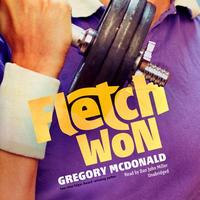
Fletch Won (Audiobook)Fletch Won

by Gregory McDonald, Dan John Miller (Narrator)

Series: Fletch, #8 (#1 Chronologically)
Unabridged Audiobook, 6 hrs., 30 min.
Blackstone Audio, 2018

Read: June 20 – 26, 2019

This is chronologically the first Fletch novel, he’s a rookie reporter, who’s been bounced around from headline writer, to obituaries, to wedding announcements, and is finally sent to the Society pages—with a warning. Fit in, and don’t make any trouble or he’ll be unemployed. His first assignment is to meet with an attorney, Donald Habeck, in the publisher’s office to discuss a major donation he’ll be making to a local museum and do a puff piece about it. Fletch objects, wanting to do real news—the kind of stuff he’ll later be known for. His editor (Frank Jaffe, a name known to those who’ve read Fletch and Fletch and the Widow Bradley) refuses, insisting that this is his assignment—and maybe later he’ll get a chance to do something else.

There’s a catch—Habeck is murdered in the newspaper’s parking lot on his way to this meeting. Fletch jumps on the opportunity to report on this, but the senior crime reporter shoos him off (and Jaffe). Fletch tries to exercise squatter’s rights, but no one is having any of it. Naturally, this means that Fletch will ignore this and will investigate the murder on his own—and typically is a few steps ahead of both the police and the senior crime writer.

In the meantime, he has to do his actual job (at least until he has something he can print). There’s another story they want Fletch to work on, there’s a local “escort service” parading itself as a fitness establishment—Jaffe insists that Fletch do an expose about them. To stay employed, Fletch agrees—but threatens the most detailed and explicit expense report ever. This isn’t a story that appeals to Fletch—I don’t think he cares too much if this service is just close to prostitution, or if it’s the actual thing—and he has better things to do with his time. Also, he’s about to get married, the last thing his fiancé is going to want is him hanging around a brothel all day.

The opening chapter is a hoot. As are several of the encounters Fletch has with the members of Donald Habeck’s family (particularly his wife)—and Alston Chambers never fails to be amusing. The escort service story is fun, and ends up being the kind of thing that Fletch can write about—but its main purpose is to give Mcdonald an opportunity to opine on our cultural obsession with beauty, health, and so on, while causing problems for Fletch’s personal life. There’s not a lot of meat to this story, but there’s a lot of fun. On the other hand, the murder investigation is great and vintage Fletch. It’s the best part of the book (as a mystery novel, I guess it should be, right?)

All in all, a decent Fletch novel—full of interesting characters, a nice twist, Fletch bucking all sorts of authority (police, veteran reporters, Frank Jaffee), and more than a few amusing situations. It works as an origin story, how did he become the sort of reporter we know, etc. As I mentioned earlier, we even see young Alston Chambers — just starting as an associate in a powerful law firm. But—and this is a big but— this places Fletch at the newspaper we know he ends his newspaper career with as a rookie, as a man about to be married (for the first time). We know there’s not a lot of time between the end of his first marriage and Fletch, but there’s some. Enough for a second marriage and the Window Bradley events, but not much more. What there isn’t time for is the past referred to in Confess, Fletch, Fletch’s Fortune and even hinted at in The Man Who — and the first two of those depend on Fletch’s history to work. Unless we’re to believe that his wives let him leave the state, work in a variety of other papers, developing a Fletchian reputation, move back to the same paper he started his career in (with the same senior editor), and then hit him up for alimony and still be carrying a torch for him. It stretches credulity a bit too much for me to stomach. The next book, Fletch, Too, doesn’t help things.

Does that ruin Fletch Won for me? Not totally, but that alone keeps it out of my personal top-tier Fletch novels and rank it slightly above The Widow Bradley (only for the chuckles it gives me). Clearly, McDonald isn’t as picky about this sort of thing as many of his readers are, but man, that rankles. Still, it’s fun, it features entertaining characters— some odd poetry—and enough Fletchisms to keep you happy. It’s a good time, and if you ignore what it suggests about the rest of the series, you should have a good time.

—–

3.5 Stars
2019 Cloak & Dagger Challenge

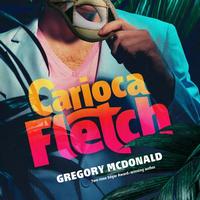
Carioca Fletch (Audiobook) by Gregory McDonald, Dan John Miller: A Bad Fletch Book — whodathunkit

Carioca FletchCarioca Fletch

by Gregory McDonald, Dan John Miller (Narrator)
Series: Fletch, #7 (#5 Chronologically)
Unabridged Audiobook, 6 hrs., 3 min.
Blackstone Audio, 2018
Read: May 21 – 25, 2019

Just in case people were thinking I’d drunk too heavily in the Fletch/Gregory Mcdonald Kool-Aid bowl, this should alleviate any concern. I just don’t like this book.

Following the events of Fletch, our now-jobless journalist is enjoying life in Brazil, he’s got a girlfriend, is making some investments and friends and is about to enjoy Carnaval. Quite by accident, he runs into the newly-widowed Joan Allen Stanwyk, and things get a little awkward for a bit. But before he can follow up with her, an elderly Brazilian woman claims that he’s the reincarnation of her murdered husband, come back to identify his murderer.

This distracts Fletch greatly and between that, and a new group of acquaintances who seem to be rich young men who devote all their time to wine and women, Fletch can’t deal with Joan. He first has to spend some time trying to deal with the problems of their debauchery, this supernatural claim and learning about the Brazilian culture in general.

This might, might, be an okay book if it was about any other American hiding in Brazil, learning about the culture and people. But it’s not a Fletch book. He doesn’t solve the mystery by being clever or interviewing anyone. It’s not a particularly funny book, either. It’s mostly Fletch bouncing from situation to situation with little control or agency for a couple of hundred pages, and then solving a decades-old mystery by a cheap stunt.

What redeems this book is the Joan Allen Stanwyk material that bookends it. Those are the only chapters that really feel like Fletch (and, they’re grounded in the rest of the series). Also, Fletch’s background in, interest in, and history of investing in art is shown here in embryo—as well as the other things he does to pay for his villa, GCN stock, racehorses, and so on. So that’s good, but we didn’t need to see it, the character was good enough without that.

Naturally, Dan John Miller had nothing to do with any of my problems, he does a great job as usual.

This was just a misfire for Mcdonald (not the only one in the series), and is easily forgotten—and should be.

—–

2 1/2 Stars
2019 Cloak & Dagger Challenge

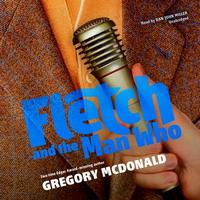
Fletch and the Man Who (Audiobook) by Gregory McDonald, Dan John Miller: Mcdonald and Fletch at their Best

Fletch and the Man WhoFletch and the Man Who

by Gregory McDonald, Dan John Miller (Narrator)
Series: Fletch, #6 (#8 Chronologically)Unabridged Audiobook, 6 hrs., 14 min.
Blackstone Audio, 2018
Read: May 14 – 18, 2019

“Good morning,” Fletch said. “As the governor’s press representative, I make you the solemn promise that I will never lie to you. Today, on this bus, we will be passing through Miami, New Orleans, Dallas, New York, and Keokuk, Iowa. Per usual, at midday you will be flown to San Francisco for lunch. Today’s menu is clam chowder, pheasant under glass, roast Chilean lamb, and a strawberry mousse from Maine. Everything the governor says today will be significant, relevant, wise, to the point, and as fresh as the lilies in the field.” …

“Is it true you saved Walsh Wheeler’s life overseas?” Fenella Baker asked.

“That’s another thing,” Fletch said. “I will never evade any of your questions.” He turned the microphone off and hung it up.

I think this is my favorite Fletch novel (that spot may actually bounce between this and Fletch’s Fortune), and I could practically recite portions of this with Miller’s narration while driving. This doesn’t mean I didn’t catch anything new, it just means that I enjoyed this time through immensely.

An old Army buddy (and C.O.) of Fletch’s calls him up for a favor — his father, Caxton Wheeler, is running for an unnamed party’s presidential nomination and has just had to fire their long-term press secretary, could Fletch step in? Minutes before Fletch arrives at the hotel the campaign is using a young woman plunged to her death from one of the rooms on the higher floors (later shown to be the candidate’s room). Fletch’s first job is to discover if she jumped or was pushed — and then to make sure that it had nothing to do with the campaign.

Sadly, it appears she was pushed — and she was associated with the campaign. Even worse, it seems like she’s the latest in a string of dead women near the campaign. Giving Fletch a quandary. He needs to figure out who is doing this killing (assuming it’s one person), insulate the candidate — and keep anyone else (i.e. the press) from printing the facts.

Fletch as an obstacle/opponent/facilitator (all at the same time) of the press in any shape is just a lot of fun. His instincts, training, and inclination is to dig into a story, find the facts on his own, and run the story. His new job is to feed information to reporters, keep them from doing any fact-finding on their own, and to hide aspects of the story. It is so fun to watch him struggle in this role.

Particularly because one of the reporters on the press bus is Freddie Arbuthnot, someone who might be a better reporter than Fletch. She’s certainly more employable than he is — as she’s a crime reporter, her presence on the campaign tells Fletch a lot about how serious this string of murderers is. Also, she’s a whole lot of fun as a character, so the reader gets something out of it, too.

Speaking of returning characters, we get Alston Chambers again — I need to do a better job of tracking his career path, but I think he’s moved up in the world a bit since we saw him last, so good for him. Alston served with Fletch under Walsh Wheeler and provides some vital information for his friend. He’s also just a great guy for Fletch to talk to and bounce things off of, helping both the character and reader to process what’s going on.

So who are the recipients for Mcdonald’s critique/satire? There are so many — tabloids (particularly the mid-80s version of them), politics, the press’ political coverage (about the horse race, not the ideas/work), pressures on a candidate (Wheeler is given drugs to wake up, keep him going and then to go to sleep because there’s no way that he could do that naturally with the pressures/pace of the campaign). Given his target-rich environment, the book could’ve been twice as long just to give Fletch the opportunity to tilt at a few more windmills and wouldn’t have lost much of its punch. Like I said with Fletch’s Moxie, it seems like his satire is even more on-point now than it was thirty years ago. Which really shouldn’t be the case.

I appreciated the fact that Mcdonald left party names out of this, and none of Wheeler’s policies can be easily labeled as belonging to one of the major parties. Anyone can read him as being one of their own (or, if they’re so inclined, one of the other guys). There’s not targeting or critique of a particular party, just the entire process.

At one point, inspired by a conversation he has with Fletch, Wheeler has a moment of statesmanship (a no-no for a candidate, Fletch is told) where he talks about the ways that technology is connecting the planet and helping share information in ways unthinkable generations earlier, and talks about how it will increase in that way. Essentially predicting the Internet as we know it. Granted, it’s a more utopian vision of the Internet rather than the dumpster fire it frequently is. But Wheeler/Mcdonald has a vision for what today is in a way that no mystery writer in 1983 should’ve.

Caxton Wheeler and his driver, Flash, will show up in a Flynn book that takes place sometime before this. They’re not there a lot, but I remember the first time I read that and it blew my mind (that was my second Flynn novel and I’d yet to find Confess, Fletch so I had no idea the universes were linked) while in Middle School.

Dan John Miller is great yet again — I’ve got nothing new to say about him. I need to track down some of his other narrations, see what I think of them.

Mcdonald shifts gears with his writing and the series after this, and I really, really wish he wouldn’t have. A few more books in the vein of Fortune, Moxie, and The Man Who would’ve been a boon to his readers, and would’ve solidified Mcdonald amongst the all-time greats. I’m sure he had his reasons, but from my vantage point (now and for the last couple of decades), he shouldn’t have. In the meantime, this work is a great mystery, fantastic commentary on politics and the media, and even a bit of prescience — bundled together with Mcdonald’s sharp prose, winning dialogue and characters that demand to be re-read. I can’t recommend Fletch and the Man Who highly enough.

—–

5 Stars
2019 Cloak & Dagger Challenge

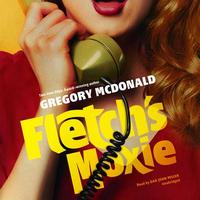
Fletch’s Moxie (Audiobook) by Gregory McDonald, Dan John Miller: Fletch Solves a Very Hollywood Murder in Key West

Fletch’s Moxie (Audiobook)Fletch’s Moxie

by Gregory McDonald, Dan John Miller (Narrator)
Series: Fletch, #5 (#8 Chronologically)

Unabridged Audiobook, 5 hrs., 51 min.

Blackstone Audio, 2018

Read: April 24 – 29, 2019

So in the last book, we met Moxie Mooney while Fletch was still a working journalist. They’d known each other for some time at this point, and it might have been just about the last time they saw each other until now, sometime following Fletch’s Fortune (when his tax problems were taken care of and he could return to the States), although she had visited him in Italy shortly before this.

Moxie’s decided she needs Fletch’s help with something, she’s got some sort of problem that needs investigating, and who better? When Fletch arrives on the movie set for her current project in Florida, he’s just in time to help her with a brand-new problem. She’s appearing on a (pre-taped, thankfully) TV interview with her business manager—the only people on the set (or near enough the set) are Moxie, her manager, and the interviewer. So when the manager is killed with a knife to the back, there aren’t a whole lot of suspects.

Fletch jumps to action and gathers a lot of information (as only he can) before the police really even know what’s going on, including an in-depth interview (that doesn’t look like one) with the widow. He then whisks Moxie away to the home of a business associate in Key West, to keep her out of the spotlight while he can do some digging into both of her problems.

Great plan, that doesn’t account for two things: 1. Moxie’s father, the illustrious stage and film actor, Frederick Mooney—known more now for a constant state of drunkenness is visiting her, too, and has to come along; 2. Moxie tells the director and most of the cast where she’s staying and they arrive, too. Having a cast of movie stars past and present staying in one house tends to attract a bit of attention—especially when they’re associated with an unsolved murder.

One thing Fletch has done recently is buying enough stock in GCN (Global Cable News—a CNN-like entity) that executives take his phone call and pay attention to his news tips. This turns out to be pretty advantageous and helps with some of his research—this will prove fruitful for future books, too.

Fletch investigates the murder in the way he does best—by talking to people and interviewing them without their realizing it and making phone calls. I just love watching him work. It’s an intricate problem and Fletch’s solution is quite clever.

This particular book gives McDonald a chance to do two things—better explore Moxie’s character (who might be a richer character than Fletch, but not one you could base a series on) and lampoon Hollywood and its approach to the art/business of movie-making. Almost everything he talks about in this 1982 book is still prevalent — and maybe moreso.

I have nothing new to say about Dan John Miller—he’s a really good narrator and perfect for the series. I assume at this point, I’ll hear his voice in my head for at least part of the time I think about this character in the future.

This isn’t my favorite Fletch book, but it’s one of the best and a great showcase for both the character and McDonald. Amusing, insightful, smart and fun—hard to ask for more.

—–

4 Stars
2019 Cloak & Dagger Challenge

Finest Sh*t!: Deviant Stories by Nick Kolakowski: This collection of short fiction is a great display of Kolakowski’s strengths IndieCrimeCrawl

I’m going to be kicking off my involvement in #IndieCrimeCrawl with the latest from Nick Kolakowski. About a year ago, he emailed me to take a peek at his novel Boise Longpig Hunting Club, a fast, energetic, visceral read. Then came his Love & Bullets Hookup Trilogy — which was as entertaining as you could want. Now it’s time for his new short fiction collection, which I pre-ordered the instant I heard about it. One of the best things about Indie Crime Fiction is the depth of strong voices with perspectives you don’t find every day. Nick Kolakowski is a prime example of this. Check out all of his work, you’ll be in for a treat.

 Finest Sh*t!Finest Sh*t!: Deviant Stories

by Nick Kolakowski
Series: Loose Rounds, Book 2

Kindle Edition, 202 pg.
Final Round Press, 2019

Read: June 14 – July 3, 2019

           With a feral yelp, Raoul worked the dial until he landed on a station thundering drums and guitar, a solid backbeat for Luis and Jesus slicing and shoveling mounds of peppers and onions and pig. The music blasted the asphalt amphitheater of the parking lot, signaling that the truck was officially open for business.

The first customers drifted toward them. Give me your hungry, your nearly broke, your masses yearning for lunchtime deliciousness, Jesus thought as he wiped his hands on his apron and prepared to meet the first of the lunch rush. And I’ll give you two tacos for three dollars.

That’s from “Taco Truck,” one of the ten short stories that appear with a novella in Nick Kolakowski’s latest collection, Finest Sh*t!: Deviant Stories. There are tales of revenge, heroism, thwarted revenge, and people driven to extremes no one should be driven to — even some SF. Essentially, like with the best of Crime Fiction (no matter when it’s set) we have people in desperate situations (sometimes of their own making, sometimes out of their control) doing what they needed to.

As with every short story collection, there are some of these short stories that really, really worked for me, and others that didn’t do much for me at all — that’s just how it goes. But even the stories that I didn’t appreciate had that Kolakowski quality that I’ve really come to enjoy.

The novella, The Farm takes up about half of the book. It begins in 1931 and ends in 2008, following one farming family through the generations. This family goes through wars, violent crime, financial hardship, betrayal — and more than a few of the more positive parts of life, too. There’s some poetry, too. I guess that qualifies as one of the more positive aspects, but I’m not always sure. In the end, I really liked this novella — but it took some effort to get into it. That’s probably on me. Kolakowski fits a novel’s worth of a family saga into this roughly 100 pages — which is quite a feat. There’s part of me that would like to see it developed into a 350-400 page novel to flush out some of the details, but I think he’s right to keep it brief. It alone is well worth grabbing the collection.

This collection covers all sorts of tones, topics and perspectives. As I’ve come to expect from Kolakowski, I wouldn’t have predicted anything that I found in these pages. My rating may be on the low side, but that’s just because I couldn’t really sink my teeth into anything — I typically rate short story collections low. But there’s gold in here — a little dross (but what I think is dross will probably appeal to others). If you’re not familiar with Kolakowski, this is a great way to introduce yourself to one of the strongest voices in Crime Fiction today. If you are familiar with him, you don’t need me to tell you how good these stories can be.

—–

3.5 Stars

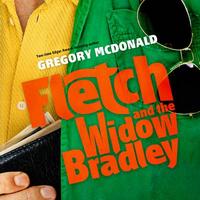
Fletch and the Widow Bradley (Audiobook) by Gregory McDonald, Dan John Miller: An oddly contemporary-feeling Fletch novel that’s good but not really good.

Fletch and the Widow Bradley (Audiobook)Fletch and the Widow Bradley

by Gregory McDonald, Dan John Miller (Narrator)
Series: Fletch, #4 (#3 Chronologically)

Unabridged Audiobook, 5 hrs., 28 min.
Blackstone Audio, 2018

Read: April 1 – 4, 2019

Fletch checks in to his office before returning from a few days away to find out that he’s fired. He’d filled in for an injured colleague to write a profile on a small local business that the Gazette had written an exposé about a few years before, just to see how they were doing in the aftermath. They were doing fine, and Fletch had quoted recent memos from the CEO demonstrating that. The teeny tiny problem there is that the particular CEO had been dead for a couple of years. Quoting corpses is generally frowned upon (unless you’re writing about voters’ views on Chicago politicians, I guess), and so Fletch is fired. Not only that, he’s probably finished forever as a journalist.

Understandably, Fletch is incensed. He’s angry. He’s also mystified — he knows what he read. He knows he did good work — how did they fool him? More importantly, why? If his career is over, he’s going to know why it happened. So he starts interviewing those nearest the dead man — his business associates, family, and so on — he eventually flies across the country a couple of times (and up to Alaska, too).

At this point in Fletch’s life, he is notoriously dead broke — recently divorced (again) with attorneys looking for alimony payments, and (as mentioned) fired. So how does he afford the gas and airline travel? Well, he found a walled with a whole lot of money in it and cannot find the owner. So he borrows a little bit. This is a very odd little storyline that I honestly have never fully understood. Not the events in it, but the reasoning behind its inclusion in the book. Other than to give Moxie (more about her in a moment) and Fletch something to talk about, and to give Fletch money for plane tickets.

Now, close readers might pick up a thing or two (if they haven’t read the books anyway) — I said Gazette (the paper that Fletch was almost certainly fired from after Fletch) and “at this point in” his life and “recently divorced.” This is the first time where Mcdonald bounces back in time for a novel — this is why I’ve noted publication order and chronological order in my post headings for this series. Mcdonald needs Fletch to have a newspaper job to tell this story — and post Fortune, that’s not really likely (it’s not like he needs the money). This chronological flexibility is both rare in a series like this one, and will become a hallmark of the books.

The best reason to read this book is the introduction of the character Moxie Mooney. Moxie’s an actress — daughter of the legendary Freddie Mooney — a major acting star of both stage and screen. Moxie’s still struggling to make it at this point, but she’s got talent. She’s also a long-time on-again/off-again romantic partner to Fletch. There’s more chemistry between the two, more genuine feelings and more obvious compatibility between Moxie and Fletch than there is between any two people in this series. She’s funny, she’s quirky, she’s driven — not unlike Irwin Maurice himself. I’m not sure how often I would have re-read the book without her

At the end of the day, this one doesn’t have the same impact and entertainment value most of the rest of the series does. There are some great moments — and I love Moxie — but there’s something missing from this one. Still, Fletch books are like that old line about pizza — when it’s good, it’s really good; and when it’s bad, it’s still pretty good.

—–

3 Stars
2019 Cloak & Dagger Challenge

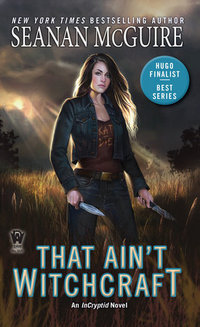
That Ain’t Witchcraft by Seanan McGuire: Annie at the Crossroads (literally, mystically, metaphorically, and probably a couple of other adverbs, too)

That Ain't WitchcraftThat Ain’t Witchcraft

by Seanan McGuire
Series: InCryptid, #8

Paperback, 357 pg.
Daw Books, 2019
Read: April 24 – 29, 2019

           I didn’t know these woods. I’d never been to Maine before, and [didn’t have any of the family bestiaries to prepare me for what I might find. There are cryptids everywhere in the world, which only makes sense, when you consider “cryptid” means “science doesn‘t know about it yet.” New species are discovered every year, brought into the scientific fold and lifted out of cryptozoological obscurity. These days the word mostly gets used to mean the big stuff some people say is real and other people say is a big hoax, like Bigfeet, unicorns, and the occasional giant snake.

(Always assume the giant snakes are real. The alternative is finding yourself being slowly digested in the belly of something you didn’t want to admit existed, and while I’m as fond of healthy skepticism as the next girl, I’m a lot more fond of continuing to have my original skin. As in, the one I was born with, not the one the snake has left me with after a little recreational swallowing me whole.)

After Annie, Sam, Fern and Cylia leave Florida and the disaster that was left in their wake, they bounce around a little before settling on something that is about as non-Florida as you can get on that side of the country — central Maine. They find a house that needs a tenant for a few months while the owner is off to Europe and settle in to enjoy a time off the roads to regroup, rest and recuperate.

Ahh, such a good idea.

But first, they meet a neighbor, James Smith. It turns out that he’s a sorcerer, who’s itching for a fight with the Crossroads for the way they fulfilled (or didn’t) a deal with a friend of his from a few years’ back. Annie owes the Crossroads something, and it just might come time to pay up — which isn’t good news for James. If that wasn’t enough, Leonard Cunningham — Annie’s Covenant connection and the presumptive future leader of the group comes to town on her tail.

So much for the three R’s.

Annie’s solution to the problems she faces here is so… Annie. On the one hand, this is obvious, she’s a different character than Alex or Verity — and this series has never been the kind where the Price kids are interchangeable. But there is just no way that Verity or Alex would even consider doing what Annie tries. In many ways, she reminded me of Harry Dresden with the way that she dealt with the final problem. No, not by throwing a lot of fire, snark and energy around, but by coming at the problem in a way that you just don’t see coming (although, that’s not ruling out snark and fire) that seems more than a little reckless. Up to that point, Annie and crew had reminded me a lot of Sam and Dean Winchester and their crew.

This was really such a great way to wrap up this Annie arc — it’s going to be hard to put her aside for a book or three. Verity’s a lot of fun, Alex is a great reluctant hero who’d rather be researching things — but Annie? Annie’s really my kind of Urban Fantasy character — in the vein of Dresden, Atticus O’Sullivan, Ree Reyes, etc. And her friends are a lot of fun, too. The only thing this book is missing that’d really make it fantastic are the Aeslin mice — their absence is felt, particularly because Annie can’t stop thinking about them. Of all the things that McGuire has brought into my life, these mice are my favorite — and it’s been too long since I’ve had a decent dose of them.

I’m not sure how to talk about this without digging into details — and I’m this close to tossing out my spoiler policy and pulling an all-nighter to produce 20-30 pages about the InCryptid Dire Straits Trilogy. So much of what makes this book work is as its the culmination of this trilogy-within-the-greater-series. While I don’t think the book is perfect, I don’t remember a single problem I had with it — and felt the same way while reading it. Everything worked — the voice, the characters, the villains, the stakes, the challenges, the solution, the emotions, the quips, the action. I spent a good deal of time unsure how many of Annie’s little group were going to survive, and this isn’t normally that kind of series. I don’t think I actually shed a tear at the height of the novel — they weren’t far from the surface. This met and exceeded every expectation I had for this book and made me rethink my estimation of the series as a whole.

This is easily the best of this very good series — in fact, were this the final book in the series, I’d be satisfied. I’m very, very glad that it isn’t — please don’t misunderstand — but if it were… Heart, humor, thrills, and a very clever conclusion, pulled off in a way that the whole series has been leading to, but you don’t see coming. I don’t know how McGuire can equal it — much less top it. But since we’re talking Seanan McGuire, she will, probably not in book 9, but soon. Go get it — you’ll be better off if you start with #1 (Discount Armageddon), but you could get away with starting at #6 (Magic for Nothing), you can still appreciate a lot of the goodness if you jump on here, but you’ll miss so much you won’t enjoy it the way you could.

—–

5 Stars

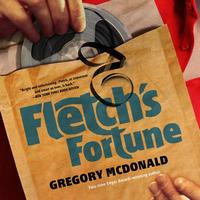
Fletch’s Fortune (Audiobook) by Gregory McDonald, Dan John Miller: Possibly the Most Entertaining Entry in this Great Series

Fletch’s Fortune (Audiobook)Fletch’s Fortune

by Gregory McDonald, Dan John Miller (Narrator)
Series: Fletch, #3 (#7 Chronologically)

Unabridged Audiobook, 5 hrs., 51 min.
Blackstone Audio, 2018
Read: March 26 – 29, 2019

           “I.R.S.,” the man said.

Fletch slid the door open. “How do you spell that?”

“Internal Revenue Service.”

. . .
“As a matter of personal curiosity, may I ask why you have not filed returns?”

“April’s always a busy month for me. You know. In the spring a young man’s fancy really shouldn’t have to turn to the Internal Revenue Service.”

“You could always apply for extensions.”

“Who has the time to do that?”

“Is there any political thinking behind your not paying taxes?”

“Oh no. My motives are purely aesthetic, if you want to know the truth.”

“Aesthetic?”

“Yes. I’ve seen your tax forms. Visually, they’re ugly. In fact very offensive. And their use of the English language is highly objectionable. Perverted.”

“Our tax forms are perverted?”

“Ugly and perverted. Just seeing them makes my stomach turn.”

It’s conversations like this that make this possibly the most entertaining Fletch novel. My memory suggests there’s a one or two challenges to that coming up, but at least one of them gets too preachy and disqualifies itself (I’ll try to mention that when we get there). Fletch, shed of his fiancé from the previous book, is enjoying life in his home on the Riviera and puttering along on his biography of Edgar Arthur Thorp, Jr. One day, he’s accosted by a pair of CIA agents who blackmail him (using the above referenced lack of tax filing) into bugging the rooms of the most influential journalists in the US at a journalism convention.

He’s not crazy about this assignment, but at the very least he figures there’s a good story in there somewhere. So he heads back to the States and plants his bugs and starts to tape many of the most illustrious members of the press. The catch (of course there’s a catch) is that the president of the American Journalism Association and owner of many, many major newspapers is murdered the morning as conventioneers start to arrive.

So, not only does Fletch have to put up with attending a convention, and–under duress–to listen in on his colleagues — but he also has to compete with some of the most story-hungry people in the US to be the first to break the story unveiling the murderer.

We also meet for the first time Fredericka “Freddy” Arbuthnot — one of my chief complaints about this series is that we don’t get more time with her. She’s fun here, and her fans should rest assured that we see her again soon — used in a better way, too (not a complaint about her appearance in Fletch’s Fortune, I rush to say). She’s just one of the incredibly colorful characters assembled at this convention — which allows McDonald to skewer all the foibles and weaknesses of the contemporary media (at least for the late 70’s, which just sets the stage for now). I couldn’t guess how many times I’ve read this book, and I still find them all wonderfully fun to watch.

There’s a blink and you missed it moment that’s incredibly important for the future of the series, and it can’t have been planned. But decades later, McDonald is able to use to open up whole new avenues for telling his sores.

It’s so easy to get distracted by the fun conversations, the satirizing of the press and the general Fletch antics, to the point that you miss just how clever McDonald is to pull off one of his most clever whodunits. I’d rank this among the best mysteries that McDonald penned, too.

Once again, Miller delivers this one just right. I don’t know what else to say — he was the perfect choice for this series and I’m so glad I gave them a chance.

I’m just repeating myself now, so I’ll stop. Between entertainment value, construction of the mystery, social/media satire, and audiobook narration I can’t say enough good things about this audiobook. McDonald is at the height of his powers here and it’s a sheer pleasure to pick up again (no matter the format).

—–

4 1/2 Stars

2019 Cloak & Dagger Challenge

A Few (more) Quick Questions With…Duncan MacMaster

So, a couple of days ago, I re-ran the first batch of answers that MacMaster was kind enough to give. He f̶o̶o̶l̶i̶s̶h̶l̶y̶ generously agreed to answer some more questions for Fahrenbruary, which enabled me to focus more on the Kirby Baxter books. Hope you enjoy his answers as much as I did. There is gold below, folks (maybe a little dross, too, but mostly gold)

Tell us about your background and road to publication.
Small town 80s kid, film school survivor, who spent an awfully long time doing crappy jobs and collecting rejection letter horror stories. I had written A Mint-Conditioned Corpse quite some time before it was published. Quite a few years in fact, and it was rejected by dozens of agents and publishers over those years. One publisher had said they liked it, but another book set at a comic convention hadn’t done well, so they were rejecting mine, even though it was a different genre.

For a long time it gathered digital dust in my computer’s files. Then I encountered Chris McVeigh and Fahrenheit Press on twitter. They started following me before I submitted to them, and then they participated in an open call on twitter for book pitches. I pitched them Mint, they and another publisher expressed interest. I sent a copy to both, and about a week later Chris emailed me, telling me that he was halfway through, and asked if I had any plans for a sequel. I said yes, and a day or so later he finished reading Mint and invited me to join the Fahrenheit family. Since then I’ve published two Kirby Baxter mysteries, Mint, and Video Killed the Radio Star, and a stand-alone thriller called Hack, all with Fahrenheit.

I’ve made no secret that I’ve become a giant Kirby Baxter fan — it took a whole 8% of the first book to make me one — where did Kirby come from?
Thanks for enjoying Baxter and his gang. As for his origins, it was mostly from frustration. I have a notebook in a box somewhere that contains a very rough outline for what was then called “Drawn To Death,” and it is a wildly different story. That version was more of a broad farce. In this version my lead character was a “comic book guy” stereotype. An overweight, obnoxious, socially awkward, all-together unpleasant character.

I looked it over, and it annoyed me. Because it was all just lame exaggerated situations and jokes built around that negative “comic book guy” stereotype. I didn’t want to build a book around negatives like that.

I then decided to start all over again from scratch. (Something I do quite often with projects) I decided to show that there’s more positives to geek culture than that guy you see on The Simpsons.

So I created Kirby Baxter.

I named Kirby Baxter in honour of Jack Kirby, and the Baxter Building from the Fantastic Four. I made him thin, geeky, charming, but in a slightly awkward way. Then I decided that he would need complete freedom of travel, so I made him accidentally rich. Then I realized that he needed some brawn to accompany his brain, as well as allies he could talk to, so I created Gustav, Molly, and then his pal Mitch. I also realized that it’s not easy for an amateur to butt in on a criminal investigation, so I made up Baxter’s status as a part-time “special consultant” for Interpol, which gives him some privileges, as well as many responsibilities.

The only thing I kept from that original outline was the setting of a comic convention, and “Dick Wilco” as the name of a reclusive comics legend who mentored Baxter.

Mitch is a very fun character (and I hope to see him again soon, hint, hint) — but I can easily see where he’d become “too much” and step over the line from “amusing comic relief” to “annoying secondary character” — how do you approach that kind of character? How do you keep him from becoming annoying?
Mitch acts as the Id to Baxter who is a very rational and sober character. Mitch blurts out the things Baxter will never say, make the mistakes Baxter would never make, and it’s a serious risk for someone like Mitch to go from being comic relief to a real pain in the butt.

One way to avoid that is to limit his appearances. Mitch is mentioned, but does not appear in Video Killed the Radio Star, but his role as the id of the story is taken up by a new character named Shelley Flugen. She’s a celebrity gossip blogger, and latches herself onto Baxter’s team in hopes of landing a big scoop.

While Shelley played a similar role to Mitch in her relationship with Baxter, she’s a very different person from Mitch. Where Mitch sees himself as a trickster, Shelley sees herself as a journalist and an investigator in her own right. Which leads to different situations and a totally different kind of comic relief.

Mitch will return, but it’s best to keep him in controlled doses.

I’ve often heard that writers, or artists in general, will forget hundreds of positive reviews but always remember the negative — what’s the worst thing that someone’s said about one of your books, and has it altered your approach to future books?
I’m not trying to brag, but I don’t really get many bad reviews. The worst thing that was said, was that someone described my book as “wordy.” Which is odd, because I tend to be pretty ruthless when it comes to cutting out needless words.

I try to avoid that sort of trollish negativity, because it’s just not worth it to let them run your life. If they don’t like you, or your work, they’re not your audience.

Last time, you said something about “a more experimental project examining male archetypes in crime fiction and the concept of the unreliable narrator.” Can you update us on that? Is there anything else your readers should be watching for?
My project about male archetypes and unreliable narrators is on the back burner right now, because when you write what I call a “puzzle box” story with multiple narrators, all contradicting each other, either by ignorance, or design, it can overwhelm you, and in this case another project jumped out and tackled me with incredible immediacy.

Right now I’m putting together a potential third Baxter novel that was inspired by recent documentaries that caused a lot of buzz on social media. This material is so ripe for satire, and for homicide. It was just too perfect for Baxter to pass up, and I have to act fast to capture that immediacy, that freshness. Strike while the iron is hot, so to speak.

As this Q&A is inspired by Fahrenbruary, I figure I should give you another opportunity to say something nice about your publisher and the culture around it. Or heck, go full punk and say something horrible about them.
The most horrible thing I could say about Fahrenheit is that not enough people buy Fahrenheit books. Seriously, they are a publisher who has something for everyone, the sort of diversity and variety you just won’t find with most of the big publishers.

Get out there and buy Fahrenheit books. Not just mine, but they’re a good way to start, but check out the whole catalogue. You will find something to love.

Was that punk enough for you?

Thanks for your time, Mr. MacMaster — and thanks for the great reads, I can’t wait to see what you have in store.

Fahrenbruary Repost: Video Killed the Radio Star by Duncan MacMaster: A Murder Mystery as Fun as The Buggles’ Song

(or the cover by The Presidents of the United States of America, either will work)

Video Killed the Radio StarVideo Killed the Radio Star

by Duncan MacMaster
Series: Kirby Baxter, #2

Kindle Edition, 261 pg.
Fahrenheit Press, 2018
Read: October 15 – 16, 2018

“I fear we will never be mistaken for the Algonquin Round Table.”

“We’ll have to work on our witty repartee,” said Molly. “I plan on taking a course on banter, ripostes, badinage, and persiflage.”

“Even persiflage?”

“Especially persiflage,” said Molly. “There is nothing worse than sub-par persiflage.”

“You might need to get a sub-par persiflage lanced.”

“We’ve hit the nonsense phase of the night earlier than usual.”

“I like nonsense,” said Kirby, “it distracts me.”

Kirby Baxter just wants to live a quiet life out of the spotlight: hanging out with his girlfriend, Molly, when he can; restoring a car with his valet/bodyguard/etc.; and drawing his comics. And now that the excitement about the murder he solved at Omnicon dying down, he’s on the verge of doing that. But the mayor of his hometown knows Kirby, and has no shame in extorting his cooperation with a small problem that he’s having.

You see, one of the town’s major landmarks — an old, abandoned mansion — is in dire need of upkeep and remodeling. And a reality show full of C-List celebrities (maybe D- or E-list) have recently set up shop to do that work. But the city’s having second thoughts and they want Kirby and his über-perception skills to find a reason to shut down production and send them packing to disrupt another locale.

Kirby visits the production, talks to the cast and producers, looks around and comes up with a lot of observations and conclusions — and could cause a lot of inconvenience and embarrassment for everyone involved from those observations — but he can’t find what the mayor wants. That accomplished, he gets back to pursuing his best life now — which lasts just a few hours. Because before he can start to collect from the mayor for the work, one of the celebrities is found dead.

So, it’s back to the mansion for Kirby, this time to act as a consultant ot the local police as they investigate this suspicious death. Which is soon followed by another. And an attack on another cast member. And . . . well, you get the idea.

It’s nice that MacMaster didn’t repeat the whole “Kirby has to win over a skeptical and antagonistic police officer” thing — this time, thanks to most of the force having grown up with him, they all accept his talents and skills — an expect him to deliver.

The cast of the reality show, “Million Dollar Madhouse,” is filled with the typical collection of has-beens, almost-weres, and celebs trying to stage a comeback. Initially, I rolled my eyes at each of them, but the more time I spent with them, the more I appreciated and enjoyed them. In particular, the Kardashian-esque character totally won me over. Like in the previous book, there’s a large cast of characters that MacMaster juggles expertly — there are so many suspects to the murders, as well as witnesses for Kirby and the police to wade through.

Almost every serious suspect has the same defense — they didn’t want the initial victim dead. They wanted him to make a fool out of himself on national TV, possibly seriously injuring himself with a power tool. Some would follow that up with some other form of revenge — but if he’s dead, no one could get the revenge they wanted. It’s not ideal, but it’s an honest defense.

Gustave was slightly less super-human this time out — but he’s still in the Ranger/Hawk/Joe Pike nigh-impossible stratosphere. As much as I like everyone else in this series, it’s arguable that Gustave is MacMaster’s best creation — not just the character, but how MacMaster uses him.

I did miss Mitch. But was glad to see Molly and Kirby talk about him — and even make a joke he wasn’t around to make himself. It’s probably good that he wasn’t around — it’ll mean when we see him again, it’ll be easy to appreciate him without worrying about over exposure.

In the place of Mitch, we have Molly’s assertive and cunning cousin — she runs a gossip-website and wheedles her way into the investigation in order to land a story big enough to put her and her site on the map. Kirby clearly vacillates between finding uses for her and finding her distracting.

Molly and Kirby are cuter together than they were previously, and I could watch the two of them banter any day. It seemed harder to incorporate Molly into the story this time, and hopefully it’s easier for MacMaster in Kirby #3, but as difficult as it was, it was absolutely worth it.

I’m not sure exactly what it is about MacMaster’s writing that works so well for me, but it does. Just before I started writing this, I started to draw some parallels between these Kirby Baxter books and Ellen Raskin’s The Westing Game and The Mysterious Disappearance of Leon (I Mean Noel). I didn’t have time to fully flesh this idea out, but Raskin’s work definitely was formative for me and if the comparison hold up, that could explain a lot. The mix of humor, real emotions and complex mystery is the sweet spot for me and MacMaster consistently hits it. It’s not easy, there are precious few who try — and fewer that succeed. This is the third novel I’ve read by him and it seals the deal, I’ll buy everything he writes as soon as I can without really looking at what the book is about.

I was a little worried that this book wouldn’t live up to A Mint-Conditioned Corpse, and I don’t think it did — but I don’t know what could have for me. I’d enjoyed the other so much that it’s almost impossible to live up to — and the reality show setting didn’t do anything for me — they just leave me cold. The fact I’m rating Video Killed the Radio Star as high as I am is all about how effortlessly charming and entertaining this seems. Effortless always, always, always equals blood, sweat and tears — or at least a lot of work. This must’ve taken a great deal of labor, and it was absolutely worth it. A clever mystery, clever dialogue, and very clever characters in a funny, twisty story. The Kirby Baxter books are must reads, no doubt about it. Give this one a shot — I don’t see how you can’t enjoy it.

—–

4 1/2 Stars

Page 12 of 22

Powered by WordPress & Theme by Anders Norén