Category: P-U Page 14 of 36

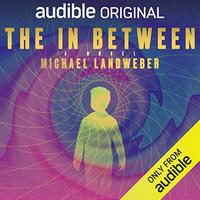
The In Between (Audiobook) by Michael Landweber, Brittany Pressley (Narrator), Mark Boyett (Narrator): When the Unthinkable Happens, What’s a Parent to Do?

A quick Q&A with the author, Michael Landweber, is coming later this morning—be sure to come back and check it out!

The In Between

The In Between

by Michael Landweber, Brittany Pressley (Narrator), Mark Boyett (Narrator)

Unabridged Audiobook, 10 hrs., 7 min.
Audible Original, 2020

Read: February 28-March 3, 2020


A couple of years ago, when mystery writer Brad Parks wrote his first stand-alone thriller, in more than a couple of interviews I heard/read him talk about the struggle getting going. A friend gave him some advice to “write the book that scares you,” which would likely scare his readers. He ended up deciding that as a parent, the thing that scared him the most was something involving trauma to one of his kids. Which resulted in at least two different novels (Say Nothing and Closer than You Know), both of which provided me with a level of fear I don’t usually get from thrillers. I couldn’t stop thinking about that anecdote and those two books while I listened to this, did someone give Landweber similar advice?

We start off meeting Lillian, who works in the PR department of Teleportation Services International. She’s taking her son’s class on a tour of TSIsomething she and his teacher had arranged to help him deal with his anxiety about their upcoming trip via Teleportation. Cole is shy, nervous, and not really assured by this exercisealthough the rest of his class has a blast (and it sounded pretty fun to me, too).

Then we meet her husband, Jackson. Jackson is one of the few drivers around in 2047his clientele is primarily made up of the elderly who won’t trust self-driving cars (and, yeah, it occurred to me that I’d be one of his client base on both of those counts) and those whose mental health or anxiety issues won’t allow them to trust the cars, either. He augments this income by teaching super-rich teens how to drive the smattering of sports cars still around so they can go on joyrides.

TSI gives one employee’s family a month a free week’s vacation to anywhere in the worldand then milks their experience for publicity. They’ve picked Tokyoand none of the family have ever teleported before. This will be a new experience for them all. Lillian steps through the portal in Omaha and stumbles out in Tokyo (the first trip is typically difficult on the destination side). There’s a strange delay that worries her, but before long, Jackson comes out in worse shape than her. But where’s Cole?

No one has an answer. Cole is missing and no one has an explanation. No one can even begin to hazard a guess about what happened.

Not at all surprisingly, Lillian and Jackson are devastated. Heartbroken. Inconsolable. And their individual reactions are so different that they can’t even be there for each other in this time.

Lillian, whose own childhood was marked by tragedy, directs her grief into work. If she can be busy, she can cope. Quickly, her energies are directed into investigating (on her own) what happened that day, and what can be done to prevent it from happening againand maybe finding a little vengeance along the way.

Jackson’s reaction is two-fold. First, he’s an alcoholic who hasn’t taken a drink in six years. He’s not in recovery in any sense, he just stopped drinking to be a father. With Cole gone, he returns to the bottleany bottle. Before taking that first drinkand after ithis question was, “My son is missing, why isn’t anyone looking for him?” For Jackson, Cole isn’t dead, he’s lost. Jackson knowshe can’t convince anyone, but he knowsthat he saw somethingsome place?in between Omaha and Tokyo. He spends his days going back and forth between the two cities, trying to find that In Between again, before crawling back into a bottle.

They haven’t just lost their son, they’ve lost each other. The love is still there. But they just don’t understand the other’s reaction. She can’t cope with his drinking or his denial. He can’t understand why she’s given up on Cole. While he hunts for Cole and she hunts for an explanation, they’re both burdened, distracted and shaped by this other pain. It is heartbreaking to watch their marriage crumbleas with the Parks thrillers, what happens to Cole is terrifying to this parent. But that feeling was frequently overshadowed by my reaction to his parent’s relationship.

Now that I’ve gone on longer than I intended to about the plot (not that I’m cutting any of it), let’s talk about the setting. This is not quite a post-apocalyptic world, but it’s one where the apocalypse could be just around the corner. Environmental changes have impacted coastal cities around the worldmany of what we know as coastal cities no longer exist. We all know that the Midwest gets hit by huge storms throughout the year, their frequency and intensity have grown. There are changes to transportation (air travel as well as the automobile changes mentioned above) in efforts to reduce pollution. New–and deadly–flu strains crop up with a regularity that makes them seem routine, and everyone knows how to react when one comes along.

There’s a lot that could be said about the government (governments?) in this future. Not that Landweber talks about politics at allbut there’s a tremendous lack of civil liberties on the one hand, and yet a very laissez-faire stance when it comes to TSI (at least as evidenced by TSI who really only seem to care about customer perception, not any kind of reulatory oversight). There’s a benevolent totalitarianism at work when it comes to the storms (and reactions to them) in Nebraska, as well as the medical response to new flu strains.

I want to stress here that these environmental and health elements are just parts of the story, and the government observations are only my impressions, and nothing I could really provide footnotes about. Landweber doesn’t take the opportunity to get on a soapbox about any of it, they’re just part of the world he’s describing. Much in the same way that someone writing a book set in 2020 would talk about current cultural trends, technologies or current events. He doesn’t indulge in any real explanation of his world-building, there are no big info dumpsit’s all just the setting.

This is an Audible Originaland I should talk about the audio aspect of this. It’s a gripping listen and wonderfully performed. As you may have guessed Brittany Pressley narrates the chapters from Lillian’s point of view, and Mark Boyett takes Jackson’s. I don’t think I’d heard anything by either of them beforebut I’ll keep my eyes peeled for their names when I browse for audiobooks in the future. They truly did wonderful jobs. They got the emotion of the moment, the tensionand occasional moments of fun, joy, or reliefas well as giving a real sense of the characters. It didn’t happen often, but even when a character usually only seen in a Lillian chapter showed up in a Jackson, you could recognize them (and vice versa)which was nice. Landweber wrote a great story but Boyett and Pressley brought it to life.

The last time I listened to an Audible Original, I had trouble with a couple of the SF-y terms usedmostly because I couldn’t be sure exactly what the narrator was saying (e.g., was that a “d” or a “b”or a “g”in the middle of that word?) It wasn’t that I couldn’t understand the narrator, they were just terms the author invented that was hard to get my head around. Landweber didn’t do any of that, which was a reliefalthough there were a couple of Japanese names I wouldn’t be able to repeat (in print or voice), but I knew what Pressley and Boyett were saying.

Another pair of books that came to mind while I was listening to this were Mike Chen’s novels. Like Chen, Landweber creates a wonderful Science Fiction world, and then tells a gripping family drama. Yes, the science fiction elements are thereand are incredibly well-executedbut the heart of this novel is about parenting, marriage, love. Fans of Chen would do well to check this book out. Fans of this book should give Chen a chance.

I read and enjoyed Landweber’s last novel, Thursday, 1:17 PM, but this is a much better showcase for his talents (not to knock his earlier work). There’s so much to commend about this Audiobook that I have only begun to scratch the surface (truly, I can think of a half-dozen characters I should’ve profiled*, a couple of themes I could have talked about, and other plotlines I should have addressed). There’s something for everyone in this bookan element of a thriller, some great SF Technology, some conspiracy elements, the environmental setting, some media commentary, some Big Business critique, a lot of focus on people with anxiety issues and/or mental health diagnosis, ethical quandaries, parent/child stories, and a touching love story, too.

* There’s a hacker character that I’m going to kick myself for not talking about, for example. He’s one of the most entertaining characters I’ve encountered this year—Top 3 for 2020.

Get this into your ears, folks, you won’t regret ityou may not like it as much as I did, but I can’t imagine you won’t like it.

Disclaimer: I received this audiobook from Audible in exchange for this post and my honest opinion. Thanks to them for the book and Laura Blackman for approaching me.


4 1/2 Stars

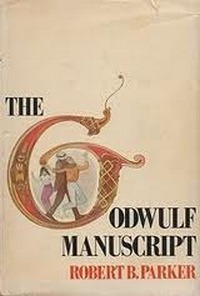
Classic Spenser: The Godwulf Manuscript by Robert B. Parker

Classic Spenser

The Godwulf Manuscript

The Godwulf Manuscript

by Robert B. Parker
Series: Spenser, #1

Mass Market Paperback, 204 pg.
Dell, 1973

Read: January 25-27, 2020

Grab a copy from your local indie bookstore!

Driving back to Boston, I thought about my two retainers in the same week. Maybe I’d buy a yacht. On the other hand maybe it would be better to get the tear in my convertible roof fixed. The tape leaked.

I came to this series about thirteen (possibly fourteen) years late, but to be fair, I would have been thirteen (possibly fourteen) when I started reading it. I wouldn’t have been able to appreciate Spenser without having spent some time with Leroy Brown, Jupiter Jones/Peter Crenshaw/Bob Andrews, Tabitha-Ruth Wexler and others (as I’ve invoked Brown, I hope I remember to draw a line between Sally Kimball and Spenser’s version when I discuss Promised Land). The Godwulf Manuscript wasn’t the first novel I read in the series, I’m going to guess I’d read three or four others before I found this in a used book store. I did find, I now know, a copy with the original cover (as seen above). A year or two later, I loaned it to a friend who proceeded to lose it. I got over it (probably because I didn’t care about things like early editions then) and despite losing that copy, that friend later became my first college roommate, and I didn’t kill him in his sleep for it. Not even once.

That excursus down memory lane means nothing to you, but I put it there in case that friend reads this post. I hope he remembers the Klingon proverb, bortaS bIr jablu’DI’ reH QaQqu’ nay’.

I’ll hold off on talking more about my background with this series for now, but the fact I’ve been reading, and re-reading, and re-re-reading, and re-re-re-reading these books since 1986 (possibly 1987) probably gives you a pretty good idea what I think of them. I could probably write lengthy posts on the first twenty novels in this series without reading them again—but where would be the fun in that? Of the twelve Spenser novels I’ll be revisiting this year, this one is in my bottom two and I’ve read it at least fifteen times, and I don’t see me stopping reading it anytime until I start sleeping the big sleep.

Yeah, that was a purposeful Raymond Chandler allusion. Why? Because this whole novel is a giant Chandler allusion*. From naming his main character after a British poet; to Spener’s attitude, demeanor, voice, etc.; to the opening paragraphs; and so, so much more this whole book screams Parker’s debt to and affection for Raymond Chandler. Spenser as a Shadow of Philip Marlowe will ebb and flow over the years, but I don’t think it’s ever more pronounced than it is in these pages.

* Yeah, there are other influences afoot in these pages, I realize. But Chandler is the primary influence, and this isn’t a dissertation. I don’t have the time to be exhaustive, I have at least 9 other posts I want to complete this week and if I don’t cut a corner or two, I won’t be able to get to them.

So what are these two retainers mentioned above? The first comes from an unnamed university that bears a striking resemblance to Northeastern (Parker’s employer when this was released). An illuminated manuscript has been stolen and is being held for ransom. The problem? (or at least one of them) The University doesn’t have the kind of cash the ‘script-nappers want. They do have a suspect, however, a radical political group on campus: SCACE (Student Committee Against Capitalist Exploitation). Catchy, eh? Spenser starts looking into the group, focusing on a couple of the leaders.

Within a few hours, one of those leaders is dead and another is the prime suspect for the murder. She’d called Spenser for help right after the murder, and he believes her (for compelling reasons you should read for yourself). This leads to the second retainer, her father—a pretty successful capitalist, it should be noted—hires Spenser to clear her for the murder.

The hunt for the manuscript and the murder will end up involving a cult, a couple of very dysfunctional marriages, drug dealing, a couple of hitmen, and a mob boss. Basically, Spenser has his hands full.

While there are many aspects of this novel that Parker will tweak for future installments, there’s a lot that he establishes here that he’ll revisit. Spenser gets fired because of his attitude (as demonstrated by his ignoring—rightly—the University’s insistence that he leave faculty alone), his being fired doesn’t stop him from sticking with the job, however. There’s a shootout in an unpopulated area near Boston*. Spenser cooks a pretty decent meal for himself (not quite Fritz Brenner’s level, but close enough for a guy cooking for one), and proves himself more literate than anyone looking at him would assume. The climactic fight will be echoed in upcoming books, featuring someone who has no business fighting anyone taking on a hardened criminal of sorts solely on the basis of love and desperation. Parker does get away from this, which is good—if only for the sake of variety—but man, I love it every time he uses this.

* My knowledge of Massachusetts geography comes wholly from the novels of Parker, William Tapply and Dennis Lehane, so I can’t be more specific than “unpopulated”.

Spenser physically roughs up a couple of college kids and verbally pushes around an older man. Each incident is followed by Spenser berating himself. This is the kind of thing that you don’t see a whole lot in the hardboiled world before Spenser’s debut. Parker will do a more subtle job in the future of showing that while Spenser will resort to violence when necessary, he doesn’t relish it (except when he knows the recipient is guilty of something) and regrets the act. But here, it’s pretty clear that Parker’s trying to show that Spenser isn’t unfeeling about acts of aggression.

There are things that show up here that will disappear—Spenser sleeps with two different women and is fairly casual about it. He’ll later become a paragon of monogamy, but that’s a couple of years away. Still, he’s less of a player next time we see him. He’s also a bit more antagonistic to most of the police that he encounters than he’ll be in books to come. Some of that is a shift in Spenser, some of that is a growth in the relationships he develops with individual members of BPD.

The main thing that sticks around in the future are some of the characters—we meet people here that Spenser still knows and interacts with on a regular basis. Spenser flirts a lot with the secretary for the head of Campus Security, and we’ll see her later. A reporter for the Campus newspaper gives Spenser a lot of help and information about various people/groups on campus, her name is Iris Milford and when Ace Atkins brought her back in 2015, I may have let out an audible whoop. We meet Spenser’s lawyer, Vince Haller, who not only helps Spenser, but the college student being framed. Haller will eventually disappear from the stage (I realize as I write this), but he’s a frequent presence for a long time to come.

But the three big recurring characters are Lt. Martin Quirk, Sgt. Frank Belson and Joe Broz. Spenser and Belson (a homicide detective) have some history and clearly respect (and even like) each other. Belson’s smart, appears lazy (appears), perpetually has a cheap cigar in his mouth (I think that’s a characteristic in this novel, if not, it will be next time we see him). Belson’s superior is Lt. Quirk. Quirk is a very no-nonsense cop, he’s driven, almost humorless, and has no use for private investigators, but sees a little value in Spenser and begins to trust him a bit over the course of this novel. Joe Broz, on the other hand, couldn’t be less a homicide detective if he tried—you could argue Broz (and his employees) are responsible for the continued careers for a handful of homicide detectives. He’s a crime boss of some notoriety and viciousness. At this point (and for some time to come), he’s the most powerful mobster in Boston (although we will soon meet competition). Spenser will be a thorn in Broz’s side for a long, long time.

It occurs to me that I haven’t described Spenser himself. He’s a former professional boxer (not that good, but he did get his nose broken by someone who was very good); a Korean War vet; a former Massachusetts State Trooper, assigned to the DA’s office in a County that fluctuates depending on Parker’s memory; and now a Private Investigator. He’s very literate, he likes to cook (as I mentioned), he drinks a lot, thinks he’s funnier than anyone else does (except the readers of the novels)—which brings him a lot of grief. We don’t get a lot of insight into it in this novel, but honor’s very important to him and it will influence the way he deals with clients, victims, criminals and everyone else along the way. He’s very much a latter-day knight.

I’m not sure that the mystery is all that clever, but the strength of this book is riding along with Spenser as he goes around annoying people until someone does something that he can catch them at (a strategy he’ll spell out in the future, but follows here). I love the voice, I enjoy the character, and watching him go about his business is a pure joy for me.

I haven’t discussed the action/fight scenes yet, and Parker’s approach to them (particularly in the first 15-20 of the series) has always greatly appealed to me. Parker has to address violence, given his chosen genre–and Spenser is a violent man. But in months to come, we see the character address that in such a way to give us insight into why Parker uses it the way he does (I think). So I’ll put a pin in this for now (also, this is long-winded enough at this point that I’ll take any excuse to wrap things up).

I, obviously, highly recommend this book—but I’ll be the first to say that the second is much better and the fourth and fifth in this series are better yet. You don’t have to start with this one for future books to make sense—in fact, you might appreciate Spenser more if you start later on. But for my money, you’re not likely to find many characters as compelling in contemporary (or at least late-Twentieth Century) hardboiled fiction. For introducing the character to the world/the world to the character of Spenser, The Godwulf Manuscript is well-worth the time. Even if it wasn’t the start of something big, it’s still entertaining enough for me to encourage you to read it.

This post contains an affiliate link. If you purchase from it, I will get a small commission at no additional cost to you. As always, opinions are my own.

Opening Lines: The Godwulf Manuscript by Robert B. Parker

We all know we’re not supposed to judge a book by its cover (yet, publishing companies spend big bucks on cover design/art). But, the opening sentence(s)/paragraph(s) are fair game. So, when I stumble on a good opening (or remember one and pull it off the shelves), I’ll throw it up here. Dare you not to read the rest (plus the 39 novels to follow by Parker (not to mention the 8+ by Ace Atkins)).

from The Godwulf Manuscript by Robert B. Parker:

The office of the university president looked like the front parlor of a successful Victorian whorehouse. It was paneled in big squares of dark walnut, with ornately figured maroon drapes at the long windows. There was maroon carpeting and the furniture was black leather with brass studs. The office was much nicer than the classrooms; maybe I should have worn a tie.

Bradford W. Forbes, the president, was prosperously heavy—reddish face; thick, longish, white hair; heavy white eyebrows. He was wearing a brown pin-striped custom-tailored three-piece suit with a gold Phi Beta Kappa key on a gold watch chain stretched across his successful middle. His shirt was yellow broadcloth and his blue and yellow striped red tie spilled out over the top of his vest.

As he talked, Forbes swiveled his chair around stared at his reflection in the window. Flakes of the season’s first snow flattened out against it and dissolved and trickled down onto the white brick sill. It was very gray out, a November grayness that is peculiar to Boston in late fall, and Forbes’s office seemed cheerier than it should have because of that.

He was telling me about the sensitive nature of a college president’s job, and there was apparently a lot to say about it. I’d been there twenty minutes and my eyes were beginning to cross. I wondered if I should tell him his office looked like a whorehouse. I decided not to.

“Do you see my position, Mr. Spenser,” he said, and swiveled back toward me, leaning forward and putting both his hands palms down on the top of his desk. His nails were manicured.

“Yes, sir,” I said. “We detectives know how to read people.”

Forbes frowned and went on.

“It is a matter of the utmost delicacy, Mr. Spenser”—he was looking at himself in the glass again—”requiring restraint, sensitivity, circumspection, and a high degree of professionalism. I don’t know the kind of people who usually employ you, but…”

I interrupted him.

“Look, Dr. Forbes, I went to college once, I don’t wear my hat indoors. And if a clue comes along and bites me on the ankle, I grab it. I am not, however, an Oxford don. I am a private detective. Is there something you’d like me to detect, or are you just polishing up your elocution for next year’s commencement?”

Forbes inhaled deeply and let the air out slowly through his nose.

“District Attorney Frale told us you were somewhat overfond of your own wit.”

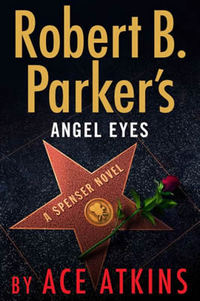
Angel Eyes by Ace Atkins: Spenser’s 47th Novel Finds him in L.A. and Feels as Fresh as Ever

Angel Eyes

Robert B. Parker’s Angel Eyes

by Ace Atkins
Series: Spenser, #7

Hardcover, 305 pg.
G.P. Putnam’s Sons, 2019

Read: November 20-21, 2019

In the passing light, I noticed the welts on her wrists, chapped and bloody.

She’d been tied up for a long time.

Chollo noticed them, too.

“Should we kill him?” he said.

“Too easy.”

“You will never change, amigo,” he said. When will you learn? Some people live without rules. And sometimes killing a bad man is the only way.”

“I have other ideas for [him].”

Chollo nodded. “And I am listening”

The day that Hawk, Chollo (and a few others) stop trying to convince Spenser to just kill the bad guy and be done with it—or the day that he listens to them—is the day we’ll all know the series has run its course. Which will hopefully be around the time my future grandchildren start reading the series.

But far before we get to that point, we should probably start at the beginning.

A friend of Susan’s is worried about her daughter, who lives in L.A. and has gone missing. She’s beside herself, so Spenser flies out to find her with Zebulon Sixkill’s help. The book opens with Spenser and Z being let into Gabby’s apartment by her ex-boyfriend and still-agent, Eric Collinson. Collinson is typically the kind of twerp that Spenser would enjoy messing with, but he’s on his best behavior (probably to keep Collinson talking).

Collinson keeps insisting there’s nothing to worry about, that Gabby’s probably just off on a quick Mexican vacation or something. Still, he surreptitiously leaves her laptop behind for Spenser to “find.” Between what Z’s tech-wizard friend finds on the laptop, what Z and Spenser get from the LAPD (in the person of our old acquaintance Samuelson) and Gabby friends/former boss, there are two avenues of investigation for them to dive into. A powerful studio executive and a multi-level personal development group that’s somewhere in-between Scientology and NXIVM (far closer to the latter). But before they can dig too far into things, some heavies representing a third party show up and the lead starts flying.

And I ate it all up.

It’s dangerous enough that Z isn’t enough to help Spenser out. Chollo (now a small-businessman), Bobby Horse and Mr. del Rio put in appearances and render assistance in varying amounts.

I could easily keep going along these lines for 6-10 more paragraphs, but I’d better show some restraint and leave things there and move onto other parts of the book.

In addition to the hunt for Gabby, we get a little bit of Spenser’s jaded view of the entertainment industry (largely in the same vein as we saw in A Savage Place and Stardust, just up-to-date); a lot of references to movies and stars that are so irrelevant to contemporary Hollywood that most of the characters don’t get them; and a very jaded (but likely accurate) look at “The Industry” post-#MeToo.

Also, we get a hint or two at what Z’s been up to since he left Boston and Atkins has completely left the possibility open for someone to start a Sixkill series, already populated with a cast of characters to carry a book or two. I’m ready to buy at least 5 of them in hardcover right now.

The last little things that I’ll mention are that we get a nice update on Mattie Sullivan, but we need to see more of her soon. Plus, there’s a cameo that filled my heart with joy here—that’s all I’m going to say about it.

Atkins is in fine form, which comes as no surprise to anyone. I didn’t spend too much time comparing him to Parker as I read it, but you can’t help but do it. It’s a fast, breezy style, but there are depths to be plumbed (unlike several of Parker’s latter Spensers). It’s just a pleasure to bask in the language, dialogue, and characters.

At this point, when it comes to an Atkins Spenser novel, it’s really just a question of how much I’m going to like it, it’d be impossible (I wager) for him to deliver something that I won’t like. I liked this one plenty. A fine story, a setting the character hasn’t been in for a while, a chance to catch up with old friends . . . Angel Eyes is as satisfying as you could ask for. Could you start with it? Sure. You wouldn’t get all of the references, but none of them would impact your appreciation of the story. The only danger in starting with Angel Eyes is that you’d probably feel compelled to go back and read the previous 46. Which actually sounds like a lot of fun to me.

I hemmed and hawed over the stars on this one. If I had a 4 1/4 graphic, I probably would’ve employed it. My initial impulse was 4 Stars, but when I stop and think about: there was one page where I laughed out loud (at least a chuckle) multiple times (I really want to talk about it in detail, but don’t want to ruin anything); the way Atkins pulled in every L.A. reference possible (plus some other Spenser-canon references) without making it feel like checking off a list; and the feeling of dread and worry Atkins was able to elicit (which really doesn’t happen all that often in long-running series)…I’ve gotta give it that extra bump (and now that I’ve actually written that list, I’m thinking of bumping it up another).


4 1/2 Stars

2019 Cloak & Dagger Challenge

Catch-Up Quick Takes on Audiobooks of This is Where I Leave You, When You Reach Me, How Not to Die Alone, The Right Stuff

Trying to clear the decks here with these quick takes on Audiobooks, like I indicated I would be doing yesterday (which also helps from the deep dive I took on Hands Up yesterday, too).

This is Where I Leave YouThis is Where I Leave You

by Jonathan Tropper, Ramón de Ocampo (Narrator)
Unabridged Audiobook, 10 hrs., 17 mins
Recorded Books, 2009
Read: October 9-10, 2019

(the official blurb)
This is not my favorite Tropper novel—but it’s a really good one, and I get why this is his most successful and the only one that’s actually been adapted as a movie (or anything).

From the hilarious (and painful in many senses) opening to the heights of hope, the lows of sorrow, the uncomfortable nature of sitting shiva with estranged family, oh, and the obligatory Tropper awkward fight scene, this is a heartfelt, funny, and entertaining read (or, listen, in this case)

de Ocampo does a better job than I’d anticipated anyone doing with this—he captures Judd’s anger, heartbreak, grief and everything else. He also gets the other characters—including some of the more difficult ones (Phillip, Tracy, Alice). I was really impressed with him, and am a little tempted to get a Wimpy Kid audiobook just to see how he does with that.
4 1/2 Stars


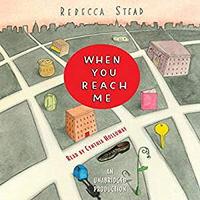
When You Reach MeWhen You Reach Me

by Rebecca Stead, Cynthia Holloway (Narrator)
Unabridged Audiobook, 4 hrs., 19 mins.
Listening Library, 2019
Read: October 29, 2019

(the official blurb)
I didn’t realize this was an MG novel when I grabbed it—I thought it was YA—it wouldn’t have made much of a difference, it just would’ve been good to know what I was getting into.

Miranda is in 6th Grade, has one friend (who has just decided not to be friends anymore), and is obsessed with A Wrinkle in Time. Her mom is a paralegal and is dating a lawyer in her firm. It’s the late 70’s and latch-key kids are becoming more common, but not as much as they will be.

As Miranda tries to find new people to connect with, she receives odd messages about needing to write a thorough and completely true account of something that’s about to happen. She’ll know the thing when it happens. Totally normal, right?

There’s some time travel, there’s some personal growth, there’s some tribute to L’Engle’s novel. It’s a charming little work, really. Sure, I could see most of it coming from miles away, but that’s because I’m a few decades older than the audience, not because Stead didn’t know what she was doing.

Holloway does a fine job, too. Capturing the bouncing emotions just right. I dug it, upper MG readers probably will, too (L’Engle fans are shoo-ins).
3.5 Stars


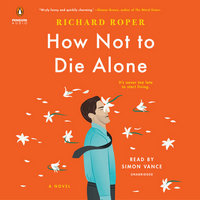
How Not to Die AloneHow Not to Die Alone

by Richard Roper, Simon Vance (Narrator)
Unabridged Audiobook, 8 hrs., 52 mins.
Penguin Audio, 2019
Read: October 14-16, 2019

(the official blurb)
The concept for this novel feels like something that’d happen to George Costanza, but what makes this novel work is that Roper makes Andrew a believable, sympathetic human being—not the dumpster fire of a person that George was. It’s utterly preposterous, really. But you can’t help but believe it happening (and can likely see yourself doing something similar).

I’ve seen repeated—almost ubiquitous—comparisons to Eleanor Oliphant is Completely Fine. And I get that, and can kind of agree with it. I found the character and story in this novel better than Ms. Oliphant or her life. Although that book seems much more plausible. (and I quickly decided not to care).

Andrew’s friendship with Peggy is wonderful, I wish we had more time with them working/hanging out. Peggy’s a great character on her own—and if Roper were to write one of those ridiculous “same story just from someone else’s POV” sequels, I’d have to cast aside my prejudice against those so I could spend more time with her.

Vance gives one of those audiobook narrations that convinces you there’s no other way for the book to sound—if you read the text version, the voice in your head would have to be Vance. And if you’d never heard of him before, that’s okay, because your subconscious would invent a voice just like his.

Moving, amusing, hopeful. Great job.
4 Stars


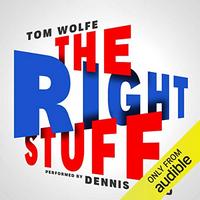
The Right StuffThe Right Stuff

by Tom Wolfe, Dennis Quaid (Narrator)
Unabridged Audiobook, 15 hrs., 42 mins.
Audible Studios, 2018
Read: October 29-30, 2019

(the official blurb)
I read this book about 2-3 times a year from Middle School to the first or second year of college, and haven’t been able to do it since (I’ve tried off and on). But when Audible had a sale on this earlier in the year, I had to give it a shot. Especially with one of the stars of the remarkable movie adaptation doing the narration.

Now an audiobook of Wolfe is a tricky proposition (at best). Wolfe’s a master stylist. But so much of it (to me anyway) is how the words are on the page. His idiosyncratic capitalization, punctuation, visual rhythms . . . it’s all about how the text shows up in the book. But Quaid gets close enough. So I was able to fully enjoy and immerse myself in this story about the early years of the US/USSR Space Race—the test pilots around Yeager’s feat and then transitioning into the Mercury Program and a little beyond.

Wolfe educates and then entertains with the way he tells the story, editorializes about the events and people, and captures the essence of the various people involved. Listening to this brought me back to the first time I read this book and reminded me why I fell in love with Wolfe.

Quaid did the near-impossible here, he got as close to humanly possible to capturing Wolfe’s style, sensibilities and je ne sais quoi. He didn’t quite get it, but I can’t imagine anyone doing better. It’s probably one of my favorite audiobook performances to date. I’m going to go out on a limb here and say that Quaid guy just might have a future in show biz.
4 Stars

2019 Library Love Challenge

Finally Fall Book Tag


While reading these posts on Bookidote, beforewegoblog, and The Witty & Sarcastic Bookclub, I noticed myself mentally composing this list—so I figure I had to join in the fun. I’d have posted this last week, but my free laborer realized how little he was getting paid and decided to play video games instead of generating my graphic.

Naturally, I only paid half of his fee.

Enough of that, bring on the Autumn! (even if it feels like Winter here in Idaho):

In Fall, the air is crisp and clear. Name a book with a vivid setting.

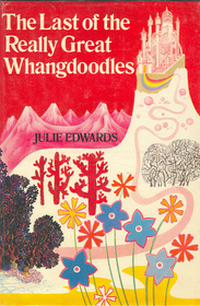
The Last of the Really Great WhangdoodlesThe Last of the Really Great Whangdoodles by Julie Edwards

I had a hard time coming up with something for this one, honestly. But Whangdoodleland was so vivid that I can still picture parts of it, despite having read it only once in the last 30+ years.


Nature is beautiful…but also dying. Name a book that is beautifully written, but also deals with a heavy topic, like loss or grief.

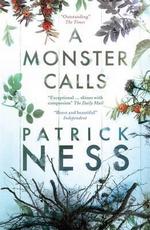
A Monster CallsA Monster Calls by Patrick Ness

When I posted about it, I said, “I’m not convinced that this is really all that well-written, technically speaking. But it packs such an emotional wallop, it grabs you, reaches down your throat and seizes your heart and does whatever it wants to with it—so who cares how technically well it’s written? (and, yeah, I do think the two don’t necessarily go together). A couple of weeks from now, I may not look back on this as fondly—but tonight, in the afterglow? Loved this.” I still look back on it as fondly, for the record.


Fall is Back to School Season. Name a Nonfiction Book that Taught You Something.

TimekeepersTimekeepers: How the World Became Obsessed With Time by Simon Garfield

If I’m going to read a non-fiction book, it had better teach me something or I’ll end up ranting about it for days/weeks/months! This one popped to mind, though. In my post about the book, I said: “Did I learn something from the book? Much more than I expected to. The chapter on the French experiments alone probably taught me enough to justify the whole book. I didn’t/couldn’t stick with the details of watch-making (I have a hard time visualizing that kind of detail), but even that was fascinating and informative on the surface. Most topics broadened my understanding and taught me something. Also, the sheer amount of trivia that I picked up was great (the amount of time spent recording the first Beatles LP, why pop music tends to be about 3 minutes long, etc., etc.).”


In order to keep warm, it’s good to spend some time with the people we love. Name a fictional family/household/friend-group that you’d love to be a part of.

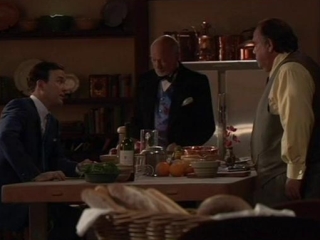
Nero Wolfe trioThe Household of Nero Wolfe from the books by Rex Stout

(yeah, that picture is from the A&E TV show, not exactly the books—but in that image in particular, they look just about perfect)

There were many families/groups/households that I could’ve picked for this, but that Brownstone on West 35th Street is near the Platonic ideal for a place to live—I’d love to spend time with Mr. Wolfe, Archie and Fritz (not to mention Saul, Fred, Orrie, Lily, Lon . . .)


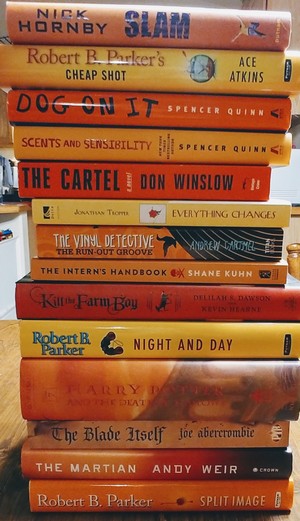
The colorful leaves are piling up on the ground. Show us a pile of Autumn-colored spines.


(I thought this was going to be hard, but in the end, I had to not make the pile bigger!)

Also…wow, clearly, I’m not a photographer. It’s a shame I don’t live closer to my pal, Micah Burke, things around here would look much spiffier.


Fall is the perfect time for some storytelling by the fireside. Share a book wherein somebody is telling a story.

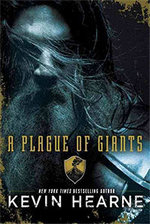
A Plague of GiantsA Plague of Giants by Kevin Hearne

That’s really 90% of the book—a bard telling stories. How he pulls this off, really impressed me.

(Hammered by Kevin Hearne would also qualify, but I liked the storytelling in this one better)


The nights are getting darker. Share a dark, creepy read.

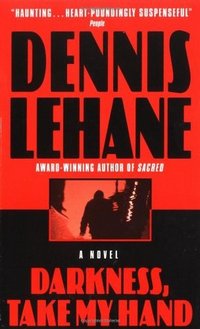
Darkness Take My HandDarkness Take My Hand by Dennis Lehane

This one disturbs me every time I read it (4-6 I think), I still remember having to sleep with the lights on after I stayed up reading it until 2-3 in the morning the first time—I doubt I was a very good employee the next day. (Sacred maybe is creepier, but this is the better book by Lehane)


The days are getting colder. Name a short, heartwarming read that could warm up somebody’s cold and rainy day.

WonderWonder by R. J. Palacio

The “short” in the category is the sticky wicket. But this is a quick read (even if the page number is higher than I’d count as “short.” Formulaic? Yup. Predictable? You betcha. Effective? Abso-smurfly. Textbook example of heartwarming.


Fall returns every year. Name an old favorite that you’d like to return to soon.

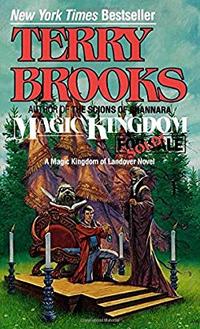
Magic Kingdom for Sale — SOLD!Magic Kingdom for Sale — SOLD! by Terry Brooks

Ive been thinking about this book a lot since Bookstooge’s Quick Fire Fantasy post. Gotta work this into the 2020 reading schedule.

I’m tagging any blogger who reads this. Play along.

Universal Monster Book Tag


Witty and Sarcastic Book Club tagged me in her little creation—a tag based on Universal’s Classic Movie Monsters. There’s a lot of recency bias in my pics, but oh well—I liked the list. I really need to do more things like this, it was fun.

While trying to come up with the last couple of entries for this, I took a Facebook break and read a couple of posts on a Nero Wolfe fan group, and realized I could fill my blanks from that Corpus. Then it occurred to me that I could do one of these with entries only from the Nero Wolfe series. Or, the Spenser series. Huh. (I’d have trouble with some other series depending how you define “sequel” below). Watch me control the impulse.

bullet Dracula: a book with a charismatic villain
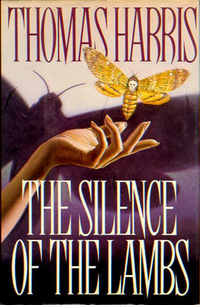
The Silence of the Lambs
My Pick: Gotta go with Hannibal Lecter in The Silence of the Lambs, every other charismatic villain I can think of pales in comparison.
Bonus Nero Wolfe Pick: (yeah, so much for restraint—this was a fun additional challenge) Paul Chapin in The League of Frightened Men (my post about the book)
Bonus Spenser Pick: The Gray Man in Small Vices

bullet The Invisible Man: A book that has more going on than meets the eye
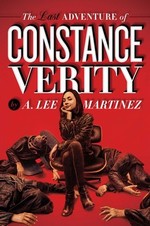
The Last Adventure of Constance Verity
My Pick: The Last Adventure of Constance Verity by A. Lee Martinez (my post about the book)
Bonus Nero Wolfe Pick: Even in the Best Families
Bonus Spenser Pick: Early Autumn

bullet Wolf-Man: A complicated character
Needle Song
My Pick: Doc Slidesmith in Needle Song (my post about the book)
Bonus Nero Wolfe Pick: Can I just use Nero Wolfe? Eh, Orrie Cather in A Family Affair
Bonus Spenser Pick: Patricia Utley in Mortal Stakes

bullet Frankenstein: A book with a misunderstood character
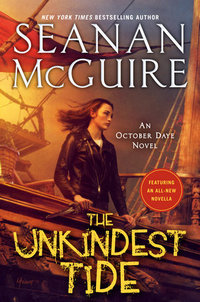
The Unkindest Tide
My Pick: The Luidaeg in The Unkindest Tide by Seanan McGuire (my post about the book)
Bonus Nero Wolfe Pick: Over My Dead Body (my post about the book)
Bonus Spenser Pick: Hawk, A Promised Land

bullet The Bride of Frankenstein: A sequel you enjoyed more than the first book
Stoned Love
My Pick: Stoned Love by Ian Patrick (my post about the book)
Bonus Nero Wolfe Pick: The League of Frightened Men (yeah, that’s the second time this shows up, but it’s the sequel…) (my post about the book)
Bonus Spenser Pick: God Bless the Child

bullet Creature from the Black Lagoon: An incredibly unique book
A Star-Reckoner's Lot

(there’s a better cover now, but this is the first)

My Pick: A Star-Reckoner’s Lot by Darrell Drake (my post about the book)
Bonus Nero Wolfe Pick: Some Buried Ceasar (my post about the book)
Bonus Spenser Pick: A Savage Place

bullet The Mummy: A book that wraps up nicely (see what I did there?)
Every Heart a Doorway
My Pick: Every Heart a Doorway by Seanan McGuire (my post about the book)
Bonus Nero Wolfe Pick: This applies to almost every one of them, I’m going to go with The Doorbell Rang
Bonus Spenser Pick: The Judas Goat

I’m not going to tag anyone, but I’d encourage any reader to give it a shot. I’d like to see your lists.

Also, I’ve been thinking for awhile I needed to do a re-read of the Spenser series. This post has convinced me I really need to get on that.

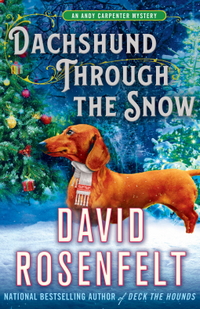
Pub Day Repost: Dachshund Through the Snow by David Rosenfelt: Andy Carpenter gets a Cold Case for Christmas

Dachshund Through the Snow

Dachshund Through the Snow

by David Rosenfelt
Series: Andy Carpenter, #20

eARC, 352 pg.
Minotaur Books, 2019

Read: September 3, 2019


It felt a little weird for the second book I read in September to be a Christmas-centered novel. Sure, it’s an Advanced Reader Copy, but still, it feels ridiculous. However, one thing we learn right off the bat is that Andy’s wife, Laurie, wants to extend the Christmas season into February (I’m sure there’s a touch of hyperbole there)—so I can totally see her not blinking at a Christmas book right after Labor Day.

There’s another case that kicks the book off—Andy sues the Paterson Police Department on behalf of a canine officer whose handler is retiring and wants to bring the dog with him into early retirement due to hip problems. It’s a pleasant way to kick off the book, and Rosenfelt makes it pay off for events later in the book and into the future, too.

But the main event is tied into Laurie’s Christmas spirit. She goes to various local places (like a pet store) and takes the wish lists/letters to Santa left there and fulfills them. This year she gets a letter from a little boy who wants a coat for his mom and a sweater for his dachshund, but before you can say “Awww, how cute,” he also asks for Santa to find his dad and bring him home. A job for Laurie, the P.I., not Santa.

Before Laurie can find him, however, the Paterson police do—he’s arrested for a fourteen-year-old murder. Noah Traynor’s sister had done one of those 23andMe/Ancestry-type things and the police tied her DNA to blood left underneath the fingernails of an unsolved murder (this is such a good idea, and I hope other writers use a similar idea just to prompt discussion about these things). Now we’re talking a job that’s not for Santa or Laurie, it’s Andy’s turn.

By this point, we all know what comes next: Sam hacks into things he should and finds out a lot; Marcus mumbles, intimidates some criminals and does something violent; Laurie cajoles and supports Andy; Hike predicts calamity; Andy watches some sports and thinks while walking Tara and Sebastian; (and works a little). The trial arrives and Andy annoys the judge and prosecutor, amuses the reader and finally gets somewhere with his investigation. Just because we all know it’s coming, that doesn’t mean it’s any less entertaining—in fact, there’s the fun in finding out how Rosenfelt will juggle the standard options; e.g. “what superhuman thing will Marcus do this time?”, “will Sam get to go into the field?”, “how many potential witnesses will Andy alienate before the trial? There’s also a lot that happens this time that the reader isn’t used to seeing during trial prep or the trial itself.

During the trial, something so shocking happened that Andy swore when he learned about it—which didn’t scandalize me, I just don’t remember him doing it that often. I was just as shocked as he was and almost followed suit. I know Rosenfelt has tricked me and caught me off guard before, but I don’t remember anything like this one. At twenty books in, for him to leave me nigh-flabbergasted is an accomplishment. Early on, I’d come up with a theory for both the identity of the killer and the motive—and Rosenfelt had convinced me I was on the wrong track. But it turns out that the events that left me as gobsmacked as our favorite indolent defense lawyer paved the way for me to be proven right. I’m not bringing this up to talk about how clever I was but to say that Rosenfelt was so convincing that he talked me out of being right on both fronts. Few mystery writers succeed there, and that never fails to make me happy to read it.

The book also works as a launching point for the spin-off series expected next year, focusing on Laurie’s new Detective Agency. I’ve been looking forward to it since I saw it announced, but now I’m a bit more interested having a bit more information. But more on that in a few months.

I went without sleep—2 days before seeing my sleep specialist, who saw the data, I should add—to stay up and finish this. It was totally worth the scathing look she gave me because I just had to know how it ended. After a book or two that made me wonder if Rosenfelt was running out of steam, the last few of these books have restored all my faith in him—Dachshund Through the Snow is one of the best in the series. A couple of authentic laughs, a lot of smiles, some warm fuzzies. a very clever mystery, and some good quality time with old friends—it’s a genuinely good time.

Disclaimer: I received this eARC from St. Martin’s Press via NetGalley in exchange for this post and my honest opinion—thanks to both for this early Christmas gift (so to speak), but the opinions expressed were not influenced by that, only by the fun read.


4 1/2 Stars

Dachshund Through the Snow by David Rosenfelt: Andy Carpenter gets a Cold Case for Christmas

Dachshund Through the Snow

Dachshund Through the Snow

by David Rosenfelt
Series: Andy Carpenter, #20

eARC, 352 pg.
Minotaur Books, 2019

Read: September 3, 2019


It felt a little weird for the second book I read in September to be a Christmas-centered novel. Sure, it’s an Advanced Reader Copy, but still, it feels ridiculous. However, one thing we learn right off the bat is that Andy’s wife, Laurie, wants to extend the Christmas season into February (I’m sure there’s a touch of hyperbole there)—so I can totally see her not blinking at a Christmas book right after Labor Day.

There’s another case that kicks the book off—Andy sues the Paterson Police Department on behalf of a canine officer whose handler is retiring and wants to bring the dog with him into early retirement due to hip problems. It’s a pleasant way to kick off the book, and Rosenfelt makes it pay off for events later in the book and into the future, too.

But the main event is tied into Laurie’s Christmas spirit. She goes to various local places (like a pet store) and takes the wish lists/letters to Santa left there and fulfills them. This year she gets a letter from a little boy who wants a coat for his mom and a sweater for his dachshund, but before you can say “Awww, how cute,” he also asks for Santa to find his dad and bring him home. A job for Laurie, the P.I., not Santa.

Before Laurie can find him, however, the Paterson police do—he’s arrested for a fourteen-year-old murder. Noah Traynor’s sister had done one of those 23andMe/Ancestry-type things and the police tied her DNA to blood left underneath the fingernails of an unsolved murder (this is such a good idea, and I hope other writers use a similar idea just to prompt discussion about these things). Now we’re talking a job that’s not for Santa or Laurie, it’s Andy’s turn.

By this point, we all know what comes next: Sam hacks into things he should and finds out a lot; Marcus mumbles, intimidates some criminals and does something violent; Laurie cajoles and supports Andy; Hike predicts calamity; Andy watches some sports and thinks while walking Tara and Sebastian; (and works a little). The trial arrives and Andy annoys the judge and prosecutor, amuses the reader and finally gets somewhere with his investigation. Just because we all know it’s coming, that doesn’t mean it’s any less entertaining—in fact, there’s the fun in finding out how Rosenfelt will juggle the standard options; e.g. “what superhuman thing will Marcus do this time?”, “will Sam get to go into the field?”, “how many potential witnesses will Andy alienate before the trial? There’s also a lot that happens this time that the reader isn’t used to seeing during trial prep or the trial itself.

During the trial, something so shocking happened that Andy swore when he learned about it—which didn’t scandalize me, I just don’t remember him doing it that often. I was just as shocked as he was and almost followed suit. I know Rosenfelt has tricked me and caught me off guard before, but I don’t remember anything like this one. At twenty books in, for him to leave me nigh-flabbergasted is an accomplishment. Early on, I’d come up with a theory for both the identity of the killer and the motive—and Rosenfelt had convinced me I was on the wrong track. But it turns out that the events that left me as gobsmacked as our favorite indolent defense lawyer paved the way for me to be proven right. I’m not bringing this up to talk about how clever I was but to say that Rosenfelt was so convincing that he talked me out of being right on both fronts. Few mystery writers succeed there, and that never fails to make me happy to read it.

The book also works as a launching point for the spin-off series expected next year, focusing on Laurie’s new Detective Agency. I’ve been looking forward to it since I saw it announced, but now I’m a bit more interested having a bit more information. But more on that in a few months.

I went without sleep—2 days before seeing my sleep specialist, who saw the data, I should add—to stay up and finish this. It was totally worth the scathing look she gave me because I just had to know how it ended. After a book or two that made me wonder if Rosenfelt was running out of steam, the last few of these books have restored all my faith in him—Dachshund Through the Snow is one of the best in the series. A couple of authentic laughs, a lot of smiles, some warm fuzzies. a very clever mystery, and some good quality time with old friends—it’s a genuinely good time.

Disclaimer: I received this eARC from St. Martin’s Press via NetGalley in exchange for this post and my honest opinion—thanks to both for this early Christmas gift (so to speak), but the opinions expressed were not influenced by that, only by the fun read.


4 1/2 Stars

Reposting Just ‘Cuz: Landline by Rainbow Rowell

The second re-run from 5 years ago this week is from Rainbow Rowell, before she discovered she could make a lot more money on the YA market than she can with “Commercial Women’s Fiction” or whatever silly marketing label this got. I miss that Rowell, oh well.

LandlineLandline

by Rainbow Rowell

Hardcover, 310 pg.
St. Martin’s Press, 2014
Read: August 13, 2014

If the last few years have taught us readers anything, it’s that if you want quirky, honest, heart-felt romance with real (and usually moderately overweight) people and solid laughs, Rainbow Rowell will consistently deliver for you. And if you don’t think you want that, after you read her, you’ll realize that’s just what you wanted after all. She has two YA books and now two Adult books to her credit. Her latest, Landline delivers the typical Rowell magic in her story, but this time she included something else: actual magic. Sort of.

Georgie McCool is half of a pretty successful TV writing team who are thiiiiis close to being much more successful, all they have to do is crank out a handful of scripts in the next couple of weeks and they’re in a great position to sell their first series. The catch is, this involves working over Christmas — despite Georgie’s plans to go to her mother-in-law’s in Omaha with her husband, Neal and their two daughters. Georgie says that she can’t pass up this opportunity, so Neal and the girls go off without her.

Georgie sees this as a regrettable occurrence, but one of the sacrifices she has to make to get her dream show made. Her mother, step-father and sister see it as her husband leaving her, and Georgie ends up staying with them. Which gets Georgie to worrying — especially when she can never seem to reach Neal on the phone during the day. At night, however, when her iPhone battery is dead, she has to resort to the landline in her old room and she ends up talking to Neal back before they got engaged.

Don’t ask. It makes no sense. She never bothers to explain. And it doesn’t matter. Georgie eventually figures out that’s what’s going on and she rolls with it, and the reader does, too.

These conversations, as well as the absence of her family, lead Georgie on a path down memory lane, reflecting on the beginning of their relationship and how it changed as they did. Maybe Neal had made a mistake choosing her. Maybe she’d ruined her life (and his) by choosing him. Would they have both been better off going their separate ways? Or was there something worth fighting for now? Would that matter? The clock is ticking — for Georgie’s marriage (both now and then) and her career. Is she up for it?

The tension is real, the apprehension, fear, and self-doubt (for starters) that Georgie is wrestling with is very obvious and palpable. Yet while focusing on this, Rowell’s able to create a believable world filled with a lot of interesting people. There’s Georgie’s partner/best friend, Seth and another writer on their current (and hopefully future) show — and Georgie failing to hold up her end of things there, as much as she tries.

Then there’s her sister, mother and step-father. They’re much better developed (probably only because we spend more time with them). Her mother’s a pretty implausible character, yet not a cartoon, she’s a pug fanatic, married someone much younger than her, and generally seems really happy. Her sister’s about done with high school and is figuring herself out (and mostly has) — she’s a hoot, and my biggest problem with the book is that we don’t get more of Heather. Not that there wasn’t plenty of her — and it’d require the book to take a far different shape. We get whole storylines about all the non-Neal people in her life, little vignettes showing us their character, giving us smiles in the midst of Georgie’s crisis, like:

“Kids are perceptive, Georgie. They’re like dogs”–she offered a meatball from her own fork to the pug heaped in her lap–“they know when their people are unhappy.”
“I think you may have just reverse-anthropomorphized your own grandchildren.”
Her mom waved her empty fork dismissively. “You know what I mean.”
Heather leaned into Georgie and sighed. “Sometimes I feel like her daughter. And sometimes I feel like the dog with the least ribbons.”

Not only do the supporting stories, or even the little moments like this fill out Georgie’s world and make it more interesting, they provide a breather for the reader from having to deal with the disintegrating marriage.

I know some people think we spend too much time in flashbacks, where Georgie’s remembering how she and Neal met, got to know each other, and started seeing each other, etc. But we need that. If all we get is Neal in the present, or past-Neal on the phone, we’re not going to care enough. Especially in the first couple of scenes we get with Neal, it’d be real easy to see him as unsympathetic — the guy holding Georgie and her career back. We need these flashbacks so the reader can sync their feelings about Neal with Georgie’s, so that when we read something like:

Georgie hadn’t known back then how much she was going to come to need Neal, how he was going to become like air to her.
Was that codependence? Or was it just marriage?”

or

She needed him.
Neal was home. Neal was base.
Neal was where Georgie plugged in, and synced up, and started fresh every day. He was the only one who knew her exactly as she was.

find ourselves agreeing with her, or at least seeing why she says it.

At the end of the book, there’s a lot of plot lines dangling — some very important ones, actually. Enough so, that normally, I’d devote a paragraph to complaining about it. But I won’t this time — it works for Landline. There’s a lot for Georgie to work out herself, she’s really only settled on the one most important thing, leaving the rest to be resolved another day. And that’s got to be good enough for the reader.

Not her best, but Rowell on an off day is still really, really good.

—–

4 1/2 Stars

Page 14 of 36

Powered by WordPress & Theme by Anders Norén