Category: P-U Page 23 of 36

‏Eleanor & Park (Audiobook) by Rainbow Rowell, Rebecca Lowman, Sunil Malhotra

Eleanor & ParkEleanor & Park

by Rainbow Rowell, Rebecca Lowman & Sunil Malhotra (Narrators)

Unabridged Audiobook, 8 hrs., 57 min.
Listening Library (Audio), 2013
Read: May 31 – June 1, 2016


Okay, so yesterday I talked about a book that was hurt by the audio narration — this is one that’s helped by it (but not much, because it really doesn’t need much). I read this back when it came out, and gave it 4 Stars — which boggles my mind, was I a harsher grader back then? I remembered liking it more than that, though. Anyway, this audiobook is the perfect example of what the medium can be.

It perfectly captured the flavor, the emotion and the detail of the original. Now, it didn’t become all about the performance, the narrators brought the words to life, but not at the expense of the text.

Lowman and Malhotra were spectacular — they were Eleanore and Park. You fall for them while the characters were falling for each other, and when they expressed emotion, you certainly felt it. Well, I don’t know about “you,” but definitely me.

I’m really not sure what else I can say. This is a perfect story about first love, how it defines who you are in a way you didn’t expect — how it reveals the best of you and improves the worst of you. Using these two social misfits to tell this story grounds it in a way that the Prom King and Queen couldn’t — I just loved it. It’s probably the best thing Rowell’s done, and it’s one of the best audiobooks I’ve ever heard.

—–

5 Stars

Pub Day Repost: The Twelve Dogs of Christmas by David Rosenfelt

The Twelve Dogs of ChristmasThe Twelve Dogs of Christmas

by David Rosenfelt
Series: Andy Carpenter, #15eARC, 336 pg.
Minotaur Books, 2016
Read: August 27, 2016

I’m not a big fan of holiday-themed installments of long-running series (see the Holiday Plum novels or the Silent Night Spenser novel as glaring examples of how bad these can be). But you know I’m a completist — and if I could make it through the aforementioned books, I could handle this. Thankfully, this was pretty light on the Christmas theme (sure, there are trees and gifts and whatnot, but it’s not really that different from your standard Andy Carpenter novel. So, if you think like I do — don’t worry. If you don’t mind/like a little holiday cheer — don’t worry, you’ll find it.

A friend of the Tara Foundation, “Pups” (so-called because she takes care of stray puppies until they’re old enough to adopt out, and might be pickier than Willie when it comes to worthy humans). Is facing eviction because of the large number of puppies she has in her home, and a new neighbor is complaining. Pups isn’t really what you call “friendly,” “polite” or someone who “should be allowed to interact with people.” She’s crabby, opinionated, blunt and has no patience for fools — particularly fools that seem intent on messing with her and her puppies. So Pups has said a few things that make it sound like she’d be happy if the neighbor stopped breathing.

Which, naturally, means that he ends up killed and that someone did a really sloppy frame job on ol’ Pups. The frame job is actually bigger than just this one killing, but you can read that for yourself.

Why prosecutors continue to play hardball with Carpenter clients, I just don’t get. I never understood why Hamilton Burger insisted on taking Perry Mason’s clients to trial, and I can’t understand why New Jersey’s prosecutors don’t just dismiss charges the instant that Carpenter and Hike show up on the other side of a courtroom. But they don’t, which means we get to watch Andy do his thing, fret about his jury deliberation superstitions, and annoy a judge. Who could ask for more?

I really think the mystery, the culprit and the way things unfold in Twelve Dogs is better than the last few books in this series. Everything’s clicking just like it should in these pages. This may be some of the best Marcus material in quite a while — the way that the gang leader acts around and talks about “Mr. Marcus” tells you more about Marcus than anything that Andy could possible tell us. The book would be worth reading just for that.

Minor spoiler: and hopefully once the book is published, this’ll be taken care of. It was a shame to see Andy betting since he and Ricky and just made a promise to stop doing that about a third way through the last book (I’m too lazy to look up page number, an approach Andy would probably endorse) — and Laurie made it clear that he was expected to keep that promise. It’s a minor note that I probably only caught because I read the two passages in the same 24-hour period.

It’d be really hard to rank Carpenter books in terms of happy and/or sweet endings. But if you were bored/ambitious enough to take on that task, I’m pretty sure that this would find itself close to the top. A great addition to one of the more entertaining mystery series around.

Disclaimer: I received this eARC from Minotaur Books via NetGalley in exchange for this post — thanks to both for this.

—–

4 Stars

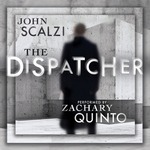
The Dispatcher (Audiobook) by John Scalzi, Zachary Quinto

The Dispatcher The Dispatcher

by John Scalzi, Zachary Quinto (Narrator)
Series: The Dispatcher, #1


Unabridged Audiobook, 2 hrs, 19 min.
Audible Studios, 2016

Read: October 5, 2016


Last year, when he was in Boise, I heard John Scalzi read the first chapter of this book and I’ve been waiting for this ever since.

It’s an Urban Fantasy set in a world where natural or accidental death is possible, but if you’re murdered there’s an almost 100% possibility that you’ll come back to life. Huh? Yeah — heckuva hook, right? There’s no explanation for this, it just started — and it may just end at some point. But in the meantime people are taking full advantage of this.

Tony Valdez is a dispatcher — insurance companies and individuals have started hiring dispatchers to “dispatch” someone just before they die, so there’s a good chance — a fantastic chance, really — that they’ll survive. One of Tony’s coworkers has disappeared and a Chicago police detective has drafted him to help her track down his colleague. To find him, they have to look into the dark side of the dispatcher trade and the desperate lengths some will go through to extend the lives of their loved ones or themselves.

It was a fun book to listen to, a story that drew you in and drug you along to the gripping end. But once it was over, and I started thinking about it, all sorts of questions came to mind, not really plot holes, just things that weren’t adequately addressed. I think a lot of it was length, if this had been a novel, some of them wouldn’t have come up. The more I thought of it, it was almost like this novella was Scalzi’s attempt to prove a point/win a bet that, yes, he can write UF. A strongly written, convincing story that entertained from beginning to end — but there was just no heart to it, it just seemed like a writing exercise.

Quinto did a bang-up job — I think I only thought of him as the actor once or twice — he nailed every bit of this. If that whole movie star thing doesn’t work out for him, he could have a future doing this sort of thing. I should probably give this an extra star just for his work.

Very entertaining, a great experience — just don’t think about it too terribly much.

—–

3 Stars

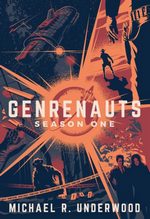
Genrenauts: The Complete Season One Collection by Michael R. Underwood

Genrenauts: The Complete Season One CollectionGenrenauts: The Complete Season One Collection

by Michael R. Underwood
Series: Genrenauts, #1-6

Kindle Edition, 544 pg.
2016


Parallel to our world are various worlds populated by fictional characters in a wide variety of genres (Western, SF, Romance, etc), and when things go wrong in the stories, things go wrong in our world. For example, broken Romance world stories = higher divorce rates here. In this world, there are a number of teams of story specialists who shift to the other worlds to fix the stories and set things back on course here. Leah Tang — a struggling stand-up comic by night, struggling receptionist by day — is the newest recruit. Join her as she learns the ropes, rights wrongs, struggles with ethics, and gets shot at while cracking jokes.

Originally printed as 6 episodes in 5 novellas, now collected in one season-long omnibus, Genrenauats as become one of my favorite series this year and I’m glad to get one more chance to talk about it with the release of the collection this week.

There’s a great cast of characters here, all of which deserve the reader’s time and focus. For example, I was tempted to not-really-ignore, but relegate Angstrom King to back burner status in my mind. He’s the leader, he points the team in a direction, but the real excitement’s with the rest. This was a mistake on my part — think of him like Capt. Picard. Sure, for the most part he sits around in his ready room with some Earl Gray (hot) — but really, some of the more interesting things that happen in he series are because of his actions. King’s not Jean-Luc, but there’s a similar quality.

I love a good team — fiction, TV, comics, you name it — the interaction, the teamwork, the dynamics, there’s really nothing like it. There’s a great team in these novellas — some of the intra-team camaraderie got pushed aside for a little romance that doesn’t really work for me (but I get why it would for others and appreciate the way Underwood’s tackling it). Overall, it’s built on solid interactions and relationships that have plenty of room to grow and develop over the many seasons that we hopefully get of this.

Each adventure gives Underwood an opportunity to talk about various genres — to talk about the clichés, tropes, archetypes, pluses, minuses, and so on of each genre. And one visit to each won’t be enough to fully explore these. Don’t get me wrong, we’re not talking Master’s Theses-esque discussion, he jokes about them, plays with them, sometimes turns them upside down while telling his tale.

The collection includes:
The Shootout Solution — We meet Leah Tang, Angstrom King and the rest of his team. We’re also introduced to the concept of Genrenauts, Story Worlds, the effects that they can have on our world — also, we get a pretty decent story in Western World. Not bad for 148 pages. (For more details, you might want to read my original blog post, my blog post about the audiobook)

The Absconded Ambassador — The team goes to Science Fiction World to help out on a DS9-like Space Station. On the verge of a major treaty being finalized and signed, the Terran ambassador has been kidnapped. It’s up to King and co. to rescue the ambassador and keep the shaky alliance from crumbling in her absence. We learn a little more about everyone, and while having a lot of fun with genre conventions. ( my original blog post, my blog post about the audiobook)

The Cupid Reconciliation — The team gets back up to full strength in time to go rescue a Rom-Com gone awry. Underwood really lets things fly when it comes to observations about the genre and playing with conventions while using them for comedic — and narrative — value. Also — a couple of seeds that were planted in the first two novellas are watered enough that you can see season/season-plus story arcs beginning to grow. The series took a big jump in quality here. ( my original blog post)

The Substitute Sleuth — A Police Procedural needs some help, a no-nonsense cop’s off-the wall/out-of-the-box partner takes a bullet and another pair of mismatched detectives needs to come in and close the case. We get some major backstory stuff here, and the season arc is moved along nicely. The detective story itself isn’t my favorite, but what Underwood does with the tropes, themes, conventions, etc. is really good — it is more of a TV detective story than a novel detective story. Think Castle, not Harry Bosch (whoops, thanks Amazon, you ruined that point…). ( my original blog post)

The Failed Fellowship (Part 1 & 2) — This think kicks off with Leah Tang ranting about fantasy fiction and 5 episodes later, she gets to spend 2 episodes in Fantasy World, where a Chosen One with a Magic Artifact story has fallen to pieces. Leah’s in hog heaven, the rest of the team are at the top of their game and Underwood is, too. Rollicking good adventure. Best of the batch in every way. ( my original blog post)

I dig this series, and having all of the novellas in one handy collection is going to make it easier (I hope) for others to discover it — the collection is also a little cheaper than buying all the individual stories, which will also going to make things easier for people to discover it. If you haven’t dipped your toe in this world/these worlds yet, what are you waiting for?

—–

5 Stars

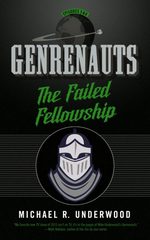
The Failed Fellowship by Michael R. Underwood

The Failed FellowshipThe Failed Fellowship

by Michael R. Underwood
Series: Genrenauts, #5 & 6

eARC, 181 pg.
2016

Read: September 16 – 17, 2016

Her job was to fix the story, not right every little wrong in the entire world.

But was that really enough? If you force someone to work with shoddy equipment and they get hurt every week, eventually, shouldn’t you fix the tool instead of sending them to the doctor? She’d spent the last several months playing the doctor, applying spot fixes along with the team, keeping to the shadows. Help the real hero, delay the problems until the real hero came back.

I want to come back to talk about Leah’s continuing difficulties adopting the right attitude as a Genrenaut, but we’ve got some work to get through first.

A band of intrepid warriors, in possession of a magic artifact carried by the one person capable of stopping a great evil enters a castle and fights through untold numbers of warriors through magic and feats of strength and skill. Only to have the Chosen One killed before they can challenge the leader of the forces of evil. Clearly, not the way this story is supposed to go — which creates problems on Earth Prime, and a need for Angstrom King’s team to come to Fantasy World, get the band back together, and fix the story.

The first thing the team does when they get to the world is track down Ioseph, the wizard who assembled the failed heroes. Leah describes him as:

Gandalf if Gondor had already fallen, Dumbledore facing a fascist wizard state under Voldemort.

Which is a great descriptive line, wholly genre-appropriate. This is Underwood at his best — not that he’s not great in SF or the other genres we’ve seen this season — but in Fantasy, he’s at his strength (see the Ree Reyes series for further examples).

It’s not just Underwood being comfortable, either — one of the first things we learned about Leah is that she’s a big Fantasy Fan. So her being here was is just what she’s been waiting for — and she makes the most of it. She jokes, she fights, she sings (her character is a bard), performs heroic deeds and she eats a lot of stew (while making the requisite snarky remarks about the stew). Everything you want in an epic fantasy novel or game, it’s celebrated and commented on at the same time. It’d be very easy to do a quick edit to remove all the references to other worlds/Genrenauts/etc. and come up with a decent novella-length story here — with a pretty good twist. Thankfully, we don’t have to read that hypothetical edit — we get Leah and the gang guiding us through it.

In addition to the pretty fun story — we get to see these Genrenauts function like a fully formed team — which is not to say they’re perfect, part of it is Leah’s rookie status, part of it comes from the length of time they spend in this world (as we learned last time), and part of it is the uncertainty that the tall woman they’ve been chasing brings to the story. There’s at least one other part, but you have to read the book to learn about it. Roman gets to tell Leah where he came from and what that means, which helps him a lot (the rest of the team, too). King’s and Shirin’s part of the story is the more straight-forward, if for no other reason than their temperaments and experience. Which is not to say that their parts are dull — in fact, one of the best characters from this world (with the obligatory annoying ‘ in his name) comes from their portion of the story.

The focus is, of course, on Leah — she loves being surrounded by a fantasy story and lets the setting get to her. Also, as the opening quotation shows, she’s struggling with her role as a Genrenaut in various worlds. Much like Kirk bristling under the constraints of the Prime Directive, Leah has a hard time adapting her sense of right and wrong to the world and culture she’s in — and I’m not sure she’s getting better about it, maybe she’s getting worse the more comfortable she is with the team. Frankly, I’m glad to see her struggle here, and I’m not sure what side I want her to come down on.

Leah’s now at the end of her probationary status — and if any of the Genrenauts were analyzing their own story, they’d clearly see that this was the end of a narrative arc and that something big was about to happen — enough to close this chapter and lead into a new one. It does, and it’s a doozy. Man, I hope things went well enough on the sales front for Underwood to be able to bring us a second season (if not seven) — I’m more than ready to support the next Kickstarter.

Underwood seemed more confident, a little more willing to have fun with the genre in these entries than he has with the others (not that he’s been all that restrained before). I loved this. When (for example) Leverage was on the air — there were better shows on, but few that I enjoyed as much. Similarly, I’ve read better books this year than The Failed Fellowship or any of the others in this series, but not that many and none have made me as happy reading these. There is one line towards the end of this that made me laugh out loud (and groan, too — Leah has no shame) and if I read an interview where Underwood said he wrote the previous 5 books in this series just to set up this line? It’d be justified.

Disclaimer: I received this eARC from the author in exchange for this post — I thank him for it (and for releasing the cover image in time for me to post this without my lousy placeholder).

—–

5 Stars

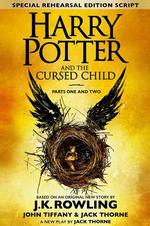
Harry Potter and the Cursed Child by J.K. Rowling, John Tiffany & Jack Thorne

Harry Potter and the Cursed ChildHarry Potter and the Cursed Child – Parts One and Two (Special Rehearsal Edition)

by J.K. Rowling, John Tiffany & Jack Thorne
Series: Harry Potter, #8

Hardcover, 308 pg.
Scholastic, Inc., 2016
Read: September 2, 2016

I went into this with low expectations for a few reasons (negative buzz being one of many), and sadly had them all met — I don’t think anything were exceeded.

This is fan-fiction, pure and simple. Sure, it’s official fan-fiction written in conjunction with Rowling — but it’s not the same series, it doesn’t feel the same. It feels like someone’s trying to recapture what they had, in just a slightly different form. I’m fine with that — if people want to throw money at Rowling, Tiffany and Thorne for doing this? Let them. Let’s just not pretend it’s more than what it is.

The story primarily focuses on Harry and Ginny’s middle child, Albus. Albus is pretty uncomfortable living in the shadow of the Boy Who Lived — he doesn’t like the notoriety or pressure that comes with that territory. Which is absolutely understandable — especially now that he’s at Hogwarts, where Harry’s legend is strongest. Between that, and typical teenager strife with Dad leads Albus to take some really big risks with banned magical technology.

These risks center on time travel — and this is where it lost me. I just can’t stand the kind of stories where someone goes back in time with perfectly good intentions and messes things up, changing the future so much that it’s not recognizable. So then they (or someone else) have to go back in time again to prevent/minimize the damage. And magically, this second (or third) intervention restores everything back to the way it was before the time travelers left. Sure, this is a series in which magical things like that are clearly possible. But there’s possible and too-incredible. It almost doesn’t matter how good this story/execution was, I wouldn’t be crazy about it.

The writing was . . . okay. Nothing spectacular, nothing that had the same …”magic” as the other books in the series. It’s not as bad as many claim — but it’s not as good as others claim either. How some of this can be staged, I just can’t imagine. I’m not saying it can’t be — but wow, that’s a real technical challenge, I’d think.

There were some nice moments, some great fan-service stuff — and I’m very glad I got to meet Scorpius Malfoy. I’d rather spend time with him than any of the rest of the descendants of the original series, there’s something very cool about this kid. I should also mention that there’s some nice father-son moments with Harry and Albus.

On the whole, I’m glad I read this, but I really can’t get crazy about it.

—–

3 Stars

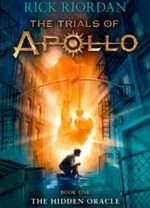
The Hidden Oracle by Rick Riordan

The Hidden OracleThe Hidden Oracle

by Rick Riordan
Series: Trials of Apollo, #1

Hardcover, 361 pg.
Disney-Hyperion, 2016

Read: August 31, 2016


Only 361 pages? Riordan is taking it easy on his readers. And maybe himself.

Anyway, following the events of The Heroes of Olympus, Zeus is a little displeased with Apollo and demonstrates this by turning him into a human teen (read: YA/MG novel star) and casting him to earth. He appears to be fully human — not even a demigod like Percy and the rest. Speaking of Percy, as soon as Apollo figures out what happened to him and where he is, he makes a beeline for Percy’s apartment to get help. Smart move. Percy gets him to Camp Halfblood and disappears back to NYC to do homework.

Once there, Apollo begins trying to figure out what quest he’ll have to do to return his status to quo. Along the way, he’ll make some friends, get a better perspective on himself and his offspring (yeah, that’s not weird), and maybe go through some of that personal growth. Note that I said, “some” personal growth and “better” perspective — that’s not saying much, basically Apollo comes across as a teenaged-Gilderoy Lockheart with a conscience. Instead of the large number of missions that we’ve become accustomed to in these books, there’s really just one (plus the series-arc mission) — such a nice change.

A lot of people from the Percy Jackson and The Heroes series are name-dropped and discussed, not to mention the few that we see — there’s even a nod to the Magnus Chase series — thankfully, my favorite is one of those who shows up in the flesh. There’s also a good amount of in-jokes to please the long-time fans. But readers new to this universe shouldn’t be put off by any of this — it’s absolutely approachable, maybe even moreso than anything since The Lightning Thief.

This is told in the typical breezy style that characterized non-adult mystery Riordan novels, but given the different protagonist, feels a little fresher. A little briefer, a little change of pace — still full of that Riordan magic. The Hidden Oracle is a sold first-entry in yet another adventure in this world. Give it a shot.

—–

3.5 Stars

The Twelve Dogs of Christmas by David Rosenfelt

The Twelve Dogs of ChristmasThe Twelve Dogs of Christmas

by David Rosenfelt
Series: Andy Carpenter, #15

eARC, 336 pg.
Minotaur Books, 2016

Read: August 27, 2016


I’m not a big fan of holiday-themed installments of long-running series (see the Holiday Plum novels or the Silent Night Spenser novel as glaring examples of how bad these can be). But you know I’m a completist — and if I could make it through the aforementioned books, I could handle this. Thankfully, this was pretty light on the Christmas theme (sure, there are trees and gifts and whatnot, but it’s not really that different from your standard Andy Carpenter novel. So, if you think like I do — don’t worry. If you don’t mind/like a little holiday cheer — don’t worry, you’ll find it.

A friend of the Tara Foundation, “Pups” (so-called because she takes care of stray puppies until they’re old enough to adopt out, and might be pickier than Willie when it comes to worthy humans). Is facing eviction because of the large number of puppies she has in her home, and a new neighbor is complaining. Pups isn’t really what you call “friendly,” “polite” or someone who “should be allowed to interact with people.” She’s crabby, opinionated, blunt and has no patience for fools — particularly fools that seem intent on messing with her and her puppies. So Pups has said a few things that make it sound like she’d be happy if the neighbor stopped breathing.

Which, naturally, means that he ends up killed and that someone did a really sloppy frame job on ol’ Pups. The frame job is actually bigger than just this one killing, but you can read that for yourself.

Why prosecutors continue to play hardball with Carpenter clients, I just don’t get. I never understood why Hamilton Burger insisted on taking Perry Mason’s clients to trial, and I can’t understand why New Jersey’s prosecutors don’t just dismiss charges the instant that Carpenter and Hike show up on the other side of a courtroom. But they don’t, which means we get to watch Andy do his thing, fret about his jury deliberation superstitions, and annoy a judge. Who could ask for more?

I really think the mystery, the culprit and the way things unfold in Twelve Dogs is better than the last few books in this series. Everything’s clicking just like it should in these pages. This may be some of the best Marcus material in quite a while — the way that the gang leader acts around and talks about “Mr. Marcus” tells you more about Marcus than anything that Andy could possible tell us. The book would be worth reading just for that.

Minor spoiler: and hopefully once the book is published, this’ll be taken care of. It was a shame to see Andy betting since he and Ricky and just made a promise to stop doing that about a third way through the last book (I’m too lazy to look up page number, an approach Andy would probably endorse) — and Laurie made it clear that he was expected to keep that promise. It’s a minor note that I probably only caught because I read the two passages in the same 24-hour period.

It’d be really hard to rank Carpenter books in terms of happy and/or sweet endings. But if you were bored/ambitious enough to take on that task, I’m pretty sure that this would find itself close to the top. A great addition to one of the more entertaining mystery series around.

Disclaimer: I received this eARC from Minotaur Books via NetGalley in exchange for this post — thanks to both for this.

—–

4 Stars

Outfoxed by David Rosenfelt

OutfoxedOutfoxed

by David Rosenfelt
Series: Andy Carpenter, #14

Hardcover, 326 pg.
Minotaur Books, 2016

Read: August 26 – 27, 2016


Last week, I talked about how difficult it is to come up with things to talk about with a long-running series like the Walt Longmire books — at a certain point, series like that hit a good stride and only vary a little in quality or interest for readers. Well, the Andy Carpenter series is even longer and more difficult to write about. I don’t know if I can do much, but I’ll try.

This time out, Andy has inherited a client already in prison, he’s basically supposed to deal with routine things and be ready to help him at the end of his sentence. This is made easier in that the client, Brian Atkins, is working with a dog training program that the Tara Foundation has going with the minimum security prison he’s in.

But then he breaks out of prison and is found leaving the scene of the murder of his estranged wife and his former partner.

But it’s so much bigger than just this (really, the case doesn’t seem as difficult as many of his — finding the actual killer is, but not the case) — Andy’s going to find himself at odds with one of the most dangerous foes he’s tangled with. Speaking of easy, I sort of think that everything ended a bit too easily, a bit too pat — I’m not sure how doing what they did really keeps Andy and his family safe.

I was wondering how Andy and Laurie were going to deal with juggling parenting and these cases, and man, do I hope they come up with better ways than this one. It works once, but not twice. I liked the little bit of fathering we get to see from Andy, though, and Ricky seems like he can be a decent addition to the series.

I don’t want to sound like I’m down on this book — or this series. It was a whole lotta fun, a nice puzzle, and watching the pieces fall into place was pretty satisfying. If you’re not reading these books, you’re missing out.

—–

3.5 Stars

Debt to Pay by Reed Farrel Coleman

Debt to PayRobert B. Parker’s Debt to Pay

by Reed Farrel Coleman
Series: Jesse Stone, #15

eARC, 352 pg.
G.P. Putnam’s Sons, 2016

Read: August 20 – 22, 2016

Since the closing pages of Blind Spot, I’ve been waiting for the other shoe to fall victim to gravity. Jesse Stone has been, too. Well, after a more typical Stone novel, the wait is over — Mr. Peepers, the sadistic hitman that almost killed Suitcase Simpson and evaded Jesse, is back.

Just in time for just in time for Jesse’s ex, Jen’s wedding.

Before I forget, isn’t that a great move? Build suspense by ignoring the cliffhanger-esque ending for a whole book? In the wrong hands, that’d be annoying, but done right? Very effective.

Jesse and his lady-love, Diana (the FBI agent turned private security consultant) are off to Texas to meet Jen’s fiance, maybe get a little closure, and covertly protect Jen from the special mix of psychological and physical torture that Peepers subjects his victims to before killing them. While Jesse seems to be several steps behind, Peepers seems to be calling all the shots — he’s got all the power and is making Jesse jump through whatever hoops he wants him to.

Meanwhile, changes are afoot with the Paradise Police Department, State Homicide and Suit’s life (and a few other places) — just so we don’t all get too wrapped up in Pepper’s quest for vengeance.

As he has in the previous two novels in this series, Coleman keeps things moving at a great pace, the suspense keeps getting ratcheted up — interspersed by heartwarming, amusing, and troubling moments, so it’s not suspense overkill. There are some great character moments — especially with Diana and Jesse, Suit and a few people, Jesse and a bottle. There’s no mystery here — we all know who the villain of the piece is, the only question is how Peppers will attack and who will remain standing at the end of the book.

In his other major series, Parker introduced a paid assassin, The Gray Man, who almost killed Spenser and plagued him for a while afterwards. Mr. Peepers is far creepier, deadlier, and interesting than the Gray Man ever was. I really didn’t like being in that dude’s head as much as we were — which means that Coleman succeeded in making him a terrible person — I felt like washing my brain out with soap to get over some of the Peepers chapters.

Ace Atkins has returned Spenser to his roots (moved things forward, don’t get me wrong, it’s not just a nostalgia trip), but Coleman has taken Jesse and the rest and shaken things up — he’s stayed true to the characters, the series, the feel — but he’s pushed things ahead and has probably made more real changes to the series than Parker did since book 2 (but making things feel risky and inventive feels like the roots of this series). Actually, he’s not just changed this series — he’s done things that affect the whole of the Parker-verse. Just look at Suit — everything we need to know about what Coleman’s doing to the series is embodied there. I know Coleman’s take is not that popular with some long-time fans, but I couldn’t be happier — either with the series as it is right now, or with this book.

This was riveting, literally never a dull moment — not relentless, you can relax occasionally, even grin. But I had to force myself to put it down to do the responsible adult thing a couple of times. I expect most fans of Jesse and the PPD folks will have similar experiences with Debt to Pay.

Disclaimer: I received this eARC from G.P. Putnam’s Sons via NetGalley in exchange for this post — thanks to both for this.

—–

4 1/2 Stars

Page 23 of 36

Powered by WordPress & Theme by Anders Norén