Category: Authors Page 18 of 124

Douglas Adams’ London by Yvette Keller: The Map of London I Never Knew I Needed

Douglas Adams’ London Douglas Adams’ London

by Yvette Keller

DETAILS:
Publisher: Herb Lester Associates
Publication Date: April 15, 2023
Length: 2 pgs.
Read Date: May 6, 2023


What’s Douglas Adams’ London?

This is a map of important locations (42 of them, of course) in London for Douglas Adams, the Dirk Gently series, and/or the Hitchhiker’s Guide series.

The reverse side explains why the locations were selected and gives some biographical information about Adams’ relation to each spot. I loved learning something about Hotblack Desiato, Fenchurch’s apartment, the pizza place Dirk Gently talked about, and so on.

The Design/Art

The map itself has some nice little bits of art scattered throughout—cartoonish little sketches of things like a dolphin, a sperm whale, and a certain depressed android. Just fantastic illustrations that made an already interesting map into something you want to come back to time and again.

The people at Herb Lester Associates who put this together did a simply wonderful job.

So, what did I think about Douglas Adams’ London?

I’ve already given up on my dream of wandering around London—but, boy, howdy, this makes me want to go even more.

Keller is described as “the planet earth authority on Douglas Adams literary tourism,” and will soon publish a travel guide to London. Who better to put something like this together?

Douglas Adams’ London is a gem—even if you never get the chance to put this information into action, it’s great to have.

This post contains an affiliate link. If you purchase from it, I will get a small commission at no additional cost to you. As always, the opinions expressed are my own.

Towel Day ’23: Do You Know Where Your Towel Is?

(updated and revised this 5/25/23)

The Hitchhiker’s Guide to the Galaxy has a few things to say on the subject of towels.

A towel, it says, is about the most massively useful thing an interstellar hitchhiker can have. Partly it has great practical value. You can wrap it around you for warmth as you bound across the cold moons of Jaglan Beta; you can lie on it on the brilliant marble-sanded beaches of Santraginus V, inhaling the heady sea vapors; you can sleep under it beneath the stars which shine so redly on the desert world of Kakrafoon; use it to sail a miniraft down the slow heavy River Moth; wet it for use in hand-to-hand-combat; wrap it round your head to ward off noxious fumes or avoid the gaze of the Ravenous Bugblatter Beast of Traal (such a mind-bogglingly stupid animal, it assumes that if you can’t see it, it can’t see you); you can wave your towel in emergencies as a distress signal, and of course dry yourself off with it if it still seems to be clean enough.

More importantly, a towel has immense psychological value. For some reason, if a strag (strag: non-hitch hiker) discovers that a hitch hiker has his towel with him, he will automatically assume that he is also in possession of a toothbrush, face flannel, soap, tin of biscuits, flask, compass, map, ball of string, gnat spray, wet weather gear, space suit etc., etc. Furthermore, the strag will then happily lend the hitch hiker any of these or a dozen other items that the hitch hiker might accidentally have “lost”. What the strag will think is that any man who can hitch the length and breadth of the galaxy, rough it, slum it, struggle against terrible odds, win through, and still knows where his towel is is clearly a man to be reckoned with.

Hence a phrase that has passed into hitchhiking slang, as in “Hey, you sass that hoopy Ford Prefect? There’s a frood who really knows where his towel is.” (Sass: know, be aware of, meet, have sex with; hoopy: really together guy; frood: really amazingly together guy.)

Towel Day, for the few who don’t know, is the annual celebration of Douglas Adams’ life and work. It was first held two weeks after his death, fans were to carry a towel with them for the day to use as a talking point to encourage those who have never read HHGTTG to do so, or to just converse with someone about Adams. Adams is one of that handful of authors that I can’t imagine I’d be the same without having encountered/read/re-read/re-re-re-re-read, and so I do my best to pay a little tribute to him each year, even if it’s just carrying around a towel.

In commemoration of this date, here’s most of what I’ve written about Adams. I’ve struggled to come up with new material to share for Towel Day over the years, mostly sticking with updating and revising existing posts. But I do have a couple of new things coming today. But let’s start with the old material. A few years back, I did a re-read of all of Adams’ (completed) fiction. For reasons beyond my ken (or recollection), I didn’t get around to blogging about the Dirk Gently books, but I did do the Hitchhiker’s Trilogy:
bullet The Hitchhiker’s Guide to the Galaxy
bullet The Restaurant at the End of the Universe
bullet Life, The Universe and Everything
bullet So Long, and Thanks For All The Fish
bullet Mostly Harmless
bullet I had a thing or two to say about the 40th Anniversary of The Hitchhiker’s Guide to the Galaxy
bullet I took a look at the 42nd Anniversary Illustrated Edition of The Hitchhiker’s Guide to the Galaxy

Also, I should mention the one book Adams/Hitchhiker’s aficionado needs to read is Don’t Panic by Neil Gaiman, David K. Dickson and MJ Simpson. If you’re more in the mood for a podcast, I’d suggest The Waterstones Podcast How We Made: The Hitchhiker’s Guide to the Galaxy—I’ve listened to several podcast episodes about this book, and generally roll my eyes at them. But this is just fantastic. Were it available, I’d listen to a Peter Jackson-length version of the episode.

I’ve only been able to get one of my sons into Adams, he’s the taller, thinner one in the picture from a few years ago.
(although I did get he and his younger siblings to use their towels to make themselves safe from the Ravenous Bugblatter Beast of Traal a few years earlier:)

You really need to check out this comic from Sheldon Comics—part of the Anatomy of Authors series: The Anatomy of Douglas Adams.

Lit in a Nutshell gives this quick explanation of The Hitchiiker’s Guide:

TowelDay.org is the best collection of resources on the day. One of my favorite posts there is this pretty cool video, shot on the ISS by astronaut Samantha Cristoforetti.

Even better—here’s an appearance by Douglas Adams himself from the old Letterman show—I’m so glad someone preserved this:

Love the anecdote (Also, I want this tie.)

Backpacking Through Bedlam by Seanan McGuire: Now, Where Were We? Oh, Right…

Backpacking Through BedlamBackpacking Through Bedlam

by Seanan McGuire

DETAILS:
Series: InCryptid, #12
Publisher: Daw Books
Publication Date: March 07, 2023
Format: Trade Paperback
Length: 285 pg.
Read Date: March 30-April 3, 2023


Back to the Covenant Story

The first few books of this series featured an ongoing arc concerning the looming threat of an invasion of the Americas by The Covenant of St. George. In the fifth book, Chaos Choreography, Verity basically invited that invasion. In the next book, Antimony went undercover to infiltrate them in order to gather intel on the coming invasion—and we largely abandoned that storyline for the rest of the Antimony-trilogy (the Covenant was around, obviously, but other things seemed far more important most of the time). Then with the next three books, that storyline took a giant backseat and most of the action focused on non-Earthbound species and/or didn’t take place on Earth.

Now that Alice, Thomas, and Sally are back on Earth, we can rejoin the Covenant story, already in progress.

What’s Backpacking Through Bedlam About?

This is precisely what this novel is about—Alice trying to reintroduce Thomas and Sally to Earth (the latter will be far easier since she hasn’t been gone quite as long) while coming to fight alongside Verity’s ragtag “army” in New York to protect the dragon.

Thomas doesn’t have to just remember what Earth is like and catch up on a few decades worth of technological advances, political and cultural changes, etc.—he also has to get used to his wife again. They’ve both grown and changed—yes, still deeply in love and committed to each other. But…they’re not the same people they were when he left.

Meanwhile, Alice has to learn to accept Sally as the not-quite-adult-daughter she’s never met. And Sally has to figure out her place in her new family. All while Verity and the rest of the Prices are going to have to adjust to Thomas actually being alive.

And, yeah, they have to fight a war and protect as many cryptids as they can from the Covenant. Should be a walk in the park, right? Or maybe that’s where the titular Bedlam comes in.

So, what did I think about Backpacking Through Bedlam?

When Verity declared war, I remember being taken aback by it—but also thinking, “all right, now things will get really interesting!” Just for that to be pushed to the background—or not even discussed—for quite some time. After getting over my initial disappointment, I settled in and didn’t have a problem with it, because what we got was plenty entertaining and intriguing on its own—who needed them to be the focus of the antagonism when you had all this other stuff going on?

But, I tell you what, it felt good to get back to this story. I really appreciate that we came back to it as we did, with Alice and the others having to jump in and catch up. This made it easy for the reader to get backstory thrown at us and we didn’t have to go back to the time of Magic for Nothing or thereabouts to see watch the invasion.

This was a solid novel in the series, and I think will serve as a really good way for the next arc to launch—letting us see all the Prices (in one way or another) fighting the Covenant. I don’t have much to say beyond that—InCryptid books bring a lot of snark, a dash of romance, a good amount of action, and some interesting musings on life, family, and what makes a decent person (human or not). That’s what you get in Backpacking through Bedlam.

I have no idea what’s coming next—or who our primary character will be in the next book—and I don’t care. I’m just eager to see it.

This wouldn’t be a bad place to jump on—there’s enough recapping of various and sundry storylines going on that it’s probably the best one since the fifth book (books 1, 3, 5, and now, 12 I think are the optimal jumping-on points). Just know that if you try it, you’re going to want to go back to the beginning.


3.5 Stars

This post contains an affiliate link. If you purchase from it, I will get a small commission at no additional cost to you. As always, the opinions expressed are my own.

Opening Lines: Sacred by Dennis Lehane

Head & Shoulders used to tell us that, “You never get a second chance to make a first impression.” That’s true for wearing dark shirts, and it’s especially true for books. Sometimes the characters will hook the reader, sometimes the premise, sometimes it’s just knowing the author—but nothing beats a great opening for getting a reader to commit. This is the third book in one of my favorite series (and the fourth I’d read when I first encountered it), so I was pre-commited when I picked it up. But if I’d never read Lehane before, this would’ve done it for me.

A piece of advice: If you ever follow someone in my neighborhood, don’t wear pink.

The first day Angie and I picked up the little round guy on our tail, he wore a pink shirt under a gray suit and a black topcoat. The suit was double-breasted, Italian, and too nice for my part of town by several hundred dollars. The topcoat was cashmere. People in my neighborhood could afford cashmere, I suppose, but usually they spend so much on the duct tape that keeps their tail pipes attached to their ’82 Chevys, that they don’t have much left over for anything but that trip to Aruba.

The second day, the little round guy replaced the pink shirt with a more subdued white, lost the cashmere and the Italian suit, but still stuck out like Michael Jackson in a day care center by wearing a hat. Nobody in my neighborhood–or any of Boston’s inner-city neighborhoods that I know of–wears anything on their head but a baseball cap or the occasional tweed Scally. And our friend, the Weeble, as we’d come to call him, wore a bowler. A fine-looking bowler, don’t get me wrong, but a bowler just the same.

“He could be an alien,” Angie said. I looked out the window of the Avenue Coffee Shop. The Weeble’s head jerked and then he bent to fiddle with his shoelaces.

“An alien,” I said. “From where exactly? France?”

She frowned at me and lathered cream cheese over, bagel so strong with onions my eyes watered just looking at it. “No, stupid. From the future. Didn’t you ever see that old Star Trek where Kirk and Spock ended wp on earth in the thirties and were hopelessly out of step?”

“I hate Star Trek.”

“But you’re familiar with the concept.”

I nodded, then yawned. The Weeble studied a telephone pole as if he’d never seen one before. Maybe Angie was right.

“How can you not like Star Trek?” Angie said.

“Easy. I watch it, it annoys me, I turn it off.”

“Even Next Generation?”

“What’s that?” I said.

“When you were born,” she said, “I bet your father held you up to your mother and said, ‘Look, hon, you just gave birth to a beautiful crabby old man.'”

“What’s your point?” I said.

from Sacred by Dennis Lehane
Sacred

Opening Lines Logo

Swamp Story by Dave Barry: Florida. Just say it’s Florida.

Swamp StorySwamp Story

by Dave Barry

DETAILS:
Publisher: Simon & Schuster
Publication Date: May 2, 2023
Format: eARC
Length: 320 pg.
Read Date: April 19-21, 2023


What’s Swamp Story About?

This is hard to summarize, really. Which is part of the beauty of the book.

Most of the characters in this book aren’t what you’d call likable. They’re not really villains or antagonists, they’re just…people you don’t want to spend time with in real life, people with more greed/ambition than common sense (or decency). There are a couple of guys living in a cabin in the Everglades trying to assemble enough footage for a reality show pilot (basically, the good-looking one of the pair walking around shirtless interacting with native wildlife). Their weed dealer owns a failing convenience store/bait shop and has a “so stupid it just might work” plan to put his family’s store on the map. There’s a would-be talent agent (or just anything to ride the coattails of his buddy who happens to make a little money). Oh, and there’s a lawyer and a cabinet secretary/presidential aspirant, too—can’t forget them.

On the villainous side, there’s the weed dealer’s supplier—a former football player who is still large enough to intimidate active linemen who will not tolerate missed deadlines. Two ex-con brothers who are the textbook definition of nasty are also running around. There’s also an Eastern European gangster and some of his employees from the old country who should make everyone quake with fear.

On the likable side, you have the shirtless would-be star’s girlfriend and mother of his child (who really regrets ever giving him the time of day, no matter how pretty he is). The weed dealer’s brother who really needs something to motivate him to do more than play games on his phone, might have found that motivation in her. You’ve also got a couple of aides to the secretary, who really need a better job. An alcoholic ex-reporter desperate to make a buck is just what the weed dealer wants for his idea. I can’t forget either the aging TV reporter desperate to cling to her former relevance or the champion snake hunter.

Put all these characters in a small geographic region, throw in a large amount of buried Confederate gold and a couple of viral videos, shake well, and serve. Swamp Story is the result.

This Book Could’ve Been Shorter

Around the 70% mark (I’m keeping it vague because I don’t know how it’ll go in the final edition), a couple of the characters have an exchange that essentially goes along these lines:

Character A: I hope nothing else happens.
Character B: What else could happen?
Character A: …

and then there’s a map showing the immediate vicinity and some of the major buildings/landmarks of the story, making it very obvious that, based on what we know, all the characters are really near each other and that the likelihood of them running into each other in the very near future is pretty high. The reader will not be able to look at this map and not start imagining how all that running into each other is going to go.

I made a note at this point, that Barry could’ve ended the novel at that point—that exchange, the map, and the reader’s imagination—and it’d have been a fun and satisfying read.

However, odds are, your imagination isn’t as good as Barry’s is (mine sure isn’t), and as zany as I thought things were going to get from this point, the truth was far zanier. His conclusion to the novel (not just the immediate every character and storyline coming together in one spot, but everything that followed) was better than any of the ideas I came up with (and I liked most of my ideas a lot).

Still, there’s part of me that wishes he’d left things with that line and the map. I’d have laughed hard at that.

So, what did I think about Swamp Story?

I really enjoy reading Barry’s novels, and Swamp Story is no exception. It’s a different kind of humor (largely) than Barry’s columns or books, but it’s just as satisfying. I’d want to say that it’s more subtle, but that’s not true at all. There’s more character-based humor, and some of it’s the dialogue—which strikes you differently than the straight humor pieces he’s best known for.

Now, that said, there’s a scene at the beginning—involving a rich child’s birthday party, a couple of costumed performers, and a difficult-to-crack piñata, that absolutely cracked me up and I’ve been replaying it in my head since I read it—it’s perfect slapstick.

Putting aside the humor, all the story arcs worked really well and I can see toned-down versions of all the arcs working well together in a grim version of this story. I’ve argued recently that a good test of a comedic novel is if the plots would work without the laughs—in this case they largely wood. But they’re so much juicer and more enjoyable in this comic and heightened versions.

There are genuine bad guys, some actual threats, several characters in search of a good idea,* and a couple of people you hope catch a lucky break and escape from everything they’re surrounded by relatively intact. Throw in some good laughs, and some clever writing, and you’ve got yourself a fun few hours of reading. That’s likely what the reader looks for in a Dave Barry novel, and that’s what Swamp Story delivers. Strongly recommended.

* Apologies to Pirandello.


4 Stars

Disclaimer: I received this eARC from Simon & Schuster via NetGalley in exchange for this post—thanks to both for this.

This post contains an affiliate link. If you purchase from it, I will get a small commission at no additional cost to you. As always, the opinions expressed are my own.

The Friday 56 for 4/13/23: Ozark Dogs by Eli Cranor

The Friday 56This is a weekly bloghop hosted by Freda’s Voice.

RULES:
The Friday 56 Grab a book, any book.
The Friday 56 Turn to Page 56 or 56% on your ereader. If you have to improvise, that is okay.
The Friday 56 Find a snippet, short and sweet.
The Friday 56 Post it.

from Page 56 (and 57) of:
Ozark Dogs

Ozark Dogs by Eli Cranor

Evail loved his big brother, a bond that went even deeper than blood. In a way, Rudnick was the start of everything all those nights in the field, the kits’ calls playing out scared and lonely. It was just like the hunting. Rudnick had simply asked if Evail would do it, and then he did. Again and again. For a while, the brothers went hunting almost every night. It was the summer before Rudnick’s senior year in high school. Evail on the cusp of sixteen.

And then Rudnick was gone, Evail went to prison, and everything changed. The darkness shifted and the calls howled from the inside out. When Evail returned, he took to the field alone, no longer using the recordings, opting instead for the darkness, working along the tree lines and stalking his prey. He wore the hides of the creatures he’d taken. A mass of fur and bone death-still in the shadows, Evail crouching, waiting, the gun barrel blue in the night. Coyotes were loyal and thick as thieves. When one went down, the others came running. It wasn’t until there was a pile of blood-warm bodies that the big boy would finally come sauntering up from the shadows. The alpha. Rudnick had always been the alpha. He wasn’t anything anymore.

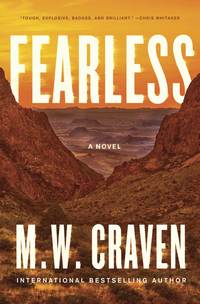
Fearless by M.W. Craven: I Didn’t Realize How Ominously “Proactive” Could Be Used in a Sentence

1. I don’t think I adequately expressed how good this book is below—it’s always a problem I have when I’m as enthusiastic about a book as I am about this one.
2. I typically post about a pre-publication book less than a month before publication, this is more than three months in advance. I just couldn’t wait that long to read it. See what I said about “enthusiastic” above.
3. Related to #1, I really don’t know if this is all that coherent–I get rambly when I’m this enthusiastic. I’m also not sure I rambled about the right things. You get what you pay for here.


FearlessFearless

by M.W. Craven

DETAILS:
Series: Ben Koenig, #1
Publisher: Flatiron Books
Publication Date: July 11, 2023
Format: ARC
Length: 405 pgs. 
Read Date: March 20-21, 2023

What’s Fearless About?

I’m going to be vague and/or withholding a lot here because Ben Koenig/M.W. Craven will give you the details in a more satisfying manner than I will/can. So live with that—or go order the book. (the better option)

Ben Koenig used to be a U.S. Marshal. Well, he never resigned, so maybe he still is one. But he’s no-showed enough that he probably isn’t anymore. Before he went off-the-grid six years ago, he headed up the Special Operations Group—a task force that went after the worst of the worst on the Marshals’ caseload. They’re the kind of guys that Raylan Givens would call when things got over his head (or hat, I guess).

Koenig literally cannot feel fear—which is a great asset in a situation fraught with danger—it’s also a major problem. Fear keeps people from reckless and foolish moves. A move he might not have made if he’d hesitated a moment (but that he doesn’t regret) put him in a situation where he needed to disappear. No one is better at disappearing than someone who is great at tracking anyone.

But something has happened, and the Marshals have to go to extraordinary lengths to find him. The Director of the Marshals Service, Mitchell Burridge needs his help. Mitch was Ben’s mentor/friend/father figure, so he’d agree to pretty much anything. Mitch’s daughter went missing from her college some weeks ago, and no one has a lead on her—no police force, no Federal agency. Mitch asks Ben to bring his daughter home (at this point, probably her body, but no one admits that out loud). And as for those who took her? Well, that’s also best left unsaid. Ben will address that when it comes time.

As Mitch puts it, Ben’s an apex predator and there’s no one else who can do all of what needs to get done. He may be that, but he’s been acting more like prey for a long time so he makes a few stumbles along the way as he shakes the dust off. But it’s not too long before Koenig catches a scent and starts following it.

That’s an Unfortunate Name

There’s a figure mentioned pretty early on and then repeatedly throughout the book—it takes a while to know if he’s a victim of something, involved in the disappearance, tangentially connected to the abductors, a dupe, or a red herring—or something else entirely. But the name keeps coming up, and it threw me.

The name is Spencer Quinn. Spencer Quinn is also the pen name of Peter Abrahams. Readers of this blog will recognize that name as the author of one of my favorite PI series, The Chet and Bernie Mysteries, among other things. The name is distinctive enough that it jumps out at you—it took me out of the moment each time. In a way that Rob Parker, Pat Cornwall, or Tom Harris might not (or even the non-nickname versions of their names). Will this be a hiccup for anyone who isn’t a Quinn reader? Nope. Was it easy to get over? Yeah, but there’s the instinctual flash of name recognition throughout.

Craven had no idea he was doing this (as I’d assumed, although I’d theorized that he could be a major fan or a major detractor—depending on how things went with the character), although I have to confess I’m a little surprised that no editor stopped him along the way.

Still, it’s a cool name, you can’t blame a guy for wanting to use it. Just ask Peter Abrahams.

Michael Westen-Moments

The show Burn Notice would regularly feature the protagonist giving voice-over lessons on spycraft, weapons, strategy, etc. to the viewer, and that’s the name I inevitably give to moments in thrillers when the first-person narrator, or the protagonist’s thought process described by the third person narrator, breaks down the hero’s decision making, etc.

I love this stuff. Almost every thriller writer has to feed the reader this kind of thing because most of us don’t know how much pressure you have to exert on the trigger of Gun X to get it to fire, or why it’s important that the guy on the left is holding the knife the way he is so the hero knows he’s more dangerous than the larger guy on the right with the shotgun. Sometimes the protagonist—either through confidence (cockiness?) or to help intimidate the opposition—will deliver this in dialogue. I always appreciate the flair that gives.

Ben Koenig is great at this kind of thing. When he Michael Westons his way through the way he approaches a certain building in the final confrontation, why he picks the type of car he does to use on his mission, why he punches this guy the way he does, etc. the reader can actually believe they’ve been given some information they can use in their daily life. You know, the next time they need to drive a car into another state to locate the missing child of their old boss.

But my favorite Michael Westoning in this book—and the scene that hooked me—is early on when Koenig takes time to critique the group of deputies who came to bring him into custody for the way they went about it—location, timing, where the person with the shotgun was standing in relation to everyone else, etc. Sure, Koenig was the one being detained—but there was no doubt who was in control (and who could’ve made everyone’s day much, much worse had he wanted to).

Incidentally, it’s been too many years since I read the book, but you can’t tell me that this scene wasn’t a tip of the hat to Child’s Killing Floor—and a suggestion to the reader that this character is going to be their next Reacher (who is also good at Michael Westoning).

Who Wrote This Again?

I’m not going to try to claim that I’m an expert on M.W. Craven—but I’m fairly familiar with his work (I’ve read 6 of his 7 previously published novels—don’t ask me to explain the missing one). It’s easy to see that the Avison Fluke novels are written by the same author that gave us the Washington Poe novels. This makes sense, it’s fairly common amongst writers of multiple series—no one is surprised to learn that the Mickey Haller books are written by Bosch’s creator; the Sunny Randall and Virgil Cole/Everett Hitch series and the stand-alone Double Play are clearly the work of the Spenser writer; even if John Rebus wasn’t Malcolm Fox’s white whale, everyone could tell those series were written by the same man; and so on.

But Fearless? It probably took me less than 50 pages to stop thinking of this as ‘the new Craven’ book and ‘the first Koenig’ book. If Koenig shares any DNA with Fluke or Poe, it’d take 23andMe or Ancestry.com to figure it out. If you know nothing about Craven’s previous work, all you’ll see is someone writing a book in the mold of Jack Reacher and Peter Ash—with a little bit of Nick Mason and Nick Heller thrown in. Well, writing in that mold—and matching each series at their best.

So, what did I think about Fearless?

I think the past 5 years have demonstrated pretty clearly that I’m probably going to love whatever Craven writes—and now I know that’s true even if it doesn’t feel like a Craven book.

This just worked on every level—Koenig is a fertile character, well-designed to carry a series for quite a while. His assets are perfect for a Reacher/Peter Ash-type character. His flaws keep him from being invincible, and provide plenty of ways for him to be his own greatest adversary. His quirks (e.g., fixation on chocolate milkshakes, absorption of odd bits of trivia) round him out nicely. The reason he’s off the grid is better than being a Luddite/technophobe. Can he grow—and can the reader grow in their understanding of him? Sure. He can also believably regress and find develop new hindrances and weaknesses to work through or overcome.

The narrative voice that Craven uses here will suck in the reader and keep the pages turning between action scenes. The action scenes might as well be directed by John McTiernan, Shane Black, or Chad Stahelski. I don’t know how “realistic” they are, but I don’t think you have to suspend much disbelief. And they’re so fun, who cares?

The story could have been a little more intricate—just a tad. But given everything else that this book had to do—introduce Koenig, establish the series and his backstory, provide some good potential recurring characters—some things have to be sacrificed. Then again, I can point to several beloved and best-selling thrillers that aren’t as intricate as this one. So don’t take this point as anything but me being greedy.

I did have a quibble or two with the novel—it’s not perfect. But I hesitate to get into them as I read an ARC, and there’s still a chance for them to vanish before publication. Also, they’re pretty much at the straining at gnats level, and I try to avoid that. In the end, those quibbles only serve to underline how great the rest of it is.

This is clearly the first in a series (even if all the promotional materials didn’t call it that, you’d get that sense throughout—and the last five pages make it abundantly clear that there’s more to come. So I do think future books will have a slightly different flavor than this one—which could’ve very easily served as a standalone.

To put it simply, I loved every second I spent reading this, Fearless was the highlight of the month for me—and I expect that I’ll keep talking about it throughout the year—I can’t wait for it to get published here so that American audiences can meet Craven. Put your orders in now, folks, July will be here before you know it, and you don’t want to miss this.

Disclaimer: I received this eARC from Flatiron Books via NetGalley, and an ARC from Flatiron with an assist from the author in exchange for this post—thanks to all involved for this. Their providing it only influenced my opinion by giving me something to opine about—I raved about it of my own free will.


5 Stars

This post contains an affiliate link. If you purchase from it, I will get a small commission at no additional cost to you. As always, the opinions expressed are my own.

Death at Paradise Palms by Steph Broadribb: The Detectives Show Their Fallibility In This Strong Follow-up

Death at Paradise PalmsDeath at Paradise Palms

by Steph Broadribb

DETAILS:
Series: The Retired Detectives Club, #2
Publisher: Thomas & Mercer
Publication Date: October 11, 2022
Format: eBook
Length: 303 pgs.
Read Date: March 16-17, 2023

What’s Death at Paradise Palms About?

After they solved a murder a few months earlier, the Retired Detectives Club has gained a certain amount of notoriety around the Homestead Retirement Community, so it’s not terribly surprising that when a resident has some concerns they call them for help. Particularly when that resident has had bad experiences with the police previously.

This particular resident is a retired movie star, Olivia Hamilton Ziegler. Her husband is missing, and she suspects foul play. They’re having no problems and it’s not like him to just not come home, not call, not pick up his phone, etc.

The Club jumps in, more than willing to help—they find a handful of decent suspects and start to dig into the background of each when a ransom demand shows up. Now they have a pressing deadline and more than a wife’s intuition. It’s time for these retired detectives to get to work.

Distracted Detectives

I’m not sure if this says something about Broadribb’s view of Americans, but in Death in the Sunshine we see that the three British retirees have things from their past that are hovering over them. I like that dynamic, but it’s good that not everyone has some deep, dark secret. Rick, our DEA retiree, seems to be baggage-free and easygoing. Maybe that just means we haven’t seen his baggage, or maybe Broadribb just thinks Americans are shallow.*

* I’m kidding. Probably.

With our British friends, however, things have happened to push these problems from hanging over their heads to being front-and-center in their minds. Normally this would be good, they’re working on the issues, dealing with the issues. However, when this club is the only one working on this kidnapping—the only outsiders aware of it—dealing with personal stuff becomes a distraction. Potentially a fatal one.

All three of these people make huge mistakes in the course of this investigation, easily observable mistakes (especially to the reader). And it’s not because they’re older, it’s not because their minds are slower, or their bodies aren’t up to what they used to be able to do—it’s because their heads aren’t in the game.

This makes for compelling storytelling, it’s great to see flawed characters battling with their flaws—but it’s a good thing they’re all retired because this is the kind of thing that should hurt a career.

The Series Arc

Ultimately, I think this series going to be telling the story of the shenanigans at the top of the Homestead Retirement Community. In Death in the Sunshine we see pretty clearly that TPTB filter the news and do what they can to prevent anything negative from getting out to the public or into the residents. And if it does show up, it’s quickly erased.

This takes work on the Social Media, old-school media, and possibly even law enforcement fronts—there’s no way that it’s all coincidental, unintentional, or any other excusable motivation. So the questions that need to be answered are why is this being done, who profits, who is hurt by this, and what actions are being taken/pressures applied, to get these various and sundry groups to quash the information.

Some of the residents see that this is going on—but (if you ask me) not enough seem that concerned—Moira sure is and is doing something about it. She’s working with a local reporter, although she has reason to believe that this is not the safest path for either of them to be taking. But that doesn’t seem to deter her.

I really hope that she’s able to get more of the Club on board with this soon—not that I want them distracted from their next big case. But she’s going to need some backup.

So, what did I think about Death at Paradise Palms?

I remember enjoying Death in the Sunshine, but I’d largely forgotten why. It was good to be reminded—this isn’t your typical elderly amateur detective series—this is a grittier take on that trend, full of people who are only amateur now, it wasn’t that long ago they were professionals, and they’ve still got the goods.

I did clock the Main Bad Guy instantly, and can only excuse the Club for not doing the same because of all their distractions (and because they’re not aware that they’re fictional characters, a lot of what tipped me off came from being a reader). So for me, the tension came from wanting to know how long it would take them to get around to discovering the truth—and how they’d use what they learned from the false trails to get there. That was enough for me—the good in this series doesn’t come from the whodunit—but from how they’re caught.

This, like all of Broadribb’s work, is a fast and fun read—it hooks you early and doesn’t let go until it’s good and ready to. Just buckle in and enjoy the ride. I can’t imagine I’ll let the next one of these sit ignored on my Kindle as I did this one.


3.5 Stars

This post contains an affiliate link. If you purchase from it, I will get a small commission at no additional cost to you. As always, the opinions expressed are my own.

PUB DAY REPOST: Good Dog, Bad Cop by David Rosenfelt: Corey Douglas Starts to Come Into His Own as a PI

Good Dog, Bad CopGood Dog, Bad Cop

by David Rosenfelt

DETAILS:
Series: The K Team, #4
Publisher: Minotaur Books
Publication Date: March 14, 2023
Format: eARC
Length: 288 pg.
Read Date: February 28-March 2, 2023
9781250828965

What’s Good Dog, Bad Cop About?

Pete Stanton, when he’s not building up a tab for Andy Carpenter at their favorite sports bar, is in charge of the Homicide Division of the Paterson PD. He doesn’t have the budget for more police detectives, but he had a healthy budget for consultants (figure that one out if you can). So he’s hired the K-Team to look into some cold cases for him.

The first one they pick is a doozy. A few years ago, a retired detective and mentor to Corey Douglas was found shot on his boat, a woman’s body was also found there. Some suspicions about a murder-suicide were floated, but nothing stuck. Corey wants to look into it, and Pete approves it with one caveat—they have to investigate the murder of that woman’s husband. He, too, was a Paterson police officer who was murdered. Other than his wife, there’s no obvious connection between the cases, and they weren’t investigated that way.

Corey and Laurie knew going in that Pete would assign them both if they requested one—and honestly, they wanted it that way. All three were aware of the game they were playing, and they all did their part. Now, hopefully, the K-Team and help the PPD close these cases and get some justice for the victims.

Simon

This is really Corey’s book—Laurie’s in it a decent amount, but she doesn’t seem to play as vital a role as usual. Marcus isn’t around much—but is when it counts. Where it comes up short is, as is often the case, Simon’s involvement.

We need to see more of him—Corey even jokes about it at one point, saying Simon’s going to be jealous about something he’s up to without him. That’s all well and good–but it’s not enough.

This is a series about detectives who name their team after a dog. Corey’s a former dog handler. The dog needs to be around more. Do we get some good Simon action? Yes. Are the lines about him and the action involving him good? Absolutely (equating him to Marcus is a great idea). But c’mon, Rosenfelt—give us more Simon.

Poor Sam

Okay, it’s been evident for quite some time in the Andy Carpenter books that while Sam is a good accountant, he enjoys his side gig as a computer researcher for Andy (who isn’t impeded by things like ethics or laws), and he’s more than happy to help out with the K-Team.

But these guys are starting to rely on him too much—sure, they do the legwork. They put a lot of the clues together—but Sam got most of those clues for them. And the number of times that Corey called with new tasks for him was borderline outrageous. They’re working this guy to the bone.

It occurs to me that I said something very similar about the computer tech in the DC Maggie Jamieson series. Is there maybe a union for overworked tech geniuses in Mysteries/Procedurals? Maybe Tilly Bradshaw can organize something.

Corey as a PI

Corey is really coming into his own as a PI (at least as far as fictional PIs go). In the first book or two, he tried to do things the right way—he was very aware that he was no longer a cop and had to act in a certain manner because of it. But he still acted like a police officer, with those kinds of instincts.

Laurie had spent enough time as a PI, was more comfortable in the role, and accepted a greater degree of looseness when it came to protocols. I doubt Marcus ever cared about them in the first place. But Corey was pretty uptight and had to be cajoled into doing certain things.

He seems over that now—he’s willing to color outside the lines, ignore certain rules/laws, and so on. It’s about getting the results and taking care of details and technicalities later.*

* I want to stress that I’m okay with this because we’re talking fictional detectives. The casual attitude toward privacy, phone records, financial transactions, and breaking and entering in a real person would be intolerable—I don’t care what their profession is.

It’s great to see him grow and develop. He’s not the same character that he was when we met him in the Andy Carpenter books–or when this series started. I’m sure that growth with slow and/or stop soon—but for now, I’m liking the journey.

The M Word

As much as he’s growing in his new profession, Corey’s got a long way to go on the personal front. Sure, he’s made great strides since meeting and starting to date Dani. He’s in a long-term committed relationship and isn’t thinking of running for the hills or making some lame excuse to break up.

But he can’t even bring himself to say—or think (including in his narration)—the word “marriage.” He will call it “M” throughout the book—and he’s thinking about it pretty frequently in this book. Sure, it’s immature—he realizes it. But that’s not enough. This is also one of those things that the reader has to suspend disbelief and just roll with. If you do, it’s a fun running joke (it’s easy to do, because if anyone can make a somewhat emotionally stunted man entertaining, it’s the creator of Andy Carpenter).

So, what did I think about Good Dog, Bad Cop?

I know this series (like the Carpenter books) aren’t technically cozies—Marcus by himself keeps them from being considered that way. But I don’t know if there is a pair of series (or one) that I feel so comfortable in. Within a paragraph or two of the protagonist showing up, I’m enjoying the book and feel at home.

Sure, there are better entries and lesser entries—characters moves I like more than others, and so on. But I know as soon as I start one of these books that I’m going to have a good time. That’s what happened here.

I’m enjoying Corey’s transformation into a more typical PI—there are a couple of moments where he felt like the 1990s-era Spenser (just with a dog that wouldn’t run from gunfire). I’m not going to complain about that—ever. I enjoy the dynamics between the team, between the team and the police/other law enforcement entities, between the team and Andy, and so on. I simply enjoyed myself here.

The mysteries on top of that were good, too. I admit that I got suckered into a red herring or two, and things that I was sure of along the way were wrong (I was on the right path, and was only one connection away from being in step with Corey).*

* I’m sure I probably sound defensive there, but that’s only because I am.

I don’t know what else to say—this is a good installment in a reliable series. Fans of Carpenter, the K-Team, or lighter mysteries will gobble this one up. Satisfaction assured.

Disclaimer: I received this eARC from St. Martin’s Press via NetGalley in exchange for this post—thanks to both for this.

4 Stars

This post contains an affiliate link. If you purchase from it, I will get a small commission at no additional cost to you. As always, the opinions expressed are my own.

Good Dog, Bad Cop by David Rosenfelt: Corey Douglas Starts to Come Into His Own as a PI

Good Dog, Bad CopGood Dog, Bad Cop

by David Rosenfelt

DETAILS:
Series: The K Team, #4
Publisher: Minotaur Books
Publication Date: March 14, 2023
Format: eARC
Length: 288 pg.
Read Date: February 28-March 2, 2023
9781250828965

What’s Good Dog, Bad Cop About?

Pete Stanton, when he’s not building up a tab for Andy Carpenter at their favorite sports bar, is in charge of the Homicide Division of the Paterson PD. He doesn’t have the budget for more police detectives, but he had a healthy budget for consultants (figure that one out if you can). So he’s hired the K-Team to look into some cold cases for him.

The first one they pick is a doozy. A few years ago, a retired detective and mentor to Corey Douglas was found shot on his boat, a woman’s body was also found there. Some suspicions about a murder-suicide were floated, but nothing stuck. Corey wants to look into it, and Pete approves it with one caveat—they have to investigate the murder of that woman’s husband. He, too, was a Paterson police officer who was murdered. Other than his wife, there’s no obvious connection between the cases, and they weren’t investigated that way.

Corey and Laurie knew going in that Pete would assign them both if they requested one—and honestly, they wanted it that way. All three were aware of the game they were playing, and they all did their part. Now, hopefully, the K-Team and help the PPD close these cases and get some justice for the victims.

Simon

This is really Corey’s book—Laurie’s in it a decent amount, but she doesn’t seem to play as vital a role as usual. Marcus isn’t around much—but is when it counts. Where it comes up short is, as is often the case, Simon’s involvement.

We need to see more of him—Corey even jokes about it at one point, saying Simon’s going to be jealous about something he’s up to without him. That’s all well and good–but it’s not enough.

This is a series about detectives who name their team after a dog. Corey’s a former dog handler. The dog needs to be around more. Do we get some good Simon action? Yes. Are the lines about him and the action involving him good? Absolutely (equating him to Marcus is a great idea). But c’mon, Rosenfelt—give us more Simon.

Poor Sam

Okay, it’s been evident for quite some time in the Andy Carpenter books that while Sam is a good accountant, he enjoys his side gig as a computer researcher for Andy (who isn’t impeded by things like ethics or laws), and he’s more than happy to help out with the K-Team.

But these guys are starting to rely on him too much—sure, they do the legwork. They put a lot of the clues together—but Sam got most of those clues for them. And the number of times that Corey called with new tasks for him was borderline outrageous. They’re working this guy to the bone.

It occurs to me that I said something very similar about the computer tech in the DC Maggie Jamieson series. Is there maybe a union for overworked tech geniuses in Mysteries/Procedurals? Maybe Tilly Bradshaw can organize something.

Corey as a PI

Corey is really coming into his own as a PI (at least as far as fictional PIs go). In the first book or two, he tried to do things the right way—he was very aware that he was no longer a cop and had to act in a certain manner because of it. But he still acted like a police officer, with those kinds of instincts.

Laurie had spent enough time as a PI, was more comfortable in the role, and accepted a greater degree of looseness when it came to protocols. I doubt Marcus ever cared about them in the first place. But Corey was pretty uptight and had to be cajoled into doing certain things.

He seems over that now—he’s willing to color outside the lines, ignore certain rules/laws, and so on. It’s about getting the results and taking care of details and technicalities later.*

* I want to stress that I’m okay with this because we’re talking fictional detectives. The casual attitude toward privacy, phone records, financial transactions, and breaking and entering in a real person would be intolerable—I don’t care what their profession is.

It’s great to see him grow and develop. He’s not the same character that he was when we met him in the Andy Carpenter books–or when this series started. I’m sure that growth with slow and/or stop soon—but for now, I’m liking the journey.

The M Word

As much as he’s growing in his new profession, Corey’s got a long way to go on the personal front. Sure, he’s made great strides since meeting and starting to date Dani. He’s in a long-term committed relationship and isn’t thinking of running for the hills or making some lame excuse to break up.

But he can’t even bring himself to say—or think (including in his narration)—the word “marriage.” He will call it “M” throughout the book—and he’s thinking about it pretty frequently in this book. Sure, it’s immature—he realizes it. But that’s not enough. This is also one of those things that the reader has to suspend disbelief and just roll with. If you do, it’s a fun running joke (it’s easy to do, because if anyone can make a somewhat emotionally stunted man entertaining, it’s the creator of Andy Carpenter).

So, what did I think about Good Dog, Bad Cop?

I know this series (like the Carpenter books) aren’t technically cozies—Marcus by himself keeps them from being considered that way. But I don’t know if there is a pair of series (or one) that I feel so comfortable in. Within a paragraph or two of the protagonist showing up, I’m enjoying the book and feel at home.

Sure, there are better entries and lesser entries—characters moves I like more than others, and so on. But I know as soon as I start one of these books that I’m going to have a good time. That’s what happened here.

I’m enjoying Corey’s transformation into a more typical PI—there are a couple of moments where he felt like the 1990s-era Spenser (just with a dog that wouldn’t run from gunfire). I’m not going to complain about that—ever. I enjoy the dynamics between the team, between the team and the police/other law enforcement entities, between the team and Andy, and so on. I simply enjoyed myself here.

The mysteries on top of that were good, too. I admit that I got suckered into a red herring or two, and things that I was sure of along the way were wrong (I was on the right path, and was only one connection away from being in step with Corey).*

* I’m sure I probably sound defensive there, but that’s only because I am.

I don’t know what else to say—this is a good installment in a reliable series. Fans of Carpenter, the K-Team, or lighter mysteries will gobble this one up. Satisfaction assured.

Disclaimer: I received this eARC from St. Martin’s Press via NetGalley in exchange for this post—thanks to both for this.

4 Stars

This post contains an affiliate link. If you purchase from it, I will get a small commission at no additional cost to you. As always, the opinions expressed are my own.

Page 18 of 124

Powered by WordPress & Theme by Anders Norén