Category: Authors Page 3 of 124

Mississippi Blue 42 by Eli Cranor: There Ain’t Nothing But The Blues In Mississippi

I thought this went up months ago, but I just found it in my drafts folder, with some vague notes in the last section. I’m relatively unable to follow most of them, and wish I could. So, had you seen this in August/September, it would’ve been better. But let’s see what I can do here.


Cover of Mississippi Blue 42 by Eli CranorMississippi Blue 42

by Eli Cranor

DETAILS:
Series: Rae Johnson, #1
Publisher: Soho Crime
Publication Date: August 5, 2025
Format: Hardcover
Length: 370 pg.
Read Date: August 7-11, 2025
Buy from Bookshop.org Support Indie Bookstores

So much depended on a ball stitched together from thirty-two panels of waterproofed leather. The fans came to see what the players did with that ball: the blazing touchdown runs, the high-flying, bone-crunching hits. And the players played for peanuts. That was the only way any enterprise could achieve the sort of profit margins enjoyed by universities with nationally ranked teams. The trick, though, was convincing the rest of the country that college football was not a business, but instead a game, a contest played on the field of higher education, which also served the Chiefs well when it came time to file their taxes.

Because the University of Central Mississippi was an educational organization, it enjoyed a 501(c)(3) status, which meant nearly every dollar the institution made was exempt from federal income tax. It was the same exception granted to churches…

Yes, Mississippi was in the Bible Belt, but the real holy day, the day when every true Southerner bowed at the altar, was game day. And in just a few more hours, the congregation would gather inside their recently renovated, five-hundred-million-dollar cathedral.

What’s Mississippi Blue 42 About?

Rae Johnson is the only daughter of a legendary college football coach and spent most of her life working to be one, too. But at a certain point, she hit the wall of misogyny (with her own father as a spokesman for the wall) and had to find a new career path. Naturally (?), she chose the FBI. We all see the overlap, right?

Anyway, she’s fresh out of the Academy and is assigned to her first case. She’s been sent to help investigate some financial crime surrounding the University of Central Mississippi’s football program. She knows she got the assignment due to her father, which grates her pride. But, she’s not going to back down from the challenge. Her partner in the investigation has been there for months and hasn’t gotten very far, but he’s determined to uncover the problems that he knows are there.

The veteran agent is just getting her acclimated to the investigation when the team’s quarterback

The Fight for the Soul of Moses McCloud

Moses stared at him, still not sure what to make of Cerge’s story, but thinking it felt right somehow, the wildness of his tale in tune with the flashy locker room: the nude white boys, the ping-pong table, the barber chairs. This wasn’t real life. It was all a dream, a four-year fantasy the players paid for with their lives. Even if they did make it to the League, even if they got paid, they still paid for it. And it wasn’t just their knees or shoulders, not even their brains. It went deeper than that. Once their playing days were over, they would be booted out of Eden, resigned to the stands to watch as the next crop of finely tuned athletes took their place. As extravagant as a Saturday spent tailgating in the Glades was, it did not compare to the roar of the crowd. Only gladiators know true glory.

This book, in many ways, seems to be a fight over the soul of the backup quarterback thrust into a leadership position—will he succumb to the culture of bagmen and fame, or will he risk his potential windfall and give Rae the information she needs?

I really like Moses from the beginning—sure, he’s got all the maturity of a college freshman (read: not as smart as he thinks he is, too easily distracted/led along by good-looking women), but there’s something about him you can’t help but like. I really think the battle for his soul angle isn’t that filled with suspense—it’s just the adults around him that fail to understand what he’s saying and what kind of guy he is all along.

But that actually makes the whole thing more entertaining for everyone who isn’t Moses.

What do I think about this as a series debut?

According to the press kit for this book:

Mississippi Blue 42 is the first in what is planned to be an ongoing series starring FBI Agent Rae Johnson as she and a cast of recurring characters explore crime in the world of sports.

Which sounds promising—especially the “world of sports” part. Not because I’m a big sports guy, but I had a hard time imagining Rae looking into some other kinds of crime because Cranor baked the sports-mindset so deeply into her. You put her in an art crime, or a counterfeit money situation? I just don’t see it working as well (but I was ready to try). Rae hunting down a crew of bank robbers would be interesting to see, I just don’t know if she gets into their heads. But even if you move her to professional sports—even something other than football, she’s got the right mindset, the right background to really give a series legs.

Rae reminds me of Ellie Hatcher, Renée Ballard, and Eve Ronin. She’s got ambition, she’s willing to cut corners (maybe too many), she’s determined to make it in a man’s world—and she lets all of that lead her into some blunders as she learns her way. The question is: will she learn from them? The other women did—I trust she will, too. But making those mistakes is fodder for good fiction along the way.

I do wonder what characters from this book will recur. One strong candidate is Rae’s friend who failed a drug test and got booted from the FBI Academy. She had a strong presence early on in the book, but she just vanished later on. Which makes sense for reasons of this book’s plot, but not if you’re establishing a series character. Beyond her, I’m pretty curious.

So, what did I think about Mississippi Blue 42?

This was about the players and the game they’d been forced to play. The contest that took place on the field was nothing compared to the battle that went down in Waffle Houses, seedy motel rooms, used car lots, and a laundry list of other skeevy locales. That’s where boys like Moses McCloud had been fighting for so long nobody even saw them as boys anymore. These were young men whose talents had been exploited to pay their coaches’ multimillion-dollar contracts, secure billion-dollar TV deals, and provide highly visible recruiting for their respective universities. College football wasn’t a game at all; it was a business, a completely self-sufficient economy powered by young, mostly Black athletes.

There are more “bad guys” in this book than in most its size—and I’m really unable to come up with a drop of sympathy or empathy for any of them. I wasn’t prepared for that. I’m used to Cranor helping me see the humanity of his characters. Not that I don’t see humanity here—all I see is the worst of it. Yes, there are some who are less-worse than others, and there are a few that you can easily call The Worst. Right up to the last revelation (which Rae really should’ve seen coming), the worst of America is on display. If you pull up a classic D&D Alignment Chart, you have a couple of Lawful Evil characters, many Neutral Evil characters, and a couple on the extreme end of Chaotic Evil, too. Worse, you have a Lawful Evil who pretends to be Lawful Good—and someone who is convinced he’s Lawful Good, but is really a deluded and easily manipulated True Neutral.

Sorry, that’s not helpful at all, but once I started thinking along those lines, I couldn’t stop. Hopefully, someone out there appreciates it.

The hypocrite bothers me more than they should (because it’s so obvious). The easily manipulated head coach really makes me miss the misguided integrity of the coach from Cranor’s Don’t Know Tough.

And honestly, not much better can be said of most of Rae’s allies through this. But they’re trying. I’m pretty sure they are, anyway. I found them entertaining anyway, and didn’t spend a moment hoping they’d find their comeuppance.

This established a strong world and at least one character that we can follow—I’m very curious to see how this experience shapes Rae’s career (at least the early days of it, obviously) and how she sees herself. But more importantly, this was an entertaining, gripping, roller-coaster of a ride. The series stuff can work itself out—right now, all I want to focus on is Mississippi Blue 42, and it’s a great ride.

You gotta check it out if you’re a Cranor reader (and probably already have). If the Venn Diagram of your interests includes college sports and Crime Fiction, you’ll enjoy this item from the overlap set. Actually, you’ll probably enjoy it if you don’t care about college sports at all, just Crime Fiction. Personally, most of what I know about college sports comes from I Am Charlotte Simmons—and Cranor tells the same story (essentially) about the industry it does, but in a more concise and focused way.

Okay, I’m rambling. Go get this thing, you’ll be glad.


4 Stars

This post contains an affiliate link. If you purchase from it, I will get a small commission at no additional cost to you. As always, the opinions expressed are my own.
20 Books of Summer 2025 logo

A Few Scattered Thoughts on My Latest Reading of The Magician’s Nephew by C.S. Lewis

Further Up and Further In A Year with C.S.Lewis

Cover of The Magician’s Nephew by C.S. LewisThe Magician’s Nephew

by C. S. Lewis , illustrated by Pauline Baynes

DETAILS:
Series: The Chronicles of Narnia, #6
Publication Date: June 25, 1994
Format: Paperback
Length: 202 pg.
Read Date: December 19-20, 2025
Buy from Bookshop.org Support Indie Bookstores


If you need to know what this book is about, or anything about this series…seriously, just stop what you’re doing and pick up this book. I don’t mean to be a snob, or maybe I do, but something was missing from your childhood, and now is your time to fix it. I realize that there are many legitimate reasons for people not to have read this (more than some of the earlier), and I’m not questioning the choices you or your parents made (actually, I guess I am). But I’m not going to try to talk about this book like I do most others.

If only because everything worth saying has been said by other, better, writers. Probably several times.

I’ve also read this too many times to count as a child—even through my college years, and at least once a decade since. I’ll probably pick up the pace of re-reading them so I can talk to the grandcritters about them, too.

But I feel the need to say something now, so here are a few things that jumped out at me during this read:

bullet

“The Wood between the Worlds,” said Polly dreamily. “It sounds rather nice.”

I wholeheartedly agree, Polly. And I do wish you two had taken the opportunity to dip in and out of a few more before you stumbled into the worst pool possible.
bullet Ugh. I hate reading things like this:

And you could see at once, not only from her crown and robes, but fro mthe flash of her eyes and the curve of her lips, that she was a great queen.

Yes, please, Mr. Lewis–let’s focus on the surface appearance. Greatness of appearance=greatness of person. No matter how the adjective “great” is meant here–since when does this work out? He very easily could’ve thrown in some remark that this is how Pool and Diggory thought, but that it obviously was a wrong way to think–he makes that sort of comment all over the place.
bullet Oooh, a growing lamp-post. Now that is interesting and strange. And if you read this in Chronological order, you really won’t care much (or will want to see a lot more of it). But if you read them in the publication order, you get to that point and say, “ahhhhh. That’s cool,” feel a warm glow of recognition/satisfaction, and move on. This is the only time I’m going to say anything about the reading order in this series. But I could go on.
bullet Watching the animals crawl out of the land as they’re created–very cool. Some clever writing, and the best part of this book. Sadly, it’s pretty short.
bullet The bit where the Talking Beasts are trying to figure out just what Uncle Andrew is (animal–but not talking one like them, a tree maybe?) is pretty funny and good engagement.
bullet Where Jadis tempts Diggory with the apple (a bit heavy-handed on the symbolism) is just fantastic. A better bit of temptation than we got with Edward succumbing.
bullet The whole thing with the garden and the apples, the Tree of Protection, etc., feels…I dunno. Sort of crammed in other than the temptation bit. It just left me feeling “meh”–particularly the little quest that Aslan sent Diggory on to get there. I even checked Paul F. Ford’s Companion to Narnia (yes, I am the sort of nerd that has books like that sitting on my shelves), and it was less than helpful on this point.
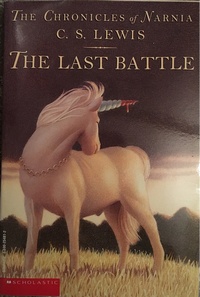
bullet The book as a whole feels like Lewis is trying to augment the mythology he’s already created for Narnia, fill it out some (how is this the first we’re hearing of former Sons of Adam/Daughters of Eve as rulers??), so he can bring it all home in an epic conclusion. Even if the augment doesn’t make much sense, largely falls flat (in my eyes), and doesn’t do much other than establish a framing device of sorts to get us to The Last Battle. But other than giving us Diggory and Pool, I’m unconvinced that this does anything for the series and is almost entirely skippable.

This post contains an affiliate link. If you purchase from it, I will get a small commission at no additional cost to you. As always, the opinions expressed are my own.
Irresponsible Reader Pilcrow Icon

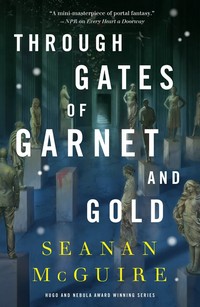
Through Gates of Garnet and Gold by Seanan McGuire: Quieting the Dead

Cover of Through Gates of Garnet and Gold by Seanan McGuireThrough Gates of Garnet and Gold

by Seanan McGuire

DETAILS:
Series: Wayward Children, #11
Publisher: Tordotcom
Publication Date: January 6, 2026
Format: eARC
Length: 148 pgs.
Read Date: December 23, 2025
Buy from Bookshop.org Support Indie Bookstores

What’s Through Gates of Garnet and Gold About?

We watched Nancy get her door and get to go home 10 years ago (in publication time, I’m a little unclear about how long it’s been in Eleanor West’s School’s time, as is at least one student). And aside from a quick “hi,” a few books later, that was pretty much the end of her story.

Until now, obviously, otherwise, why would I start by talking about her?

She’s back, and there’s a rule-breaking quest involved. The twist this time is that Nancy has been sent by The Lady of the Dead. Something…someone…is attacking people like Nancy in the Halls. People who have come through their own Doors from their own worlds to their true home. The dead are left unmolested and undisturbed. But it’s the other living people there who are being attacked. Nancy’s friends (or as close as living statues have to friends), are being killed and they need help.

This is a first for Eleanor West and her students–but they can’t say no. They don’t want to. Kade, as almost always, the leader of the group. Christopher, who is more comfortable with the dead than anyone other than Nancy, and his bone flute come along as well. There’s no way that Sumi, Nancy’s old roommate, is going to pass up this opportunity. Talia demands to be part of it, too. She has no skills that seem to make sense for this task*, but she’s done the math. Going on a quest with other students is just about the best way to guarantee getting her Door when it’s completed. So no one had better stop her. I, for one, hadn’t done this connection–and I’m guessing many of the other students haven’t either, or there’d be several others clamoring for a change.

* Naturally, it turns out that it’s good she came along.

An Introduction to the Series

McGuire’s been clear from the get-go that this series can be read in any order–and that’s true enough. But I think there are a couple of books that should be read in a particular order, regardless of what she thinks. And you’re just better off in general going in publication order.

But let’s say that this is the first book you pick up–you’re in for a treat. In an Introduction of sorts–not really a prelude or prologue–a couple of pages before chapter one, whatever you want to call them–McGuire introduces this series, sketches the function of the Doors, the impact they make on those who pass through. Those who want them back, etc.

This isn’t a “The Story So Far…” kind of thing–but it’s the closest that this series is going to get. I hope we get these exact pages–or ones very like them–from here on out.

I Needed a Fresh Dose of Sumi

Sumi is one of the characters who appears with greater consistency than others in this series–and I, for one (but am probably not alone), am so grateful for that. Her weaponized optimism, utter lack of regard for social niceties, unwavering positivity, and generous affections emphasize all the good things to be found in a person and situation. She also brings a level of comedy and heart to every scene she’s in. She can also be profound, usually unintentionally, and add emotional weight to a scene when you didn’t realize it needed it.

And when she gives a warning–you know things are serious. But the reader gets to chuckle the way she does it.

Obviously, we needed Sumi if we’re going to spend time with Nancy (we’re going to need Kade for similar reasons). But I personally needed a dose of her in general. And while what we got was sufficient, I’m hoping it’s not too long before we spend time with her again.

So, what did I think about Through Gates of Garnet and Gold?

After last year’s Adrift in Currents Clean and Clear, I assumed we’d get something good, but not great for this book–we were due for McGuire to take her foot off the pedal a bit and coast a little. I’m very glad that McGuire wasn’t thinking like that and brought us another stellar installment in this series.

I mean, I was sold from the instant I saw that Nancy was coming back–and McGuire did right by this return. When Nancy got her door again, I wasn’t prepared for that to happen. I didn’t realize we were going to spend so little time with most of these characters, just enough to fall in love with them as characters, and then watch them go on to the next chapter of their lives–and that we’d very likely be done with them (aside from an occasional glance at most). I’ve embraced that when it comes to these books, and it no longer gets to me so much that we walk away from them. But I’ve always wanted more Nancy.

So, sure, that made me an easy sell for this book–but that didn’t mean I was guaranteed to rave over it. It just made it very likely.

I didn’t really understand what Nancy saw in the Halls of the Dead before, nor do I think I truly understood what was involved. This world made a lot less sense to me than any of the others, and I really wasn’t that interested in it other than as it served as Nancy’s true home. But we got to see much more of it than we have previously, we get some more mature description of it from Nancy (and her Lady). I see the appeal, the attraction. Or at least I understand where some would. Personally? The only world I’m less interested in is the underwater world that Nadya introduced us to last year (I just don’t think I could get over being underwater). But now, I get why Nancy and the others want to be there.

What the questors and readers learn about the forces attacking–and their plans–is pretty unsettling, and tells us a little more about McGuire’s universe and the stories she’s telling. In a way that made me uncomfortable and pleased me at the same time. You’ll have to read it yourself. But it’s such a fantastic touch.

As usual for this series, McGuire balances whimsy and danger, joy and weeping, with skill and aplomb. For Adrift in Currents Clean and Clear, I wrote:

This is definitely one of the stronger books in this series that is on a great roll lately, I commend it to your attention. As with just about every book in the series, it can be read as a stand-alone or as an entry point (but I strongly encourage reading at least Every Heart a Doorway before any of the others). I was sad when it ended—not because of the way it ended, I just wasn’t ready to move on. I predict I won’t be alone in that.

That’s a pretty good way to wrap up this post, too. With one significant difference–I need to know what happens after the last page, preferably now. It’s not a cliffhanger (this is not one of those series), in fact it’s a perfectly fitting ending for this novella. But I really need the next page–and fear McGuire is going to make us wait a bit before she gives it to us.

Disclaimer: I received this eARC from Tordotcom Publishing via NetGalley in exchange for this post—thanks to both for this.


4 1/2 Stars

This post contains an affiliate link. If you purchase from it, I will get a small commission at no additional cost to you. As always, the opinions expressed are my own.
Irresponsible Reader Pilcrow Icon

Oberon’s Bathtime Stories by Kevin Hearne: The Canine Dynamo Will Spark Joy, Mark My Words!

Cover of Oberon's Bathtime Stories by Kevin HearneOberon’s Bathtime Stories

by Kevin Hearne

DETAILS:
Series: Iron Druid Chronicles/Oberon’s Meaty Mysteries
Publisher: Horned Lark Press
Publication Date: April 8, 2025
Format: Paperback
Length: 127 pg.
Read Date: December 19, 2025
Buy from Bookshop.org Support Indie Bookstores

What’s Oberon’s Bathtime Stories About?

So, whenever Oberon—the Iron Druid’s Irish Wolfhound—gets a bath, he gets told a story so he’ll put up with it long enough to get clean. This is something we’ve known since the first book, and it continues in Atticus’ (largely undocumented) adventures and life post-Scourged.

This is a collection of those stories—eleven of them plus something a little different. The outline is simple—Oberon and/or his buddy Starbuck engage in some sort of shenanigans or misadventure. Atticus cleans them up, telling them a story about meeting some famous person—usually with a point/lesson—then the dogs get the zoomies and take a nap.

These people range from the Visigoth King Alaric to John Quincy Adams, from Corrie Ten Boom to Robert Johnson, and so on.

A Break in the Pattern

There’s one exception to this pattern—chapter 5, “The Triple Nonfat Double Bacon Five-Cheese Mocha.” Features Oberon prompting Atticus into action. It’s nothing major—it’s just a brief 17 page story, after all. But it’s the kind of thing that would take up part of an early chapter in an Iron Druid novel.

It was good to have this break, so everything wasn’t just the same. It was also fun to see the Iron Druid in action, knowing that he’s still got it in him.

So, what did I think about Oberon’s Bathtime Stories?

This was fun—some good light entertainment. Not quite as satisfying as a dog would find a belly rub, but probably a good series of scritches behind the ear.

I do think Hearne got a little preachy a time or two—both in the selection of subject and how he told their story, particularly Atticus’ lessons for Oberon and Starbuck. I don’t particularly take umbrage with his messages, just the delivery. Not so much umbrage that I didn’t immediately turn the page to the next story—I’m just using this excuse to say umbrage a few times.

If you’re a fan of the Iron Druid Chronicles and this somehow slipped by your radar, you’re going to want to invest the time. It’s absolutely worth it. If the idea of stories featuring historical figures told to a dog, and you haven’t read the IDC, you’ll likely still enjoy it. Hearne’s got a reliable charm.

This post contains an affiliate link. If you purchase from it, I will get a small commission at no additional cost to you. As always, the opinions expressed are my own.
Irresponsible Reader Pilcrow Icon

A Few Scattered Thoughts on My Latest Reading of The Horse and His Boy by C.S. Lewis

Further Up and Further In A Year with C.S.Lewis

Cover of The Horse and His Boy by C.S. LewisThe Horse and His Boy

by C. S. Lewis , illustrated by Pauline Baynes

DETAILS:
Series: The Chronicles of Narnia, #5
Publication Date: June 25, 1994
Format: Paperback
Length: 243 pg.
Read Date: December 16-17, 2025
Buy from Bookshop.org Support Indie Bookstores


If you need to know what this book is about, or anything about this series…seriously, just stop what you’re doing and pick up this book. I don’t mean to be a snob, or maybe I do, but something was missing from your childhood, and now is your time to fix it. I realize that there are many legitimate reasons for people not to have read this, and I’m not questioning the choices you or your parents made (actually, I guess I am). But I’m not going to try to talk about this book like I do most others.

If only because everything worth saying has been said by other, better, writers. Probably several times.

I’ve also read this too many times to count as a child—even through my college years, and at least once a decade since. I’ll probably pick up the pace of re-reading them so I can talk to the grandcritters about them, too.

But I feel the need to say something now, so here are a few things that jumped out at me during this read:

bullet

And when all the serious eating and drinking was over, a blind poet came forward and struck up the grand old tale of Prince Cor and Aravis and the horse Bree, which is called The Horse and His Boy and tells of an adventure that happened in Narnia and Calormen and the lands between, in the Golden Age when Peter was High King in Cair Paravel. (I haven’t time to tell it now, though it is well worth hearing.)

Seriously, who reads this bit from The Silver Chair for the first time, and says, “I want to know that story”?
bullet It is so hard to read all the “true Northern stock,” “dark faces,” and “accursed but beautiful barbarians” of the North stuff. You remember going in that kind of thing is going to be there, along with the pseudo-Arabian caricatures. But remembering it and reading it are two different things.

…Bree said, “And now, Tarkheena, tell us your story. And don’t hurry it—I’m feeling comfortable now.”

Aravis immediately began, sitting quite still and using a rather different tone and style from her nusual one. or in Calormen, story-telling (whether the stories are true or made up) is a thing you’re taught ,just as English boys and girls are taught essay writing. The difference is that people want oto hear the stories, whereas I enver heard of anyone who wanted to read the essays.

Granted, his students were much more advanced than these boys and girls, but this is not really something you want to read after a sleepless night or two finishing up an assignment. (still, who’s going to disagree with him?)
bullet Edmund, Susan, and the rest of their party are indulging in that court-speak that bugged me at the end of LWW. I’m so glad Caspian didn’t get too into that. Surely there’s another way to signal that they’re all royal and grown-up?
bullet During the climactic battle, rather than seeing it from the perspective of a combatant or two, we just get a play-by-play from the Hermit observing it for those with him. This is a fantastic way to get this information—especially for Lewis’ audience. All the highlights, none of the blood and gore.
bullet I thoroughly enjoyed Bree going on about the nature of Aslan (just before meeting him and showing how little he knew)—he reminded me so much of the pompous Liberal from The Great Divorce.
bullet Shasta/Cor’s line, “And by the way, Father’s an absolute brick [how odd that a Calorman uses slang from the UK]. I’d be just as pleased—or very nearly—at finding he’s my father even if he wasn’t a king. Even though Education and all sorts of horrible things are going to happen to me.” Just delights me. Huck Finn lives!
bullet It’s interesting that Lucy is able to tell the tale of the Wardrobe here at the end of the book. How long are the Pevensies around after this before they get to the point that they’ve forgotten it? How are Lucy and Susan (who is likely pursued by more than just this twerp) unmarried in all that time? Pfui—how are Peter and Edmund? The more I think about this point, the more bothered I am.
bullet Speaking of marriage, this is likely my favorite bit of writing from this book (and really, this is book has more genuinely funny moments/depictions than the rest of the series):

Aravis also had many quarrels (and, I’m afraid, even fights) with Cor, but they always made it up again: so that years later, when they were grown up, they were so used to quarreling and making up again that they got married so as to go on doing it more conveniently.

bullet At the end of the day, this is a perfectly fine MG adventure story. Could it be better? Yeah. Does it almost feel like someone was trying to establish the Narnia Cinematic Universe? Yeah. Is it as unsatisfying as The Magician’s Nephew? Nope.

This post contains an affiliate link. If you purchase from it, I will get a small commission at no additional cost to you. As always, the opinions expressed are my own.
Irresponsible Reader Pilcrow Icon

The Christmas Tree Killer by Chris Frost: Some Gifts Should Remain Wrapped

Cover of The Christmas Tree Killer by Chris FrostThe Christmas Tree Killer

by Chris Frost

DETAILS:
Series: DI Tom Stonem, Book 2
Publisher: HarperNorth
Publication Date: November 6, 2025
Format: eBook
Length: 296 pg.
Read Date: December 17-18, 2025

‘Obviously the timing isn’t ideal, what with it being so close to Christmas…’

Tom shivered. He hoped that festive murders were not going to become his professional speciality. He supposed the dark of winter was a good time for hiding dark deeds – but some were darker than others.

What’s The Christmas Tree Killer About?

You don’t have to unwrap every package with your name on it. Especially if you’re out on a long hike in the woods by yourself and you come across a package with your name on it. I’m just saying. Of course, the impulse to open it is going to be there—curiosity killed the cat, right? And in this case, traumatized the hiker. Because there was a severed foot underneath the wrapping paper.

Now, as feet are usually attached to people and not typically used in even White Elephant exchanges, the police get involved. The local force isn’t quite up to dealing with a case this extensive, so they call in help from another local force. That help ends up being DI Tom Stonem and his partner. Before they can make too much progress with this foot, another body part is found—and the gift tag bears another name.

It’s pretty clear that this is going to be anything but a holly or jolly Christmas unless Tom and his colleagues can figure out what’s going on (and where the rest of the body/bodies are).

Well, Now I Feel Like a Jerk…

As soon as I saw that Frost was giving us another Christmas-themed mystery, I started joking about it to myself (and I think in a post or two here). Naturally, I wasn’t the only one—Tom and a couple of colleagues indulged in some dark humor about it.

But a local reporter (who had a run-in with Tom before) isn’t joking about it. As the investigation doesn’t produce instant results, he starts taunting Tom and even runs a story. I’ll give you a sample of.

The headline was repeated here, bold and unapologetic. Beneath it was a photograph of him from last year pinning a journalist to a wall outside Gateshead police station. Tearing his eyes away from the photo, he started on the article.

CHRISTMAS CURSE FOR DI STONEM

Another holiday season, another body count – should DI Tom Stonem still be leading investigations?…

For most, Christmas brings music, mince pies and cherished moments with family. For DI Tom Stonem, it seems to bring something far more sinister: murder.

The embattled detective, who transferred to Gateshead following what police sources once called ‘commendable service’ in Manchester, has once again found himself at the centre of a high-profile homicide investigation – his second Christmas running.

This gets to Tom–who’s still dealing with the events of last year’s case, and is starting to make some progress. This sets him back and gets into his head.

It: 1. Is a really good idea, and worked well with the story on many levels.
2. Made me feel like a jerk for mocking the guy.

I got over it, sure. Still…

Personal Stories

The romantic subplot(s) worked out pretty much the way you think they would—the primary one seems a bad idea for all involved, but that’s not for me to say. Frost did it well enough, but it could maybe have used a little more subtlety in the depiction.

The familial stories, on the other hand, were done well. I hope we get to see a bit more of Tom’s family in the books to come. I thought that went really well.

So, what did I think about The Christmas Tree Killer?

‘Standard practice out here, apparently. I don’t think I’m made for the country.’

‘Nor me,’ she said, a wry smile on her face. ‘Though, don’t you think it’s funny that we’re repulsed at some dead moles when we’re potentially walking towards another severed human foot like it’s just another day at the office.’

Some of the procedural moments bothered me—they spent too long before trying to track down people associated with the first “gift’s” recipient, I had a hard time buying that from an investigative point of view. And from the point of view of someone who’s read a lot of books like this? You just knew it was going to end badly, the only question was how. Also, there was one person they should’ve looked at more closely early on—but if they had, this would’ve been a short story. So, I get why they didn’t—but maybe Frost could’ve sold it a bit better.

It’s a clever little mystery novel—with some decent red herrings, some good twists and reveals along the line. The pacing was good—maybe its strongest suit—once you get into this, you have to see it through—and your attention isn’t given a lot of room to waver.

It’s maybe not your mother’s idea of a pleasant Christmas read—but it’ll scratch an itch for a good segment of readers. If you can find a corner to tuck yourself away in for a couple of hours without delighted children or chatty relatives, it’d be a perfect read for Dec. 25.

If only for the sake of his reputation, I do hope that Tom’s next adventure happens on a nice, summery day. Or perhaps mid-Spring. Regardless of the season, if Frost does bring us another book featuring him—I’m eager to read it.

Irresponsible Reader Pilcrow Icon

A Few Scattered Thoughts on My Latest Reading of The Silver Chair by C.S. Lewis

Further Up and Further In A Year with C.S.Lewis

Cover of The Silver Chair by C.S. LewisThe Silver Chair

by C. S. Lewis , illustrated by Pauline Baynes

DETAILS:
Series: The Chronicles of Narnia, #4
Publication Date: July 01, 1994
Format: Paperback
Length: 243 pg.
Read Date: December 10-11, 2025
Buy from Bookshop.org Support Indie Bookstores


If you need to know what this book is about, or anything about this series…seriously, just stop what you’re doing and pick up this book. I don’t mean to be a snob, or maybe I do, but something was missing from your childhood, and now is your time to fix it. I realize that there are many legitimate reasons for people not to have read this (more for some of the later books), and I’m not questioning the choices you or your parents made (actually, I guess I am). But I’m not going to try to talk about this book like I do most others.

If only because everything worth saying has been said by other, better, writers. Probably several times.

I’ve also read this too many times to count as a child—even through my college years, and at least once a decade since. I’ll probably pick up the pace of re-reading them so I can talk to the grandcritters about them, too.

But I feel the need to say something now, so here are a few things that jumped out at me during this read:

bullet Awww, even Eustace gets rejuvinated by the Narnian air. He really changed from the whiney twerp.
bullet Outside of Reepicheep, is there a more fully-drawn charcter in the Chronicles than Puddleglum? It’s also just a great name, summing him up in a nutshell. The other Marsh-wiggles finding him adventurous and devil-may-care is hilarious. As are his encouragements to the children to be more like him–upbeat and happy.
bullet Describing Rilian as “altogether looked a little bit like Hamlet,” is one of the oddest lines in the series.
bullet Everything that the Queen is up to is wrong, that’s a given. But the whole Prince/Queen mother-pseudo son thing is strange–when you add in the wedding plans? Ew, ew, ew, ew, and ew.
bullet That’s an unexpected–and odd–lesson in Centaur anatomy and diets. (one stomach human, one stomach equine and needs to feed both appropriate food). Is this common to other Fantasy uses of Centaurs?
bullet I just didn’t like Aslan this time out–disciplining Jill and wreaking havoc on the entire mission for something simple and understandable?
bullet Even stranger–sending Caspian and an unusually-still-Narnian-garbed Eustace to rough up some human bullies at the end back on Earth. That just doesn’t match with the Aslan we’ve been getting to know.
bullet Take our Lion out of things, and this was a pretty enjoyable adventure.

This post contains an affiliate link. If you purchase from it, I will get a small commission at no additional cost to you. As always, the opinions expressed are my own.
Irresponsible Reader Pilcrow Icon

Reading with Wrigs 2025 Challenge—Oh, Right…I Did a Thing

Reading with Wrigs
Rising from the ashes of the While I Was Reading Challenge, came Reading with Wrigs. Last year, I didn’t do good with the challenge, and then this year, I actually finihsed it about a week ago and then forgot to make note of it. Ooops. Go figure–last year, I didn’t finish it; this year, I finish with breathing room and forget to note it.

Anyway, here we go:

A Few Scattered Thoughts on My Latest Reading of The Voyage of the Dawn Treader by C.S. Lewis

Further Up and Further In A Year with C.S.Lewis

Cover of The Voyage of the Dawn Treader  by C.S. LewisThe Voyage of the Dawn Treader

by C. S. Lewis , illustrated by Pauline Baynes

DETAILS:
Series: The Chronicles of Narnia, #3
Publisher: HarperCollins
Publication Date: July 1, 1994
Format: Paperback
Length: 248 pg.
Read Date: December 2, 2025
Buy from Bookshop.org Support Indie Bookstores


I have a very distinct memory of the day I bought this book (well, my first copy, anyway). I was finished with a 1-2 week thing at a local liberal arts college one summer (I think it was after 4th grade–it might have been after 3rd), and my mother said we could look at the book store there. I got a textbook about the Supreme Court (yes, my 8 or 9 year-old-self had ambition–wasted, I should note) and this book. I could’ve picked any of the 7, but I’d watched parts of the cartoon version of Lion, the Witch and the Wardrobe a few months earlier, and wasn’t that interested in it. But his had a cool looking ship on the cover. So I went with it.

In the years since, it remained my most-read of the series (followed closely by Prince Caspian, with Wardrobe coming in third). And it’s the one I have the hardest time being objective about. I also didn’t take as many notes for this post as I read it. I just go swept up in the reading. Still, I do have a few things to say.

bullet

There was a boy called Eustace Clarence Scrubb, and he almost deserved it.

Is possibly the best sentence Lewis ever wrote. It’s one of my all time favorites.
bullet The rest of the paragraph isn’t too shabby, either:

His parents called him Eustace Clarence and masters called him Scrubb. I can’t tell you how his friends spoke to him, for he had none. He didn’t call his Father and Mother “Father” and “Mother,” but Harold and Alberta. They were very up-to-date and advanced people. They were vegetarians, nonsmokers and teetotalers and wore a special kind of underclothes, In their house there was very little furniture and very few clothes on beds and the windows were always open.

bullet This book features my all-time favorite portal fantasy depiction of someone from “our world” going to another. This may come from it being the first that I remember. But I don’t think so.
bullet

[Lucy] spent a good deal of time sitting on the little bench in the stern playing chess with Reepicheep. It was amusing to see him lifting the pieces, which were far too big for him, with both paws and standing on tiptoes if he made a move near the center of the board. He was a good player and when he remembered what he was domg he usually won. But every now and then Lucy won because the Mouse did something quite ridiculous like sending a knight into the danger of a queen and castle combined. This happened because he had momentarily forgotten it was a game of chess and was thinking of a real battle and making the knight do what he would certainly have done in its place. For his mind was full of forlorn hopes, death-or-glory charges, and last stands.

bullet In case it wasn’t clear from the get-go (and it absolutely was), Eustace swinging Reep around by his tail tells you everything you need to know about the lad–to paraphrase Linda Ronstadt, “He’s no good, he’s no good, he’s no good, Eustace, you’re no good.”
bullet In Chapter 6, “The Adventures of Eustace,” we’re told twice that reading the wrong books (or not reading the right books) keeps you from knowing anything about dragons. Fantasy readers, take heart!
bullet After Eustace is transformed into a dragon, say what you will about the kid, he figures out his situation far quicker than his cousins did theirs in Prince Caspian–and they’d read the right books!
bullet I will just never not love Chapter 6. Whether it’s just on the story front, or if you want to go deeper with an exploration of Sanctification…it doesn’t matter. This one chapter in the Chronicles stands out above all others.
bullet If you’d asked me who my favorite characters in the Chronicles were, Reepicheep would’ve been at the top of my list. But getting to read about him over these last two books reminded me just how much I enjoyed him.
bullet Aslan isn’t overthrowing malevolent kings or queens this time, he largely shows up for little things–a quick morality lesson here and there to keep his people in-line. It’s a different way to see him.
bullet That spellbook that Lucy browses is just cool. Hogwarts wishes it has something cool, Madam Pince would have so many people breaking into the restricted section to get a look at it.
bullet I will defend a lot of what Lewis does in this series–but only referring to Caspian’s eventual bride as “Ramadu’s daughter” is not one of those things. (or pretty much anything about their relationship–the last paragraph of the novel helps a little bit)
bullet Speaking of the last paragraph–nice parting shot at Eustace’s mother.
bullet This is probably the most blatant (pre: The Last Battle or maybe The Magician’s Nephew) time we are told that Aslan is known by a different name in our world. Lewis has apparently decided he should stop being subtle and make it clear who Aslan is to us. I don’t mind this a bit (even if I do have some third commandment-related questions)
bullet Really, we learn more about Aslan in this book than we do any other (with the possible exception of The Magician’s Nephew, I need to revisit that one before I know for sure).

This post contains an affiliate link. If you purchase from it, I will get a small commission at no additional cost to you. As always, the opinions expressed are my own.
Irresponsible Reader Pilcrow Icon

Grace and Henry’s Holiday Movie Marathon by Matthew Norman: A Cozy Treat

Cover of Grace and Henry’s Holiday Movie Marathon by Matthew NormanGrace and Henry’s Holiday Movie Marathon

by Matthew Norman

DETAILS:
Publisher: Dell
Publication Date: October 14, 2025
Format: Paperback
Length: 306 pg.
Read Date: November 28-29, 2025
Buy from Bookshop.org Support Indie Bookstores

All things considered, I’m doing okay. I get that that sounds like something someone says when they’re not doing okay. I also get that “all things considered” is putting in some real work there because I’m still wearing the black dress I wore to my husband’s funeral this morning. But seriously. For real. I’m doing okay.

It started to snow right at the end of the ceremony. It’s been weirdly warm in Baltimore since Christmas, so the flakes melted the second they hit the ground, putting a reflective sheen on everything, including the coffin.

I couldn’t help thinking that my husband would’ve been psyched about the way the wood grain glistened in the late-morning light. Tim chose a coffin with a chocolatey-brown finish because it perfectly matched the desk in his office at school, and because—his words here—“It just looks classy, Gracey.”

He said this a month ago. We were having one of his “When I’m Gone” strategy sessions in the TV room. “It’s morbid, I know,” he said, showing me the image on his iPad. “But a coffin’s gotta look like something, right? Mine might as well look classy.”

My husband. My former husband? My dead husband? Here’s something I’ve noticed: There’s no good way to describe him now. The first one leaves out some pretty vital information, the second is misleading, and the third is just too jarring.

What’s Grace and Henry’s Holiday Movie Marathon About?

Two well-intentioned and completely unsubtle mothers take on an age-old task: they interfere in the love lives of their children. In this particular case, the children are thirtysomethings whose spouses died recently. The mothers have decided it’s time for them to start to move on and set-up an awkward and thinly-disguised meeting between the two. They quickly see through what’s going on, express mutual frustration at their own parent, but recognize the intention—and their common bond.

Grace decides they need to become friends, however. Henry agrees to this. It’s their first Holiday Seasons as a widow/widower, and they need all the help they can get. Soon, Henry is over at Grace’s to watch The Family Stone (a holiday tradition for Henry and Brynn) with her and one of her kids (the other has gone to sleep at a reasonable time). And from there bonds are formed, movies are watched and discussed, mice are trapped (humanely), and wounds begin to heal. Also, there’s a dog named Harry Styles, and your curiosity has to be piqued by that, right?

Grief

Tim handled most of the Christmas shopping, and he was great at knocking things out early. I, of course, have mostly put it off until now, so here we are. Along with lump sums of money, life insurance policies should include a personal assistant for errand running so the surviving spouse can spend their time grieving and dabbling in alcoholism.

I’m sure I’m missing some, but the only other Rom Com I can think of that focuses this much on spousal grief is Sleepless in Seattle.* And Norman gets this element so, so well (I think Nora Ephron did, too, so you know where I’m coming from). Grace and Henry share some commonalities in their grief—as everyone does—but they aren’t identical in it. So we see a spectrum (not exhaustive) of manifestations and expressions of grief. Neither of them handles it perfectly (assuming that’s possible), but they deal with it in believable ways—especially when they start helping each other. A friend who is going through a similar horrific circumstance is a friend indeed.

There’s some comedy to be mined from this—never comedy at the expense of the characters, or making light of grief—just a laugh at human foibles. But more than that, we see them at their worst—depressed, filled with guilt and anger, and so on. And you cannot help but fall in love with them as characters because of that.

* I am, of course, ignoring How to Talk to a Widower by Jonathan Tropper. Unforgivable, as it’s my favorite of his work.

The Movies

“We liked to start with The Family Stone,” I say. “Then we always finished with Love Actually.”

“That’s sweet,” says Grace. “Can I ask, though, why you and Brynn bookended your holidays with two complete pieces of shit?”

It’s like I’ve been slapped. “Excuse me? Are you kidding?”

“I’m not,” she says. “They’re objectively bad movies, Henry. I sit, then immediately stand. “It would’ve been helpful the other day if you’d mentioned that you’re insane.”

So the back of the book makes it sound like that this book is filled with Grace and Henry watching movie after movie after movie with each other. But that’s not quite accurate. They only get a couple of movies in together—and watch bits of other ones on their own. Which is actually better than what I expected. The scenes where they are watching a movie together are great, but we need more than them.

Norman knows this and gives us that more.

But this is a celebration of holiday movies—each section of the book is framed by one (thankfully, identified by title). Those sections will include references to, echoes of, quotations of, or something else that will make the reader think of the movie. This was a great way to frame this novel—both fun and builds in a story engine at once.

Oh, and fair warning, Die Hard is considered by most of the characters in the novel to count as one.

Baltimore

“How do you like Baltimore so far, by the way?” I ask. “T just realized I haven’t asked you that yet. Seems unwelcoming of me.”

“I like it,” she says. “Everyone here always seems like they’ve been drinking.”

I smile because that’s maybe the most astute observation I’ve heard about this place.

Okay, I said something similar when talking about Norman’s Charm City Rocks, but he really makes Baltimore seem like a great city to live in and one that I’d really like to visit. Given that the majority of what I know about Baltimore comes from David Simon (Homicide: Life on the Street, The Wire) and my preternatural dislike of flying—that’s saying something.

This book doesn’t have quite the same level of Baltimore-love, but it’s there. And we even get to revisit some locales described in Charm City Rocks.

So, what did I think about Grace and Henry’s Holiday Movie Marathon?

Why is it that the holidays always seem to arrive out of nowhere? One day you notice a leaf turning orange—then, ten minutes later, guys in commercials are buying their wives Lexuses with big red bows on them, and you think, Wait, what?

It’s like that every year, I guess. This year, though, the passage of time has been particularly confusing, because there were a few months early on that I barely remember. I have no recollection of the Super Bowl, for example, or who hosted the Oscars, or what springing forward was like.

Today, somehow, is the Sunday before Thanksgiving.

Within 6 paragraphs, I was thinking about swooning for the book. By the end of the first chapter, I’m pretty sure I had.

Is this predictable? Yup, just like the movies it celebrates. Is it warm? Yup, just like the movies it celebrates. Will it just make you happy (possibly more than it deserves?) Yup, just like the movies it celebrates.

This is as comfy and cozy as wearing a pair of Costco sweatpants, sipping cocoa (or a rosé), while sprawled on your couch watching TV with someone you’re close to (preferably multiple someones). I couldn’t stop grinning throughout (at least it felt like I was, whether or not that was literal).

I’m unable to put stars to this—it’s probably a pretty good novel if you look at it objectively, maybe a bit clichéd, honestly. But it hit me just right and I don’t care about objectivity or clichés—I just loved the experience. It’s probably the most feel-good of the feel-good novels I’ve read this year. I heartily recommend it. Or maybe I should say that I 💕 💕  ❄️  recommend it🎄💕 💕.

This post contains an affiliate link. If you purchase from it, I will get a small commission at no additional cost to you. As always, the opinions expressed are my own.

Irresponsible Reader Pilcrow Icon

Page 3 of 124

Powered by WordPress & Theme by Anders Norén