Category: Authors Page 44 of 123

The Curator by M. W. Craven: I do not have enough superlatives in my repertoire to do justice to this novel

The Curator

The Curator

by M. W. Craven
Series: Washington Poe, #2

Hardcover, 372 pg.
Constable, 2020

Read: June 30-July 2, 2020

‘Sean Carroll’s a kite enthusiast,’ Bradshaw said after Nightingale had ended the call. ‘He’s not a dork.’

Poe grunted. He had a problem with ‘enthusiasts’. As far as he was concerned, on the ladder of weird interests that eventually escalated to criminal behaviour, enthusiasts were only a rung below Obsessives, and he’d seen first-hand what obsessed people were capable of…

Yup, this case is strange enough that Poe is driven to consult a kite dork—sorry, enthusiast—that’s just how desperate he is for a clue. Not only has Poe seen first-hand what obsessed people can do, he’s frequently the obsessed person in question–he can make Harry Bosh look laid-back.

What’s The Curator about?

It all starts around Christmas—two severed fingers are found in a public location with no indication how they got there. Tests show that one finger was removed from the victim while they were alive, the other after they were dead. Two more sets of fingers show up in equally public, yet hard to access places. Clearly, there is a creative, disturbed and clever killer at work. The local police waste no time in calling in Washington Poe—this is up his alley, near his home, and the replacement for Detective Superintendent Gamble knows they need his assistance. With Poe comes his DI, a very pregnant Stephanie Flynn, and Tilly, everyone’s favorite analyst.

Racing against the clock—the last thing anyone wants is another pair of fingers showing up—Poe and Tilly do all they can to figure out what the victims have in common, or what would make them a target. And what “#BSC6” could mean—it was left at each scene, and even Tilly is stumped by it.

They catch a break or two, and Poe makes the most of it. Before long, they’re able to make an arrest, Tilly is able to do things with that evidence that even Poe didn’t know she could do—solidifying the case they have against their suspect—who begins confessing to crimes no one knew about. But he won’t confess to the killing.

And then there’s a phone call from a crusading FBI Agent to Poe. And suddenly, everything that Poe thought they’d established about the killer is thrown out the window.

From that point on, I couldn’t believe what I was reading. It was surprise after surprise after surprise. The twists didn’t stop coming—I’m pretty much at a loss for words. Is there a word that means “more than intricate”? If so, I need to learn it so I can describe this novel. Craven doesn’t cheat when it comes to his twists and reveals—it’s all there in the book for you to find. But you probably won’t, because Craven’s smarter than almost all of his readers.

What about the characters?

The real draw to these books are Poe and Tilly. Everything readers liked about the before is back. Their camaraderie is as strong as ever and the reader can feel it radiating off the page, who needs a friendship of your own if you can live vicariously through theirs?

In The Puppet Show, Poe was trying to find his footing again after being reactivated. In Black Summer, he’s fighting to protect his reputation and career. Here? Poe’s just a man on a mission, with no distractions or hindrances in his way. Poe unleashed is a great thing to behold.

As much as Poe’s a local legend among Law Enforcement, it won’t be long until Tilly’s as much of a star (if not more). Watching her win over a bunch of jaded, cynical cops by being her brilliant, socially awkward self was so much fun. (her interaction with a representative from the Ministry of Defense might have been more entertaining, but not by much)

I don’t want to take away anything from DI Flynn—her role in this is pivotal, but her role in the investigation isn’t as large as it has been before, making her more of a supportive character than usual. Her condition, and Poe’s protective instincts (despite Flynn’s objections), won’t allow for anything else.

Detective Superintendent Nightengale is a no-nonsense woman. She’s clearly a good officer, a good manager. She wants to do things by the book, but she’s clever enough to give Poe and Tilly all the latitude she can for them to do a more effective job than the by-the-book route, just in case. I’m sure that eventually,, she’ll run out of the patience required to deal with this team—but that’s a plot complication for another day (and one I look forward to).

Estelle Doyle, the pathologist we met in Black Summer is back and just as wonderful. I know it’d be pushing things to have her play a larger role in these books than she does, but the few scenes we have with her are just not enough to satisfy.

Neither space or time permit me to discuss the other standout characters—on both sides of the law. I would like to talk a bit about the eponymous Curator, because the Curator is the kind of character that you want to sit around discussing for a couple of hours. Obviously, I can’t do that here.

So what did I think about The Curator?

In addition to the plot and characters, there’s real pathos, real tension, real heart—and even some real laughs. I’m not sure I breathed enough in the last seventy-five pages, it’s probably good that I wasn’t hooked up to an oximeter, the alarms that it would have sounded would’ve been really distracting. As usual, this is given to us via Craven’s crisp and compelling prose. Combine those characteristics with a top-notch mystery? And you’ve got a book that deserves all the accolades the first two books in this series has received, and then some. As good as The Puppet Show and Black Summer were (two of the best books I’ve read in the last two years), The Curator is better.

It was two days after I finished this before I could start another book—three before I could start another novel. That is rare for me. But I needed some time to recover/come down from this one. Pick an element—plot, atmosphere, character, pacing, complexity, twists—Craven nails it all. This is an exceptional work. It’s pointless for me to say anything else, why try to gild the lily?

5 Stars

20 Books of Summer

Catch-Up Quick Takes: Working Stiff: Two Years, 262 Bodies, and the Making of a Medical Examiner; Out of Range; The Fangs of Freelance; Wonder Twins, Vol. 1: Activate!

The point of these quick takes post to catch up on my “To Write About” stack—emphasizing pithiness, not thoroughness.

Working Stiff

Working Stiff: Two Years, 262 Bodies, and the Making of a Medical Examiner

by Judy Melinek, MD, & TJ Mitchell, Tanya Eby (Narrator)
Unabridged Audiobook, 7 hrs., 43 mins.
Tantor Media, 2014
Read: June 12-14, 2020
Grab a copy from your local indie bookstore!

(the official blurb)
I really don’t know what to say about this account of a forensic pathologist’s training in NYC. Read it, listen to it, whatever. It’s fascinating. It’s a good reminder/way to learn that not all of forensic pathology is what you see on police procedurals (and even then…wow, fictionalized).

Her retelling of the reasons she left her surgical residency—and the fact that she’s not the exception to the rule (beyond having the good sense to leave when so many don’t), is one more reminder that we desperately need to overhaul medical training in this country.

But that’s not what the book is about—it’s about the day-to-day grind, the countless ways pathologists find evidence about what kills us, the hard job of getting answers for the bereaved, and yeah—there’s the criminal justice side to it. I’m a little squeamish when it comes to real-life medical “stuff”, I’ll watch a Tarantino marathon and not blink and the bucks of blood (well, maybe the dance scene in Reservoir Dogs some days), but I can’t last 15 minutes in a medical documentary without my toes literally curling. There were moments listening to this that made me wonder—but there weren’t many, and they passed quickly. If you’re like me, stick with it.

I was all set to say this is a good book and well worth your time, and then we got to the penultimate chapter. Melinek wisely organized her story by topic, not chronology. Largely due to this chapter (I’d guess), because you want it at the end so it doesn’t dwarf the rest. She started her residency a few weeks before September 11, 2001. I’m not even going to try to describe it. The whole book could’ve been written about this and the immediate aftermath.
3.5 Stars

Out of Range

Out of Range

by C. J. Box, David Chandler (Narrator)
Series: Joe Pickett, #5
Unabridged Audiobook, 9 hrs., 11 mins
Recorded Books, 2008
Read: June 16-17, 2020
Grab a copy from your local indie bookstore!

(the official blurb)
Of all the books in this post, this is the one that bugs me the most—but I’m being honest, I’m not going to find the time to give this the post I want to. Like his fellow Wyomingite (I had to look that term up), Walt Longmire, Joe Pickett has to leave his home occasionally. There’s just no way Box can keep killing people in that sparsely populated area.

So Joe goes to Jackson Hole to temporarily fill the office of a warden who killed himself—and, maybe, just figure out what drove the man to suicide*. Seeing Joe out of water, yet right at home in the work is great—I’m betting Box will do things like this in the future (again, see Longmire), and it’ll be worth it.

* Spoiler: he does.

Joe leaves Marybeth and the kids at home, with the usual financial woes, stresses of a pre-teen far too wise for her years (but with all the attitude of a preteen), and new loneliness. This marriage is headed for trouble—thankfully, both of them realize it (I’m not sure I can handle them splitting, and I’m not a die-hard Pickett fan yet).

Great mystery. Better sub-stories (I can’t start talking about the Nate Romanowski story without spoiling it). I’m really, really glad I started this series.

The Fangs of Freelance

The Fangs of Freelance

by Drew Hayes, Kirby Heyborne (Narrator)
Series: Fred, The Vampire Accountant, #4
Unabridged Audiobook, 8 hrs., 21 mins.
Tantor Audio, 2017
Read: June 23-26, 2020
Grab a copy from your local indie bookstore!

(the official blurb)
Fred’s move to become a freelance accounting consultant for The Agency really just opens the door for more adventures (as well as for more challenging accounting jobs). It frequently looks like he bit off more than he can chew, but with a little help from his friends… Fred’s also dealing with the ramifications of starting his own clan in the last book—a move I thought was inspired and I’m enjoying watching that clan solidify.

This is probably the best of the series, really. Hayes makes some bold moves here. Heyborne’s narration remains strong and entertaining.

This is really a nice, reliable “cozy” Urban Fantasy series. I’m glad I stumbled upon it.
3 Stars

WONDER TWINS VOL. 1: ACTIVATE!

Wonder Twins Vol. 1: Activate!

by Mark Russell, Stephen Byrne (Artist)
Series: Wonder Twins, #1
Paperback, 160 pg.
DC Comics, 2020
Read: June 27, 2020
Grab a copy from your local indie bookstore!

(the official blurb)
Okay, so…straight out of the second (pretty sure, it was the second) incarnation of Super Friends comes this Wonder Twins series. And it was . . . eh, okay, maybe?

Zan and Jayna are on Earth, sent here by their parents under the watchful eye of Superman. They’re open about their alienness, telling everyone at school about their home planet, its culture, and their abilities. And pretty much no one cares. After school, they hang out in the Hall of Justice as interns, they end up battling The League of Annoyance (villains too lame for consideration in the Legion of Doom). Oh, and eventually, Zan buys a circus monkey that turns out to be blue.

I really dug the art. I’m not sure what else to say about that—I’m interested in checking out more of Byrne’s work. Oh, wait…I have said nice things about him already. I should pay more attention to things like that.

The tone of this was wildly uneven—was it comedic? Was it earnest?. The League of Annoyance was too silly for this book—too silly even for the Teen Titans Go cartoon. I liked a lot of what went down in the Hall of Justice (especially the supercomputer).
3 Stars

2020 Library Love Challenge

This post contains affiliate links. If you purchase from any of them, I will get a small commission at no additional cost to you. As always, opinions are my own.

20 Books of Summer 2020: June Check-In

20 Books of Summer
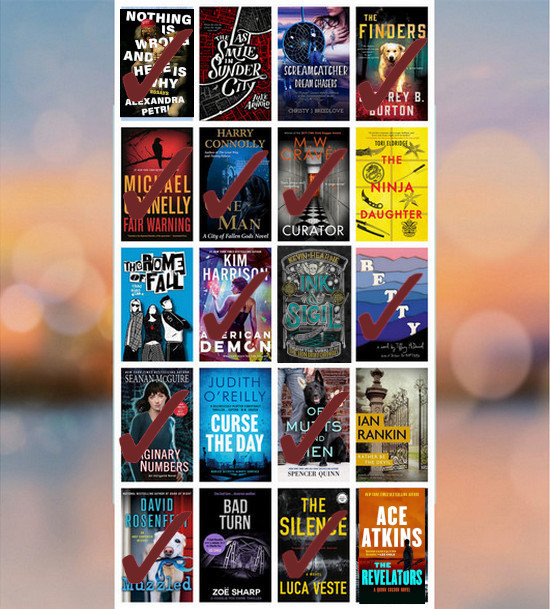
Here we are at the end of June, one-third of the way through the summer, and I’m roughly one-third of the way through the challenge. That worked out nicely. I’ve made one substitute because I had some trouble getting my hands on the one non-fiction book that was on the list. And, hey, I just read a non-fiction book, so might as well put that one in. Otherwise, I’m on track for finishing the list as originally conceived.


✔ 1. Nothing Is Wrong and Here Is Why by Alexandra Petri
2. The Last Smile in Sunder City by Luke Arnold
3. Screamcatcher: Dream Chasers by Christy J. Breedlove
✔ 4. The Finders by Jeffrey B. Burton
✔ 5. Fair Warning by Michael Connelly
6. One Man by Harry Connolly
7. The Curator by M. W. Craven
8. The Ninja Daughter by Tori Eldridge
9. The Rome of Fall by Chad Alan Gibbs
✔ 10. American Demon by Kim Harrison
11. A Blight of Blackwings by Kevin Hearne
12. Betty by Tiffany McDaniel
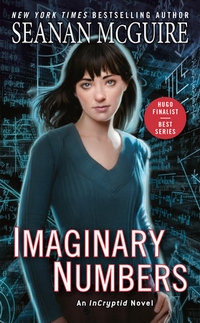
✔ 13. Imaginary Numbers by Seanan McGuire
14. Curse the Day by Judith O’Reilly
✔ 15. Of Mutts and Men by Spencer Quinn
16. Rather Be the Devil by Ian Rankin
✔ 17. Muzzled by David Rosenfelt
18. Bad Turn by Zoë Sharp
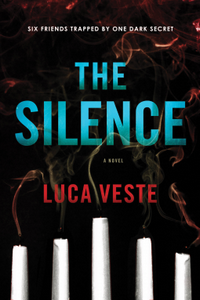
19. The Silence by Luca Veste
20. The Border by Don Winslow

20 Books of Summer Chart June

How the Wired Weep by Ian Patrick: Patrick’s Latest Crime Thriller Does Not Disappoint

That’s a lame headline, but I couldn’t come up with anything short of 40 words that I was satisfied with. Also, I really should’ve devoted a couple of sentences to that cover, one of my favorites of the year.


How the Wired Weep

How the Wired Weep

by Ian Patrick

Kindle Edition, 293 pg.
2020

Read: June 22-25, 2020

In my world you’re always looking over your shoulder. Evade and escape is the game. To remain still makes you a target. A sitting or standing one doesn’t matter. Always be on the move until you’re sure it’s safe to stop. The training I’ve had was for a reason: survival.

London is a war zone. My battleground is the street. My unit is on a hearts and minds campaign to keep control and maintain law and order through gathering intelligence.

There are two point-of-view protagonists in this book, the first is DS Ed Hunter. He recruits and handles informants—excuse me, Covert Human Intelligence Sources. He’s been at it quite some time now—it’s in his blood, he’d have a hard time leaving for another assignment at this point. He has a number of sources, but we only see and track his involvement with one in this novel. Ed’s a solid detective, dedicated (would be the polite way to say it, Mrs. Hunter might have other words), but isn’t opposed to coloring just a bit outside the lines.

I started dealin’ young. I was nine years old when I got into this game. I’d move anythin’ they asked me. They knew that because of my age I wouldn’t get charged. Apparently at nine you don’t know nothin’ so can’t know what you’re doin’ is against the law. Screw that! I knew everythin’ I was doin’ were wrong. That’s why I did it!

The source the book focuses on is the other POV protagonist, Ben. Ben’s recently out of a short stint in prison and is looking to get back to the things that landed him in prison in the first place. Primarily robbery and miscellaneous tasks for a local gang leader, Troy*.

* As far as notorious, or would-be notorious, criminals go, Troy seems like an unlikely name. It really doesn’t command respect or fear. It’s mundane enough that it comes across as verisimilitude

With Ben freshly out of prison and re-establishing his criminal contacts and career, this is the prime time for Ed to use him. So he leans hard on Ben, looking for intelligence that he can use immediately as well as information on larger, future activities. Troy has a special combination of ambition and ruthlessness that makes this an advantageous time for both Ed and Ben.

These two men are really two sides of the same coin. Ed works Ben and the system to his benefit (and occasionally Ben’s), Ben works Ed, Troy, Ghost, and others for his benefit (and occasionally Ed’s). Both Ed and Ben seem trapped by circumstances, trapped by their association, but only one of them really has a shot at getting out, if he wanted it.

Theirs is not a partnership, a friendship, or anything really. Ed is using Ben to satisfy his superiors, to get some information that can lead to bigger arrests, or to prevent something major from happening (a large concern as London prepares for the Olympics). He may show flashes of concern for Ben or his soon-to-be-born child. But those flashes are quickly gone. Ben isn’t in this out of some ethical consideration, either. He’s not trying to go straight—he’s using Ed to get a little extra money, to take out a rival, and to keep at least some of the police off his back.

The cycle of Ed pressuring Ben for some intelligence, Ben giving him something largely true, the police using that information, Ben having to scramble to prove he didn’t inform and to take advantage of whatever the police have done for his own benefit. Ben knows (and is angered by) Ed using him like this. Ed knows he’s not getting the whole truth (but isn’t sure how much he is getting), and is angered when he can prove the lie, and is aware Ben’s at least trying to use him, too. This is the core of the book, and probably the majority of what does on in the book—and I could easily have easily read at least another 50-70 pages of this without growing impatient.

We get a little time with Ed’s superior and some detectives in other offices, using and supplementing what he’s gathered, and we get a little insight into Ed’s home life and wife. But largely, it’s his partner, DC Sienna Myles (“Smiles”) that we see Ed interacting with. She’s not as invested in Ben, Ed’s problems, or Troy as Ed is. She might actually care more for Ben’s welfare, but she’s also clear about Ben’s place in the world, and his priorities. Of all the secondary characters, she’s the one I wanted more of—I think she could carry a novel by herself (and would like to see something like this with her and her new source)

On the flip side, we see a few other people in Troy’s circle of influence, but we primarily see Ben interacting with Troy or his friend, Ghost. Ghost is the only person in the world that Ben truly trusts (and even then, that falters), they’re friends that go way back. I’m honestly not sure how to describe Troy—because Ben keeps vacillating in his estimation of him. He’s either an up-and-coming criminal near-genius, or he’s just some guy with enough lucky breaks and inherent meanness to take advantage of those breaks. It is clear that the streets and many, many lives would benefit from his being ousted from power and put somewhere he can’t inflict his poison or presence on more of the public more than he has.

One more similarity between the two that I want to focus on—impending fatherhood. One of the first things that Ben learns upon his release is that he’s going to be a father, he’d impregnated someone just before going away. Meanwhile, Ed and his wife can’t conceive—they’ve gone through fertility treatments but they don’t seem to be doing anything. Ed bewails the injustice in how easily someone who doesn’t want to be a father can become, while he and his wife want it so much. Both men’s reactions to future fatherhood, as well as the way they think of their own fathers (or lack thereof), says a lot about the two characters—and the office of Father in general.

Ed’s an interesting character, and I definitely felt invested in his story. But outside of a job that you don’t often see in Crime Fiction, I’m not sure there was much to make him stand out. Ben, on the other hand? I’ve seen similar characters before and were either annoyed or indifferent to them. But Patrick shaped him and used him in such a way that not only did I want to see him succeed (if he went straight or otherwise), but I cared about what happened to him. He reminded me of Dewey Crowe from Justified (or Leonard’s Raylan or any number of similar characters penned by Leonard), not that bright, overly impressed with their own criminal aptitudes, but you can’t help pity, like and wish the best for him (although Dewey was generally comic relief, and Ben’s not at all). He got under my skin, and will likely stay there for a while.

Most of this book isn’t that fast-paced—it’s well-paced, but there’s a lot of time spent establishing the characters and setting up the endgame. But there’s an energy to the narration—particularly Ben’s chapters—that makes you feel like you’re reading something at a breakneck pace. Ben’s character shines through so much, I could practically hear him as I read (in my mind he sounds suspiciously like a Kobna Holdbrook-Smith character). I should probably add that once, the plot starts moving—it matches the feel that you’d gotten from earlier when less was happening.

That ending? Perfection. That’s all I can safely say.

The difference in characters, voice, and the way the story plays out demonstrates Patrick’s skill and underlines the fact that he’s not a one-trick pony (not that many should’ve suspected that). It’d be easy for him to coast on the Sam Batford train for a while, but Patrick doesn’t do that, instead, he gives us this fascinating glimpse into another area of policing.

I’m tempted to keep going, but I’ve probably said too much. This is different, more intimate, more powerful, than Patrick’s DS Sam Batford books. If you’ve read those, you should enjoy seeing this other side of the author. If you haven’t, you should go grab them after this one. Patrick captured something special here in How the Wired Weep and I strongly encourage you to go grab it.


4 1/2 Stars

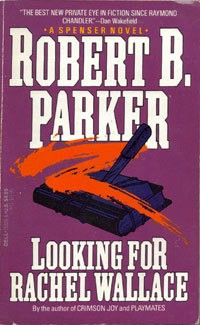
Classic Spenser: The Judas Goat by Robert B. Parker

Classic Spenser

The Judas Goat

The Judas Goat

by Robert B. Parker
Series: Spenser, #5

Paperback, 203 pg.
Dell, 1978

Read: May 29, 2020
Grab a copy from your local indie bookstore!

…I looked at my situation. If they were going to shoot me, there was little to prevent them. Maybe they weren’t going to shoot me, but I couldn’t plan much on that.

“You can’t plan on the enemy’s intentions,” I said. “You have to plan on what he can do, not what he might.”

A boy cleaning the tables looked at me oddly. “Beg pardon, sir?”

“Just remarking on military strategy. Ever do that? Sit around and talk to yourself about military strategy?”

“No, sir.”

“You’re probably wise not to.”

We start with Spenser calling on Hugh Dixon. The word “rich” seems inadequate to express the wealth that Dixon seems to possess. Nowadays, he could probably hire a private security firm to do what he needs—maybe he could’ve in 1978, too. But he’s done his research and has decided to hire Spenser instead because he knows Spenser’s integrity and priorities are what’s kept him “in the minor league.”

We’re given a great description of Dixon:

Full front, his face was accurate enough. It looked the way of face should, but it was like a skillful and uninspired sculpture. There was no motion in the face. No sense that blood flowed beneath it and thoughts evolved behind it. It was all surface, exact, detailed and dead.

Except the eyes. The eyes snarled with life and purpose, or something like that. I didn’t know exactly what then. Now I do.

The eyes snarled with a need for revenge. That’s pretty much all that’s keeping Dixon going. A year before, he, his wife and daughters were in a London restaurant that was bombed. Dixon lived, although he almost died and lost the use of his legs. The rest of his family did not. He wants Spenser to do what the London police have failed to do—find the terrorists responsible and bringing them to justice—either by apprehending them for the police or killing them. Dixon remained conscious during the attack and has detailed descriptions of the personnel involved. Spenser agrees, after insisting that he doesn’t do assassinations—unless forced out of self-defense, he won’t be killing anyone. It’s all okay with Dixon, but you get the clear impression that he’d prefer they died.

Spenser makes travel arrangements (including learning how to bring his gun into London), says goodbye to Susan, and leaves that night. Dixon’s London-based lawyer introduces him to a Scotland Yard inspector who worked the case. There’s a group called Liberty who claimed responsibility for the bombing. They’re small-time, right-wing, and draw their membership from around Europe—they’re likely based in Amsterdam, but that’s conjecture. Which really doesn’t give Spenser much to work on.

So he tries a little something to draw them out. It results in two of them dying and Spenser being shot in the, ahem, “upper thigh.” It also gives Spenser a lead to some others. While he calls Susan to tell her what happened, he also asks her to do him a favor—get word to Hawk that he could use some help (this both relieves and worries Susan, she wants him to have backup, but hates that he needs it).

From here, Spenser and Hawk follow leads for Liberty to Copenhagen and Amsterdam. They even have a brief confrontation with the leader of Liberty, a man named Paul. Paul’s not one of the men directly involved in the death of the Dixons, however. Spenser and Hawk determine that Liberty has something planned for the 1976 Olympics in Montreal, and decide that even though the job is done, they need to stop Paul.

On the one hand, it’s hard to believe that security at the Olympics is as lax as it appears, then again 1976 was a different time. Through a combination of luck and good guessing, there’s a final confrontation with Paul and one of his top associates that ends in a nine-page fistfight between Spenser, Hawk, and a giant of a man named Zachary. This fight blew my preteen/early teen-aged mind when I first read it, and became the standard by which I judged all similar scenes in fiction (there’s one in Lee Child’s Persuader that reminded me of this one—although, Reacher didn’t have anyone fighting on his side).

While there is some deduction at work, this is largely Spenser as vigilante, not as a private investigator. On the one hand, I prefer the P.I. On the other hand, it’s a good story and it demonstrates another side of Spenser that we don’t get to see much of early on. And like the rest of these first twelve, it’s hard for me to engage my critical faculties.

In addition to the globe-trotting and the intense action scenes, we get Spenser’s typical narration when it comes to describing places (one of my favorite elements of each book) and people. Spenser’s wit and compassion both get to shine. It’s just a fun read. The scene that results in his upper thigh wound is one of my favorites in the series—combining humor, tension, and action.

But the thing that struck me the most this time through is that what seems to really interest Parker—more than Spenser, more than this revenge story, or anything else—is Hawk. We met him in the last book, but we didn’t get that much time with him, just a handful of scenes. But he’s all over this novel.

Spenser calling Hawk to come help represents a turning point in the series. It’s not an automatic thing yet, but from here on out, it’s more common for Spenser to call up on Hawk for help than not. The self-sufficient, independent operator develops a real dependence. It’s a real boon for the reader, for as fun as Spenser’s interior monologues are, having him banter with Hawk becomes a reliable highlight. There might be other, earlier, writers who’ve had a relationship like this, but I’m not aware of them (and would like to be). In Spenser and Hawk, we get the template that Elvis Cole and Joe Pike follow, or Patrick Kenzie/Angie Gennaro and Bubba Rugowski, or Walt Longmire and Henry Standing Bear, or Joe Pickett and Nate Romanowski, among others. The outsider, the friend/ally that the mostly lawful protagonist can rely on when there’s a need for something outside the law.

From Promised Land, we know that Hawk and Spenser fought on the same card in their youth; we know he’s stylish (I guess); that he’s respectful of Susan; he’s an enforcer, a leg-breaker, for whoever is paying for him at the moment; and he has some sort of code that reminds Spenser of his (with significant differences in Spenser’s mind, but not so much in Hawk’s).

Here we learn a bit more, he can disappear into a crowd, despite his flashy clothes and is almost infallible when tailing someone. Shortly after arriving in London, the two have some drinks while Spenser catches Hawk up on what’s going on and notes:

He showed no sign that he drunk anything. In fact in the time I’d known Hawk I’d never seen him show a sign of anything. He laughed easily and he was never off balance. But whatever went on inside stayed inside. Or maybe nothing went on inside. Hawk was as impassive and hard as an obsidian carving. Maybe that was what went on inside.

Later, when Spenser is in Boston to update Dixon, he leaves one member of Liberty with Hawk, as they use her as a source of information on the rest of the group. When Susan asks if that’s safe to do, Spenser replies:

“Hawk has no feelings,” I said. “But he has rules. If she fits one of his rules, he’ll treat her very well. If she doesn’t, he’ll treat her any way the mood strikes him.”

“Do you really think he has no feelings?”

“I have never seen any. He’s as good as anyone 1 ever saw at what he does. But he never seems happy or sad or frightened or elated. He never, in the twenty-some years I’ve known him, here and there, has shown any sign of love or compassion. He’s never been nervous. He’s never been mad.”

“Is he as good as you?” Susan was resting her chin on her folded hands and looking at me.

“He might be,” I said. “He might be better.”

“He didn’t kill you last year on Cape Cod when he was supposed to. He must have felt something then.”

“I think he likes me, the way he likes wine, the way he doesn’t like gin. He preferred me to the guy he was working for. He sees me as a version of himself. And, somewhere in there, killing me on the say-so of a guy like Powers was in violation of one of the rules. I don’t know. I wouldn’t have killed him either.”

“Are you a version of him?”

“I got feelings,” I said. “I love.”

“Yes, you do,” Susan said.

Part of this conversation will repeat throughout the series—is Hawk better than Spenser? Are the two versions of each other (this was touched upon already in Promised Land)? Does Hawk feel?

Hawk will contend that the two of them are more similar than Spenser will admit, but in The Judas Goat and in countless other books, he will note that Spenser’s abundance of rules helps him to deny that similarity, over-complicates Spenser’s life, and one day will get him killed. There are times when Spenser agrees to all of that (even the last), but those are the only terms upon which he can live his life, so that’s how it’s going to have to be.

Exciting, amusing, tense, and we get to delve for the first time into the character that’s arguably Parker’s greatest creation. The Judas Goat really has it all. If only so I had an excuse to read this one again, I’m so glad I started this little project this year. It will serve as a decent jumping-on point, for those who want one, and it’s a great spot to return to for long-term fans.


This post contains an affiliate link. If you purchase from it, I will get a small commission at no additional cost to you. As always, opinions are my own.

Muzzled by David Rosenfelt: One of Andy Carpenter’s Twistiest Cases Yet

Muzzled

Muzzled

by David Rosenfelt
Series: Andy Carpenter, #21

eARC, 304 pg.
Minotaur Books, 2020

Read: June 20, 2020
Grab a copy from your local indie bookstore!


Wow. Andy Carpenter #21. That’s pretty mind-boggling, I’ve got to say. The way that Andy’s been ramping up the retirement talk over the last couple of books, I can’t help but wonder how many more are in store—but I have to expect we’ll get a few more. Rosenfelt’s army of dogs takes a lot of food. The more the merrier, I say—especially if there are more like this one in the wings.

Andy’s contacted by a friend also in the dog rescue biz—she’s come into possession of a stray and has been contacted by the owner to retrieve the dog. Which sounds pretty straightforward and good up until the point where she tells Andy the owner’s name. He’s the victim of a triple murder a few weeks ago when his boat was destroyed by a bomb of some sort. Yeah, you read me right—the victim. Except he clearly escaped and after being on the run for his life a bit, has decided he can’t run off without the dog. So he risks life and limb to be reunited with his pet. At this point, the reader (and everyone who knows Andy) realizes that if this man needs legal help, Andy will be his attorney. Andy needs some convincing, however.

And Alex Vogel is going to need Andy’s help—if he wasn’t one of those killed, the police would like to know, why wasn’t he? The explanation that makes the most sense to them is that Alex Vogel made and detonated the bomb, killing his friends. The motive is a little shaky, but that’s beside the point.

Alex gives Andy one possible reason that he’d be targeted, and while he doesn’t buy it, he has nothing else to go on, so while Andy tries to come up with an idea of his own, he spends a lot of time exploring that. In a long-running series like this is, it’s the little differences that really stick out and keep things fresh. It took Andy a painfully long time to come up with an alternative theory of the case. And while I found it frustrating that he was so slow, I appreciated that Rosenfelt let things go that way. I also admit that it’s not fair for me to judge, as the reader has access to some third-person narration portions of the novel that Andy doesn’t.

Whether looking for flaws in the Prosecution’s case, running down Alex’s theory, or trying to find an alternative, Andy and his regular band (which includes The K Team now) are as fun as always. The narration is clever, the humor is witty, the case complex, the herrings are red, the dogs are adorable—all the elements of a solid Andy Carpenter novel are there.

As I was mulling over this book this week, I’d mentally drafted a paragraph thinking about this one in the context of the series as a whole. At some point, it seemed pretty familiar, so I looked up what I said about Dachshund Through the Snow, the twentieth novel in the series. I’d said pretty much the same thing about that book as I wanted to say about this one. It doesn’t say much for my originality, but it says something about Rosenfelt.

I’ve read them all—some twice—and while I’ve never read a bad Andy Carpenter book, there were a few that were simply “fine” (that’s not a complaint, I’ll take a fine book over a lot of others), but there’s been a resurgence in the last five or so, particularly in the last two. In both of them Rosenfelt has done something I couldn’t/didn’t see coming, breaking his tried-and-true formula. Rosenfelt has no reason to do that at this point, he could keep churning out these books and his fans (including me), would keep gobbling them up. But he’s taking risks, he’s doing relatively daring things (while remaining true to the world he’s created).

I really liked this book on its own merits, I loved it in the context of the rest. Does that mean a new reader has to read the other twenty before this one? No—any of these novels are a good jumping on point, you’ll end up wanting to read some/all of the earlier ones though. A smart legal thriller—great stuff out of the courtroom, and amusing antics in it (I’ll never tire of reading Andy cross-examining a witness). Muzzled is one of the best in this great series.

Disclaimer: I received this eARC from St. Martin’s Press via NetGalley in exchange for this post—thanks to both for this. As always, my opinions remain my own.


4 1/2 Stars

20 Books of Summer

This post contains an affiliate link. If you purchase from it, I will get a small commission at no additional cost to you.

Burn Me Deadly (Audiobook) by Alex Bledsoe, Stefan Rudnicki: LaCrosse’s Good Deed Goes Very Punished

Burn Me Deadly

Burn Me Deadly

by Alex Bledsoe, Stefan Rudnicki (Narrator)
Series: Eddie LaCrosse, #2

Unabridged Audiobook, 8 hrs., 36 min.
Blackstone Audio, 2012

Read: June 1-2, 2020
Grab a copy from your local indie bookstore!


One night, riding outside of town on a routine job Eddie LaCrosse comes across a woman in pretty rough shape. She’s naked, bruised, cut and burned—many of the burns look skillfully inflicted, as are all the rest of her injuries. Whoever worked her over knew what he was doing. A damsel in a lot of distress and after a brief conversation, Eddie offers to help her get away from whoever did this and protect her.

Then he’s struck from behind and wakes up as someone’s captive—she’s there, too. Not long after that, he wakes up again, at the bottom of a cliff, barely alive. The damsel didn’t fare that well. Once he’s patched up well enough to move and think, Eddie sets out to find out who she was, who killed her—and nearly him—and get a little revenge.

His search puts him in the way of one of the strongest criminal figures in his neck of the woods (a man that Eddie would’ve been happy never to have crossed paths with) and a government official trying to stop his investigation. Then an old friend of Eddie’s is killed, and that may be related to his case. Which sends him off into several other directions—including a new dragon-worshiping cult that’s somehow tied to the crime boss.

Eddie scoffs at the idea behind this cult—who, in his enlightened age, still believes in dragons? Eddie’s skepticism (that word’s too mild, but I can’t come up with a better one) seems out of place for someone reader know has known both a deity and a man who has lived centuries. Whether or not he’s right to disbelieve, the worshipers seem more than a little out to lunch, and are clearly easily manipulated.

There are a few good fight scenes, some good character growth and development since the last book (noteworthy because Eddie seemed to be dead-set against growth and development at the beginning of that novel). Liz, the courier we met at the very end of the first novel, is still around and is a huge part of Eddie’s life. We get a taste of that, but not as much as I’d have liked (for good reasons, I should add, I’m not saying that Bledsoe wasted her).

I think this might be a better novel than The Sword-Edged Blonde—the story’s a bit tighter, Eddie doesn’t engage in any casual cruelty, the characters are better developed (just a bit). But I don’t like it as much (each of the three or so times I’ve worked through the). There’s a missing je ne sais quoi to this, however, that restrains my enthusiasm. Do I recommend it on its own merits? Yeah. Do I recommend it as a necessary installment in this series? Definitely—read them all.

I’ve only re-read the first two novels up to this point, when I move on to book three in a month or so, it’ll be the first time I revisit it, and I’m really looking forward to that. It’s possibly the best of the series—at the least, I remember it being a step above this.


3.5 Stars

Mid-Year Freak Out Book Tag

Mid-Year Freak Out Book Tag
I thought this would be a fun little tool to use to look back over the first part of 2020. I saw this one over on One Book More’s blog, and it seemed to have been created by Moon Creations.

What is the best book that you’ve read so far in 2020?

King of the Crows

King of the Crows by Russell Day.

No doubt about it. Epic in scope, but with personal story at its heart. If I really start talking about it, I won’t shut up. I talked about it a little here.


What has been your favorite sequel of the first half of the year?

That’s a tough call, there’ve been a few. But I think I’m going to go with:

Burning Bright

Burning Bright by Nick Petrie

As I said here, I should’ve read this shortly after I read The Drifter in the summer of 2018. The third in the series, Light It Up is coming soon.


Is there a new release that you haven’t read yet but you’re really excited for?

Broken

Broken by Don Winslow

Winslow’s The Border stands between Broken and me–so hopefully, I can get to this novella collection by September.


What is your most anticipated release for the second half of the year?

er, um…that’s a good question. I should probably say Betty by Tiffany McDaniel, because her debut novel was sood and I frequently have pretensions about being all literary and hoity-toity, proving that being an English Major wasn’t just a passing fancy. But if I’m being completely honest, there’s no contest:

Peace Talks Battle Ground

Peace Talks and Battle Ground by Jim Butcher

(it’s not cheating to say that–it was one book that was split into two…). I’m a rabid Dresden fanboy and we’ve been waiting so long!


What is your biggest disappointment so far?

Blood Storm Magic

Blood Storm Magic by Jayne Faith

The Ella Gray series in general. I really enjoyed the way this series started, and while I never figured these would be in the Toby Daye/Harry Dresden league, I didn’t expect that I’d get to the stage where I was disappointed in them, but I hit there. I haven’t even posted about it yet, guess I spoiled that one, eh?


What is your biggest surprise so far?

Highfire

Highfire by Eoin Colfer

Highfire. I never expected Colfer to write a novel about a Dragon for adults–if anything, I expected something along the lines of Screwed or Plugged. So that’s surprise number one. Surprise number two is that the dragon is a Drunken, Netflix-binging, Lousiana swamp-dwelling, crotchety one. Funny and full of heart–entertaining from snout to tail.

Runners-Up: The Audiobooks Back to Reality by Mark Stay & Mark Oliver, narrated by Kim Bretton and The In Between by Michael Landweber, narratoed by Brittany Pressley and Mark Boyett.


Who is your favorite new to you, or debut, author?

Darynda Jones, author of A Bad Day for Sunshine

A Bad Day for Sunshine

Darynda Jones has several novels published already, and I don’t think I’d heard of any of them until I was finished with this intro to her new series. She’s the favorite new to me author and the book has a couple of strong contenders for favorite new characters of 2020, as I stated here.


Who is your favorite fictional crush from this year?

The Finders

Elvira from The Finders by Jeffrey B. Burton

I’ve never gotten into the whole Book Crush thing–I’m already in a long-term relationship. Still, I have to admit, as happily committed as I am, there’s something about Vira, the tough, spirited, brilliant Golden Retriever with a troubled past that just makes me want to make her part of my pack.

But please, no one tell this girl that I said that:
This Girl


What are 6 books that you want to read by the end of the year?

Other than Betty, Peace Talks, and Battleground, right? Five upcoming releases and one book I’m tired of beating myself up for not having read yet (not unlike Burning Bright above, I should have read the Cartmel book in the Fall of ’18)

Annihilation Aria Dead Perfect A Killing Frost
Last Stand in Lychford Next to Last Stand The Run-Out Groove

Annihilation Aria by Michael R. Underwood, Dead Perfect by Noelle Holten, A Killing Frost by Seanan McGuire
Last Stand in Lychford by Paul Cornell, Next to Last Stand by Craig Johnson, The Run-Out Groove by Andrew Cartmel


As usual, I’m not tagging anyone in this—but I’d like to see what you all have to come up with.

Pub Day Repost: American Demon by Kim Harrison: Harrison Comes Back to The Hollows Without Missing a Step

I want to start off thanks to Beth Tabler for some research help—she saved me a whole lot of time and effort.

American Demon

American Demon

by Kim Harrison
Series: The Hollows, #14

eARC, 496 pg.
Ace, 2020

Read: June 1-4, 2020
Grab a copy from your local indie bookstore!


First off, I want to talk about two things that Harrison did that really have nothing to do with the plot. First, in the last chap of The Witch with No Name, we’re treated to a glimpse into Rachel’s future, twenty-five years after that novel. At the time, I said we could’ve lived without it, but it was a nice way to say goodbye to the series. Now, it seems all the more ingenious of her to do. Twenty-five years provides several opportunities for Harrison to spin new tales. I don’t know if it was purposeful or not at the time, but it sure worked out well.

I was a little intimidated about coming back to this series after such a long breakHarrison’s novels were typically stuffed (occasionally, overstuffed) with plotmultiple storylines tying the novels together. There was just no way I could remember them allmuch less remember all the various characters. The preface to American Demon consists of a portion of Rachel Morgan’s Inderland Security file, sketching out her escapades as well as her associates. It’s a wonderful refresher course in all things Rachel Morgan and did enough jogging of my memory that I was ready to dive in.

Anyway, what about the novel itself? It’s been a few months since the events of The Witch with No Name and those events have caused ripples throughout society (both the supernatural and mundane) as well as the in the lives of the series’ characters. Trent’s struggling with his bank balance and his relationship to the rest of the elves (although Rachel seems to be having more difficulty with both than Trent is), Rachel and Jenks are struggling to put their church back together, Ivy’s dealing with her new reality (and the city is looking for a new Master vampire), Rachel’s trying (not too successfully) to cope with the changes to her abilities, and…that’s just a taste. As much as things seemed wrapped up, life (even fictional life) isn’t that clean. Unlike my usual M. O., I’m not going to get further into the plotfans don’t need it, and new readers won’t appreciate it without Rachel explaining what it all means.

Harrison manages to bring back every major, and many minor characterseven working in mentions to the major dead characters from the past. It may just be fan-service to let all the cast make an appearance, but it was done so smoothly, so organically, that it really doesn’t matter.

At the same time, Harrison brings in some new faces (and most seem like they’ll around for a while)there’s a new elf, a new vampire, a new demon, and a whole new supernatural species. Each of them moves the series in a new direction and add aspects to the ongoing storylines that are very satisfactory. I can see Harrison adding one of these characters per novelbut all of them at once. She’s more than shaking up the status quo, she’s making a bold move forward for the series.

If I’d fallen into a coma shortly after reading The Witch with No Name and had just woken up in time to read this, I wouldn’t have known that Harrison spent anytime away, much less that she’d start a new series that was entirely distinct from The Hollows. For example, in this age of TV continuationsfans of the originals can easily tell the difference between the series that went off years ago, and the new episodes that aired recently. I assumed the same would be true herenot that the book would be bad or anything, just a little differentand I couldn’t have been more wrong.

By the way, since I expect some will asksure, this is a decent jumping-on point. A lot won’t make sense, but you’ll be entertained enough to shrug that off and keep going both with this book and those that are waiting in the wings. You’ll be given enough reason to go back and read the previous volumes.

From wrapping up a series very nicely with one book to telling a complete story in the next while setting up 4+ (depending on how you count them) multi-book arcs in the next is a pretty nice trick. This could’ve just been a nice little reunion, but Harrison has done more than thatshe’s breathed new life into this series as well providing some solid entertainment. Welcome back to the Hollows, folks.


4 Stars

Disclaimer: I received this eARC from Berkley Publishing Group via NetGalley in exchange for this post — thanks to both for this.

20 Books of Summer

This post contains an affiliate link. If you purchase from it, I will get a small commission at no additional cost to you. As always, opinions are my own.

Fair Warning by Michael Connelly: McEvoy’s out to clear his name and catch a twisted killer

Fair Warning

Fair Warning

by Michael Connelly
Series: Jack McEvoy, #3

Kindle Edition, 416 pg.
Little, Brown and Company, 2020

Read: June 5-8, 2020
Grab a copy from your local indie bookstore!

Veteran reporter Jack McEvoy is no longer on the crime beat, he’s no longer hunting serial killers or anything of the sort. He’s doing consumer watchdog reporting for a website. One night after work, he’s approached by two LAPD Detectives about a former one-night stand, Christina Portrero, who has been murdered. The detectives take an almost instant disliking to McEvoy and he’s soon a Person of Interest.

I groaned once figured out what was going on initially (it’s in the book blurb, I really should pay more attention to things like that). Series protagonists being suspected of murder almost never works for me. The stakes don’t feel real. But Connelly abandons this fairly quickly, and his being a person of interest really only serves to get McEvoy interested in the case. Because there’s no way he’s going to wait for the police to clear him—he’s going back to his strengths to clear his name, and maybe uncover the truth.

McEvoy quickly discovers a handful of murders throughout the country that seem to match Portrero’s. But the link between them eludes him for a while—and once he begins to get an idea, it’s so outlandish that it seems near-impossible. Teaming up with another reporter at the website, he dives in—defying the police. He also recruits Rachel Waling (now in the private sector) to help build a profile of the killer.

McEvoy isn’t too far into this investigation before he comes alive—he seems content with his work (maybe not the income from it), but it’s not the same as this kind of work. Working with Walling doesn’t hurt his enthusiasm, either.

This would just not have worked as a Bosch or Ballard story, it possibly could’ve worked as a Mickey Haller story—had he been representing someone like McEvoy. But why go to that much trouble when you’ve got Jack in your back pocket for just this time? (also, we’ve already got a Haller novel slated for later this year).

One of the advantages of Connelly having invested so little into the character is that the peril he faces when the killer focuses his attention on McEvoy (or Walling)—there’s a strong sense of peril. I’m not worried about Ballard or Haller (although I can see the appeal of letting Bosch go out in action, rather than retiring), so even when things get threatening, you don’t really worry too much. But McVoy? Come on, the dude’s totally expendable and therefore the danger is real.

The initial set up just left me cold, but by the time that had been resolved and the team was fully into the investigation? I was hooked. Hooked in the “please don’t bother me with anything short of medical emergency” sense. That didn’t stop my family from interrupting me, but it did result in me glaring at them frequently.

This isn’t Connelly at his best—it’s not even the best McEvoy novel. But man, it’s gripping. It’s exciting. I had a great time reading it and am glad Connelly brought McEvoy back (and leaves the door open for more).


3.5 Stars

20 Books of Summer

This post contains an affiliate link. If you purchase from it, I will get a small commission at no additional cost to you. As always, opinions are my own.
Page 44 of 123

Powered by WordPress & Theme by Anders Norén