Category: Authors Page 45 of 123

The Ghosts of Sherwood by Carrie Vaughn: Oo-de-lally, I had fun with this

The Ghosts of Sherwood

The Ghosts of Sherwood

by Carrie Vaughn
Series: The Locksley Chronicles, #1

Kindle Edition, 112 pg.
Tor.com, 2020

Read: June 9, 2020
Grab a copy from your local indie bookstore!

“Can you tell how the mood is from here? How the journey went?”

“I won’t know how it went until I see Father’s face,” she said. “And see if he smiles or frowns?”

“No. And see if his smile is glad or wicked.” Her father would be smiling in any case.

That right there? That’s the line that sold me, I love that take on Robin Hood—between screen and print, all you can find lately is earnest, serious, Robin Hood as populist rebel with almost all the fun sucked out of it. Vaughn’s Locksley contains those elements, sure—but he’s also the outlaw in search of adventure, who enjoyed what he was doing. Always smiling–it’s just a matter of what kind of smile he wore.

We rejoin the Earl after the signing of the Magna Carta (which he was instrumental in getting that rascal King John to sign). He’s had to do the unthinkable—bowing the knee to John after Richard’s death—in order to protect his lands, his friends, and his wife. With Marian’s help to contain his impulses*, he’s become a responsible member of the nobility, doting father, and law abiding citizen.

* To be fair, Marian misses the adventures, too. But she’s not at that stage in her life anymore.

All that other stuff? Well, he’s content to leave that to the bards and storytellers. So much so that his own children aren’t sure how much to believe, “Everything about Father is stories.”

At least, that’s what his eldest daughter, Mary, says. But after she and her siblings are kidnapped, they’ll all get a better idea just what their father is capable of.

That’s all I’m going to say about that. This is very much a “pilot episode” of a novella. We meet the kids—Mary, John, and Eleanor—catch up with a couple of the Merry Men, see where Robin and Marian are in their lives and so on. Vaughn balances that with the kidnapping story.

The kidnapping is a quick and almost-too-neat story solely because of the space she has to tell it. If Vaughn hadn’t had to establish so much in these 112 pages, you get the feeling that the kidnapping wouldn’t have been resolved quite as neatly.

My sole complaint—and it’s a big one—is that this is a novella, and not a collection of novellas/short stories. I just needed more of everything—the kids, Robin, Marian, the other members of Robin’s band. This is a great introduction to this world and these characters, with a little bit of drama. But having been introduced, I want to read the next one. Or, the next five or so.

But no. Tor is making me wait until August for the second one. Which is simply unfair.

While my tongue is firmly in my cheek above, there is a kernel of truth to my gripe—I’m 97% sure that this thing has legs and that I’m in for several more (even if it’s currently slated to be a duology, but I’m hoping that changes), but I’m going to have to wait to really commit until August when The Heirs of Locksley is scheduled to be released. But in the meantime? This was a quick and fun read, full of promise, and one I heartily recommend.


4 Stars

This post contains an affiliate link. If you purchase from it, I will get a small commission at no additional cost to you. As always, opinions are my own.

American Demon by Kim Harrison: Harrison Comes Back to The Hollows Without Missing a Step

I want to start off thanks to Beth Tabler for some research help—she saved me a whole lot of time and effort.

American Demon

American Demon

by Kim Harrison
Series: The Hollows, #14

eARC, 496 pg.
Ace, 2020

Read: June 1-4, 2020
Grab a copy from your local indie bookstore!


First off, I want to talk about two things that Harrison did that really have nothing to do with the plot. First, in the last chap of The Witch with No Name, we’re treated to a glimpse into Rachel’s future, twenty-five years after that novel. At the time, I said we could’ve lived without it, but it was a nice way to say goodbye to the series. Now, it seems all the more ingenious of her to do. Twenty-five years provides several opportunities for Harrison to spin new tales. I don’t know if it was purposeful or not at the time, but it sure worked out well.

I was a little intimidated about coming back to this series after such a long breakHarrison’s novels were typically stuffed (occasionally, overstuffed) with plotmultiple storylines tying the novels together. There was just no way I could remember them allmuch less remember all the various characters. The preface to American Demon consists of a portion of Rachel Morgan’s Inderland Security file, sketching out her escapades as well as her associates. It’s a wonderful refresher course in all things Rachel Morgan and did enough jogging of my memory that I was ready to dive in.

Anyway, what about the novel itself? It’s been a few months since the events of The Witch with No Name and those events have caused ripples throughout society (both the supernatural and mundane) as well as the in the lives of the series’ characters. Trent’s struggling with his bank balance and his relationship to the rest of the elves (although Rachel seems to be having more difficulty with both than Trent is), Rachel and Jenks are struggling to put their church back together, Ivy’s dealing with her new reality (and the city is looking for a new Master vampire), Rachel’s trying (not too successfully) to cope with the changes to her abilities, and…that’s just a taste. As much as things seemed wrapped up, life (even fictional life) isn’t that clean. Unlike my usual M. O., I’m not going to get further into the plotfans don’t need it, and new readers won’t appreciate it without Rachel explaining what it all means.

Harrison manages to bring back every major, and many minor characterseven working in mentions to the major dead characters from the past. It may just be fan-service to let all the cast make an appearance, but it was done so smoothly, so organically, that it really doesn’t matter.

At the same time, Harrison brings in some new faces (and most seem like they’ll around for a while)there’s a new elf, a new vampire, a new demon, and a whole new supernatural species. Each of them moves the series in a new direction and add aspects to the ongoing storylines that are very satisfactory. I can see Harrison adding one of these characters per novelbut all of them at once. She’s more than shaking up the status quo, she’s making a bold move forward for the series.

If I’d fallen into a coma shortly after reading The Witch with No Name and had just woken up in time to read this, I wouldn’t have known that Harrison spent anytime away, much less that she’d start a new series that was entirely distinct from The Hollows. For example, in this age of TV continuationsfans of the originals can easily tell the difference between the series that went off years ago, and the new episodes that aired recently. I assumed the same would be true herenot that the book would be bad or anything, just a little differentand I couldn’t have been more wrong.

By the way, since I expect some will asksure, this is a decent jumping-on point. A lot won’t make sense, but you’ll be entertained enough to shrug that off and keep going both with this book and those that are waiting in the wings. You’ll be given enough reason to go back and read the previous volumes.

From wrapping up a series very nicely with one book to telling a complete story in the next while setting up 4+ (depending on how you count them) multi-book arcs in the next is a pretty nice trick. This could’ve just been a nice little reunion, but Harrison has done more than thatshe’s breathed new life into this series as well providing some solid entertainment. Welcome back to the Hollows, folks.


4 Stars

Disclaimer: I received this eARC from Berkley Publishing Group via NetGalley in exchange for this post — thanks to both for this.

20 Books of Summer

This post contains an affiliate link. If you purchase from it, I will get a small commission at no additional cost to you. As always, opinions are my own.
The Friday 56 for 6/5/20

The Friday 56This is a weekly bloghop hosted by Freda’s Voice

RULES:
The Friday 56 Grab a book, any book.
The Friday 56 Turn to Page 56 or 56% on your ereader. If you have to improvise, that is okay.
The Friday 56 Find a snippet, short and sweet.
The Friday 56 Post it

from 56% of:
Fair Warning

Fair Warning by Michael Connelly

“We actually encrypted a DNA sample with a Trojan-horse virus and sent it in like everybody else does. Once in, the sample was reduced to code and it activated and we were in their mainframe. Complete backdoor access to their data. I’m a second-tier buyer of their DNA. I buy it, isolate the DRD4 carriers we want, and match the serial number that comes on every sample to the flesh-and-blood bitch we then list on the site.”

(I’m a long way from this point, so I’m not sure what it’s about, but it sounds pretty cool.)

20 Books of Summer 2020

20 Books of Summer
One summer.

Three months.

93 Days.

20 books.


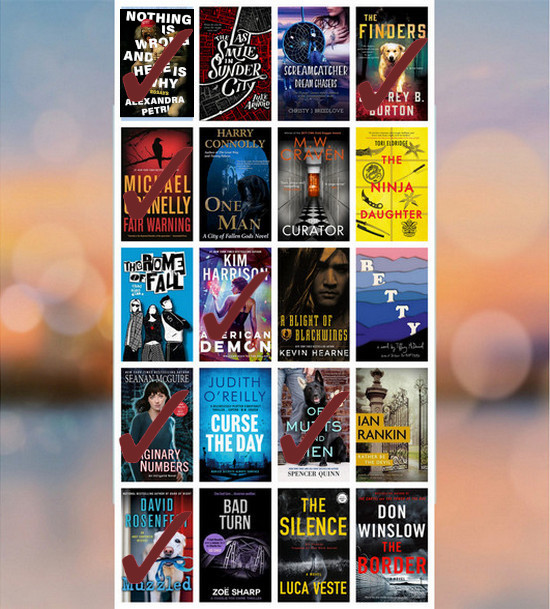
Here’s the kickoff post on 746 Books in case you want more details. I’ve seen people do this the last couple of years, and it seemed like fun. I’ll be reading more than 20 books over this period, anyway. I’ve found myself having a hard time staying focused lately when it comes to reading lately–although the WWW Wednesdays have helped a bit. I figure this is the same principle, just expanded over a few weeks rather than the next couple of days. Anyway, here’s my list (subject to change, but I’m going to resist the impulse to tweak as much as I can).

1. The Black Line by John Altson
2. The Last Smile in Sunder City by Luke Arnold
3. Screamcatcher: Dream Chasers by Christy J. Breedlove
4. The Finders by Jeffrey B. Burton
5. Fair Warning by Michael Connelly
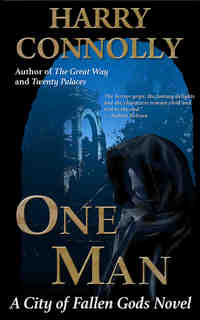
6. One Man by Harry Connolly
7. The Curator by M. W. Craven
8. The Ninja Daughter by Tori Eldridge
9. The Rome of Fall by Chad Alan Gibbs
10. American Demon by Kim Harrison
11. A Blight of Blackwings by Kevin Hearne
12. Betty by Tiffany McDaniel
13. Imaginary Numbers by Seanan McGuire
14. Curse the Day by Judith O’Reilly
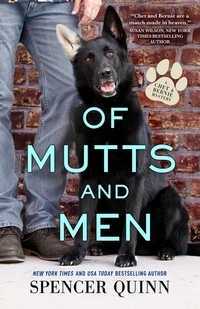
15. Of Mutts and Men by Spencer Quinn
16. Rather Be the Devil by Ian Rankin
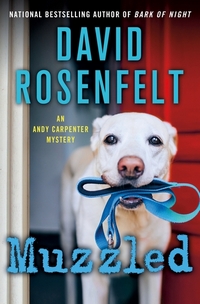
17. Muzzled by David Rosenfelt
18. Bad Turn by Zoë Sharp
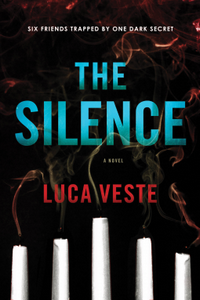
19. The Silence by Luca Veste
20. The Border by Don Winslow

20 Books of Summer Chart

The Friday 56 for 5/28/20

The Friday 56This is a weekly bloghop hosted by Freda’s Voice

RULES:
The Friday 56 Grab a book, any book.
The Friday 56 Turn to Page 56 or 56% on your ereader. If you have to improvise, that is okay.
The Friday 56 Find a snippet, short and sweet.
The Friday 56 Post it

from Page 56 of:
The Judas Goat

The Judas Goat by Robert B. Parker

The doctor put a pressure bandage on my, ah, thigh, and gave me some pills for the pain. “You’ll walk funny for a few days,” he said. “After that you should be fine. Though you’ll have an extra dimple in your cheeks now.”

“I’m glad there’s socialized medicine,” I said. “If only there was a vow of silence that went with it.”

Classic Spenser: Promised Land by Robert B. Parker

Classic Spenser

Promised Land

Promised Land

by Robert B. Parker
Series: Spenser, #4

Mass Market Paperback, 218 pg.
Dell Publishing, 1976

Read: April 30, 2020
Grab a copy from your local indie bookstore!

“Whose picture is on a one-hundred dollar bill?” I said.

“Nelson Rockefeller.” [Susan said]

“Wrong.”

“David Rockefeller?”

“Never mind.”

“Laurence Rockefeller?”

“Where would you like to go to lunch?”

“You shouldn’t have shown me the money. I was going to settle for Ugi’s steak and onion subs. Now I’m thinking about Pier 4.”

“Pier 4 it is…Come on, we’ll go back to my place and suit up.”

“When you get a client,” Susan said, “you galvanize into action, don’t you?”

“Yes, ma’am. I move immediately to the nearest restaurant.”

Harv Shepard’s wife walked out on him and he wants Spenser to find her and bring her home. Spenser agrees to the first part of that—he’ll find her, make sure she’s healthy and under no duress, but he won’t force her to come home. Shepard agrees to that, so Spenser starts digging. It takes him practically no time at all to discover that their relationship wasn’t as good as Shepard insists it was (Shepard doesn’t seem to find his wife leaving home to be a big clue)—and that Pam herself might not be as happy or well-adjusted as she let on.

It doesn’t take Spenser that long at all to find Pam and see that she’s okay. She’s not that interested in coming home, and Spenser’s prepared to let it lie like that. But she soon calls Spenser for help—and like the knight errant he is, Spenser obliges. She’s found herself neck-deep in serious legal problems and it’ll take an ingenious plan to get her out of it while not letting criminals get away with anything.

The trickier part of the equation comes from a man called Hawk.* When Spenser first arrives at Shepard’s house,

Shepard appeared from the door past the stairs. With him was a tall black man with a bald head and high cheekbones. He had on a powder blue leisure suite and a pink silk shirt with a big collar. The shirt was unbuttoned to the waist and the chest and stomach that showed were hard and unadorned as ebony. He took a pair of sunglasses from the breast pocket of the jacket and put them on, he stared at me over their rims until very slowly the lenses covered his eyes and he started at me through them.

* Yeah, I couldn’t resist.

As Spenser soon tells Shepard, Hawk’s presence means that he’s got bigger problems than a missing wife. Shepard denies it, but Spenser believes he’s into a loan shark and/or mobster for a pretty large sum and is behind on payments. It won’t be long until Hawk is hurting Shepard—if not more than that—in order to get this money.

Hawk and Spenser go far back—they used to fight on the same heavyweight card and come into frequent contact in their current occupations. Hawk’s a freelancer and is one of the best in Boston. He’s not a good guy, but he has a code. There’s a mutual respect between the two and Spenser is quick to defend Hawk against Shepard’s racial slurs. Hawk as a character deserves more space than I’m giving him at the moment—but that’s all I can do for now. I’ll probably find a way to give him a few paragraphs in the post about the next book.

So not only does Spenser need to get Pam out of her legal mess, he takes on getting Harv out of his illegal mess. He does so through a complicated set-up assisted by a couple of the funniest cops I remember reading about. It’s a shame that neither of these reappear the way that Healy, Belson and Quirk do (although, it’d be hard to take them seriously). It’s hard to explain, you’ll need to read them for yourselves.

Toward the end of the previous book, Mortal Stakes it looked like Spenser is getting more serious about Susan and less serious about his other dating relationship with Brenda Loring—there’s a reference to Brenda early on in this book*, but by the end, Susan and Spenser are as close to married as they’re ever going to get—essentially pledging monogamy without the legal/religious contract. This is huge for the genre at the time—and bigger for the character.

* Unless I’m mistaken, that’s the last reference to Brenda outside of a short story in the series. [Update: She’s mentioned in the next book, so I read the reference about 5 hours after I published this]

While Spenser tries to extricate the Shepards from the trouble they’ve found themselves in—and hopefully provide them with the opportunity to work on their marriage (at least enough to make a calm decision about its fate), Parker uses the Shepards as well as Susan and Spenser to discuss second-wave feminism in a somewhat abstract fashion, but also in concrete terms as it applies to each of these couples. Parker takes the opportunity to opine a bit on isms and how they tend to swallow the individual—where he prefers to consider such topics (this is assuming that Spenser and Parker align on these ideas, but there’s no reason to suspect they don’t). The reader may not agree with them any of the views they read in these pages, but they’re fairly well reasoned.

In Promised Land, we meet Hawk and Susan and Spenser become permanent (for lack of a better term). These two things are the final pieces to come into place as the foundation for the series—they’ll take a more final form in the next book, but we have them all now. Every other book in the series is built on what’s introduced up to this point and finalized in The Judas Goat. For a series that’s lasted 44 years after the publication of this one, that’s quite the accomplishment.

A significant portion of American Detective Fiction since then will be shaped by this, too—people will be reacting against this set-up or putting their series in a similar vein. Personally, I’ll get to the point (eventually) where Susan stops adding anything to the series. But I’ve yet to tire of Hawk. He may be the kind of guy who should spend the rest of his life behind bars, but he’s also the kind of character than you can’t help but love when he shows up on the page. We’ll revisit Hawk (and his contribution to the series) later, but for now, it’s just good to sit back and enjoy him.

You take all the above, mix them together—and you’ve got a true classic. Parker looks at marriage and feminism—and, of course, honor—while his protagonist matches wits with a mobster. Told with Parker’s trademark style and wit. Few things are as good as that—fewer yet are better.


5 Stars

This post contains an affiliate link. If you purchase from it, I will get a small commission at no additional cost to you. As always, opinions are my own.
Bullet Points about Burning Bright by Nick Petrie: There’s No Sophomore Slump in the Second Peter Ash Adventure

Burning Bright

Burning Bright

by Nick Petrie
Series: Peter Ash, #2

Hardcover, 416 pg.
G. P. Putnam’s Sons, 2017

Read: May 11-14, 2020
Grab a copy from your local indie bookstore!

He climbed down to the dry riverbed, hurting all over but more or less functional. His forehead felt warm and wet. He put his hand up, felt the slickness of blood, and wiped it away, reminding himself that head wounds always bleed like crazy.

He knew too much about damage to human bodies.

This post is overdue (as was reading this in the first place), and I can’t seem to find time to do it right. So, I won’t. Here’s a quick and dirty way to get it taken care of. I wish I had it in me to do a better job, but I don’t. Here’s the blurb taken from Petrie’s site:

War veteran Peter Ash sought peace and quiet among the towering redwoods of northern California, but the trip isn’t quite the balm he’d hoped for. The dense forest and close fog cause his claustrophobia to buzz and spark, and then he stumbles upon a grizzly, long thought to have vanished from this part of the country. In a fight of man against bear, Peter doesn’t favor his odds, so he makes a strategic retreat up a nearby sapling.

There, he finds something strange: a climbing rope, affixed to a distant branch above. It leads to another, and another, up through the giant tree canopy, and ending at a hanging platform. On the platform is a woman on the run. From below them come the sounds of men and gunshots.

Just days ago, investigative journalist June Cassidy escaped a kidnapping by the men who are still on her trail. She suspects they’re after something belonging to her mother, a prominent software designer who recently died in an accident. June needs time to figure out what’s going on, and help from someone with Peter’s particular set of skills.

Only one step ahead of their pursuers, Peter and June must race to unravel this peculiar mystery. What they find leads them to an eccentric recluse, a shadowy pseudo-military organization, and an extraordinary tool that may change the modern world forever.

If I had the time to do this properly, here are the things I’d be talking about.

bullet At multiple points both Peter and June note that Peter’s having fun when it’s dangerous, when things are violent, when the bullets are flying. As a reader, this is great—you don’t see Reacher, Charlie Fox, Evan Smoak, etc. enjoying things quite like this. But I’m a little worried about what it says about him as a person.

bullet We get some good backstory on Peter—before he enlisted.

bullet On a related note, Peter has a family! A well-adjusted, not violent, family.

bullet Lewis is back from the first book—he’s essentially Hawk and Pike with flair. His growing family ties are a real strength of character.

bullet June is tough, capable, smart. She’s complex in a way that most characters in this role usually aren’t, and really ought to be.

bullet The villains in this novel are great. Their motives are complex, they don’t approach things the way you think they’re going to (up to the last couple of chapters).

bullet While trying not to give too much away, I appreciate that Ash doesn’t have a scorched-earth approach to his opponents in either book.

bullet Best of all, in the middle of the technothriller stuff, the action hero stuff, and all the rest, there’s a real attempt to portray what a vet with PTSD goes through. How it molds everything he does, but doesn’t define him.

bullet The biggest compliment I can give is this: it kept me awake when I should have been. Since I got my new CPAP last summer, I haven’t been able to read more than 2-5 pages with it on before I’m out like a light. So imagine how shocked I was when I realized that I’d barreled through over 50 pages one night! That’s a feat.

This is a great thrill-ride, I’m not going to wait another year and a half before I get to the next one (it’s sitting on my shelf as we speak). I strongly recommend the Peter Ash books.


4 Stars

2020 Library Love Challenge

This post contains an affiliate link. If you purchase from it, I will get a small commission at no additional cost to you. As always, opinions are my own.
Top Ten Tuesday: Top 10 Opening Lines


The topic for this week’s Top Ten Tuesdays is Opening Lines.

Part of what made cutting last week’s Top 5 Opening Lines down to just five was that I knew this was coming. I let myself go a little long with these, hopefully not annoyingly so. These may not be the best openings I’ve ever read, but they’re the most memorable.

10 White Noise

White Noise by Don DeLillo

This is just one of those novels that imprinted on me in ways I don’t fathom, and it all started like this.

The station wagons arrived at noon, a long shining line that coursed through the west campus. In single file they eased around the orange I-beam sculpture and moved toward the dormitories. The roofs of the station wagons were loaded down with carefully secured suitcases full of light and heavy clothing; with boxes of blankets, boots and shoes, stationery and books, sheets, pillows, quilts; with rolled-up rugs and sleeping bags; with bicycles, skis, rucksacks, English and Western saddles, inflated rafts. As cars slowed to a crawl and stopped, students sprang out and raced to the rear doors to being removing the objects inside; the stereo sets, radios, personal computers; small refrigerators and table ranges; the cartons of phonograph records and cassettes; the hairdryers and styling irons; the tennis rackets, soccer balls, hockey and lacrosse sticks, bows and arrows; the controlled substances, the birth control pills and devices; the junk food still in shopping bags—onion-and-garlic chips, nacho things, peanut creme patties, Waffelos and Kabooms, fruit chews and toffee popcorn; the Dum-Dum pops, the Mystic mints.

I’ve witnessed this spectacle every September for twenty-one years. It is a brilliant event, invariable. The students greet each other with comic cries and gestures of sodden collapse. Their summer has been bloated with criminal pleasures, as always. The parents stand sun-dazes near their automobiles, seeing images of themselves in every direction. The conscientious suntans. The well-made faces and wry looks. They feel a sense of renewal, of communal recognition. The women crisp and alert, in diet trim, knowing people’s names. Their husbands content to measure out the time, distant but ungrudging, accomplished in parenthood, something about them suggesting massive insurance coverage. This assembly of station wagons, as much as anything they might do in the course of the year, more than formal liturgies or laws, tells the parents they are a collection of the like-minded and the spiritually akin, a people, a nation.

9 The Violent Bear It Away

The Violent Bear It Away by Flannery O’Connor

O’Connor’s the perfect mix of Southern sensibility, Roman Catholic worldview, and glorious prose.

FRANCIS MARION TARWATER’S uncle had been dead for only half a day when the boy got too drunk to finish digging his grave and a Negro named Buford Munson, who had come to get a jug filled, had to finish it and drag the body from the breakfast table where it was still sitting and bury it in a decent and Christian way, with the sign of its Saviour at the head of the grave and enough dirt on top to keep the dogs from digging it up. Buford had come along about noon and when he left at sundown, the boy, Tarwater, had never returned from the still.

The old man had been Tarwater’s great-uncle, or said he was, and they had always lived together so far as the child knew. His uncle had said he was seventy years of age at the time he had rescued and undertaken to bring him up; he was eighty-four when he died. Tarwater figured this made his own age fourteen. His uncle had taught him Figures, Reading, Writing, and History beginning with Adam expelled from the Garden and going on down through the presidents to Herbert Hoover and on in speculation toward the Second Coming and the Day of Judgment.

8 The Doorbell Rang

The Doorbell Rang by Rex Stout

I could’ve filled this list with Stout beginnings. But I limited myself to this one.

Since it was deciding factor, I might as well begin by describing it. It was a pink slip of paper three inches wide and seven inches long, and it told the First National City Bank to pay to the order of Nero Wolfe one hundred thousand and 00/100 dollars. Signed, Rachel Bruner. It was there on Wolfe’s desk, where Mrs. Bruner had put it. After doing so, she had returned to the red leather chair.

7 Dead Beat

Dead Beat by Jim Butcher

The first words I read by Butcher, got me hooked but good.

On the whole, we’re a murderous race.

According to Genesis, it took as few as four people to make the planet too crowded to stand, and the first murder was a fratricide. Genesis says that in a fit of jealous rage, the very first child born to mortal parents, Cain, snapped and popped the first metaphorical cap in another human being. The attack was a bloody, brutal, violent, reprehensible killing. Cain’s brother Abel probably never saw it coming.

As I opened the door to my apartment, I was filled with a sense of empathic sympathy and intuitive understanding.

For freaking Cain.

6 Adventures of Huckleberry Finn

Adventures of Huckleberry Finn by Mark Twain

This was the hardest cut from last week’s list, but I just can’t resist the moocow.

You don’t know about me without you have read a book by the name of The Adventures of Tom Sawyer; but that ain’t no matter. That book was made by Mr. Mark Twain, and he told the truth, mainly. There was things which he stretched, but mainly he told the truth. That is nothing. I never seen anybody but lied one time or another, without it was Aunt Polly, or the widow, or maybe Mary. Aunt Polly—Tom’s Aunt Polly, she is—and Mary, and the Widow Douglas is all told about in that book, which is mostly a true book, with some stretchers, as I said before.

Now the way that the book winds up is this: Tom and me found the money that the robbers hid in the cave, and it made us rich. We got six thousand dollars apiece—all gold. It was an awful sight of money when it was piled up. Well, Judge Thatcher he took it and put it out at interest, and it fetched us a dollar a day apiece all the year round—more than a body could tell what to do with. The Widow Douglas she took me for her son, and allowed she would sivilize me; but it was rough living in the house all the time, considering how dismal regular and decent the widow was in all her ways; and so when I couldn’t stand it no longer I lit out. I got into my old rags and my sugar-hogshead again, and was free and satisfied. But Tom Sawyer he hunted me up and said he was going to start a band of robbers, and I might join if I would go back to the widow and be respectable. So I went back.

5 A Portrait of the Artist as a Young Man

A Portrait of the Artist as a Young Man by James Joyce

I remember in our English class in High School when we were assigned this book, pretty much no one was interested. When Mr. Russo passed out the paperbacks, a few of us flipped it opened and read these first words—and suddenly we were open to the idea (didn’t last long for all of us, but that’s beside the point, we’re focused on the opening lines here). It’s stuck with me for almost 30 years, that’s gotta say something.

Once upon a time and a very good time it was there was a moocow coming down along the road and this moocow that was coming down along the road met a nicens little boy named baby tuckoo….

4

Neuromancer by William Gibson

This sentence was love at first glance for me. Still love it. Naturally, no one knows what color this is referring to anymore.

The sky above the port was the color of television, tuned to a dead channel.

“It’s not like I’m using,” Case heard someone say, as he shouldered his way through the crowd around the door of the Chat. “It’s like my body’s developed this massive drug deficiency.” It was a Sprawl voice and a Sprawl joke. The Chatsubo was a bar for professional expatriates; you could drink there for a week and never hear two words in Japanese.

Ratz was tending bar, his prosthetic arm jerking monotonously as he filled a tray of glasses with draft Kirin. He saw Case and smiled, his teeth a webwork of East European steel and brown decay. Case found a place at the bar, between the unlikely tan on one of Lonny Zone’s whores and the crisp naval uniform of a tall African whose cheekbones were ridged with precise rows of tribal scars. “Wage was in here early, with two joeboys,” Ratz said, shoving a draft across the bar with his good hand. “Maybe some business with you, Case?”

Case shrugged. The girl to his right giggled and nudged him.

The bartender’s smile widened. His ugliness was the stuff of legend. In an age of affordable beauty, there was something heraldic about his lack of it.

3

The Big Sleep by Raymond Chandler

Oft-parodied. Oft-imitated. Often-celebrated. Does it get better than this?

It was about eleven o’clock in the morning, mid October, with the sun not shining and a look of hard wet rain in the clearness of the foothills. I was wearing my powder-blue suit, with dark blue shirt, tie and display handkerchief, black brogues, black wool socks with dark blue clocks on them. I was neat, clean, shaved and sober, and I didn’t care who knew it. I was everything the well-dressed private detective ought to be. I was calling on four million dollars.

The main hallway of the Sternwood place was two stories high. Over the entrance doors, which would have let in a troop of Indian elephants, there was a broad stained-glass panel showing a knight in dark armor rescuing a lady who was tied to a tree and didn’t have any clothes on but some very long and convenient hair. The knight had pushed the vizor of his helmet back to be sociable, and he was fiddling with the knots on the ropes that tied the lady to the tree and not getting anywhere. I stood there and thought that if I lived in the house, I would sooner or later have to climb up there and help him. he didn’t seem to be really trying.

2

Harry Potter and the Sorceror’s Stone by J. K. Rowling

Why bother saying anything here?

Mr. and Mrs. Dursley, of number four Privet Drive, were proud to say that they were perfectly normal, thank you very much. They were the last people you’d expect to be involved in anything strange or mysterious, because they just didn’t hold with such nonsense.

1

The Hitchhiker’s Guide to the Galaxy by Douglas Adams

Far out in the uncharted backwaters of the unfashionable end of the Western Spiral arm of the Galaxy lies a small unregarded yellow sun.

Orbiting this at a distance of roughly ninety-eight million miles is an utterly insignificant little blue-green planet whose ape-descended life forms are so amazingly primitive that they still think digital watches are a pretty neat idea.

This planet has—or rather had—a problem, which was this: most of the people living on it were unhappy for pretty much of the time. Many solutions were suggested for this problem, but most of these were largely concerned with the movement of small green pieces of paper, which was odd because on the whole it wasn’t the small green pieces of paper that were unhappy.

And so the problem remained; lots of the people were mean, and most of them were miserable, even the ones with digital watches.

Classic Spenser: Mortal Stakes by Robert B. Parker

Classic Spenser

Mortal Stakes

Mortal Stakes

by Robert B. Parker
Series: Spenser, #3

Mass Market Paperback, 328 pg.
Dell, 1975

Read: March 30, 2020
Grab a copy from your local indie bookstore!


After stumbling onto Spenser: For Hire—I think during season 2 summer re-runs, I headed to my local library and grabbed the earliest in the series they had—Mortal Stakes. This wasn’t the first “adult” novel or mystery that I’d tried, but it was the best. Between Parker’s voice, Spenser’s wit, and the kind of story it told, I was sold and spent the next few months getting my hands on every one of the series I could. Re-reading this one is always like coming home.

Spenser is hired by a Boston Red Sox executive to investigate their best pitcher, Marty Rabb. There’s a hint of a suggestion of a rumor that he’s shaving points on behalf of gamblers, and the executive wants to know if it’s true. If so, he wants to address it quitely, If Rabb’s clean, he wants to know that quietly.

It takes no time at all for Spenser to determine that he is—and why. The bulk of the novel is Spenser’s attempt to learn who is blackmailing Rabb to do this and then to extricate him from their grip before it ruins his career and/or marriage. This is a significant challenge.

Spenser sees a lot of himself in Rabb—they share the same values, sense of honor, sense of play. Spenser will later look into a similar case in Playmates, and he’ll meet a similar athlete—only his sport is College Basketball. Parker will often use clients to shine a light on an aspect of Spenser’s character, usually by way of contrast—but with athletes, it’s because of similarity.

On the expanding Spenser-verse front, we meet New York Madam, Patricia Utley. She’s no “hooker with a heart of gold,” by any means. She’s a businesswoman first and foremost. She does remember where she came from, and can occasionally be counted on to display a bit of sentimentality. She will reappear several times in this series (and will make appearances in related series)—a reliable source of information as well as a resource.

In The Godwulf Manuscript we saw Spenser physically rough up a couple of college kids and verbally push around an older man. Each incident is followed by Spenser berating himself. In a fit of pique following a botched stakeout for the ransom delivery in God Save the Child, Spenser breaks the handle of the rake he was using as a prop and feels so bad that he leaves money to pay for it. Parker goes out of his way to show Spenser’s conscience. Yet in this book, Spenser arranges to outright kill two people. Yes, he’s wracked with guilt—physically ill—but he’s able to justify it to himself. Which mostly works, but he has to go to Susan Silverman to talk things out and convince himself he did the right thing.

This book shows that Spenser is changing. He doesn’t like being alone—he needs to talk some of the difficult things through with Susan. He’s had a couple of dates with Brenda Loring earlier in the book—but he notes she’s good for having fun with, but for serious talk, it has to be Susan. I appreciate the slow growth in the character here.

This isn’t the best Spenser volume—but it’s a very good one. This is the first (of many) extended look at Spenser’s code. We see Spenser wade in deep ethical waters (and doesn’t necessarily come out clean). But most importantly, we see Spenser doing all he can—whether his employer wants him to or not—to dig a couple of people out form a tight spot. Mortal Stakes is Parker at his best and is just a pleasure to read.


5 Stars

Towel Day ’20: Do You Know Where Your Towel Is?

(actually updated and slightly revised this 5/25/20!)

The Hitchhiker’s Guide to the Galaxy has a few things to say on the subject of towels.

A towel, it says, is about the most massively useful thing an interstellar hitchhiker can have. Partly it has great practical value. You can wrap it around you for warmth as you bound across the cold moons of Jaglan Beta; you can lie on it on the brilliant marble-sanded beaches of Santraginus V, inhaling the heady sea vapors; you can sleep under it beneath the stars which shine so redly on the desert world of Kakrafoon; use it to sail a miniraft down the slow heavy River Moth; wet it for use in hand-to-hand-combat; wrap it round your head to ward off noxious fumes or avoid the gaze of the Ravenous Bugblatter Beast of Traal (such a mind-bogglingly stupid animal, it assumes that if you can’t see it, it can’t see you); you can wave your towel in emergencies as a distress signal, and of course dry yourself off with it if it still seems to be clean enough.

More importantly, a towel has immense psychological value. For some reason, if a strag (strag: non-hitch hiker) discovers that a hitch hiker has his towel with him, he will automatically assume that he is also in possession of a toothbrush, face flannel, soap, tin of biscuits, flask, compass, map, ball of string, gnat spray, wet weather gear, space suit etc., etc. Furthermore, the strag will then happily lend the hitch hiker any of these or a dozen other items that the hitch hiker might accidentally have “lost”. What the strag will think is that any man who can hitch the length and breadth of the galaxy, rough it, slum it, struggle against terrible odds, win through, and still knows where his towel is is clearly a man to be reckoned with.

Hence a phrase that has passed into hitchhiking slang, as in “Hey, you sass that hoopy Ford Prefect? There’s a frood who really knows where his towel is.” (Sass: know, be aware of, meet, have sex with; hoopy: really together guy; frood: really amazingly together guy.)

Towel Day, for the few of who don’t know, is the annual celebration of Douglas Adams’ life and work. It was first held two weeks after his death, fans were to carry a towel with them for the day to use as a talking point to encourage those who have never read HHGTTG to do so, or to just converse with someone about Adams. Adams is one of that handful of authors that I can’t imagine I’d be the same without having encountered/read/re-read/re-re-re-re-read, and so I do my best to pay a little tribute to him each year, even if it’s just carrying around a towel.

One of my long-delayed goals is to write up a good all-purpose Tribute to Douglas Adams post, and another Towel Day has come without me doing so. Belgium.

Next year . . . or later. (he says for at least the 5th straight year, a work ethic I like to believe Adams would recognize).

In the meantime, here’s some of what I’ve written about Adams. A couple of years back, I did a re-read of all of Adams’ (completed) fiction. For reasons beyond my ken (or recollection), I didn’t get around to blogging about the Dirk Gently books, but I did do the Hitchhiker’s Trilogy:
bullet The Hitchhiker’s Guide to the Galaxy
bullet The Restaurant at the End of the Universe
bullet Life, The Universe and Everything
bullet So Long, and Thanks For All The Fish
bullet Mostly Harmless
Also, I should mention the one book Adams/Hitchhiker’s aficionado needs to read is Don’t Panic by Neil Gaiman, David K. Dickson and MJ Simpson.

I’ve only been able to get one of my sons into Adams, he’s the taller, thinner one in the picture from a few years ago.

TowelDay.org is the best collection of resources on the day, recently posted this pretty cool video, shot on the ISS by astronaut Samantha Cristoforetti.

Even better—here’s an appearance by Douglas Adams himself from the old Letterman show—so glad someone preserved this:

Love the anecdote (Also, I want this tie.)

Page 45 of 123

Powered by WordPress & Theme by Anders Norén