Category: Authors Page 49 of 123

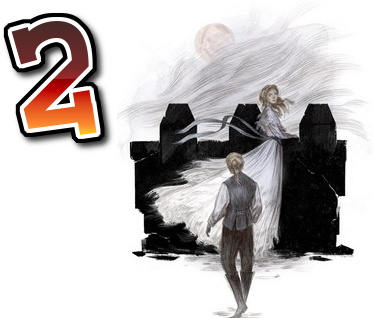
A Beginning At The End by Mike Chen: Love, Uh, Finds a Way in this Optimistic Dystopian Novel

A Beginning At The End

A Beginning At The End

by Mike Chen

Hardcover, 391 pg.
Mira Books, 2020

Read: January 28-February 4, 2020
Grab a copy from your local indie bookstore!

“Mommy’s not coming home.”

“No! Mama now! Want Mama!” Desperation had taken over the child’s face, eyes pooling With the Whiplash turn of raw emotions. She tossed the plastic spoon across the prison-cell-turned-living-space, her voice ramping up in volume and intensity. His arms wrapped around his daughter, even though she punched at his thigh in frustration; he held her as if she was the last thing in the world.

Rob blinked as the realization came to him. She was.

His home, his old life was gone. His parents and brother, killed by MGS. Their friends, their community, scattered and ravaged. And now Elena gone too.

Sunny was all he had left.

Well, I really painted myself into a corner with my In Medias Res post about this book a couple of weeks ago. I’m not sure what else there is to say! Oops.

I was more right than I was wrong about where Chen was taking some of the story—but while I had the destination correct the route he took totally caught me off-guard (and it was so good!). The parts of the story I was wrong about, however. I could not have been further off the mark if I’d tried. Both of those results are so satisfying to me, Chen nailed the nuts and bolts bits of plotting—conclusions that seem right and expected (and earned) while being very unexpected.

While Chen knows how to plot a book, characters are his strength (see also Here and Now and Then).
I could absolutely see where Moira was coming from and understood (and applauded) what she did to change her life. I felt like I got Krista’s pain and the way she reacted to her mother and uncle made sense to me (I’m not sure she was fair to her college boyfriend, even if he should’ve known better than to do what he did). And Sunny should win over even the most jaded reader. But Rob? The way Chen wrote him made me empathize with Rob to a degree that I wasn’t prepared for. That sentence I quoted above, “She was,” just about broke me.

I assume that other readers will gravitate to other characters (and Moira is probably my favorite in the novel), and they should. But Rob is going to stick around in my subconscious for a while.

All of this happens against the backdrop of a world trying to recover from a global pandemic that wiped out an unimaginable number of people. Sure, other apocalyptic scenarios seem worse (zombies, whatever lead to Panem, the First-through-Fifth Waves, etc.)—but what makes this scenario chilling is just how possible it really seems. And I’m not just saying that with one of my sister’s kids dealing with being quarantined in Asia around the time I read this.

Nevertheless, Chen’s novel is optimistic. Human beings, human society, human families prevail. Like Dr. Ian Malcolm famously said, “Life, Uh, Finds a Way.” So does humanity in Chen’s world.

Like all good Science Fiction, this is more about our present than it is our future. In a survivor’s group, Rob has a lot to say about living in fear with the source of the past hanging over is and letting the two dictate our lives. Without trying I could think of a dozen ways that could be applied to pre-apocalyptic Americans (who knows how large the number would be with some effort).

There’s more I feel like I should say, if only just to flesh out some of what I’ve put down—but at this point, I think I’ve said enough about this book over the two posts, so I’m going to stop here (so much for that corner I painted myself into). I want to do 400-600 words on the title alone (many of which would be devoted to the indefinite article).

A Beginning at The End is the kind of SF that should appeal to SF readers. It’s the kind of SF that should make non-SF readers (including those antagonistic to genre fiction) think there’s something to the genre after all. Because this isn’t “just” a SF novel. It’s a novel about humans being very human, with hopes, fears, loves, joys, sorrows, failures, and successes—it just happens to be set in a post-apocalyptic future. Chen’s first novel was among the best I read in 2019. I fully expect that this will be among the best I read in 2020. I’m going to jump on whatever Chen has coming in 2021 without bothering to note the title or even skim the blurb. He’s earned an auto-read from me for at least the next two novels.


4 1/2 Stars

2020 Library Love Challenge

This post contains an affiliate link. If you purchase from it, I will get a small commission at no additional cost to you. As always, opinions are my own.


In Medias Res: A Beginning At The End by Mike Chen

As the title implies, I’m in the middle of this book, so this is not a review, just some thoughts mid-way through.

—–

A Beginning At The End

by Mike Chen

Book Blurb:

Six years after a global pandemic wiped out most of the planet’s population, the survivors are rebuilding the country, split between self-governing cities, hippie communes and wasteland gangs.

In postapocalyptic San Francisco, former pop star Moira has created a new identity to finally escape her past—until her domineering father launches a sweeping public search to track her down. Desperate for a fresh start herself, jaded event planner Krista navigates the world on behalf of those too traumatized to go outside, determined to help everyone move on—even if they don’t want to. Rob survived the catastrophe with his daughter, Sunny, but lost his wife. When strict government rules threaten to separate parent and child, Rob needs to prove himself worthy in the city’s eyes by connecting with people again.

Krista, Moira, Rob and Sunny are brought together by circumstance, and their lives begin to twine together. But when reports of another outbreak throw the fragile society into panic, the friends are forced to finally face everything that came before—and everything they still stand to lose. Because sometimes having one person is enough to keep the world going.

I’m a couple of chapters shy of the halfway point, but I’m pretty excited about this book and want to get something out there about it—also, I have to take a break because I forgot about a book tour I have next week, and I really should read that book first.

So, like last year’s Here and Now and Then, Chen uses SF trappings to tell the kind of story that you don’t normally associate with Science Fiction (especially if you’re an anti-genre fiction snob).

I’m a chapter or two past a Speed Dating scene. On the one hand, it’s like every other Speed Dating scene you’ve seen from TV or the movies and/or read before. On the other hand, this is after most of the population of the earth is gone and people are trying to rebuild a facsimile of their lives in the midst of tragedy, so you’ve got the awkwardness, the insanity of the whole speed dating thing, and people dealing with unspeakable trauma at the same time. Chen makes this feel incredibly familiar and incredibly alien (yet relatable) at the same time, mildly humorous and miserable, tinged with hope and despair. And that’s just one scene. The book is full of stuff like this.

At its core (I think), this is a novel about how our past defines us, even after the apocalypse. Two characters here want to redefine themselves from the pre-pandemic lives, and somehow still can’t (at least not totally). Two characters need to redefine themselves from their post-pandemic past, and can’t seem to find the will to. It’ll take no time at all before you’re invested in these characters—you’ll want what the former two want, and hope that the latter two can somehow make things work.

Also, you’ll find you have some pretty strong feelings about Moira’s father. And they won’t be at all positive. But that’s all I’m going to say about that.

I have a few ideas where the stories are going/may end up, yet I’m reasonably certain that Chen’s ideas are better. Regardless, these are all building toward a satisfying pay-off or three. Maybe late next week I’ll have a chance to talk about this more, but for now, let me say I’m digging this and expect that about 80% of the people who read this blog on a semi-regular basis will, too.

Lost Hills by Lee Goldberg: A Dynamite Beginning to a New Series from One of the Most Reliable Scribes Around

Lost Hills

Lost Hills

by Lee Goldberg
Series: Eve Ronin, #1

Kindle Edition, 237 pg.
Thomas & Mercer, 2020

Read: January 23-25, 2019
Grab a copy from your local indie bookstore!

Mulholland Drive. It was an intersection that generated lots of confusion, and not only because of the nearly identical street names. It was also the intersection of two cities, three neighborhoods, two law enforcement jurisdictions, and on this hot, smoggy Thursday afternoon in December, life and death.

So begins Lee Goldberg’s new series—a story of a young, talented, fallible, inexperienced woman detective in the LA County Sheriff’s Department. Eve Ronin is in this position thanks to being in the wrong place at the right time, and getting herself plastered all over social media just when the Department needed any good publicity it could get. Capitalizing on this, the Sheriff puts her in the high-profile Robbery-Homicide Division where she faces a lot of sexist backlash—and some that’s not sexist, but based on the way she got the job and how unprepared she is for it. Still, Eve knows a good opportunity when she gets it and is determined to rise to the occasion, as hard as it will be.

That’s the novel (and probably the series) in a nutshell—everything else is just window dressing. But man, I tell you, it’s great window dressing.

First off, you’ve got this case. A single mother of two (no longer romantically involved with the man she’s living with, but unable to move out), her kids and their dog are missing. What’s present in their home is a lot of blood. I mean a lot. Enough that there’s little hope that any of them are still alive, but Eve can’t rule out the possibility. So she really has two investigations to get into—the multiple murder case, and a missing persons case. Given the grizzly nature of the crime scene, there’s a lot of public attention on this case, and a lot of pressure on the rookie detective. That there is enough for most novels, but we get more.

What I loved about this book (and, from what I hear in interviews, the series to come), is how it displays that everyone in the L.A.-area is in or adjacent to the entertainment industry. Eve’s mother and the probable victim are chasing stardom, the likely victim’s ex-boyfriend works on a film crew (as does his alibi). There are detectives shopping script ideas around, and clearly will jump on new “material.” You’d think that with the sheer number of police procedurals/PI novels set in LA that this would be well-trodden territory, but it really isn’t. How is that possible? I’m so glad that Goldberg committed to this idea.

At the end of the court was a poorly maintained, unfenced ranch home with two cars in the driveway— an old Ford Taurus with oxidized paint and a Nissan Sentra. A woman in her early thirties paced anxiously in front of the house.

“She’s keyed up,” Duncan said as Eve pulled up to the driveway. “You better talk to her, woman- to- woman.”

“Good idea, because you know we don’t even have to speak to each other,” Eve said, putting the car into park. “Our uteruses can communicate telepathically.”

“I think the correct term is ‘uteri.’”

But what makes this (and any series) work are the characters. Eve is a great character, while her mom was off chasing stardom (and primarily finding work as an extra), she did the heavy lifting when it came to raising her younger siblings. Now she’s taken that sense of responsibility to her career and those she comes into contact with.

Eve’s mom is still in pursuit of the Hollywood dream, if not for her (though that’d be her preference), than for Eve. When Eve shows up on TV being cornered by a reporter, Jen is more focused on how Eve looks than the case in question. When she does think about the case, it’s in relation to how Eve can turn it into a movie deal. I cracked up at Eve’s first conversation with her (and enjoyed the rest), but can easily see where she could be overused on the long-term, and she could easily turn into a one-note joke. I know Goldberg can do something interesting with her if he wants to, I just hope he does.

Meanwhile, Eve’s younger sister, Lisa is a delight. She’s a nurse as well as Eve’s main source of emotional support (and ice cream). The cynic in me thinks she might as well be named Nurse Bechdel Test. But let’s ignore him—she’s a great character for Eve to bounce off of—a sounding board for the emotional beats and struggles that Eve endures thanks to her promotion and career—as well as something that humanizes Eve. She’s not just a cop, she’s a sister with strong maternal instincts/reflexes, who needs someone to take care of her occasionally. I thoroughly enjoyed their interaction and the way they fed off each other, and her continuing presence in the series bodes well for it (and, yeah, probably makes sure these books pass that particular test).

Then there are Eve’s colleagues (who get more real estate in the book than her family does, but I’m going to cover briefly here because I’m rambling). I’ll start with her partner, Duncan—a jaded veteran detective nearing retirement. That gives him a certain detachment from Eve’s catapulting into Homicide, as long as her presence doesn’t interfere with his exit, what does he care. In the meantime, he’ll pass on some wisdom and cynicism. I loved his character and really hope that retirement stays away for a while.

Almost every other detective (both in the Sheriff’s department and the LAPD) doesn’t share his detachment, and will not actively try to derail Eve, but will be skeptical and antagonistic to her. The nicest thing anyone will say about her is that she’s starved for attention and fame. The Sheriff on the other hand, will exploit Eve whenever he can (he needs her to be a star to deflect attention away from serious problems in the department). It’s hard to tell if he has any real confidence in her, or if it’s all opportunistic. I’m not sure it matters much.

I would’ve liked a little more depth to this story, but just a tad. Any more and it would’ve slowed down the fast, driving pace and tension—which wouldn’t have been worth the trade-off. I’d also have liked to gone a bit more in-depth here myself, but if I do, I’d probably not get this posted for two more months, so we’ll call this good.

I haven’t read every novel Goldberg has written, but I have read 26 of them (so far), so I feel like I have a pretty decent idea of what kind of writer he is. There is something distinctly Goldberg-esque about Lost Hills and Eve. At the same time, there’s a freshness and verve to them that is new—it felt like Goldberg has stretched himself to try something in these pages and it worked—a reward for both author and readers. Eve Ronin is a fantastic character that I hope to spend many years reading and exploring the world of. You should, too.


4 1/2 Stars

This post contains an affiliate link. If you purchase from it, I will get a small commission at no additional cost to you. As always, opinions are my own.

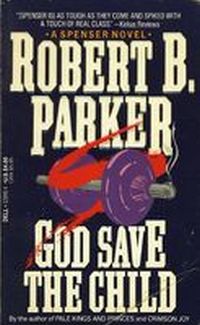
Opening Lines: The Godwulf Manuscript by Robert B. Parker

We all know we’re not supposed to judge a book by its cover (yet, publishing companies spend big bucks on cover design/art). But, the opening sentence(s)/paragraph(s) are fair game. So, when I stumble on a good opening (or remember one and pull it off the shelves), I’ll throw it up here. Dare you not to read the rest (plus the 39 novels to follow by Parker (not to mention the 8+ by Ace Atkins)).

from The Godwulf Manuscript by Robert B. Parker:

The office of the university president looked like the front parlor of a successful Victorian whorehouse. It was paneled in big squares of dark walnut, with ornately figured maroon drapes at the long windows. There was maroon carpeting and the furniture was black leather with brass studs. The office was much nicer than the classrooms; maybe I should have worn a tie.

Bradford W. Forbes, the president, was prosperously heavy—reddish face; thick, longish, white hair; heavy white eyebrows. He was wearing a brown pin-striped custom-tailored three-piece suit with a gold Phi Beta Kappa key on a gold watch chain stretched across his successful middle. His shirt was yellow broadcloth and his blue and yellow striped red tie spilled out over the top of his vest.

As he talked, Forbes swiveled his chair around stared at his reflection in the window. Flakes of the season’s first snow flattened out against it and dissolved and trickled down onto the white brick sill. It was very gray out, a November grayness that is peculiar to Boston in late fall, and Forbes’s office seemed cheerier than it should have because of that.

He was telling me about the sensitive nature of a college president’s job, and there was apparently a lot to say about it. I’d been there twenty minutes and my eyes were beginning to cross. I wondered if I should tell him his office looked like a whorehouse. I decided not to.

“Do you see my position, Mr. Spenser,” he said, and swiveled back toward me, leaning forward and putting both his hands palms down on the top of his desk. His nails were manicured.

“Yes, sir,” I said. “We detectives know how to read people.”

Forbes frowned and went on.

“It is a matter of the utmost delicacy, Mr. Spenser”—he was looking at himself in the glass again—”requiring restraint, sensitivity, circumspection, and a high degree of professionalism. I don’t know the kind of people who usually employ you, but…”

I interrupted him.

“Look, Dr. Forbes, I went to college once, I don’t wear my hat indoors. And if a clue comes along and bites me on the ankle, I grab it. I am not, however, an Oxford don. I am a private detective. Is there something you’d like me to detect, or are you just polishing up your elocution for next year’s commencement?”

Forbes inhaled deeply and let the air out slowly through his nose.

“District Attorney Frale told us you were somewhat overfond of your own wit.”

Deep Dark Night by Steph Broadribb: High Stakes Danger for Lori Anderson in the Windy City

Deep Dark Night

Deep Dark Night

by Steph Broadribb
Series: Lori Anderson, #4

Kindle Edition, 320 pg.
Orenda Books, 2020

Read: January 16-17, 2020
Grab a Steph Broadribb book from your local indie bookstore!

I’ve always felt an element of fear about the jobs I do. In the right dosage it can help you. It gets your adrenaline firing, makes you think clearer, faster—gets you alert and ready to tackle anything that comes your way. But if the fear builds too much, all that good stuff swings things around; the nerves make you hesitant, jumpy and too cautious. That’s when you start making mistakes. And mistakes, in my world, can be fatal.

After barely getting to take a breath following the events of Deep Dirty Truth, Lori finally gets the chance to work off her debt to FBI Agent Monroe. This puts Lori and JT in Chicago trying to get the mobster Cabressa to take possession of some stolen goods. Once that’s done, a series of dominoes will fall and Monroe will be able to put him away for a very long time.

So he insists, anyway.

Step one involves Lori getting an invite to an incredibly exclusive Poker game, Step two involves giving her a crash course in playing Poker so she seems mostly credible in the game. (this isn’t presented as a comedic segment, but I chuckled at this part of the book—also, I’m jealous, I wish I could learn how to play like this).

Now, every thriller reader knows what will happen next—no plan, no matter how thorough, how well-thought-out no matter who’s involved, will work. If for no other reason than it would produce a dull novel. But also, every thriller reader has heard the line, “no plan survives first contact with the enemy” and knows it to be true. The questions that need to be answered are: how badly will the plan go awry? and How will Lori and JT react to it?

So let me assure you, when this plan is derailed, it’s derailed in a spectacular fashion, providing a lot of danger for our heroes, peril for those around them, and more than enough tension to satisfy a hungry reader. Lori and JT respond appropriately, not perfectly (which would be boring), but they display the stamina, resourcefulness, and tenacity we’ve come to expect from them.

The poker game collected quite the interesting mix of players—sports figures, politicians, as well as shady characters like Cabressa. When things go wrong during the game, it opens things up for a lot of drama and conflicting interests causing trouble for all involved. Suddenly, Lori and JT can’t focus solely on getting Cabressa to fall into Monroe’s trap—they have to worry about survival—their own, and as many others that they can help. Sure, Cabressa is still their target, but there’s a lot they have to go through before they can make him a priority.

I’m not going to get more in-depth than that, I’ll leave it there and say there’s more than enough going on plot-wise to fuel a book at least half again as long as this one. Broadribb has stacked the deck against the pair and it’s great to watch them try to navigate the situation.

The game takes place at the top of a pretty high building in Chicago and the action centers around that location, stories above the ground. In the real world, I’m pretty acrophobic—and occasionally (okay, more than occasionally), a movie can get me to feel the anxiety that heights can bring out in me. I don’t remember ever feeling symptoms while reading a book, but I did here. It’s not like Broadribb focused all that much on the height and risk of falling (it was there, but she didn’t belabor the point), but something about the way that she told the story, flicked that particular switch in my brain. There’s something very disconcerting about sitting in a comfortable seat (on the ground level like a sane person) but feeling like I was standing in a precarious* location several feet off the ground. I’m not promising that anyone else will experience what I did, I assume the rest of humanity is a bit better adjusted than I am, but for me that was an unexpected “bonus” to the book.

* Yeah, fine, my definition of a precarious location applies to perfectly safe—even benign—spots.

I’m a little worried about the long-term health of Lori’s elbows. She uses them so often as weapons, she probably heads back to Florida with at least one of them horribly bruised. I don’t remember this being the case in the previous novels, maybe I just forgot—or maybe she’s just relying on the technique in these circumstances (I remember more than once the narration in a Jack Reacher novel talking about the usefulness of that tactic compared to the use of a fist).

As far as long-term character development goes, Lori and JT start a conversation they’ve needed to have since, well, since we met the two of them about Dakota and why Lori didn’t tell JT about her before she did. This will prove helpful in the future and provide the opportunity for the relationship to grow and change. The two of them have some sort of plan going forward about their careers and daughter, but we’re going to have to come back to find out what they have in mind. Seeing these two deal with each other and their daughter is almost as rewarding to me as the action-hero kind of thing is, and Broadribb’s featuring both sides of Lori like this is a real strength of the series.

For my money, this is the best of the series—she’s got a real handle on these characters by now and knows just how to put them through the wringer in a way that provides real tension and thrills. I got more wrapped up in this than I expected to (and I had pretty high expectations at this point in the series), and it was absolutely worth it. Book five cannot arrive soon enough for me.

If you haven’t met this bounty hunter yet, you need to—either in the pages of this book or the beginning, either would work (but you might as well just buy the set all at once, you won’t be satisfied until you read them all). Deep Dark Night will win Broadribb some new fans and confirm those readers already along for the ride.


4 1/2 Stars

This post contains an affiliate link. If you purchase from it, I will get a small commission at no additional cost to you. As always, opinions are my own.
Come Tumbling Down by Seanan McGuire: Jack and Jill’s Final (?) Showdown in the Moors

Come Tumbling Down

Come Tumbling Down

by Seanan McGuire
Series: Wayward Children, #5

Hardcover, 206 pg.
Tor Books, 2020

Read: January 8-10, 2020
Grab a copy from your local indie bookstore!

Eleanor West’s Home for Wayward Children was an island of misfit toys, a place to put the unfinished stories and the broken wanderers who could butcher a deer and string a bow but no longer remembered what to do with indoor plumbing. It was also, more importantly, a holding pen for heroes. Whatever they might have become when they’d been cast out of their chosen homes, they’d been heroes once, each in their own ways. And they did not forget.

I wanted to do an Opening Lines post for this book, but I couldn’t decide where to stop—maybe around page 6 (which is a little too long for that kind of post). Seriously, it took less than a page for me to fall in love with this book.

It’s a typical day at Eleanor West’s School for Wayward Children (assuming such a thing exists) when a door appears, but instead of someone getting to go to their “home,” two figures emerge. One is a complete stranger, the other is Jack. Well, sort of. Close enough for our purposes here.

Things on the Moors have gotten to a crisis point where only one of the Wolcott twins can survive—Jack or Jill. Jill has struck first and things are dire. Jack recruits a couple of her friends and classmates to return with her (she was relatively certain she could return them to the school) to aid her in confronting her sister. They used to be heroes, they will be heroes again—as often as needed—much to Eleanor’s chagrin.

Once in the Moors, a dark and nasty place to be sure, dangers that no one (save maybe Jack) could’ve predicted present themselves and threaten the lives of the students in horrible and chilling ways. Culminating in what appears to be a final encounter for the sisters.

I love the way that McGuire writes these books, and Come Tumbling Down is no exception. It is full of the typical whimsical, fantastic and nigh-poetic language and ideas. If you’ve read a Wayward Children book before, you know what I’m talking about. If you haven’t . . . it’s hard to tell you. Here’s a sample or two:

“This is terrible . . . I mean we knew it was going to be trouble . . . but this is bonus terrible. This is the awful sprinkles on the sundae of doom.”

“A little knowledge never hurt anybody,” said Sumi.

“Perhaps not. But a great deal of knowledge can do a great deal of harm, and I’m long past the point of having only a little knowledge.”

Sumi was Sumi. Spending time with her was like trying to form a close personal relationship with a cloud of butterflies. Pretty—dazzling, even—but not exactly companionable. And some of the butterflies had knives, and that was where the metaphor collapsed.

Jill had always been the more dangerous, less predictable Wolcott, for all that she was the one who dressed in pastel colors and lace and sometimes remembered that people like it when you smiled. Something about the way she’d wrapped her horror move heart in ribbons and bows had reminded him of a corpse that hadn’t been properly embalmed like she was pretty on the outside and rotten on the inside. Terrifying and subtly wrong.

“wrapped her horror movie heart in ribbons and bows” is pretty much worth the purchase price of the book.

I’m glad that I enjoy—relish, really—the language like I do, because there’s not a lot of plot or action here. There’s enough, but there’s an awful lot of talk both around and before the action really gets underway. That’s not a wholly bad thing, and I enjoyed all of it, it just seemed self-indulgent.

It felt to me that McGuire’s reached the point of diminishing returns with this one, it’s been one too many trips to the Moors and it’s time for other Wayward Children to get the focus. Thankfully, that seems to be the plan.

I don’t think this would be a great introduction to this series (but it would function okay that way) if you’re not going to read them all in order, I feel safe in saying that it needs to be read after Down Among the Sticks and Bones. This is a good way to return to the world and revisit some of these characters. I can’t wait to see what happens in the next volume.


4 Stars

This post contains an affiliate link. If you purchase from it, I will get a small commission at no additional cost to you. As always, opinions are my own.
Junkyard Cats by Faith Hunter, Khristine Hvam: Hunter tries SF with Predictably Entertaining Results

Junkyard Cats

Junkyard Cats

by Faith Hunter, Khristine Hvam (Narrator)
Series: Shining Smith, #1

Audiobook, 5 hrs., 2 min.
Audible Original, 2020

Read: January 3-6, 2020


Faith Hunter dips her toe into SF with this Audible Original, and leaves quite an impression. The distinctive Hutner-flair is there, with science-y stuff replacing the magic stuff. It works pretty well.

Shining Smith is a veteran, of a handful of things, really. This takes place in the near-future, following a World War and another one (called the Final War in an act of aspirational nomenclature, I assume). She lives in/runs a scrapyard left to her by her father with a few cats and another vet recovering from trauma.

Shining deals on both sides of the law through intermediaries—no one knows her or who she is beyond those. It’s a perfectly safe environment.

Not a nice one, not a fulfilling one, but a safe one. And in her world, that’s asking a lot.

Until one day, one of her intermediaries shows up at her scrapyard dead. And then a very strong suspect for killing him shows up. And things get worse from there.

The action scenes are cool—filled with all the kinds of things that the best SF action scenes are filled with. The future-tech is cool, completely foreign to reality, yet it seems like the kind of thing that would emerge from our current tech.

I liked Shining, we don’t get to know her much. She’s such the riddle, wrapped in a mystery, inside an enigma, that it’s hard to get a real handle on her—but we get enough to root for her and want to know her better. Her compatriots are intriguing—as well-rounded as characters can get in this limited space where everyone is lying to each other about who and what they are.

There were a couple of SF-brand/tech names (like The Tyrell Corporation or tricorder) that I really couldn’t understand what Hvam was saying. Against the spirit of an “Audible Original,” but I’d like to read this so I could get a handle on those things. Which isn’t saying that Hvam didn’t do a great job—as per usual, her narration is top-notch.

My only complaint (outside of the tech words I couldn’t decipher), is the brevity, we get the good story, but we don’t get any depth—it’s like it’s designed to make you want more. Hey, wait a second . . .

A fun action-packed story that’ll whet your appetite for more. This is a glimpse into a cool world and I love what Hunter has created here. Yeah, I’m only going with 3 Stars for this. There’s a lot of potential in this world and with these characters—if Hunter returns to this? I can easily see this becoming a favorite series. It’s fine as a stand-alone, and it doesn’t demand a series/sequel but I think to really appreciate everything she set-up here, we need a little more. I’m not sure that makes sense, but…it’s what I can do.


3 Stars

Clearing the Deck: Tweet-length thoughts about books I can’t find time to write about

Yeah, I have a daunting TBR stack, but I also have too many books on my “To Write About” pile, and it’s bugging me. So, I’m cutting myself some slack, and am clearing the deck of everything from 2019 and before that I haven’t made time for. This was painful to do, I was looking forward to writing about most of these, but I’m just not going to get to them–and the 2020 books are starting to pile up, too. So, in 144 characters or less, here’s me cutting myself some slack.

(Click on the cover for an official site with more info)

Rivers of London: Detective Stories
3.5 Stars
Rivers of London, Volume 4: Detective Stories by Andrew Cartmel, Ben Aaronovitch, Lee Sullivan
Brief flashbacks showing what Peter et al. get up to between novels/comic series. A fun idea, well executed. Would enjoy another one like this.
Cry Fox
3.5 Stars
Rivers of London Volume 5: Cry Fox by Andrew Cartmel, Ben Aaronovitch, Lee Sullivan
This was a lot of fun, and showed a new side of a cool recurring character.
Rivers of London: Action At A Distance
3 Stars
Rivers of London: Action At A Distance by Andrew Cartmel, Ben Aaronovitch, Brian Williamson, Stefani Renne
A serial killer hunt and Nightingale backstory. Great combo.(some nice Molly material, too)
Geerhardus Vos: Reformed Biblical Theologian, Confessional Presbyterian
4 Stars
Geerhardus Vos: Reformed Biblical Theologian, Confessional Presbyterian by Danny E. Olinger
A biography and a discussion of his Vos’ major works. This was an excellent way to gear up for my 2019 Vos reading. Inspirational stuff.
The Utterly Uninteresting and Unadventurous Tales of Fred, the Vampire Accountant
3 Stars
The Utterly Uninteresting and Unadventurous Tales of Fred, the Vampire Accountant by Drew Hayes, Kirby Heyborne (Narrator)
A light Urban Fantasy about misfit monsters. Enjoyable enough to come back for more.
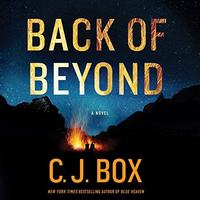
Open Season
4 Stars
Open Season by C. J. Box, David Chandler (Narrator)
Series Debut about a WY Game Warden with a nose for mystery. Loved the dual POVs (Pickett, his daughter). Addicting.
Please Don't Tell My Parents I'm a Supervillain
3 Stars
Please Don’t Tell My Parents I’m a Supervillain by Richard Roberts, Emily Woo Zeller (Narrator)
A cute story about kids of super-heroes/super-villains trying to get started in the biz without their parents’ involvement. Went on longer than it needed to, but fun enough to try volume 2.
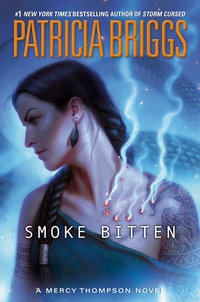
Dragon Blood
3 Stars
Dragon Bones by Patricia Briggs, Joe Manganiello (Narrator)
Manganiello is a great choice for narrator. Nice little stand-alone fantasy story. Great dragons.
Savage Run
3.5 Stars
Savage Run by C. J. Box, David Chandler (Narrator)
Almost as good as the first Pickett novel. Mrs. Pickett gets to shine here, too. I’m so glad I finally got to this series.
Inkheart
3 Stars
Inkheart by Cornelia Funke, Lynn Redgrave (Narrator)
Gets a bit redundant, but I loved the concept. Better than the movie (which I kind of liked), but still could’ve been better.
Undeath and Taxes
3 Stars
Undeath and Taxes by Drew Hayes, Kirby Heyborne (Narrator)
A little better than the first volume, an enjoyable way to spend a few hours.
Dragon Bones
3 Stars
Dragon Blood by Patricia Briggs, Joe Manganiello (Narrator)
OK, so Dragon Bones wasn’t a stand-alone. Could’ve been, but it was nice to get a little more with these characters/this world. Still, give me a Briggs Urban Fantasy above this.
The Imputation of the Active Obedience of Christ in the Westminster Standards
4 Stars
The Imputation of the Active Obedience of Christ in the Westminster Standards by Alan D. Strange
I love this series. Strange packs so much material into this tiny package. Excellent stuff.
Badlands
3 Stars
Badlands by C. J. Box, January LaVoy (Narrator)
Cassie takes over The Highway series and moves to a new Oil Town in North Dakota. Midwest Winter, Drugs, Murder, Corruption and Too Much Money wreak havoc on her first week on the job.
Zombie Spaceship Wasteland (Audiobook)
3.5 Stars
Zombie Spaceship Wasteland: A Book by Patton Oswalt (Audiobook)
The memoir chapters are nice, the comedic bits are odd (and funny). An interesting look at Oswalt.
No Sweat
3 Stars
No Sweat: How the Simple Science of Motivation Can Bring You a Lifetime of Fitness by Michelle Segar, Ph.D.
A great way to look at keeping (or getting) yourself motivated to exercise.

A Few (more) Quick Questions With…Matthew Hanover

So, I gushed a bit about Hanover’s upcoming novel, Not Dressed, earlier. Now it’s time to ask him a few questions about it and a few other things. I should add, the book is available for pre-order, get on it.

With maybe two exceptions, I’ve only had good experiences doing these Q&As over the years, but this was by far the best—Hanover went well above and beyond the call with this one and was more than generous with his time and effort. Drinks are on me if we’re ever in the same city, sir.

Before we move to Not Dressed, let’s look back at Not Famous for a moment—I’ve asked a couple of your colleagues this question, and I’d love to hear your perspective: Why is it, do you think, that male readers respond so strongly to books about music? (your novels, Hornby’s, etc.)
I think—and I could be wrong—but the love of music is such a universal thing that it’s easy for male readers to relate to characters that are interested in music, or music-themed books. It’s a universal language we can all understand even if we listen to different stuff.
What lessons were you able to take from the writing, editing, marketing, launch, etc. of Not Famous to the process for Not Dressed? Were there some things that you assumed “Oh, I’ll know better next time” or “I’ve got to do this again for the next book” that in the end, you couldn’t use? Was this an easier process, more difficult, or are the experiences so tied to the different books that you can’t compare?
Not Famous did better than I expected, but I kind of set a low bar for myself as to how it would perform. I was generally happy with the launch, but when sales slowed down, I was often told that the best thing to do is to write your second book because it’s easier to sell a novel if you have more than one. So, I’m hoping that plays out, but I’ve also learned that promoting a novel—any novel—is really hard work. Both traditional and indie authors are competing with millions of other authors trying to get their novels read. While I consider my genre to be “lad lit” it’s also quite clear that most readers are women, and you have to market to women readers as much as men.

One thing that was really different was the time it took to complete each novel. Not Famous was mostly an on-and-off effort over seven years to finish the first draft. Not Dressed took seven months to complete the first draft. My writing has also become a bit more efficient. The first draft of Not Famous was over 107,000 words. The first draft of Not Dressed was 97,000. They both ended up at approximately 94,000 words, so there was a lot more cut from the first novel, which makes sense because I was still learning how to write fiction. I suspect future books will also get easier to write. Whether I’ll improve on my marketing remains to be seen. We’ll see how this new novel goes!

Let’s turn to Not Dressed now: Jake has two significant females in his life his girlfriend (a talk radio producer/co-host who moonlights doing nude modeling) and his new friend (a giant geek who doesn’t know what to do with her life), which came first—the nude modeling hook or the idea for a geeky best friend? And just where, if you can recall, did the girlfriend helping make ends meet via nude modeling come from in the first place?
I knew I wanted to do a workplace comedy for my next novel, and my original development of ideas focused entirely on that. But, I think a good novel requires multiple arcs to be really interesting, and so the first arc hat I came up with was the nude modeling one. I’d been trying to write a short story about a guy whose girlfriend models nude for a long time, even before Not Famous was finished, but I just couldn’t get it to work as a short story. It worked great for the novel because she is driven to model because they’re trying to make ends meet, and her solution to that problem causes another, bigger problem for their relationship.

The geek girl theme I came up with towards the end of writing the first draft of Not Famous when I came up with the scene where the main characters end up at a vintage gaming night. I loved the idea of exploring that type of character and quickly realized a geek girl as a love interest would be a lot of fun to write. And so I decided to use that in my next novel.

Kaylee’s more than just a geek, there’s more to her than the excellent taste in SF/F, how did you make her more than the stereotype?
Developing Kaylee as a character was even more fun than I thought it would be. She started as more of a retro gamer geek but eventually decided to make her a sci-fi geek with an affinity for Star Trek.

To really capture the realistic geek girl I reached out to people on social media, and drew upon my own interactions, and came up with a series of traits and quirks that I thought made her as realistic as possible. I liked making her a bit quirky with her geek obsessions, like her OCD with mixing and matching clothes from different SF/F properties. Which I thought was a fun trait. Most young women would say they feel sexier wearing matching bra and panties, Kaylee, however, would never wear Marvel and DC Comics together. I thought that was a perfect manifestation of her personality.

I’d forgotten you’d said that there’d be a tie between Not Famous and Not Dressed, so it was a pleasant surprise when I got to that passage. How fun was that to write? How tempting was it to bring the two sets of characters together more?
After Not Famous I heard from readers who said they’d love a sequel. I knew I didn’t want to write a sequel because I felt that I was done writing Nick and Alli’s story, and any attempt to continue it in a new novel would take me in a direction I don’t want to go down. But having the book set in the same universe was a lot of fun, and I started planning for this before finishing Not Famous. You may recall that Not Famous begins after Nick has a one-night-stand with Emma, who works at Burnham & Modine—the office where Jake, the main character of Not Dressed, works. I loved doing this as opposed to a sequel, and I really enjoyed featuring more of Emma in this novel. Her friendship with Jake is loosely modeled off a friendship I have with a female coworker.

Readers of Not Famous will be happy to know that even though they don’t appear in this novel, you will get some gossip about how things are going with them.

Typically, when I run into architecture in fiction, it’s the kind of career that Jake imagined himself having, not what he ends up with. Burnham & Modine, the architecture firm that Jake works for, strikes me as incredibly accurate—is that the result of research (if so, how did you go about that) or is this from personal experience (not necessarily as bad)?
I know a lot of architects because I work in marketing for a developer. So, over the years I’ve heard all kinds of horror stories about working in the business, and overwhelmingly I hear that the job isn’t as glamorous as it is made out to be in fiction and in Hollywood. And I loved that because it was a great angle to play up in juxtaposition to the theme of expectations versus reality. I also used some generic bad office stories I’ve experienced as well.
Sisters play a significant role in both of your books—is this coincidence? Do you owe your own sister some debt you’re repaying?
It’s not entirely a coincidence, that’s for sure. I think the dynamic between siblings makes for great stories, and while each novel delves into a sibling relationship, these relationships are completely different.

In Not Famous, Nick has a much younger half-sister going through her own coming-of-age issues. In Not Dressed, Kaylee has a younger sister, close in age, who, unlike Kaylee, was popular in high school, had a lot of boyfriends, and ultimately reaches certain life goals before Kaylee does. This wasn’t one of my original ideas, but as I developed Kaylee’s character and her backstory, I really liked the idea that while she’s comfortable being a geek she feels insecure around her popular younger sister. It really made for an interesting character and resulted in some of my favorite scenes in the novel.

That said, it wasn’t my original intention to have another sibling conflict in this story, but it really gave Kaylee the depth I felt she needed to be a three-dimensional character. She’s not defined just by her geeky interests alone, but by a rivalry with her younger sister who had a much easier time growing up because of her popularity.

It appears you put a lot of thought into the backstories of your female love interest characters. How do you approach creating these and making them realistic and unique?
I’m really proud of both characters and how they turned out. I spend a lot of time thinking about the backstories of my main characters and how that affects their actions throughout the story. I spent seven years thinking and rethinking and tweaking Alli Conwell’s backstory for Not Famous because it needed to explain so much of her behavior long before the reader finds out what her backstory really is.

Developing Kaylee and her backstory was a similar, albeit quicker, process. First and foremost, I wanted Kaylee to be different from Alli. But, I think readers will find lots of similarities and differences between them. Both are ambitious, but Alli knew what her path was, and Kaylee doesn’t. Alli is independent and works hard to maintain that independence. Kaylee, however, still lives with her parents and is trying hard to find her true calling so she can be independent. As for their differences, Alli is shy, while Kaylee is more free-spirited. Alli was proudly innocent and virtuous. Kaylee, however, feels insecure about her lack of experience and has years of pent up jealousy of her promiscuous younger sister. Despite their differences, both are strong young women with hopes, dreams, and fears.

How much Star Trek: The Next Generation did you have to watch to get this written? Favorite episodes from this time?
I actually binge-watched the entire series as research. I’d seen bits and pieces before, which is why I chose that particular Star Trek show to be her primary obsession. I wanted to have her quote some episodes and really feel like a genuine Trekkie. I also got the idea of her being fluent in Klingon after watching the show and learning about the subculture of people who have done just that. I even got help from the Klingon Language Institute (yup, there’s such a thing) to help with the translations when Kaylee speaks Klingon. I thought it would be a fun easter egg for Trekkies who know Klingon to read it.

TNG has a lot of great episodes, and I would have loved to have quoted more, but one of my favorites does get a mention by Kaylee as one of her favorites, too.

What’s next for Author Matthew Hanover? Is Novel #3 underway, or are you solely focused (for now) on getting this launched?
I’m currently focused on the forthcoming launch of Not Dressed, but I have been jotting down ideas and notes for a third novel, of which I’ve already determined the primary plot. Just like Not Dressed, it will be in the same universe as Not Famous and have some character crossovers.
Thanks so much for your time and help in getting this Q&A into better shape. Also, thanks for Not Dressed, I had a blast with it and hope that it finds its audience.

Not Dressed by Matthew Hanover: If this book doesn’t bring a smile to your face, something’s broken

Not Dressed

Not Dressed

by Matthew Hanover
Series: Wallflowers, #2

eARC
2020

Read: January 3-6, 2019

“Hey there, Jake. This should be fun, right?”…

“I guess,” I say.

“You don’t sound too excited,” she says as she takes a hair tie off her wrist and pulls her disheveled hair back into a ponytail.

“Yeah, well. I’m not good at dancing.”

“Obviously! That’s why you’re here. Same as me. I’m probably just as bad as you. But we’ll learn together, okay?”

“Okay.”

Darmok and Jalad at Tanagra,” she says.

“I…have no idea what that means.”

“It’s from Star Trek…Actually, Star Trek: The Next Generation. It means we’ll work together to solve a common problem. In this case, the problem is learning how to dance.”

“I gotcha. So, you’re like…a Trekkie?”

“Was my sweatshirt not a big enough clue?”

“No, I just—”

“You’re not a Star Wars fan, are you? If you are, you’ll have to find a different partner.”

Jake Evans is our protagonist—he’s a decent enough guy, who could probably use some maturing (which means he’s like 90% of guys in their twenties). He’s got a great girlfriend (although the relationship seems a bit rocky when we meet him) and is second-guessing his chosen career (partially because he has a horrid employer, and partially because architecture isn’t the career he thought it would be). There are signs that he’d be a pretty fun guy to hang out with, but when the book opens he’s got a pretty good-sized cloud over his head between the girl and the gig.

Lindsay’s his long-time girlfriend. She works in radio and is very passionate about her job. She’s enjoying a little bit of success, and has a hard time relating to Jake’s struggles. She’s the producer and in-all-but-name on-air sidekick to a Boston-area conservative talk show host, who calls her “Lefty Lindsay.” (don’t worry, politics are absent from the book!) At least when the book opens, I really didn’t see why the two of them were a couple. There’s a good chance that neither of them rembered at that point, either, it had been so long.

Two things about their relationship provide most of the initial conflict for the plot. First, due to some financial hits they’ve taken recently, Lindsay has taken some modeling gigs to make some extra money. She did it back in college, which was recent enough that she still had connections. Why didn’t Jake do something to make extra money? He’s having a hard enough time finding a replacement full-time job that it didn’t seem like a good idea to try to add another job search to his plate. Besides, Lindsay’s moonlighting is profitable enough. What she neglects to mention to Jake is that this modeling is for art classes at a local college. And, well, none of these artists-in-training are working on fashion degrees—clothing gets in the way of what they’re learning to draw/paint/sculpt. Jake’s an open-minded kind of guy, except when it comes to this, it’s not pretty when he finds out (although it’s a pretty amusing scene for readers when he does).

Meanwhile, Jake’s sister’s wedding is coming up and Lindsay has decided the two of them need to learn to dance before it. Besides, it’s a fun activity for the two of them—they never go out mid-week anymore, and their relationship could use a boost. So she signs them up for a dance class, and then tells Jake about it after she paid for it, so he pretty much has to agree to it, but isn’t really that interested. So she basically promises him sex if he goes. Which pretty much seals the deal. But then Lindsay’s show gets moved to a new (and better) time slot. So, in addition to not being able to make the class, the couple will hardly see each other during the week. Her plan is that Jake will go, and then on the weekend, teach her the moves (he insists on getting his payment in advance for this).

Jake hates this new plan, and is convinced that he’s going to be stuck dancing with the instructor (after he and the reader meets this instructor, no one thinks this is going to be fun for him). Thankfully, just before class starts, Kaylee walks in. You read her opening dialogue up above. She’s a few years younger than Jake, taking some time out from college to figure out what she wants to do with her life, and is a major geek. She’s almost a Manic Pixie Dream Girl, but doesn’t fit the category in a few ways (I’m only using that term because I’m afraid this post is getting too long and I want to pick up the pace). She’s also my favorite character of 2020 so far (granted, that would mean more if it wasn’t January 13th).

Kaylee and Jake strike up a nice little friendship during the class, and pretty soon, he’s going so he has an excuse to hang out with her. The two of them are fun together—she’s socially awkward and embarrassed to be herself, Jake tries to shake her out of that, and even encourages her to let her Geek-Flag fly (even if he doesn’t get any of it). Meanwhile, she’s encouraging about his job hunt (as opposed to Lindsay, who mostly nags or wants him to find a way to succeed where he is), and gets him to be a little less angst-y about his life. I like Jake more when he’s in friend with Kaylee-mode over guy with Lindsay-mode. But what do I know? I have a tendency to pick people the protagonists don’t in these situations (I won’t provide examples because I’d expose myself to too much ridicule).

The one last bit of Jake’s life we need to talk about is his job. It’s horrible. He has a nice group of work-friends who band together for mutual support (and complaints), but the atmosphere at work is toxic, and their superiors would be enough to turn anyone against their chosen field. For example, in the first chapter, Jake’s two-year anniversary with the company happens and he asks his boss about scheduling his annual review (which will hopefully involve a raise, which he could really use). His boss stammers and suggests an alternate date, nine months away. Yeah, Jake’s bad attitude toward work makes a little sense, doesn’t it?

I worked as a draftsman at an architecture firm some years ago, and while the atmosphere there wasn’t at all what Jake experienced, Hanover did do a great job of capturing the kind of work and personalities that I saw—which doesn’t really match the typical depiction of architects in fiction. I liked that bit of realism. (I asked Hanover about that in an upcoming Q&A, but I haven’t read his responses yet, looking forward to seeing where that authenticity came from).

Getting back to Jake’s life—what we have here is a stagnant (at best) relationship that’s got a couple of pretty big things to work through; a job situation that needs addressing; and a new friend that is really the only positive thing in his life. Jake’s life is basically begging to be shaken up, is Kaylee going to help instigate that?

There’s something about Hanover’s style that I can’t express, but I wish I could. This book (like last year’s Not Famous) is effortless to read. When I started this book, it was late in the day and I thought I’d just stick a toe in the water, maybe read about 10% of it. Before I knew it, I was about a third into the book (and were it not for the time of day, I’d have probably finished it in one sitting!). It’s funny, it’s sweet, it’s infectious, it’s engaging as anything I can remember. I cared about these characters and got invested in their lives faster than I typically do.

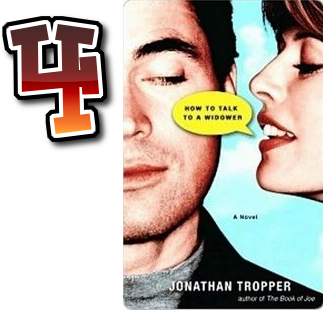
Jonathan Tropper tends to have certain character types that show up in every novel—particularly the wise sister/friend-who-might-as-well-be-sister* (many authors do this kind of thing, I know, but Tropper is who I thought of when I was reading this book). Hanover shows signs of the same thing—sisters play a big role in both of his novels to date. He doesn’t use them the same way that Tropper does, don’t get me wrong, but his male protagonists are more honest and open about their emotional lives because of sisters. This is neither good or bad, it’s just a trait that he may have—it’s something I’ll be looking for next time. (again, see the Q&A for more on this topic). I like that there’s someone who can draw this out of a character without the need for alcohol, drugs or trauma—also, that he bares his soul first to someone who isn’t a love interest.

* There are other types that Tropper utilizes constantly, too, if I ever get around to my big re-read of his corpus, I’ll end up compiling a chart.

There’s a bit of conventional wisdom discussed here that I didn’t know before reading this book.

“You realize that dancing is basically foreplay, right?”

“So I’ve heard.” [Jake replies]

Four chapters later:

“Because dancing is, like, totally foreplay, you know.”

“Why does everyone keep saying that?” [Jake asks]

I counted someone telling that to Jake four times (with at least one more allusion). Is this really a thing that everyone thinks/says? I may need to cancel some of my daughter’s plans for the next 20 years…

I’d forgotten that Hanover had said there’d be a link between Not Famous and this book. It’s small, and if you haven’t read his other novel, you won’t miss anything. But if you have, you’ll enjoy the brief catch-up you get about the lives of the protagonists of that novel. It brought a big grin to my face.

There was a slight flavor of Nick Hornby wanna-be-ness to Not Famous that’s not present here. Instead, what Hanover has done is take that same voice and put it to use telling a story that’s all him (while being the kind of thing that Hornby readers will appreciate). I do think that Hanover could go a bit deeper in his characterizations (I have very little sense about Jake apart from work/Lindsay) and his plots could add a little more complexity. I’m looking for a few degrees of depth/complexity, not much. But that doesn’t stop me from loving this world and characters, and it doesn’t keep me from encouraging you all to grab this book when it releases next month.

This heart-warming tale about being who you are and finding acceptance for it is a real winner. Adorkable, irresistible, and just fun—Not Dressed is sure to please (if you are so led, book is available for pre-order). I don’t know what Not Description is next for Hanover, but I’m already eager to read it.

Disclaimer: I received a copy of this book from the author in exchange for my honest opinion and this post. I appreciate the book, but it didn’t sway what I had to say.


4 Stars

Page 49 of 123

Powered by WordPress & Theme by Anders Norén