Category: Authors Page 50 of 123

My Favorite Crime/Mystery/Detective/Thriller Fiction of 2019

Once I settled on dividing this chunk of my reading out for its own list, I knew instantly half of the books that’d make it before I even looked at my reading log. After my first cut (which was pretty hard), I had 20+ candidates for the other 5 spots. Whittling those down was difficult, but I’m pretty comfortable with this list. That doesn’t mean the other 90 or so books I read in this family of genres were bad—most were really good and worth the time (sure, a handful should be missed, but let’s forget about them). But these are the crème de la crème.

Not all of these were published in 2019—but my first exposure to them was. As always, I don’t count re-reads, or almost no one could stand up to Stout, early Parker, etc. and my year-end lists would get old fast.

I should say that I was a little worn out by the time I composed a lot of this and ended up borrowing heavily from my original posts. Hope you don’t mind reruns.
(in alphabetical order by author)

Deep Dirty TruthDeep Dirty Truth

by Steph Broadribb

My original post
Lori is kidnapped by the same Mob that wants her dead, giving her basically two choices—do a job for them or else they’re coming for JT and Dakota. Nothing about this book went the way I expected (beginning with the premise), it was all better than that. I had a hard time writing anything about this book that I hadn’t said about the first two in the series. Broadribb’s series about this tough, gritty bounty hunter (who is not close to perfect, but she’s persistent, which is easier to believe) started off strong and remains so.

4 Stars

ThirteenThirteen

by Steve Cavanagh

My original post
One of the best serial killer antagonists I can remember reading. A breakneck pace. An intricately plotted novel. An already beloved protagonist. Genuine surprises, shocking twists, and a couple of outstanding reveals make this fourth Eddie Flynn novel a must-read (even if you haven’t read any previous installments).

5 Stars

Black SummerBlack Summer

by M. W. Craven

My original post
It’s hard to avoid hyperbole in a Best-Of post like this, it’s harder still when talking about this book. But I just did some math, and Black Summer is in the top 1% of everything I read last year—the writing, the plot, the pacing, the tension, the protagonists, the villain(s), the supporting characters are as close to perfect as you’re going to find. The first note I made about this book was, I’m “glad Craven gave us all of zero pages to get comfy before getting all morbid and creepifying.” It’s pretty relentless from there—right up until the last interview, which might elicit a chuckle or two from a reader enjoying watching a brilliant criminal get outsmarted. It’s dark, it’s twisted, and it’s so much fun to read.

5 Stars

An Accidental DeathAn Accidental Death

by Peter Grainger, Gildart Jackson (Narrator)

My original post
Grainger’s DC Smith couldn’t be more different than Craven’s DS Poe if he tried, and these two books feel so different that it seems strange to talk about them at the same time. What’s the same? How easily they get the reader invested in their protagonists. How easily they get you plunged into their world and caring about what they care about. Grainger has a nice, subtle style (with even subtler humor) that made this novel sheer pleasure to read (well, listen to, in this case).

4 Stars

Dead InsideDead Inside

by Noelle Holten

My original post
When I was about halfway through this novel, I wrote, “While I’m loving every second of this book, I’m having a hard time shaking the bleak outlook on life and humanity that seems to be part and parcel of this novel…Seriously, read a few pages of this book and see if you’re not willing to replace humanity as the apex predator with something careful and considerate—like rabid pit bulls or crack-smoking hyenas.” This is not an easy read thanks to the characters and circumstances, later I wrote, “This isn’t the cops dealing with a larger-than-life genius serial killer—rather, it’s the everyday reality for too many. Just this time tinged with a spree killer making a grim circumstance worse for some. It’s a gripping read, a clever whodunit, with characters that might be those you meet every day. As an experience, it’s at once satisfying and disturbing—a great combination for a reader. You won’t read much this year that stacks up against Dead Inside and you’ll join me in eagerly awaiting what’s coming next from Holten.” I can’t put it better than that.

5 Stars

Deception CoveDeception Cove

by Owen Laukkanen

My original post
I heard someone describe this as Laukkanen writing fan-fic about his dog Lucy. Which is funny, and pretty much true. From the setup to the execution and all points in between, Deception Cove delivers the goods. Anyone who read just one of his Stevens and Windermere books knows that Laukkanen can write a compelling thriller with great characters. In these pages, he shows that in spades—you take a couple of characters that could easily be cardboard cutouts and instead makes them three-dimensional people with depth, flaws, and a relatability—and throw them into a great thriller. What more could anyone want? A wonderful dog. Guess what? He’s got one of those, too. Leaving the reader wanting little more than a sequel.

4 Stars

HackedHacked

by Duncan MacMaster

My original post
Duncan MacMaster is a new (for me) go-to author if I need someone to break me out of a gloomy mood because of books like this. Clever, well-plotted, and filled with more laughs than some “Humor” books I read this year. It also features what’s probably the best secondary character from 2019. Take out the humor (for the sake of argument here, don’t you dare do that really) and this is still a smartly-plotted and well-executed mystery novel. Adding in the humor makes this a must-read.

4 1/2 Stars

The ChainThe Chain

by Adrian McKinty

My original post
There was enough hype around this that I can see where some of my blogger acquaintances were let down with the reality. But McKinty’s breakout novel absolutely worked for me. The tension is dialed up to 11, the pacing is relentless, the stakes are high enough that the reader should make sure their blood pressure prescriptions are filled. The Chain is as compelling and engrossing as you could want. It’s a near-perfect thriller that doesn’t let up. Winslow calls it “Jaws for parents.” He’s right—I can’t imagine there’s not a parent alive who can read this without worrying about their kids, and reconsidering how closely to track their movements and activities.

4 1/2 Stars

Black MossBlack Moss

by David Nolan

My original post
This is one of those books that the adjective “atmospheric” was invented for. There’s an atmosphere, a mood, an undercurrent running through this book. Hopelessness surrounds the so many of these characters. Wretched also works to describe the feeling. You really don’t notice the time you spend in this book, it swallows your attention whole and you keep reading, practically impervious to distractions. Yes, you feel the harsh and desolate atmosphere, but not in a way that puts you off the book. The mystery part of this book is just what you want—it’s complex, it’ll keep you guessing and there are enough red herrings to trip up most readers. As far as the final reveal goes, it’s fantastic—I didn’t see the whole thing until just a couple of pages before Nolan gave it to us. But afterward you’re only left with the feeling of, “well, of course—what else could it have been?” And then you read the motivation behind the killing—and I don’t remember reading anything that left me as frozen as this did in years. There’s evil and then there’s this. This is a stark, desolate book (in mood, not quality) that easily could’ve been borrowed (or stolen) straight from the news. Nolan’s first novel delivers everything it promises and more.

5 Stars

The Power of the Dog The CartelThe Power of the Dog / The Cartel

by Don Winslow

My original post about The Power of the Dog, The Cartel should be up soon.
There’s simply no way I can talk about one of these without the other, so I won’t. This is a fantastic story about a DEA Agent’s obsessive drive to take down one of the most powerful, deadly and successful Mexican Drug Cartels around, as well as a devastating indictment of the U.S.’s War on Drugs. Despite the scope and intricacy of the plot, these are not difficult reads. Despite the horrors depicted, they’re not overwhelming. In fact, there are moments of happiness and some pretty clever lines. Which is not to say there’s a light-hand, or that he ever treats this as anything but life-and-death seriousness. They’re not easy, breezy reads— but they’re very approachable. I don’t know if there’s a moment that reads as fiction, either—if this was revealed to be non-fiction, I would believe it without difficulty. I will not say that he transcends his genre to be “Literature,” or that he elevates his work or anything—but I can say that Winslow demonstrates the inanity of pushing Crime Fiction into some shadowy corner as not worthy of the attention of “serious” readers.

5 Stars

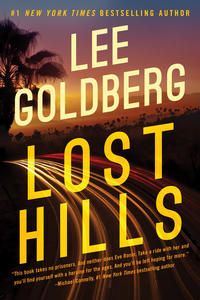
Books that almost made the list (links to my original posts): Flight of the Fox by Gray Basnight, Who Killed the Fonz? by James Boice, Killer Thriller by Lee Goldberg, Going Dark/Going Rogue by Niel Lancaster (can’t pick between the two), You Die Next by Stephanie Marland, The Killing State by Judith O’Reilly, Dead is Beautiful by Jo Perry, Standing in Another Man’s Grave by Ian Rankin, Paper Son by S. J. Rozan, and How To Kill Friends And Implicate People by Jay Stringer.

My Favorite Non-Crime Fiction of 2019

Like last year, while trying to come up with a Top 10 this year, I ran into a small problem (at least for me). Crime/Thriller/Mystery novels made up approximately half of the novels I read this year and therefore dominated the candidates. So, I decided to split them into 2 lists—one for Crime Fiction and one for Everything Else. Not the catchiest title, I grant you, but you get what you pay for.

These are my favorites, the things that have stuck with me in a way others haven’t—not necessarily the best things I read (but there’s a good deal of overlap, too). But these ten entertained me or grabbed me emotionally unlike the rest.

Anyway…I say this every year, but . . . Most people do this in mid-December or so, but a few years ago (before this blog), the best novel I read that year was also the last. Ever since then, I just can’t pull the trigger until January 1. Also, none of these are re-reads, I can’t have everyone losing to books that I’ve loved for 2 decades that I happened to have read this year.

Enough blather…on to the list.

(in alphabetical order by author)

A Man Called OveA Man Called Ove

by Fredrik Backman, Henning Koch (Translator)

My original post
I’ve been telling myself every year since 2016 that I was going to read all of Backman’s novels after falling in love with his My Grandmother Asked Me to Tell You She’s Sorry. The closest I got was last year when I read his first novel, A Man Called Ove (and nothing else). It’s enough to make me resolve to read more of them, and soon. The story of an old, grumpy widower befriending (against his will, I should stress) a pretty diverse group of his neighbors. It’s more than that thumbnail, but I’m trying to be brief. The story was fairly predictable, but there’s something about the way that Backman put it together that makes it perfect. And even the things you see coming will get you misty (if not elicit actual tears).

5 Stars

Dark AgeDark Age

by Pierce Brown

My original post
When I started reading this, I was figuring that Pierce Brown’s Red Rising Saga was on the downward trend. Boy, was I wrong. Dark Age showed me that time after time after time after time . . . Entertaining, occasionally amusing, stress-inducing, heart-wrenching, flat-out captivating. It was brutal and beautiful and I can’t believe I doubted Brown for a minute.

5 Stars

Here and Now and ThenHere and Now and Then

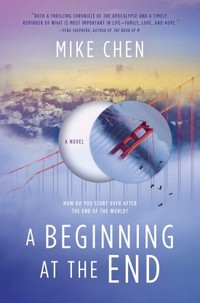
by Mike Chen

My original post
One of the best Time Travel stories I’ve ever read, but it’s so much more—it’s about fatherhood, it’s about love, it’s about friendship. Heart, soul, laughs, and heartbreak—I don’t know what else you want out of a time travel story. Or any story, really. Characters you can like (even when they do things you don’t like), characters you want to know better, characters you want to hang out with after the story (or during it, just not during the major plot point times), and a great plotline.

4 1/2 Stars

Seraphina's LamentSeraphina’s Lament

by Sarah Chorn

My original post
Chorn’s prose is as beautiful as her world is dark and disturbing. This Fantasy depicts a culture’s collapse and promises the rebirth of a world, but getting there is rough. Time and time again while reading this book, I was struck by how unique, how unusual this experience was. As different as fantasy novels tend to be from each other, by and large, most of them feel the same as you read it (I guess that’s true of all genres). But I kept coming back to how unusual this feels compared to other fantasies I’ve read. The experience of reading Seraphina’s Lament isn’t something I’ll forget any time soon.

4 1/2 Stars

No Country for Old GnomesNo Country for Old Gnomes

by Delilah S. Dawson and Kevin Hearne

My original post
Having established their off-kilter world, strong voice, and approach to the stories of Pell, Dawson and Hearne have come back to play in it. The result is superior in every way that I can think of. I lost track of how many times I said to myself while reading something along the lines of, “how did they improve things this much?” These books are noted (as I’ve focused on) for their comedy—but they’re about a lot more than comedy. The battle scenes are exciting. The emotional themes and reactions are genuine and unforced. And tragedy hits hard. It’s easy to forget in the middle of inspiring moments or humorous aftermaths of battle that these kind of novels involve death and other forms of loss—and when you do forget, you are open to getting your heart punched.

(but mostly you laugh)

4 1/2 Stars

Twenty-one Truths About LoveTwenty-one Truths About Love

by Matthew Dicks

My original post
It’s an unconventionally told story about a man figuring out how to be a businessman, husband, and father in some extreme circumstances. The lists are the star of the show, but it’s the heart behind them that made this novel a winner.

5 Stars

State of the UnionState of the Union: A Marriage in Ten Parts

by Nick Hornby

My original post
This series of brief conversations held between a married couple just before their marriage counseling sessions. At the end of the day, this is exactly what you want from a Nick Hornby book (except the length—I wanted more, always): funny, heartfelt, charming, (seemingly) effortless, and makes you feel a wide range of emotions without feeling manipulated. I loved it, I think you will, too.

4 1/2 Stars

The SwallowsThe Swallows

by Lisa Lutz

My original post
This is not my favorite Lutz novel, but I think it’s her best. It has a very different kind of humor than we got in The Spellman Files, but it’s probably as funny as Lutz has been since the third book in that series—but deadly serious, nonetheless. Lutz puts on a clinic for naturally shifting tone and using that to highlight the important stories she’s telling. From the funny and dark beginning to the perfect and bitingly ominous last three paragraphs The Swallows is a winner. Timely and appropriate, but using tropes and themes that are familiar to readers everywhere, Lutz has given us a thrilling novel for our day—provocative, entertaining, and haunting. This is one of those books that probably hews really close to things that could or have happened and you’re better off hoping are fictional.

5 Stars

PostgraduatePostgraduate

by Ian Shane

My original post
This has the general feel of Hornby, Tropper, Norman, Weiner, Russo (in his lighter moments), Perrotta, etc. The writing is engaging, catchy, welcoming. Shane writes in a way that you like reading his prose—no matter what’s happening. It’s pleasant and charming with moments of not-quite-brilliance, but close enough. Shane’s style doesn’t draw attention to itself, if anything, it deflects it. It’s not flashy, but it’s good. The protagonist feels like an old friend, the world is comfortable and relaxing to be in (I should stress about 87.3 percent of what I know about radio comes from this book, so it’s not that). This belongs in the same discussion with the best of Hornby and Tropper—it’s exactly the kind of thing I hope to read when I’m not reading a “genre” novel (I hate that phrase, but I don’t know what else to put there).

4 1/2 Stars

The Bookish Life of Nina HillThe Bookish Life of Nina Hill

by Abbi Waxman

My original post
This is a novel filled with readers, book nerds and the people who like (and love) them. There’s a nice story of a woman learning to overcome her anxieties to embrace new people in her life and heart with a sweet love story tagged on to it. Your mileage may vary, obviously, but I can’t imagine a world where anyone who reads my blog not enjoying this novel and protagonist. It’s charming, witty, funny, touching, heart-string-tugging, and generally entertaining. This is the only book on this particular list that I know would’ve found a place on a top ten that included Crime Novels as well, few things made me as happy in 2019 as this book did for a few hours (and in fleeting moments since then as I reflect on it).

5 Stars

Books that almost made the list (links to my original posts): Not Famous by Matthew Hanover, Circle of the Moon by Faith Hunter, Maxine Unleashes Doomsday by Nick Kolakowski, In an Absent Dream by Seanan McGuire, The Rosie Result by Graeme Simsion, and Lingering by Melissa Simonson

Look Alive Twenty-Five by Janet Evanovich: A local rock star with ambition, a shoplifter, and a mysterious deli fill Stephanie Plum’s 25th novel.

Look Alive Twenty-Five

Look Alive Twenty-Five

by Janet Evanovich
Series: Stephanie Plum, #25

Mass Market Paperback, 306 pg.
G.P. Putnam’s Sons, 2019

Read: December 25, 2019


Someone that Vincent Plum Bail Bonds had put up the bail for skipped town, and he’d put up his deli as collateral. Vincent’s father-in-law (the owner of the Bail Bonds) has decided he wants to diversify, so he’s hanging onto it. The catch is, the last several managers have disappeared while working. So Vinnie’s decided that 1. Stephanie is the new manager; 2. She needs to find out what’s going on to get the other manager’s kidnapped/killed/whatever; 3. She can take care of her bond enforcement job during the off hours.

That’s pretty much all you need to know. Stephanie’s running a strange little deli with Lulu as the assistant manager/sandwich guru. There are three other employees there who really know what they’re doing (mostly doing drugs while toiling away at a minimum wage job). Hijinks ensue—her car is stolen, she tracks down a couple of skips, she looks into the disappearances (with help from Joe Morelli and Ranger), and things get weird at the deli (particularly due to Lulu, who becomes a social media sensation of the moment).

I must say that Stephanie seems more competent at this gig than a lot of the other jobs she’s held over the course of this series—either in an undercover assignment or because she was trying to do something other than bond enforcement. If it wasn’t for the distraction of the investigation (and Lulu), she probably could’ve made a decent go of it and changed the series for good. It was pleasant to see her not horrible at something.

We get a little bit of another of Stephanie’s supernatural acquaintances, Gerwulf Grimoire (Wulf), here, but in such a small amount that I’m really not sure why Evanovich bothered. That said, if she was determined to use Wulf, this is precisely as much as she should.

I still don’t get what Stephanie sees in Joe, or what Ranger sees in Stephanie, or why Joe or Ranger let this stupid triangle continue. But I’m at peace with that—I’ll never get it, and Evanovich will never change it, why fight it?

If this had been part of any other story, I’d say the solution stretches credulity too far. But as it’s a Plum novel, I really don’t think I can. Honestly, it was only as I was gathering wool a couple of days later that I gave it any thought.

One last thing: I’d read the blurb for Twisted Twenty-Six a few weeks earlier, and was looking forward to reading it more than I have since the mid-teens (I’m guessing). So, it turns out that I was already primed for the near cliff-hanger last couple of pages. I don’t feel too bad saying that because it really doesn’t have much to do with this novel (although events in it do tie-in), but it’s something I have to talk about because I don’t remember Evanovich doing this in the previous twenty-four novels.* Evanovich doing anything new at this point is something to note and celebrate.

* Feel free to correct me in the comments.

This wasn’t anything special, but there wasn’t anything annoying about it, either. Which sets it apart from the last handful. Evanovich ticked all the boxes she needed to; got Stephanie into a new situation and had her handle it in a non-disastrous way; and capped the book off with something new. I can’t imagine Evanovich will return to the comedic heights of the early series—and I imagine even less that she feels any compulsion to do so. I just hope for a reliable level of moderate entertainment, and that’s what she delivered. It’s a decent time, but if you’re new to Plum—go back to One for the Money and immerse yourself in the first dozen or so of these before taking the plunge into the higher numbers.


3 Stars

2019 Cloak & Dagger Challenge

Why Book Bloggers Blog… #Hug/FistBumpABookBloggerToday #SupportYourLocalBookNerd

“There’s a bookstore here somewhere,” Lula said. “I’ve never been in it, but I saw it advertised. Maybe she would like a book.”

“She has four kids,” I said. “She hasn’t got time to read.”

“That’s a shame,” Lula said. “Everyone should read.”

“Do you read?”

“No. But I think about it sometimes. Problem is, I go to a bookstore and there’s so many books I get confused. So, I get coffee. I know what I’m doing when I order a coffee.”

—Janet Evanovich
from Look Alive Twenty-Five

Hacked by Duncan MacMaster: A Smart, Fun Sequel that Topped the One that Went Before

Hacked

Hacked

by Duncan MacMaster
Series: Jake Mooney, #2

Paperback, 258 pg.
Fahrenheit Press, 2019

Read: December 10-11, 2019

Grab a copy from your local indie bookstore!

“You’re a very different kind of man Jake Mooney,” she said. “It’s almost like you belong here, but don’t belong here.”

“How is that?”

“Your life is like a movie,” she said, “and I think the last thing you want is to live your life like that.” …

“This is my second go-round for this sort of thing,” I said, “and the problem with sequels is that they always have to top the one that went before them.”

I remember really enjoying Hack, our introduction to Jake Mooney. But, I didn’t remember exactly why I did (I guess I could’ve read my post about it, but that sounds too much like research). It took almost no time at all to remember once I dipped into this Hacked (and many of the details about Hack came back to me straight away, too). Hack had a strong voice, fun characters, a clever mystery, with a satisfying conclusion to wrap things up. Hacked gives us more of all that.

For those of you who haven’t met Jake Moody, he’s a former journalist turned ghostwriter. Two years before this novel, he rose to fame by solving multiple homicides. He then finished ghostwriting the autobiography of one of the murder victims. He then writes his own account of what transpired (see Hack for details), as well as a fantasy novel. Now he’s been talked into coming to LA to sell the movie rights to any/all of his books.

Before his days of ghostwriting, Jake lived in LA and still has plenty of friends there and touches base with a couple of them. One of the things everyone is talking about there is the hacking of a movie company and the release of private date from them—supposedly, this is a North Korean retaliation for the portrayal of Kim Jong Un in one of that studio’s movies. A legendary agent who Jake knew years ago inadvertently puts Jake in the middle of the investigation. Not long after that, a P.I. friend of his asks him to consult on the same topic.

When Jake arrives at his friend’s home, however, he finds his friend brutally murdered. The assumption has to be that the people behind the hack are the people who killed his friend. So while he really is content to leave the investigation into the hack to the proper authorities, seeing his friend’s body sets Jake inexorably into finding out who committed the murder (and the hack while he’s at it).

Jake’s assisted in this hunt by his agent friend, his new agent, an accountant turned security guard, a former FBI agent, a ride-share driver who’s always wanted to be up to escapades like this, and an attractive studio exec. Help comes from other directions, too, but I’m not going to ruin the surprise for you.

It’s not long before someone tries to kill Jake, he’s kidnapped more than once, assaulted, and . . . you know what? You wouldn’t believe me if I listed all that happens to this poor writer (also, why ruin the surprise?)—I couldn’t help imagining MacMaster asking himself, “What else can I do to Jake? A tiger attack? Nah, not sure how to get him in the cage, but I do know how to ….”

The LAPD is eager to pin all of the death and destruction on Jake, but the more they press him, the more adamant he becomes that he won’t leave. Given the strong cloud of suspicion that North Korea is behind the hack, and presumably the murder of his friend, the FBI is involved, too. They’re less inclined to suspect Jake of having anything to do with the murder, but they’d like him away from the case.

There are more than the requisite number of twists and turns to this case, none of them feels forced or gratuitous. And even when you’re faster at putting the pieces together than Jake is, you should probably take a beat before criticizing him, because you’re probably not as right as you think you are.

The tone is what separates this from similar mysteries. This is not a comedy —there’s a brutal murder, including signs of torture to start things off. There are threats of violence, actual violence, and more deaths to come. But the way that MacMaster tells it makes it become one of the funniest and most enjoyable reads of the year. Think Marshall Karp’s Lomax and Biggs Mysteries for tone. That’s probably not the most helpful comparison, come to think of it, because I’m not sure how many people are familiar with them (too few for sure). Okay, think of this as a Shane Black story—just a novel instead of a script, and there’s no tie to Christmas. MacMaster’s Kirby Baxter books are more overtly comical than his Jake Mooney books, but both are just flat-out entertaining and laugh-filled.

Typically, in books/TV/movies, Hollywood Agents are not depicted sympathetically. Which is probably a bit of an understatement, really. But Jake’s old friend and new agent are both depicted as decent people that he can rely on. That’s not really a plus or a minus when it comes to evaluating, but it’s so strange that I felt compelled to mention it. I can’t remember another fictional Agent who wasn’t some sort of duplicitous, manipulative, weasel.

The story, Jake and the other characters, the fun had a Hollywood’s expense, the twists, etc. would’ve been good enough to make me rave. But there’s a Chinese gentleman that plays a big role in the novel—I don’t want to say much about him, because you just have to meet him yourself. He pops up repeatedly throughout the novel, yet we really don’t spend that much time with him altogether. But he steals every scene he’s in. He’s one of my favorite new characters of 2019. If there’s a Hacked Again or Hack Harder or whatever, I hope MacMaster can come up with an excuse to use him again.

I just had so much fun with this one (a common theme when it comes to MacMaster)—I can’t think of a single reason why someone shouldn’t read this (you don’t have to read Hack first, by the way). Jake was right in what he said before, the problem with sequels is that they have to top the one that went before. Hacked easily does that. It’s smartly-written, cleverly-plotted and just fun to read. Go run and grab it!


4 1/2 Stars

LetsReadIndie Reading Challenge2019 Cloak & Dagger Challenge

This post contains an affiliate link. If you purchase from it, I will get a small commission at no additional cost to you. As always, opinions are my own.

Blue Moon by Lee Child: A Very Timely Novel Puts Reacher in One of the Most Dangerous Positions He’s Been In

Blue Moon

Blue Moon

by Lee Child
Series: Jack Reacher, #24

Hardcover, 356 pg.
Delacorte Press, 2019

Read: December 2-3, 2019

Grab a copy from your local indie bookstore!

“We should be magnanimous in victory. Someone said that.”

“Full disclosure,” Reacher said. “I told you before. I’m a certain kind of person. Is the guy in the trunk still breathing?”

“I don’t know,” Abby said.

“But there’s a possibility.”

“Yes, there’s a possibility.”

“That’s me being magnanimous in victory. Normally I kill them, kill their families, and piss on their ancestors’ graves.”

“I never know when you’re kidding me.”

“I guess that’s true.”

“Are you saying you’re not kidding me now?”

“I’m saying in my case magnanimity is in short supply.”

“You’re taking food to an old couple in the middle of the night.”

“That’s a different word than magnanimous.”

“Still a nice gesture.”

“Because one day I could be them. But I’ll never be the guy in the trunk.”

“So it’s purely tribal,” Abby said. “Your kind of people, or the other kind.”

“My kind of people, or the wrong kind.”

“Who’s in your tribe?”

“Almost nobody,” Reacher said. “I live a lonely life.”

Reacher is on a bus bound for somewhere. He sees an older man being targeted for a mugging (both he and the would-be thief have noticed a fat envelope that seems to be holding cash). When the man and his predator get off at some city, Reacher abandons his planned trip to follow along.

Obviously, he foils the mugging, but the older man is injured, so Reacher appoints himself a guardian and assistant until he can get the man home. He learns that this man and his wife are in debt to a Ukrainian loan shark, and it’s not looking good. They got in this state due to some incredibly believable bad luck, and Reacher decides to take it upon himself to get them out of it. Maybe not permanently, but at least for the foreseeable future. He has essentially one week to extricate them from their current predicament, and Reacher is hopefully going to beat that clock and get back on the road.

We’re not told what city this takes place in, it doesn’t matter—it’s a small-to-medium sized city with two competing crime syndicates. One is a Ukranian mob, the other is an Albanian mob. They each control half the city, with a very clear line of demarcation. They’re currently enjoying an uneasy peace, and are nervous about a new police commissioner coming soon—neither group has been able to find a way to manipulate or bribe him and they’re in his sights. Before I forget, I want to say that I love that both groups speak/write in unbroken English—I get why other authors use broken English for these kinds of characters, but it feels less cartoonish this way.

Once Reacher starts doing his thing, a little comedy happens. Reacher is trying to do X. The Ukrainians see the effects and assume the Albanians are doing Y. The Albanians see the effects and assume the Ukrainians are up to Z. The clear messages Reacher is sure he’s sending aren’t being received by anyone. Before long the two factions are on the brink of war—which is the last thing that anyone wants.

While he’s trying to help out this older couple, Reacher befriends a waitress, Abby. Soon, she leads him to some other allies—a couple of musicians (one a former Marine) and a security consultant who used to be a Company Commander in an Armored Division in Europe during the Cold War. There’s some good-natured chest-thumping between the three veterans which helps lighten to tension.

Abby is tough and smart. She reminded me a lot of Patty from Past Tense—she adapts to the dangerous situation she finds herself in pretty well. She’s not crazy about it, she’s pretty freaked out, honestly. But she pulls herself together enough to help Reacher as well as being his conscience occasionally (she’s less willing than he is to leave a trail of bodies in their wake). Like Patty, once things get rolling, Abby starts analyzing her situation and what’s going on with the Ukrainians/Albanians in a very Reacher-esque way.

What makes this one distinctive from others in the series? It feels very ripped-from-the-headlines. Not in the sense that Law & Order based stories on actual events, but in that it addresses a handful of things that are in the news practically every day lately. Sure, Reacher frequently deals with real issues, but this seems the most timely since Gone Tomorrow a decade ago (I could be wrong about that, but that’s the one that jumps to mind without taking time to review the details of each of the 23 previous novels). I don’t think Child could/should keep that up, but doing something so fresh-feeling every now and then would be a great idea.

Also, Reacher seems a bit different—still Reacher, I’m not saying that Child’s changing him, but he’s not quite his usual self. For starters, he seems more inclined to a “kill ’em all” approach to the various criminals (especially later in the novel). Now, this could be because he wants to ensure the safety of this older couple who really can’t defend themselves, so he’s getting the defense in pre-emptively. The other possibility I can think of is that he assumes there’s only one language both organizations will understand.

The other difference is Reacher seems more mortal, at least more aware of his mortality. He tells Mrs. Shevick that he knows he will be beaten one day—but today isn’t that day. He’s also more obviously lonely (not just because of the semi-joking material quoted above). It’s like being that lone wandering warrior is taking its toll on Reacher. We’ve seen this before from time to time, but it seems to be growing lately. I remember reading in Martin’s Reacher Said Nothing that Child had considered retiring the series around The Midnight Line, I can’t help but wonder if this is a sign of that becoming imminent.

A stronger cast of non-“Bad Guy” characters than we’re used to seeing from this series, a winning female lead, some tragic victims, a bunch of ruthless criminals, a lot of bullets flying and Reacher at his toughest. There’s so little to not like here. One of my favorites lately.


4 1/2 Stars

2019 Library Love Challenge2019 Cloak & Dagger Challenge

This post contains an affiliate link. If you purchase from it, I will get a small commission at no additional cost to you. As always, opinions are my own.

Catch-Up Quick Takes: Best. State. Ever.; Live Right and Find Happiness; You Can Date Boys When You’re Forty (Audiobooks) by Dave Barry, Dick Hill

I’ve mentioned before here that I think that Dave Barry is just about the funniest writer around—I used to gobble up his stuff in the newspaper and bookstore as quickly as it came out. I’m not sure what changed, but there are a handful of books by him that I haven’t gotten to yet. Thankfully, my Library had a few of them available to listen to last month. Here are a few thoughts about each of them. Quick reminder: the point of these quick takes post to catch up on my “To Write About” stack—emphasizing pithiness, not thoroughness.

Best. State. EverBest. State. Ever.: A Florida Man Defends His Homeland

by Dave Barry, Dick Hill (Narrator)
Unabridged Audiobook, 4 hrs., and 47 mins.
Recorded Books, 2016
Read: November 21-22, 2019

(the official blurb)
The best parts of this one for me were the introduction (explaining some of the phenomena behind the widespread mockery of Florida) and the chapter giving a history of the state. I chuckled a lot at both of those.

When he moved onto looking at various tourist attractions and or locations in the state, it lost a little bit for me. There was something in each chapter to make me grinmaybe even laugh. But not as much as I’m used to from Barry. The Key West chapter came close, but even that stumbled. I do think if I’d ever been in the state to get a feel for some of these places it might have been better.

The biggest revelation for me from this is just how funny Dick Hill can be. No offense intended, but the voice of Jack Reacher and other thrillers is just not what you think of when it comes to silliness. But man, he was really, really good at this.
3 Stars


Live Right and Find HappinessLive Right and Find Happiness (Although Beer is Much Faster): Life Lessons and Other Ravings from Dave Barry

by Dave Barry
Unabridged Audiobook, 3 hrs., and 39 mins.
Recorded Books, 2015
Read: November 26, 2019

(the official blurb)
This is more like it: pieces of wisdom (and other things) Barry’s passing on to his daughter and grandson. The driving tips for his daughter were fantastic (not just because my daughter is in the process of getting her license right now). The letter to his infant grandson was funny and touching.

Barry also looks at his parents’ generation (the Mad Men generation) and their ability to party, Google Glass, and a trip to Brazil for the World Cup (not being a sports guy, I didn’t think that last one would do much for me, but it was really funny). Oh, yeah, then he talks in-depth about a trip that he and Ridley Pearson took to Russia to talk about writing.

As much as I liked Dick Hill, Barry’s a better narrator of his own stuff.
3.5 Stars


You Can Date Boys When You're FortyYou Can Date Boys When You’re Forty: Dave Barry on Parenting and Other Topics He Knows Very Little About

by Dave Barry
Unabridged Audiobook, 3 hrs., and 22 mins.
Penguin Audio, 2014
Read: November 8, 2019

(the official blurb)
This one ticked all the right boxes for methe stuff about his daughter dating was the kind of thing that fathers everywhere can relate to and second; taking his daughter to a Bieber concert was even better. It was probably not a good idea for me to listen to his chapter about Fifty Shades of Grey at work, thankfully no one asked me why I was laughing (I did not want to have to explain that). Oh, and his funeral instructions were priceless.

Something I wasn’t prepared for was a long piece about a trip his family took to Israel. Listening to Barry juggle travel humor (searching for A/C and Wi-Fi in the midst of historic/cultural wonders), sensitive political discussions, and even getting close to the spiritual was fantastic. It’s not the kind of writing that you often see from Barry, and it’s easy to forget he can be really effective doing things that aren’t just verbal slapstick.

This is probably one of my favorite collections from someone I’ve been reading for decades. This is just great.
4 Stars

2019 Library Love ChallengeHumor Reading Challenge 2019

Fletch, Too (Audiobook) by Gregory McDonald, Dan John Miller: Fletch’s Ski Trip to Nairobi

Fletch, Too

Fletch, Too

Gregory McDonald, Dan John Miller (Narrator)
Series: Fletch, #9 (#2 Chronologically)

Unabridged Audiobook, 5 hrs., and 43 mins.
Blackstone Audio, 2019

Read: August 21-22, 2019


Up to this point, we know practically nothing about Fletch’s personal life—he’s been married (and divorced) twice and engaged once or twice in addition to that. He’s carried on an on-again/off-again relationship with Moxie Mooney. Served with valor in the Army, made a couple of good friends there. That’s pretty much it—most of what we know about Fletch is about his professional life—and then the amateur sleuthing/investigative journalism he’s done since he didn’t kill Alan Stanwyck. We know next to nothing about his family, his childhood, and so on.

In Fletch, Too McDonald decides to fix that. Picking up right after Fletch Won (like a day or two after) with his first wedding, the revelations start right away. We meet Fletch’s mother, a mystery novelist of some renown (but perhaps not of the highest caliber). After the ceremony, he’s handed a letter from someone claiming to be his father. Fletch had been told that his father had “died in childbirth,” so he’s taken aback by this. The letter describes (briefly) why his father had not been around for his life and that he’s “mildly curious” about his son. If Fletch is at least “mildly curious” about his father, he’s invited to visit him in Nairobi for their honeymoon, tickets are enclosed.

More than mildly curious, and driven to get some answers (or at least a good story), the two hop that plane (bringing their luggage and skis packed for a trip to Colorado). At this point, it stops being a standard Fletch novel and becomes something more akin to Carioca, Fletch. Before they leave the airport, Fletch witnesses a murder (unbeknownst to the murderer).

Fletch makes a couple of attempts to investigate the murder, but due to circumstances, a language barrier, police not given to outsiders’ help, and the lack of anything to go off of, he doesn’t get far. In fact, minor spoiler, the only reason Fletch “solves” the murder is that he recognizes the killer toward the end of the book. Which makes for a fairly unsatisfying “mystery” novel.

Where this book gets interesting is as Fletch and his wife meet some locals, explore the city, and meet a colleague of his father’s. We’re treated to a look at the culture, legal system (or lack thereof), history and some speculative Archeology about the area. It’s interesting—but it feels more like McDonald had an interesting vacation, read some good books on the region and/or had some great conversations with people from Nairobi and wanted to share what he’d learned (again, see, Carioca, Fletch).

I think I appreciated this more than the other non-standard Fletch because 1. I came in with low expectations (remembering how little I liked it) and 2. the supporting characters are more interesting.

At this point, I assume (and am supported by experience) that Miller will do a capable job with the Narration and he helped me enjoy the experience.

This is one for completists, for those who are curious about Fletch’s backstory, or for those who have a hankering for learning about Kenya. It’s not a bad book, it’s just not as good as it should be.


3 Stars
2019 Cloak & Dagger Challenge

The Hero by Lee Child: Lee Child Traces the Development and Use of “The Hero”

The Hero

The Hero

by Lee Child

Hardcover, 77 pg.
TLS Books, 2019

Read: November 28, 2019

Grab a copy from your local indie bookstore!

There are only two real people in fiction—the storyteller and the listener. The story proceeds based on the teller’s aims and the listener’s needs. If the listener needs light entertainment, and the teller aims to be loved, then light entertainment is what the listener will get. But if the listener needs reassurance of some kind, or consolation, and the teller aims to better equip her family for future trials, then the story will likely be suspenseful in nature, replete with dangers and perils, over which a memorable character will eventually triumph in a decisive manner, such that the listener finishes the tale with a tight and determined smile, with moist eyes fixed on the distant horizon.

Child’s first Non-Fiction look is an essay exploring the concept of the hero through human history. On the one hand, I had no idea what to expect from Child doing Non-Fiction. But if anyone has something interesting to say about the idea of Hero, it’s gotta be Child, right?

I’m glad I came into it with almost zero expectations because I wouldn’t have guessed this.

Child starts off with a brief discussion of the history of opium, right up to the point where heroin needed to be named.

Then he treats us to a theory of the concept of hero, using a combination of evolutionary theory and speculation, history, and a little more speculation. He begins this look with Neanderthals, so there’s a lot of ground to speed through in a work so brief. Finally, on page 60, we come full circle and get back to heroin before getting to the good stuff.

Child has three definitions of “Hero,” all with separate uses. He then discusses them for a few pages. It’s these last 17 pages or so that we get to the meat of the subject—you could think of the first part of the book as a prolonged introduction (and you’d be a little right).

We get a brief look at The Iliad and The Odessey and their heroes, and even briefer assertion that Dr. No and a work by Ovid about Theseus are the same. I’m not that familiar with Ovid, but given the way we recycle stories now. It’s not too difficult to think that our narrative culture is the only one to be that redundant.

The best part of the book is the several paragraphs looking at the character of Robin Hood. Child looks at how the Outlaw was originally depicted, and then how that grows and changes through time—as well as how the story of Robin Hood added characters and perspectives. By this point, I was starting to hope that the book had just been a few examples like this.

Finally, he talks a little bit about his own understanding and application of the concept and why our contemporary narratives need Heroes.

What is the purpose of fiction? I think it can be summed up in a simple phrase: To give people what they don’t get in real life.

While I did think this was an interesting little book, with a couple of great points and insights. But I’m really looking forward to the next Reacher book—because unlike this dose of real life, it’ll be tightly organized, compelling and a joy to read.

Still, I’d recommend the book—it’s intriguing, thought-provoking, and gives a good look at the way Child thinks. Serious fans would appreciate this for the insight into Child. People interested in the development of Hero might be a bit disappointed overall but will appreciate the last part of the book (maybe I’m the only one who isn’t grabbed by the buildup).


3 Stars

This post contains an affiliate link. If you purchase from it, I will get a small commission at no additional cost to you. As always, opinions are my own.

Angel Eyes by Ace Atkins: Spenser’s 47th Novel Finds him in L.A. and Feels as Fresh as Ever

Angel Eyes

Robert B. Parker’s Angel Eyes

by Ace Atkins
Series: Spenser, #7

Hardcover, 305 pg.
G.P. Putnam’s Sons, 2019

Read: November 20-21, 2019

In the passing light, I noticed the welts on her wrists, chapped and bloody.

She’d been tied up for a long time.

Chollo noticed them, too.

“Should we kill him?” he said.

“Too easy.”

“You will never change, amigo,” he said. When will you learn? Some people live without rules. And sometimes killing a bad man is the only way.”

“I have other ideas for [him].”

Chollo nodded. “And I am listening”

The day that Hawk, Chollo (and a few others) stop trying to convince Spenser to just kill the bad guy and be done with it—or the day that he listens to them—is the day we’ll all know the series has run its course. Which will hopefully be around the time my future grandchildren start reading the series.

But far before we get to that point, we should probably start at the beginning.

A friend of Susan’s is worried about her daughter, who lives in L.A. and has gone missing. She’s beside herself, so Spenser flies out to find her with Zebulon Sixkill’s help. The book opens with Spenser and Z being let into Gabby’s apartment by her ex-boyfriend and still-agent, Eric Collinson. Collinson is typically the kind of twerp that Spenser would enjoy messing with, but he’s on his best behavior (probably to keep Collinson talking).

Collinson keeps insisting there’s nothing to worry about, that Gabby’s probably just off on a quick Mexican vacation or something. Still, he surreptitiously leaves her laptop behind for Spenser to “find.” Between what Z’s tech-wizard friend finds on the laptop, what Z and Spenser get from the LAPD (in the person of our old acquaintance Samuelson) and Gabby friends/former boss, there are two avenues of investigation for them to dive into. A powerful studio executive and a multi-level personal development group that’s somewhere in-between Scientology and NXIVM (far closer to the latter). But before they can dig too far into things, some heavies representing a third party show up and the lead starts flying.

And I ate it all up.

It’s dangerous enough that Z isn’t enough to help Spenser out. Chollo (now a small-businessman), Bobby Horse and Mr. del Rio put in appearances and render assistance in varying amounts.

I could easily keep going along these lines for 6-10 more paragraphs, but I’d better show some restraint and leave things there and move onto other parts of the book.

In addition to the hunt for Gabby, we get a little bit of Spenser’s jaded view of the entertainment industry (largely in the same vein as we saw in A Savage Place and Stardust, just up-to-date); a lot of references to movies and stars that are so irrelevant to contemporary Hollywood that most of the characters don’t get them; and a very jaded (but likely accurate) look at “The Industry” post-#MeToo.

Also, we get a hint or two at what Z’s been up to since he left Boston and Atkins has completely left the possibility open for someone to start a Sixkill series, already populated with a cast of characters to carry a book or two. I’m ready to buy at least 5 of them in hardcover right now.

The last little things that I’ll mention are that we get a nice update on Mattie Sullivan, but we need to see more of her soon. Plus, there’s a cameo that filled my heart with joy here—that’s all I’m going to say about it.

Atkins is in fine form, which comes as no surprise to anyone. I didn’t spend too much time comparing him to Parker as I read it, but you can’t help but do it. It’s a fast, breezy style, but there are depths to be plumbed (unlike several of Parker’s latter Spensers). It’s just a pleasure to bask in the language, dialogue, and characters.

At this point, when it comes to an Atkins Spenser novel, it’s really just a question of how much I’m going to like it, it’d be impossible (I wager) for him to deliver something that I won’t like. I liked this one plenty. A fine story, a setting the character hasn’t been in for a while, a chance to catch up with old friends . . . Angel Eyes is as satisfying as you could ask for. Could you start with it? Sure. You wouldn’t get all of the references, but none of them would impact your appreciation of the story. The only danger in starting with Angel Eyes is that you’d probably feel compelled to go back and read the previous 46. Which actually sounds like a lot of fun to me.

I hemmed and hawed over the stars on this one. If I had a 4 1/4 graphic, I probably would’ve employed it. My initial impulse was 4 Stars, but when I stop and think about: there was one page where I laughed out loud (at least a chuckle) multiple times (I really want to talk about it in detail, but don’t want to ruin anything); the way Atkins pulled in every L.A. reference possible (plus some other Spenser-canon references) without making it feel like checking off a list; and the feeling of dread and worry Atkins was able to elicit (which really doesn’t happen all that often in long-running series)…I’ve gotta give it that extra bump (and now that I’ve actually written that list, I’m thinking of bumping it up another).


4 1/2 Stars

2019 Cloak & Dagger Challenge

Page 50 of 123

Powered by WordPress & Theme by Anders Norén