Category: Authors Page 64 of 123

Wrecked by Joe Ide: Isaiah and Dodson Face Their Most Dangerous Foes Yet

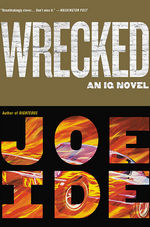
WreckedWrecked

by Joe Ide
Series: IQ, #3

Hardcover, 340 pg.
Mulholland Books, 2018
Read: October 19 – 22, 2018

At the end of Righteous, Isaiah meets a girl — I don’t remember much about it, but there’s something about her that clearly makes an impression on IQ — and his dog. It was enough to give us a little hope for our intrepid hero after everything he’d just gone through as we wrapped up the book. This book starts with the three of them bumping into each other again — this time IQ definitely is attracted to her and his dog and the woman clearly enjoy each other’s company. Which is great for them, but you feel a little bad for Isaiah.

Before long, Grace comes to Isaiah with a case. Her mother disappeared a decade ago — under a cloud, it should be added — and Grace saw her on the street near her home. Can Isaiah find her? She’s a painter trying to get a start and really can’t afford much — but gives him a painting as payment.

The catch is, Isaiah and Dodson have recently become partners and Dodson is determined to make Isaiah’s business legitimate. They’ve got a web presence, a Facebook page, and a strict policy on minimum fees. These fees have to be money. No lawn care services, cooking, et cetera. Dodson has a wife and child to provide for and he is inflexible on this point. Isaiah makes an exception and ignores Dodson’s complaints, once Dodson figures out Isaiah’s motivation to take the case, he acquiesces — like a good friend would.

What makes this case complicated is that Sarah, Grace’s mom, is trying to blackmail some very dangerous people. It takes a long time for us to get all the details behind the blackmailing (it’s absolutely worth the wait, and Ide does a great job revealing things to us in drips), but what’s important isn’t the why — it’s the reaction to the blackmail. Isaiah, Dodson and their clients have been in dangerous and tough spots before — but I promise you, those pale in comparison to this. These people bring a level of danger, a level of callousness, a level of professionalism, that will demand more from Isaiah than he’s used to — and he’ll have to find new ways to approach things to survive.

Meanwhile, there’s another blackmail story afoot. One of the darkest episodes of the partners’ (and Deronda’s) past comes back to bite them — a criminal act that they’ve gotten away with, primarily because no one knew they got away with anything. Somehow, word has gotten out, and someone wants money from them to stop him from going public with what he knows. If the victims of this crime — a couple of notorious drug dealers — find out, it will likely prove fatal. Dodson attempts to take care of this on his own, with a little help from Deronda.

Clearly, the partnership isn’t off to the strongest start.

There is a drink described here — not that anyone you’re supposed to like drinks it — that is possibly the most disgusting thing I’ve read this year, it’s a mix of vodka, Coke, and things that shouldn’t be consumed with each other. There are scenes of physical violence and torture in this book, horrible things really, but it’s Parks Punch that left scars.

Actually, there is something more painful, now that I think of it. Junior, one of the drug dealers that IQ, Dodson, and Deronda stole from before years ago appears frequently. He’s got the right idea — a better vocabulary can be tied to greater success in business and life in general. Sadly, Junior is better at acquiring words than he is using them. Resulting in sentences like:

My domicile has been exfoliated! Excavate the premises!

(when he discovers that his home has been broken into) or

Did you discover anything irrelevant?

(to Isaiah after searching for clues). Say what you will about waterboarding or Parks Punch — for me, those lines hurt (and I gave tame examples).

Well, they make me crack up — but they’re also painful.

The action is taut, the twists don’t stop and you have to hold on tight so the pacing doesn’t throw you from the vehicle in the last few chapters. But not only is this the best suspense that Ide’s given us, we have the some of the best emotional moments and character growth so far in the series. Some real trauma is visited on Isaiah, and it’ll be interesting to see how this impacts him going forward (there’s some indication that ide has something in mind along these lines). Similarly, I don’t think I’ve liked Dodson more than I did in this book and his character keeps growing and maturing — I am eager to see how Ide helps him grow in the future.

Unlike IQ or Righteous, we only have one timeline in Wrecked. This is such an improvement — that worked in IQ seemed a drawback in Righteous — but one timeline allows the reader, the pace and the action to focus on Grace and her case.

I’ve been a fan of Ide’s writing and this series since the moment I finished chapter 2 of IQ, but this book worked for me more than his previous work. I don’t know if it’s because I appreciate the characters and style more — or if it’s that Ide has grown with his experience and is delivering something better, I’m not sure. (my money is on the latter, but you never know) This is a fantastic entry very strong series that everyone should hop on board with (start at the beginning, it’s only 3 books — you have plenty of time to catch up).

—–

5 Stars

2018 Library Love Challenge

Pub Day Repost: Lessons From Lucy by Dave Barry: America’s Funniest Human Tries to Learn a Few New Tricks from an Old Dog

Lessons From LucyLessons From Lucy: The Simple Joys of an Old, Happy Dog

by Dave BarryeARC, 208 pg.
Simon & Schuster, 2018
Read: July 19, 2018

Before I say anything else, Barry has set up an Instagram page (well, probably not him, actually — he states in the book he doesn’t understand Instagram) for his dog, Lucy. You should absolutely check it out and then come back to read what I have to say about the book. Dog Pictures > my blog. Pretty near always.

With that out of the way . . . Dave Barry has been a dog person for most of his life, one of the many reasons I like him. I distinctly, and fondly, remember columns and/or references to Earnest and Zippy (the emergency backup dog) years ago. Those two make a brief appearance in this book, but they aren’t the focus. The focus (if you can’t tell from the title) is his dog, Lucy. At the time of writing, Barry and Lucy are the same age — 70 (or 7 times 10 in her case), which means that both of them have many fewer days ahead of them than behind — which sounds awfully morbid for Dave Barry to talk about, but he does so frequently and purposefully.

As they’re at similar stages in life, Barry notices a huge difference between the two — Lucy is far happier and seemingly better adjusted than he is. So he sets out to try to learn a few lessons about life from her, which he passes on to his readers. Things like Pay Attention to the People You Love; Don’t Let Your Happiness Depend on Things; and Don’t Stop Having Fun. None of these, Barry knows, are original or ground-breaking — they’re pretty much common sense. Yet, they’re the kind of common sense things that he (like many/most humans) doesn’t actually do a great job at.

The result is a mixture of a Self-Help book and a Humor book — humor about himself, his life, as well as dogs. Sometimes the swing between the two genres can be jarring, but that’s pretty rare. For the most part, he moves easily between the two, taking the readers along with him on this ride. I can’t tell you how many times I went from grinning, chuckling or laughing out loud to getting misty-eyed within a couple of pages. It seems that Barry has learned a little bit about writing over the decades.

I’ve loved Barry’s humor longer than either of us would probably care to admit. One of his strengths is finding a way to take an old joke, or at least a joke everyone’s made before — like, say, I dunno, dogs sniffing each other’s hind-quarters — and make it feel fresh and new. More importantly, funny. He’s also able to make jumps from premise to punchline that no one expects. There is, for example, a Hugh Hefner joke where one doesn’t even come close to belonging — and it works perfectly. Even knowing that, you won’t see it coming until you’re snickering at it.

As for the heart-felt material? It works pretty well, too. I don’t think anyone will walk away from this book thinking “Wow! That was insightful. I never would have thought of it on my own!” Nor do I think Barry was trying for it. But, readers will appreciate the reminders to live like Lucy (or their own dog), and the way Barry phrases things might add some freshness to the concept. Which is all anyone can really ask.

I really don’t know if this is Barry’s best — but it’s up there. The ratio of Attempted Joke to Funny Joke is pretty high, I’m not sure if I can think of a higher one in his ouvre. Lessons From Lucy is, without a doubt, his most mature, thoughtful and touching work (that’s a pretty low bar, I realize — a bar he’s worked hard to keep low, too). Couple that with me being a sucker for a Dog Book — even if it is a semi-Self Help book — and I can’t help but give it 5 Stars. This is a winner, no matter what.

—–

5 Stars

Disclaimer: I received this eARC from Simon & Schuster via NetGalley in exchange for this post — which is my honest opinion and pleasure to give — thanks to both for this.

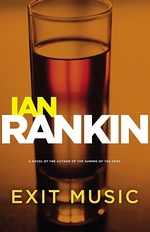
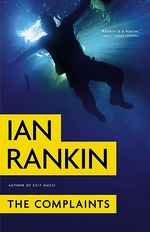
Exit Music by Ian Rankin: Rebus has one more shot at Big Ger before he retires

I got off-track with these books when I took my trip out of state for my son’s transplant (I was due to go to the library to pick this up the day we got the call), and it took me a bit to get back on top of things. I’m so, so glad I was able to return to this world. I missed it.

Exit MusicExit Music

by Ian Rankin
Series: John Rebus, #17

Hardcover, 421 pg.
Little Brown and Company, 2007
Read: October 17 – 18, 2018

Before I get into this, last week my son was playing some EASports game — FIFA something, I think. Anyway, I notice that he’s playing Hiberian, and my first thought is, “Hey, that’s Siobhan’s team.” That’s a sign that I’m probably reading too many Rebus novels, right? Anyway, on with this post…

           “No sign of any abandoned cars in the multistory?”

“Good point, Shiv, I’ll have someone check. Talk to you later.” The phone went dead, and she managed a little smile, hadn’t heard Rebus so fired up in several months. Not for the first time, she wondered what the hell he would do with himself when the work was done.

Answer: bug her, most likely–phone calls daily, wanting to know everything about her caseload.

I think many readers, like DS Clarke, have wondered just what Rebus will do after retirement — which is looming as this book begins. Actually, it’s more than looming — it’s 10 days away. Ten days of Rebus trying to squeeze in any last-second mentoring he can, ten days of him trying to get Clarke invested in cold cases he can’t let go of, ten days of Rebus trying to stay relevant, active . . . ten days of John Rebus trying to remain John Rebus.

John Rebus has no family left, few friends, only a handful of colleagues that trust him, no plans for retirement at all. He’s going to have to come up with something, he knows, but he can’t really contemplate that reality, much less plan for it.

But first, there’s a murder — a man without any identification on him has been found by a few pedestrians out for a late-night walk, apparently beaten to death. A literately-inclined morgue worker recognized him as a Russian exile and poet of note. Plunging Rebus and Clarke (named to lead the investigation, only because of Rebus’ impending retirement *wink*) into an investigation with international implications.

Funnily enough, a contingent of Russian businessmen is in Edinburgh looking for investment opportunities, all of which are welcomed and encouraged by members of Scottish Parliament — especially by those MSPs seeking independence. None of the MSPs have any interest in their Russian friends being hassled by detectives over a pesky little thing by murder. Even if the victim was drinking in the hotel they were staying at shortly before the murder.

But once Di Rebus finds not only a link between the victim and their hotel bar, but a link between the poet and Gerald Cafferty, and links between Cafferty and the Russian delegation? All bets are off. The clock is ticking on his career — and the ticking is getting really loud — but here’s Cafferty with some sort of connection to a murder victim? There’s no way that John Rebus can let this go (not that Siobhan Clarke is that interested in letting this opportunity pass by, either).

The investigation isn’t making too much progress, but maybe is getting far enough, when someone else connected to the case is killed. And the investigation looks like it’s dealing with a web of drugs, prostitution, blackmail, international interests, politics, a large national bank a poet, and Cafferty. Which would be a lot to deal with even without Rebus’ deadline.

While preparing for Rebus’ departure, Clarke takes a uniformed PC under her wing — he has talent and ambition — he was one of the two initial officers at the site of the original murder and wants to be a detective soon. Clarke brings him along with her to many interviews and visits to various places in the investigation, as him run errands and even do some of the grunt work (scouring through hours of audio recordings that may or may not hold relevant information). He’s an interesting character — he adds some emotional weight to some scenes, and comic relief in others.

It’s possible that Rebus is at his most introspective in these pages — he knows his career is finished and that in no time at all he’ll be forgotten by just about everyone. What’s been the point of it all?

           Outside in the car park he unlocked his Saab, but then stood there, hand on the door handle, staring into space. For a while now, he’d known the truth–that it wasn’t so much the underworld you had to fear as the overworld. Maybe that explained why Cafferty had, to all purposes and appearances, gone legit. A few friends in the right places and deals got done, fates decided. Never in his life had Rebus felt like an insider. From time to time he’d tried–during his years in the army and his first few months as a cop. But the less he felt he belonged, the more he came to mistrust the others around him with their games of golf and their “quiet words,” their stitch-ups and handshakes, palm greasing and scratching of backs.

Still, he perseveres, he gets into hot water with his superiors, with Clarke, with government officials, and — of course — Cafferty. In the end, despite the large number of detectives eventually working on the murders, Rebus is the only one to focus on the important facts (it helps that he’s not worried about what happens after the arrest, like everyone else is) and makes the important conclusions so that the cases can be closed in time for him to leave the force. It’s really a nice bit of storytelling by Rankin here, and I’d be very happy reading it even without all the hubbub around Rebus’ retirement. And then Rankin ends it with a jaw-dropping final chapter and a last line that just about floored me.

I’m so glad that I’m discovering these books now — when I know that there’s a future for Rebus (even if I’m not really sure what it is, but there are 5 books to come, at least). It can’t have been easy for Rebus fans to close this book not knowing what Rankin was going to do next.

At the same time, this remains a decent entry-book — like every other book in this series. Sure, you get more of the emotional weight if you’ve been reading about the DI for several books, but Rankin writes them in a way that the weight can be seen regardless.

I think if this were any other Rebus book, I’d rate it 4 stars for the case work, the internal squabbles with the hierarchy and the politics — but when you add in Rebus counting down the last ten days of his career, the hope of this case leading him to one more shot at Cafferty, the reflections on what he’s done and why he’s done it and what it cost . . . essentially, all the intangible things, the parts of a novel that are hard to pin down, much less describe. All that combined with a strong story, some excellent non-Rebus/Clarke/Cafferty character development (not that theirs isn’t strong as usual, but this is a new characters) — and it’s easy. Rebus retires with a 5.

—–

5 Stars

2018 Library Love Challenge

Video Killed the Radio Star by Duncan MacMaster: A Murder Mystery as Fun as The Buggles’ Song

(or the cover by The Presidents of the United States of America, either will work)

Video Killed the Radio StarVideo Killed the Radio Star

by Duncan MacMaster
Series: Kirby Baxter, #2

Kindle Edition, 261 pg.
Fahrenheit Press, 2018
Read: October 15 – 16, 2018

“I fear we will never be mistaken for the Algonquin Round Table.”

“We’ll have to work on our witty repartee,” said Molly. “I plan on taking a course on banter, ripostes, badinage, and persiflage.”

“Even persiflage?”

“Especially persiflage,” said Molly. “There is nothing worse than sub-par persiflage.”

“You might need to get a sub-par persiflage lanced.”

“We’ve hit the nonsense phase of the night earlier than usual.”

“I like nonsense,” said Kirby, “it distracts me.”

Kirby Baxter just wants to live a quiet life out of the spotlight: hanging out with his girlfriend, Molly, when he can; restoring a car with his valet/bodyguard/etc.; and drawing his comics. And now that the excitement about the murder he solved at Omnicon dying down, he’s on the verge of doing that. But the mayor of his hometown knows Kirby, and has no shame in extorting his cooperation with a small problem that he’s having.

You see, one of the town’s major landmarks — an old, abandoned mansion — is in dire need of upkeep and remodeling. And a reality show full of C-List celebrities (maybe D- or E-list) have recently set up shop to do that work. But the city’s having second thoughts and they want Kirby and his über-perception skills to find a reason to shut down production and send them packing to disrupt another locale.

Kirby visits the production, talks to the cast and producers, looks around and comes up with a lot of observations and conclusions — and could cause a lot of inconvenience and embarrassment for everyone involved from those observations — but he can’t find what the mayor wants. That accomplished, he gets back to pursuing his best life now — which lasts just a few hours. Because before he can start to collect from the mayor for the work, one of the celebrities is found dead.

So, it’s back to the mansion for Kirby, this time to act as a consultant ot the local police as they investigate this suspicious death. Which is soon followed by another. And an attack on another cast member. And . . . well, you get the idea.

It’s nice that MacMaster didn’t repeat the whole “Kirby has to win over a skeptical and antagonistic police officer” thing — this time, thanks to most of the force having grown up with him, they all accept his talents and skills — an expect him to deliver.

The cast of the reality show, “Million Dollar Madhouse,” is filled with the typical collection of has-beens, almost-weres, and celebs trying to stage a comeback. Initially, I rolled my eyes at each of them, but the more time I spent with them, the more I appreciated and enjoyed them. In particular, the Kardashian-esque character totally won me over. Like in the previous book, there’s a large cast of characters that MacMaster juggles expertly — there are so many suspects to the murders, as well as witnesses for Kirby and the police to wade through.

Almost every serious suspect has the same defense — they didn’t want the initial victim dead. They wanted him to make a fool out of himself on national TV, possibly seriously injuring himself with a power tool. Some would follow that up with some other form of revenge — but if he’s dead, no one could get the revenge they wanted. It’s not ideal, but it’s an honest defense.

Gustave was slightly less super-human this time out — but he’s still in the Ranger/Hawk/Joe Pike nigh-impossible stratosphere. As much as I like everyone else in this series, it’s arguable that Gustave is MacMaster’s best creation — not just the character, but how MacMaster uses him.

I did miss Mitch. But was glad to see Molly and Kirby talk about him — and even make a joke he wasn’t around to make himself. It’s probably good that he wasn’t around — it’ll mean when we see him again, it’ll be easy to appreciate him without worrying about over exposure.

In the place of Mitch, we have Molly’s assertive and cunning cousin — she runs a gossip-website and wheedles her way into the investigation in order to land a story big enough to put her and her site on the map. Kirby clearly vacillates between finding uses for her and finding her distracting.

Molly and Kirby are cuter together than they were previously, and I could watch the two of them banter any day. It seemed harder to incorporate Molly into the story this time, and hopefully it’s easier for MacMaster in Kirby #3, but as difficult as it was, it was absolutely worth it.

I’m not sure exactly what it is about MacMaster’s writing that works so well for me, but it does. Just before I started writing this, I started to draw some parallels between these Kirby Baxter books and Ellen Raskin’s The Westing Game and The Mysterious Disappearance of Leon (I Mean Noel). I didn’t have time to fully flesh this idea out, but Raskin’s work definitely was formative for me and if the comparison hold up, that could explain a lot. The mix of humor, real emotions and complex mystery is the sweet spot for me and MacMaster consistently hits it. It’s not easy, there are precious few who try — and fewer that succeed. This is the third novel I’ve read by him and it seals the deal, I’ll buy everything he writes as soon as I can without really looking at what the book is about.

I was a little worried that this book wouldn’t live up to A Mint-Conditioned Corpse, and I don’t think it did — but I don’t know what could have for me. I’d enjoyed the other so much that it’s almost impossible to live up to — and the reality show setting didn’t do anything for me — they just leave me cold. The fact I’m rating Video Killed the Radio Star as high as I am is all about how effortlessly charming and entertaining this seems. Effortless always, always, always equals blood, sweat and tears — or at least a lot of work. This must’ve taken a great deal of labor, and it was absolutely worth it. A clever mystery, clever dialogue, and very clever characters in a funny, twisty story. The Kirby Baxter books are must reads, no doubt about it. Give this one a shot — I don’t see how you can’t enjoy it.

—–

4 1/2 Stars

BOOK SPOTLIGHT: Video Killed the Radio Star by Duncan MacMaster

Today I’m very happy welcome the Book Tour for Video Killed the Radio Star by Duncan MacMaster — I’ve been looking forward to this one for months because this is the follow-up to one of my very favorite reads of this year, A Mint-Conditioned Corpse. Along with this spotlight post, I’ll be giving my take on the novel here in a bit.

Book Details:

Book Title: Video Killed the Radio Star by Duncan MacMaster
Publisher: Fahrenheit Press
Release date: July 26, 2018
Format: Paperback/ebook
Length: 261 pages

Book Blurb:

Money in the bank and his dream girl on his arm – life was looking pretty sweet for Kirby Baxter.

Of course it couldn’t last. Where would the fun be in that? This is a sequel after all.

After solving the murder of a movie starlet the previous year, Kirby is doing his best to live down his burgeoning reputation as part-time Interpol agent and amateur sleuth.

Then reality TV comes knocking next door.

Million Dollar Madhouse is a reality TV show where a bunch of washed up celebrities are thrown together in a dilapidated mansion while their attempts to renovate the building are broadcast 24/7 for the viewers delight.

Kirby’s quiet town is thrown into chaos by the arrival of camera crews, remote control video drones and a cast of characters including disgraced actress Victoria Gorham, political shock-jock Bert Wayne and reality TV royalty Kassandra Kassabian.

When one of the cast members turns up dead the local police turn to the only celebrity detective in town for help and draft an unwilling Kirby into their investigation.

The first body is only the beginning of another rip-roaring adventure for Kirby Baxter and with Gustav his loyal driver/valet/bodyguard/gardener/chef/ass-kicker at his side, our hero plunges into the fray with his usual stunning displays of deductive reasoning and sheer bloody luck.

About Duncan MacMaster:

Duncan MacMaster
Duncan MacMaster is a writer, pop-culture blogger, and film school survivor from the untamed wilds of Eastern Canada.

When he’s not concocting plots for Kirby Baxter to unravel he’s posting rants and rages about the business behind pop-culture on his blog.

Duncan MacMaster’s Social Media:

Twitter

Purchase Links for Video Killed the Radio Star:

Fahrenheit Press (this is really where you should buy the books, help FP out!) ~
Amazon UK ~
Amazon US


My thanks to damppebbles blog tours for the invitation to participate in this tour and the materials they provided.

Night and Silence by Seanan McGuire: Toby Daye’s shattered world gets another blow — can she survive?

I was sure I wrote this up already. How did I take over a month to get this up? Something is wrong with me . . .

Night and SilenceNight and Silence

by Seanan McGuire
Series: Toby Daye, #12

Hardcover, 368 pg.
Daw, 2018
Read: September 6 – 10, 2018

“Um, this IS Toby,” sald Quentin. “We’re always about to die. When we’re not about to die, we’re still about to be about to die. She’s like a Rube Goldberg machine whose only job is generating .life-threatening situations.”

What a difference a book makes — at the beginning of The Brightest Fell, Toby was happy, her life was looking good, she was relaxing — and then trouble struck. At the beginning of this book, she’s probably in the worst straits she’s been in since getting out of the fish pond. Toby and her loved ones are still reeling from and dealing with the repercussions of that last novel (“not dealing with” might be more accurate, but why quibble?). Jazz is messed up in ways that are hard to fathom; her relationship with mentor/champion/sponsor, Sylvester, is in shambles; and worst of all, her fiancé is a shattered version of himself, barely able to be in the same room with her.

And then the other shoe drops (at this point, you might be thinking we’re talking about an Imelda Marcos-sized collection, as many of these have dropped): her very human daughter, Gillian has been kidnapped — and her father and step-mother are accusing Toby.

Yeah, kidnapped again. But this time it’s worse (and the last time was no walk in the dark). If anything is going to prove to be the straw that breaks the camel’s back — this could be it. Toby, May, Quentin — and some other allies band together to find the girl before something happens to her that will make the last kidnapping look pedestrian.

Sylvester is around for a lot of this novel — I was afraid he wouldn’t be. Sylvester has long been one of the — maybe the — best part of the series, and to see him in this state? It took so much away from this book. I know that’s the point, and I want to stress I’m not complaining — but man…it sucked. A lot of the emotional beats to this part of the story seemed to repeat themselves — and I wondered if it was a little filler. I decided that as often as Toby was reassuring Tybalt that they could work through things and get him better, McGuire was reassuring the reader that Sylvester could be recovered. I’m not sure it’s the case, but I’m going with that explanation.

This book has the best use of May since . . . well, probably since we met her in this form. Usually, May is too much in the background for my taste. But not in this novel. She’s strong, she’s emotional — she’s a major player in the events of this novel. We need to see her as active as she is here more often.

The debt that Toby keeps incurring to the Luidaeg is getting huge. Aunt or no, she can’t keep going like this forever, and at some point the sea witch is going to collect. This is going to be horrible.

Along the way, we learn a great deal about Toby’s human family — some of which will make the reader’s jaw drop, all of which will make Toby reconsider things — and like so much of what we’ve learned the last couple of books, what we’ve “known” before wasn’t necessarily right.

This isn’t the strongest Toby Daye novel, but an “iffy” Toby novel is still rocking by other series’ standards. This was a strong, satisfying read — as troubling as it was. And the next one isn’t going to be much easier to read — but I know it’ll be worth it. I don’t know that this is the book to jump on the series with, but it might work. But I can assuring long-term readers that this will scratch that itch just fine.

—–

4 Stars

Pub Day Repost: Deck the Hounds by David Rosenfelt: Another Christmas Tale (Tail?) for Andy Carpenter, Another Win for Rosenfelt

Deck the HoundsDeck the Hounds

by David Rosenfelt
Series: Andy Carpenter, #18
eARC, 368 pg.
Minotaur Books, 2018
Read: September 11 – 13, 2018

Andy Carpenter sees a homeless man with a dog on the street, gives the man some money and a gift card for dog food (naturally, the dog gets more than the man, because it’s Andy Carpenter) and has a brief conversation with him. Not long after that, that same man is on the news — he’d been attacked by a stranger and his dog defended him. Which resulted in the dog being put in the pound. Laurie’s filled with pre-Christmas spirit and insists that Andy help out. So he uses his rescue foundation to get custody of the dog and moves the pair into the apartment over his garage.

How heartwarming is this? Clearly, this is fodder for a Christmas/holiday story. But it’s also an Andy Carpenter story, so naturally, after Andy does a newspaper interview about the man — giving his name — he’s arrested for murder. No one was more surprised by this move than Andy’s guest, Don. Not only has Don never heard of the victim, he was unaware that he was wanted by the police. Laurie’s pre-Christmas spirit is still strong, so she talks him into defending the man. It helps that he’s innocent, a dog lover, and an educated, articulate vet with PTSD. The PTSD aspect of the story was told with sensitivity and tact. It didn’t feel tacked on to make the character more sympathetic, but it grounded him in reality and may help to inform some readers about the prices that too many vets are paying.

There is another storyline — seemingly unrelated — running through the novel. Obviously, it’s going to tie into Andy’s case, but it takes a long time for that to happen. This gives the reader multiple opportunities to guess how the two are connected (and multiple opportunities to be wrong. I guessed what was happening in that story pretty easily, and I think most people who read a lot of legal thrillers will. But how it connects to the main story will likely leave most readers as surprised as I was (surprised, and then filled with a strong sense of, “well, naturally, what else could it be?”).

The usual gang is back and in their prime form — Hike is back to his full-time dour self; Ricky is a cute kid; Laurie provides the moral center; Pete is a good cop who continually underestimates Andy’s clients; Sam is a wizard with computers in a way that probably defies reality Marcus is his super-hero best here, and possibly faces his biggest challenge yet (I thoroughly enjoyed this scene). What better way to spend a holiday (or at least a book set around one) than with a bunch of friends like these have become over the years?

Andy spent more time in the courtroom in this book than he has lately — it seemed to me, anyway, I didn’t do a page count. His courtroom antics and cross-examinations are what drew me to the character in the first place, so this is the stuff in these books I most look forward to. Rosenfelt brought his A-game to the courtroom events here, and I loved it. As far as mysteries go, this in one of the most satisfying cases that Rosenfelt has brought us in years.

In my post about the previous “holiday special” I said that I really don’t like it when long-running series do a holiday special — yet, The Twelve Dogs of Christmas and Deck the Hounds have been my favorite installments in the last couple of years in this series. Maybe that means this Grinch’s heart is growing a couple of sizes, or maybe it’s that Rosenfelt is inspired to work harder in these. My guess? It’s the clients — the Andy Carpenter books are at their best when they focus on the client, not on some large conspiracy. These holiday books have the kind of clients you spend time on, that the reader gets invested in — and therefore, Andy gets to shine in defending them.

Whatever the reason, this is a sure-fire win for Andy Carpenter fans. Particularly if you don’t mind a little Christmas celebration (or, if you’re like Laurie, and insist on commemorating the holiday for months).

Disclaimer: I received this eARC from St. Martin’s Press via NetGalley in exchange for this post — thanks to both for this.

—–

4 Stars

A Few Thoughts on Changes (Audiobook) by Jim Butcher, James Marsters

Changes (Audiobook)Changes

by Jim Butcher, James Marsters (Narrator)
Series: The Dresden Files, #12

Unabridged Audiobook, 15 hrs., 28 mins.
Penguin Audio, 2010
Read: October 4 – October 10, 2018

Spoilers to follow. This isn’t one of my typical posts, so my typical rules don’t apply.

After starting a few months back, I’ve pretty much stopped posting about listening to the Dresden Files audiobooks — there are only so many ways to say, “I’d forgotten how much I like this story” and “Wow! James Marsters did a fantastic job!” Not only does it get dull to read, it gets pretty dull to write. (okay, there is a challenge on finding a new way to say it, but . . . I’m too lazy to find that enticing).

But I listened to Changes this week and how can I not talk about that?This is one of my favorite novels ever — Top 10, Deserted Island Must-Have kind of thing — highs, lows (and things lower than lows), laughs, tears, anger, shock, joy. Changes has it all (at least for those who’ve been with Harry for a few books — preferably 11).

Listening to the book was a great way for me to experience it again — if for no other reason, I couldn’t race through it and accidentally skim over things in my haste to get to X or Y plot point.

It’s silly as I’ve read everything that comes after this a couple of times, but seeing all the compromises and deals Harry made as his life is dismantled piece by piece really hit me hard. Yet, Harry makes his choices freely and for the best reason imaginable. All for Maggie. The ramifications of his choices and agreements are wide, huge and so-far we don’t know all of them — and Harry’d do it all again, and there’s not a fan in the world that would blame him.

And Marsters? He gets better and better with every book — and this was fantastic. I loved where Mouse got to “talk” — it was the next best thing to reading it for the first time. And, when he got to those lines? You know the ones I’m talking about:

And I . . .I used the knife.

I saved a child.

I won a war.

God forgive me.

I had to hit pause for a couple of minutes before I could keep going.

Sometimes as a book blogger, you get wrapped up in numbers, ratings, book tours, promotion, and all the other stuff — but every now and then it’s great to remember what it is about fiction that gets you into it in the first place. This treat by Butcher and Marsters did just that for me — I was entertained, I was moved, I was a little inspired.

—–

5 Stars5 Stars

Blood Feud by Mike Lupica: Sunny Randall’s Back in this Promising Reintroduction

Blood FuedRobert B. Parker’s Blood Feud

by Mike Lupica
Series: Sunny Randall, #7
eARC, 352 pg.
G. P. Putnam’s Sons, 2018
Read: October 5 – 9, 2018

I have a complicated relationship with Sunny Randall. Readers of this site have been frequently exposed to my love for Robert B. Parker’s Spenser and Jesse Stone novels, both by Parker and the continuations by Ace Atkins and Reed Farrel Coleman (let’s overlook Michael Brandman’s contributions for the moment). I enjoyed his stand-alone works, and I thought the first couple of Virgil Cole & Everett Hitch books were fun (I haven’t tried the Robert Knott continuations). Which leaves us with Sunny.

Sunny Randall, the story goes, was written to be adapted into a film series for Parker’s chum, Helen Hunt (incidentally, I’ve never been able to envision Helen Hunt in a single Sunny scene, but that’s just me). She’s a private investigator; a former cop; part-time painter (art, not house); emotionally entangled with her ex-husband, but can’t live with him; lives in Boston; and enjoys good food. But she’s totally not a female Spenser — she doesn’t like baseball, see? I’ve read all the books — some multiple times — and while I enjoyed them, I’ve never clicked with Sunny the way I have with others. Including every other Parker protagonist. Most of her novels are mashups and remixes of various Spenser novels, entertaining to see things in a different light — but that’s about it. Frankly, the most I ever liked Sunny was in the three Jesse Stone novels late in Parker’s run (but both characters are better off without each other).

So when it was announced that Mike Lupica would be taking up the reins of this series I was intrigued but not incredibly enthused. I only know Lupica from having bought a few of his books for my sons when they were younger. I didn’t get around to reading any of them, so he’s really a new author for me. And sure, I was a little worried about a YA/MG author taking the reins of a “grown-up” series. But not much — if you can write a novel, you can write a novel, it’s just adjusting your voice and language to be appropriate for the audience.

Enough blather — let’s talk about Blood Feud. Since we saw her last, Sunny has had to move, Richie (her ex-) has gotten another divorce (giving them the chance to date or whatever you want to call it) and has replaced her late dog, Rosie, with another Rosie. Other than that, things are basically where they were after the end of Spare Change 11 years ago (for us, anyway, I’m not sure how long for her, but less time has passed you can bet).

By the way — does anyone other than Robert B. Parker, Spenser and Sunny really do this? Your dog dies, so you go and get another one of the same breed and call him/her the same name? Is this really a thing?

Then one night — Richie is shot. It’s not fatal, but was done in such a way that no one doubts for a moment that it could have been had the assailant wanted it to be. For those who don’t know (or don’t remember), Richie is the son of an Irish mob boss, although he has nothing to do with the family business. He’s given a message for his father — his shooter is coming for him, but wants him to suffer first. This kicks off a race for the shooter — Sunny, the Burke family and the police (led by Sgt. Frank Belson) are vying to be the one to find the shooter.

Before long, the violence spreads to other people the Burkes employ — both property and persons are targeted by this stranger. It’s clear that whoever is doing this has a grudge going back years. So Sunny dives into the Burke family history as much as she can, so she can get an answer before her ex-father-in-law is killed. Not just the family history — but the family’s present, too. As much as the roots of the violence are in the past, Sunny’s convinced what the Burkes are up to now is just as important to the shooter.

Richie’s father, Desmond, isn’t happy about Sunny sticking her nose into things. Not just because of the crimes she might uncover — but he really wants to leave the past in the past. But as long as someone might come take another shot at Richie, Sunny won’t stop. This brings her into contact with several criminal figures in Boston (like Parker-verse constants Tony Marcus and Vinnie Morris) as well as some we’ve only met in Sunny books.

There are a couple of new characters in these pages, but most of them we’ve met before — Lupica is re-establishing this universe and doesn’t have time to bring in many outsiders, but really just reminds us who the players are. Other than the new Rosie, I can’t point at a character and say “that’s different.” He’s done a pretty good job of stepping into Parker’s shoes. Not the pre-Catskill Eagle Parker like Atkins, but the Parker of Sunny Randall books, which is what it should feel like (I wouldn’t have objected to a Coleman-esque true to the character, just told in a different way). I think some of the jokes were overused (her Sox-apathy, for one), but it wasn’t too bad. Lupica did make some interesting choices, particularly toward the end, which should set up some interesting situations for future installments.

The mystery was decent enough, and fit both the situations and the characters — I spent a lot of the novel far ahead of Sunny (but it’s easier on this side of the page). I enjoyed the book — it’s not the best thing I’ve read this year, but it’s a good entry novel for Lupica in this series, a good reintroduction for the characters/world, and an entertaining read in general. If you’re new to this series, this would be as good a place to hop on as it was for Lupica.

I want better for Parker’s creation (but I think I’d have said that for most of Parker’s run with the series), and Lupica’s set things up in a way that we could get that in the near-future. He’s demonstrated that he has a good handle on the character he inherited, the question is, what can he do with her from here? I was ambivalent about this series coming back, but I can honestly say that I’m eager to see what happens to it next.

Disclaimer: I received this eARC from Putnam Books via NetGalley in exchange for this post — thanks to both for this.

—–

3.5 Stars

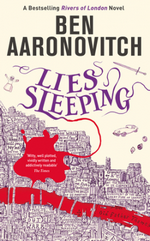
Lies Sleeping by Ben Aaronovitch: Things get Intense in the Ongoing Conflict between The Faceless Man and The Folly.

Lies SleepingLies Sleeping

by Ben Aaronovitch
Series: The Rivers of London, #7

eARC, 304 pg.
Daw Books, 2018
Read: October 3 – 5, 2018

I’ve got to say, I’d much rather be talking about this book in detail with someone else who had read the series than talking about it in spoiler-free form, so much of what I feel strongest about with this book cannot be discussed. Aaronovitch has outdone himself this time — it’s the best book of the series thus far, and that’s no mean feat.

It’s easy — far too easy — when thinking about this series to think of the lighter aspects — the humor, the heart, Peter’s growing pains, the snark, the pop culture references, and whatnot. That’s typically where my mind goes, anyway. But time after time, when picking up the latest novel, or even rereading one, I’m struck by how carefully written, how detailed everything is, how layered the text is — and I feel bad for underestimating Aaronovitch. Not that I have anything against breezy, jokey prose — but there are differences. Nor am I saying these books are drudgery — at all — the stories are fun, the voice is strong, and the narration will make you grin (at the very least, probably laugh a few times, too). In Lies Sleeping part of that care, part of the thoroughness of this novel is how there is a tie — character, event, call-back, allusion — to every novel, novella, comic arc involved in the Rivers of London up to this point — if you haven’t read everything, it won’t detract from your understanding of the novel — but if you have read them all, if you catch the references — it makes it just that much richer.

So what is this novel about? Well, after years of chasing The Faceless Man (and The Faceless Man II), Peter Grant (now a Detective Constable) and Nightengale have his identity, have several leads to follow to track him down — or at least his supporters and accessories (willingly or not). Better yet — the Metropolitan Police Force have given them the manpower they need to truly track him down and interfere with his funding and activities.

During this operation, Peter, Guleed and Nightengale become convinced that Martin Chorley (and, of course, former PC Lesley May) are preparing for something major. They’re not sure what it is, but the kind of magic involved suggests that the results would be calamitous. How do you prepare for that? How do you counter the unexpected, but dangerous? There are two paths you follow: thorough, careful, borderline-tedious policework; and bold, creative, innovative thinking. The two of those employed together lead to some great results — and if Peter Grant isn’t the embodiment of both, he’s . . . okay, he’s not perfect at the former, but he can pretend frequently (and has colleagues who can pick up the slack).

Not only do we get time with all our old friends and foes — we meet some new characters — including a River unlike anyone that Father or Mama Thames as yet introduced to. Mr. Punch is more involved in this story than he has been since Midnight Riot, but in a way we haven’t seen before. Most of the character things I want to talk about fit under the “spoiler” category, so I’ll just say that I enjoyed and/or loved the character development and growth demonstrated in every returning character.

There’s more action/combat kind of scenes in this book than we’re used to. I couldn’t be happier — Peter’s grown enough in his abilities and control to not need Nightengale to bail him out of everything. Nightengale and Peter working together in a fast-paced battle scene is something I’ve been waiting to read for 7 years. It was worth the wait.

As I said before, Lies Sleeping is the best and most ambitious of the series — the richness of the writing, the audacity of the action, the widening scope of the novel, the Phineas and Ferb reference, the epic battle scenes, the growth in Peter, Bev, and Guleed (and maybe even Lesley), the ending rivals Broken Homes‘ — all add up to a fantastic read. Yeah, I’m a fanboy when it comes to this series, and Lies Sleeping made me a happy fanboy. I have no idea how Aaronovitch moves on from this point with these books, but I cannot wait to find out.

—–

5 Stars
Disclaimer: I received this eARC from Berkley Publishing Group via NetGalley in exchange for this post — thanks to both for this.

Page 64 of 123

Powered by WordPress & Theme by Anders Norén