Category: Authors Page 76 of 124

Strife by M. T. Miller

StrifeStrife

by M. T. Miller
Series: The Nameless Chronicle, #3

Kindle Edition, 336 pg.
2017

Read: July 28 – 31, 2017


The first two books of this series feature Nameless just struggling to survive, while along the way stumbling into adventure, some wealth and other kinds of success. He really never seemed to have much of a plan, but things worked out in his favor (eventually, and at great cost). But after the great success — if it is that — after Ascent, Nameless isn’t worried about survival, about doing more than subsisting this time. He’s got time for plans — not just plans for himself, but for the citizenry of the Pyramid.

Whoops. Maybe he should go back to just eking out a living.

Things don’t go so hot for him this way — but man, what character growth. Really, there are depths to Nameless that may not surprise readers, it makes sense that they exist, but we’ve never had the opportunity to see it before.

There are two other cities on the post-apocalyptic landscape, New Orleans and the White City. New Orleans is full of the New Voodoo Movement, and the White City is the home base of the One True Church of America — religious movements that Nameless doesn’t have a good track record with, and has done a lot to try to get rid of. Now both of these cities have plans for Babylon and Nameless — but it’s clear that pretty much all the White City wants out of them is abject surrender and assimilation. That’s just not going to sit well with Nameless.

Now Nameless has to look at the world that he’s helped to create, but he has a chance to reshape it, and save the city he’s adopted.

There’s some soul-searching here, there’s a lot of exploration into what makes Nameless tick and his origins. But the focus is on what he’s going to do next and why. This is only the third book in the series, so you really can’t say what a “typical” Nameless book would be — but whatever that would be, this isn’t it. I don’t know how to really talk about it without divulging all the nuts and bolts of the plot, sadly. There are old friends and new, old threats and new (and some old friends are new threats and vice versa). Which is not to say that the core of Nameless — a ruthless, skillful killer of all in his way — isn’t there, he is and he does. But there’s a little more to him than just that.

I’ve enjoyed Miller’s writing in the past, but this is at a whole new level for him. There’s a complexity to his writing, a subtlety that hasn’t been there before. There’s a good balance of lightness and darkness in the story, the writing itself. He’s clearly maturing as a writer, hopefully people give him a shot to impress them, he will.

This isn’t the place to jump on for new readers — the first two books are cheap and pretty entertaining, too, grab them first. I don’t know if Miller’s going to be able to keep this series going, if so, I can’t wait to see where he goes from here. But if not, I’m more than satisfied with where things are left. A very satisfying ending after a good mix of thrills, fighting and character growth.

Disclaimer: I was provided a copy of this book by the author in exchange for this post and my honest opinion. Thanks, Mr. Miller! This didn’t impact my opinion of the book in any discernible way.

—–

4 Stars

The Late Show by Michael Connelly

The Late ShowThe Late Show

by Michael Connelly
Series: Renée Ballard, #1

Hardcover, 405 pg.
Little, Brown and Company, 2017

Read: July 17 – 22, 2017


Det. Renée Ballard works the graveyard shift out of the Hollywood Station, nicknamed the Late Show. She and her partner, the veteran detective John Jenkins, are basically place-holders — they handle the initial investigation of a crime (or sign off on a suicide) and then hand off their notes to one of the other detective squads that work days. It’s not demanding work — Jenkins likes it because there’s almost no overtime, and he can go home and be with his sick wife during the day. Ballard is stuck on the Late Show because she made some political waves a couple of years back, she couldn’t be fired over it, they could just make sure she found the prospect of another line of work appealing.

We meet Ballard on a pretty eventful night, she and Jenkins look into an elderly woman’s report of her purse being stolen and people using her credit cards; the vicious assault of a transvestite prostitute; and are involved in a minor role following a night club shooting. She and her partner are supposed to be turning over their involvement in these cases to someone else, but Ballard just can’t let go. She works the murder under the radar (as much as she can), gets permission to keep at the assault (which should not be construed as her investigating it according to Hoyle), and is brought back into the robbery organically — I stress this because it’s not all about Ballard skirting regulations, she works within (or near) the system.

Connelly constructs this like a pro — weaving the storylines into a good, cohesive whole. Each story feels like it gets enough time to be adequately told (without the same amount of space being devoted to each), there’s no grand way to connect them all into one, larger crime (which I almost always enjoy, but this is a bit more realistic), while something she learns on one case can be applied to another.

There’s one point where I thought that a plot development meant “oh, now we’re going to wrap things up now — cool.” Which I never would have thought if I bothered to pay attention to which page I was on, but it still seemed like the point that most writers would wrap it up. Instead, Connelly plays things out the way you expect, and then uses that to turn the novel in a different direction.

The book is full of nice little touches like that — Connelly’s been around enough that he knows all the tricks, knows all the plays — he can give you exactly what you think he will and then have the result come up and Connelly’s you.

In the future, I’d like to see a little more about Jenkins — but then again, how much did Connelly really develop Jerry Edgar or Kiz? Still, this is a new series, so he can develop things a bit more — I don’t think there’s a lot that can be done with Jenkins, but he can be more than just the guy who splits paper work with her. I hope that [name withheld] doesn’t become Ballard’s Irving, but I can think of worse things that might happen, so I won’t complain. I also hoped I’d get out of this with only 1 bit of comparison to the Bosch books. Oops.

The best thing — the most important thing — to say here is that Renée Ballard is not a female Harry Bosch; all too often, an established crime writer will end up creating a gender-flipped version of their primary character — basically giving us “X in a skirt” (yeah, I’m looking at you, Sunny Randall). This isn’t the case here. There’s a different emotional depth to Ballard, different lifestyles, different aspirations. Sure, she’s driven, stubborn, and obstinate, just like Harry — but name one fictional detective that isn’t driven, stubborn and obstinate. Readers don't show up in droves for slackers. Is there plenty of room for development and growth for Ballard in the future? Oh yeah. She's not perfect by any means (as a fictional character or as a person). But what a great start.

Same can be said for the series, not just the character — this book does a great job of capturing L.A. (an aspect of it at least), has a great plot, with enough turns to keep the reader satisfied, and a final reveal that's truly satisfying. The last thing that Connelly really needed was to start something new — but I'm glad he decided to.

—–

4 Stars

Besieged by Kevin Hearne

BesiegedBesieged

by Kevin Hearne
Series: The Iron Druid Chronicles, #4.1, 4.2, 4.6, 4.7, 8.1, 8.6

Hardcover, 235 pg.
Del Rey Books, 2017

Read: July 25 – 27, 2017

“Tell me about the old days, Atticus, when you were wee and had to walk both ways uphill in feces because no one had toilets.”

Granuaile’s request for a story around the campfire during her training sets the stage for this collection of stories from The Iron Druid Chronicles, primarily about events that took place prior to the first time we meet Atticus. Thankfully, we don’t get as much fecal matter as she suggests (although, it is there).

We see Atticus in San Francisco during the Gold Rush; in Egypt, annoying that pantheon (and setting the stage for complications in a previously published short story); in London, meeting and influencing a certain Bard of Avon; we also get a bit of post-Tricked action and learn why Atticus doesn’t spend much time in Nebraska. I enjoyed all of these — I don’t know that I got amazing new insights in to any of the characters, it was just nice to see them in low-risk adventures. Time with Atticus and Oberon (and the rest) is almost always time well spent.

Not all of the stories were from Atticus’ perspective. These weren’t as appealing to me, but I did enjoy them. I wasn’t crazy about the story featuring Flidias and Perun — the setting was pretty off-putting for me. Although I did enjoy Perun’s narration and in the end the story won me over. There’s a story from Granuaile’s perspective about enforcing the agreement to rid Poland of vampires. This was the most I’ve liked her since Trapped, which was quite a relief. Of the two stories told from Owen’s perspective, the one set post-Staked worked better for me than the one about his life before he became anyone’s archdruid. I really like watching Owen try to train this group of children while attempting to keep from recreating the mistakes of the past.

I can’t say much about the last story, because it takes place immediately before the series finale, due next year. It whet my appetite for the last book, for sure (not that I needed it) — and reminded me that I might need to keep a supply of Kleenex handy.

Not as good as a novel, but a satisfying collection of tales in this world. A must for fans — casual or die-hard.

—–

4 Stars

The Hangman’s Sonnet by Reed Farrel Coleman

The Hangman's Sonnet Robert B. Parker’s The Hangman’s Sonnet

by Reed Farrel Coleman
Series: Jesse Stone, #16

eARC, 352 pg.
G.P. Putnam’s Sons, 2017

Read: July 3 – 5, 2017


On the one hand, I know that Coleman is a pro, and that he’s going to approach each series, each character from a different angle. But he’s so effective at writing a broken, grieving Gus Murphy, that you have to expect a grieving Jesse Stone to be written as effectively and with a similar depth. Which gave me a little pause when it came to cracking this one open — how much of a mess would Jesse be?

Big. A big mess.

Still, I was chuckling within a few pages — Jesse’s pursuing a path to self-destruction unlike any he’s had before, even that which cost him his career with the LAPD, but at his core he’s still the same guy we’ve been reading for 20 years. He may not care about himself (or at least he wants to punish himself), but Suit, Molly, and the rest of Paradise. When push comes to shove, he’ll do what he has to do. Some times he might need prompting, however.

But let’s set that aside for the moment — there are essentially two stories involving Jesse and the PPD. There’s the titular sonnet — a reference to a legendary lost recording by Massachusetts’ answer to Bob Dylan, Terry Jester. Sometime after this recording, Jester pulled a J. D. Salinger and disappeared from the public eye. Jester is about to turn 75, and a large birthday gala is being planned on Stiles Island. Jesse has to consult with Jester’s manager, PR agent and the chief of security for the island. Jesse can’t stand this idea — he can’t stand much to do with Stiles Island — he just doesn’t want to put up with the hassle, the celebrities, the distraction from the typical duties of PPD. But he doesn’t have much choice — for one, there will need to be something done to deal with the traffic, celebrities, and what not; but Jesse also has to deal with the mayor’s political aspirations. And you don’t get very far without the support (and money) of celebrities and the positive media coverage that kind of thing should bring.

On the other end of the spectrum, an elderly woman has been found dead in her bed, but under suspicious circumstances. She has deep ties to the history of Paradise, causing her death to grab more headlines than it might otherwise. Did I mention the mayor’s political aspirations? Well, the last thing she needs is an unsolved murder when she’s trying to cash in on the media attention that Jester’s celebration will bring. So she starts applying pressure to Jesse. When Jesse starts to think there’s a link between her death and the hunt for The Hangman’s Sonnet master recording, the pressure — and the urge to drink — increases for Paradise’s Police Chief. Thanks to the Law of Interconnected Monkey Business, the reader knew there was likely a link all along, so I don’t think I gave away too much there.

That right there would be enough to get me to read and probably recommend. But you add Coleman’s writing into the mix and you’ve got yourself a winner. There’s a wonderful passage where Jesse meditates on the beauty of the accessories to his drinking — the different glasses, the bottles, the rituals. The mystery was solid work — and I was close to figuring everything out, but not close enough. When the final reveal was made, I felt pretty stupid, all the pieces were there I just didn’t assemble them correctly. There were a couple of “red shirt” criminals early on that were so well written, that even when you know they’re not going to stick around too long, you get invested in them (one of them had a death scene fairly early that most writers would let be predictable — and the death was — but the way that Coleman wrote it got me highlighting and making notes). Coleman even does something that Parker said he couldn’t do.

I won’t say that everything that happened during Debt to Pay has been dealt with thoroughly — it hasn’t. But, most of the characters have been able to get a degree of resolution and closure that means they can move forward. Not perfectly, perhaps, but honestly. Jesse, in particular, might come back for book 17 in a significantly better place (or at least significantly different) — but the core will be there, and woe on any criminal that steps foot into Paradise.

Great character moments; slow, organic development; and top-notch writing. Coleman delivers again, continuing to take the foundation laid by Parker and building on it in a way that’s true to the spirit of the world Parker created, but brought to us with a newfound depth.

Disclaimer: I received this eARC from Putnam Books via NetGalley in exchange for this post — thanks to both for this.

—–

4 1/2 Stars

Mortal Causes by Ian Rankin

Mortal CausesMortal Causes

by Ian Rankin
Series: John Rebus, #6
Hardcover, 310 pg.
Minotaur Books, 1994
Read: July 15 – 18, 2017

When he’d washed his eyes last night, it had been like washing behind them as well. Always it came to this, he tried to do things by the books and ended up cooking them instead. It was easier, that was all. Where would the crime detection rates be without a few shortcuts?

Before Rebus gets to his shortcuts, he’s called to investigate a homicide. A particularly grisly one, reminiscent of some that Rebus saw in Northern Ireland when he was serving there.

It’s his familiarity with that execution that gets him loaned to a special squad also investigating the homicide, especially as it seems tied into some gun smuggling. Rebus isn’t pleased at all to be the new guy — much less, the temporary new guy — on a team, as much as he seems to appreciate some of the individuals on the team (while others make him think more fondly of Chief Inspector Lauderdale). The investigation takes him to Northern Ireland to collect some intelligence, to a dangerous neighborhood, and he brushes up against an American who’s funneling guns of all kinds to (and through) Edinburgh.

In the midst of all of this, Rebus has some drama in his personal life — nothing involving his tenants or brother, but things with Patience Aitken aren’t going as smoothly as one might want (are they ever?) — and there’s another woman who has Rebus in her sights (the guy isn’t a catch, from what I can tell — how does this happen so regularly?).

Throw in an appearance by Big Ger Cafferty while the bodies are piling up and you’ve got yourself a story.

I’m not sure why I don’t have much to say about this one. Maybe because we live on this side of the Good Friday Agreement? But that doesn’t seem to ring true. Rebus is Rebus, Clarke is Clarke, Holmes is Holmes, Farmer Watson is off the wagon, but still pushing his bad coffee . . . the new squad ha some interesting characters, but we don’t spend much time with them. There are some great and colorful characters we brush into during the investigation, too. I don’t know. I liked it, but I can’t think of anything to say beyond that.

There’s a lot to commend in this novel, from great lines like: “He’d had wrong hunches before, enough for a convention of the Quasimodo fan club”; to the wide-ranging sources of trouble for Rebus; to the horrible history and equally horrible present behind the crimes — this is a solid and haunting novel. Something about this was a little off, I’m not sure what — at least as I think back on it, it doesn’t seem as fully developed as the last two. But in the moment I was gripped. I’m not saying that this isn’t fine, I just know Rankin can do better.

—–

3.5 Stars
2017 Library Love Challenge

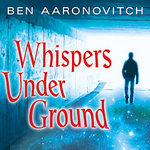
Moon Over Soho (Audiobook) by Ben Aaronovitch, Kobna Holdbrook-Smith

Moon Over Soho (Audiobook)Moon Over Soho

by Ben Aaronovitch, Kobna Holdbrook-Smith (Narrator)
Series: The Rivers of London, #2
Unabridged Audiobook, 10 hrs.
Tantor Media, 2012
Read: June 21 – 23, 2017

When I think back over the first books in this series, I remember them being a lot of fun — pretty funny, really, with moments of tension and drama.

I don’t know why I think that. Listening to the first two have been a good corrective. Yes, Peter is witty, and some of what he does while learning magic or talking to other police officers is amusing. But these are not light books — this is solid police work mixed with dark magic. They’re still fun, just a lot less light than I recall. Actually, my poor memory extends beyond just the tone. I remembered almost nothing about the plot of this one (I remembered almost everything that wasn’t involved in the main plot, the long-term investigation into the Faceless Man, the stuff with Lesley, etc.). Which made it a great experience to re-read.

Jazz musicians are dropping dead after performances of a lifetime — in ways that seem like natural causes, but Peter (and Dr. Walid) can tell there’s something more going on — just what that might be is a touch beyond them. There’s another supernatural predator traveling in London hotspots, preying on unsuspecting men. Peter and DS Stephanopoulos work together to get to the bottom of things — we also meet PC Sahra Guleed. After Guleed’s appearance in Body Work, I’ve been trying to remember where I knew her from, but I couldn’t come up with it, so pleased to have that question resolved for me — I remember now, and I remember what a great character she is.

Peter’s spirit, his curiosity, his drive — they make for a great protagonist, and I quite enjoy spending time with him. I would’ve liked a bit more Nightingale — but I understand why he wasn’t around. Even Peter’s new love interest and his new musician friends are a blast. Really, I can’t think of any characters in here I don’t dig.

Kobna Holdbrook-Smith . . . I’m telling you, this guy is just great. His characterizations of the regular characters, plus the ones that we meet here, are great, he just brings everyone to life. But, the job he does with Lesley May’s voice as she recovers from the devastating injuries she sustained at the end of Midnight Riot? I don’t know how to talk about how wonderful — and heartbreaking — I found that.

Another little plus that the audio books bring (not attributable to Holdbrook-Smith) are the interstitial music, that little jazz bit between chapters. It’s just perfect for this series. If you could get that on a chip in the paperbacks to play when you turn the page of a new chapter (or on a whim)? That’d be gold.

A great installment in the series, solidifying the world and helping every character move forward following Midnight Riot.

—–

4 Stars

Kindness Goes Unpunished (Audiobook) by Craig Johnson, George Guidall

Kindness Goes Unpunished (Audiobook)Kindness Goes Unpunished

by Craig Johnson, George Guidall
Series: Walt Longmire, #3
Unabridged Audiobook, 8 hrs., 42 min. pg.
Recorded Books, 2011
Read: June 29 – July 3, 2017

I was going to try to come up with something original for this time through the book, but mostly, I liked what I said last time, so let’s stick to that. I do have a few new things to say at the end, I should note.

It’s a sure sign that I need to spend more time reading Johnson than watching the show based on this series in that I’m consistently surprised at how funny these books are. Sure Henry Standing Bear’s dry wit is there, Vic is brash and inappropriate — amusing enough — but the narration, Walt himself? I chuckled a lot.

So, Walt and Henry (and Dog!) are off to the City of Brotherly Love to visit Walt’s daughter, Cady, meet her boyfriend, and for Henry to do something at a museum (just an excuse to see Cady). Oh, and conveniently enough, to meet Vic’s family (three police officers, one former police officer, and one attractive mother). After arriving in town, Walt doesn’t even get to see Cady before she’s brutally attacked and hospitalized.

Naturally, Walt stumbles upon the one person in Philadelphia who’s more knowledgeable and interested in Indians than Henry. It’s that interest (obsession?) and his connection to Walt that makes Walt the best man to track down the man who put Cady in the hospital (and other assorted nefarious acts). That’s a level of coincidence that you just buy — like Gideon Oliver vacationing somewhere that a set of bones surprisingly shows up; Nero Wolfe needing information from someone who’s a sucker for orchids; or that every falsely accused murderers that Andy Carpenter stumbles upon happen to own a cute dog.

There’s enough twists, turns — and one seeming unnecessary but entertaining diversion (that turns out to be not so ancillary) — to satisfy any mystery reader. Even out of water, this fish can swim. There’s some very interesting things that go on in the character’s personal lives that should make things interesting down the road (and that I can’t talk about while remaining spoiler free) — enough to make this more than a tale of a father’s vengeance.

The first chapter (only one in Wyoming) is great — Walt totally failing to connect with an elementary school classroom, a fun and prototypical Absaroka County shootout, and other things that make up a typical day for Sheriff Longmire on the eve of his trip.

One thing that I did take note of last time, but didn’t write about was the theme of daughters and parents. There’s a lot about Vic and her mother, but the focus is on Cady and the place that she has in Walt’s head and heart. I’m not sure how you could read/listen to this without your heart melting a bit — particularly if you have a daughter who’s growing up a bit too quickly, like me. Guidall did a solid job with his narration of this book, but his performance in the last chapter just about broke me.

Walt in the big city, like Walt in the least populated corner of Wyoming, is just a pleasure to spend time with — even if things are going horribly for him.

—–

4 Stars

The Fallen by Ace Atkins

The FallenThe Fallen

by Ace Atkins
Series: Quinn Colson, #7
eARC, 384 pg.
G. P. Putnam’s Sons, 2017
Read: June 6 – 8, 2017

Each of the Quinn Colson books has 3 or 4 things going on (it really depends how you want to break things down): There’s a central crime story, a Quinn story, a wider Colson-family story (usually Caddy-centric — by the way, try writing about Caddy right after listening to a novel featuring Walt Longmire’s daughter, Cady, it’ll bend your mind), a story about goings-on in the wider Tibbehah County and Jericho area (typically criminal, but not necessarily part of the other crime story). Now, these blend into each other all the time, and are hard to strictly delineate, but that’s how I think about these books anyhow. Were a grade or degree on the line, I could define this better — but we’ll settle for this. Now, typically the central crime story is just that, central — it’s the driving force behind the novel and the other things happen around it. With The Fallen, however, it felt like the central crime story functioned mostly to give an excuse to tell the other stories — sort of a time frame to hang the rest on.

Which is not necessarily a bad thing — but it’s not a good one.

There’s a group of highly efficient, disciplined bank robbers on a spree through the south, and naturally they hit Jericho. They’re out of town in a flash, with Quinn and Lillie not able to do much. Still, this is a challenge that Lillie sinks her teeth into (and Quinn, too — to a lesser extent). The trio is not as amusing as the goofballs from The Redeemers, and thankfully, they aren’t has horrifying as some of the others (see The Innocents, for example). I could easily have spent some more time with them, though. Their story is pretty compelling and rings true.

Quinn is settling back into his job as Sheriff, with Lillie as his Assistant Sheriff . There’s a new county supervisor, Skinner, making life difficult for everyone, although Boom Kimbrough and Fannie Hathcock seem to be top of his list. But it doesn’t seem like anyone who doesn’t share his vision for Jericho — a halcyon 50’s vision — will have much of a chance against him. You get the impression even Johnny Stagg prefers his incarceration to dealing with Skinner. We’ll be seeing more of Skinner.

Caddy and Boom actually get the more interesting investigation in the novel — with some help from Lillie. Caddy’s looking for a couple of teen girls that she’s afraid have fallen into Fannie’s employment — but it turns out to be more complicated than that. What they stumble on is disturbing, at the least, and will push Caddy’s buttons in a way little else has. Once he learns about it, Quinn’s not crazy about what she’s up to — but when is he?

There’s a lot of movement in long-term arcs, and while it’d be wrong to say that nothing happens other than moving pieces around on the chessboard to set up for books #8 and on, it frequently feels like it. I’m not crazy about any of the things that did occur in this novel (matters of taste and how I want things to go for particular characters — Atkins nailed it all, it’s not on his execution) — but man, what it means for the next couple of books has got me ready to fork over money right now.

Still, while I found the main crime story wanting, and wasn’t crazy about the long-term arc developments, this was a good book. Atkins has infused — and continues to do so — this community and these characters with so much life, so much reality, that the reader gets sucked in and can’t help but care about everyone. It’s only when I stopped to think about and write about the book that I had these issues — in the moment, I couldn’t have cared less about what was going on in actual Idaho — Jericho, Mississippi was what it was all about.

Solid crime fiction from one of the best working today.

Disclaimer: I received this eARC from Putnam Books via NetGalley in exchange for this post — thanks to both for this..

—–

4 Stars

Pub Day Repost: The Furthest Station by Ben Aaronovitch

The Furthest StationThe Furthest Station

by Ben Aaronovitch
Series: The Rivers of London, #5.7eARC, 144 pg.
Subterranean Press, 2017
Read: April 24, 2017

He asked if we were really ghost hunting, and I said we were.

“What, like officially?”

“Officially secret,” I said because discretion is supposed to be, if not our middle name, at least a nickname we occasionally answer to when we remember.

This novella hit the spot — a short, but fully developed, adventure with our friends from the Rivers of London series — full of action, a bit of snark, and seeing Peter in his element (and far out of it, too). Would I have preferred a full novel? Sure — but if I can’t have one, this is more than adequate.

Peter Grant, apprentice wizard and Police Constable, is investigating several reports of a ghost terrorizing people on the Underground during the morning commute. Naturally, even when interviewed immediately following a sighting the witness would only be able to remember details for a few moments before they forgot and/or rationalized them away. Which makes it pretty difficult to ask follow-up questions. As Peter continues to investigate, he ends up finding a very non-supernatural crime that he needs to deal with, even if he goes about it in a pretty supernatural way. While there’s little in this series that I don’t like, but Peter doing regular policework is one of my favorite parts.

Along for the ride (and looking for trouble) is his cousin, Abigail Jumara, acting as a summer intern for the Folly. Honestly, I barely remembered her when she shows up here — but I eventually remembered her, and I was glad to see her back. I’m not necessarily sure that I need to see her all the time, but seeing more of her would definitely be pleasant.

In addition to the subplot about Abigail’s future, there’s a subplot revolving around another personification of a river — not one of Mama Thames’, either. I enjoyed it, and thought it fit in nicely with the rest of the novella, while giving us the requisite dose of a body of water.

There’s not a lot to sink your teeth into here — but the novella length doesn’t leave you wanting more (like a short story would). It’s good to see the Folly involved in smaller cases. Not just the serial killing, major magical threat, etc. kind of thing — but the “smaller” stuff, too.

For any fan of the Folly/Peter Grant/Rivers of London series, this is one to get. It’d even make a pretty good introduction to the series for someone who hasn’t yet discovered this fun UF series.

Disclaimer: I received this eARC from Subterranean Press via NetGalley in exchange for this post — thanks to both, I needed something like this.
N.B.: As this was an ARC, any quotations above may be changed in the published work — I will endeavor to verify them as soon as possible.

—–

4 Stars

Death Without Company (Audiobook) by Craig Johnson, George Guidall

Death Without CompanyDeath Without Company

by Craig Johnson, George Guidall
Series: Walt Longmire, #2
Unabridged Audiobook, 9 hrs. and 51 mins
Recorded Books, 2007
Read: June 7- 12, 2017

Everything to do with women is foolish, and, therefore, absolutely essential.

This novel picks up a couple of weeks after The Cold Dish, with Walt still trying to get his head on straight — and it’s not going to well. The major impetus for him now is the impending arrival of his daughter, Cady, for a visit over the holidays. There was enough of a gap between the time I read the first two installments in this series that I missed a lot of the ties that connected the two. I appreciated a lot of the little nuances this time through the novel that I’d missed the first time.

Otherwise, I pretty much agree with what I said before:

The atmosphere of the book, the relationships between Vic, the Ferg, Henry, Cady and Walt are effortless, they feel like coworkers and friends. So even when the bodies start to pile up, the external pressures mount, and answers are in short supply, there’s an ease to things that make the book more entertaining than it could’ve been. Even as Sheriff, Walt still comes across as deferential and secondary to his former boss Lucian Connally (though he doesn’t hesitate to put his foot down when necessary).

When Lucian tells Walt in no uncertain terms that a death in the retirement home he lives in is not from natural causes, he has to investigate. Even if he’s not entirely convinced. It’s not too much of a spoiler to say that Lucian’s right — otherwise, we wouldn’t have a novel to read. Which takes Walt on a journey through the murky history of both one of Walt’s oldest friends and the area he calls home — this time with a different minority group as the focus (though the Rez and its inhabitants are always lurking around in the background).

There’s a new romantic interest in these pages — as well as a couple of new deputies for Absaroka County (the particular skill set of one of these is a bit too deus ex machina-y for my tastes, but he’s so likable, who cares?). Throw in the kind of snow storm you can only get in rural Wyoming (or areas like it) and some brushes with Indian spirituality, and you get a distinctive kind of mystery novel, making the adventures of Walt Longmire and his cohorts the kind of story you can get nowhere else. It won’t take me as long to come back to this series next time.

Guidall took awhile to grow on me in the first book — but now he’s just what Walt sounds like (I imagine when I read a Longmire book the voice in my head will be some sort of blend between Guidall and Robert Taylor). I thought he did a great job all around.

This novel took the foundation that Johnson laid and started building on it so that it could become the series we all love. I’m glad I got a chance to revisit it, and recommend those that haven’t tried it yet to come on down to Absaroka County.

—–

3.5 Stars

Page 76 of 124

Powered by WordPress & Theme by Anders Norén