Category: Authors Page 97 of 124

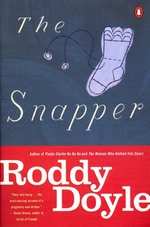
Reread Project: The Snapper by Roddy Doyle

The SnapperThe Snapper

by Roddy Doyle
Series: The Barrytown Trilogy, #2

Paperback, 212 pg.

Penguin, 1992

Read: May 20 – 21, 2015Naturally, after one of the best rock band novels ever — one fully of music, laughs, and style — Doyle follows it up with a heartfelt story of a young woman who gets pregnant after a one-night stand. Who wouldn’t?

Now, Sharon (the young woman in question) is the sister of Jimmy Rabbitte — The Commitments’ manager. So there is a tie — and we saw a little of their father and the rest of the family last time. Still, this feels so different, it’s hard to conceive of them being part of a trilogy. Oh well — it works — so who cares?. Carried along by Doyle’s inimitable style, this story — which could easily have been maudlin, overly sentimental, or sappy; comes across as genuine and heartfelt instead.
Where The Commitments was full of laughs, raunch, and style; The Snapper is full of laughs, family and heart. It’s not just about one member of the family this time — it’s all of them. The focus is on Sharon and her father, Jimmy, Sr.

Sharon finds herself “up the pole,” much to her distress. She knows who the father is, a one-night stand (something far less meaningful, actually) she wishes had never happened. Unwilling to let anyone know the father’s real identity, she makes one up (which also relieves her of the need to let the real guy have anything to do with the kid). Initially, she’s in sort of a denial — she knows the baby will change everything. But that’s months away — right now, she and her friends can still hit the pub after she gets off working at the supermarket and pretend that everything’s just like it was a couple of weeks ago. Eventually, she starts to make the changes necessary, but only when she has to. There’s personal growth here for Sharon, when she has no choice. But honestly — other than questionable taste in men, and an utter lack of awareness about Fetal Alcohol Syndrome — she seems like she’s got her head screwed on right already.

Jimmy, Sr. seems like the kind of guy you’d like to hang out in a pub with occasionally — I think he (and his friends) would get old quickly if you hung out with them all the time. Generous, funny, and gregarious. Maybe not the most responsible guy around — but he’s making ends meet (mostly), and doing (almost) his best for his kids. Eventually, he seems to get his act together for Sharon — or at least he tries. Which just makes you like him more — even as (because?) he just doesn’t make it some times.

While these two are on the forefront of Doyle’s attention, we do get some time with Sharon’s siblings (even Jimmy, Jr. — a little bit — who’s still trying to make it in the music business) and long-suffering mother. We watch the family stumble along through financial woes, various school clubs, a bicycle club or two, and being the subject of neighborhood gossip. These all might not be as well-rounded as Sharon and her father are, but they’re close enough that you think you know them.

Back in college, I read The Commitments a lot — but I think I read The Snapper more. It’s not as fun as its predecessor, but it’s a better novel — populated with actual people, actual growth, and something that looks a lot like actual life for many people. The Rabbites could be your neighbors, and you’d be happy to have them, which makes getting to spend time with them between the covers of a book just that pleasant.

—–

4 1/2 Stars

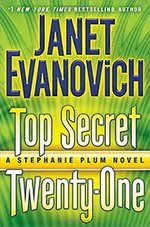
Top Secret Twenty-One by Janet Evanovich

Top Secret Twenty-OneTop Secret Twenty-One

by Janet Evanovich
Series: Stephanie Plum, #21

Mass Market Paperback, 326 pg.

Bantam, 2015

Read: June 27, 2015

What to say, what to say . . . I mean seriously, these are like 80’s sitcoms at this point. A big reset to the status quo at the end of the novel, most of the jokes are variations on previous novels. Which makes it hard to talk about them. Let’s break this one down quickly:

  • The Good: Vinnie didn’t appear. Joyce Barnhardt only appeared as an allusion. The pacing was a bit different, I thought. Stephanie’s main target was taken care of pretty early, freeing her up to help Ranger.
  • The Bad: The main target for Stephanie was so close to the guy in Takedown Twenty that I briefly wondered if I’d already read this one.
  • The Surprising: The other big case for this book — Ranger’s case, was a lot more serious (grading on a Plum curve here) than we’re used to. Involving a bit more peril than one expects. Grandma was used well, and Evanovich showed a little restraint with her and her antics.
  • The Funny: There was the standard amount of general amusement. But, and this is important, (at least until Evanovich figures it out and drives it into the ground), Bob + Ranger = Comedy Gold. Who knew? I actually laughed out loud. That whole scene lifted this from a 2-2.5 star rating to a three. It’s been a long time since I actually laughed at one of these.

On the whole, once I settled into it, I enjoyed myself. I’m glad I read it — would I prefer that Evnovich reintroduce a real sense of serialization, let things progress with one of the two romantic leads, let Stephanie get better at her job, introducing real stakes would also improve the humor. Otherwise, this remains fairly reliable, decent, disposable reading material.

—–

3 Stars

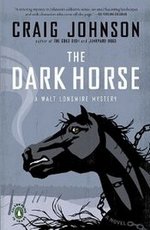
The Dark Horse by Craig Johnson

The Dark HorseThe Dark Horse

by Craig Johnson
Series: Walt Longmire, #5

Hardcover, 318 pg.
Viking Adult, 2009

Read: June 22 – 23, 2015

. . . we walked into the middle of the rutted and powdery two-track that stretched to the horizon; the only other road curled off to the right and disappeared into the distance as well.

I thought about how we tilled and cultivated the land, planted trees on it, fenced it, built houses on it, and did everything we could to hold off the eternity of distance–anything to give the landscape some sort of human scale. No matter what we did to try and form the West, however, the West inevitably formed us instead.

One thing I particularly appreciate about the Longmire books is the effort that Johnson puts into making them distinct from each other — one of the hazards of mystery series is that books can blend in with each other, but that’s not the case (so far) with these. There are two distinct features to this book — 1. Narratively: Walt tries (and kind of succeeds) to go undercover to investigate a murder in a nearby county; 2. Mechanically: the narration keeps jumping back and forth from “the present,” where Walt’s been investigating for a couple of weeks, and then to the point a few weeks earlier where Walt starts to becoming involved in the investigation.

I guess it’s also noteworthy that there’s really no Indian spirituality to speak of — practically no Henry, for that matter (although he makes his presence felt when he’s around).

Anyway, a Sheriff of a neighboring county gets Walt to hold a prisoner for trial for him — a woman who confessed to murdering her louse of a husband. Repeatedly confessed, no less. Given the confession (and some other evidence), he can’t investigate things further — as much as he thinks it might be needed. Still, he knows ol’ Walt won’t worry about the politics or difficulties involved if he sniffs something rotten in Wyoming. Walt falls into the not-so-cleverly-lain trap and starts finding the problems with the confession. Which leads to him assuming the identity of an insurance investigator and doing a little investigating.

He’s almost comically bad at it, but he’s enough of a stranger that it doesn’t matter — he can just be Walt, talking history, drinking beer and nosing around. Add in some horses, some fisticuffs, a spunky kid and a little gunplay — and you’ve got yourself a solid mystery novel.

One of the episodes of the show Longmire was loosely based on this novel, but by “loosely” I mean there are horses, a fire, Walt, and a married couple. That’s pretty much it. So, those who’ve seen the episode can feel free to read the book without any fear of knowing whodunit (and vice versa).

There’s a little movement on the character development front — people recovering from wounds, some other recurring characters moving in the background, and some development on various romantic fronts, too. The serialized component isn’t a major factor in this series, but it’s there — mostly downplayed this time, but still, present. Oh, the election that’s been lurking in the background for forever? Taken care of so quickly, your head’ll spin — what the results mean for things going forward, time will tell. I think I like that approach to it — just blink and you’ll miss it.

Yet again, Johnson delivers a great read — and Sheriff Longmire and Absaroka County prove they can be just as interesting as Det. Bosch and L.A., Spenser and Boston, or Det. Hatcher and NYC.

—–

3.5 Stars

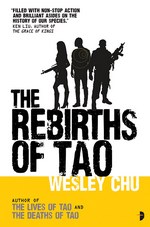
The Rebirths of Tao by Wesley Chu

The Rebirths of TaoThe Rebirths of Tao

by Wesley Chu
Series: Tao Trilogy, #3

Mass Market Paperback, 506 pg.
Angry Robot Books, 2015
Read: June 15 – 20, 2015That was satisfying.

Really, that’s about all I have to say about this one. But let’s see if I can’t expand a bit. Overall, I enjoyed The Lives more than this, and this one engaged me more throughout than The Deaths did, but The Rebirths brought the Tao Trilogy to a satisfying conclusion, wrapping up what needed to be wrapped up, dealing with all the arcs that needed to be concluded and generally leaving things in a place where we can say goodbye to these characters (not that we necessarily want to, but we can) — oh, and was a solid SF adventure in its own right.

One personal note, a large part of the action takes place in Ontario, Oregon. Most people reading this book aren’t going to think much about that at all, but I grew up about 10 minutes away from Ontario — so I thought that was pretty cool. On the other hand, now I know how Bostonians feel when reading Robert B. Parker or Dennis Lehane, or a life-long Chicago resident when reading Jim Butcher. The geography is bad, and if you wanted to buy a nicer car, you wouldn’t bother driving to Boise, you’d get the same car (probably cheaper) in Ontario.

But that matters so little to the book as a whole, that those four sentences are at least two too many.

So, anyway, this book (like The Deaths) takes place a few years after we’d left Roen and the rest. His son, Cameron, is a teenager — with all the stubbornness, rebellion, and hormone-addled fun that entails. Of course, his rebellion takes the form of wanting to join in the war against the Genjix, while his parents do all they can to steer him away.

It’s safe to say that very few (if any) of the Quasing are happy with Jill’s little revelation at the end of The Deaths — Genjix or Prophus — which puts them in the same boat as humanity. Governments all over the world are attempting to hunt down any and all Quasing. Which hasn’t done any favors for the Prophus, but at least seems to have hurt the Genjix effort more.

Which is not to say they’re down for the count by any means. Enzo, the Adonis, is still out there strutting like a peacock and working to bring about the end of humanity. We finally get to see the Genjix plan in full, and I’ve got to say, reading about their plan for re-making Earth makes me really glad that this is fiction.

Right?

So, we’ve got the Ontario storyline — which looks like a pretty routine mission for Roen and Marcos (yeah, not quite Felix & Oscar, but close enough), until it gets bad. And then worse. There’s a conflict in the leadership of the Genjix (so nice to see that even some of them don’t like Enzo). And then there’s a major breach in security which leaves the rest of our Prophus friends on the run — our focus is on Cameron, but not exclusively here. I was a little surprised how Chu concluded the Ontario storyline — which is what made it effective, really. These three threads, ultimately, naturally, converged into one big battle — like the two books before.

Once again, what Chu did with Roen between the books isn’t exactly what one expects, but it fits his character. Ditto for Jill. We didn’t know Cameron enough for me to say. Tao? Sure — Tao’s the same, being centuries old helps him stay consistent. When it comes to the machinery of the Genjix, Prophus and the US Government (and/or everyone else) — things didn’t go the way I figured they would following The Deaths — but I think I liked it more that way. It’s because of the fallout from Jill’s revelation that most of the character changes happened the way they did. Chu really was effective here.

There are some great fight scenes, if that’s your kind of thing (and if it’s not, why are you reading these books?). The final scene is as epic — yet personal — as you want from the end of a third book in a trilogy. Part of that battle are back-to-back hand-to-hand combat scenes featuring an Adonis vessel and people near and dear to us. By this point, I had no idea what Chu was going to give us and I was hanging on every hit. I’m so glad that Chu sprinkles so much humor through these books — after these fights were over, I needed the joke that followed.

It may not work for everyone, but I really liked where everything was left off. Particularly for Enzo.

A really solid novel, a satisfying conclusion — making the Tao trilogy a keeper. I’m very much looking forward to what Chu’s got in store next.

—–

4 1/2 Stars

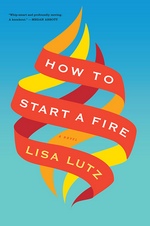
How to Start a Fire by Lisa Lutz

How to Start a Fire How to Start a Fire

by Lisa Lutz

Hardcover, 337 pg.
Houghton Mifflin Harcourt, 2015
Read: June 5 – 6, 2015
I really enjoyed Lisa Lutz’s latest, best, and most mature novel and want to encourage you to give it a read. That said, I’m not really sure how to start this post — or how to finish it, now that I think about it. It’s not really a plot-driven book, it’s more about the relationships between the three main characters, and others in their lives. But, it’s really difficult to talk about the book without talking about the two (maybe three) plot points that drive the whole thing.

Early on, I jotted down the note, “I’m either going to love or hate this book,” and while I stayed in the former camp, I could easily see where some wouldn’t (a quick skim of goodreads today, suggests I was right). This book plays with chronology, skipping around throughout the 20+ year history of the characters (plus some in-chapter flashbacks), with no easily noticeable pattern. So, in the first few chapters (most of Part One), once I started a new chapter, I’d have to flip back to the first page of the 3-4 previous chapters to make sure I was placing the current one in the right spot on my mental timeline. Eventually, I didn’t have to physically turn the pages, and was able to re-arrange things without much thought — and I know two other readers that experienced the same

At its core, How to Start a Fire is about the relationships of three women over time, from meeting in college through everything that happens over the next twenty plus years — ups, downs, fights, make-ups, forgiveness, betrayal, estrangement, personal growth, self-destruction, and the ability of friendship to forget all of that and just care in the moment. To boil it down to its essence: real friendship.

I had to repeatedly remind myself that this was a Lisa Lutz novel, it didn’t feel like one. Not any of The Spellman Files or Heads you Lose, this was a totally different creature (not being a mystery novel plays into that, obviously). Of course, like with my fixation on chronology eventually I got into the book and stopped caring about that. Most of the humor is different, most of the heart is different — the types of people are different, too. Still, the humor is solid, the heart is genuine, and the people are, y’know, people.

Yet . . . there’s no denying the Lutz DNA here. The three main characters were aggressively quirky like Izzy or Rae, Anna ‘s brother could’ve been David), and Malcom has a very Henry-esque quality. There’s so much more about the novel to think about than the parallels to the Spellman books. I don’t want to focus on it, but I did make those notes at one point. I think if I hadn’t written it down, I’d have forgotten about it by the time I reached the end.

This is Chick Lit that can be appreciated by the non-Chick reader* — there’s a little bit of something for just about everything in these pages, laughs, chuckles, an “Aww” or three, and maybe a something to make your eyes misty. It’s a bit too fresh for me to confirm this, but I’m betting this is one of those novels that rewards re-reads (especially when you’re not trying to figure out what’s going on in the opening chapters). Not my favorite Lutz book, but probably her best — and it demonstrates what many of her readers have suspected: she can write whatever she sets her mind to. Frankly, I want something back in the comedy/crime area again, but I’ll line up for whatever.

—–

* Which is the mark of the best of Chick-Lit — or any genre — even those outside the target demographic can appreciate it.

—–

4 Stars

I Am Princess X by Cherie Priest (Kali Ciesemier, Illustrator)

I Am Princess X I Am Princess X

by Cherie Priest, Kali Ciesemier, Illustrator

Hardcover, 227 pg.
Arthur A. Levine Books, 2015

Read: June 4, 2015

This book starts off just like the book description tells you — it’s practically an outline of the first 40 pages. Somehow, even if all they were doing was fulfilling the book jacket copy, the opening chapters sucked me in more and more with each detail until the last sentence on page 35. That line was just creepy. At that point, I put my finger in the book to save the page, called to my daughter (who’d showed minor interest on the book) and told her that unless Priest screwed things up, she had to read this (and seriously , what were the odds of Priest doing that?).

Years after the death of her best friend, Libby, May starts to see drawings around town of something the two had created together (and no one else knew about). How is that possible? She does everything she can to find out, but that doesn’t tell her anything other than that there’s a (pretty popular) webcomic out there starring their creation. There’s a self-proclaimed computer guru (Patrick — he prefers Trick, though) living a few floors below her dad that May hires/cons into going the extra technological mile for her. Their investigation doesn’t remain online, and before long the two are running all over Seattle. They dance between employer/employee; condescending college-aged twerp/younger, slightly naive teen; pals throughout in a way that seems organic and real. It’s probably the most realistic thing in the book after the death of Libby. While I’m talking about them — the hijinks the pair get into in the cemetery result in either the funniest or the grossest line of dialog I’ve read this year. Possibly both.

This isn’t the kind of comic/prose hybrid that Jeff Kinney, James Patterson, Stephen Pastis, etc. are doing — Priest uses the comic pages (taken from the fictional webcomic) to further the plot, to help us see what May and Trick are reading/seeing. Rather than trying to describe (and likely not succeeding all that often) a series of panels and the artwork, we just get them. Shorter, sweeter, to the point. A great merger of the two media. Ciesemier’s art is spot-on, I could easily read a webcomic she draws.

This is a YA novel with no love triangle, no romantic love period — that’s practically enough of a sales pitch for me right there. Friendship — that’s the emotional core driving this. The old friendship between Libby and May, that death hasn’t changed too much; the budding friendship between May and Trick, and another one that’s in spoiler territory. Nowhere along the lines is there even a whiff of anything else between these characters. What a breath of fresh air! There’s some actual parenting (not perfect, but humans trying) along the line, too — a couple of pretty good dads — something else I don’t see a lot in YA. So yay there, too.

It’s an implausible story grounded in three real characters (May, Trick and May’s dad) — and a couple of others that could have been as grounded if we’d gotten a few more pages from them. For the story this is trying to tell? That’s just enough to carry it.

We see the villain enough to find him threatening and somewhat believable, learn enough about him to support that, but not enough that we can develop any sympathy for him — he’s mostly shadow, which frequently feels like under-writing or a cheat by the author. But here it felt like a device to underline the threat he poses.

This is pure escapist adventure reading — no muss, no fuss, no frills. The story matches the medium of a webcomic pretty well. Sure, it could’ve been a deeper, more reflective novel — or even a slightly more realistic one. But it doesn’t need to be. Have I rated better written/constructed novels lower than this? Oh yeah. But this novel was exactly everything it promised to be, everything it needed to be. This grabbed me from the start and didn’t let go until it was done.

As an added bonus for people like me, I’m pretty sure there’s a tip o’ the hat to Robert B. Parker in these pages. That just brought a smile to my face.

—–

—–

4 1/2 Stars

Paw and Order by Spencer Quinn

Paw and OrderPaw and Order

by Spencer Quinn
Series: Chet and Bernie, #7

Hardcover, 304 pg.
Atria Books, and 2014
Read: June 7, 2015
On their way home from their adventures in Louisiana, Bernie decides to take a detour through Washington, D. C. to see if he can repair some of the damage done to his relationship with Suzie Sanchez.

I’m not spoiling much to say that Bernie’s romantic gestures and intentions are still only slightly better than his financial moves — making this both the most interesting (and frustrating) part of the book.

Shortly after their arrival, Suzie brings Chet along to help with a story, and they end up finding the body of a friend/source of Suzie’s. Making things more complicated, Bernie’s implicated in the shooting. Despite not being on familiar turf, the trio dives into the investigation and the murky international political waters surrounding the capitol.

If you ask me, the solution to the mystery is a bit too easily found. And, thanks to Chet’s comprehension of human beings (and lack of exposure to all the evidence), I felt like I had to fill in more blanks than I’m used to with the series. You may differ, but it left a bad taste in my mouth. But even if I didn’t like the destination, taking the trip with Chet’s narration was as pleasant as usual.

We get a bit more detail about Bernie’s military past than we did before — building nicely on The Sound and the Furry, and obviously, there’s movement on the relationship front. Which, for this series, is plenty of character development. Chet remains Chet — not sure what character growth would look like with him, nor that I’d want to see it, anyway. Oh, wait — there’s a new trick that Bernie does with him.

Honestly, this was probably the least of the series — I’m not sure if Quinn was over-reaching, or just didn’t have enough to flesh this out. He seems enough of a pro that I have trouble believing either. I’m not going to take the time to make the case (either way), because I don’t think it’s worth it. There was enough to enjoy here, and while there were plenty of negatives, I don’t think they outweighed what was enjoyable. Just hoping for a good rebound with the upcoming Scents and Sensibility.

—–

3 Stars

Attack the Geek by Michael R. Underwood

Attack the GeekAttack the Geek

by Michael R. Underwood
Series: , #2.5

eBook
Pocket Star, 2014

Read: May 22 – 23, 2015 Unlike the first two installments of this series, which I grabbed as soon as I could, I put off reading this — mostly it’s because it was a .5. On the whole, I’ve not really found much to get excited about in the point-whatevers. But I had an opening in my schedule and needed something I could read on my phone.

Man, I should’ve read this sooner.

It’s a typical Saturday night at Grognard’s Grog and Games — “V: TES tournament, half-priced Jaeger, and Grognard getting morose.” Ree’s got her hands full serving the crowd, which happens to include our friends Eastwood and Drake. This is pretty handy because while things are still going strong, the bar falls under a pretty serious attack. They’re able to hold it off for a bit, but before long, it becomes a night-long siege. It was only missing a few Uruk-Hai (or a reference to them) to be a veritable Helm’s Deep. There’s a bit more than just the siege, but I’ve gotta leave a little to you to find out for yourself.

On the one hand this is pretty much just one long-knockdown fight. But there’s more going on — and not just because it’s really a series of fights with strategic retreats to regroup, refresh, heal and strategize. But there’s more than that — Ree seems a lot more certain in her abilities, confident and capable (although she should really have learned to carry spare batteries for her phone by now). There is a little character development, a little push toward the next novel, but mostly this is action. Which does make the small character moments shine a bit brighter — you expect them in a full-fledged novel, and while Underwood usually does these moments right, here they stand out more. Most importantly, the voice is there — Underwood’s eye for action, Ree’s snark, and the 17 pop culture references per inch of text are fully present.

Because the action is limited to the events of one night, a lot of the things that would be minuses for me, actually work. For example, Ree hits the same note of lament over her romantic situation too often for a book that takes place over a couple of weeks — but over a night? Yeah, we’ve all been there. A couple of Grognard’s patrons don’t act in ways that would work/wouldn’t be suspicious over the long hall — but in the midst of a battle? Sure, absolutely.

Unlike a lot of .5 works, I don’t know if this one can be skipped in your voyage from Ree Reyes #2 to Ree Reyes #3. Even if it turns out that you can (won’t know until #3 releases — which I won’t wait to read), you shouldn’t. Grab something to drink and/or snack on and watch Ree and the gang open up a few cans of whoop-ass.

—–

3.5 Stars

Towel Day ’15

The Hitchhiker’s Guide to the Galaxy has a few things to say on the subject of towels.

A towel, it says, is about the most massively useful thing an interstellar hitchhiker can have. Partly it has great practical value. You can wrap it around you for warmth as you bound across the cold moons of Jaglan Beta; you can lie on it on the brilliant marble-sanded beaches of Santraginus V, inhaling the heady sea vapors; you can sleep under it beneath the stars which shine so redly on the desert world of Kakrafoon; use it to sail a miniraft down the slow heavy River Moth; wet it for use in hand-to-hand-combat; wrap it round your head to ward off noxious fumes or avoid the gaze of the Ravenous Bugblatter Beast of Traal (such a mind-bogglingly stupid animal, it assumes that if you can’t see it, it can’t see you); you can wave your towel in emergencies as a distress signal, and of course dry yourself off with it if it still seems to be clean enough.

More importantly, a towel has immense psychological value. For some reason, if a strag (strag: non-hitch hiker) discovers that a hitch hiker has his towel with him, he will automatically assume that he is also in possession of a toothbrush, face flannel, soap, tin of biscuits, flask, compass, map, ball of string, gnat spray, wet weather gear, space suit etc., etc. Furthermore, the strag will then happily lend the hitch hiker any of these or a dozen other items that the hitch hiker might accidentally have “lost”. What the strag will think is that any man who can hitch the length and breadth of the galaxy, rough it, slum it, struggle against terrible odds, win through, and still knows where his towel is is clearly a man to be reckoned with.

Hence a phrase that has passed into hitchhiking slang, as in “Hey, you sass that hoopy Ford Prefect? There’s a frood who really knows where his towel is.” (Sass: know, be aware of, meet, have sex with; hoopy: really together guy; frood: really amazingly together guy.)

One of my long-delayed goals is to write up a good all-purpose Tribute to Douglas Adams post, and another Towel Day has come without me doing so. Next year . . . or later. Adams is one of those handful of authors that I can’t imagine I’d be the same without having encountered/read/re-read/re-re-re-re-read, and so I do my best to pay a little tribute to him each year, even if it’s just carrying around a towel (I’ve only been able to get one of my sons into Adams, he’s the taller, thinner one below).

TowelDay.org is the best collection of resources on the day, this year were able to post this pretty cool video, shot on the ISS by astronaut Samantha Cristoforetti.

Woof by Spencer Quinn

WoofWoof

by Spencer Quinn
Series:Bowser and Birdie, #1

Hardcover, 293 pg.
Scholastic Press, 2015
Read: May 14 – 15, 2015

One quick sniff and I knew that BLTs were in that basket. BLTs were an odd human invention, sandwiches filled with weird tasteless stuff no one in their right mind would be interested in — except for the bacon. In case you missed that, I’ll mention it again: bacon!

This is just cute. That’s all there is to it. A cute MG novel, featuring a nice little girl with a lot of spunk and her new dog, Bowser. A fun mystery novel with a lot of heart.

Birdie Gaux is an 11-year-old mix of Flavia De Luce, Izzy Spellman, and Inspector Gadget’s niece Penny (from the original cartoon, natch). Fiery, spunky, determined, far too curious and independent, a little too comfortable with shading the truth/outright lying, with a clever dog friend. While her mother works on an offshore oil rig for months at a time, Birdie lives with her grandmother and helps in the family’s struggling bait shop. She doesn’t remember much about her father, a police detective killed in the line of duty when she was very young.

After getting Birdie her late birthday gift, our new friend Bowser, Grammy and Birdie stop at the bait shop to discover they’ve been robbed, while the comic relief employee napped a bit. The only thing taken was Grammy’s stuffed marlin — a family heirloom passed down from her father after his return from World War II. The adults — Grammy, the Sheriff, and the napper are ready to write the marlin off as a lost cause, but Birdie’s not.

Birdie and Bowser are galvanized into action — she’s sure she smells cigar smoke in the shop, and Bowser finds the remains of a cigar nearby for her, convincing Birdie that she’s right. The Sheriff is a nice enough guy, who’s more than willing to listen to Birdie’s thoughts about the case (listen — not really act upon) — but he’s not going to invest too much energy into investigating the theft of a dead fish, no matter the sentimental value. So Birdie, with the help of some friends (including the Sheriff’s son) and a nice — and easily confused — woman from the local retirement home, sets about hunting for the missing marlin (and some secrets that may be hidden within).

There’s a little danger, peril and excitement along the way, but nothing inappropriate for the age group. Bowser gets the worst of it, honestly, while Birdie is mostly safe. There’s some hints of problems looming for Grammy, some dark events in Bowser’s past, and that sort of thing. The sharper young readers will catch that, others won’t — it’ll either add some nuance and flavoring to the experience or it won’t — nothing that will affect the understanding of the story.

Quinn is much beloved around here for his series of novels about Bernie, the P. I., and his partner Chet the Dog — narrated, as this book is, by Chet. For the sake of diversity, I was hoping that Bowser wouldn’t narrate the novel in Chet’s voice. But he does — which is mildly disappointing for me, because I’d rather get the original. But as for attracting new readers — particularly a new demographic? It’s perfect. And while sure, I grumbled occasionally while reading — and here — about Bowser being Chet without the Police Dog Training, it’s still a fun voice. One that you have little trouble imagining would belong to a dog.

Not the most demanding of reads, nor the most complex of mysteries, Woof is a pleasant introduction to a new series that I hope will be around quite awhile, I look forward to getting to know Birdie, her dog, her friends and family a lot better. I imagine that soon enough, I won’t be alone, and that Quinn has found himself a whole new fan-base.

—–

3 Stars

Page 97 of 124

Powered by WordPress & Theme by Anders Norén