Category: 2018 Indie-Fever Challenge

January 2018 Report

My numbers aren’t as strong as I hoped to kick off this year, particularly the writing. I honestly don’t understand why it’s so low — on the plus side, I’ve slept more lately than usual (unscheduled sleep, mostly, but that’s beside the point). Still, plenty of entertaining reads, which is the important thing.

Anyway, on to the more interesting stuff…Here’s what happened here in January.

Books/Novels/Novellas Read/Listened to:
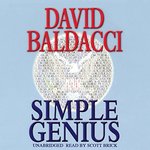
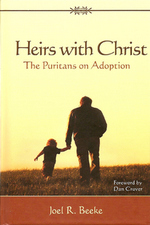
Operation: Endgame Simple Genius Heirs with Christ
4 Stars 2 1/2 Stars 3 Stars
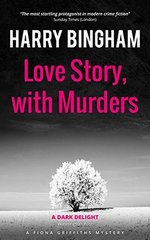
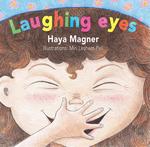
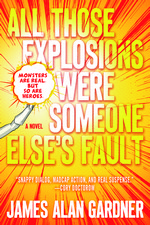
Love Story, With Murders Laughing Eyes All Those Explosions Were Someone Else's Fault
4 Stars 2 Stars 4 Stars
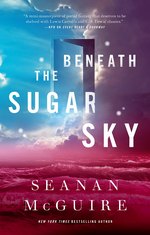
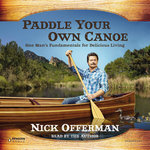
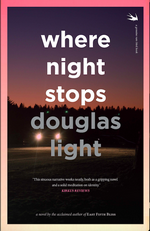
Beneath the Sugar Sky Paddle Your Own Canoe (Audiobook) Where Night Stops
5 Stars 2 Stars 4 Stars
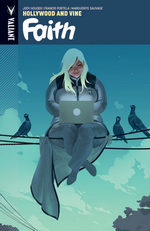
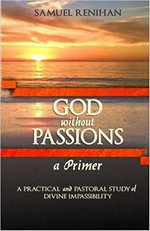
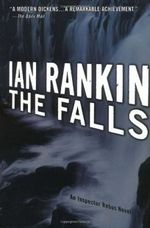
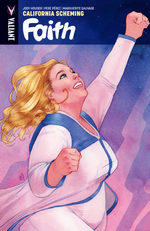
Faith: Hollywood & Vine God without Passions: a Primer The Falls
3 Stars 3 Stars 4 Stars
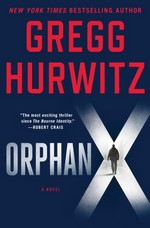
Orphan X The Unbelievable Story of How I Met Your Mother Faith: Hollywood & Vine
3.5 Stars 3 Stars 3 Stars
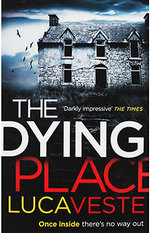
Profane Fire at the Altar of the Lord Silence The Dying Place
3 Stars 3 Stars 4 Stars
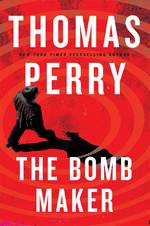
The Bomb Maker            
3.5 Stars            

Still Reading:

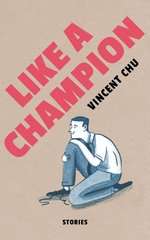
Volume 9: Sermons to the Church Sanctification Like a Champion

The few books I’ve managed to post about:

Book Challenge Progress:

Angel's Guilty Pleasures Simple Genius by David Baldacci, Scott Brick
All Those Explosions Were Someone Else’s Fault by James Alan Gardner
Paddle Your Own Canoe: One Man’s Fundamentals for Delicious Living by Nick Offerman
The Falls by Ian Rankin
Orphan X by Gregg Hurwitz
The Bomb Maker by Thomas Perry (link to come)

Laughing Eyes by Haya Magner, Miri Leshem Peli
Where Night Stops by Douglas Light
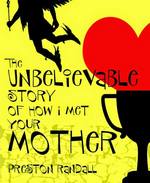
The Unbelievable Story of How I Met Your Mother by Preston Randall
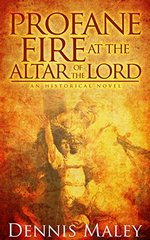
Profane Fire at the Altar of the Lord by Dennis Malley
All Those Explosions Were Someone Else’s Fault by James Alan Gardner
Paddle Your Own Canoe: One Man’s Fundamentals for Delicious Living by Nick Offerman
God without Passions A Primer: A Practical and Pastoral Study of Divine Impassibility by Samuel Renihan
Orphan X by Gregg Hurwitz
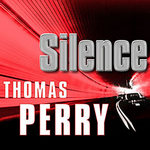
Silence (Audiobook) by Thomas Perry, Michael Kramer

Laughing Eyes by Haya Magner, Miri Leshem Peli
Where Night Stops by Douglas Light
The Unbelievable Story of How I Met Your Mother by Preston Randall
Profane Fire at the Altar of the Lord by Dennis Malley
Operation: Endgame by Pip Ballantine and Tee Morris

✔ Read a self published book: Profane Fire at the Altar of the Lord by Dennis Malley

How was your month?

Profane Fire at the Altar of the Lord by Dennis Malley

Revised after being inspired by a comment from Bookstooge to talk about something I really should’ve included initially.

Profane Fire at the Altar of the LordProfane Fire at the Altar of the Lord

by Dennis Maley


Kindle Edition, 314 pg.
Jublio, 2018

Read: January 19 – 23, 2018


Infamous papal indulgence-seller, Tetzel is falling out of favor with the German people — which means economic trouble for him, as well as those he’s paying to assist him. One such person is David, a little person (“dwarf” in sixteenth-century eyes), a con man, juggler, and entertainer. He gets himself in some legal trouble and draws upon his dubious ethnicity and a character he played to some success in the past and convinces the court that he’s a member of one of the Lost Tribe of Israel, living in Arabia, sent to Europe to secure partners in a new Crusade. To stay out of legal trouble, he has to embark on a tour of various cities to try to recruit the help of assorted kings, bankers and Bishops of Rome. Along the way, David finds a kindred spirit in Diogo, a womanizing actor hiding out as a deckhand on a merchant ship. Diogo joins David as an assistant, translator, and more.

The backdrop to these antics is a loose survey of early sixteenth-century history of Europe — the politics, diplomacy, and wars the characterize the relations between France, Spain, England, the Holy Roman Empire, German princes, German peasants, and the Popes. As I said, it’s a loose recounting, told mostly in summary form with a conversational tone.

Watching these two lie, deceive and sneak their way through the hearts and purses of Europe is a good time. I could have used a couple of female characters that were better drawn, but David and Diogo are an amusing pair. At one point, a rift between the two arises and one of them begins to believe their own press (among other things) and their lives get more interesting.

Despite the title, there’s really nothing that is satirical about religion — true believers, anyway. David and Diogo are shown as scoundrels throughout. Tetzel’s appearance is fairly matter-of-fact about what he did, Tyndale and Luther are mentioned frequently, but only for what they actually did (true, colored by popular mis-characterizations of their work, but not done to insult/defame/mock them). The various Popes and Cardinal Wolsey are discussed in terms of their political machinations (mostly having to do with becoming/staying Pope). When it comes to people of actual religious belief (Lutheran, Roman Catholic, Jewish or Kabbalistic), Maley is pretty-hands off, he doesn’t comment at all about the belief — yeah, several people are duped by these scoundrels, but that doesn’t mean that their faith isn’t real.

In the Acknowledgements, the author states that this “book’s purpose is to entertain. The standard of its scholarship is low. I am not a historian.” It’d be nice if that came before the text, so I didn’t spend so much time hemming and hawing about some of the history/depictions of historical characters.

Actually, now that I mention it — this novel would’ve been stronger without all the historical ramblings — yes, they were amusingly told. But it added nothing to the story. Not just because as a reader, you need to take his history with a generous helping of salt; but all the history primarily served to distract the reader and detract from the story of these con men. Yes, some of it — some — was helpful for some context, but the other 97-95% of the historical material could have been excised to help the rest of the novel.

Nevertheless, this was a funny story with some amusing characters. This wasn’t a typical religious-fraud satire, although it easily could’ve been — and that’s to be commended. Like many satires, Maley had some trouble toward the end and the plot threatened to get away from him — but he was able to bring things back into shape by the conclusion, which is a pretty neat trick, too. Flawed, but entertaining, it’s worth a shot.

Disclaimer: I received this book from the author in exchange for my honest opinion in this post. I thank him for the shot.

—–

3 Stars

✔ Read a self published book.

The Unbelievable Story of How I Met Your Mother by Preston Randall

The Unbelievable Story of How I Met Your MotherThe Unbelievable Story of How I Met Your Mother

by Preston Randall
Kindle Edition, 40 pg.
BookRix, 2016

Read: January 20, 2018


Daniel Zurenski is 40 (or so) and lives in the same basement room he’s been in since he moved out of the crib, he has an okay job (not that many coworkers are aware he exists, but the job is okay), and is pretty out-of-shape. He seems to be an all-right guy who maybe has a problem with emotional eating, zero love life, and a less-than-healthy attachment to his mother. He’s on a little bit of a fitness kick at the moment — he ran a 5K with people from his office a few weeks back and now finds himself signed up for the city marathon.

But before he can get there, comedy strikes. Poor Daniel. But ultimately, good for Daniel (see the title, you know it’s going to have a happy ending). But before the good, comes a lot of . . . well, things he can laugh about later — and the reader can laugh at now.

Before we get to that, however, we have to get through some more character introductions, which are really just ways for Randall to set up some dominoes to knock over when the time is right. This is done pretty well, at a certain point, you understand just what he’s setting things up for, and the details approach overkill. But stay with him — they’re really not that bad, and everything he sets up has a purpose. Once he starts knocking over dominoes, it’s all worth it.

The humor is gross, quite simply. And very slap-sticky. But if you can handle the gross, and enjoy the slap-stick, it’s really well done (not the easiest thing in the world to pull off, either). And then after the slap-stick comes the title event, which is nice. I think the epilogue-esque material could lose a couple of paragraphs and be better off for it, but that’s a minor quibble.

It’s short, it’s cute, it’s more narratively satisfying than another recent work with a similar title. Randall’s short story is worth the time, give it a shot.

—–

3 Stars

Where Night Stops by Douglas Light

Where Night StopsWhere Night Stops

by Douglas Light

eARC, 252 pg.
Rare Bird/Vireo, 2018

Read: January 12 – 13, 2018

She smells of lemons and warm cinnamon and isn’t very pretty. Sliding onto the barstool next to me, she says, “Can I sit here?”

The bartender, the woman, and me — we’re the only people in the bar. She can sit anywhere. It’s not just a seat she wants.

I study her a moment then catch the bartender’s eye, the order is placed without a word. Whatever the woman wants. Alcohol, like long marriages, has a language of its own, one not composed of speech.

Now, that’s how you start a novel.

So, our narrator is orphaned the night after his high school graduation — however odd it may feel to call someone on the cusp of adulthood an orphan, he is one (and the back of the book says so). Suddenly his college dreams, plans for the future are gone, as is his past (other than memories). He finds his way from Iowa to Seattle and takes up residence in a homeless shelter. The closest thing he has to a friend there sets him up with a way to make some money — more than he’d been able to scrape together from an under-the-table gig at a gas station.

It’s obviously not above-board, but it’s good money. What else is a kid with no ties to society, no dreams, no means and nothing better to do? We bounce back and forth between the opening scene (and what follows) in the bar and his burgeoning criminal career. He bounces all of the globe playing small roles in what are likely significant crimes. The resulting story is a combination of tragedy, comedy of errors and Bildungsroman. All of which leads up to a concluding scene that is at once unexpected and the only appropriate thing that could’ve happened.

As a reader. you’re never impressed with our narrator’s choices. You may understand them, but it’s hard to be behind them. Especially because after a certain point, our young man makes a giant mistake. The reader knows this — and has to hope that whatever he does, he figures out his mistake or gets out of this life soon.

The plot’s decent and will carry you along well enough. But it’s not why you will stick with this book (at least not primarily), it’s Light’s writing. In the middle of all this, there are sentences like, “Walking the empty night street, my kidneys rattled with anxiety.” I’m pretty sure this is biologically nonsensical (I haven’t bothered to check with my son’s nephrologist, but I was tempted to), but that doesn’t stop it from being incredibly effective — you know precisely what Light’s going for there, and in the moment, your kidneys felts a little weird. There’s something to his writing that made me stop every so often to re-read a sentence or paragraph or passage — not because I missed something or didn’t understand what was happening, but because Light captured a moment, an idea, or phrase in such an engaging way that I didn’t want to move on.

I’m not sure if this is a very literary thriller, or a literary novel playing with thriller tropes. Nor am I sure that I care, but this is the kind of book that can appeal to both target audiences. It’s a good example of either genre, and a better example of why the distinctions are specious. There’s an interesting crime story here; a character study; a look at what happens to someone who has no connection to his future, society, or his past — oh, and it’s a good read, too.

Disclaimer: I received this ARC in exchange for my honest opinion about the novel, I appreciate the opportunity, but it didn’t influence the above.

—–

4 Stars

2018 Reading Challenge: Indie-Fever!

One more 2018 Reading Challenge: Indie-Fever!


(text stolen from the sign-up page)

‘Read & Review as many Indie Books as you can!’

Points to Know:
1. Read and Review as many Indie (Self Published) Books as possible during this year.
2. You do not have to be a blogger to participate. However, you have to post a review on some site in order to participate. It can be on Goodreads and/or Amazon and/or Barnes & Noble and/or Smashwords.
3. If you are a blogger link up your permalink to the review posts. If you aren’t a blogger, then link up the permalink to your reviews from whichever site you have chosen to post the review on.
4. The books can overlap with other reading challenges.
5. Books read may be any form (audio, print, e-book).
6. Post your links to your reviews each month to share with other participants.
7. The challenge runs from January 1, 2018 to December 31, 2018. Its never too late to Join In!

Sign Up Here. I’m at least going for the Amateur level, maybe the Lover.

I’ll be tracking my reads here or you can see the posts about the books here.

Page 10 of 10

Powered by WordPress & Theme by Anders Norén