Category: Blog Series Page 71 of 220

The Friday 56 for 8/4/23: All the Sinners Bleed by S. A. Cosby

Had to take a break last week due to posting toooooo many things. But I’m back to my typical trickle 🙂

The Friday 56This is a weekly bloghop hosted by Freda’s Voice.

RULES:
The Friday 56 Grab a book, any book.
The Friday 56 Turn to Page 56 or 56% on your ereader. If you have to improvise, that is okay.
The Friday 56 Find a snippet, short and sweet.
The Friday 56 Post it.

from Page (55 and) 56 of:
All the Sinners Bleed

All the Sinners Bleed by S. A. Cosby

He’d put the phone back in the evidence bag after fighting the urge to put it under his front tire and roll over it five or six times, then set it on fire. Titus had seen his share of horrific things in his twelve years as an FBI agent. The ability of one human to visit depravity upon another was as boundless as the sea and as varied as there were grains of sand on a beach.

The images on [redacted]’s phone were the worst he’d ever seen.

He kept thinking about purification by immolation. It seemed like that was the only thing that could remove the stain of those images from his mind, his heart, his soul. Burn the phone. Scald his eyes with hot oil. Put [redacted] and [redacted] on a pyre and reduce them both to ashes, then scatter those ashes to the four winds. Erase all proof of their existence and the things they had done. But the children in those pictures deserved to have their story told. They deserved justice. Whatever that was these days.

WWW Wednesday, August 2, 2023

I’m spending a few hours in a hospital waiting room today (nothing to worry about, just one of those things), so I’ve got a lot of good, uninterrupted reading time ahead of me and a Kindle with a full battery (and probably more books downloaded than I need to get me through the day). Let’s get on with the WWW and here’s hoping you all have a less interesting day.

This meme was formerly hosted by MizB at A Daily Rhythm and revived on Taking on a World of Words—and shown to me by Aurore-Anne-Chehoke at Diary-of-a-black-city-girl.

The Three Ws are:

What are you currently reading?
What did you recently finish reading?
What do you think you’ll read next?

Easy enough, right?

What are you currently reading?

I’m reading Spirelli Paranormal Investigations: Episodes 1-3 by Kate Baray (a Literary Local). I’m taking a couple of days off from work, so I don’t have an audiobook going.

Spirelli Paranormal Investigations: Episodes 1-3

What did you recently finish reading?

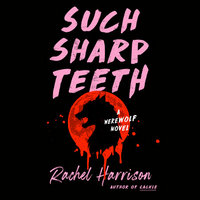
I just finished S. A. Cosby’s All the Sinners Bleed and will hopefully be able to say something coherent about it soon. Or maybe I’ll just post a few dozen exclamation points with a link to the Bookshop page. I also just finished Don’t Hang Up by Benjamin Stevenson, narrated by: Luke Arnold, Sibylla Budd on audio. I’ll get into it soon (hopefully), but basically–you want to listen to this, but don’t start it unless you have a window long enough to listen to it all–you will not want to push “pause.”

All the Sinners BleedBlank SpaceDon't Hang Up

What do you think you’ll read next?

My next book should be Stone of Asylum by Hilarey Johnson (another Literary Local who you will be hearing from soon!) and my next audiobook should be Killers of a Certain Age by Deanna Raybourn, narrated by: Jane Oppenheimer & Christina Delaine.

Stone of AsylumBlank SpaceKillers of a Certain Age

How are you kicking off August?

A Few Quick Questions With…Joyce Reynolds-Ward

Back in January, Joyce Reynolds-Ward was one of the first to participate in my Literary Locals Q&As, and I really enjoyed that. This morning I posted my take on her novel, Klone’s Stronghold (5 months after I’d hoped to). I’m pleased to welcome her back to this space to talk about her writing in particular. I focused on Klone’s Stronghold, but encouraged her to talk about her writing as a whole.

We’ve gone over your writer’s bio before, but I wanted to follow up on a couple of things. First, could you talk about your path to publication and what sparked your desire to write? Also, your bio mentions that your “work includes…(whenever possible) horses,” [in much the same way that mine would say (whenever possible) My first memory of writing was when I was about eight or nine years old, typing a fanfiction about Mighty Mouse. I don’t remember anything else about it, but a couple of years later, I started MY version of the Black Stallion story, featuring a girl and her palomino Thoroughbred mare. I’ve always told myself stories, whether they were about something I read or saw on TV, then, later, my own stories.

Horses? Well, I’m a person who has loved horses my entire life. My maternal grandfather was a chicken farmer who was a workhorse trainer on the side, specializing in rehabs and wild horses. Because he focused on workhorses, I don’t have the fancy backstory that some current horse trainers and show people do—or the connections. My old mare Mocha has been with me for eighteen years now, and I’ve learned a lot from her.

There’s also not a lot of adult-oriented stories that involve horses (Klone’s Stronghold is the rarity of my work that doesn’t have one wandering through it). The ones that do either have inaccuracies that make me want to throw the book across the room, or they focus on high-visibility equestrian sport that isn’t Western-oriented. Very little out there features normal, everyday people who ride horses and horses that are just normal, everyday horses. In the SFF realm, the only horses I’ve seen that really resemble actual equines I’ve known are either written by Judith Tarr or C.J. Cherryh (the Riders duology is absolutely perfect at tagging the twisted equine sense of humor).

Authors have dozens of ideas percolating at once (if not more), what was it about the idea that became Klone’s Stronghold that made you decide it was the one you wanted to focus on for a few months? Can you remember what nugget started that book?
Oh, this one is easy. Going over the Oregon Blue Mountains on Highway 204, there’s a little gravel road that’s labeled “Klone Lane.” I kept poking and poking at the notion of an isolated scientist doing genetic experiments in the backwoods of Northeastern Oregon, because it really did seem like an ideal location for a contemporary version of Frankenstein, The Island of Dr. Moreau, or other books of that ilk. It’s also a location for a LOT of Sasquatch sightings.

A second piece was attending multi-day outdoor music festivals at several venues in the Willamette Valley, along with the Oregon Country Fair.

Finally, I think Stronghold was intended to be my Zenna Henderson book. I really love how she folded her teaching experience into her stories and I tried to channel that mode when writing Stronghold.

Maybe this falls into the “are you a pantser or a plotter” discussion that everyone asks about, but given the elaborate—or at least widely varied—supernatural species (for lack of a better term) you have here, did you just sort of wing it and introduce ideas/races/abilities as you went along, defining them as you needed at the time—or did you work it all out in detail before hand?
I totally pantsed these supernatural species. That meant I needed to spend more time in rewrites trying to make it all fit, but it was my attempt to come up with something that wasn’t the same-old, same-old European supernatural beings transferred to the New World. It’s part and parcel with something that I’ve struggled with over the years. I don’t want to appropriate Native American beliefs even though they are more appropriate for the area where I write—they aren’t mine, I haven’t been brought up in those cultures, and coming from the settler background that I do, I believe that I need to be mindful of these things. That’s why you won’t see me writing about sknwlkrs or wndg. The cultures that those beings come from have asked that people not from their cultures avoid writing about those beings, including using their full names (therefore why I’ve disemvoweled them) so I’m trying to be respectful.

It worked in Stronghold. But I’m still wrestling with the idea in other worlds. One problem with making it all up myself is that I—have to make it all up myself. That can be daunting sometimes, especially when writing paranormal contemporary stories.

Who are some of your major influences? (whether or not you think those influences can be seen in your work—you know they’re there)
I read widely and I think that shows up in my work. I’m influenced by a lot of contemporary Western writers whose writing integrates the Western landscape into their stories. Steinbeck. Ivan Doig. Laura Pritchett (I have workshopped with her). Luis Alberto Urrea. Norman Maclean. Jamie Ford (another person I’ve workshopped with). But also, within genre—Ursula K. LeGuin. C.J. Cherryh. Aliette de Bodard. Phyllis Irene Radford. Patricia Briggs. Laura Anne Gilman. Zenna Henderson. And many others.

In our correspondence, you described Klone’s Stronghold as one of your “lesser books.” Is there anything in particular that makes you say that? Is that a verdict that you come up with later, or while writing are you thinking “this isn’t going to be my best, but let’s see how it goes anyway”?
I don’t issue that verdict in the beginning, but after I’ve put a book out. It also somewhat reflects a change in my attitude about the stories I tell, as well as how they started to become an idea.

Klone’s Stronghold is a standalone book that doesn’t seem to want to become a series. Oh, I have ideas, and notions, but nothing that coalesces sufficiently to become a story. That’s why I call it a “lesser book.” I’ve tried to make it the best book that it could be, but it doesn’t want to be anything more than that. Nothing like my Martiniere interrelated series, or the Goddess’s Honor series, or the Netwalk Sequence series. All of the first books in those series were clearly bigger than the one book, and those characters had more to say. Reeni—has pretty much said what she wants to say. She’s done with telling her story, even though there are more things that could be written about in that world. It’s also a nice little book, but it doesn’t break any new ground in storytelling. It’s not a big breakout book. It’s a story I wanted to tell.

I have another one of that ilk that’s simmering in development. Dragons of the Raven Alliance is a retelling of the colonization of North America, only with dragons as human allies. It’s one of those worlds that maybe could become a series in the hands of another writer, but for me—it’s a one-shot book that will tell a nice little story. But again, nothing big, not a breakout book. However, there’s room for the nice little stories both in my writing schedule and amongst the general public readership. Another one is my cli-fi novel, Beating the Apocalypse. Like Stronghold, it started around setting and moods, then developed into characters.

That might be the major difference. What I consider to be my big books started with characters, not setting or moods. They fit the mold of “breakout books” or “upmarket fiction” more than these books do. Because the big books are character-based, they end up becoming longer, bigger stories over several books. The setting and mood books don’t usually have sufficient impulsion within their story arc to tell anything more than the one book.

Your site lists a lot of titles—you’ve been pretty productive. What is it about storytelling/writing that keeps it fresh for you? Is this a compulsion to keep going, or is it more pleasure? Along those lines, are there genres you are still hoping to try, or are you sticking in the lanes you’ve picked? Are there genres you don’t see ever trying?
It’s pretty simple. I just like telling stories. That said, most of those books are tied into series, particularly the Martiniere books. Those characters keep coming up with more elements and pieces to tell about their world (technically, worlds, since those books are set in a multiverse).

I keep trying to venture into steampunk and Weird West. I would dearly love to write more Weird West. But. I keep running into roadblocks because I am a settler descendant and I am rabidly self-conscious about what that means and avoiding problematic stereotypes. I’m putting more romantic elements into my work, though I doubt I’d write a straightforward romance. The Martiniere books are probably the closest I’ll come to upmarket or literary fiction, though who knows? Possibilities always exist, and I do have a historical political novel simmering based on past experiences.

What you aren’t likely to see from me is a police procedural or mystery. I used to love reading that genre, but it doesn’t hold any appeal for me as either a reader or a writer these days. A non-cross-genre literary or upmarket book isn’t likely to happen. I’ve thought about writing memoirs, but they just don’t appeal. Or humor. I’m not very good at it, and I know too many people who are really, really good at humor to even give it a whirl. Or splatterpunkish stuff (now I’m dating myself!).

What’s next for Joyce Reynolds-Ward, author?
Right now I’m developing a Martiniere subseries called The Cost of Power, with book titles of Prodigal’s Return, Prodigal’s Trial, and Prodigal’s Redemption. Return is complete. Originally, it was just going to be one book but it became much more than that. Besides the usual Martiniere science fiction western with corporate soap opera, family discord, multiverse and mind control elements, I’m also adding in a fantasy element based on the legend of Melusine of Lusignan, hearkening back to events that happened during the fur trapping era of the Pacific Northwest as well as the French Wars of Religion involving Catherine di Medici. I’m hoping to release it next spring in one-month intervals—at least that’s the plan. However it turns out, it’s not going to be the Marvel Cinematic Universe, for sure!

Along with that, I’m also developing the series sequel to my first fantasy series, Goddess’s Honor, called Goddess’s Vision. The Vision series will focus on the deconstruction of the failing Darani Empire and the need for the nations of that world to unite to battle the Outcast God and the Divine Confederation. This is roughly set in a Pacific Northwest-type world—all of it, not just the wet side! And yes, it has magical horses, a breed called daranvelii.

As far as releases are concerned, my first short story collection, Fabulist and Fantastical Worlds, will be released on August 15th. Fourteen of the seventeen short stories have been previously published; the remaining three have not. I have enough published material to create several other short story collections, though some will need additions to fill them out. Those will be forthcoming.

A far future political space opera, Federation Cowboy, is now with readers and will probably come out in October. Cowboy may or may not have sequels. Like Stronghold and Apocalypse, it’s been sitting around the hard drive in one form or another for several years. I have several other ideas like that which are just waiting to take form.

Beyond that? Who knows? I might take the time to put out a collection of the ski blogs I wrote years ago. Or something further than that.

We’ll see what happens.

Thanks for your time—and thanks for Klone’s Stronghold, I loved that world and characters.
Thank you so much for your time, and I appreciate that you loved that world and characters! It did not get a great reception in the Self-Published Fantasy Blog-Off competition and really did not benefit from its entry, alas. But even though I call it one of my lesser books, I still am fond of Reeni and Strug and the kids, and I really, really like its cover. That interior needs work, so at some point I’ll reissue it, and that might be enough to stir the ol’ backbrain to whip up another story in that world. Or not. Nonetheless, it is a story I like.


Klone’s Stronghold by Joyce Reynolds-Ward: Nothing—I mean Nothing—Is What It Seems In This Fantasy

That’s the best of a dozen headlines for this post. Which tells you something about the other eleven.
Joyce Reynolds-Ward participated in a Q&A with me about Writing Near Southwest Idaho earlier this year, and I’ve finally found the time to read one of her novels. She’ll be back this afternoon for a Q&A about this book, but first, allow me to ramble on a bit about it.


Klone's StrongholdKlone’s Stronghold

by Joyce Reynolds-Ward

DETAILS:
Publication Date: June 19, 2018
Format: eBook
Length: 226 pg.
Read Date: July 24-25, 2023
Buy from Bookshop.org Support Indie Bookstores

What’s Klone’s Stronghold About?

A year ago, Reeni escaped her abusive marriage—her ex-husband has turned into a stalker, he’s apparently a man of some status in the community and was able to get her fired from her job as a Special Ed teacher and Reeni’s on the verge of having to move a long way away just to find a new position. To add insult to injury, her family keeps trying to get her to reconcile with her ex.

Two dear friends convince her to attend a music festival with them—they love this band (she enjoys them, but isn’t going to be following them around like Deadheads). It’s a few days away from home, there’s no way that Karl is going to show up here. She needs some time in safety and peace to think about life. And if she happens to have a little fun? All the better.

Of course, it doesn’t work out. Karl shows up with some friends (or henchmen, your call). The band’s security takes care of them while Reeni finds a safe place to hide out. Before Karl had arrived, Reeni had struck up a friendship (or the beginning of one) with one of the security team—a supernatural of some kind. He comes to her with a proposal—he knows a guy who is working with a small group of supernatural people who are socially and educationally delayed, and are in need of a teacher to work on both areas. Due to the nature of their work and abilities, Karl won’t be able to approach her there; and she’ll get paid a very tidy sum if she commits for a few months in this out-of-the-way spot in the Eastern Oregon mountains.

Intrigued by the job—and desperate to get refuge—she agrees.

Because I’m struggling to finish this section, I’m just going to borrow from the official Description:

But things are not as they seem at the Stronghold, from the older proprietors of a nearby store and the Stronghold’s leader Alexander Reed Klone, to Reeni herself. She discovers it’s not just Karl who seeks to control who and what she is, but forces from her past that threaten her present. Can she learn the truth about herself and do what is needed in time to defend the Stronghold?

The Cozy That Could’ve Been

Sure, when Reynolds-Ward wrote this, cozy fantasy wasn’t really a thing (I’m sure it existed, but it was so far under the radar…), so it might not have crossed her mind to do this, but…

If she had abandoned the last 46% or so of the book and had just stuck with Reeni’s work in the classroom for a few months, letting us watch the progress she makes with her charges? I’d have been utterly charmed with it and would’ve likely enjoyed the novel more.

I’m not actually criticizing the last 46% of the book (most of it, anyway)—this is just a rabbit trail of a thought I had while reading this. That 46% results in a perfectly satisfying that I’m recommending, I’m just saying.

Now to try to turn this from an inadvertent criticism to something positive. I was interested in Reeni and her story and I was enjoying trying to figure out what was going on. But it was the moment that Reeni first started working with her students, connecting with them in a way that her employer didn’t see was possible that I got invested in this novel. I started caring about Reeni and her students then. Yes, the rest of the book was exciting, had magic flying about, secrets were revealed, and Big Things happened, etc. But the whole time, the back of my mind was asking—but what about the next week of lessons? When do we get back to that?

So, what did I think about Klone’s Stronghold?

I really could’ve focused on so many things here, Klone’s Stronghold is a target-rich environment for someone looking for things to write about. There’s Reeni’s attempts to escape her bad marriage, and worse husband. There’s her family’s reactions to her divorce (it’s eventually explained, but it makes it worse). There’s a twisting of religion. There’s something to explore with her great friends—new and old. You could go on and on about the supernatural species (or whatever you want to call them). But for various and sundry reasons I have to move on. Also, this could end up being 40 pages long if I let myself. You want a novel to inspire all kinds of rabbit trails for you to follow while reading? Look no further.

There are a couple of moments in the latter half of the book that I’m not sure we needed. Or at least we didn’t need all that Reynolds-Ward gave us. It’s tricky to talk about without spoiling—but it’s in the parts where Reeni is helped to understand what she learns about her background and family. Most of this section is really well done—and it’s all interesting. But parts of this take up a whole lot more space than I think they needed to—it dragged the story down, and didn’t illuminate much. With some trimming I wouldn’t have said anything at all.

Other than that, I found the pacing really well done—there’s a lot that Reeni goes through here—and the rate at which she experienced it and had to figure out how to deal with all she goes through was really well done—not just for Reeni, but for the reader.

There are so many scenes that make you stop and bask in them. Reynolds-Ward puts you in this world, and even when you’re trying to figure out exactly what’s happening because (for example) you haven’t worked out all the various kinds of supernatural beings there are—you can see and understand enough that it doesn’t matter.

I know that this wasn’t intended to be a series (or at least it didn’t become one)—and I don’t want to complain about a stand-alone (phew! Plotlines I don’t have to remember for books on end! I’m not signing up for a multi-year commitment!). But boy howdy, do I wish I could spend more time in this world. The general store (or whatever it should be called) and its owners along with the Stronghold and those that live there have all the makings of a setting you want to return to—even the band would be great to spend more time with.

That said, this was a very satisfying story that absolutely doesn’t end anywhere near where you think it will after the first couple of chapters. (which, incidentally makes it really hard to talk about).

I recommend this for people who want a very atypical fantasy (that brushes against SF, but not really) in a contemporary setting. Readers of Bledsoe’s Tufa novels might resonate with this. It’s a nice breath of fresh air. This is my first novel by Reynolds-Ward, but it won’t be my last (I’ve already got the next one picked out…and probably the one after that, too).


3.5 Stars

This post contains an affiliate link. If you purchase from it, I will get a small commission at no additional cost to you. As always, the opinions expressed are my own.
20 Books of Summer
Literary Locals logo

The Inside Scoop—What Did We Learn? A Wrap-Up of Sorts

Inside Scoop logo
Technically, Self-Published Author Appreciation Week is over (but it lives on in our hearts). I wanted to take a moment or two to look back at what I posted last week.


What Were Some of the Bigger Takeaways from These Posts?

bullet The biggest lesson I took away from this was that next time I do something on this or a similar scale, I really need to start putting the posts together much earlier than I did (and I did start early).
bullet Self-published authors want attention for their books (not unlike small-press or Big 5 authors, but more so). Not in a needy sense, or a “hey, look at meeeeee!” kind of way. But it is so hard to get anyone to see their books in the deluge of works published out there (2.3 million in 2021, for example), they will do a lot to put their name and books in front of a few eyeballs. We should all talk to people about their books in real life and online whenever we can—whether that’s what your online site/social media is about or not.
bullet The costs involved in putting out a good-looking book are significant. I’ve tried to be better about buying copies of self-published books I’ve been given to review. I’m going to get better about it. And they should all ask for more money for their books.
bullet The term “self-published” is a big misnomer. The number of artists, editors, and whatnot involved varies from “self” to “self,” but no one is alone in this thing.
bullet Most of these authors are uncomfortable with and/or don’t have time to do the marketing they should. Share/retweet/like/whatever their posts when you see them on various and sundry social medias.
bullet Their market really is international more and more. Which is just cool to see.
bullet Most of these authors like the autonomy/freedom/etc. given by self-publishing and wouldn’t want to get into the traditional publishing game. 20 years ago, I doubt anyone would’ve imagined that.
bullet These authors are highly self-motivated—but still, many of them have found ways to ensure they stay as productive as they want to.
bullet Mistakes and missteps are the best teachers out there. But advice and guidance from the community come in a close second—and it seems like everyone’s ready and eager to help others out.
bullet These people care about their work, they put blood, sweat, and tears into putting the best things out there they can.
bullet It’s been a long time since “vanity publishing” has applied to the majority of self-publishing. Readers as a whole need to get over that idea and recognize the quality of much of what’s being self-published today (I know too many hold on to the idea). But still, there are those hitting “publish” a little too early and should spend a little more time/money on their efforts.
bullet Along those lines, everybody judges books by their cover. Put in the effort to get something that looks good—the insides should look good, too, while we’re at it. You could be the next Hemingway or Atwood, but few will know that if it looks like your put your cover together with Microsoft Word.

Some Thanks

First, I want to thank Jodie at the Witty and Sarcastic Book Club for kicking this celebration off. Her enthusiasm for the project over the last 3(??) years is infectious.

Secondly, I want to thank my wife, kids, sister, and friends for their help in brainstorming titles and whatnot. Greg chipped in and improved some of my questions and added to them, making the whole thing better before I sent anything to the authors.

Lastly, I want to give heartfelt thanks to the authors that participated in things last week—I appreciate your time, effort, patience (especially when we kept sending each other the wrong files—or forgot to send them), honesty, and everything else.

In case you missed any (or want an easy way to find them again), here’s the list of authors and links to their Q&A About Self-Publishing:

JCM Berne
Jeremy Billups
James Lloyd Dulin
Andi Ewington
Jonathan Fesmire
Robert Germaux
(Germaux’s Guest Post)
Matthew Hanover
Shannon Knight
Rebecca Carey Lyles
Michael Michel
H.C. Newell
Raina Nightingale
(Nightingale’s Guest Post)
e rathke
Alex Robins
Ian Shane
Tao Wong

Remember these names—you will be seeing them all here again in one form or another. Hopefully soon. Definitely before the next SPAAW. For any of them that happen to be reading this. I seriously cannot thank you enough. And, as I said before, any time you’re in the Boise area—the first round of drinks (of your choice/preference) is on me, just let me know.


Self-Published Authors Appreciation Week Footer

The 2023 Self-Published Authors Appreciation Week Logo was made by Witty and Sarcastic Book Club

Saturday Miscellany—7/29/23

I really didn’t think I took the time this week to do much online to provide fodder for this post—looks like I was wrong about that. Which is kind of cool.

It’s been a strange week in general—as anyone who subscribes to/follows this blog in any form has noticed—I have been busy with the posts. Also, my big plan for getting all of those posts prepped early to give me a catch-up week was derailed by forces outside my control (including a bonus day with the grandcritter, in which I could care less about this space). So instead of catching up on everything these last five days, I’ve managed to dig a bigger hole for myself. At this point, I’ve given up on the notion of catching up. (or so I tell myself)

I also received my first offer to get paid for reviewing books this week, so I feel like I’ve truly arrived (no, not by a magazine or anything, but by one of those scam-my groups).

I promise that next week will be quieter on the posting front. I think I’ve overwhelmed everyone. (hope you all found something you like, though!)

Odds ‘n ends about books and reading that caught my eye this week. You’ve probably seen some/most/all of them, but just in case:
bullet The untold story of California’s most iconic outdoor bookshop—I’ve gotta check this place out
bullet Gotta get back in time: The current explosion of time travel novels goes beyond sci-fi and fantasy
bullet 10 Novels that Borrow, Sample and Remix Found Texts: Tom Comitta, author of “The Nature Book,” recommends literary supercuts
bullet Weird, funny, dark children’s books that I can recommend (as an adult, however).—this is a shopping list I didn’t need (but will likely start working on soon)
bullet How to Assemble the Perfect Cozy Mystery Meal—Olivia Blacke demonstrates her knowledge of Cozy Mysteries with this fun post.
bullet Read W. H. Auden’s 1954 review of The Fellowship of the Ring.—to commemorate the anniversary of Fellowship‘s publication, LitHub revisited Auden’s review of the book. Because who else would you turn to? Anyway, I love reading this poet in the 50s sound like a fanboy/fangirl blogging today.
bullet Fictional World We’d Love to Be A Part Of—Bookstr has a nice listicle of places that sound better to live in than this oven of a planet
bullet What Do We Want From the Bookish Internet?—I think Templeton asks all the right questions here…who is going to answer them?
bullet In case you hadn’t noticed, this week was Self-Published Authors Appreciation Week—Most/All of the posts are listed here—if you missed any, here’s the way to fix that.
bullet I’m tempted to post links to all the entries, but no one has time for that (although most of them deserve it). So I’ll just pick one post that I want to focus on from that series is Bookblogger Novel of the Year and Self-Published Books—a listing of all the self-published entries in the competition
bullet Five Year Blogiversary!—Congrats to Sifa Elizabeth Reads for the achievement—I enjoyed this way of commemorating it, too.
bullet Blogiversary #6—Reading Ladies Book Club also just hit an anniversary. This mix of lessons learned, advice, and stats is the kind of thing I can dig deep into.
bullet How and Why I Built a Bookselling Monster—you gotta check this out. I love it (and really don’t want to see it IRL (both can be true)).
bullet Meet The Bloggers: Beth from Before We Go
bullet Guest Post: Insiders by Shannon Knight—to commemorate the book’s 6 month anniversary, Knight dropped by The Shaggy Shepherd to talk about Insiders

A Book-ish Related Podcast episode (or two) you might want to give a listen to:
bullet Crime Time FM VERN SMITH In Person With Paul—they talk about Jacked (a favorite anthology), Scratching the Flint (that fantastic read), writing in general, and so much more.
bullet Fiction Fans podcast marks its 100th episode by looking at The Fellowship of the Ring by J.R.R. Tolkien—which didn’t inspire me to re-read the book/series only because I went through them last year. Otherwise, it would’ve.

This Week’s New Releases that I’m Excited About and/or You’ll Probably See Here Soon:
bullet I apparently was so excited about this one that I mentioned it last week. Whoops. For the sake of accuracy: Mrs. Plansky’s Revenge by Spencer Quinn—A septuagenarian heads to Romania to get her money back from phone scammers. That premise and Quinn’s knack for writing has to make this a winner.
bullet Not Prepared by Matthew Hanover—A bachelor takes in his eleven-year-old-goddaughter when her mother skips town, and maybe finds love, too. This’ll steal your heart. I enthused about it recently (and will at the drop of the hat). =
bullet Light Bringer by Pierce Brown—the sixth installment in the Red Rising saga is out, and will surely get me overusing the word “brutal” when I think about/write about it. I really want to read it, and am stressed out about it, too. (no joke)
bullet A Fatal Groove by Olivia Blacke—involves no stress at all—it’s simply a fun time looking into the murder of a town’s mayor and trying to solve a decades-old bank robbery. Okay, that sounds like it should be stressful, but Blacke wouldn’t do that to her readers. I talked about it some last week.
bullet Death on the Beach by Steph Broadribb—the Retired Detectives are back to prove that a realtor was murdered (and uncover the killer) while dealing with internal stressors of their own.
bullet Speech Team by Tim Murphy—”a literary mashup of The Breakfast Club and The Big Chill.” “A funny, gossipy and ultimately poignant novel about four Gen X teen friends turned 21st-century adults who awkwardly come back together to confront an influential teacher whose brutal remarks have haunted them all for years.”

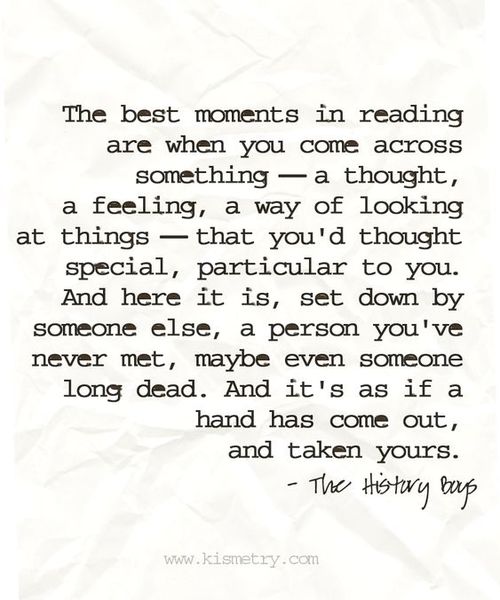
Reading deep books make you cry over someone else's dasness when you can't identify your own.

The Irresponsible Reader On…Self-Published Crime Fiction

(updated 7/28/23)
Self-Published Authors Appreciation Week

From the first moment that people did the strange thing of asking me to talk about their books on my blog, I’ve been impressed by the quality of a lot of what’s been published by authors going out on their own, taking all the risks, shouldering all the responsibility and doing all the work to get their words, their dreams, their blood, sweat, and tears. This should be celebrated—it’s definitely appreciated, as we’re trying to show this week.

In addition to the Q&As and Guest Posts I have this week, I’m also continuing my habit of highlighting the self-published works that I’ve blogged about over the last few years—just a sentence or two.  Hopefully, this’ll be enough to make you click on the link to the full post. Beyond that, it’d be great if I inspired you to add a few of these to your TBR. Also, be sure you check out the other posts over at the SPAAW Hub.

Last, but certainly not least for this week, my apparent specialty: Crime Fiction–vigilantes, police, private eyes, people who have no business at all near a crime…you name it, I love this stuff. This tl;dr list also proves that I was right to break these lists down by genre.

bullet Kind Hearts and Martinets by Pete Adams—a near-to-retirement D. I. with a rag-tag team investigates terror threats, murders, and bike thefts.
bullet Cause and Effect: Vice Plagues the City (my post about it)
bullet Irony in the Soul (my post about it)
bullet Cats, Cannolis and a Curious Kidnapping by Cheryl Denise Bannerman—a mystery writer finds herself the target of a kidnapper and has to employ everything her characters have done to save her own life. Which sounds more dire than this cute novel actually ever achieves. (my post about it)
bullet The City That Barks and Roars by J. T. Bird—Anthropomorphic animals in a 1950s-esque civilization, a pair of detectives hunting for a missing colleague. (my post about it)
bullet Death Stalks Kettle Street by John Bowen—a man with pretty severe OCD is sure that people in his neighborhood are being killed, but the authorities don’t see it–and his turn is coming. (my post about it)
bullet DI Hannah Robbins by Rebecca Bradley—DI Hannah Robbins novels follow Robbins and her team as they solve murders–she’s got a great team and the novels have some of the best hooks around.
bullet The Twisted Web (my post about it)
bullet Kill for Me (my post about it)
bullet Dead Blind by Rebecca Bradley—A Detective adjusting to prosopagnosia (“face blindness”) tries to keep the condition under wraps while leading his team investigating an international organ smuggling ring. Great hook, strong execution. (my post about it)
bullet The Butcher by Nathan Burrows—a darkly comic tale about brothers struggling to keep their farm and butcher shop alive, until they develop a new sausage recipe. (my post about it)
bullet The Shoulders of Giants by Jim Cliff—A rookie P.I. (inspired more by fiction than reality), is on the hunt for a missing college student. (my post about it)
bullet Bad Memory by Jim Cliff—this novella finds Jake Abraham looking into an old closed case and forces it open. (my post about it)
bullet Don’t Get Involved by F J Curlew—a slow burn of a novel about some street kids in Kyiv who find a large amount of drugs and a Scottish teacher in town to help their schools. (my post about it)
bullet Criminal Collective by Russell Day—a collection of short stories and a novella from one of my favorite crime writers. (my post about it)
bullet Jeremy Barnes by Robert Germaux—tired of teaching, Jeremy Barnes becomes a P.I. These books have a very Spenser-vibe to them and are great comfort food.
bullet Hard Court (my post about it)
bullet In the Eye (my post about it)
bullet Small Bytes (my post about it)
bullet Daniel Hays Mysteries by Robert Germaux—Daniel Hays heads the Special Assignment Squad —- a Major Crimes squad set up to help smaller cities in the county around Pittsburgh–hunts down serial killers in these entertaining thrillers.
bullet Small Talk (my post about it)
bullet One by One (my post about it)
bullet DC Smith Investigation by Peter Grainger—I’ve listened to these on audio, but the novels are self-published. Smith is a former DCI who’s voluntarily demoted down to Detective Sergeant so he can actually work cases–in his own idiosyncratic way. There is something indescribably charming about these books, I can see myself re-reading these for years.
bullet An Accidental Death (my post about it)
bullet But For the Grace (my post about it)
bullet Luck and Judgement (my post about it)
bullet Persons of Interest (my post about it)
bullet In This Bright Future (my post about it)
bullet The Rags of Time (my post about it)
bullet Time and Tide (my post about it)
bullet A Private Investigation (my post about it)
bullet The Truth (my post about it)
bullet King’s Lake Investigations by Peter Grainger—I’ve listened to these on audio, but the novels are self-published. This series tells what happens after DS Smith leaves Kings Lake, following those he trained and left as they form the backbone of the new Murder Squad. They’re just as good.
bullet Songbird (my post about it)
bullet On Eden Street (my post about it)
bullet Roxanne (my post about it)
bullet Catch & Neutralize by Chris Grams—Members of a vigilante group that takes down criminals who’ve gotten away with crimes against women and children find themselves in a very hairy situation. (my post about it)
bullet Fatal Forgery by Susan Grossey—as 19th Century British Policing begins to take a new shape, a magistrate’s constable investigates a new kind of financial crime. (my post about it)
bullet DoubleBlind by Libby Fischer Hellmann—a PI looks into suspicious deaths following COVID vaccines while dealing with people who think she’s a wife who ran away from a cult. Eventually, she has to stop and figure out what’s going on with her doppelgänger for her own sake. (my post about it)
bullet The Secret of Rosalia Flats by Tim W. Jackson—following the death of his father, a man returns to his Caribbean island childhood home to look into what happened. (my post about it)
bullet Afton Morrison by Brent Jones—the story of a Children’s Librarian with impulses to become a serial killer. No really. It’s twisted. It’s fun. It has some heart, too.
bullet Go Home, Afton (my post about it)
bullet See You Soon, Afton (my post about it)
bullet Nice Try, Afton (my post about it)
bullet Time’s Up, Afton (my post about it)
bullet Harvested by Troy Lambert—a PI starts looking into a rash of dognappings sweeping across Seattle and uncovers something chilling. (my post about it)
bullet Cutthroat Cupcakes by Cate Lawley—I maybe should’ve included this on the Fantasy and UF lists, too. But Lawley describes these as cozy mysteries, so I’ll stick with that. The owner of an artisan candy shop is arrested by magic police for selling cursed items that have been used to kill someone. It’s a rough way to learn that magic exists. She works with the detective to find the actual killer to clear her name. (my post about it)
bullet Cooking for Cannibals by Rich Leder—an Ex-con trying to go straight, a behavioral gerontologist, and a group of senior citizens get into hot water with an experimental drug and competing criminal organizations. (my post about it)
bullet Let There Be Linda by Rich Leder—I can’t sum this up in a sentence or two–a comic crime novel set in L.A. full of interweaving plotlines. (my post about it)
bullet McCall & Company: Workman’s Complication by Rich Leder—a struggling actress takes over her late father’s P.I. Agency (my post about it)
bullet The Lion’s Tail by Luna Miller, Aidan Isherwood (Translator)—a retired physician turns to a new career as a P.I. An early case turns out to be too much for her to tackle on her own and she recruits some help from people in her neighborhood, creating her own Baker Street Irregulars. (my post about it)
bullet San Diego Dead by Mark Nolan—a modern-day privateer and his dog are on the run from a vengeful drug mob. (my post about it)
bullet How the Wired Weep by Ian Patrick—you’re not going to see me say something negative about a Patrick novel, but this one is special. a Gut-wrenching, taught look at a police informant and his detective handler as they try to take down a local drug lord. (my post about it)
bullet The Warrior Series by Ty Patterson—Once upon a time, I think we’d call these books “Men’s Adventure” novels. Former Delta operative (and some friends) now run a covert-ops group.
bullet The Warrior (my post about it)
bullet The Reluctant Warrior (my post about it)
bullet Dead Down East by Carl Schmidt—a part-time PI gets sucked into investigating the death of his state’s governor (my post about it)


If you’re a self-published author that I’ve featured on this blog and I didn’t mention you in this post and should have. I’m sorry (unless you’re this guy). Please drop me a line, and I’ll fix this. I want to keep this regularly updated so I keep talking about Self-Published Authors.
Self-Published Authors Appreciation Week Footer

The 2023 Self-Published Authors Appreciation Week Logo was made by Witty and Sarcastic Book Club

The Irresponsible Reader On…Self-Published Urban Fantasy

(updated 7/28/23)
Self-Published Authors Appreciation Week

From the first moment that people did the strange thing of asking me to talk about their books on my blog, I’ve been impressed by the quality of a lot of what’s been published by authors going out on their own, taking all the risks, shouldering all the responsibility and doing all the work to get their words, their dreams, their blood, sweat, and tears. This should be celebrated—it’s definitely appreciated, as we’re trying to show this week.

In addition to the Q&As and Guest Posts I have this week, I’m also continuing my habit of highlighting the self-published works that I’ve blogged about over the last few years—just a sentence or two.  Hopefully, this’ll be enough to make you click on the link to the full post. Beyond that, it’d be great if I inspired you to add a few of these to your TBR. Also, be sure you check out the other posts over at the SPAAW Hub.

Today we’re going to be looking at Self-Published Urban Fantasy. Magic-users of various stripes, creatures that’ll push your imagination, and more dragons than show up on my Self-Published Fantasy list, believe it or not. There’s a lot to dig into here.

bullet Nice Dragons Finish Last by Rachel Aaron—A nice-guy dragon learns how to get by in a dragon-eat-dragon world with the help of a human mage on the lamb from the mob. (my post about it)
bullet Justice Calling by Annie Bellet—a magic user on the run, living among a bunch of shape-shifters, is accused of killing some. She works to clear her name, save her friends, and stay off the radar of those hunting for her. (my post about it)
bullet Hostile Takeover by Cristelle Comby—a P.I. who is the emissary of Hades’ daughter on Earth investigates some mysterious deaths. (my post about it)
bullet Bad Little Girls Die Horrible Deaths and Other Tales of Dark Fantasy by Harry Connolly—a collection of short stories that I still think about. (my post about it)
bullet Twenty Palaces by Harry Connolly—I loved this UF series, but sadly was one of the few who read it. After the publisher declined to keep going with it Connolly has published a prequel and a sequel—with more on the way.
bullet Twenty Palaces—the prequel to the whole thing (my post about it)
bullet The Twisted Path (my post about it)
bullet The Iron Gate—catches up with our heroes and throws them into a life-changing situation (even for people in their…circumstances), a great way to resume the series. (my post about it)
bullet Ella Grey Series by Jayne Faith. A minor demon hunter in a slightly-futuristic Boise finds herself tangling with some major powers.
bullet Stone Cold Magic (my post about it)
bullet Dark Harvest Magic (my post about it)
bullet Demon Born Magic (my post about it)
bullet Blood Storm Magic (my post about it)
bullet Bloodlines by Peter Hartog—an Urban Fantasy/Science Fiction/Detective mashup in a world that looks not dissimilar from Scott’s Blade Runner, powered by magic, and that has pan-dimensional aliens walking around. (my post about it)
bullet Pieces of Eight by Peter Hartog—the sequel to Bloodlines and continues to expand our understanding of this world while delivering a great story. I haven’t finished my post on this, so I can’t link to it. But you’re going to want to read this book.
bullet Fred, The Vampire Accountant by Drew Hayes. The misadventures of a vampire accountant and his increasingly diverse and lethal band of friends trying to make their way in the world.
bullet The Utterly Uninteresting and Unadventurous Tales of Fred, the Vampire Accountant (my post about it)
bullet Undeath & Taxes (my post about it)
bullet Bloody Acquisitions (my post about it)
bullet The Fangs of Freelance (my post about it)
bullet Deadly Assessments (my post about it)
bullet Undeading Bells (my post about it)
bullet Out of House and Home (my post about it)
bullet Terra Chronicles by JC Jackson. Another SF/Urban Fantasy mix (I didn’t realize how many of these I read until I did this post) about the adventures of an Elven arcanist and her paladin partner working for a Law Enforcement agency.
bullet Twisted Magics (my post about it)
bullet Shattered Illusions (my post about it)
bullet Twice Cursed (my post about it)
bullet Conjured Defense (my post about it)
bullet Mortgaged Mortality (my post about it)
bullet Divine and Conquer (my post about it)
These next three series are hard to talk about, they’re sort of one series, sort of separate (actually, there are four threads, but I haven’t gotten to the last one yet)…
bullet The Guild Codex: Demonized by Annette Marie. A woman with plenty of theoretical and no practical magical knowledge finds herself bound to a rare and very powerful demon.
bullet Taming Demons for Beginners (my post about it)
bullet Slaying Monsters for the Feeble (my post about it)
bullet Hunting Fiends for the Ill-Equipped (my post about it)
bullet The Guild Codex: Spellbound by Annette Marie. A bartender with an anger-management (and therefore staying employed) problem finds herself working for a Mage Guild.
bullet Three Mages and a Margarita (my post about it)
bullet Dark Arts and a Daiquiri (my post about it)
bullet Two Witches and a Whiskey (my post about it)
bullet Demon Magic and a Martini (my post about it)
bullet The Alchemist and an Amaretto (my post about it)
bullet Druid Vices and a Vodka (my post about it)
bullet The Guild Codex: Warped by Annette Marie, Rob Jacobsen. A former two-bit criminal gets pulled into helping the MPD police magic users.
bullet Warping Minds & Other Misdemeanors (my post about it)
bullet Hellbound Guilds & Other Misdirections (my post about it)
bullet Pure of Heart by Danielle Parker—a sole werewolf and her family try to keep her secret under wraps and keep her wolf side from hurting anyone in this small Colorado town. (my post about it)
bullet Ree Reyes series by Michael R. Underwood. Ree’s a barista and comic shop worker with ambitions of becoming a screenwriter. She inadvertently finds herself in a world of magic powered by Geekomancy “A style of magic where your love of pop culture becomes the source for amazing abilities – from bringing props to life to borrowing amazing skills from your favorite movies.” These were originally published by others, but Underwood has the rights back and is putting them out in new editions.
bullet Geekomancy (This came out before the blog, so check out my Goodreads review)
bullet Celebromancy (This came out before the blog, and I apparently didn’t write anything about it)
bullet Attack the Geek (my post about it)
bullet Hexomancy (my post about it)
bullet Arcane Casebook series by Dan Willis—This series is set in the 1930s about a P.I. who practices rune magic. Think Depression-era Harry Dresden mixed with Al MacBharrais.
bullet In Plain Sight (my post about it)
bullet Ghost of a Chance (my post about it)


If you're a self-published author that I've featured on this blog and I didn't mention you in this post and should have. I'm sorry (unless you're this guy). Please drop me a line, and I'll fix this. I want to keep this regularly updated so I keep talking about Self-Published Authors.

Self-Published Authors Appreciation Week Footer

The 2023 Self-Published Authors Appreciation Week Logo was made by Witty and Sarcastic Book Club

The Inside Scoop—A Q&A with JCM Berne About Self-Publishing

Inside Scoop logo
I’ve talked about him all week, and now it’s time to hear from the man himself, JCM Berne. Without his help, there’d have been a lot less for you to read and me to post this week. And as anyone who has read his fiction, watched his Youtube videos, or has interacted with him in any way will expect, this particular entry in the series is as fun to read as it is useful and informative. Without further ado:


Before we get into things, why don’t you give the reader a brief introduction to you and your work.
I am JCM Berne. I write superhero stories. For grownups. No, they’re not silly. No, they’re not deconstructions. Or anti-heroes. Or gritty. Or hyper violent. Yes, they’re for grownups, I said that already. Yes, I’m serious. Yes there are bears, and sentient space stations, and giant bug monsters. No, really, none of it is silly.

It’s a story about regret and redemption, humor and happiness, coffee and donuts. Some people call it slice-of-life, but there are some war crimes and mass murders, so it’s not exactly cozy fantasy.

My website: jcmberne.com (shocking, I know!)

My books can be found at: https://a.co/d/5LoNrHZ

Best place to talk to me is twitter (my DMs are open!): @joeberne1

What are some of the biggest misconceptions you find that readers have about self-published books?
I’ll summarize it like this: people know that in, say, fantasy, Tor, Baen, Orbit, and whoever else you consider the ‘real’ publishers are releasing a certain number of books each month. People imagine that those companies are actually getting the BEST books. That if those companies release 50 books, the BEST indie book that month is, at most, the 51st best book being released globally.

That is incredibly far from the truth. The major publishers are finding, at best, a fraction of the best books according to their own editorial taste.

If your taste doesn’t exactly align with the Tor (or Orbit or Baen) staff (and it probably doesn’t), the BEST book for you that month might be one that those companies have all passed over. Maybe you want something more original. Or less original! Or litRPG. Or a non-ironic superhero story! The big companies are only releasing books in a very narrow window of genre and style.

Additionally, the process of getting a book through slush piles and into an editor’s hands is so onerous and so luck-dependent that there’s a good chance the best book in any given month was never even looked at by an agent, let alone an acquiring editor at Tor.

If you can find review outlets that you trust, you might find that THEY find better books than Tor can ever manage.

The second set of misconceptions is that self-published books are low quality – more typos, ugly covers, poor editing, etc. This is absolutely true some of the time, but it’s not hard to find self-published books of higher objective quality than trades. It just varies more (the worst self-published books are much, much lower quality, because there’s no gatekeeping at all).

What kind of costs are associated with self-publishing a book? Do you hire one or more editors, or one editor for a couple of passes? Cover artist? Anyone to help with layout, design, etc.? Beta readers? Or do you take it all on yourself? Are you actually making any money at this, or are you still focused on breaking-even while building an audience?
Cover: as low as $50 – but you’d have to be very lucky to find one that cheap that matches your book and still looks decent. Really good covers are very findable in the $1000 range. I spend over $4k on mine (which is probably a really poor investment, but I’m not a smart businessperson).

Editing: Varies. Most self-published authors writing GOOD books are hiring a line editor and copy editor and getting some developmental editing done (I am an exception, I don’t use developmental editors, because I’m just that arrogant). Minimum $1000 for a book and usually closer to $2-4k.

Layout and design – some people hire this out, but there’s software like Atticus ($100 lifetime purchase) that make it really easy to do.

Beta readers – people do hire beta readers, who cost a lot less than editors (usually under $100 for a beta read). Hiring beta readers is a lot less common than just trading with other writers.

Audio narrator: some people do this themselves, but a good audio narrator is around $200+ per finished hour. My book, for example, was about 13 hours. You can go higher.

Marketing: That’s the open-ended part. Blog tours, ads on amazon, newsletters, etc. You can spend absolutely any amount.

I am not making any money at this. Some indie authors are. Some support themselves doing this – more often those in high volume genres, like romance. I hear about indie authors hitting seven figure incomes (I assume that’s US dollars, not rupees or anything). I personally am eager to one day come close to recouping what I’ve already spent (nowhere near it).

Are there tools, mentors, websites you’ve found to help you through this process? Or did you stumble through blindly on your own?
I figured out a lot of it myself. I had early mentors in Ande Li and Maurice Alvarez, who I talked to because they’re friends in real life who had been publishing books for a while!

Once I got a foothold in the community, I got a LOT more help from authors on various Discord servers. I’ve found self published authors very willing to share advice and strategies. It’s a bizarrely supportive community.

How do you juggle marketing/PR/etc. with writing new work? (along with day jobs, family, hobbies, etc., etc.)
I keep telling myself it’s cheaper, and less time consuming, than a drug addiction. Not sure it’s true, but that’s what I tell myself. (that’s the second time someone’s said that—or words to that effect—today. I’m not sure if that’s a good or a bad sign that multiple people think this way)

What made you decide that self-publishing was the direction you wanted to go? How often do you question that choice? How do you get through the self-doubt?
Honestly, I spent a small amount of time trying to find agents that might be interested in my book and got nowhere. It’s possible that some are out there and I just couldn’t find them. Believe me, if I thought I could have gotten a contract from Tor, I would have. I also feel my particular book doesn’t pitch well. I’ve never been able to come up with a brief (1 sentence) description that sounded anything other than a bit dumb. My strength obviously isn’t marketing!

I almost never question that choice, in the sense that to this day I still can’t come up with a good pitch for my book, and I don’t think there’s a route to a traditional contract that would have ever worked for me.

If I had held out for that, I’d be waiting still, and I wouldn’t have the readers I have, who I treasure.

Have you thought about trying to get a deal with major (or indie) publishers for upcoming works, or are you planning on sticking with self-publishing?
I have an independent book coming soon that pitches well (Taken, if it starred Michelle Yeoh and was set on Cradle – a retired monster hunter wrecks a continent when her children are kidnapped.) I tried to get a deal and failed. I’m not sure the patience for that anymore – especially when I’m in a position where I can get literally hundreds of people to read my next book with a few tweets.

Odds are, you’re doing this from love/passion, not to pay the bills. What keeps you going? I’m assuming there are more “who”s than “what”s, actually—who is it?
It creates plenty of bills… not paying any of them yet! While I do dream of making a profit at some point, I’m pretty happy with what’s going on right now.

I love to tell stories. I love crafting them, the slow reveal, figuring out ways to change the emotional impact. I constantly make up stories, even if it’s just in my own head.

Writing is, for me, incredibly fulfilling for that reason!

I tell people this: if you don’t have to write, don’t. It’s frustrating, time consuming, and difficult. If you aren’t driven to do it, don’t punish yourself! But if you’re compelled to write, then by all means, become an author. Just don’t quit your day job!

Self-publishing tends to have fewer external deadlines keeping one accountable. How do you maintain your work process or work ethic?
I have a system.

I book slots with my line editor, who usually fills her schedule 4-6 months in advance. Then I am forced to finish my books to get them to her.

Because I love my line editor (she makes my books more authentically mine than I can manage on my own), I am deeply afraid of disappointing her, so it works!

I do not recommend this system. Do as I say, not as I do.

If you were to start the process over with the experience you have now, what would you do differently?
I would probably write a different genre. Superheroes are a tough sell, much tougher than I expected, and getting readers to take my books seriously is hard (I’m surprised you read it, HC, given what you generally review) [Really? I loves me some good super-hero stuff, I need to do better at talking about that]. On the other hand, this genre is what I really love, so maybe I’d have decided to go with it regardless, and just had lowered expectations.

Maybe that’s what I’d do differently: moderate my expectations.

How do you decide a book is finally finished and ready? (or how do you avoid “perfection as the enemy of good”?)
This is the tricky thing!

I set a deadline – usually announcing things on twitter, or booking a slot with my line editor – and just try to get it as good as it can get before then. But you have to couple that sort of process with a willingness to bail (and eat the editorial cost, or kill some of the buzz you’ve generated) if the product you have really isn’t up to par.

So far, I haven’t done that. It helps that my goal is a really fulfilling series, not a really fulfilling book, and I remind myself that every series has some subpar entries. But really it just takes an enormous amount of confidence, earned or not, to release a book, and you just have to do it.

Thanks for your time and participation! Hope you enjoyed it! And do know that there are many of us out here who appreciate and applaud what you do (and our number is growing)!
Thank YOU so much! Reviewers and influencers are all that stand between relative obscurity and complete obscurity for us authors! (Sorry, I wrote that sentence wrong, then read what it said, and it’s too funny for me to fix). Writing is inherently communicative. Having readers who really understand what I was trying to do in my books is what makes writing them worthwhile, and to be honest, I only KNOW they ‘got’ the meaning when I can read an actual review. Not that a buy or a star rating aren’t great – they are – but it doesn’t mean as much.

Be sure to give The Hybrid Helix (and anything else Berne puts out) a try!


Self-Published Authors Appreciation Week Footer

Clker-Free-Vector-Images from Pixabay
The 2023 Self-Published Authors Appreciation Week Logo was made by Witty and Sarcastic Book Club

The Inside Scoop—A Q&A with Robert Germaux About Self-Publishing

Inside Scoop logo
Here’s our second dose of Robert Germaux today (his guest post, Why Do We Write? showed up earlier). In this Q&A, he gets to talk about the nitty-gritty of his experience in self-publishing (as opposed to the more philosophical “Why” from before). As you can see from the first question (because there’s no way I call an author by their first name) he took it upon himself to do a little remix on the phrasing of some of these questions, making me sound better in the process—I appreciate that almost as much as the answers he gave.


Tell us a little about yourself, Bob.
I started writing after spending thirty-one years teaching high school English in Pittsburgh. Like (I assume) most people who follow your blog, I’m a lifelong bookaholic. I’ve written mostly mysteries, but also a couple of romance novels, along with three (four, probably, by the time you post this) collections of essays about “life and stuff.” No website, but you can find my books and more info about me at my Amazon Author Page.

What kind of expenses do you incur with self-publishing your books?
My primary expenses in publishing my books are cover art (all of my covers have been done by the wonderful Brandi McCann in Maine), and formatting (mostly by Word-2-Kindle). I used to have some online promotion work done by a woman in Texas, but Susan retired a few years ago, and I haven’t replaced her. So at the moment, I spend around $350 to get a book ready for publication, which means my break-even point for any given book is 175 sales. That hasn’t happened with any of my books, so no, I don’t make money on these things. I used to feel guilty about spending so much money on my writing, with little to no return, until my wife said I should look at my writing as a hobby that I enjoy. That led me to write “Well, I Don’t Play Golf” for one of my Grammar Sex books of essays.

Speaking of my wife, Cynthia’s my biggest fan, not to mention my “beta reader.” She knows my writing style and my characters as well as I do, and 99% of the time, I gladly accept her edits to my work.

A final note. I’ve been on Amazon for just under ten years now, and I’ve sold 650 books. I doubt I’ll ever hit that break-even point with any of my books. On the other hand, people have borrowed my books from Amazon and read almost 30,000 pages, so I know I have a few fans out there. Fortunately, I don’t need to make money with my writing. I write because I love to write. Heck, I’m having fun doing this. Plus, it keeps me off the streets.

How do you promote your books?
Early on, Susan arranged for book tours for several of my books, but these days, I mostly rely on my small but loyal fan base to buy my books. Some of them get alerts when I publish a new book, others follow me on FB. Plus, I have a good many friends and family members who promote my work on their social media sites. And, of course, H.C., you’ve has been more than generous with your time over the years in terms of reading and reviewing most of my books.

What’s the breakdown of your audience?
I’d say at least half of my readers are people who know me: family members, friends, former colleagues, former students, et al. The rest are just people who’ve stumbled across my books online or heard about them from a friend, etc. One cool thing is that last year, someone in the UK borrowed all five of my Jeremy Barnes mysteries and read them in the space of about a week. I got an essay (“My UK Binge-Reader”) out of that for Grammar Sex 4 (Seriously?), the book I’m writing at the moment. Along with that, I’ve had a sale in India and another in Australia, allowing me to tell people I’ve “gone international.”

What made you decide to self-publish? Have you tried getting a deal with a publisher?
After I finished Small Bytes, my first Jeremy Barnes mystery, I queried a lot of agents, most of whom wouldn’t accept manuscripts from unpublished authors (yeah, that was maddening). But a guy here in the Pittsburgh area not only read the book, he immediately offered to represent me. I signed a contract with Uve (that was a red-letter day for this boy), then sat back and waited for the offers to roll in. (Ah, naïveté, thy name is Germaux.) Over the next several years, as I kept writing, Uve kept pushing my work to publishers big and small. He came close a couple of times to, as he put it, finding a home for my books, but despite his best efforts, nothing ever happened. (A man who owned a small publishing house told Uve that my work was “really good,” but he only published about a dozen books a year and just couldn’t justify the expense on a new author.) Eventually, I decided to go the indie route, and at my suggestion, Uve and I parted ways, professionally. We still keep in touch, and he continues to encourage me. BTW, Uve’s a fairly well-known agent. He represents best-selling authors, and he’s negotiated movie deals for some of his clients. He never took a penny from me (even when I offered) during the years he tried to find a home for my books. Just to have him tell me my work is worthy of publication meant a lot.

How do you keep to whatever deadlines you set? If you could start over, knowing what you know now, what would you do differently?
I’ve never really had a problem in terms of getting the work done. I truly love writing, and most days I can’t wait to get started. It probably helps that I’ve always been very organized, something I quickly learned was a prerequisite to surviving as an English teacher with over 2,000 student compositions to grade every year.

If I had it to do all over again, I’d probably go the indie route right away (my only regret being missing out on working with Uve). I know now that the odds of an indie author finding a publisher are incredibly low. Doesn’t mean it doesn’t happen, but it’s rare. (For those very few indie writers who make that leap to traditional publishing, I say congrats. Good on you!) I wasn’t driven to be a commercial success (although that would have been just dandy). I just wanted to write and put my work out there, so I would have done that sooner.

Thanks for your time and participation! Hope you enjoyed it! And do know that there are many of us out here who appreciate and applaud what you do (and our number is growing)!

Be sure to look over his Author Page, he’s got a little bit of everything—contemporary fic, P.I. novels, police procedurals, and some non-fiction essays for you to choose from.


Self-Published Authors Appreciation Week Footer

Clker-Free-Vector-Images from Pixabay
The 2023 Self-Published Authors Appreciation Week Logo was made by Witty and Sarcastic Book Club

Page 71 of 220

Powered by WordPress & Theme by Anders Norén