Category: Self-Published Authors Appreciation Week Page 3 of 11

The Irresponsible Reader On…Self-Published Non-Fiction

(updated 7/22/25)
Self-Published Author Appreciation Week '25 Banner. Banner has a gray bird on a black disk. Around the disk are the words, 'Self Published Authors Appreciation Week.' In the top left corner, it says, 'July 21-27, 2025.' In the bottom right corner it says, '#SPAAW'

From the first moment that people did the strange thing of asking me to talk about their books on my blog, I’ve been impressed by the quality of a lot of what’s been published by authors going out on their own, taking all the risks, shouldering all the responsibility and doing all the work to get their words, their dreams, their blood, sweat, and tears. This should be celebrated—it’s definitely appreciated, as we’re trying to show this week.

As part of this week-long celebration, I’m continuing my habit of highlighting the self-published works that I’ve blogged about over the last few years (or meant to blog about, but at least read)—just a sentence or two. Hopefully, this’ll be enough to make you click on the link to the full post. Beyond that, it’d be great if I inspired you to add a few of these to your TBR. Also, be sure you check out the other posts over at the SPAAW Hub.

Today we’re going to be looking at Self-Published Non-Fiction—which are primarily memoirs at their core, it’s what the authors do with the memoirs that makes these really stand out. But there are a few other things, too.

bullet Life and Death Behind the Brick and Razor: Code Red Diamond by Isaac Alexis, MD—A prison doctor uses his experiences to give suggestions for a healthy/healthier life. (my post about it)
bullet How Not to Be an *SS: Essays on Becoming a Good & Safe Man by Andrew J. Bauman—Bauman calls men to an authentic, Biblical masculinity—one built on humility, kindness, and service. While offering concrete ways to set aside patterns of abuse and neglect. (my post about it)
bullet Kneading Journalism: Essays on baking bread and breaking down the news by Tony Ganzer—This is a collection of essays about the state of journalism, how people relate to and view the media we consume, and what the future may hold. Oh, and bread recipes, of course. It makes sense in context (and is a really great idea). (my post about it)
bullet Grammar Sex and Other Stuff by Robert Germaux — quick essays with humor and heart (my post about it)
bullet No Problem, Mr. Walt: Building a Boat, Rebuilding a Life, & Discovering China by Walt Hackman—Hackman was one of the first self-published authors to reach out to me, and I’m so glad he did. A fascinating read about a man deciding to have an authentic Chinese junk built for him to use as a houseboat in California. (my post about it)
bullet Fifth Sparrow Rising by Cindi Hartley—A little bit a bit of Hartley’s personal story and faith, a little bit of the experiences through some of the hardest parts of her life, and things she;s learned through it all. All told in the hope that she can show others they are “not alone and that there is a way to find light again, as well as be a light, even when one has lived through darkness.”
bullet Finding Hope in Hard Things: A Positive Take on Suffering by Pierce Taylor Hibbs—The central premise is that God uses the “hard things” in life to shape us into the people he wants us to be, and uses some of the hard things in his life as case studies to demonstrate how they were used so the reader is equipped to look at their own lives and see the purpose in their suffering. (my post about it)
bullet The Great Lie: What All of Hell Wants You to Keep Believing by Pierce Taylor Hibbs—Paired with Hibbs’ characteristic clear prose and gift with language and illustrations, Hibbs reminds the reader that God is always speaking to us, through both the Creation and His Word. (my post about it)
bullet In Divine Company by Pierce Taylor Hibbs—Pierce’s treatment of prayer focuses on the communicative nature of God and His image bearers and then nurturing that in our lives to improve our prayer. (my post about it)
bullet Struck Down but Not Destroyed: Living Faithfully with Anxiety by Pierce Taylor Hibbs—Drawing on what he’s learned from over 12 years of anxiety, Hibbs talks about learning to see what God’s purpose in the suffering is (anxiety disorders specifically, but easily transferable to other types), understanding that His hand is guiding all things—including our problems—so how do we in faith (without denying the suffering) rest in faith. (my post about it)
bullet And Drink I Did: One Man’s Story of Growing Through Recovery by Jay Keefe—It’s all there in the subtitle, Keefe tells about his OCD, his alcoholic days, his getting sober, and how he’s trying to help others since then. Powerful stuff. (my post about it)
bullet If You Give A Mouse Metformin by Nikhil Krishnan, i Cenizal (Illustrator) — 1 part picture book parody, 1 part satire, 1 part good look at the pharmecutical process (the good and the bad) (my post about it)
bullet How to Take Over the World: Practical Schemes and Scientific Solutions for the Aspiring Supervillain by Ryan North—A tongue-in-cheek way to talk about some of the most advanced science around and how it can (and in some ways is) be used to destroy the world. (my post about it)
bullet The Genius’ Guide to Bad Writing by R.T. Slaywood, R.C. Martinez—A guide for the writer who is tired of success and wants to reclaim their lives from answering the siren call of fortune and fame that comes to every author. Slaywood and Martinez have a 10-Step program guaranteed to ruin a novel or two and stop a career dead in its spot. (my post about it)
bullet Uber Diva by Charles St. Anthony—a humorist writes a memoir of a Lyft/Uber driver mixed with a guide to starting/surviving/thriving as one in a tough market. St. Anthony also has a few other books out now that are probably worth a read. (my post about it)
bullet Flying Alone: A Memoir by Beth Ruggiero York—A female pilot’s memoir of her path from flight school to flying for TWA (now that I have a son learning to fly, some of her more harrowing experiences keep flashing through the back of my mind). (my post about it)


If you're a self-published author that I've featured on this blog and I didn't mention you in this post and should have. I'm sorry (unless you're this guy). Please drop me a line, and I'll fix this. I want to keep this regularly updated so I keep talking about Self-Published Authors.
Self-Published Authors Appreciation Week Footer

The 2025 Self-Published Authors Appreciation Week Logo was made by Witty and Sarcastic Book Club
Spreading the Self-Pub Love in 2025 with JCM Berne

Self-Published Author Appreciation Week '25 Banner
I had so much fun with this last year (and grew my TBR–plus a few others’), that I’m bringing it back. In the spirit of “a rising tide lifts all boats,” for Self-Published Authors Appreciation Week I wanted to give some Self-Published authors a chance to spread some love.

(They also get to do a bit of self-promotion, I mean, c’mon, it’s hard out here…)
Spreading the Self-Pub Love in 20205 with JCM Berne(A returning guest!)


An Elevator Pitch for Something You Love
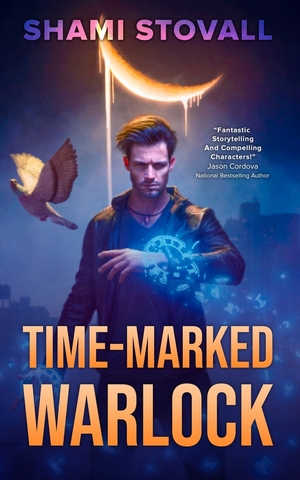
Cover for Time-Marked Warlock by Shami Stovall

Time-Marked Warlock by Shami Stovall

A warlock can create his own Groundhog Day. What will he do when, for him, time is no object? Solve murders, heal souls, and take as many runs as he needs to craft a perfect day. Bill Murray not included.


My Elevator Pitch by JCM Berne
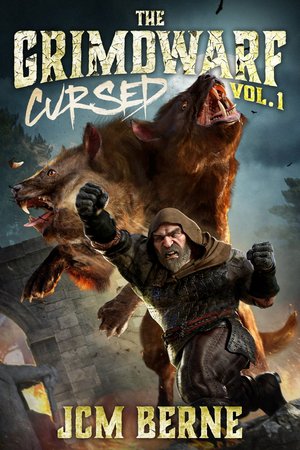
Cover of Grimdwarf, vol. 1 by JCM Berne
After waking up from a dreamless death with a knife in his eye and no memory of his previous life, a cursed dwarf, a water witch, and his very good dog Blink fight anyone they come across. She’s seeking vengeance and he’s just hoping one of their enemies finds a way to kill him for good.


About this Author
Joe (JCM) Berne writes in a vain attempt to retrocon the tens thousands of hours and dollars he’s spent on comic books, genre fiction, and B movies into job training instead of ‘just a useless hobby.’ And to make his mother proud: results forthcoming.

Website ~ Bluesky ~ Twitter ~ Facebook ~ Instagram ~ YouTube


Be sure to check out Time-Marked Warlock and Grimdwarf, Vol 1: Cursed (admittedly difficult since he hasn’t released it yet, but keep looking!), let’s show them both some love!


Self-Published Authors Appreciation Week Footer

Image by Dawn Hudson/Prawny from PublicDomainPictures.net
The 2025 Self-Published Authors Appreciation Week Logo was made by Witty and Sarcastic Book Club

Spreading the Self-Pub Love in 2025 with Livia J. Elliot

Self-Published Author Appreciation Week '25 Banner
I had so much fun with this last year (and grew my TBR–plus a few others’), that I’m bringing it back. In the spirit of “a rising tide lifts all boats,” for Self-Published Authors Appreciation Week I wanted to give some Self-Published authors a chance to spread some love.

(They also get to do a bit of self-promotion, I mean, c’mon, it’s hard out here…)
Spreading the Self-Pub Love in 20205 with Livia J. Elliot


An Elevator Pitch for Something You Love
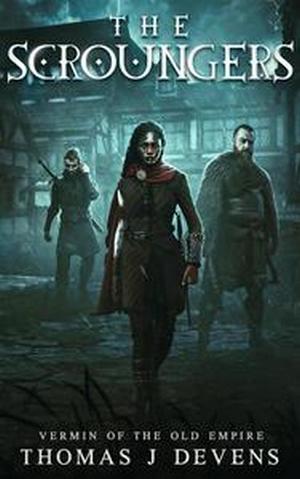
Cover for The Scroungers by Thomas J. Devens

The Scroungers by Thomas J. Devens

The Lords have fallen. It was the war to end all wars. Violence had plagued the Fractured Kingdoms since the fall of the Old Empire. But as the generals and the lords died in the Valley of Torglen, the folk looked beyond their allegiances. Beyond their nations.

Dark, grim, and written in a concise, no-nonsense prose that’s both moody and mood-setting. Perfect for fans of Abercrombie.


My Elevator Pitches by Livia J. Elliot

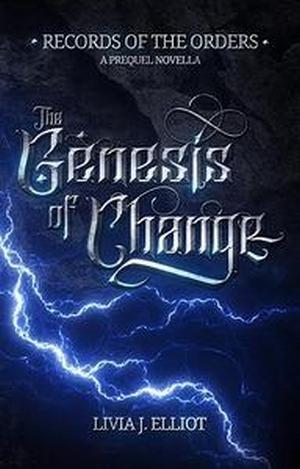
Cover of The Genesis of Change by Livia J. Elliot
The Genesis of Change: Two alchemists, each sent on a mission by the leader of The Orders—The Rector. Élan must shatter their mentee’s humanity to train her as an alchemist, while Verve must define the unexplainable existing within a respected healer. When their missions reveal clues that could reformulate alchemy, they’ll edge closer to fathom The Rector’s goal while facing an endless conundrum—to remain as is, or to learn and adapt. The genesis of change is near.

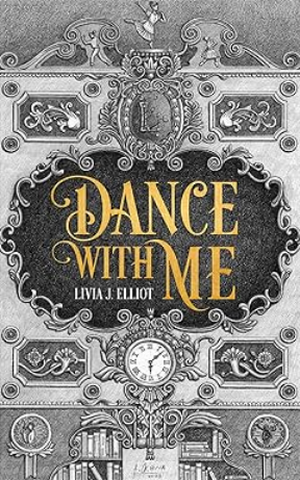
Cover of Dance With Me by Livia J. Elliot
Dance With Me: In a world of beauty, a ceramic-made ballerina awakens atop her music box. She must dance for her elven owners, and so her ballet goes on and on. They praise her elegance, her poise and balance, until one day she falls and her ceramic fractures—but the ballerina dances again, ignoring her ever-increasing fissures. The music plays, captivating and demanding… but should she dance? Even when what she once loved becomes a trap?


About this Author
Livia J. Elliot writes dark fantasy with themes centred around struggle, control, identity, and bias. She’s the lead writer of Unearthed Stories, an app publishing interactive fantasy and sci-fi for adult readers. Livia also hosts the podcast Books Undone, featuring literary analyses of speculative fiction. She’s based in Australia, and currently releasing two series: Records of the Order (philosophical dark fantasy) and Tales of the Bookshelves (literary fantasy).

Twitter ~ Substack


Be sure to check out The Scroungers, The Genesis of Change and Dance with Me, let’s show them all some love!


Self-Published Authors Appreciation Week Footer

Image by Dawn Hudson/Prawny from PublicDomainPictures.net
The 2025 Self-Published Authors Appreciation Week Logo was made by Witty and Sarcastic Book Club

HC Chats About the Business Side of Self-Publishing with Tom Bookbeard

Self-Published Author Appreciation Week '25 Banner
HC sat down with podcaster and almost-debut author Tom Bookbeard to talk about the business side of Self-Publishing.

You can (and should) learn more about Tom and check out his reviews, podcast, etc. at:
Secret Scribes
Tom Bookbeard | FanFiAddict
The Four Beardsmen of the Bookpocalypse

Also, be sure to see his contribution to Spreading the Self-Pub Love in 2025!

Spreading the Self-Pub Love in 2025 with Tom Bookbeard

Self-Published Author Appreciation Week '25 Banner
I had so much fun with this last year (and grew my TBR–plus a few others’), that I’m bringing it back. In the spirit of “a rising tide lifts all boats,” for Self-Published Authors Appreciation Week I wanted to give some Self-Published authors a chance to spread some love.

(They also get to do a bit of self-promotion, I mean, c’mon, it’s hard out here…)
Spreading the Self-Pub Love in 20205 with Tom Bookbeard(A returning guest!)


An Elevator Pitch for Something You Love
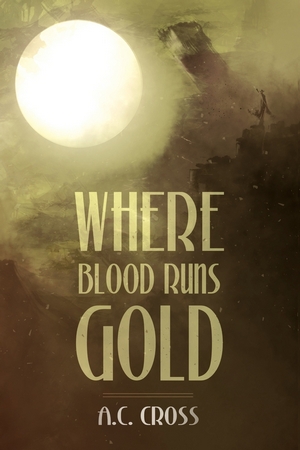
Cover for Where Blood Runs Gold by A.C. Cross

Where Blood Runs Gold by A.C. Cross

Red Dead Redemption meets Bone Tomahawk, starring the Punisher.

A.C. Cross always takes me on a wild ride no matter what genre he’s writing in. But Where Blood Runs Gold feels like his highlight reel book. I reviewed this book for FanFiAddict in January this year after criminally allowing it to sit on my TBR for ages. Reviewing the Weird Western “Where Blood Runs Gold” by A.C. Cross.


My Elevator Pitch by Tom Bookbeard

Cover to be Revealed
The Corsair: Jim Hawkins sides with the pirates instead. And the ships can fly.

My debut novel is coming soon …


About this Author
I like books, I have a beard; I’m Tom Bookbeard. Former chef, now a podcast host, a writer of fantasy stories about sky pirates and TTRPG nerd.

Secret Scribes ~ Tom Bookbeard | FanFiAddict ~ The Four Beardsmen of the Bookpocalypse


Be sure to check out Tom Bookbeard’s activities and Where Blood Runs Gold, let’s show them both some love!


Self-Published Authors Appreciation Week Footer

Image by Dawn Hudson/Prawny from PublicDomainPictures.net
The 2025 Self-Published Authors Appreciation Week Logo was made by Witty and Sarcastic Book Club

Spreading the Self-Pub Love in 2025 with K. Q. Watson

Self-Published Author Appreciation Week '25 Banner
I had so much fun with this last year (and grew my TBR–plus a few others’), that I’m bringing it back. In the spirit of “a rising tide lifts all boats,” for Self-Published Authors Appreciation Week I wanted to give some Self-Published authors a chance to spread some love.

(They also get to do a bit of self-promotion, I mean, c’mon, it’s hard out here…)
Spreading the Self-Pub Love in 20205 with K. Q. Watson
I’m bending the rules a little bit here, Watson describes herself as “unfamiliar with other self published works.” Which makes her a great person to start the week with–Self-Published Author Appreciation Week’s purpose is to celebrate and spread the word about self-published authors, right? So here’s a chance to get her familiar with some–either from her inclusion in this series (and I hope she checks out later installments) or through comments here.


My Elevator Pitch by K. Q. Watson

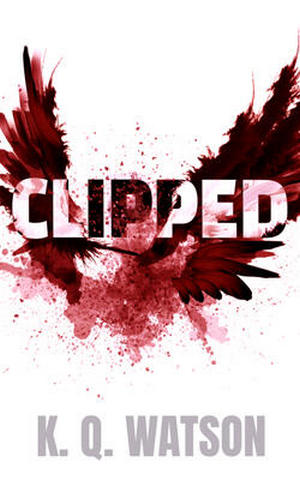
Cover of Clipped by K. Q. Watson
Clipped is the story of Zak, an engineer up in the Heavens, where the Exalted reign over Earth. After his son is born without wings, and cast from the Heavens, Zak chooses to sacrifice his own wings and fall to earth.

There, he must live as a mortal among mortals in a world ruined by corruption and sin. As he fights to find his place in this new existence, he is confronted by deadly angel hunters, false prophets, and cities of hedonism and blasphemy.

In his travels he comes across a conspiracy that could bring down the Heavens and make every exalted Angel above fall to the hell on earth below.


About this Author
K. Q. Watson is the cyborg that you don’t take home to meet your parents. She looks innocuous and gentle, but there are oodles of satanic death metal songs continually playing in her head. Sometimes, when she’s all alone, she thinks back to some of her favourite episodes of Intervention and the best scenes from The People Under the Stairs.

She writes because what else is she going to do, let’s be real here.

One legged Canadian who likes The Dark Crystal more than she will ever like you.

The characters in her head keep her sane.

Website ~ Kit.com ~ Bluesky ~ TikTok


Be sure to check out Clipped and show it some love!


Self-Published Authors Appreciation Week Footer

Image by Dawn Hudson/Prawny from PublicDomainPictures.net
The 2025 Self-Published Authors Appreciation Week Logo was made by Witty and Sarcastic Book Club

Spreading the Self-Pub Love This Week

(updated and modified 7/21/25)
Self-Published Author Appreciation Week '25 Banner. Banner has a gray bird on a black disk. Around the disk are the words, 'Self Published Authors Appreciation Week.' In the top left corner, it says, 'July 21-27, 2025.' In the bottom right corner it says, '#SPAAW'

Once again, it’s Self-Published Author Appreciation Week. This year, I’m all about spreading the love for self-published works…

This is our annual tribute to those authors who take it all on themselves–all the work, all the risks, all the costs, and all the (too small) rewards. They’re the independents, the mavericks, the risk-takers, those who won’t let their creative vision be reined in by others, they’re out there doing things on their own (with a small group of others they’ve teamed up with on their own). These are the Mal Reynoldses of the Literary World.

Really, every week on this blog is Author Appreciation Week, but you can see why we’re eager to take one week to focus on the Self-Pub warriors among them, right? I want to throw out my appreciation as well to Jodie of Witty & Sarcastic Book Club who started this some time back, and keeps it going.

How am I going to show my appreciation/love this year? Well, hopefully, I’ll be able to find the time to write posts about some recent self-published reads of mine and some great lists of Self-Published books I’ve read already for you to check out (this honestly doesn’t seem likely, but here’s hoping!). I will, of course, have my annually updated lists of Self-Published works by Genre that I’ve talked about on this site. I will also have four quick(ish) videos talking with some Self-Published Authors about the Business-side of Self-Publishing (more on that later today)

But the big focus this year is on Spreading the Self-Pub Love (see the title of this post). I enjoyed doing it last year, and wanted to do it again. The Number One thing that Self-Published Authors need are readers to appreciate them–and who better to recommend some than other self-published authors? So I’ve asked some to drop by and recommend a self-published book that deserves more eyeballs. (you’ll note that some of these authors couldn’t/wouldn’t limit themselves to one…such mavericks).

The featured posts this week will come from some names familiar to readers of this blog, and a good number of new names (hopefully they’ll pop up enough to be familiar to you soon):

JCM Berne
Tom Bookbeard
A.J. Calvin
Thomas J Devens
Livia J. Elliot
Shannon Knight
James T. Lambert
David T. List
Vanessa Ricci-Thode
Michael Michel
DB Rook
Ben Schenkman
K. Q. Watson

Stick around and see what they recommend, and have to offer themselves!

Self-Published Authors Appreciation Week Footer

The 2025 Self-Published Authors Appreciation Week Logo was made by Witty and Sarcastic Book Club

(belated) PUB DAY REPOST: Some Further Thoughts about The White Door by Pierce Taylor Hibbs

I had a few more things to say about the book after my original post…


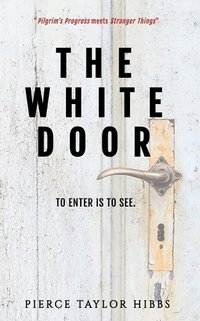
Cover for The White Door by Pierce Taylor HibbsThe White Door

by Pierce Taylor Hibbs

DETAILS:
Publisher: Truth Ablaze
Publication Date: August 15, 2024
Format: eARC
Length: 484 pg.
Read Date: July 7-20, 2024
Buy from Bookshop.org Support Indie Bookstores


Obviously, this will make more sense if you’ve read my original post about The White Door. And I should add that these are just thoughts that’ve come to mind as I’ve continued to chew on this book. I’m not making a full argument here, or anything like that. Some ruminations is all. (the conclusion is particularly weak, if you ask me, because I am just ruminating. )

One thing readers really like to do is to try to determine what they can about a novelist’s beliefs, points of view, and whatnot from the way things in their novel(s) are depicted. Frequently, some of the theories are pretty out there—and even those that are closer to reality are limited and have some noteworthy flaws.

That’s not the case with this book—Hibbs has already written a good number of non-fiction books showing his views on a number of ideas and topics. So readers of this novel have a different task before them (if they’re of a mind to wonder about these things)—how are Hibbs’ ideas depicted and brought to “life” in this novel? Are they at all? I haven’t read all of Hibbs’ previous work (yet), but I’ve read a number of his books and thought about them while reading the novel.

An obvious point here is that the protagonist, Seth, has an anxiety disorder, not unlike the one that Hibbs talked about in Struck Down but Not Destroyed: Living Faithfully with Anxiety. But there are plenty of other places you can see Hibbes’ previous writing.

In my original post, I said a couple of things that I want to return to. The first is:

…there are two doors (in places that have no business having doors, see McGuire’s Wayward Children series for examples). A white one and a black one—those who walk through them are changed. What, and how, they see is altered in ways that say a lot more about the doors than anything else.

The second thing is:

First of all, anyone who’s read much of Hibbs is going to recognize his thinking here. Narnia, Seth, and Cleft sound like they’ve studied Hibbs’ work (ignoring the anachronism there)—which is good. If only so you know that you’re supposed to think they’re on the right path. Other characters largely sound ilke they’re on their way to sounding that way, too.

Two of Hibbs’ books that came to mind were Finding God in the Ordinary and In Divine Company: Growing Closer to the God Who Speaks.

The part of In Divine Company* that came to mind in The White Door was:

We live in what I have called a worded world, a world that everywhere reveals something about the God who made it, a world that, in a sense, “speaks” about God.

* He also has a book called The Speaking Trinity and His Worded World that probably does a better job of explaining this point and expanding on it, but I haven’t read that one yet.

In Finding God in the Ordinary, Hibbs quotes John Calvin:

Whichever way we turn our eyes, there is no part of the world, however small, in which at least some spark of God’s glory does not shine. In particular, we cannot gaze upon this beautiful masterpiece of the world, in all its length and breadth, without being completely dazzled, as it were, by an endless flood of light. Accordingly, in Hebrews, the apostle aptly calls the world the mirror of things invisible, because the structure of the world serves as a mirror in which we behold God, who otherwise can not be seen (Heb 11:3).

Calvin influenced Hibbs on this point, and you can see it in the rest of that book. Let me bring up a few other short quotations from the book along those lines:

if we do not search for God in the ordinary, we do not perceive the world as it truly is. God has revealed that his entire creation manifests his character.

The whole earth, every crevice of creation, has been endowed by God himself with a revelatory component. We can choose to ignore this component if we wish, but then we will not be seeing the world as it truly is. We will be seeing a world of our own making.

if we do not search for God in the ordinary, we will miss very precious parts of life.

The tagline on the cover of The White Door is: “To enter is to see.” This is part of what I meant by “What, and how, they see is altered.” Both Roland (Cleft’s steward dog) and Cleft call those who’ve gone through the White Door “gazers”*

* I called them “seekers” in my original post. Oops. Why do I take notes, if I’m not going to look at them while writing?

These people gaze upon the world in a clearer fashion than they have before as if a film had been cleared off what they see. They see things in a new way—able to seek God in the ordinary, perceiving the world as it truly is. Not completely—and not necessarily all in the same way. Yet, their vision is better. They see things that others do not/cannot.

Now, walking through this door is in some way analogous of or is an allegory of regeneration. I have questions about it (as I talked about before), and I’m not sure if that’s because I misunderstood something or if Hibbs was unclear (I fully expect the former, but I think it’s the latter).* Regardless, that’s the case. Given “eyes to see and ears to hear,” these gazers see things that others don’t. In our world, it’s because darkened eyes don’t think of it, and renewed eyes need to be taught it (so we get books like Finding God in the Ordinary and teaching along those lines)—but when we know we can see the world, the skies, and nature in general declaring the glory of God—we, like those gazers, do see things others don’t.

* To paraphrase Mr. Simon, when I get something wrong, I’m the first to admit it, the last one to know-ow-ow-ow.

On the other hand, those who walk through the Black Door also have their sight altered. As you might imagine, it’s not as beneficial—but that’s all I’m going to say about that.

I really appreciate the way that Hibbs put “flesh” on his arguments from other books in this novel—not just for a good way to solidify it in the minds of his non-fiction readers, but to provoke his novel’s readers to consider how that piece of fiction might apply to their lives.

This post contains an affiliate link. If you purchase from it, I will get a small commission at no additional cost to you. As always, the opinions expressed are my own.
Irresponsible Reader Pilcrow Icon

(belated) PUB DAY REPOST: The White Door by Pierce Taylor Hibbs: Good vs. Evil and a Tolkien-Quoting Cat

So, I put 8/16 in my calendar for this publication date, or I’d have had this up yesterday. Still, I wanted to get something up to celebrate the Publication of this book (also, it gives me an excuse to correct some of the mistakes I made in my original post)


Cover for The White Door by Pierce Taylor HibbsThe White Door

by Pierce Taylor Hibbs

DETAILS:
Publisher: Truth Ablaze
Publication Date: August 15, 2024
Format: eARC
Length: 484 pg.
Read Date: July 7-20, 2024
Buy from Bookshop.org Support Indie Bookstores

What’s The White Door About?

A pull-quote on the cover calls this “Pilgrims Progress meets Stranger Things.” I’m not sure that Bunyan belongs in the conversation—maybe Lewis meets Stranger Things? This Present Darkness with better theology is closer yet.

There’s a great ensemble of characters featured in this novel, but let’s focus (as the novel does) on two—the first is Pastor Cleft Warrington. It’s evident soon after we meet him that he’s the kind of pastor you’d want—educated, compassionate, smart, and faithful. But there’s more than that to him—the small town in Pennsylvania that he pastors in has more going on than is visible to the naked eye. There are forces on the move—and he is one of the few aware of it.

The other character we focus on is Seth Logan—he’s a father of a couple of little kids and a writing professor. His wife is a steadying and supportive influence in his life, which he really needs. When we meet him, he’s unaware (like most people in this town) of the unseen workings around him. But all that changes when he comes across a stray cat one day while hiking.

I’m not sure how much else to say, but the cover blurb says little more—there are two doors (in places that have no business having doors, see McGuire’s Wayward Children series for examples). A white one and a black one—those who walk through them are changed. What, and how, they see is altered in ways that say a lot more about the doors than anything else.

The custodian (for lack of a better term) of the black door is named Skotos—he has been popping up in Dingmans Ferry now and then for quite some time. Cleft is trying to monitor his actions as much as he can. Cleft can’t say for certain what Skotos is up to—or what his aims are—but they are not for anyone’s benefit but his.

Those who walk through the white door get nicknamed “gazers,” because of their altered vision. They see things, realities, that others don’t–and cannot. Because of this power, they have a responsibility to their town (if not to more than the town) and its citizens. The gazers have allied with each other for this purpose and when they add members, they take them under their wings and help them understand their abilities and far more.

The Choice of the 80s

This is set in the 1980s, which is an interesting choice. And I’m not sure that it was necessary for the story. Sure, it eliminates the Internet in early or current form, so that’s an advantage—this would’ve been a difficult story to tell if characters could just check certain events online.

While there may be little about the events or the narrative that demands that time period, the smaller town feels more authentic in the 80s, I guess. There are plenty of little details that Hibbs provides to help it feel like that time.

The biggest thing that made me wonder about the choice of chronological setting (probably the only thing) was the way that Seth’s anxiety was depicted (and the way people reacted to him). I haven’t done any research on this—but I’m not sure that too many people in the 80s were talking about people with anxiety disorders or panic attacks quite the way these characters do. Particularly regarding adult men. Maybe I’m wrong, but I’d wager that was a stumble (as an example, see how strange it was in the late 90s for characters like Tony Soprano to deal with those things, and the ways they covered it up).

The Mix of Theology and Fantasy

Mixing Christian thinking, Christian belief, and fiction—particularly Fantasy—is a tricky thing. It can be done, and there is a tradition of it. But I can’t help wondering about the way that Hibbs does it. I enjoyed it thoroughly, but I had some questions and qualms.

The titular white door and the way it changes those who walk through it…both are great, full of symbolism and meaning. I really appreciated the effects produced in those who’ve entered it. But I have so many questions about it, too—why aren’t all the believers in town taken to it? Is it some sort of second blessing?* Why is it available for any random person walking by (although it is out of the way) to just walk through? Along those lines—Skotos’ victims…the way that Seth and his companions figure out what happened to them and the way they appeal to Paul’s writings to get there really misses the apostle’s point and even contradicts it. And that really troubles me.

* I know Hibbs wouldn’t go for that, but it kind of seems like one.

There are some other things depicted—some visions, another reality that’s visited (to put it as vaguely as I can), and things of that nature—that were just great. The pure fantasy stuff—or at least the things that he can talk about in purely fantastic terms—was great.

You take the blending of fantasy and theology out of this—leave us only with Skotos’ “magic” or whatever, the Deeper Magic of the Doors, and whatnot—I wouldn’t have a complaint at all. No church, no sermons, no Bible—just warring Good and Evil? The whole thing works. But Hibbs frequently stumbles when he combines them.

Now let’s set aside the Fantasy for a minute and just focus on the Theology. First of all, anyone who’s read much of Hibbs is going to recognize his thinking here. Narnia, Seth, and Cleft sound like they’ve studied Hibbes’ work (ignoring the anachronism there)—which is good. If only so you know that you’re supposed to think they’re on the right path. Other characters largely sound like they’re on their way to sounding that way, too.

Even the demonic (or at least really evil) character’s theology is rock solid. He rejects it—but he knows it. Watching him explain something, and then reacting to it, was really well done.

I have to add, that some of the gazers get animal companions—stewards—who can talk to the gazers. We see two of them in this book, Seth’s cat, Narnia, and Cleft’s dog, Roland. They are just fantastic. A Tolkein-quoting cat with a penchant for talking theology? That’s a critter I’d put up with my allergies attacking me to spend time with. Every bit with those animals are great. There are some other animals that show up later, too—I really dug them, too. But my spoiler policy prevents me from talking about them.

Some Word Choices

I’m going to throw this out there just to be thorough—and because I know a couple of my readers will think about it—maybe even be turned off by it.

The characters in this novel are not all Christians. And some of them are very recent converts who haven’t quite gotten around to cleaning up their language thoroughly. Hibbs has them use realistic words for people in those situations—a depiction of how the world is, not how he might want it to be.

That said, nothing too terrible is said in the book—nothing you couldn’t get away with in a PG movie (which isn’t the best barometer for some people, but it’s the easiest to convey) or a sitcom from the mid-80s.

Hibbs’ Writing

As a surprise to no one who’s read what I’ve said about Hibbs’ style and way with words before, I loved it. There are some sentences, some passages, and even some phrases that I just adored. If I had a final version and not an ARC, you’d be reading plenty of quotations in this post.

These characters and their emotional lives are richly drawn. The descriptions of little things as well as major events or scenes are the kind of thing that keep people reading regardless of plot and character.

There are two character deaths described that just blew me away. One happens just as the book begins and we see a grieving husband in the minutes after his wife’s death. It’s handled with sensitivity and care—and right from the get-go, you get attached to this character, his reactions feel just right. The other death that we spend an extended time on is handled differently, but perhaps even better. There are other deaths that don’t get this—or similar—kind of treatment. They’re handled the way that most fictional deaths are, and that’s fine. But the two we linger on? Hibbs gets everything right about those and I loved reading them (and will again).

I should add that this book isn’t full of character deaths—but there are some.

I’ve gotten off-topic a bit, but this is just some great writing. There’s a hint of poetry to so much of this energized by an eye for detail. Little things—like the description of Seth’s daughter’s laugh—are just beautiful, and some of the bigger things are done just as well.

So, what did I think about The White Door?

It’s been a long time since I read Christian Fiction regularly—sure, I read a few things by Christians (mostly local authors), but not a lot that calls itself Christian Fiction. In fact, I think this is the fourth book of that type I’ve posted about here. But when I heard that Hibbs was going to be bringing his first novel into the world, you know I had to give it a read. I’ve often said that his books are the best written theological/Christian Living/etc. books that I’ve read (published in the last 50 years, anyway), so of course I want to see what he does with fiction.*

* I should probably try his poetry, too. But it’s poetry, so don’t expect that anytime soon.

I’m so glad I did.

I have mentioned a few quibbles above—the downside of doing that is that it overshadows all the good that can be said. I can’t think of a way to do that without giving too much away. So my own limitation makes the book come across as worse than it should. Note the above paragraph, if nothing else.

It started slow, and I wondered for a while just what the book was going to be about (I didn’t bother reading anything about it before requesting a copy—I just knew it was the first novel for Hibbs, and that was enough)—but it kept me going—and it wasn’t long before I was fully invested (and that kept growing). By the time it was over, I wasn’t quite ready to walk away from these characters and this world.

The conversations that Cleft and Seth have together—or with other characters—about books, The Bible, language, and so on? They’re just great—and I could’ve read many more of them. There’s no justification in terms of character development or plot for us to spend more time with Seth (and Narnia) in Seth’s classes—but Hibbes could’ve given us more of them and I wouldn’t have complained. (I may have noted that he was padding the book with them, but I’d have enjoyed the padding enough to give him a pass)

Similar things could be said for Seth spending time with his family (with or without Narnia)—and so many other aspects of the book.

Every element of this novel works really well when considered on its own. Many of them work in conjunction with the others—it’s when all of them are brought together in these 484 pages that I think Hibbs trips over himself. It’s really a total is less than the sum of its parts kind of thing. But those parts are so worth your time and energy—and I wouldn’t be shocked to learn that I’m alone in some/all of my judgments.

I do encourage you to pick this up. It’s a good read, a refreshing, hopeful read—and I hope it’s the first of several novels from Pierce Taylor Hibbs.

Disclaimer: I received a copy of this eARC from the author, but the opinions expressed are mine and honest. And are what I would’ve said about the copy I bought—I’m just saying them a few weeks earlier.


4 Stars

This post contains an affiliate link. If you purchase from it, I will get a small commission at no additional cost to you. As always, the opinions expressed are my own.

Self-Published Authors Appreciation Week Footer

The 2024 Self-Published Authors Appreciation Week Logo was made by Witty and Sarcastic Book Club

Some Further Thoughts about The White Door by Pierce Taylor Hibbs

Cover for The White Door by Pierce Taylor HibbsThe White Door

by Pierce Taylor Hibbs

DETAILS:
Publisher: Truth Ablaze
Publication Date: August 15, 2024
Format: eARC
Length: 484 pg.
Read Date: July 7-20, 2024
Buy from Bookshop.org Support Indie Bookstores


Obviously, this will make more sense if you’ve read my original post about The White Door. And I should add that these are just thoughts that’ve come to mind as I’ve continued to chew on this book. I’m not making a full argument here, or anything like that. Some ruminations is all. (the conclusion is particularly weak, if you ask me, because I am just ruminating. )

One thing readers really like to do is to try to determine what they can about a novelist’s beliefs, points of view, and whatnot from the way things in their novel(s) are depicted. Frequently, some of the theories are pretty out there—and even those that are closer to reality are limited and have some noteworthy flaws.

That’s not the case with this book—Hibbs has already written a good number of non-fiction books showing his views on a number of ideas and topics. So readers of this novel have a different task before them (if they’re of a mind to wonder about these things)—how are Hibbs’ ideas depicted and brought to “life” in this novel? Are they at all? I haven’t read all of Hibbs’ previous work (yet), but I’ve read a number of his books and thought about them while reading the novel.

An obvious point here is that the protagonist, Seth, has an anxiety disorder, not unlike the one that Hibbs talked about in Struck Down but Not Destroyed: Living Faithfully with Anxiety. But there are plenty of other places you can see Hibbes’ previous writing.

In my original post, I said a couple of things that I want to return to. The first is:

…there are two doors (in places that have no business having doors, see McGuire’s Wayward Children series for examples). A white one and a black one—those who walk through them are changed. What, and how, they see is altered in ways that say a lot more about the doors than anything else.

The second thing is:

First of all, anyone who’s read much of Hibbs is going to recognize his thinking here. Narnia, Seth, and Cleft sound like they’ve studied Hibbs’ work (ignoring the anachronism there)—which is good. If only so you know that you’re supposed to think they’re on the right path. Other characters largely sound ilke they’re on their way to sounding that way, too.

Two of Hibbs’ books that came to mind were Finding God in the Ordinary and In Divine Company: Growing Closer to the God Who Speaks.

The part of In Divine Company* that came to mind in The White Door was:

We live in what I have called a worded world, a world that everywhere reveals something about the God who made it, a world that, in a sense, “speaks” about God.

* He also has a book called The Speaking Trinity and His Worded World that probably does a better job of explaining this point and expanding on it, but I haven’t read that one yet.

In Finding God in the Ordinary, Hibbs quotes John Calvin:

Whichever way we turn our eyes, there is no part of the world, however small, in which at least some spark of God’s glory does not shine. In particular, we cannot gaze upon this beautiful masterpiece of the world, in all its length and breadth, without being completely dazzled, as it were, by an endless flood of light. Accordingly, in Hebrews, the apostle aptly calls the world the mirror of things invisible, because the structure of the world serves as a mirror in which we behold God, who otherwise can not be seen (Heb 11:3).

Calvin influenced Hibbs on this point, and you can see it in the rest of that book. Let me bring up a few other short quotations from the book along those lines:

if we do not search for God in the ordinary, we do not perceive the world as it truly is. God has revealed that his entire creation manifests his character.

The whole earth, every crevice of creation, has been endowed by God himself with a revelatory component. We can choose to ignore this component if we wish, but then we will not be seeing the world as it truly is. We will be seeing a world of our own making.

if we do not search for God in the ordinary, we will miss very precious parts of life.

The tagline on the cover of The White Door is: “To enter is to see.” This is part of what I meant by “What, and how, they see is altered.” Both Roland (Cleft’s steward dog) and Cleft call those who’ve gone through the White Door “gazers”*

* I called them “seekers” in my original post. Oops. Why do I take notes, if I’m not going to look at them while writing?

These people gaze upon the world in a clearer fashion than they have before as if a film had been cleared off what they see. They see things in a new way—able to seek God in the ordinary, perceiving the world as it truly is. Not completely—and not necessarily all in the same way. Yet, their vision is better. They see things that others do not/cannot.

Now, walking through this door is in some way analogous of or is an allegory of regeneration. I have questions about it (as I talked about before), and I’m not sure if that’s because I misunderstood something or if Hibbs was unclear (I fully expect the former, but I think it’s the latter).* Regardless, that’s the case. Given “eyes to see and ears to hear,” these gazers see things that others don’t. In our world, it’s because darkened eyes don’t think of it, and renewed eyes need to be taught it (so we get books like Finding God in the Ordinary and teaching along those lines)—but when we know we can see the world, the skies, and nature in general declaring the glory of God—we, like those gazers, do see things others don’t.

* To paraphrase Mr. Simon, when I get something wrong, I’m the first to admit it, the last one to know-ow-ow-ow.

On the other hand, those who walk through the Black Door also have their sight altered. As you might imagine, it’s not as beneficial—but that’s all I’m going to say about that.

I really appreciate the way that Hibbs put “flesh” on his arguments from other books in this novel—not just for a good way to solidify it in the minds of his non-fiction readers, but to provoke his novel’s readers to consider how that piece of fiction might apply to their lives.

This post contains an affiliate link. If you purchase from it, I will get a small commission at no additional cost to you. As always, the opinions expressed are my own.
Irresponsible Reader Pilcrow Icon

Page 3 of 11

Powered by WordPress & Theme by Anders Norén