Category: Fantasy Page 40 of 47

Lowering Expectations

When I get home from work today, my copy of Down Among the Sticks and Bones by Seanan McGuire should be waiting for me, I’ve been eagerly waiting for this book for about a year now.

I know (well, I fear) that it won’t be as good as Every Heart a Doorway — it can’t be.

That doesn’t mean it won’t be good, just not as good. As long as I remember that, I won’t be disappointed. Which is my biggest fear.

Am I the only one who plays mind-games like this?

The Hammer of Thor (Audiobook) by Rick Riordan, Kieran Culkin

The Hammer of ThorThe Hammer of Thor

by Rick Riordan, Kieran Culkin (Narrator)
Series: Magnus Chase and the Gods of Asgard, #2
Unabridged Audiobook, 10 hrs., 34 mins..
Listening Library, 2016
Read: May 10 – 12, 2016


Thor’s hammer is missing, so not only can he not stream Netflix (I’d forgotten that was a thing in this series) on it, he can’t intimidate the giants into not invading. You can guess which bothers him more. The Valkrie Samira and her pal Magnus have to go find it before things get out of hand.

I didn’t like this one as much as the first book in this series — but I didn’t dislike it. It’s still the same outline that Riordan is following with these books — there’s a quest; the hero and his friends have to go find the whatever to stall doomsday a little longer; to get the X the group has to beat a series of mini-challenges and then they’ll have a shot at the X. Since this is a book 2, they’ll get X, but many other things will go wrong, forcing the series into another book. For the most part, the minor challenges worked better for me than I expected.

I enjoyed Magnus’ friends — Samira in particular; although I’m pretty torn about the new character added to Magnus’ group: Alex Fierro — a child of Loki. I understand what Riordan was trying to do with this character, but I’m not sure he succeeded. I’m not convinced that Alex was a person, and not just a conglomeration of traits. But I have hope. Alex’s presence, I thought, ended up short-changing some of the other characters when it came to action and involvement in the plot, which I wasn’t crazy about.

I really enjoy seeing different authors’ take on the same mythological characters. Comparing/contrasting Kevin Hearne’s and Riordan’s Thors and Lokis would make for a very entertaining piece (I think Riordan’s Thor is more comical, but his Loki just might be more sadistic), and I will admit I got distracted a couple of times listening to this by thinking about the differences.

The best part of this was seeing how the problems Magnus, etc. are dealing with intersect some of what Percy, Annabeth and Apollo are going through in Riordan’s other series, and the strong hint that we’ll see some sort of cross-over soon. We’d understood that the Egyptian gods were threatening the earth about the same time that the Problems with Camps Jupiter and Half-Blood start up, but this was a much more explicit description. I like thinking that the various pantheons are having troubles at the same time, and that Earth could be doom in any number of ways simultaneously.

I bought this in hardcover the week it came out (last October, I think), but haven’t been able to find/make the time to read it. When I saw it as available on my library’s audiobook site, I figured I’d jump — just to get that TBR pile a little smaller. I hadn’t listened to Riordan on audio before, and was curious ow it translated. I was surprised to hear Kieran Culkin’s name (and voice) at the beginning of this — he didn’t strike me as the kind of actor who’d do audiobooks. I’m glad that he did, though. I really enjoyed his work throughout the novel — the narration, the characters — he just nailed it. That’s how Magnus Chase should sound.

It was entertaining enough to keep going, and I trust that Riordan knows what he’s doing, I’m just not convinced that he did all he could to make this book as good as it could be.

—–

3 Stars

Chalk by Paul Cornell

ChalkChalk

by Paul Cornell

Kindle Edition, 206 pg.
Tor.com, 2017

Read: May 5 – 8, 2017

There are kids who went through school experiences like mine who will never watch football, and there are those who end up playing for Arsenal. Okay, who will end up with season tickets. Stockholm syndrome will only take you so far.

Enough about what I am now. That comes later.

Everyone keeps talking about this as a story about bullying — sure, there’s a little bullying here. But mostly, that’s like saying that Hannibal Lecter enjoys an unconventional diet. What happens to Andrew Waggoner is so far beyond bullying — it’s flat out assault (but with a psychological component that matches bullying). After a Halloween dance, Waggoner is forced into the woods by the school bullies and is assaulted. Somehow, his trauma links him to some long-dormant forces who take the opportunity to reassert themselves. One manifestation of the mystical/magical works with (compels? coerces? convinces?) Waggoner to take his revenge against those who permanently scarred him mentally and physically.

And over the next 12 months, that’s just what happens — Waggoner and/or his mystical companion (it’s never clear exactly how much is done by each) exact their revenge — Waggoner vacillates in his commitment to this project, and comes close to stopping on many occasions. In the midst of this, he becomes a writer and makes a friend based on shared interest, rather than just being social pariahs. In short, he starts growing up.

Meanwhile, the ancient forces tied to Waggoner are in open conflict with the dominant, more modern/contemporary, forces/beliefs. The school — and the students’ lives — become the major battleground for them, the final conflict coming on the anniversary of the attack that changed Waggoner’s life forever.

I kept seeing the school as the school from Sing Street (except, in the West Country, not Dublin — but roughly the same era), which I know is inaccurate, but I couldn’t stop myself. Pop music plays a large role in the story, and as it’s set in the early 80’s I didn’t have to google most of the songs (there were a couple of tunes that didn’t make it to Idaho that long ago) — which was a plus for me, and probably most readers.

You can tell (well, you can guess) that Cornell and Waggoner had similar experiences in their early lives — the language he uses to describe the bullying speaks to that. But more than that, the way he describes how the bullying shaped him, both then and when Waggoner reflects on those events from the vantage point of adulthood, resonated with me, and will with many readers.

The characters — bullies, victims, other children, or adults — were all wonderfully constructed. I’m not sure that I liked any of them (including Waggoner), but I was drawn into this world, and was very invested in what happened to each of them.

This was intense, gripping, strangely something (I want to say beautiful, but that doesn’t seem right) — there’s a je ne sais quoi about Chalk that inspires and repulses at the same time. I know I haven’t done a good job describing this book — I’m trying hard not to ruin anything for future readers. It was one of the more affecting, compelling books I’ve read this year. Cornell does a masterful job of mixing our reality with his fantasy — as he’s shown in the Shadow Police and Lychford books — this time you add in a layer of childhood horror and wonder to that combination.

This is something special, you won’t read much like it.

—–

4 Stars

The High King (Audiobook) by Lloyd Alexander, James Langton

The High KingThe High King

by Lloyd Alexander, James Langton (Narrator)
Series: Chronicles of Prydain, #5
Unabridged Audiobook, 7 hrs, 24 min.
Listening Library, 2005

Read: March 29 – 30, 2017


Arawn-Death-Lord has managed to get his hands on Dyrnwyn, Gwydion’s sword, which has emboldened him to move his forces to launch an all-out assault on the Kingdom of Prydain. Gwydion and his allies move quickly to assemble the forces necessary to stand against him — basically, it’s an Armageddon-type situation, and all hands are needed.

Taran is sent to the Free Commots, where he spent so much time recently to gather their support — and he does so, almost without trying to, becomes the leader of the assembled forces (such as they are) of the rather libertarian people. Before you know it, Taran’s leading his band into battle at the side of Gwydion and the other warleaders. It’s a stretch to believe, but at this point, you go with it. The forces marshaled against the High King are strong enough to make this an uphill battle, but when treason rears its ugly head and the forces of Prydain are divided against themselves, it really seems that all hope is lost. Eventually, Gwydion and his forces head off on a last-ditch effort to stop the Death Lord, while Taran, his companions, allies, followers and Glew take on a vital, but smaller task that will allow Gwydion’s hail Mary to work.

And frankly, that whole treason storyline bugs me — not just because it’s evil, but because it’s futile, stupid, and pointless. I think this was Alexander’s biggest error in the series. It serves no real purpose but to stack the odds against the armies of Prydain.

Finally, we get final battles — The Death Lord and his forces are defeated (spoiler, children’s fantasy written in the 60’s features good guys winning); the future of Prydain is settled; other Tolkien-esque things take place as is fitting in the conclusion to a fantasy series (actually, Tolkien was probably following the same older rules and tropes as Alexander, but we now associate them with Tolkien, not his predecessors).

Taran finally grows up into what Alexander’s been holdig out for him all along — it takes the whole novel, but it happens. Gwydion is probably the least interesting he’s ever been here, which is a shame. Eilonwy? Oh, Eilonwy — she’s just so perfect (as a character, probably annoying in real life — still, someone you want in your corner). I loved everything about her in this book. I wish Gurgi had a little more to do, and that Glew had far, far less. Fflewddur Fflam remains the unsung hero of this series — the sacrifices he makes, the efforts he makes, his wisdom, etc., are all overshadowed by his comedic use. What he goes through moved me more this time through than any of the deaths. As an aside, the first time I saw a picture of Lloyd Alexander, I shouted — Fflewddur! I don’t know if it was intentional, or if I just had a strange imagination, but he looks exactly like a Fflam.

Oh, and there are many, many deaths — mostly nameless soldiers on both sides, but there are quite a few named people, too. Some get great heroic moments, others are just named in a list of the fallen. I remember the first time I read this book being very upset by just one of them — it was quite possibly the first time in my young life that anyone other than a dog, an ailing elderly person or a villain had died in a book I read. I still get sad when I read that particular one, but it doesn’t get to me as much.

James Langton’s performance here is consistent with what he’s done for the last few books. If you liked him before, you’ll like him now. If not . . .

I remember liking this more than I did, even just a few years ago when I read this with my kids. Still, a great way to wrap up this series — Alexander ties up everything that needs tiring up, he rewards all the surviving characters in a fitting way and sends our heroes off on new adventures. There’s still a bit of fun, a little adventure, and character growth throughout, with all things ending up just where they need to satisfy readers. It’s really easy for adult-me to see where kid-me fell in love with the genre thanks to this series. Still, a fitting conclusion to this series — which I still recommend for young and old (primarily the young).

—–

4 Stars

Taran Wanderer (Audiobook) by Lloyd Alexander, James Langton

Taran WandererTaran Wanderer

by Lloyd Alexander, James Langton (Narrator)
Series: Chronicles of Prydain, #4
Unabridged Audiobook, 6 hrs, 22 min.
Listening Library, 2005

Read: March 28, 2017


The one question that’s plagued Taran all his life is just who is he? Who is his family? Is there any chance at all that his family is some sort of nobility? This last question has taken on a new level of importance to him as he has realized that he’s in love with a princess and can’t do anything about it without that nobility.

Dallben can’t answer the question for him — but he allows Taran leave to go try to find the answer himself. I’ve never understood just how Taran can pull this off — there’s practically no birth records in Prydain (I can’t imagine), it’s not like he can get blood tests done — and he doesn’t really interview anyone, just meanders around.

Still, he visits various corners of the kingdom — visiting friends old and new, dipping his toe in all sorts of trades and vocations. He renders aid, and gets aid. Fflewddur Fflam shows up and spends a good portion of the novel traveling with him (Gurgi remains a constant companion). There’s a confrontation with a wizard, a regional armed conflict to try to settle, a mercenary band to deal with — as well as other woes.

He learns a lot, he matures a lot, and maybe even gets a dose of wisdom. It’s not your traditional fantasy novel by any sense, but it’s a good one.

As for the audiobook? Everything I’ve said about the other books in the series — Alexander’s introduction and Langton’s performance — holds true for this one.

The most emotionally rich of the books, the most thoughtful — particularly for those of the target age. Good, good stuff.

—–

4 Stars

The Castle of Llyr (Audiobook) by Lloyd Alexander, James Langton

The Castle of LlyrThe Castle of Llyr

by Lloyd Alexander, James Langton (Narrator)
Series: Chronicles of Prydain, #3
Unabridged Audiobook, 4 hrs, 36 min.
Listening Library, 2004

Read: March 20, 2017


Taran is tasked with escorting Princess Eilonwy to the Isle of Mona, where she’ll be taken in by distant relatives — the king and queen, who will help her learn how to be a proper young lady (an idea she finds ridiculous). They sail there on a ship “captained” by the island’s Prince Rhun.

Once they reach the island, Taran runs into Fflewddur Fflam, who’s enjoying barding again — even if the castle’s steward, Magg, has an intense dislike of his music. Shortly after that, Taran discovers there’s a threat to Eilonwy in the castle and tries to save her from it without letting her know she’s in danger. That goes poorly and he joins the rescue effort instead (also led by Rhun — or at least Rhun thinks so).

The companions also meet the world’s littlest giant (why does that sound like it belongs more in The Phantom Tollbooth than here?) and a mountain cat that we’ll get to spend a lot of time with. There’s a lot of links to the first book as well as the last book in the series here.

The introduction by Alexander was great — I wish I could hear more of his own takes on the books. Langton was solid. Again, I think he could talk a little faster — but that’s minor. His Prince Rhun’s “Hullo”s are just what I’ve heard in my head all these decades.

This is probably the most entertaining of the lot — there’s some really good comedy here. Taran grows up a lot more here than he does in other books, I think, which adds something more than just entertainment to this book. It’s possible that this is the one in the series I read the most as a kid. The story isn’t as rich as I remember, but factoring in the growth in characters and the entertainment factor, the experience as a whole was pretty satisfying — and I’ll take that.

—–

3.5 Stars

The Black Cauldron (Audiobook) by Lloyd Alexander, James Langton

The Black CauldronThe Black Cauldron

by Lloyd Alexander, James Langton (Narrator)
Series: Chronicles of Prydain, #2
Unabridged Audiobook, 5 hrs, 28 min.
Listening Library, 2004

Read: March 15 – 16, 2017


Of the five books in the Chronicles, this is probably my least favorite installment, still I enjoyed reliving it with this audio. Why Disney chose this one to make a movie out of, I’ll never know (and have never seen).

Prince Gwydion has called a council at Cair Dalben — bringing warriors, royalty and others from across the land to discuss something of urgency. Taran is included as well, thanks to the Prince’s experience in the previous book. One of the attendees, Prince Ellidyr, is a young, proud twit who might as well have been named William Zabka — if he doesn’t remind you of the quintessential 80’s movie antagonist, you’re not reading him right. He and Taran clash immediately, and are predictably assigned to work together.

We also meet the son of Taliesin, the chief bard, Adaon. Adaon is one of those characters that comes out of nowhere, every character loves and so do the readers. He’s wise, kind, and probably a decent fighter. Taran is possibly more taken with him as friend and role model than he was with Gwydion — partially because he’s not a prince, and so is more approachable; but also is just that kind of guy. Thankfully, Taran and he are also assigned to work together so it’s not all about the jousting with Ellidyr.

There were other characters introduced — several actually, but those two are the ones to focus on now. I’m not going to tell you anything about Gwystyl and Kaw, because I’ll not do them justice. But you’ll enjoy both. Gurgi was Gurgi, and Eilonwy was perfect — seriously just perfect. I always liked the character, but maybe never as much as I am this time through the series.

I got distracted by talking about the characters, the purpose of the council is to go hunting for the Black Cauldron, the source of the Cauldron Born warriors of Arawn. These are basically zombies with swords, doing anything their master calls for — and were the source of a good deal of apprehension when I was a kid, and now just seem like a great foe. Their numbers are swelling, making Dalben and Gwydion certain that something bad is on the horizon — now seems like a good time to raid the Dark Lord’s domain and destroy the Cauldon. Which may not derail the plans in motion, but will at least make them easier for the good guys to survive.

So after the Council, the heroes head out. As soon as they launch their strike, they discover that someone has beaten them to it — the Cauldron is gone and they’ve got to regroup before hunting it down. Things go bad there, the companions are separated from each other and on the run from those the Cauldron has already produced.

Taran, Ellidyr, Adaon, Gurgi and Fflewddurr get a lead on the Cauldron and decide to follow it up immediately rather than let their foes get it while they’re off looking for Gwydion. This takes them to the swamps of Morva — one of my favorite places in the series — and to the hut of Orddu, Orwen, & Orgoch. They will chill younger readers and entertain readers of all ages. From there peril, betrayal, redemption, grief and more ensue as the companions try to destroy the titular MacGuffin.

The Lloyd Alexander introduction to this one was better than the previous — I’m such a geek that listening to little bits of Alexander was one of the highlights of my day. I don’t think I have anything to say about Langton’s performance here that I didn’t say last time. It was good, nothing spectacular, though. He kept me engaged, even if he paced it slower than I’d like. Whoever transferred this from audiotape to digital format had an odd approach to dead space between tapes/tape sides — there are times that I feared the file had stopped unexpectedly, either from a corruption in the file or a glitch in the app, and just as I’d grab my phone to check the Langton’s voice would start again.

A needed part of the story, if only for Taran’s growth, and for what it sets up in books to come. It was never my favorite growing up, still isn’t now, but it was still an entertaining few hours.

—–

3 Stars

The Book of Three (Audiobook) by Lloyd Alexander, James Langton

The Book of ThreeThe Book of Three

by Lloyd Alexander, James Langton (Narrator)
Series: Chronicles of Prydain, #1
Unabridged Audiobook, 4 hrs, 56 min.
Listening Library, 2004
Read: March 6 – 9, 2017


I’m pretty sure that I’ve mentioned once or twice before here that The Chronicles of Prydain were the books that got me into fantasy. The Chronicles of Narnia made me a fan of Narnia, but really didn’t carry over to anything outside of Narnia (at least until I got older and tried Mere Christianity). But Prydain got me appreciating the tropes, conventions and characters that’d get me into Brooks, Weis & Hickman, Eddings, etc., etc. Listening to the audiobooks seemed like a nice way to revisit the series.

Taran, the Assistant Pig Keeper to Hen Wen (an oracular pig), dreams of glory to be found with a sword on the battlefield. His charge is frightened by something and escapes from her pen — Taran chases after her, leaving the only part of Prydain he’s ever known behind in the process. This hunt for the pig takes him to the far reaches of Prydain, where he encounters the son of the High King, Gwydion; Princess Eilonwy — about his age, and a fantastic foil and friend for Taran; Fflewddurr Fflam, an unofficial bard; Gurgi — some sort of simple-minded Sasquatch-like being; and others. Taran also encounters the forces of evil — the Horned King; Archen the enchantress; and other minions of the Dark Lord Arawn.

The themes of true nobility, heroism and what it means to be a man are prevalent (and Alexander maybe gets a little didactic here) — nothing I object to, just it seems a little thick by contemporary standards. Taran learns (for the first time) that there’s as much honor to be found in doing your everyday work well as there is on the battlefield. It probably feels a little old-fashioned to many, but there’s value here. Taran begins to mature here, but it takes (as I recall) all but the last 30 pages of the fifth book for it all to come together for him.

There’s a little audio recording of Alexander before the book kicks off as an introduction — that was pretty cool. Langton’s narration was okay — the narration was okay, maybe a little slow. His interpretation of Taran and Gwydion didn’t do much for me (and actually made me realize how clunkily Alexander wrote their dialogue), but they slowly grew on me. I really couldn’t find anything to like about Gurgi (one of my favorite characters ever). But I really liked everything else — his Eilonwy and Fflewddurr were perfect and a lot of fun. He deserves kudos for his Hen Wen alone, really.

This isn’t the greatest writing you’ll encounter — for the age group or genre. But it’s effective, there’s so much to appreciate here (and not just for nostalgia’s sake). I remain a big fan of the series, and do appreciate the audiobook.

—–

4 Stars

A Strange Chemistry by M. T. Miller

A Strange Chemistry A Strange Chemistry

by M. T. Miller
Series: The Nameless Chronicle

Kindle Edition, 69 pg.
2016

Read: December 14, 2016


If Miller had told me that he was going to write a novella about someone else in The Nameless Chronicle, I’d have had 3 or 4 guesses who’d it’d feature. And I would’ve been wrong. However, if he’d asked for requests, this is what I’d have asked for.

Sure, I’d rather see more from Nameless and I don’t doubt we’ll get that soon — but if we’re going to take a side trip, Rush is the one I’d like to go with.

This takes place not long after the end of Ascent, and if nothing else, this lets us catch a quick glimpse of life after those events. But we don’t get much of that — mostly this is about Rush and her own personal aftermath. Which ain’t pretty. The drugs she’s been taking to perform at the level she does aren’t doing there a lot of for her and withdrawal is lurking around the corner all the time. It’s possible, just possible, that the steady stream of drugs that she depends on is slowing down — maybe even changing into something else. This, and her steady need for distraction, gets Rush on the street to investigate. Which doesn’t go so well for her — but Rush being Rush, it goes worse for most of those who cross her.

While we’re seeing this, we get Rush’s origin story, which goes almost exactly the way you’d have guessed. But Miller gives it to us in such a way that the reader doesn’t feel like he’s wasting his time reading it — it also helps the emotional weight of what’s going on in the “present” day story. I thought she was interesting before, I know she’s interesting now — and I can’t wait to see what Miller’s going to do with this character next.

This is a short, fast read with plenty of action and a good dose of insight into one of this series’ most interesting characters. If you’re reading The Nameless Chronicle, you want to read this. If you’re not reading the series, you should look into it. Good stuff.

Disclaimer: I received a copy of this from the author in exchange for my honest opinion and because the author’s a cool guy.

—–

3 Stars

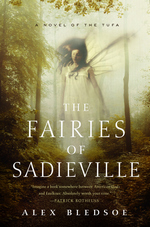
Chapel of Ease by Alex Bledsoe

Chapel of EaseChapel of Ease

by Alex Bledsoe
Series: Tufa, #4

Hardcover, 315 pg.
Tor Books, 2016

Read: November 19, 2016

“Sometimes the best mysteries are never solved, because the mystery is too important to lose. This is the story about one of those mysteries. Most of it’s true, and the parts that ain’t, well, they still sound true.”

It’s time to return to Needsville, TN, the home of the Tufa for the latest installment in one of the best ongoing Fantasy around. One of the best things about this series is how every book is completely different from its predecessors, but they all clearly belong to the same series.

After a quick tease, we enter the story in New York City where an up-and-coming musical writer/composer and a well-established director are casting for an off-Broadway musical (the opening line of which was quoted above). There’s something about the story and songs penned by Ray Parrish that draws everyone who reads and/or hears them in as surely as moths to a flame. One such person was Matt Johanssen, who becomes friends with Ray as well as one of the more dedicated cast members.

The twist in this tale comes from the source of Ray’s material — old (and not-so-old) Tufa stories and music. As anyone who knows these people realizes, people back home are not going to look kindly on this. There are a couple of people on the fringes of Ray’s world that make it clear that the Tufa want something out of Ray — ideally, a cessation of any musical or play or anything ending up in public. Ray will not be dissuaded, this is the story he wants to tell — whether people in Needsville want him to or not.

Just before the much-talked about play opens, Ray dies in his sleep and it falls upon Matt to bring his ashes home to his family. While there, he has the opportunity to look into the places and people this play is based on — and maybe get an idea what the central mystery of the play is about. Ray’d played his cards close to the chest on this topic and without him around to tell the cast, someone has to do some first-hand research. So, while mourning his friend and getting to know his family, Matt finds himself on the verge of instigating a feud while doing his research.

Now, it’s not unusual for a Tufa novel to feature an outsider’s first encounter with the Tufa. But this time, the book is just about that — there’s so little action outside of this story that it really doesn’t merit attention (at least not now). In these pages we have a first person narrator as the person encountering the culture. This gives everything an immediacy, an intimacy that we don’t normally get to these. Also, the narrow concentration keeps the reader focused on what’s going on with the Parrishes and Matt, without worrying about the Tufa politics, shifting power, and so on (it’s there, and there are changes in town, but that’s not what the novel is about).

In many ways, it’s not a novel about the Tufa — it just happens that they’re around, it’s a novel about Matt and Ray. But once you throw the Tufa in, you end up with something that’s not your typical story about a dancer/actor from NYC returning his friends’ ashes to the Appalachian town he grew up in.

I thought Matt was great — as was his dawning realization that he wasn’t in the world he knew anymore, and how he reacted to that realization. The way he stepped into parts of the culture he was exposed to was well handled, second only to the way he went about fighting against or struggling with the rest.

You do get to see your favorite recurring characters and they make references to events in the other novels, so readers of the series do get to check in on things other than the Parrishes — please don’t misunderstand. The novel’s focus isn’t on that, however.

If you even glance at the cover blurb, you know that someone has to die so that there’s an urn for Matt to bring to Cloud County, but Ray’s inevitable death was a doozy — and the memorial service held for him was one of the more moving things I’ve read this year (the impromptu memorial in New York held by friends/cast, that is — the wake the Tufa held was a different kind of experience). Making you care about a guy you know is going to die before you open the book and meet him that much takes a special kind of writer — and that’s what Alex Bledsoe is. Naturally, that doesn’t just apply to Ray; it works for Matt, the Parrishes, C. C. and several others who actually survive the book (and one that doesn’t).

I feel like I’m in danger of becoming the Chris Farley talk show host character here, “Remember that part in the book where Matt does ____? That was cool.” I really don’t know what to say about this book — or the others in the series — that I haven’t before. It’s a great setting, with a culture and people you want to see again and again, for both understanding and entertainment. Plus the overwhelming desire to actually hear the music they keep talking about. This is Bledsoe at the top of his game, you should be sure not to miss it.

And, like the play itself — it all sounds true.

—–

4 1/2 Stars

Page 40 of 47

Powered by WordPress & Theme by Anders Norén