Category: Wayward Children

Across the Green Grass Fields by Seanan McGuire: The Sixth Wayward Children Novel is a Let-Down

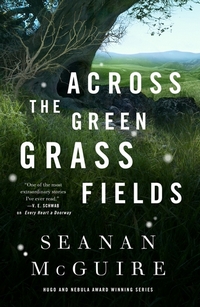
Across the Green Grass Fields

Across the Green Grass Fields

by Seanan McGuire
Series: Wayward Children, #6

Hardcover, 174pg.
Tor, 2021

Read: January 25-26, 2021
Grab a copy from your local indie bookstore!

Regan slowed again, suddenly eager for her journey to take as long as possible. Maybe that was why the shape in the nearby growth caught her eye, and she stopped abruptly, sending a pebble clattering into the creek as she cocked her head and blinked at what was surely a trick of the light.

Two trees had grown around each other, branches tangling and twisting like the wicker of a basket. They looped in and out of one another’s embrace, until they formed what looked almost like a doorway. That was interesting, but not unique; branches often grew together, and the shapes they made in the process could be remarkably architectural. She’d seen castles in the trees when she was little, castles and dragons and all manner of fabulous things.

But she’d never seen a doorway before.

What’s Across the Green Grass Fields About?

Regan is ten-years-old when she finds this doorway, but we meet her when she’s a little younger. We see her making regrettable, entirely predictable (and understandable) mistakes when it comes to friendship, the kind of mistakes that shape her social future in ways she can’t imagine. We readers cringe, hope she’d make better choices, and then just wait to see how bad the damage is going to be when she realizes (probably too late) that she’s befriended and trusted the wrong sort of person. Other than that mistake, she seems like a sweet girl, she loves horses and riding, her family, and her friend.

The day after she learns something devastating from her parents, she learns that lesson about trust the hard way and runs away from school into the less-developed area between her school and home.

As children do in this series, she walks through that doorway and finds herself in a new world. The first person she meets (a centaur) tells her it’s called The Hoooflands. And she is excited to find a human. Humans arrive in The Hooflands when something is about to happen—when something that is plaguing their society will be confronted and defeated by the human (who have thumbs and can fit in places a centaur can’t, so there are two big advantages for the human).

But first, the centaur takes Regan to meet her family. And then years pass. She matures, she sees the errors she made in trusting the wrong people on Earth. She picks up skills, she learns who she is. Yes, she misses her family, but this is home to her and she’s content.

The Hooflands

…and there were people. Centaurs like the ones Regan knew. More delicate centaurs with the lower bodies of graceful deer and the spreading antlers to match. Satyrs and fauns and minotaurs and bipeds with human torsos but equine legs and haunches, like centaurs that had been clipped nearly in half. It was a wider variety of hooved humanity that Regan could have imagined.

On the one hand, I really like this world—of all the worlds on other sides of doors that we’ve visited in this series, it seems more viable than any of them (except maybe for maybe The Goblin Market), it takes a little less suspension of disbelief to see how the world works (once you accept the population, anyway).

At the same time…there’s something about this society that I don’t understand how it functions at all given the way that other species see each other. Obviously, this is a not-at-all-thinly-veiled metaphor for our society, but even metaphors should have some sort of air of believability. Maybe it’s just me, but every time that came up, it took me out of the story for a bit, because I couldn’t understand how the world functions (set aside justice and morality, I’m talking just in terms of practicality). It’d take too long to flesh this out, so I won’t. But it bugged me.

The individual people we spend time with in The Hooflands? Loved ’em.  They’re the best characters we’ve met in this series that weren’t connected to the School. I resented how much time McGuire let pass between chapters because I wanted to spend more time with them and to understand the Centaur culture a bit more.

So, what did I think about Across the Green Grass Fields?

It had been more than five years since Regan ran away from school on purpose and ran away from home by mistake.

So begins the endgame for this particular novella, Regan heads off to meet the Queen and do what she was brought to the Hooflands to do once and for all, and then (she assumes) to get her door back home. She doesn’t really want to leave the Hooflands, but circumstances are forcing her hand.

This is the crux of probably my biggest problem with the book—she’s spent five years telling anyone who’ll listen (primarily herself) that she doesn’t believe in Destiny, she won’t bend to Destiny. But in the end, that’s exactly what she does. I’m not going to get into a debate about determinism here, but Regan would be a great Exhibit A for my case if I wanted to.

This is not a subtle book, McGuire has things she wants to say about destiny, about the choices that others make on behalf of others that are just as binding as the choices they make themselves. And she goes about it in a blatant, almost ABC After School Special* manner. And this series is better than that. Or it usually is.

* Readers of a certain age might want to consult with a parent to fully understand that reference

I liked Across the Green Grass Fields, but this is not up to either McGuire’s standard or the standard of The Wayward Children series, and it was far enough short of those high marks that I’m having trouble generating much enthusiasm for it. The language, the storytelling style, the imaginative world were there. But they were overshadowed too frequently for my taste by the rest.

I was disappointed. Hopefully, you’re not, or if you were, it doesn’t put you off from trying the rest of this really wonderful series.

I fully expect (and hope) to see Regan at Eleanor West’s School for Wayward Children in the future and look forward to seeing what happens after she makes her way back home (even if I don’t think it’ll go well for her long-term). I’ll be back for the 2022 novella in this series, eager for what McGuire has in store, confident it won’t be like this.


3.5 Stars

This post contains an affiliate link. If you purchase from it, I will get a small commission at no additional cost to you. As always, opinions are my own.

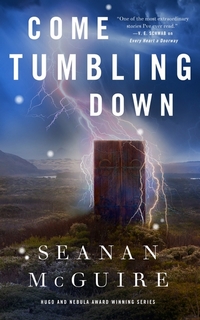
Come Tumbling Down by Seanan McGuire: Jack and Jill’s Final (?) Showdown in the Moors

Come Tumbling Down

Come Tumbling Down

by Seanan McGuire
Series: Wayward Children, #5

Hardcover, 206 pg.
Tor Books, 2020

Read: January 8-10, 2020
Grab a copy from your local indie bookstore!

Eleanor West’s Home for Wayward Children was an island of misfit toys, a place to put the unfinished stories and the broken wanderers who could butcher a deer and string a bow but no longer remembered what to do with indoor plumbing. It was also, more importantly, a holding pen for heroes. Whatever they might have become when they’d been cast out of their chosen homes, they’d been heroes once, each in their own ways. And they did not forget.

I wanted to do an Opening Lines post for this book, but I couldn’t decide where to stop—maybe around page 6 (which is a little too long for that kind of post). Seriously, it took less than a page for me to fall in love with this book.

It’s a typical day at Eleanor West’s School for Wayward Children (assuming such a thing exists) when a door appears, but instead of someone getting to go to their “home,” two figures emerge. One is a complete stranger, the other is Jack. Well, sort of. Close enough for our purposes here.

Things on the Moors have gotten to a crisis point where only one of the Wolcott twins can survive—Jack or Jill. Jill has struck first and things are dire. Jack recruits a couple of her friends and classmates to return with her (she was relatively certain she could return them to the school) to aid her in confronting her sister. They used to be heroes, they will be heroes again—as often as needed—much to Eleanor’s chagrin.

Once in the Moors, a dark and nasty place to be sure, dangers that no one (save maybe Jack) could’ve predicted present themselves and threaten the lives of the students in horrible and chilling ways. Culminating in what appears to be a final encounter for the sisters.

I love the way that McGuire writes these books, and Come Tumbling Down is no exception. It is full of the typical whimsical, fantastic and nigh-poetic language and ideas. If you’ve read a Wayward Children book before, you know what I’m talking about. If you haven’t . . . it’s hard to tell you. Here’s a sample or two:

“This is terrible . . . I mean we knew it was going to be trouble . . . but this is bonus terrible. This is the awful sprinkles on the sundae of doom.”

“A little knowledge never hurt anybody,” said Sumi.

“Perhaps not. But a great deal of knowledge can do a great deal of harm, and I’m long past the point of having only a little knowledge.”

Sumi was Sumi. Spending time with her was like trying to form a close personal relationship with a cloud of butterflies. Pretty—dazzling, even—but not exactly companionable. And some of the butterflies had knives, and that was where the metaphor collapsed.

Jill had always been the more dangerous, less predictable Wolcott, for all that she was the one who dressed in pastel colors and lace and sometimes remembered that people like it when you smiled. Something about the way she’d wrapped her horror move heart in ribbons and bows had reminded him of a corpse that hadn’t been properly embalmed like she was pretty on the outside and rotten on the inside. Terrifying and subtly wrong.

“wrapped her horror movie heart in ribbons and bows” is pretty much worth the purchase price of the book.

I’m glad that I enjoy—relish, really—the language like I do, because there’s not a lot of plot or action here. There’s enough, but there’s an awful lot of talk both around and before the action really gets underway. That’s not a wholly bad thing, and I enjoyed all of it, it just seemed self-indulgent.

It felt to me that McGuire’s reached the point of diminishing returns with this one, it’s been one too many trips to the Moors and it’s time for other Wayward Children to get the focus. Thankfully, that seems to be the plan.

I don’t think this would be a great introduction to this series (but it would function okay that way) if you’re not going to read them all in order, I feel safe in saying that it needs to be read after Down Among the Sticks and Bones. This is a good way to return to the world and revisit some of these characters. I can’t wait to see what happens in the next volume.


4 Stars

This post contains an affiliate link. If you purchase from it, I will get a small commission at no additional cost to you. As always, opinions are my own.

My Favorite Non-Crime Fiction of 2019

Like last year, while trying to come up with a Top 10 this year, I ran into a small problem (at least for me). Crime/Thriller/Mystery novels made up approximately half of the novels I read this year and therefore dominated the candidates. So, I decided to split them into 2 lists—one for Crime Fiction and one for Everything Else. Not the catchiest title, I grant you, but you get what you pay for.

These are my favorites, the things that have stuck with me in a way others haven’t—not necessarily the best things I read (but there’s a good deal of overlap, too). But these ten entertained me or grabbed me emotionally unlike the rest.

Anyway…I say this every year, but . . . Most people do this in mid-December or so, but a few years ago (before this blog), the best novel I read that year was also the last. Ever since then, I just can’t pull the trigger until January 1. Also, none of these are re-reads, I can’t have everyone losing to books that I’ve loved for 2 decades that I happened to have read this year.

Enough blather…on to the list.

(in alphabetical order by author)

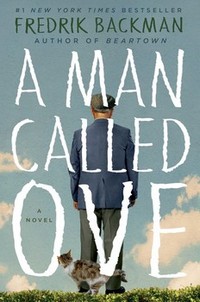
A Man Called OveA Man Called Ove

by Fredrik Backman, Henning Koch (Translator)

My original post
I’ve been telling myself every year since 2016 that I was going to read all of Backman’s novels after falling in love with his My Grandmother Asked Me to Tell You She’s Sorry. The closest I got was last year when I read his first novel, A Man Called Ove (and nothing else). It’s enough to make me resolve to read more of them, and soon. The story of an old, grumpy widower befriending (against his will, I should stress) a pretty diverse group of his neighbors. It’s more than that thumbnail, but I’m trying to be brief. The story was fairly predictable, but there’s something about the way that Backman put it together that makes it perfect. And even the things you see coming will get you misty (if not elicit actual tears).

5 Stars

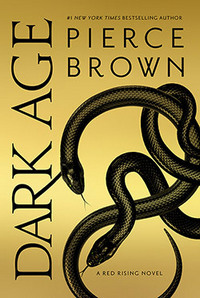
Dark AgeDark Age

by Pierce Brown

My original post
When I started reading this, I was figuring that Pierce Brown’s Red Rising Saga was on the downward trend. Boy, was I wrong. Dark Age showed me that time after time after time after time . . . Entertaining, occasionally amusing, stress-inducing, heart-wrenching, flat-out captivating. It was brutal and beautiful and I can’t believe I doubted Brown for a minute.

5 Stars

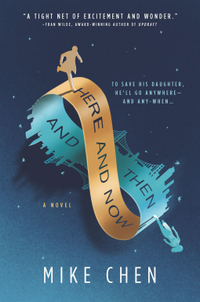
Here and Now and ThenHere and Now and Then

by Mike Chen

My original post
One of the best Time Travel stories I’ve ever read, but it’s so much more—it’s about fatherhood, it’s about love, it’s about friendship. Heart, soul, laughs, and heartbreak—I don’t know what else you want out of a time travel story. Or any story, really. Characters you can like (even when they do things you don’t like), characters you want to know better, characters you want to hang out with after the story (or during it, just not during the major plot point times), and a great plotline.

4 1/2 Stars

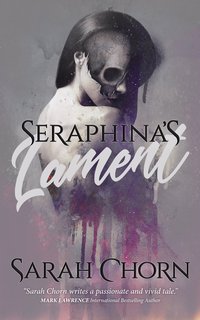
Seraphina's LamentSeraphina’s Lament

by Sarah Chorn

My original post
Chorn’s prose is as beautiful as her world is dark and disturbing. This Fantasy depicts a culture’s collapse and promises the rebirth of a world, but getting there is rough. Time and time again while reading this book, I was struck by how unique, how unusual this experience was. As different as fantasy novels tend to be from each other, by and large, most of them feel the same as you read it (I guess that’s true of all genres). But I kept coming back to how unusual this feels compared to other fantasies I’ve read. The experience of reading Seraphina’s Lament isn’t something I’ll forget any time soon.

4 1/2 Stars

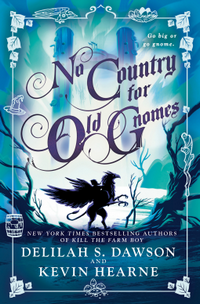
No Country for Old GnomesNo Country for Old Gnomes

by Delilah S. Dawson and Kevin Hearne

My original post
Having established their off-kilter world, strong voice, and approach to the stories of Pell, Dawson and Hearne have come back to play in it. The result is superior in every way that I can think of. I lost track of how many times I said to myself while reading something along the lines of, “how did they improve things this much?” These books are noted (as I’ve focused on) for their comedy—but they’re about a lot more than comedy. The battle scenes are exciting. The emotional themes and reactions are genuine and unforced. And tragedy hits hard. It’s easy to forget in the middle of inspiring moments or humorous aftermaths of battle that these kind of novels involve death and other forms of loss—and when you do forget, you are open to getting your heart punched.

(but mostly you laugh)

4 1/2 Stars

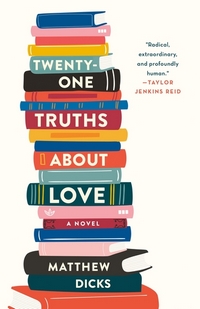
Twenty-one Truths About LoveTwenty-one Truths About Love

by Matthew Dicks

My original post
It’s an unconventionally told story about a man figuring out how to be a businessman, husband, and father in some extreme circumstances. The lists are the star of the show, but it’s the heart behind them that made this novel a winner.

5 Stars

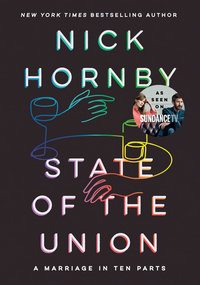
State of the UnionState of the Union: A Marriage in Ten Parts

by Nick Hornby

My original post
This series of brief conversations held between a married couple just before their marriage counseling sessions. At the end of the day, this is exactly what you want from a Nick Hornby book (except the length—I wanted more, always): funny, heartfelt, charming, (seemingly) effortless, and makes you feel a wide range of emotions without feeling manipulated. I loved it, I think you will, too.

4 1/2 Stars

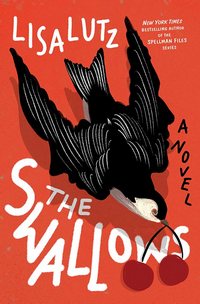
The SwallowsThe Swallows

by Lisa Lutz

My original post
This is not my favorite Lutz novel, but I think it’s her best. It has a very different kind of humor than we got in The Spellman Files, but it’s probably as funny as Lutz has been since the third book in that series—but deadly serious, nonetheless. Lutz puts on a clinic for naturally shifting tone and using that to highlight the important stories she’s telling. From the funny and dark beginning to the perfect and bitingly ominous last three paragraphs The Swallows is a winner. Timely and appropriate, but using tropes and themes that are familiar to readers everywhere, Lutz has given us a thrilling novel for our day—provocative, entertaining, and haunting. This is one of those books that probably hews really close to things that could or have happened and you’re better off hoping are fictional.

5 Stars

PostgraduatePostgraduate

by Ian Shane

My original post
This has the general feel of Hornby, Tropper, Norman, Weiner, Russo (in his lighter moments), Perrotta, etc. The writing is engaging, catchy, welcoming. Shane writes in a way that you like reading his prose—no matter what’s happening. It’s pleasant and charming with moments of not-quite-brilliance, but close enough. Shane’s style doesn’t draw attention to itself, if anything, it deflects it. It’s not flashy, but it’s good. The protagonist feels like an old friend, the world is comfortable and relaxing to be in (I should stress about 87.3 percent of what I know about radio comes from this book, so it’s not that). This belongs in the same discussion with the best of Hornby and Tropper—it’s exactly the kind of thing I hope to read when I’m not reading a “genre” novel (I hate that phrase, but I don’t know what else to put there).

4 1/2 Stars

The Bookish Life of Nina HillThe Bookish Life of Nina Hill

by Abbi Waxman

My original post
This is a novel filled with readers, book nerds and the people who like (and love) them. There’s a nice story of a woman learning to overcome her anxieties to embrace new people in her life and heart with a sweet love story tagged on to it. Your mileage may vary, obviously, but I can’t imagine a world where anyone who reads my blog not enjoying this novel and protagonist. It’s charming, witty, funny, touching, heart-string-tugging, and generally entertaining. This is the only book on this particular list that I know would’ve found a place on a top ten that included Crime Novels as well, few things made me as happy in 2019 as this book did for a few hours (and in fleeting moments since then as I reflect on it).

5 Stars

Books that almost made the list (links to my original posts): Not Famous by Matthew Hanover, Circle of the Moon by Faith Hunter, Maxine Unleashes Doomsday by Nick Kolakowski, In an Absent Dream by Seanan McGuire, The Rosie Result by Graeme Simsion, and Lingering by Melissa Simonson

Universal Monster Book Tag


Witty and Sarcastic Book Club tagged me in her little creation—a tag based on Universal’s Classic Movie Monsters. There’s a lot of recency bias in my pics, but oh well—I liked the list. I really need to do more things like this, it was fun.

While trying to come up with the last couple of entries for this, I took a Facebook break and read a couple of posts on a Nero Wolfe fan group, and realized I could fill my blanks from that Corpus. Then it occurred to me that I could do one of these with entries only from the Nero Wolfe series. Or, the Spenser series. Huh. (I’d have trouble with some other series depending how you define “sequel” below). Watch me control the impulse.

bullet Dracula: a book with a charismatic villain
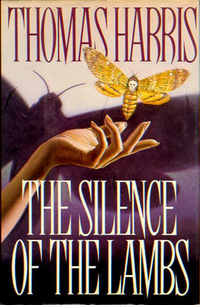
The Silence of the Lambs
My Pick: Gotta go with Hannibal Lecter in The Silence of the Lambs, every other charismatic villain I can think of pales in comparison.
Bonus Nero Wolfe Pick: (yeah, so much for restraint—this was a fun additional challenge) Paul Chapin in The League of Frightened Men (my post about the book)
Bonus Spenser Pick: The Gray Man in Small Vices

bullet The Invisible Man: A book that has more going on than meets the eye
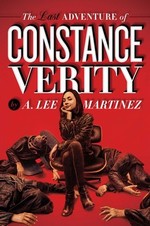
The Last Adventure of Constance Verity
My Pick: The Last Adventure of Constance Verity by A. Lee Martinez (my post about the book)
Bonus Nero Wolfe Pick: Even in the Best Families
Bonus Spenser Pick: Early Autumn

bullet Wolf-Man: A complicated character
Needle Song
My Pick: Doc Slidesmith in Needle Song (my post about the book)
Bonus Nero Wolfe Pick: Can I just use Nero Wolfe? Eh, Orrie Cather in A Family Affair
Bonus Spenser Pick: Patricia Utley in Mortal Stakes

bullet Frankenstein: A book with a misunderstood character
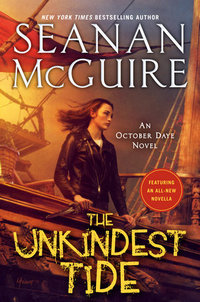
The Unkindest Tide
My Pick: The Luidaeg in The Unkindest Tide by Seanan McGuire (my post about the book)
Bonus Nero Wolfe Pick: Over My Dead Body (my post about the book)
Bonus Spenser Pick: Hawk, A Promised Land

bullet The Bride of Frankenstein: A sequel you enjoyed more than the first book
Stoned Love
My Pick: Stoned Love by Ian Patrick (my post about the book)
Bonus Nero Wolfe Pick: The League of Frightened Men (yeah, that’s the second time this shows up, but it’s the sequel…) (my post about the book)
Bonus Spenser Pick: God Bless the Child

bullet Creature from the Black Lagoon: An incredibly unique book
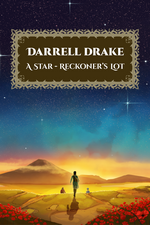
A Star-Reckoner's Lot

(there’s a better cover now, but this is the first)

My Pick: A Star-Reckoner’s Lot by Darrell Drake (my post about the book)
Bonus Nero Wolfe Pick: Some Buried Ceasar (my post about the book)
Bonus Spenser Pick: A Savage Place

bullet The Mummy: A book that wraps up nicely (see what I did there?)
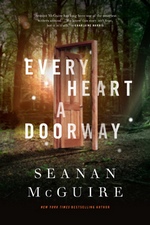
Every Heart a Doorway
My Pick: Every Heart a Doorway by Seanan McGuire (my post about the book)
Bonus Nero Wolfe Pick: This applies to almost every one of them, I’m going to go with The Doorbell Rang
Bonus Spenser Pick: The Judas Goat

I’m not going to tag anyone, but I’d encourage any reader to give it a shot. I’d like to see your lists.

Also, I’ve been thinking for awhile I needed to do a re-read of the Spenser series. This post has convinced me I really need to get on that.

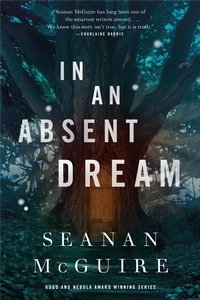
In an Absent Dream by Seanan McGuire: Another Wayward Child’s story — magical, enchanting, heartbreaking. You know the drill.

In an Absent DreamIn an Absent Dream

by Seanan McGuire
Series: Wayward Children, #4

Hardcover, 204 pg.
Tor Books, 2018
Read: January 9, 2019

           …the worst she was ever called where anyone might here was “teacher’s pet,” which she took, not as an insult, but rather as a statement of fact. She was Katherine, she was the teacher’s pet, and when she grew up, she was going to be a librarian, because she couldn’t imagine knowing there was a job that was all about books and not wanting to do it.

Here’s a quick recap of this series for those of you who haven’t heard about it yet/have ignored everything I’ve said about the series these last few years: Imagine Children who go off to a magical kingdom for a bit from our world — Narnia, Fillory, the Lands Beyond, Neverland, Lyrian, whatever you call that land on the other side of the fourteenth door in Coraline, etc. — and then return home. Some will go on to live “normal” lives — others can’t forget or outgrow their attachment to the magical world — some of those, those who want more than anything to return to whatever was on the other side of the door wind up at Eleanor West’s Home for Wayward Children. This series is about some of those children.

There’s a basic outline to these books — McGuire introduces you to a Child and a new world. Her language will be lyrical, playful and enchanting. She’ll draw you in with the awe and wonder and while you’re not looking, she’ll set the hook, and you will be as emotionally tied to her characters as you are close family members*. Then something devastating will happen to those characters, and you will feel horrible, yet love the experience. No matter what kind of resolution is found in the book (death, rescue, brokenness), when you close the book you’ll almost instantly start waiting until the next book comes out, because McGuire is just that good.

In this book we meet Katherine — Katherine’s never been good at making friends her age (there are justifiable reasons for this), but she likes talking to adults more, she likes rules, and she loves reading. There’s something about each Wayward Child that readers can identify with, but Katherine is more relatable to readers than the others have been. One day, Katherine comes upon a tree that hadn’t been there before. This tree had a door in it, and before she realized what was happening — she was on the other side of the door, walking down a hall, on her way to a Goblin Market. In the last book, we saw a nonsense world — this is a logic world, through and through. There are rules, enforced by everyone who lives there — and somehow, by the world itself.

Unlike that (mostly) tongue-in-cheek outline above, each of these books are so different from the rest, it’s hard to compare them — so I’ll try not to. But the structure of this seems more different than the others have. So I’m not going to tell you any more about the plot than I have — I’ll just say it’s a great story, incredibly well told — and even when the narration tells you the ending is not going to be “kind”, you keep expecting/hoping/wanting for things to work out for Katherine and her loved ones.

I’ve made the ending sound bad — it’s not “happy,” but I’m not complaining, I’m not criticizing, I’m most definitely not warning a reader away. It’s the right ending for this story, it’s absolutely how things needed to go — but this is not the Feel-Good Novella of the Year. It is wonderfully written, beautifully written, imaginative, awe-inspiring, delightful, and eventually heartbreaking. McGuire’s one of the best at work today — and this is proof of it.

Yes, you can read these out-of-order — but I don’t recommend it. And hey, were talking 200 pages or less each, you’ve got time for that. You’ll be glad you did (once you stop feeling horrible)


  • That might be a bit hyperbolic.

—–

5 Stars

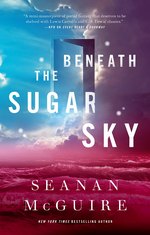
Beneath the Sugar Sky by Seanan McGuire

Beneath the Sugar SkyBeneath the Sugar Sky

by Seanan McGuire
Series: Wayward Children, #3

Hardcover, 174 pg.
Tor Books, 2018

Read: January 11, 2018

Children have always tumbled down rabbit holes, fallen through mirrors, been swept away by unseasonal floods or carried off by tornadoes. Children have always traveled, and because they are young and bright and full of contradictions, they haven’t always restricted their travel to the possible. Adulthood brings limitations like gravity and linear space and the idea that bedtime is a real thing, and not an artificially imposed curfew. Adults can still tumble down rabbit holes and into enchanted wardrobes, but it happens less and less with every year they live. Maybe this is a natural consequence of living in a world where being careful is a necessary survival trait, where logic wears away the potential for something bigger and better than the obvious. Childhood melts, and flights of fancy are replaced by rules. Tornados kill people: they don’t carry them off to magical worlds. Talking foxes are a sign of fever, not guides sent to start some grand adventure.

But children, ah, children. Children follow the foxes, and open the wardrobes, and peek beneath the bridge. Children climb the walls and fall down the wells and run the razor’s edge of possibility until sometimes, just sometimes, the possible surrenders and shows them the way to go home.

So begins Beneath the Sugar Sky, the third installment of McGuire’s Wayward Children series. If you’d asked me why I was excited about this book before reading it, I could’ve given you a list of reasons — but I’d forgotten just how magical the books are. By the time I got to “ah, children” not only did I remember the magic, I was under its spell.

Sometime after the events of Every Heart a Doorway, two residents of Eleanor West’s Home are down at the pond (they returned from water-worlds, and this is the best they can get), when a naked girl lands in the pond (falling from apparently nowhere), demanding to see her mother, or at the very least, someone in charge. It turns out that this girl is Sumi’s daughter — the problem there is that Sumi died during Every Heart, so she didn’t get to mature a bit, go back to her world, defeat the evil Queen, get married and have Rini. Now, the Timeline is catching up to her, and faster than you can say Marty McFly, Rini is starting to disappear, finger by finger, limb by limb. This doesn’t sit well with her, as you can imagine.

I like existing. I’m not ready to unexist just because of stupid causality. I didn’t invite stupid causality to my birthday party, it doesn’t get to give me any presents.

So, four of the residents set off on a quest to bring Sumi back to life. This takes them across the U. S., into one of the worlds of the dead, and all around Sumi/Rini’s nonsense world. There’s heroism, mystery, sacrifice, triumph and cleverness all around, without which none of this would work, but with it all — and a healthy dose of magic — it’s a plan so crazy that it just might work.

I don’t want to talk too much about the characters apart from what I’ve already said (which is essentially nothing). In addition to Rini — we have a nice mix of new to us and returning friends — with one character that’s new to the Home as well as to us. I absolutely enjoyed getting the bonus time with the returning characters, the new (to us) characters were exactly the kind of kids you hope to find in these books. Also, some of the revelations about some secondary characters serve to explain a lot about the way this particular multiverse came to be and it’s pretty cool. So, basically, the character material in this novella is almost perfect.

I wasn’t as taken with Down Among the Sticks and Bones as I was with Every HeartEvery Heart was a wonderful mix of tragedy and violence with a sense of play (especially in the ideas and words) — there was hope throughout the book, even when it was dark for everyone and there was little reason for it. Down Among was about dashed hope and tragedy in a world of tragedy, dashed hopes and violence; yes, there as a little play with the language, and some moments of triumph, but they were all overshadowed. Which was fine, it was the story that needed to be told, and I’m not complaining, but Beneath the Sugar Sky was more of a return to the tone of Every Heart, so I liked it more than Down Among — I think it was a better book, too, but I could be wrong about it. I just know it was easier to like. There’s definitely tragedy, there are hard choices to be made — and I did say something about sacrifice — but there’s a strand of hope throughout that makes it so much easier to carry on.

One thing that has been on display throughout this series is a sense of play, a sense of fair tale worlds and logic reflected in the language McGuire uses — you’ve seen bits of it already above, just one more and I’ll call it good:

There was a door there, tall and imposing, the sort of door that belonged on a cathedral or a palace; the sort of door that said “keep out” far more loudly than it would ever dream of saying “come in.”

You know exactly what that door looks like, and you have a great sense of the environment around it, too. Just from that one sentence. McGuire has a great sense of style on display in the Toby Daye and InCryptid books, which is turned up in the Indexed serials, but is probably best seen in these books — capturing the feel of preternatural worlds has pushed her to unleash all of her pent-up linguistic magic. Even if I disliked the characters and stories she’s telling in this series, I think the language would bring me back.

I’m obviously a pretty big Seanan McGuire fan — just a quick glance at the archives will tell you that. But I’m willing to bet that even if I wasn’t predisposed to like her work, this series would’ve made me one — Beneath the Sugar Sky is a slice of literary perfection and I can’t encourage you enough to try it.

—–

5 Stars

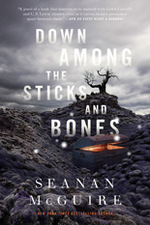
Down Among the Sticks and Bones by Seanan McGuire

Down Among the Sticks and BonesDown Among the Sticks and Bones

by Seanan McGuire
Series: Wayward Children, #2

Hardcover, 187 pg.
Tor, 2017

Read: June 14, 2017

Some adventures begin easily. It is not hard, after all, to be sucked up by a tornado or pushed through a particularly porous mirror; there is no skill involved in being swept away by a great wave or pulled down a rabbit hole. Some adventures require nothing more than a willing heart and the ability to trip over the cracks in the world.

This is the story about how Jack and Jill, the twins in the middle of the events in Every Heart a Doorway, got to The Moors, the dark world they had their adventures in before being returned to ours.

They were born to people that never should have had kids, had miserable childhoods (not that they realized it) — with two bright spots. The lesser, but more constant, bright spot was each other — they always had their twin. Just before this relationship was torn apart by the ways their parents were dividing them, the find themselves in a magic kingdom. They’re split up again, but this time the lifestyles they are immersed in better fit their personalities than what had been imposed on them by the World’s Worst Parents. Jack is trained by a mad scientist, learning to deliver medical care, reanimate the dead and more. Jill is pampered by a vampire that rules The Moors — being coached and guided into becoming one herself. We see them grow into strong individuals in this dark and deadly place before being returned to Earth.

The story is one we know already (assuming we read the first book), and even without that, it’s pretty clear how things are going to go. But that doesn’t make this any less gripping — the character work, the development of these two girls is fantastic. And the world created in The Moors is fantastic, you can see it — practically smell, feel and taste it. Best of all is the way that McGuire tells the story, the way she describes things (emotions, internal actions, external actions). It’s almost as magical as the first book.

It’s not a perfect novella, however. I’d have been tempted to call the previous one perfect, but this doesn’t quite make it. It seemed like half-story, half-manifesto against the kind of parenting McGuire hates.

This, you see, is the true danger of children: they are ambushes, each and every one of them. A person may look at someone else’s child and see only the surface, the shiny shoes or the perfect curls. They do not see the tears and the tantrums, the late nights, the sleepless hours, the worry. They do not even see the love, not really. It can be easy, when looking at children from the outside, to believe that they are things, dolls designed and programmed by their parents to behave in one manner, following one set of rules. It can be easy, when standing on the lofty shores of adulthood, not to remember that every adult was once a child, with ideas and ambitions of their own.

It can be easy, in the end, to forget that children are people, and that people will do what people will do, the consequences be damned.

It’s McGuire’s book, I’m not saying she shouldn’t feel free to use the space the way she wants — but it detracted from the story. Their parents have no redeeming qualities whatsoever, McGuire’s usually better than that. I think you could make the case that their shallowness, their utter horribleness fits the fairy-tale-ish story she’s telling. Honestly, I think that was the case — but it just doesn’t feel right. I would’ve like a little more time with the vampire himself — although maybe not getting more time with him, and learning about him primarily from the way that others react to him and his actions does make him creepier.

I was hoping (but didn’t expect) to see a little about what happened to the pair after Every Heart, oh well — hopefully soon.

I thought it a little heavy-handed in some places, but overall, I was just so happy to return to this series that I can get past it and recommend this one almost as highly as the last one.

—–

4 Stars

Every Heart a Doorway (Audiobook) by Seanan McGuire, Cynthia Hopkins

Every Heart a Doorway (Audiobook) Every Heart a Doorway

by Seanan McGuire, Cynthia Hopkins (Narrator)
Series: Wayward Children, #1

Unabridged Audiobook, 4 hrs., 44 min.
2016, Macmillan Audio

Read: November 17 – 18, 2016


When I get to considering my favorites of 2016, there’s no way that Every Heart a Doorway doesn’t make the Top 10 (see my initial post), so when I saw it available on the library’s audiobook site when I needed something to end the week with, I grabbed it, certain I was going to have a lot of fun.

Wow, was that a mistake. The story was just as good, the characters as rich, the world(s) just as fascinating — the writing, the wordplay, the language . . . it was just as good as I remembered. But man, the narration just didn’t work for me at all. The book is creepy, funny, spooky, beautiful — and remains so despite the narration. The jokes don’t land, most of the characters seem to lack affect. Actually, I have a list of problems, but I don’t want to get nasty, so I’ll just leave it at that.

I did pick up a bit of a William Ernest Henley’s “Invictus”-vibe towards the end this time that I hadn’t picked up the first time — but I still like it, regardless. I noticed more details, and appreciated the examination of the ideas of what’s home and what’s real maybe a little more this time, so it wasn’t a wasted effort. But it was a disappointing one.

I do want to make it clear that I don’t think Hopkins couldn’t turn in a good performance — I don’t have enough information to say that. I do think that she was wrong for this project, didn’t understand it, or had an off day. I’m not sure. But a novella as exceptionally good as Every Heart a Doorway deserves the best, and this wasn’t it. So for this audiobook (not the text version), I’ve gotta go with 4 stars (and even that feels a little generous).

—–

4 Stars

Every Heart a Doorway by Seanan McGuire

Every Heart a DoorwayEvery Heart a Doorway

by Seanan McGuire
Series: Wayward Children, #1

Hardcover, 169 pg.
Tor.com, 2016

Read: April 16, 2016

“. . . we went through. We came out on this moor that seemed to go on forever, between the mountains and the angry sea. And that sky! I’d never seen so many stars before, or such a red, red moon. The door slammed shut behind us. We couldn’t have gone back if we’d wanted to — and we didn’t want to. We were twelve. We are going to have an adventure if it killed us.”

“Did you? asked Nancy. “Have an adventure, I mean?”

“Sure,” said Jack bleakly. “It didn’t even kill us. Not permanently anyway. But it changed everything.”

One of my favorite book bloggers to read (and not just because our tastes are similar) began his take on Every Heart a Doorway by saying:

Sometimes we either meet a book (or a novella, in this case,) that is precisely the right fit for your soul, (at the moment,) or just happens to be original enough right when you need it, that it fills your life and your mind with brightness and joy.

For me, this is one of those pieces. To muddy the waters even more, I’m an unabashed fan of the author and I’m likely to pick up all of her writings without even checking the subject matter because I simply trust the woman to steer me to any shore.

If I didn’t start off by quoting that, I’d end paraphrasing/plagiarizing it.

So here’s the deal in a world where portal fantasies are possible, and children all over the world are going through them — à la Lucy Pevensie et al., Dorothy Gale, September, Quentin Coldwater, Alice, Jason Walker, etc. — and, sadly (?) most of these children end up back home. Some of them are glad to be back in this world and want to put their adventures behind them — a lot of them don’t want to be here anymore and want to return to wherever it was they went. Both kinds of children have a hard time coping in this world and need help. Eleanor West’s Home for Wayward Children is for the latter kind.

Nancy is a girl recently returned, and is very different than the girl her parents have been missing. They want her fixed, they want their daughter back — not whoever this person is with different attitudes, actions, clothes, etc. — West doesn’t promise that (but she may have allowed them to think she’ll do that, just so she can help Nancy), but she can help Nancy adjust to this world. So she joins the small student body at the private school/treatment center. The last thing Nancy wants is to be fixed, to be that girl again — which just means she fits in here, with returned kids from all over the country, who’ve been in all sorts of worlds. As Nancy begins to understand the nature of these other worlds, the effects they have on children, and why many of them want to leave again, so do we.

It turns out, all of the residents of West’s Home are going to learn that you can have plenty of adventures here, too. And that’s all I’m going to say about that.

I really liked all of these children — the adults we met, too, actually — Jack in particular. But every one of them — even the less-than-nice ones — are great characters and I’d have gladly spent another 200 pages with them, easy.

The writing is incredible — not that I’ve ever had any real problems with McGuire before, but she kicked it up a notch here — and is writing a different kind of story than I’m used to, so she writes differently. This book took me longer to read than it should’ve, because I had to go back and reread several sentences/lines/paragraphs — not because I needed to read them again for clarification, but because they were so perfect, so quotable, so . . . something. I’m not going to start quoting beyond what I opened with, because I don’t know if I could stop — Laura got two of them I made notes about. You could literally be amused, melancholy, horrified, feeling whimsy, and nervous within a couple of paragraphs — only to turn the page and start all over again. Not because she was jerking you around or anything, it’s just that kind of story, that kind of playing with language, just that kind of broken reality.

McGuire gave us such a satisfying ending — complete, tidy, fitting, bittersweet, heartwarming — and then I read another paragraph or so, and it’s so much better (and all of the above to the next degree) once you got to the actual ending. Then I closed the book and I teared up a little — for no reason at all, really, but it felt really appropriate.

Can I say this is positively Gaiman-esque without making it sound like McGuire’s derivative in any way? I don’t want to even hint at suggesting that — but man, if you like Neil Gaiman’s stuff — get this. If you’ve ever read a portal fantasy and wondered what happened to the kids afterwards– get this. If you like things that are good, and don’t mind magic in your reading — get this.

—–

5 Stars

Page 2 of 2

Powered by WordPress & Theme by Anders Norén