Category: A-F Page 10 of 16

Series A-F

A Few Quick Questions With…Jo Perry

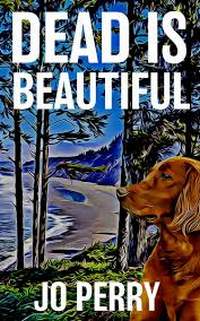
One of the first things I did when I decided to participate in Fahrenbruary was to see if Jo Perry would participate in one of these Q&As (and thankfully she displayed poor judgment and agreed). I decided to post this today to commemorate the publication of the fourth book in her fantastic series, Dead Is Beautiful. It’ll be the next book I start and I’m hoping to have my post up about the book itself on Monday. I know the positive reviews are already popping up out there on teh IntraWebz. In the meantime, I hope you enjoy this.

What was your path to publication? What did you do to prepare yourself to this career in fiction?
I don’t believe anything prepares a person for writing fiction except writing and reading. My father’s formal education ended at fourth grade. He educated himself by reading and became a comedy writer. My mother had been a teacher. Both read relentlessly. Words, especially jokes were serious business: One wrong word and the joke’s punch evaporates.

I always wrote—mostly poetry, studied literature in college, got a Ph.D. in English, taught literature and writing, wrote episodic television and some other stuff. But despite all that I am very late bloomer when it comes to fiction. My first novel, Dead Is Better was published in 2015.

As for a “career in fiction,” I’m not there yet, but I’m very lucky that my husband, novelist Thomas Perry demonstrated how that’s done. This year he published his 26th novel, The Burglar.

Whatever one might think about Charlie (your protagonist we know best), there’s no denying that Rose is what most of your readers connect to. You recently posted something brief to Facebook about Rose’s origin — can you talk a little more about that?
During the scorching summer of 2008, I came upon a dusty, thirsty, exhausted, frightened dog that someone dumped in crowded home improvement store parking lot. I drove her home (she fell asleep immediately on the front seat of the car) and––after some listless attempts to find a home for her because we were strictly cat people––we were hers and we named her Lucy.

From the first moment she met me, Lucy upended my life, revealed new worlds and introduced me to people who have become deep, cherished, important friends. Lucy’s constancy, her sweetness despite being neglected and abused, her patience with me, a total dog-novice idiot, her sense of humor, her wisdom and her benevolence changed me completely. I experienced the bottomless, endless goodness dogs give us, and witnessed the casual and not so casual cruelties which human beings visit upon dogs hourly and daily.

The experience of knowing/experiencing Lucy, and Lola, the second dog who appeared to us, is the basis for Dead Is Better and the other books in the series—so yes, in general ways, Lucy is the model for Rose.

Outside some pretty extreme — and rare — circumstances, Charlie and Rose do little more than watch events unfold in front of them. What was the reasoning behind that choice? What are the special challenges behind that kind of protagonist for the writer?
I wanted my protagonists dead, which means that they would be ghosts. But I wanted none of the traditional ghostly machinery, telekinetic movement, special effects or general creakiness. So I set up some rules: In the afterlife the dead can touch each other, see each other and of course hear each other.

But in living world only the dead can see the dead.  They cannot be heard or felt or seen. The dead cannot affect anything directly.

The challenges are huge but fun and in some ways a relief from guns, computers, traditional violence, cell phones of crime fiction.  And ghosts are perfect voyeurs. They can spy all they want. They can float through walls. Through people. They can go anywhere at any time. And they are fearless because they cannot be killed.

Most of the time these limitations are liberating and inspiring. Other times they are a pain.

Is there a genre that you particularly enjoy reading, but could never write? Or are you primarily a mystery/suspense/thriller reader?
I love nonfiction. I don’t think I could write it well. Nonfiction demands meticulous, massive research and an ability to organize all of it into a compelling, graceful narrative.

I have become mystery/suspense/thriller reader now and love it.

What’s the one (or two) book/movie/show in the last 5 years that made you say, “I wish I’d written that.”?
TV: I wish I’d written Fauda, and The Method.

Books (short list) I wish I’d written Nikki Dolson’s All Things Violent, Grant Nicol’s A Place To Bury Strangers, Denial by Paddy McGrane, James Craig’s A Slow Death and A Shot At Salvation, Timothy Hallinan’s Pulped, For The Dead and Crashed, Saira Viola’s Jukebox, Fidelis Morgan’s The Murder Quadrille, Seth Lynch’s Salazar novels, Thomas Perry’s novels, esp. the Butcher’s Boy novels, the Jane Whitefield novels, and Strip; Derek Farrel’s Danny Bird mysteries, David Keenan’s This Is Memorial Device.

This one’s not about you directly, but what is it about Fahrenheit Press that seems to generate the devotion and team spirit that it does (or at least appears to)? I don’t know that I’ve seen as many authors from the same publisher talk about/read each other’s books — or talk about the publisher — as much as you guys seem to. Is it simply contractual obligation, or is there more?
In no way do F13Noir/Fahrenheit Press require their authors to, as they might say, flog their publishing house. The truth is that their writers and readers rave about them because they love them. They’re funny, they’re honest, they’re daring, and they take risks.

Too often publishers avoid risk entirely and busy themselves with policing genre boundaries to make the selling of books easier, i.e. so they can say, “This luminous thriller is Girl On A Train meets [insert name of best seller here].  Any book that violates genre norms or bends genres or or that is too weird is a no-no. An example: A publisher liked Dead Is Better except for one small thing—the dog. I was told that I couldn’t have a “dog detective.” That a dog protagonist in a mystery was not permitted. Was a rule breaker. That if I removed the dog, they’d look at the book again. Which means either that they didn’t like the dog, which is fine, or that they didn’t know how to sell the dog because a dead dog protagonist was too different, too weird, maybe too upsetting for some.

Fahrenheit Press/F13Noir don’t play that game or any games––which is extraordinary. They look for crime fiction that (and I cannot speak for them, but I infer this from their list) makes the reader feel something, that’s exciting, daring, fresh, brave. They look for powerful voices. They don’t try to tame crime fiction, they like it wild, unapologetic, unadulterated. In fact, they kind of dare writers to produce the most courageous books they are capable of writing.

That is miracle and I am endlessly grateful to them because of it.

Thanks for your time — and thanks for Charlie and Rose. I hope you enjoy continued success with them (and not just because that would guarantee me more of them to read).

Fahrenbruary Repost: Dead is Good by Jo Perry

One more Charlie and Rose book for you this week — and it’s a doozy. I hope you’re enjoying this stroll through these books as much as I am — I’m enjoying them so much, that for the last two days I’ve forgotten to mention something incredibly important — the fourth book in this series, Dead Is Beautiful comes out tomorrow — Fahrenbruary 14th! Go — click and buy. Then come back tomorrow for a special treat.

Dead is GoodDead is Good

by Jo Perry
Series: Charlie & Rose Investigate, #3

Kindle Edition, 282 pg.
Fahrenheit Press, 2017
Read: August 3, 2017

Oh, and after all this time I learned something else about being dead.

Death is failure.

Death is loss.

Everything—who you are, what you know—goes.

Whoever you thought you were, you weren’t and you’re not.

When he was alive, Charlie Stone was married multiple times to pretty horrible women (if we’re to believe him — and we might as well, he seems pretty upfront and honest about this kind of thing), not that he was any catch, either. But he really only loved one person, Grace Morgan. Grace broke things off with Charlie and moved on with her life, but apparently after hearing about his murder, she was moved to change her approach to art — deciding to challenge the audience, forcing them to realize how close to death they are.

Yeah, it sounds pretty silly and pretentious to me, but hey…that’s not the important part of the story. Maybe if we got more examples of her art, I’d care more and maybe even understand. What is important about Grace, for our purposes, is that her life is in danger, it’s because of this danger that Charlie and Rose have been brought from their afterlife-limbo back to Earth.

The book opens with one of the more blatant suicide-by-cop scenes you’ve ever read, which is intended to serve as protection for Grace. It doesn’t work out, or the book would be really short. Powerless to do anything but watch and hope things turn out okay, Charlie and Rose travel around L.A. discovering for themselves what it was that endangered Grace in the first place — which brings them into a world of drugs, sweatshop workers, deceptive piñatas, and smuggled birds.

This is a very tangled story, it takes Charlie quite a while to put the pieces together — Rose has her own priorities in this mess and spends some time away from Charlie, unwilling to turn her focus on his behalf. The way that this criminal enterprise is eventually revealed to work not only seems like something that really exists, but is revealed in a way that is narratively satisfying.

Charlie will tell his readers over and over that there’s no character growth in death — that’s nonsense. Post-mortem Charlie is a much more emotionally mature and self-sacrificing kind of guy than pre-mortem Charlie was. In this book we see him come to — or at least acknowledge — a greater and deeper understanding of what love is, and what he allowed his previous relationship to become. It may not do him any good in the afterlife, but Charlie is better for it, and in someway we can hope that Grace is better off having gone through all this, so that whatever life has in store for her can be tackled face-on.

I love these characters — even while we readers don’t fully understand their circumstances, how they know where to go, what brings them to this world at certain times. Even while they don’t have much better of an idea than we do (at least Charlie doesn’t). I love how while they can’t interact with their environment, the people they see and events they watch unfold, they are driven to find answers, driven to care about what’s happening. There’s something about that compulsion — and success they have in figuring things out — that matters more than when Bosch or Spenser or Chin and Smith put all the pieces together to thwart someone.

This wasn’t as amusing as previous installments, but it was just as satisfying — maybe more so. For a good mystery with oddly compelling characters, once again, look no further than Jo Perry.

The L.A. County Department of Medical Examiner-Coroner has a gift shop?? Why isn’t anyone investigating this? It may be real, it may be popular and legal. But surely that’s a crime against tact, right?

—–

4 Stars

Fahrenbruary Repost: Dead is Best by Jo Perry

I like this post better than I liked my post on the first of the Charlie and Rose books (that we saw yesterday), but I still think I could’ve done better. Nevertheless, I agree with almost everything I said back in 2016 — especially the main point: get this book.

Dead is BestDead is Best

by Jo Perry
Series: Charlie & Rose Investigate, #2

Kindle Edition, 296 pg.
Fahrenheit Press, 2016

Read: May 2, 2016

You’d think that having given up the ghost I’d be beyond the grasp of my ex-stepdaughter, the parasite.

Sure, Charlie’s less-than-charitable assessment, doesn’t make it sound like death has mellowed him at all — or that we really want to spend a novel looking into the trials and tribulations of his ex-stepdaughter, Cali. (a quick aside: I loved Charlie’s rant about the pretentious names given to Cali and her peers, “Truth, Canyon, Druid, Turquoise, Vanilla and Road. Don’t tell me those are names–– they’re brands. “) But last time we learned that 1. Charlie has actually mellowed a bit, we just need more time to see it; 2. He’s generally right about his family; and it won’t take long before the reader will actually care about Cali. As difficult as she’ll make it.

Textbooks will tell you that Cali is a “troubled teen.” Which is a pretty vague, and a likely outdated, term. She’s a drinker, a drug user, defiant daughter (although once you meet her mother and current stepfather, you kind of get that) in trouble with the law. But it doesn’t take long once Charlie and Rose start to follow her for her to end up in more trouble than she — or anyone — deserves.

Once again, there’s very little that Charlie and Rose can do other than watch what’s happening and put two and two together in the almost vain hope that Charlie can do something about it. Rest assured, they do, and it doesn’t involve another near death experience (I was a little afraid they’d just be hanging around Surgical Centers waiting for the next opportunity to talk to another ghost). It’s hard to believe that a mystery series where no one knows that the main characters did anything works. But this does.

What can I say about Rose? She’s at once one of the most realistic dog characters I can remember reading lately (she doesn’t talk, narrate, have a point of view chapter, or communicate telepathically), and yet, as a ghost, is the hardest to believe. She’s such a good influence on Charlie, I’m glad whatever or Whoever brought them together after their deaths.

Charlie said something in the last book about death not being about learning anything or insight or growth, that he stays the same. I don’t believe it, he’s not the same guy. But it’s probably a good sign that he doesn’t realize it.

Something I should’ve mentioned when I talked about the previous novel, these chapter epigraphs are great. They represent a truly impressive collection of quotations about death, some funny, some thoughtful, just about all of them keepers. The book is worth the effort just to read these (but you should really focus on the rest of the book).

Perry’s freakishly short chapters make you think Robert Parker was prone to be long-winded and rambling, but they work. You could probably make the case that they’re a commentary on the transient nature of human life or something (if you wanted to, and I don’t). They keep things moving, really keep anything from dragging, and help you get how Charlie and Rose can jump from place to place with ease.

Funny, poignant, all-around good story-telling. Plus there’s a dog. You really can’t ask for more than that. It’s easy to see why people as diverse as Cat Warren and Eric Idle commend these books. I strongly recommend this one (and the predecessor).

—–

4 Stars

Fahrenbruary Repost: Dead is Better by Jo Perry

We continue our trip down memory lane in Fahrenbruary with the first of Jo Perry’s books about Charlie and Rose. Looking back, I’m not sure I like my take on the book. I don’t dislike it, but I could’ve done better. Still, it’s a good book and these are the thoughts I had about it.

Dead is BetterDead is Better

by Jo Perry
Series: Charlie & Rose Investigate, #1

Kindle, 282 pg.
Fahrenheit Press, 2016
Read: March 12 – 14, 2016

In its young life, Fahrenheit Press has put out some great looking titles, not your typical mystery fare. I’ve only read 2 (bought 1 other), so far — but they’ve shared the off-kilter flavor that the Press’ twitter feed/publicity displays (and descriptions for the other books indicate). I don’t typically talk about publishers when I’m talking about books, but there’s something about Fahrenheit’s project — and the books they put out — that draws your attention. Dead is Better is typical of FP — a mix of darkness and light, unlikely protagonists, unlikely crime-solvers, and atypical crimes (at least as far as crime fiction goes).

Charles Stone is our protagonist, but he’s not really the character that will grab your imagination. That’d be Rose — but we’ll get to her in a moment. Charles is dead — very dead, shot several times. His ghost carries the wounds, as well as the clothing, even the hospital ID bracelet, from the time he died. He can’t remember the shooting however, and can’t think of a reason why he’d be shot. He’s (to his reckoning) no one important, and it doesn’t seem anyone around him even cares enough to kill him/arrange for his killing. After a little bit, he starts to come up with a possible motive or two. But his murder doesn’t seem to be the thing he’s most curious about. What he’d really like to know is, why does he have a constant companion?

Rose is a dog. Well, technically, she was a dog, now she’s the ghost of one. We don’t know why she’s alongside Charles, but she’s been with him the entire time he’s been a ghost. It seems that she had a really unpleasant life; and at last, in Charles, has someone caring for her. Rose is not going to challenge Crais’ Maggie, Quinn’s Chet, or Hearne’s Oberon anytime soon as the greatest dog in fiction — which is not a dig. Rose is great, she’s just not legendary. Rose does have one thing going for her that the other’s don’t — she’s pretty realistic (not that the others don’t have their moments — but even Maggie gets Point-of-View chapters), she can only communicate through suggestion — and even then, the people around her have to guess. Sometimes, they guess wrong.

The two begin investigating Charles’ murder — with the occasional glance at his family and former life. But before long, Charles becomes convinced he’s not around to look into his death, but something else. Rose, somehow, seems to know more about what’s going on than Charles, but he’s the one who needs to do the work. The pair do uncover some answers — and others uncover some others (I’m not convinced that all the answers the readers/Charles are given about anything beyond the main crime are correct, but . . . ).

More importantly, Charles finds a measure of redemption — sure, it might be too late, but nevertheless, there is some. You get the idea that if he maybe had a dog while living, he might’ve turned out to be a better person. Sure, that describes most of humanity to me, so I responded to that, but I think Perry sells it well enough that just about anyone would.

I’ve often thought of trying to do an Urban Fantasy for NaNoWriMo featuring a ghost, but I’ve never figured how to bridge the communication gap between the living and the dead without it feeling like a cheat. I liked Perry’s solution to this (I worry about the sequel repeating it — but that’s not my problem, is it?). I’m not convinced that the police could’ve/would’ve used the information that Charles got to them, but in the moment — you don’t care, you’re just glad that someone did something.

This is a fast and lean read — Perry doesn’t waste a word (actually leaves a couple of them out, but nothing too distracting). You’ll grow to like Charles, you’ll want to adopt Rose, and you’ll want to finds out what happens to them next. Thankfully, their story will continue in Dead is Best.

—–

4 Stars

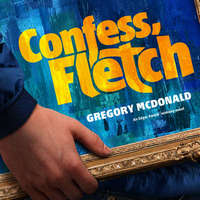
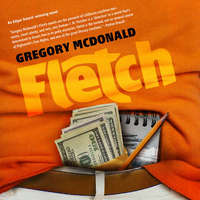
Confess, Fletch (Audiobook) by Gregory Mcdonald, Dan John Miller: Fletch, Flynn, A Murder or two and a Heist. What more can you want?

Confess FletchConfess Fletch

by Gregory Mcdonald, Dan John Miller (Narrator)
Series: Fletch, #2 (#6 Chronologically)

Unabridged Audiobook, 6 hrs., 23 min.
Blackstone Audio, 2018
Read: January 25 – 30, 2019

           Fletch dialed “0”.

“Get me the police, please.”

“Is this an emergency?”

“Not at the moment.”

The painting over the desk was a Ford Maddox Brown – a country couple wrapped against the wind.

“Then please dial 555-7523.”

“Thank you.”

He did so.

“Sergeant McAuliffe speaking.”

“Sergeant, this is Mister Fletcher, 152 Beacon Street, apartment 6B.”

“Yes, sir.”

“There’s a murdered girl in my living room.”

“A what girl?”

“Murdered.”

Francis. Xavier. Flynn.

Those three words are really all I have to say. This is a clever book, with a few good mysteries and Fletch doing his thing. There are antics galore, witty dialogue, yada, yada, yada. As much as I love I. M. Fletcher, Gregory Mcdonald’s greatest creation was Flynn — Blackstone Audio will be releasing those soon and I’ll talk more about him then — but for now, let’s just say that I loved meeting him again and Dan John Miller nailed the character. I was worried about Flynn, really, but I was so relieved that the character came to life as he should.

But let’s put Reluctant Flynn aside for a minute. Fletch is visiting Boston — taking part in a home-share kind of program, staying in a nice apartment while the owner is staying in Fletch’s Italian villa (you know there’s a story behind that, but we don’t really get it at this point). He comes home from dinner the first night to find body lying on his rug. She’s very naked and very dead.

Naturally, Fletch is the prime suspect.

Meanwhile, Fletch is trying to track down some stolen art work on behalf of his fiancé, the daughter of a recently kidnapped and (apparently) murdered near-destitute Count. His recently stolen art collection is the only real inheritance she’ll get. Assuming her current step-mother isn’t named in the will. Fletch is working with the owner of a private gallery to track down what he can of this collection while his fiance and her step-mother wrangle. Fletch’s interest in, affinity for and expertise in art is established here and will show up again a few times in the series.

Of course, Fletch is also busy investigating the murder and reconnects with a former editor of his, from before he worked for Frank Jaffe. He uses this connection to dig u information on the man whose apartment he’s in, the gallery owner, and just about everyone else he comes across in Boston. Inspector Flynn of the Boston PD makes plenty of investigative headway, too — but he and the rest of the police are too focused on Fletch as suspect to do much beyond that. So Fletch uncovers the other viable suspects, if for no other reason than to give Flynn someone else to look at.

This is the first mention of I.M. being from Seattle, incidentally. I never remember that.

It’s a great plot, with all the twists that you can want. There’s so much to enjoy in this book — Fletch’s observations, odd way of approaching his investigation, and banter with Flynn, his editor-friend and anyone else he cares to befuddle is the kind of thing that led me to read this book a few dozen times before now.

As I said, Miller does a great job — he’s good with every character, with the narration and everything. I do think he’s a bit slow, but at 1.25 speed his rhythms match what I expect from Mcdonald. This guy is rapidly becoming one of my favorite audiobook narrators — I expect by the end of this series, he’ll be near the top.

—–

5 Stars

2019 Cloak & Dagger Challenge

Fletch (Audiobook) by Gregory Mcdonald, Dan John Miller: A Strong Audio Version of One of My All-Time Favorites

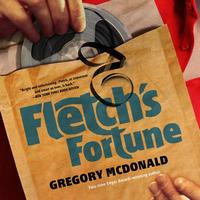
Fletch (Audiobook)Fletch

by Gregory Mcdonald, Dan John Miller (Narrator)
Series: Fletch, #1 (#4 Chronologically)

Unabridged Audiobook, 5 hrs. and 57 mins.
Blackstone Audio, 2018

Read: November 27 -28, 2018


I re-read the paperback of this a few years ago (with intentions of reading the whole series again, which never went anywhere), before this blog started — for some reason (probably brevity), I didn’t repost what I put on Goodreads here. Until now.

What an outstanding read. Funny, satirical, with a lot of heart, crackling dialogue…oh yeah, and a pretty solid mystery.

It has none of the goofiness, and better plotting than the Chase flick (which I really do enjoy as its own entity)

The first–and possibly best–of a great series. Worth reading again and again.

Yeah, that’s all that I wrote. Who knew I could be so non-rambling? Anyway, I really don’t have much more to say about this one (other books in the series, probably).

Why do I bring this up? Well, Blackstone Audio started releasing new audiobook versions of the series last year. I’ve listened to Fletch and it was really, really good.

Dan John Miller does a bang-up job with the narration. I’ve read every book in the series multiple times — some of them several. I’m going to give a conservative estimate of 15 reads of Fletch before the audiobook. I know each sentence, I know how these people should sound, I’ve “heard” them more times than I can remember and there was little chance that some new voice in my head was going to be able to compete. And Miller did pretty good — I don’t agree with every choice he made, but I liked almost everything he did.

That may seem like faint praise, but think of it as never knowing that Darrin Stevens had ever been portrayed by anyone but Dick York, you’d watched York’s 170 episodes a handful of times and then one day you stumble onto a one of Dick Sargent’s 80 episodes. You instantly react, “hey, that’s not Darrin!” and then by the end of the episode, you’ve accepted him. That’s a fairly tortured analogy, but it’s the best I can do.

I’ll be honest, I’m a little worried about Miller’s take on Francis Xavier Flynn ruining my appreciation for him, but once we’re past that, I think he’ll win me over again (and who know, I might tolerate it).

If you’ve never read a Gregory MacDonald Fletch novel — trust me, they’re better than the movies. They’re a dynamite series — and seem to be in very capable hands with Miller’s narration, which would be a great way to meet I. M. (Irwin Maurice) Fletcher, your favorite investigative journalist.

Thanks to Brian at Brian’s Book Blog for exposing me to the audiobooks — I owe ya one!

—–

5 Stars

Some quick thoughts on Lethal White by Robert Galbraith

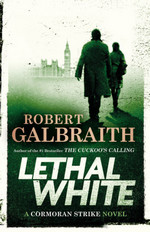
Lethal WhiteLethal White

by Robert Galbraith
Series: Cormoran Strike, #4

Hardcover, 647 pg.
Mulholland Books, 2018
Read: September 19 – 26, 2018

I just don’t have the patience or energy to give Lethal White the kind of post I want to. So let me be brief — this picks up minutes after the end of Career of Evil and we spend a few pages with Strike and Robin trying to have an actual conversation at her wedding. It almost goes well, but between Matthew, her family, Strike’s drinking . . . yeah, well. It was a good start.

Then eleven months and change fly by and we get to the thick of the novel (pun absolutely not intended, but very fitting), so let’s cut to the Publisher’s Blurb to sum that up.

           “I seen a kid killed…He strangled it, up by the horse.”

When Billy, a troubled young man, comes to private eye Cormoran Strike’s office to ask for his help investigating a crime he thinks he witnessed as a child, Strike is left deeply unsettled. While Billy is obviously mentally distressed, and cannot remember many concrete details, there is something sincere about him and his story. But before Strike can question him further, Billy bolts from his office in a panic.

Trying to get to the bottom of Billy’s story, Strike and Robin Ellacott–once his assistant, now a partner in the agency-set off on a twisting trail that leads them through the backstreets of London, into a secretive inner sanctum within Parliament, and to a beautiful but sinister manor house deep in the countryside.

And during this labyrinthine investigation, Strike’s own life is far from straightforward: his newfound fame as a private eye means he can no longer operate behind the scenes as he once did. Plus, his relationship with his former assistant is more fraught than it ever has been-Robin is now invaluable to Strike in the business, but their personal relationship is much, much trickier than that.

The most epic Robert Galbraith novel yet, Lethal White is both a gripping mystery and a page-turning next instalment [sic] in the ongoing story of Cormoran Strike and Robin Ellacott.

If by “most epic Robert Galbraith novel yet,” they mean the longest, well, yeah. That’s certainly the case. Wow, this thing was long — you can argue bloated, even. At the same time — while lamenting the week it took me to get through this — I don’t know what I’d cut if given the opportunity. Everything I’ve thought could be lost, can’t be without ruining something else. It’s real a testament to Galbraith’s skill that there’s really nothing wasted, everything sets up something else.

But man, I wish that wasn’t the case. And, yeah, fill up the comment section with how I’m wrong about that, I’m more than willing to be convinced.

But what makes all of the work worth it? The scenes where Strike and Robin work together, think through things together, or even just talk like friends together. In short — Strike and Robin together. It doesn’t happen enough — and, honestly, there’s some sloppy, soap opera-ish machinations keeping that from happening the way it should (well, okay, the way I want it to). I honestly don’t care one way or the other if they ever get together (as inevitable as it seems) — I just want them working together.

The other great thing is the way that the events of Career of Evil have impacted Robin and the way she’s reacting to that impact. I don’t want to say more, but I loved this.

Lastly, the nature of the murders at the core of the book stand in sharp contrast to some of the murders in earlier Strike novels. Some novelists get stuck in a rut and all the murderers/motives/methods become variations on a theme — each one more extreme than the previous. Galbraith dodges that here, and that pleases me a lot.

There’s a lot more that could be discussed — and I hope others do (or inspire me with a comment to do so). Good mystery, good character development (some well overdue), I enjoyed all of the characters, etc., etc. But I’ll leave it at that — I’m glad we got another book, and am looking forward to the next already. I just hope it’s a little leaner.

—–

4 Stars

Pub Day Repost: Deck the Hounds by David Rosenfelt: Another Christmas Tale (Tail?) for Andy Carpenter, Another Win for Rosenfelt

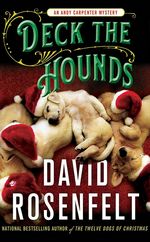
Deck the HoundsDeck the Hounds

by David Rosenfelt
Series: Andy Carpenter, #18
eARC, 368 pg.
Minotaur Books, 2018
Read: September 11 – 13, 2018

Andy Carpenter sees a homeless man with a dog on the street, gives the man some money and a gift card for dog food (naturally, the dog gets more than the man, because it’s Andy Carpenter) and has a brief conversation with him. Not long after that, that same man is on the news — he’d been attacked by a stranger and his dog defended him. Which resulted in the dog being put in the pound. Laurie’s filled with pre-Christmas spirit and insists that Andy help out. So he uses his rescue foundation to get custody of the dog and moves the pair into the apartment over his garage.

How heartwarming is this? Clearly, this is fodder for a Christmas/holiday story. But it’s also an Andy Carpenter story, so naturally, after Andy does a newspaper interview about the man — giving his name — he’s arrested for murder. No one was more surprised by this move than Andy’s guest, Don. Not only has Don never heard of the victim, he was unaware that he was wanted by the police. Laurie’s pre-Christmas spirit is still strong, so she talks him into defending the man. It helps that he’s innocent, a dog lover, and an educated, articulate vet with PTSD. The PTSD aspect of the story was told with sensitivity and tact. It didn’t feel tacked on to make the character more sympathetic, but it grounded him in reality and may help to inform some readers about the prices that too many vets are paying.

There is another storyline — seemingly unrelated — running through the novel. Obviously, it’s going to tie into Andy’s case, but it takes a long time for that to happen. This gives the reader multiple opportunities to guess how the two are connected (and multiple opportunities to be wrong. I guessed what was happening in that story pretty easily, and I think most people who read a lot of legal thrillers will. But how it connects to the main story will likely leave most readers as surprised as I was (surprised, and then filled with a strong sense of, “well, naturally, what else could it be?”).

The usual gang is back and in their prime form — Hike is back to his full-time dour self; Ricky is a cute kid; Laurie provides the moral center; Pete is a good cop who continually underestimates Andy’s clients; Sam is a wizard with computers in a way that probably defies reality Marcus is his super-hero best here, and possibly faces his biggest challenge yet (I thoroughly enjoyed this scene). What better way to spend a holiday (or at least a book set around one) than with a bunch of friends like these have become over the years?

Andy spent more time in the courtroom in this book than he has lately — it seemed to me, anyway, I didn’t do a page count. His courtroom antics and cross-examinations are what drew me to the character in the first place, so this is the stuff in these books I most look forward to. Rosenfelt brought his A-game to the courtroom events here, and I loved it. As far as mysteries go, this in one of the most satisfying cases that Rosenfelt has brought us in years.

In my post about the previous “holiday special” I said that I really don’t like it when long-running series do a holiday special — yet, The Twelve Dogs of Christmas and Deck the Hounds have been my favorite installments in the last couple of years in this series. Maybe that means this Grinch’s heart is growing a couple of sizes, or maybe it’s that Rosenfelt is inspired to work harder in these. My guess? It’s the clients — the Andy Carpenter books are at their best when they focus on the client, not on some large conspiracy. These holiday books have the kind of clients you spend time on, that the reader gets invested in — and therefore, Andy gets to shine in defending them.

Whatever the reason, this is a sure-fire win for Andy Carpenter fans. Particularly if you don’t mind a little Christmas celebration (or, if you’re like Laurie, and insist on commemorating the holiday for months).

Disclaimer: I received this eARC from St. Martin’s Press via NetGalley in exchange for this post — thanks to both for this.

—–

4 Stars

Deck the Hounds by David Rosenfelt: Another Christmas Tale (Tail?) for Andy Carpenter, Another Win for Rosenfelt

Deck the HoundsDeck the Hounds

by David Rosenfelt
Series: Andy Carpenter, #18

eARC, 368 pg.
Minotaur Books, 2018
Read: September 11 – 13, 2018

Andy Carpenter sees a homeless man with a dog on the street, gives the man some money and a gift card for dog food (naturally, the dog gets more than the man, because it’s Andy Carpenter) and has a brief conversation with him. Not long after that, that same man is on the news — he’d been attacked by a stranger and his dog defended him. Which resulted in the dog being put in the pound. Laurie’s filled with pre-Christmas spirit and insists that Andy help out. So he uses his rescue foundation to get custody of the dog and moves the pair into the apartment over his garage.

How heartwarming is this? Clearly, this is fodder for a Christmas/holiday story. But it’s also an Andy Carpenter story, so naturally, after Andy does a newspaper interview about the man — giving his name — he’s arrested for murder. No one was more surprised by this move than Andy’s guest, Don. Not only has Don never heard of the victim, he was unaware that he was wanted by the police. Laurie’s pre-Christmas spirit is still strong, so she talks him into defending the man. It helps that he’s innocent, a dog lover, and an educated, articulate vet with PTSD. The PTSD aspect of the story was told with sensitivity and tact. It didn’t feel tacked on to make the character more sympathetic, but it grounded him in reality and may help to inform some readers about the prices that too many vets are paying.

There is another storyline — seemingly unrelated — running through the novel. Obviously, it’s going to tie into Andy’s case, but it takes a long time for that to happen. This gives the reader multiple opportunities to guess how the two are connected (and multiple opportunities to be wrong. I guessed what was happening in that story pretty easily, and I think most people who read a lot of legal thrillers will. But how it connects to the main story will likely leave most readers as surprised as I was (surprised, and then filled with a strong sense of, “well, naturally, what else could it be?”).

The usual gang is back and in their prime form — Hike is back to his full-time dour self; Ricky is a cute kid; Laurie provides the moral center; Pete is a good cop who continually underestimates Andy’s clients; Sam is a wizard with computers in a way that probably defies reality Marcus is his super-hero best here, and possibly faces his biggest challenge yet (I thoroughly enjoyed this scene). What better way to spend a holiday (or at least a book set around one) than with a bunch of friends like these have become over the years?

Andy spent more time in the courtroom in this book than he has lately — it seemed to me, anyway, I didn’t do a page count. His courtroom antics and cross-examinations are what drew me to the character in the first place, so this is the stuff in these books I most look forward to. Rosenfelt brought his A-game to the courtroom events here, and I loved it. As far as mysteries go, this in one of the most satisfying cases that Rosenfelt has brought us in years.

In my post about the previous “holiday special” I said that I really don’t like it when long-running series do a holiday special — yet, The Twelve Dogs of Christmas and Deck the Hounds have been my favorite installments in the last couple of years in this series. Maybe that means this Grinch’s heart is growing a couple of sizes, or maybe it’s that Rosenfelt is inspired to work harder in these. My guess? It’s the clients — the Andy Carpenter books are at their best when they focus on the client, not on some large conspiracy. These holiday books have the kind of clients you spend time on, that the reader gets invested in — and therefore, Andy gets to shine in defending them.

Whatever the reason, this is a sure-fire win for Andy Carpenter fans. Particularly if you don’t mind a little Christmas celebration (or, if you’re like Laurie, and insist on commemorating the holiday for months).

Disclaimer: I received this eARC from St. Martin’s Press via NetGalley in exchange for this post — thanks to both for this.

—–

4 Stars

Pub Day Repost: Rescued by David Rosenfelt: A tale of self-defense, an old flame and a truckfull of dogs

RescuedRescued

by David Rosenfelt
Series: Andy Carpenter, #17
eARC, 304 pg.
Minotaur Books, 2018
Read: May 4, 2018

At an early age, Andy Carpenter discovered that he couldn’t hit a curve-ball and therefore had to give up on his dreams of playing in the majors and fall back to following in his father’s footsteps and becoming a lawyer. His father, a lifelong prosecuting attorney, probably wished for something else, but for the many people that he’s defended in court, they wouldn’t have it another way.

This is the seventeenth novel in this series — I’ve talked here about nine of the previous sixteen. There’s part of me wondering just what I could possibly have to say about this one that I haven’t said at least once before.

Andy Carpenter is called to a nearby rest area — a truck containing sixty-one dogs was discovered with the driver shot. Andy and Willie were called out to help the police retrieve the dogs and care for them. The police are really not happy to see him there — Andy Carpenter at a crime scene? Not a welcome sight. But then he’s called away, there’s a prospective new client waiting for him at home.

Not that surprisingly, the potential client was also at that rest area earlier in the day. He actually tells Andy that he shot the driver — in self-defense, mind you. Sure, there’s a history between the two — Kramer (the client) had assaulted the victim and threatened to kill him, in fact. But that was years ago, and he had no current reason to. He just needs some help with the inevitable arrest. Andy believes him — he has to. Kramer is Laurie’s ex and she vouches for him — so much so that Andy pretty much has to take the case for her sake.

Honestly, Andy really isn’t that interested in helping tall, hunky and dangerous Kramer — ex-Military, ex-police, ex-licensed investigator. But it’s not long before he starts to believe that there’s something more afoot. And what was the deal with all the dogs?

All the regulars are along for this ride — Pete Stanton brings the law and order, we get a little more about the fun side of Hike that was introduced in the last book, Sam and his hacking crew dig up plenty of information, Marcus is his typical imposing self, Tara is as loyal as ever — and Andy gets a lot of courtroom time in. There’s a new prosecuting attorney for him to face off against — I liked her, and would like to see her against Andy again.

I don’t think it’s much of a spoiler here, because it’s pretty much the default in this series, but there’s a conspiracy behind the murder and they men behind it have decided to frame Kramer. This is one of the better — or at least one of the more grounded — conspiracies featured in these books. Up to a point, some of it was pretty hard to swallow — it just went a little over the top for my taste (but many of them do in this series). Also, this one features the best code names this side of Reservoir Dogs. Still, it was one of the more clever solutions that we’ve been treated to lately.

A thought about the series as a whole at this point: I would appreciate it if Rosenfelt would shake things up a little bit — I’m not talking about killing Hike or splitting up with Laurie or anything — just dial down the super-criminals a bit, maybe spend some more time with the client again. But there’s little reason for him to do that — the series moves like clockwork and is reliably entertaining. I only say this because I’m a fan — Rosenfelt is in danger of becoming a parody of himself (at worst) or just putting out cookie-cutter books (at best), I don’t want Andy Carpenter to become a Stephanie Plum.

This is not to say that I didn’t enjoy the book — because I did. Andy, Sam, Pete, Vince, Laurie, Tara and the rest are old friends that I enjoy getting together with every few months. Rosenfelt’s latest demonstrates what’s been true for years — this series is at the point where you can reliably count on each book for an entertaining read, a puzzling mystery, some good comic moments, a nice dog or two and maybe even a tug on the heart strings. They’re still charming enough to win over a new reader (and any of the books serve just fine as entry points) as well as satisfying the long-term reader. Rescued delivered just what I expected and left me satisfied — satisfied and ready to read number 18.

Disclaimer: I received this eARC from St. Martin’s Press via NetGalley in exchange for this post — thanks to both for this, it was a real pleasure.

—–

3.5 Stars

Page 10 of 16

Powered by WordPress & Theme by Anders Norén