Category: A-F Page 9 of 16

Series A-F

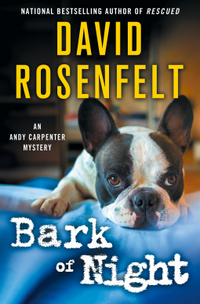
Pub Day Repost: Bark of Night by David Rosenfelt: Another winner of a case for the lawyer who’s gone to the dogs

Bark of NightBark of Night

by David Rosenfelt
Series: Andy Carpenter, #19

eARC, 304 pg.
Minotaur Books, 2019
Read: July 3 – 4, 2019

I know it’s practically de rigueur for me to start off talking about how difficult it is to talk about yet another Andy Carpenter book, but I’m going to try to resist this time (no promises that I won’t resort to it next time).

Instead, I want to focus on people who read this blog and haven’t picked up a book in this series — let’s see if I can help you come to the light. Andy Carpenter is a defense attorney — thanks to some high profile cases, some lucrative lawsuits, (and some other things), he’s an independently wealthy defense attorney (see the first couple of books for details). He’s also lazy. These two traits generate a lawyer/protagonist who doesn’t want to take on clients who doesn’t want to go to work (he’s the anti-Lincoln Lawyer). He’d rather watch sports, hang out with his wife, kid, friends and dog (especially the latter) and maybe check-in on the dog rescue he runs with a former client. He only takes on a case when he likes the potential client, he feels an injustice is being done, his wife talks him into it — or the life of a dog lies in the balance (there’s a strong link between the first reason I listed and the last). This time out, it’s pretty much a combination of those motivations. Nevertheless, when he takes on a client, he pulls out all the stops for him or her. Much like with Perry Mason, you have to wonder why prosecutor’s don’t just drop charges when Andy shows up in court — you can bet his client will be exonerated.

Andy’s vet calls him to his office to talk about something — namely, this dog that had been brought in to be euthanized. Before he did that, someone in his office scanned the microchip in the dog. The man who paid for the euthanization, wasn’t the owner f the dog — because he’d been murdered shortly before the dog appeared. After some digging, Andy discovers that the man who brought the dog in is very likely connected to the murder (especially when they look at his rap sheet). No one’s sure why he wanted a vet to take care of destroying the dog rather than doing it himself. But someone completely different has been charged with the crime, and Andy knows that this man is innocent — he has to be, there’s no other explanation how the would-be dog killer got involved.

From there, Andy and his team (his PI wife, her PI friend/Andy’s bodyguard, Andy’s CPA/hacker, his associate attorney) set out to defend their client, figure out why anyone would want to kill the victim (a documentary filmmaker, and not a particularly successful — or good — one), and maybe answer a few questions about the victim’s dog. Like most Carpenter novels, the mystery is just twisty enough to keep you guessing to the end. Andy’s courtroom antics are pretty subdued this time, but watching him in action is fun — particularly as he battles the Assistant D.A.

Andy’s team — and his friends who aren’t on the team — are as enjoyable to spend time with as ever. With some long-running series you stick with it because the characters are so near and dear to you. With some, you put up with characters because the author puts out great mysteries/adventures/whatever. It’s with the best series that you get both — a good mystery (in this case) and a cast of characters you look forward to seeing again. That’s definitely what we have in the Andy Carpenter books, and Bark of Night is a prime example of it.

As a capper, if the last few paragraphs don’t provoke a warm fuzzy or three in you, there’s something wrong with you and you should probably seek professional help. Rosenfelt is good at the heart-warming stuff, and he’s at the top of his game here.

Newcomers will get enough information along the way to hop on board here — there’s no need to feel like you need to go back to Book One (Open and Shut) and read them in order to catch all the nuance. Start here, and you’ll easily see why this book has charmed and entertained audiences enough to last for 19 books (and counting!). It’s a clever mystery, featuring characters that are reliably comfortable and funny — with just enough moments of seriousness and displays of skill that you can believe they’ll be defending someone and bringing a killer to justice at the same time. This is one of the better installments in the last few years (both for being enjoyable and for the mystery) and should move right to the top of your TBR (note that a “lesser” Andy Carpenter book is still fun, engaging and entertaining).

Disclaimer: I received this eARC from St. Martin’s Press via NetGalley in exchange for this post — thanks to both for this opportunity.

—–

4 Stars

Bark of Night by David Rosenfelt: Another winner of a case for the lawyer who’s gone to the dogs

Bark of NightBark of Night

by David Rosenfelt
Series: Andy Carpenter, #19

eARC, 304 pg.
Minotaur Books, 2019
Read: July 3 – 4, 2019

I know it’s practically de rigueur for me to start off talking about how difficult it is to talk about yet another Andy Carpenter book, but I’m going to try to resist this time (no promises that I won’t resort to it next time).

Instead, I want to focus on people who read this blog and haven’t picked up a book in this series — let’s see if I can help you come to the light. Andy Carpenter is a defense attorney — thanks to some high profile cases, some lucrative lawsuits, (and some other things), he’s an independently wealthy defense attorney (see the first couple of books for details). He’s also lazy. These two traits generate a lawyer/protagonist who doesn’t want to take on clients who doesn’t want to go to work (he’s the anti-Lincoln Lawyer). He’d rather watch sports, hang out with his wife, kid, friends and dog (especially the latter) and maybe check-in on the dog rescue he runs with a former client. He only takes on a case when he likes the potential client, he feels an injustice is being done, his wife talks him into it — or the life of a dog lies in the balance (there’s a strong link between the first reason I listed and the last). This time out, it’s pretty much a combination of those motivations. Nevertheless, when he takes on a client, he pulls out all the stops for him or her. Much like with Perry Mason, you have to wonder why prosecutor’s don’t just drop charges when Andy shows up in court — you can bet his client will be exonerated.

Andy’s vet calls him to his office to talk about something — namely, this dog that had been brought in to be euthanized. Before he did that, someone in his office scanned the microchip in the dog. The man who paid for the euthanization, wasn’t the owner f the dog — because he’d been murdered shortly before the dog appeared. After some digging, Andy discovers that the man who brought the dog in is very likely connected to the murder (especially when they look at his rap sheet). No one’s sure why he wanted a vet to take care of destroying the dog rather than doing it himself. But someone completely different has been charged with the crime, and Andy knows that this man is innocent — he has to be, there’s no other explanation how the would-be dog killer got involved.

From there, Andy and his team (his PI wife, her PI friend/Andy’s bodyguard, Andy’s CPA/hacker, his associate attorney) set out to defend their client, figure out why anyone would want to kill the victim (a documentary filmmaker, and not a particularly successful — or good — one), and maybe answer a few questions about the victim’s dog. Like most Carpenter novels, the mystery is just twisty enough to keep you guessing to the end. Andy’s courtroom antics are pretty subdued this time, but watching him in action is fun — particularly as he battles the Assistant D.A.

Andy’s team — and his friends who aren’t on the team — are as enjoyable to spend time with as ever. With some long-running series you stick with it because the characters are so near and dear to you. With some, you put up with characters because the author puts out great mysteries/adventures/whatever. It’s with the best series that you get both — a good mystery (in this case) and a cast of characters you look forward to seeing again. That’s definitely what we have in the Andy Carpenter books, and Bark of Night is a prime example of it.

As a capper, if the last few paragraphs don’t provoke a warm fuzzy or three in you, there’s something wrong with you and you should probably seek professional help. Rosenfelt is good at the heart-warming stuff, and he’s at the top of his game here.

Newcomers will get enough information along the way to hop on board here — there’s no need to feel like you need to go back to Book One (Open and Shut) and read them in order to catch all the nuance. Start here, and you’ll easily see why this book has charmed and entertained audiences enough to last for 19 books (and counting!). It’s a clever mystery, featuring characters that are reliably comfortable and funny — with just enough moments of seriousness and displays of skill that you can believe they’ll be defending someone and bringing a killer to justice at the same time. This is one of the better installments in the last few years (both for being enjoyable and for the mystery) and should move right to the top of your TBR (note that a “lesser” Andy Carpenter book is still fun, engaging and entertaining).

Disclaimer: I received this eARC from St. Martin’s Press via NetGalley in exchange for this post — thanks to both for this opportunity.

—–

4 Stars

The Definitive (for now) Irresponsible Reader’s take on Charlie and Rose Investigate/Jo Perry

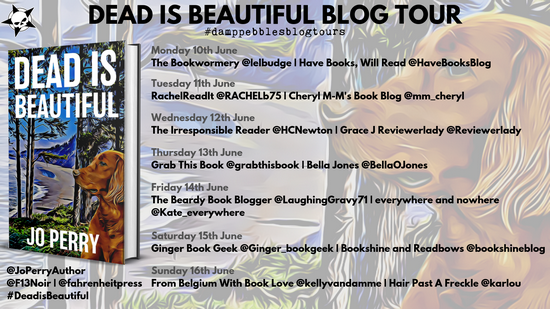
I was a little bummed, I have to admit, when Damppebbles Blog Tours approached me about doing this tour — I’d already said my piece about Dead is Beautiful, so what can I do to help spread the word about this wonderful series. The only thing I can do at this point is make it easier for you to find out more about the boks, so you can order them yourselves. So here’s everything (to date) that I’ve had to say about the series in one handy spot. Hopefully this helps.

(for those that I’ve posted about more than once, I went with the more recent posting, just because I’ve edited and commented on them).

I know you aren’t supposed to use modifiers with words like unique, but I have it break the laws of language with this series: they simply are the most unique books in Crime Fiction. You will not read anything like them – every other Crime Fiction novel I’ve read in the past 6 years (and that’s a lot) can be compared to at least 6 others without breaking a sweat or resorting to my reading logs to aid my memory. The only things I can compare the Charlie and Rose books to are other Charlie and Rose books.

These are special novels, but don’t take my word for it — go learn for yourself.

Dead is BetterDead is Better

My complete take
“This is a fast and lean read — Perry doesn’t waste a word. . . You’ll grow to like Charles, you’ll want to adopt Rose, and you’ll want to finds out what happens to them next.”

4 Stars

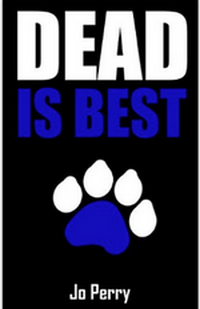
Dead is BestDead is Best

My complete take
“Funny, poignant, all-around good story-telling. Plus there’s a dog. You really can’t ask for more than that.”

4 Stars

Dead is GoodDead is Good

My complete take
“For a good mystery with oddly compelling characters, once again, look no further than Jo Perry.”

4 Stars

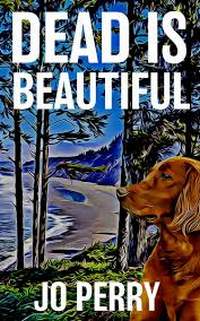
Dead is BeautifulDead is Beautiful

My complete take
“…this is one of those series that improves as it goes on. These unique protagonists get us to look at life and events in a different kind of way, while reading very different kind of mysteries. I hope I get to keep spending time with them for a long time to come — and I strongly encourage you to join in the fun.”

4 Stars

A Few Quick Questions With…Jo Perry

My Q&A with Jo Perry from February.
“…despite all that I am very late bloomer when it comes to fiction. My first novel, Dead Is Better was published in 2015.

As for a ‘career in fiction,’ I’m not there yet”

My thanks to damppebbles blog tours for the invitation to participate in this tour and the materials they provided.

EXCERPT: Dead is Better by Jo Perry

So in lieu of posting a review-ish post of Dead is Beautiful, I’m doing something better, namely, I’m shutting up. Instead, I’ve been given the first few pages of the first Charlie and Rose book — Dead is Better. Everything you really need to know about the series is here — the epigraphs, the humor, the tragedy, the mix of humor and tragedy, Charlie’s brutal honesty about himself, and Rose. I just re-read this post and had to fight the impulse to re-read the book. I just love this book.

Naturally, when corresponding with Perry this week about this post, I made sure to get the title wrong, because I’m a professional.

“Sometimes dead is better.”

––Stephen King, Pet Sematary


“Death is no more than passing from one room into another.

But there’s a difference for me, you know. Because in that other room I shall be able to see.”

––Helen Keller


1.

“When the first living thing existed, I was there waiting. When the last living thing dies, my job will be finished. I’ll put the chairs on the tables, turn out the lights and lock the universe behind me when I leave.”

Neil Gaiman, The Sandman, Vol. 3: Dream Country

All I know is that I know. And I can’t stop knowing. There was no cinematic replay of my life, no white light, no luminous passage to a perpetual meadow populated by old friends and relatives––I didn’t float over my failing body as the life seeped out.

I couldn’t see a goddamn thing––my eyes were shut.

There was then––the team of EMTs working on me, one applying compressions to the disco beat of the Bee Gees’s “Stayin’ Alive,” and a small young woman with long, curly hair squeezing the breathing bag attached to a plastic tube they’d shoved down my throat. Then a tall young man with short black hair loads me onto a gurney.

That was that.

Bullet holes still interrupt my flesh. My sternum is cracked, my chest bruised yellow and purple from their efforts.

One thing about this place—it’s come as you were.


2.

“We do not need to grieve for the dead. Why should we grieve for them? They are now in a place where there is no more shadow, darkness, loneliness, isolation, or pain. They are home.”

John O’Donohue, Anam Cara: A Book of Celtic Wisdom

No Virgin Mary Blue sky. No combustible darkness.  Just a flash, a bang, and a fade-out that delivered me to this quiet place without midnight or noon, twilight or dawn.  This place, if it is a place—a beach without a sea, a desert without sand, an airless sky.

Did I mention the goddamn dog?

For the record, she wasn’t mine on the other side––which proves that error is built into the fabric of the universe—if that’s where we still are.

No ragged holes singe her gut, and she walks without a limp, but there’s a dirty rope around her neck that trails behind her too-thin body covered with long, reddish fur.  The first moment I saw her, I could tell––She’d been tethered long enough without water or food to die.

Well, she’s not hungry or thirsty now.

Is that peace?


3.

“Whatever can die is beautiful — more beautiful than a unicorn, who lives forever, and who is the most beautiful creature in the world. Do you understand me?”

Peter S. Beagle, The Last Unicorn

In life I’d heard of dogs like her, cheap burglar alarms.  Solitary, lonely, they bark at passersby and garbage trucks from behind high fences in exchange for water and kibble when the people remember to feed and water them.

They bark out of fear.

And to remind themselves that they in fact exist.

Now that I think about it, I wasn’t much different. A nobody.  A man of no importance.

On the other side, being a nothing had advantages. People barely saw me and that made me free.  I moved among them like a shade, a cipher. And when they did acknowledge whoever they thought I was, they were often revealing, entertaining––overconfident, saying too much about spouses and ex-spouses and email passwords, and what the neighbor’s son really did in the garage, and about not really being married, or the time they shoplifted—confessing, boasting.

Being nothing– that’s my gift


4.

When you’re dead, they really fix you up. I hope to hell when I do die somebody has sense enough to just dump me in the river or something. Anything except sticking me in a goddam cemetery. People coming and putting a bunch of flowers on your stomach on Sunday, and all that crap. Who wants flowers when you’re dead? Nobody.

J.D. Salinger, The Catcher in the Rye


In case you wondered, yes. When you’re dead, you can attend your own funeral. It’s not required, but I decided to go––time is unknowable here––to try to find out what happened.  And I thought the dog might like a change of scenery–or any scenery.

I want to look at certain people’s faces, especially my own.

Late morning at Mount Sinai, Hollywood Hills––which should be named Travel Town 2.0. The final resting place of thousands of corpses sits next door to Travel Town, a collection of non-traveling train cars frequented by babysitters, little boys and blinking coyotes who venture out at noon, when the picnickers and homeless eat their food.

The ferocious September heat and smog smudges LA’s edges and boundaries––until it doesn’t seem that different from this place, except that the dog and I are temperature-controlled––perpetually lukewarm, courtesy of Who or What we do not know.

The living––palpable, whole, shiny and fragrant with sweat and irritation––nothing’s worse than LA traffic on a Friday afternoon––remind me of those silvery-mirage-pools that form on the surfaces of overheated streets and then evaporate when you get close. Although it was I who lacks presence, they seem insubstantial, like flames, the men in suffocating dark suits and ties, and the women–especially my four exes––lotioned and gleaming, tucked and tanned, manicured and lap-banded, and holding wads of Kleenex in their diamond-ringed left hands to signify their former closeness to and recent repudiation of the deceased, who lay by himself in a plain wooden box up front.

The dog, whose rope I hold in my right hand, urges me forward, and then waits patiently while I look.

Jesus. Why is the casket open? I look like shit. I must have Mark’s wife “the decorator” to thank for this grotesque violation. Why didn’t they shut the box as is customary, especially here in a Jewish place. What were they trying to prove? That despite being shot to death I was still in some sense, intact?

Was I ever really the poor fuck who lived behind that face?  The neck and chin have been painted with peach make-up, and the too-pink lip-glossed mouth forced into a grimace that was, I guess, supposed to indicate post-mortal composure.  It must have taken three guys at least to wedge my fat ass into the narrow box.  I’m large.

Or I was.

I feel strangely light on my feet now. Want to lose sixty pounds in a hurry?

Die.

Read the rest in Dead is Better by Jo Perry — and the rest of the series: Dead is Best; Dead is Good; and the focus of this tour, the wonderful Dead is Beautiful. .

My thanks to damppebbles blog tours for the invitation to participate in this tour and the materials they provided.

BOOK SPOTLIGHT: Dead is Beautiful by Jo Perry

Today I’m excited to welcome the Book Tour for the funny, clever, tragic and engaging Dead is Beautiful by Jo Perry. I already posted about the book back in February, so along with this spotlight post, I’ve been given a great excerpt to share here in a bit as well as a page that indexes The Irresponsible Reader’s Jo Perry/Charlie and Rose content in one easy to use post.

But first, let’s focus on the book in question here: Dead is Beautiful

Book Details:

Book Title: Dead is Beautiful by Jo Perry
Publisher: Fahrenheit 13
Release date: February 13, 2019
Format: Ebook/Paperback
Length: 268 pages

Book Blurb:

DEAD IS BEAUTIFUL finds Rose leading Charlie from the peace of the afterlife to the place he hates most on earth, “Beverly Fucking Hills,” where a mature, protected tree harboring a protected bird is being illegally cut down.

The tree-assault leads Charlie and Rose to a to murder and to the person Charlie loathes most in life and in death, the sibling he refers to only as “his shit brother,” who is in danger.

Charlie fights-across the borders of life and death–for the man who never fought for him, and with the help of a fearless Scotsman, a beautiful witch, and a pissed-off owl, Charlie must stop a cruel and exploitative scheme and protect his beloved Rose.

About Jo Perry:

Jo PerryJo Perry earned a Ph.D. in English, taught college literature and writing, produced and wrote episodic television, and published articles, book reviews, and poetry.

She lives in Los Angeles with her husband, novelist Thomas Perry. They have two adult children. Their two dogs are rescues.

Jo is the author of DEAD IS BETTER, DEAD IS BEST, DEAD IS GOOD, and DEAD IS BEAUTIFUL, a dark, comic mystery series from Fahrenheit Press.

Jo Perry’s Social Media:

Twitter ~ Facebook ~ Website ~ https://www.instagram.com/noirjoperry/” target=”_blank” rel=”noopener noreferrer”>Instagram

Purchase Links for Dead is Beautiful:

Fahrenheit Press ~ Amazon UK ~ Amazon US


My thanks to damppebbles blog tours for the invitation to participate in this tour and the materials they provided.

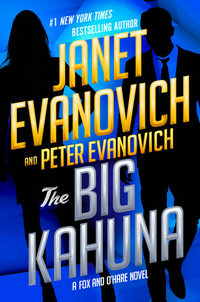
The Big Kahuna by Janet Evanovich, Peter Evanovich: Jinkies, that was a bad book

The Big KahunaThe Big Kahuna

by Janet Evanovich, Peter Evanovich
Series: Fox and O’Hare, #6

Hardcover, 301 pg.
G.P. Putnam’s Sons, 2019

Read: June 5 – 6, 2019

♪ ♫ ♬ Where have you gone, Lee Goldberg
Readers turn their lonely eyes to you
Wu wu wu
What’s that you say, Ms. Evanovich
Lee Goldberg has left and gone away
Hey, hey, hey, hey, hey, hey ♬ ♪ ♫

(with apologies to Paul Simon, Art Garfunkel, Lee Goldberg, Janet Evanovich, Mrs. Robinson, Joe DiMaggio, my parents, teachers, Vogon poets… but dang, I spent a day and a half singing that to myself)

I’ve (purchased and) read all the previous novels at least once, read most of the short stories/novellas, and listened to all of the audiobooks of the series up to this point. I was a fan, maybe not the biggest fan — I expressed issues and reservations from time to time, but I knew I could expect a fun adventure, some fun banter, a little ridiculousness, and a clever crime story when I picked up a Fox and O’Hare novel. But when the inimitable Lee Goldberg departed, I got nervous — Evanovich has slipped in recent years (as I’ve discussed), and I don’t think she cares or notices. Still, I wasn’t sure how much of the success of these books were up to Goldberg and how much was Evanovich finding a spark in new characters that wasn’t there anymore in her Plum franchise/cash cow. Well, I think I’ve solved that mystery to my satisfaction — it was Goldberg.

I’m so, so relieved that I didn’t buy this thing. I’m sorry the local library did, too, although I’m glad I was able to take advantage of this.

First off, there wasn’t much of a con. It’s an adventure story — there was a little bit of a con at the end, but on the whole, there’s no reason for Nick Fox to be around for the whole book. As such, we don’t get most of the team showing up. Only Kate’s father, Jake, comes along.

Which is fitting, really — he belongs in adventure story. His basic approach of this retired guy who can pull off the occasional save with military equipment/connections while not liking to talk about that kind of thing has been exchanged for an older super-soldier that gives no evidence of being reticent about anything or all that old.

A new member of the team is introduced — he’s supposed to be the voice of reason keeping the destruction of private property to a minimum, and to do all the paperwork that Kate seems to ignore. First I think they did this already, and it didn’t work too well (the character was alright, but a dufus — I can’t remember if it was the same guy or not). Secondly, Kate — not their boss — told him about the super-secret arrangement with Nick Fox while in Fox’s presence and in a very casual manner. It just felt sloppy. Lastly, the character is the least-realistic character I think this series has ever produced — there’s no universe in which he makes it as an FBi agent for a month — much less be expected to be an agent that can keep things going well for this partnership.

There are a bunch of non-criminal types that really don’t need to be around but keep showing up anyway — they aren’t amusing, they aren’t well-conceived characters, they’re around to complicate plots and to be funny. They rarely succeed at the latter.

The primary villain (who I won’t name because he’s not revealed for quite a while) wasn’t actually that bad, and if they’d used him better, I wouldn’t be complaining about it at all. He just didn’t get the chance to be anything but briefly intimidating and then a pawn for Nick and Kate (making you wonder if he really wasn’t that intimidating after all). His primary accomplice was the person who did most of the work. She seemed half-baked (maybe three-quarters), and wasn’t all that convincing — her scheme (for lack of a better term) didn’t make a whole lot of sense to me. Her henchmen were pathetic and uninteresting.

Nick Fox . . . was a shell of the character. He’d traded in his usual between-assignment shenanigans for some dumb scheme about social media coaching, using a pseudonym that showed none of the panache characteristic of Fox. There was little reason for him to be around for most of the book, other than to make bad advances toward Kate.

Kate, meanwhile, seemed less competent than usual. A bit more clueless about criminal activity and Nick Fox, and fairly dependent on her father for the more action-hero-y stuff. Which didn’t seem right, either. She said “jinkies” so much I wondered if she’d been Velma in a previous life — a trait I don’t remember belonging to her. Of all the characters, she seemed more herself than the others — still, she seemed off.

The relationship between the Kate and Nick really doesn’t make sense. Some of what’s said between the two of them makes me think that this volume takes place between Books 3 & 4 rather than after Book 5. Although that makes the whole explanation for Cosmo even worse, because I think it was Book 3 that got Kate shackled with the paperwork partner last time. The last chapter of The Big Kahuna takes the nice relationship that was developing between the two protagonists during the Evanovich/Goldberg run and ruins it — and ruins the timeline, too. If this takes place after Book 5, it’s meaningless (as is a lot of what happened before). If it takes place after book 3 (which makes the most sense), it ruins the arc of 4 and 5. Then again, it’s not like the Plum books have a real timeline, it looks like the Evanovich2 run will follow that. It’s not about development anymore, it’s not about growth of character or relationship — it’s about churning out books that’ll sell.

The whole thing felt like a Stephanie Plum book that Stephanie, Joe and Ranger forgot to show up for — but reasonable facsimiles thereof did. One of the great things about the previous novels is that they didn’t feel like Evanovich, or completely like a Goldberg. That’s out the window. And the book, en toto, suffered for it.

I’ve spent far more time and space on this post than I intended to (and still haven’t touched all my notes), so let me wrap this up. A year or two back after I spent time critiquing a book that I gave two stars to, one of my readers asked if I gave that novel 2, what would it take to get a 1? I said a book would have to make me mad, not just disappoint. Probably, on merit, I should give this two stars — there were some good moments, I have to admit (although while writing this, I seem to have forgotten them). But as I was thinking about that, I remembered that conversation, and well…this book as made me mad. It took a solid and reliably entertaining series, with good characters and ruined them. Just ruined them. I might give it one more try, just to see if they learned anything from this disaster (my guess is that sales won’t suffer much and they’ll learn nothing). But, without a different co-author, I can’t imagine why anyone would read these books again.

—–

1 Star

2019 Library Love Challenge 2019 Cloak & Dagger ChallengeHumor Reading Challenge 2019

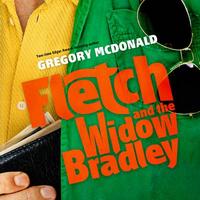
Fletch and the Widow Bradley (Audiobook) by Gregory McDonald, Dan John Miller: An oddly contemporary-feeling Fletch novel that’s good but not really good.

Fletch and the Widow Bradley (Audiobook)Fletch and the Widow Bradley

by Gregory McDonald, Dan John Miller (Narrator)
Series: Fletch, #4 (#3 Chronologically)

Unabridged Audiobook, 5 hrs., 28 min.
Blackstone Audio, 2018

Read: April 1 – 4, 2019

Fletch checks in to his office before returning from a few days away to find out that he’s fired. He’d filled in for an injured colleague to write a profile on a small local business that the Gazette had written an exposé about a few years before, just to see how they were doing in the aftermath. They were doing fine, and Fletch had quoted recent memos from the CEO demonstrating that. The teeny tiny problem there is that the particular CEO had been dead for a couple of years. Quoting corpses is generally frowned upon (unless you’re writing about voters’ views on Chicago politicians, I guess), and so Fletch is fired. Not only that, he’s probably finished forever as a journalist.

Understandably, Fletch is incensed. He’s angry. He’s also mystified — he knows what he read. He knows he did good work — how did they fool him? More importantly, why? If his career is over, he’s going to know why it happened. So he starts interviewing those nearest the dead man — his business associates, family, and so on — he eventually flies across the country a couple of times (and up to Alaska, too).

At this point in Fletch’s life, he is notoriously dead broke — recently divorced (again) with attorneys looking for alimony payments, and (as mentioned) fired. So how does he afford the gas and airline travel? Well, he found a walled with a whole lot of money in it and cannot find the owner. So he borrows a little bit. This is a very odd little storyline that I honestly have never fully understood. Not the events in it, but the reasoning behind its inclusion in the book. Other than to give Moxie (more about her in a moment) and Fletch something to talk about, and to give Fletch money for plane tickets.

Now, close readers might pick up a thing or two (if they haven’t read the books anyway) — I said Gazette (the paper that Fletch was almost certainly fired from after Fletch) and “at this point in” his life and “recently divorced.” This is the first time where Mcdonald bounces back in time for a novel — this is why I’ve noted publication order and chronological order in my post headings for this series. Mcdonald needs Fletch to have a newspaper job to tell this story — and post Fortune, that’s not really likely (it’s not like he needs the money). This chronological flexibility is both rare in a series like this one, and will become a hallmark of the books.

The best reason to read this book is the introduction of the character Moxie Mooney. Moxie’s an actress — daughter of the legendary Freddie Mooney — a major acting star of both stage and screen. Moxie’s still struggling to make it at this point, but she’s got talent. She’s also a long-time on-again/off-again romantic partner to Fletch. There’s more chemistry between the two, more genuine feelings and more obvious compatibility between Moxie and Fletch than there is between any two people in this series. She’s funny, she’s quirky, she’s driven — not unlike Irwin Maurice himself. I’m not sure how often I would have re-read the book without her

At the end of the day, this one doesn’t have the same impact and entertainment value most of the rest of the series does. There are some great moments — and I love Moxie — but there’s something missing from this one. Still, Fletch books are like that old line about pizza — when it’s good, it’s really good; and when it’s bad, it’s still pretty good.

—–

3 Stars
2019 Cloak & Dagger Challenge

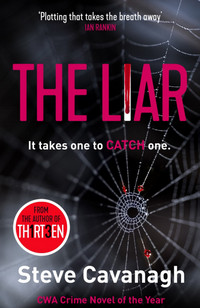
The Liar by Steve Cavanagh: Another Fantastic Ride with the Wiliest Lawyer in Print!

The LiarThe Liar

by Steve Cavanagh
Series: Eddie Flynn, #3

Paperback, 327 pg.
Orion Books, 2017

Read: May 6 – 9, 2019
Eddie’s being sued in a way to attack the legacy — and the finances — of his friend/mentor Judge Harry Ford for a case he had back in his days as a defense attorney. Harry’s client was found guilty — and insane — and died about a decade later in a treatment facility she’d been sentenced to for murder. This is an important case for Eddie and Harry for multiple reasons, but as interesting as this case is, it takes a backseat to the main case in this novel.

Leonard Howell’s a former marine who runs a security company — who specializes in K&R (kidnap and return) — that Eddie knew back when they were both kids. His nineteen year-old daughter was recently kidnapped herself and Howell has a plan to retrieve her. He just needs to get around the FBI to pull it off. Enter his need for his old acquaintance Eddie Flynn — both to help him trick the FBI and to represent him because he’ll no doubt be arrested for carrying his plan out. But he doesn’t care too much about that, as long as his daughter is saved.

Eddie remembers what it feels like to have your daughter kidnapped and signs on — let’s be honest, he probably would have anyway. It’s a good thing he does, because Howell’s plan goes awry in fairly significant ways and he finds himself arrested for a lot more than anyone expected. Which is just the beginning of the book — it gets a lot more tangled, interesting, and exciting after that.

You know, for legal thrillers there’s a lot of action in the Eddie Flynn books. Sure, a good deal happens inside the courtroom — but Eddie’s not Perry Mason. What happens outside the courtroom is frequently more interesting than what happens inside. Which is saying something, because Cavanagh captures what’s most exciting about the cases and trials procedures as well as anyone does. As exciting — and important — as what happens outside the courtroom can be, for me, a legal thriller needs to land the courtroom stuff, or why bother? When Eddie is playing to a jury, interacting with a judge, messing with opposing counsel or questioning a witness? He’s fantastic (not infallible, as he proves here) — I’m not sure Mickey Haller could’ve handled this one any better (and likely not as well).

Just because the title uses a definite article, don’t make the mistake of thinking there’s only one in the book. You’d be better off not trusting anyone, including our beloved protagonist — well, almost anyone (I’ll have to leave that vague so as not to ruin anything).

One thing I want to note, and can’t think of a smooth way to work this in — what Eddie accomplishes in this book have more to do with his being a good lawyer and a smart guy than his past as a con man. He gets opportunities to flex those muscles, yes, but it’s not what defines him as a character here. Eddie the mostly-reformed con-man is a great character, don’t mistake me. But Eddie the scrappy lawyer, appeals to me more.

That said — early on, Eddie does something to help his client using the principles of Three Card Monte — and the wise reader would learn from this, because Cavanagh does the same thing. You will think that Cavanagh is doing one thing — and if you’re the type to try to figure out ahead of time where the mystery is going, whodunit, etc. (like I am), you will think you know where he’s going. And then when a Major Reveal happens which is pretty surprising, but really confirms all your theories — you start to feel smug and confident. Which is when Eddie and his creator probably start smiling — because within thirty pages of that, another Major Reveal comes along and totally blindsides you. I really never recovered from that for the rest of the book, honestly. Most of my theories remained largely intact, but they all had to be interpreted differently, and the motives behind them all changed.

I’ve never had a complaint about Cavanagh’s writing before now, but I didn’t realize he was nearly as clever as he is. I absolutely loved the way he fooled me — without cheating — and kept the tension mounting throughout this book in unexpected way after unexpected way. It’s just a great ride — right up to the point where Eddie demonstrates, again, just how stupid it is for people to make him angry. You’d think word would get around NYC courts about what happens when people challenge Eddie… A good series that gets better every time — do yourself a favor and pick this up. It’s a decent jumping on point to the series, too — you don’t have to know the first books, I shouldn’t forget to note).

—–

4 1/2 Stars

2019 Cloak & Dagger Challenge

Fletch’s Fortune (Audiobook) by Gregory McDonald, Dan John Miller: Possibly the Most Entertaining Entry in this Great Series

Fletch’s Fortune (Audiobook)Fletch’s Fortune

by Gregory McDonald, Dan John Miller (Narrator)
Series: Fletch, #3 (#7 Chronologically)

Unabridged Audiobook, 5 hrs., 51 min.
Blackstone Audio, 2018
Read: March 26 – 29, 2019

           “I.R.S.,” the man said.

Fletch slid the door open. “How do you spell that?”

“Internal Revenue Service.”

. . .
“As a matter of personal curiosity, may I ask why you have not filed returns?”

“April’s always a busy month for me. You know. In the spring a young man’s fancy really shouldn’t have to turn to the Internal Revenue Service.”

“You could always apply for extensions.”

“Who has the time to do that?”

“Is there any political thinking behind your not paying taxes?”

“Oh no. My motives are purely aesthetic, if you want to know the truth.”

“Aesthetic?”

“Yes. I’ve seen your tax forms. Visually, they’re ugly. In fact very offensive. And their use of the English language is highly objectionable. Perverted.”

“Our tax forms are perverted?”

“Ugly and perverted. Just seeing them makes my stomach turn.”

It’s conversations like this that make this possibly the most entertaining Fletch novel. My memory suggests there’s a one or two challenges to that coming up, but at least one of them gets too preachy and disqualifies itself (I’ll try to mention that when we get there). Fletch, shed of his fiancé from the previous book, is enjoying life in his home on the Riviera and puttering along on his biography of Edgar Arthur Thorp, Jr. One day, he’s accosted by a pair of CIA agents who blackmail him (using the above referenced lack of tax filing) into bugging the rooms of the most influential journalists in the US at a journalism convention.

He’s not crazy about this assignment, but at the very least he figures there’s a good story in there somewhere. So he heads back to the States and plants his bugs and starts to tape many of the most illustrious members of the press. The catch (of course there’s a catch) is that the president of the American Journalism Association and owner of many, many major newspapers is murdered the morning as conventioneers start to arrive.

So, not only does Fletch have to put up with attending a convention, and–under duress–to listen in on his colleagues — but he also has to compete with some of the most story-hungry people in the US to be the first to break the story unveiling the murderer.

We also meet for the first time Fredericka “Freddy” Arbuthnot — one of my chief complaints about this series is that we don’t get more time with her. She’s fun here, and her fans should rest assured that we see her again soon — used in a better way, too (not a complaint about her appearance in Fletch’s Fortune, I rush to say). She’s just one of the incredibly colorful characters assembled at this convention — which allows McDonald to skewer all the foibles and weaknesses of the contemporary media (at least for the late 70’s, which just sets the stage for now). I couldn’t guess how many times I’ve read this book, and I still find them all wonderfully fun to watch.

There’s a blink and you missed it moment that’s incredibly important for the future of the series, and it can’t have been planned. But decades later, McDonald is able to use to open up whole new avenues for telling his sores.

It’s so easy to get distracted by the fun conversations, the satirizing of the press and the general Fletch antics, to the point that you miss just how clever McDonald is to pull off one of his most clever whodunits. I’d rank this among the best mysteries that McDonald penned, too.

Once again, Miller delivers this one just right. I don’t know what else to say — he was the perfect choice for this series and I’m so glad I gave them a chance.

I’m just repeating myself now, so I’ll stop. Between entertainment value, construction of the mystery, social/media satire, and audiobook narration I can’t say enough good things about this audiobook. McDonald is at the height of his powers here and it’s a sheer pleasure to pick up again (no matter the format).

—–

4 1/2 Stars

2019 Cloak & Dagger Challenge

Dead is Beautiful by Jo Perry: Another Winner for this Supernatural Duo

Dead is BeautifulDead is Beautiful

by Jo Perry

Series: Charlie & Rose Investigate, #3

Kindle Edition, 268 pg.
Fahrenheit Press, 2019
Read: February 15 – 18, 2019

I can’t explain how death works––I can’t explain cruelty or love––and I don’t know anything for certain except that I failed at life.

Well, I refuse to fuck up my death any more than I already have––

And whatever it means or requires––I won’t fail Rose.

And failing Rose actually seems to be something that can happen here — we’ve seen Charlie and Rose interact with other ghosts before, but not for long — somehow, this time there’s a ghost that they have prolonged — and repeated — interaction with. This other ghost has threatened Rose — despite seemingly being unable to do anything to her, the intent and tone of voice used, scares Rose. And the one thing that’s definitely changed about Charlie post-death is his commitment to this dog, his ability to care for her.

But before we meet this ghost — and see the gruesome, horrific way they become one — we see another killing. The killing of a protected tree. What’s worse, this tree is home to an Spotted Owl and her owlet. While the tree is being (illegally) removed from a plot of land, the owlet falls out and is injured. It was these events that brought Rose, and therefore Charlie, to this area. Coming to the defense of the tree and the owls is a very naked and tattooed woman. She brings in the authorities, and sets off a chain of events that I won’t try to summarize, because you wouldn’t believe me and Perry does a better job than I would in a sentence or two.

This woman, it turns out is named Eleanor Starfeather (really). She’s a doula (birth and death, which is a thing that I just learned exists) and a house sitter — among other things. The house she’s currently sitting belongs to Charlie’s brother and his wife. Charlie’s brother, we already know, is not anyone you want to know. Greedy, superficial, arrogant, vain and uncaring — and his wife is worse. The bulk of the book’s action revolves around these three as they deal with the fall-out from the removal of this tree, the removal of the owlet and the mother owl’s reaction to both being gone. But it also involved a development company — which is developing the land next to Charlie’s brother and a property where Charlie used to live — not that you can tell that anymore.

Charlie and Rose witness a murder near that second property and are pushed into trying to figure out who was behind that murder. Our ghostly pair are hovering around the areas of overlap between the Venn diagram describing these people, company and properties. And slowly, a full picture emerges allowing them to figure out who was behind the murder. Along the way, we (via Charlie and Rose) get to watch the fall-out — involving city politics, real estate development, lawyers, a vengeance-seeking bird, a séance, a mini-Cooper driving Scotsman, and a natural disaster — oh, yeah, and Charlie’s brother having several of the worst days of his life in a row.

This all primarily takes place, where else could it, in Beverly Hills. A place that Charlie clearly has strong opinions about:

Leave it to the City of Beverly Fucking Hills to have “Beverly Hills” engraved twice on its police badges just to emphasize that their black necktied, highly trained, buff, and attractive Beverly Fucking Hills peace officers protect and serve the plastic surgery-altered, chemically peeled, hairlines suture-tightened, Botox-injected, Viagra-aroused, personally trained, lifestyle-coached, professionally organized, blow-dried, sixteen-thousand-dollar blinged-out handbag cultists and their Orc boyfriends and husbands here in this omphalos of malignant narcissism, this authentic-human-emotion-sucking manicured vortex with its fluffy cashmere clouds scudding across the Tiffany-blue vacancy that hangs above the abomination known the world over as Beverly Fucking Hills.

Which adds a different feel to the book than we’ve had in the series. We’ve bounced around from place to place in this series, but I don’t knows that I’ve had such a strong sense location before (I’m not suggesting the earlier books were missing anything, but this has added something). We do spend some time in Charlie’s old neighborhood, but not that much.

It’s possible that Charlie refers to the city with the two words that most people use, but I think it’s always his special elongated form. Ditto for his older sibling, or as he seemingly always refers to him, “my shit brother.” Maybe one reason that Charlie and Rose are still hanging around is that Charlie still holds such determined thoughts and passionate feelings about things like his brother and this city.

In Dead is Good, we got to witness Charlie realize how much someone meant to him, in ways hadn’t really seen in life. In Dead is Beautiful, we get to witness Charlie smitten with a woman — of course, it’ll be unrequited (and would’ve likely been if he was flesh and blood, too), but he is fixated on Eleanor. It’s a side of him that’s nice to see. It’s also helpful for there to be people he actually likes involved with everything he’s witnessing, so he can be positive about some of what happens. By the end of the novel, Charlie does realize a few things about his brother and the way he thinks about him — I’m not sure there’s growth there, but there’s self-awareness, which is almost as good.

We also get a few more clues about the nature of the afterlife and how things work for the souls of the deceased (man or beast…at least dog), but no real answers. I’m okay with that, I don’t think I want answers, I like not getting this afterlife, as long as Charlie and Rose are figuring out what the living are up to.

Last week, when I reposted what I’d written about the first three books, I felt awkward about my frequent references to “funny.” When I think back on these books, I don’t think about funny — I think about the crimes, the victims, the reflections on society and death that these books focus on. But I felt vindicated reading this, because it’s a very funny book. There’s slapstick all over the place — even when the events depicted aren’t that funny, they’re told in a way that clearly tells the reader to smile and chuckle. Just that description of Beverly Hills above demonstrates the oft-comedic voice.

But it’s not all funny — there’s a reverence toward death, toward life, toward the relationship between people and dogs. The fate and well-being of the tree and owls are treated seriously and with care. The comedy comes in Charlie’s observations of and reactions to the events he witnesses. His first exposure to Alexa, for example, made me laugh out loud.

As Charlie (ever so gradually) evolves (Charlie of the first two books doesn’t treat the other ghost the way this Charlie does), as we spend more time in this world, Perry keeps improving — this is one of those series that improves as it goes on. These unique protagonists get us to look at life and events in a different kind of way, while reading very different kind of mysteries. I hope I get to keep spending time with them for a long time to come — and I strongly encourage you to join in the fun.

—–

4 Stars

Page 9 of 16

Powered by WordPress & Theme by Anders Norén