Category: A-F Page 8 of 16

Series A-F

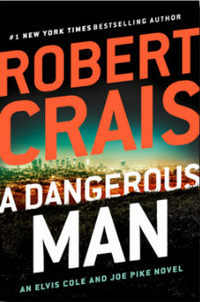
A Dangerous Man by Robert Crais: A Routine Errand leads to a Rescue Mission for Joe Pike

A Dangerous ManA Dangerous Man

by Robert Crais

Series: Joe Pike, #7/Elvis Cole, #18
Hardcover, 339 pg.
G.P. Putnam’s Sons, 2019
Read: August 8, 2019

Pike clipped his .357 to his waist, and went to his Jeep. Sometimes Pike enjoyed silence. Sometimes the silence scared him.

There’s nothing like a riveting scene to start off a Thriller, right? So naturally, Robert Crais starts this Joe Pike novel with Pike waiting in line to make a deposit at his bank. Talk about a nail-biter.

Yeah, that was snarkier than it needed to be. Honestly, I thought the scene was amusing — you don’t think of Pike doing routine things like that, and having the tellers gossip about him was cute. Right after that, this becomes a Pike kind of story—as he’s getting into his Jeep, he sees the teller who’d just been helping him being violently forced into a vehicle that drives away. Pike calls the police and intervenes before the kidnappers can do anything to Izzy.

The kidnappers are arrested, and Joe Pike has become a hero in a young woman’s eyes. Just another day for Pike, really, except his opponents are breathing okay. Neither the police, Izzy or Pike can figure out why she was taken — it’s not for money, she has none; there was no indication of sexual assault; and no one to ransom her to. Yet these two men committed this brazen act in mid-day with many witnesses around (including one witness that decides not to just watch).

A few days later, the kidnappers have been shot and Izzy is missing. Pike is spurred to action — and calls in Elvis to handle the investigation side of things while Pike secures her home and tries to insure her best friend is safe, before trying a different tack than Elvis to discover who took Izzy. It’s not long before Elvis finds himself entangled in a web of family secrets, lies, and murder — in addition to kidnapping.

It’s then a race to find out why Izzy was taken, as well as by whom and where. Despite not knowing her well, Pike’s devoted to saving Izzy and making sure those who took her won’t be in any position to threaten or hurt anyone again.

Joe Pike is in full-on protector/sentry/guardian angel mode here. He feels responsible for Izzy after rescuing her once, and once she goes missing, it’s a given that he’ll devote all his time and energy to rescuing her again. Elvis isn’t quite as invested, but he’s close and catches just enough brakes to get a full picture of what might drive people to kidnap Izzy and who they just might be. He’s also back to being full of quips and isn’t afraid to tweak the LAPD’s nose a little bit.

This is possibly the best John Chen story arc yet, it’s tertiary to the main story, but pivotal when it comes into contact with the primary story. But there’s more drama, more real emotion and tension of John than we’re used to. It was pretty cool to see how this one wrapped up, and how other characters worked to get it there. Do I expect that this will have any change on John’s character in the future? Of course not. But it was a good use of the character.

Very frequently, the clients that Joe and Elvis take on are utterly hopeless and are aware they’re totally dependent on the Joe and/or Elvis in their situation. Usually, part of Joe’s interaction with them is to show them they can rely on themselves, to find their strengths, maybe develop some. But Izzy and her best friend, Carly, don’t need that. Yes, they’re clueless about how to act in this dangerous situation — kidnapping, guns, and violence, in general, aren’t parts of their world, and they need experts to help with this (as 90+% of us would). But otherwise, they’re confident, they know their place in the world and are enjoying life. This does not stop the two of them doing things that are monumentally stupid (understandable, but stupid). But it’s a different arc than we’re used to, and it was pleasant to see these kinds of characters.

Without ruining anything, I’ll just note that Crais is better at bringing back — even if it’s just by dropping their name — old clients than most PI series. I’ve always liked that, and this book is no exception.

Crais is at the top of his game — this book takes place over a very short period of time and the urgency of the story is reflected in the prose. If you don’t get sucked in and gripped by the neck by this story, there’s something wrong with you. I tried to take my time and savor it, knowing it’ll be a while before we get another. But nope, Couldn’t do it, I had it finished about 13 hours after I started it — and it’s only family/work responsibilities that kept me from making that even briefer. There are some laughs; some quiet, reflective moments; but mostly, it’s pedal-to-the-metal action. Which is exactly what you want in a Joe Pike novel. The writing is crisp and compelling from the opening scene to the superb closing line.

Is this accessible for a new reader? Yup. Don’t let the fact that this is the 18th novel with these characters dissuade you, this is a perfect way to meet them and to see why Crais has been a bestseller for quite some time now. A Dangerous Man is as close to perfect as a thriller can be, and is probably the best thing Crais has done since 2013’s Suspect. Don’t waste time, go get it.

—–

4 1/2 Stars

2019 Cloak & Dagger Challenge

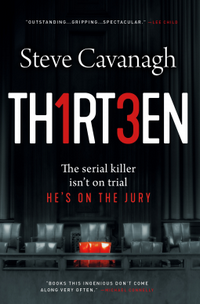
Pub Day Repost: Thirteen by Steve Cavanagh: Eddie Flynn, a Serial Killer and a “Trial of the Century”

ThirteenThirteen

by Steve Cavanagh
Series: Eddie Flynn, #4
eARC, 336 pg.
Flatiron Books, 2019

Read: July 26 – 29, 2019

I wanted this posted a day ago, but just a couple hours after finishing it, I wasn’t capable of discussing it in a meaningful way—unless you consider gibberish with intermittent “squee”s and a lot of exclamation points meaningful (and, I suppose it is, in a fashion). I think I’m a bit better now, but I’m still having a hard time organizing my thoughts. I’ve discussed each of the prior Eddie Flynn books in the last couple of years here—and each one has been a little better than its predecessor. This is no exception—but I’m not sure if Eddie Flynn #5 will be able to top this one (equalling it will prove difficult enough).

But I’m getting ahead of myself.

Before he’s had time to fully absorb—much less react to—some devastating personal news, Eddie Flynn is approached by one of the biggest, flashiest, best-known defense attorneys in New York to be his second chair in an upcoming murder trial. He’s not interested, at all—even after the money on the table is mentioned. But he eventually agrees to meet with the accused to decide if he believes in the client’s claims of innocence.

Robert (Bobby) Solomon is an actor on the verge of super-stardom. He’s one-half of a Hollywood power-couple with a reality show and a couple of movies together that are responsible for this status. He also stands accused of killing his wife and their security chief after finding them in bed. Eddie believes him and signs on. The media (social and otherwise) is abuzz with the killings and is circulating plenty of rumors, innuendoes and speculation about Bobby and his wife at this time, as they cover “The Trial of the Century.”

The prosecution’s case is almost overwhelmingly strong, but with some creative thinking, Eddie and his investigator dive into the case, coming up with a strategy for his defense—including ways to attack the prosecution’s case. His investigator is the FBI Agent Harper from The Liar, who has since quit the Bureau and is doing PI and security work with her former partner (this was a great move by Cavanagh, she’s the best character from that book not named Flynn).

Still, that’s a daunting target and an almost impossible feat. But what makes it worse? The actual killer—a serial killer, mind you—is on the jury and is committed to getting a guilty verdict. What a great hook, right?

It is hard, almost impossible, to give readers a serial killer as unique as this one. He’s not as charming or intelligent as Dr. Lecter (but close on the latter), he’s not as obviously sick and twisted as most fictional serial killers. There’s not a trace of sexual sadism or anything like that to his modus operandi (which is not to say there’s none in his past). He’s smart, he’s careful, he’s strategic and committed to his vision. He’s got some natural gifts that help him—and an ally that assists him (a non-lone wolf serial killer, I don’t know if I’ve seen that before).

What separates this killer from the rest is the motivation behind his killings and victim selection (and how he makes them a victim). Yes, he’s clearly mentally ill—psychopathic/sociopathic tendencies (if he’s not diagnosable with either), and he enjoys his work. But there’s an ethos, an ideology behind his work. He’s got a message for the world, a lesson he’s trying to teach people. Everything he does is toward this goal, toward living out this ethos. I absolutely loved this, and the more Cavanagh showed this was behind the killing (and eventually, killings), the more we saw of the motivation, the more I liked it (and the more impressed I was with the creation of this killer).

I want to go on a few more paragraphs about him, but I can’t without spoiling everything—so let me stress this is a great, and unique, serial killer.

While dealing with this case, Eddie also has some family problems he’s trying to address, and there are some NYPD cops out for him after embarrassing a detective on the witness stand. Eddie spends more time in danger from members of the NYPD than he does from the killer.

Harry, of course, is back—which is great. He’s more involved in this case than he has been since the first book, The Defense. He’s a judge, Eddie’s former mentor and current self-appointed guardian of Eddie’s alcohol intake. He’s a great friend and ally for Eddie. We also see the return of Arnold Novoselic, the jury consultant that caused so much trouble for Eddie in The Defense, this time, however, he’s on Eddie’s side. From a one-dimensional bad guy in book 1, he’s transformed into someone Eddie has to—and then can—rely on. There’s a new prosecuting attorney, and he’s a great character and a worthy competitor for Eddie.

No matter who’s writing the legal thriller, one of my favorite parts of the book is the narrator/protagonist giving the reader insight into how the judicial system functions—the nitty-gritty stuff about scheduling trials, deciding who to put on your witness list, the order you call the witnesses in, and so on. The reader gets plenty of that here—along with two (complementary) explanations why attorneys on either side of the case just don’t want anything to drive a judge to sequester a jury. I’d never thought of that before, but it rings so true. Eddie also gives a very detailed explanation about how the skills that made him a successful con artist make him a successful trial lawyer. Because I enjoy it so much, I could’ve read a whole lot more of this “behind the scenes” material if it’d been possible for Cavanagh to work it in. Still, I think we get more of that here than we have before.

The pacing on this book is intense—Eddie being hired, investigating, the trial and the outcome all take place in a week. A business week, Monday – Friday, to be specific. That’s just insane—and improbable. But you don’t stop to doubt it while reading. Even after finishing the book, I can’t be bothered to spend too much time wondering about that, because Cavanagh sold the timeline so well. It doesn’t feel rushed at all, however, it just feels like an intense thriller.

While driving the pace that hard, no corners are cut in the intricacy of the story. There are surprises, twists and turns enough to satisfy every reader, and enough courtroom shenanigans to compete with Mason or Haller. The penultimate reveal got me calling Cavanagh some pretty terrible names—not because I didn’t like the reveal, not because Cavanagh cheated in the way he told the story, but because he fooled me. It was all there, ready to be seen, but like a good magician, Cavanagh kept my eyes on what he was doing with one hand and ignoring the —he totally hoodwinked me. I admire that in an author but despise myself for falling victim.

Is Thirteen a decent jumping-on point to the series? Oh yeah, a great one—but you might find yourself a bit underwhelmed if you then go on to read the previous books (just a bit, that that’s only in comparison to this). For those of us who’ve been with Eddie for a while? This is a noticeable progression in quality. Cavanagh’s no longer a promising new author, he’s a reliable established veteran. Cavanagh’s been accumulating plenty of awards lately, and Thirteen demonstrates why and absolutely deserves the critical and award attention it’s been receiving. But better than all of that? It’s a riveting and rewarding read—entertaining, tense, and satisfying. Go get yourself a copy now and you can thank me later.

Disclaimer: I received this eARC from Flatiron Books via NetGalley in exchange for this post — thanks to both for this.

—–

5 Stars

2019 Cloak & Dagger Challenge

Fletch Won (Audiobook) by Gregory McDonald, Dan John Miller: A Real Mixed Bag

Fletch Won (Audiobook)Fletch Won

by Gregory McDonald, Dan John Miller (Narrator)

Series: Fletch, #8 (#1 Chronologically)
Unabridged Audiobook, 6 hrs., 30 min.
Blackstone Audio, 2018

Read: June 20 – 26, 2019

This is chronologically the first Fletch novel, he’s a rookie reporter, who’s been bounced around from headline writer, to obituaries, to wedding announcements, and is finally sent to the Society pages—with a warning. Fit in, and don’t make any trouble or he’ll be unemployed. His first assignment is to meet with an attorney, Donald Habeck, in the publisher’s office to discuss a major donation he’ll be making to a local museum and do a puff piece about it. Fletch objects, wanting to do real news—the kind of stuff he’ll later be known for. His editor (Frank Jaffe, a name known to those who’ve read Fletch and Fletch and the Widow Bradley) refuses, insisting that this is his assignment—and maybe later he’ll get a chance to do something else.

There’s a catch—Habeck is murdered in the newspaper’s parking lot on his way to this meeting. Fletch jumps on the opportunity to report on this, but the senior crime reporter shoos him off (and Jaffe). Fletch tries to exercise squatter’s rights, but no one is having any of it. Naturally, this means that Fletch will ignore this and will investigate the murder on his own—and typically is a few steps ahead of both the police and the senior crime writer.

In the meantime, he has to do his actual job (at least until he has something he can print). There’s another story they want Fletch to work on, there’s a local “escort service” parading itself as a fitness establishment—Jaffe insists that Fletch do an expose about them. To stay employed, Fletch agrees—but threatens the most detailed and explicit expense report ever. This isn’t a story that appeals to Fletch—I don’t think he cares too much if this service is just close to prostitution, or if it’s the actual thing—and he has better things to do with his time. Also, he’s about to get married, the last thing his fiancé is going to want is him hanging around a brothel all day.

The opening chapter is a hoot. As are several of the encounters Fletch has with the members of Donald Habeck’s family (particularly his wife)—and Alston Chambers never fails to be amusing. The escort service story is fun, and ends up being the kind of thing that Fletch can write about—but its main purpose is to give Mcdonald an opportunity to opine on our cultural obsession with beauty, health, and so on, while causing problems for Fletch’s personal life. There’s not a lot of meat to this story, but there’s a lot of fun. On the other hand, the murder investigation is great and vintage Fletch. It’s the best part of the book (as a mystery novel, I guess it should be, right?)

All in all, a decent Fletch novel—full of interesting characters, a nice twist, Fletch bucking all sorts of authority (police, veteran reporters, Frank Jaffee), and more than a few amusing situations. It works as an origin story, how did he become the sort of reporter we know, etc. As I mentioned earlier, we even see young Alston Chambers — just starting as an associate in a powerful law firm. But—and this is a big but— this places Fletch at the newspaper we know he ends his newspaper career with as a rookie, as a man about to be married (for the first time). We know there’s not a lot of time between the end of his first marriage and Fletch, but there’s some. Enough for a second marriage and the Window Bradley events, but not much more. What there isn’t time for is the past referred to in Confess, Fletch, Fletch’s Fortune and even hinted at in The Man Who — and the first two of those depend on Fletch’s history to work. Unless we’re to believe that his wives let him leave the state, work in a variety of other papers, developing a Fletchian reputation, move back to the same paper he started his career in (with the same senior editor), and then hit him up for alimony and still be carrying a torch for him. It stretches credulity a bit too much for me to stomach. The next book, Fletch, Too, doesn’t help things.

Does that ruin Fletch Won for me? Not totally, but that alone keeps it out of my personal top-tier Fletch novels and rank it slightly above The Widow Bradley (only for the chuckles it gives me). Clearly, McDonald isn’t as picky about this sort of thing as many of his readers are, but man, that rankles. Still, it’s fun, it features entertaining characters— some odd poetry—and enough Fletchisms to keep you happy. It’s a good time, and if you ignore what it suggests about the rest of the series, you should have a good time.

—–

3.5 Stars
2019 Cloak & Dagger Challenge

Carioca Fletch (Audiobook) by Gregory McDonald, Dan John Miller: A Bad Fletch Book — whodathunkit

Carioca FletchCarioca Fletch

by Gregory McDonald, Dan John Miller (Narrator)
Series: Fletch, #7 (#5 Chronologically)
Unabridged Audiobook, 6 hrs., 3 min.
Blackstone Audio, 2018
Read: May 21 – 25, 2019

Just in case people were thinking I’d drunk too heavily in the Fletch/Gregory Mcdonald Kool-Aid bowl, this should alleviate any concern. I just don’t like this book.

Following the events of Fletch, our now-jobless journalist is enjoying life in Brazil, he’s got a girlfriend, is making some investments and friends and is about to enjoy Carnaval. Quite by accident, he runs into the newly-widowed Joan Allen Stanwyk, and things get a little awkward for a bit. But before he can follow up with her, an elderly Brazilian woman claims that he’s the reincarnation of her murdered husband, come back to identify his murderer.

This distracts Fletch greatly and between that, and a new group of acquaintances who seem to be rich young men who devote all their time to wine and women, Fletch can’t deal with Joan. He first has to spend some time trying to deal with the problems of their debauchery, this supernatural claim and learning about the Brazilian culture in general.

This might, might, be an okay book if it was about any other American hiding in Brazil, learning about the culture and people. But it’s not a Fletch book. He doesn’t solve the mystery by being clever or interviewing anyone. It’s not a particularly funny book, either. It’s mostly Fletch bouncing from situation to situation with little control or agency for a couple of hundred pages, and then solving a decades-old mystery by a cheap stunt.

What redeems this book is the Joan Allen Stanwyk material that bookends it. Those are the only chapters that really feel like Fletch (and, they’re grounded in the rest of the series). Also, Fletch’s background in, interest in, and history of investing in art is shown here in embryo—as well as the other things he does to pay for his villa, GCN stock, racehorses, and so on. So that’s good, but we didn’t need to see it, the character was good enough without that.

Naturally, Dan John Miller had nothing to do with any of my problems, he does a great job as usual.

This was just a misfire for Mcdonald (not the only one in the series), and is easily forgotten—and should be.

—–

2 1/2 Stars
2019 Cloak & Dagger Challenge

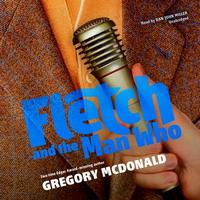
Fletch and the Man Who (Audiobook) by Gregory McDonald, Dan John Miller: Mcdonald and Fletch at their Best

Fletch and the Man WhoFletch and the Man Who

by Gregory McDonald, Dan John Miller (Narrator)
Series: Fletch, #6 (#8 Chronologically)Unabridged Audiobook, 6 hrs., 14 min.
Blackstone Audio, 2018
Read: May 14 – 18, 2019

“Good morning,” Fletch said. “As the governor’s press representative, I make you the solemn promise that I will never lie to you. Today, on this bus, we will be passing through Miami, New Orleans, Dallas, New York, and Keokuk, Iowa. Per usual, at midday you will be flown to San Francisco for lunch. Today’s menu is clam chowder, pheasant under glass, roast Chilean lamb, and a strawberry mousse from Maine. Everything the governor says today will be significant, relevant, wise, to the point, and as fresh as the lilies in the field.” …

“Is it true you saved Walsh Wheeler’s life overseas?” Fenella Baker asked.

“That’s another thing,” Fletch said. “I will never evade any of your questions.” He turned the microphone off and hung it up.

I think this is my favorite Fletch novel (that spot may actually bounce between this and Fletch’s Fortune), and I could practically recite portions of this with Miller’s narration while driving. This doesn’t mean I didn’t catch anything new, it just means that I enjoyed this time through immensely.

An old Army buddy (and C.O.) of Fletch’s calls him up for a favor — his father, Caxton Wheeler, is running for an unnamed party’s presidential nomination and has just had to fire their long-term press secretary, could Fletch step in? Minutes before Fletch arrives at the hotel the campaign is using a young woman plunged to her death from one of the rooms on the higher floors (later shown to be the candidate’s room). Fletch’s first job is to discover if she jumped or was pushed — and then to make sure that it had nothing to do with the campaign.

Sadly, it appears she was pushed — and she was associated with the campaign. Even worse, it seems like she’s the latest in a string of dead women near the campaign. Giving Fletch a quandary. He needs to figure out who is doing this killing (assuming it’s one person), insulate the candidate — and keep anyone else (i.e. the press) from printing the facts.

Fletch as an obstacle/opponent/facilitator (all at the same time) of the press in any shape is just a lot of fun. His instincts, training, and inclination is to dig into a story, find the facts on his own, and run the story. His new job is to feed information to reporters, keep them from doing any fact-finding on their own, and to hide aspects of the story. It is so fun to watch him struggle in this role.

Particularly because one of the reporters on the press bus is Freddie Arbuthnot, someone who might be a better reporter than Fletch. She’s certainly more employable than he is — as she’s a crime reporter, her presence on the campaign tells Fletch a lot about how serious this string of murderers is. Also, she’s a whole lot of fun as a character, so the reader gets something out of it, too.

Speaking of returning characters, we get Alston Chambers again — I need to do a better job of tracking his career path, but I think he’s moved up in the world a bit since we saw him last, so good for him. Alston served with Fletch under Walsh Wheeler and provides some vital information for his friend. He’s also just a great guy for Fletch to talk to and bounce things off of, helping both the character and reader to process what’s going on.

So who are the recipients for Mcdonald’s critique/satire? There are so many — tabloids (particularly the mid-80s version of them), politics, the press’ political coverage (about the horse race, not the ideas/work), pressures on a candidate (Wheeler is given drugs to wake up, keep him going and then to go to sleep because there’s no way that he could do that naturally with the pressures/pace of the campaign). Given his target-rich environment, the book could’ve been twice as long just to give Fletch the opportunity to tilt at a few more windmills and wouldn’t have lost much of its punch. Like I said with Fletch’s Moxie, it seems like his satire is even more on-point now than it was thirty years ago. Which really shouldn’t be the case.

I appreciated the fact that Mcdonald left party names out of this, and none of Wheeler’s policies can be easily labeled as belonging to one of the major parties. Anyone can read him as being one of their own (or, if they’re so inclined, one of the other guys). There’s not targeting or critique of a particular party, just the entire process.

At one point, inspired by a conversation he has with Fletch, Wheeler has a moment of statesmanship (a no-no for a candidate, Fletch is told) where he talks about the ways that technology is connecting the planet and helping share information in ways unthinkable generations earlier, and talks about how it will increase in that way. Essentially predicting the Internet as we know it. Granted, it’s a more utopian vision of the Internet rather than the dumpster fire it frequently is. But Wheeler/Mcdonald has a vision for what today is in a way that no mystery writer in 1983 should’ve.

Caxton Wheeler and his driver, Flash, will show up in a Flynn book that takes place sometime before this. They’re not there a lot, but I remember the first time I read that and it blew my mind (that was my second Flynn novel and I’d yet to find Confess, Fletch so I had no idea the universes were linked) while in Middle School.

Dan John Miller is great yet again — I’ve got nothing new to say about him. I need to track down some of his other narrations, see what I think of them.

Mcdonald shifts gears with his writing and the series after this, and I really, really wish he wouldn’t have. A few more books in the vein of Fortune, Moxie, and The Man Who would’ve been a boon to his readers, and would’ve solidified Mcdonald amongst the all-time greats. I’m sure he had his reasons, but from my vantage point (now and for the last couple of decades), he shouldn’t have. In the meantime, this work is a great mystery, fantastic commentary on politics and the media, and even a bit of prescience — bundled together with Mcdonald’s sharp prose, winning dialogue and characters that demand to be re-read. I can’t recommend Fletch and the Man Who highly enough.

—–

5 Stars
2019 Cloak & Dagger Challenge

Fletch’s Moxie (Audiobook) by Gregory McDonald, Dan John Miller: Fletch Solves a Very Hollywood Murder in Key West

Fletch’s Moxie (Audiobook)Fletch’s Moxie

by Gregory McDonald, Dan John Miller (Narrator)
Series: Fletch, #5 (#8 Chronologically)

Unabridged Audiobook, 5 hrs., 51 min.

Blackstone Audio, 2018

Read: April 24 – 29, 2019

So in the last book, we met Moxie Mooney while Fletch was still a working journalist. They’d known each other for some time at this point, and it might have been just about the last time they saw each other until now, sometime following Fletch’s Fortune (when his tax problems were taken care of and he could return to the States), although she had visited him in Italy shortly before this.

Moxie’s decided she needs Fletch’s help with something, she’s got some sort of problem that needs investigating, and who better? When Fletch arrives on the movie set for her current project in Florida, he’s just in time to help her with a brand-new problem. She’s appearing on a (pre-taped, thankfully) TV interview with her business manager—the only people on the set (or near enough the set) are Moxie, her manager, and the interviewer. So when the manager is killed with a knife to the back, there aren’t a whole lot of suspects.

Fletch jumps to action and gathers a lot of information (as only he can) before the police really even know what’s going on, including an in-depth interview (that doesn’t look like one) with the widow. He then whisks Moxie away to the home of a business associate in Key West, to keep her out of the spotlight while he can do some digging into both of her problems.

Great plan, that doesn’t account for two things: 1. Moxie’s father, the illustrious stage and film actor, Frederick Mooney—known more now for a constant state of drunkenness is visiting her, too, and has to come along; 2. Moxie tells the director and most of the cast where she’s staying and they arrive, too. Having a cast of movie stars past and present staying in one house tends to attract a bit of attention—especially when they’re associated with an unsolved murder.

One thing Fletch has done recently is buying enough stock in GCN (Global Cable News—a CNN-like entity) that executives take his phone call and pay attention to his news tips. This turns out to be pretty advantageous and helps with some of his research—this will prove fruitful for future books, too.

Fletch investigates the murder in the way he does best—by talking to people and interviewing them without their realizing it and making phone calls. I just love watching him work. It’s an intricate problem and Fletch’s solution is quite clever.

This particular book gives McDonald a chance to do two things—better explore Moxie’s character (who might be a richer character than Fletch, but not one you could base a series on) and lampoon Hollywood and its approach to the art/business of movie-making. Almost everything he talks about in this 1982 book is still prevalent — and maybe moreso.

I have nothing new to say about Dan John Miller—he’s a really good narrator and perfect for the series. I assume at this point, I’ll hear his voice in my head for at least part of the time I think about this character in the future.

This isn’t my favorite Fletch book, but it’s one of the best and a great showcase for both the character and McDonald. Amusing, insightful, smart and fun—hard to ask for more.

—–

4 Stars
2019 Cloak & Dagger Challenge

Thirteen by Steve Cavanagh: Eddie Flynn, a Serial Killer and a “Trial of the Century”

ThirteenThirteen

by Steve Cavanagh
Series: Eddie Flynn, #4
eARC, 336 pg.
Flatiron Books, 2019
Read: July 26 – 29, 2019

I wanted this posted a day ago, but just a couple hours after finishing it, I wasn’t capable of discussing it in a meaningful way—unless you consider gibberish with intermittent “squee”s and a lot of exclamation points meaningful (and, I suppose it is, in a fashion). I think I’m a bit better now, but I’m still having a hard time organizing my thoughts. I’ve discussed each of the prior Eddie Flynn books in the last couple of years here—and each one has been a little better than its predecessor. This is no exception—but I’m not sure if Eddie Flynn #5 will be able to top this one (equalling it will prove difficult enough).

But I’m getting ahead of myself.

Before he’s had time to fully absorb—much less react to—some devastating personal news, Eddie Flynn is approached by one of the biggest, flashiest, best-known defense attorneys in New York to be his second chair in an upcoming murder trial. He’s not interested, at all—even after the money on the table is mentioned. But he eventually agrees to meet with the accused to decide if he believes in the client’s claims of innocence.

Robert (Bobby) Solomon is an actor on the verge of super-stardom. He’s one-half of a Hollywood power-couple with a reality show and a couple of movies together that are responsible for this status. He also stands accused of killing his wife and their security chief after finding them in bed. Eddie believes him and signs on. The media (social and otherwise) is abuzz with the killings and is circulating plenty of rumors, innuendoes and speculation about Bobby and his wife at this time, as they cover “The Trial of the Century.”

The prosecution’s case is almost overwhelmingly strong, but with some creative thinking, Eddie and his investigator dive into the case, coming up with a strategy for his defense—including ways to attack the prosecution’s case. His investigator is the FBI Agent Harper from The Liar, who has since quit the Bureau and is doing PI and security work with her former partner (this was a great move by Cavanagh, she’s the best character from that book not named Flynn).

Still, that’s a daunting target and an almost impossible feat. But what makes it worse? The actual killer—a serial killer, mind you—is on the jury and is committed to getting a guilty verdict. What a great hook, right?

It is hard, almost impossible, to give readers a serial killer as unique as this one. He’s not as charming or intelligent as Dr. Lecter (but close on the latter), he’s not as obviously sick and twisted as most fictional serial killers. There’s not a trace of sexual sadism or anything like that to his modus operandi (which is not to say there’s none in his past). He’s smart, he’s careful, he’s strategic and committed to his vision. He’s got some natural gifts that help him—and an ally that assists him (a non-lone wolf serial killer, I don’t know if I’ve seen that before).

What separates this killer from the rest is the motivation behind his killings and victim selection (and how he makes them a victim). Yes, he’s clearly mentally ill—psychopathic/sociopathic tendencies (if he’s not diagnosable with either), and he enjoys his work. But there’s an ethos, an ideology behind his work. He’s got a message for the world, a lesson he’s trying to teach people. Everything he does is toward this goal, toward living out this ethos. I absolutely loved this, and the more Cavanagh showed this was behind the killing (and eventually, killings), the more we saw of the motivation, the more I liked it (and the more impressed I was with the creation of this killer).

I want to go on a few more paragraphs about him, but I can’t without spoiling everything—so let me stress this is a great, and unique, serial killer.

While dealing with this case, Eddie also has some family problems he’s trying to address, and there are some NYPD cops out for him after embarrassing a detective on the witness stand. Eddie spends more time in danger from members of the NYPD than he does from the killer.

Harry, of course, is back—which is great. He’s more involved in this case than he has been since the first book, The Defense. He’s a judge, Eddie’s former mentor and current self-appointed guardian of Eddie’s alcohol intake. He’s a great friend and ally for Eddie. We also see the return of Arnold Novoselic, the jury consultant that caused so much trouble for Eddie in The Defense, this time, however, he’s on Eddie’s side. From a one-dimensional bad guy in book 1, he’s transformed into someone Eddie has to—and then can—rely on. There’s a new prosecuting attorney, and he’s a great character and a worthy competitor for Eddie.

No matter who’s writing the legal thriller, one of my favorite parts of the book is the narrator/protagonist giving the reader insight into how the judicial system functions—the nitty-gritty stuff about scheduling trials, deciding who to put on your witness list, the order you call the witnesses in, and so on. The reader gets plenty of that here—along with two (complementary) explanations why attorneys on either side of the case just don’t want anything to drive a judge to sequester a jury. I’d never thought of that before, but it rings so true. Eddie also gives a very detailed explanation about how the skills that made him a successful con artist make him a successful trial lawyer. Because I enjoy it so much, I could’ve read a whole lot more of this “behind the scenes” material if it’d been possible for Cavanagh to work it in. Still, I think we get more of that here than we have before.

The pacing on this book is intense—Eddie being hired, investigating, the trial and the outcome all take place in a week. A business week, Monday – Friday, to be specific. That’s just insane—and improbable. But you don’t stop to doubt it while reading. Even after finishing the book, I can’t be bothered to spend too much time wondering about that, because Cavanagh sold the timeline so well. It doesn’t feel rushed at all, however, it just feels like an intense thriller.

While driving the pace that hard, no corners are cut in the intricacy of the story. There are surprises, twists and turns enough to satisfy every reader, and enough courtroom shenanigans to compete with Mason or Haller. The penultimate reveal got me calling Cavanagh some pretty terrible names—not because I didn’t like the reveal, not because Cavanagh cheated in the way he told the story, but because he fooled me. It was all there, ready to be seen, but like a good magician, Cavanagh kept my eyes on what he was doing with one hand and ignoring the —he totally hoodwinked me. I admire that in an author but despise myself for falling victim.

Is Thirteen a decent jumping-on point to the series? Oh yeah, a great one—but you might find yourself a bit underwhelmed if you then go on to read the previous books (just a bit, that that’s only in comparison to this). For those of us who’ve been with Eddie for a while? This is a noticeable progression in quality. Cavanagh’s no longer a promising new author, he’s a reliable established veteran. Cavanagh’s been accumulating plenty of awards lately, and Thirteen demonstrates why and absolutely deserves the critical and award attention it’s been receiving. But better than all of that? It’s a riveting and rewarding read—entertaining, tense, and satisfying. Go get yourself a copy now and you can thank me later.

Disclaimer: I received this eARC from Flatiron Books via NetGalley in exchange for this post — thanks to both for this.

—–

5 Stars

2019 Cloak & Dagger Challenge

Heart of Barkness by Spencer Quinn: Chet & Bernie are Back in Action as they Work to Clear a Country Music Legend

Heart of BarknessHeart of Barkness

by Spencer Quinn
Series: Chet and Bernie, #9
Hardcover, 299 pg.
Forge Books, 2019

Read: July 9 – 10, 2019

It’s been 4 years—4 long years (28 dog years!) since the publication of Scents and Sensibility, so it’s understandable (but personally troubling) that I’d forgotten it ended on something of a cliffhanger. It came back to me rather quickly as Quinn resolved it in the opening pages, but I’d still encourage those whose memory might be equally sketchy to re-read at least the last chapter of Scents before starting this.

For those who aren’t familiar with the series, Chet’s a very large mixed-breed dog, who flunked out of Police Dog Training at the very end of the course. Since then, he was adopted by Bernie Little, a Private Investigator. The two make a fantastic team, and Chet narrates the novels recounting some of their adventures. Chet’s a fantastic character and a very good dog. He’s got a short attention span and will frequently lose track of what he was talking about, he is utterly devoted to Bernie and is convinced that everything his partner does is the greatest. Bernie seems to be a pretty good PI, thankfully (but you have to read between the hagiographic lines from Chet).

The core of this novel revolves around an elderly legendary country singer, Lotty Pilgrim (I see her as latter-day Loretta Lynn-type). She’s fallen on hard times (a tried and true mix of being too trusting and bad business management) and is playing in a dive bar in Phoenix when she meets Bernie and Chet. Bernie foils an attempt to steal her tip jar, and then when he attempts to follow up on that attempt, he learns somethings that disturb him. Soon after this, Lotty’s current business manager is killed and Lotty is the chief/only suspect — and is even on the verge of confessing to it.

Bernie doesn’t believe it for a second—neither does Chet, I should add—and can’t stomach the idea of her confessing like that. So he launches an investigation of his own—despite very insistent suggestions from local Law Enforcement to mind his own business. Bernie’s investigation involves a lot of digging into the past as well as the expected digging into the present. The more he digs, the more questions it seems to raise Chet would interject here to say that’s Bernie’s plan.

Throughout the series, Chet will compare what they’re doing with to something they did in a past case—usually not one that’s recorded in a novel. We learn a lot about Bernie through these quick flashbacks. Chet seems to reveal a lot more this time then he has in the past, and I’m glad we don’t get the full story about at least one of those cases—it sounds pretty grim.

The one thing I want to mention that separates this from the rest of the series is pretty tricky without giving anything away. But there’s something that happens in every book—a well that Quinn returns to too often for my taste. And it’s absent in this book. I loved that. Variety is good for the fans.

I don’t want to take the time to talk about all the new characters—but as the plot centers around Lotty Pilgrim, I want to talk about her for a moment. She’s not technically Bernie’s client, but his efforts are focused on keeping her out of trouble—especially if she doesn’t deserve it. She’s an intriguing character—an object of admiration and pity at the same time; she’s still actively writing and performing, while relegated to a trivia quiz answer in the culture; she’s fiercely independent and feisty, but she’s also clearly the victim of her past, several people in the music industry, and (as I said before) a trusting nature. She’s ridden with guilt, and a lot of her problems may be self-inflicted in a twisted form of penance. All said, I liked her as a person. I wouldn’t think that there’s more for Quinn to do or explore with her, I’d be happy to be proven wrong

Of course, the book’s not all business for the Little Detective Agency. Bernie’s been divorced for a while and sees his son (Chet’s second-favorite human) regularly, and started seeing Suzie in the first novel. There are big developments on the Suzie front here—but that seems kind of par for the course over the last two or three novels, and while I’m not crazy about them, I don’t know that I’m opposed to it. I think the next book (thankfully, I’ve seen Quinn state it’s finished) will tell me a lot about that

Is this a decent jumping-on point? Yeah, it’d work—almost the entire series works as one (I’m not sure Paw and Order or The Sound and the Furry would be). But obviously, you’d pick up on nuances, background, and so on if you start at the beginning. It was so good to spend time with these two again, and the book itself is one of the best in the series—both in terms of plot and character moments for the protagonists. It’s funny, heartfelt, clever, suspenseful, and satisfying. And it features a dog. Really can’t ask for more.

At one point, Lotty writes a song about Chet, cleverly entitled “Song for Chet.” It was recorded and a video made with clips provided by Quinn’s fans. I just can’t leave this post without sharing it:

—–

4 Stars

2019 Cloak & Dagger Challenge

✔ A book with your favorite animal on the cover or in the title

Pub Day Repost: Bark of Night by David Rosenfelt: Another winner of a case for the lawyer who’s gone to the dogs

Bark of NightBark of Night

by David Rosenfelt
Series: Andy Carpenter, #19

eARC, 304 pg.
Minotaur Books, 2019
Read: July 3 – 4, 2019

I know it’s practically de rigueur for me to start off talking about how difficult it is to talk about yet another Andy Carpenter book, but I’m going to try to resist this time (no promises that I won’t resort to it next time).

Instead, I want to focus on people who read this blog and haven’t picked up a book in this series — let’s see if I can help you come to the light. Andy Carpenter is a defense attorney — thanks to some high profile cases, some lucrative lawsuits, (and some other things), he’s an independently wealthy defense attorney (see the first couple of books for details). He’s also lazy. These two traits generate a lawyer/protagonist who doesn’t want to take on clients who doesn’t want to go to work (he’s the anti-Lincoln Lawyer). He’d rather watch sports, hang out with his wife, kid, friends and dog (especially the latter) and maybe check-in on the dog rescue he runs with a former client. He only takes on a case when he likes the potential client, he feels an injustice is being done, his wife talks him into it — or the life of a dog lies in the balance (there’s a strong link between the first reason I listed and the last). This time out, it’s pretty much a combination of those motivations. Nevertheless, when he takes on a client, he pulls out all the stops for him or her. Much like with Perry Mason, you have to wonder why prosecutor’s don’t just drop charges when Andy shows up in court — you can bet his client will be exonerated.

Andy’s vet calls him to his office to talk about something — namely, this dog that had been brought in to be euthanized. Before he did that, someone in his office scanned the microchip in the dog. The man who paid for the euthanization, wasn’t the owner f the dog — because he’d been murdered shortly before the dog appeared. After some digging, Andy discovers that the man who brought the dog in is very likely connected to the murder (especially when they look at his rap sheet). No one’s sure why he wanted a vet to take care of destroying the dog rather than doing it himself. But someone completely different has been charged with the crime, and Andy knows that this man is innocent — he has to be, there’s no other explanation how the would-be dog killer got involved.

From there, Andy and his team (his PI wife, her PI friend/Andy’s bodyguard, Andy’s CPA/hacker, his associate attorney) set out to defend their client, figure out why anyone would want to kill the victim (a documentary filmmaker, and not a particularly successful — or good — one), and maybe answer a few questions about the victim’s dog. Like most Carpenter novels, the mystery is just twisty enough to keep you guessing to the end. Andy’s courtroom antics are pretty subdued this time, but watching him in action is fun — particularly as he battles the Assistant D.A.

Andy’s team — and his friends who aren’t on the team — are as enjoyable to spend time with as ever. With some long-running series you stick with it because the characters are so near and dear to you. With some, you put up with characters because the author puts out great mysteries/adventures/whatever. It’s with the best series that you get both — a good mystery (in this case) and a cast of characters you look forward to seeing again. That’s definitely what we have in the Andy Carpenter books, and Bark of Night is a prime example of it.

As a capper, if the last few paragraphs don’t provoke a warm fuzzy or three in you, there’s something wrong with you and you should probably seek professional help. Rosenfelt is good at the heart-warming stuff, and he’s at the top of his game here.

Newcomers will get enough information along the way to hop on board here — there’s no need to feel like you need to go back to Book One (Open and Shut) and read them in order to catch all the nuance. Start here, and you’ll easily see why this book has charmed and entertained audiences enough to last for 19 books (and counting!). It’s a clever mystery, featuring characters that are reliably comfortable and funny — with just enough moments of seriousness and displays of skill that you can believe they’ll be defending someone and bringing a killer to justice at the same time. This is one of the better installments in the last few years (both for being enjoyable and for the mystery) and should move right to the top of your TBR (note that a “lesser” Andy Carpenter book is still fun, engaging and entertaining).

Disclaimer: I received this eARC from St. Martin’s Press via NetGalley in exchange for this post — thanks to both for this opportunity.

—–

4 Stars

Bark of Night by David Rosenfelt: Another winner of a case for the lawyer who’s gone to the dogs

Bark of NightBark of Night

by David Rosenfelt
Series: Andy Carpenter, #19

eARC, 304 pg.
Minotaur Books, 2019
Read: July 3 – 4, 2019

I know it’s practically de rigueur for me to start off talking about how difficult it is to talk about yet another Andy Carpenter book, but I’m going to try to resist this time (no promises that I won’t resort to it next time).

Instead, I want to focus on people who read this blog and haven’t picked up a book in this series — let’s see if I can help you come to the light. Andy Carpenter is a defense attorney — thanks to some high profile cases, some lucrative lawsuits, (and some other things), he’s an independently wealthy defense attorney (see the first couple of books for details). He’s also lazy. These two traits generate a lawyer/protagonist who doesn’t want to take on clients who doesn’t want to go to work (he’s the anti-Lincoln Lawyer). He’d rather watch sports, hang out with his wife, kid, friends and dog (especially the latter) and maybe check-in on the dog rescue he runs with a former client. He only takes on a case when he likes the potential client, he feels an injustice is being done, his wife talks him into it — or the life of a dog lies in the balance (there’s a strong link between the first reason I listed and the last). This time out, it’s pretty much a combination of those motivations. Nevertheless, when he takes on a client, he pulls out all the stops for him or her. Much like with Perry Mason, you have to wonder why prosecutor’s don’t just drop charges when Andy shows up in court — you can bet his client will be exonerated.

Andy’s vet calls him to his office to talk about something — namely, this dog that had been brought in to be euthanized. Before he did that, someone in his office scanned the microchip in the dog. The man who paid for the euthanization, wasn’t the owner f the dog — because he’d been murdered shortly before the dog appeared. After some digging, Andy discovers that the man who brought the dog in is very likely connected to the murder (especially when they look at his rap sheet). No one’s sure why he wanted a vet to take care of destroying the dog rather than doing it himself. But someone completely different has been charged with the crime, and Andy knows that this man is innocent — he has to be, there’s no other explanation how the would-be dog killer got involved.

From there, Andy and his team (his PI wife, her PI friend/Andy’s bodyguard, Andy’s CPA/hacker, his associate attorney) set out to defend their client, figure out why anyone would want to kill the victim (a documentary filmmaker, and not a particularly successful — or good — one), and maybe answer a few questions about the victim’s dog. Like most Carpenter novels, the mystery is just twisty enough to keep you guessing to the end. Andy’s courtroom antics are pretty subdued this time, but watching him in action is fun — particularly as he battles the Assistant D.A.

Andy’s team — and his friends who aren’t on the team — are as enjoyable to spend time with as ever. With some long-running series you stick with it because the characters are so near and dear to you. With some, you put up with characters because the author puts out great mysteries/adventures/whatever. It’s with the best series that you get both — a good mystery (in this case) and a cast of characters you look forward to seeing again. That’s definitely what we have in the Andy Carpenter books, and Bark of Night is a prime example of it.

As a capper, if the last few paragraphs don’t provoke a warm fuzzy or three in you, there’s something wrong with you and you should probably seek professional help. Rosenfelt is good at the heart-warming stuff, and he’s at the top of his game here.

Newcomers will get enough information along the way to hop on board here — there’s no need to feel like you need to go back to Book One (Open and Shut) and read them in order to catch all the nuance. Start here, and you’ll easily see why this book has charmed and entertained audiences enough to last for 19 books (and counting!). It’s a clever mystery, featuring characters that are reliably comfortable and funny — with just enough moments of seriousness and displays of skill that you can believe they’ll be defending someone and bringing a killer to justice at the same time. This is one of the better installments in the last few years (both for being enjoyable and for the mystery) and should move right to the top of your TBR (note that a “lesser” Andy Carpenter book is still fun, engaging and entertaining).

Disclaimer: I received this eARC from St. Martin’s Press via NetGalley in exchange for this post — thanks to both for this opportunity.

—–

4 Stars

Page 8 of 16

Powered by WordPress & Theme by Anders Norén