Category: Mystery/Detective Fiction/Crime Fiction/Thriller Page 112 of 154

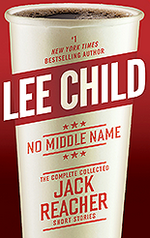
High Heat (Audiobook) by Lee Child, Dick Hill

High HeatHigh Heat

by Lee Child, Dick Hill (Narrator)
Series: Jack Reacher, #17.5
Unabridged Audiobook, 2 hrs., 27 mins.
Random House Audio, 2013

Read: March 16 – 17, 2017


Ahhh, finally — an actually satisfying shorter Jack Reacher story. It’s longer than the others I’ve tried — a novella, not just a short story. That’s probably a lot of it, but there’s something more to it — just don’t ask me what.

Reacher’s on summer vacation before his senior year — pretty much fully grown, has a good head on his shoulders, and is as arrogant and invincible feeling as most teenagers (he’s just big and tough enough to back it up). He’s visiting NYC for the day before going to visit his brother at West Point.

It’s 1977, a summer in NYC known for two things: incredible heat and Son of Sam. Both have an impact on this story (no, Reacher doesn’t stop the killer or anything — phew). Reacher flirts with some college girls, breaks up a fight with a mobster and an undercover FBI agent, survives a blackout, spends some quality time with one of the college girls and helps the FBI agent out — while engaging in a few solid fights.

The action takes place in one night — probably 14 hours or so, but Child manages to cram a lot into those hours. Is it realistic? No, not even by Reacher standards. Is it compelling — yup. Will it keep you interested? Oh, yeah.

Dick Hill sounded to me like he as having a lot of fun reading this one — which is fitting, it’s probably the most “fun” Reacher story I’ve come across (well, maybe the Reacher/Nick Heller story in FaceOff is a little more so). He does his typical job, satisfying in his delivery, keeps you engaged, doesn’t wow with technique.

It’s a fun story, nothing to get excited about, but something that Reacher fans will enjoy, in a complete-feeling story. Good enough for me.

—–

3.5 Stars

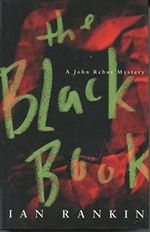
Tooth and Nail by Ian Rankin

Tooth and Nail Tooth and Nail

by Ian Rankin
Series: John Rebus, #3

Paperback, 293 pg.
St. Martin’s Paperbacks, 1996 (first published 1992)

Read: April 14 – 15, 2017

She drives home the knife.

The moment, she knows from past experience, is a very intimate one. Her hand is gripped around the knife’s
cool handle and the thrust takes the blade into the throat up to the hilt until her hand meets the throat itself. Flesh upon flesh. Jacket first, or woollen jersey, cotton shirt or T-shirt, then flesh. Now rent. The knife is writhing, like an animal sniffing. Warm blood covering hilt and hand. (The other hand covers the mouth, stifling screams.) The moment is complete. A meeting. Touching. The body is hot, gaping, warm with blood. Seething inside, as insides become outsides. Boiling. The moment is coming to an end all too soon.

And still she feels hungry. It isn’t right, isn’t usual but she does. She removes some of the clothing; in fact, removes quite a lot of it, removes more, perhaps, than is necessary. And she does what she must do, the knife squirming again. She keeps her eyes screwed tightly shut. She does not like this part. She has never liked this part, not then, not now. But especially not then.

Clearly, this is someone who needs to be stopped. And The Powers That Be have brought John Rebus from Edinburgh to London to help the hunt for the Wolfman (yeah, those who tagged the killer with that moniker may have made some assumptions). Thanks to the events in Knots & Crosses, many (who don’t know all the details) believe that Rebus is somewhat of an expert in Serial Killers. He knows he’s not, but no one asked him — he was just told to show up. It’s not long before this case gets under Rebus’ skin and he’s no longer in London to kill a couple of days as a show of support for the local police, but he’s off to catch a killer.

George Flight is the detective who’s serving as Rebus’ contact — and is leading the investigation. Rebus notes that he’s a better policeman than he is — meticulous, detailed, going through things step by step. Which isn’t doing him a lot of good at the moment, he needs something more. Enter Rebus. By and large, Flight’s the only one that wants Rebus’ help — his superior, another detective on the case, and the press liaison are pretty united in their lack of interest in bringing in someone from “Jockland” to meddle in the crimes of the big city.

As Rebus arrives in London, another body is discovered, so he shows up at the crime scene with his luggage, from there, they head to an autopsy — rushed, no doubt given the likelihood that this is another Wolfman victim. The autopsy scene — the sights, sounds and smells — is one of the best (possibly the best) that I’ve seen along these lines. It felt real, it felt disgusting, it felt sad. Between this and the opening paragraphs (quoted above), I’m again reminded that Rankin knows what he’s doing when it comes to writing. He nails this stuff.

While he’s in town, Rebus visits his ex-wife and daughter — things go poorly there, as one would expect. Things go worse when his daughter’s boyfriend comes around. When Rebus is able to connect said boyfriend to a career criminal . . .

I’m no expert on this, but I’ve read more than a few serial killer novels, it strikes me that 1992 was still pretty early in serial killer fiction-terms, and it shows. Both in Rebus’ attempts to draw the killer out, as well as Flight’s attempts to catch him. We also get to see both detectives trying to understand the serial killer — or at least how to apprehend one. Flight’s more old-school in his approach and is pretty disdainful of Rebus’ efforts to get inside the head of a serial killer. Which is not to say that this particular killer isn’t destructive, sick and really creepy.

Rebus is spurred on to this track because of who he is — but the attractive psychologist, Lisa Frazer, who wants to help him out certainly doesn’t hurt. It could be argued by some (including some characters in the book) that Rebus is far more interested in pursuing her than the Wolfman.

Rebus mostly stumbles around, indulging his infatuation with Frazer, looking for his daughter’s boyfriend, and occasionally chatting with Flight about the case. Now eventually, enough things happened that allow Rebus to put things together and figure out the identity of the Wolfman (sorta like when Wilson made a stray comment to Dr. House that got him to make the right diagnosis). Sure, it was clever, but hard to believe.

Early on, I thought this might be the book that turned me into a Rankin fan, not just some guy reading these. It came close, but I just couldn’t totally buy the ending and the way Rebus solved the case. But man, Rankin can write. I’m not totally sold on what he’s writing, but I’m really enjoying the craft. I was hooked throughout, but that ending just didn’t work.

—–

3.5 Stars

2017 Library Love Challenge

Deep Down Dead by Steph Broadribb

Deep Down DeadDeep Down Dead

by Steph Broadribb
Series: Lori Anderson, #1

eARC, 350 pg.
Orenda Books, 2017

Read: April 4 – 5, 2017


Crime Fiction blogger turned novelist, Steph Broadribb’s debut novel, Deep Down Dead is the story of a bail enforcement agent (bounty hunter) making a pickup that will change her life in a fairly dramatic way. Lori Anderson couldn’t be in worse financial straits — her daughter’s medical bills from Leukemia (currently in remission) treatment are so far past due that future treatment is in jeopardy, and they’re about to get evicted from their home. So when the bondsman she works for offers her the largest amount she’s ever been offered for a job, she has to jump at it.

It’s supposed to be a simple midnight run, go pick up the fugitive from another agent not licensed in Florida (or he’d drop off the fugitive himself) and deliver him to the police herself. Almost immediately, problems start (none that deter Lori from the cash reward waiting) — her sitter has plans, so she has to take her daughter, Dakota, with her. Secondly, the fugitive in question is her former mentor, JT — the one who taught her everything she knows, who’s inexplicably got a criminal record now. Then when she arrives at the pickup, the agent she expects isn’t there — instead three very aggressive ruffians (best word I can think of) are there and decide to rough her up a little.

Things really go downhill from there — before Lori knows it, she’s got bigger problems than getting her money. She has to deal with a criminal enterprise running from one of the state’s largest amusement parks; a mob with a long-standing grudge; corrupt law enforcement officials; and being a suspect in violent crimes. This is intertwined with the story of Lori and JT’s past association, how he saved her life and set her on the path that she’s on now.

By the time I got to a whopping 12% my notes started using the word “brutal.” This was like if Pierce Brown took a crack at writing Stephanie Plum. Most of the time the violence (gun play or hand-to-hand) was brtual, but not overwhelming — just heightened enough to fit a crime novel.

You like Laurie almost instantly, Dakota will charm you and grab your heart, and you’ll even appreciate JT (maybe more . . . ) and his crusade — at the very least, you’ll get the connection between he and Laurie. The villains are evil, no two ways about it — but not in the mustache-twirling way, just in the kind of evil that we like to pretend doesn’t exist in this world.

It’s not just in her characterization, but it’s in her plotting, pacing and interweaving the stories of present and past that Broadribb displays more skill than your typical debut novelist. This lived up to every expectation I had from the interviews, reviews, etc. that I’ve heard and read, which was a relief. I sorta feel like I’ve been giving too many 4 Stars lately, like I’ve been overly generous, so I tried to rate this lower. But I just can’t — this is a 4 Star book, easy — and with a little more experience under her belt, Broadribb (and Anderson) will be knocking out 5 Star reads regularly. I can’t wait to see what’s next.

Disclaimer: I received this eARC from Trafalgar Square Publishing via NetGalley in exchange for this post — thanks to both for this entertaining and almost traumatic experience.

—–

4 Stars

Remnants by Carolyn Arnold

RemnantsRemnants

by Carolyn Arnold
Series: Brandon Fisher FBI, #8

eARC, 260 pg.
Hibbert & Stiles Publishing Inc., 2017

Read: April 4, 2017


After some strong storms go through the area, some dismembered body parts are discovered in and near the Little Ogeechee River in Savannah, Georgia. While the local law enforcement is unable to quickly identify who the parts belonged to, it was clear that multiple victims were involved, and a FBI team is called in to investigate. The limbs don’t come with any identifying marks outside of DNA, making it incredibly difficult to identify the victims — which increases the difficulty in determining why they were chosen, and therefore who might be doing the dismembering.

It’s going to take some out-of-the-box thinking, and no little bit of luck, for profiler Brandon Fisher and the rest of his team to come up with suspects before the killer strikes again.

Once a theory of the crime is starting to develop, one team member displays a fairly detailed and technical understanding of a fairly esoteric subject. Which was convenient in that it helped flush out the theory, but was a little hard to swallow. Something we learn later about that character (long-time readers probably know it already) makes it a little easier to accept, but not totally (at least for me). It’s a minor thing, and it didn’t detract from anything — just made me roll my eyes.

The one complaint I have with the writing is the voice — it doesn’t change whether the chapter is in the first person (as Brandon) or third person (focusing on other agents or the killer). Other than that, the pacing is good, the twists come at the right moments and the plotting is strong, Arnold’s a good storyteller.

I’m not sure if it’s typical for Agent Paige Dawson, but she really connected with the victim’s families. It’s not often — or at least not often enough — that this kind of attention is given to those characters. That was a nice touch. I’d like to spend more time with all these characters, Paige probably most of all.

There are a few nuances I missed since I haven’t read the previous 7 books in the series, but only nuances. There’s nothing keeping someone new to the series — or someone looking for a standalone — from getting everything you need to from this book. Arnold’s kept this very newbie-friendly, which is nice.

This isn’t the most exciting or revolutionary – or, thankfully, most disturbing — serial killer novel you’ll find. It is a solid procedural with believable characters (on either side of the law), an interesting solution, and some credible emotional beats. This is an entertaining read and if the rest of this series is of similar quality, it’s worth your time to check out the others, too.

Disclaimer: I received a copy of this book from Hibbert & Stiles Publishing in exchange for this post. I appreciate the opportunity to read this book.

—–

3 Stars

The Weed That Strings the Hangman’s Bag (Audiobook) by Alan Bradley, Jayne Entwistle

The Weed That Strings the Hangman's BagThe Weed That Strings the Hangman’s Bag

by Alan Bradley, Jayne Entwistle (Narrator)
Series: Flavia de Luce, #2

Unabridged Audiobook, 9 hrs., 49 min.
Random House Audio, 2010

Read: March 21 – 27, 2017

I think I’d have phrased things a bit differently, but in the interest of time, I’m just going to copy and paste from my thoughts when I read the book a couple of years ago and add in a bit for the audiobook:
The plucky young chemist with a nascent obsession with death is back in action. The case is a little less personal for Flavia de Luce this time, but that doesn’t stop her from jumping in whole hog to get to the bottom of it.

Flavia runs into a couple of traveling performers with some car trouble and before you know it, she’s got them some help–and a gig. While she hangs around the TV star and his assistant, she finds herself surrounded by some of her town’s darker history and then face to face with a murder. And Flavia being Flavia, she can’t resist sticking her nose in and making sure all the knots are untangled–particularly the ones adults are ignoring, despite them being painfully obvious to her.

We get less of Flavia’s sisters (and the rest of the household, come to think of it) in this installment–but when they’re around, their impact is greater. Clearly, as this series continues, there’s going to be some serious drama on the homefront with some major implications for the de Luce family, I hope Bradley tackles that quickly, the foreshadowing’s getting old quickly.

Unlike with so many other amateur sleuths (particularly juveniles), it’s nice to see that her reputation and track record are acknowledged by some in the community — which is both a help and a hindrance, I hope to see more of that in the future.

Entwistle really impressed me again with her narration. Not just the way she nails Flavia — both the good and the bad aspects of her personality. But her work on the rest of the characters — the TV star’s assistant in particular — really won me over, showing a little more range than we got to see, er, hear last time.

My only major quibble with this installment is that it takes far too long to set the main action of the novel up–in a 348 page mystery novel, you’d better get to the central crime before page 150 or so. Unless you’ve got a heroine like Flavia to focus on, I can’t imagine being patient enough to wait that long to get the ball rolling. Entwistle’s performance helps, but, man, it drags on awhile before Bradley’s done setting things up and gets things moving.

Another fun (occasionally hilarious) read, with a mystery satisfyingly twisty, with just enough red herrings to get you through it.

—–

3.5 Stars

Not a Drill (Audiobook) by Lee Child, Dick Hill

Not a DrillNot a Drill

by Lee Child, Dick Hill (Narrator)
Series: Jack Reacher, #18.5
Unabridged Audiobook, 1 hr., 27 min.
Random House Audio, 2014

Read: March 14, 2017


Reacher sets out for the Canadian border, to make it as far north on this Interstate as possible, just because. Not too far south from there, he stops in a tourist-y town, a haven for backpackers, hikers, wilderness types in general. Before he leaves, a whole lot of military types show up and block access to the forest from the town (well, they try to — the forest is pretty big, it’s impossible to block access to the whole thing).

This gets Reacher’s curiosity piqued and he starts poking around to see if he can understand why.

I don’t want to sound bloodthirsty here, but not a single fight. No threat of violence breaking out. Mostly, it’s Reacher walking around and observing things before making a heck of a guess/deduction that proved to be right.

Dark, cynical ending — one of Child’s more political statements.

Hill was okay, not terribly interesting, but I think that’s Child’s fault this time.

It’s not bad. It’s just disappointing, short and . . . bleh. Proof that they can’t all be winners, I guess.

—–

2 1/2 Stars

Nearly Nero by Loren D. Estleman

Nearly NeroNearly Nero: The Adventures of Claudius Lyon, the Man Who Would Be Wolfe

by Loren D. Estleman

eARC, 192 pg.
Tyrus Books, 2017

Read: March 24 – 30, 2017


I’ve heard about the stories in this volume for years, but have never tracked one down before — and then a whole collection of them show up on NetGalley! How could I not request it? I’m so glad this book exists so that those of us who don’t get the magazines, etc. that publish short mystery fiction can have them (and even those who do have access to those magazines, etc. can have them in one handy volume).

Anyway, here’s the setup: Claudius Lyon is a huge fan of Nero Wolfe — he reads every one of the reports that Archie Goodwin’s literary agent Rex Stout publishes. He’s such a fan that he wants to be Wolfe (like the guys dressing up in Batsuits in The Dark Knight Rises) — he’s fat, fairly clever, and wealthy enough not to need to work and still indulge himself. He renovates his townhouse to include a greenhouse, an elevator, and a first floor floorplan that pretty much matches Wolfe’s. He hires a private chef — a kosher chef of dubious quality (not that Lyon needs to eat kosher, it’s just what Gus can cook), changes his name to something that approximates his hero’s and hires a “man of action,” Arnie Woodbine. Arnie’s an ex-con, small-time crook who doesn’t mind (too much) putting up with his looney boss for a steady paycheck and meals.

The number of ways that Lyon isn’t Wolfe is pretty large and I won’t spoil your fun in discovering them. Now, Lyon’s unlicensed as a PI, so he can’t take on paying clients — but he occasionally gets people who will take him up on his free services. He’s decent at solving puzzles and low-priority mysteries (not that he doesn’t find his way into something bigger on occasion). Once he gets a client (non-paying, Arnie’d have me stress), he goes through whatever steps he needs to figure it out (including his own version of Wolfe’s lip movement and sending Arnie on fact-finding missions), and goes to some lengths to assemble some sort of audience for his reveal. I can’t help smiling as I think about it, really.

The whole thing is a tongue-in-cheek tribute to the Nero Wolfe/Rex Stout — recognizing the brilliance of the Stout’s work (how can you not?), while poking fun at it. Lyon’s really a goofy character and Woodbine is great at pointing that out — while begrudgingly admitting that he gets things right every now and then. There’s a lot of fun to be had in the story telling — the mysteries aren’t all that much to get excited about, it’s in watching Lyon stumble through his cases that the entertainment is found. Well, that and Woodbine’s commentary.

Not unlike many of the Wolfe stories (particularly the short stories).

I wouldn’t recommend reading more than two of these stories in a sitting, I think they work best as solo shots. It’s a difficult call, because I typically wanted to go on for one more. Also, I’m not sure how enjoyable these’d be for non-Wolfe readers — but then again, I think a lot of the humor would hold up and it might entice a reader to learn more about Lyon’s idol. And anything that gets people to read Rex Stout’s Nero Wolfe novels is a good thing.

But for readers of Stout’s Wolfe novels? This is a must read. He’s not trying and failing to recapture Stout’s magic (see Goldsborough post-The Bloodied Ivy), he’s intentionally missing and yet somehow getting a little of it. I really enjoyed this book and can easily see me re-reading it a handful of times.

Disclaimer: I received this eARC from Adams Media via NetGalley in exchange for this post — thanks to both for this.

The Forgotten Girls by Owen Laukkanen

The Forgotten GirlsThe Forgotten Girls

by Owen Laukkanen
Series: Stevens & Windermere, #6

Hardcover, 355 pg.
G.P. Putnam’s Sons, 2017

Read: March 25 – 27, 2017

I’m really of two minds about this one — it was a pretty rock-solid thriller, full of suspense and all the other things you want in a book about a serial killer being hunted down over several states. On the other hand, it’s a lousy Stevens & Windermere novel — it could have literally been any other detectives/agents/maverick cops and the book would’ve played out the same way.

For years — women who no one will miss, women who are pretty much expected to leave town at any moment — have been the target of “the rider.” He’s a presence — some would say an Urban Legend — on the “High Line” (a railroad route in Montana, Idaho, Washington), and is responsible for the deaths of many: small town waitresses, prostitutes, runaways, train hoppers. Since these women weren’t noticed by many, were expected to be seeking opportunities out of the small towns they live in, and so on — no one raises a fuss over their disappearances (or the eventual discovery of their remains after the snow abates. A girl named Ash feels like she has to ignore the warnings about the High Line to make it somewhere in record time. She becomes one of “the riders”‘ victims — her friend decides to get a little vengeance and goes off to hunt “the ride” and make sure no one else forgets these women.

About the same time, Stevens and Windermere learn about Ash’s murder — and soon the begin to learn about others. So while Mathers stays home to handle the technical and research portions of the investigation, the agents hit the road to dig up some better clues. Which leads to uncovering many, many more deaths; a Herculean effort to save the friend’s life (hard to do while she’s running from the law); and a showdown with “the rider.”

What I liked: the suspense, the way that Laukkanen told the story (although I admit having a little trouble keeping names straight at the beginning) — bouncing between perspectives while ratcheting up the suspense. I’m not always the biggest fan of this maneuver, but Laukkanen nailed it. The world — the culture of train hopping — was fascinating, and I’m willing to bet really well researched and pretty based in reality. Overall, it’s not the best thriller I’ve read lately, but it was very satisfying.

What I didn’t like: as I said, it could’ve been the most generic pairing of a male/female FBI agents on the hunt for this killer. Until maybe the last 50 pages — but even then, it didn’t need to be Kirk Stevens or Carla Windermere, but it made it easier to handle the emotional beats for them to be the central characters. Also, while I absolutely bought the killer, his motivation, his twisted way of thinking — but when he was responding to questions, explaining himself? Ugh. He sounded like he was reading off of a list of sexual predator prejudices from Wikipedia. Honestly, you take out that one segment where he’s responding to questions about his motivation and the whole book is better.

I’m still planning on reading whatever Laukkanen puts out for the next 5< years, don’t misunderstand me. This one just didn’t work for me the way I’d hoped. Not a bad book — just a bad seines entry.

—–

3 Stars

2017 Library Love Challenge

Robert B. Parker’s Little White Lies by Ace Atkins

Really, all I want to say about this book is: “Yes! Atkins did it again — it’s just so good, folks. Long-time fans’ll love it, new readers will likely see the appeal of the series. A lot of fun with a great ending!” But that seems a little surface-y and is just bad writing. But really, that’s everything I’ve got to say.

Little White LiesRobert B. Parker’s Little White Lies

by Ace Atkins
Series: Spenser, #45

eARC, 320 pg.
G.P. Putnam’s Sons, 2017

Read: March 16 – 17, 2017

Pearl and I were off to Central Square . Her long brown ears blew in the wind as we drove along Memorial Drive against the Charles. Rowers rowed, joggers jogged, and bench sitters sat. It was midSeptember and air had turned crisp. The leaves had already started to turn red and gold, shining in Technicolor upon the still water.

I debated about what quotation I’d open with — I went with this Parker-esque (and Atkins-esque) description. Little White Lies is one of the better of Atkins run on this series, because (like here) he did something that feels like something Parker would’ve written, but not quite what he’d have said (the more I think about it, the less I think that Parker’d have said “bench sitters sat”).

Actually, that’s true of the other quotation I almost used, too:

I nodded , adding water to the new coffeemaker sitting atop my file cabinet. I’d recently upgraded from Mr. Coffee to one of those machines that used pre-measured plastic cups. I placed my mug under the filter, clamped down the lid, and returned to my desk. Demonic hissing sounds echoed in my office. Where have you gone, Joe DiMaggio?

This is Atkins sixth Spenser novel, and you’d think he’s got enough of a track record that I could stop comparing him to Parker. Well, you’d be wrong — I can’t stop. This, like most of Atkins’ work on this series, is so reminiscent of early Parker novels that it makes some of the latter Parkers look more like they were written by a hired gun. Still, I’m going to try to keep it to a minimum because it doesn’t seem fair to keep doing.

Susan has sent one of her clients to Spenser for some help that she can’t provide. Connie Kelly had been dating someone she met online, invested in one of his real estate deals — and he vanished, taking the money with him. Could Spenser track him down and get her cash back? Sure, he says. It doesn’t take long for the investigation to show that he owes plenty of people money — a couple of months rent here, hundreds of thousands of dollar there.

Here’s the fun part: M. Brooks Welles, the deadbeat in question, is a silver-haired, silver-tongued mainstay on cable news. He’s former CIA, and an expert on military and national security issues — one of those that producers call on regularly when they need a talking head. Why’s a guy like that flaking out on real estate deals? Spenser knows something fishier than expected is going on — which takes him into a world of mercenaries, gun deals, and the ATF.

Then someone tries to kill him. A couple of times. And the book stops feeling like a semi-light adventure, poking fun at the blowhards on cable TV and the state of American Journalism, and how we shouldn’t trust as many people who have cameras pointed at them as we do. Things take on a different tone, bodies start piling up, and a darkness slips in to the book. This also brings in Belson and his new boss — who’s still not a fan of Spenser. About the same time, Connie starts to waver in her conviction that she wants her money back and Welles punished. Spenser, naturally, doesn’t care and plows ahead. Hawk is able to connect Spenser with some mercenaries that travel in the same circles as Welles and the chase is on. Eventually, the action moves from Boston and its environs to Georgia. Which means that Teddy Sapp is going to make an appearance.

All the characters were great — I would’ve liked some more time with some of Welles’ co-conspirators in Boston, I think it’d have helped round out our picture of his crimes. But it’s a minor complaint. We also got plenty of interaction with his Georgia-based colleagues. Even the characters that show up for a page or two as witnesses to the crimes were interesting — it’s the little things like those that add so much. It was nice to see Teddy Sapp again, too. He was the best part of Hugger Mugger (faint praise, I realize). The Hawk material was very good — maybe Atkins’ best use of the character yet.

I fully expect that people are going to spend a lot of time talking about the ending — it didn’t feel like a Parker ending. That said, it felt like an ending that pre-A Catskill Eagle Parker might have tried. It was satisfying, don’t misunderstand, it’s just not the kind of ending that Parker employed. Honestly, there were two other perfectly acceptable places to end the book — and if not for the progress bar at the bottom of my screen, I might have believed that thee ending was earlier and equally strong.

Now, because Atkins and the Parker estate aren’t stupid, there are certain characters that you just know are safe, no matter what shenanigans that they’ve let Atkins and Coleman get away with when it comes to killing off long-term supporting characters. But there was a definite feeling of peril when it comes to [name redacted] and [name redacted]. Sure I knew they’d live to be read about another day, but I wondered how healthy they’d be in the meantime.

This is sharply written, as usual. Atkins knows what he’s doing (in this series or anything else) — a great mix of character moments and plot. Spenser’s voice is strong — as are the voices of the other regulars. It was just a pleasure to read through and through. Let me leave you with one more snippet that is could’ve come from an early-80’s Spenser just as easily today’s, a voice like this is enough reason to read the book — the rest is just gravy (and there’s plenty of gravy):

I returned with sore legs back to my seat on the steps. I spent the next fifteen minutes watching women of all ages, sizes, and colors walk past me. I liked the way most women walked. I liked the way they dressed. And talked and smelled. I was pretty damn sure I was a fan of women in general. Did this make me a sexist or a feminist? Or somewhere in between.

Disclaimer: I received this eARC from Putnam Books via NetGalley in exchange for this post — thanks to both for this.
N.B.: As this was an ARC, any quotations above may be changed in the published work — I will endeavor to verify them as soon as possible.

—–

4 1/2 Stars

A Few Quick Questions With…Duncan MacMaster

Not only did the good people at Fahrenheit Press provide me with Duncan MacMaster’s Hack (which I just posted about), I got an interview with Mr. MacMaster as well! As usual, this is short and sweet, he’s got better things to do than come up with clever answers for me, y’know? Seriously, loved his answers. Give this a read and then scurry out to buy his book.

Would you like to give the elevator pitch for Hack? (for that matter, if you want to throw one in for A Mint Condition Corpse, that’d be fine, too)
The elevator pitch for Hack would be: A desperate man is hired to ghostwrite the autobiography of a washed up TV star with scandal in his past and murder in his future.

The pitch for A Mint Condition Corpse would be: A semi-retired artist’s trip to his favourite comic book convention is spoiled by murder, and only he can solve it.

Do you have experience as a Ghost Writer? Is Hack your way working out some demons? Or does it have a much more benign genesis?
I never specifically worked as a ghostwriter. I did do things like selling jokes to comedians (no one you ever heard of) so I know a bit about doing something that someone else gets credit for.

There is a certain amount of exorcism in the genesis of Hack. By the time I got to writing it I had spent a very long time getting metaphorically kicked in the head by the writing business. The joke market had dried up, and I spent years enduring rejections that ranged from the incoherent to the callous, and some career setbacks that were downright ridiculous.

As you could guess, those experiences left some demons that needed to be exorcised, and Jake Mooney, the hack writer of the title, did it for me. Jake’s had a life defined by setbacks and it’s made him bitter, cynical, and lonely. He sees being a credited author as a step towards some redemption as a writer, and solving the crimes as an attempt at redeeming himself as a human being.

Of course none of this was conscious while I was writing it. While putting down that first draft all I could think about was the plot, the characters and making sure everything made sense. I didn’t discover what I had done with Jake’s and my own hunger for redemption and validation until working on later drafts.

It was different with my first crime novel A Mint Condition Corpse. That started with a conscious decision to make Kirby Baxter, card-carrying comics geek, the Sherlockian hero instead of the comedy relief sidekick, and to use him as a vehicle to combine mystery with a satire of pop culture and the people who run it. Hack, has a lot more of my id running amok in it.

You’ve done a little in other genres, but your publications seem to be predominately in the Crime/Mystery genre. What is it about the genre that brings you back? Is there a genre you particularly enjoy, but don’t think you could write?
I’ve dabbled in science fiction, fantasy, and even horror, and I do plan to do more in those genres in the future, but mystery/crime does seem to have a grip on me. Probably because it deals with people who are at the extremes of their emotions, and also because it’s a genre that’s is still a wide open field when it comes to narrative possibilities.

I always credit my narrative style to SCTV. It was a sketch comedy show I watched as a child that parodied television and movies, and it taught me that popular culture is loaded with tropes and cliches that create expectations in the audience. If you know them and understand them, then you can use them to manipulate expectations to misdirect, surprise, amuse, and hopefully amaze the audience.

When I started reading crime fiction in my teens I began to see the patterns inherent in the genre, and started seeing how they could be manipulated to create something new and entertaining.

As for a genre I enjoy, but don’t think I could write….well, I’m not sure. I’m sure readers would tell me if I really screwed up. My bet would be on straight up horror without any sort of mystery to solve inside it.

What’s the one (or two) book/movie/show in the last 5 years that made you say, “I wish I’d written that.”?
Don Winslow’s The Power of the Dog, a relatively slim volume that contains an epic inside. It sets a high standard that I hope to come close to some day. For the most part I tend to avoid reading fiction while I’m writing. I have a bad habit of inadvertently imitating whoever I’m reading. I wrote some truly dreadful pastiches while I was on a Lovecraft reading binge in my early twenties. All sorts of gooey overwrought eldritch nonsense.
This one’s not about you directly, but what is it about Fahrenheit Press that seems to generate the devotion and team spirit that it does (or at least appears to)? I don’t know that I’ve seen as many authors from the same publisher talk about/read each other’s books — or talk about the publisher — as much as you guys seem to. Is it simply contractual obligation, or is there more?
There’s no contractual obligation for camaraderie at Fahrenheit Press, or the House of Love, as our fearless leader likes to call it.

I can sum it up this way: Joining Fahrenheit is like joining a punk band in the mid-70s.

We don’t know what the future holds, or what we will achieve in the end. All we do know is that we are a band of misfits who are all doing what we love, we’re breaking rules and conventions that some thought were inviolate, and that we are all in this wild ride together.

Fahrenheit has been the best experience I’ve ever had in publishing, and I’m sure my fellow authors will agree with me on that.

What’s next for Duncan MacMaster?
I just finished the first draft of a sequel to A Mint Condition Corpse, called Video Killed The Radio Star, and the brutal editing/rewrite process awaits me. I’m also developing a more experimental project examining male archetypes in crime fiction and the concept of the unreliable narrator. I am even outlining a potential sequel to Hack called Hacked, where Jake goes Hollywood. I’m hoping to complete all these projects and make them worthy of publication as soon as possible.

What happens after that, is anyone’s guess.

Thank you for having me on your blog.

Thanks for your time — I really appreciate it, and hope that the Hack‘s release is successful (as it deserves).

Page 112 of 154

Powered by WordPress & Theme by Anders Norén