
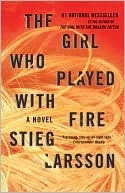
 Dear Stieg Larsson,
Until you become a much, much better writer than you are, you really need to get to the hook earlier than page 245 of 640. Dude, that’s 40% of your book.
Just sayin’,
Me

Dear Stieg Larsson,
Until you become a much, much better writer than you are, you really need to get to the hook earlier than page 245 of 640. Dude, that’s 40% of your book.
Just sayin’,
Me
sorry for the rushed nature of this one, but I wanted to get something up today and didn’t have time to polish it right.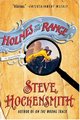 You just have to love this concept. An illiterate cowboy in 1890’s Montana hears about Sherlock Holmes due to the republication of some of Watson’s accounts in American periodicals. He’s drawn by what Holmes does and sets about getting his hands on all of Watson’s reports he can. And then he makes his brother read them to him over and over and over so he can learn how to do what Holmes does. At some point he thinks he’s learned enough to start, and puts himself in a situation to put his skills to the test. And presto, you’ve got yourself a novel.
So much for the concept–how was the execution? Ehhh, not as good. It was dull, downright slow, filled with a bunch of cliched Western types. It was interesting enough to keep me reading, but man, did it get sloggy in parts. I’m glad I persevered, because the conclusion was satisfying (even if it’s pace was 200% of what preceded it) and the central characters were amusing.
These brothers offer a great take on Holmes/Watson, and I’m sure I’ll get to the sequels pretty soon. Hoping that now that the series has been set up, the next ones will pick up a little faster.
 On Oct 23 in Chillicothe, Ohio, Archie Goodwin entered this world–no doubt with a smile for the pretty nurses–and American detective literature was never the same.
I’m toasting him in one of the ways I think he’d appreciate most–by raising a glass of milk in his honor.
Who was Archie? Archie summed up his life thusly:
Born in Ohio. Public high school, pretty good at geometry and football, graduated with honor but no honors. Went to college two weeks, decided it was childish, came to New York and got a job guarding a pier, shot and killed two men and was fired, was recommended to Nero Wolfe for a chore he wanted done, did it, was offered a full-time job by Mr. Wolfe, took it, still have it.” (Fourth of July Picnic)
Long may he keep it. Just what was he employed by Wolfe to do? In The Black Mountain he answers the statement, “I thought you was a private eye” with:
I don’t like the way you say it, but I am. Also I am an accountant, an amanuensis, and a cocklebur. Eight to five you never heard the word amanuensis and you never saw a cocklebur.
In The Red Box, he says
I know pretty well what my field is. Aside from my primary function as the thorn in the seat of Wolfe’s chair to keep him from going to sleep and waking up only for meals, I’m chiefly cut out for two things: to jump and grab something before the other guy can get his paws on it, and to collect pieces of the puzzle for Wolfe to work on.
In Black Orchids, he reacts to an insult:
…her cheap crack about me being a ten-cent Clark Gable, which was ridiculous. He simpers, to begin with, and to end with no once can say I resemble a movie actor, and if they did it would be more apt to be Gary Cooper than Clark Gable.
In case you’re wondering if this post was simply an excuse to go through some collections of Archie Goodwin quotations, you wouldn’t be totally wrong…he’s one of the fictional characters I like spending time with most in this world–he’s the literary equivalent of comfort food. So just a couple more great lines I’ve quoted here before:
I would appreciate it if they would call a halt on all their devoted efforts to find a way to abolish war or eliminate disease or run trains with atoms or extend the span of human life to a couple of centuries, and everybody concentrate for a while on how to wake me up in the morning without my resenting it. It may be that a bevy of beautiful maidens in pure silk yellow very sheer gowns, barefooted, singing “Oh, What a Beautiful Morning” and scattering rose petals over me would do the trick, but I’d have to try it.
I looked at the wall clock. It said two minutes to four. I looked at my wrist watch. It said one minute to four. In spite of the discrepancy it seemed safe to conclude that it would soon be four o’clock.
“Indeed,” I said. That was Nero Wolfe’s word, and I never used it except in moments of stress, and it severely annoyed me when I caught myself using it, because when I look in a mirror I prefer to see me as is, with no skin grafted from anybody else’s hide, even Nero Wolfe’s.
 I’ve often felt conflicted about my appreciation for protagonists/leading characters who are murderers–professional hitmen (Peter Brown, Jimmy the Tulip, Martin Blank, Hawk, Jules Winnfield) or serial killers (Dexter Morgan, early Hannibal Lecter), but I can usually get over it because of what their creators do with them. But Angela S. Choi’s Fiona Fi Yu, from Hello Kitty Must Die, doesn’t get to join their ranks in my book. There’s little to commend her, or the book, if you ask me (which is sort of implied if you’ve read this far).
Fi is a successful, thirtysomething Chinese-American lawyer, living with her parents, who stumbles into serial killing (I’ll leave the details to those who read it). An unpleasant childhood, filled with overbearing parents, a strict Catholic school, and one sociopathic friend primes this perpetually single (and proud!) woman for an adulthood that’s even more unpleasant. Until the aforementioned stumbling, anyway. She’s a whiny, selfish, me-first person all the way, with a personality only a parakeet could love. Essentially, she’s a very unpleasant person–beyond the murdering. Sure, she can mix pop culture references into her narrative like Dennis Miller in his prime, but in a post-Tarantino/Whedon/Apatow/Abed Nadir age, is that really so noteworthy? Besides, if Humbert Humbert taught us nothing at all, he taught us that “You can always count on a murderer for a fancy prose style.”
What about the story itself? It starts off semi-promising, and then goes straight downhill from there. Well, let me amend that. It starts off offensively, but it’s a staged, calculated offensiveness. Choi trades in an actual narrative hook for a hook constructed of shock value. But a few pages later, it gets semi-promising. There’s no redemption of the character–not even growth. Nothing commendable about the events, characters, or cultural commentary.
On the other hand, it was a quick read.
 Dan Wells has pulled off quite a feat with his debut novel, I Am Not A Serial Killer–he’s written probably the creepiest book I’ve read this year (and since I’ve read 3 Val McDermid novels this year, that’s saying something), but more importantly he got me to care for and root for the creepy protagonist. (I’ll try to stop using forms of the word ‘creepy’ now). He got me to read the book with the hook, and the promised thrill, but he won me over with charm and characters.
Rather than try to summarize the plot, I’ll just embed the teaser here, okay?
That’s really all you need to know about the plot–it refreshingly deviates a bit from standard serial killer plotlines, but that’s not Wells’ strength. It’s in making us care about the individuals surrounding the plot–primarily the “hero.”
I was just thinking the other day about how nice it would be to have a novel about a teenager that wasn’t directed at a Young Adult audience (although there’s nothing about this book that would keep it from being labeled YA) and lo and behold, here one is. John Wayne Cleaver is an atypical teen written convincingly enough to appeal to older readers. The way he deals with his inner “monster”, the serial killer nature he’s known for years is lurking beneath the surface, is reminiscent of Dexter Morgan, but he’s not a knock-off. Unlike Dex, John’s not looking for an outlet for his desire to kill, he’s looking for a way to deny it.
The rest of the cast (both teens and adults) are not as fleshed out, and we could spend more time with all of them, but they feel just as “real”. It will be interesting over the next 2 planned installments to watch them develop and react to John and his struggles (especially as his struggles become more and more overt as I suspect they will).
The exterior conflict in the novel is well done, and has a satisfying conclusion (that had me sitting on the edge of my seat), but the payoff to John’s interior conflict is even better–and somewhat surprising to the reader as well as John.
I’ll pay Wells one of the highest compliments I can think of–I was about 50 pages away from the end when I started to get anxious about getting my hands on the second entry in the series–which doesn’t look like it’ll be available here for another year.
 Alright, once again, picking up after a pointless break in a surely vain attempt to catch up with my little project, this time looking at the classic, Too Many Women. Like The Silent Speaker, this one gets re-read more than others in my collection, and is still fun to read every time.
The president of the large engineering supply corporation, Naylor-Kerr, comes to Wolfe with an interesting problem. During a recent survey of departments about employee turn-over, an employee of the company is listed as “murdered.” Which is a pretty good reason to no longer come to work, but the idea that one of their employees has been murdered (particularly when the police think he was just a victim of a hit-and-run) is a bit too scandalous for such a fine and upstanding company, and could Mr. Wolfe please rid them of such rumors? Wolfe takes the case, mostly to get Archie out of the office for awhile–they’re getting on each other’s nerves and could use some space. So Archie poses as a personnel consultant and goes undercover.
The first thing Archie notices on his arrival at the offices is that there are a whole lotta women (clerical staff, on the whole) working at this company (see quotation below), enough to ensure that he’s got plenty of incentive to stick around and do a thorough investigation. He’s not there too long before he begins to find evidence that the murder accusation might be well founded after all–and before you know it, there’s another body (shock!). The first victim was some sort of lothario, who didn’t like to go far for his pray, so the suspect list is pretty large. Archie bounces around from attractive female suspect to attractive female suspect, questioning, wining and dining, and all other sorts of verbs, until his boss puts all the pieces together.
This is a breezy novel with plenty to recommend it in matters of style, humor, fun characters and plot quirks. Whether it be the petty bickering between the two stars, the patter between Archie and the women, or Archie having to put up with one individual’s health food nuttiness; the interplay between various characters is definitely more than enough to draw the reader in.
I can’t help but note, each time I read this, how much books like this disprove many of the assumptions we have about this time period–particularly those propogated by groups wanting to imagine the mid-20th century as some sort of moral oasis
I could reproduce pages and pages of Archie’s descriptions of the staff of Kerr-Naylor to give Stout a chance to strut his stuff, but will leave them to their proper context, just listing two here for a sample:
…as far as space went, it was a room about the size of the Yankee Stadium, with hundreds of desks and girls at them. Along each side of that area, the entire length, was a series of partitioned offices, with some of the doors closed and some open. No stock of anything was in sight anywhere.
One good glance and I liked the job. The girls. All right there, all being paid to stay right there, and me being paid to move freely about and converse with anyone whomever, which was down in black and white. Probably after I had been there a couple of years I would find that close-ups revealed inferior individual specimens, Grade B or lower in age, contours, skin quality, voice, or level of intellect, but from where I stood at nine-fifty-two Wednesday morning it was enough to take your breath away. At least half a thousand of them, and the general and overwhelming impression was of–clean, young, healthy, friendly, spirited, beautiful and ready. I stood and filled my eyes, trying to look detached. It was an ocean of opportunity.She was not at all spectacular…but there were two things about her that hit you at a glance. You got the instant impression that there was something beautiful about her that no one but you would understand and no one but you could help her out of. If that sounds too complicated for a two-second-take, okay, I was there and I remember it distinctly.
With The Silent Speaker, we’ve returned to novels in our tour through the Corpus, the War is over and our heroes, like the rest of the country, are adjusting to that fact. In the U.S., part of that has to do with price regulation and battles between governmental agencies and private businesses. In this case we have the Bureau of Price Regulation (BPR) and the National Industrial Association (NIA).
Now, I’ll be honest (and I realize this makes me a horrid person), this part of U.S. History makes my eyes glaze over, so I can’t say for certain how much the relationships depicted between the two entities are accurate. But this feels real (names of agencies/groups/companies being changed, naturally), and a little bit of reading that I’ve done about The Silent Speaker seems to support that. In years to come, Stout will not tweak details like that (The Doorbell Rang), but it’s more than understandable when he and other authors take that tack.
The head of the BPR (Cheney Boone) was scheduled to speak before a gathering of the NIA–a hostile audience, to be sure. And it does not appear that his address was going in anyway to endear him or the rest of his McCoys to the NIA Hatfields. But a funny thing happened on the way to the podium–well, not funny at all really, but that’s the phrase. Someone took a monkey wrench to his cranium while he was backstage rehearsing. The BPR people and the Boones begin accusing someone–anyone–with ties to the NIA, the NIA are certain that it’s all a front designed to bring public sentiment against him.
The police are soon stymied and have to deal with enough political pressure to prevent them from doing any real work. Wolfe’s patience is tried (and then some) by the bickering between and within the various camps. In addition to the vitriol flying all over, there are enough red herrings to keep things too confusing for the case to progress much.
In this book, at last, our cast of regulars is completed with the introduction of newspaperman extraordinaire, Lon Cohen. He doesn’t get a lot of space in this appearance, but that’s remedied in the next couple of books (and many future ones).
This is really one of the gems in the series, and one I return to more often than many others. I can’t put my finger on exactly why, but all cylinders are firing this time out, and not a false or ill-advised step is made (by the author anyway). This is a great novel to serve as an entry (or re-entry) point to the series for someone not sure where to start.
And now, for our regularly scheduled collection of witticisms and other notable quotes:
As usual, he didn’t life an eye when I entered. Also as usual, I paid no attention to whether he was paying attention.
“Satisfactory, Archie,” [Wolfe] muttered.
Frankly, I wish I could make my heart quit doing an extra thump when Wolfe says satisfactory, Archie. It’s childish.[Wolfe] pushed the button, savagely, for beer. He was as close to being in a panic as I remembered seeing him.
I looked at the wall clock. It said two minutes to four. I looked at my wrist watch. It said one minute to four. In spite of the discrepancy it seemed safe to conclude that it would soon be four o’clock.
I had made a close and prolonged study of Wolfe’s attitude toward women. The basic fact about a woman that seemed to irritate him was that she was a woman; the long record showed not a single exception; but form there on the documentation was cockeyed. If woman as woman grated on him you would suppose that the most womany details would be the worst for him, but time and again I have known him to have a chair placed for a female so that his desk would not obstruct his view of her legs, and the answer can’t be that his interest is professional and he reads character from legs, because the older and dumpier she is the less he cares where she sits. It is a very complex question and some day I’m going to take a whole chapter for it. Another little detail: he is much more sensitive to women’s noses than he is to men’s. I have never been able to detect that extremes or unorthodoxies in men’s noses have any effect on him, but in women’s they do. Above all he doesn’t like a pug, or in fact a pronounced incurve anywhere along the bridge.
Mrs. Boone had a bug, and it was much too small for the surroundings. I saw him looking at it as he leaned back in his chair. So he told her in a gruff and inhospitable tone, barely not boorish…
The ninth installment in the series always leaves me feeling…eh. It’s not like I don’t enjoy parts of it, but it’s not Stout at his best. A lot of it feels forced actually, as if Stout felt compelled to write something in support World War II and just couldn’t find a way to work it into the series naturally.
Let me say upfront, I don’t blame Stout for falling a little flat here–while he wrote this he was working a lot to support FDR and the war effort through various means. If you haven’t read McAleer’s biography of Stout, I’d highly recommend it, particularly over this period. It makes sense that he wasn’t at his best here.
Like Black Orchid, Not Quite Dead Enough is made up of two novellas. In the first, we are introduced to Major Archie Goodwin, of Army intelligence. He’s sent to NYC to recruit his once and future boss to the effort. Wolfe’s far more interested in joining the infantry (see the quote below), and has given up the detective business and his assorted comforts and indulgences in order to train. The description of his training and his appearance at this time are worth the effort alone.
Archie uses a case that his long-time friend, Lily Rowan, was trying to get him involved with to rekindle Wolfe’s dormant detective skills as a way to move him from his focus on the infantry to intelligence. The case isn’t that interesting, really, but there are some fun characters.
The second novella, Booby Trap shows us the Major acting as Wolfe’s handler while he acts as a civilian consultant to the intelligence service. In this particular instance, Wolfe gets to play to his strength, dealing with a couple of murders of Intelligence officers investigating some fraudulent arms sales. I find it disappointing, really, but I do read it occasionally.
My lukewarm feeling toward these stories carries over to the quotes I jotted down:
Not Quite Dead Enough
[Wolfe speaking] “I am going to kill some Germans. I didn’t kill enough in 1918.”Wolfe pronounced a word. It was the first time I had ever heard him pronounce an unprintable word, and it stopped me short.
Booby Trap
“Indeed,” I said. That was Nero Wolfe’s word, and I never used it except in moments of stress, and it severely annoyed me when I caught myself using it, because when I look in a mirror I prefer to see me as is, with no skin grafted from anybody else’s hide, even Nero Wolfe’s.[Wolfe speaking] “Archie. I submit to circumstances. So should you.”
Black Orchids is the ninth installment in the Wolfe/Goodwin series, and the first to not be a novel. Instead, it’s a collection of two novellas, one that shares it’s name with the book and Cordially Invited to Meet Death. For whatever reason, I kept putting this one off for years–until 2 years ago, I think. What a stupid, stupid move. These are not Stout’s best work–in character, complexity, theme or whatever–but they are just about the most entertaining entries in the corpus. I literally LOL’ed more than once the first time I read them, and a couple of times on this second read as well.
It’s no mistake that the book shares the title with the first novella–it’s the superior entry, a funny, light romp until it stops and becomes one of the grimmer entries in the corpus. Wolfe throughout is childish, peevish, calculating and, eventually, ruthless. Archie is, well, Archie.
Lewis Hewitt, a fellow orchid fanatic and sometimes ally of Wolfe’s has produced a new hybrid that Wolfe is very jealous of–some black orchids (not the most subtle of titles), and is showing them at New York’s annual flower show. Naturally disinclined to attend himself, Wolfe sends Archie down to view them, take notes on them, etc. Archie indulges him in this, fully expecting Wolfe to try something to get them.
Another exhibit at the show features a couple acting out a summer picnic, the man is okay, and the woman is so striking that Archie immediately starts calling her his fiance. Judging by the crowd that assembles at the time each day where the man naps and she washes her feet, Archie’s not the only one smitten.
Now is the time where I mention that as this is a Wolfe story, someone gets killed. Hewitt is tangentially associated with killing, enough to scare him into being open to some pressure from Wolfe regarding the hybrids.
Things remain lighter for a little while, but then as I said they get dark and morally murky. Even so, a rollicking good read that ends too soon.
The second story, has it’s moments, too. Bess Huddleston, a party planner for the obscenely rich, is being blackmailed and comes to Wolfe for help. Years before, Huddleston had insulted Wolfe’s dignity by trying to hire him to play detective at a party (she ended up settling for Inspector Cramer), nevertheless, Wolfe takes the case and sends Archie to her home to investigate.
Huddleston’s home and the inhabitants thereof are some of the strangest a reader will encounter anywhere–as is the method of murder and attempted murder that Archie stumbles into.
Unlike Black Orchids, this one was just short enough to remain entertaining. Oh, I should mention that both Fritz and Wolfe end up taking guidance in the kitchen from a (female!!) suspect–that alone makes this worth the time.
Lines that struck me as insightful/funny/revealing/whatever
from Black Orchids
I do not deny that flowers are pretty, but a million flowers are not a million times prettier than one flower. Oysters are good to eat, but who wants to eat a carload?[Archie speaking to Wolfe] Will you kindly tell me,” I requested, “why the females you see at a flower show are the kind of females who go to a flower show? Ninety per cent of them? Especially their legs? Does it have to be like that? Is it because, never having any flowers sent to them, they have to go there in order to see any?”
[Rose Lasher speaking of Archie] “That ten-cent Clark Gable there that thinks he’s so slick he can slide uphill”
And Archie’s reaction: …her cheap crack about me being a ten-cent Clark Gable, which was ridiculous. He simpers, to begin with, and to end with no once can say I resemble a movie actor, and fi they did it would be more apt to be Gary Cooper than Clark Gable.
from Cordially Invited to Meet Death
[Wolfe speaking] There is nothing in the world, as indestructible as human dignity.”For a cop to move persons from the house, any person whatever, with or without a charge or a warrant, except at Wolfe’s instigation, was an intolerable insult to his pride, his vanity and his sense of the fitness of things. So as was to be expected, he acted with a burst of energy amounting to violence. he sat up straight in his chair. [I cannot read that last sentence w/o chuckling]
Wow, it’s been exactly one month since I started this post. When I get behind (on these write-ups, not the reading) I get beeeehind.
So I can’t be certain, since it was twenty some years ago, but I think this was the first I ever read–and while I don’t remember being hooked right away, I did beat it to the library to grab another one. As I recall, the copy of the book my aunt loaned me had a balloon-y cartoonish drawing of Wolfe shoving his face into an orchid under some 70’s era kitchen green and orange stripes. Never judge a book by its cover indeed.
We are introduced right away to the remarkable Hawthorne sisters–April, May and June; a writer (married to the Secretary of State), a college president and one of Broadway’s brightest stars. Their wealthy brother has just died in a hunting accident and left behind a most curious will. His sister’s didn’t get the inheritance they’d been promised, instead they’d each been left a piece of fruit. That didn’t bother them too much–except for appearance’s sake (although May, the college prez, is distraught that her school didn’t get what it’d been promised); what bother’s the sisters is the way his wife wasn’t taken care of, and that his mistress (a poorly kept secret at best) received the overwhelming bulk of the estate. The sisters want Wolfe to prevail upon the mistress to return much of her inheritance to the more “rightful” heirs. Wolfe, for reasons I can’t understand, takes the case. Naturally, it’s not too long into the case before someone’s killed, and that’s when things really start to get interesting.
On the whole, the male characters (other than the regulars) in this novel are pretty dull, but most of the female characters rate a novel all their own. The three Hawthorne sisters have all striking personalities and a realistic dynamic between the three. There’s an interesting detail or two about the widow that I’ll save for those who want to read it. The daughter of the writer and the Secretary of State, Sara Hawthorne, grabs my attention each time I read it. Even if I can rarely remember how much peril she will be in by the end of the book–I always care a bit more about her welfare than I do similar Stout characters. As the sole female descendant of the legendary sisters, she feels the weight of expectation to do something as remarkable to the world at large, while being convinced that she’s not of the same caliber as her mother and aunts. To make up for that, she tries harder to be unique, to make her mark, to distinguish herself than the others probably had to–and in doing so endears herself to readers as well as to Wolfe and Archie.
A staple of P.I. fiction involves interactions between police and the private dicks–usually (after the first novel or three), there’s some sort of grudging mutual respect and assistance. Yet typically, there’s a mixture of trust and distrust–the P.I.’s withhold information and or straight-out lie to the cops and vice versa–teeter-tottering between the two extremes. Sometimes this feels forced, or even obligatory–even from skilled authors. Stout almost always pulls it off successfully (I can’t think of an exception), and generally entertainingly (thanks to Archie’s narration if nothing else). Wolfe has laid all his cards on the table and Inspector Cramer is convinced Wolfe’s up to something and makes more than one biting comment in that regard, leading Archie to observe: “It’s a funny and sad thing, the purer our motives are, the worse insults we get.” A sign of Stout’s ability is that he can keep something this tried and true fresh.
You’ve got a very wide and colorful cast of characters, a dash of political intrigue, and Wolfe out of the office on a case. What’s not to like?
A line or two that made me grin, both revealing a good deal about all involved.
Wolfe frowned at her. He hated fights about wills, having once gone so far as to tell a prospective client that he refused to engage in a tug of war with a dead man’s guts for a rope.
[After Archie is informed by Fritz that Wolfe has left on business] I hung up and went back out to the car and told Fred:
“A new era has begun. The earth has turned around and started the other way. Mr. Wolfe has left home in a taxicab to work on a case.”
“Huh? Nuts.”
“Nope. As Fritz says, honest for God. He really has. So if you’ll–“
“But [expletive], Archie. He’ll get killed or something.”
“Don’t I know it?”
Update: Found the cover image I remembered. I was off on the colors (tho’ there could be another version, I guess), but there’s that nasty cartoon….
Powered by WordPress & Theme by Anders Norén
