Category: Mystery/Detective Fiction/Crime Fiction/Thriller Page 27 of 156

Fearless by M.W. Craven: I Didn’t Realize How Ominously “Proactive” Could Be Used in a Sentence

1. I don’t think I adequately expressed how good this book is below—it’s always a problem I have when I’m as enthusiastic about a book as I am about this one.
2. I typically post about a pre-publication book less than a month before publication, this is more than three months in advance. I just couldn’t wait that long to read it. See what I said about “enthusiastic” above.
3. Related to #1, I really don’t know if this is all that coherent–I get rambly when I’m this enthusiastic. I’m also not sure I rambled about the right things. You get what you pay for here.
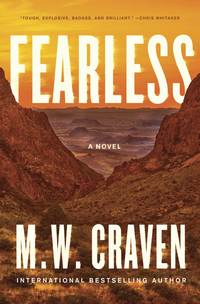

FearlessFearless

by M.W. Craven

DETAILS:
Series: Ben Koenig, #1
Publisher: Flatiron Books
Publication Date: July 11, 2023
Format: ARC
Length: 405 pgs. 
Read Date: March 20-21, 2023

What’s Fearless About?

I’m going to be vague and/or withholding a lot here because Ben Koenig/M.W. Craven will give you the details in a more satisfying manner than I will/can. So live with that—or go order the book. (the better option)

Ben Koenig used to be a U.S. Marshal. Well, he never resigned, so maybe he still is one. But he’s no-showed enough that he probably isn’t anymore. Before he went off-the-grid six years ago, he headed up the Special Operations Group—a task force that went after the worst of the worst on the Marshals’ caseload. They’re the kind of guys that Raylan Givens would call when things got over his head (or hat, I guess).

Koenig literally cannot feel fear—which is a great asset in a situation fraught with danger—it’s also a major problem. Fear keeps people from reckless and foolish moves. A move he might not have made if he’d hesitated a moment (but that he doesn’t regret) put him in a situation where he needed to disappear. No one is better at disappearing than someone who is great at tracking anyone.

But something has happened, and the Marshals have to go to extraordinary lengths to find him. The Director of the Marshals Service, Mitchell Burridge needs his help. Mitch was Ben’s mentor/friend/father figure, so he’d agree to pretty much anything. Mitch’s daughter went missing from her college some weeks ago, and no one has a lead on her—no police force, no Federal agency. Mitch asks Ben to bring his daughter home (at this point, probably her body, but no one admits that out loud). And as for those who took her? Well, that’s also best left unsaid. Ben will address that when it comes time.

As Mitch puts it, Ben’s an apex predator and there’s no one else who can do all of what needs to get done. He may be that, but he’s been acting more like prey for a long time so he makes a few stumbles along the way as he shakes the dust off. But it’s not too long before Koenig catches a scent and starts following it.

That’s an Unfortunate Name

There’s a figure mentioned pretty early on and then repeatedly throughout the book—it takes a while to know if he’s a victim of something, involved in the disappearance, tangentially connected to the abductors, a dupe, or a red herring—or something else entirely. But the name keeps coming up, and it threw me.

The name is Spencer Quinn. Spencer Quinn is also the pen name of Peter Abrahams. Readers of this blog will recognize that name as the author of one of my favorite PI series, The Chet and Bernie Mysteries, among other things. The name is distinctive enough that it jumps out at you—it took me out of the moment each time. In a way that Rob Parker, Pat Cornwall, or Tom Harris might not (or even the non-nickname versions of their names). Will this be a hiccup for anyone who isn’t a Quinn reader? Nope. Was it easy to get over? Yeah, but there’s the instinctual flash of name recognition throughout.

Craven had no idea he was doing this (as I’d assumed, although I’d theorized that he could be a major fan or a major detractor—depending on how things went with the character), although I have to confess I’m a little surprised that no editor stopped him along the way.

Still, it’s a cool name, you can’t blame a guy for wanting to use it. Just ask Peter Abrahams.

Michael Westen-Moments

The show Burn Notice would regularly feature the protagonist giving voice-over lessons on spycraft, weapons, strategy, etc. to the viewer, and that’s the name I inevitably give to moments in thrillers when the first-person narrator, or the protagonist’s thought process described by the third person narrator, breaks down the hero’s decision making, etc.

I love this stuff. Almost every thriller writer has to feed the reader this kind of thing because most of us don’t know how much pressure you have to exert on the trigger of Gun X to get it to fire, or why it’s important that the guy on the left is holding the knife the way he is so the hero knows he’s more dangerous than the larger guy on the right with the shotgun. Sometimes the protagonist—either through confidence (cockiness?) or to help intimidate the opposition—will deliver this in dialogue. I always appreciate the flair that gives.

Ben Koenig is great at this kind of thing. When he Michael Westons his way through the way he approaches a certain building in the final confrontation, why he picks the type of car he does to use on his mission, why he punches this guy the way he does, etc. the reader can actually believe they’ve been given some information they can use in their daily life. You know, the next time they need to drive a car into another state to locate the missing child of their old boss.

But my favorite Michael Westoning in this book—and the scene that hooked me—is early on when Koenig takes time to critique the group of deputies who came to bring him into custody for the way they went about it—location, timing, where the person with the shotgun was standing in relation to everyone else, etc. Sure, Koenig was the one being detained—but there was no doubt who was in control (and who could’ve made everyone’s day much, much worse had he wanted to).

Incidentally, it’s been too many years since I read the book, but you can’t tell me that this scene wasn’t a tip of the hat to Child’s Killing Floor—and a suggestion to the reader that this character is going to be their next Reacher (who is also good at Michael Westoning).

Who Wrote This Again?

I’m not going to try to claim that I’m an expert on M.W. Craven—but I’m fairly familiar with his work (I’ve read 6 of his 7 previously published novels—don’t ask me to explain the missing one). It’s easy to see that the Avison Fluke novels are written by the same author that gave us the Washington Poe novels. This makes sense, it’s fairly common amongst writers of multiple series—no one is surprised to learn that the Mickey Haller books are written by Bosch’s creator; the Sunny Randall and Virgil Cole/Everett Hitch series and the stand-alone Double Play are clearly the work of the Spenser writer; even if John Rebus wasn’t Malcolm Fox’s white whale, everyone could tell those series were written by the same man; and so on.

But Fearless? It probably took me less than 50 pages to stop thinking of this as ‘the new Craven’ book and ‘the first Koenig’ book. If Koenig shares any DNA with Fluke or Poe, it’d take 23andMe or Ancestry.com to figure it out. If you know nothing about Craven’s previous work, all you’ll see is someone writing a book in the mold of Jack Reacher and Peter Ash—with a little bit of Nick Mason and Nick Heller thrown in. Well, writing in that mold—and matching each series at their best.

So, what did I think about Fearless?

I think the past 5 years have demonstrated pretty clearly that I’m probably going to love whatever Craven writes—and now I know that’s true even if it doesn’t feel like a Craven book.

This just worked on every level—Koenig is a fertile character, well-designed to carry a series for quite a while. His assets are perfect for a Reacher/Peter Ash-type character. His flaws keep him from being invincible, and provide plenty of ways for him to be his own greatest adversary. His quirks (e.g., fixation on chocolate milkshakes, absorption of odd bits of trivia) round him out nicely. The reason he’s off the grid is better than being a Luddite/technophobe. Can he grow—and can the reader grow in their understanding of him? Sure. He can also believably regress and find develop new hindrances and weaknesses to work through or overcome.

The narrative voice that Craven uses here will suck in the reader and keep the pages turning between action scenes. The action scenes might as well be directed by John McTiernan, Shane Black, or Chad Stahelski. I don’t know how “realistic” they are, but I don’t think you have to suspend much disbelief. And they’re so fun, who cares?

The story could have been a little more intricate—just a tad. But given everything else that this book had to do—introduce Koenig, establish the series and his backstory, provide some good potential recurring characters—some things have to be sacrificed. Then again, I can point to several beloved and best-selling thrillers that aren’t as intricate as this one. So don’t take this point as anything but me being greedy.

I did have a quibble or two with the novel—it’s not perfect. But I hesitate to get into them as I read an ARC, and there’s still a chance for them to vanish before publication. Also, they’re pretty much at the straining at gnats level, and I try to avoid that. In the end, those quibbles only serve to underline how great the rest of it is.

This is clearly the first in a series (even if all the promotional materials didn’t call it that, you’d get that sense throughout—and the last five pages make it abundantly clear that there’s more to come. So I do think future books will have a slightly different flavor than this one—which could’ve very easily served as a standalone.

To put it simply, I loved every second I spent reading this, Fearless was the highlight of the month for me—and I expect that I’ll keep talking about it throughout the year—I can’t wait for it to get published here so that American audiences can meet Craven. Put your orders in now, folks, July will be here before you know it, and you don’t want to miss this.

Disclaimer: I received this eARC from Flatiron Books via NetGalley, and an ARC from Flatiron with an assist from the author in exchange for this post—thanks to all involved for this. Their providing it only influenced my opinion by giving me something to opine about—I raved about it of my own free will.


5 Stars

This post contains an affiliate link. If you purchase from it, I will get a small commission at no additional cost to you. As always, the opinions expressed are my own.


EXCERPT from The Haunted Lost Rose by C.L. Bauer: Interrogation

The Haunted Lost Rose Banner

from The Haunted Lost Rose by C.L.Bauer

I survived the lengthy interrogation, supposedly a statement about the murder, but it was certainly a questioning of the “gotcha” format. They even made me go downtown to walk through the building almost like a “perp walk”, meet with a Detective Marino, and flee out of the building feeling frazzled and befuddled, and every other word that describes sheer hell.

Along the way, my legal representation was greeted by many who missed him in court. We ran into many of his old friends. Dad was definitely in his element. Then we ran into Paddy. My own brother pretended to not even notice me. Dad and he talked briefly in the hallway, and I slumped against a wall as I perfected my talent of invisibility. Over the years, I’d become very good at blending in and going unnoticed. During the lunch after Conor’s death, no one saw me sitting in the corner for over an hour. I liked being the wallflower; attention only made me aware of my flaws and insecurities.

My voice was weak and wavering after thirty minutes of time-sensitive questions. Finally, my father tapped his hand on the table in front of us.

“Detective, let’s make this easy for you. Tom and Charlotte O’Donohue were the man’s realtors. Charlotte clearly had a meeting set up with Mr. Martin that morning. There is proof she called her brother on her way there. It was beginning to snow. Mr. Martin’s car was parked in the lot before her arrival. The door was locked. She went in and discovered the man’s body. What more do you want?”

The detective coolly searched through the file folder in front of him. “What about the rose he gave you?”

“No, the rose was on the mantle when I arrived. He didn’t give me a rose.”

“Did he ever give you flowers?”


Interested in the rest? Go grab your copy of The Haunted Lost Rose by C.L. Bauer now at https://mybook.to/HauntedLostRose or https://books2read.com/u/3Joj5E/!


Psst Promotions
Let's Talk Promotions
My thanks to Psst…Promotions for the invitation to participate in this Book Tour and the materials they provided.

Death at Paradise Palms by Steph Broadribb: The Detectives Show Their Fallibility In This Strong Follow-up

Death at Paradise PalmsDeath at Paradise Palms

by Steph Broadribb

DETAILS:
Series: The Retired Detectives Club, #2
Publisher: Thomas & Mercer
Publication Date: October 11, 2022
Format: eBook
Length: 303 pgs.
Read Date: March 16-17, 2023

What’s Death at Paradise Palms About?

After they solved a murder a few months earlier, the Retired Detectives Club has gained a certain amount of notoriety around the Homestead Retirement Community, so it’s not terribly surprising that when a resident has some concerns they call them for help. Particularly when that resident has had bad experiences with the police previously.

This particular resident is a retired movie star, Olivia Hamilton Ziegler. Her husband is missing, and she suspects foul play. They’re having no problems and it’s not like him to just not come home, not call, not pick up his phone, etc.

The Club jumps in, more than willing to help—they find a handful of decent suspects and start to dig into the background of each when a ransom demand shows up. Now they have a pressing deadline and more than a wife’s intuition. It’s time for these retired detectives to get to work.

Distracted Detectives

I’m not sure if this says something about Broadribb’s view of Americans, but in Death in the Sunshine we see that the three British retirees have things from their past that are hovering over them. I like that dynamic, but it’s good that not everyone has some deep, dark secret. Rick, our DEA retiree, seems to be baggage-free and easygoing. Maybe that just means we haven’t seen his baggage, or maybe Broadribb just thinks Americans are shallow.*

* I’m kidding. Probably.

With our British friends, however, things have happened to push these problems from hanging over their heads to being front-and-center in their minds. Normally this would be good, they’re working on the issues, dealing with the issues. However, when this club is the only one working on this kidnapping—the only outsiders aware of it—dealing with personal stuff becomes a distraction. Potentially a fatal one.

All three of these people make huge mistakes in the course of this investigation, easily observable mistakes (especially to the reader). And it’s not because they’re older, it’s not because their minds are slower, or their bodies aren’t up to what they used to be able to do—it’s because their heads aren’t in the game.

This makes for compelling storytelling, it’s great to see flawed characters battling with their flaws—but it’s a good thing they’re all retired because this is the kind of thing that should hurt a career.

The Series Arc

Ultimately, I think this series going to be telling the story of the shenanigans at the top of the Homestead Retirement Community. In Death in the Sunshine we see pretty clearly that TPTB filter the news and do what they can to prevent anything negative from getting out to the public or into the residents. And if it does show up, it’s quickly erased.

This takes work on the Social Media, old-school media, and possibly even law enforcement fronts—there’s no way that it’s all coincidental, unintentional, or any other excusable motivation. So the questions that need to be answered are why is this being done, who profits, who is hurt by this, and what actions are being taken/pressures applied, to get these various and sundry groups to quash the information.

Some of the residents see that this is going on—but (if you ask me) not enough seem that concerned—Moira sure is and is doing something about it. She’s working with a local reporter, although she has reason to believe that this is not the safest path for either of them to be taking. But that doesn’t seem to deter her.

I really hope that she’s able to get more of the Club on board with this soon—not that I want them distracted from their next big case. But she’s going to need some backup.

So, what did I think about Death at Paradise Palms?

I remember enjoying Death in the Sunshine, but I’d largely forgotten why. It was good to be reminded—this isn’t your typical elderly amateur detective series—this is a grittier take on that trend, full of people who are only amateur now, it wasn’t that long ago they were professionals, and they’ve still got the goods.

I did clock the Main Bad Guy instantly, and can only excuse the Club for not doing the same because of all their distractions (and because they’re not aware that they’re fictional characters, a lot of what tipped me off came from being a reader). So for me, the tension came from wanting to know how long it would take them to get around to discovering the truth—and how they’d use what they learned from the false trails to get there. That was enough for me—the good in this series doesn’t come from the whodunit—but from how they’re caught.

This, like all of Broadribb’s work, is a fast and fun read—it hooks you early and doesn’t let go until it’s good and ready to. Just buckle in and enjoy the ride. I can’t imagine I’ll let the next one of these sit ignored on my Kindle as I did this one.


3.5 Stars

This post contains an affiliate link. If you purchase from it, I will get a small commission at no additional cost to you. As always, the opinions expressed are my own.

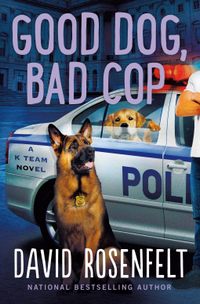
PUB DAY REPOST: Good Dog, Bad Cop by David Rosenfelt: Corey Douglas Starts to Come Into His Own as a PI

Good Dog, Bad CopGood Dog, Bad Cop

by David Rosenfelt

DETAILS:
Series: The K Team, #4
Publisher: Minotaur Books
Publication Date: March 14, 2023
Format: eARC
Length: 288 pg.
Read Date: February 28-March 2, 2023
9781250828965

What’s Good Dog, Bad Cop About?

Pete Stanton, when he’s not building up a tab for Andy Carpenter at their favorite sports bar, is in charge of the Homicide Division of the Paterson PD. He doesn’t have the budget for more police detectives, but he had a healthy budget for consultants (figure that one out if you can). So he’s hired the K-Team to look into some cold cases for him.

The first one they pick is a doozy. A few years ago, a retired detective and mentor to Corey Douglas was found shot on his boat, a woman’s body was also found there. Some suspicions about a murder-suicide were floated, but nothing stuck. Corey wants to look into it, and Pete approves it with one caveat—they have to investigate the murder of that woman’s husband. He, too, was a Paterson police officer who was murdered. Other than his wife, there’s no obvious connection between the cases, and they weren’t investigated that way.

Corey and Laurie knew going in that Pete would assign them both if they requested one—and honestly, they wanted it that way. All three were aware of the game they were playing, and they all did their part. Now, hopefully, the K-Team and help the PPD close these cases and get some justice for the victims.

Simon

This is really Corey’s book—Laurie’s in it a decent amount, but she doesn’t seem to play as vital a role as usual. Marcus isn’t around much—but is when it counts. Where it comes up short is, as is often the case, Simon’s involvement.

We need to see more of him—Corey even jokes about it at one point, saying Simon’s going to be jealous about something he’s up to without him. That’s all well and good–but it’s not enough.

This is a series about detectives who name their team after a dog. Corey’s a former dog handler. The dog needs to be around more. Do we get some good Simon action? Yes. Are the lines about him and the action involving him good? Absolutely (equating him to Marcus is a great idea). But c’mon, Rosenfelt—give us more Simon.

Poor Sam

Okay, it’s been evident for quite some time in the Andy Carpenter books that while Sam is a good accountant, he enjoys his side gig as a computer researcher for Andy (who isn’t impeded by things like ethics or laws), and he’s more than happy to help out with the K-Team.

But these guys are starting to rely on him too much—sure, they do the legwork. They put a lot of the clues together—but Sam got most of those clues for them. And the number of times that Corey called with new tasks for him was borderline outrageous. They’re working this guy to the bone.

It occurs to me that I said something very similar about the computer tech in the DC Maggie Jamieson series. Is there maybe a union for overworked tech geniuses in Mysteries/Procedurals? Maybe Tilly Bradshaw can organize something.

Corey as a PI

Corey is really coming into his own as a PI (at least as far as fictional PIs go). In the first book or two, he tried to do things the right way—he was very aware that he was no longer a cop and had to act in a certain manner because of it. But he still acted like a police officer, with those kinds of instincts.

Laurie had spent enough time as a PI, was more comfortable in the role, and accepted a greater degree of looseness when it came to protocols. I doubt Marcus ever cared about them in the first place. But Corey was pretty uptight and had to be cajoled into doing certain things.

He seems over that now—he’s willing to color outside the lines, ignore certain rules/laws, and so on. It’s about getting the results and taking care of details and technicalities later.*

* I want to stress that I’m okay with this because we’re talking fictional detectives. The casual attitude toward privacy, phone records, financial transactions, and breaking and entering in a real person would be intolerable—I don’t care what their profession is.

It’s great to see him grow and develop. He’s not the same character that he was when we met him in the Andy Carpenter books–or when this series started. I’m sure that growth with slow and/or stop soon—but for now, I’m liking the journey.

The M Word

As much as he’s growing in his new profession, Corey’s got a long way to go on the personal front. Sure, he’s made great strides since meeting and starting to date Dani. He’s in a long-term committed relationship and isn’t thinking of running for the hills or making some lame excuse to break up.

But he can’t even bring himself to say—or think (including in his narration)—the word “marriage.” He will call it “M” throughout the book—and he’s thinking about it pretty frequently in this book. Sure, it’s immature—he realizes it. But that’s not enough. This is also one of those things that the reader has to suspend disbelief and just roll with. If you do, it’s a fun running joke (it’s easy to do, because if anyone can make a somewhat emotionally stunted man entertaining, it’s the creator of Andy Carpenter).

So, what did I think about Good Dog, Bad Cop?

I know this series (like the Carpenter books) aren’t technically cozies—Marcus by himself keeps them from being considered that way. But I don’t know if there is a pair of series (or one) that I feel so comfortable in. Within a paragraph or two of the protagonist showing up, I’m enjoying the book and feel at home.

Sure, there are better entries and lesser entries—characters moves I like more than others, and so on. But I know as soon as I start one of these books that I’m going to have a good time. That’s what happened here.

I’m enjoying Corey’s transformation into a more typical PI—there are a couple of moments where he felt like the 1990s-era Spenser (just with a dog that wouldn’t run from gunfire). I’m not going to complain about that—ever. I enjoy the dynamics between the team, between the team and the police/other law enforcement entities, between the team and Andy, and so on. I simply enjoyed myself here.

The mysteries on top of that were good, too. I admit that I got suckered into a red herring or two, and things that I was sure of along the way were wrong (I was on the right path, and was only one connection away from being in step with Corey).*

* I’m sure I probably sound defensive there, but that’s only because I am.

I don’t know what else to say—this is a good installment in a reliable series. Fans of Carpenter, the K-Team, or lighter mysteries will gobble this one up. Satisfaction assured.

Disclaimer: I received this eARC from St. Martin’s Press via NetGalley in exchange for this post—thanks to both for this.

4 Stars

This post contains an affiliate link. If you purchase from it, I will get a small commission at no additional cost to you. As always, the opinions expressed are my own.

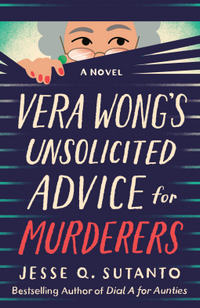
PUB DAY POST: Vera Wong’s Unsolicited Advice for Murderers by Jesse Q. Sutanto: Come Meet Your New Favorite Senior Citizen Sleuth

Vera Wong's Unsolicited Advice for MurderersVera Wong’s Unsolicited Advice for Murderers

by Jesse Q. Sutanto

DETAILS:
Publisher: Berkley Books
Publication Date: March 14, 2023
Format: eARC
Length: 352 pg.
Read Date: March 2-7, 2023

What’s Vera Wong’s Unsolicited Advice for Murderers About?

I’m not sure that I can answer this question without just recapping the entire novel—but without the charm and warmth.

Just Try…

How much time do you have?

It Publishes Today, You Need to Get Something Posted. Just Give Us the Setup

Okay, okay, I’ll attempt it—but I really want to spend the next hour just regurgitating the whole thing.

Vera Wong is an older Chinese woman, the owner of a small tea shop in San Francisco’s Chinatown. It’s dark, dingy, and doesn’t get much in the way of customers. She has one regular that she can count on to stop in early in the morning, and then spends most of the rest of the day waiting for someone else to walk in and order. Typically in vain. But it’s her life—she has nothing else to do with her time—her husband is dead, and her son is busy with work. So busy that he rarely has time to visit—or acknowledge all of the super-helpful advice she gives him to succeed at work and/or to find a wife. This doesn’t stop her from texting or calling him frequently to offer the advice, it should be noted.

Then one day, she comes down the stairs from her apartment above the shop to discover a dead body in the middle of the floor. She has little faith that the police will be able to tell her who killed the man, so she decides to discover the identity of the killer for them. How hard can it be? She’s watched plenty of procedurals, is smart, and (unlike Sherlock Holmes) is a suspicious Chinese mother. The murderer doesn’t stand a chance.

So she helps herself to a little bit of the evidence before the police arrive so that she can hunt for the murderer. It’ll be a good change of pace for her.

She sets a trap for the murderer and ends up with four good suspects, it’ll just take her some time to figure out who killed him and why. In the meantime, she sees at least three younger people that need some guidance to get their lives in order—she decides to take that on along with her murder investigation.

Vera

I’d like to spend a few pages talking about Vera—I’m certain that if you ask me in December, she’s still going to be one of my favorite characters of 2023.

She is so human—such a mass of contradictions and differing impulses. The fact that at her, um, advanced age she’s able to chart a new course for her life, to let people in, and adapt gives me a little hope.

But it’s her spirit, her way of looking at the world, and not backing down that’s really inspiring.

Once she’s done with these characters, I could use a grandmother like this.

Be Careful

Vera knows her tea, she spends a lot of time and energy on it—certain that she can make someone just the right kind of tea for whatever they’re facing to help them through the day. If you can make it through a chapter or two (especially in the early chapters) without needing a cup of your own, I’d like to know how.

But other than needing to take the time to boil water and steep your tea, that’s not a big deal (unless you’re inspired to go shopping for more teas, which can get expensive—and can distract you from your reading). However, Vera also spends a lot of time cooking for her new friends and suspects. And she ends up spending more time cooking than making tea.

This is where you need to be careful—if you’re not, you could find yourself putting on a few pounds before the killer is identified. Sutanto’s descriptions of Vera’s creations—and the way everyone responds to them—are so vivid, so enticing, they can send you to your pantry for a snack—or to your food delivery app of choice to order some Chinese food.

I’m not saying that you should avoid these portions of the book—just be prepared so you can fight temptation (or have a handy justification to indulge yourself, if that’s more your preference).

So, what did I think about Vera Wong’s Unsolicited Advice for Murderers?

By the time I got halfway through the opening paragraph, I’d started coming up with a list of people to recommend this book to. There was something about the voice that just jumped off of the page (er, screen) and said, “You’re going to have fun with this.” And I absolutely did—but there was more to it than that, being around these characters felt comfortable. I just wanted to spend time in their presence—like Stars Hollow, CT; the locker room of AFC Richmond; the Parks and Rec Department of Pawnee, IN; the Jigsaw Room of Cooper’s Chase retirement village; or Knight’s Bookstore in Abbi Waxman’s L.A. I don’t remember the last time that I read a cozy mystery that was so worthy of the title “Cozy.”

Yes, I wanted to figure it out. Yes, I wanted to know what happened to the characters and wanted closure for this period in their lives. But I read as slowly as I could because I wanted to linger.

It’s not just Vera that creates that feeling—it’s the other characters’ reactions to her, as well as their relationships with each other. Yes, she is undeniably the center of this little world, but it wouldn’t work without the others.

There’s a lot of gentle humor and heart—that’s what fills this charming work. But that’s not all of it—there are laugh-out-loud moments, as well, and real emotions. There’s a budding romance, a rekindled friendship, family ties, and a lot of people finding the confidence to step out into something new—or into something they’ve tried before and have been scared to try again. The found family that’s created along the way makes all of that possible—particularly the last part—the mutual support (in various forms) and encouragement from the others enable the others to make those steps.

I don’t want to give the impression that this book is all sunshine, flowers, and good times. There are portions of this that are hard to get through, sure—there’s a suspicious death, criminal behavior—at the very least the actions of a scoundrel—heartbreak and a great deal of loneliness and despair. But Sutanto doesn’t leave us there for long—she grounds the book in it, but provides a way forward—through grit, determination, and the help of others.

The murder investigation was fine—probably more than fine, actually. It was a clever little story, with plenty of good suspects and nice twists. But the book isn’t all that interested in the murder investigation, really. It’s just an excuse for these people to come together and start interacting. Vera herself doesn’t really want any of her suspects to be guilty—she’s too busy meddling in their lives to improve them (in selfless acts of assistance only, she’d hurry to tell you). But she keeps plugging away at her little list of suspects because it’s something she’s started—and wouldn’t it be exciting to actually find a murderer? (even if it’s someone she doesn’t want to get into any kind of trouble).

I talk about mysteries more than anything else here, and the fact that I’d started wrapping up the post without addressing the mystery part of this book says a lot to me. It’s the driving force behind the plot and the instigating incident—but again—it’s secondary to the rest of the storylines. Still, most readers will have a hard time finding sympathy for the murdered man, and more than once you’ll likely wonder if it’d really be that bad if no one figures out who did it. You probably won’t feel the way you usually do when a murder is solved when the culprit is named, either.

There’s just so much to commend about this book—and so little to quibble with—I’m on the verge of repeating myself and/or overhyping this thing (but boy howdy, does it deserve a lot of hype!). So I’m just going to leave it with this—go get your hands on a copy, brew yourself a nice pot of tea (I promise you’re going to want tea), and lose yourself in this book for a few hours.

Disclaimer: I received this eARC from Berkley Publishing Group via NetGalley in exchange for this post—thanks to both for this.


4 1/2 Stars

This post contains an affiliate link. If you purchase from it, I will get a small commission at no additional cost to you. As always, the opinions expressed are my own.

Good Dog, Bad Cop by David Rosenfelt: Corey Douglas Starts to Come Into His Own as a PI

Good Dog, Bad CopGood Dog, Bad Cop

by David Rosenfelt

DETAILS:
Series: The K Team, #4
Publisher: Minotaur Books
Publication Date: March 14, 2023
Format: eARC
Length: 288 pg.
Read Date: February 28-March 2, 2023
9781250828965

What’s Good Dog, Bad Cop About?

Pete Stanton, when he’s not building up a tab for Andy Carpenter at their favorite sports bar, is in charge of the Homicide Division of the Paterson PD. He doesn’t have the budget for more police detectives, but he had a healthy budget for consultants (figure that one out if you can). So he’s hired the K-Team to look into some cold cases for him.

The first one they pick is a doozy. A few years ago, a retired detective and mentor to Corey Douglas was found shot on his boat, a woman’s body was also found there. Some suspicions about a murder-suicide were floated, but nothing stuck. Corey wants to look into it, and Pete approves it with one caveat—they have to investigate the murder of that woman’s husband. He, too, was a Paterson police officer who was murdered. Other than his wife, there’s no obvious connection between the cases, and they weren’t investigated that way.

Corey and Laurie knew going in that Pete would assign them both if they requested one—and honestly, they wanted it that way. All three were aware of the game they were playing, and they all did their part. Now, hopefully, the K-Team and help the PPD close these cases and get some justice for the victims.

Simon

This is really Corey’s book—Laurie’s in it a decent amount, but she doesn’t seem to play as vital a role as usual. Marcus isn’t around much—but is when it counts. Where it comes up short is, as is often the case, Simon’s involvement.

We need to see more of him—Corey even jokes about it at one point, saying Simon’s going to be jealous about something he’s up to without him. That’s all well and good–but it’s not enough.

This is a series about detectives who name their team after a dog. Corey’s a former dog handler. The dog needs to be around more. Do we get some good Simon action? Yes. Are the lines about him and the action involving him good? Absolutely (equating him to Marcus is a great idea). But c’mon, Rosenfelt—give us more Simon.

Poor Sam

Okay, it’s been evident for quite some time in the Andy Carpenter books that while Sam is a good accountant, he enjoys his side gig as a computer researcher for Andy (who isn’t impeded by things like ethics or laws), and he’s more than happy to help out with the K-Team.

But these guys are starting to rely on him too much—sure, they do the legwork. They put a lot of the clues together—but Sam got most of those clues for them. And the number of times that Corey called with new tasks for him was borderline outrageous. They’re working this guy to the bone.

It occurs to me that I said something very similar about the computer tech in the DC Maggie Jamieson series. Is there maybe a union for overworked tech geniuses in Mysteries/Procedurals? Maybe Tilly Bradshaw can organize something.

Corey as a PI

Corey is really coming into his own as a PI (at least as far as fictional PIs go). In the first book or two, he tried to do things the right way—he was very aware that he was no longer a cop and had to act in a certain manner because of it. But he still acted like a police officer, with those kinds of instincts.

Laurie had spent enough time as a PI, was more comfortable in the role, and accepted a greater degree of looseness when it came to protocols. I doubt Marcus ever cared about them in the first place. But Corey was pretty uptight and had to be cajoled into doing certain things.

He seems over that now—he’s willing to color outside the lines, ignore certain rules/laws, and so on. It’s about getting the results and taking care of details and technicalities later.*

* I want to stress that I’m okay with this because we’re talking fictional detectives. The casual attitude toward privacy, phone records, financial transactions, and breaking and entering in a real person would be intolerable—I don’t care what their profession is.

It’s great to see him grow and develop. He’s not the same character that he was when we met him in the Andy Carpenter books–or when this series started. I’m sure that growth with slow and/or stop soon—but for now, I’m liking the journey.

The M Word

As much as he’s growing in his new profession, Corey’s got a long way to go on the personal front. Sure, he’s made great strides since meeting and starting to date Dani. He’s in a long-term committed relationship and isn’t thinking of running for the hills or making some lame excuse to break up.

But he can’t even bring himself to say—or think (including in his narration)—the word “marriage.” He will call it “M” throughout the book—and he’s thinking about it pretty frequently in this book. Sure, it’s immature—he realizes it. But that’s not enough. This is also one of those things that the reader has to suspend disbelief and just roll with. If you do, it’s a fun running joke (it’s easy to do, because if anyone can make a somewhat emotionally stunted man entertaining, it’s the creator of Andy Carpenter).

So, what did I think about Good Dog, Bad Cop?

I know this series (like the Carpenter books) aren’t technically cozies—Marcus by himself keeps them from being considered that way. But I don’t know if there is a pair of series (or one) that I feel so comfortable in. Within a paragraph or two of the protagonist showing up, I’m enjoying the book and feel at home.

Sure, there are better entries and lesser entries—characters moves I like more than others, and so on. But I know as soon as I start one of these books that I’m going to have a good time. That’s what happened here.

I’m enjoying Corey’s transformation into a more typical PI—there are a couple of moments where he felt like the 1990s-era Spenser (just with a dog that wouldn’t run from gunfire). I’m not going to complain about that—ever. I enjoy the dynamics between the team, between the team and the police/other law enforcement entities, between the team and Andy, and so on. I simply enjoyed myself here.

The mysteries on top of that were good, too. I admit that I got suckered into a red herring or two, and things that I was sure of along the way were wrong (I was on the right path, and was only one connection away from being in step with Corey).*

* I’m sure I probably sound defensive there, but that’s only because I am.

I don’t know what else to say—this is a good installment in a reliable series. Fans of Carpenter, the K-Team, or lighter mysteries will gobble this one up. Satisfaction assured.

Disclaimer: I received this eARC from St. Martin’s Press via NetGalley in exchange for this post—thanks to both for this.

4 Stars

This post contains an affiliate link. If you purchase from it, I will get a small commission at no additional cost to you. As always, the opinions expressed are my own.

A Man Named Doll by Jonathan Ames: A Fast, Twisted Ride Through the Streets of LA

A Man Named DollA Man Named Doll

by Jonathan Ames (Narrator)

DETAILS:
Series: The Doll, #1
Publisher: Mulholland Books
Publication Date: April 20, 2021
Format: Hardcover
Length: 208 pg.
Read Date: February 10-13, 2023
Support Independent Bookstores - Visit IndieBound.org

What’s A Man Named Doll About?

Happy Doll is a cop-turned-P.I. in Los Angeles, he now primarily works in doing security in a massage parlor* to make ends meet, but he used to do more investigative work.

* The employees may happen to negotiate other services.

When we first meet him, he’s talking with his mentor in the LAPD, a man who took a bullet for him and who now comes to him for a big favor. He needs a kidney transplant. Hap says he’ll think about it. That’s not good enough for Lou who ends up doing some very short-sighted things to get him that kidney. Happy doesn’t know that at the time, or he’d have said yes sooner.

An altercation with a high client at the parlor leaves Happy injured and under scrutiny by a couple of detectives from the LAPD. He’s also loopy on painkillers (which he counters with ADHD meds to really impair his judgment).

This leaves him in a bad spot when he has to investigate what Lou had gotten himself into and with whom. But he keeps plugging along obstinately (also, fueled by undeserved confidence).

Irving Ash

I picked this up because Chris McDonald said that this is the book that inspired him to write his novel Little Ghost. I tried, usually successfully, to not compare the two as I read.

I can see the shadow of A Man Named Doll on Little Ghost—there’s a similar vibe to the protagonists being up against forces they’re not ready for, but not backing down or allowing themselves to think of it. There’s a similar feeling of events quickly spiraling out of control for everyone involved, and the protagonist being in a very different place when the book is over.

I’m not suggesting that McDonald borrowed much from this book, but the novels share some DNA (and the protagonists likely do, too). The two novels can—and should—be entertaining on their own, and don’t need to be considered in relation to each other in any way. I just found it interesting to see how an author could draw inspiration from a novel and run with it.

So, what did I think about A Man Named Doll?

There were multiple twists that I didn’t see coming. I had to stop and go back to re-read a few paragraphs to make sure I just read what I thought I did, because…what author does that? Apparently, Jonathan Ames does.

I do think that this book moves a bit too quickly. I’d have liked to see Doll have to work a little harder to connect the dots between everything. I’d have liked to see the LAPD detectives play a larger roll in things (although I can’t imagine how they could’ve without ruining things for Doll’s investigation). It’s not a fatal flaw, but I think the book would’ve been better with just a little more of everything.

Ultimately, this reminded me of Eoin Colfer’s Daniel McEvoy books—just leaner and not quite as funny*. Although the latter could be a result of the former. I did laugh though at some of Doll’s narration—so not quite as funny does not imply not witty or funny at all. Both series share the same kind of worldview, the same kind of violence, and the same kind of twisted logic.

* It occurs to me that Doll does tell us that he’s half-Irish. But that part of his family hasn’t been in Ireland for quite some time, unlike McEvoy. But maybe there’s something to that heritage and the way he reacts to things. I only thought of that connection, as I was preparing to hit “Publish,” so I’m not going to spend time on it. It’s entirely possible that it won’t hold water. But it might.

I thought the emotional and psychological elements were handled perfectly—the way that Doll (and his friends) react to the events that befall them seems perfectly handled. And I really liked the Epilogue and the repercussions of the events of the novel for the characters. It comes across as a little more realistic than some PI novels would have it.

This didn’t completely wow me as I hoped—but it was a satisfying and surprising read. I want to see what else Ames is capable of and will be returning for the sequel as soon as I can.

Somehow I made it through this entire post without mentioning George, Doll’s half-Chihuahua, half-terrier dog. Shame on me. Briefly, he’s just adorable and goes through too much because of his doped-up human.


3.5 Stars

This post contains an affiliate link. If you purchase from it, I will get a small commission at no additional cost to you. As always, the opinions expressed are my own.
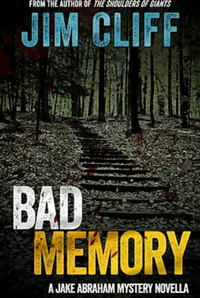
Bad Memory by Jim Cliff: A Very Cold (and Closed) Case Gets a Second Look

Bad MemoryBad Memory

by Jim Cliff

DETAILS:
Series: Jake Abraham, #2
Publisher: Antbear Books
Publication Date: May 2, 2017
Format: eBook
Length: 104 pg.
Read Date: February 1, 2023

“I need you to find out what happened to her. I need to know who killed her.”

“The paper says suicide,” I helpfully pointed out. Case closed. That was easy.

“They’re wrong.”

“You seem pretty sure about that.”

“I was there when she died.”

What’s Bad Memory About?

Jake Abraham’s a P.I. who probably should’ve gone into another line of work, all things considered. But he didn’t, and it turns out that he has a knack for this kind of thing (see The Shoulders of Giants).

Jake’s approached by a client* who wants to him to look into a twenty-three old suicide. She was nearby, she says, when the woman died, and what she remembers hearing makes her certain it wasn’t a suicide. She was pressured into staying silent back then, but the reasons for that have disappeared and now she wants to unburden her conscience.

* I’m pretty sure she was a character in the earlier novel, but after 6+ years, I don’t remember—and I’m too lazy to check

Jake starts looking into this—talking to his detective friend, coworkers of the deceased, and the man who pressured his client into staying quiet. What he discovers doesn’t add up to a tidy suicide like the police had determined—but it doesn’t rule it out either.

Well, except for the people who aren’t doing an incredibly subtle tailing job on him all of the sudden. He’s not doing anything else that should draw anyone’s attention.

Cliff’s Voice

It wasn’t the first time I’d had a gun pointed at me, but it doesn’t get any more fun.

Like with The Shoulders of Giants, Cliff’s voice—the snappy PI patter in both the first-person narration and Jake’s dialogue—wins me over. It’s like Stout enjoying himself, early Crais, or Parker at his lightest. It just sings.

I really don’t need a good story to make me enjoy reading something told with this (or a similar) voice. Thankfully, Cliff delivers a good story, too—making it all the more enjoyable.

So, what did I think about Bad Memory?

There aren’t many perks to being a licensed private investigator. We can’t arrest people, we can’t tap people’s phones, we can’t even go through people’s mail. We’re basically private citizens with tenacious personalities.

This novella is precisely what I needed—I’d just finished two long-ish reads that were pretty heavy and taken a lot out of me emotionally. This was quick, satisfying, and filled with some snappy writing. It was a nice change of pace and tone, giving me the chance to catch my breath before diving into another full novel.

Even if it didn’t serve that purpose for me, I’d have been glad to read this—it scratches that P.I. itch in just the right way.

There was a moment when I thought that the book was trying too hard to convince me that Suspect X was guilty, and so I started to wonder who else it could’ve been. But then I remembered that this was a novella and Cliff didn’t have space to be that clever—so I shifted to trying to figure out why X was guilty. If he’d had another 100+ pages in the book and X was still guilty, I’d likely have complained about it. But given the space restraints, I have no problem with X.

Short, sweet, and to the point. This novella got the job done and makes me wish that Cliff wrote faster.


3 Stars

A Few Quick Questions with…Troy Lambert

A couple of hours ago, I posted about Lambert’s novel, Harvested, the first of a series I know I’m coming back to soon. Now, I have the chance to get some more information about him and the book in this Q&A. He’ll be back in a couple of weeks for a Q&A about writing in Idaho as part of the Literary Locals series—be sure you come back for that.


All authors have more ideas running around in their head than they can possibly develop—what was it about this idea that made you commit to writing it? Also, what was the starting point for this book? Was it the story about the missing dogs or the ongoing story (I’m being deliberately vague here) that required you to invent Max, or did you have Max and need to figure out some stories to put him in? Or is that kind of answer impossible—and you got the whole ball of wax at once?
So the idea of Max as a character came first, although the idea for the plot came shortly after. The idea of missing dogs appealed to me in a lot of ways, and I saw the twist in my head after only a little research, and it kinda all came together after that.

The same was true for Teaching Moments, although in that case the idea for the killer came to me first, and then I worked it into the Max series. The next book in that series is much the same, although I think the main villain in that case is even worse. That one will be out late this year or early next.

Multiple authors have talked about the unbreakable rule even in Crime Fiction is “you don’t kill the dog (or other pets).” But you not only kill some, but threaten several more. Did you think much about the danger inherent in this plot? What compelled you to go forward with it? Or was that danger what drew you into it?
So that is often a “rule” but I think it is all in how you handle it. The dogs for me are just like people in this book: they are valuable characters, and they are even heroic at times (no spoilers, of course)

And the story of dogs continues in Teaching Moments as one of them becomes Max’s partner throughout. Of course, a lot of my other work features dogs as well, and that is because I love them, and can’t help myself when it comes to casting them in books.

Supporting characters really make or break a book for me more than the protagonist does. Dr. Gamble is a great example of that—she was such a fun character. When she was introduced, I really didn’t expect much of her, she seemed like a typical “generic subject matter expert to help the PI get to the next step” that we’re all used to seeing, but you really fleshed her out and made her a big part of the story. Was that the idea all along, or did you just enjoy her so much that you changed her role?
So I liked her from the start. She was a favorite character who came to me pretty fleshed out. I think supporting characters are key to a good story: they produce conflict, tension, but also from time to time just some pleasant relief to that tension. I think she serves all those roles in this story, and she may play additional roles in the series going forward, even becoming more of a key character in Book 5, but that is down the road a bit.

Who are some of your major influences? (whether or not you think those influences can be seen in your work—you know they’re there)
There are several. I would say that Stephen King and Dean Koontz top the list, at least for writing style and in some cases subject matter. They’re also both inspiring on a personal level. But there are certainly others: Lee Child, Vincent Zandri (a good friend now) and others.

Let’s play “Online Bookstore Algorithm” (a game I made up for these Q&As). What are 3-5 books whose readers may like Harvested?
Ha! A fun game. L.T. Ryan readers, stories like Unmasked and that series, Brad Lee, A Team of One, anything in the Chase Baker series by Vincent Zandri, and the Finding Reacher series by Diane Capri.

Your Amazon Author Page lists a lot of titles—you’ve been a busy man for the last decade or so. What is it about storytelling/writing that keeps it fresh for you? Is this a compulsion to keep going, or is it more pleasure?
That’s a two part answer: it is a compulsion, yes, in some ways. But it is also pleasure. I love telling stories, and plan to do it until I just can’t any more. I hope that day is a long way in the future. I don’t ever plan to retire, and there are so many more titles coming out even just this year. I can’t wait to see what I come up with next.

In somewhat of a related question, what’s next for Troy Lambert, author? Also, are there more Max Boucher books to come, or is it a duology? (I largely ask for myself, so I’m in the right frame of mind before I start the next)
So there is another book in the Capital City Murders, and one that signals a major change in the series story, coming in April. Right now there are at least three more Max books planned along with a novella that will be out this year as well, and a new series coming sometime either later this year or the first part of next.

There will be a couple of anthologies and story collections coming, and even a book of poetry at some point. So stay tuned!

Thanks for your time—and thanks for Max Boucher, he’s the kind of PI that the Northwest needs more of (at least in fiction).
You bet. Thanks for having me.


Literary Locals logo

Harvested by Troy Lambert: A Man Bites Dog P.I. Novel

This is part of my Literary Locals series. Be sure to come back this afternoon for a Q&A with the author about this book—and in a couple of weeks to see his thoughts on writing in Idaho.


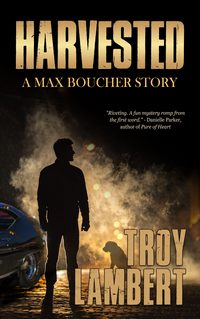
HarvestedHarvested

by Troy Lambert

DETAILS:
Series: Max Boucher Mysteries, #1
Publisher: Unbound Media
Publication Date: March 15, 2019
Format: Paperback
Length: 247 pg.
Read Date: January 2-3, 2023
Support Independent Bookstores - Visit IndieBound.org

What’s Harvested About?

Max Boucher is a P.I. in Seattle. Like a good (fictional) P.I., he spends a lot of time drinking. He spends most of the rest of his time working just to make ends meet. He really wants to devote his time to looking for whoever murdered his daughter, killed his dog, and either kidnapped or murdered his wife. He—and his former colleagues in the Seattle PD—have followed every lead they have, but he’d spend all of his life going back over the evidence time and time again if he could.

Now, he’s taken on a case—he takes on every case that comes his way—that takes him back to his old neighborhood. The dog park that he and his family used to go to, in fact. There’s a rash of dognappings in the area, and owners have come together to hire him to find their canine friends. The police can/will only do so much, but Max can devote more time to it.

It doesn’t take long for things to get hairy—there’s a connection to a Korean mob boss. Some of the dogs start reappearing—with strange injuries. And it turns out that this has been happening all over Seattle for some time. Max isn’t sure what he’s gotten himself into, but it’s about a lot more than missing poodles.

Supporting Characters

Obviously, you’ve got to have a compelling P.I. in a book like this—and a good hook for the story. That’s what the reader comes for, and the writer had better deliver. A plausible villain, is important, too—but the others can overcome an iffy one. But what will really make a P.I. novel work is the supporting characters—the cop buddies/frenemies/rival (depending on the series), the client, the witnesses, and so on.

Lambert nails this throughout the book. I like Boucher and want to see more of him, but I enjoyed some of the side characters more than him. There’s a friendly and helpful veterinarian who could probably carry a cozy mystery series on her own—and I would buy six of those tomorrow if they existed.

There’s a guy who details Max’s car (he’s got an older car that’s his pride and joy)—which is something definitely called upon when your case involves carrying injured dogs (and injured detectives) around. If Eddie shows up for a scene or two in every book in the series, you can color me pleased. I’m not even sure why—I also don’t care much, I just liked him.

I’m not going to say I enjoyed the Korean mob boss* in the same way I did those two. But the scenes with him are some of the most intense in the novel.

* Ahem. Suspected boss, of a mob that may not even exist.

I could go on for a few more—I don’t remember exactly my point when I started this section, other than to rave about Dr. Gamble and Eddie. But I guess that I just want to stress that Lambert gives us more than a solid P.I. He knows how to give the reader characters to invest in and care about—even if only for a page or two.

Beware of (Hurt) Dogs

* (yeah, that’s a lame section title—but it’s better than “It’s a Dog Eat Dog Book” with the implied cannibalism)

I know I have readers who will be antsy about this book—we’re talking about kidnapped and injured dogs here (there’s a reason I have a recurring post about books about dogs who live). And for those who cannot take violence toward animals, this is a book to avoid.

I will say, however, almost all of the violence happens “off-screen”—you see very little of it on the page. And what you see on the page isn’t that bad (up until the climactic bit at the end, but the violence there is spread amongst characters with two and four legs (and the two-legged ones get the worst of it).

The point of this book is Boucher investigating the kidnappings, stopping them by getting to the bottom of things and rescuing as many dogs as he can. So if you’re on the fence, you can hold on to that.

So, what did I think about Harvested?

This was a good read. Lambert delivered in every way I wanted a book like this to—solid plot, unique case, great character work, and a pace that keeps you turning the pages long past the time you should put the book down for sleep or chores. I’d recommend this just for the (relative) novelty of a Seattle P.I.—mid-sized US cities need to be the setting of more P.I. novels. The book delivers on everything it promises and gives you an open (and welcome) invitation to come back for another. I know I’m accepting that invitation.

Oh—minor spoiler—by the end, one of the kidnapped dogs can’t be matched with an owner and ends up staying with Max. So you know I have to come back, just for more of him.

I’d have come back anyway—I want to see how Max moves on from this point in general. I’m quite curious about the clues he discovered regarding his wife’s case, too. I’m assuming (and really don’t want to know the truth until I’m into the next book) that book 2 will advance the investigation into his wife’s kidnapping while Max and his new partner dive into another stand-alone case—and we’ll continue that way for a while. That sounds like a great time to me. Grab this one—the second book is out now, you might as well grab it, too. You’ll have fun.


3.5 Stars

This post contains an affiliate link. If you purchase from it, I will get a small commission at no additional cost to you. As always, the opinions expressed are my own.

Literary Locals logo

Page 27 of 156

Powered by WordPress & Theme by Anders Norén