Category: Mystery/Detective Fiction/Crime Fiction/Thriller Page 92 of 153

Without Rules by Andrew Field: A dark tale where many means are justified


Without RulesWithout Rules

by Andrew Field

Kindle Edition, 215 pg.
Boomstang, 2018

Read: October 9 – 11, 2018


Last week, in the many tributes to Elmore Leonard that I saw floating around on what would’ve been his birthday, I came across this quotation: “I don’t judge in my books. I don’t have to have the antagonist get shot or the protagonist win. It’s just how it comes out. I’m just telling a story.” Which seemed awfully appropriate as I was in the closing chapters of Without Rules at the time. I’m not suggesting that there’s anything Leonard-esque to Field’s novel*, but they definitely were working from the same ethos.

This book starts off showing you that it’s about as far as you can get from a cozy — a hit man and his accomplice on the run after a disastrous (yet successful) job take shelter in something between a brothel and a porn studio while waiting for extraction. Their unwilling hostess supplies them with booze, a laundry machine, and some meaningless sex in the meantime. When the opportunity presents, she tries to convince the hitman to rescue both herself and her daughter from their situation — being forced by her father to live and work in this place since she was about her daughter’s age. Naturally, it’s this same father who hired the hitman to take out one of his clients before he could be flipped by the police.

Things get messier from there — no, really. Soon, we’re plunged into a mare’s nest of police cover-ups, police investigations, evidence tampering, evidence planting, blackmail, murder, pedophilia rings, international drug dealers, and real estate fraud. This particular night ends in betrayals, deaths, lives and careers being ruined, missing people and near-death escapes. The book will then lurch ahead a couple of years to witness the chaos and destruction left by that night and how it’s altered, prospered and ruined lives — and attempts will be made by several to rectify that situation. The novel will then jump ahead as the events of part two have left even more trouble and chaos in their wake for the survivors to try to deal with the aftermath.

There’s a fine line between complex and convoluted — this novel doesn’t tip-toe down that line, it dances on it. When it falters, it typically lands on the convoluted side before resuming its jig. There are arguably too many characters running around — and few of them are fully rounded-out. But, largely, I’m okay with that — because the more I get to know just about any of these characters the less I wanted to know them at all. These are ugly people in the midst of ugly businesses.

With one or two climactic exceptions, the action is believable, the evil is all too real — there’s no criminal mastermind stroking his cat while the world burns. Instead we have several depraved individuals scraping to make their fortunes greater — or just to survive. There’s one well-timed Diabolus ex Machina that was hard to swallow that was necessary to set up the book’s conclusion, but otherwise the action stayed within the bounds of credulity.

In a capricious world, it’s odd to find so many characters talking about justice — generally how it’s impossible to find — but just about every one of these characters has a lot to say about it. There is an irony there for the careful reader to appreciate.

Minor spoiler: There’s no happily ever afters here. No redemption arcs. No one wears a white hat. A couple of characters do ride off into the sunset, but not in any real sense of victory or joy. The cynical among us — many would prefer to be called realists — would say that this is an accurate reflection of life. No justice, no just desserts, bad things happen to bad people, those who intend to be heroes become villains, a villain or two will find themselves doing something heroic, and everyone’s out for themselves and a profit. In a very noir world, Andrew Field offers us a very noir novel.


* That’s not a ding on Field, there’s pretty much no one who can write something Leonard-esque. And it’s generally embarrassing when they try.

BOOK SPOTLIGHT: Without Rules by Andrew Field

Today I welcome the Book Tour for the Without Rules by Andrew Field. Along with this spotlight post, I’ll be giving a few thoughts on the novel here in a bit.

Book Details:

Book Title: Burning Secrets by Ruth Sutton
Publisher: Boomslang
Release date: October 5, 2018
Format: Paperback/ebook
Length: 215 pages

Book Blurb:

When a professional hitman turns up at Candy’s World to hide, China Mackie discovers her plan to flee from her abusive father has tragically backfired. A gruesome bloodbath has left four people dead on the streets of a northern city centre on a cold wet Sunday morning. China knows she’s next to die. Unless she is more ruthless than everyone else. She must improvise fast. Seduce her father’s assassin. Plead her case so he helps her escape in a fight to the death where rules don’t matter but the consequences do.

About Andrew Field:

Ruth SuttonAndrew Field has spent most of his working life as a PR and marketing consultant helping raise the profiles of others. Now the roles are reversed as he steps into the spotlight as the author of Without Rules, a crime thriller about vulnerable people forced to do bad things to escape evil people. “Authors, by the nature of what they do, are relatively introverted. They work in isolation. Inhabit imaginary worlds of their own creation. They can spend ages staring at a computer screen bringing their characters to life. Then they have to become a different person to promote their work and market themselves. Writing is the easy part compared to the marketing, especially when crime fiction has become a very crowded marketplace.”

“From my point of view, professional PR people operate best from behind the scenes. They should never become the story otherwise you’re deflecting attention away from the messages you’re trying to communicate,” says Andrew. “The New Labour experiment, for example, was doomed the minute Tony Blair’s media guru Alistair Campbell generated his own headlines. Bragged about ‘spin’. Believed his own hype. Ditto Anthony “The Mooch” Scaramucci’s 10-day tenure as the shortest-serving White House communications director in history – and his “off the record” expletive-ridden rant about his colleagues in Donald Trump’s White House.”

As a PR, Andrew memorably handled Boddingtons Bitter during its “Cream of Manchester” heyday, developing innovative sports and cultural media partnerships with newspapers and TV stations for the beer brand – but also PR’d a fashion entrepreneur who was a convicted armed bank robber and a property developer who did eighteen months prison time for blackmail. “Having a diverse range of clients keeps it interesting. They are all different but the core requirement is to be seen as a believable and trusted information source ready to take advantage of PR opportunities as and when they arise. As a novelist, you look to do exactly the same with your work and yourself.”

“The catalyst for Without Rules was a friend testifying against her father in an abuse case. Although the prosecution was successful, she can never really escape the consequences of what happened to her. She has to find a way of coping for the rest of her life while he was sentenced to two and half years.”

Andrew says crime fiction has a duty to try and educate and as well as entertain. “The memorable books are the ones you’re still thinking about 48-hours after you finished reading.”

Andrew lives, works and plays in Manchester, England, Europe, with his partner, Catherine. He has been a trade journalist in Southampton in his youth. He owned a PR agency in the nineties and early noughties and is now an independent PR, marketing and publishing consultant looking forward to the challenge of becoming the story with the publication of Without Rules.

Andrew Field’s Social Media:

Twitter ~ Facebook ~ Website ~ Instagram

Purchase Links for Without Rules:

Andrew Field’s online bookstore ~ Amazon UK ~ Amazon US


My thanks to damppebbles blog tours for the invitation to participate in this tour and the materials they provided.

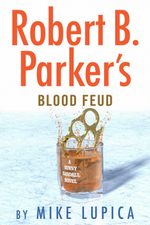
Blood Feud by Mike Lupica: Sunny Randall’s Back in this Promising Reintroduction

Blood FuedRobert B. Parker’s Blood Feud

by Mike Lupica
Series: Sunny Randall, #7
eARC, 352 pg.
G. P. Putnam’s Sons, 2018
Read: October 5 – 9, 2018

I have a complicated relationship with Sunny Randall. Readers of this site have been frequently exposed to my love for Robert B. Parker’s Spenser and Jesse Stone novels, both by Parker and the continuations by Ace Atkins and Reed Farrel Coleman (let’s overlook Michael Brandman’s contributions for the moment). I enjoyed his stand-alone works, and I thought the first couple of Virgil Cole & Everett Hitch books were fun (I haven’t tried the Robert Knott continuations). Which leaves us with Sunny.

Sunny Randall, the story goes, was written to be adapted into a film series for Parker’s chum, Helen Hunt (incidentally, I’ve never been able to envision Helen Hunt in a single Sunny scene, but that’s just me). She’s a private investigator; a former cop; part-time painter (art, not house); emotionally entangled with her ex-husband, but can’t live with him; lives in Boston; and enjoys good food. But she’s totally not a female Spenser — she doesn’t like baseball, see? I’ve read all the books — some multiple times — and while I enjoyed them, I’ve never clicked with Sunny the way I have with others. Including every other Parker protagonist. Most of her novels are mashups and remixes of various Spenser novels, entertaining to see things in a different light — but that’s about it. Frankly, the most I ever liked Sunny was in the three Jesse Stone novels late in Parker’s run (but both characters are better off without each other).

So when it was announced that Mike Lupica would be taking up the reins of this series I was intrigued but not incredibly enthused. I only know Lupica from having bought a few of his books for my sons when they were younger. I didn’t get around to reading any of them, so he’s really a new author for me. And sure, I was a little worried about a YA/MG author taking the reins of a “grown-up” series. But not much — if you can write a novel, you can write a novel, it’s just adjusting your voice and language to be appropriate for the audience.

Enough blather — let’s talk about Blood Feud. Since we saw her last, Sunny has had to move, Richie (her ex-) has gotten another divorce (giving them the chance to date or whatever you want to call it) and has replaced her late dog, Rosie, with another Rosie. Other than that, things are basically where they were after the end of Spare Change 11 years ago (for us, anyway, I’m not sure how long for her, but less time has passed you can bet).

By the way — does anyone other than Robert B. Parker, Spenser and Sunny really do this? Your dog dies, so you go and get another one of the same breed and call him/her the same name? Is this really a thing?

Then one night — Richie is shot. It’s not fatal, but was done in such a way that no one doubts for a moment that it could have been had the assailant wanted it to be. For those who don’t know (or don’t remember), Richie is the son of an Irish mob boss, although he has nothing to do with the family business. He’s given a message for his father — his shooter is coming for him, but wants him to suffer first. This kicks off a race for the shooter — Sunny, the Burke family and the police (led by Sgt. Frank Belson) are vying to be the one to find the shooter.

Before long, the violence spreads to other people the Burkes employ — both property and persons are targeted by this stranger. It’s clear that whoever is doing this has a grudge going back years. So Sunny dives into the Burke family history as much as she can, so she can get an answer before her ex-father-in-law is killed. Not just the family history — but the family’s present, too. As much as the roots of the violence are in the past, Sunny’s convinced what the Burkes are up to now is just as important to the shooter.

Richie’s father, Desmond, isn’t happy about Sunny sticking her nose into things. Not just because of the crimes she might uncover — but he really wants to leave the past in the past. But as long as someone might come take another shot at Richie, Sunny won’t stop. This brings her into contact with several criminal figures in Boston (like Parker-verse constants Tony Marcus and Vinnie Morris) as well as some we’ve only met in Sunny books.

There are a couple of new characters in these pages, but most of them we’ve met before — Lupica is re-establishing this universe and doesn’t have time to bring in many outsiders, but really just reminds us who the players are. Other than the new Rosie, I can’t point at a character and say “that’s different.” He’s done a pretty good job of stepping into Parker’s shoes. Not the pre-Catskill Eagle Parker like Atkins, but the Parker of Sunny Randall books, which is what it should feel like (I wouldn’t have objected to a Coleman-esque true to the character, just told in a different way). I think some of the jokes were overused (her Sox-apathy, for one), but it wasn’t too bad. Lupica did make some interesting choices, particularly toward the end, which should set up some interesting situations for future installments.

The mystery was decent enough, and fit both the situations and the characters — I spent a lot of the novel far ahead of Sunny (but it’s easier on this side of the page). I enjoyed the book — it’s not the best thing I’ve read this year, but it’s a good entry novel for Lupica in this series, a good reintroduction for the characters/world, and an entertaining read in general. If you’re new to this series, this would be as good a place to hop on as it was for Lupica.

I want better for Parker’s creation (but I think I’d have said that for most of Parker’s run with the series), and Lupica’s set things up in a way that we could get that in the near-future. He’s demonstrated that he has a good handle on the character he inherited, the question is, what can he do with her from here? I was ambivalent about this series coming back, but I can honestly say that I’m eager to see what happens to it next.

Disclaimer: I received this eARC from Putnam Books via NetGalley in exchange for this post — thanks to both for this.

—–

3.5 Stars

Pub Day Repost: The Blue Kingfisher by Erica Wright: Kat Stone — and her wonderful wigs — are back for more danger

The Blue KingfisherThe Blue Kingfisher

by Erica Wright
Series: Kathleen Stone, #3
eARC, 320 pg.
Polis Books, 2018
Read: August 1, 2018

So, Kat Stone, private investigator, is trying something new — she’s being herself. No disguise, no wig, no fake name (well, most of the time). There’s no need, the person she was hiding from has found her. He hasn’t done anything about it — but there’s no need to go to extra effort. But she’s not used to just being Kat Stone anymore — and that’s going to take a little work.

One morning, Kat finds a body — a body in horrible shape in the shadow of the George Washington Bridge. While waiting for the police, she recognizes the body — the maintenance man from her apartment building, Tambo Campion. The police are quick to dismiss the death as a suicide, but Kat’s unconvinced. Why would someone trying to kill themselves miss the water so completely?

This, of course, isn’t enough. So she ignores paying customers for a bit to launch her own investigation, trying to find more evidence. She doesn’t necessarily have to find the murderer, she just needs more evidence to get anyone in the NYPD to take her seriously enough to investigate his death. She plunges into Tambo’s life — partially driven by guilt that she didn’t pay him enough attention in life. It turns out that Tambo is a kingfisher, someone who finds jobs for people who aren’t in the country legally or who are wanting to stay off-the-radar, for a fee. This alone provides several avenues of investigation. But there are others, too, don’t get me wrong. All of these take her into all sorts of corners of NYC society — and gives her an excuse to dabble in different identities.

The NYPD requirement of “more evidence” is a trigger of sorts for her. It reminds her of the constant refrain from her superiors during her undercover days at the NYPD. They always wanted more evidence — even when she becomes concerned for her own safety, they say she hasn’t done enough, she needs more evidence to bring down Salvatore Magrelli. Between the Magrelli knowing where she is now, and this requirement, Kat spends a lot of time ruminating on the times she felt most threatened by Magrelli — and the things she didn’t provide enough evidence on. While she has several other things going on in her life, these are the thoughts that dominate her attention.

As interesting as the murder case is, obviously, it’s the Magrelli (past and present) stories that provide the major emotional hook for this novel. Even while she’s meeting with success at Kat Stone, even when she finds evidence of a crime — multiple crimes, actually. She can’t get out of the shadow of her past or the threat of the present.

I failed to get around to reading the first book in this series, after reading The Granite Moth, which really bugs me, so I can’t really comment between the ties between it and this book, but I’m reasonably certain there are some. Characters from The Granite Moth show up here and events from it are discussed as well, which is always nice, too many PI novels ignore what happened before. I don’t know (but I can’t imagine) that too many people from The Blue Kingfisher will show up down the road, but I’ll be happy to see any of them that do. But several events from this book will show up soon.

I remembered liking Kat Stone – I didn’t remember how much or why I did, and I’m very glad I got to rediscover her. Kat is clever, very clever when she’s not distracted. She’s resourceful. She may not have the skills of Lori Anderson or even Charlie Fox when it comes to weapons or hand-to-hand, but she’s got a mental toughness that’s hard to beat. And I really hope to see how she moves forward — because there’s just no way that what comes next is going to look too much like what’s come before, and I’m very curious about that. The New York she travels in isn’t the one I’m used to seeing (it’s not so different that I don’t recognize it) in Crime Fiction, and the way she sees the world is a fresh perspective.

The writing in this one — and this is not a knock on The Granite Moth — feels more disciplined, the plot more controlled. I took it as a sign of growth, that whatever Wright intended to accomplish in this book was clear to her and she executed things to that end. I’m almost more curious about what she’ll do next than what Kat will do next. Almost.

This isn’t a criticism, this is more of a wonderment: There is a lot of time spent on Kat’s affection for New York City. Do people spend a lot of time doing that, really? Thinking about how much they love/appreciate the town they live in (assuming they do)? Her leaving town was brought up once — indirectly — but it wasn’t like anyone was really suggesting that to her — and even after she made it clear that it wouldn’t happen, there it is again, her love for NYC. I could see it fitting in if people were actively trying to get her to move, or if she’d just returned after some time away (on a job, in self-appointed exile, etc.) — but given her situation, it felt forced. Now, I liked the way she expressed it, and I can understand her affection (theoretically, anyway, I’ve never been there). It just seemed out-of-place and/or unnecessary.

This is a good, satisfying PI novel with a protagonist that you will definitely enjoy. Like its predecessor, it’s a decent jumping on point for a new reader, and a welcome return to the world for someone who’s met Kat before. I’m eagerly awaiting the next book in this series already.

Disclaimer: I received this eARC from Polis Books via NetGalley in exchange for this post — thanks to both for this.

—–

3.5 Stars

Dead Blind by Rebecca Bradley: A gripping thriller featuring a uniquely disqualified hero

Dead BlindDead Blind

by Rebecca Bradley

Kindle Edition, 358 pg.
2018
Read: August 9, 2018

There are two gripping stories in this novel — the primary one isn’t the crime story (odd for a work of crime fiction), but it is the better executed of the two. Which isn’t a slight to the secondary story, at least not intentionally.

Let’s start with the crime — DI Ray Patrick and his team are investigating an international organ smuggling ring. Every time I’ve run into this kind of story — in print or on TV — it has always been effective. Something about the idea of harvesting organs from people (who may or may not survive the process for at least a while) to transplant into people who may or may not survive (given the less than ideal facilities for such activities) has always disturbed me. Then when my son was diagnosed with renal failure and we were told he’d need a kidney transplant, these kind of stories became more nightmarish for me. So yeah, basically, this was right up my alley.

Thankfully, he’d received his kidney a couple of weeks before I read this one, so it didn’t end up costing me sleep. Incidentally, the facts and figures about transplants, the need for them and the lack of donors, etc. all lined up with everything we’d been told. Yes, there are differences in protocols between the two medical systems, but on the whole, what Patrick and the rest learned matched what I’d learned. When it comes to this kind of thing in novels, I’m always wondering how much the author fudged and how much came from research — I’m happy to say that Bradley got this right.

So this story — from how the ring operates to how Patrick and the rest investigate is very satisfying.

Which leaves the primary story. Patrick comes back to work from a nasty automobile accident, mostly recovered from his physical injuries. But that’s not the only injury he sustained. Patrick now is dealing with prosopagnosia, aka “face blindness.” Through some clever guesswork, and a whole lot of luck, he’s never revealed it to anyone other than his ex-wife (so she can help him with his kids). Now back at work, Patrick is attempting to hoodwink everyone into thinking he’s okay, because he doesn’t want to risk not losing his job.

On the one hand you want to see him pull off his silly scheme, on the other, you want to see him be the man of integrity everyone thinks he is and be honest with his colleagues and friends. Especially when Patrick’s inability to discern or remember faces jeopardizes the investigation.

Watching Patrick try to remember people via other means while trying to lead an investigation, and deal with the ramifications of the disorder in his personal life gives the book its emotional weight. And it delivers that in spades.

Patrick’s team is full of some pretty well-drawn characters, which also applies for the other people in his life — grounding the more outlandish flavorings of the other stories. I enjoyed the read and found it gripping — looking forward to seeing more from Bradley.

—–

3 Stars

Pub Day Repost: The Question of the Dead Mistress by E. J. Copperman, Jeff Cohen: Samuel Answers a Question a G-g-g-g-host

The Question of the Dead MistressThe Question of the Dead Mistress

by E. J. Copperman, Jeff Cohen
Series: Asperger’s Mysteries, #5
eARC, 288 pg.
Midnight Ink, 2018
Read: June 26 – 27, 2018

“Is my husband having an affair with a dead woman?”

That doesn’t seem to be the kind of question that Samuel and Ms. Washburn would tackle as Questions Answered. They typically take on things that require esoteric research, problem solving, and occasionally something that takes some investigation that looks a lot like the kind of thing a P.I. would do. Paranormal investigation is not in their wheelhouse. Samuel is almost reflexively dismissive of the idea — but his associate, Ms. Washburn makes him listen to the prospective client’s story. And then he tries to reflexively dismiss the question, but she won’t let him. While Samuel is convinced there’s nothing supernatural afoot — in fact, the notion is impossible — Ms. Washburn had an experience she can’t explain as a teenager, and refuses to rule it out.

So Samuel let’s her try to come up with an answer to the question and goes back to whatever he was doing before. Before she can get very far into her research, the husband is murdered. Suddenly, the question doesn’t matter as much as the replacement question, “Who killed my husband?” Given Ms. Washburn’s involvement, Samuel gets interested in things again — and the two get involved in a very twisty and complicated mystery. As far as twisty-turny-keep you guessing-mysteries go, this is the best that the duo has encountered and will easily satisfy the most puzzle-obsessed of readers.

What makes this even better — is that given the supernatural/supernatural-adjacent nature of the instigating question, the two are approaching things in very different ways and decide to operate largely separately. Samuel interviews people with assistance of other to drive him places or via the Internet, while Ms. Washburn goes on her own, trying to use Samuel’s methods. This change in modus operandi is refreshing for the characters and the readers, and will lead both Samuel and Ms. Washburn to re-evaluate the way they do business in the future.

The danger level in this one is great — and there are direct threats made against Ms. Washburn and Samuel’s mother and father. Which just makes Samuel more determined to come up with definitive answers quickly. The possible supernatural elements stay with the story throughout and it’s only near the end that all the characters come to the same conclusions about it. This novel features a great puzzle and the solution is very satisfactory — and one I didn’t see coming (but in retrospect makes complete sense).

So much for the mystery — there’s also plenty going on in Samuel’s personal life. On the whole I thought they dealt with it well, but…

I appreciated Samuel pointing out that Asperger’s is no longer a diagnosis, but he still claims it s a shorthand way to describe the way he acts/thinks to others. Which is just a great — and realistic — way to handle the change in status for the label. Let me follow that observation with this one — what frustrated me about this one — and I will admit I was very frustrated at times — is how little Samuel’s mother seemed to understand him. Ms. Washburn, too, but she hasn’t known Samuel as long — or as well as his mother. Dealing with the father who abandoned his family decades ago suddenly reappearing and trying to merge back into his life, would be difficult, complicated and messy. For someone like Samuel? Well, I’m guessing it’d be just as difficult and complicated — but he’d tell you exactly what’s going on with him. And Samuel does so — repeatedly. His father doesn’t believe him; Ms. Washburn seems to try to believe him, but doesn’t; neither does his mother. His mother has been with him every day of his life, devoting more of her life and energy to her son than most parents do — how does she not know him well enough to not double-guess his emotions? If Samuel says he feels “X,” then that’s probably exactly what he feels — unless you force him to look at things another way. Over and over again, his mother shows less awareness of Samuel’s reactions to things than almost anyone. It just didn’t ring true. Samuel’s Asperger’s isn’t new to her (or Samuel) — she shouldn’t act like this.

I should add — the authors know a whole lot more about all of this than I do, and their depictions of this are probably spot-on, I guess they just didn’t convince me about those depictions like they usually do. Also, in the overall-scheme of things, this was a relatively minor quibble and didn’t detract a lot from the pleasure I had in the book — it just took a lot of space to describe.

The trick to Samuel is to give him a little personal growth, a little greater awareness, a little understanding of himself and the emotional needs of others. Yet, only a little bit. I do think this is depicted faster (possibly unrealistically so) in the books — because outside of Nero Wolfe, Sherlock Holmes, or other Golden Age/Golden Age-like characters who don’t grow and evolve by design, we expect some sort of noticeable personal growth in our series characters (particularly the central characters) from book to book. Samuel shouldn’t give us much in that way — his evolution/growth/whatever you want to call it is going to happen on a glacial pace. And over the last three books (I really need to double back and read the first two in the series), he’s taken significant steps forward — so much so it’s like Ms. Washburn has slipped into forgetting that he’s not neurotypical a few times here. That makes sense, because their relationship (in every sense) is pretty new. Thankfully, she catches herself and deliberately attempts to accept that — and generally does – and recognizes when he’s trying. Because we readers get a direct pipeline to Samuel’s thoughts, we might have an easier time with it than she does, but she does a decent job (and his mother usually does, too). It’s a heckuva trick to pull off narratively, and Copperman/Cohen nails it, time and time again.

Another clever mystery, well-told with one of Crime Fiction’s most original and convincingly written characters (not a detective, just someone who can easily be mistaken for one) — this series is a consistently pleasant and rewarding read. The Question of the Dead Mistress is a great jumping-on point, and a welcome-return read for those who’ve spent time with the crew from Questions Answered before.

Disclaimer: I received this eARC from Midnight Ink via NetGalley in exchange for this post — thanks to both for this. My opinions are my own, however.

—–

3.5 Stars

BOOK BLITZ: BBQ, Bikers, and Murder by Summer Prescott

 photo BBQ Bikers and Murder_zps9t3ppzrp.jpg

Hawg Heaven Cozy Culinary Mysteries, Book 1
Cozy Mystery
Publisher: Summer Prescott Books
 
 photo add-to-goodreads-button_zpsc7b3c634.png
A small Midwestern town.
The best BBQ in the state.
A single mom, determined to do what it takes.
A murder that rocks her world.
Rossalyn Channing is tough, but the odds are stacked against her. Faced with the reality of starting a new life with her teenage son, after her heroic husband is killed in the line of duty, she knows that she has to do whatever it takes to survive.
Irresistibly drawn to a mysterious little building in a small town, the determined single mom uses every dime she’s got to buy it, with plans to turn it into a diner that her late husband would have loved. When Rossalyn finds herself caught up in the middle of a murder investigation, however, she begins to wonder if the challenges she faces will defeat her.
A body is found on her property, the sheriff in town suspects Rossie of the murder, and it looks like her world is falling apart. It’s up to this determined mom to prove her innocence and save her small family. Can she do it?
 photo BBQ Bikers and Murder on tablet 2_zpswfskej5h.jpg
Hawg Heaven Cozy Culinary Mysteries Series
 photo Hawg Heaven Cozy Culinary Mysteries Series_zpsogpiuwdd.jpg
BBQ, Bikers, and Murder (#1)
Baby Back Murder (#2)
Nacho Usual Murder (#3)
Hawgs, Dogs, and Murder (#4)
Killer Barbeque (#5)
Home Grown Murder (#6)
Bittersweet Murder (#7)
About the Author

 photo BBQ Bikers and Murder Author Summer Prescott_zpslkc4knve.jpg

Summer Prescott is a Wall Street Journal and USA Today Best Selling Author, who has penned nearly one hundred Cozy Mysteries, and a successful Thriller, The Quiet Type. She makes her home in the Midwest with her Standard Poodle, Elvis, at her side.


Contact Links
Purchase Link

Burning Secrets by Ruth Sutton: A Child Abduction Sets Off a Disturbing Chain of Events


Burning SecretsBurning Secrets

by Ruth Sutton

Kindle Edition, 264 pg.
Fahrenheit Press, 2018

Read: October 2 – 3, 2018

For a book that clocks in at 264 pages, Sutton packed in a lot of story. I’m having difficulty deciding what to focus on, I’ve got to say. If only all authors could present a guy with such problems . . .

This book starts off with a child abduction — a child, Helen Helsop, that we get to know a little bit before she’s abducted. Immediately I groaned, because the last thing I wanted to deal with is a book about a little girl getting snatched and then dealing with whatever abuse is looming. Without spoiling much, let me assure you — nothing like that happens. This is not that kind of kidnapped child story. This doesn’t mean that she’s been taken for benign or even beneficial reasons, however.

Helen hasn’t been living at home — she’s been staying with family in town so she can attend school. Because theirs is a farming community — predominately, or at least heavily, a dairy and cattle area, and this is 2001 — the height of the Foot and Mouth crisis. I’ll be honest, as an American in a pre-social media age, I didn’t have a strong grasp on the effect this had on smaller farmers — I just never was exposed to it. I got what it meant on the national/industry front, but didn’t think much more about it. If I had, it would’ve been obvious just how much this would decimate a community, an individual family, and why this was such a horrible crisis. Anyway, back to Helen — she hasn’t had a good time of it in this temporary home and is easily persuaded to leave. It’s hours (of course) before anyone notices that she’s missing, and even then, most of her family doesn’t believe she’s actually missing.

Before that, thankfully, the police are called in — we focus on DC Maureen Pritchard — a well-known fixture in the community (not as well-known as her father, however) and the newly-arrived DS Anna Penrose. There’s a little professional jealousy between the two — Pritchard envies another woman in a position she was denied and Penrose would love the acceptance and respect her fellow officers seem to have for Pritchard. But largely, they can put that aside to focus on Helen. It’s obvious from the start that the foster family and Helen’s actual family are both holding back from the police, but it’s hard to tell if it’s germane to the case, or if it’s just things that no one wants to share with outsiders.

This is all so compellingly told — the layers that Sutton is working on are something to behold. She’s excellent at revealing more and more about Pritchard and Penrose while they’re uncovering more about Helen’s life and whoever took her. You could make the case (I think you’d be wrong, but you can make it) that the mystery in this novel takes a back seat to the drama surrounding the women and their superiors. Initially, probably because we meet her first, I was pulling for Pritchard to solve the case, rescue the girl and save the day to put Penrose in her place. But soon, I just wanted the two of them to knock off the nonsense and just work together — preferably by being open with each other about what’s going on. I won’t say if I was ultimately satisfied in that desire, but I can say that Sutton deals with their relationship in a way that is absolutely believable and realistic — a very satisfactory job.

The greatest impediment to the search for Helen isn’t the fact that the family is hiding something(s), the difficulty in tracking down a person of interest, the cleverness of the kidnapper, finding a particular van in a decent size, getting a straight answer out of scared kids with overbearing/concerned parents interfering (for nefarious reasons or unintentionally), or any of the other absolutely understandable and inevitable roadblocks. Instead, it’s Detective Inspector Stanley Bell — he’s too focused on the budget and on impressing his DCI, not that we can forget his obvious misogyny and blatant racism. It’d have been easy for Sutton to leave him as a buffoon, an obstacle, a foil for Pritchard and Penrose — but she doesn’t, there are times when he seems to be a perfectly capable police officer. But those times are the minority — it is fun to watch his subordinates play him to get their way, Penrose learns from Pritchard’s example quickly on this front.

If I tried to talk about the kidnapper, I’d spoil it — if I tried to talk about Helen’s family, I’d fail. I can’t summarize what Sutton did there (I was reductionistic enough with the police — and I’d still be reductionistic if I’d included everything I wanted to say about them) — I’ve known men like her father and older brother. I could feel their pain, their frustration — with their life in general, even before Helen’s abduction, which just seemed like the next-to-last straw for them. Between Foot and Mouth, general hardships (physical and financial) related to this lifestyle, too much alcohol, and a wife who wants more than all this — it’s just too much for people to take.

The depiction of Helen is really strong, as well — she is a scared twelve year-old doing the best she can in a horrible circumstance. At some point the police don’t understand why she did X in a situation. I wanted to yell at them, “because she’s a scared little kid!” Of course, she’s not going to act like a rational adult. (The other thing I had a hard time buying was that given the emphasis the officers put on local knowledge, was that it was the outsider who understood the importance of getting his cows milked to a dairy farmer)

I’ve gone on too long, and haven’t said nearly enough. So let’s hit the important things as I try to wrap up.As I said at the outset — this is not a typical kidnapping novel. Every assumption you make early on in the book will prove to be mistaken, but it all feels organic, it all seemed natural. This isn’t one of those books where you can see the author moving pieces around to achieve her ends. I have no doubt she did — but I couldn’t see it. There’s some good action, some very clever policework, and a strong psychological-thriller bent to parts of this as well. There’s a strong Perry Mason-esque quality to the strategy the police employed at the end, which I appreciated. Burning Secrets ticks almost every box a mystery-fan will have on their list.

This is a novel about family secrets, family problems — all families, on some level, I’m sure. There are strong threads about options various women take to take care of their families and themselves — what lengths they may go to, what shortcuts they may take, what hard choices they may make — to secure happiness, health, or survival. This is a novel about change — individual and societal — how difficult that is. But none of these themes detract from a heart-stopping and heart-breaking story about a kidnapping and the consequences radiating from it. All in less than 300 pages — not a bad feat.

I have no idea if Sutton intends to write more about these characters (there’s every reason to think she will, given her track record) — but I’d love to spend more time with them. If Penrose and Pritchard can turn their détente into some sort of working understanding, or better, a real partnership, they’d be a fantastic combination (for drama, they’d still be interesting if they don’t form any closer relationship, but it wouldn’t be as fun to read). Sutton does have a pretty hefty backlist, and I should try to dive in — and you should, too. Start with this, though, it’ll whet your appetite for the rest.

—–

4 Stars
My thanks to damppebbles blog tours for the invitation to participate in this tour and the materials they provided.

BOOK SPOTLIGHT: Burning Secrets by Ruth Sutton

Today I welcome the Book Tour for the tense and taut Burning Secrets by Ruth Sutton. Along with this spotlight post, I’ll be giving my take on the novel here in a bit.

Book Details:

Book Title: Burning Secrets by Ruth Sutton
Publisher: Fahrenheit Press
Release date: July 19, 2018
Format: Paperback/ebook
Length: 246 pages

Book Blurb:

It’s the spring of 2001 and Foot & Mouth disease is raging across Cumbria.

Twelve-year-old Helen Heslop is forced to leave her family farm and move in with relatives in a nearby town because the strict quarantine means she can’t travel back and forth to school in case she inadvertently helps spread the disease.

As the authorities and the local farming communities try desperately to contain the outbreak, tensions run high and everyone’s emotions are close to the surface.

And then Helen disappears.

The police search expands all over the northwest coast where farms are barricaded and farming families have been plunged into chaos – not least the Heslop family, where potentially explosive fault lines are exposed.

Under the strain tensions build inside the police team too, where local DC Maureen Pritchard is caught between old school DI Bell and new broom DS Anna Penrose.

Will Helen survive? And can life for the Heslop family ever be the same, once burning secrets are discovered and old scores settled?

About Ruth Sutton:

Ruth SuttonRuth is a very independent person, which – like many things – is good up to a point, but can get tricky sometimes. She lives in a very beautiful place, but it’s a long way to a cinema, or a big supermarket, and if the time comes when she can’t or doesn’t want to drive, she’ll have to move as there’s no public transport. She qualifies for a bus pass, but there aren’t any buses. Her daughter and her family live quite close by, and she loves to see her two grandchildren. After decades on her own, she has a partner whom she loves. They each have their own house, 40 minutes apart, and this life style suits them both. Ruth wrote her first novel after she was 60.

In addition, Ruth has self-published a trilogy entitled Between the Mountains and the Sea; A Good Liar tells the story of Jessie who risks career and independence with a love affair, whilst her secret past draws ever closer. Forgiven is set among the coal mines and fells of the Cumberland coast. Jessie’s struggle for happiness continues. Fallout features the nuclear disaster at Windscale, which brings a compelling stranger into Jessie’s world.

Ruth Sutton’s Social Media:

Twitter ~ Website ~ Amazon Author Page

Purchase Links for Burning Secrets:

Fahrenheit Press ~ Amazon UK ~ Amazon US ~ Waterstones ~ Goodreads


My thanks to damppebbles blog tours for the invitation to participate in this tour and the materials they provided.

Trouble Never Sleeps by Stephanie Tromly: Tromly (and Digby & Zoe) saved the best for last.

Trouble Never SleepsTrouble Never Sleeps

by Stephanie Tromly
Series: Trouble, #3

Hardcover, 299 pg.
Kathy Dawson Books, 2018
Read: September 17, 2018

This picks up right on the heels of Trouble Makes a Comeback leaving Zoe and Digby (and their friends) to deal with the social fallout of the events of that party. Then and only then can they start to decide how they’re going to deal with the deal Digby was offered: steal some top-secret research data in exchange for information on his sister’s whereabouts. Sure, it’s technically treason and will likely end up destroying Digby’s life as well as the lives of Felix’s family.

Meanwhile, there’s a complication to the caper in the last book — Zoe left something tied to her in the evidence collected by the police. The repercussions of that caper are also in danger of hurting some of the students they set out to save.

Both stories are good uses of the characters, and were strong stories on their own. While I have enjoyed Digby’s schemes and how they work out (or how they almost do), but I had a hard time swallowing his plan (or how it was carried out) for the non-high school caper. By the way, it took several tries to stay away from spoilers in that sentence. However, once I decided to not care about how outlandish it all was, I enjoyed reading it.

The key to this book — series, really — are in the characters and their interactions. Not just Zoe and Digby (but nothing’s more important, or better, than that), but Zoe and her mom, Zoe and her friends/frenemies/enemies at school, and Digby’s strange interactions with everybody. I don’t know if Tromly hit that better this time, or just as well has she had before — either way, the dialogue sings and you believe it. These relationships are complicated and real and they make the books come alive.

I should probably add that the reason I didn’t listen to the audiobook (unlike the last two) is because my library didn’t have a copy, unlike the last two. It’s not a reflection on Kathleen McInerney’s work — it was good for me to see that it was Tromly’s words and not just McInerney’s great narration that hooked me, though.

It’s hard to talk about this book in any kind of depth without spoiling book 2 and ruining things here. So I’ll stop now. It’s a fun adventure, with laughs, tension, and all the warm fuzzies you could ask for.

The trilogy started off strong, stumbled a bit and then more than recovered with this one. It’s the strongest of the series easily — and sticks the landing (which I worried about, not because I didn’t think Tromly could do it, it’s just easy to miss). I’m going to miss Zoe and Digby. I’m so glad that I found this series this year — it’s been a blast to listen to and read. Great characters, strong character arcs over the trilogy, a good overall story, with some great smaller stories in the individual books. This series is going down as one of my favorite YA series ever.

—–

4 1/2 Stars2018 Library Love Challenge

Page 92 of 153

Powered by WordPress & Theme by Anders Norén