Category: Mystery/Detective Fiction/Crime Fiction/Thriller Page 93 of 154

Video Killed the Radio Star by Duncan MacMaster: A Murder Mystery as Fun as The Buggles’ Song

(or the cover by The Presidents of the United States of America, either will work)

Video Killed the Radio StarVideo Killed the Radio Star

by Duncan MacMaster
Series: Kirby Baxter, #2

Kindle Edition, 261 pg.
Fahrenheit Press, 2018
Read: October 15 – 16, 2018

“I fear we will never be mistaken for the Algonquin Round Table.”

“We’ll have to work on our witty repartee,” said Molly. “I plan on taking a course on banter, ripostes, badinage, and persiflage.”

“Even persiflage?”

“Especially persiflage,” said Molly. “There is nothing worse than sub-par persiflage.”

“You might need to get a sub-par persiflage lanced.”

“We’ve hit the nonsense phase of the night earlier than usual.”

“I like nonsense,” said Kirby, “it distracts me.”

Kirby Baxter just wants to live a quiet life out of the spotlight: hanging out with his girlfriend, Molly, when he can; restoring a car with his valet/bodyguard/etc.; and drawing his comics. And now that the excitement about the murder he solved at Omnicon dying down, he’s on the verge of doing that. But the mayor of his hometown knows Kirby, and has no shame in extorting his cooperation with a small problem that he’s having.

You see, one of the town’s major landmarks — an old, abandoned mansion — is in dire need of upkeep and remodeling. And a reality show full of C-List celebrities (maybe D- or E-list) have recently set up shop to do that work. But the city’s having second thoughts and they want Kirby and his über-perception skills to find a reason to shut down production and send them packing to disrupt another locale.

Kirby visits the production, talks to the cast and producers, looks around and comes up with a lot of observations and conclusions — and could cause a lot of inconvenience and embarrassment for everyone involved from those observations — but he can’t find what the mayor wants. That accomplished, he gets back to pursuing his best life now — which lasts just a few hours. Because before he can start to collect from the mayor for the work, one of the celebrities is found dead.

So, it’s back to the mansion for Kirby, this time to act as a consultant ot the local police as they investigate this suspicious death. Which is soon followed by another. And an attack on another cast member. And . . . well, you get the idea.

It’s nice that MacMaster didn’t repeat the whole “Kirby has to win over a skeptical and antagonistic police officer” thing — this time, thanks to most of the force having grown up with him, they all accept his talents and skills — an expect him to deliver.

The cast of the reality show, “Million Dollar Madhouse,” is filled with the typical collection of has-beens, almost-weres, and celebs trying to stage a comeback. Initially, I rolled my eyes at each of them, but the more time I spent with them, the more I appreciated and enjoyed them. In particular, the Kardashian-esque character totally won me over. Like in the previous book, there’s a large cast of characters that MacMaster juggles expertly — there are so many suspects to the murders, as well as witnesses for Kirby and the police to wade through.

Almost every serious suspect has the same defense — they didn’t want the initial victim dead. They wanted him to make a fool out of himself on national TV, possibly seriously injuring himself with a power tool. Some would follow that up with some other form of revenge — but if he’s dead, no one could get the revenge they wanted. It’s not ideal, but it’s an honest defense.

Gustave was slightly less super-human this time out — but he’s still in the Ranger/Hawk/Joe Pike nigh-impossible stratosphere. As much as I like everyone else in this series, it’s arguable that Gustave is MacMaster’s best creation — not just the character, but how MacMaster uses him.

I did miss Mitch. But was glad to see Molly and Kirby talk about him — and even make a joke he wasn’t around to make himself. It’s probably good that he wasn’t around — it’ll mean when we see him again, it’ll be easy to appreciate him without worrying about over exposure.

In the place of Mitch, we have Molly’s assertive and cunning cousin — she runs a gossip-website and wheedles her way into the investigation in order to land a story big enough to put her and her site on the map. Kirby clearly vacillates between finding uses for her and finding her distracting.

Molly and Kirby are cuter together than they were previously, and I could watch the two of them banter any day. It seemed harder to incorporate Molly into the story this time, and hopefully it’s easier for MacMaster in Kirby #3, but as difficult as it was, it was absolutely worth it.

I’m not sure exactly what it is about MacMaster’s writing that works so well for me, but it does. Just before I started writing this, I started to draw some parallels between these Kirby Baxter books and Ellen Raskin’s The Westing Game and The Mysterious Disappearance of Leon (I Mean Noel). I didn’t have time to fully flesh this idea out, but Raskin’s work definitely was formative for me and if the comparison hold up, that could explain a lot. The mix of humor, real emotions and complex mystery is the sweet spot for me and MacMaster consistently hits it. It’s not easy, there are precious few who try — and fewer that succeed. This is the third novel I’ve read by him and it seals the deal, I’ll buy everything he writes as soon as I can without really looking at what the book is about.

I was a little worried that this book wouldn’t live up to A Mint-Conditioned Corpse, and I don’t think it did — but I don’t know what could have for me. I’d enjoyed the other so much that it’s almost impossible to live up to — and the reality show setting didn’t do anything for me — they just leave me cold. The fact I’m rating Video Killed the Radio Star as high as I am is all about how effortlessly charming and entertaining this seems. Effortless always, always, always equals blood, sweat and tears — or at least a lot of work. This must’ve taken a great deal of labor, and it was absolutely worth it. A clever mystery, clever dialogue, and very clever characters in a funny, twisty story. The Kirby Baxter books are must reads, no doubt about it. Give this one a shot — I don’t see how you can’t enjoy it.

—–

4 1/2 Stars

BOOK SPOTLIGHT: Video Killed the Radio Star by Duncan MacMaster

Today I’m very happy welcome the Book Tour for Video Killed the Radio Star by Duncan MacMaster — I’ve been looking forward to this one for months because this is the follow-up to one of my very favorite reads of this year, A Mint-Conditioned Corpse. Along with this spotlight post, I’ll be giving my take on the novel here in a bit.

Book Details:

Book Title: Video Killed the Radio Star by Duncan MacMaster
Publisher: Fahrenheit Press
Release date: July 26, 2018
Format: Paperback/ebook
Length: 261 pages

Book Blurb:

Money in the bank and his dream girl on his arm – life was looking pretty sweet for Kirby Baxter.

Of course it couldn’t last. Where would the fun be in that? This is a sequel after all.

After solving the murder of a movie starlet the previous year, Kirby is doing his best to live down his burgeoning reputation as part-time Interpol agent and amateur sleuth.

Then reality TV comes knocking next door.

Million Dollar Madhouse is a reality TV show where a bunch of washed up celebrities are thrown together in a dilapidated mansion while their attempts to renovate the building are broadcast 24/7 for the viewers delight.

Kirby’s quiet town is thrown into chaos by the arrival of camera crews, remote control video drones and a cast of characters including disgraced actress Victoria Gorham, political shock-jock Bert Wayne and reality TV royalty Kassandra Kassabian.

When one of the cast members turns up dead the local police turn to the only celebrity detective in town for help and draft an unwilling Kirby into their investigation.

The first body is only the beginning of another rip-roaring adventure for Kirby Baxter and with Gustav his loyal driver/valet/bodyguard/gardener/chef/ass-kicker at his side, our hero plunges into the fray with his usual stunning displays of deductive reasoning and sheer bloody luck.

About Duncan MacMaster:

Duncan MacMaster
Duncan MacMaster is a writer, pop-culture blogger, and film school survivor from the untamed wilds of Eastern Canada.

When he’s not concocting plots for Kirby Baxter to unravel he’s posting rants and rages about the business behind pop-culture on his blog.

Duncan MacMaster’s Social Media:

Twitter

Purchase Links for Video Killed the Radio Star:

Fahrenheit Press (this is really where you should buy the books, help FP out!) ~
Amazon UK ~
Amazon US


My thanks to damppebbles blog tours for the invitation to participate in this tour and the materials they provided.

She Rides Shotgun by Jordan Harper: A Gripping Thriller, A Touching Father-Daughter Story, a Special Kind of Crime Novel

She Rides ShotgunShe Rides Shotgun

by Jordan Harper

Hardcover, 257 pg.
Ecco, 2017
Read: August 7 – 8, 2018

This is one of those books where you want to sit and talk about it for a couple of hours — recapping and dissecting the events, analyzing, and speculating about what happens after the book ends; or you don’t want to say anything beyond “just read it, I don’t want to ruin anything for you.” I could absolutely relish the former, but I’m going to hew closer to the latter. Harper’s better to read on this than me, anyway.

So, here’s the official blurb to keep me from slipping:

           Eleven-year-old Polly McClusky is shy, too old for the teddy bear she carries with her everywhere, when she is unexpectedly reunited with her father, Nate, fresh out of jail and driving a stolen car. He takes her from the front of her school into a world of robbery, violence, and the constant threat of death. And he does it to save her life.

Nate made dangerous enemies in prison—a gang called Aryan Steel has put out a bounty on his head, counting on its members on the outside to finish him off. They’ve already murdered his ex-wife, Polly’s mother. And Polly is their next target.

Nate and Polly’s lives soon become a series of narrow misses, of evading the bad guys and the police, of sleepless nights in motels. Out on the lam, Polly is forced to grow up early: with barely any time to mourn her mother, she must learn how to take a punch and pull off a drug-house heist. She finds herself transforming from a shy little girl into a true fighter. Nate, in turn, learns what it’s like to love fiercely and unconditionally—a love he’s never quite felt before. But can their powerful bond transcend the dangerous existence he’s carved out for them? Will they ever be able to live an honest life, free of fear?

She Rides Shotgun is a gripping and emotionally wrenching novel that upends even our most long-held expectations about heroes, villains, and victims. Nate takes Polly to save her life, but in the end it may very well be Polly who saves him.

The thing to remember about Nate — he might be trying to be a good father, he may want to be a good father and act a certain way for Polly. But he’s not a good guy. He’s not a paragon of virtue, he’s not a reputable citizen. He’s a criminal — and not an entirely successful criminal, with almost zero parenting skills. But man, he wants to try. Expect some heroics, but remember he’s no Nick Mason, Jack Reacher or the like.

Polly? I don’t know what to say about her. If you can read a few chapters of this and not fall in love with this little girl, want to adopt her and protect her from all this madness? Something’s broken in you. She’ll win your affections, you’ll root for her, you’ll pity her, you’ll hope she survives this all intact.

There were a couple of other stand-out characters — I’d get into them, but it doesn’t matter. Your appreciation for this book comes down to this: what do you think about Nate and Polly and what they go through?

This is a tense thriller, with more than your typical emotional moments for the genre. Harper delivers both with equal skill and aplomb. As horrible as so much of this plot was — this was a real pleasure to read, from cover to cover.

I first heard about this novel — and author, come to think of it — on Episode 33 of Two Crime Writers And A Microphone, you might want to check it out.

—–

4 Stars

Pub Day Repost: Deck the Hounds by David Rosenfelt: Another Christmas Tale (Tail?) for Andy Carpenter, Another Win for Rosenfelt

Deck the HoundsDeck the Hounds

by David Rosenfelt
Series: Andy Carpenter, #18
eARC, 368 pg.
Minotaur Books, 2018
Read: September 11 – 13, 2018

Andy Carpenter sees a homeless man with a dog on the street, gives the man some money and a gift card for dog food (naturally, the dog gets more than the man, because it’s Andy Carpenter) and has a brief conversation with him. Not long after that, that same man is on the news — he’d been attacked by a stranger and his dog defended him. Which resulted in the dog being put in the pound. Laurie’s filled with pre-Christmas spirit and insists that Andy help out. So he uses his rescue foundation to get custody of the dog and moves the pair into the apartment over his garage.

How heartwarming is this? Clearly, this is fodder for a Christmas/holiday story. But it’s also an Andy Carpenter story, so naturally, after Andy does a newspaper interview about the man — giving his name — he’s arrested for murder. No one was more surprised by this move than Andy’s guest, Don. Not only has Don never heard of the victim, he was unaware that he was wanted by the police. Laurie’s pre-Christmas spirit is still strong, so she talks him into defending the man. It helps that he’s innocent, a dog lover, and an educated, articulate vet with PTSD. The PTSD aspect of the story was told with sensitivity and tact. It didn’t feel tacked on to make the character more sympathetic, but it grounded him in reality and may help to inform some readers about the prices that too many vets are paying.

There is another storyline — seemingly unrelated — running through the novel. Obviously, it’s going to tie into Andy’s case, but it takes a long time for that to happen. This gives the reader multiple opportunities to guess how the two are connected (and multiple opportunities to be wrong. I guessed what was happening in that story pretty easily, and I think most people who read a lot of legal thrillers will. But how it connects to the main story will likely leave most readers as surprised as I was (surprised, and then filled with a strong sense of, “well, naturally, what else could it be?”).

The usual gang is back and in their prime form — Hike is back to his full-time dour self; Ricky is a cute kid; Laurie provides the moral center; Pete is a good cop who continually underestimates Andy’s clients; Sam is a wizard with computers in a way that probably defies reality Marcus is his super-hero best here, and possibly faces his biggest challenge yet (I thoroughly enjoyed this scene). What better way to spend a holiday (or at least a book set around one) than with a bunch of friends like these have become over the years?

Andy spent more time in the courtroom in this book than he has lately — it seemed to me, anyway, I didn’t do a page count. His courtroom antics and cross-examinations are what drew me to the character in the first place, so this is the stuff in these books I most look forward to. Rosenfelt brought his A-game to the courtroom events here, and I loved it. As far as mysteries go, this in one of the most satisfying cases that Rosenfelt has brought us in years.

In my post about the previous “holiday special” I said that I really don’t like it when long-running series do a holiday special — yet, The Twelve Dogs of Christmas and Deck the Hounds have been my favorite installments in the last couple of years in this series. Maybe that means this Grinch’s heart is growing a couple of sizes, or maybe it’s that Rosenfelt is inspired to work harder in these. My guess? It’s the clients — the Andy Carpenter books are at their best when they focus on the client, not on some large conspiracy. These holiday books have the kind of clients you spend time on, that the reader gets invested in — and therefore, Andy gets to shine in defending them.

Whatever the reason, this is a sure-fire win for Andy Carpenter fans. Particularly if you don’t mind a little Christmas celebration (or, if you’re like Laurie, and insist on commemorating the holiday for months).

Disclaimer: I received this eARC from St. Martin’s Press via NetGalley in exchange for this post — thanks to both for this.

—–

4 Stars

Without Rules by Andrew Field: A dark tale where many means are justified


Without RulesWithout Rules

by Andrew Field

Kindle Edition, 215 pg.
Boomstang, 2018

Read: October 9 – 11, 2018


Last week, in the many tributes to Elmore Leonard that I saw floating around on what would’ve been his birthday, I came across this quotation: “I don’t judge in my books. I don’t have to have the antagonist get shot or the protagonist win. It’s just how it comes out. I’m just telling a story.” Which seemed awfully appropriate as I was in the closing chapters of Without Rules at the time. I’m not suggesting that there’s anything Leonard-esque to Field’s novel*, but they definitely were working from the same ethos.

This book starts off showing you that it’s about as far as you can get from a cozy — a hit man and his accomplice on the run after a disastrous (yet successful) job take shelter in something between a brothel and a porn studio while waiting for extraction. Their unwilling hostess supplies them with booze, a laundry machine, and some meaningless sex in the meantime. When the opportunity presents, she tries to convince the hitman to rescue both herself and her daughter from their situation — being forced by her father to live and work in this place since she was about her daughter’s age. Naturally, it’s this same father who hired the hitman to take out one of his clients before he could be flipped by the police.

Things get messier from there — no, really. Soon, we’re plunged into a mare’s nest of police cover-ups, police investigations, evidence tampering, evidence planting, blackmail, murder, pedophilia rings, international drug dealers, and real estate fraud. This particular night ends in betrayals, deaths, lives and careers being ruined, missing people and near-death escapes. The book will then lurch ahead a couple of years to witness the chaos and destruction left by that night and how it’s altered, prospered and ruined lives — and attempts will be made by several to rectify that situation. The novel will then jump ahead as the events of part two have left even more trouble and chaos in their wake for the survivors to try to deal with the aftermath.

There’s a fine line between complex and convoluted — this novel doesn’t tip-toe down that line, it dances on it. When it falters, it typically lands on the convoluted side before resuming its jig. There are arguably too many characters running around — and few of them are fully rounded-out. But, largely, I’m okay with that — because the more I get to know just about any of these characters the less I wanted to know them at all. These are ugly people in the midst of ugly businesses.

With one or two climactic exceptions, the action is believable, the evil is all too real — there’s no criminal mastermind stroking his cat while the world burns. Instead we have several depraved individuals scraping to make their fortunes greater — or just to survive. There’s one well-timed Diabolus ex Machina that was hard to swallow that was necessary to set up the book’s conclusion, but otherwise the action stayed within the bounds of credulity.

In a capricious world, it’s odd to find so many characters talking about justice — generally how it’s impossible to find — but just about every one of these characters has a lot to say about it. There is an irony there for the careful reader to appreciate.

Minor spoiler: There’s no happily ever afters here. No redemption arcs. No one wears a white hat. A couple of characters do ride off into the sunset, but not in any real sense of victory or joy. The cynical among us — many would prefer to be called realists — would say that this is an accurate reflection of life. No justice, no just desserts, bad things happen to bad people, those who intend to be heroes become villains, a villain or two will find themselves doing something heroic, and everyone’s out for themselves and a profit. In a very noir world, Andrew Field offers us a very noir novel.


* That’s not a ding on Field, there’s pretty much no one who can write something Leonard-esque. And it’s generally embarrassing when they try.

BOOK SPOTLIGHT: Without Rules by Andrew Field

Today I welcome the Book Tour for the Without Rules by Andrew Field. Along with this spotlight post, I’ll be giving a few thoughts on the novel here in a bit.

Book Details:

Book Title: Burning Secrets by Ruth Sutton
Publisher: Boomslang
Release date: October 5, 2018
Format: Paperback/ebook
Length: 215 pages

Book Blurb:

When a professional hitman turns up at Candy’s World to hide, China Mackie discovers her plan to flee from her abusive father has tragically backfired. A gruesome bloodbath has left four people dead on the streets of a northern city centre on a cold wet Sunday morning. China knows she’s next to die. Unless she is more ruthless than everyone else. She must improvise fast. Seduce her father’s assassin. Plead her case so he helps her escape in a fight to the death where rules don’t matter but the consequences do.

About Andrew Field:

Ruth SuttonAndrew Field has spent most of his working life as a PR and marketing consultant helping raise the profiles of others. Now the roles are reversed as he steps into the spotlight as the author of Without Rules, a crime thriller about vulnerable people forced to do bad things to escape evil people. “Authors, by the nature of what they do, are relatively introverted. They work in isolation. Inhabit imaginary worlds of their own creation. They can spend ages staring at a computer screen bringing their characters to life. Then they have to become a different person to promote their work and market themselves. Writing is the easy part compared to the marketing, especially when crime fiction has become a very crowded marketplace.”

“From my point of view, professional PR people operate best from behind the scenes. They should never become the story otherwise you’re deflecting attention away from the messages you’re trying to communicate,” says Andrew. “The New Labour experiment, for example, was doomed the minute Tony Blair’s media guru Alistair Campbell generated his own headlines. Bragged about ‘spin’. Believed his own hype. Ditto Anthony “The Mooch” Scaramucci’s 10-day tenure as the shortest-serving White House communications director in history – and his “off the record” expletive-ridden rant about his colleagues in Donald Trump’s White House.”

As a PR, Andrew memorably handled Boddingtons Bitter during its “Cream of Manchester” heyday, developing innovative sports and cultural media partnerships with newspapers and TV stations for the beer brand – but also PR’d a fashion entrepreneur who was a convicted armed bank robber and a property developer who did eighteen months prison time for blackmail. “Having a diverse range of clients keeps it interesting. They are all different but the core requirement is to be seen as a believable and trusted information source ready to take advantage of PR opportunities as and when they arise. As a novelist, you look to do exactly the same with your work and yourself.”

“The catalyst for Without Rules was a friend testifying against her father in an abuse case. Although the prosecution was successful, she can never really escape the consequences of what happened to her. She has to find a way of coping for the rest of her life while he was sentenced to two and half years.”

Andrew says crime fiction has a duty to try and educate and as well as entertain. “The memorable books are the ones you’re still thinking about 48-hours after you finished reading.”

Andrew lives, works and plays in Manchester, England, Europe, with his partner, Catherine. He has been a trade journalist in Southampton in his youth. He owned a PR agency in the nineties and early noughties and is now an independent PR, marketing and publishing consultant looking forward to the challenge of becoming the story with the publication of Without Rules.

Andrew Field’s Social Media:

Twitter ~ Facebook ~ Website ~ Instagram

Purchase Links for Without Rules:

Andrew Field’s online bookstore ~ Amazon UK ~ Amazon US


My thanks to damppebbles blog tours for the invitation to participate in this tour and the materials they provided.

Blood Feud by Mike Lupica: Sunny Randall’s Back in this Promising Reintroduction

Blood FuedRobert B. Parker’s Blood Feud

by Mike Lupica
Series: Sunny Randall, #7
eARC, 352 pg.
G. P. Putnam’s Sons, 2018
Read: October 5 – 9, 2018

I have a complicated relationship with Sunny Randall. Readers of this site have been frequently exposed to my love for Robert B. Parker’s Spenser and Jesse Stone novels, both by Parker and the continuations by Ace Atkins and Reed Farrel Coleman (let’s overlook Michael Brandman’s contributions for the moment). I enjoyed his stand-alone works, and I thought the first couple of Virgil Cole & Everett Hitch books were fun (I haven’t tried the Robert Knott continuations). Which leaves us with Sunny.

Sunny Randall, the story goes, was written to be adapted into a film series for Parker’s chum, Helen Hunt (incidentally, I’ve never been able to envision Helen Hunt in a single Sunny scene, but that’s just me). She’s a private investigator; a former cop; part-time painter (art, not house); emotionally entangled with her ex-husband, but can’t live with him; lives in Boston; and enjoys good food. But she’s totally not a female Spenser — she doesn’t like baseball, see? I’ve read all the books — some multiple times — and while I enjoyed them, I’ve never clicked with Sunny the way I have with others. Including every other Parker protagonist. Most of her novels are mashups and remixes of various Spenser novels, entertaining to see things in a different light — but that’s about it. Frankly, the most I ever liked Sunny was in the three Jesse Stone novels late in Parker’s run (but both characters are better off without each other).

So when it was announced that Mike Lupica would be taking up the reins of this series I was intrigued but not incredibly enthused. I only know Lupica from having bought a few of his books for my sons when they were younger. I didn’t get around to reading any of them, so he’s really a new author for me. And sure, I was a little worried about a YA/MG author taking the reins of a “grown-up” series. But not much — if you can write a novel, you can write a novel, it’s just adjusting your voice and language to be appropriate for the audience.

Enough blather — let’s talk about Blood Feud. Since we saw her last, Sunny has had to move, Richie (her ex-) has gotten another divorce (giving them the chance to date or whatever you want to call it) and has replaced her late dog, Rosie, with another Rosie. Other than that, things are basically where they were after the end of Spare Change 11 years ago (for us, anyway, I’m not sure how long for her, but less time has passed you can bet).

By the way — does anyone other than Robert B. Parker, Spenser and Sunny really do this? Your dog dies, so you go and get another one of the same breed and call him/her the same name? Is this really a thing?

Then one night — Richie is shot. It’s not fatal, but was done in such a way that no one doubts for a moment that it could have been had the assailant wanted it to be. For those who don’t know (or don’t remember), Richie is the son of an Irish mob boss, although he has nothing to do with the family business. He’s given a message for his father — his shooter is coming for him, but wants him to suffer first. This kicks off a race for the shooter — Sunny, the Burke family and the police (led by Sgt. Frank Belson) are vying to be the one to find the shooter.

Before long, the violence spreads to other people the Burkes employ — both property and persons are targeted by this stranger. It’s clear that whoever is doing this has a grudge going back years. So Sunny dives into the Burke family history as much as she can, so she can get an answer before her ex-father-in-law is killed. Not just the family history — but the family’s present, too. As much as the roots of the violence are in the past, Sunny’s convinced what the Burkes are up to now is just as important to the shooter.

Richie’s father, Desmond, isn’t happy about Sunny sticking her nose into things. Not just because of the crimes she might uncover — but he really wants to leave the past in the past. But as long as someone might come take another shot at Richie, Sunny won’t stop. This brings her into contact with several criminal figures in Boston (like Parker-verse constants Tony Marcus and Vinnie Morris) as well as some we’ve only met in Sunny books.

There are a couple of new characters in these pages, but most of them we’ve met before — Lupica is re-establishing this universe and doesn’t have time to bring in many outsiders, but really just reminds us who the players are. Other than the new Rosie, I can’t point at a character and say “that’s different.” He’s done a pretty good job of stepping into Parker’s shoes. Not the pre-Catskill Eagle Parker like Atkins, but the Parker of Sunny Randall books, which is what it should feel like (I wouldn’t have objected to a Coleman-esque true to the character, just told in a different way). I think some of the jokes were overused (her Sox-apathy, for one), but it wasn’t too bad. Lupica did make some interesting choices, particularly toward the end, which should set up some interesting situations for future installments.

The mystery was decent enough, and fit both the situations and the characters — I spent a lot of the novel far ahead of Sunny (but it’s easier on this side of the page). I enjoyed the book — it’s not the best thing I’ve read this year, but it’s a good entry novel for Lupica in this series, a good reintroduction for the characters/world, and an entertaining read in general. If you’re new to this series, this would be as good a place to hop on as it was for Lupica.

I want better for Parker’s creation (but I think I’d have said that for most of Parker’s run with the series), and Lupica’s set things up in a way that we could get that in the near-future. He’s demonstrated that he has a good handle on the character he inherited, the question is, what can he do with her from here? I was ambivalent about this series coming back, but I can honestly say that I’m eager to see what happens to it next.

Disclaimer: I received this eARC from Putnam Books via NetGalley in exchange for this post — thanks to both for this.

—–

3.5 Stars

Pub Day Repost: The Blue Kingfisher by Erica Wright: Kat Stone — and her wonderful wigs — are back for more danger

The Blue KingfisherThe Blue Kingfisher

by Erica Wright
Series: Kathleen Stone, #3
eARC, 320 pg.
Polis Books, 2018
Read: August 1, 2018

So, Kat Stone, private investigator, is trying something new — she’s being herself. No disguise, no wig, no fake name (well, most of the time). There’s no need, the person she was hiding from has found her. He hasn’t done anything about it — but there’s no need to go to extra effort. But she’s not used to just being Kat Stone anymore — and that’s going to take a little work.

One morning, Kat finds a body — a body in horrible shape in the shadow of the George Washington Bridge. While waiting for the police, she recognizes the body — the maintenance man from her apartment building, Tambo Campion. The police are quick to dismiss the death as a suicide, but Kat’s unconvinced. Why would someone trying to kill themselves miss the water so completely?

This, of course, isn’t enough. So she ignores paying customers for a bit to launch her own investigation, trying to find more evidence. She doesn’t necessarily have to find the murderer, she just needs more evidence to get anyone in the NYPD to take her seriously enough to investigate his death. She plunges into Tambo’s life — partially driven by guilt that she didn’t pay him enough attention in life. It turns out that Tambo is a kingfisher, someone who finds jobs for people who aren’t in the country legally or who are wanting to stay off-the-radar, for a fee. This alone provides several avenues of investigation. But there are others, too, don’t get me wrong. All of these take her into all sorts of corners of NYC society — and gives her an excuse to dabble in different identities.

The NYPD requirement of “more evidence” is a trigger of sorts for her. It reminds her of the constant refrain from her superiors during her undercover days at the NYPD. They always wanted more evidence — even when she becomes concerned for her own safety, they say she hasn’t done enough, she needs more evidence to bring down Salvatore Magrelli. Between the Magrelli knowing where she is now, and this requirement, Kat spends a lot of time ruminating on the times she felt most threatened by Magrelli — and the things she didn’t provide enough evidence on. While she has several other things going on in her life, these are the thoughts that dominate her attention.

As interesting as the murder case is, obviously, it’s the Magrelli (past and present) stories that provide the major emotional hook for this novel. Even while she’s meeting with success at Kat Stone, even when she finds evidence of a crime — multiple crimes, actually. She can’t get out of the shadow of her past or the threat of the present.

I failed to get around to reading the first book in this series, after reading The Granite Moth, which really bugs me, so I can’t really comment between the ties between it and this book, but I’m reasonably certain there are some. Characters from The Granite Moth show up here and events from it are discussed as well, which is always nice, too many PI novels ignore what happened before. I don’t know (but I can’t imagine) that too many people from The Blue Kingfisher will show up down the road, but I’ll be happy to see any of them that do. But several events from this book will show up soon.

I remembered liking Kat Stone – I didn’t remember how much or why I did, and I’m very glad I got to rediscover her. Kat is clever, very clever when she’s not distracted. She’s resourceful. She may not have the skills of Lori Anderson or even Charlie Fox when it comes to weapons or hand-to-hand, but she’s got a mental toughness that’s hard to beat. And I really hope to see how she moves forward — because there’s just no way that what comes next is going to look too much like what’s come before, and I’m very curious about that. The New York she travels in isn’t the one I’m used to seeing (it’s not so different that I don’t recognize it) in Crime Fiction, and the way she sees the world is a fresh perspective.

The writing in this one — and this is not a knock on The Granite Moth — feels more disciplined, the plot more controlled. I took it as a sign of growth, that whatever Wright intended to accomplish in this book was clear to her and she executed things to that end. I’m almost more curious about what she’ll do next than what Kat will do next. Almost.

This isn’t a criticism, this is more of a wonderment: There is a lot of time spent on Kat’s affection for New York City. Do people spend a lot of time doing that, really? Thinking about how much they love/appreciate the town they live in (assuming they do)? Her leaving town was brought up once — indirectly — but it wasn’t like anyone was really suggesting that to her — and even after she made it clear that it wouldn’t happen, there it is again, her love for NYC. I could see it fitting in if people were actively trying to get her to move, or if she’d just returned after some time away (on a job, in self-appointed exile, etc.) — but given her situation, it felt forced. Now, I liked the way she expressed it, and I can understand her affection (theoretically, anyway, I’ve never been there). It just seemed out-of-place and/or unnecessary.

This is a good, satisfying PI novel with a protagonist that you will definitely enjoy. Like its predecessor, it’s a decent jumping on point for a new reader, and a welcome return to the world for someone who’s met Kat before. I’m eagerly awaiting the next book in this series already.

Disclaimer: I received this eARC from Polis Books via NetGalley in exchange for this post — thanks to both for this.

—–

3.5 Stars

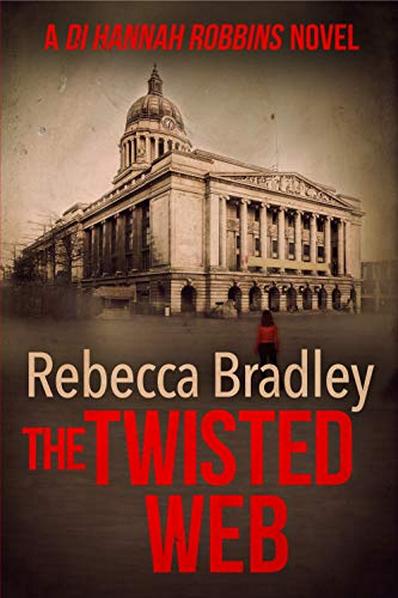
Dead Blind by Rebecca Bradley: A gripping thriller featuring a uniquely disqualified hero

Dead BlindDead Blind

by Rebecca Bradley

Kindle Edition, 358 pg.
2018
Read: August 9, 2018

There are two gripping stories in this novel — the primary one isn’t the crime story (odd for a work of crime fiction), but it is the better executed of the two. Which isn’t a slight to the secondary story, at least not intentionally.

Let’s start with the crime — DI Ray Patrick and his team are investigating an international organ smuggling ring. Every time I’ve run into this kind of story — in print or on TV — it has always been effective. Something about the idea of harvesting organs from people (who may or may not survive the process for at least a while) to transplant into people who may or may not survive (given the less than ideal facilities for such activities) has always disturbed me. Then when my son was diagnosed with renal failure and we were told he’d need a kidney transplant, these kind of stories became more nightmarish for me. So yeah, basically, this was right up my alley.

Thankfully, he’d received his kidney a couple of weeks before I read this one, so it didn’t end up costing me sleep. Incidentally, the facts and figures about transplants, the need for them and the lack of donors, etc. all lined up with everything we’d been told. Yes, there are differences in protocols between the two medical systems, but on the whole, what Patrick and the rest learned matched what I’d learned. When it comes to this kind of thing in novels, I’m always wondering how much the author fudged and how much came from research — I’m happy to say that Bradley got this right.

So this story — from how the ring operates to how Patrick and the rest investigate is very satisfying.

Which leaves the primary story. Patrick comes back to work from a nasty automobile accident, mostly recovered from his physical injuries. But that’s not the only injury he sustained. Patrick now is dealing with prosopagnosia, aka “face blindness.” Through some clever guesswork, and a whole lot of luck, he’s never revealed it to anyone other than his ex-wife (so she can help him with his kids). Now back at work, Patrick is attempting to hoodwink everyone into thinking he’s okay, because he doesn’t want to risk not losing his job.

On the one hand you want to see him pull off his silly scheme, on the other, you want to see him be the man of integrity everyone thinks he is and be honest with his colleagues and friends. Especially when Patrick’s inability to discern or remember faces jeopardizes the investigation.

Watching Patrick try to remember people via other means while trying to lead an investigation, and deal with the ramifications of the disorder in his personal life gives the book its emotional weight. And it delivers that in spades.

Patrick’s team is full of some pretty well-drawn characters, which also applies for the other people in his life — grounding the more outlandish flavorings of the other stories. I enjoyed the read and found it gripping — looking forward to seeing more from Bradley.

—–

3 Stars

Pub Day Repost: The Question of the Dead Mistress by E. J. Copperman, Jeff Cohen: Samuel Answers a Question a G-g-g-g-host

The Question of the Dead MistressThe Question of the Dead Mistress

by E. J. Copperman, Jeff Cohen
Series: Asperger’s Mysteries, #5
eARC, 288 pg.
Midnight Ink, 2018
Read: June 26 – 27, 2018

“Is my husband having an affair with a dead woman?”

That doesn’t seem to be the kind of question that Samuel and Ms. Washburn would tackle as Questions Answered. They typically take on things that require esoteric research, problem solving, and occasionally something that takes some investigation that looks a lot like the kind of thing a P.I. would do. Paranormal investigation is not in their wheelhouse. Samuel is almost reflexively dismissive of the idea — but his associate, Ms. Washburn makes him listen to the prospective client’s story. And then he tries to reflexively dismiss the question, but she won’t let him. While Samuel is convinced there’s nothing supernatural afoot — in fact, the notion is impossible — Ms. Washburn had an experience she can’t explain as a teenager, and refuses to rule it out.

So Samuel let’s her try to come up with an answer to the question and goes back to whatever he was doing before. Before she can get very far into her research, the husband is murdered. Suddenly, the question doesn’t matter as much as the replacement question, “Who killed my husband?” Given Ms. Washburn’s involvement, Samuel gets interested in things again — and the two get involved in a very twisty and complicated mystery. As far as twisty-turny-keep you guessing-mysteries go, this is the best that the duo has encountered and will easily satisfy the most puzzle-obsessed of readers.

What makes this even better — is that given the supernatural/supernatural-adjacent nature of the instigating question, the two are approaching things in very different ways and decide to operate largely separately. Samuel interviews people with assistance of other to drive him places or via the Internet, while Ms. Washburn goes on her own, trying to use Samuel’s methods. This change in modus operandi is refreshing for the characters and the readers, and will lead both Samuel and Ms. Washburn to re-evaluate the way they do business in the future.

The danger level in this one is great — and there are direct threats made against Ms. Washburn and Samuel’s mother and father. Which just makes Samuel more determined to come up with definitive answers quickly. The possible supernatural elements stay with the story throughout and it’s only near the end that all the characters come to the same conclusions about it. This novel features a great puzzle and the solution is very satisfactory — and one I didn’t see coming (but in retrospect makes complete sense).

So much for the mystery — there’s also plenty going on in Samuel’s personal life. On the whole I thought they dealt with it well, but…

I appreciated Samuel pointing out that Asperger’s is no longer a diagnosis, but he still claims it s a shorthand way to describe the way he acts/thinks to others. Which is just a great — and realistic — way to handle the change in status for the label. Let me follow that observation with this one — what frustrated me about this one — and I will admit I was very frustrated at times — is how little Samuel’s mother seemed to understand him. Ms. Washburn, too, but she hasn’t known Samuel as long — or as well as his mother. Dealing with the father who abandoned his family decades ago suddenly reappearing and trying to merge back into his life, would be difficult, complicated and messy. For someone like Samuel? Well, I’m guessing it’d be just as difficult and complicated — but he’d tell you exactly what’s going on with him. And Samuel does so — repeatedly. His father doesn’t believe him; Ms. Washburn seems to try to believe him, but doesn’t; neither does his mother. His mother has been with him every day of his life, devoting more of her life and energy to her son than most parents do — how does she not know him well enough to not double-guess his emotions? If Samuel says he feels “X,” then that’s probably exactly what he feels — unless you force him to look at things another way. Over and over again, his mother shows less awareness of Samuel’s reactions to things than almost anyone. It just didn’t ring true. Samuel’s Asperger’s isn’t new to her (or Samuel) — she shouldn’t act like this.

I should add — the authors know a whole lot more about all of this than I do, and their depictions of this are probably spot-on, I guess they just didn’t convince me about those depictions like they usually do. Also, in the overall-scheme of things, this was a relatively minor quibble and didn’t detract a lot from the pleasure I had in the book — it just took a lot of space to describe.

The trick to Samuel is to give him a little personal growth, a little greater awareness, a little understanding of himself and the emotional needs of others. Yet, only a little bit. I do think this is depicted faster (possibly unrealistically so) in the books — because outside of Nero Wolfe, Sherlock Holmes, or other Golden Age/Golden Age-like characters who don’t grow and evolve by design, we expect some sort of noticeable personal growth in our series characters (particularly the central characters) from book to book. Samuel shouldn’t give us much in that way — his evolution/growth/whatever you want to call it is going to happen on a glacial pace. And over the last three books (I really need to double back and read the first two in the series), he’s taken significant steps forward — so much so it’s like Ms. Washburn has slipped into forgetting that he’s not neurotypical a few times here. That makes sense, because their relationship (in every sense) is pretty new. Thankfully, she catches herself and deliberately attempts to accept that — and generally does – and recognizes when he’s trying. Because we readers get a direct pipeline to Samuel’s thoughts, we might have an easier time with it than she does, but she does a decent job (and his mother usually does, too). It’s a heckuva trick to pull off narratively, and Copperman/Cohen nails it, time and time again.

Another clever mystery, well-told with one of Crime Fiction’s most original and convincingly written characters (not a detective, just someone who can easily be mistaken for one) — this series is a consistently pleasant and rewarding read. The Question of the Dead Mistress is a great jumping-on point, and a welcome-return read for those who’ve spent time with the crew from Questions Answered before.

Disclaimer: I received this eARC from Midnight Ink via NetGalley in exchange for this post — thanks to both for this. My opinions are my own, however.

—–

3.5 Stars

Page 93 of 154

Powered by WordPress & Theme by Anders Norén