
Category: Mystery/Detective Fiction/Crime Fiction/Thriller Page 96 of 153

Ways to Die in Glasgow by Jay Stringer: Three distinct and entertaining voices take you on a tour of Glasgow’s underbelly

Ways to Die in GlasgowWays to Die in Glasgow

by Jay Stringer
Series: Sam Ireland Mysteries, #1

Kindle Edition, 289
Thomas & Mercer, 2015
Read: July 21 – 22, 2018

Inside the front door of the building, I checked the directory, looking to see which floor the firm was on, only to find that they used all of it. The recession hadn’t reached this far up the street. The reception area was decorated in muted shades of black and tan. Anything that didn’t share that colour scheme was made of glass. A woman who was far too young and far too skinny greeted me. She took my name and waved me into a large waiting area.

She didn’t whisper that she was a child slave or beg for help.

She didn’t ask if I could sneak her a cheeseburger.

So we are just dropped into the action here, no background, no setup, no idea who this guy narrating things is — the very definition of in media res, and, come to think of it — we are also dropped into the very definition of coitus interruptus. In this particular case the interruptus takes the form of a couple of guys trying to kill our narrator. Somehow, Mackie (the narrator) escapes — though injured — and seeks shelter at his Uncle’s place — which turns out to have been recently tossed by persons unknown (the people that came after Mackie?), and his Uncle Rab is nowhere to be found. Mackie gets patched up by his therapist and the two head out to search for Rab.

Once that’s underway, we jump back a couple of hours in time to meet our second narrator, Sam Ireland. Sam’s a newish Private Investigator who made a little splash in the news recently and is working enough to keep going, but not enough to pay rent on the office. So the office is now her apartment. It’s her father’s firm, but he’s in a retirement home and Sam’s trying to keep it alive — with a little help from her brother. Sam’s got an appointment with a potential new client, who insists on very strange meeting times (e.g., 11:23) — it’s the law office described in the quotation above. They’d read about her in the papers and wanted to hire her for some things, but first they want a test run — they’d like her to deliver some legal papers to a local celebrity author. As Sam says “…a Glasgow celebrity. . . is one way of saying dangerous.” He’s writing true crime memoirs now, and there’s a problem with his latest book so they need to serve him with papers — but can’t find him, can Sam? For the price they’re willing to pay, yes, yes she can. The celebrity’s name? Rab Anderson.You begin to see the fun here.

It turns out that our third narrator, DI Lambert, also has a vested interest in finding Rab. But there’s the tiny little thing called a job that is interfering. There’s a suspicious death that he really wants to write off as a suicide, but the guys from the Lab won’t let him. He also has connections to our other narrators. He’s a friend of Sam’s and will occasionally bend a rule or two to help her with some information. He’d also arrested Mackie some years back on a pretty serious charge.

The novel is told bouncing back and forth through each of these narrators (sometimes the same scene is retold from a different perspective) — there’s a little bit of shifting back and forth through time to keep everyone at about the same point, but it’s easy to follow. Each of these narrators has a great and distinctive voice — you really don’t need the chapters to tell you who is “speaking” you get it within a sentence (not that I mind the help). I could easily read an entire novel from one of their perspectives — Lambert’s wouldn’t be as entertaining as either Mackie’s or Sam’s, but it’d still hold up. Bringing these three voices — from radically different backgrounds, education, age, experience, vocation — but all representing Glasgow. Mackie’s a great, great character — he’s the first we get to know in this book, and in many ways, he’s the heart. But Sam’s the star — she’s stubborn, reckless, clever, and resourceful. That doesn’t quite make up for the fact that she’s a small woman with little ability to defend herself — but she frequently has her large brother along to offset that.

One of my favorite parts of John Wick was how we’re dropped into this extensive underground world with relationships, rules, alliances and whatnot — as the film goes on we grow to understand them. Something very similar is at work in this novel — we don’t have a point of entry character, really (Sam’s close), we have nothing really to get us oriented in this reality other than what happens when the characters interact and what we learn from that. This is a rich world full of many colorful, dangerous people. It’s not long before we move beyond the hunt for Rab and dive deep into the murky waters surrounding him, Mackie and Lambert — and hope that at least someone is able to survive before Sam gets drug under as well.

That metaphor may have gotten away from me. But oh well . . .

This is a violent book — make no mistake. It’s a visceral blood bath at times — and its disturbing. But honestly? The hard scene to get through had no blood, no guns, knives or anything. It was a chapter where a father thinks about the trouble his daughter is in and what he can do to help her — it’s a couple of pages long, helps build the tension, it deepens the mystery, and just breaks your heart. Give me a dozen bloody corpses any day over that.

If there’s one thing I’ve learned from Kate McCall and Sam Ireland, it’s that daughters should not take over their father’s PI business unless they’re ready to learn a lot about their father that they didn’t want to know. It’s possible that’s true for daughters taking over any business of their father’s — I’m not sure, I should probably read more about them, but I don’t recall a lot of novels being written about daughter’s taking over for their father’s CPA firm or pizza parlor or dry cleaning business. There’s a pretty big difference between these two ladies (there are plenty of similarities, now that I think about it, too). Kate is surrounded by oddballs, eccentrics, and actors up for anything who are generally good-natured and willing to help her. Sam is surrounded by people she can’t trust, people she shouldn’t trust, a brother who has to be harassed into helping her out, a maverick cop, and a whole lot of shady characters — all of whom (except the brother and probably the cop) would be just as likely to drop her in a grave as they would be to lend her a helping hand.*

I thoroughly enjoyed this book and am definitely coming back for more from Stringer. It’s twisty, it’s violent, it’s got a lot of heart, it’ll put a smile on your face and get you to come back for more. Check out this unique look into Glasgow.

* This isn’t to knock McCall & Co. — I actually rather enjoyed the book, and plan on reading the rest of the series soon. It was just a parallel I thought of when reading this.

—–

4 Stars

The Blue Kingfisher by Erica Wright: Kat Stone — and her wonderful wigs — are back for more danger

The Blue KingfisherThe Blue Kingfisher

by Erica Wright
Series: Kathleen Stone, #3
eARC, 320 pg.
Polis Books, 2018
Read: August 1, 2018

So, Kat Stone, private investigator, is trying something new — she’s being herself. No disguise, no wig, no fake name (well, most of the time). There’s no need, the person she was hiding from has found her. He hasn’t done anything about it — but there’s no need to go to extra effort. But she’s not used to just being Kat Stone anymore — and that’s going to take a little work.

One morning, Kat finds a body — a body in horrible shape in the shadow of the George Washington Bridge. While waiting for the police, she recognizes the body — the maintenance man from her apartment building, Tambo Campion. The police are quick to dismiss the death as a suicide, but Kat’s unconvinced. Why would someone trying to kill themselves miss the water so completely?

This, of course, isn’t enough. So she ignores paying customers for a bit to launch her own investigation, trying to find more evidence. She doesn’t necessarily have to find the murderer, she just needs more evidence to get anyone in the NYPD to take her seriously enough to investigate his death. She plunges into Tambo’s life — partially driven by guilt that she didn’t pay him enough attention in life. It turns out that Tambo is a kingfisher, someone who finds jobs for people who aren’t in the country legally or who are wanting to stay off-the-radar, for a fee. This alone provides several avenues of investigation. But there are others, too, don’t get me wrong. All of these take her into all sorts of corners of NYC society — and gives her an excuse to dabble in different identities.

The NYPD requirement of “more evidence” is a trigger of sorts for her. It reminds her of the constant refrain from her superiors during her undercover days at the NYPD. They always wanted more evidence — even when she becomes concerned for her own safety, they say she hasn’t done enough, she needs more evidence to bring down Salvatore Magrelli. Between the Magrelli knowing where she is now, and this requirement, Kat spends a lot of time ruminating on the times she felt most threatened by Magrelli — and the things she didn’t provide enough evidence on. While she has several other things going on in her life, these are the thoughts that dominate her attention.

As interesting as the murder case is, obviously, it’s the Magrelli (past and present) stories that provide the major emotional hook for this novel. Even while she’s meeting with success at Kat Stone, even when she finds evidence of a crime — multiple crimes, actually. She can’t get out of the shadow of her past or the threat of the present.

I failed to get around to reading the first book in this series, after reading The Granite Moth, which really bugs me, so I can’t really comment between the ties between it and this book, but I’m reasonably certain there are some. Characters from The Granite Moth show up here and events from it are discussed as well, which is always nice, too many PI novels ignore what happened before. I don’t know (but I can’t imagine) that too many people from The Blue Kingfisher will show up down the road, but I’ll be happy to see any of them that do. But several events from this book will show up soon.

I remembered liking Kat Stone – I didn’t remember how much or why I did, and I’m very glad I got to rediscover her. Kat is clever, very clever when she’s not distracted. She’s resourceful. She may not have the skills of Lori Anderson or even Charlie Fox when it comes to weapons or hand-to-hand, but she’s got a mental toughness that’s hard to beat. And I really hope to see how she moves forward — because there’s just no way that what comes next is going to look too much like what’s come before, and I’m very curious about that. The New York she travels in isn’t the one I’m used to seeing (it’s not so different that I don’t recognize it) in Crime Fiction, and the way she sees the world is a fresh perspective.

The writing in this one — and this is not a knock on The Granite Moth — feels more disciplined, the plot more controlled. I took it as a sign of growth, that whatever Wright intended to accomplish in this book was clear to her and she executed things to that end. I’m almost more curious about what she’ll do next than what Kat will do next. Almost.

This isn’t a criticism, this is more of a wonderment: There is a lot of time spent on Kat’s affection for New York City. Do people spend a lot of time doing that, really? Thinking about how much they love/appreciate the town they live in (assuming they do)? Her leaving town was brought up once — indirectly — but it wasn’t like anyone was really suggesting that to her — and even after she made it clear that it wouldn’t happen, there it is again, her love for NYC. I could see it fitting in if people were actively trying to get her to move, or if she’d just returned after some time away (on a job, in self-appointed exile, etc.) — but given her situation, it felt forced. Now, I liked the way she expressed it, and I can understand her affection (theoretically, anyway, I’ve never been there). It just seemed out-of-place and/or unnecessary.

This is a good, satisfying PI novel with a protagonist that you will definitely enjoy. Like its predecessor, it’s a decent jumping on point for a new reader, and a welcome return to the world for someone who’s met Kat before. I’m eagerly awaiting the next book in this series already.

Disclaimer: I received this eARC from Polis Books via NetGalley in exchange for this post — thanks to both for this.

—–

3.5 Stars

True Fiction by Lee Goldberg: A Writer on the Run

True FictionTrue Fiction

by Lee Goldberg
Series: Ian Ludlow Thrillers, #1

Kindle Edition, 248 pg.
Thomas & Mercer, 2018
Read: July 20 – 21, 2018

“Sorry I’m late,” Ian said. “I’ve been on the run all morning.”

It was a line worthy of Clint Straker and Ian knew it. He couldn’t stop being a writer, always thinking of the next line in one of his thrillers. But he was living a thriller now and it was no thrill at all.

This is one of those books that’s super easy to write about — if you like the premise of the book, you’ll like the book. It’s just that simple. The tricky part is finding someone who wouldn’t like this premise.

Ian Ludlow, television writer turned thriller novelist, can’t believe his eyes — a terrorist attack in Hawaii went exactly the way that he designed and he’s pretty sure that someone is trying to kill him. Ludlow was part of a group of writers (movie, TV, novelists) that came up with some scenarios for the CIA that terrorists might use, so the CIA could design counter-measures. This is a thing that actually happened (maybe still does) following 9/11, because writers have much better imaginations than government employees do. One of those scenarios is playing out in real life and Ludlow doesn’t know what to do. Clearly someone out there doesn’t want Ludlow spreading the word that he’s the source for this attack.

Before he realizes what’s happening, Ludlow is running for his life and has dragged Margo along with him. Margo’s a dog-sitter, house-sitter, aspiring musician, and occasionally drives authors visiting Seattle to their signings. That’s how this poor girl gets sucked into Ludlow’s mess — she saves his life (and then he returns the favor), dooming her to having to run with him.

Add in some over-the-top villains (I hope, see below), and Goldberg’s signature wit and solid writing, and you’ve got yourself a winner.

This is a fast fun ride featuring about the most unlikely of all thriller protagonists. Ian Ludlow isn’t really in any kind of shape; he has no skills with hand-to-hand combat, cars, or weapons — his people skills are suspect, really; all he has going for him is a pretty agile mind. Margo’s a little better off, but not much. They quickly run to the home of one of Ian’s friends who lives off of the grid and is paranoid enough he’ll believe their story. Which may not really be the strongest of qualifications, but they can’t afford to be choosy. The three of them will have to figure out a way to survive — and possibly stop whoever it was behind the attack.

Does anyone else remember Condorman? The Disney film about a comic book writer/artist who accidentally (very accidentally) becomes a super-spy? I was 7 or 8 when it came out and loved it. Anyway, I had a flash-back to that when Ludlow stumbles his way into taking out one of the many assassins that come after him — one of the many times I had an honest audible response to this book (not a book I recommend reading in an ICU ward, for what it’s worth, people tend not to like noises there).

Now, I called the villains over-the-top. I’m not really sure they are — they seem over the top, but there’s a little part of me wonders how hard it really would be for someone to pull off something like this. John Rogers, of Leverage, frequently talked about how some of their over-the-top bad guys were watered down versions of the real thing (because no one would believe the real thing). Take my word for it, I don’t have time to track him down saying it. Let’s put it this way — they’re perfect for this book, and like just about every thriller villain ever, it’s best that they stay inside the book.

While he’s telling a very fun story, Goldberg takes a little bit of time to satirize thrillers, thriller writings, and thriller heroes — I loved every bit of that. It helps that Goldberg writes and reads the same books he’s satirizing, so you know he does it with love and honesty. Some of the excerpts from Ludlow’s books are just awful, it must’ve been hard to write (but so much fun). Ditto for the TV shows that Ian’s friend Ronnie starred in, I really hope that those are things that Goldberg made up for this book (and fear they aren’t).

This feels like Goldberg and Evanovich’s Fox & O’Hare books, or maybe The Man with the Iron-On Badge (which features a protagonist only slightly more likely than Ian) — not his more serious work like King City. The story moves quickly, deftly and will leave you smiling — I can’t imagine Goldberg writing a disappointing book at this point, I just don’t think he can. Pick this up, you will be entertained.

—–

4 Stars

Colorblind by Reed Farrel Coleman: Jesse Stone is Clean, Sober and in Dire Straits

ColorblindRobert B. Parker’s Colorblind

by Reed Farrel Coleman
Series: Jesse Stone, #17

eARC, 368 pg.
G. P. Putnam’s Sons, 2018
Read: July 18, 2018

This is Coleman’s fifth Jesse Stone novel, the seventeenth in the series overall and Coleman has really put his stamp on the character here. He’s made the series his own already, adding depth and shades of color to characters that’ve been around for years, don’t get me wrong. But everything he’s done could be changed, dropped, or ignored in the next — like an old Star Trek or Columbo episode. But following up from the closing pages of The Hangman’s Sonnet, in Colorblind he’s enacted permanent change on Jesse — yeah, things might not go smoothly from this point — he may stumble. But things won’t be the same — cannot be the same without some sort of Star Wars Expanded Universe level retcon. But I’m getting ahead of myself.

First we need to start with the crime part of the novel — it’s ostensibly what people are buying this for, and the novel’s focus. I can absolutely see this happening in Real Life ™ — a white supremacist group from New York is attacking mixed race couples (and by “mixed,” I obviously mean one white person and one person from another race — they wouldn’t care if an Asian man and a Hispanic woman were together) and spreading propaganda in Paradise, of all places. There’s a reason Paradise was chosen — several, actually, and it actually makes sense in context — it’s not just a convenient way to get it into a Jesse Stone novel. Only one of the crimes involved is technically something that Jesse is supposed to be investigating.

Once one of his officers becomes embroiled in this series of crimes — and the possible target of an elaborate frame job — Jesse stops really caring about things like jurisdictions, and will stop at nothing to find the truth. If there’s a connection between the different crimes, he’ll find it. The question he has no answer to is: for what end? Why are these people in Paradise? What do they have to gain from framing his officer?

Yes, certain elements of this story stretch credulity a bit — but in context it absolutely works. And while I say something stretches credulity, I can’t help but wonder if it really does. The actions of this particular supremacist group might not be that much different from the dreams of too many. Also, the race-based crimes, the murders, the vandalism — everything that Paradise or Massachusetts can prosecute people for — are not the biggest evil perpetrated by the members of that group. There’s a deeper darkness working here, something that people with radically different views can also perpetrate — Coleman could’ve gone the easy route and made it all about “Them,” but he points at something that everyone can and should recoil from.

While Jesse works to prevent things from getting out of hand in Paradise, he is struggling to prevent himself from doing what he’s so often done before — retreat to the bottle. He has several reasons to, several excuses to — and decades of experience telling him to do so. Fresh (Very, very fresh) off a stint at rehab, Jesse starts attending AA meetings (in Boston, nothing local that could cause problems for himself or anyone else in the meeting). I absolutely loved this part of the book — I think Coleman’s treatment of Jesse’s drinking (and his various attempts to limit/stop it) has been so much better, realistic and helpful than anything that came before. Colorblind takes that another step up, and sets the character on a path that he needs to be on. Jesse’s not a rock, but he’s working on becoming one when it comes to this addiction. I don’t know (don’t want to know) where Coleman is going with this — but I love it. Character growth/development, an actual healthy approach, and Coleman’s own stamp on the series. Even if Jesse relapses in the future, he’s actually been sober (not just taken a break from drinking) — I love it (have I mentioned that?). It may have been a little too on-the-nose to have Jesse’s new AA friend be named Bill, but, it made me smile.

As for the regulars — we’ve got some good use of Healy (retirement can’t stop him!); Lundquist is settling in nicely to this world (very glad about that, I’ve liked him since his intro back that other Parker series, whatever it was called); Molly was outstanding (it’s hard to mis-write Molly, but it’s very nice when it’s done correctly); and Suit is still the guy you want riding shotgun when things get harry (ignoring the fact that someone else was actually carrying the shotgun when it came to it — it’s a metaphor, folks!). Surprisingly enough, given the B-Story, Dix doesn’t make an appearance — but Jesse can’t stop thinking about him, so he’s here, he’s just “offscreen.” That was a nice touch (and hopefully not too much of a spoiler), it’d have been very easy to have almost as much Dix in this book as Jesse. Coleman has not only got the original cast of characters done well, he’s introduced a few of his own regulars and has merged them into this world well (e.g., Mayor Walker, Monty Bernstein). And it’s not just characters he’s blending, this book is full (not overstuffed) of call-backs to the oldest Stone novels as well as Coleman’s — this universe is alive and well and whole.

As far as the writing — it’s Reed Farrel Coleman, I really don’t need to say anything else. I will say a little bit, though, he balances the various stories and tones of these stories well — the book feels like a natural outgrowth of every book that came before, however minor the stylistic choices and depth have changed over the last few years. Parker could have written this. I don’t think (especially in the latter years) he would have, but he could have. Yet, it’s undeniably a Coleman book. It’s impressive the way that Coleman can do this (see almost everyone that’s tried a Bond novel [honestly haven’t tried one in years, maybe someone has], or Robert Goldsborough to see that not everyone is capable of it). There is one moment, I thought, that Coleman faltered a bit and got into some pretty heavy editorializing — if this was a first person book, it would have worked; or if he had been obviously channeling one of the characters, I wouldn’t have said anything; but when your omniscient third-person narrator gets that opinionated, it’s not good.

A solid crime story that resonates near the too-close-for-comfort zone given the cultural events (which probably is how some people felt with 1970’s Parker), some great character development — and plenty of fodder for Coleman’s next (I ignored one storyline above because I don’t think I can talk about it without ruining it). This is a must for Jesse Stone fans and a decent entry point for new readers, too — it’ll get you to go back and read at least a few older books (I’m more than willing to help a new reader with an “Essential Jesse Stone” reading list — just let me know). Give this one a look folks, it deserves it.

Disclaimer: I received this eARC from Putnam Books via NetGalley in exchange for this post — thanks to both for this.

—–

4 1/2 Stars

Pub Day Repost: Rescued by David Rosenfelt: A tale of self-defense, an old flame and a truckfull of dogs

RescuedRescued

by David Rosenfelt
Series: Andy Carpenter, #17
eARC, 304 pg.
Minotaur Books, 2018
Read: May 4, 2018

At an early age, Andy Carpenter discovered that he couldn’t hit a curve-ball and therefore had to give up on his dreams of playing in the majors and fall back to following in his father’s footsteps and becoming a lawyer. His father, a lifelong prosecuting attorney, probably wished for something else, but for the many people that he’s defended in court, they wouldn’t have it another way.

This is the seventeenth novel in this series — I’ve talked here about nine of the previous sixteen. There’s part of me wondering just what I could possibly have to say about this one that I haven’t said at least once before.

Andy Carpenter is called to a nearby rest area — a truck containing sixty-one dogs was discovered with the driver shot. Andy and Willie were called out to help the police retrieve the dogs and care for them. The police are really not happy to see him there — Andy Carpenter at a crime scene? Not a welcome sight. But then he’s called away, there’s a prospective new client waiting for him at home.

Not that surprisingly, the potential client was also at that rest area earlier in the day. He actually tells Andy that he shot the driver — in self-defense, mind you. Sure, there’s a history between the two — Kramer (the client) had assaulted the victim and threatened to kill him, in fact. But that was years ago, and he had no current reason to. He just needs some help with the inevitable arrest. Andy believes him — he has to. Kramer is Laurie’s ex and she vouches for him — so much so that Andy pretty much has to take the case for her sake.

Honestly, Andy really isn’t that interested in helping tall, hunky and dangerous Kramer — ex-Military, ex-police, ex-licensed investigator. But it’s not long before he starts to believe that there’s something more afoot. And what was the deal with all the dogs?

All the regulars are along for this ride — Pete Stanton brings the law and order, we get a little more about the fun side of Hike that was introduced in the last book, Sam and his hacking crew dig up plenty of information, Marcus is his typical imposing self, Tara is as loyal as ever — and Andy gets a lot of courtroom time in. There’s a new prosecuting attorney for him to face off against — I liked her, and would like to see her against Andy again.

I don’t think it’s much of a spoiler here, because it’s pretty much the default in this series, but there’s a conspiracy behind the murder and they men behind it have decided to frame Kramer. This is one of the better — or at least one of the more grounded — conspiracies featured in these books. Up to a point, some of it was pretty hard to swallow — it just went a little over the top for my taste (but many of them do in this series). Also, this one features the best code names this side of Reservoir Dogs. Still, it was one of the more clever solutions that we’ve been treated to lately.

A thought about the series as a whole at this point: I would appreciate it if Rosenfelt would shake things up a little bit — I’m not talking about killing Hike or splitting up with Laurie or anything — just dial down the super-criminals a bit, maybe spend some more time with the client again. But there’s little reason for him to do that — the series moves like clockwork and is reliably entertaining. I only say this because I’m a fan — Rosenfelt is in danger of becoming a parody of himself (at worst) or just putting out cookie-cutter books (at best), I don’t want Andy Carpenter to become a Stephanie Plum.

This is not to say that I didn’t enjoy the book — because I did. Andy, Sam, Pete, Vince, Laurie, Tara and the rest are old friends that I enjoy getting together with every few months. Rosenfelt’s latest demonstrates what’s been true for years — this series is at the point where you can reliably count on each book for an entertaining read, a puzzling mystery, some good comic moments, a nice dog or two and maybe even a tug on the heart strings. They’re still charming enough to win over a new reader (and any of the books serve just fine as entry points) as well as satisfying the long-term reader. Rescued delivered just what I expected and left me satisfied — satisfied and ready to read number 18.

Disclaimer: I received this eARC from St. Martin’s Press via NetGalley in exchange for this post — thanks to both for this, it was a real pleasure.

—–

3.5 Stars

The Death Pictures by Simon Hall: A Solid Sequel featuring a Procedural and a Puzzle

The Death PicturesThe Death Pictures

by Simon Hall
Series: The TV Detective, #2

Kindle Edition, 282 pg.
Fahrenheit Press, 2018
Read: July 10 – 11, 2018
So here we are a few months after the events of The TV Detective, and while Dan Groves, TV reporter, and DCI Adam Breen aren’t working together any more, their friendship has grown and both of the careers are improving from their collaboration. So when there’s a serial rapist on the loose — one who made a point of leaving a calling card at the crime scenes to get public attention — both of their bosses are interested in them renewing their partnership (even if no one ever gets to hear about his calling card).

Around the same time, there’s a famous artist dying of cancer who is using his impending death as a launching pad for a contest of sorts — it raises money for charity, and raises his public profile a bit, too (not that it needed much). Dan has been tapped by his producer and the artist’s wife to help with the final part of the contest, and to do his final interview — most to be aired upon his death. This is so far from the rape case that it seems odd to spend time on it — until the artist dies under mysterious circumstances. A murder inquiry into a celebrity’s death obviously gets the police’s and public’s attention — although it’s really seen as more of a distraction from protecting women who are prospective targets of the rapist by Adam and his team. For the most part at this point, Adam and Dan tackle the murder investigation and his team handle the rapes, and Dan pretty much only covers the case as a reporter (with an inside track, of course), but not as an investigator.

Arrests are made pretty early on in both cases — it’s in the aftermath of the murder investigation and the contest that the latter part of the novel focuses on. The puzzle’s solution is clever, but the reader can see it coming (we do have a little more information than all the characters), but that only adds to the sense of drama leading up to the Reveal. I thoroughly enjoyed watching Dan through this story — both his official work as a reporter or with the police and his unofficial personal obsession with the puzzle.

As for the rape story? I don’t mean to sound cold, but there was something very cookie-cutter about the motivation and perpetrator. Horrible, yes; disturbing, yes, but nothing that hasn’t been on Law & Order: SVU an estimated 3,709 times — I’m not saying badly written or boring, just something I’ve seen before. But when Adam gets him in the interview room and he starts laying out his defense? That was utterly chilling. As I write this, I imagine the accused’s approach is not completely novel in Crime Fiction, but man . . . the way that Hall depicts this guy? Chilling.

Dan’s frequent work on the contest is reminiscent of his search for the Ted Hughes Memorial in The TV Detective, but is obviously tied more closely to the plot of this novel. I don’t recall another series doing something like this in book after book — I hope Hall continues it.

There’s something that happened to Dan in the past that was alluded to in the previous book and is talked around a good deal here. We’re not going to get more details on that in Book 3 (I bet), but I expect to see it wreak havoc on Dan’s life and various relationships soon. Similarly, there’s something that happens in this book to Adam — that will possibly do worse pretty soon. Both of these guys are ticking psychological bombs.

I have one gripe: the formatting. There are occasional — maybe even rare — white space breaks between sections of the story, but by and large they are conspicuously absent. Which is problematic when the perspective changes from character to character — what’s worse is when the perspective change introduces an entirely new character and you don’t know how this new name connects with anything. It honestly only caused a real problem for me once, but was frequently annoying.

I should stress when your complaint about a book has to do with Kindle layout (who knows what the paperback looks like), there’s a lot that’s working pretty well.

The Death Pictures is a solidly entertaining mystery novel that recaptures a lot of the high points of its predecessor, but isn’t just a repeat of it. This series has legs, that’s obvious, and I look forward to returning to it to see what happens next.

.

—–

3.5 Stars

Needle Song by Russell Day: Great characters, strong writing, and a clever solution to the mystery make this one of 2018’s best.


Needle SongNeedle Song

by Russell Day
Series: Doc Slidesmith, #1

Kindle Edition, 380 pg.
Fahrenheit Press, 2018
Read: July 2 – 4, 2018

He’d changed again in some way. Like he had the night in The Jericho putting out The Jive. But this was different again. The Jive was showmanship. The good Doctor Slidesmith in full sail. This was more intense. I’d see him like thus on occasion in the shop, absorbed in the ink and the song of the needle. I wouldn’t say lost in what he was doing. Lost implies lack of control.

For the first time that evening, it struck me he needed an audience, not to watch him but for him to watch. Like a dial on a machine, not part of the process, just a way of monitoring it.

Back when I posted about the short story featuring Doc Slidesmith, Not Talking Italics, I said that if Needle Song was anything like it, “I’m going to have to go down to the superlative store this weekend to stock up before I write anything about it.” I’m fully stocked (now) and ready to go.

I was disappointed — somewhat — and relieved to see that the all-dialogue, no narration, no other description approach of Italics was nowhere to be seen. I could’ve read 380 pages of that (see my love for Roddy Doyle), but I know it’s not that approachable and will turn off some readers.

Now, I don’t know if anyone but Karen E. Olson has envisioned a tattoo shop as a hotbed of crime fighting — or the staff of such to be the source people would turn to for help with legal difficulties. But it works — all because of the owner of the shop, former psychologist, current Voodoo practitioner and Tarot reader, Doc Slidesmith. On the surface, you see a rough-looking — striking, I think, bordering on handsome — but your basic leather-glad biker type, covered in ink — and will underestimate him. Only those who’ve been in conversations with him, those who’ve given him a chance will see the charm, the intelligence, and the indefinable characteristic that makes people come to him for help in times of trouble. In many hands, Doc’s…peculiar resume, shall we say, would end up this cartoonish mish-mash of quirks. But Day is able to make it work — there’s a reason that Doc ended up where he is, we don’t need to know it, but it makes him the man (and armchair detective) that we want to read about.

Andy Miller — known to many as “Yakky” (he’s not a chatty type, his tattoos are all placed so that he can hide them all with this clothing, like a member of the Yakkuza), is the tattoo apprentice to Doc Slidesmith. He lives with his father — a thoroughly unpleasant and manipulative man, that Yakky feels obligated to care for. While clearly appreciative for Doc’s tutelage, and more in awe of his mentor than he’d care to admit, he’s also more than a little skeptical of Doc’s interests, beliefs and practices that aren’t related to his tattooing. He’s our narrator. He’s not your typical narrator — he’s too frequently angry at, dismissive of and unbelieving in the protagonist for that. Which is just one of the breaths of fresh air brought by this book. Yakky is singularly unimpressed by Doc’s playing detective — but in the end, is probably as invested (maybe more) in the outcome.

Jan is brought by Chris Rudjer (a long-time client and friend of Doc’s) for a Tarot reading, which brings her some measure of comfort/reassurance. So that when, months later, her husband kills himself, she comes looking for another reading — which turns into seeking help in general. Not just for her, but for Chris, with whom she’d been carrying on a not-very-secret affair for months. While it seemed obvious that her husband had taken his own life when she found his body, there were some irregularities at the scene. When the police add in the affair Jan was having with someone with a record for violent crime, they get suspicious. Slidesmith does what he can to help Chris prepare for the inevitable police involvement, and enlists Yakky to help, too.

Yakky takes Jan home to stay in his spare room. She can’t stay at home — the memories are too fresh, there are problems with her husband’s family, and (she doesn’t realize it yet) there are people following her and Doc and Yakky are worried. The dynamic between Jan and Yakky, and between Jan and Yakky’s father, end up providing vital clues to her character and psychology. This will end up proving vital to their case.

As Doc and Yakky begin digging around in Jan’s life, it’s immediately obvious that very little is as it seems. Now, if you’re used to reading Crime Fiction featuring serial killers or organized crime, you’ll think a lot of what they uncover is pretty small potatoes. But it actually seems worse — it’s more immediate, more personal — serial killers have their various pathologies, mobster’s are after profits and power — these people are just about hate, cruelty and control. Maybe it’s just me, but it seems worse in comparison.

There’s a depth to all of these characters that I could spend a lot of time thinking/writing/reading about — for example, our narrator, Yakky. I have at least a dozen questions that I feel I need answers to about him. At the same time, I think at least eleven of those answers could ruin the character for me. Ditto for Doc, Gina (another artist in the shop), or Chris. It’s a pretty neat trick — one few authors have been able to pull off, creating a character that you can tell has a compelling backstory, but that you don’t really want to know it (see Parker’s Hawk or Crais’ Pike — or the other mercenary Crais has had to create now that we know too much about Pike). I know who these people are now, and look forward to seeing what happens with them — and that’s good enough. It’s hard to tell, always, just why Doc’s working on this — is it for fun, is it out of a sense of obligation to Chris, does he feel bad for Jan, is it some of all three? Yakky will frequently talk about The Jive — the showmanship that Doc brings to Tarot readings, conversations, and dealing with difficult witnesses — it reminds me frequently of B. A. Baracus’ complaining about Hannibal’s “being on The Jazz.”

The plot is as intricate as you want — there are twists, turns, ups, downs — both with the investigation and in the lives of those touched by it. This doesn’t have the flair of Not Talking Italics, but the voice is as strong, and everything else about the writing is better. It’s a cliché to say that Day paints a picture with his words, so I won’t say that. But he does etch indelible patterns with the tattoo-gun of his words — which isn’t a painless process for all involved, but the end result is worth whatever discomfort endured. Day doesn’t write like a rookie — this could easily be the third or fourth novel of an established author instead of someone’s talented debut.

I’m torn on what I think about the details of the ending, wavering between “good” and “good enough, but could have been better.” It’s not as strong as the 94% (or so) before it, but it’s probably close enough that I shouldn’t be quibbling over details. I’m not talking about the way that Doc elicits the answers he needs to fully explain what happened to Jan’s husband (both for her closure and Chris’ safety), nor the way that everything fits together just perfectly. I just think the execution could be slightly stronger.

Whether you think of this as an amateur sleuth novel, a look into the depravity of the suburbanite, or an elaborate Miss Marple tribute/pastiche, the one thing you have to see is that this is a wonderful novel. I’m underselling it here, I know, this is one of those books that you best understand why everyone is so positive about it by reading it. You’ve got to expose yourself to Doc, Yakky and Day’s prose to really get it. One of the best books I’ve read this year. My only complaint with this book? After reading so much about the “song of the needle,” the shop, the work being done there — I’m feeling the pressure to get another tattoo myself, and soon.

—–

5 Stars

BOOK SPOTLIGHT: Needle Song by Russell Day

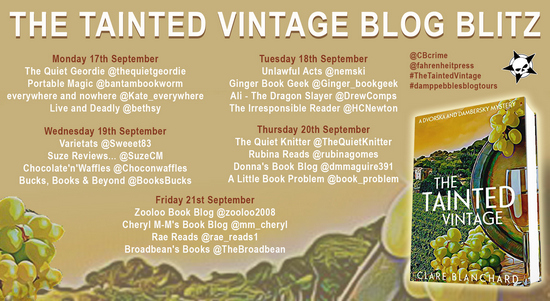
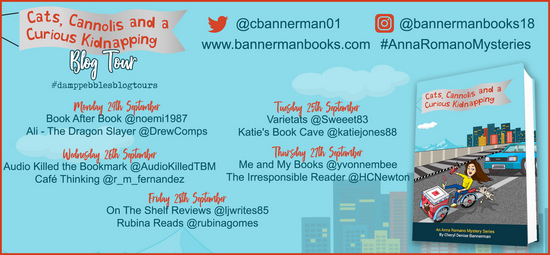
Today we welcome the Book Tour for the fantastic Needle Song by Russell Day — I’m just hoping this stop matches the quality of the rest of the tour (seriously, check out the graphic below to see some of the other posts). Along with this spotlight post, I’ll be giving my take on the novel here in a bit.

Book Details:

Book Title: Needle Song by Russell Day
Publisher: Fahrenheit Press
Release date: April 28, 2018
Format: Paperback/ebook
Length: 380 pages

Book Blurb:

Spending the night with a beautiful woman would be a good alibi, if the body in the next room wasn’t her husband.

Doc Slidesmith has a habit of knowing things he shouldn’t. He knows the woman Chris Rudjer meets online is married. He knows the adult fun she’s looking for is likely to be short lived. And when her husband’s killed, he knows Chris Rudjer didn’t do it.

Only trouble is the police disagree and no one wants to waste time investigating an open and shut case.

No one except Doc.

Using lies, blackmail and a loaded pack of Tarot cards, Doc sets about looking for the truth – but the more truth he finds, the less he thinks his friend is going to like it.

About Russell Day:

Russell DayRussell Day was born in 1966 and grew up in Harlesden, NW10 – a geographic region searching for an alibi. From an early age it was clear the only things he cared about were motorcycles, tattoos and writing. At a later stage he added family life to his list of interests and now lives with his wife and two children. He’s still in London, but has moved south of the river for the milder climate.

Although he only writes crime fiction Russ doesn’t consider his work restricted. ‘As long as there have been people there has been crime, as long as there are people there will be crime.’ That attitude leaves a lot of scope for settings and characters. One of the first short stories he had published, The Second Rat and the Automatic Nun, was a double-cross story set in a world where the church had taken over policing. In his first novel, Needle Song, an amateur detective employs logic, psychology and a loaded pack of tarot cards to investigate a death.

Russ often tells people he seldom smiles due to nerve damage, sustained when his jaw was broken. In fact, this is a total fabrication and his family will tell you he’s has always been a miserable bastard.

Russell’s Social Media Links:
Twitter https://twitter.com/rfdaze

Purchase Links for Needle Song:
Amazon UK https://www.amazon.co.uk/Needle-Song-Russell-Day-ebook/dp/B07CR9SJ5T/ref=sr_1_1?s=digital-text&ie=UTF8&qid=1526549901&sr=1-1

Amazon US https://www.amazon.com/Needle-Song-Russell-Day-ebook/dp/B07CR9SJ5T/ref=sr_1_1?ie=UTF8&qid=1526549972&sr=8-1&keywords=needle+song

Fahrenheit Press http://www.fahrenheit-press.com/books_needle_song.html


My thanks to damppebbles blog tours for the invitation to participate in this tour and the materials they provided.

The Naming of the Dead by Ian Rankin: Rebus and Clarke find themselves in (well, next to) the middle of Global Politics.

The Naming of the DeadThe Naming of the Dead

by Ian RankinSeries: John Rebus, #16

Hardcover, 464 pg.
Little, Brown and Company, 2006
Read: June 22 – 25, 2018

           “Know what I think? I think all of this is because there’s a bit of the anarchist in you. You’re on their side, and it annoys you that you’ve somehow ended up working for The Man.”

Rebus snorted a laugh. “Where did you get that from?”

She laughed with him. “I’m right though, aren’t I? You’ve always seen yourself as being on the outside–” She broke off as their coffees arrived, dug her spoon into her cappuccino and scooped foam into her mouth.

“I do my best work on the margins,” Rebus said thoughtfully.

Rebus is on the verge of retirement — really, he’s about to be forced out, he’s at the stage of his career where many detectives would be just coming into the office and doing nothing — if not outright retiring already. And, truth be told, that’s precisely what everyone in the force seems to want (except for a few allies/friends), particularly the top brass. None of which Rebus has an interest in. He’s going to have to be pulled out, kicking and screaming — probably with someone barring the door after he’s out.

So when the G8 comes to Edinburgh in 2005, the police have their hands full with security, protests, riot preparations, and whatnot. They’re importing help from all over Scotland and even England. Everyone has plenty of assignments to deal with, everyone but John Rebus, that is. So when a clue comes up that might turn into something interesting on months-old murder case, he’s ready and raring to go. That evidence seems to point at multiple victims, too — so Siobhan Clarke is put in charge of that investigation, just please keep it quiet until all the important people have gone home (and yes, everyone is fully aware of the insult of putting the DS in charge of the DI on this one). Thankfully, there’s a suspicious-looking suicide that’s related to the G8 for Rebus to focus on.

At least one of the victims in Clarke’s case has an obvious connection to Big Ger Cafferty, too. Because why not make this all interesting? Big Ger’s the target of a local politician who happens to be making a lot of waves thanks to being in all the right places during the G8 protests, sticking up for his constituents and the cause of civility in the face of civil unrest. Rebus and Cafferty do their usual thing — Cafferty wants information so he can get his form of justice taken out of the murderer, Rebus needs information from Cafferty so he can prevent that. But at the end of the day here, Siobhan spends more time with Cafferty, despite everything Rebus tries to do.

Which is the crux of this novel, really. Rebus is at his career’s end, he knows it. The closest thing he has to a legacy is DS Clarke — and he wants it to be a good legacy. He wants to keep her from Cafferty’s clutches, from the dirt that’s dogged him for years due to guilt-by-association — as well as his actual influence. At the same time, he wants her to maintain that “work on the margins” attitude, while staying in good graces with TPTB. He wants Clarke to be everything he is, just without all the bad that comes from it. (I think she wants that, too, actually). Bringing me back to the point that this novel features Rebus fighting all involved for Siobhan’s soul.

In an interesting parallel, Siobhan’s actual parents are in town to take part in the G8 protests. There’s a young woman hanging out with them, almost like a temporary daughter (which really gets under her skin). She’s determined to spend some time with them, to show herself that she can have some sort of personal life — a family — and still be a good cop. To not be Rebus. At the same time, she so wants her parents to see her as a capable detective, not just someone in the midst of a defiant reaction to her parent’s lifestyle and beliefs.

Eric Bains shows up in a light I don’t think anyone expected, and I’m hoping that things turn around for him soon. I like the guy. He’s not Brian Holmes, but he’s a nice character to have around. There’s a reporter, Marie Henderson, involved in all of this, too (that’s her opining in the opening quotation) — I really liked her, and hope we see her again. Rebus seems to actually enjoy her company and intelligence — at the same time, as the co-writer of Cafferty’s biography, she represents everything that Rebus fears for Clarke.

I’ve not spent a lot of time talking about the cases — which are interesting enough, and watching Rebus not be careful around Very Important People from all over the world is fun. But on the whole, the cases felt familiar. Like we’ve been down these roads before — not exactly, and both held plenty of surprises, but they seemed like familiar Rebus/Clarke investigations. I might have been tempted to give his a 3-Star rating and move on.

BUT, Rankin won’t let me — because putting all of this right smack in the middle of the G8 conference — and the hullabaloo surrounding it (protests, concerts, marches) — the Bush bicycling incident, the London bombings, and the announcement of the Olympics coming to London — added so much to the novel. It grounded it in reality, it presented so many obstacles to the investigations (as well as distractions from the investigations) — as well as unexpected sources of help (police officers from other jurisdictions that had just the right kind of information). Plus all the “keep Siobhan from becoming Rebus” elements of the novel just captivated me.

Another winner. What else is there to say?

—–

4 Stars2018 Library Love Challenge

The Question of the Dead Mistress by E. J. Copperman, Jeff Cohen: Samuel Answers a Question a G-g-g-g-host

The Question of the Dead MistressThe Question of the Dead Mistress

by E. J. Copperman, Jeff Cohen
Series: Asperger’s Mysteries, #5

eARC, 288 pg.
Midnight Ink, 2018

Read: June 26 – 27, 2018

“Is my husband having an affair with a dead woman?”

That doesn’t seem to be the kind of question that Samuel and Ms. Washburn would tackle as Questions Answered. They typically take on things that require esoteric research, problem solving, and occasionally something that takes some investigation that looks a lot like the kind of thing a P.I. would do. Paranormal investigation is not in their wheelhouse. Samuel is almost reflexively dismissive of the idea — but his associate, Ms. Washburn makes him listen to the prospective client’s story. And then he tries to reflexively dismiss the question, but she won’t let him. While Samuel is convinced there’s nothing supernatural afoot — in fact, the notion is impossible — Ms. Washburn had an experience she can’t explain as a teenager, and refuses to rule it out.

So Samuel let’s her try to come up with an answer to the question and goes back to whatever he was doing before. Before she can get very far into her research, the husband is murdered. Suddenly, the question doesn’t matter as much as the replacement question, “Who killed my husband?” Given Ms. Washburn’s involvement, Samuel gets interested in things again — and the two get involved in a very twisty and complicated mystery. As far as twisty-turny-keep you guessing-mysteries go, this is the best that the duo has encountered and will easily satisfy the most puzzle-obsessed of readers.

What makes this even better — is that given the supernatural/supernatural-adjacent nature of the instigating question, the two are approaching things in very different ways and decide to operate largely separately. Samuel interviews people with assistance of other to drive him places or via the Internet, while Ms. Washburn goes on her own, trying to use Samuel’s methods. This change in modus operandi is refreshing for the characters and the readers, and will lead both Samuel and Ms. Washburn to re-evaluate the way they do business in the future.

The danger level in this one is great — and there are direct threats made against Ms. Washburn and Samuel’s mother and father. Which just makes Samuel more determined to come up with definitive answers quickly. The possible supernatural elements stay with the story throughout and it’s only near the end that all the characters come to the same conclusions about it. This novel features a great puzzle and the solution is very satisfactory — and one I didn’t see coming (but in retrospect makes complete sense).

So much for the mystery — there’s also plenty going on in Samuel’s personal life. On the whole I thought they dealt with it well, but…

I appreciated Samuel pointing out that Asperger’s is no longer a diagnosis, but he still claims it s a shorthand way to describe the way he acts/thinks to others. Which is just a great — and realistic — way to handle the change in status for the label. Let me follow that observation with this one — what frustrated me about this one — and I will admit I was very frustrated at times — is how little Samuel’s mother seemed to understand him. Ms. Washburn, too, but she hasn’t known Samuel as long — or as well as his mother. Dealing with the father who abandoned his family decades ago suddenly reappearing and trying to merge back into his life, would be difficult, complicated and messy. For someone like Samuel? Well, I’m guessing it’d be just as difficult and complicated — but he’d tell you exactly what’s going on with him. And Samuel does so — repeatedly. His father doesn’t believe him; Ms. Washburn seems to try to believe him, but doesn’t; neither does his mother. His mother has been with him every day of his life, devoting more of her life and energy to her son than most parents do — how does she not know him well enough to not double-guess his emotions? If Samuel says he feels “X,” then that’s probably exactly what he feels — unless you force him to look at things another way. Over and over again, his mother shows less awareness of Samuel’s reactions to things than almost anyone. It just didn’t ring true. Samuel’s Asperger’s isn’t new to her (or Samuel) — she shouldn’t act like this.

I should add — the authors know a whole lot more about all of this than I do, and their depictions of this are probably spot-on, I guess they just didn’t convince me about those depictions like they usually do. Also, in the overall-scheme of things, this was a relatively minor quibble and didn’t detract a lot from the pleasure I had in the book — it just took a lot of space to describe.

The trick to Samuel is to give him a little personal growth, a little greater awareness, a little understanding of himself and the emotional needs of others. Yet, only a little bit. I do think this is depicted faster (possibly unrealistically so) in the books — because outside of Nero Wolfe, Sherlock Holmes, or other Golden Age/Golden Age-like characters who don’t grow and evolve by design, we expect some sort of noticeable personal growth in our series characters (particularly the central characters) from book to book. Samuel shouldn’t give us much in that way — his evolution/growth/whatever you want to call it is going to happen on a glacial pace. And over the last three books (I really need to double back and read the first two in the series), he’s taken significant steps forward — so much so it’s like Ms. Washburn has slipped into forgetting that he’s not neurotypical a few times here. That makes sense, because their relationship (in every sense) is pretty new. Thankfully, she catches herself and deliberately attempts to accept that — and generally does – and recognizes when he’s trying. Because we readers get a direct pipeline to Samuel’s thoughts, we might have an easier time with it than she does, but she does a decent job (and his mother usually does, too). It’s a heckuva trick to pull off narratively, and Copperman/Cohen nails it, time and time again.

Another clever mystery, well-told with one of Crime Fiction’s most original and convincingly written characters (not a detective, just someone who can easily be mistaken for one) — this series is a consistently pleasant and rewarding read. The Question of the Dead Mistress is a great jumping-on point, and a welcome-return read for those who’ve spent time with the crew from Questions Answered before.

Disclaimer: I received this eARC from Midnight Ink via NetGalley in exchange for this post — thanks to both for this. My opinions are my own, however.

—–

3.5 Stars

Page 96 of 153

Powered by WordPress & Theme by Anders Norén