Category: Fiction Page 108 of 341

I have a Few Unnecessary Thing to Say About A Christmas Carol: A Signature Performance by Tim Curry

A Christmas Carol: A Signature Performance by Tim Curry

A Christmas Carol:
A Signature Performance
by Tim Curry

by Charles Dickens, Tim Curry (Narrator)

Unabridged Audiobook, 3 hrs., 31 min.
Audible Studios on Brilliance, 2016

Read: December 10, 2021
Grab a copy from your local indie bookstore!

What’s A Christmas Carol: A Signature Performance by Tim Curry About?

Yeah, just kidding. We all know.

So, what did I think about A Christmas Carol: A Signature Performance by Tim Curry?

Really, all this post needs to be is: “Tim Curry read A Christmas Carol” and include a link to purchase. What else do you need? That’s pretty much all I needed to read from this post by Bookstooge.

But let me say something about the narration—it’s good, it’s really good. It’s also not what I expected, at least not fully.

I think I went into it anticipating an almost-over-the-top performance, whatever the audio-equivalent of a scenery-chewing showcase of Tim Curry excess. Which would have been delightful, make no mistake. Curry’s got one of those voices that would’ve lent itself to such a thing and I’d have made it an annual listen.

But no, Curry’s a pro. And he shows that here. He treats the material with respect and gives just the right emotional weight, sentimentality, personality, and life that the text and characters call for.

One line reading, in particular, made me chuckle (and came as close to what I anticipated as anything does):

“You will be haunted,” resumed the Ghost, “by Three Spirits.”

Scrooge’s countenance fell almost as low as the Ghost’s had done.

“Is that the chance and hope you mentioned, Jacob?” he demanded, in a faltering voice.
“It is.”

“I—I think I’d rather not,” said Scrooge.

I chuckled at that last line and went back to listen to it a couple of times.

This is just what I needed—did it make my heart grow three sizes that day? Nope. Too much of that moralism-disguised-as-Christianity so typical of Dickens and his era, this work will never have that effect on me. But it’s a nice dollop of holiday spirit, and sure to entertain anyone who gives it a listen.


5 Stars

This post contains an affiliate link. If you purchase from it, I will get a small commission at no additional cost to you. As always, opinions are my own.


The Last Time She Died by Zoë Sharp: The First Novel in This Series Will Keep your Brain Spinning

The Last Time She Died

The Last Time She Died

by Zoë Sharp
Series: Blake & Byron Thrillers: Book 1

Kindle Edition, 384 pg.
Bookouture, 2021

Read: December 2-6, 2021
Grab a copy from your local indie bookstore!

What’s The Last Time She Died About?

I’m feeling pretty paranoid about what I’m going to write in this post, I don’t want to give anything away. It’d be really easy to do with this one, so I’ll just borrow this from Sharp’s website:

She came back on the day of her father’s funeral, ten years after she vanished. But she can’t be who she says she is…

When Blake disappeared as a teenager, on a cold dark night, her father never reported her missing. She is presumed dead.

Now, ten years later, a young woman with white-blonde hair sits comfortably in the family living room and smiles at the shocked faces around her.

“Don’t you recognise me?” she says. “I’m Blake.”

Detective John Byron isn’t sure whether she’s telling the truth. But as he investigates, he soon realises no one is happy to see her.

And the people who should be welcoming her back with open arms know she can’t be Blake. Because they killed her the night she vanished…

Didn’t they?

Lily

‘I’m Lily. Does this mean you’re sort of my sister? I’ve always wanted a sister. Well, I really wanted a kitten, but a sister would be nearly as good.’

At the root of everything in this novel are some deep and dark secrets—many of which will be brought out of the shadows–but there are several moments of light throughout. The brightest beam of light comes from Gideon Fitzroy’s twelve-year-old step-daughter, Lily.

She’s adorable—it jumps off of the page. She feels neglected by her mother and uncle, her older brother’s at that stage of adolescence where the last thing he wants to do is spend time with his little sister. So the prospect of having a brand-new, adult, sister? Lily’s awed by her. And then when Blake’s friendly with her, spends time with her? Lily’s devoted.

She doesn’t understand what’s going on—and is largely kept in the dark by her family. But she’s Blake’s biggest fan, no matter what that might mean for her family. There’s a sweetness to her that makes her future and welfare as important to the reader (at least this one) as Blake’s and Byron’s.

Byron +

Byron, considered solely, is an intriguing character—and I have a note or two about wanting to write about his psychology a bit. But I don’t think we have quite enough information yet to do the deep(ish) dive that I want to. Sure, not having that information is part of what makes him intriguing.

Where we really learn about him is from other characters and from his interactions with others. For example, PC Jane Hudson knew him as a trainee, and gained certain impressions of him, and shares them with her superiors, predecessor, and others (including the reader).

But it’s in his interactions with others that you really get to like him. With the pub’s skittish cleaner. He’s great at winning her over and getting her to talk. He’s got this wonderful banter with his superior that speaks to a long association/friendship and liked their conversations enough that I’d pay for a novella featuring them just meeting for tea and chatting. It’s probably there that I decided that I liked him as a person.

But in his conversations and interactions with Blake (and the way they both respond after each encounter) is where he really stands out. The two “get” each other in a way that just makes you want to read more, just to watch their verbal dance (and the choreography of what they don’t say is just as agile). We’re talking Poe and Tilly, Spenser and Hawk, Cormoran and Robin levels of chemistry here. It’s almost like there should be a series based on the pair.

Oh, wait…

So, what did I think about The Last Time She Died?

I’ve been reading Sharp’s Charlie Fox for over a decade, but I hadn’t read anything else by her. I’ve always suspected that was an error in judgment, and this certainly suggests that I’m right.

How many times since Martin Guerre* has the story of someone presumed dead come back and had to prove they weren’t an impostor? How many times have we read about a police detective with emotional and physical scars doing some off the books work because they can’t do anything else? How many stories of small-town secrets being exposed have been written? How many…well, you get the idea. This novel is full of ideas we’ve all seen more times than we can count. But Sharp shuffles them, remixes them, and presents them to the readers in a way that could almost convince you that you’ve never read/seen anything like it before.

* Sure. before that story, too.

How good is Sharp? The series is called Blake & Byron Thrillers—and yet you will wonder on more than one occasion if she’s actually Blake. And you may keep wondering after you finish the book.

So many of the characters really popped and will linger in the back of my mind for quite a while. I’m already impatient about getting answers to how Blake and Bryson will have another adventure together. I wouldn’t mind an update on some of the other characters, either—although it appears that Bryson’s new job will be taking him to a different part of the country.

The Last Time She Died is entertaining, twisty, tense, with just enough wit to keep you grinning. This is going to be a series to watch, readers, get started now.


4 Stars

This post contains an affiliate link. If you purchase from it, I will get a small commission at no additional cost to you. As always, opinions are my own.

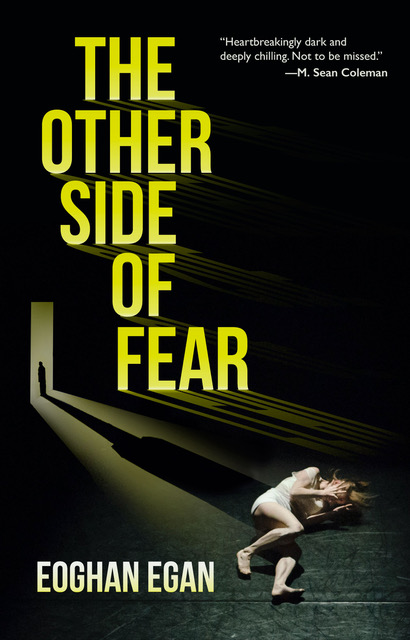
COVER REVEAL: The Other Side of Fear by Eoghan Egan

Welcome to The Irresponsible Reader’s part in the Cover Reveal for The Other Side of Fear by Eoghan Egan! I do this with a sigh of relief—unlike the last cover reveal I agreed to do for Red Dog, I saw the email with the details in my spam folder before the reveal date, and I’d hate to renege twice in a row. Also, this is a cool cover and I like sharing cool things with you. But before we get to the striking cover down below, why don’t we learn a bit about the book?

Book Blurb

Sharona Waters is determined to dig into loan shark Dessie Dolan’s business and see him brought to justice. But when a young woman she’s only briefly met goes missing, a much darker story emerges.

Pulled into the ruthless world of people trafficking—a world built on violent brutality and sudden death – Sharona finds herself caught between crime and conscience, pursued by powerful and ruthless criminals, and just one bad decision away from having her whole world crash down.

Sometimes, the only way forward is to risk everything, no matter the cost

Publication date: March 29, 2022

About the Author

Eoghan EganA native of Co. Roscommon, Ireland, Eoghan wrote his first story aged nine. At college, he studied Computer Programming, works in Sales Management & Marketing, but his passion for reading and writing remain.

Eoghan’s stories were shortlisted for the 2018 Bridport Short Story Prize, and Listowel’s 2019 Bryan McMahon Short Story Award Competition. Others have been published in various anthologies. He has also completed two crime fiction novels in a planned trilogy set in the Irish Midlands and has started work on the third.

A graduate of Maynooth University’s Creative Writing Curriculum and Curtis Brown’s Edit & Pitch Your Novel Course, Eoghan divides his time between Roscommon and Dublin.

Eoghan constantly explores ways to increase his knowledge in the art of writing. He enjoys attending literary festivals and is excited about the prospect of getting back to face-to-face discussions with readers and writers. He’s also a heavy metal fan, and, post-Covid, can’t wait to headbang at a rock gig.

Find him on Twitter: @eoghanegan


And now…

The Cover

The Other Side of Fear

Once again, Red Dog Press nails the cover, their streak of winning covers continues.

As good as the cover is, I’m betting the interior of the book is better—you can (and should) pre-order this now at: Red Dog Press.

.


My thanks to Red Dog Press for the invitation to participate in this reveal and the materials they provided.

Red Dog Press

Time and Tide (Audiobook) by Peter Grainger, Gildart Jackson: The Times They Are a-Changin’

Time and Tide

Time and Tide

by Peter Grainger, Gildart Jackson (Narrator)
Series: A DC Smith Investigation #7

Unabridged Audiobook, 13 hrs., 29 min.
Tantor Audio, 2018

Read: May 7-11, 2021

What’s Time and Tide About?

A new DI has been named at King’s Lake—and it’s a person we’ve run into before—and it’s a bridge too far for DC Smith. He’s been thinking about retiring since the first book, and that thought’s been getting louder. He’d probably stick it out for a little longer if not for this new boss, but…so he turns in his papers and starts to prepare to leave.

But first, there’s a murder to solve. Smith sets out for what’s likely the last time with his team and their new DI to solve the case of a suspected figure in organized crime being murdered in a small tourist town.

Everyone tries to treat this as just a typical investigation, but the specter of Smith’s retirement looms over everything. This is Smith’s last chance to impart his training on his team—Chris Waters in particular. Waters is doing his best to prove to his mentor that he’s ready to fly solo (all the while trying to soak up anything he can). Smith’s also busy trying to put his team in the best positions for their career—even if their immediate future is under the DI that led him to resign.

Also, he should probably figure out what he’s going to do when he doesn’t have a job anymore.

So, what did I think about Time and Tide?

So, I know there are more books in the series, which takes a little sting out of it, but I wasn’t ready for Smith to leave Kings Lake.

I thought the story meandered a bit more than I’m used to, but it worked. It felt appropriate for the time. It’s not just Smith’s upcoming retirement, there’s a lot about changing of times, former careers/lives, the past defining people, and so on. It’s probably the most obvious that Grainger’s been about matching the themes of the plotlines, but I’m not going to complain.

Like I said, I know there are more books to come in the series, so it’s not an ending—or really the beginning of the end—it’s a transition novel. Things are going to change, and while I’m not necessarily a fan of change, I’m betting that Grainger’s going to pull it off. He’s doing so already.

On top of that, we get the typical wise and witty Smith with his very capable team unearthing secrets, and making sure the truth is revealed. Narrated by the man who continues to make these characters come to life and elevates the already well-written text. You really can’t go wrong with this series.


4 Stars

Mistletoe and Crime by Chris McDonald: Adam and Colin Get Called Back into Action

This is going up a bit later than intended because I cut out about 30-40% of what I’d written—you can only go on so long about a novella before you’re competing with the length of the material. Hopefully, it’s still coherent.


Mistletoe and Crime

Mistletoe and Crime

by Chris McDonald
Series: The Stonebridge Mysteries, #5

Kindle Edition, 115 pg.
Red Dog Press, 2021

Read: December 7, 2021
Grab a copy from your local indie bookstore!

The Intervening Year

So, it’s been a year since The Case of the Missing Firefly. Colin and Adam have seemingly retired from the jobs they never really had. They haven’t been in the wrong place at the right time to stumble upon a corpse or haven’t been recruited by loved ones frustrated by the police’s inaction, so they’ve been able to focus on things like Adam’s business and relationship, Colin’s job, and their ongoing PlayStation FIFA rivalry.

We’re given a little nugget about part of the reason for their inactivity:

After a number of embarrassing blunders, there was an investigation into the Stonebridge police force, which resulted in them taking crimes in the town a bit more seriously. This meant that the kinds of miscarriages and oversights that Adam and he had looked into had reduced in number, rendering the amateur detective duo obsolete.

I think it’s charming that protests, marches, and scandal are what lead to changes/potential changes in policing in series like Goldberg’s Eve Ronin or Connelly’s Renée Ballard, in Stonebridge’s universe, it takes a couple of guys who’ve spent too much time watching Sherlock to get the police in line. Of course, this is also a town where the “bad side” is characterized by “vegan food stores and hippy clothing bazaars.” If I can’t move to Stars Hollow, CT, maybe I can emigrate to Stonebridge…

Thankfully, in the Real World, Chris McDonald had plans for the duo, so their retirement is short-lived:

What’s Mistletoe and Crime About?

After watching a cheesy Holiday Rom-Com at the theater (and, no, Adam, did not cry at the ending, thank you very much), Adam and Helena take a shortcut through an alley to get to the car. Along the way, they come across an obviously dead body. Adam’s well-documented queasiness around blood rears its head (not before his subconscious notices something is wrong) while Helena’s nurse-reflexes lead her to snap a quick picture of the scene and before jumping to ensure that the man doesn’t need assistance.

The police quickly decide the homeless mana well-known Stonebridge fixturewas inebriated, slipped on the snowy ground, and died of the resulting injury.

A man approaches Adam and Colin soon after this asking the duo to look into the deathhis testimony isn’t unimpeachable, but it’s enough to move them into looking into things. The man’s claim is buttressed by the photo Helena took which shows a footprint suggesting that someone left the scene after the man was on the ground. So we’re off to the races…

The Boys Are Growing Up

In the year away, Adam and Colin have continued to mature. The impression I had during The Curious Dispatch of Daniel Costello was that these two would be the stereotypical 20-somethings who still lived with their mothers, jumping from entry-level gig to entry-level gig for quite a while (even if Colin seemed on the cusp of leaving that description behind when we meet him). But almost immediately, McDonald used their success as a catalyst for personal growth. One advantage of having them take a year off is that we can see the result of twelve months of incremental growth.

After a year away, Adam’s business has established itself pretty well. He’s doing well enough that at this time of year when there’s not a lawn to be cared for, he’s able to not have to worry about money. His relationship is going well enough that he and Colin don’t spend that much time together, and most of their gaming is done online.

Colin’s doing very well at his job and has been acting as a manager. He’s realizing that it’s time he finds a good relationship and is looking.

So, what did I think about Mistletoe and Crime?

No surprise hereI liked it. I liked it a lot. The first thing I did yesterday was to download it so I could spend my spare time in Stonebridgewhich made for a perfectly entertaining day.

In addition to the typical Stonebridge fun, McDonald takes full advantage of the seasonal setting. There are any number of nice little holiday touches and jokes, for example: have we known the mayor’s name before? If not, it’s the perfect subtle joke. If we have had it before, I’ve fallen into the classic English major blunder of reading too much into things.

But more than just for fun, McDonald is able to tap into the spirit of the seasonfamilies and friends coming together for festive fun, the general bonhomie brought on by the traditions, not to mention the consumer-madness too-often seen in department stores.

This is the fifth novella in this series that I’ve talked about this yearI don’t have a fresh way to express my appreciation of them. It’d help me as a blogger if McDonald would stumble a couple of times with this series so that I’d have the opportunity to talk about him returning to form after wondering if the magic was gone. But no, he has to be consistently good so that I sound like a broken record.

A clever mystery, characters that display a good amount of development, situations that are appropriately amusing/sweet/tense, and the kind of prose that welcomes you in and makes you feel at home. In other words, a cozya well-written and executed one.

As is to be expected, McDonald delivers, you’re missing out if you don’t join in the fun (this would be a fine jumping-on point, I should addbut go back to the beginning while you’re at it)!


4 1/2 Stars

This post contains an affiliate link. If you purchase from it, I will get a small commission at no additional cost to you. As always, opinions are my own.
All the Lonely People by Mike Gayle: Extraordinary things can happen to ordinary people

All the Lonely People

All the Lonely People

by Mike Gayle

Hardcover, 371 pg.
Grand Central Publishing, 2021

Read: November 24-29, 2021
Grab a copy from your local indie bookstore!

What’s All the Lonely People About?

In the 1950’s Hubert Bird left his home and family in Kingston and went to London in search of work. When we meet him, he’s been a widower for over a decade and has been living shut-off from just about everyone (other than those he runs into doing food shopping, etc.) with only his cat to keep him company.

Until one fateful day (of course, or this’d be a boring book)…

We learn about Hubert’s life in alternating chapters—one in the present and one from his past.

Then

Since arriving in England, Hubert had felt out of place in a whole host of locations in the mother country, everywhere from the streets around Mayfair to the pubs of east London and beyond. But as he stepped off the 9:20 from London Victoria that Saturday morning, all previous experiences paled in comparison to how he felt standing on platform two of Bromley South Station.

He felt like a character from one of the Westerns he enjoyed seeing at the pictures—not the hero, cowboy, or sheriff, but rather the stranger in town. The man who walks into a bar full of life, music, and chatter, only for the whole room to fall into a complete and uneasy silence the moment they notice his presence.

We get glimpses of Hubert’s life from when he decided to leave home, to the early troubles he had finding regular work—employers and fellow employees didn’t exactly welcome “The Windrush Generation” (to put it more than mildly). In the midst of the harassment, undisguised prejudice, and meager wages—Hubert meets and falls in love with a white woman—who falls for him, too, despite her family’s clear wishes. They marry, have a couple of kids, and build a life for themselves—it’s hard and slow going, but they get there.

Eventually, the kids move out and Hubert’s wife dies, and he soon starts living alone.

Now

Hubert talks to his daughter—now a professor in Australia—weekly. He’s ashamed to tell her that he’s cut ties with the outside world, so he invents some friends and spends time each week inventing activities that they’ve been doing so he can have something to tell her when she calls.

Then one day, a new neighbor, Ashleigh, drops by to introduce herself—which just flummoxes Hubert and he cuts the conversation short, he’s so out of practice in interacting with people. Ashleigh’s one of the friendliest, most hopeful characters I’ve encountered recently. After running into him briefly a couple of times, she shows up at Hubert’s door in a panic—she has a job interview and her babysitter just bailed. Can Hubert watch her daughter while she interviews?

“Look, me see you in a pickle. Really, me see that. But have you lost your mind? You can’t just ask a complete stranger to look after your child. Don’t you watch the news?”

“Of course I do,” said Ashleigh. “And yes, I know sometimes the world’s a horrible place, but not always. Sometimes it’s a lovely place where nice things happen for no reason and I’d much rather…” She began to get upset. “I’d much rather live in that world than the other one!”

Hubert gets sucked in—he helps out, and the trio ends up spending more and more time together. Slowly

Meanwhile, Hubert’s daughter is due to come for a visit—his fictional life is about to be exposed. It’s about time for him to actually make some friends. Thankfully, Ashleigh’s been reminding Hubert that life is better when he opens himself up to others and he starts to do just that. Maybe he can have something to tell her after all (after ‘fessing up to the deception). And then Ashleigh gets an idea that ensures he’s going to have a lot to report.

So, what did I think about All the Lonely People?

“It’s easy to waste a lot of time trying to think of a perfect solution to a problem. But sometimes the only thing you can do is cross your fingers and have a go.”

I haven’t read a Mike Gayle book for something like 15 years (just couldn’t find them for a while, and then forgot to look), in that time he went from what I remember as Hornby-esque, but maybe with more jokes. In this book? He reminded me of Fredrik Backman, just with a different accent.

It was just as heartwarming, just as tragic, and with a similar kind of almost impossibly happy ending tinged with sadness that Backman’s noted for. And you don’t care how realistic it is, because you just loved everything that led to that point

I almost instantly liked Hubert and was quickly drawn into his story. You get invested through him (and if you don’t like him by midway through chapter two—just DNF this, it’s not a book for you). I liked Ashleigh almost as much as him, but when it comes to everyone else, you like them/care about them for Hubert’s sake.

For example, when his wife died—it hit me hard (which is odd because I knew about when she’d die even when we met her). But I didn’t feel too bad for her, but my heart broke because of what it did to Hubert. The same goes for the rest of what happens–you care because of Hubert, you’re invested in the story and the antics of his friends because of Hubert, you want things to go well in the end for Hubert’s sake. And you get intensely happy about the last chapter or two because of Hubert. Picking up a theme?

Gayle’s writing was warm and inviting—you get sucked in and carried along because of how it makes you feel, more than because of the plot or even the characters. I’m not always crazy about that kind of writing, but when it works well, it’s really effective (as it is here).

There’s one thing Gayle does that made me mad, and I came close to starting to outline a rant about it—but in the end, I got over it. I thought about DNFing the book! I could still go on a rant about the authorial decisions about it (this is so tricky to talk about in the abstract), because I am still mad, but the end product justified it.

Sure, I said the emotional weight of the story is more important overall to this than the story or characters–but I’ve got nothing against either of them. I liked and admired Hubert. I would love to hang out with Ashleigh and her kid (and her new Significant Other). The story of Hubert’s life feels so real—and is likely freakishly close to so many lives—and the world could use novels about lives like these.

This is such a heartwarming novel, if you get to the end and aren’t in some way cheering over the Capraesque ending? You should try and schedule an electrocardiogram—stat. And you just have to love that epilogue that shows that Hubert isn’t Eleanor Rigby, no matter what the title suggests.


5 Stars

2021 Library Love Challenge
This post contains an affiliate link. If you purchase from it, I will get a small commission at no additional cost to you. As always, opinions are my own.
The Friday 56 for 12/3/21: Love & Bullets: Megabomb Edition by Nick Kolakowski

The Friday 56This is a weekly bloghop hosted by Freda’s Voice.

RULES:
The Friday 56 Grab a book, any book.
The Friday 56 Turn to Page 56 or 56% on your ereader. If you have to improvise, that is okay.
The Friday 56 Find a snippet, short and sweet.
The Friday 56 Post it

from 56% of:
Love & Bullets: Megabomb Edition

Love & Bullets: Megabomb Edition by Nick Kolakowski

His eyes rolled from side to side, trying to lock on me, but I made a point of standing directly behind him.

“What now?” he asked.

I scanned the empty corridor. “Where’s your partner?”

“What?”

“The guy you’re on shift with.” He shook his head. “Had to leave.”

I would choose to believe that for the moment. “Where’s that FBI guy?”

“He had to leave, too.” Another swallow. “Somebody called something in. Something big.”

What was bigger than me wiping out most of this county’s police force, along with its corrupt sheriff and probably a few townies? Suddenly I understood how Elvis must have felt when he heard about the Beatles for the first time, overshadowed by something far bigger. I was tempted to ask about the nature of the emergency, but my soul would have been crushed if he’d said my infamy was eclipsed by a shootout at the local meth lab.

The Particular Sadness of Lemon Cake by Aimee Bender: A Gorgeously Written Let-Down

The Particular Sadness of Lemon Cake

The Particular Sadness of Lemon Cake

by Aimee Bender

Hardcover, 292 pg.
Doubleday, 2010

Read: November 30-December 1, 2021
Grab a copy from your local indie bookstore!

What’s The Particular Sadness of Lemon Cake About?

I don’t think I have it in me to do a decent job of this, so I’m just going to use the text from the flap of the dust jacket.

On the eve of her ninth birthday, unassuming Rose Edelstein, a girl at the periphery of schoolyard games and her distracted parents’ attention, bites into her mother’s homemade lemon-chocolate cake and discovers she has a magical gift: she can taste her mother’s emotions in the slice.

She discovers this gift to her horror, for her mother—her cheerful, good-with-crafts, can-do mother—tastes of despair and desperation. Suddenly, and for the rest of her life, food becomes a peril and a threat to Rose. Anything can be revealed at any meal. She can’t eat her brother Joseph’s toast; a cookie at the local bakery is laced with rage; grape jelly is packed with acidic resentment.

Rose’s gift forces her to confront the secret knowledge all families keep hidden—truths about her mother’s life outside the home, her father’s strange detachment, Joseph’s clash with the world.

Yet as Rose grows up, she realizes there are some secrets that even her taste buds cannot discern.

Particularly Sad

By page 15 of the novel, I’d already decided the title was pretty descriptive of the book. That impression never left off. Every page drips with sadness—even the most joyful moments of the characters’ lives are draped in it. There’s no joy, no happiness—the best is some contentedness and satisfaction that Rose finds in the last twenty pages. I’m not sure I remember a novel so consistent in the emotional tone.

So, what did I think about The Particular Sadness of Lemon Cake?

This is a split decision for me. The Bender’s prose and language deserve at least 4 stars, maybe more. But for my reaction to the book? It’s probably a 2.

Aimee Bender can write—her language is fantastic. The prose is as delicious as the food described isn’t. This is the kind of writing that demands attention (maybe it demands a bit too loudly on occasion). If not for what comes in the next paragraph, I’d be requesting every one of her books from the library as soon as I publish this post.

But I found the style off-putting, I didn’t care about a single one of these characters and their various plights. I wasn’t that curious about Rose’s “special skills” (or any others displayed by characters). I didn’t care about the story, or anything else. While the writing was dazzling, it seemed distant and detached (a neat trick for a first-person narrative)—and it kept me distant and detached.

I absolutely expect to be the exception to the rule here, that just about everyone else fawns all over this. But…oh, well. For my money, if you want something written like this but with characters/situations/writing that engages you, you’re better off picking up a Tiffany McDaniel novel.


3 Stars

2021 Library Love Challenge
This post contains an affiliate link. If you purchase from it, I will get a small commission at no additional cost to you. As always, opinions are my own.

The Dark Hours by Michael Connelly: Ballard Tackles a Pair of Tough Cases in this Timely Novel

Finally…I’d hoped to get this posted no later than November 17th. But every time I started writing something, I ended up overthinking or was distracted. I’m not sure the end result is that coherent, but…it’s finished. I can live with that.


The Dark Hours

The Dark Hours

by Michael Connelly
Series: Harry Bosch, #24/Renée Ballard, #4

Hardcover, 388 pg.
Little, Brown and Company, 2021

Read: November 12-15, 2021
Grab a copy from your local indie bookstore!

It was like a bag of popcorn cooking in a microwave. A few pops during the final countdown of the year and then the barrage as the frequency of gunfire made it impossible to separate it into individual discharges. A gunshot symphony. For a solid five minutes, there was an unbroken onslaught as revelers of the new year fired their weapons into the sky following a Los Angeles tradition of decades.

It didn’t matter that what goes up must come down. Every new year in the City of Angels began with risk.

The gunfire of course was joined by legitimate fireworks and firecrackers, creating a sound unique to the city and as reliable through the years as the changing of the calendar.

What’s The Dark Hours About?

It opens on December 31, 2020—Renée Ballard and a fellow detective are partnered up for the night—it’s a kind of all-hands-on-deck kind of night. These two are also part of a team on the trail of a pair of serial rapists that they’re calling the Midnight Men.

But on this night, they’re called out to a shooting death. Ballard’s role is to be the initial investigator and then pass off the case to the homicide detectives after the weekend—but she’s hoping she can keep it longer (their work on a different case could allow for that). There’s a match for the bullet—the same gun was used in an old unsolved case, investigated by Harry Bosch.*

Isn’t it always reassuring to see that no matter what kind of super cop he is, there are cases that Bosch couldn’t close?

The two put their heads together and quickly find a new angle for Bosch’s case as well as a promising line of investigation for Ballard’s.

Meanwhile, the Midnight Men strike again, and this time, there’s something a little different that Ballard picks up. A string she starts pulling that proves to be instrumental.

With Bosch to bounce her ideas off of, as well as a backup she can trust, Ballard gets her chance, once again, to bring a little light to the dark hours of the night.

Bosch

While this is by and large a Renée Ballard book, there’s enough about Harry Bosch to keep a fan satisfied. He’s doing okay with his medical condition, Maddie’s well (and is dating someone, so isn’t spending as much time with Bosch), he’s pretty much holed-up during COVID, studying old case files.

Not at all-surprisingly, when Renée’s path crosses with his, he’s ready to jump into action. Sure, he always is, but add in a lockdown-induced cabin fever? It’s a wonder that Harry wasn’t calling his mentee daily to see if she needed help with anything (although it’s clear that the two have kept in touch).

In the past, the pair have done a better job of keeping Harry’s involvement under the radar, but between Bosch’s Cabin Fever, Ballard’s need to make fast progress on the cases, and her lack of trust for any other detective at the moment they throw that out the window. Which does come back to bite Ballard (as it should).

The 2021-ness of It

… this was the new LAPD—officers stripped of the mandate of proactive enforcement and waiting to be reactive, to hit the streets only when it was requested and required, and only then doing the minimum so as not to engender a complaint or controversy.

To Ballard, much of the department had fallen into the pose of a citizen caught in the middle of a bank robbery. Head down, eyes averted, adhering to the warning: nobody move, and nobody gets hurt.

I don’t remember Connelly’s books being so obviously of the moment until last year’s The Law of Innocence which ended just as lockdowns were starting in California.

Connelly’s books have always felt contemporary—other mystery series might feel 5-10 years out of step, but not Connelly. Although, even the older books largely felt like they could’ve taken place a couple of years ago (except for the technology involved). But The Dark Hours has to be a 2021 novel—Ballard, Bosch, and the city are going through things that could only have happened after the protests of 2020 and the COVID-19 pandemic.

It makes things feel more immediate, but does it hurt readers in 5-10 years? Fair Warning, also published last year, could take place anytime after 2010 (maybe earlier). A lot of the other books felt timely to their context, but even now they don’t feel that dated. Will these?

I don’t know if this is a strength or a long-term weakness, but it is, as far as I can remember, a change.

However, seeing Renée having to adapt to COVID restrictions (no more living on the beach!) and struggling with the changes (temporary? long-lasting?) that the protests of Summer of 2020 about policing in America have brought to the LAPD is great to see. Connelly is able to show a department in flux, which can’t have been an easy tightrope to walk.

So, what did I think about The Dark Hours?

Ehhh…I’m not sure what to say here.

In the moment, while I was reading, it was typical Connelly—I was gripped, I was riveted, I couldn’t wait to see the murder solved. I was less invested in the rape case because once Ballard starts to get a little traction, once she starts to learn a little bit about these guys, I was repulsed. I really didn’t want to learn more—I just wanted them locked away—I even said something to a friend like “can’t we just get a quick, miraculous, resolution to this by page 180 and spend the rest of the book focusing on the murders?” Great job by Connelly creating some very horrible criminals, but I don’t want to spend time thinking about them.

But it’s not his best work—I’m not sure it’s not up to his par, even. The more I think about it, the more I’m bothered by parts of the story and storytelling. The Epilogue, by the way? It’s a scene from a TV show. Working on Bosch, Lincoln Lawyer, and Bosch: Legacy have impacted Connelly at least a little and it shows here.

I thought the stuff about the impact of COVID and the protests was fantastic—and you get no simple answers about the past/present/future of policing in LA. I’m just not sure the rest of the novel was as good as we’ve come to expect from Connelly (I’m open to being corrected by others who read it, though).

Good—but not good enough—I guess is my takeaway. Still, time with Bosch and Ballard? Always time well spent.


3.5 Stars

This post contains an affiliate link. If you purchase from it, I will get a small commission at no additional cost to you. As always, opinions are my own.

PUB DAY BOOK SPOTLIGHT: The Shivering Ground & other stories by Sara Barkat

I just don’t have time to read every book that comes my way, but I’d like to do my part to expose them to as many eyeballs as I can. So, from time to time, I’ll post a Spotlight to lend a hand. If you’re in the mood for some short fiction, you should jump on this.


Book Details:

Book Title: The Shivering Ground & other stories by Sara Barkat
Release date: December 1, 2021
Format: pdf, mobi, epub
Length: 150 pages
Publisher: T. S. Poetry Press

Book Blurb:

The Shivering Ground blends future and past, earth and otherworldliness, in a magnetic collection that shimmers with art, philosophy, dance, film, and music at its heart.

A haunting medieval song in the mouth of a guard, an 1800s greatcoat on the shoulders of a playwright experiencing a quantum love affair, alien worlds both elsewhere and in the ruined water at our feet: these stories startle us with the richness and emptiness of what we absolutely know and simultaneously cannot pin into place.

In the tender emotions, hidden ecological or relational choices, and the sheer weight of a compelling voice, readers “hear” each story, endlessly together and apart.

About the Author:

Sara BarkatSara Barkat is an intaglio artist and writer with an educational background in philosophy and psychology, whose work has appeared in Every Day Poems, Tweetspeak Poetry, and Poetic Earth Month—as well as in the book How to Write a Poem: Based on the Billy Collins Poem “Introduction to Poetry.” Sara has served as an editor on a number of titles including the popular The Teacher Diaries: Romeo & Juliet, and is the illustrator of The Yellow Wall-Paper Graphic Novel, an adaptation of the classic story by Charlotte Perkins Gilman.

Social Media

Instagram ~ Youtube ~ Website

Purchase Links

Amazon

Page 108 of 341

Powered by WordPress & Theme by Anders Norén