Category: Fiction Page 120 of 341

Reposting Just ‘Cuz: Breaking the Lore by Andy Redsmith: A Funny, Fresh Take on a Police-filled Portal Fantasy

I’d planned on reposting this today to go along with my post about the sequel, Know Your Rites—it’s been so long since I posted this, I wanted to put it back out there. But now, I’m going to just repost this today and try to find the energy to follow up tomorrow. These are good books, you should check them out.


Breaking the LoreBreaking the Lore

by Andy Redsmith
Series: Inspector Paris Mystery, #1

eARC, 321 pg.
Canelo, 2019

Read: April 3 – 5, 2019

Inspector Nick Paris is your all too typical cynical, bitter, hard-drinking, chain-smoking police detective, and his world is being rocked. The latest corpse he’s been brought out to see and investigate the circumstances around the death is that of a fairy. The tiny, impossibly good looking, humanoid with wings kind of fairy. While still trying to wrap his mind around how that was possible, a crow (named Malbus) flies into his house demanding, demanding a smoke and talking to him about the murdered fairy. Not long after this, he’s visited by an elf and a rock troll (Tergil and Rocky).

And that’s just Day One of his new reality.

Essentially, there’s a connection between our world and the world of all these magical beings—a portal of sorts that those who desire to can travel between the two (or people and animals can stumble through unintentionally). For all sorts of great reasons, the magical creatures/folk kept their existence from humanity—and let what humans know fade into myth and legend. But something’s happened in their world, and those who are over here have to come seeking help (in terms of political asylum) and possibly even letting humanity in on what’s going on around them.

This is a little beyond Paris’ typical caseload, but he and his Superintendent, a no-nonsense woman named Thorpe, respond very well to these new challenges—dragging other officers and even the army along with them. They are obviously relying on the advice and guidance of the magical creatures—Tergil in particular (although Malbus makes sure his input is heard, too). They also recruit a local supernatural expert—Cassandra, a self-styled witch that no one in the police would’ve given any credence to if not for this new reality.

As fun as Paris, Tergil and Malbus are, Cassandra is a delight. She’s wise, insightful, and has a fantastic sense of humor—she might be harder for Paris to cope with than fairies, dwarves, and trolls. I shouldn’t forget Paris’ Sergeant Bonetti—he’s loyal, strong, brave, and probably not as mentally quick as he should be. He’s also the target of near-constant mockery from his superior. I’m not sure why he puts up with the abuse, but I found myself laughing at it. When the fate of multiple worlds is on the line, it’s these few who will stand strong in Manchester, England to keep everyone safe.

I can think of as many reasons that this is a lousy comparison to make as I can to make it—but throughout Breaking the Lore I kept thinking about Chrys Cymri’s Penny White books. There’ll be a big overlap in the Venn diagram of Fans of Penny White and Fans of Inspector Paris. I’m sure there are other comparisons that are as apt, or more so—but this is the one that I kept coming back to for some reason.

I had so much fun reading this book, Redsmith has a way with words that makes me think it really doesn’t matter what story he decided to tell—I’d want to read it. He was able to express the seriousness of the situation, while never stopping (either narratively or through the characters) the quips, jokes, and sense of fun. There’s an infectious charm to the prose and characters that easily overcomes whatever drawbacks the novel has. I’m not saying this is a novel filled with problems, it’s just that I wouldn’t care about most of them thanks to the voice.

Now, Redsmith’s wit does have an Achilles’ heel—puns. Redsmith is an inveterate punster, and will hit you with them when you least expect it. Now me? I love a good pun—and I hate them at the same time. Maybe you know what I mean. I cackled at pretty much all of them (frequently audibly), but I hated both myself and Redsmith for it. You know those Pearls Before Swine strips where Rat beats up Stephan Pastis because of the very carefully constructed pun? Yeah, this book is a series of those moments (but he rarely gives the setup Pastis does, usually it’s a quick sucker punch).

There are many other points I’d intended to make, but I think I’ve gone on long enough. This novel is silly, goofy, intelligent, charming—with a fresh take on a great idea. You’ll find yourself enjoying Paris, Cassandra, Malbus, Tergil, and the rest. I can see a few different ways that Redsmith takes Book Two, and I’m looking forward to seeing which one he picks (probably none of my ideas). But before that happens, I’m just going to relish the fun that Breaking the Lore was and encourage you all to go buy and read it for yourself.

Disclaimer: I received this eARC from Canelo via NetGalley in exchange for this post — thanks to both for this.

—–

4 Stars

The Rags of Time (Audiobook) by Peter Grainger, Gildart Jackson (Narrator): DC Smith is a Fly in a Colleague’s Ointment

The Rags of Time

The Rags of Time

by Peter Grainger, Gildart Jackson (Narrator)
Series: A DC Smith Investigation, #6

Unabridged Audiobook, 9 hr., 29 min.
Tantor Media, 2017

Read: March 9-11, 2021
Grab a copy from your local indie bookstore!

What’s Rags of Time About?

While DC was recuperating from knee surgery and dealing with his past in Northern Ireland—basically, while In This Bright Future was going on—DC’s rival, DS Wilson led both teams in a murder investigation. By the time DC returned, it was almost completed, he was assigned to do some clean-up on the details. Take care of a couple of witness statements, address some of the paperwork, and whatnot—busy work, really, so he stays out of Wilson’s way and keeps occupied.

But as one expects when DC gets involved, things don’t go that easily. In the first book, for example, he is supposed to sign off on an accidental death investigation and within days there’s an arrest, evidence of war crimes, and Secret Services personnel in Kings Lake.

This time? DC asks a few questions, gets curious, asks some more, and then turns up some evidence that really doesn’t fit the narrative being constructed. Before you know it, there are some big problems with Wilson’s case, and the DS isn’t taking it too well.

So, what did I think about Rags of Time?

I enjoy anytime I get to spend with DC, Chris Waters, DC Murray, and the rest. I love hearing DC’s little jokes (mostly for his own amusement) and his musings about life and the rest. Every one of these books is comfort food for me. Gildart Jackson’s narration just makes them more enjoyable, and this one was no exception.

But…I don’t know, there was something missing with this one. Something felt flat. Maybe it seemed like DC went around in circles for a little too long before stumbling on to the fact that I’d guessed at long before (although, I have the advantage of knowing it’s a novel and I can go for who’d make the most dramatic impact rather than finding evidence).

I liked it, I’m glad I listened to it, and was eager to move on to the next one—so eager that I broke my own rule and listened to it before I had a chance to write about this one. But…it’s the weakest of the series thus far. It’s good, just not as good as the rest. DC will be back up to snuff soon.


3 Stars

2021 Audiobook Challenge

In Plain Sight by Dan Willis: A P.I. with a Magical Edge Races the Clock in this UF Series Start

In Plain Sight

In Plain Sight

by Dan Willis
Series: Arcane Casebook, #1

Kindle Edition, 311 pg.
2018

Read: July 1-5, 2021

What’s In Plain Sight About?

Alex Lockerby is a P.I. in the late 1930’s New York. He occasionally consults with the police, but most of them don’t respect him. Generally, he’s taking small-time jobs (lost pets, etc.) to make ends meet—and it’s largely because his gorgeous secretary finds those jobs for him.

Oh, Alex is a Runewright—by drawing elaborate designs in a (generally) special ink and then setting the drawing on fire he activates various things—finding charms, disguises, a way to look at the past of a room/item, healing, etc.

His ability doesn’t necessarily mean riches aplenty or fame—it means that he has an edge in certain circumstances, but that’s it.

In this novel, Alex is dealing with three cases—a distraught young woman hires him to look for a missing brother. A case he consulted on for the police didn’t go the way he said it would, and he has only three days to fix the problem or he’ll be charged with something and his friend on the force will be unemployed. And, a local church’s soup kitchen—volunteers, priests, nuns, and those being fed–are killed by an impossibly fast-moving disease, and Alex (with the guidance of his medical doctor mentor) needs to track down the source of the disease.

The clock is ticking to deal with all three of these—also in the mix are the NYPD, the FBI, a powerful sorcerer, and an ages-old secret that threatens to destabilize the magic world.

Magic System

There are, we’re told, three types of magic users in this world: Alchemists, Sorcerers, and Runewrights. We don’t get to see a lot of Alchemy (but we hear a little about it). We see enough of Sorcery to get a pretty good idea what it’s like. But the star of the show is the use of and making of Runes.

Willis’s version of Runes are similar to Hearne’s Sigils, but it’s only similar (various wizards, witches, and other magic users from various UF series are more similar than these, though).

I liked the way that all three versions of magic are used, and interweave with each other. Also, while various magic users aren’t necessarily esteemed (Alex is dismissively called “scribbler”, for example), they’re all out in the open, selling their services, both on small scales and large scales.

We need more UF where the magic is out in the open—all the various series with a dozen different ways that the magic (and so on) is hidden from the general populace is getting tired. Magic being an everyday thing, something commercial…I like seeing that.

1930’s P.I.

We’re supposed to get a hard-boiled P.I.-feel from Alex here. Philip Marlowe with magic, kind of a thing. It’s close, but it feels sanitized. Safe. Really, Alex Lockerby is more Dixon Hill than Marlowe or Sam Spade.

I’m not saying I didn’t like the idea or the execution—I enjoyed it. It just felt tame.

So, what did I think about In Plain Sight?

This was fun—inventive, cleverly told, and a premise/magic system that is a breath of fresh air.

I appreciated Willis’ voice and style—I do wish he’d made things a bit more nuanced, a bit harder to figure out (although there is a reveal late in the book that took me by surprise), but it’s the first book—a setup for the series as a whole, and that’s not easy to do.

There’s a lot of charm to the writing and the characters, I can easily see this series becoming a favorite, until then, this was a fun way to spend a couple of hours, and the rest of the series looks to be the same. I’m looking forward to diving into the rest, and suspect you would be as entertained as I was.


3 Stars

20 Books of Summer '21

Sir Thomas the Hesitant and the Table of Less Valued Knights by Liam Perrin: Heroism Comes from the Unlikeliest Places

Sir Thomas the Hesitant and the Table of Less Valued Knights

Sir Thomas the Hesitant
and the Table of
Less Valued Knights

by Liam Perrin
Series: Less Valued Knights, #1

Kindle Edition, 272 pg.
2018

Read: July 6, 2021

…there were other tables, some almost as lofty, some not so much. Among those in the not-so-lofty category, the Table of Less Valued Knights was far and away the unloftiest. The Knights of Less Valued Table were the workhorses of the court, performing the inglorious duties that are nevertheless essential to a realm’s operation and taking care of any requests that the other orders found… uninteresting.

What’s Sir Thomas the Hesitant and the Table of Less Valued Knights About?

Thomas is the second son of a soldier turned farmer, his older brother—the favored and talented son—has recently been imprisoned for daring to ask the local Baron for aid for the struggling local populace, suffering under famine.

Thomas goes to Camelot to become a Knight—with the goal of using this position to help the people of his valley and hopefully get enough glory to impress his parents.

He is made a knight (to his surprise) and is assigned to the Table of the Less Valued Knights—those knights who keep the nation running by performing the needed, but unglamorous tasks, freeing up others to tackle the bigger, flashier tasks. It’s a noble calling, a better life than Thomas had before—now the question is, can he still use this role to help his family and their neighbors?

It’s the Characters and Relationships

The story is simple and straightforward, and charming enough. But what elevates this novel are the characters around Thomas and his relationships with them.

He meets and befriends an evil wizard who is working to put that life behind and simply be a healer. There’s a giantess with esteem issues, which lead to her changing size. Thomas’s little sister will steal your heart. And when it comes to best friends/sidekick characters, you won’t find many as fun as his fellow Less Valued Knight, Philip the Exceptionally Unlucky.

There’s a cute romance between Sir Thomas and one of Guinivere’s Ladies-in-Waiting, Marie. Marie’s an intelligent woman who’s constantly prodding Thomas to understand what’s going on around him and how he ought to respond. It’s not that Thomas isn’t that intelligent, he’s just naive and needs someone with a bit more experience to point things out and remind Thomas what he cares about.

And Thomas’ magic sword? You have to see it in action to believe it.

As far as the standard Camelot characters go, this Arthur is heroic and wise (an increasingly uncommon take on the King), Gawain might not be as heroic as you’d want, but he’s a lot of fun. Kay and Bedivere make up for Gawain on the heroism front.

So, what did I think about Sir Thomas the Hesitant and the Table of Less Valued Knights?

You want a hard slog like that to end with the bad guy losing. Through some last minute opportunity, or some deep fault of the villain, or even just sheer stubborn grit on the part of the hero, you want the good guy to stand alone in the end, battered but victorious.

[This fight] didn’t end like that.

It’s not every day I get to use words like “wholesome” around here, but it fits. Why does that strike me as a bad thing? It shouldn’t be, it just conjures up images of someone trying to be squeaky-clean enough for 1980’s Saturday Morning TV, and while this book would be, it doesn’t feel like Perrin forced anything into that mold. It just is that way. Nor does it feel like he’s constrained by this kind of writing, it just feels appropriate to the type of story he told.

The subtitle to Perrin’s website is “Agreeable Stories for Kind-Hearted People Who Take an Interest in Words.” This is a pretty good description of the book. Agreeable—full of kind-hearted people (and some who aren’t so kind-hearted, but they get theirs).

This isn’t written for an MG crowd, but it’s an increasingly rare “adult” novel that I wouldn’t blink at letting a middle-grader read. It’s the anti-grimdark.

What this is is a lighthearted, optimistic tale told with a wink and a smile. There’s peril, there’s bravery of the uncommon and very real sort, there’s hope, there’s struggle, and there are clear lines between good and evil. It’s also pretty entertaining, too. Perrin has a crisp and appealing style that ensures the reading experience will be pleasant.

I liked this, I wish I could read more things like this (aside from the sequel, which I’ll be getting soon). It’s a thoroughly pleasant way to spend a few hours. You should give it a chance.


3 Stars

20 Books of Summer '21

PUB DAY REPOST: Dog Eat Dog by David Rosenfelt: Man Defends Dog, Andy Carpenter Defends Man

Dog Eat Dog

Dog Eat Dog

by David Rosenfelt
Series: Andy Carpenter, #23

eARC, 304 pg.
Minotaur Books, 2021

Read: June 24, 2021
Grab a copy from your local indie bookstore!

What’s Dog Eat Dog About?

Coming home from a walk, Andy and Laurie see a man abusing his dog across the street. Before they can intervene someone else jumps in to defend the dog (and it’s probably good for the abuser that it happens before Laurie can get her hands on him). Both the man who protected the dog and the man who attacked it are arrested—but the way the defender reacts, Andy’s sure it’s about more than just the assault.

It turns out that this man, Matthew Jantzen, had used one of those online genetic tracing sites to try to find out if his father had left other kids when he died (Jantzen is pretty sure he did). This allows him to track down a half-sister and to put his DNA in a place where law enforcement can see it and compare that DNA to what was found at the scene of a murder. Jantzen knew it was coming (the police had visited his sister about the time of the murder a few years ago), but had hoped to avoid having to deal with it.

Andy just can’t figure out why someone who was wanted by the police would expose himself the way Jantzen did when he protected the pug. So he has to learn more about Jantzen. Then he finds himself going to the town in Maine where the killing took place to help secure legal counsel on Jantzen’s behalf. One thing leads to another, and Andy ends up in court defending Jantzen.

Little by little, Andy’s team comes to join him in Maine, investigating the things the police were supposed to take care of. They find themselves looking into a mess of drugs, racist militias, and hard-to-explain DNA evidence.

How Did Rosenfelt Make It This Long?

Given the number of Dog-themed and Dog-Pun-Filled titles in this series, how has he not used Dog Eat Dog until book 23? Even if you subtract the holiday-themed titles, it’s still nineteen novels without using it. You have to admire the restraint he’s shown up to now.

Stranger in a Strange Land

Unless I’m forgetting something, this is the second time that Andy’s taken on an out-of-state client (the last time was in 2007’s Dead Center, the fifth book in the series). When he arrives in Maine he learns three things quickly: the people are friends and welcoming, the lobster rolls in Maine are a wonderful thing; just about everyone is convinced Jantzen did it, no matter what the big-shot New York lawyer says (he seems incapable of convincing anyone he’s from New Jersey).

Andy has to employ a local lawyer for the purposes of the trial and hires a criminal defense attorney Charlie Tilton. Tilton has no desire whatsoever to take on Jantzen’s case himself—but is perfectly content to take Andy’s money to help out. He ends up taking on the role of Eddie Dowd, Kevin Randall, or Hike Lynch—he does the paperwork, legal research, and so on while Andy investigates, annoys the judge, and needles the prosecution. Charlie’s pretty normal compared to the rest, maybe a little more mercenary than the others, but that’s about it. It was a refreshing change (but I’m ready to see Eddie Dowd again).

It’s nice seeing Andy in a new setting, unable to rely on his media and police contacts, etc.

So, what did I think about Dog Eat Dog?

This is the second David Rosenfelt book I’ve read in 2021—there’s one more to go (The holiday-themed novel). How he’s able to write three solidly entertaining, frequently humourous, complex mystery novels in a year is mind-boggling. Once again, I thought I knew where Rosenfelt was going with the case and was ready for it—and then Rosenfelt pulled a rabbit out of his hat and I was caught unprepared a couple of times to see where he went.

I loved some of the recurring jokes in this-both those exclusive to this novel and some that are ongoing over the years.

There are series out there that ebb and flow in terms of quality—I don’t think these books have done that—truly impressive at the 23rd book. You know what you’re going to get when you crack open a David Rosenfelt book—and I’m so glad he continues to deliver.

Solid courtroom action, some good out-of-court detection, plenty of fun with characters old and new—particularly with Andy’s narration. These can be read as stand-alones or as part of a series. Either way you go—you’ll be happy you tried this.

Disclaimer: I received this eARC from St. Martin’s Press via NetGalley in exchange for this post—thanks to both for this.


4 Stars

This post contains an affiliate link. If you purchase from it, I will get a small commission at no additional cost to you. As always, opinions are my own.

Small Bytes by Robert Germaux: Back to the Beginning of JB Barnes

Small Bytes

Small Bytes

by Robert Germaux
Series: Jeremy Barnes, #3 (Chronologically #1)

Kindle Edition, 286 pg.
2019

Read: July 5, 2021

Tony’s Bar and Grill was your typical local hangout. Located in a working-class neighborhood where everyone knew everyone else and their business, it had gone through several changes of ownership over the years, but the one constant had always been that strangers weren’t particularly welcome, and anyone who lived more than ten blocks away was a stranger.

I lived on the other side of town.

When I walked into Tony’s on a warm spring night, the place didn’t suddenly become silent, the way things happen in the movies, but there was a noticeable drop in the level of conversation.

What’s Small Bytes About?

JB’s oldest friend asks him to give one of her friends a call—her husband had recently been murdered, and she’s dissatisfied with what the police are telling her. Could JB look into things for her?

Terry Pendleton is shot outside his home on his way to work. The police (primarily a lazy and racist lead detective) have determined that it was a mugging gone wrong—despite no evidence of theft, or anything else, really. The widow and many of his colleagues deem that out of character—if a mugger had approached Pendleton demanding money, he’d have been given it all without a struggle.

Barnes isn’t convinced by Rachel Pendelton or the others at the firm, but he thinks there might be something to it. Once he meets the lead detective, JB wants to prove him wrong just out of distaste for the man. But before he really gets anywhere at all in the investigation, a man with ties to organized crime warns JB from continuing to look into things.

JB has no idea what he might be getting into, but at this point, he sure knows it’s something…

Not Technically a Prequel

In the Author’s Note before Chapter 1, Germaux says this was the first he wrote in the series, but he published books #4 and #5 in the series first. So this serves as a prequel, if you go in publication order—not something I’m used to seeing in a P.I. series, but it works.

I think I would have guessed that this was the first JB Barnes that he wrote even if he hadn’t said it. There’s something—maybe just confidence, maybe just the experience of having written other complete novels, probably something else—that’s missing from this that was present in Hard Court or In the Eye.

I’m Not Sure About that Title

There are only so many things that “Bytes” can apply to. As this is a Detective Novel, you know some sort of cybercrime is involved—at the very least some sort of electronic data is going to be very important to the P.I. wrapping things up.

When there is zero discussion of anything along those lines (at least in reference to JB’s case), it’s hard to believe that he’s uncovering anything that matters up until a related concept shows up.

Thankfully, the book was interesting, the characters were engaging and the subplots were compelling, and JB’s narrative voice keeps you turning pages. So even while wondering when we were going to get anything computer-related, I was enjoying things. Still, that title doesn’t do the text any favors.

So, what did I think about Small Bytes?

Along the way, I dropped the envelope in a mailbox and thought about what Uncle Leo had told me the day I’d first expressed an interest in joining him in the business. The most important thing, he’d said, was learning to balance the highs and the lows, “‘cause you’re gonna have both, the good and the bad. Ya gotta learn to balance them, son, or the demons’ll be dancin’ in your head way too many nights.”

I’m still learning.

With both of Germaux’s series—the Jeremy Barnes and Daniel Hays books—I’ve said that each book feels like you’re returning to a well-established series that you’ve been reading for a while. And, given the order he wrote these books in, that makes sense. But even Small Bytes feels like it’s not the beginning, but something mid-series. Sure, this is a turning point in the series, but there’s no sense of Germaux introducing people and relationships, just picking up where he left off. I really appreciate that.

Small Bytes is a fun read, and I’m glad I read it, but I’m glad it’s not the first book I read by Germaux or about JB. But even here at the beginning, I want to stress, there are a few passages that just sing. Germaux has the knack for spinning a solid PI tale and captures the feel, voice, and style of the best of the genre.

Which is why I’ll be back for the others in the series soon—and why I’ll jump on anything else Germaux has in store for JB, and why I’ll suggest you give him a try, too.

20 Books of Summer '21

Tender is the Bite by Spencer Quinn: Will Chet Share Bernie with a Ferret?

Tender is the Bite

Tender is the Bite

by Spencer Quinn
Series: Chet and Bernie, #11

eARC, 272 pg.
Forge Books, 2021

Read: June 25-28, 2021
Grab a copy from your local indie bookstore!

What’s Tender is the Bite About?

A young woman—a frightened young woman—approaches Bernie, she needs help. But before she explains herself, something spooks her and she leaves.

Curious, Bernie starts looking for her—and stumbles into the middle of a situation involving stalking, murder, dog-napping, and all sorts of other things. There’s an international aspect of this—but it’s a very local story. There’s a lot to chew on, a lot to talk about—but all of it is in spoiler territory, so I’m going to leave it at that.

Approaching the Political

This is the second time in a week that I’ve said something along those lines, and it’s a bit strange. Chet and Bernie keep finding themselves in the neighborhood of a senate election. The case brings the two of them across the path of both candidates (one of them repeatedly). But it’s closer to home than that—Bernie’s neighbors on either side are very invested in this campaign and their enthusiasm spills over onto the a-political P. I. (or so he tries to be)—at least at one point, one neighbor’s has a considerable blow-back on Bernie’s investigation. This is a new thing for Quinn to dabble in and he does it well.

If you don’t catch the parallel between this campaign and the way people are behaving during it and…well, all of American politics right now. Quinn gives us some pretty good commentary to chew on.

Non-Chet Animal Characters

Sure, we’ve got Chet’s friend, Iggy doing his thing. But we have more animal guest stars. There’s a dog—who could be Chet’s sister (or niece), and I really hope we get to see more of her.

But the big guest star is a ferret. A ferret named Griffie—without Griffie it’s hard to say if Bernie’d been able to very far with things. Chet can’t stand ferrets, or so he repeatedly says…I’m not sure about Griffie, though.

Chet talking about adults, criminals or otherwise, is a lot of fun. Chet talking about kids is simply fantastic. But Chet talking about other animals is a different kind of fun.

A Little Light Gets Shed on Certain Events

For ages now—possibly since the first book, definitely since the second or third—Chet’s been alluding to a case that didn’t end well. He’s given us a little more information here and there about it, but never much. That ends now. Chet tells us some about it. Bernie tells someone else about it. We even get some hints from other characters about it.

I don’t know why Quinn’s decided now is the time to start clueing us in, but I’m so glad he did. We didn’t get the whole story—I don’t know if we will (and I’m not sure I care)—but we got a lot of it, and that’s enough for now.

The Trick to These Books

This is tied to the above point. The trickiest part about reading Chet as a narrator is that he doesn’t understand what he’s telling you, and because of that he leaves a lot out. He’s the best kind of unreliable narrator—he’s well-intentioned and honest, he believes what he’s telling us and he thinks he’s giving us all the information.

What that means for the reader is that we have to think a little more about what he’s saying, we have to do almost as much detective work as Bernie to understand what’s really going on. Which is just so much fun, really. Sure, you might spend a couple of chapters with the wrong idea, but Quinn doesn’t let you keep the wrong idea for long.

I need to spend time writing about this every time I talk about a Chet and Bernie book—I need to do better at this, but it’s hard. If I could describe it better, I’d probably get paid to do this stuff.

So, what did I think about Tender is the Bite?

Yes, Quinn gave us a great pair of characters that we love in Chet and Bernie. He gives us a good story. He plays with the unreliable narrator to reveal what he really wants to say. Put it all together and he gives us another great read in one of the most reliably satisfying series in print.

Read this one. If this is your first time with Chet and Bernie, go back and read the rest after it. You’ll be glad you did.

Disclaimer: I received this eARC from Macmillan-Tor/Forge via NetGalley in exchange for this post—thanks to both for this.


4 Stars

This post contains an affiliate link. If you purchase from it, I will get a small commission at no additional cost to you. As always, opinions are my own.

20 Books of Summer 2021: June Check-in

20 Books of Summer
One summer.

Three months.

93 Days.

20 books.

Are you in?


Once again I’m taking part in the 20 Books of Summer Challenge fro 746 Books. Annnnnd my June was pretty, um, dead. Between book tours, review copies and catching up on NetGalley ARCs, I’ve read absolutely nothing from my Summer Roster. Zip. Zilch. Nada.

I’m posting this update mostly to push myself to get on it—a little public shaming. Because my lack of progress in June means it’s going to be a little more of a challenge to finish this than I’d anticipated. Absolutely do-able, but it’ll take a bit of effort.

I did actually read about 30% (so far) of the first book today…so, you know, it’s practically in the the bag.

And here’s the fairly untouched list (subject to change, but I’m going to resist the impulse to tweak as much as I can).

1. A Beginner’s Guide to Free Fall by Andy Abramowitz
2. The Dead House by Harry Bingham
3. The Run-Out Groove by Andrew Cartmel
4. Love by Roddy Doyle
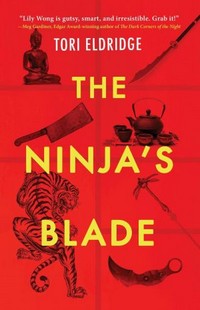
5. The Ninja’s Blade by Tori Eldridge
6. Small Bytes by Robert Germaux
7. A Reason to Live by Matthew Iden
8. Twiced Cursed by J. C. Jackson
9. The Dime by Kathleen Kent
10. Dead Man’s Grave by Neil Lancaster
11. The Magnificent Nine by James Lovegrove
12. The Mermaid’s Pool by David Nolan
13. All Together Now by Matthew Norman
14. The Good Byline by Jill Orr
15. Sir Thomas the Hesitant and the Table of Less Valued Knights by Liam Perrin
16. Fools Gold by Ian Patrick
17. Know Your Rites by Andy Redsmith
18. The Far Empty by J. Todd Scott
19. August Snow by Stephen Mack Jones
20. In Plain Sight by Dan Willis

20 Books of Summer '21 Chart

The Watchman by Rob Parker: Ben in the U.S.A.

I had a little trouble finishing this on time, and hope it’s mostly coherent and typo-free. Just to be on the safe side, let me give you a quick synopsis of what follows: The Watchman is great stuff. You should go buy it now. Then come back and read what I have to say.
The Watchman Tour Poster

The Watchman

The Watchman

by Rob Parker
Series: Ben Braken, #5

Kindle Edition, 259pg.
Lume Books, 2021

Read: June 29-30, 2021
Grab a copy from your local indie bookstore!

At some point, later, I’ll have to have a word with myself about how it got to this, but sometimes your hand is forced. There’re goodies, baddies, your side, their side. Winners get to go home, losers get dead.

And I’ve got a family I need to get back to.

What’s The Watchman About?

Ben’s benefactor, protector, ally, and almost-father-figure, William Grosvenor comes to him for a favor: go to New York and get an envelope for me. Ben can’t know what’s in the envelope, he just needs to bring it back. Grosvenor throws in an obscene payday to sweeten the deal.

Ben really doesn’t want to do this—he wants to stay at home with Carolyn and the kids. But it’s not the kind of money you can walk away from—especially with three kids to provide for—and that’s assuming Ben’s sense of duty wouldn’t oblige him to answer Grosvenor’s request.

Almost everything you can think of going wrong once he had the envelope goes wrong. Ben and his American contact find themselves on the run, they’re just not sure who from, they only know they have guns and aren’t afraid to use them. But soon, Ben’s able to summarize things like this:

This is turning into something preposterously big. The FBI, the CIA, the Secret Service, maybe Russia and perhaps my own countrymen back home – all wanting the contents of one little envelope.

Ben neglected to mention a New York Crime Family in his list, which is odd, as he says this to their head (but maybe he assumes she’s aware that she’s one of those making the situation preposterously big).

Ben and the American stay one step ahead of all these groups (by the skin of their teeth) all over an envelope they don’t understand the significance of. They move from NYC quickly to another state, and then another…and well, you get the idea. The chase is lethal, demanding, and quite likely full of treachery.

Something New in Parker’s Arsenal

In last year’s Far from the Tree, Parker used multiple perspectives quite effectively. But in the Ben Bracken series, it’s all been Ben’s first-person point of view up until this point. In The Watchman, he sprinkles in some chapters in the third-person. These chapters follow a figure called Sinclair, and it’s a long time before we have any idea about the connection between the envelope and Sinclair. But you know that he’s important right away.

It’s always risky (I think) when an author starts putting third-person chapters in a first-person narrator’s book. Parker’s use is effective, you want to know more about Sinclair—you want to understand what he’s up to and to learn more about him in general, with the curiosity about how he ties into the envelope coming in third place to the others. All three items are covered in these pages, thankfully, leaving no lingering questions.

Ben in the U.S.A.

My smile broadens irrepressibly. There’s something about this country that, while I can’t quite put my finger on it, I really enjoy. The expanse maybe. The freedom of choice. The sensation that you can have it all. No wonder immigrants have flocked to it in their droves, drunk on the idea of streets paved with gold.

Equally entertaining—and far less stressful than the rest of the book—is watching Ben’s reactions to America. He has great comments about NYC, our roads, cars, food, politics, and so on.

Ben’s been around a bit, he’s seen things, and can come across as fairly jaded sometimes. It takes a lot to impress him. Until he enters the U.S. for the first time, and then almost all of that is stripped away.

One of my favorite examples is his reaction to the idea of fried gator on a menu—both before and after ordering it—it’s just great. I wish we could read more of Ben reacting to American restaurant fare.

Actually, that’s a great idea for a short story—Ben uses some of the money he makes in this novel to bring Carolyn and the kids on an American vacation. There’s no death, no fights, no danger—just them touring a few states and eating strange things.

The Thing I Cannot Talk About

For a while, you start to wonder if the envelope is the equivalent of Marsellus Wallace’s briefcase—inside it is something that everyone wants, but no one will tell you what it is. Thankfully, that ends at some point and we get to look into it.

The contents of the envelope—and here’s where I have to be careful what I say—indicate something that’s a frequent idea in Fiction—Fiction of various genres, not just Crime Fiction. I hate it. Really. It’s over-used. Usually not used well and/or interestingly. I also usually find it fairly distasteful, yet dull. I’ve complained about it elsewhere on this blog in less-spoilery circumstances. I can count on the fingers of one hand the number of times I’ve seen it used well or interestingly—and would still have a few phalanges to spare.

That said? In The Watchman, Rob Parker pulls it off. I bought it. I was curious. I got over my initial groan once and enjoyed it. I wish I could say more, but I really can’t. So let me just say that for me, Rob Parker pulled off a feat here that few have, and should be applauded for it.

So, what did I think about The Watchman?

I started this week talking about how much of an improvement the fourth book in this series was over the others. This book is similarly an improvement over the fourth. It was just great.

For those who might care, this novel features two of the most disgusting deaths I can think of. I don’t mean to put anyone off from reading this—just know that there are two or three paragraphs you may want to skim and not think too hard about. Thomas Harris and M. W. Craven need to work a little harder to assert their dominance in the area.

There’s a reveal towards the end, that I sincerely hope wasn’t supposed to be shocking, because I think Parker pretty well telegraphed it from the opening chapters of the book. It makes sense that it shakes the characters in the novel, but no one who reads the book should be surprised (although I’m glad Parker revealed this later in the book, rather than spelling it out in a descriptive passage toward the top of the book.

Do you need to have read the previous four novels to appreciate this one? Nope. It can be read as a stand-alone, but it helps if you have read them so you understand what drives Ben—what keeps him moving forward and helps him get through the discouraging, political, or dangerous parts of his job. All that will come through if this is your first exposure to Ben, but not quite as clearly.

Parker’s outdone himself here—it’s tense, twisty, and compelling. Even when dealing with things that frequently make it hard for me to finish a book, Parker’s writing and pacing kept me turning the pages. In the end, The Watchman is going down as one of my favorite thrillers of 2021. Do yourselves a favor and pick it up.


4 Stars

This post contains an affiliate link. If you purchase from it, I will get a small commission at no additional cost to you. As always, opinions are my own.

My thanks to Love Books Group for the invitation to participate in this Tour and the materials they provided.

Love Books Group

BOOK SPOTLIGHT: The Watchman by Rob Parker

I’m so excited to be part of this last day of the Love Books Tour for The Watchman by Rob Parker. I’ve read this whole series in the last couple of months and doing this is a great way to cap off this project. In a little while here, I’ll be giving my take on the novel. But before that, let’s take a minute and learn a little about the book, okay?

The Watchman Tour Poster

Book Details:

Book Title: The Watchman by Rob Parker
Publisher: Lume Books
Release date: June 24, 2021
Format: Ebook/Paperback
Length: 259 pages

The Watchman

Book Blurb:

One last mission for an old friend. What could go wrong?

It’s sold as an in-and-out jaunt to The Big Apple, to pick up a harmless envelope. But when Ben Bracken is offered the assignment, he’s a little hesitant. He’s a family man now, with a duty to stay alive for his loved ones.

But, with the request coming from fellow former military man and trusted friend William Grosvenor, not to mention the eye-watering payout, one last job can’t hurt, can it?

So begins his American road trip, one that takes him from the city that never sleeps to the misty swamps of Florida. All in pursuit of one highly coveted envelope. Because it turns out, this job isn’t the walk in Central Park it was promised to be.

As he’s pursued by New York’s most dangerous mobsters, factions of federal law enforcement, and American Intelligence, Ben’s hunch is that their joint quarry must hold something of international significance.

He’s not wrong. The contents that’s slipping through these influential fingers contains evidence of the world’s biggest cover-up. Evidence that will rewrite history books and incriminate one of the most powerful men on the planet.

It’s probably best it winds up in the right hands.

The Watchman
is packed with action, underpinned with believable conspirative intrigue, world-class writing and twists you just won’t see coming.

About the Author:

Rob Parker is a married father of three, who lives in a village near Manchester, UK. Author of the Ben Bracken series A Wanted Man, Morte Point, The Penny Black and Till Morning is Nigh, The Watchman, and the standalone post-Brexit country-noir Crook’s Hollow, he enjoys a rural life on an old pig farm (now minus pigs), writing horrible things between school runs. He writes full time, as well as organizing and attending various author events across the UK, while boxing regularly for charity. Passionate about inspiring a love of the written word in young people, Rob spends a lot of time in schools across the North West, encouraging literacy, story-telling, creative writing, and how good old-fashioned hard work tends to help good things happen.

Social Media:

Facebook ~ Twitter ~ Instagram ~ Website


My thanks to Love Books Group for the invitation to participate in this Tour and the materials they provided.

Love Books Group

Page 120 of 341

Powered by WordPress & Theme by Anders Norén