Category: Fiction Page 134 of 341

The Mask of Mirrors by M. A. Carrick: I Struggle to Adequately Describe this Stunning Fantasy Novel

In the first part of this Tour Stop, we got quick intro to this novel, now let’s dive in and talk about it.
The Mask of Mirrors

The Mask of Mirrors

The Mask of Mirrors

by M. A. Carrick
Series: Rook & Rose, #1

eARC, 697 pg.
Orbit Books, 2021

Read: January 18-23, 2021
Grab a copy from your local indie bookstore!

What’s The Mask of Mirrors About?

What isn’t it about, really? In The Princess Bride novel, the fictionalized William Goldman recounts how his father introduced the story to him:

“Does it have any sports in it?”

“Fencing. Fighting. Torture. Poison. True love. Hate. Revenge. Giants. Hunters. Bad men. Good men. Beautifulest ladies. Snakes. Spiders. Beasts of all natures and descriptions. Pain. Death. Brave men. Coward men. Strongest men. Chases. Escapes. Lies. Truths. Passion. Miracles.”

That would work as a decent start on a list of what this book is about (except the bit about Giants, maybe they’ll be in the sequel), but just as a start. There’s just no way to say what this book contains briefly. At times it felt like Carrick* took an “everything but the kitchen sink—and all right, we’ll throw that in, too” approach.

* Yes, I know that Carrick actually equals two authors, but there’s one name on the cover and it’s just easier to play along with the conceit for the purposes of this post.

If you find yourself not particularly enjoying a storyline (either at all, or in a particular moment), that’s fine, just wait a couple of pages and you’ll be on to another that will quite possibly be to your liking.

Yeah, often this kind of thing feels unwieldy, clumsy, and hard to follow. But somehow—Carrick pulls it off. It’s a grand-scale novel—focusing on several people, classes, and segments of the city, but feels very contained, very personal, and not all that difficult to take in at once.

I joked while reading this that I didn’t know how I was going to be able to talk about this novel in less than 10,000 words. And I really think it’s true if I wanted to do a complete job. But no one wants me to do that. So I’ll set “complete” aside and go for “almost adequate” instead. The best way to do that is to start our discussion with the initial plotline:

The Long Con

Years ago, Ren and Tess were low-level thieves, working for a Fagin-esque character. The sisters split from that group in a fairly dramatic fashion and left the city of Nadežra. Now, they’re back to make their fortune. Ren poses as Renata Viraudux, an estranged family member of one of the city’s noble families, with Tess at her side as Renata’s maid.

The plan is to endear themselves to the Traementis family and to be officially listed as one of them. She can then plunder their accounts and set the two of them up for a comfortable life. Ren had a good period of time working as the maid of the woman she’s now pretending is her mother, so she knows her, she knows stories about her family—so she’s able to pull off the con pretty well (at least at first).

But there’s a catch..the Traementis family is on the verge of falling apart. Tragedy has whittled the family away to Donaia (the family’s head and the sister-in-law of Letilia, Renata’s supposed mother) and her two children, Leato and Giuna. And the family’s material wealth has been chipped away even more. There’s enough to barely sustain their lifestyle, and Donaia isn’t sure how long she can continue doing that. Some nobility suspects this to be true, but no one other than Donaia knows it—Renata is very ignorant about the status of her targets. Which almost makes her doomed before she begins.

Do note that “almost,” because Ren is as clever and resourceful as you could want for this situation. Once she discovers the family’s situation, she’s not going to let a simple thing like the verge of bankruptcy stop her.

There are times when I almost wanted Ren to get caught—protagonist or not, she has it coming and you will frequently like Leato and Giuna a lot more than her (also, it’d be a lot of fun to see Ren try to get out of it). But overall, you get sucked into her cause and find yourself rooting for her.

In many ways, this story is the heart of the novel. But the more I thought about it as I read—this story is really just an excuse to get Ren involved in everything else going on in Nadežra, and it could practically be eliminated without doing a lot of damage to the book. It is, however, a load-bearing plotline and can’t be removed without doing structural damage (it just feels like it). That may seem like a criticism, but it’s not intended to be one—I find myself oddly drawn to the idea that there’s enough other things of interest and weight going on that you could excise the Primary Plotline and still have a novel worth reading.

The Masked Vigilante

Nadežra, like all good fictional cities, has a masked vigilante running around. The Rook has been a presence for a couple of centuries, defending the helpless, punishing the wicked—particularly if they’re part of the nobility. The Rook is sort of a Batman/Zorro-esque figure, stepping out of the shadows (or on the rooftops). We meet him first as he comes to duel with an arrogant twit over an offense straight out of Cyrano de Bergerac, and who can resist that? He remains a favorite part of the novel for me, dropping in at pivotal moments, but not becoming a focus for long.

Ren quickly becomes fixated on him and in discovering his identity. It is fun watching her try and try to either discover or figure out his identity.

The Quest for Legitimacy

Derossi Vargo, how do I discuss him? Think Lando Calrissian meets Michael Corleone. Vargo has spent years building and building his power base and at the time that Ren comes to the city, he’s at the top of the criminal portion of the city. He’s so powerful now that he’s itching to shed that side of him and embrace being a legitimate businessman. He just needs the chance.

Renata sees this and forms an alliance with him. He aids her in some of her schemes to prop up the Traementis family’s standings and success and she, in turn, will help him with his schemes. Neither fully trusts the other, but they can be of mutual benefit to one another, and that’s enough for them. The relationship builds from this point—but both Ren and Vargo are careful enough with their secrets, their plans, and their ambitions to truly let the other see what’s going on—but they have that in common and can respect that.

Vargo is charming and suave, and it’s easy for the reader or other characters to get swept up in that to the extent that they forget how he got to the position he’s in. There’s a cunning and ruthless criminal underneath his finery and smooth words. At the end of the day, Vargo is about Vargo’s success, and if you’re in his way—you need to watch yourself.

An Eye for Tailoring

Now, while I had moments where I thought it’d be good to have Ren captured by the authorities, I never thought that for a moment about her sister, Tess. And Tess is the best argument for keeping Ren free and clear—I just couldn’t stomach her being injured or imprisoned herself (and either would happen if Ren fell). She’s one of those characters that readers immediately fall in love with and want to treat as a little sister. Woe betide any author who hurts her, I can’t imagine readers of this series letting anyone get away with that.

She’s Ren’s accomplice, for sure, but she’s not in her sister’s league when it comes to criminal behavior. She’s sweet, she’s not out to get rich—she just wants enough to be able to have enough money that she could design and make dresses—maybe do a little cooking. There’s a hint of a romance for her, and I found myself more invested in her happiness in that than I have been in other romances that form the central plot in several other books lately.

Tess has no magic abilities (that we know of), but she might as well have some when it comes to fabrics. She single-handedly keeps Ren at the forefront of Nadežran fashion, usually using scraps and bargain fabrics from the market. Her reactions to other people’s fine tailoring are a delight (she practically swoons the first time she encounters Vargo over the cut of his jacket). Frequently this is the only source of comic relief in some pretty dark places of the novel.

The Cards

One of the aspects of this novel, this world, that I appreciated most is a Tarot-like practice. The cards are called a Pattern Deck. Much like Tarot, the cards are cut and dealt out, then interpreted (and there’s both an art and a skill involved in that). There are people who read patterns (szoras), some of whom have the gift to truly do this and some are hucksters just making money off gullible patrons. I think it’s that fact that sold me on the novel. How often in Fantasy novels do you get that? A magic system that’s true, that really works, and yet many/most of its practitioners don’t have the necessary ability, yet continue to practice?

The Worldbuilding

As you read this and come across references to cultures and historical events/people, you almost get the impression that Carrick has a two or three-volume set of books on the history and culture of Nadežra to draw from. Not that the text approaches an info dump ever (even when you wouldn’t mind a little one), and Carrick is very sparing with the details drawn from my theoretical three volumes.

The world, the various religions, and magic systems, the system of nobility and government the cultures that make up the populace of Nadežra . . . it’s all so well and richly developed that it has to impress the reader. I love a good bit of worldbuilding as much as the next guy, and it doesn’t get much better than this.

So, what did I think about The Mask of Mirrors?

Time does not permit me to keep going (and, let’s be honest, this is already getting obnoxiously long), so let’s try to wrap it up (if only so I can go over my notes and see what all I forgot to mention).

This is an impressive novel. At one point I was going to try to discuss the greater themes this work dealt with. But I think it would be almost as Sisyphean as trying to list the plots in this brief of a post. For a long time, I was going to talk about the futility of vengeance. But I’m not that certain it’s correct (maybe by the end of the series, I’ll have an idea what they’re trying to say about revenge). There’s a great deal said about family, loyalty, being trapped by history (personal and cultural), perception, and…you know what? I’m falling into that trap I’d tried to avoid. There’s a lot to chew on while reading beyond the story and characters—and you’ll easily keep mulling on the novel and whatever themes you were more interested in from it for days.

Carrick has a wonderful style, there are some very cleverly assembled sentences here—and the way the story is told is clever and impressive, also. There were times when I didn’t care all that much about the characters being focused on or a storyline, but I couldn’t stop reading, I had to know what was going to happen next. I’m not sure how that’s possible to have no (conscious) investment or interest in people or what’s happening to them, but an intense desire to know what’s next for them. But Carrick does it—and does it in such a way that pretty soon I was interested in at least the story or characters again (usually both).

The plots (individually considered) are complex and layered, meticulously assembled and paced well throughout the novel’s progress. Then Carrick takes them and weaves them together in an intricate and smart way to make these plotlines a rich tapestry. The skill necessary for this, and the effect this has is stunning. I am a little concerned that when the sequel is published I won’t be able to remember enough of this to be able to dive in—and that’s the worst thing I can say about the book.

I can’t quite bring myself to give this all 5 stars, but I don’t feel too bad, when I cross-post this to platforms that won’t let me get away with half-stars I’ll end up rounding up. It’s entertaining, it’s impressive, it’s richly and wonderfully told, it’s complex and filled with complex and developed characters. It’s as difficult to succinctly evaluate the book as it is to describe it.

I guess I should just say: read The Mask and the Mirror, it’s absolutely worth your time and you’ll thank me for it. You’ll also see why I’m having trouble crystallizing my thoughts.


4 1/2 Stars

Disclaimer: I received this eARC from Orbit Books via NetGalley and Compulsive Readers in exchange for this post—thanks to all for this, but the opinions offered above are solely mine.

This post contains an affiliate link. If you purchase from it, I will get a small commission at no additional cost to you.


My thanks to Tracy Fenton and Compulsive Readers for the invitation to participate in this tour and the materials (including a copy of the novel) provided.

BOOK SPOTLIGHT: The Mask of Mirrors by M. A. Carrick

I’m excited to welcome the Book Tour for the compelling first installment in the Fantasy series, Rook & Rose, The Mask of Mirrors by M. A. Carrick this morning. As is my practice, I’ve got this little spotlight post and my take on the novel coming along in a bit. But let’s start by learning a little about this book, okay?
The Mask of Mirrors

Book Details:

Book Title: The Mask of Mirrors by M. A. Carrick
Publisher: Orbit Books
Release date: January 19, 2021
Format: Hardcover/Ebook/Audiobook
Length: 675 pages
The Mask of Mirrors

Book Blurb:

‘Utterly captivating. Carrick spins an exciting web of mystery, magic, and political treachery in a richly drawn and innovative world.‘ S. A. Chakraborty, author of The City of Brass

Darkly magical and beautifully imagined, The Mask of Mirrors is the unmissable start to the Rook & Rose trilogy, a rich and dazzling fantasy adventure in which a con artist, a vigilante, and a crime lord must unite to save their city.

Nightmares are creeping through the city of dreams . . .

Renata Virdaux is a con artist who has come to the sparkling city of Nadezra — the city of dreams — with one goal: to trick her way into a noble house and secure her fortune and her sister’s future.

But as she’s drawn into the aristocratic world of House Traementis, she realises her masquerade is just one of many surrounding her. And as corrupted magic begins to weave its way through Nadezra, the poisonous feuds of its aristocrats and the shadowy dangers of its impoverished underbelly become tangled — with Ren at their heart.

‘Wonderfully immersive–I was unable to put it down.’ Andrea Stewart, author of The Bone Shard Daughter

‘An intricate, compelling dream of a book’ Melissa Caruso, author of The Tethered Mage

‘I was utterly entranced by this glittering world filled with masked vigilantes, cunning conwomen, and dark magic. A sheer delight!’ Katy Rose Pool, author of There Will Come A Darkness

About M. A. Carrick:

M. A. CarrickM.A. Carrick is the joint pen name of Marie Brennan (author of the Memoirs of Lady Trent) and Alyc Helms (author of the Adventures of Mr. Mystic). The two met in 2000 on an archaeological dig in Wales and Ireland — including a stint in the town of Carrickmacross — and have built their friendship through two decades of anthropology, writing, and gaming. They live in the San Francisco Bay Area.


My thanks to Tracy Fenton and Compulsive Readers for the invitation to participate in this tour and the materials (including a copy of the novel) provided.

The History of Tom Jones, a Foundling by Henry Fielding: BOOK XIV., ix. – BOOK XV., ii.

Fridays with the Foundling
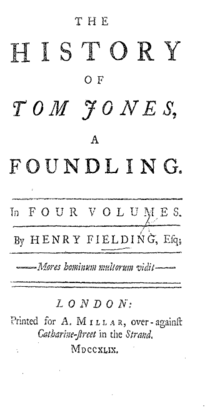
Tom Jones Original CoverTom brings Nightingale’s uncle back to the Millers, and everything goes wonderfully. The uncle (remember, he’s under the impression that the wedding already happened) is very supportive, absolutely making up for his father’s clear antagonism. Nancy is overjoyed, Nightingale is happy, Mrs. Miller pulls Tom into another room to lavish gratitude and praise on him–she’s sussed out that he’s the one who got the uncle on board. Everything is going so well that the reader knows another shoe is going to drop.

And it does–Nightingale is so drunk he confesses everything to his uncle. And that support vanishes in the light of reality. Oh? You’re not married? Excellent, there’s time to prevent the mistake. He agrees with his nephew to not change the way he treats Nancy if Nightingale will go home with him to continue their argument. When they get back to the party, the women can tell something’s different, even if the two are on their best behavior. Tom can tell, too–and he correctly guesses what’s going on, and plans on fixing things.

But–of course there’s a but–you don’t get a novel this long if every plan doesn’t “gang aft agley,” right? While Tom is deciding how he’s going to proceed,

the maid of the house informed him that a gentlewoman desired to speak with him.——He went immediately out, and, taking the candle from the maid, ushered his visitant upstairs, who, in the person of Mrs Honour, acquainted him with such dreadful news concerning his Sophia, that he immediately lost all consideration for every other person; and his whole stock of compassion was entirely swallowed up in reflections on his own misery, and on that of his unfortunate angel.

That’s bad enough, but Fielding has to follow that up with:

What this dreadful matter was, the reader will be informed, after we have first related the many preceding steps which produced it, and those will be the subject of the following book.

I think every reality competition show host must study this technique, “the contestant going home this week is….revealed after the break.”

We get our customary commentary from Fielding to open the next book. This time, it’s short and to the point, too all the writers/philosophers/whatever “who teach that virtue is the certain road to happiness, and vice to misery, in this world.” He states, this is “a very wholesome and comfortable doctrine, and to which we have but one objection, namely, that it is not true.”

We see that in the way that Tom is trying to do the virtuous thing with Nightingale and Nancy, yet things with Sophia aren’t going well for him. He develops the idea a bit more, but not much before concluding, “But as the reader’s curiosity (if he hath any) must be now awake, and hungry, we shall provide to feed it as fast as we can.”

So, Lady Bellaston is jealous of poor Sophia. She needs to get her out of the way if she’s going to have Tom all to herself. Several chapters back, when there was that commotion at the play, which brought Sophia home early, interrupting the visit between Tom and Bellaston–Sophia’d been escorted home by a young gentleman. He’d seen her around town a little bit and after the play, had developed a little crush on her.

He came to check on her the next day, visited for a while, and convinced himself he was in love. Bellaston hatches a plan, on the one hand trying to make Sophia all the more appealing to him, but at the same time warning Lord Fellmar before he thinks of proposing,

“there is a bar, which I am almost ashamed to mention; and yet it is one you will never be able to conquer. You have a rival, my lord, and a rival who, though I blush to name him, neither you, nor all the world, will ever be able to conquer…he is,” said she, “what I am sorry to say most happy men with us are, one of the lowest fellows in the world. He is a beggar, a bastard, a foundling, a fellow in meaner circumstances than one of your lordship’s footmen.”

As Sophia’s a silly country-girl, she has these silly romantic notions that she can overcome these deficiencies in character.

The two come to an agreement (okay, Fellmar falls into her trap), he’ll come and spend more time with Sophia to try to pry her away from Tom, while witnessing for himself just how devoted Sophia is. From the chapter titles, we get more of this next week.

I’m not sure what the point of the Nightingale/Nancy storyline is–unless it’s just to prove one more time that despite everything else we know about him, Tom’s a pretty good guy who’s always willing to help those who need it. Which I guess is always good to see about a protagonist. Especially one who seems to attract scandal and trouble the way Tom does.

Bellaston, despite being a lousy excuse for a human being, is pretty entertaining. “Oh, you must rescue my innocent cousin from this low bellow, so I can have him all for myself.” And the dullard falls for it. Still, I wonder how this turns bad for Sophia (which I guess is the point of Fielding’s tease).

We Could Be Heroes by Mike Chen: A Super-Powered Thief and Vigilante Together Could Be Extraordinary

We Could Be Heroes

We Could Be Heroes

by Mike Chen

eARC, 336 pg.
Mira Books, 2021

Read: January 11-14, 2021
Grab a copy from your local indie bookstore!


At this point with Mike Chen, I don’t bother looking at the book blurb, I just read what he publishes. But so I could decide how much to say in this post, I had to go look at the blurb. Just between you and me, I think I wouldn’t have given as much away as it did, but now I feel a little freer about what to say.

Jamie Sorenson/The Mind Robber

Two years ago, Jamie Sorenson woke up in an apartment with no memory of who he was or how he got there (the name is something he picked). He’s a coffee snob, has taken in a stray cat that he’s named, “Normal.” He reads a lot of autobiographies and memoirs from the library, because he likes hearing life stories since he doesn’t have one.

Oh, and he has super-powers. He can read people’s memories, and erase a little bit of them. He uses these abilities to rob banks as “The Mind Robber.” He’s not living an extravagant lifestyle with these funds, in fact, he lives fairly frugally. His goal is to save up enough to finance his retirement on a tropical beach—just him, Normal, coffee, and books. If he can just pull off one or two more without getting caught, he should be able to do just that.

He was almost caught once, and he’s pretty sure he won’t be able to evade capture too easily next time. He was almost caught by:

Zoe Wong/The Throwing Star

She, too, woke up without memories in an apartment two years ago. She had a name tag, so at least she didn’t have to come up with a name. She spends her time watching horror movies on an app on her phone and drinking so much I think I might have liver damage from reading about it. She makes ends meet by working for a food delivery service.

She doesn’t drive for one, though, she has super-powers, too. Including speed—not Flash or Quicksilver fast, but she’s fast. So fast that she can deliver food fast enough to maintain a 5-Star rating, even though she’ll take quick detours to beat up criminals. She’s also super-strong (not quite Superman-level, but more than Captain America) and has a couple of other tricks up her sleeve.

She’s assembled enough of a uniform to stand up to the punishment her speed puts on normal clothing and to protect her identity, and was dubbed “The Throwing Star” by the press. Although, she’d prefer Shuriken, not that anyone asked. Besides, she’s pretty sure she’s of Chinese descent, not Japanese, so both names are problematic.

The Team Up

Jamie regularly attends a support group for people with Dementia or other memory problems. No one’s treating them there, it’s just a place for emotional support. One day, not long after he’s almost captured by The Throwing Star, Zoe walks in. Afterward, the two have a quick conversation by the coffee pot and (thanks to their abilities) recognize each other. For the sake of the group, they don’t start battling each other, instead, they talk.

A few things happen, and then Zoe decides to ask Jamie to help her with her memory—surely, he can use his powers for something other than crime, right? They strike a little quid pro quo deal and get to work.

From this point, two things happen, one harder to believe than the other. First, they start to uncover things about Zoe’s past (and Jamie’s, although he’s really not that interested at first) that lead them to a therapeutic organization that seems to have something else going on. And, the two begin to become friends.

It’s that “something else,” naturally, that gets their attention. It’s not long before they discover that not only does this organization (or maybe just what it’s a front for) hold the key to their pasts but has a secret plan to change to the world as we know it. To combat it, this thief and this vigilante might have to be something more, they might have to be heroes.

The Mad Scientist

A mad scientist at work is a mainstay of Super-Hero Fiction and Chen delivers that well. Not just a mad scientist, but one who doesn’t see herself in that way. Indeed, she’s going to save humanity from itself and the world from humanity while she’s at it. And sure, she’s doing this on her own, without consulting the countless lives that she’s going to radically alter, because when you’re a super-genius with a messianic-complex (among other psychiatric problems) playing with unimaginable technology, who cares what anyone else might think?

That sounds almost dismissive, and I don’t mean it to be. She’s a well-drawn character, absolutely convinced she’s doing the right thing, and is pretty convincing about it. Don’t get me wrong, I love a super-villain who’s just out to watch the world burn, or driven by pure avarice. I was raised on that stuff. But a super-villain convinced they’re the city’s/nation’s/world’s savior? There’s something more compelling about them, and that’s what we have here.

Extraordinaries

One challenge that non-Marvel/DC Super-Hero Fiction has it coming up with what they’re going to call their costumed, super-powered crime-fighters. Most of the time, I note the term and move on, while it’s usually a serviceable term, it’s a challenge to come up with something that really clicks on this front.

Chen’s world uses the term, “Extraordinaries.” That’s catchy, a little quirky, and it sticks with you. Sure, this is a minor point, but you add up enough of these minor points, and you elevate a good book into something more.

The Mike Chen Factor

The something more…does this have it? Readers of this blog know that I’m always game for a Super-Hero novel, and from early on, it was clear that this was a good one. And that’d be enough for me to recommend it, maybe even highly recommend it. But Here and Now and Then and A Beginning At The End have taught me that I should expect something more than just a good Time Travel/Dystopian/Super-Hero novel from him. The Mike Chen Factor.

And while I didn’t go looking for it—that would distract me from this entertaining story—I did keep wondering when it’d crop up (and if I’d recognize it right away). I think it popped up in a couple of different places and while I espied one instantly (or pretty quickly) the other slipped by me until it was in full bloom—making it my favorite.

The first thing that makes this more than a good Super-Hero novel is that it’s about the role our memories play in who we are—our identity, our personality, how we act. Two characters whose tabulas are about as rasa as you can get make excellent candidates to explore this. In the end, one character’s deliberate choices in spite of natural inclinations and what we learn about their past becomes something they didn’t expect. While the other character is driven by their past (especially the parts they can’t remember but shaped who they are) and ends up being a better (more complete) version of what they were all along.

So, you know, if you were looking for Chen to settle a debate, I think you can skip that.

The other expression of the Mike Chen Factor was the friendship that develops between Jamie and Zoe. This was something special. Too, too, too often when we look at relationships in fiction (in whatever medium) we focus on romantic relationships, familial bonds, or even that between enemies. We don’t see enough explorations of friendship. I wish we had more of them—Rick and Louis aren’t the only one’s with a beautiful friendship, a well-written one is a great thing.

And Jamie and Zoe’s friendship promises to be a beautiful friendship, it’s off to a great start, anyway. I think the reader sees it before either of them do, which is an added layer of fun. But before they realize it their mutual aid pact starts to carry shades of something else. They banter, they tease each other (including in that almost-cruel way that only good friends can), they look out for each other beyond what’s needed for their project and care about each other. Eventually, they’re inspiring each other to be more than they think they are.

So, what did I think about We Could Be Heroes?

This was great. It was a good Super-Hero Story that had a lot of other things going on. Like Chen’s other work, it could probably spawn a sequel or two—but probably won’t.

Can you enjoy this without spending time thinking about what he’s exploring in terms of identity, memory, and friendship? Sure—I don’t know why you’d want to, but if you’re just looking for a compelling story featuring people in outlandish dress flexing super-abilities, this would absolutely fill that need. On the flip side, if you prefer to focus on the other material? This would work, but you’d have to put up with the Super-Hero stuff, and that might be harder for you. If you’re a Greedy Gus like me and want it all? You’re definitely in for a treat.

There’s a little something for everyone here, get to it.

Disclaimer: I received this eARC from Harlequin Trade Publishing via NetGalley in exchange for this post—thanks to both for this.


4 Stars

This post contains an affiliate link. If you purchase from it, I will get a small commission at no additional cost to you. As always, opinions are my own.

The History of Tom Jones, a Foundling by Henry Fielding: BOOK XIV., v. – viii.

Fridays with the Foundling
Tom Jones Original Cover

Tom and Mrs. Miller sit down for an overdue conversation, now that she knows he has a connection to Mr. Allworthy, she wants to make sure they part on the right terms. She tells him her background, her family’s hard history up to the point where she’s left a widow with two young daughters. Mr. Allworthy knew her late husband a bit and provided her with her house and a small annual income. Not only that, she has heard Allworthy talk about Tom, and always spoke of him in the warmest terms. Tom tries to set her right, but she won’t hear of it, remembering what her husband used to say about circumstances like his:

No, Mr Jones, the words `dishonourable birth’ are nonsense, as my dear, dear husband used to say, unless the word `dishonourable’ be applied to the parents; for the children can derive no real dishonour from an act of which they are entirely innocent.”

This breaks down Tom’s barriers and he tells her everything that’s going on his life. He gets her permission for one final appointment with Lady Bellaston that evening. Bellaston neer shows and Tom falls asleep waiting. He’s awakened by a ruckus–which he discovers is caused by Nancy, trying to kill herself, and her mother and sister lamenting over this. IT turns out that Nightingale has got her pregnant and then left her with a note talking about having to go marry someone his father had picked for her.

Tom tries to help by promising to get Nightingale to come back and do the right thing (which Tom believes is what his friend wants, anyone). Nancy is more concerned with the loss of him than the loss of reputation, it should be noted.

This is exactly what he tells NIghtingale, and probably gives the most eloquent speech of this book to date, about what Nightingale must do, what others will think of his actions and what will happen to Nancy otherwise. NIghtingale assures Tom he’d rather marry Nancy, but his father won’t permit it. Tom sends him off to help with Nancy while he sets off to convince the elder Nightingale to permit this marriage (partially by pretending it already happened).

It does not go well at all, but Tom’s aided by the arrival of the elder Nightingale’s brother (I wish more men had first names in this book to make it easier on these recaps). Nightingale’s uncle married someone who made him happy, not someone who made a “good” (read: profitable) match and encourages him to let the same happen for his nephew. The Elder Nightingale seems to soften a bit and regrets the influence his brother had on his son.

They leave things in this awkward situation, with Tom taking the uncle to see his nephew and Nancy.

A lot happened in a short period of time here. And while I sort of prefer (for entertainment value) TOm being the outrageous scamp, the rascal with a heart of gold; Tom beating earnest and eloquent, showing that heart of gold to the world is really easy to admire and root for. Something tells me he might not have been eloquent enough, but I’ll have to see next week.

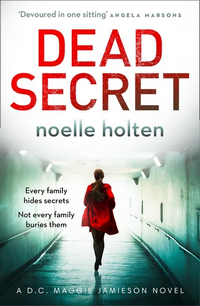
Dead Perfect by Noelle Holten: A Desperate DC Races to Save Her Friend’s Life

This is one of those that I struggled for over a week to finish. I can only hope it’s coherent. The short version: Get this book. Read this book.

Dead Perfect

Dead Perfect

by Noelle Holten
Series: DC Maggie Jamieson, #3

Kindle Edition, 449 pg.
One More Chapter, 2020

Read: December 30, 2020-January 2, 2021

What’s Dead Perfect About?

So, Dead Wrong left us with:

‘Just had a call come in. Police are on the scene. Body of a female has been found. Initial description sounds just like your friend Dr Moloney. I’m so sorry, Maggie …’

Obviously the important thing there is “sounds just like,” because it isn’t Moloney* but the body looks so much like her, that no one can be blamed for assuming it was Moloney. It’s quickly determined that it’s not her, but Maggie and Kate Moloney’s colleagues are having difficulty finding her. Making sure that the tension is as high as it can get in a first chapter.

* That’s not a spoiler, it’s in the blurb, which I should’ve read before diving in.

But even before we get to that, there’s the Prologue. It seemed ominous but fairly typical. Then I looked up one word that I didn’t know, orbitoclast, “A surgical instrument for performing transorbital lobotomies, resembling an icepick.” Then I reread the Prologue and got seriously creeped out.

Kate’s located (and given a talking-to about keeping her phone with her), the body is identified, but that just clarifies the issues at the heart of the investigation. We knew Kate had a stalker, and it seemed like the stalker was getting more intense, more threatening. There’s almost certainly a connection between the murdered woman, the stalker, and Kate. But Maggie has to prove that before they can act on it.

So Maggie and her team dive into the murder investigation, but Maggie’s attention is divided between finding out what happened to this woman and preventing the same thing from happening to Kate. This is probably not the best way to tackle the problems, but it’s not like Maggie is going to let either objective out of her hands.

And then another body is found.

Maggie’s State of Mind

It’s been a while since things were stable for our series protagonist, she’s been caroming off emotionally and mentally challenging cases for so long that she’s got to be close to unraveling. She’s barely had her chance to catch her breath from the events of Dead Wrong before she’s plunged into this race to save her friend’s life.

Add in the pressure of the press, getting used to the shift in the dynamic between her and friend/new boss, and her personal life—she’s not in the best headspace for this (or any) investigation. I think it’s starting to show, she makes some errors in judgment, she’s not dealing well with people, and unless this series is about the downfall of DC Maggie Jamieson, something’s going to have to change.

Although I can totally see Holten pulling off Maggie hitting rock bottom and trying to recover from that, come to think of it. So maybe that’s what we’re starting to see.

Supporting characters

I’ll touch on this more later, but one of the best things about the series is this great world that Holten’s creating. And it’s filled with some great characters, I have a few thoughts about some of the more prominent from this book.

We’ll start with DS Nathan Wright, he’s trying to acclimate to his new position and the way that changes the way he relates to and interacts with his team and friends—and seems to be doing it as well as you can hope. But he’s not perfect, and the transition isn’t smooth. It’s a minor thing, and I don’t imagine many authors would spend the time to do it, but I think it says a lot about the world that Holten’s creating that we see this.

That said, his team needs some more blood. and there’s a newly minted DC he’s got his eye on to help. Everyone’s very excited when Kat Everett is seconded to the investigation, and then she largely disappears. She’s eager, she’s bright, and then it’s like she doesn’t exist until the end when she plays a decent-sized role. It felt a little strange, is all I’m saying. Also, I’m not sure anyone needs a series where a “Kat” and a “Kate” play a major role, I’m just thinking someone needs a new nickname.

A reporter that made few friends, and probably a couple of enemies in Dead Wrong resurfaces. Julie Noble is well on her way to being a regular feature of this series, but for the moment, I don’t know what to think of her. I expect books four and five will solidify my impressions. She promises to be interesting—but I’m not sure in what way yet.

Lastly, there’s poor PC Bethany Lambert. She’s the unit’s go-to worker. Miscellaneous errands, thankless tasks, things requiring technological expertise, and more fall to her. I lost track of how many things Maggie threw her way to do—on top of her own assignments. I have multiple notes about how they’re working this woman to death, and even tweeted Holten about it. I’ve been assured that Bethany likes to be overworked, and that it’ll be addressed soon. But I’m telling you now if she snaps and takes out a lot of pent-up aggression on Maggie, I’ll be cheering her on.

The Killer

I’ve spent more than a week trying to write this post and failing because of this section right here. I still don’t know how I’m going to write something that I like and that doesn’t give anything away.

Sure, I could not talk about The Living Doll Killer, but Holten does something here that I feel compelled to write about. So I’m stuck. You’ll have to read the book to get the unsettling reason for the name, but that won’t keep me from using it.

We get a lot of information at some point in the novel from LDK’s own mouth. Now, I’m not sure the reader or police are supposed to believe everything told to them by LDK, but for the moment, I’m going to pretend I do.

Holten comes as close as possible to giving us a serial killer that the reader can empathize with. Sure, that’s not that close at all, but that doesn’t disprove my point.

I can say that I picked out the LDK straight off, but that’s all I got right. The “how” of the killings is bad, the “what” (abducting and killing) is disturbing, but the “why” will cast everything in a different light and somehow make it all worse (and, at the same time, almost understandable).

I can’t think of a serial killer with this kind of backstory and motivation. And for a fictional serial killer, there’s a strong “Yeah, I can imagine reading about this in the paper” kind of vibe. When I talked about her debut, I said that “Holten writes humans, not caricatures or types.” That applies to LDK, too.

The World Around Maggie Jamieson

This is the Maggie Jamieson series, and she is the core of it. But Holten has put her in the middle of a complex world. We touch base in this book with characters from the first two books—particularly from the first book, and we see a lot of growth and development. These people have put in the time and effort to change their lives and move on from the nightmares we met them in.

The way Holten has set up the series guarantees it won’t just be DC Jamieson and her boss (and the rest of her team) bouncing from investigation to investigation, they’ll brush up against these people, focusing on them for significant periods.

I really appreciate this design and am eager to see how it’s developed.

So, what did I think about Dead Perfect?

I got sucked into this story fast, and if anything above sounds critical, it’s only because I’ve spent a lot of time thinking about them (and talking about three or four niggling points out of one hundred is more interesting to write about than fanboying over the other 96 or 97). I was quickly invested in what was going on—and was soon thankful that it wasn’t Kate’s body in the opening chapter.

And yes, I was convinced that Holten had killed her off at the end of Dead Wrong.

I had many, many opinions about how Maggie and Kate were behaving over the course of this investigation (positive and negative), and sincerely wished that DS Wright would have sat them down in his office and talked some sense into both of them. I’m not sure that I usually spend quite as much time talking back to books about what protagonists are doing/thinking as I did in these pages.

And then the reveals about LDK? Didn’t see any of them coming (other than the one I mentioned). I love it when an author does that.

And then, just like she did last time, Holten doesn’t let you fully absorb and reflect on the conclusion of the novel without hitting you with an image that makes you want the next book now, not in a few months.

So what did I think about it? It was great. I need Book Four next week, and probably Five a couple of weeks after that.


4 Stars

The Curious Dispatch of Daniel Costello by Chris McDonald: A Cozy Mystery for People who Don’t Read Cozies

The Curious Dispatch of Daniel Costello

The Curious Dispatch of Daniel Costello

by Chris McDonald
Series: The Stonebridge Mysteries, #1

Kindle Edition, 94 pg.
Red Dog Press, 2021

Read: January 9, 2021
Grab a copy from your local indie bookstore!

The Would-Be Sherlock

Adam Whyte is a late bloomer, or at least he expects to be.

He remembered reading that Susan Boyle had been 47 when she auditioned on whatever talent show she’d gone on, and the guy who founded McDonald’s didn’t do it until he was 59. Some people simply came into their own a little later in life – like a fine wine.

He’s still a couple of decades away from those ages, and if he can’t apply himself a bit better, he’s going to be living with his mother until then. Just like he has since he dropped out of college and began holding a series of dead-end jobs.

From a young age, he loved playing detective and even started university to study Psychology with an eye to joining the police. Now, he binges the Mark Gatiss/Steven Moffat Sherlock. When he discovers a dead body at the hotel he’s staying at for a wedding, he decides to take it upon himself to solve the crime he’s convinced was committed (even if no one else thinks there’d been any crime), dragging his friend Colin along.

His Watson

His friend Colin, on the other hand, has his life together. He works at an assisted care facility and likes it. He has an easier time talking to people—and getting them to talk to him.

Early on, Colin realizes that Adam’s cast him as a Watson-figure and wonders why he was the sidekick (he could handle the sight of blood, for starters, unlike his friend), but it takes almost no time for him to realize why he is. I appreciated both his ambition and quick understanding about his own nature.

Interestingly, for a Watson, Colin’s not the narrator, nor the exclusive point-of-view character. I’m sure I’ve seen this before, but since reading this book, I haven’t been able to think of another example.*

* Reader, you’re invited to make me feel foolish by listing a few examples in the comments.

Their First Case

After a night of heavy, heavy drinking, most of the wedding gifts are stumbling around and trying to recover. But the best man doesn’t make an appearance, and Adam is sent to get him. Sadly, Adam discovers his body and notifies the police. Once they arrive, Adam is dismayed at the small number who show up and even more dismayed at the cursory look they give the victim and his room. It’s a busy weekend, so it will be some time before paramedics are able to come and get the body.

Adam and Colin don’t believe the police’s conclusion—Danny had too much to drink and choked on his own vomit. They instinctively know that Danny didn’t die from overindulging—he’d drank them under the table without trying too often to believe that. With nothing else to do for the rest of the day, they decide to look into things themselves.

It ends up being good that the body hasn’t been removed yet, they’re able to sneak back into the room, and Colin’s able to give their friend’s body a closer look. Then they start asking a few of the guests and the groom some questions. People indulge them and answer—mostly for their own amusement it seems. The pair start to uncover some actual evidence, which leads them to more and quickly, a theory emerges for Adam.

Then he just has to come up with a way to prove his theory—hopefully in a way worthy of Cumberbatch.

So, what did I think about The Curious Dispatch of Daniel Costello?

This is a quick and enjoyable read. It’s a clever little mystery—most (maybe all) of the clues are there for the reader to pick up and put together with (or before) Adam. For me, at least, this is what I want in this kind of story—a little bit of fair play so that I can match wits with the sleuth (amateur or not).

The language is a little rougher than I’m used to seeing in this kind of story, and the protagonists aren’t the norm either. Honestly, they’d both be a better fit for a harder-boiled, more noir-ish fare. I’m not criticizing this, I’m trying to describe it.

Nor am I complaining—McDonald makes this work. Maybe it’s the contrast between what I’m used to seeing in “cozy” mystery and what he gives, maybe it’s just the strange charm that the boorish Adam displays that does it. I’m not sure I can describe why it works, I’m just enjoying the fact that it does. Also, the language and protagonists are what make this novella/series what I suggest in the headline—something for people who aren’t drawn to the aesthetic of a cozy, but like the way they work.

The one thing that I’d be tempted to grumble about is the length of the novella and the resulting lack of depth to the story. But both of those are by design, so I’ll hold my tongue. And really, if my gripe is that I didn’t get enough of something that I liked, it really just says that I’m a glutton.

I don’t know when the second Stonebridge Mystery will be available, but I’ll be waiting for it when it is. Spend a few minutes with this unlikely crime-fighting duo and you’ll likely be waiting with me.


4 Stars

This post contains an affiliate link. If you purchase from it, I will get a small commission at no additional cost to you. As always, opinions are my own.

Red Dog Press
My thanks to Red Dog Press for the invitation to participate in this tour and the materials (including a copy of the novella) provided.

BOOK SPOTLIGHT: The Curious Dispatch of Daniel Costello by Chris McDonald

I’m excited to welcome the Book Tour for the first installment in The Stonebridge Mysteries, The Curious Dispatch of Daniel Costello by Chris McDonald this morning. I was supposed to be part of a Cover Reveal for this last month, but the material fell prey to a spam filter. Thankfully, all this material got through just fine, so I only owe Red Dog Press one apology. Check back next hour for my take on the novella, but for now, let’s start by learning a little about this book, okay?

Book Details:

Book Title: The Curious Dispatch of Daniel Costello by Chris McDonald
Series: The Stonebridge Mysteries
Publisher: Red Dog Press
Release date: January 12, 2021
Format: Paperback/Ebook
Length: 94 pages
The Curious Dispatch of Daniel Costello

Book Blurb:

Wedding bells are chiming in the idyllic, coastal town of Stonebridge. For Sam and Emily, it should be the happiest day of their lives. But on the morning of the ceremony, the best man is found dead. The police quickly write his death off as a tragic accident, but something doesn’t seem right to wedding guest and groomsman, Adam Whyte.

Armed with an encyclopedic, but ultimately ridiculous knowledge of television detective shows and an unwarranted confidence in his own abilities, Adam and his best friend (and willing Watson) Colin, set out to uncover what actually happened to Daniel Costello.

About Chris McDonald:

Chris McDonaldOriginally hailing from the north coast of Northern Ireland and now residing in South Manchester, Chris McDonald has always been a reader. At primary school, The Hardy Boys inspired his love of adventure before his reading world was opened up by Chuck Palahniuk and the gritty world of crime. A Wash of Black is his first attempt at writing a book. He came up with the initial idea whilst feeding his baby in the middle of the night, which may not be the best thing to admit, considering the content. He is a fan of 5-a-side football, heavy metal and dogs. Whispers in the Dark is the second installment in the DI Erika Piper series, and Chris is currently working on his latest series, The Stonebridge Mysteries, to be published by Red Dog Press in 2021.

Purchase Links:

Amazon ~ Red Dog Press

Red Dog Press
My thanks to Red Dog Press for the invitation to participate in this tour and the materials (including a copy of the novella) provided.

My Favorite Crime/Mystery/Detective/Thriller Fiction of 2020

Finally, we’re at the end of my 2020 wrap-up, it feels like I’ve been at this for a month, not just 11 days. Like I’ve said previously, my intention was to be done three or four days ago, but oh, well.

In a real sense, this was a challenging list to come up with, but the first 7 jumped to mind instantly, even back in December when I started to think about what might show up. It was those last three that I had to labor over—there were so many good candidates (see the list at the end of this post for the six-way tie for 11th place).

Once again, I’ll note that I limit my lists to things I read for the first time (so the nine Robert B. Parker books I re-read last year didn’t make up most of this list). I’d be willing to guarantee anyone reading this page will enjoy at least 6 of these (which six will vary from reader to reader). I’m tempted to say that all the listed books are guaranteed for everyone, but people’s tastes are too varied, so I’ll hedge my bet. Try these, and you’ll be glad you did.

(in alphabetical order by author)

The RevelatorsThe Revelators

by Ace Atkins
My original post
Here, in book 10, Ace Atkins wraps up storylines he’s been building up for ages, characters move on (some are even still alive when that happens), and what comes next for Quinn Colson and his community is anybody’s guess (although, I’m pretty sure there’ll be a white, corrupt politician behind it, because…well, it’s Tibbehah County). A dynamite novel.

5 Stars

Deep Dark NightDeep Dark Night

by Steph Broadribb

My original post
Lori and JT are finally pressured to do the shady work for the FBI Agent that’s been looming over her head forever, and it goes horribly, horribly wrong. Which is a treat for the reader. You’ve got the JT, Lori, and a whole bunch of unsavory people trapped on the top floor of a Chicago highrise, and the thrills start from there. Strong character development in the middle of some of the tensest action you can imagine. Great ride.

4 1/2 Stars

The Law of InnocenceThe Law of Innocence

by Michael Connelly

My original post
I was slightly afraid of that when I read the blurb for this—did we really need two books from Connelly in 2020 where the protagonist is suspected of a murder that there’s no chance at all that he committed? By the beginning of Chapter Two, any trepidation had vanished. By the end, this may be my favorite Lincoln Lawyer book yet. The courtroom action was fantastic. I absolutely loved it.

4 1/2 Stars

The CuratorThe Curator

by M. W. Craven

My original post
What a great hook. What a fantastic series of twists. What a wonderful concept for a killer and modus operandi. Washington Poe and Tilly Bradshaw are a couple of my favorite characters and they got to shine here. I just want to rave and rave and rave about this book, but I have things to do, so I’d better move on.

5 Stars

King of the CrowsKing of the Crows

by Russell Day

My original post
There’s no way I can sum up my appreciation for this book in this post. Set in a world recovering from a pandemic, there’s a straightforward crime story at the heart of this novel—it’s just surrounded by so many layers, that you can miss it—there’s the disease, there’s the horrible social and political context (both mid- and post-Outbreak), there’s what the characters are going through otherwise—and the whole thing is drenched in social commentary about 2020 society, e.g., sexism, economics, medical care. Yeah, it was bad timing that this book came out in 2020 when the last thing that many people want to read is a novel about a disease that’s out of control. But this had been in the works for months before anyone had heard of COVID-19. I’ve wondered what I’d think of this book if I’d read it last Fall. I’d still like it, I’d still be impressed by it—but I don’t know if it would resonate with me the same way. There’s almost nothing about Gondii that’s comparable to COVID-19. But the way that people and governments respond—well, that’s pretty different, too. but if you can’t see what’s going on around us reflected in this novel? You’re not paying attention. That Day appears so prescient says something about his skill and observation (and a lot about Western culture, too).

5 Stars

Lost HillsLost Hills

by Lee Goldberg

My original post
A young detective takes advantage of Social Media stardom to get herself a promotion she’s not quite ready for. But she’s determined to get there. She has to overcome her own lack of experience and a department that resents her. Eve Ronin’s first homicide case starts with a grizzly scene and the apparent murder of a woman, her two children, and a dog. Soon, she’s finding herself racing with an out-of-control wildfire that’s about to wipe out any evidence related to the case and the killer’s last victim. A great start to what promises to be a fun series.

4 1/2 Stars

Luck and JudgementLuck and Judgement

Peter Grainger, Gildart Jackson (Narrator)

My original post
DC Smith and his trainee are brought along with some other government investigators to look into a missing person/death on an oil rig. Smith’s the only one who doesn’t think it’s an accident. He begins to investigate the death as a murder and uncovers a lot more than he bargained for. Humor, heart, and humanity are the bedrock of this series and all of them shine forth in this procedural.

4 Stars

A Bad Day for SunshineA Bad Day for Sunshine

by Darynda Jones

My original post
This is pure, escapist fun. Think Gilmore Girls mixed with Veronica Mars. A single mom is a new sheriff of a quirky little New Mexico town, with a spunky daughter. There’s a kidnapping, an escaped convict, a missing deputy, and cursed cupcakes. Great dialogue, witty repartee, a mother-daughter relationship that will earn Jones many fans. This is as much fun as you can pack into a police procedural without making it a comedy, but still full of grim, grisly, depravity and darkness. It’s a nice serving of literary comfort food. There’s a freshness to this voice that I just loved, but my appreciation for this book (and the series it launches) goes deeper.

4 1/2 Stars

How the Wired WeepHow the Wired Weep

by Ian Patrick

My original post
There are two protagonists here—one is a small-time criminal, the other is a London Detective Sergeant who recruits and handles informants—excuse me, Covert Human Intelligence Sources. The criminal is fresh out of prison and is being used to get information on an up-and-coming local gang leader. There’s plenty of moral ambiguity to go around here, which is probably pretty realistic for this line of work (on both sides of the law). Patrick gives a more intimate, more powerful novel than he has with his Sam Batford series with this fascinating look into a side of policing most novels don’t.

4 1/2 Stars

Of Mutts and MenOf Mutts and Men

by Spencer Quinn

My original post
I’ve been a fan of this series since chapter 3 or so of the first book. Here in the tenth novel, Quinn is better than ever. There are some really strong emotional moments in the novel, some character growth (not in Chet, our animal narrator, never fear), and a mystery even more complex readers are used to from Chet and Bernie. Still, this is a series about a down-on-his-luck PI and his canine partner—a mix of goofy fun and solid PI fiction, fun, fun, stuff.

4 1/2 Stars

Books that almost made the list—and did in various drafts (links to my original posts): The Inheritance Games by Jennifer Lynn Barnes; The Finders by Jeffrey B. Burton; The Ninja Daughter by Tori Eldridge; Rattlesnake Rodeo by Nick Kowalski; Far from the Tree by Rob Parker, Warren Brown (Narrator); and Light it Up by Nick Petrie

Free Fire (Audiobook) by C. J. Box, David Chandler: Pickett’s on the Case in a Prosecution-Free Zone

Free Fire

Free Fire

by C. J. Box, David Chandler (Narrator)
Series: Joe Pickett, #7

Unabridged Audiobook, 11 hrs., 5 min.
Recorded Books, 2010

Read: December 3-7, 2020
Grab a copy from your local indie bookstore!

What’s Free Fire About?

As it appeared certain at the end of In Plain Sight, Joe was fired as a Game Warden. He’s working on his father-in-law’s ranch, trying to make it by (his family no longer lives in state property, either). Sure, Marybeth’s business is doing pretty well, but it’s not the same.

Then Governor Rulon comes calling. He liked Joe the first time they met, and he’s pretty sure that Joe is the kind of straight-arrow he can count on. Someone figured out a weird loophole in the overlapping state and federal laws that govern the area of Yellowstone National Forest, and shot and killed several people and was unable to be prosecuted for it. Rulon’s hands have been tied and he can’t do anything about it. But he’d like Joe to go down and take a look, reporting to him, so Rulon can tell voters he looked into it.

Joe’s a Game Warden again, but one at large. No one at Yellowstone is happy to have yet one more person poking around there. But Joe has a job and he’s doing to do it right, no matter what feathers he ruffles.

Family Drama

We don’t get nearly enough time with the Pickett clan. Despite his hardships, things are good with Joe and Marybeth. Things could be better for the kids—because of their ages, and Joe’s very public lack of a job.

Joe and the family are living in a house on Marybeth’s Father-in-Law’s ranch—where Joe is working. The relationship between the Father-in-Law and the Picketts is pretty strong. Maybe even stronger than the relationship between Marybeth’s mother and the Picketts (the fact that Joe likes him probably accounts for a lot of that).

But it looks like things aren’t all happy on the ranch—there’s a lot of problems and who knows how long that’ll work for everyone.

Competition for Stephanie Plum?

Not in a million years, did I think I’d compare Joe Pickett to Stephanie Plum. But this Wyoming Game Warden might be as hard on vehicles as that New Jersey bounty hunter. It’s not as laughable yet, but it’s getting there.

I actually enjoy it more than I’d think I would.

I Did Not See that Coming

Now that I get to this point in the outline, I realize that there are two things I didn’t see coming. The first is that here in book seven, we get a lot of Joe Pickett backstory. If you’ve ever wondered what Joe’s childhood was like—or why we only hear about Marybeth’s family, this book will tell you.

But what I meant to talk about when I wrote the headings was this: Nate Romanowski shocked me. I’ve talked before about Nate serving as Joe’s Hawk/Joe Pike/Bubba Rogowski/Henry Standing Bear figure. We know what to expect from these figures—they’re the heavies. They do the morally/legally questionable things. They’re more likely to be the violent type (and more effective at the violent things anyway). But what Nate does here made me audibly gasp. I’m not saying he was wrong I just didn’t expect it.

At the same time, there are things that happen to him at the beginning and end of the novel that were surprising, but they rank among the “huh, that’s interesting,” kind of thing, not a “what did I hear?” kind of thing.

A Word About the Narration

Actually, I don’t really have anything to say here, Chandler delivers another solid job. He is the voice of Joe Pickett to me at this point. The two go together now.

So, what did I think about Free Fire?

I thought Box did a great job of coming up with a way to keep Pickett as a Game Warden and at the same time not making Twelve Sleep, WY to have a murder-rate that rivals Cabot Cove, ME.

Putting him in Yellowstone was just icing on the cake, and the angle of this prosecution-free zone in the Park is brilliant. At this point in the series, readers know the regular cast of characters and this world—Box can lean into them—or start defying expectations—as he needs to. This is a comfortable place for fans to spend time, and judging by the number of times Pickett comes back? It stays that way. I get that and am already eager to get back to spending time with the Pickett clan.


3.5 Stars

2020 Library Love Challenge
This post contains an affiliate link. If you purchase from it, I will get a small commission at no additional cost to you. As always, opinions are my own.

Page 134 of 341

Powered by WordPress & Theme by Anders Norén