Category: Fiction Page 163 of 341

Operation Large Scotch: O.L.S. by Bill Flockhart: Terrorists Attempt the Unthinkable


Operation Large Scotch: O.L.S.

Operation Large Scotch: O.L.S.

by Bill Flockhart

Kindle Edition, 331 pg.
2017

Read: January 21-23, 2019


Flockhart has given us a tale of horrible people doing horrible things in the name of various causes. There’s no attempt to minimize these acts, or is there any attempt by anyone to convince the reader that these groups are worthwhile. Just before (what we know as) the Good Friday Agreement is finalized, the 1972 Club (a reference to the Bloody Sunday massacre) sees their way of life and way of funding is at risk. They launch an ingenious and audacious (if troubling) effort to destabilize the British government while lining the Club’s bank accounts. Meanwhile, various intelligence services and armed services are at work, too, and showing a similar disregard for lives as the terrorists do.

Each group is convinced they’re in the right—at least they act as if they are. Flockhart doesn’t try to make any of the characters sympathetic, they aren’t charming ne’er-do-wells. They are soldiers, killers, and/or those who aid them. The reader is free to apply their own value to the actions taken by the characters. It’s uncommon for a writer to do this and a refreshing take.

I have to warn you, there is a rape scene/storyline that many of readers of The Irresponsible Reader will find offensive (all of the writers of The Irresponsible Reader did). I don’t take the position that rape is an unmentionable subject in fiction–but there’s a way to use it to depict reality and depravity responsibly, and Flockhart fails at this.

I feel bad about saying this, but if Brian May played a concert out of tune, someone should say it. In that vein, more often than not, Flockhart doesn’t use commas where he needs them. It’s distracting and detracts from the text (or I wouldn’t say anything). Similarly, his dialogue reads like the script from a drama from The Golden Age of Radio. which does create problems for the reader.

Ultimately, the technical problems were too much for me to overcome, and while Flockhart’s approach to the subject was atypical and fresh, it didn’t win me over. I can see where many readers would see the appeal to it (and many have). For readers who appreciate a bare-bones style and frank discussion of the acts of these various groups and how they attempt to achieve their ends, Operation Large Scotch: O.L.S. should prove to be a bracing and compelling read.

My thanks to damppebbles blog tours for the invitation to participate in this tour and the materials (including a copy of the novel) they provided.

BOOK SPOTLIGHT: Operation Large Scotch: O.L.S. by Bill Flockhart

Today I welcome the Book Tour for Operation Large Scotch: O.L.S. by Bill Flockhart. Along with this spotlight post, I’ll be giving my take on the novel here in a bit. But let’s start by learning a little about this here book, okay?


Book Details:

Book Title: Operation Large Scotch: O.L.S. by Bill Flockhart
Release date: December 11, 2017
Format: Ebook/Paperback
Length: 331 pages

Book Blurb:

Fearing the Good Friday Agreement will effectively end the lifestyle his IRA terrorist cell has enjoyed for years, Michael Caldwell the leader of the 1972 Club (named after the Bloody Sunday Massacre) decides to turn his attention to targeting the UK Government economically. He launches an attack threatening to bomb the Scotch whisky industry unless the British Government pay the terrorists a £20m ransom.

Armitage Brown, Assistant Controller of MI5 is given the task of stopping the terrorist attack but is unable to get any information on the assailants as to how, where and when they are going to deploy their explosives if their demands are not met. He co-ordinates a strategy, using all the emergency services, to thwart the terrorists under the code name ‘Operation Large Scotch.’

Bothe the military and the intelligence services have been guilty of murderous acts going back over the previous eighteen years. John Johnston, a young Ulsterman, living thousands of miles away in South Africa, is determined to get revenge for the killing of his father in Belfast. With the assistance of Mossad, the Israeli Secret Service he releases information that will haunt both the British Military establishment and the terrorists.

Will MI5 succeed in preventing mayhem in various towns around Scotland?

About Bill Flockhart:

Bill Flockhart‘Operation Large Scotch’ is my first book and at my age (71) possibly my last. it reflects on my life in many respects having worked in a distillery in my early working life before digressing into financial services.

My interests are sport (especially golf, swimming and basketball, (the latter through my two sons who played at international level) and current affairs in our ever changing world.

I have always enjoyed a challenge, which producing a book has certainly proved to be, but I would recommend writing to the retired population as it certainly keeps your brain active.

Two years after publishing ‘operation large scotch’ I am delighted to release my second novel ‘She’s Not a Lovely Girl’ which is a sequel to my first book. I only hope it gives everyone the pleasure ‘O.L.S.’ did judging by the favourable reviews it received

Social Networks:

Facebook ~ Pinterest ~ Instagram ~ BookBub ~ LinkedIn

Purchase Links:

Amazon UK ~ Amazon US

My thanks to damppebbles blog tours for the invitation to participate in this tour and the materials (including a copy of the novel) they provided.

Deep Dark Night by Steph Broadribb: High Stakes Danger for Lori Anderson in the Windy City

Deep Dark Night

Deep Dark Night

by Steph Broadribb
Series: Lori Anderson, #4

Kindle Edition, 320 pg.
Orenda Books, 2020

Read: January 16-17, 2020
Grab a Steph Broadribb book from your local indie bookstore!

I’ve always felt an element of fear about the jobs I do. In the right dosage it can help you. It gets your adrenaline firing, makes you think clearer, faster—gets you alert and ready to tackle anything that comes your way. But if the fear builds too much, all that good stuff swings things around; the nerves make you hesitant, jumpy and too cautious. That’s when you start making mistakes. And mistakes, in my world, can be fatal.

After barely getting to take a breath following the events of Deep Dirty Truth, Lori finally gets the chance to work off her debt to FBI Agent Monroe. This puts Lori and JT in Chicago trying to get the mobster Cabressa to take possession of some stolen goods. Once that’s done, a series of dominoes will fall and Monroe will be able to put him away for a very long time.

So he insists, anyway.

Step one involves Lori getting an invite to an incredibly exclusive Poker game, Step two involves giving her a crash course in playing Poker so she seems mostly credible in the game. (this isn’t presented as a comedic segment, but I chuckled at this part of the book—also, I’m jealous, I wish I could learn how to play like this).

Now, every thriller reader knows what will happen next—no plan, no matter how thorough, how well-thought-out no matter who’s involved, will work. If for no other reason than it would produce a dull novel. But also, every thriller reader has heard the line, “no plan survives first contact with the enemy” and knows it to be true. The questions that need to be answered are: how badly will the plan go awry? and How will Lori and JT react to it?

So let me assure you, when this plan is derailed, it’s derailed in a spectacular fashion, providing a lot of danger for our heroes, peril for those around them, and more than enough tension to satisfy a hungry reader. Lori and JT respond appropriately, not perfectly (which would be boring), but they display the stamina, resourcefulness, and tenacity we’ve come to expect from them.

The poker game collected quite the interesting mix of players—sports figures, politicians, as well as shady characters like Cabressa. When things go wrong during the game, it opens things up for a lot of drama and conflicting interests causing trouble for all involved. Suddenly, Lori and JT can’t focus solely on getting Cabressa to fall into Monroe’s trap—they have to worry about survival—their own, and as many others that they can help. Sure, Cabressa is still their target, but there’s a lot they have to go through before they can make him a priority.

I’m not going to get more in-depth than that, I’ll leave it there and say there’s more than enough going on plot-wise to fuel a book at least half again as long as this one. Broadribb has stacked the deck against the pair and it’s great to watch them try to navigate the situation.

The game takes place at the top of a pretty high building in Chicago and the action centers around that location, stories above the ground. In the real world, I’m pretty acrophobic—and occasionally (okay, more than occasionally), a movie can get me to feel the anxiety that heights can bring out in me. I don’t remember ever feeling symptoms while reading a book, but I did here. It’s not like Broadribb focused all that much on the height and risk of falling (it was there, but she didn’t belabor the point), but something about the way that she told the story, flicked that particular switch in my brain. There’s something very disconcerting about sitting in a comfortable seat (on the ground level like a sane person) but feeling like I was standing in a precarious* location several feet off the ground. I’m not promising that anyone else will experience what I did, I assume the rest of humanity is a bit better adjusted than I am, but for me that was an unexpected “bonus” to the book.

* Yeah, fine, my definition of a precarious location applies to perfectly safe—even benign—spots.

I’m a little worried about the long-term health of Lori’s elbows. She uses them so often as weapons, she probably heads back to Florida with at least one of them horribly bruised. I don’t remember this being the case in the previous novels, maybe I just forgot—or maybe she’s just relying on the technique in these circumstances (I remember more than once the narration in a Jack Reacher novel talking about the usefulness of that tactic compared to the use of a fist).

As far as long-term character development goes, Lori and JT start a conversation they’ve needed to have since, well, since we met the two of them about Dakota and why Lori didn’t tell JT about her before she did. This will prove helpful in the future and provide the opportunity for the relationship to grow and change. The two of them have some sort of plan going forward about their careers and daughter, but we’re going to have to come back to find out what they have in mind. Seeing these two deal with each other and their daughter is almost as rewarding to me as the action-hero kind of thing is, and Broadribb’s featuring both sides of Lori like this is a real strength of the series.

For my money, this is the best of the series—she’s got a real handle on these characters by now and knows just how to put them through the wringer in a way that provides real tension and thrills. I got more wrapped up in this than I expected to (and I had pretty high expectations at this point in the series), and it was absolutely worth it. Book five cannot arrive soon enough for me.

If you haven’t met this bounty hunter yet, you need to—either in the pages of this book or the beginning, either would work (but you might as well just buy the set all at once, you won’t be satisfied until you read them all). Deep Dark Night will win Broadribb some new fans and confirm those readers already along for the ride.


4 1/2 Stars

This post contains an affiliate link. If you purchase from it, I will get a small commission at no additional cost to you. As always, opinions are my own.

Wizard Ring by Clare Blanchard: A Subtle Take on Contemporary Fantasy

Wizard Ring

Wizard Ring

by Clare BlanchardSeries: Wizards Series, #1

Kindle Edition, 284 pg.
2019

Read: January 17-20, 2019

“You mean evil spirits, black magic, that sort of thing?” Sylvia asked. As can happen when unexpected doors are opened in the mind by experiences one lacks the vocabulary for, Sylvia found herself both believing and not believing what her mother was saying to her. She felt in her gut that it was the truth, but her rational mind was doggedly resisting it.

Sylvia is a Religious Studies teacher at a prestigious school (that is in danger of losing its luster), a single mother to a teenage son, the daughter of a fun character with a mysterious past and the possessor of a ring made by a legendary British alchemist. The book chronicles Sylvia’s exploration of the ring’s history and abilities while she tries to find stability in her teaching career, particularly in her new position.

I really appreciated the relationship between Rusty (her son) and Svetlana (her mother), and think it’s probably the strongest part of the novel. I’m not sure all their comedic antics were worth the time (or, at least I’m not sure they were that comedic), but their presence added a lot to this.

You could be forgiven if you walked away from this book thinking it was about the trials and travails of a decent woman (and some allies) working for a lazy, corrupt, and dictatorial school administration. At various times, the school storylines reminded me of recent works by Lisa Lutz, Richard Russo, I. M. Nemo, and Paul Goldstein. And had that been the sum of what this book is about, with a little bit of a family story on the side, I’d have very likely been satisfied (and it wouldn’t take much to edit the fantasy elements out of the book to give us this).

That’s because Blanchard brings the fantasy elements into this novel with a subtle, delicate touch—so subtle it’d be easy to miss at times. I’m honestly torn about this—on the one hand, I really appreciate this move. Its incumbent on the reader to decide, is there magic at work, or should our “rational minds…doggedly resist…” the idea? On the other hand, there’s part of me that thinks if I’m reading a book where magic happens, I shouldn’t have to wonder if I just read about it.

If I didn’t know better, I wouldn’t have thought that the author of The Tainted Vintage wrote this, the voices are so distinct. Wizard Ring is told in a rambling, circuitous style that will probably appeal to many readers who will find it charming and chatty (although I found it frequently frustrating and occasionally redundant).

At the end of the day, your appreciation for this book is going to come down to what you think of Blanchard’s approach to the magic involved—if you find the subtlety and hints appealing, you’ll likely enjoy this singular take on fantasy in a contemporary setting.

My thanks to damppebbles blog tours for the invitation to participate in this tour and the materials (including a copy of the novel) they provided.

BOOK SPOTLIGHT: Wizard Ring by Clare Blanchard

Today I welcome the Book Tour for Wizard Ring by Clare Blanchard. Along with this spotlight post, I’ll be giving my take on the novel here in a bit. But let’s start by learning a little about this here book, okay?


Book Details:

Book Title: Wizard Ring by Clare Blanchard
Release date: August 24, 2019
Format: Ebook
Length: 284 pages

Book Blurb:

I knew nothing about the alchemist John Dee until one winter’s night in Prague when I met the ghost of a barber.

My name is Sylvia. I was just a burnt-out teacher with a subversive sense of humour. Then my mother gave me a magic ring made in the Prague workshop of John Dee.

I’ve never been the same since.

About Clare Blanchard:

 Clare BlanchardOriginally from the North Yorkshire coast in England, Clare Blanchard spent half her lifetime in Czechia in Central Europe, where her books are mainly set. Inspired by noir fiction, her settings are often like another character in the plot. She writes crime mysteries and dark urban fantasy with a historical twist.

Clare loves beautiful landscapes and architecture, cross-country skiing, the wine of South Moravia, and of course Czech beer. When she’s not being literary she knits funky socks.

Social Networks:

Twitter ~ Facebook ~ Website ~ Instagram

Purchase Links:

Amazon UK ~ Amazon US ~ Kobo ~ Nook

My thanks to damppebbles blog tours for the invitation to participate in this tour and the materials (including a copy of the novel) they provided.

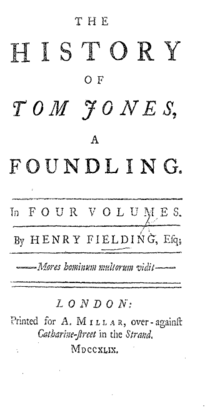
The History of Tom Jones, a Foundling by Henry Fielding: BOOK I., Chapter v.-ix.

Fridays with the Foundling
(yeah, I know, I typically hate using actor’s images when it comes to discussing the source material…but, w/o Finney, I’m not doing this)

https://www.gutenberg.org/ebooks/6593Miss Bridget shocks the housekeeper by showing actual tenderness and affection toward the (as yet unnamed) foundling. She follows that up with what could (should?) be construed as a less than compassionate move–she hunts down his mother (a far easier task than you’d expect) and brings her before the magistrate, Mr. Allworthy. Allworthy doesn’t condemn her for what she does, he gives her a lecture on morality, assures her he’ll take care of the child better than she could’ve, and then tries to get the name of the father from her. She doesn’t give that up, but does so in a way that she earns the approbation of Mr. Allworthy, as well as Miss Bridget and the housekeeper (who were absolutely not eavesdropping, they just happened to hear what happened between the magistrate and mother.

Really not a lot happens here, and Tom is “off-screen” for almost all of it. Still, it’s good to get this kind of thing out of the way and the narrator continues to be entertaining.

Come Tumbling Down by Seanan McGuire: Jack and Jill’s Final (?) Showdown in the Moors

Come Tumbling Down

Come Tumbling Down

by Seanan McGuire
Series: Wayward Children, #5

Hardcover, 206 pg.
Tor Books, 2020

Read: January 8-10, 2020
Grab a copy from your local indie bookstore!

Eleanor West’s Home for Wayward Children was an island of misfit toys, a place to put the unfinished stories and the broken wanderers who could butcher a deer and string a bow but no longer remembered what to do with indoor plumbing. It was also, more importantly, a holding pen for heroes. Whatever they might have become when they’d been cast out of their chosen homes, they’d been heroes once, each in their own ways. And they did not forget.

I wanted to do an Opening Lines post for this book, but I couldn’t decide where to stop—maybe around page 6 (which is a little too long for that kind of post). Seriously, it took less than a page for me to fall in love with this book.

It’s a typical day at Eleanor West’s School for Wayward Children (assuming such a thing exists) when a door appears, but instead of someone getting to go to their “home,” two figures emerge. One is a complete stranger, the other is Jack. Well, sort of. Close enough for our purposes here.

Things on the Moors have gotten to a crisis point where only one of the Wolcott twins can survive—Jack or Jill. Jill has struck first and things are dire. Jack recruits a couple of her friends and classmates to return with her (she was relatively certain she could return them to the school) to aid her in confronting her sister. They used to be heroes, they will be heroes again—as often as needed—much to Eleanor’s chagrin.

Once in the Moors, a dark and nasty place to be sure, dangers that no one (save maybe Jack) could’ve predicted present themselves and threaten the lives of the students in horrible and chilling ways. Culminating in what appears to be a final encounter for the sisters.

I love the way that McGuire writes these books, and Come Tumbling Down is no exception. It is full of the typical whimsical, fantastic and nigh-poetic language and ideas. If you’ve read a Wayward Children book before, you know what I’m talking about. If you haven’t . . . it’s hard to tell you. Here’s a sample or two:

“This is terrible . . . I mean we knew it was going to be trouble . . . but this is bonus terrible. This is the awful sprinkles on the sundae of doom.”

“A little knowledge never hurt anybody,” said Sumi.

“Perhaps not. But a great deal of knowledge can do a great deal of harm, and I’m long past the point of having only a little knowledge.”

Sumi was Sumi. Spending time with her was like trying to form a close personal relationship with a cloud of butterflies. Pretty—dazzling, even—but not exactly companionable. And some of the butterflies had knives, and that was where the metaphor collapsed.

Jill had always been the more dangerous, less predictable Wolcott, for all that she was the one who dressed in pastel colors and lace and sometimes remembered that people like it when you smiled. Something about the way she’d wrapped her horror move heart in ribbons and bows had reminded him of a corpse that hadn’t been properly embalmed like she was pretty on the outside and rotten on the inside. Terrifying and subtly wrong.

“wrapped her horror movie heart in ribbons and bows” is pretty much worth the purchase price of the book.

I’m glad that I enjoy—relish, really—the language like I do, because there’s not a lot of plot or action here. There’s enough, but there’s an awful lot of talk both around and before the action really gets underway. That’s not a wholly bad thing, and I enjoyed all of it, it just seemed self-indulgent.

It felt to me that McGuire’s reached the point of diminishing returns with this one, it’s been one too many trips to the Moors and it’s time for other Wayward Children to get the focus. Thankfully, that seems to be the plan.

I don’t think this would be a great introduction to this series (but it would function okay that way) if you’re not going to read them all in order, I feel safe in saying that it needs to be read after Down Among the Sticks and Bones. This is a good way to return to the world and revisit some of these characters. I can’t wait to see what happens in the next volume.


4 Stars

This post contains an affiliate link. If you purchase from it, I will get a small commission at no additional cost to you. As always, opinions are my own.

Junkyard Cats by Faith Hunter, Khristine Hvam: Hunter tries SF with Predictably Entertaining Results

Junkyard Cats

Junkyard Cats

by Faith Hunter, Khristine Hvam (Narrator)
Series: Shining Smith, #1

Audiobook, 5 hrs., 2 min.
Audible Original, 2020

Read: January 3-6, 2020


Faith Hunter dips her toe into SF with this Audible Original, and leaves quite an impression. The distinctive Hutner-flair is there, with science-y stuff replacing the magic stuff. It works pretty well.

Shining Smith is a veteran, of a handful of things, really. This takes place in the near-future, following a World War and another one (called the Final War in an act of aspirational nomenclature, I assume). She lives in/runs a scrapyard left to her by her father with a few cats and another vet recovering from trauma.

Shining deals on both sides of the law through intermediaries—no one knows her or who she is beyond those. It’s a perfectly safe environment.

Not a nice one, not a fulfilling one, but a safe one. And in her world, that’s asking a lot.

Until one day, one of her intermediaries shows up at her scrapyard dead. And then a very strong suspect for killing him shows up. And things get worse from there.

The action scenes are cool—filled with all the kinds of things that the best SF action scenes are filled with. The future-tech is cool, completely foreign to reality, yet it seems like the kind of thing that would emerge from our current tech.

I liked Shining, we don’t get to know her much. She’s such the riddle, wrapped in a mystery, inside an enigma, that it’s hard to get a real handle on her—but we get enough to root for her and want to know her better. Her compatriots are intriguing—as well-rounded as characters can get in this limited space where everyone is lying to each other about who and what they are.

There were a couple of SF-brand/tech names (like The Tyrell Corporation or tricorder) that I really couldn’t understand what Hvam was saying. Against the spirit of an “Audible Original,” but I’d like to read this so I could get a handle on those things. Which isn’t saying that Hvam didn’t do a great job—as per usual, her narration is top-notch.

My only complaint (outside of the tech words I couldn’t decipher), is the brevity, we get the good story, but we don’t get any depth—it’s like it’s designed to make you want more. Hey, wait a second . . .

A fun action-packed story that’ll whet your appetite for more. This is a glimpse into a cool world and I love what Hunter has created here. Yeah, I’m only going with 3 Stars for this. There’s a lot of potential in this world and with these characters—if Hunter returns to this? I can easily see this becoming a favorite series. It’s fine as a stand-alone, and it doesn’t demand a series/sequel but I think to really appreciate everything she set-up here, we need a little more. I’m not sure that makes sense, but…it’s what I can do.


3 Stars

Clearing the Deck: Tweet-length thoughts about books I can’t find time to write about

Yeah, I have a daunting TBR stack, but I also have too many books on my “To Write About” pile, and it’s bugging me. So, I’m cutting myself some slack, and am clearing the deck of everything from 2019 and before that I haven’t made time for. This was painful to do, I was looking forward to writing about most of these, but I’m just not going to get to them–and the 2020 books are starting to pile up, too. So, in 144 characters or less, here’s me cutting myself some slack.

(Click on the cover for an official site with more info)

Rivers of London: Detective Stories
3.5 Stars
Rivers of London, Volume 4: Detective Stories by Andrew Cartmel, Ben Aaronovitch, Lee Sullivan
Brief flashbacks showing what Peter et al. get up to between novels/comic series. A fun idea, well executed. Would enjoy another one like this.
Cry Fox
3.5 Stars
Rivers of London Volume 5: Cry Fox by Andrew Cartmel, Ben Aaronovitch, Lee Sullivan
This was a lot of fun, and showed a new side of a cool recurring character.
Rivers of London: Action At A Distance
3 Stars
Rivers of London: Action At A Distance by Andrew Cartmel, Ben Aaronovitch, Brian Williamson, Stefani Renne
A serial killer hunt and Nightingale backstory. Great combo.(some nice Molly material, too)
Geerhardus Vos: Reformed Biblical Theologian, Confessional Presbyterian
4 Stars
Geerhardus Vos: Reformed Biblical Theologian, Confessional Presbyterian by Danny E. Olinger
A biography and a discussion of his Vos’ major works. This was an excellent way to gear up for my 2019 Vos reading. Inspirational stuff.
The Utterly Uninteresting and Unadventurous Tales of Fred, the Vampire Accountant
3 Stars
The Utterly Uninteresting and Unadventurous Tales of Fred, the Vampire Accountant by Drew Hayes, Kirby Heyborne (Narrator)
A light Urban Fantasy about misfit monsters. Enjoyable enough to come back for more.
Open Season
4 Stars
Open Season by C. J. Box, David Chandler (Narrator)
Series Debut about a WY Game Warden with a nose for mystery. Loved the dual POVs (Pickett, his daughter). Addicting.
Please Don't Tell My Parents I'm a Supervillain
3 Stars
Please Don’t Tell My Parents I’m a Supervillain by Richard Roberts, Emily Woo Zeller (Narrator)
A cute story about kids of super-heroes/super-villains trying to get started in the biz without their parents’ involvement. Went on longer than it needed to, but fun enough to try volume 2.
Dragon Blood
3 Stars
Dragon Bones by Patricia Briggs, Joe Manganiello (Narrator)
Manganiello is a great choice for narrator. Nice little stand-alone fantasy story. Great dragons.
Savage Run
3.5 Stars
Savage Run by C. J. Box, David Chandler (Narrator)
Almost as good as the first Pickett novel. Mrs. Pickett gets to shine here, too. I’m so glad I finally got to this series.
Inkheart
3 Stars
Inkheart by Cornelia Funke, Lynn Redgrave (Narrator)
Gets a bit redundant, but I loved the concept. Better than the movie (which I kind of liked), but still could’ve been better.
Undeath and Taxes
3 Stars
Undeath and Taxes by Drew Hayes, Kirby Heyborne (Narrator)
A little better than the first volume, an enjoyable way to spend a few hours.
Dragon Bones
3 Stars
Dragon Blood by Patricia Briggs, Joe Manganiello (Narrator)
OK, so Dragon Bones wasn’t a stand-alone. Could’ve been, but it was nice to get a little more with these characters/this world. Still, give me a Briggs Urban Fantasy above this.
The Imputation of the Active Obedience of Christ in the Westminster Standards
4 Stars
The Imputation of the Active Obedience of Christ in the Westminster Standards by Alan D. Strange
I love this series. Strange packs so much material into this tiny package. Excellent stuff.
Badlands
3 Stars
Badlands by C. J. Box, January LaVoy (Narrator)
Cassie takes over The Highway series and moves to a new Oil Town in North Dakota. Midwest Winter, Drugs, Murder, Corruption and Too Much Money wreak havoc on her first week on the job.
Zombie Spaceship Wasteland (Audiobook)
3.5 Stars
Zombie Spaceship Wasteland: A Book by Patton Oswalt (Audiobook)
The memoir chapters are nice, the comedic bits are odd (and funny). An interesting look at Oswalt.
No Sweat
3 Stars
No Sweat: How the Simple Science of Motivation Can Bring You a Lifetime of Fitness by Michelle Segar, Ph.D.
A great way to look at keeping (or getting) yourself motivated to exercise.

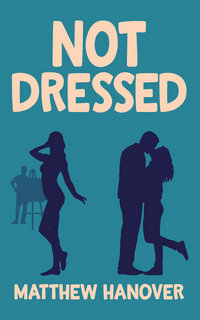
A Few (more) Quick Questions With…Matthew Hanover

So, I gushed a bit about Hanover’s upcoming novel, Not Dressed, earlier. Now it’s time to ask him a few questions about it and a few other things. I should add, the book is available for pre-order, get on it.

With maybe two exceptions, I’ve only had good experiences doing these Q&As over the years, but this was by far the best—Hanover went well above and beyond the call with this one and was more than generous with his time and effort. Drinks are on me if we’re ever in the same city, sir.

Before we move to Not Dressed, let’s look back at Not Famous for a moment—I’ve asked a couple of your colleagues this question, and I’d love to hear your perspective: Why is it, do you think, that male readers respond so strongly to books about music? (your novels, Hornby’s, etc.)
I think—and I could be wrong—but the love of music is such a universal thing that it’s easy for male readers to relate to characters that are interested in music, or music-themed books. It’s a universal language we can all understand even if we listen to different stuff.
What lessons were you able to take from the writing, editing, marketing, launch, etc. of Not Famous to the process for Not Dressed? Were there some things that you assumed “Oh, I’ll know better next time” or “I’ve got to do this again for the next book” that in the end, you couldn’t use? Was this an easier process, more difficult, or are the experiences so tied to the different books that you can’t compare?
Not Famous did better than I expected, but I kind of set a low bar for myself as to how it would perform. I was generally happy with the launch, but when sales slowed down, I was often told that the best thing to do is to write your second book because it’s easier to sell a novel if you have more than one. So, I’m hoping that plays out, but I’ve also learned that promoting a novel—any novel—is really hard work. Both traditional and indie authors are competing with millions of other authors trying to get their novels read. While I consider my genre to be “lad lit” it’s also quite clear that most readers are women, and you have to market to women readers as much as men.

One thing that was really different was the time it took to complete each novel. Not Famous was mostly an on-and-off effort over seven years to finish the first draft. Not Dressed took seven months to complete the first draft. My writing has also become a bit more efficient. The first draft of Not Famous was over 107,000 words. The first draft of Not Dressed was 97,000. They both ended up at approximately 94,000 words, so there was a lot more cut from the first novel, which makes sense because I was still learning how to write fiction. I suspect future books will also get easier to write. Whether I’ll improve on my marketing remains to be seen. We’ll see how this new novel goes!

Let’s turn to Not Dressed now: Jake has two significant females in his life his girlfriend (a talk radio producer/co-host who moonlights doing nude modeling) and his new friend (a giant geek who doesn’t know what to do with her life), which came first—the nude modeling hook or the idea for a geeky best friend? And just where, if you can recall, did the girlfriend helping make ends meet via nude modeling come from in the first place?
I knew I wanted to do a workplace comedy for my next novel, and my original development of ideas focused entirely on that. But, I think a good novel requires multiple arcs to be really interesting, and so the first arc hat I came up with was the nude modeling one. I’d been trying to write a short story about a guy whose girlfriend models nude for a long time, even before Not Famous was finished, but I just couldn’t get it to work as a short story. It worked great for the novel because she is driven to model because they’re trying to make ends meet, and her solution to that problem causes another, bigger problem for their relationship.

The geek girl theme I came up with towards the end of writing the first draft of Not Famous when I came up with the scene where the main characters end up at a vintage gaming night. I loved the idea of exploring that type of character and quickly realized a geek girl as a love interest would be a lot of fun to write. And so I decided to use that in my next novel.

Kaylee’s more than just a geek, there’s more to her than the excellent taste in SF/F, how did you make her more than the stereotype?
Developing Kaylee as a character was even more fun than I thought it would be. She started as more of a retro gamer geek but eventually decided to make her a sci-fi geek with an affinity for Star Trek.

To really capture the realistic geek girl I reached out to people on social media, and drew upon my own interactions, and came up with a series of traits and quirks that I thought made her as realistic as possible. I liked making her a bit quirky with her geek obsessions, like her OCD with mixing and matching clothes from different SF/F properties. Which I thought was a fun trait. Most young women would say they feel sexier wearing matching bra and panties, Kaylee, however, would never wear Marvel and DC Comics together. I thought that was a perfect manifestation of her personality.

I’d forgotten you’d said that there’d be a tie between Not Famous and Not Dressed, so it was a pleasant surprise when I got to that passage. How fun was that to write? How tempting was it to bring the two sets of characters together more?
After Not Famous I heard from readers who said they’d love a sequel. I knew I didn’t want to write a sequel because I felt that I was done writing Nick and Alli’s story, and any attempt to continue it in a new novel would take me in a direction I don’t want to go down. But having the book set in the same universe was a lot of fun, and I started planning for this before finishing Not Famous. You may recall that Not Famous begins after Nick has a one-night-stand with Emma, who works at Burnham & Modine—the office where Jake, the main character of Not Dressed, works. I loved doing this as opposed to a sequel, and I really enjoyed featuring more of Emma in this novel. Her friendship with Jake is loosely modeled off a friendship I have with a female coworker.

Readers of Not Famous will be happy to know that even though they don’t appear in this novel, you will get some gossip about how things are going with them.

Typically, when I run into architecture in fiction, it’s the kind of career that Jake imagined himself having, not what he ends up with. Burnham & Modine, the architecture firm that Jake works for, strikes me as incredibly accurate—is that the result of research (if so, how did you go about that) or is this from personal experience (not necessarily as bad)?
I know a lot of architects because I work in marketing for a developer. So, over the years I’ve heard all kinds of horror stories about working in the business, and overwhelmingly I hear that the job isn’t as glamorous as it is made out to be in fiction and in Hollywood. And I loved that because it was a great angle to play up in juxtaposition to the theme of expectations versus reality. I also used some generic bad office stories I’ve experienced as well.
Sisters play a significant role in both of your books—is this coincidence? Do you owe your own sister some debt you’re repaying?
It’s not entirely a coincidence, that’s for sure. I think the dynamic between siblings makes for great stories, and while each novel delves into a sibling relationship, these relationships are completely different.

In Not Famous, Nick has a much younger half-sister going through her own coming-of-age issues. In Not Dressed, Kaylee has a younger sister, close in age, who, unlike Kaylee, was popular in high school, had a lot of boyfriends, and ultimately reaches certain life goals before Kaylee does. This wasn’t one of my original ideas, but as I developed Kaylee’s character and her backstory, I really liked the idea that while she’s comfortable being a geek she feels insecure around her popular younger sister. It really made for an interesting character and resulted in some of my favorite scenes in the novel.

That said, it wasn’t my original intention to have another sibling conflict in this story, but it really gave Kaylee the depth I felt she needed to be a three-dimensional character. She’s not defined just by her geeky interests alone, but by a rivalry with her younger sister who had a much easier time growing up because of her popularity.

It appears you put a lot of thought into the backstories of your female love interest characters. How do you approach creating these and making them realistic and unique?
I’m really proud of both characters and how they turned out. I spend a lot of time thinking about the backstories of my main characters and how that affects their actions throughout the story. I spent seven years thinking and rethinking and tweaking Alli Conwell’s backstory for Not Famous because it needed to explain so much of her behavior long before the reader finds out what her backstory really is.

Developing Kaylee and her backstory was a similar, albeit quicker, process. First and foremost, I wanted Kaylee to be different from Alli. But, I think readers will find lots of similarities and differences between them. Both are ambitious, but Alli knew what her path was, and Kaylee doesn’t. Alli is independent and works hard to maintain that independence. Kaylee, however, still lives with her parents and is trying hard to find her true calling so she can be independent. As for their differences, Alli is shy, while Kaylee is more free-spirited. Alli was proudly innocent and virtuous. Kaylee, however, feels insecure about her lack of experience and has years of pent up jealousy of her promiscuous younger sister. Despite their differences, both are strong young women with hopes, dreams, and fears.

How much Star Trek: The Next Generation did you have to watch to get this written? Favorite episodes from this time?
I actually binge-watched the entire series as research. I’d seen bits and pieces before, which is why I chose that particular Star Trek show to be her primary obsession. I wanted to have her quote some episodes and really feel like a genuine Trekkie. I also got the idea of her being fluent in Klingon after watching the show and learning about the subculture of people who have done just that. I even got help from the Klingon Language Institute (yup, there’s such a thing) to help with the translations when Kaylee speaks Klingon. I thought it would be a fun easter egg for Trekkies who know Klingon to read it.

TNG has a lot of great episodes, and I would have loved to have quoted more, but one of my favorites does get a mention by Kaylee as one of her favorites, too.

What’s next for Author Matthew Hanover? Is Novel #3 underway, or are you solely focused (for now) on getting this launched?
I’m currently focused on the forthcoming launch of Not Dressed, but I have been jotting down ideas and notes for a third novel, of which I’ve already determined the primary plot. Just like Not Dressed, it will be in the same universe as Not Famous and have some character crossovers.
Thanks so much for your time and help in getting this Q&A into better shape. Also, thanks for Not Dressed, I had a blast with it and hope that it finds its audience.

Page 163 of 341

Powered by WordPress & Theme by Anders Norén