Category: Fiction Page 168 of 348

Not Dressed by Matthew Hanover: If this book doesn’t bring a smile to your face, something’s broken

Not Dressed

Not Dressed

by Matthew Hanover
Series: Wallflowers, #2

eARC
2020

Read: January 3-6, 2019

“Hey there, Jake. This should be fun, right?”…

“I guess,” I say.

“You don’t sound too excited,” she says as she takes a hair tie off her wrist and pulls her disheveled hair back into a ponytail.

“Yeah, well. I’m not good at dancing.”

“Obviously! That’s why you’re here. Same as me. I’m probably just as bad as you. But we’ll learn together, okay?”

“Okay.”

Darmok and Jalad at Tanagra,” she says.

“I…have no idea what that means.”

“It’s from Star Trek…Actually, Star Trek: The Next Generation. It means we’ll work together to solve a common problem. In this case, the problem is learning how to dance.”

“I gotcha. So, you’re like…a Trekkie?”

“Was my sweatshirt not a big enough clue?”

“No, I just—”

“You’re not a Star Wars fan, are you? If you are, you’ll have to find a different partner.”

Jake Evans is our protagonist—he’s a decent enough guy, who could probably use some maturing (which means he’s like 90% of guys in their twenties). He’s got a great girlfriend (although the relationship seems a bit rocky when we meet him) and is second-guessing his chosen career (partially because he has a horrid employer, and partially because architecture isn’t the career he thought it would be). There are signs that he’d be a pretty fun guy to hang out with, but when the book opens he’s got a pretty good-sized cloud over his head between the girl and the gig.

Lindsay’s his long-time girlfriend. She works in radio and is very passionate about her job. She’s enjoying a little bit of success, and has a hard time relating to Jake’s struggles. She’s the producer and in-all-but-name on-air sidekick to a Boston-area conservative talk show host, who calls her “Lefty Lindsay.” (don’t worry, politics are absent from the book!) At least when the book opens, I really didn’t see why the two of them were a couple. There’s a good chance that neither of them rembered at that point, either, it had been so long.

Two things about their relationship provide most of the initial conflict for the plot. First, due to some financial hits they’ve taken recently, Lindsay has taken some modeling gigs to make some extra money. She did it back in college, which was recent enough that she still had connections. Why didn’t Jake do something to make extra money? He’s having a hard enough time finding a replacement full-time job that it didn’t seem like a good idea to try to add another job search to his plate. Besides, Lindsay’s moonlighting is profitable enough. What she neglects to mention to Jake is that this modeling is for art classes at a local college. And, well, none of these artists-in-training are working on fashion degrees—clothing gets in the way of what they’re learning to draw/paint/sculpt. Jake’s an open-minded kind of guy, except when it comes to this, it’s not pretty when he finds out (although it’s a pretty amusing scene for readers when he does).

Meanwhile, Jake’s sister’s wedding is coming up and Lindsay has decided the two of them need to learn to dance before it. Besides, it’s a fun activity for the two of them—they never go out mid-week anymore, and their relationship could use a boost. So she signs them up for a dance class, and then tells Jake about it after she paid for it, so he pretty much has to agree to it, but isn’t really that interested. So she basically promises him sex if he goes. Which pretty much seals the deal. But then Lindsay’s show gets moved to a new (and better) time slot. So, in addition to not being able to make the class, the couple will hardly see each other during the week. Her plan is that Jake will go, and then on the weekend, teach her the moves (he insists on getting his payment in advance for this).

Jake hates this new plan, and is convinced that he’s going to be stuck dancing with the instructor (after he and the reader meets this instructor, no one thinks this is going to be fun for him). Thankfully, just before class starts, Kaylee walks in. You read her opening dialogue up above. She’s a few years younger than Jake, taking some time out from college to figure out what she wants to do with her life, and is a major geek. She’s almost a Manic Pixie Dream Girl, but doesn’t fit the category in a few ways (I’m only using that term because I’m afraid this post is getting too long and I want to pick up the pace). She’s also my favorite character of 2020 so far (granted, that would mean more if it wasn’t January 13th).

Kaylee and Jake strike up a nice little friendship during the class, and pretty soon, he’s going so he has an excuse to hang out with her. The two of them are fun together—she’s socially awkward and embarrassed to be herself, Jake tries to shake her out of that, and even encourages her to let her Geek-Flag fly (even if he doesn’t get any of it). Meanwhile, she’s encouraging about his job hunt (as opposed to Lindsay, who mostly nags or wants him to find a way to succeed where he is), and gets him to be a little less angst-y about his life. I like Jake more when he’s in friend with Kaylee-mode over guy with Lindsay-mode. But what do I know? I have a tendency to pick people the protagonists don’t in these situations (I won’t provide examples because I’d expose myself to too much ridicule).

The one last bit of Jake’s life we need to talk about is his job. It’s horrible. He has a nice group of work-friends who band together for mutual support (and complaints), but the atmosphere at work is toxic, and their superiors would be enough to turn anyone against their chosen field. For example, in the first chapter, Jake’s two-year anniversary with the company happens and he asks his boss about scheduling his annual review (which will hopefully involve a raise, which he could really use). His boss stammers and suggests an alternate date, nine months away. Yeah, Jake’s bad attitude toward work makes a little sense, doesn’t it?

I worked as a draftsman at an architecture firm some years ago, and while the atmosphere there wasn’t at all what Jake experienced, Hanover did do a great job of capturing the kind of work and personalities that I saw—which doesn’t really match the typical depiction of architects in fiction. I liked that bit of realism. (I asked Hanover about that in an upcoming Q&A, but I haven’t read his responses yet, looking forward to seeing where that authenticity came from).

Getting back to Jake’s life—what we have here is a stagnant (at best) relationship that’s got a couple of pretty big things to work through; a job situation that needs addressing; and a new friend that is really the only positive thing in his life. Jake’s life is basically begging to be shaken up, is Kaylee going to help instigate that?

There’s something about Hanover’s style that I can’t express, but I wish I could. This book (like last year’s Not Famous) is effortless to read. When I started this book, it was late in the day and I thought I’d just stick a toe in the water, maybe read about 10% of it. Before I knew it, I was about a third into the book (and were it not for the time of day, I’d have probably finished it in one sitting!). It’s funny, it’s sweet, it’s infectious, it’s engaging as anything I can remember. I cared about these characters and got invested in their lives faster than I typically do.

Jonathan Tropper tends to have certain character types that show up in every novel—particularly the wise sister/friend-who-might-as-well-be-sister* (many authors do this kind of thing, I know, but Tropper is who I thought of when I was reading this book). Hanover shows signs of the same thing—sisters play a big role in both of his novels to date. He doesn’t use them the same way that Tropper does, don’t get me wrong, but his male protagonists are more honest and open about their emotional lives because of sisters. This is neither good or bad, it’s just a trait that he may have—it’s something I’ll be looking for next time. (again, see the Q&A for more on this topic). I like that there’s someone who can draw this out of a character without the need for alcohol, drugs or trauma—also, that he bares his soul first to someone who isn’t a love interest.

* There are other types that Tropper utilizes constantly, too, if I ever get around to my big re-read of his corpus, I’ll end up compiling a chart.

There’s a bit of conventional wisdom discussed here that I didn’t know before reading this book.

“You realize that dancing is basically foreplay, right?”

“So I’ve heard.” [Jake replies]

Four chapters later:

“Because dancing is, like, totally foreplay, you know.”

“Why does everyone keep saying that?” [Jake asks]

I counted someone telling that to Jake four times (with at least one more allusion). Is this really a thing that everyone thinks/says? I may need to cancel some of my daughter’s plans for the next 20 years…

I’d forgotten that Hanover had said there’d be a link between Not Famous and this book. It’s small, and if you haven’t read his other novel, you won’t miss anything. But if you have, you’ll enjoy the brief catch-up you get about the lives of the protagonists of that novel. It brought a big grin to my face.

There was a slight flavor of Nick Hornby wanna-be-ness to Not Famous that’s not present here. Instead, what Hanover has done is take that same voice and put it to use telling a story that’s all him (while being the kind of thing that Hornby readers will appreciate). I do think that Hanover could go a bit deeper in his characterizations (I have very little sense about Jake apart from work/Lindsay) and his plots could add a little more complexity. I’m looking for a few degrees of depth/complexity, not much. But that doesn’t stop me from loving this world and characters, and it doesn’t keep me from encouraging you all to grab this book when it releases next month.

This heart-warming tale about being who you are and finding acceptance for it is a real winner. Adorkable, irresistible, and just fun—Not Dressed is sure to please (if you are so led, book is available for pre-order). I don’t know what Not Description is next for Hanover, but I’m already eager to read it.

Disclaimer: I received a copy of this book from the author in exchange for my honest opinion and this post. I appreciate the book, but it didn’t sway what I had to say.


4 Stars

QualityLand by Marc-Uwe Kling, Jamie Lee Searle (Translator): George Orwell Goes Shopping

QualityLand

QualityLand

by Marc-Uwe Kling, Jamie Lee Searle (Translator)

eARC, 352 pg.
Orion Books, 2020

Read: February 13-15, 2020

Grab a copy from your local indie bookstore!


When you boil it down, QualityLand is simply the epic tale of a man trying to return something he didn’t order (and doesn’t want) to an online retailer. Peter Jobless’s tale involves a paranoid hacker, a blackmail scheme, an armed stand-off, a smitten sex-bot, a TV news panel show, a revolutionary tablet computer, swaying a presidential election, and a revival of interest in the films of Jennifer Aniston. We’ve all been there, right?

There’s no way I could describe the plot in a way to do it justice—so we’ll stick with the broad sweep. Before much gets underway story-wise, there’s a lot of set up required. When the dominoes start to fall in earnest, they go quickly. But so much of the book is devoted to setting them up, establishing/explaining the culture, government and everyday life of the QualityLand’s citizenry.

Here’s the best part about the set-up time: it’s totally worth it, and the way the dominoes are being placed is enjoyable/entertaining enough that even if the results were duds, I wouldn’t really have minded all that much. The icing on the cake is that the plot works well (we’ve all seen too many examples of elaborate worldbuilding that accompany a story that’s not worth it).

This is a world given over to algorithms, a world where the algorithms of various retail entities know so much about their customers that they no longer have to wait for a customer to order something to provide it—no, the algorithm will know what you’re going to want and will deliver it before you know you want it.

Not only are all your possessions provided for you in this manner, the algorithm decides what kind of career you will pursue, but it will also guide and govern your romantic life, your health care, and so on and so on.

It even gets into politics—so much so that during the course of this novel, there is an android running for president—because, we’re told repeatedly (mostly by the candidate), “machines don’t make mistakes.” An android chief of state (the theory goes) will better all of society because the android will know what’s needed.

At each step of the way, as each aspect of society is introduced and explained, as each character appears for the first time, it’s done in a way that will make you grin, chuckle, or laugh. The world is so zany, so…out there—and yet, completely recognizable as a natural progression of our world/society/culture.

Unlike so many satirical novels, the ending of this novel doesn’t get out of control. The plotlines come to natural conclusions and resolve in a satisfying way.

The characters—from the Everyman Peter Jobless, to the campaign manager (she can give Malcolm Tucker some lessons on the use of words as weapons), to the history teacher’s trouble-maker daughter (in-person to public officials or in online comments), to Peter’s collection of electronic companions—are wonderful. They’re a little better rounded than I’m used to in satires.

There’s a wonderful playful quality to the language, making the whole thing a barrelful of fun. I’m assuming that Searle captured the feel of the original in that, and did a great job. There’s an acronym that’s used a couple of times, that I think may be funny in the original, but doesn’t translate into anything (at least as far as I can see). That one thing aside, the ability to make a translated text feel so natural, so easy is no small feat.

QualityLand is a fun read t’s a thought-provoking read, it is (occasionally) a frightening read as you realize how close to this dystopia we are (and how fast we’re running to it). I strongly recommend this one.


4 Stars


My thanks to Tracy Fenton and Compulsive Readers for the invitation to participate in this tour and the materials (including a copy of the novel) provided.


This post contains an affiliate link. If you purchase from it, I will get a small commission at no additional cost to you. As always, opinions are my own.

BOOK SPOTLIGHT: QualityLand by Marc-Uwe Kling

I’m excited to welcome the Book Tour for QualityLand by Marc-Uwe Kling this morning. I’ve got this little spotlight post and my take on the novel coming along in a bit. But let’s start by learning a little about this book, okay?

Book Details:

Book Title: QualityLand by Marc-Uwe Kling, Jamie Lee Searle (Translator)
Publisher: Orion
Release date: February 20, 2020
Format: Hardcover
Length: 352 pages
QualityLand

Book Blurb:

Everything in QualityLand is geared towards optimizing your life. QualityPartner identifies your ideal mate, earworm personal assistants get you where you need to go and android drones know you need a six pack of beer at the end of a long day even before you crave one. Humans, robots and algorithms co-exist, everything is seamlessly corporatised, stratified and monetized. Your very name reveals much of what we need to know about you and your profile discloses the rest.

Peter Jobless is a down and out metal press operator, dumped by his long term girlfriend when she is alerted to a better option on her QualityPad. But Peter has another problem – he seems to be the only one noticing that his fellow Qualityland robot citizens are experiencing an existential crisis. There is a drone who’s afraid to fly. A sex droid with erectile dysfunction. A combat robot with PTSD. Instructed to destroy these malfunctioning A.I., Peter starts to suspect the technology that rules us all has a flaw, perhaps a fatal one. Not only that, these robots might be his only friends…


About the Author:

Marc-Uwe KlingMarc-Uwe Kling is one of the most successful authors in Germany. His latest book QualityLand is an astounding satire of the future that sometimes feels closer to the present than you could wish for. QualityLand spent months on the German bestseller lists, has up to now been translated into twenty-four languages and the HBO is planning an adaptation with Mike Judge as show runner.


My thanks to Tracy Fenton and Compulsive Readers for the invitation to participate in this tour and the materials (including a copy of the novel) provided.

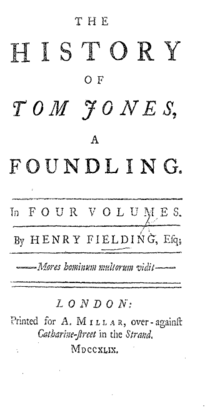
The History of Tom Jones, a Foundling by Henry Fielding: BOOK II., viii.-Book III., ii.

Tom Jones Original CoverNow this was more like it! We start off with getting a bit more insight into Capt. Blifil, who when not having to spend time with his wife, spends his time lost in his own thoughts, which were

were entirely employed on Mr. Allworthy’s Fortune; for, first, he exercised much Thought in calculating, as well as he could, the exact Value of the whole: which Calculations he often saw Occasion to alter in his own Favour: And, secondly and chiefly, he pleased himself with intended Alterations in the House and Gardens, and in projecting many other Schemes, as well for the Improvement of the Estate as of the Grandeur of the Place. For this Purpose he applied himself to the Studies of Architecture and Gardening, and read over many Books on both these Subjects; for these Sciences, indeed, employed his whole Time, and formed his only Amusement. He at last completed a most excellent Plan: and very sorry we are, that it is not in our Power to present it to our reader, since even the Luxury of the present Age, I believe, would hardly match it.

Y’know, just in case anyone forgot what he was really in love with when he entered into this marriage. One evening, while strolling by himself, “his Heart was exulting in Meditations on the Happiness which would accrue to him by Mr. Allworthy’s Death, he himself—died of an Apoplexy.” Yup. That’s right. Forty-seven pages after his introduction—seemingly as a major impediment for Tom to overcome—he’s dead. We spent so much time on him, his relationship with his wife and brother-in-law, etc. and he just dies in a sentence. Well, that’s not true, it seems like he does, but we end up spending a few more pages on his being pronounced dead after this, but that’s beside my point. In some books, I’d be annoyed by this, but I was amused by this little bit of fakery on Fielding’s part.

The hullabaloo surrounding finding his body, trying to resuscitate him and so on does give Fielding a chance to satirize the practice of medicine, which I enjoyed.

Which brings us to Book III, which is wonderfully entitled, “Containing the most memorable Transactions which passed in the Family of Mr. Allworthy from the Time when Tommy Jones arrived at the Age of Fourteen, till he attained the Age of Nineteen. In this Book the Reader may pick up some Hints concerning the Education of Children.” That last sentence just made my day, really (as did the title to Chapter 1 “Containing little or nothing,” I like some honesty in labeling)

The Reader will be pleased to remember, that, at the Beginning of the Second Book of this History, we gave him a Hint of our Intention to pass over several large Periods of Time, in which nothing happened worthy of being recorded in a Chronicle of this Kind.

In so doing, we do not only consult our own Dignity and Ease, but the Good and Advantage of the Reader: for besides that by these Means we prevent him from throwing away his Time, in reading without either Pleasure or Emolument, we give him, at all such Seasons, an Opportunity of employing that wonderful Sagacity, of which he is Master, by filling up these vacant Spaces of Time with his own Conjectures…

Now that Tommy is a young man, we get to meet him “…shall now bring forth our Heroe, at about fourteen Years of Age, not questioning that any have been long impatient to be introduced to his Acquaintance.” Yup, I’m not alone in getting fed up with this. For the record, “Heroe” (like all the weird capitalization) is what my book has.

Tom Jones is, apparently, “universally disliked” in his community (unlike Master Blifil, who is the model citizen), in fact,

we are obliged to bring our Heroe on the stage in a much more disadvantageous Manner than we could wish; and to declare honestly, even at his first Appearance, that it was the universal Opinion of all Mr. Allworthy’s Family that he was certainly born to be hanged.

“Born to be hanged…” I’ve got to find a way to use that line.

Tommy has a propensity to many vices, but a strong tendency to robbery—and at this point has already been convicted of three of them. We get a little information about them and his refusal to name names. It’s not really commended (but you can read it between the lines), that he doesn’t give up his accessories or accomplices—even under corporal punishment. Mr. Allworthy calls it a “mistaken Point of Honour” for him to be that way, but others don’t agree.

To help get him to confess (and implicate others), his tutor is brought in to whip him,. This tutor is named, most fittingly, Mr. Thwackum. That right there is the way to name a character, ladies and gentlemen. Sure, he may go on to play an important role, he may end up showing wisdom and insight, but at the end of the day, let’s not forget—his main role is to Thwack ’em around.

In these chapters, we get Capt. Blifil killed off, we meet Tommy—and see right away that he’s going to be an atypical “Heroe” at best—and the story starts to pick up, all with some fun narration and asides (most of which I left for you to discover for yourself). Once again, I’m very tempted to keep going here. At the very least, this makes up for last week’s chapters.

Reposting Just Cuz: Guilty Minds by Joseph Finder

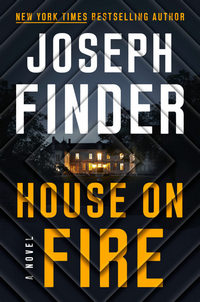
My plan for today was to post about the new Nick Heller novel: House on Fire by Joseph Finder. But one thing led to another, and . . . well, that just didn’t happen (and I’m not sure when it will). Instead, I’ll be revisiting my posts about the first three in this thriller series. The first two have already been posted, and here’s the third.


Guilty MindsGuilty Minds

by Joseph Finder
Series: Nick Heller, #3

eARC, 400 pg.
Dutton, 2016

Read: June 1-2, 2016

The evil that men do lives after them;
The good is oft interred with their bones:
               – Julius Caesar, Act 3, scene ii

Everyone’s favorite private spy, Nick Heller, is back. This Jack Reacher with a budget gets hired to head off a scandal that may threaten the career of the Chief Justice of the Supreme Court. He’s not hired by the Justice, of course, but by a powerful friend. Washington, D.C. being Washington, D. C. not only does the Justice have powerful friends, he has powerful enemies. Heller assumes that they’re behind the scandal breaking on the gossip website, and sets his sites on not only stopping them but exposing them.

There’s more going on than even someone with Heller’s instincts expect — what seems like a pretty routine case (with high stakes) turns into something with life or death stakes. Not shocking, it’s why we read these things.

I love the way that Heller’s mind works — watching him prepare (even quickly) to break into an apartment, or take out a group of kidnappers is one of the highlights of these books. What’s even better is that his hacker can’t do everything. His buddies/colleagues make blunders. What’s more, Heller makes mistakes — errors in judgement, letting personal biases get in the way, bad assumptions. Sure, Heller’s super-human (it’s why we read him), but he’s not perfect. It’s his reaction to the mistakes, his recalculations, his new plans that separate Heller from a lot of these characters who are a little more perfect.

There’s a twist or two, people who aren’t what they seem (in good and bad ways for Heller), and some solid fight scenes (with and without weapons). Pretty much just what you want in a thriller. I’m not sure that I’m crazy about the resolution or the epilogue, but I don’t mind them and honestly I can’t think of a better way for things to play out (and before that, I had just that one complaint). So, I guess a great 380 or so pages, followed by a decent 20.

It took less than a page or two (hard to tell on my screen) to remember what I liked about the style of this series, Heller’s voice, and his crew (although this book relied less on his regular supporting cast than the previous two). If I quoted every snappy line from the first chapter, you’d stop reading this post as tl;dr (and the publisher would come after me) — and things got better from there. Great internal dialogue. Finder writes lean prose without an inch of fat, but it’s not dry, not lacking anything — it’s full of personality and intelligence. There was one thread that seemed pretty important that Finder just abandoned, which is odd for him. Still, anytime you get an action hero quipping about coffee, I’m going to pay attention.

I had coffee. I took one sip and put it down. It tasted like something brewed by someone who disapproved of coffee.

I appreciated the observation about airport/tarmac security, and just with that Heller had spent more time with that. Maybe in the fourth book?

Smooth prose, good action, well-paced, and just a fun story. A real pleasure to read from beginning to end.

I received this book from Net Galley in return for the above thoughts. Thanks to Net Galley and Dutton for the good read. As it was an ARC, there’s a chance that the quotation above might not be in the published version, I’ll try to confirm as soon as I can next month.

—–

4 Stars

Reposting Just Cuz: Buried Secrets by Joseph Finder

My plan for today was to post about the new Nick Heller novel: House on Fire by Joseph Finder. But one thing led to another, and . . . well, that just didn’t happen (and I’m not sure when it will). Instead, I’ll be revisiting my posts about the first three in this thriller series. This is the second in the series, so the first has already been posted, and the next is on the way, but first: Buried Secrets


Buried SecretsBuried Secrets

by Joseph Finder
Series: Nick Heller, #2

Hardcover, 386 pg.
St. Martin’s Press, 2011
Read: April 13, 2015

Private Spy, Private Investigator, Private Vengeance-Taker, whatever you want to call him, Nick Heller one of the best — he’s tough, he’s resourceful, troubled kids like him and he quotes The Punisher. Who doesn’t love that?

Heller’s relocated himself, his computer wiz, and his nephew to Boston since we saw him last, setting up shop marketing his peculiar trade. True to form, he’s pretty picky about who he accepts as a client, but there is one who he can’t turn away. Marshall Marcus, the richest man in Boston, was a lifeline for Heller’s mother after his father’s prison sentence was handed down. Now he needs a lifeline — actually, his 17 year old daughter does. She’s been kidnapped and will be executed if her father doesn’t give the men responsible exactly what they want.

The kidnapping itself, and the way Alexa is being held captive aren’t that novel — most readers who’ve watched a police procedural or two in the last few years will have seen one or two scenarios like it. But Finder does make it distinctive by making the man holding her into a particularly sick and evil man. Thankfully, we don’t spend so much time with Dragomir that the reader sympathizes with him, or starts to like him (à la Dr. Lecter). What he’s doing to Alexa is just wrong — as is pretty much everything that has led up to this point in his life.

Nick’s not just up against this twisted man — and those behind him — he also has to contend with a client who continually lies to him, an FBI official that seems to be blocking his efforts, and more than one person who isn’t who they say they are. Thankfully, he has Dorothy, his old military friends, international intelligence contacts, and a different FBI agent backing him.

There’s less action (as defined by explosions, gunplay, fights, etc.) than in Vanished, but it’s more suspenseful. In Vanished, it wasn’t until the closing pages that you had any idea what was happening with the victim — but here, there’s never any doubt about what’s going on with her, and what’s going to happen to her if Nick doesn’t put the pieces together. Soon. Which isn’t to say it’s all-thriller-all-the-time, there’s moments where Nick and the reader catch their breath. Even a couple moments of levity (Nick’s narrative voice helps a lot on that front) — his observation, “Veganism is apparently the paramilitary wing of vegetarianism” helped set the tone. Dorothy’s eventual use of the word “Pepsi” to close a chapter made me chuckle audibly (you’ll get it when you read this).

I should probably add that this book includes one of the grosser character deaths I’ve read in the last couple of years. Didn’t bother me much, he had it coming.

We get to see a bit more of Nick’s life and backstory this time. He’s a better-rounded character now. It’d have been easy to see him as a workaholic who had no contact with anyone outside of work and his nephew before. But that’s clearly not the case now. There’s not much more to him — but there used to be, and getting that glimpse helps you care a bit.

It’s taught, it’s a page turner, it’s a “I can always sleep later” kind of read. Man, oh man, I hope Finder has at least one other Heller adventure up his sleeve.
4 Stars

Reposting Just Cuz: Vanished by Joseph Finder

My plan for today was to post about the new Nick Heller novel: House on Fire by Joseph Finder. But one thing led to another, and . . . well, that just didn’t happen (and I’m not sure when it will). Instead, I’ll be revisiting my posts about the first three in this thriller series. The next two will follow soon.


VanishedVanished

by Joseph Finder
Series: Nick Heller, #1


Hardcover, 384 pg.
St. Martin’s Press, 2009
Read: April 7 – 8, 2015

I lost sleep over this one. Literally. I had to force myself to put this thing down so I could get a little shut-eye. Which wasn’t easy. After about 70 pages or so, I realized two things very clearly: I was hooked on this book and was going to have to get the next one in the series very soon. Neither feeling went away.

Last year, when I read FaceOff, the Jack Reacher/Nick Heller story was probably my favorite, so when I found myself wandering the library last week, with every thing on my “to get list” unavailable, I figured I’d finally give a full-length Heller story a try. Clearly, one of the better moves I’ve made.

Nick Heller is former Army Special Ops, turned corporate espionage hotshot. His estranged brother, Roger, is abducted (at best) leaving an injured wife behind. His nephew, Gabe, freaks out and calls his uncle for help, not willing to trust the police. So Nick, with “a very particular set of skills,” starts looking for his brother.

Heller’s similar to Reacher, but has more of a cerebral approach to things. I’m not sure that’s necessarily fair, maybe it’s that he takes a less direct approach to Reacher’s bull in a china shop approach. That’s not quite it, either. There’s something similar, yet very distinctive about their approaches. It’s more than just the fact that Heller has money and resources (and friends and family . . . ), while Reacher has a fresh set of clothes, a new toothbrush and whatever weapon he can take off a foe. Heller definitely has a better sense of humor — and a cell phone, maybe that’s it.

Heller definitely has to work — suffers some real investigative setbacks, is flat-out wrong on several fronts, blunders a bit, and has to go through some real emotional hardship. Making him human enough to really engage the reader (in a way that Reacher never can — not that I want to keep comparing the two).

Well paced, intelligent, some cool spycraft, some good fight scenes and a lot less gunplay than you’d expect — this is a thriller well worth your time.

—–

4 1/2 Stars

Burn the Dark by S. A. Hunt: Like and Subscribe to Watch Her Gank Witches

Burn the Dark

Burn the Dark

by S. A. Hunt
Series: Malus Domestica, #1

Paperback, 368 pg.
Tor Books, 2020

Read: February 5-7, 2019

Grab a copy from your local indie bookstore! Or, on audio through Libro.fm!


I’m struggling to not over-share here, so I’m just going to cite the official book blurb to explain the set-up for this novel:

Chilling Adventures of Sabrina meets Stranger Things in award-winning author S. A. Hunt’s Burn the Dark, first in the Malus Domestica horror action-adventure series about a punk YouTuber on a mission to bring down witches, one vid at a time.

Robin is a YouTube celebrity gone-viral with her intensely-realistic witch hunter series. But even her millions of followers don’t know the truth: her series isn’t fiction.

Her ultimate goal is to seek revenge against the coven of witches who wronged her mother long ago. Returning home to the rural town of Blackfield, Robin meets friends new and old on her quest for justice. But then, a mysterious threat known as the Red Lord interferes with her plans….

I really love the concept for this book/series. No matter what I may end up saying below, I just want to say that Hunt deserves all sorts of kudos for coming up with it and executing the idea so well.

The Sabrina bit mentioned above comes from Robin, a childhood friend and someone new to town she meets when she returns. The Strange Things bit comes from a kid who has just moved to town (and into Robin’s old house—old bedroom) and the neighborhood kids he’s become friends with. Either group could probably be the focus of a book, the two of them together is what really works. I thought all the characters were well-drawn and interesting, and I would like to spend time with them all (except the witches, I think they could be developed a bit more—but that risks making them less threatening).

The magic system in this book is fantastic. Hunt gives us enough to understand it (and to see that it’s well-developed), but doesn’t drown us in the details that govern it. There’s something very raw, very rooted, almost tangible about it.

Hunt’s writing could be described the same way. It’s almost impossible not to see everything she’s describing; when she writes a tense scene, you feel it; and it’s engrossing.

Compelling writing, strong characters, a killer hook, and fast-moving plot with a great magic system–this is basically a recipe for a book that I’ll celebrate. But the entire time I read it, I kept thinking “I just don’t like this.” I kept reading because it’s precisely the kind of book I should rave about and I kept waiting for the switch to flip. But it’s just not my thing.

It’s not often I have this reaction, but it made me feel like Wendig’s Miriam Black books, Kadrey’s Sandman Slim, or Stross’s Laundry Files. In theory, each of those series is exactly my cup of tea. And I didn’t enjoy any of them (and I’ve read multiple volumes in two of those series). It’s an odd phenomenon, and I wish I understood it.

Still, it’s so well done that I can’t rate it lower than 3 Stars. I didn’t like it, but I respect it enough to recognize that it deserves at least that.

Eh, what do I know? Go read a post by someone who really dug this book instead.


3 Stars

2020 Library Love Challenge

This post contains an affiliate link. If you purchase from it, I will get a small commission at no additional cost to you. As always, opinions are my own.

Winterkill (Audiobook) by C. J. Box, David Chandler: Pickett Battles Winter and Paranoia to Find Justice

I wish I knew what it was about Joe Pickett novels that made them difficult for me to write about. I ended up not writing anything about the first two books in the series and it took me three attempts to get this done (which was followed, naturally, by saving this as a draft rather than scheduling the post…). In the end, I was a bit more spoilery than I like to be, but the book has been out since ’04 (the audiobook since ’14), with 17 more books in the series. I’m giving myself a little more leeway with it than I’d normally grant myself.

Winterkill

Winterkill

by C. J. Box, David Chandler (Narrator)
Series: Joe Pickett, #3

Unabridged Audiobook, 11 hrs., 25 mins
Recorded Books, 2014

Read: January 29-31, 2020
Grab a copy from your local indie bookstore!


Joe Pickett is wrapping up a pretty routine day when he stumbles on to a U.S. Forest Service Supervisor acting in an irrational (at best) manner. While Joe’s trying to apprehend him (I’ll spare you the details, but it’s similar to the incident that kicked off the first book, and will give Joe’s critics plenty to mock him about), he’s murdered in a noteworthy manner.

As he was a witness (and the only one who can lead anyone to the crime scene), Joe’s attached to the investigation that features state officials, the Sheriff’s office and a Forest Service official (who brings a reporter in her wake). They quickly identify a suspect and make a fast (and brutal) arrest. Something in the way that the suspect reacts makes Joe wonder if they’ve got the right guy.

This wondering is compounded when the suspect reaches out to Joe a couple of days later to ask him two favors. Nate Romanowski is, among other things, a falconer who left two birds behind when he was arrested. Favor one is to feed the birds. Favor two is to get him out of jail—Nate and Joe have never met before, but Nate’s read about him and figures Joe’s his best shot after the events of the last two novels.

From a thing or two I’ve read, I think Nate’s going to be around for awhile. Which is fine with me, I enjoyed his character a good deal. He’s a former special-ops guy who wants nothing to do with any governmental entity anymore. He just wants to live on his own terms and take care of his birds. I could be wrong, but at this point, it looks like Box is establishing Nate as Joe’s Hawk/Joe Pike/Bubba Rogowski/Henry Standing Bear-figure. Although really, to qualify as Joe’s lethal pal, is a low standard—it’s not like Joe can use a firearm with any kind of accuracy. If my hunch is right, and he’ll be around more in the future, I’ll be very happy to know him better.

As before, Joe’s daughter Sheridan is a Point-of-View character as well. She doesn’t play as large a role in this novel, but when she shows up, it matters. Her appearances in the narrative are also a pretty good signal that it’s time for something heart-wrenching to happen.

Before I forget, I want to say something about Joe’s family. I love, love, love his family. His wife, Marybeth, may be the best Significant Other in crime fiction—supportive, tough, she’s not a wilting flower nor an obstacle to his work. His other daughter, Lucy, is as cute as you could hope for (am sure we’ll get something more than cuteness from her in a while). And how many crime fiction heroes are plagued by a mother-in-law like his—the dynamic between the two is wonderful.*

* Wonderful to read, that is. It’d be a miserable, unhealthy, and precarious situation to live through.

There are three factors that make it difficult for Joe (or anyone else) to investigate a murder. The first is snow. The novel takes place in the days before and after Christmas and even for this section of Wyoming, the snow is heavy. The second complicating factor is the arrival in town of a large group of people trying to shake off their pasts and find a peaceful place to live (I’ll explain in a bit). The third factor is that one of this group is Lucy’s mother—we saw her last in the first book when she abandoned Lucy after her husband’s murder. In the ensuing two years, Joe and Marybeth had taken her in as a foster daughter and were trying to adopt her. Until Mom showed up with a court order form a crooked judge demanding Lucy be turned over to her.

One of these would be difficult for Joe to overcome—all three? That’s just mean.

The group of people that came to town (technically, a campground outside of town) could be considered Survivalists, I’m not sure the best way to describe them. Most are those who were around during the biggest law enforcement stand-offs in recent history: e.g., Waco, Ruby Ridge, Montana Freemen. Their leader assures Joe (and would assure others if they’d listen) that they’re just looking to live a quiet life outside of Federal control.

But Strickland (the Forest Service official) doesn’t see them that way. She’s convinced that they’re anti-government activists, probably terrorists. They’re a threat that she’ll do anything to put down. And she (and her FBI cronies) are looking for a way to create another stand-off. Given the out-of-the-way nature of their location—and the snow—it’ll be a stand-off they can end without the press interfering. No press means the Feds can do whatever they think they need to in order to stop the stand-off.

By and large, the people working for the Federal Task force looking into the murder, the Survivalists, etc. are decent people trying to do their job—but Strickland and her cronies (and the Sheriff) are focused on their goals. The Survivalists/Freemen/whatever are antagonistic to the government, but they’re not necessarily trying to overthrow anything. Box does a truly commendable job of being sympathetic to their concerns/issues without coming down in their favor. It’s a real tightrope he’s walking along here, and he pulls it off magnificently.

I’ve now read six books by Box—the first three in two series.* And three of those (you could argue four of those, I guess) Box does something almost unthinkable to his protagonists/their family/friends. So many authors would do the kind of thing I’m talking about once very 5-8 books, and it’d be a big deal (think of the Battle in the Ministry in Harry Potter and the Order of the Phoenix). But Box does it routinely. Does this lessen the impact? Not for me yet. In fact, I couldn’t believe that he’d done what he did in this book for a few minutes, I kept waiting for something to happen revealing X had only appeared to have happened. It’s just brutal. How Pickett can make it to book 20 boggles my mind given the beating these people take. I’m not sure I’ll survive that long, given only The Highway Quartet Book 2, and Winterkill (I’m honestly still reeling from the first Pickett novel, Savage Run

* Okay, I read a stand-alone back in 2009, but that’s beside the point.

I do not think that Box did a sufficient (or credible enough) job explaining the odd behavior of the victim in the books opening pages. He does spend all of a sentence or two giving us Joe’s theory about it. I don’t buy it. This single point has been driving me crazy since the murder—yes, it’s overshadowed by the rest of a very strong book that shocked, surprised and entertained me so well. But…it’s going to be a long time before I can read a Pickett novel without hoping that he’ll revisit this and explain it better (I don’t expect Box will do so, but I’ll hope for awhile).

I really don’t have a lot to say about Chandler’s narration. It’s good, without drawing attention to itself. I’m pretty sure that when/if I get to the point I’m reading the novels rather than using an audiobook, I’m going to hear Chandler’s voice in my head. He is the voice of Joe Pickett for me.

At the end of the day, most of the “White Hat” guys really were “Black Hats.” The suspected “Black Hats” mostly wore a dirty gray. And almost everyone was just trying to do the right thing with limited knowledge (some of those with the most knowledge were deliberately taking illegal and immoral steps, but they’re the exception). There are a lot of moral questions to wade through in this novel and it’ll keep you thinking about it for a good amount of time.

In the midst of all that, Box managed to tell a pretty decent Crime Story, a compelling family story, and introduced us to a fascinating new character—while developing characters we’ve known and liked (or known and distrusted) already. It’s not going to be long at all before I’m fully addicted to these books if the next few are almost as good as this one.


3.5 Stars

2020 Library Love Challenge

This post contains an affiliate link. If you purchase from it, I will get a small commission at no additional cost to you. As always, opinions are my own.

A Beginning At The End by Mike Chen: Love, Uh, Finds a Way in this Optimistic Dystopian Novel

A Beginning At The End

A Beginning At The End

by Mike Chen

Hardcover, 391 pg.
Mira Books, 2020

Read: January 28-February 4, 2020
Grab a copy from your local indie bookstore!

“Mommy’s not coming home.”

“No! Mama now! Want Mama!” Desperation had taken over the child’s face, eyes pooling With the Whiplash turn of raw emotions. She tossed the plastic spoon across the prison-cell-turned-living-space, her voice ramping up in volume and intensity. His arms wrapped around his daughter, even though she punched at his thigh in frustration; he held her as if she was the last thing in the world.

Rob blinked as the realization came to him. She was.

His home, his old life was gone. His parents and brother, killed by MGS. Their friends, their community, scattered and ravaged. And now Elena gone too.

Sunny was all he had left.

Well, I really painted myself into a corner with my In Medias Res post about this book a couple of weeks ago. I’m not sure what else there is to say! Oops.

I was more right than I was wrong about where Chen was taking some of the story—but while I had the destination correct the route he took totally caught me off-guard (and it was so good!). The parts of the story I was wrong about, however. I could not have been further off the mark if I’d tried. Both of those results are so satisfying to me, Chen nailed the nuts and bolts bits of plotting—conclusions that seem right and expected (and earned) while being very unexpected.

While Chen knows how to plot a book, characters are his strength (see also Here and Now and Then).
I could absolutely see where Moira was coming from and understood (and applauded) what she did to change her life. I felt like I got Krista’s pain and the way she reacted to her mother and uncle made sense to me (I’m not sure she was fair to her college boyfriend, even if he should’ve known better than to do what he did). And Sunny should win over even the most jaded reader. But Rob? The way Chen wrote him made me empathize with Rob to a degree that I wasn’t prepared for. That sentence I quoted above, “She was,” just about broke me.

I assume that other readers will gravitate to other characters (and Moira is probably my favorite in the novel), and they should. But Rob is going to stick around in my subconscious for a while.

All of this happens against the backdrop of a world trying to recover from a global pandemic that wiped out an unimaginable number of people. Sure, other apocalyptic scenarios seem worse (zombies, whatever lead to Panem, the First-through-Fifth Waves, etc.)—but what makes this scenario chilling is just how possible it really seems. And I’m not just saying that with one of my sister’s kids dealing with being quarantined in Asia around the time I read this.

Nevertheless, Chen’s novel is optimistic. Human beings, human society, human families prevail. Like Dr. Ian Malcolm famously said, “Life, Uh, Finds a Way.” So does humanity in Chen’s world.

Like all good Science Fiction, this is more about our present than it is our future. In a survivor’s group, Rob has a lot to say about living in fear with the source of the past hanging over is and letting the two dictate our lives. Without trying I could think of a dozen ways that could be applied to pre-apocalyptic Americans (who knows how large the number would be with some effort).

There’s more I feel like I should say, if only just to flesh out some of what I’ve put down—but at this point, I think I’ve said enough about this book over the two posts, so I’m going to stop here (so much for that corner I painted myself into). I want to do 400-600 words on the title alone (many of which would be devoted to the indefinite article).

A Beginning at The End is the kind of SF that should appeal to SF readers. It’s the kind of SF that should make non-SF readers (including those antagonistic to genre fiction) think there’s something to the genre after all. Because this isn’t “just” a SF novel. It’s a novel about humans being very human, with hopes, fears, loves, joys, sorrows, failures, and successes—it just happens to be set in a post-apocalyptic future. Chen’s first novel was among the best I read in 2019. I fully expect that this will be among the best I read in 2020. I’m going to jump on whatever Chen has coming in 2021 without bothering to note the title or even skim the blurb. He’s earned an auto-read from me for at least the next two novels.


4 1/2 Stars

2020 Library Love Challenge

This post contains an affiliate link. If you purchase from it, I will get a small commission at no additional cost to you. As always, opinions are my own.

Page 168 of 348

Powered by WordPress & Theme by Anders Norén