

“There’s a bookstore here somewhere,” Lula said. “I’ve never been in it, but I saw it advertised. Maybe she would like a book.”
“She has four kids,” I said. “She hasn’t got time to read.”
“That’s a shame,” Lula said. “Everyone should read.”
“Do you read?”
“No. But I think about it sometimes. Problem is, I go to a bookstore and there’s so many books I get confused. So, I get coffee. I know what I’m doing when I order a coffee.”
—Janet Evanovich
from Look Alive Twenty-Five
Category: Fiction Page 174 of 350
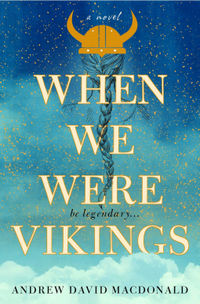 |
When We Were VikingseARC, 336 pg. Read: December 9-13, 2019 |

We meet our protagonist, Zelda, as she turns 21. It’s a pretty big day for most Americans, and it certainly is for Zelda. Things are going well for her—she has a boyfriend, her meetings with her therapist are going well, the brother (Gert) she lives with is taking college classes as a way to make their lives better, and Zelda’s friend/Gert’s ex gave her an actual small sword.
Zelda, you see, is a major fan of Viking culture and wants to be a Viking hero—and this sword is another step on her way to becoming a Viking legend. She also was born on the Fetal Alcohol Spectrum—as she says her Mom accidentally poisoning her resulted in Zelda being short, with trouble sitting still and thinking.
She has a fantastic therapist, Dr. Laird, who helps both her and Gert (when Gert will let him) navigate her challenges and Gert’s own issues. He’s a few years older than his sister, and once their mother died (their father disappeared years prior to that), he took on the responsibility of taking care of her.
This is a good thing for Zelda, incidentally, they’d been placed with an Uncle after their mother’s death—and he’s about as worthless a character as you can imagine. Gert does some business with people he shouldn’t to get them out of that situation and into their own apartment. This comes back to haunt him around the time of her birthday and old debts and favors need repayment. Meanwhile, his ex had convinced him to take courses at a Community College and helped him get the funding to start.
Gert’s ex/Zelda’s sword provider is known as AK47, by the way. Which says a lot about their neighborhood, I think. She’s actually the moral center of this novel and provides most of the wisdom displayed (although Zelda is a close second on both fronts, especially with AK47’s help).
While Gert’s trying to improve their station in life, Zelda goes to classes at a community center with similarly-aged people with developmental disabilities There, in addition to spending time with friends (including her boyfriend), Zelda learns behavioral and life skills. The staff there are fantastic and really impressed me with the way they interacted with everyone.
Honestly, though the deck seems stacked against these two—they’re taking care of each other and making their way in the world. Things are going as well for them as they could realistically hope (not that Zelda’s great at realistic expectations, she’s convinced she’ll be a Viking legend, for example). Except for that thing I’d said earlier about old debts and favors. And the expenses related to Dr. Laird (even on a sliding scale) and other ways Gert has to take care of Zelda. Oh, and maybe school isn’t going too well, either.
Gert tries to insulate Zelda from all that, but it doesn’t go too well. Zelda doesn’t try to insulate Gert from the fact that she and her boyfriend want to progress their relationship to physical intimacy, but man, he wishes she would (and that she’d drop the idea in general. Spoiler: she doesn’t).
We watch Zelda navigate these changing times, while she deliberately tries to mature and take on added responsibilities to help Gert. And Gert’s life gets out of control.
There are threats of violence. Actual violence. Relationship troubles. A new job for Zelda. And pressures on the two siblings that test their bonds.
The attentive reader is always aware that Gert’s in trouble and that he’s not being all that honest with Zelda—don’t misunderstand me, he’s trying his best to take care of her, but he’s hiding things from her and taking advantage of the fact that she can’t understand everything that’s happening. AK47 is a great character and I wish we’d gotten more time with her—things would’ve gone much better if Gert had stuck with her and listened to her.
Zelda’s an unintentionally unreliable narrator (but man, she tries), and MacDonald does a wonderful job putting us in her head while she navigates these obstacles along the way to becoming a legend. Obviously, your appreciation for the novel will hinge on how much you relate to/connect with/root for/like Zelda. I didn’t really get invested in Zelda as a character until the last 15-20% of the book, despite being hooked almost instantly and enjoying the novel. I think if I’d become invested early on, I would be jumping up and down excited about it.
But, I didn’t. So all I can really say is that MacDonald did yeoman’s work here and I have nothing but respect for the voice and craft displayed here. But I’m not able to muster the excitement that I think this book just might deserve. Part of that might be because I felt that I was supposed to find a lot of this amusing (and it did have its moments), and it is marketed as humorous, but it felt too much like laughing at Zelda, not with her (not that MacDonald ever mocked her).
I can’t tell you why this really didn’t click for me, but I didn’t like it as much as I wanted to (or thought I should). I imagine that I’m going to be in the minority with this and that most readers will rave. I liked the characters, I liked the story, I admire the way MacDonald wrote this—capturing Zelda’s voice and thought-process in a way that is both sympathetic and realistic. It’s a good book, one that will earn fans by the truckload, I expect—if the story/characters sound interesting to you at all, go read it. You’ll probably like it. Do me a favor though, and come back and tell me why I’m wrong not to swoon.

Disclaimer: I received this eARC from Gallery, Pocket Books via NetGalley in exchange for this post—thanks to both for this opportunity.
This post contains an affiliate link. If you purchase from it, I will get a small commission at no additional cost to you. As always, opinions are my own.

 |
46% Better Than DaveKindle Edition, 245 pg. Read: December 14-17, 2019 |
No matter which way I looked at it, I was now inexplicably living next door to another version of myself. Another Dave Brookman. A richer Dave Brookman. A more successful Dave Brookman. And though I didn’t like to admit it, he was clearly also a slimmer, fitter, more handsome Dave Brookman. It was as if he was better in just about every single way. And, whether it was his intention or not, he was making the old Dave Brookman look bad. Really bad.
To say that our narrator, Dave Brookman, is surprised to find out his new neighbor shares a name with him. He shortly learns that they grew up near each other and are in the same industry. The coincidences are mindblowing. But as our narrator starts comparing the two, he keeps thinking that the “new” Dave has it better—from a literal ex-model wife to a flashy car, and all points in between.
But just how much better is “new” Dave? “Old” Dave puts together a spreadsheet assigning numerical values to various attributes/possessions and ends up with the titular value:
I sighed loudly. Of course, I’d expected there to be a difference. I knew he would come out on top. But 46%? That was nearly 50%. And 50% was half. So New Dave was nearly a whole half better than me. How could this be? What the hell had I done with my life? Had I wasted the opportunities we apparently both shared, as New Dave took full advantage of them? What could my life have been if I’d made different decisions along the way? Would I have my own company and a flash, expensive car? A house with a new extension and swimming pool? Would I be married to a former model, and have robotically clever children?
Dave spends weeks obsessing over this idea and dives into a (very one-sided) competition to become the “better” Dave. Which is ridiculous, preposterous and unsuccessful. And that’s before his wife finds the spreadsheet. After that things go from bad to worse, and then worse. Until they don’t.
It’s a great concept, it hooks you right away. But it’s what happens after the hook that’s vital—how successful is that? Well, that depends on how you read the book.
If you are looking for any real degree of realism, it’s just too hard to swallow. But if you look at “old” Dave as a character in a comedy—he’s a lot of fun. He’s really a decent, successful guy with a good family. At least until his neighbesis (his word) moves in and he becomes an obsessive, jealous mess. In his less-obsessive moments, he seems like a decent, likable guy and it’s these moments that keep you reading. In his most-obsessive moments, he makes it hard to stick with. It’s quite the balancing act that Puddick tries here, and generally, he succeeds.
Everyone else in the novel—”new” Dave and his family, Dave’s family and co-workers—all seem perfectly normal and well-adjusted. Their reactions to him are perfectly rational and understanding, too. This both highlights his irrational behavior and makes everyone else the “straight man” to “old” Dave. Without that, I think the whole thing would’ve collapsed.
Puddick has given his readers a sweet and funny novel about obsession, jealousy, and what happens to someone when they lose sight of what’s important in life. If you’re looking for a fast and fun read, you’d do well to give this a shot.

My thanks to Love Books Group for the invitation to participate in this tour and the materials (including the book) they provided.

A Sample from Chapter 8
“No offence, mate, but when was the last time you ran further then the end of the street?” said Charlie. “Let alone 10k, jumping over electric fences.”
“Screw you,” I said. “I’ll have you know I used to run all the time. I was pretty good. And I’ve run loads of 10k races in the past. This dirty mother don’t sound too bad!”
“Oh, you haven’t run a 10k in years though, love,” said Catherine, changing tack and trying to bargain with me.
Et tu, you traitorous wife, I thought.
“No, but it’s just like riding a bike, isn’t it? I can quickly get back into it.” My words were really slurring now. “Besides, I’ve been looking to get fit again. This could be exactly the motivation I need to get in shape. When did you say, three months? Piece of piss. I’ll be running 10k, dodging mimes and hopping over eclectic fences before you know it! Then I’ll be round for my hundred quid.”
What the hell was I doing? I had the perfect way to get out of this. I could have blamed it on too much drink. I could have played it off as a big joke, without losing face. But I couldn’t help it. I just dug myself deeper and deeper.
“Come on, Dave, don’t be silly,” said Catherine, her eyes imploring.
“Silly?” I said. “Silly? I’ll show you who’s silly. I will sign up for this race. And I’ll raise loads of money for charity. And I’ll probably fucking even win it, too. That’ll bloody show you, won’t it?”
The mood changed instantly. The gentle mocking ceased. An awkward silence hung between us. People sat uncomfortably looking at their shoes, the stars, the drinks in their hands.
“You know… you move in here,” I slurred, pointing at New Dave, my head swimming and my hand wobbling, “and you’re like the best bloody thing since sliced cheese. Er… bread, I mean. The best thing since cheese bread. And I’m sick of it, actually. Because you’re not better than me. Not really.”
The words were coming thick and fast. I’d tapped into a rich vein of resentment.
“You know… you’re a man,” I continued rambling. “And I’m a man. And you’re a man. And… you know, other men can do equally… And it’s not about how much you’ve got… or the size of your… barbecue… or how nice your hair is… or how many fucking beer fridges you’ve got… What I mean is…” And then the words just stopped, my train of thought derailing violently.
Everyone looked on curiously, wondering if I was going to continue my tirade. But my brain had crashed. My mouth was no longer receiving any signal.
Another very awkward silence.
“Well, if you’re up for it, then I think that’s brilliant,” said New Dave, overenthusiastically. “Hey, we could even train together, if you fancy it?”
“There you go. At least someone believes in me. Thank you, David.” I turned to look at Catherine. I thought I was sneering and delivering menace with my eyes. But I probably just looked drunk and squinteyed.
“Anyway,” I said, standing awkwardly onto wobbly legs, “I need a piss.”
I pushed back my chair, accidentally knocking it over as I stepped away from the table. As I walked off towards the back door of the house, I suddenly felt very unstable.
It came over me like a wave. The world went wildly out of focus. I could barely keep my eyes open. My legs felt weak, like they could barely carry my weight. I swayed, my head swimming, and I wobbled this way and that. The more I tried to keep a straight line, the more my body chose to lurch violently in the opposite direction, like I was fighting a powerful magnet. It was hard enough just staying upright, let alone moving forwards.
Aware that everyone was watching me, I pigeon-stepped across the lawn, trying to stay as straight and upright as I could. I could see the swimming pool in my peripheral vision, and I tried to keep as far from it as possible. I locked in on the light from the door in front of me. All I had to do was walk straight. But the harder I tried, the more I felt myself drifting to the left. Towards the pool.
“Careful of the pool,” I heard someone shout out behind me.
“Yes, thank you,” I shouted back, “I’m perfectly capable of not falling in a swimming pool, thank you.”
Did I say thank you twice? I thought, as I continued to walk, stumbling closer and closer to the pool. And did I really just sign up to run a 10k obstacle course, climbing over electric fences?
I straightened myself again. I walked slowly and steadily, like a drunk driver trying to convince a police officer I was sober. One foot in front of the other. Move towards the light. Just walk in a straight line.
But the swimming pool’s magnetic pull grew stronger. And the more I tried to fight it, the more it pulled me closer.
“Dave, seriously,” I heard Catherine call out behind me.
I threw my hand up in the air, the middle digit extended in an act of childish rebellion. And that was all it took to completely unbalance me. I swerved violently to the left, tripping over my own feet, hopping, lurching and dancing until I tumbled over.
I went into the water sideways.
Read the rest in 46% Better Than Dave by Alastair Puddick .
My thanks to Love Books Group for the invitation to participate in this tour and the materials (including the book) they provided.
Today, I’m very happy to welcome the Book Tour for Alastair Puddick’s 46% Better Than Dave. We’ll kick it off with this spotlight post, then I have a small sample from the book, and then I’ll be giving my take on the book here in a bit. But like I said, let’s start by learning a little about this here book, okay?
Book Details:
Book Title: 46% Better Than Dave by Alastair Puddick
Publisher: Raven Crest Books
Release date: October 12, 2019
Format: Ebook/Paperback
Length: 245 pages
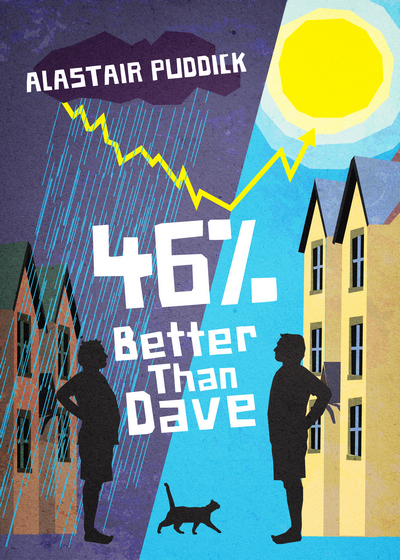
Book Blurb:
A novel of jealousy, muddy shoes and giant barbecues.
Dave Brookman’s new next-door neighbour is ruining his life. Because in a bizarre coincidence, he’s also called Dave Brookman, he’s the same age and he even grew up in the same town. There is one big difference, though. This new Dave is vastly more successful in every way.
As Dave starts questioning everything about himself, suddenly his perfect life seems a lot less than perfect. And what starts as friendly rivalry soon turns into obsessive jealousy and crazy behaviour that could see Dave lose it all. Can he get a grip before it’s too late? Everybody in the kingdom is supporting the brave knight Leo in his battle against his fearsome dragons. They try lots of different things to help him defeat them but eventually Leo realises that the most important thing to do is to believe in himself.
About Alastair Puddick:
 Alastair Puddick is a writer and editor who has spent the past 20 years writing for a variety of magazines and websites. His work has spanned many different paths, from jetting off to exciting cities across the world to writing about dating advice, data centres, facilities management and the exciting world of flooring. He also once wrote an agony advice column posing as Elvis Presley’s ghost.
Alastair still works as a copywriter and lives in Sussex with his wife, Laura, and cat, George. He has written three novels: The Unexpected Vacation of George Thring, Killing Dylan and his newest book, 46% Better Than Dave.
Alastair Puddick’s Social Media:
My thanks to Love Books Group for the invitation to participate in this tour and the materials (including the book) they provided.
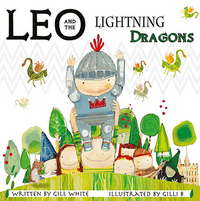 |
Leo & The Lightning Dragonsby Gill White, Gilli B (Illustrator) Kindle Edition, 36 pg. Read: December 17, 2019 |
Leo is a very brave knight battling a different kind of dragon—his foes attack him from the inside where he cannot hide from them. He has a lot of people willing to help him, and several do their best, but this is a fight that Leo has to do on his own—so he musters up the courage and the confidence to get the job done with their support.
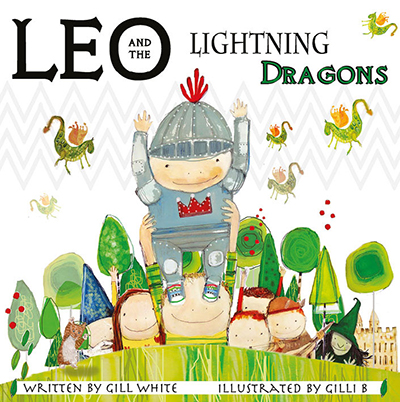
Gilli B is absolutely the right illustrator for this book! Her style brought it to life—I love her depiction of Lightning Dragons, I doubt that’s the approach many artists would’ve taken with them. Her chimerical pictures capture the spirit of the book beyond those, too. Delightful work.
If you’ve read anything about this book, you know how hard it would be to saying anything that’s not positive about the book. But I’m going to—it’s too short. I’m not looking for much, but we need a little more—just a couple of pages. There wouldn’t even need to be much text, some illustrations might do the trick. Leo’s got a tough battle to fight, and it’s over a bit too quickly, which makes it seem too easy. And there’s no way that Leo’s Lightning Dragons (fictional or not) are easily vanquished. How White can accomplish that without running afoul of the book’s overwhelming positivity, I’m not sure. I just think the subject deserves it.
Do the pluses outweigh my criticism? Oh yes. It’s a great book and I’m so glad I read it. The rhymes are cute, the story is very positive, great illustrations and the imagery of the Lightning Dragon fighting inside Leo is a great way to get the idea of epilepsy across to a picture book reader. A good story that should provide a springboard for a discussion with children about this condition and how hard it has to be for people to deal with. This is definitely one to pick up for your young reader.
My thanks to Love Books Group for the invitation to participate in this tour and the materials they provided.
Today, I’m very happy to welcome the Book Tour for Gill White’s Leo & The Lightning Dragons. We’ll kick it off with this spotlight post and then I’ll be giving my take on the book here in a bit. But like I said, let’s start by learning a little about this here book, okay?
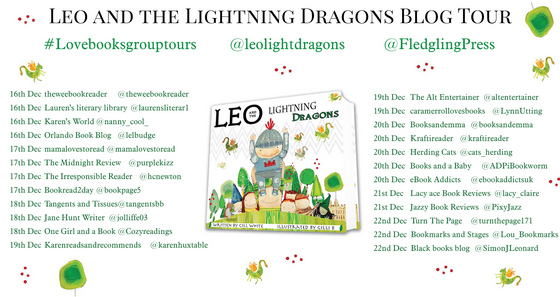
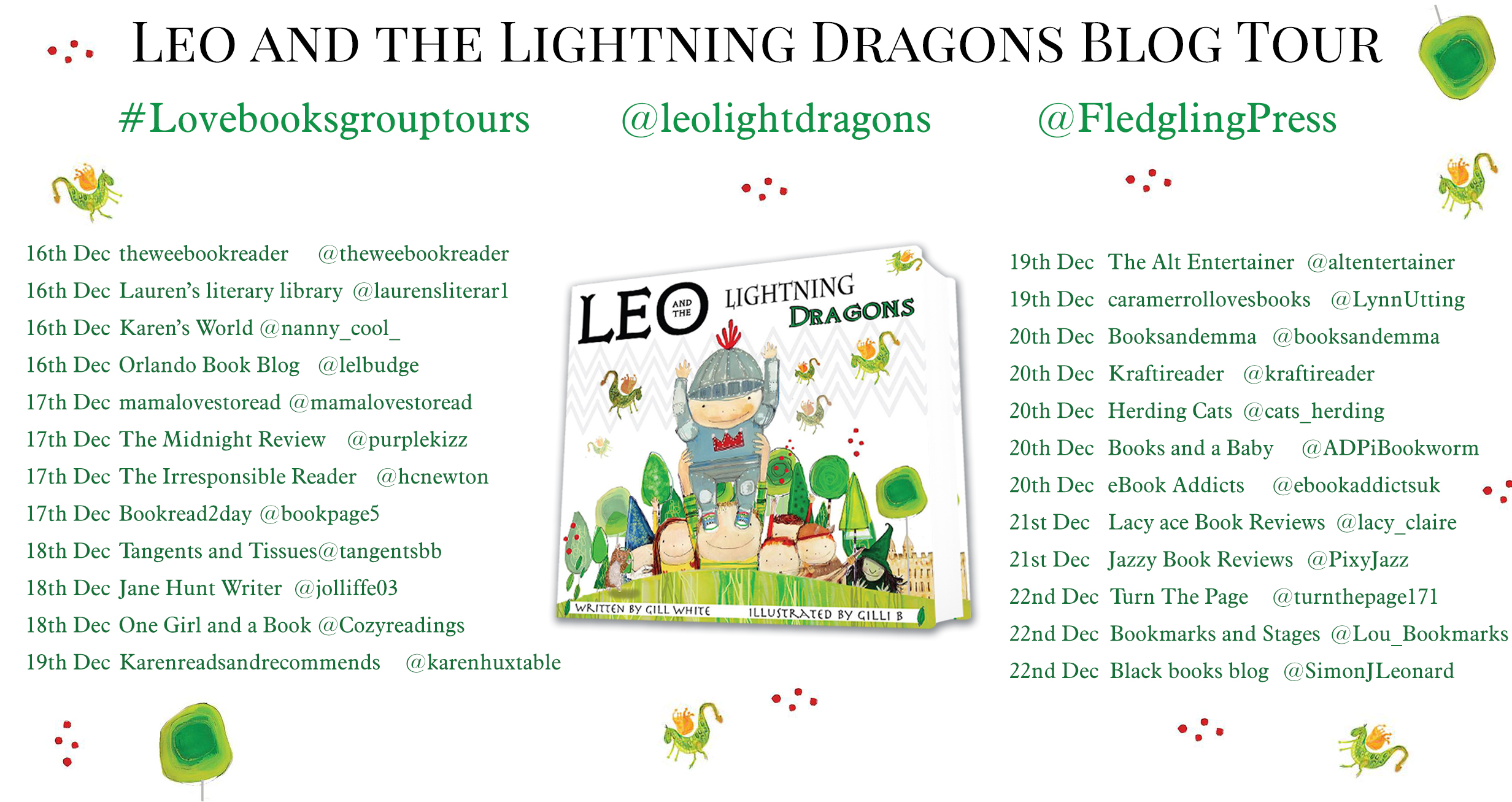
(that banner is too small to read all the names, etc. Click here for the full sized version.)
Book Details:
Book Title: Leo & The Lightning Dragons by Gill White, Gilli B (Illustrator)
Publisher: Fledgling Press
Release date: January 30, 2019
Format: Ebook/Paperback
Length: 36 pages
Book Blurb:
Everybody in the kingdom is supporting the brave knight Leo in his battle against his fearsome dragons. They try lots of different things to help him defeat them but eventually Leo realises that the most important thing to do is to believe in himself. This beautifully illustrated book with a poignant and uplifting rhyming story encourages children to persevere and find strength in the face of adversity, even when it seems that nothing is working. Written by Gill White for her son Leo who suffers from Ohtahara Syndrome, an extremely rare form of epilepsy, and beautifully illustrated by Fife artist Gilli B, this story has been positively received by parents of children with complex needs, by care workers and medical staff and by parents of healthy young children who love the book simply as an adventure story. All royalties from the sale of this book will go to CHAS (Children’s Hospices across Scotland).
About the Book:
Gill White wrote this book for her son Leo, who was born with Ohtahara Syndrome, an extremely rare form of epilepsy. Fifty percent of children diagnosed with Ohtahara Syndrome do not live past their second birthday. Leo is now three and still battling in the face of adversity.
Gill wrote the story before Leo’s first birthday. It was a difficult time and Leo was having huge numbers of seizures every day. Feeling that Leo deserved a happier story, one in which his strength and bravery was rewarded, Gill wrote one for him.
She approached Gilli B, a Fife based artist, after seeing her artwork online and loving her whimsical and quirky style. Although she was only originally commissioned to do a few illustrations, she actually loved the story so much she asked to illustrate the whole thing and Leo got his own ’book’ for his birthday!
The following year, Gill had packed his book for a visit to the CHAS Hospice Rachel House and came back one day to find that the nursing staff had read it and written the most amazing comments inside.
Bolstered by their enthusiasm, Gill approached Edinburgh author Peter Burnett for some advice on how to get the book published. He took the book to Clare Cain at Fledgling Press, who fortunately loved the book. Fledgling Press do not normally publish children’s books but made an exception in this case, to help raise awareness of Ohtahara Syndrome and CHAS – Children’s Hospices Across Scotland.
About the Story:
Drawing from the family’s experiences, Gill created this little kingdom of people who are all trying to help Leo fight the lightning dragons using their various skills. Eventually, strengthened by their support, love and encouragement, Leo is able to realise that the most important thing to do is to believe in himself.
This beautifully illustrated book with a poignant and uplifting rhyming story encourages children to persevere and find strength in the face of adversity, even when it seems that nothing is working.
Through the story of Leo and his ‘invisible’ dragons, we can teach children that we don’t always know what battles someone is fighting and it is important to be kind because even the bravest knights need a little help sometimes.
Leo & The Lightning Dragons’ Social Media:
I’m very tempted to copy all of the content from the book’s website to this post, but I’ll limit myself to borrowing the above—there is so much great content there, you’ve gotta check it out. While you’re at it, try these, too:
Twitter ~ Facebook ~ Instagram
My thanks to Love Books Group for the invitation to participate in this tour and the materials they provided.
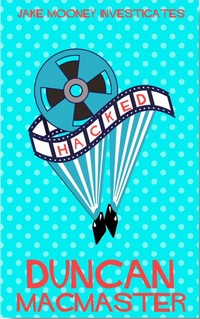 |
Hackedby Duncan MacMaster Paperback, 258 pg. Read: December 10-11, 2019 |
“You’re a very different kind of man Jake Mooney,” she said. “It’s almost like you belong here, but don’t belong here.”
“How is that?”
“Your life is like a movie,” she said, “and I think the last thing you want is to live your life like that.” …
“This is my second go-round for this sort of thing,” I said, “and the problem with sequels is that they always have to top the one that went before them.”
I remember really enjoying Hack, our introduction to Jake Mooney. But, I didn’t remember exactly why I did (I guess I could’ve read my post about it, but that sounds too much like research). It took almost no time at all to remember once I dipped into this Hacked (and many of the details about Hack came back to me straight away, too). Hack had a strong voice, fun characters, a clever mystery, with a satisfying conclusion to wrap things up. Hacked gives us more of all that.
For those of you who haven’t met Jake Moody, he’s a former journalist turned ghostwriter. Two years before this novel, he rose to fame by solving multiple homicides. He then finished ghostwriting the autobiography of one of the murder victims. He then writes his own account of what transpired (see Hack for details), as well as a fantasy novel. Now he’s been talked into coming to LA to sell the movie rights to any/all of his books.
Before his days of ghostwriting, Jake lived in LA and still has plenty of friends there and touches base with a couple of them. One of the things everyone is talking about there is the hacking of a movie company and the release of private date from them—supposedly, this is a North Korean retaliation for the portrayal of Kim Jong Un in one of that studio’s movies. A legendary agent who Jake knew years ago inadvertently puts Jake in the middle of the investigation. Not long after that, a P.I. friend of his asks him to consult on the same topic.
When Jake arrives at his friend’s home, however, he finds his friend brutally murdered. The assumption has to be that the people behind the hack are the people who killed his friend. So while he really is content to leave the investigation into the hack to the proper authorities, seeing his friend’s body sets Jake inexorably into finding out who committed the murder (and the hack while he’s at it).
Jake’s assisted in this hunt by his agent friend, his new agent, an accountant turned security guard, a former FBI agent, a ride-share driver who’s always wanted to be up to escapades like this, and an attractive studio exec. Help comes from other directions, too, but I’m not going to ruin the surprise for you.
It’s not long before someone tries to kill Jake, he’s kidnapped more than once, assaulted, and . . . you know what? You wouldn’t believe me if I listed all that happens to this poor writer (also, why ruin the surprise?)—I couldn’t help imagining MacMaster asking himself, “What else can I do to Jake? A tiger attack? Nah, not sure how to get him in the cage, but I do know how to ….”
The LAPD is eager to pin all of the death and destruction on Jake, but the more they press him, the more adamant he becomes that he won’t leave. Given the strong cloud of suspicion that North Korea is behind the hack, and presumably the murder of his friend, the FBI is involved, too. They’re less inclined to suspect Jake of having anything to do with the murder, but they’d like him away from the case.
There are more than the requisite number of twists and turns to this case, none of them feels forced or gratuitous. And even when you’re faster at putting the pieces together than Jake is, you should probably take a beat before criticizing him, because you’re probably not as right as you think you are.
The tone is what separates this from similar mysteries. This is not a comedy —there’s a brutal murder, including signs of torture to start things off. There are threats of violence, actual violence, and more deaths to come. But the way that MacMaster tells it makes it become one of the funniest and most enjoyable reads of the year. Think Marshall Karp’s Lomax and Biggs Mysteries for tone. That’s probably not the most helpful comparison, come to think of it, because I’m not sure how many people are familiar with them (too few for sure). Okay, think of this as a Shane Black story—just a novel instead of a script, and there’s no tie to Christmas. MacMaster’s Kirby Baxter books are more overtly comical than his Jake Mooney books, but both are just flat-out entertaining and laugh-filled.
Typically, in books/TV/movies, Hollywood Agents are not depicted sympathetically. Which is probably a bit of an understatement, really. But Jake’s old friend and new agent are both depicted as decent people that he can rely on. That’s not really a plus or a minus when it comes to evaluating, but it’s so strange that I felt compelled to mention it. I can’t remember another fictional Agent who wasn’t some sort of duplicitous, manipulative, weasel.
The story, Jake and the other characters, the fun had a Hollywood’s expense, the twists, etc. would’ve been good enough to make me rave. But there’s a Chinese gentleman that plays a big role in the novel—I don’t want to say much about him, because you just have to meet him yourself. He pops up repeatedly throughout the novel, yet we really don’t spend that much time with him altogether. But he steals every scene he’s in. He’s one of my favorite new characters of 2019. If there’s a Hacked Again or Hack Harder or whatever, I hope MacMaster can come up with an excuse to use him again.
I just had so much fun with this one (a common theme when it comes to MacMaster)—I can’t think of a single reason why someone shouldn’t read this (you don’t have to read Hack first, by the way). Jake was right in what he said before, the problem with sequels is that they have to top the one that went before. Hacked easily does that. It’s smartly-written, cleverly-plotted and just fun to read. Go run and grab it!

This post contains an affiliate link. If you purchase from it, I will get a small commission at no additional cost to you. As always, opinions are my own.
I knew I should’ve banked one of the posts I wrote this weekend to post today, but I felt energetic enough that I didn’t need to.
Cut to the end of a good, but energy-tapping day, and I have two posts that I tried to push out and got a good paragraph done on each before abandoning both for now and nothing to post. I’m hoping I can get one of those done tomorrow, but I’m not sure I can count on it. Bah.
Nevertheless, it was a good day for being a Reader, if not a Blogger. I was hoping I’d finish Matthew Dick’s Twenty-one Truths About Love this evening. I clearly estimated poorly—I finished it before work.
Barely. I apparently was so into the ending that I turned off the alarm that’s supposed to keep me from being so into a book that I get to work late without noticing I’d done so. I still made it into the office on time, but without any cushion. It was just that good.
Probably wouldn’t have worked out too well, “Sorry I’m late, boss. I was in the parking lot getting misty-eyed over a novel.”
The downside of finishing a book 9 hours earlier than you’d expected is, of course, I had nothing to read the rest of the day (2 breaks and lunch). I downloaded an ARC onto my phone and got through the day without having to actually talk to people during my downtime. But it did mess up my plans (moved up reading that ARC by 2 weeks), So once again, I’ve put off reading Hacked by Duncan MacMaster for the 43rd time (or so) since it came out in August. And then there’s the joy of reading on a tiny screen…but that a whine for another day.
So I tell all that for no real reason, just something to say that doesn’t take a lot of editing. But I got an important lesson/reminder from this—there are books out there that are so good you won’t notice your phone making a loud and obnoxious sound, chosen specifically so that you have to pay attention to it, and those’re what I’m supposed to be focusing on—the rest of the stuff around my reading/blogging isn’t.
Hopefully you’re reading something about as good—just be sure to get to work on time.
 |
What the Dog Knows Young Readers Edition: Scent, Science, and the Amazing Ways Dogs Perceive the Worldby Cat Warren, Patricia J. Wynne (Illustrator) Hardcover, 325 pg. Read: December 4-5, 2019 |
I wasn’t sure what to expect from a Young Reader’s Edition of this book, was it going to be dumbed down? Was it going to be a soup-to-nuts rewrite of the book, telling the story in a cutsie fashion? Or . . . well, I don’t have a third idea, but you get my opinion. But what we got was the same book (as near as I can tell, it’s been 4+ years), just pared down—not dumbed-down or anything. But a lot of the detail has been removed, every chapter boiled down to its essence. Simplified, yes, more accessible for younger readers than the dense “adult” text, but it’s the same book at the end of the day.
After the end of the text, there’s a section directing the readers to some more information and a Young Readers Info section of Warren’s website.
As it’s so similar, I’m just going to use a lot of what I wrote back in 2015 to talk about the book, sorry for the re-run (I’ll focus on this edition in a few paragraphs).
Warren was a journalist, is now a professor, and knows her way around a sentence. She clearly cares about the subject and has invested a lot of time and effort into getting to know it, her style is engaging and charming (I was chuckling within a couple of pages), and she doesn’t mind showing her own failings and weaknesses.
Warren basically covers three topics: there’s the science and history of using working dogs (of all sorts of breeds, not to mention pigs(!), birds, and even cats) to find cadavers, drugs, bombs, etc.; there’s the memoir of her involvement with cadaver dogs via her German Shepherd, Solo; and anecdotes of other cadaver dogs and trainers that she’s encountered/learned from/watched in action.
The history and science of dogs/other animals being used for their sense of smell, is probably the most fascinating part of this book, but it’d be really easy for the material to be too dry to bother with—Warren’s voice keeps that from happening. I think it’s terrific that at the end of the day, no one knows what it is about the smell of the human body that dogs sense—she’ll explain it better than me, but that’s the kernel the story. I just really enjoy it when the best and the brightest have to shrug and say, “I don’t know.” The chapter she spends on the future of dogs and/or digital replacements is good for similar reasons. Actually, I could just keep listing little facts/factoids/ideas here, but I don’t want to steal Warren’s thunder.
The best part of the book—the part that I found most interesting, and most frustratingly small—is the Warren’s story about getting Solo, discovering he had just too much energy and personality, and needing to find an outlet for it all. Which is followed by the trials and tribulations of a newbie cadaver dog handler and her pup-in-training, growing into a capable working dog. Anyone who has a dog lover as a Facebook friend knows just how easy it is for someone’s stories about their dog to get to the point where you can’t stand to hear another*. Somehow, Warren avoids this totally—not an easy feat. It probably helps that dog does far more fascinating things than just hiking through the woods or chasing a ball.
* Of course, your friends don’t have dogs as cool as mine. Let me tell you a little bit about her . . .
The stories about the others—her friends, colleagues, teachers, etc.—round out the book. It’s not just about Warren and Solo, it’s not just about the military/police efforts with training animals—it’s about dedicated volunteers, K-9 officers and dogs all over the country (and the world) making a difference. In places and ways you wouldn’t expect. Really? Sending in one guy and his dogs into Vietnam decades later to search for POW/MIA? Also, seeing how different dogs act differently, yet get the same job done was mind-boggling. Especially for dogs trained together/by the same person, you’d think they’d act similarly.
I imagine it’s to spotlight the work of others, to not brag about Solo too much, to talk about things that she and her dog haven’t done/seen/smelled—or whatever reason there is, I wanted more Solo. A lot more. I have no problem with the rest of the book, it’s just that there’s not enough Solo (or Coda, her younger dog).
This new edition features some illustrations and instructional graphics. There were a couple that I wondered about the placement of, but they were all helpful, eye-catching and attractive. They added to, instead of distracting from, the text. Good stuff.
A fascinating, entertaining, and educational book—can’t ask for much more than that.


This post contains an affiliate link. If you purchase from it, I will get a small commission at no additional cost to you. As always, opinions are my own.