Category: Fiction Page 175 of 341

BOOK SPOTLIGHT: Cause and Effect: Vice Plagues the City (Kind Hearts and Martinets #1) by Pete Adams

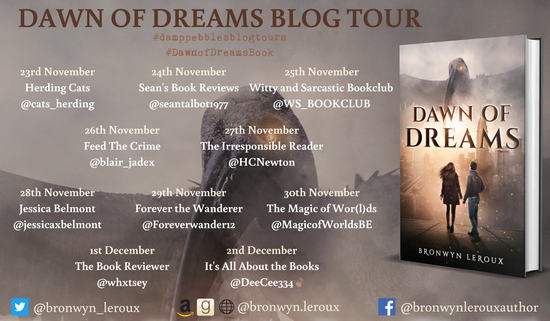
Today I welcome the Book Tour for Cause and Effect: Vice Plagues the City by Pete Adams. Along with this spotlight post, I’ll be giving my take on the novel here in a bit. But before I get to talking about the book, let’s start by learning a little about this here book, okay?


Book Details:

Book Title: Cause and Effect: Vice Plagues the City by Pete Adams
Publisher: Next Chapter Books
Release date: June 17, 2019
Format: Paperback/Ebook
Length: 452 pages

Book Blurb:

A self-labelled enigma, Detective Inspector Jack Austin is at once miserable and amusing, melancholy and motivated. Running the Community Police Unit from his deck chair, D.I. Austin is known for his ability to solve crimes out of the blue.

Trying to work cases while struggling with his mental issues, Austin deals with a variety of major crimes, including bicycle theft. But when the case of an executed police officer lands on his desk, he accidentally uncovers a malevolent scheme.

Can he discover who is behind it all – and keep what’s left of his sanity?

About Pete Adams:

Pete AdamsPete Adams is an architect with a practice in Portsmouth, UK, and from there he has, over forty years, designed and built buildings across England and Wales. Pete took up writing after listening to a radio interview of the writer Michael Connolly whilst driving home from Leeds. A passionate reader, the notion of writing his own novel was compelling, but he had always been told you must have a mind map for the book; Jeez, he could never get that.

Et Voila, Connolly responding to a question, said he never can plan a book, and starts with an idea for chapter one and looks forward to seeing where it would lead. Job done, and that evening Pete started writing and the series, Kind Hearts and Martinets, was on the starting blocks. That was some eight years ago, and hardly a day has passed where Pete has not worked on his writing, and currently, is halfway through his tenth book, has a growing number of short stories, one, critically acclaimed and published by Bloodhound, and has written and illustrated a series of historical nonsense stories called, Whopping Tales.

Pete describes himself as an inveterate daydreamer, and escapes into those dreams by writing crime thrillers with a thoughtful dash of social commentary. He has a writing style shaped by his formative years on an estate that re-housed London families after WWII, and his books have been likened to the writing of Tom Sharpe; his most cherished review, “made me laugh, made me cry, and made me think”.

Pete lives in Southsea with his partner, and Charlie the star-struck Border terrier, the children having flown the coop, and has 3 beautiful granddaughters who will play with him so long as he promises not to be silly.

Pete Adams’s Social Media:

Twitter ~ Facebook

Purchase Links:

Amazon UK ~ Amazon US ~ Book Depository ~ Google Books


My thanks to damppebbles blog tours for the invitation to participate in this tour and the materials (including a copy of the novel) they provided.

Reposting Just ‘Cuz: What the Dog Knows: The Science and Wonder of Working Dogs by Cat Warren

Real Life™ interfered today (a good thing, but time consuming), and I wasn’t able to finish a post, so in honor of yesterday’s (8/26) National Dog Day, here’s my look at Cat Warren’s wonderful book. By the way, a Children’s version is coming out in October, looking forward to that!

What the Dog KnowsWhat the Dog Knows: The Science and Wonder of Working Dogs

by Cat Warren

Hardcover, 280 pg.
Touchstone, 2013
Read: May 7 – 15, 2015

People are smart, just like dogs.

Seriously, how do you not like a book that contains that line?

Honestly, the only reason I gave this book a second glance — okay, a first glance — is that Robert Crais blurbed the paperback edition and it showed up on his Facebook page. It seemed kind of interesting, but I wasn’t sure — then I noticed that Spencer Quinn also wrote a blurb. And if two of my favorite mystery novelists (who have a thing for dogs) tell me the book is good, it must be.*

They were right — Warren was a journalist, is now a professor, and knows her way around a sentence. She clearly cares about the subject and has invested a lot of time and effort into getting to know it, her style is engaging and charming (I was chuckling within a couple of pages), and she doesn’t mind showing her own failings and weaknesses.

Warren basically covers three topics: there’s the science and history of using working dogs (of all sorts of breeds, not to mention pigs(!), birds, and even cats) to find cadavers, drugs, bombs, etc.; there’s the memoir of her involvement with cadaver dogs via her German Shepherd, Solo; and anecdotes of other cadaver dogs and trainers that she’s encountered/learned from/watched in action.

The history and science of dogs/other animals being used for their sense of smell, is probably the most fascinating part of this book, but it’d be really easy for the material to be too dry to bother with — Warren’s voice keeps that from happening. I think it’s terrific that at the end of the day, no one knows what it is about the smell of the human body that dogs sense — she’ll explain it better than me, but that’s the kernel the story. I just really enjoy it when the best and the brightest have to shrug and say, “I don’t know.” The chapter she spends on the future of dogs and/or digital replacements is good for similar reasons. Actually, I could just keep listing little facts/factoids/ideas here, but I don’t want to steal Warren’s thunder.

The best part of the book — the part that I found most interesting, and most frustratingly small — is the Warren’s story about getting Solo, discovering he had just too much energy and personality, and needing to find an outlet for it all. Which is followed by the trials and tribulations of a newbie cadaver dog handler and her pup-in-training, growing into a capable working dog. Anyone who has a dog lover as a Facebook friend knows just how easy it is for someone’s stories about their dog to get to the point where you can’t stand to hear another**. Somehow, Warren avoids this totally — not an easy feat. It probably helps that dog does far more fascinating things than just hiking through the woods or chasing a ball.

The stories about the others — her friends, colleagues, teachers, etc. — round out the book. It’s not just about Warren and Solo, it’s not just about the military/police efforts with training animals — it’s about dedicated volunteers, K-9 officers and dogs all over the country (and the world) making a difference. In places and ways you wouldn’t expect. Really? Sending in one guy and his dogs into Vietnam decades later to search for POW/MIA? Also, seeing how different dogs act differently, yet get the same job done was mind-boggling. Especially for dogs trained together/by the same person, you’d think they’d act similarly.

I imagine it’s to spotlight the work of others, to not brag about Solo too much, to talk about things that she and her dog haven’t done/seen/smelled — or whatever reason there is, I wanted more Solo. A lot more. I have no problem with the rest of the book, it’s just that there’s not enough Solo (or Coda).

Fascinating, entertaining, and educational — can’t ask for much more than that.

—–

* Yes, I’m aware there are flaws in the thinking there.
** Of course, your friends don’t have dogs as cool as mine. Let me tell you a little bit about her . . .

—–

4 Stars

Teaser Tuesday: San Diego Dead by Mark Nolan

Action Thriller
Date Published: 8-31-2019
 photo add-to-goodreads-button_zpsc7b3c634.png
Danger awaits Marine-turned-lawyer Jake Wolfe on his vacation to sunny San Diego and Cabo San Lucas. There he finds sugary white sand beaches, warm turquoise water, boat trips among gray whales, and … cold blooded murder.
It was supposed to be a relaxing holiday for Jake and his adopted war dog, Cody, but violence erupts when he crosses paths with a criminal cartel urgently seeking to reclaim a deadly package.
Jake learns the missing item is a threat to US citizens and vows to steal it from the cartel, no matter what vigilante justice actions he might have to take.
Time is running out and thousands of innocent lives are at risk. Will the two combat veterans be able to retrieve the dangerous item before the killers do? The clock is ticking, but Jake hopes that if anybody can help find the package, it has to be his highly-trained and ultra-intelligent dog, Cody.
Find out what happens next. Start reading the latest Jake and Cody thriller right now and enjoy another fast-paced stand-alone story by author Mark Nolan.

Excerpt

Jake Wolfe and his dog, Cody, sat in a small Zodiac-style inflatable boat, drifting on the Pacific ocean in the dark at night. The electric outboard motor was dead, with a bullet hole in the tiller’s on-board computer.
Sharks circled, bumped the boat and waited impatiently to rip the man and dog limb-from-limb. Sleek and dangerous apex predators with multiple rows of sharp teeth, most of the animals were approximately six feet long, but the largest looked as if it might be ten feet or more.
Jake felt like he and Cody were up the proverbial creek without a paddle, and he cursed at whoever had taken the oars out of this dinghy. He cursed himself too, for not double-checking to make sure the boat was fully equipped.
His retriever dog panted, tongue hanging out while looking at the salty sea all around them, obviously thirsty for a drink of fresh water.
Cody was a yellow Labrador and Golden Retriever cross, with wavy hair and intelligent brown eyes that seemed to look into your heart and sense what you were feeling.
Jake scratched his dog on the back of the neck. “I’m sorry I got us into this, buddy.”
The former war dog, trained again as a service dog, was one of the most intelligent and highly-skilled animals on the planet. He stared at Jake with wise eyes, lifted one paw and put it down.
Jake nodded at him. “Do something?”
Cody barked once.
The largest, most aggressive shark bumped the boat harder, jostling the occupants.
Cody growled and showed his teeth.
Jake studied the big shark. He felt a chill as he wondered how much that thing weighed. Enough to flip the dinghy over if it leapt onto the gunwale; that seemed certain. “Sorry shark-zilla, but you’ve got to go,” he said.
Drawing his stolen pistol with the silencer attached, he took aim at the predator and fired a round at the base of the dorsal fin and into its trunk.
The wounded shark dove below the surface, trailing a plume of blood. Other sharks attacked the dying one in a feeding frenzy, abandoning the drifting boat for a moment.
“That’ll get rid of the big guy and keep the rest of them away from us for a little while,” Jake said.
He ejected the pistol’s mag to count how many rounds were left. Not good. He was running low. Sunrise was a long way off and he didn’t have his phone with him, or his handheld VHF marine radio.
Hopefully, none of the sharks would bite the inflatable boat and sink it. One of the individual airtight chambers had been shot and was deflated, but the rest were holding up, so far.
If he and Cody could survive until sunrise they might live through this. But it was a big, endless ocean with tens of millions of square miles of empty water. They could vanish into the Pacific without a trace, and die of thirst or end up as shark food, their bodies never found.

About the Author

Mark Nolan’s books in order:
1. Dead Lawyers Don’t Lie
2. Vigilante Assassin
3. Killer Lawyer
4. San Diego Dead.
He is currently writing book #5 in the Jake Wolfe and Cody series.
Mark also tries to make time every day to answer emails from readers. You can get in touch with him at marknolan.com.
Pre-Order Link
RABT Book Tours & PR

Black Summer by M. W. Craven: A Good Detective Faces Off with a Brilliant Criminal for the Second Time

I’m very pleased to finally get to post about this book—I had more trouble than I’m used to getting a copy on this side of the pond, so I’m a little late to the party. If my copy of the next installment in this series is as delayed, I’ll probably start looking into emigrating.

Black SummerBlack Summer

by M. W. Craven
Series: Washington Poe, #2

Paperback, 388 pg.
Constable, 2019

Read: August 19 – 20, 2019

The door behind her opened and the huge frame of Edward van Zyl, Director of Intelligence, National Crime Agency, filled the space next to Flynn. His expression was as grim as a cancer diagnosis.

‘We have a problem, Poe,’ he said.

Why am I not surprised? he thought. It’s the soundtrack to my life. . .

What a horrible couple of weeks for D.S. Washington Poe. Six years ago, he began investigating a missing persons case that he changed into a homicide investigation and ended up arresting the woman’s father for murder. He was convicted and received a life sentence. But now, a young woman has come forward claiming to be the not-at-all-murdered woman with a tale of being held captive for years by a rapist she just escaped from. DNA appears to back her claim.

The question now is, why did Poe’s investigation go so wrong? Was it because of a grudge against the father? Was he lazy, or just incompetent? Poe has to wrestle with self-doubt, but he knows he did everything right with this case. Worse than not understanding what happened to get the investigation on the wrong track is the idea that if Elizabeth Keaton is actually alive, then her father, celebrity chef, Jared Keaton, will be released from prison. That thought chills Poe.

How on earth did you describe Jared Keaton to someone who didn’t know him?

Charming. Charismatic. Highly intelligent. A genius chef. No conscience whatsoever. The most dangerous man Poe had ever met. He’d taken an instant dislike to him. He was too superficial, too well groomed, too polished. He’d reminded Poe of a fake Irish pub. Pretty, but of no real substance.

Poe goes on to explain to a detective looking into the claims of the woman claiming to be Elizabeth that Jared Keaton was warm and outgoing in public/on TV, but in reality, was cold and sadistic. Not anyone he wants walking free—especially as he’ll be carrying a grudge.

Poe has mere days to prove this woman isn’t who she says she is and keep Keaton in prison (and save his career, or at least his reputation). A few days later, when Elizabeth goes missing and the evidence points to Poe doing something to her, he realizes it’s worse than all that. He’s in a fight for his freedom. He’s going to need some help, so he calls in his new friend Tilly.

She’d already appeared via videoconference, but Tilly showing up makes all the difference. I was already hooked—riveted, really—by the story, don’t get me wrong, but within half a scene or so of her showing up at Poe’s, I was enjoying the book. It’s a fine distinction, but it was something I registered at the time. Poe’s a strong character, Tilly’s delightful—but there’s something about the combination of the two of them that just really ticks all of my boxes.

Bradshaw had spent most of her working life, and a large part of her childhood, in academia undertaking research in mathematics. As brilliant as she was, until she’d joined the National Crime Agency there’d never been any need to learn the social skills that everyone else took for granted, the skills everyone began learning in the schoolyard.

And, as maths was a binary science with little room for selective interpretation, she had never grasped how to express an argument. Maths didn’t have subtlety. It didn’t need discretion and it didn’t need empathy. It was either right or wrong. Maths told the truth and therefore so did she. It would never occur to her to do anything else.

I’m not sure that Tilly’s contributions are as valuable to this case as they were in the previous novel—not that she doesn’t make many, nor that they’re not important—but the clinchers here come from putting the pieces together as Poe does. This is a Poe vs. Keaton showdown, and the big moments have to come from him.

The two jump into their investigation, reworking the original to the best of their ability, while also examining the evidence and circumstances around Elizabeth’s return and disappearance. How could Keaton be orchestrating all this? How could he be succeeding at it? What’s his end game? Yes, it has to be Poe’s working hypothesis that Keaton’s behind it all. If he starts with a position of self-doubt he’ll never get anywhere—or if he does, it’ll be too late to do any good.

Soon, Poe begins to realize that he’s asking the wrong questions as he’s looking at the pile of evidence. But what are the right questions? Once he starts asking those, we’re off to the races for a great finish. Most good mysteries—especially in the police procedural realm—have this kind of moment, but it’s rarely so self-consciously done. It’s generally the result of the ever-so-convenient new witness coming forward, a forensic test finishing at a convenient time, a piece of evidence the detective should’ve picked up on 150 pages earlier dropping out of thin air or something like that. Here, it’s Poe realizing that he’s not getting anywhere and taking steps to fix that. It’s a minor thing, but it’s this kind of minor thing that when combined all the other minor and major things going on that takes a good mystery novel and turns it into a great one.

There are some great supporting characters—D.I. Flynn isn’t in this book as much as she was The Puppet Show, but she’s still as vital to the plot. Ditto for her boss. Detective Superintendent Gamble returns, as well—as a major supporter of Poe. But the best characters (that aren’t Poe or Tilly) are a couple of new ones. The first we meet is DC Andrew Rigg, who’s the one to initially interview Poe about the original case and prosecution, the returned Elizabeth, and everything else. He’s convinced that Poe botched the initial investigation and is disgusted with him and full of righteous anger (Poe understands and assumes he’d act the same way in Rigg’s shoes), but he’s not a simple two-dimensional antagonist, he’s a good cop and that governs his actions and reactions. The second is Estelle Doyle, a forensic pathology lecturer and a pathologist extraordinaire. She’s brilliant, no mistake—but she’s got one of the darkest and strangest senses of humor, an extreme type of gallows humor. She sets Poe on edge (“incredibly sexy and utterly terrifying”), but there’s a mutual trust and affection, too.

I have to talk briefly about Poe’s springer spaniel, Edgar. I mentioned Edgar in my Favorite 2018 Fictional Dogs post, and he’s back again, bringing a little joy into this pretty dark book. The few paragraphs we get devoted to him when Poe goes to pick him up from his neighbor who was watching him might send a few readers to a breeder or a shelter before they finish the book. But Edgar does more than just bring happiness to the book—there’s a huge chunk of story that works only because of Edgar. I can’t get into it, just take my word for it. Which is just one more of the nice moves that Craven executed in the design of this novel.

You’ve got yourself a very clever mystery—or more, actually, most of it depends on how you want to count them. A fantastically creepy murderer (or is he?), some great supporting characters, and a couple of dynamite central protagonists—what more do you need? How’s about a breakneck pace and tension that doesn’t really let up? The first note I made about this book was, I’m “glad Craven gave us all of zero pages to get comfy before getting all morbid and creepifying.” It’s pretty relentless from there—right up until the last interview, which might elicit a chuckle or two from a reader enjoying watching a brilliant criminal get outsmarted.

But beyond the plot and character, Black Summer features some dynamite writing. A lot of book bloggers, myself included, focus on plot and character—or theme—and we frequently overlook the actual writing—the prose, the execution of the book, that sort of thing. I frequently get hung up on voice, style, and tone and don’t get beyond that when considering the writing. But there was something about the quality of this novel that made me pay attention. This is one of the best-written books I’ve read in 2019. A little sample (I’m restricting myself to one example, and I’m not including as much of this as I want to), from Poe and Tilly going to interview a person connected to Elizabeth’s past in a nasty, “grubby pub called the Coyote” (better known as the Dog):

Poe pushed open the door and stepped inside. His nose went into shock. The Dog smelled worse than a toilet. He didn’t want to know what the actual toilets smelled like. The air was hot and smoky and perfumed with the cloying scent of cannabis. The windows and ceiling were stained yellow with nicotine. Fat bluebottles feasted on something wet and organic on the worn, frayed carpet. Poe’s money was on blood. Probably from the bare-chested man using his own T-shirt to stem the flow coming from what looked like a recent head wound. Despite his injury, he continued to drink and chat with the man sitting next to him.

It was that kind of place.

By the time Craven’s really done describing the place (a little less than a page later), you feel like you’re in the room with them and want to hurry home to take a long shower to get the grime off and to wash your clothes to get the stench out. The first three pages of the novel are enough to elicit a visceral reaction and may make you consider a vegan diet (for at least a few days). Can I tell you exactly what it was that Craven did that others don’t? No. Maybe if I’d gotten around to getting that post-graduate degree I’d have the tools, but I don’t. Still, as Justice Stewart said, “I know it when I see it.” I see it here.

I was blown away by The Puppet Show last year, and Black Summer shows that it wasn’t a fluke. I’m already losing patience for the 2020 arrival of The Curator, and am only mollified by the repackaging/republishing of Craven’s earlier series this winter. If you’re at all inclined to Crime Fiction, you need to track down M. W. Craven’s work in general and Black Summer in particular.

—–

5 Stars
2019 Cloak & Dagger Challenge

Opening Lines—The Swallows by Lisa Lutz

Head & Shoulders used to tell us that, “You never get a second chance to make a first impression.” That’s true for wearing dark shirts, and it’s especially true for books. Sometimes the characters will hook the reader, sometimes the premise, sometimes it’s just knowing the author—but nothing beats a great opening for getting a reader to commit. This is one of the better openings I’ve read recently. Would it make you commit?

Some teachers have a calling. I’m not one of them.

I don’t hate teaching. I don’t love it either. That’s also my general stance on adolescents. I understand that one day they’ll rule the world and we’ll all have to live with the consequences. But there’s only so much I’m willing to do to mitigate that outcome. You’ll never catch me leaping atop my desk, quoting Browning, Shakespeare, or Jay-Z. I don’t offer my students sage advice or hard-won wisdom. I don’t dive into the weeds of their personal lives, parsing the muck of their hormone-addled brains. And I sure as hell never learned as much from them as they did from me.

It’s just a job, like any other. It has a litany of downsides, starting with money and ending with money, and a host of other drawbacks in between. There are a few perks. I like having summers off; I like winter and spring breaks; I like not having a boss breathing over my shoulder; I like books and talking about books and occasionally meeting a student who makes me see the world sideways. But I don’t get attached. I don’t get involved. That was the plan, at least.

from The Swallows by Lisa Lutz

Dark Age by Pierce Brown: The blood-dimmed tide is loosed… / The best lack all conviction, while the worst / Are full of passionate intensity.

Dark AgeDark Age

by Pierce Brown
Series: Red Rising, #5

Hardcover, 800 pg.
Del Rey Books, 2019

Read: August 9 – 16, 2019

From a distance, death seems the end of a story. But when you are near, when you can smell the burning skin, see the entrails, you see death for what it is. A traumatic cauterization of a life thread. No purpose. No conclusion. Just snip.

I knew war was dreadful, but I did not expect to fear it.

How can anyone not, when death is just a blind giant with scissors?

This will not end well

Lysander au Lune has a few thoughts along those lines pages after falling in an Iron Rain on Mercury, but this was one of the more striking examples. For a “bad guy,” he’s awfully easy to identify with. He’s trying to establish an alliance between the remnants of the Society and the Outer Planets to crush the Rising once and for all, and so has to curry favor with Atalantia by joining in the counter-attack on Mercury. This attack does not go well for anyone—both armies and the civilian population on Mercury took on incalculable losses, provoking a lot of thoughts like this on both sides, I’d imagine. And that’s just how this novel starts

It’s been almost a week since I finished Dark Age and I haven’t been able to stop thinking about it—plot, characters, and ramifications of the events of the novel—and I don’t think I will anytime soon. I’ve joked (online and IRL) that I’ve used “brutal” in every post I’ve written about this series (at least once) and I was going to have to get a new thesaurus to help me come up with alternatives before I wrote this—not just so I’d add a little variety to the posts, but primarily because it just doesn’t seem to be descriptive enough about what happens here.

Iron Gold shows us what can go wrong as a society throws off the shackles of tyranny, but is still learning how to act with a replacement for that system. And it wasn’t pretty. Dark Age is all about what happened right after Iron Gold how does Darrow follow-up his dramatic act on Mercury? How do the remnants of the Society react to that? Can Virginia maintain control of the government (and should she?), and what’s going on with the kidnapped children and the kidnappers?

None of the answers to those questions are easy, and it’s hard to like any of the answers you might find. But man, what a book. Brown surprised me time after time after time and I have no idea what to expect for the next volume. You find yourself hoping that Character X will survive whatever dire situation they’re in, but you almost hope they fall now, because whatever is coming up next for them is going to be worse, much worse.

For a change, this isn’t primarily Darrow’s story. But even as I say that I want to object. The opening chapters are full of him, but after the first 100 pages or so (I’m estimating because I had to take it back to the Library already), other characters—primarily on the Moon and Mars—get the majority of the space. At the same time, there’s not one page—not one paragraph, really— that isn’t in the shadow of Darrow. His acts, his movement, his intentions, his affects on various individuals and/or society at large. Even if the Red Rising is put down and the demokracy is defeated, it will be generations before Darrow’s impact is forgotten. So, yes, he’s sidelined for most of this novel, but ultimately, it’s still all about Darrow.

I can’t take the time to talk about everything that I want to, but if anyone’s going to defeat Darrow/the Rising, I wouldn’t mind if it was Lysander. Sadly, Lysander wouldn’t be alone, and his allies aren’t as honorable or noble (actual nobility, not hereditary titles) as he is—so I hope he goes down in flames.

Yes, I didn’t think Iron Gold was necessary—or as good as the initial trilogy (while I did enjoy it)—but as it paved the way for Dark Age (and whatever comes next) I’m not complaining. This was probably the best thing since Red Rising (in many ways, probably superior), and I’m once again invested in this series.

Brown’s writing has never been better—this is his biggest book to date in terms of size and scope. Yes, it’s an investment of time, but not one that’s impossible to surmount (and is totally worth it). It’s a longer book, with more characters, more perspectives and more potential to surprise the reader (both in this book and what comes next). It’s like he took Yeat’s “The Second Coming” and said, I wonder what verse 1 would look like in the Red Rising Universe?

I can’t do justice to this book, I just can’t. There’s not an ongoing SF series that I can recommend as highly as this, and whatever flaws there might be are dwarfed by the strengths to the extent that I can’t even enumerate them. If your interest post-Morning Star has waned, I encourage you to give this a shot. If you’ve never tried this series, do not jump on board here. Go back to Red Rising, and after you’ve endured (and loved) the emotional battering that follows, you’ll see what I’m talking about.

“What does Mars mean to you, Nakamura?” I ask.

The Terran hesitates. “Hope. And you, my liege?”

“War.”

Virginia says a lot in that last syllable (even ignoring the pun). It sounds ominous there, and I think it tells us everything we need to know about the rest of this series.

—–

5 Stars
2019 Library Love Challenge

Chances Are . . . by Richard Russo: Russo almost writes a Crime Novel, but manages to avoid it.

Chances Are . . .Chances Are . . .

by Richard Russo

Hardcover, 302pg.
Knopf Publishing Group, 2019
Read: August 5 – 6, 2019

What were the odds these three would end up assigned to the same freshman-dorm suite at Minerva College on the Connecticut coast? Because yank out one thread from the fabric of human destiny, and everything unravels. Though it could also be said that things have a tendency to unravel regardless.

Whatever the odds were, three very different freshman from very different backgrounds did end up assigned to the same dorm suite and ended up working in the kitchen together. It’s the kind of friendship created by shared living space, shared experience and intense emotions (college in general, and the Vietnam Draft they watched on TV together). They became the Three Musketeers—in spirit and in name to those who knew them—and then they left Minerva College and started their lives. Then, yes, things unraveled.

It’s now forty-four years later and they reunite at Lincoln’s Martha’s Vineyard home for one last hurrah before Lincoln sells the family home. The three of them spent plenty of time there in college, and what better way to prepare to sell? But there’s a shadow over their reunion (and not just the fact that they’re all showing their age in different ways).

As with Dumas’ trio, there was a fourth—like them, yet not. Her name was Jacy. All three men were in love with her, but in a true one for all fashion, they didn’t try to see if there was any chance for a relationship with any of them. On the last weekend they spent in this house, a few weeks after graduation, Jacy left early one morning and was never seen again. All three—Lincoln, Teddy, and Mickey—are haunted by memories of that weekend as they assemble.

Each man responds to these memories differently, Teddy indulges in self-introspection, Mickey drinks a lot and spends a good deal of time planning for the trio to catch some live music. Lincoln starts looking for an explanation—and ends up talking to a retired police officer who remembered the case, tries to build a case against a neighbor, and generally stirs up trouble asking questions.

This sounds like the setup of a Crime Novel, doesn’t it? I’ve read so many book blurbs that this sounds like that I started expecting this to be Russo’s take on Crime Fiction. While we do learn what happened to Jacy and why; the book is about so much more. It’s about friendship, fleeting youth, the expectations of others, aging, and love—probably a few other things, too.

“How about a cup of coffee?”

“I had one on the ferry. ”

“Doesn’t mean you can’t have another.”

“With me it does, actually.” In fact, it was distinctly possible the near-constant state of gastric distress Lincoln suffered these days was a symptom of an as-yet-undetected ulcer traceable to the 2008 financial meltdown. On the other hand, it might be nothing more than acid reflux, which came with the territory of getting old. His wife, being a woman, wanted clarity on this issue, whereas Lincoln himself, not being one, was content to dwell in uncertainty a while longer.

I don’t think I even really looked at the blurb for this, I just knew it was a new Richard Russo novel that didn’t feature Sully. That was enough for me to put it on reserve at the library weeks ago, so I could be one of the (possibly the) first to get my hands on it. As no two of his books are really the same kind of thing, it made for a pleasant surprise that way.

I don’t know that I was captivated from the get-go, but these three (and poor Jacy) grew on me, each had a story that was familiar, yet felt fresh. These were complicated me with complicated feelings—well, you’re never sure about Mickey, he seems pretty straightforward. We spend most of the novel seeing things (past and present) from Lincoln and Teddy’s perspectives—which helps us see everything going on with them, and primes us to pay close attention when it shifts for Mickey’s perspective.

I’m ignoring most of my notes now because I think I’ve really said everything I needed to say. Russo’s about as close as you can get to a sure thing in writing today and he brings that skill to these pages and these characters. Chances Are . . . is not something I’ll look forward to rereading like Straight Man, or as powerful as Empire Falls or as moving as Bridge of Sighs, but more interesting—and with more staying power—than That Old Cape Magic or anything published before Straight Man (not that any of those were bad, they just don’t appeal to me the way his latter works do). Still, there’s an ineffable quality to this work that will make me keep thinking about it—the power of friendship, lost love, how our youth controls our futures, and what really anchors us to this world.

I liked the story, I liked the characters, Russo can’t write a bad anything—there’s a lot to commend this book, and little to discourage a potential reader. Russo’s one of the best America has to offer right now, and this is further evidence of that.

—–

4 Stars
2019 Library Love Challenge

Reposting Just ‘Cuz: Landline by Rainbow Rowell

The second re-run from 5 years ago this week is from Rainbow Rowell, before she discovered she could make a lot more money on the YA market than she can with “Commercial Women’s Fiction” or whatever silly marketing label this got. I miss that Rowell, oh well.

LandlineLandline

by Rainbow Rowell

Hardcover, 310 pg.
St. Martin’s Press, 2014
Read: August 13, 2014

If the last few years have taught us readers anything, it’s that if you want quirky, honest, heart-felt romance with real (and usually moderately overweight) people and solid laughs, Rainbow Rowell will consistently deliver for you. And if you don’t think you want that, after you read her, you’ll realize that’s just what you wanted after all. She has two YA books and now two Adult books to her credit. Her latest, Landline delivers the typical Rowell magic in her story, but this time she included something else: actual magic. Sort of.

Georgie McCool is half of a pretty successful TV writing team who are thiiiiis close to being much more successful, all they have to do is crank out a handful of scripts in the next couple of weeks and they’re in a great position to sell their first series. The catch is, this involves working over Christmas — despite Georgie’s plans to go to her mother-in-law’s in Omaha with her husband, Neal and their two daughters. Georgie says that she can’t pass up this opportunity, so Neal and the girls go off without her.

Georgie sees this as a regrettable occurrence, but one of the sacrifices she has to make to get her dream show made. Her mother, step-father and sister see it as her husband leaving her, and Georgie ends up staying with them. Which gets Georgie to worrying — especially when she can never seem to reach Neal on the phone during the day. At night, however, when her iPhone battery is dead, she has to resort to the landline in her old room and she ends up talking to Neal back before they got engaged.

Don’t ask. It makes no sense. She never bothers to explain. And it doesn’t matter. Georgie eventually figures out that’s what’s going on and she rolls with it, and the reader does, too.

These conversations, as well as the absence of her family, lead Georgie on a path down memory lane, reflecting on the beginning of their relationship and how it changed as they did. Maybe Neal had made a mistake choosing her. Maybe she’d ruined her life (and his) by choosing him. Would they have both been better off going their separate ways? Or was there something worth fighting for now? Would that matter? The clock is ticking — for Georgie’s marriage (both now and then) and her career. Is she up for it?

The tension is real, the apprehension, fear, and self-doubt (for starters) that Georgie is wrestling with is very obvious and palpable. Yet while focusing on this, Rowell’s able to create a believable world filled with a lot of interesting people. There’s Georgie’s partner/best friend, Seth and another writer on their current (and hopefully future) show — and Georgie failing to hold up her end of things there, as much as she tries.

Then there’s her sister, mother and step-father. They’re much better developed (probably only because we spend more time with them). Her mother’s a pretty implausible character, yet not a cartoon, she’s a pug fanatic, married someone much younger than her, and generally seems really happy. Her sister’s about done with high school and is figuring herself out (and mostly has) — she’s a hoot, and my biggest problem with the book is that we don’t get more of Heather. Not that there wasn’t plenty of her — and it’d require the book to take a far different shape. We get whole storylines about all the non-Neal people in her life, little vignettes showing us their character, giving us smiles in the midst of Georgie’s crisis, like:

“Kids are perceptive, Georgie. They’re like dogs”–she offered a meatball from her own fork to the pug heaped in her lap–“they know when their people are unhappy.”
“I think you may have just reverse-anthropomorphized your own grandchildren.”
Her mom waved her empty fork dismissively. “You know what I mean.”
Heather leaned into Georgie and sighed. “Sometimes I feel like her daughter. And sometimes I feel like the dog with the least ribbons.”

Not only do the supporting stories, or even the little moments like this fill out Georgie’s world and make it more interesting, they provide a breather for the reader from having to deal with the disintegrating marriage.

I know some people think we spend too much time in flashbacks, where Georgie’s remembering how she and Neal met, got to know each other, and started seeing each other, etc. But we need that. If all we get is Neal in the present, or past-Neal on the phone, we’re not going to care enough. Especially in the first couple of scenes we get with Neal, it’d be real easy to see him as unsympathetic — the guy holding Georgie and her career back. We need these flashbacks so the reader can sync their feelings about Neal with Georgie’s, so that when we read something like:

Georgie hadn’t known back then how much she was going to come to need Neal, how he was going to become like air to her.
Was that codependence? Or was it just marriage?”

or

She needed him.
Neal was home. Neal was base.
Neal was where Georgie plugged in, and synced up, and started fresh every day. He was the only one who knew her exactly as she was.

find ourselves agreeing with her, or at least seeing why she says it.

At the end of the book, there’s a lot of plot lines dangling — some very important ones, actually. Enough so, that normally, I’d devote a paragraph to complaining about it. But I won’t this time — it works for Landline. There’s a lot for Georgie to work out herself, she’s really only settled on the one most important thing, leaving the rest to be resolved another day. And that’s got to be good enough for the reader.

Not her best, but Rowell on an off day is still really, really good.

—–

4 1/2 Stars

Teen Titans: Raven by Kami Garcia, Gabriel Picolo (Illustrator): An Updated Look into the Empath’s Past

Teen Titans: RavenTeen Titans: Raven

by Kami Garcia, Gabriel Picolo (Illustrator)
Series: Teen Titans, #1
Paperback, 168 pg.
DC Ink, 2019

Read: August 2, 2019

I’ve talked here before about my love of The New Teen Titans, the 1980-96 series created by Marv Wolfman and George Pérez. They were my real first (and probably deepest) comic love. It informed and shaped my tastes in ways I probably can’t realize and definitely can’t articulate. It’s practically sacrosanct to me. So the idea of DC Comics hiring Kami Garcia (as much as I might like Garcia) to write modern takes on the origins of Raven (and, apparently, others)—whether or not Wolfman signed off on the idea—both repelled and attracted me. At least it had to be better than that Teen Titans Go! monstrosity.

You know what? I liked it.

Here’s the official blurb, in the interest of time (saving my time that is):


When a tragic accident takes the life of 17-year-old Raven Roth’s foster mom–and Raven’s memory–she moves to New Orleans to recover and finish her senior year of high school.
Starting over isn’t easy. Raven remembers everyday stuff like how to solve math equations and make pasta, but she can’t remember her favorite song or who she was before the accident. And when impossible things start happening, Raven begins to think it might even be better not to know who she was before.

But as she grows closer to her new friends, her foster sister, Max, and Tommy Torres, a guy who accepts her for who she is now, Raven has to decide if she’s ready to face what’s buried in the past…and the darkness building inside her.

From #1 New York Times bestselling author Kami Garcia and first-time graphic novel artist Gabriel Picolo comes this riveting tale of finding the strength to face who you are and learning to trust others–and yourself.

This retains enough of Raven’s original origin story (I have no idea what her post-New 52 origin is) to satisfy me, but tailored for a contemporary (and YA) audience. It feels fresh, as if Garcia had created Raven herself. Of course, Daddy (un)Dearest is waiting in the wings for a reunion with his daughter, providing the lingering threat that leads to the assembling of the Titans (or, bringing the Titans Together! as one might say). This is, of course, assuming that Garcia is heading in a Wolfman-esque trajectory, it seems that way.

Slade Wilson’s also around in a vaguely menacing way, but we’re going to have to read further installments in this series to get a strong handle on why. It’s gotta be nefarious, because it’s Wilson.

Picolo’s art is nice and dynamic. It pretty much screams motion and youth. Don’t ask me to elucidate that, when it comes to visuals, all I can do is give vague impressions. But I dug it. Picolo’s not Pérez, but who is? I’m glad he didn’t try.

The fact that I didn’t throw this across the room in disgust says a lot for me, that I enjoyed it and am looking forward to Beast Boy says much more. If you’re a dyed-in-the-wool fan or even just someone who likes non-Avengers/Justice League superheroes, you should give it a shot.

—–

3 Stars

2019 Library Love Challenge

A Few Quick Questions With…Christy J. Breedlove

I talked a little bit ago about, Screamcatcher: Web World and now I have the pleasure of sharing a Q&A I did with the author, Christy J. Breedlove. I liked the book and I like what she had to say here (there seems to be a theme…). I hope you enjoy and I hope this helps convince you to give Breedlove and her work a shot.

Tell us about your road to publication — was your plan/dream always to become a novelist and your education/other jobs were just to get you to this point, or was this a later-in-life desire?
                     My early writing accomplishment were multiple hits within a few years: In my first year of writing back in 1987, I wrote three Sf short stories that were accepted by major slick magazines which qualified me for the Science Fiction Writers of America, and at the same time achieved a Finalist award in the L. Ron Hubbard Writers of the Future Contest. This recognition garnered me a top gun SF agent at the time, Richard Curtis Associates. My first novel went to John Badham (Director) and the Producers, the Cohen Brothers. Only an option, but an extreme honor. The writer who beat me out of contention for a feature movie, was Michael Crichton’s Jurassic Park. My book was called Dinothon.

A year after that I published two best-selling non-fiction books and landed on radio, TV, in every library in the U.S. and in hundreds of newspapers.

I have been trying to catch that lightning in a bottle ever since. My YA dystopian novel, The Girl They Sold to the Moon won the grand prize in a publisher’s YA novel writing contest, went to a small auction and got tagged for a film option. So, I’m getting there, I hope!

I don’t want to ask “where do you get your ideas?” But out of all the ideas floating around in your head, why’d you latch onto this one — what was it about these characters, this idea that drove you to commit months/years to it?
                     I was always under the illusion that everything hasn’t been done. I fool myself into think that because premise is my number one priority. If it isn’t unique, out-of-the-box or distinctive, I won’t attempt it. We have a dream catcher in the living room, and one day I stared at it and remember some of the legend behind it. Then I looked up the lore associated with the dream catcher. That really started a fire within.
What kinds of research went into the construction of this concept and the world? What was the thing you came across in your research that you loved, but just couldn’t figure out how to use? (assuming there was one)
                     It all started with the dream catcher. This iconic item, which is rightfully ingrained in Indian lore, is a dream symbol respected by the culture that created it. It is mystifying, an enigma that that prods the imagination. Legends about the dream catcher are passed down from multiple tribes. There are variations, but the one fact that can be agreed upon is that it is a nightmare entrapment device, designed to sift through evil thoughts and images and only allow pleasant and peaceful dreams to enter into consciousness of the sleeper.

I wondered what would happen to a very ancient dream catcher that was topped off with dreams and nightmares. What if the nightmares became too sick or deathly? What if the web strings could not hold anymore visions? Would the dream catcher melt, burst, vanish, implode? I reasoned that something would have to give if too much evil was allowed to congregate inside of its structure. I found nothing on the Internet that offered a solution to this problem—I might have missed a relevant story, but nothing stood out to me. Stephen King had a story called Dream Catcher, but I found nothing in it that was similar to what I had in mind. So I took it upon myself to answer such a burning question. Like too much death on a battlefield could inundate the immediate location with lost and angry spirits, so could a dream catcher hold no more of its fill of sheer terror without morphing into something else, or opening up a lost and forbidden existence. What would it be like to be caught up in another world inside the webs of a dream catcher, and how would you get out? What would this world look like? How could it be navigated? What was the source of the exit, and what was inside of it that threatened your existence? Screamcatcher: Web World, the first in the series, was my answer. I can only hope that I have done it justice. The readers can be the judge of that.

Who are some of your major influences? (whether or not you think those influences can be seen in your work — you know they’re there)
                     Oh, like what I consider stylists: Poul Anderson, Virgin Planet, Peter Benchley, The Island and Jaws, Joseph Wambaugh, The Onion Field and Black Marble, Michael Crichton, Jurassic Park, Alan Dean Foster, Icerigger trilogy, and some Stephen King. Anne Rice impresses with just about anything she has written. I think it’s the humor and irony that attracts me the most–and it’s all character related As far as Ya material, I was really floored when I studied Jo Rowling’s world building. As far as dangers, toils and snares, I was attracted to the action in The Hunger Games—a real mind changer for me.

What’s the one (or two) book/movie/show in the last 5 years that made you say, “I wish I’d written that.”?
                     Totally off the spec genre, I was captivated by Rocketman, the story of Elton John, and Bohemian Rhapsody, the story of Queen. I’m a sucker for bio-dramas, like Cinderella Man, and such. There is something about the human struggle to fame and fortune that fascinated me. I get emotionally involved in the character/characters. It’s true to life, and I’ve a similar life picture painted with such ups and down.
I see there’s another Screamcatcher volume on the way, are there more to come after that? Or have you latched on to some other idea for what’s next, and can you tell us a little about that?
                     Two more Screamcatcher books are finished and sold to the same publisher. The second in the trilogy is called Screamcatcher: Dream Chasers. The third and final is called Screamcatcher: The Shimmering Eye. By the second book, the kids have formed the Badlands Paranormal Society. The fancy themselves as true paranormal investigators since they escaped alive from the first Web World in book 1. The third books, via the blessings of George Knapp, investigative reporter out of Las Vegas, is my fiction account of what really happened at Skin Walker Ranch, the most haunting tale I’ve ever heard in my life.
Thanks for your time—and thanks for Screamcatcher, I enjoyed it, and hope you have plenty of success with it.
                     I’m honored, H.C. Newton to grace your pages and thank you for your time and consideration of my life and work.

Page 175 of 341

Powered by WordPress & Theme by Anders Norén