Category: Science Fiction Page 7 of 37

This Is How You Lose the Time War by Amal El-Mohtar & Max Gladstone: Just Doesn’t Deliver the Brilliance it Promises

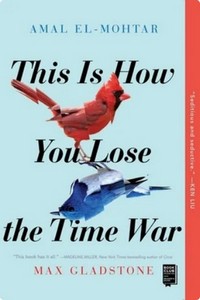
Cover of This Is How You Lose the Time War by Amal El-Mohtar & Max Gladstone This Is How You Lose the Time War

by Amal El-Mohtar & Max Gladstone

DETAILS:
Publisher: S&S/Saga Press
Publication Date: March 17, 2020
Format: Paperback
Length: 198 pgs.
Read Date: July 23, 2025

Buy from Bookshop.org Support Indie Bookstores

On a span of blasted ground, she finds the letter.

It does not belong. Here there should be bodies mounded between the wrecks of ships that once sailed the stars, Here there should be the death and dirt and blood of a successfut op. There should be moons disintegrating overhead, ships aflame in orbit.

There should not be a sheet of cream-colored paper, clean save a single line in a long, trailing hand: Burn before reading.

What’s This Is How You Lose the Time War About?

Red and Blue are agents from two great forces who are battling to control the timeline. They do this by going back and forth in time—along strands—to make small adjustments that will have big implications. For example (not from the book, but to give you an idea), instead of going back to kill Hitler, they’d go back to convince the man who taught Hitler’s art teacher to go into a different field.

Red is an agent of the Agency—a technology-driven group, with aspirations to keep history moving in a direction for their cybernetic, singularity culture to thrive in. Blue works with Garden, who are all about nature, growth, and nurture.

They both seem to be some of the best agents each side has—and they keep running into each other, preventing each other’s missions from succeeding. Until after one defeat, Red finds a letter (see above). Thanks to mechanics that work only for time travelers, she’s able to burn the letter and then read and retain the contents.

Blue knows her from her work and taunts her for her recent defeat. At their next encounter (where Red comes out on top), she’s hidden a letter for Blue—and I’m not going to try to describe how that letter is hidden/revealed. The two begin exchanging taunts, which turns into a friendship of sorts (very few individuals in all of existence—past, present, future) can really understand their lives. From friendship, a romance blossoms—and that is where the danger is found.

Atlantis and The Absence of World Building

Atlantis sinks.

Serves it right. Red hates the place. For one thing, there are so many Atlantises, always sinking, in so many strands: an island off Greece, a mid-Atlantic continent, an advanced pre-Minoan civilization on Crete, a spaceship floating north of Egypt, on and on. Most strands lack Atlantis altogether, know the place only through dreams and mad poets’ madder whispers.

Because there are so many, Red cannot fix just one, or fail to. Sometimes it seems strands bud Atlantises to thwart her. They conspire. History makes common cause with the enemy. Thirty, forty times throughout her career she has walked away from some sinking, burning island, thinking, at least that’s over. Thirty, forty times, the call has come: Go back.

It’s here with the talk about Atlantis—and the following discussion about the various ones—that was probably the highlight of the book for me. It’s at least where I liked the book the most. Somehow in all the possible pasts, the strands keep bringing Atlantis into the world—which is where we get all the various stories about it. Just this idea and Red’s distaste for all of the Atlantises…and compared to Blue, it turns out she might have a positive view of the island.

In each chapter—this falters later on in the book, but it’s close enough—we’re introduced to a possible future or past with an explanation of what the agent we’re focusing on in this chapter is trying to accomplish—and then we see how they fail. Before getting a letter.

The possible settings are fantastic. They each feel like they could be the basis of a gripping 300-page novel—but we dispose of them in a few pages. Each Agent’s mission—and the counter—is depicted and explained in a way that’s just as wonderful. The only thing that tops either of them is the transmission/delivery of the next letter and its reception.

We don’t really get worldbuilding here—we just get glances at them, a quick bit of immersion into the world—and then right back out and into the next. Beyond that, we’re not given any idea how Red, Blue, and the rest travel upstrand or downstrand. We don’t get a clear picture—outside of tech vs. nature—of what the war is over, or how the missions are selected and designed. We get a little of Blue’s backstory, but not much—just enough to set up a great scene or two.

This is both frustrating and fantastic. It’s my nature as a reader to want more, to want the nitty gritty. But, I’ll tell you what, El-Mohtar and Gladstone make this work—it’s enough to get these glances. And to give those details would change the nature of the book—and it’s probably best they didn’t.

Humor and Heart

This is a strange, fantastic book with an earnest tone—what I wasn’t prepared for was the humor. But fairly early on, Red taunts, “Ha-ha, Blueser. Your mission objective’s in another castle.” And I was caught off-guard, “Oh, we’re doing laughs, too?”

And yes—the very next page is hilarious. And the two will make me laugh several times after that.

But this is not a comedy. I want to go back to the earnest idea. This book wears its heart on its sleeve. There a big feelings expressed and felt. Largely, those are delivered in a prose that’s simply delicious. Worthy of quotation and meditation.

So, what did I think about This Is How You Lose the Time War?

Killing gets easier with practice, in mechanics and technique. Having killed never does, for Red. Her fellow agents do not feel the same, or they hide it better.

So clearly, after everything I’ve just said, I loved the book, right?

Sadly, no. All the elements were there—killer concept, the execution of individual scenes was spot-on, the characters are interesting and engaging, etc., etc., etc. I loved the authors’ language, their approach to the whole thing, and more. Seriously, a time-traveling epistolary novel? Come on…

But I couldn’t buy the central relationship. They went from taunting admiration to a camaraderie across battle lines pretty quickly, and I could’ve bought that (probably). But then it goes into a romance that threatens to mark one or both of them as traitors to their cause, and they risk everything to keep going? That just happened too quickly. If we’d gotten a few more letters before things got super-serious between the two, I could’ve maybe accepted it. But in the end, it was just too deep, too fast—and these elite agents are both ready to throw caution to the wind and risk incurring the wrath of their superiors?

I wanted to like this, I really did. There’s little reason why I shouldn’t—sadly, Gladstone and El-Mohtar found the reasons I shouldn’t.

I’m going to be in the minority here—or so I bet—and for those who can really get into the book, I understand you and envy you that ability. But I just couldn’t go that far.

Fantastic building blocks, but poor use of them, left me with mixed feelings at best—but mostly a strong sense of missed opportunities.

I think most readers will find something—probably several things to relish in this book. I just can’t be positive it’ll be worth it to you (then again, it’s less than 200 pages of nicely moving prose—maybe it’s worth the investment). Also, if you look at the accolades this book has garnered, I could be way off base about this.


3.5 Stars

This post contains an affiliate link. If you purchase from it, I will get a small commission at no additional cost to you. As always, the opinions expressed are my own.

Irresponsible Reader Pilcrow Icon

The Irresponsible Reader On…Self-Published Science Fiction

(updated 7/24/25)
Self-Published Author Appreciation Week '25 Banner. Banner has a gray bird on a black disk. Around the disk are the words, 'Self Published Authors Appreciation Week.' In the top left corner, it says, 'July 21-27, 2025.' In the bottom right corner it says, '#SPAAW'

From the first moment that people did the strange thing of asking me to talk about their books on my blog, I’ve been impressed by the quality of a lot of what’s been published by authors going out on their own, taking all the risks, shouldering all the responsibility and doing all the work to get their words, their dreams, their blood, sweat, and tears. This should be celebrated—it’s definitely appreciated, as we’re trying to show this week.

As part of this week-long celebration, I’m continuing my habit of highlighting the self-published works that I’ve blogged about over the last few years (or meant to blog about, but at least read)—just a sentence or two. Hopefully, this’ll be enough to make you click on the link to the full post. Beyond that, it’d be great if I inspired you to add a few of these to your TBR. Also, be sure you check out the other posts over at the SPAAW Hub.

Today we’re going to be looking at Self-Published Science Fiction. Old tropes in new garb, fresh ideas, and a creativity that astounds. These authors are well worth your time and money.

bullet Hit the Ground Running by Kate Ashwin—a cyberpunk heist novel with a sense of fun. A group of revolutionaries try to do a little good for the holidays in a futuristic corporate city. (my post about it)</span
bullet Wistful Ascending by JCM Berne—if I start talking about this, I’m not sure how to stop. There’s a retired super-hero/super soldier working a menial job on a space station. There’s a revenge story. There are aliens that look like talking bears. It’s just so much fun. (my post about it)
bullet The MOST Powerful Christmas by JCM Berne—Rohan and friends save Christmas for Santa (my post about it)
bullet Return of the Griffin by JCM Berne—Rohan has to return to Earth to battle monsters that might be too much for him and the collective might of Earth’s superheroes. Rohan also has to battle the legacy he left behind when he left. (my post about it)
bullet Blood Reunion by JCM Berne—Rohan struggles to stay alive and protect the citizens of Wistful from a the most powerful vampire I’ve read about. Oh, and he has to deal with his father on the station, too. It’s debatable which is harder for him to deal with. (my post about it)
bullet Shadow of Hyperion by JCM Berne—Rohan is called upon by Earth again for some help with a challenge that will take Rohan and a new ally to Earth, to other locations nearer Wistful, and to reckon with their bloody pasts. (my post about it is forthcoming)
bullet The Elites by Matt Cowper—a Batman-esque figure rebuilds a government-sponsored team of heroes. They take on super-villains of all stripes and even an alien invasion.
bullet The World Savers (my post about it)
bullet Rogue Superheroes (my post about it)
bullet Nightfall (my post about it)
bullet Children of the Different by S. C. Flynn—a very different kind of YA take on post-apocalypse life in Austrailia. (my post about it)
bullet Full Metal Superhero by Jeffery H. Haskell—a young technical genius who lost the use of her legs in the accident that cost her parents their lives creates an Iron Man-esque suit and starts fighting crime in the hopes of being recruited into an Avengers/Justice League-type team. I’ve frequently talked on the blog (and even in this series of posts) about being frustrated that I haven’t caught up with a series. This one really gets to me. There’s also a spin-off series that looks great.
bullet Arsenal (my post about it)
bullet Unstoppable Arsenal (my post about it)
bullet Super Powereds: Year 1 by Drew Hayes—The first in a series about a group of freshmen in a college-level Super-Hero Training program. (my post about it)
bullet Darkside Earther by Bradley Horner—this is a series about a privileged group of teens trying to get through school and into adulthood while on a space station orbiting Earth. Their parents are the elite of humanity and are trying to mold their children into very different types of leaders.
bullet Darkside Earther (my post about it)
bullet Degrading Orbits (my post about it)
bullet Saul by Bradley Horner—a professor of nanotech tries to save his daughter in the middle of a global catastrophe. (my post about it)
bullet Billy in Space by Harry L-B—Billy has been given telekinetic abilities, and instead of becoming the government agent he’d aspired to, he’s become a human forklift in a spaceship’s warehouse. Not glamorous at all, but it’s a job. Then an alien race attacks his ship. Then space pirates do, too. And then things get bad. You’ll also witness a really bad first date. I should stress that this is a comedy. (my post about it)
bullet Proxies by James T. Lambert—Jair Howard has some big challenges ahead of him–he has to deal with his mother, he has to fix his relationship with his girlfriend, he has to prove someone hacked into the military’s computers, then he has to prove it wasn’t him–oh yeah, and prevent interstellar war. His mother might be the biggest problem, really. I just finished reading the book and haven’t finished my post, but you’ll want to give it a look.
bullet Duckett & Dyer: Dicks For Hire by G.M. Nair—This story felt like the love child of Dirk Gentley’s Holistic Detective Agency (the Douglas Adams version) and Comedy Central’s Corporate, but sweeter. A pair of old friends-turned multi-dimensional P.I.s tackle a missing persons case. (my post about it)
bullet Serengeti by J.B. Rockwell—a damaged warship—and the AI who operates it—attempts to rejoin the fleet.
bullet Serengeti (my post about it)
bullet Dark and Stars (my post about it)
bullet AI Theist by Michael J. Svigel—The world’s most advanced and powerful AI struggles with its(?) conscience and gets religion. (my post about it)
bullet Please Return to the Lands of Luxury by Jon Tilton—an MG Dystopian thriller. There’s a fantastic world here—a very plausible one, too. The story is hard to sum up in a sentence or two, but this would be a great read for an MG reader who’s able to read some unpleasantness (and a lot of wholesome and hope-filled moments, too). (my post about it)
bullet The FATOFF Conspiracy by Olga Werby—Americans have lost the war on obesity and all but the elitist of the elite are dangerously obese (while tucking away a good portion of that fat into a pocket dimension), in pain, struggling, dying young, and yet eating almost constantly. (my post about it)
bullet Genrenauts by Michael R. Underwood—Parallel to our world are various worlds populated by fictional characters in a wide variety of genres (Western, SF, Romance, etc), and when things go wrong in the stories, things go wrong in our world. n this world, there are a number of teams of story specialists who shift to the other worlds to fix the stories and set things back on course here. The first two novellas in this series were published by Tor, but after that, Underwood took it over himself.
bullet The Cupid Reconciliation (my post about it)
bullet The Substitute Sleuth (my post about it)
bullet The Failed Fellowship (my post about it)
bullet Genrenauts: The Complete Season One Collection—a compendium of all the novellas/stories in Season 1. (my post about it)
bullet The Data Disruption—a Season One Prequel (my post about it)
bullet The Wasteland War—Season Two kicks off (my post about it)


If you're a self-published author that I've featured on this blog and I didn't mention you in this post and should have. I'm sorry (unless you're this guy). Please drop me a line, and I'll fix this. I want to keep this regularly updated so I keep talking about Self-Published Authors.

Self-Published Authors Appreciation Week Footer

The 2024 Self-Published Authors Appreciation Week Logo was made by Witty and Sarcastic Book Club

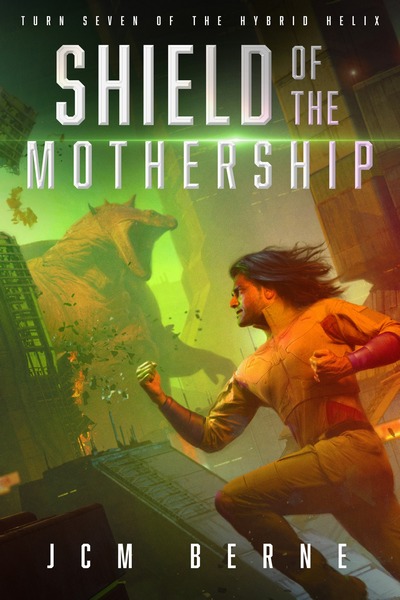
PUB DAY SPOTLIGHT: Shield of The Mothership by JCM Berne

I’m excited talk about today’s release of Turn 7 of The Hybrid Helix series, JCM Berne’s Shield of The Mothership. SF readers, Super-hero fans, Space Opera fans, and people who like to read good books in general should check it out. Here’s a little more about the book to get you interested.


Book Details:

Title: Shield of The Mothership by JCM Berne
Series: The Hybrid Helix, Turn 7
Format: Hardcover/Kindle/Paperback
Length: 477 pg.
Publisher: The Gnost House
US Publication Date: July 22, 2025
Cover of Shield of The Mothership by JCM Berne

About the Book:

Sometimes the enemy of your enemy is still your enemy.

Rohan swore he’d never work for the il’Drach again, never again be called Lance Primary, never again kill or risk the lives of his friends on behalf of the Empire.

But when the safety of the sector is at risk, when inaction could lead to the death of every living thing in the galaxy, he has to work with what he has.

Even if what he has is allies he can’t trust, a mission he doesn’t understand, and the growing suspicion that things are only getting worse.

Book Links:

Amazon ~ Author’s Website

About the Author

JCM BerneJCM Berne has reached middle age without outgrowing the notion that superheroes are cool. Code monkey by day, by night he slaves over a hot keyboard to prove that superhero stories can be engaging and funny without being dark or silly.

Website ~ Bluesky ~ Twitter ~ Facebook ~ Instagram ~ YouTube

Promise by Christi Nogle: Wonderfully Weird, Unequivocally Unnerving

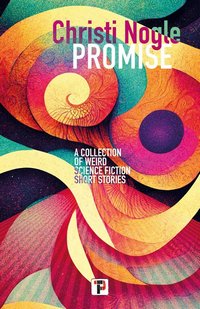
Cover of Promise by Christi NoglePromise

by Christi Nogle

DETAILS:
Publisher: Flame Tree Press
Publication Date: September 12, 2023
Format: Paperback
Length: 208 pg.
Read Date: February 1-10, 2025
Buy from Bookshop.org Support Indie Bookstores

What’s Promise?

This is a collection of 21 short stories. The cover calls them “weird Science Fiction” stories—this is true. When Nogle described herself in a Q&A here last year, she described herself as “focusing on horror and horror-adjacent work.” I’d say most of these qualified as Horror-adjacent; there’s just something unnerving about just about every one of these. Now, I grant you that my tolerance/acceptance of Horror is pretty low, so while I might call these Horror-adjacent, real Horror fans might roll their eyes. That’s fine, I get it. But some of these are really unnerving/creepifying.

When trying to come up with a good way to describe this collection, I saw the back of the cover blurb and decided that I couldn’t do better.

A young woman confronts her digital doppelganger at a creepy academy. A mother and daughter struggle underground, finishing robots the rich will use. A loving couple find that their mirrors are very different than mirrors used to be. You can order a headset to speak with your dog, and your devices sometimes connect not just to the web but to the afterlife.

Be prepared for strangeness here. We have several types of aliens, cults devoted to contacting alternate dimensions, virtual-reality writing retreats, time-travel games and timetravel tragedies, augmented consciousness, cosmic artforms and living paintings, haunted Zoom meetings, giant worms, and guesthouses for the dead. These stories reflect the weird and unknowable future. They are often bizarre and dreadful, but they also veer towards themes of hope, potential…and promise.

I Have So Many Questions…

A little over halfway through my notes, I wrote, “I have so many questions about her process.” I can’t tell you exactly what prompted that, but I’m pretty sure the question had been building. And I’d still like to ask a few now that I’ve been prompted.

Sure, there’s the old chestnut of “where do you get your ideas?” I know authors hate that question (and I get it), but…just how does someone come up with these? And beyond the generic planner v. pantser, I really wonder how much of these strange worlds she has worked out before she starts to tell a story in them, and how much she figures out along the way.

But also—what does the first draft look like compared to the final? Does she write everything and then pare it down to just the essentials? How does she choose the starting point for these? I know my reflex would be to start most of these stories about 8 paragraphs of story earlier than she does (and generally to give another few paragraphs at the end). How does she choose the twist/reveal/whatever it is that clues the reader into everything that’s going on?

I guess I’m just looking for a DVD commentary on each of these. Something about Nogle’s construction makes me more curious about her approach than I usually am.

So, what did I think about Promise?

So, two of these stories did nothing for me (2 out of 21 is a great number). Several I’d just qualify as “good,” but a handful wowed me. There are a couple I’m still thinking about all these months later (not steadily, mind you, but every now and then the mind will wander a bit—or I’ll see this cover, and…pow, I’m back in it).

I love Nogle’s prose and approach to storytelling. There’s some variation because no two stories have the same voice—but generally, I can say she gives you just enough to know what’s going on, but you have to use your imagination and think about it to really understand the story. There’s no spoon-feeding here, but nothing so cryptic or ambivalent as to be obscure or oblique.

Was I satisfied with the conclusion of every story? No—but I’m pretty sure I wasn’t supposed to be. Particularly the couple that really don’t conclude, but just end.

Creepy, mind-bendy, the kind of short story you can vanish into and leave the world behind. These stories will leave you feeling the way that the Black Mirror or The Twilight Zone episodes do. I rather enjoyed almost all of these and think you will, too. (and many of you will really get into the ones that left me cold, and won’t be wigged out by those that got me…we can compare lists later)


3.5 Stars

This post contains an affiliate link. If you purchase from it, I will get a small commission at no additional cost to you. As always, the opinions expressed are my own.

Literary Locals logo

20 Books of Summer 2025: June Check-In

20 Books of Summer 2025 logo
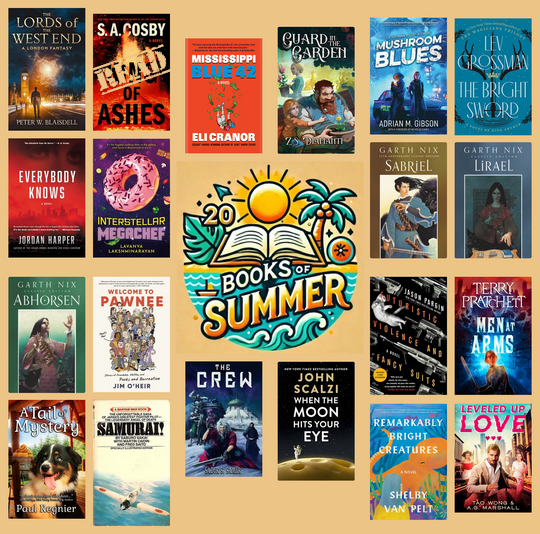
A quick check-in for this Reading Challenge hosted by Emma of Words and Peace and Annabel from AnnaBookBel (you can read more about it here). I don’t typically like to do this kind of thing until the first of the next month, but since I doubt that I’ll read 500 pages today, I figured I might as well get this up since I won’t be able to finish the post I initially planned for today. So, I’ve read 1 1/6 books for this challenge (hopefully 1 1/2 by the end of the day). It’s not the most auspicious start, but I’ll take it (and I’ve had worse starts).

So here’s the list:

1. The Lords of the West End by Peter Blaisdell
✔ 2. King of Ashes by S. A. Cosby
3. Mississippi Blue 42 by Eli Cranor
4. Guard in the Garden by Z. S. Diamanti
5. Mushroom Blues by Adrian M. Gibson
6. The Bright Sword by Lev Grossman
7. Everybody Knows by Jordan Harper
8. Interstellar MegaChef by Lavanya Lakshminarayan
9. Sabriel by Garth Nix
10. Lirael by Garth Nix
11. Abhorsen by Garth Nix
12. Welcome to Pawnee: Stories of Friendship, Waffles, and Parks and Recreation by Jim O’Heir
13. Futuristic Violence and Fancy Suits by Jason Pargin
14. Men at Arms by Terry Pratchett
15. A Tail of Mystery by Paul Regnier
16. Samurai! by Saburo Sakai with Martin Caiden and Fred Saito
17. The Crew by Sadir S. Samir
18. When the Moon Hits Your Eye by John Scalzi
19. Remarkably Bright Creatures: Shelby Van Pelt
20. Leveled Up Love by Tao Wong & A. G. Marshall

(subject to change, as is allowed, but I’m going to resist the impulse to tweak as much as I can).

On the other hand, I’m doing pretty well with my Books on My Summer 2025 to-Read List (That Aren’t on My 20 Books Challenge)

1. Stone and Sky by Ben Aaronovitch
2. Algospeak: How Social Media Is Transforming the Future of Language by Adam Aleksic
3. Light From Uncommon Stars by Ryka Aoki
✔ 4. The Blue Horse by Bruce Borgos
5. Five Broken Blades by Mai Corland
6. This Is How You Lose the Time War by Amal El-Mohtar, Max Gladstone
✔ 7. The Medusa Protocol by Rob Hart
✔ 8. Station Eleven by Emily St. John Mandel
9. Mrs. Plansky Goes Rogue by Spencer Quinn
10. Dogged Pursuit by David Rosenfelt

Okay, if you think it as a percentage, I’ve read 14% of the books I called my shot on for the summer. Again, inauspicious. July promises to be a good one for reading—I hope/expect that I’ll be looking better in 31 days.

(and no, I don’t see a conflict between this and the Orangutan Librarian’s recent post about competitive reading. This is me comparing myself with my goals, or my past self, or—worst of all—my expectations.

20 Books of Summer '25 Chart June Update

20 Books of Summer 2025: Can I Make it Five in a Row?

20 Books of Summer 2025g
After Cathy of 746 Books retired from hosting this challenge after an impressive 10 years, I figured this was going away. But Emma of Words and Peace and Annabel from AnnaBookBel stepped up to carry the torch. You can read their kick-off post here. So, I’m back for my fifth year of participation in this challenge–and hopefully completing it. “But HC,” some of you might be saying, “a lot of these books look suspiciously like books from other challenges you mentioned.” Yes, yes they are. I’ve not done a great job at some of my challenges this year (okay, most of them0. So, why not multitask? I’ll force myself to read some anticipated new releases (another thing I’ve failed at this year), read every book I’ve borrowed from a friend, and chip away at two other challenges (possibly more). That’s a win-win-win in my book.

Still, I’m worried about completing it. Feel free to harass me about this from time to time.

I’ve frequently used the unofficial US Dates for Summer—Memorial Day to Labor Day, but Memorial Day has already passed. So, I’ll go along with the June 1-August 31 (actually, none of these books are what I’d read on a Lord’s Day, so June 2-August 30). And It’s going to be Friday at the earliest before I can start one from this list. So…sure, I’m stacking the deck against me (although a couple of years ago, I didn’t read any in June and finished okay).

There’s still time to join in the fun—if you’re into this kind of thing. (there are 10 and 15 book versions, too)

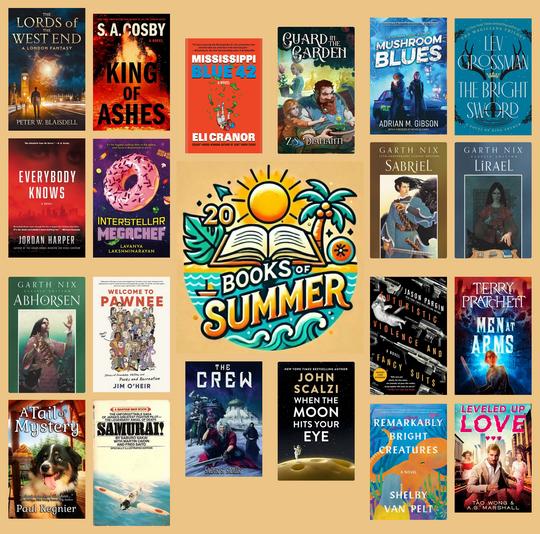
This summer, my 20 are going to be:

1. The Lords of the West End by Peter Blaisdell
2. King of Ashes by S. A. Cosby
3. Mississippi Blue 42 by Eli Cranor
4. Guard in the Garden by Z. S. Diamanti
5. Mushroom Blues by Adrian M. Gibson
6. The Bright Sword by Lev Grossman
7. Everybody Knows by Jordan Harper
8. Interstellar MegaChef by Lavanya Lakshminarayan
9. Sabriel by Garth Nix
10. Lirael by Garth Nix
11. Abhorsen by Garth Nix
12. Welcome to Pawnee: Stories of Friendship, Waffles, and Parks and Recreation by Jim O’Heir
13. Futuristic Violence and Fancy Suits by Jason Pargin
14. Men at Arms by Terry Pratchett
15. A Tail of Mystery by Paul Regnier
16. Samurai! by Saburo Sakai with Martin Caiden and Fred Saito
17. The Crew by Sadir S. Samir
18. When the Moon Hits Your Eye by John Scalzi
19. Remarkably Bright Creatures: Shelby Van Pelt
20. Leveled Up Love by Tao Wong & A. G. Marshall

(subject to change, as is allowed, but I’m going to resist the impulse to tweak as much as I can).

What do you think of this list? Any warnings—or anything you think I should be really excited about?

20 Books of Summer '25 Chart

Towel Day ’25 (observed): Some of my favorite Adams lines . . .

(updated 5/26/25)

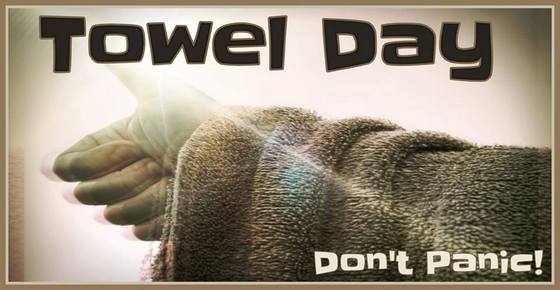
A Blue towel with the words Towel Day on it

There’s a great temptation here for me to go crazy and use so many quotations that I’d get in copyright trouble. I’ll refrain from that and just list some of his best lines . . .*

* The fact that this list keeps expanding from year to year says something about my position on flirting with temptation.

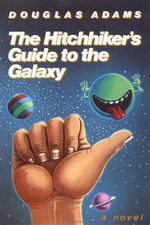
The Hitchhiker's Guide to the Galaxy

The Hitchhiker’s Guide to the Galaxy

Time is an illusion. Lunchtime doubly so.

This must be Thursday. . . I never could get the hang of Thursdays.

“You’d better be prepared for the jump into hyperspace. It’s unpleasantly like being drunk.”

“What’s so unpleasant about being drunk?”

“You ask a glass of water.”

(I’m not sure why, but this has always made me chuckle, if not actually laugh out loud. It’s just never not funny. It’s possibly the line that made me a fan of Adams)

He had found a Nutri-Matic machine which had provided him with a plastic cup filled with a liquid that was almost, but not quite, entirely unlike tea.

“You know,” said Arthur, “it’s at times like this, when I’m trapped in a Vogon airlock with a man from Betelgeuse, and about to die of asphyxiation in deep space that I really wish I’d listened to what my mother told me when I was young.”

“Why, what did she tell you?”
“I don’t know, I didn’t listen.

In those days spirits were brave, the stakes were high, men were real men, women were real women and small furry creatures from Alpha Centauri were real small furry creatures from Alpha Centuari. And all dared to brave unknown terrors, to do mighty deeds, to boldly split infinitives that no man had split before . . .

“Look,” said Arthur, “would it save you a lot of time if I just gave up and went mad now?”

The ships hung in the sky in much the same way that bricks don’t.

For a moment, nothing happened. Then, after a second or so, nothing continued to happen.

<

blockquote>“Space,” [The Guide] says, “is big. Really big. You just won’t believe how vastly, hugely, mindbogglingly big it is. I mean, you may think it’s a long way down the road to the chemist’s, but that’s just peanuts to space, listen…”

He attacked everything in life with a mix of extraordinary genius and naive incompetence, and it was often difficult to tell which was which.

He felt that his whole life was some kind of dream and he sometimes wondered whose it was and whether they were enjoying it.


The Restaurant at the End of the Universe

The Restaurant at the End of the Universe

It is a curious fact, and one to which no one knows quite how much importance to attach, that something like 85 percent of all known worlds in the Galaxy, be they primitive or highly advanced, have invented a drink called jynnan tonnyx, or gee-N-N-T’Nix, or jinond-o-nicks, or any one of a thousand or more variations on the same phonetic theme. The drinks themselves are not the same, and vary between the Sivolvian “chinanto/mnigs” which is ordinary water served at slightly above room temperature, and the Gagrakackan “tzjin-anthony-ks” which kills cows at a hundred paces; and in fact the one common factor between all of them, beyond the fact that the names sound the same, is that they were all invented and named before the worlds concerned made contact with any other worlds.

Reality is frequently inaccurate.

Life is wasted on the living.


Life, The Universe and Everything

Life, the Universe, and Everything

The Hitchhiker’s Guide to the Galaxy has this to say on the subject of flying. There is an art, it says, or rather, a knack to flying. The knack lies in learning how to throw yourself at the ground and miss.

(It goes on for quite a while after this—and I love every bit of it.)

“One of the interesting things about space,” Arthur heard Slartibartfast saying . . . “is how dull it is?”

“Dull?” . . .

“Yes,” said Slartibartfast, “staggeringly dull. Bewilderingly so. You see, there’s so much of it and so little in it.”


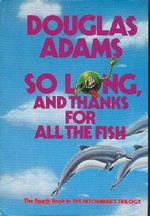
So Long, and Thanks For All The Fish

So Long, and Thanks for All the Fish

Of course, one never has the slightest notion what size or shape different species are going to turn out to be, but if you were to take the findings of the latest Mid-Galactic Census report as any kind of accurate guide to statistical averages you would probably guess that the craft would hold about six people, and you would be right. You’d probably guessed that anyway. The Census report, like most such surveys, had cost an awful lot of money and told nobody anything they didn’t already know—except that every single person in the Galaxy had 2.4 legs and owned a hyena. Since this was clearly not true the whole thing eventually had to be scrapped.

Here was something that Ford felt he could speak about with authority. “Life,” he said, “is like a grapefruit.”

“Er, how so?”

“Well, it’s sort of orangy-yellow and dimpled on the outside, wet and squidgy in the middle. It’s got pips inside, too. Oh, and some people have half a one for breakfast.”

“Is there anyone else out there I can talk to?”

Arthur had a swordfish steak and said it made him angry. He grabbed a passing waitress by the arm and berated her. “Why’s this fish so bloody good?” he demanded, angrily.

“Please excuse my friend,” said Fenchurch to the startled waitress. “I think he’s having a nice day at last.”


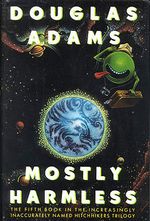
Mostly Harmless

Mostly Harmless

A common mistake that people make when trying to design something completely foolproof is to underestimate the ingenuity of complete fools.

Fall, though, is the worst. Few things are worse than fall in New York. Some of the things that live in the lower intestines of rats would disagree, but most of the things that live in the lower intestines of rats are highly disagreeable anyways, so their opinion can and should be discounted.


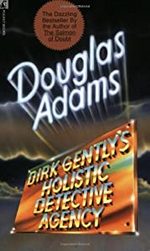
Dirk Gently's Holistic Detective Agency

Dirk Gently’s Holistic Detective Agency

There is no point in using the word ‘impossible’ to describe something that has clearly happened.

If it looks like a duck, and quacks like a duck, we have at least to consider the possibility that we have a small aquatic bird of the family anatidae on our hands.

Let’s think the unthinkable, let’s do the undoable. Let us prepare to grapple with the ineffable itself, and see if we may not eff it after all.

(I’ve often been tempted to get a tattoo of this)


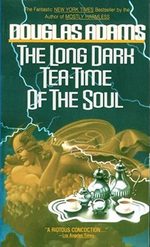
The Long Dark Tea-Time of the Soul

The Long Dark Tea-Time of the Soul

There are some people you like immediately, some whom you think you might learn to like in the fullness of time, and some that you simply want to push away from you with a sharp stick.

It can hardly be a coincidence that no language on earth has ever produced the expression, ‘As pretty as an airport.’

The impossible often has a kind of integrity to it which the merely improbable lacks.

She stared at them with the worried frown of a drunk trying to work out why the door is dancing.

It was his subconscious which told him this—that infuriating part of a person’s brain which never responds to interrogation, merely gives little meaningful nudges and then sits humming quietly to itself, saying nothing.

As she lay beneath a pile of rubble, in pain, darkness, and choking dust, trying to find sensation in her limbs, she was at least relieved to be able to think that she hadn’t merely been imagining that this was a bad day. So thinking, she passed out.


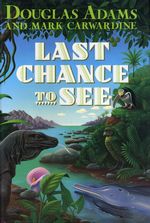
The Last Chance to See

The Last Chance to See

“So what do we do if we get bitten by something deadly?” I asked.

He looked at me as if I were stupid. “You die, of course. That’s what deadly means.”

I’ve never understood all this fuss people make about the dawn. I’ve seen a few and they’re never as good as the photographs, which have the additional advantage of being things you can look at when you’re in the right frame of mind, which is usually around lunchtime.

I have the instinctive reaction of a Western man when confronted with sublimely incomprehensible. I grab my camera and start to photograph it.

Human beings, who are almost unique in having the ability to learn from the experience of others, are also remarkable for their apparent disinclination to do so.

The aye-aye is a nocturnal lemur. It is a very strange-looking creature that seems to have been assembled from bits of other animals. It looks a little like a large cat with a bat’s ears, a beaver’s teeth, a tail like a large ostrich feather, a middle finger like a long dead twig and enormous eyes that seem to peer past you into a totally different world which exists just over your left shoulder.

One of the characteristics that laymen find most odd about zoologists is their insatiable enthusiasm for animal droppings. I can understand, of course, that the droppings yield a great deal of information about the habits and diets of the animals concerned, but nothing quite explains the sheer glee that the actual objects seem to inspire.

I mean, animals may not be intelligent, but they’re not as stupid as a lot of human beings.


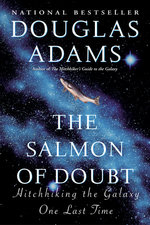
The Salmon of Doubt

The Salmon of Doubt: Hitchhiking the Galaxy One Last Time

We are stuck with technology when what we really want is just stuff that works.

I’ve come up with a set of rules that describe our reactions to technologies:
1. Anything that is in the world when you’re born is normal and ordinary and is just a natural part of the way the world works.
2. Anything that’s invented between when you’re fifteen and thirty-five is new and exciting and revolutionary and you can probably get a career in it.
3. Anything invented after you’re thirty-five is against the natural order of things.


And a couple of lines I’ve seen in assorted places, articles, books, and whatnot

I love deadlines. I love the whooshing noise they make as they go by.

A learning experience is one of those things that says, “You know that thing you just did? Don’t do that.”

The fact is, I don’t know where my ideas come from. Nor does any writer. The only real answer is to drink way too much coffee and buy yourself a desk that doesn’t collapse when you beat your head against it.

Solutions nearly always come from the direction you least expect, which means there’s no point trying to look in that direction because it won’t be coming from there.

Don't Panic

Towel Day ’25 (observed): Scattered Thoughts about Reading The Hitchhiker’s Guide to the Galaxy Trilogy

(updated and revised this 5/26/25)

A Blue towel with the words Towel Day on it
I’ve been trying for a few years now to come up with a tribute to Adams. This isn’t quite what I had in mind, but it’s a start. In my mind, this is a work in progress (a multiple-year project), but I’m posting it anyway. Next year’s version will be better—or at least more complete.


Some time in 7th or 8th grade (I believe), I was at a friend’s house and his brother let us try his copy of the text-based Hitchhiker’s Guide game, and we were no good at it at all. Really, it was embarrassing. However, his brother had a copy of the first novel, and we all figured that the novel held the keys we needed for success with the game (alas, it did not help us one whit). My friends all decided that I’d be the one to read the book and come back in a few days as an expert.

I fell in love with the book almost instantly, and I quickly forgot about the game. Adams’ irreverent style rocked my world—could people actually get away with saying some of these things? His skewed take on the world, his style, his humor…and a depressed robot, too! It was truly love at first read. As I recall, I started re-reading it as soon as I finished it—the only time in my life I’ve done that sort of thing.

Also, I finally understood that song, “Marvin, I Love You,” that I kept hearing on Dr. Demento.

It was one of those experiences that, looking back, I can say shaped my reading and thinking for the rest of my life (make of that what you will). Were my life the subject of a Doctor Who or Legends of Tomorrow episode, it’d be one of those immutable fixed points. I got my hands on the next three books as quickly as I could (the idea of a four-volume trilogy was one of the funniest ideas I’d encountered up to that point), and devoured them. I do know that I didn’t understand all of the humor, several of the references shot past me at the speed of light, and I couldn’t appreciate everything that was being satirized. But what I did understand, I thought was brilliant. Not only did I find it funny, the series taught me about comedy—how to construct a joke, how to twist it in ways a reader wouldn’t always expect, and when not to twist but to go for the obviously funny idea. The trilogy also helped me to learn to see the absurdity in life.

Years later, when the final volume (by Adams) was released, I’d already cemented what I thought about the books from these frequent re-reads. I’m not sure that Mostly Harmless changed things much (except for making me think for the first time that maybe I didn’t want him to write more in this series). His non-Hitchhiker’s work illustrated that he was capable of making you see things in a new light–either with a smile or a sense of regret—even when he wasn’t writing the trilogy, even when he was writing non-fiction. It was never the setting or the genre—it was Adams.

But here on Towel Day—as with most of the time I talk about Adams (but I need to change that), it comes down to where I started—the Trilogy. I read the books (particularly the first) so many times that I can quote significant portions of them, and frequently do so without noticing that I’m doing that. I have (at this time) two literary-inspired tattoos, one of which is the planet logo* featured on the original US covers. In essence, I’m saying that Adams and the series that made him famous have had an outsized influence on my life and are probably my biggest enduring fandom. If carrying around a (massively useful) piece of cloth for a day in some small way honors his memory? Sure, I’m in.

So, Happy Towel Day, You Hoopy Froods.

* I didn’t know it at the time, but Adams didn’t like that guy. Whoops.

Don't Panic

Towel Day ’25 (observed): Do You Know Where Your Towel Is?

(updated and revised this 5/26/25)

A Blue towel with the words Towel Day on it

The Hitchhiker’s Guide to the Galaxy has a few things to say on the subject of towels.

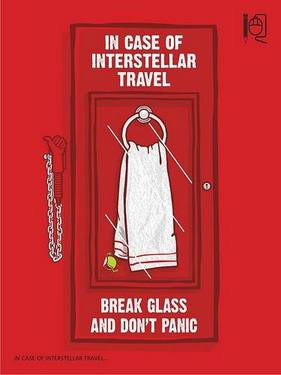
A towel, it says, is about the most massively useful thing an interstellar hitchhiker can have. Partly it has great practical value. You can wrap it around you for warmth as you bound across the cold moons of Jaglan Beta; you can lie on it on the brilliant marble-sanded beaches of Santraginus V, inhaling the heady sea vapors; you can sleep under it beneath the stars which shine so redly on the desert world of Kakrafoon; use it to sail a miniraft down the slow heavy River Moth; wet it for use in hand-to-hand-combat; wrap it round your head to ward off noxious fumes or avoid the gaze of the Ravenous Bugblatter Beast of Traal (such a mind-bogglingly stupid animal, it assumes that if you can’t see it, it can’t see you); you can wave your towel in emergencies as a distress signal, and of course dry yourself off with it if it still seems to be clean enough.

More importantly, a towel has immense psychological value. For some reason, if a strag (strag: non-hitch hiker) discovers that a hitch hiker has his towel with him, he will automatically assume that he is also in possession of a toothbrush, face flannel, soap, tin of biscuits, flask, compass, map, ball of string, gnat spray, wet weather gear, space suit etc., etc. Furthermore, the strag will then happily lend the hitch hiker any of these or a dozen other items that the hitch hiker might accidentally have “lost”. What the strag will think is that any man who can hitch the length and breadth of the galaxy, rough it, slum it, struggle against terrible odds, win through, and still knows where his towel is is clearly a man to be reckoned with.

Hence a phrase that has passed into hitchhiking slang, as in “Hey, you sass that hoopy Ford Prefect? There’s a frood who really knows where his towel is.” (Sass: know, be aware of, meet, have sex with; hoopy: really together guy; frood: really amazingly together guy.)

Towel Day was yesterday, May 25, but I’m going to observe it today (in the tradition of all Weekend Holidays in the U.S>0

Towel Day, for the few who don’t know, is the annual celebration of Douglas Adams’ life and work. It was first held two weeks after his death, fans were to carry a towel with them for the day to use as a talking point to encourage those who have never read HHGTTG to do so, or to just converse with someone about Adams. Adams is one of that handful of authors that I can’t imagine I’d be the same without having encountered/read/re-read/re-re-re-re-read, and so I do my best to pay a little tribute to him each year, even if it’s just carrying around a towel.

In commemoration of this date, here’s most of what I’ve written about Adams. I’ve struggled to come up with new material to share for Towel Day over the years, mostly sticking with updating and revising existing posts. And, this year is no exception A few years back, I did a re-read of all of Adams’ (completed) fiction. For reasons beyond my ken (or recollection), I didn’t get around to blogging about the Dirk Gently books, but I did do the Hitchhiker’s Trilogy:
bullet The Hitchhiker’s Guide to the Galaxy
bullet The Restaurant at the End of the Universe
bullet Life, The Universe and Everything
bullet So Long, and Thanks For All The Fish
bullet Mostly Harmless
bullet I had a thing or two to say about the 40th Anniversary of The Hitchhiker’s Guide to the Galaxy
bullet I took a look at the 42nd Anniversary Illustrated Edition of The Hitchhiker’s Guide to the Galaxy

I should also point to a posts I wrote about Douglas Adams’ London by Yvette Keller and 42: The Wildly Improbable Ideas of Douglas Adams edited by Kevin Jon Davies—both are great ways of filling out one’s understanding of Adams and his work. I have to mention the one book that Adams/Hitchhiker’s aficionado needs to read is Don’t Panic by Neil Gaiman, David K. Dickson and MJ Simpson.

If you’re more in the mood for a podcast, I’d suggest The Waterstones Podcast How We Made: The Hitchhiker’s Guide to the Galaxy—I’ve listened to several podcast episodes about this book, and generally roll my eyes at them. But this is just fantastic. Were it available, I’d listen to a Peter Jackson-length version of the episode.

I’ve only been able to get one of my sons into Adams, he’s the taller, thinner one in the picture from a few several years ago.
(although I did get he and his younger siblings to use their towels to make themselves safe from the Ravenous Bugblatter Beast of Traal a few years earlier:)

You really need to check out this comic from Sheldon Comics—part of the Anatomy of Authors series: The Anatomy of Douglas Adams.

Lit in a Nutshell gives this quick explanation of The Hitchiiker’s Guide:

TowelDay.org is the best collection of resources on the day. One of my favorite posts there is this pretty cool video, shot on the ISS by astronaut Samantha Cristoforetti.

Even better—here’s an appearance by Douglas Adams himself from the old Letterman show—I’m so glad someone preserved this:

Love the anecdote (Also, I want this tie.)

Don't Panic

Hive by D. L. Orton: A Wild Time Travel Ride

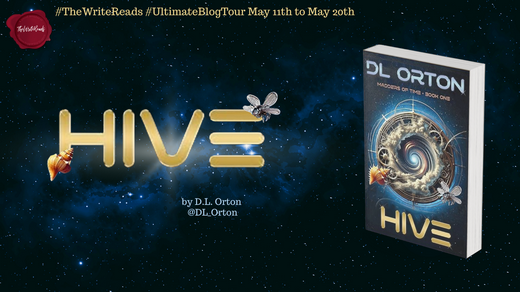
Hive Tour Banner

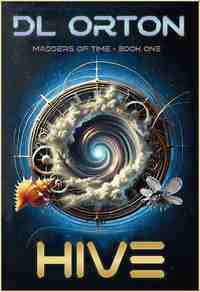
Cover of Hive by D. L. OrtonHive

by D. L. Orton

DETAILS:
Series: Madders of Time, Book One
Publisher: Rocky Mountain Press
Publication Date: May 6, 2025
Format: ARC
Length: 350 pg.
Read Date: May 8-9, 2025
Buy from Bookshop.org Support Indie Bookstores

What’s Hive About?

We open on a semi-functional (less so by the day) biodome some 30 years in the future (it’s vague, but safe to put it in the 2040s-2060s largely depending from when the reader picks this up)—there are two living humans, and an AI of sorts trying to keep going. There are some other biodomes out there, and hopefully, they’re doing better. The land outside the biodome is not fit to sustain human life—or much in the way of animal or vegetable life, either.

They have enough energy to use a spacetime bridge one more time as a last-ditch effort to go back and stop things from getting to this point. The target day was a fateful day for the two of them as individuals, and apparently one for the timeline as well (probably for different reasons, I’m not suggesting history pivots on them). They can send one person back with the sole idea of preventing their present.

I’m being as vague on details as the characters are here—you’ll get an idea about the particulars later.

We spend the rest of the book watching how this plays out from the point of view of some pivotal individuals (earlier versions of these characters in one way or another), with some observations from that AI about how well it’s working and the chances their mission holds of success.

A Quick Look at the Characters

Our primary characters (in the 2010s-2030s) are Matthew, Diego, and Isabel. Matthew and Diego did some work together in the past, and have some loose connections in the book’s “present”—but they’re not great pals or anything, and their stories don’t intertwine much (in Hive, anyway—I expect that to change). Matthew is a physicist of some repute and his expertise will be important.

When we meet Isabel, her divorce has just been finalized and she is excited and free from her husband (well, as free as you can be from an egomanical technocrat that you happen to work for and who owns your research). Diego is the would-be do-gooder scientist/entrepreneur who’s trying to do his part to help poorer countries with their water supply. Diego is also the one who got away, for Isabel. Through some unlikely coincidences (probably shaped by their future selves), they reconnect and try to start over/make up for lost time.

Also, they’ve received prompting from future-Isabel to stop Dave. It’s unclear what they’re supposed to stop him from doing, but they’re all in.

Dave is the kind of character that the reader is primed and ready to hate, or at least really dislike, from his first line of dialogue—and your impression of him goes downhill from there. There are a few sycophants in his company that we don’t get to know too well, but their devotion to him really solidifies your impression of them.

Meanwhile, Matthew is pretty much kidnapped by a couple of representatives of the U.S. government to work on a mysterious artifact, presumably (to the reader) something sent back to the past from the biodome. The senior member of this pair is easily as dislikable as Dave—almost irrationally so. And while he might be one of the “good guys,” or at least is working to help people, he’s definitely one of those envisioned by the coiners of the phrase, “Who needs enemies with friends like this?”

I’m focusing on these two here to be efficient—other than these two jackwagons, 99% of the rest of the characters (from very minor on up) are kind, pleasant, smart (if not brilliant), and are working to improve things. They’re the kinds of characters you want to spend time with—they’ve got good senses of humor, are optimistic and determined to keep going. Reading about them while there’s some sort of apocalypse around them is actually pleasant. Even if only you and the AI knew how bad things were going to get for them, you would like their chances and be pleased every time the AI mentioned their chances of improving their chances of success.

A Focused Armageddon

It’s hard to judge the scope of this/these calamity/calamities—our view is of Denver and the surrounding area. We get some hints that conditions are the same in other parts of the country as things get worse. But we really don’t know what things are like outside the U.S.

Given how bad it is 30+ years into the future when we first see things, it makes sense to think this happened globally. But it’s also possible that the devastation was limited to North America (or just the U.S.) and the rest of the world was able to protect itself, or weren’t exposed to the effects. During the bulk of our time with Diego and Isabel, some forms of communication work and some don’t for them, so it’s believable that they just have no clue what’s happening outside of Colorado. Communications around Matthew seem a lot more reliable, but he’s kept so much in the dark that it really doesn’t get the reader anywhere.

I’m not sure how much it matters for the story—particularly at this point. But I think it’s fun to speculate about while you’re reading and afterwards. Has the rest of the world moved on, fairly intact, waiting for things to calm down in North America so they can come over and try to rebuild? Or are they, so far removed from the three events, suffering just as much?

Crossing in Time

Feel free to skip this part and move on—I’m not sure this adds much to the overall post, but I can’t stop thinking about this.

This is a reworked version of Orton’s novel Crossing in Time. I listened to that book back in 2021 and enjoyed it—try as I might not to, I inevitably kept what was different about this version. The little voice in the back of my head just wouldn’t shut up. To make things worse—I think I have some details of Crossing in Time conflated with one or more other time travel books involving a strong love story.*

What I think she did here was lop off some later chapters, I assume to move them to Book Two. And introduce and/or beef up some of the chapters and subplots. I’m more sure about the former than the latter, if I’m right, that makes the ending more of a cliff-hanger that will springboard you into wanting Book Two in your hands straightaway.

I also think Orton removed what could be described as convolutions—making the novel more streamlined and fast-paced. Overall, I get her choices, and I do think it makes the book a stronger read.

But again, I could be wrong—but I couldn’t stop thinking about it as I read the book, or as I think about it now—so I had to get this out.

* With apologies to the author, there have been 800 or so books between now and then, details get fuzzy.

So, what did I think about Hive?

This is a fast-paced, propulsive read filled with amiable characters who aren’t afraid to joke around even when things are tense or confusing. The hook gets set pretty early, and the pages melt away as you plunge ahead to follow the events. It’s exactly the kind of popcorn read that helps you escape after a long day.

The tech is very cool—both the stuff that Isabel developed and the items that Matthew talks about and develops. Orton gives you enough to understand how it all works and to visualize it clearly without bogging down the pace with paragraphs and paragraphs of details. The plausibility of it all? Eh, it’s SF, it’s plausible enough if you come with a standard level of suspension of disbelief needed for time travel (especially, in this case, when the time travel comes with a side order of multiverse story).

Because of the pacing, Orton’s able to get away with a few things that maybe she couldn’t in a slower-moving book. I don’t actually see the grounding of the romance between Diego and Isabel—he’s carried a torch for years, she regrets making the choice years ago to walk away. But…that’s it. We don’t see many sparks, just have to take it because we’re told that. There’s no reason for the senior agent involved with Matthew to be such an ass to everyone, all the time, especially when just a sentence from him now and then would be enough to get people to work with him instead of his threats (and I don’t care how instinctive and characteristic his brusqueness is, you don’t move up in an organization simply be being mule-headed, there has to be at least an insincere level of cooperativeness expressed occasionally). All the depth of the characters that could be brought out are merely nodded to, or you have to assume them.

Actually, this all might be necessary because of her pacing. If so, I understand the choice (as much as I disagree with it).

I want to stress, however, in the moment, you don’t think about this (and if you do, you brush it off because you don’t want to step out of the movement). Everything works, everything clicks while you’re reading and speeding off to the next twist/revelation. It’s only after you get to the ending that leaves you holding onto the cliff’s edge with your fingers that this might occur to you if you stop and think about it. Mostly, you’re going to be thinking about how long it will be until you can get your hands on Book Two.

It’s easily enjoyable, engrossing, and entertaining. You should give it a try.

This post contains an affiliate link. If you purchase from it, I will get a small commission at no additional cost to you. As always, the opinions expressed are my own.


My thanks to The Write Reads for the invitation to participate in this tour and the materials they provided, including the ARC.

Page 7 of 37

Powered by WordPress & Theme by Anders Norén