Category: Science Fiction Page 8 of 37

BOOK SPOTLIGHT: Hive (Madders of Time #1) by D.L. Orton

I’m very pleased today to welcome The Write Reads Ultimate Blog Tour for Book One in D.L. Orton’s Madders of Time series, Hive! If you take a look at the feed for https://twitter.com/WriteReadsTours over the next week, you’ll see what several other bloggers have had to say about it. My $.02 will be coming along in a little bit.

Hive Tour Banner

Book Details:

Title: Hive by D. L. Orton
Genre: Madders of Time, Book One
Genre: Science Fiction
Age Category: Adult
Format: Hardcover/Paperback/Ebook
Length: 350 pages
Publication Date: May 6, 2025
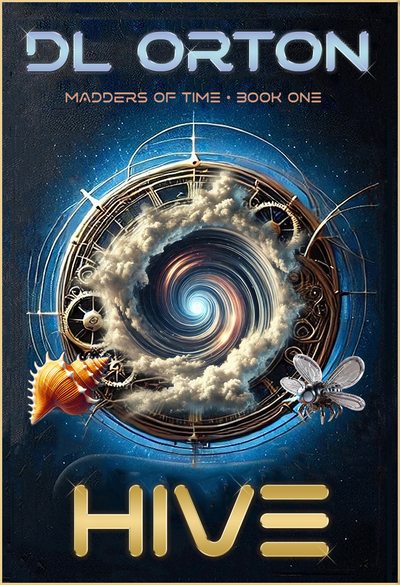
Hive Cover

About the Book:

What if saving the future meant rewriting the past?

In a dying world overrun by microdrones, humanity’s last survivors cling to life inside the Eden-17 biodome. Isabelle Sanborn knows her time is running out, but one desperate plan might give humanity a second chance. With the help of Madders, an enigmatic AI built from the memories of a brilliant physicist, Isabelle sends Diego Nadales—the love of her life—35 years into the past. His mission? To change the course of history and prevent their world’s collapse.

When Diego arrives in the vibrant yet fragile Main Timeline, he’s forced to confront ghosts of the past, including a younger, ambitious version of Isabelle. As he battles to shape a better future, Diego must navigate a delicate web of relationships and events without destroying the very fabric of time.

Brimming with suspense, heart-pounding action, and a poignant love story that transcends time, Madders of Time – Book One is a breathtaking science fiction adventure. Award-winning author DL Orton weaves a tale that explores sacrifice, resilience, and the timeless power of love.

Fans of The Time Traveler’s Wife and Dark Matter will find themselves captivated by this unforgettable journey through parallel worlds and intertwining destinies.

The clock is ticking. Can love survive the collapse of time itself?

Prepare to lose yourself in the first installment of the Madders of Time series—a story that will keep you turning pages and leave you hungry for more.

Book Links:

Amazon Canada ~ Amazon US ~ Amazon UK ~ Goodreads ~ The StoryGraph

About the Author:

Forest Issac JonesThe BEST-SELLING AUTHOR, DL ORTON, lives in the foothills of Colorado where she and her husband are raising three boys, a golden retriever, two Siberian cats, and an extremely long-lived Triops. Her future plans include completing the books in the BETWEEN TWO EVILS series followed by an extended vacation on a remote tropical island (with a Starbucks).

When she’s not writing, playing tennis, or helping with algebra, she’s building a time machine so that someone can go back and do the laundry.

Ms. Orton is a graduate of Stanford University’s Writers Workshop and a past editor of “Top of the Western Staircase,” a literary publication of CU, Boulder. The author has a number of short stories published in online literary magazines, including Literotica.com, Melusine, Cosmoetica, The Ranfurly Review, and Catalyst Press.

Her debut novel, CROSSING IN TIME, has won numerous literary awards including an Indie Book Award and a Publishers Weekly Starred Review. It was also selected as one of only 12 Great Indie Stars by BookLife’s Prize in Fiction.


My thanks to The Write Reads for the invitation to participate in this tour and the materials they provided.

Happy Jack and the Scary-Ass Book of Doom (Audiobook) by Rich Partain, read by JP Adams: DNF’d Without Prejudice (or any interest)

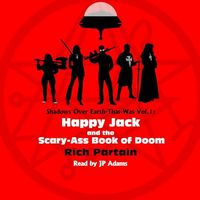
Cover of Happy Jack and the Scary-Ass Book of Doom by Rich PartainHappy Jack and the Scary-Ass Book of Doom

by Rich Partain, JP Adams (Narrator)

DETAILS:
Series: Shadows Over Earth-That-Was, Book 1
Publication Date: December 17, 2024
Format: Unabridged Audiobook
Length: 12 hrs., 50 min. (I made it 3.5 hours )
Read Date: April 16-17, 2025

What’s Happy Jack and the Scary-Ass Book of Doom About?

From Audible:

What happens when the geeks inherit the Earth? For starters, things get a little weird.

In the year 2475, the remnants of humanity have taken to the skies, inhabiting massive domed cities that hover five miles over the ruined ecological disaster of old Earth. The Powers That Be, in their infinite wisdom, decided that the few million people left deserved to live their best lives, so they gave each sub-orbital platform its own theme and legally enforced tech level. Named for afterlives and sacred places from all of the world’s great cultures, Elysia, A’Aru, Valhalla, Tian and the other orbitals range from cyberpunk metropolises to Tolkienesque medieval fantasy lands; from Victorian steampunk cities of glass and copper to snowbound Viking kingdoms.

Not content with merely cosplaying their days away, a significant portion of the population have become transhuman “cybernaturals,” electing to transform into creatures from myth through cybernetic enhancements and advanced genetic therapies; orcs, dwarves, elves, vampires and werewolves now exist through super-scientific means, not supernatural ones.

In the middle of this madness, Daniel Davidson, a pop culture archaeologist and mercenary of dubious repute and his band of foul-mouthed friends are charged with tracking down an ancient book that could, in the wrong hands, erase all of reality. It could be a huge payday and might even involve saving the known universe as a tidy bonus. That is, if they manage to NOT die at the hands of cannibal sex cultists, swashbuckling rogue vampires, prankster demigods, Templar knights, horrifying biblical angels, the angry star-spawn of elder things, and Satan himself. And possibly food and/or alcohol poisoning. Or suffocation in a sex dungeon.

It’s a filthy, hilarious, epic journey through an off-kilter future filled with bullets, blades, beasts, and boat drinks. If you like your profane sci-fi action comedies with a side order of urban and traditional fantasy, look no further.

I Do Have One Issue

Daniel Davidson makes too many late 20th/early 21st Century references. He uses the slang of these eras, talks about music, books, TV, movies, video games of this era. Yes, he explaines it. But I can’t buy that this kind of a geek–no matter his specialty–doesn’t make references to things outside of this time. Something from the intervening 300+ years would’ve snuck in.

His complaints about Evangelical Christians are also very 2020+–there’s no way that they wouldn’t have moved on to other ways to provoke the culture around them.

Listen, it makes sense for the Bobiverse’s clones to be stuck in contemporary references. That absolutely works. This just doesn’t. John Crichton might be full of references to Earth, but he also picks up the lingo and culture of those he interacts with once he joins Moya’s crew (see also Buck Rogers).

So, why didn’t I finish Happy Jack and the Scary-Ass Book of Doom?

It just never grabbed me. It was occasionally amusing. I thought the blue language was overdone, but it wasn’t as offensive as the Author’s Note at the beginning made it sound like it’d be. If you’re going to overuse some or all of The Nine Nasty Words be interesting with it, otherwise it just fades into the background like a dialogue tag.

I’m leaving the door open to returning to this–it didn’t anger me, offend me, or bore me. Like I said, I found bits of it amusing–even entertaining. But it just left me apathetic. I’d rather be annoyed by a book than totally uninterested. I’ll stick with a book to see if the author can make something good/decent out of something bad. But I can’t stick with something to see if I ever have a reaction.

I have no opinion on JP Adams, either. I don’t think James Marsters, Lorelei King, or Ray Porter could’ve done more with the material. So, I’m absolutely open to something else by him, too.

So, I’ll check out of this for now, and maybe return to in later.

Irresponsible Reader Pilcrow Icon

HC Chats with M.D. Presley about Laurel K. Hamilton

Covers of The Inner Circle novels by M.D. PresleyLast year, you’ll have seen the name M.D. Presley here a few times–thanks to the first two books in his Inner Circle UF series. We had a fun chat last week that I bring to you today. Matt introduced me to the work of Laurel K. Hamilton and her influence on the genre.

Of course, better than that, would be checking out her site and work for yourself. But you might as well start with this chat.

M.D. Presley Links:

Website ~ Bluesky ~ Facebook ~ Rites of Passage (Inner Circle book 1) ~ Worldbuilding Nonfiction


Are you a Reader of Things and want to chat with me about an author/series/something other than promoting your own work (which we will do, just not primarily)? I’d love to keep trying this, but I’m not ready to start pestering people about it. So please let me know.

Irresponsible Reader Pilcrow Icon

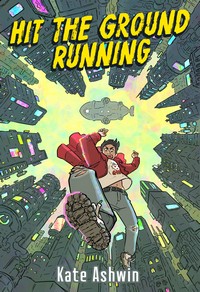
Hit The Ground Running by Kate Ashwin: 2 Jailbreaks, 1 Heist, 1 Outrageous Utility Bill, and 1 Potted Plant.

Be sure to come back in a couple of hours for a Q&A with Kate Ashwin.


Cover of Hit The Ground Running by Kate AshwinHit the Ground Running

by Kate Ashwin

DETAILS:
Series: No Loose Ends, #1
Publisher: Kate Ashin
Publication Date: November 11, 2024
Format: eBook
Length: 314 pg.
Read Date: January 25-29, 2025
Buy from Bookshop.org Support Indie Bookstores


You, like me, may assume that all Cyberpunk novels are set in joyless dystopias, where the neon lights and other brightly colored signs shine out against a gray and raining night (like every scene with Rick Deckard walking on his way to get some food). You’re largely correct. But what if I told you that didn’t have to be the case? Well, read on…

It was around 10 p.m. on a Thursday when Renji thought he might have a go at breaking out of prison. This idea was terrible for several reasons.
One, the prison in question was an Imperium International Forces Containment Facility, the kind widely reputed for being near-impossible to escape. Two, said facility was an airship in flight some fifty storeys above solid ground. The third, and perhaps most important reason was that he wasn’t even a prisoner, he was a guard.
But to I.I. Forces Cadet Renjiro Starkweather, the young man leaning out of the mess hall kitchen’s window to sneak a crafty cig, these reasons didn’t seem quite good enough to not at least have a try.

What’s Hit The Ground Running About?

Renji really doesn’t belong in the Forces—he doesn’t have the mindset, the discipline, any interest at all in serving, But he does have an Aunt who did most of the work in raising him. She’s rich, she’s powerful, she’s overly-indulgent of Renji, but she also has expectations. Hence, his presence in the Forces (which he probably would’ve washed out of already, if not for her influence).

But Renji’s at his breaking point, and he probably would’ve made an attempt at escape if not for the fact that he quite inadvertently interrupted an attempted jailbreak. The downside to this is that he ends up in custody with the jailbreakers—who turn out to be affiliated with a group Renji has been cheering on. They’ve recently released a lot of really embarrassing information about the Imperium International Corporation and other leaders of the city of Unity, in a WikiLeaks-type move. It didn’t do the damage anyone was really hoping for, but it did make a splash and get some people talking.

Okay, I’m taking too long here—Renji and the others (with some help from a super-competent hacker/”gal in the chair”) do eventually escape from the Facility in quite the flashy way, but without everyone they hoped to bring along with them. And Renji ends up visiting a part of the city of Unity he’s not that familiar with, Buried—it’s the part where the workers that support the corporation and government live (as well as their families, the unemployed, and whatnot). If you think of the city of Unity as The Titanic, this would be the third-class passenger area, but not as nice.

Renji wants to throw his lot in with the group, the Loose Ends. He wants to fight back against I.I., not out of any real outrage against them. But he thinks it’d be a fun adventure, and he does want to see things get better for the citizens down below—and to take I.I. down a peg or two. They’re leery of taking him on (mostly because they can tell his motives are shaky and he’ll probably get going when going gets tough—and not in the good way). But when a crisis hits, Renji comes up with a plan that just might work.

It’s nutty, it’s risky (mostly for him), but if he can pull it off with a little assistance from the Loose Ends and an older, battle-tested temporary ally of the Loose Ends, a lot of good can be done and the crisis could be averted.

The Characters and World

So the villain of this book is really “the System” as represented by Imperium International Corporation (and as you get to know them, you’ll be able to imagine any number of mega-corps of today turning into them).

But we get a few representatives of The System to focus on—nothing more than low-level hench-persons really. But higher-level reps will have to wait for the sequels. Primarily, we’re looking at Renji’s sergeant and three fellow-cadets who absolutely are not Malfoy, Crabbe, and Goyle. But they do fit the same character types that those three do. All four of these antagonists are the kind you will enjoy seeing foiled—even if they are the bottom of the rung, you’ll have a lot of fun seeing Renji go up against them. Especially when he comes out on top.

The heroes—sort of a rag-tag rebel group (who really aren’t trying to overthrow anyone, just trying to survive). They’re a hodge-podge of ages, temperaments, and skills. You will almost instantly like them—while wanting to ask so many questions about all of them. I’m tempted to talk about all of them for a sentence or two, but that would get old. But I like their internal dynamics, I like them as individual characters and cannot wait to see Ashwin develop them all. They also have a number of allies—from people who work in food stalls, to a club owner, to a strange medic/tech repair duo. Really, the Loose ends and the allies we meet in this book deserve a short story or two each, just to give them a chance to shine. (Ashwin, if you see this post and run with it—no need to cut me in, the results will be reward enough. Unless this lands you a TV deal or something.).

Then there are the largely nameless and faceless people in Buried. They suffer due to what I.i. does. They have to deal with any retaliation that comes down due to Loose Ends. We don’t see much of them, but we get to meet their Community Council (even in a dystopia, lower-level government officials are petty and useless, good to know some things are constants). There’s enough citizens, and enough grudges, seen that Loose Ends will have a steady supply of potential allies in future books (and probably future turn-coats, but let’s focus on the positives).

Unity City, once-upon-a-not-too-distant time, was the city of Steelpool, which the corporation bought from a struggling U.K. government to act as its wold headquarters. It’s from Unity that I.I. can distribute it’s Internet programming, sell and market its products, and so on. Mid-level Executives on up, live there. The workers, support staff, their families, etc. are stuck in Buried.

Is This Actually Cyberpunk?

“Please, look at him. He’s even worse of a blagger than you. He looks like he’s gonna sell you life-coaching advice through the internet.”

“Does not.”

“Does too. He’s a budget vampire. That’s a bargain bin Dracula, that is.”

“You are not being a very supportive friend right now.”

“I’m not supportive. Or your friend. Besides, actual supportive friends would tell you when you’re dating an evil executive from a shitty Robocop sequel. He looks like he’s going to have his plans to bulldoze the zoo foiled by some plucky teenagers.”

It’s being marketed as cyberpunk. But I think a lot of readers are going to bump up against the tone—the humor, the snark, the optimism that Renji brings and wonder about that.

If you look at the tech (which I haven’t done a good job of describing), the merger of corporation/government/city-state military, the dystopian nightmare that most of these people endure. You’ve got yourselves the making of a decent cyberpunk reality. But what about tone?

But you’ll be grinning throughout this book, there’s some good laughs, there are some goofy moments, and so on. How does that fit with William Gibson and Bruce Sterling’s Mirrorshade vision? Can you do a non-noir cyberpunk? I think yes. Think of Snow Crash while Hiro is a pizza delivery driver (sure, that’s post-cyberpunk), some of Rudy Rucker’s work, and …a couple of others I suddenly can’t think of the names of. There are even bits of Gibson’s Sprawl trilogy that are about this amount of fun. So yeah, it’s an outlier, but it’s not without precedent.

I only bring this up because I’m pretty sure there are some purists who’d complain about this. People who ignore the whole “punk” part of the aesthetic, no rules, etc. I really don’t care what others think. I’ll take a cyberpunk that makes me grin any day (especially now).

So, what did I think about Hit The Ground Running?

“Stopping them.” The tired look in Minjun’s dark eyes seemed as though it came from a much older man. “This isn’t afable with some terrible dragon for the heroes to hunt down, or a magic combination of words that will break the overlords’ evil spell. This is a city, a society, an ecosystem with problems embedded in its very roots. How exactly do you stop a society?”

This is a heist novel and I wait until now to talk about a heist? What is wrong with me? It’s an audacious plan with a great and benevolent pay-off. Naturally, as any self-respecting heist story demands—it goes awry. The reader knows that even before Renji outlines his plan—the questions are: how does it go awry, and how do our heroes respond? All I’m going to say about that is that I’m eager for book 2 in this series.

This is a fast-moving story with a lot of moving pieces—Ashwin keeps the plates spinning just fine and moves the story along just fine. This is so hard to talk about without getting into the details of the heist, the character twists (of the two bigger ones, I saw one coming miles away and the other took me totally unawares) were revealed with panache, or anything else.

Ashwin’s been storytelling for a long time in graphic novels, she knows how to tell a story and bring characters to life. Turns out she can do that just as well with words as she can do with pictures and words (or so I assume, I haven’t dipped a to in to that yet).

There’s a bit of a budding romance (or is it just a lust story?) that acts as a great distraction for Renji, too. That didn’t do much for me, I thought we had enough other things to keep the story going—but it’s a good plot complication—and who knows, maybe it lays the groundwork for something better.

This is a quick read. A fun read. There are so many bits and pieces I’d call out here, but you should read them for yourselves.

If you’re up for a good time (even if cyberpunk isn’t your thing—just think of it as snarky SF), you’d do yourself a favor to give this a whirl. I need to see what comes next, and I expect after your introduction to the Loose Ends, you will, too.

This post contains an affiliate link. If you purchase from it, I will get a small commission at no additional cost to you. As always, the opinions expressed are my own.
Irresponsible Reader Pilcrow Icon

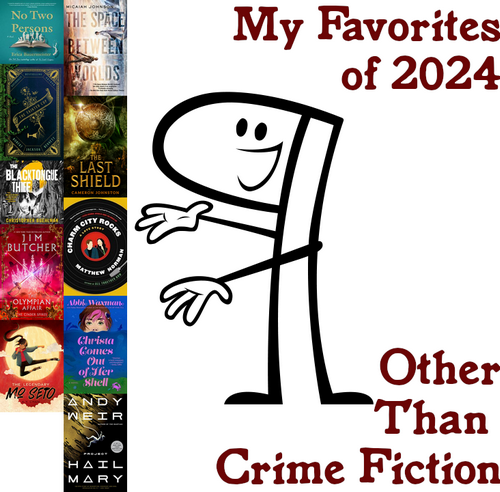
My Favorite Non-Crime Fiction of 2024

My Favorite Non-Crime Fiction of 2024
Back when I started this site, I knew the content would be largely “genre”-oriented. I’d have wagered the content would be roughly 1/3 Mystery/Detective fiction, 1/3 Urban Fantasy, and slightly less than 1/3 SFF, with “non-genre” fiction, humor, and non-fiction being enough to make my one-thirds just an approximation (honestly, if you asked me what I read regularly, that’s pretty much how I’d describe it today). Actual numbers show that’s wrong—it’s typically almost 40% Crime/Thriller Fiction, the rest of fiction is around 30% combined. This is just a long-winded way to get to these two points: because Crime Fiction takes such a big chunk of my reading, it gets its own “Favorite” list, but none of the others really garner enough numbers for their own.

When it comes to this particular list of favorites this year, it was tough to continue after the first cut. But no one wanted to read my top 30 (well, I didn’t want to put it together, anyway). I got it down with a little effort. So here’s my list of 10 favorite non-Crime Fiction Novels of 2024. Hopefully, you will find something here to tempt your.

As always, re-reads don’t count—only the works that were new to me.

(in alphabetical order by author)

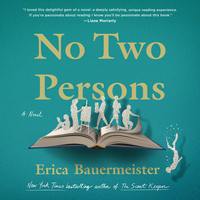
Cover of No Two Persons by Erica BauermeisterNo Two Persons

by Erica Bauermeister, read by a full cast

My original post
For those who don’t know, this is a series of interconnected short stories about a novel. From the struggles the author had getting it written, to it being “discovered” by an overwhelmed reader at an agency, to the audiobook narrator, to readers, booksellers, and others who came into contact with it. We get a look into their lives before and after the novel enters their orbit.

And I loved it. I loved it so much that the day after I finished the audiobook that I borrowed from my library I went and bought the hardcover because I needed it on my shelf just to feel better.

I can’t promise anyone else will react to the book the way I did–or that I will react to it when I read it again. But yeah…I loved this thing.

4 1/2 Stars


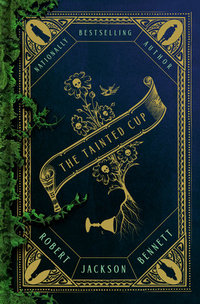
The Tainted CupThe Tainted Cup

by Robert Jackson Bennett

My original post
This was the first (non-beta) novel I read in 2024 and it was also the first book I gave 5 stars to (odd how that worked out). It takes the Nero Wolfe/Archie Goodwin dynamic, changes it up (Wolfe becomes a woman who stays inside for different reasons, gives the “Archie” a different explanation for his memory, etc.), and shoves it into a Fantasy world. And this fantasy world is so different than one I’ve run into before, so full, so well-developed, so intricate and “lived in” that it blew my mind from our introduction to the world through the end of the novel.

The magic, the science, the architecture…all of it was…I’m running out of believable superlatives to use here. And don’t get me started on the wonderful characters–from the detectives to the killer to the suspects to everyone else.

Possiby the best book I read all year–if not, it’s close enough that almost everything else was a let-down.

5 Stars


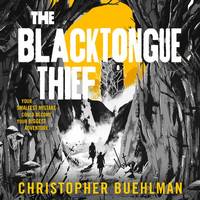
Cover of The Blacktongue Thief by Christopher BuehlmanThe Blacktongue Thief

by Christopher Buehlman

My original post
About the time I started the above, I finished this. Clearly 2024 was going to be a good year of Fantasy for me. I talked about the audiobook yesterday, so let me try to focus on the story.

You’ve got an irreverent thief, the kind of guy that other thieves don’t trust (which actually makes sense, honor among thieves has to be the dumbest idea….but I digress), a knight on a (probably) doomed mission, some strange magic and…forget it. You need to do this yourself.

It’s just bonkers. The book is fun, the dialogue is spot-on, the stories are harrowing, tragic, and gripping. It’s the whole package.

4 1/2 Stars


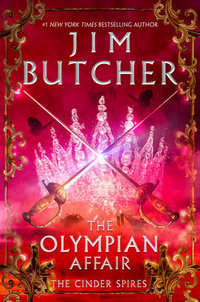
Cover of The Olympian Affair by Jim ButcherThe Olympian Affair

by Jim Butcher

I haven’t written anything about this yet because I’m just too overwhelmed and the words can’t come out right. I loved being back in this world. I was surprised and wonderfully entertained by this story and the way it all played out (even the parts you could see coming). There’s a death that probably needed to happen, and I’ll think about forgiving Butcher for it someday (long before I forgive him for the big one in The Dresden Files).

I like the new characters (at least the ones I should), I loved catching up with our old friends. I enjoyed the whole thing. I know some people aren’t crazy about the space the new characters took compared to some of the old ones, and I get that–but the story was so fun!

4 1/2 Stars


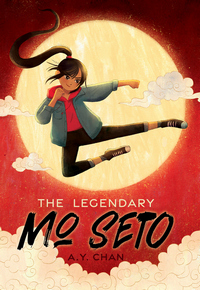
Cover for The Legendary Mo Seto by A. Y. ChanThe Legendary Mo Seto

by A. Y. Chan

My original post
Speaking of fun…here’s Mo (Modesty) Seto and her story. In my original post, I said, “I had about as much fun as is permitted by law while reading this.” And I still remember it that way.

You’ve got martial arts, you’ve got a fantastic underdog, you’ve got a funny and caring grandfather/grandfather figure, you’ve got family tension, you’ve got strange history, you’ve got a movie set and tall the nonsense entailed by that, you’ve got a treasure hunt (of sorts), and a great cast of characters.

Chan brought it all to life and actually has me eager to get my hands on the sequel. And I shouldn’t be this excited about a new MG novel, but I am.*

* Not because I’m some sort of snob, or that I look down on MG books. I’m just 4 decades too old to be that excited.

4 Stars


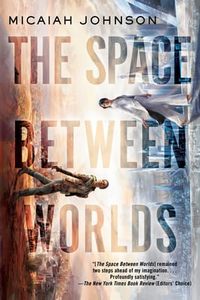
Cover of The Space Between Worlds by Micaiah JohnsonThe Space Between Worlds

by Micaiah Johnson

My original post
This is, simply, a stunning SF novel. It’s a stunning novel with no genre label necessary. It’s so beautifully written. The worldbuilding and SF-sciency stuff is so good that you wonder why it took until 2021 for someone to use it. I can’t believe it’s a first novel.

I don’t know what else to say. Go read my original post where I at least have some more room to babble. Just go get it.

4 1/2 Stars


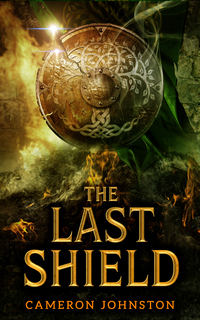
Cover of The Last Shield by Cameron JohnstonThe Last Shield

by Cameron Johnston

My original post
If I start on this one, I don’t know when I’ll stop. So I’ll just copy some of what I’ve already said.

The Publisher’s description of this novel starts off with, “A gender-flipped Die Hard set in a mysterious castle.” And that’s absolutely what the book is—is that description reductionistic? Yes. Is it apt? Also, yes. But it’s also so much more than that summary. (but what a great elevator, pitch, right?)

It’s is a heckuva thrill-ride. Like its cinematic predecessor, the action in this novel is top-notch. It’s not non-stop, there are moments of reflection, of exhaustion, of trying to figure out how to survive—much less succeed against this force. The set-up to the main action also takes longer than you might think (but you should really just relax and let Johnston do his thing, it’s all important and helps establish what comes later). I was hooked almost immediately—and while I wondered when the “Die Hard” part of the book would kick in, I really didn’t care. I was having a good enough time with Briar, Alaric, and the rest.

But, boy howdy, when the action kicked in? What was a perfectly enjoyable book got so much better. Johnston can write an action scene—whether the action is hand-to-hand, bladed weapon against something else, supernatural-based…you name it, he can handle it with panache and aplomb. It’s well paced—with just enough downtime between fight scenes for you and the characters to be ready for the next. Once the book builds up enough steam, forget it—you’re not going to willingly put it down.

It’s not all about swords, shields, axes, and spells, however. There’s real growth—and real injury (and not just physical)—to be seen in several other characters. No one survives this time unscathed in one way or another.

Just pasting in these paragraphs, I’m ready to set everything aside and re-read it.
4 1/2 Stars


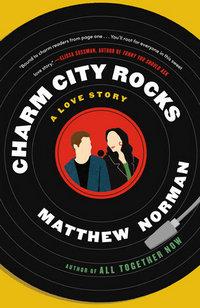
Charm City RocksCharm City Rocks

by Matthew Norman

My original post
It’s a love story. It’s a story about a father and a son. A son and his mother. It’s a story about music and its power. It’s a story about second (and third and fourth) chances. It’s a tribute to Baltimore.

It’s charmingly told. It’s sweet (but not overly). It will make all but the most jaded smile. Actually, I noted earlier that “I think the best way to sum up my reaction to the book is that I noticed that every time I put the book down for some reason, I was grinning. Not because I set the book down, but it just made me happy.”

4 1/2 Stars


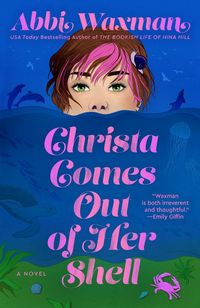
Christa Comes Out of Her ShellChrista Comes Out of Her Shell

by Abbi Waxman

My original post
One of the worst-kept secrets on this here blog over the last few years is that I’ve become an Abbi Waxman fan, I’m almost guaranteed to rave about her books. And of the four I’ve read, three deserve (and the other was a really strong read, if not rave-worthy). So of course, she’s going to show up here.

The first 87 pages of this book might have been my favorite 87 pages this year. That trend might have continued, but I wrote that note then. Everything just worked.

Christa is more abrasive than your typical Waxman protagonist, which was a nice change. But the rest are just about who you’d find peopleing her other works.

A couple of scenes between a couple could’ve faded to black a little earlier for my prudish taste. But outside of that, I was in hog heaven as I read this.

4 1/2 Stars


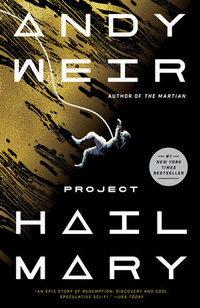
Cover of Project Hail Mary by Andy WeirProject: Hail Mary

by Andy Weir

Why didn’t I read this the day the hardcover arrived in my mailbox like I’d intended to? I’ll never know. I’ll regret it for quite a while, though. I spent a lot of time castigating myself for that choice as I read this.

But the important thing is that I read this. Yes, Ryland Grace is like a friendlier, less-sweary Mark Watney. But who cares? I’ll live in Watney’s head again. The jumping around in the timeline nature of this book made it different enough to keep it from being The Martian-but-different. The type of calamity that put Ryland out in space by himself is so far removed from a mission to Mars that it’s hard to compare it to.

The stuff on Earth was tense–even as we know how it’ll end (or at least that it’ll result in Ryland in space), you’re gripped. And then once he’s there? It’s just so great.

I won’t even talk about the way the ending hit. It’s just too much for a paragraph. I admit I loved The Martian more, but that’s solely because I read it first, so PHM had to compete with it. Were the situation reversed, I’d be saying that Watney is almost as great as Ryland.

It’s a must-read for SF readers or not. (unless you didn’t enjoy Weir’s other work. Then you’d better stay away.)

5 Stars


A few books that almost made this list and that I want to be sure to mention:
Return of the Griffin by JCM Berne (My original post), Blood Reunion by JCM Berne (My original post), Shadow of Hyperion by JCM Berne, The Tenacious Tale of Tanna the Tendersword by Dewey Conway & Bill Adams (My original post), and Buddy the Knight and The Queen of Sorrow by Peter David (My original post).


Word and Spirit: Selected Writings in Biblical and Systematic Theology by Richard B. Gaffin, Jr.: Righteous Gems

I can’t put this one off any longer—if I could, I promise you I would (I’ve delayed it a few weeks already). I’m out of my league here, but I’ve got nothing else to write about. And I really need to write something about this.


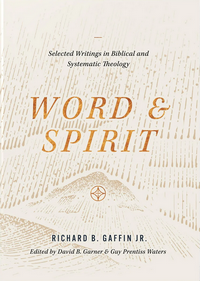
Cover of Word and Spirit by Richard B. Gaffin, Jr.Word and Spirit:
Selected Writings in Biblical and Systematic Theology

by Richard B. Gaffin, Jr.; edited by David B. Garner & Guy Prentiss Waters

DETAILS:
Publisher: Westminster Seminary Press 
Publication Date: December 1, 2023
Format: Hardcover
Length: 723 pg.
Read Date: January 7, 2024-September 22, 2024

The word atonement does not occur in Paul’s writings.’ But no concern is more central for him than the meaning of the death of Christ, the church’s perennial concern in its doctrine of the atonement. What does Christ’s death achieve? How is it effective for the salvation of sinners? This chapter considers Paul’s answers to such questions with an eye to the issue of continuity between Paul’s teaching and later church doctrine. How faithful to the apostle is subsequent Christian understanding of the atonement?

Contemporary Pauline scholarship is marked by a fairly widespread consensus that in its dominant and most influential expressions, traditional atonement theology departs from Paul in at least two substantial ways. First, it fails to recognize, or at least do justice to, the Christus Victor theme in Paul, that Christ’s death destroys actual slavery to sin and its consequences in the sinner. Second, its notion of the cross as penal substitution, particularly as it has been developed beginning with the Reformation, is foreign to Paul.? In my view, the first of these critiques contains some measure of truth; however, the second is wrong. As a fair generalization, historic Christianity, including Protestant orthodoxy, is weak in not recognizing adequately Paul’s teaching that the cross destroys sin in the sinner as a corrupting and enslaving power, but modern historical-critical scholarship is defective for not dealing adequately with his teaching that the cross removes the guilt and just punishment of sin.

What’s Word and Spirit About?

According to the Publisher,

Few Reformed theologians have exerted the influence in both the church and the academy that Richard B. Gaffin, Jr. has, shaping the theology and spiritual formation of generations of pastors and teachers. Until now, his most significant published works have been inaccessible to most theological readers, published in academic journals, denominational newsletters, and out of print festschrifts and essay collections. A decade in the making, Word & Spirit gathers Gaffin’s finest works of biblical and systematic theology and arranges them in a singular, organic whole that presents Gaffin’s thought and work as comprehensively and clearly as it ever has been. More than 40 essays, articles, and tracts have been compiled, including “The Usefulness of the Cross”, No Adam, No Gospel, “A Cessationist View,” and “The Work of Christ Applied”. This collection is a must-have for any student of theology.

There’s really not much else to say. It’s broken down into five sections, and I’d be tempted to say that each section was the most valuable/useful (well, at least 2-5, but maybe if I spent some time re-reading part 1, I’d reconsider that). Let’s take a quick look at each:

Hermeneutics, Biblical Theology, and Systematic Theology

This is ten articles spread out over 170+ pages, covering the basics of Biblical Theology, how it can and should interact with Systematic Theology (and vice versa).

There’s some repetition of ideas (this will be a common thread throughout each section), which makes sense as these were written as individual pieces, not as part of a book, and Gaffin’s position and ideas about these things have remained static/build on each other.

It’s vital to understand him and his work—and just good to have a handle on these ideas regardless.

Theology of Hebrews and Paul

Most of these seven articles encapsulate (and expand on) the ideas from In the Fullness of Time: An Introduction to the Biblical Theology of Acts and Paul, a book I raved about a couple of years ago. But there are teachings and texts he didn’t address there, that he does here.

This section was so rich, so helpful—the chapters “‘The Obedience of Faith’: Some Reflections on the Rationale for Romans,” “Atonement in the Pauline Corpus: ‘The Scandal of the Cross,'” “and “The Priesthood of Christ: A Servant in the Sanctuary”—were good enough that I almost re-read them immediately (and I probably should’ve).

The first article in this section, The Usefulness of the Cross is available as a PDF Free Chapter Download from the publisher, take advantage of this.

Scripture, Epistemology, and Anthropology

The first three of these six chapters might have been the most mind-stretching for me (they won’t be for everyone), and were very rewarding.

The final three were the easiest for me—and the most repetitive in the book. They focus on Biblical anthropology (as in teaching on the nature of man), focusing on the historicity and nature of Adam. I’ve read at least “No Adam, No Gospel” before—it was published as a booklet a few years ago, and I think I read the previous chapter, the Translator’s Foreword to Adam in the New Testament as well. And I didn’t mind one bit re-reading it/them. Still helpful.

Pneumatology

These seven chapters could be (should be, if you ask me) be reworked into one book. Gaffin shines in these studies—and going back to his By Faith, Not By Sight and Resurrection and Redemption, these teachings are where he’s historically helped me the most. And that streak continues here.

Reformed theologians often (and wrongly) get the reputation for not talking about the Spirit as much as other traditions, and—even worse—are considered to ignore Him. Gaffin makes it clear that everything about Reformed Theology is based on the work of the Spirit in believers’ lives and helps us understand just what that means—both theologically and practically.

The Law of God, Soteriology, and Eschatology

This section pretty much covers “everything that couldn’t fit above.” Again, I’ve read a few of these before in other publications/stand-alone works. But I don’t care.

The chapters on eschatology are gold.

The chapters on Justification and Calvin are even better—the way he talks about Calvin’s view of the relationship of Sanctification and Justification (and the way he presents the two in The Instittues even in the organization of them) is so important for us all to heed. Particularly as he roots them both in Union in Christ—as is every benefit that the believer enjoys in this life and in the resurrection.

So, what did I think about Word and Spirit?

The justification of God’s elect is unshakably secure because, in a sentence, Jesus Christ is “the same yesterday, today and forever” (Heb. 13:8). Despite the way it is often read, this is not, at least in the first place, a proof text for Christ’s divine immutability, that as God he is unchanging, though that attribute is surely in the background (see, for instance, 1:10—12).” Rather, it is most likely an affirmation of his unwavering fidelity, his abiding reliability as high priest—in his once-for-all sacrifice in the past on earth and in his ongoing present and future (cf. 7:25) intercession in heaven. That is as good a note as any to bring these reflections to a close. “Jesus Christ—the same yesterday, today and forever.” This, first and finally, is what Christians need to know about their justification when they consider Christ as their priest, not only in his state of humiliation but also in his state of exaltation.

Outside of the Foreword, Introduction, and Brief Biography (Appendix A), none of this is particularly easy reading. Nor quick. But all of it is accessible—for the depth he gets into at points, this is much more approachable than On Classical Trinitarianism (to mention a recent example).

This is probably the most personally beneficial read I’ve had in the last couple of years—sitting down with Gaffin for 30-50 minutes every week has been a great discipline and a great boon.

I should probably have more to say than that, but I can’t think of what else to say that’s not just a restatement of this: this is a fantastic book—with insights, teachings, and reminders of the things that are vital for every believer.

Highly recommended.


5 Stars
Irresponsible Reader Pilcrow Icon

BOOK SPOTLIGHT: Skyfleet: March of the Mutabugs by Victoria Williamson

This is the second The Write Reads Blog Tour Spotlight that I’ve been late with. The last one was by a few hours…this one was longer. The Tour ended yesterday, actually. Regardless, I’m excited to talk about Amanda Addison’s Looking for Lucie! You should go to https://twitter.com/WriteReadsTours feed to see all the great things that have been said about the book in the last week and a half. Or, go straight to the sources and check out the posts on the sites listed below. But before you do that, let me tell you a little about this YA novel.

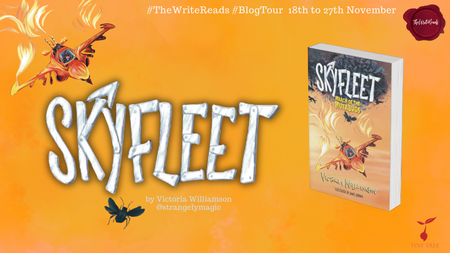
Skyfleet: March of the Mutabugs by Victoria Williamson Tour Banner

Book Details:

Title: Skyfleet: March of the Mutabugs by Victoria Williamson
Genre: Science Fiction, Adventure
Age Category: Middle-Grade
Publisher: Tiny Tree Books
Format: Paperback/Ebook
Length: 198 pages
Publication Date: October 24, 2024
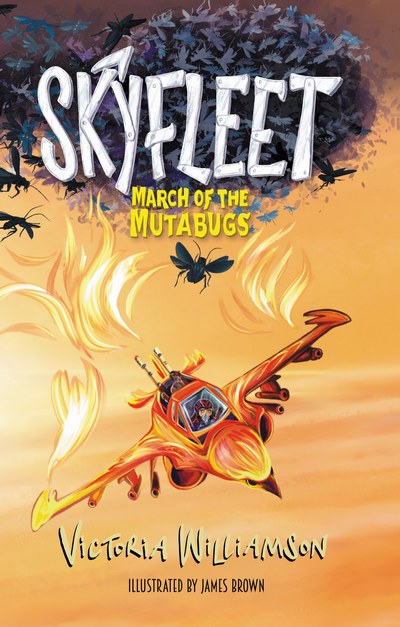
Skyfleet: March of the Mutabugs by Victoria Williamson Cover

About the Book:

When the skies turn deadly, a young heroine must rise from the ashes…

Twelve-year-old Amberley Jain has faced incredible challenges since the crash that took her parents and paralysed her legs. Now, with her best friend Ricardo Lopez about to be sent away and a swarm of mutated insects closing in on the Skyfleet base, the stakes have never been higher. Something monstrous is driving the mutabugs north from the contaminated meteor site known as the Cauldron, and the only plane capable of stopping it – the Firehawk – lies in pieces in the hangar.

Determined to honour her parents’ legacy, Amberley hatches a daring plan. With Ricardo’s help, they stow away on a supply train, trading his most treasured possession for the parts needed to repair the Firehawk. After secret test flights, the legendary jet is ready for action. Now, Amberley and Ricardo must confront the deadly swarm and save their home, discovering their inner strength and the true meaning of friendship along the way.

Skyfleet: March of the Mutabugs
is a thrilling tale of adventure and resilience, perfect for middle-grade readers.

Book Links:

Amazon UK ~ Amazon US ~ Amazon CA ~ Goodreads ~ Storygraph

About the Author:

Victoria WilliamsonVictoria Williamson grew up in Glasgow, Scotland, and has worked as an educator in a number of different countries, including as an English teacher in China, a secondary science teacher in Cameroon, and a teacher trainer in Malawi.

As well as degrees in Physics and Mandarin Chinese, she has completed a Masters degree in Special Needs in Education. In the UK she works as a primary school special needs teacher, working with children with a range of additional support needs including Autistic Spectrum Disorder, Down Syndrome, physical disabilities and behavioural problems.

She is currently working as a full time writer of Middle Grade and YA contemporary fiction, science fiction and fantasy, with a focus on creating diverse characters reflecting the many cultural backgrounds and special needs of the children she has worked with, and building inclusive worlds where all children can see a reflection of themselves in heroic roles.

Victoria’s experiences teaching young children in a school with many families seeking asylum inspired her debut novel, The Fox Girl and the White Gazelle, an uplifting tale of redemption and unlikely friendship between Glaswegian bully Caylin and Syrian refugee Reema.

You can find out more about Victoria’s books, school visits and free resources for schools on her website: www.strangelymagical.com

Author Links:

Website ~ Twitter


My thanks to The Write Reads for the invitation to participate in this tour and the materials they provided.

Blood Reunion by JCM Berne: Space Vampires, Secret Identities, and a Promise of Something Worse

Finally, after umpteen drafts, I have something finished. Not in a satisfying (to me, anyway) way. But I’ve covered everything that I want to in a way that doesn’t make me recoil. I’m going to have to call that good enough.


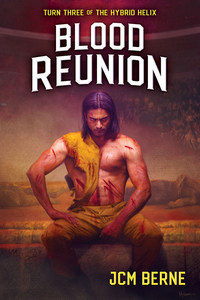
Cover of Blood Reunion by JCM BerneBlood Reunion

by JCM Berne

DETAILS:
Series: Hybrid Helix, Turn 3
Publisher: Gnost Hose
Publication Date: October 17, 2022
Format: Hardcover
Length: 399 pg.
Read Date: August 15-17, 2024
Buy from Bookshop.org Support Indie Bookstores

What’s Blood Reunion About?

There’s a nasty, Buffy-Summers-would-be-paralyzed-with-fear level vampire loose on Wistful. Rohan and his friends, some new allies, and a couple of people he’d really not rather work with have to stop it before it kills everyone aboard and countless others when it can escape—or before the Empire obliterates Wistful to achieve the latter end.

’nuff said.

Back to Wistful

I guess some readers complained that the second book in the series took place on Earth, not on Wistful, the sentient space station that Rohan calls home. I didn’t share the sentiment, but I guess I could understand that—it wasn’t just Wistful that we didn’t get that much from, it was most of the other characters that were introduced in the first turn.

Being back on Wistful, however, has me thinking that maybe those people were on to something. Having our hero back on his adoptive home turf—with the advantages and challenges that it brings really adds something to the story. Wistful is an interesting character and a great setting (and we get to see a lot more of both aspects of Wistful here). Having characters like Wei Li and the Ursans on hand is a major plus, too.

I won’t complain about Rohan going to visit Earth—but I’m sure glad to see him home.

Daddy Issues

We met Rohan’s fantastic mother in Return of The Griffin, and now it’s time to meet Dad. Boy, I missed Mom—and this isn’t a knock on Berne’s work introducing us to Dhruv, I think we’re supposed to find hi a problematic character.

He’s got quite the charm about him, do doubt. He’s determined, he’s focused, he’s powerful, he’s wily—things that he clearly passed on to his son. He’s also deceitful, egotistical, stubborn, and unwilling to consider opposing points of view (other things you can see in Rohan, but he’s fighting them).

He and Rohan have a complicated relationship, let’s say.

The addition of Rohan’s mother to the series was fun and mostly sweet. This is fun and…something else. I’m not sure what that something is quite yet. I think we need to see a little more from Dhruv, and I expect we will.

Rohan’s Dilemma

This right here is what draws me to Rohan (well, in addition to the banter, the action, and everything else)—Berne isn’t satisfied to just give us a super powerful, quippy, superhero. Rohan is trying to get away from his past and to live differently.

But…like the man said, “Just when I thought I was out, they pull me back in!” Rohan can’t get away from his reputation, his status, his errors/crimes, and even his inclinations to act as the Griffin. Not only can he not escape all that—he has to rely on it here. I don’t want to get into details here, but Rohan has to play the Rohan card to keep the il’Drach Empire from coming in making a bad situation worse.

He also has to wrestle with himself—he knows (on some level) and is being told repeatedly by just about everyone—that to save the people on the station (and maybe even beyond it), he has to kill the vampire. But he’s trying not to do that anymore. Also, he thinks there are ways to defeat the vampire without killing him…Rohan just has to figure out what those are. But he’s torn—if he does “the right thing” for him and his morals, what’s the risk/damage to the innocents on Wistful? Should he be willing to even consider that?

Beyond that…Rohan has to let some people jeopardize themselves—and even outright sacrifice themselves so he has a chance to stop the vampire.

I really love that Berne is making Rohan deal with this (it’s not the first time, and it won’t be the last, I trust).

So, what did I think about Blood Reunion?

It’s a JCM Berne book. This means I liked it and I think you should read it. I have two unread JCM Berne books on my TBR shelf—I can tell you now, with 98.732% confidence, that’s what I’m going to say about those. The question here is…what do I say specifically?

The vampires (both kinds we see here) are just cool. Nothing incredibly revolutionary about them—it’s nigh unto impossible to do something new with a vampire, it’s just about how can you make one of the most utilized creature-types feel fresh. Berne pulls it off. They’re even different than the vamps in Return of the Griffin, so that’s a neat trick. I want to say more about this, but that’d violate my spoiler policy.

Dhruv was just great—I mistyped that a second ago as “grate,” but maybe that was a slip of the Freudian-type. Because he can be a little grating, too. By design, I should stress. But I look forward to his return as much as Rohan is apprehensive about it.

The exploration of Wistful was interesting and the promise of finding more layers to her is fantastic. I would’ve liked a bit more of it now though, it’s the one point where I think Berne could’ve improved here. Maybe in the aftermath of this, Wistful and Rohan (or Rohan and Wei Li) can debrief some on this and I’ll feel better about it.

Speaking of Wei Li—if anyone is going to supplant Rohan in my book, it’s going to be Wei Li. Can we get a spinoff novella or seven?

I have to mention the dialogue, not just the bantering (but especially the bantering). Berne has reached Jim Butcher-levels here. I don’t care what the story is, I just want to read his characters talking.

I don’t have anything else to say, really—action, dialogue, great aliens, some good moral dilemmas, and some quality time with characters that are becoming old friends. Blood Reunion is another winner from Berne. Go grab Wistful Ascending and dive in!!


4 1/2 Stars

This post contains an affiliate link. If you purchase from it, I will get a small commission at no additional cost to you. As always, the opinions expressed are my own.
Irresponsible Reader Pilcrow Icon

The Space Between Worlds by Micaiah Johnson

Cover of The Space Between Worlds by Micaiah JohnsonThe Space Between Worlds

by Micaiah Johnson

DETAILS:
Series: The Space Between Worlds, #1
Publisher: Del Rey Books
Publication Date: June 1, 2021
Format: Paperback
Length: 320 pg.
Read Date: 9/24/2024   9/28/2024
Buy from Bookshop.org Support Indie Bookstores

REASONS I HAVE DIED:

The emperor of the wasteland wanted to make an example of my mother, and started with me.

One of my mother’s boyfriends wanted to cover up what he did to me.

I was born addicted and my lungs didn’t develop.

I was born addicted and my brain didn’t develop.

I was left alone, and a stranger came along.

The runners came for a neighbor, and I was in the way.

The runners came for my mother, and I was in the way.

The runners came for my mother’s boyfriend, and I was in the way.

The runners came for no one, serving nothing at all but chaos and fear, and I was what they found.

Sometimes, I was just forgotten in the shed where she kept me while she worked or spun out, and in the length of her high and the heat of the sun I fell asleep alone and hungry and forever.

REASONS I HAVE LIVED:

I don’t know, but there are eight.

(that’s how you end a first chapter!)

A Quick Word

I read this to take part in Shared Stories Bookstore’s Sci-Fi Book Club—I’ve never been to a Book Club before, I’m looking forward to doing so again. But that’s not what I’m going to talk about here—but I need to say that some of what I’m going to say about this book has either been shaped/informed by or directly stolen from someone at that meeting. I won’t share their names, because I didn’t get permission, but I wanted it out there that the smarter things I say here comes from them.

What’s The Space Between Worlds About?

This is tricky for a few reasons, some of which I really can’t get into. In a sense there are four stories* in this book and each resolves (pretty much) before the next launches. So obviously, I can’t get into the latter stories. But the first one or two I can sketch out a little bit…

* This is stolen from our discussion leader.

In a pretty distant future world—following some sort of environmental collapse (and maybe some military-induced collapse, but mostly environmental) the world is covered in city-states (that’s actually a guess, we know almost nothing about the rest of the world). There’s a city called Wiley City—which is pretty much everything you think of when you think of a futuristic city—shiny buildings, cool tech, and whatnot. Outside the City is another settlement, called Ashtown. Ashtown is where the poor, the unwanted, the criminal classes live. There are also people who live outside Ashtown and in (or at least spend time in), called Ruralites—who are a strictly religious group and it seems most of the people of Ashtown are (at least nominally) dependent upon their efforts.

Travel between parallel universes is now possible. Maybe for just the residents of one Earth, anyway. The catch is, you cannot travel to a universe in which you exist—and it doesn’t go well for the person entering a world they exist in. This makes the ideal candidate someone on the fringes of society—those who are most likely to live a dangerous life or a life with inadequate resources, so they might die early from natural causes. The more realities that you’re dead in, the more you can travel on behalf of the corporate entity that runs the multiverse technology.

Enter Cara, a resident of Ashtown, who is dead on 372 of the worlds that humans can travel to. She’s largely keeping her head down, just trying to make it through the next few years without losing her job—which will result in her being removed from Wiley City—if she can last long enough, she’ll become a citizen and she can then relax a little. She cuts loose a little in the worlds she visits, but lives a pretty careful life on “Earth Zero.”

She receives word that she’s been assigned to a new world—yet one more version of her has died. When she gets there, things start to go wrong and she really can’t complete her mission. She can, however, by her mere presence, act as a catalyst for some big changes in the leadership of that world’s Ashtown and Wiley City. This will end up having some ramifications on Earth Zero—and maybe elsewhere, too.

The Technology/Its Depiction

This is one of those books that’s filled with all sorts of cool sci-fi technology—especially the traveling between universes, but it’s not limited to that. And Johnson gives us no Asimov-esque explanations for it. Zip. Zilch. Nada. I’ve already given you almost all of the details you’re going to get about the science behind the travel between universes.

And yet, it works. I’d hoped for a little more detail, but I wasn’t bothered by its lack. In fact, I cared so much about Cara and what she was doing—and the people she was surrounded by in the various Earths she went to, I didn’t stop to think about the tech. And when I did…it didn’t matter, really.

It’s there, it does what it’s intended to do. That’s all you need to know.

Spirituality/Religion

We get more of this, really, than the science behind the traveling and other tools they have in Wiley City.

The Ruralites have a hybrid religion with features of Christianity (that’s obvious) and Buddhism (I needed someone to help me see that) and some other things accumulated over the centuries. It’s pretty strict and regimented—but there’s grace and mercy, too.

There’s a burial scene—including a good part of the rituals used. It’s very detailed and tells you as much about the religion as it does the people taking part in it. It is so well done, that you almost want to see more people killed so Johnson will describe it again.*

* Sure, you can just re-read that part. But if she writes it again, she might include new details.

There’s also a superstition—if it’s not a full-blown mini-religion—that has developed among those who travel between worlds. It’s not endorsed by, or encouraged by, the company—but it’s pervasive and has a hold on those travelers. They will tell you there’s a presence, a person of some sort, governing the travel. Someone they can feel and sense between the worlds.

Our culture currently likes to pit science vs. religion/spirituality/whatever. There is no such division for Cara and most (if not all) of the people she knows. They exist side-by-side, informing actions and morality each in their own way.

This is such a good idea for Johnson to introduce and her execution of it—and explanation of both sets of beliefs are just great. We don’t get a creed or even a full idea about the religious tenants of the Ruralites—but we see enough to believe that such a creed exists.

So, what did I think about The Space Between Worlds?

In short, this is really just a stunning book. The back of the book promises “surprise twists” and yeah, there are some, but the book is about more than a twist or five, as skillfully as Johnson executes them. As someone at the book club said, you think the main story is about to wrap up but there’s a whole bunch of more pages to left. None of the storylines feel rushed nor do they feel stretched out. There’s one mini-arc you might want more time in, but that’s just because it’s so pleasant (and given the rest of the book, pleasant is nice).

Cara is a wonderfully complex character. When we meet her, she seems fully realized—like one of those characters that’s going to remain largely the same person at the end of the novel as she was at the beginning. But that’s not it at all—she goes through a great period of personal growth, of changing the way she sees the world and people in it. Her motivations behind her choices on Earth Zero get pushed to the limit, and she is going to be faced with some major changes in that reality (as well as others).

I don’t want to overlook the other characters…at least some versions of them. There are some truly despicable characters (one’s despicable on every world we see him on, one is despicable—vile actually—on most worlds—which makes it hard on the other to accept him (for Cara and the reader)). There’s an evil mastermind who is pretty chilling. There’s some criminal types who show more honor than anyone else in the book. There are some characters that are likable, admirable, and even loveable (depending on the world). It’s a rich, rich world full of wonderful people (that you meet several versions of).

I need to talk about the prose, and yet I don’t know how to adequately express how much I was blown away by it. You could almost open up to any random page and find something worthy of quoting, of meditating on, or marinating in. Johnson has this ability to take a benign, everyday, or plain sentence and turn on a dime and make it bleak, gutting, or even hopeful (that’s the less-popular option.) Cara does have some grit to her, she is a wiseacre. The book isn’t a doom and gloom, I frequently smiled. But her world is a harsh one, particularly outside the walls of Wiley City, and Johnson’s language reflects that.

Apparently, there’s a sequel. It didn’t feel like the first in a series—and can absolutely be read as a stand-alone. This is one of the best written books I’ve read this year—and the story is really compelling. With twists you won’t be able to guess most things that happen over the course of the novel. It’s a very SF novel, but it’s also the kind of SF that people who aren’t super-into SF can get into (like one person at the book club). I’m at the point where I’m just running in circles—so I’ll shut up, you go get the book. Deal?


4 1/2 Stars

This post contains an affiliate link. If you purchase from it, I will get a small commission at no additional cost to you. As always, the opinions expressed are my own.
Irresponsible Reader Pilcrow Icon

HC Chats with Adrian M. Gibson about Jeff VanderMeer

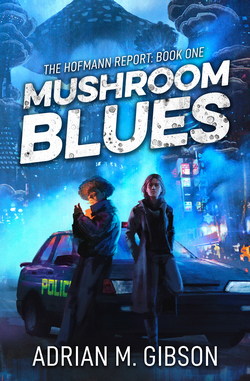
Cover of Mushroom Blues by Adrian M. GibsonIf you’ve been on Bookish Social Medial at all in the 6+ months, I’m willing to bet you’ve seen the name Adrian Gibson or at least the cover of Mushroom Blues. You may also know him from the podcast he hosts with M.J. Kuhn, SFF Addicts. Last week, Adrian was gracious enough to struggle with StreamYard (and it was in a mood) in order that we could sit down and talk about Jeff VanderMeer–an author that I’ve been intimidated to pick up and try, but who has been instrumental in Gibson’s career. I walked away excited to try VanderMeer, and I had a good time in general. I hope you watch this and walk away thinking the same.

As I said, StreamYard wasn’t happy, so the video freezes a couple of times on both of us, but the audio is fine.

Adrian M. Gibson Links:

Twitter ~ Instagram ~ Website ~ Newsletter ~ Amazon ~ Goodreads


Are you a Reader of Things and want to chat with me about an author/series/something other than promoting your own work (which we will do, just not primarily)? I’d love to keep trying this, but I’m not ready to start pestering people about it. So please let me know.

Irresponsible Reader Pilcrow Icon

Page 8 of 37

Powered by WordPress & Theme by Anders Norén