Category: Non-Fiction Page 22 of 62

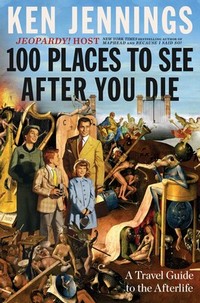
100 Places to See After You Die by Ken Jennings: The Tour Guide No One Wants, But Everyone Needs

100 Places to See After You Die100 Places to See After You Die:
A Travel Guide to the Afterlife

by Ken Jennings

DETAILS:
Publisher: Scribner Book Company
Publication Date: June 13, 2023
Format: eARC
Length: 304 pg.
Read Date: May 24-26, 2023


What’s 100 Places to See After You Die About?

Ken Jennings provides a handy tour guide through one hundred visions of the afterlife for the modern reader. Complete with tips on places to see, areas to avoid, local lingo, bits of trivia, dining tips, and so on, it’s just the kind of thing you’re going to want to peruse before you shuffle off this mortal coil, so you know where to go.

The book is broken down into: Mythology, Religion, Books, Movies, Music and Theater, and Miscellaneous. Then (alphabetically) Jennings looks at a variety of afterlife locales in each category.

For example, the Books section covers:

Aslan’s Country • The Bridge • The Cemetery • The Empyrean • The Five Lessons • Half-Life • The Inbetween • Inferno • The Kingdom • King’s Cross • Mansoul • The Null • Pandemonium • Paradiso • The Parish • Purgatorio • Riverworld • The Third Sphere • The Time Bubble • The Undying Lands • The Valley of the Shadow of Life*

* From Lewis’ The Chronicles of Narnia and The Great Divorce; O’Connor’s story “Revelation”; Saunders’ Lincoln in the Bardo; Milton’s Paradise Lost; Albom’s The Five People You Meet in Heaven; Dick’s Ubik; Sebold’s The Lovely Bones; Dante’s The Divine Comedy; Twain’s “Captain Stormfield’s Visit to Heaven”; Rowling’s Harry Potter; Moore’s Jerusalem; King’s Revival; O’Brien/O’Nolan’s The Third Policeman; Farmer’s Riverworld; Matheson’s What Dreams May Come; Oliver’s The Time Bubble; and Tolkien’s The Lord of the Rings.

Jennings describes each place with wit, humor, Dad Jokes, puns, irreverence, and plenty of facts.

Dancing Through a Minefield

It’s one thing to talk about places like Valhalla, Hades, The Bad Place, Bill & Ted’s Bogus destination, or Futurama‘s Robot Hell in a light-hearted or flippant fashion. It’s an entirely different can of worms to discuss the LDS Three Kingdoms of Glory, Jannah, Jahannam, Ariel Toll Houses/Telonia, and so on—in the same tone.

I will not say that Jennings was able to fully succeed in discussing the afterlives described in some major religions in an unoffensive manner. Primarily because I’m not an adherent of any of the religions he discussed, so my tolerance for that is really high. Had he tackled something I believe in, I very well could’ve been at risk of insult.

That said, I think he did okay. Yes, he walks close to irreverent. But he maintains a decent degree of respect. The humor largely comes from the way he describes the beliefs not at the expense of an article of faith.

Still, some people might want to skip over a chapter or two if they’re worried about getting their toes stepped on. (but those people probably aren’t going to be reading this book in the first place)

A Few Highlights

Ohhh, there are just so many.

The Books section was my favorite—followed closely by Movies and Television—this is the kind of thing I blog about, think about, and so on, so it makes sense that those sections resonated with me most. The Books section, in particular, discussed portions of those works in ways I could really sink my teeth into.

But there were multiple highlights in each section—I learned a lot about D&D, I couldn’t help singing “Ghost Riders in the Sky” during that chapter, I think he pointed out a good plot hole in It’s a Wonderful Life (I don’t know, maybe he’s not the first), I loved the discussion of Bosch’s paintings, and so on.

The chapter on The Good Life was fantastic—a great systematization of the series’ take on the afterlife (and several characters). The chapter on Nirvana was sublime.

Books, movies, mythologies, songs, etc. that I’ve never heard of, much less, read/watched/listened to/studied were described in enough detail that I could appreciate those chapters and maybe even develop an interest in following up on.

Problems/Quibbles/Things That Didn’t Work for Me

Um. Hold on, I’ll think of something.

oh! Here’s a problem: the eARC came with the typical “don’t quote from this version until verified by the published edition” warning—but it was more pronounced than usual. I really want to use samples throughout this post, but I can’t. (and I wouldn’t have even without this warning, because I know things get tweaked in the final stages).

Actually, I do have a legitimate gripe. There are no footnotes—or even endnotes*—for anything that Jennings says. Most of what the book contains could fall into the category of “General Knowledge” (at least for people who know anything about The Good Place, Dante, or the religion of the Maori). But I wouldn’t have minded a point in the right direction to learn some more details, context, or background on many, many, many things Jennings wrote about.

* It’s been decades since I haven’t asked why a book uses endnotes when footnotes exist, and yet I’d have liked to have them in this book more than the nothing we got. That’s how much this bothers me.

I Can’t Help Pondering…

Given the argument of Planet Funny: How Comedy Took Over Our Culture by Ken Jennings, I wonder about his approach to the subject of the afterlife. Sure, even Planet Funny was frequently funny as it critiqued the overuse of humor in our culture, but for his next book to take this tone, seems to undercut the work.

Or maybe it just shows that even as he can look with clear eyes at some of the weaknesses of our culture, he’s part of it and is subject to the influences. It’s almost like he’s human.

So, what did I think about 100 Places to See After You Die?

This section is going to be shorter than usual because I think I’ve pretty much answered the question already.

From the “throwaway lines” to the big ideas, this was a delight from start to finish. I thoroughly enjoyed this approach to the subjects—quick hits that tell you the essentials and make you smile while telling them.

Jennings’ style is one I aspire to, and can’t say enough good things about.

I can’t think of a reason not to give this 5 Stars, but my gut tells me not to. So I’ll knock it down to 4 1/2 (which isn’t a big deal since Goodreads, NetGalley, etc. won’t let me use 1/2 stars, I’ll round up). It’s educational, it’s entertaining, and it’s thought-provoking. You can’t go wrong with this.

Disclaimer: I received this eARC from Scribner via NetGalley in exchange for this post and my honest opinion—thanks to both for this.


4 1/2 Stars

This post contains an affiliate link. If you purchase from it, I will get a small commission at no additional cost to you. As always, the opinions expressed are my own.

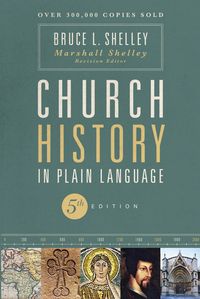
Church History in Plain Language, Fifth Edition by Bruce Shelley, Revision Editor Marshall Shelley: Gets Too Much Wrong

Church History in Plain LanguageChurch History in Plain Language, Fifth Edition

by Bruce L. Shelley, Revision Editor: Marshall Shelley

DETAILS:
Publisher: Zondervan Academic
Publication Date: July 13, 2021
Format: E-book
Length: 624 pg.
Read Date: March 27-May 23, 2023


What’s Church History in Plain Language About?

From the Publisher’s website:

Bruce Shelley’s classic history of the church brings the story of global Christianity into the twenty-first century. Like a skilled screenwriter, Shelley begins each chapter with three elements: characters, setting, plot. Taking readers from the early centuries of the church up through the modern era he tells his readers a story of actual people, in a particular situation, taking action or being acted upon, provides a window into the circumstances and historical context, and from there develops the story of a major period or theme of Christian history. Covering recent events, this book also:

  • Details the rapid growth of evangelical and Pentecostal Christianity in the southern hemisphere
  • Addresses the decline in traditional mainline denominations
  • Examines the influence of technology on the spread of the gospel
  • Discusses how Christianity intersects with other religions in countries all over the world

For this fifth edition, Marshall Shelley brought together a team of historians, historical theologians, and editors to revise and update this father’s classic text. The new edition adds important stories of the development of Christianity in Asia, India, and Africa, both in the early church as well as in the twentieth and twenty-first centuries. It also highlights the stories of women and non-Europeans who significantly influenced the development of Christianity but whose contributions are often overlooked in previous overviews of church history.

This concise book provides an easy-to-read guide to church history with intellectual substance. The new edition of Church History in Plain Language promises to set a new standard for readable church history.

Bad History

This book is just filled with errors—or questionable statements. The one that threw me for a loop was the description of the Council of Nicea, when the text cites the Nicene Creed (325) saying that this is the one that was agreed upon there. But what is cited is the Niceno-Constantinopolitan Creed (from 381) with the Filioque clause (from 1014). Humbug.

The section on Calvin was a mess. In a discussion, I summed up the section on English Puritans as, “Tell me you’ve never read the Puritans without saying you’ve never read the Puritans.” It’s one thing for Max Weber or H.L. Mencken to mischaracterize them, it’s something else for fellow believers to do it.

And the Crusades? They’re given a tiny amount of space (I’ll be generous and say 6 pages…1 percent of the total work), and the explanation of them is half-hearted at best. Given that people of several faiths (and those without faith) still use the Crusades to evaluate Christianity and the way it interacts with the rest of the world, the reader is not well served that they’re given short shrift.

And I’m no historian—I’m a hobbyist at best when it comes to a couple of time periods in Church History. If I can find problems like that—off of one reading—how many more are there? (this is not an exhaustive list of the problems I noted, just some of the more glaring ones—and ones that I’m more confident in).

The Problem of Perspective

The perspective of this book comes from all over the place. Whatever Shelley did in revising this, he didn’t edit it enough so that the perspective is unified. That’d be okay if each chapter/part of a chapter was identified by a particular contributor. Chapter X is by Y, from such-and-such School/Background. Chapter A is by B, from this other Church. Then you could understand where divergent voices are coming from and understand some of the prejudices (as much or as little as they’re tried to be eliminated).

But here, it’s presented as one voice—when it clearly isn’t—and the perspective isn’t identified. So we get this section with a heavy Anabaptist sympathy, another section with some latent Modalism, some Dispensationalism, and so on.

I just kept getting whiplash as I’d read, where was this coming from?

So, what did I think about Church History in Plain Language?

For a few weeks, I’d been leaning toward giving this 2 Stars (but hoping something would make me change my mind so I could give it at least 3). At least the scope of this work should cause me to give it the benefit of the doubt.

But…I just can’t do that. If you can’t get something so basic as the history and content of the Nicene Creed right, it’s a problem. This is a history book, you should, you know…get the history right. I’ve got other examples—but this is sufficient. If you can’t get the big things like this right, why should I trust you in the lesser?

A bigger problem is being as casual about Christology as this is. If you’re going to be writing a book of Church History, you should get the essentials right. Again, I have other examples—but why? And again, if you’re not trustworthy here, why should I trust you elsewhere?

Now, I’ve been intending on reading this book since I was in college—it was probably the Second Edition that my roommate had on his shelf (but who knows, maybe it was the first). But I hadn’t gotten around to it. I really wish I had read it then, so I’d know how much of the weaknesses of this edition were characteristic of Bruce L. Shelley and how much comes from his son and his collaborators in this mess.

It’s a history book—at most, it should interest and educate a reader—it should not make the reader upset, much less angry. And I got angry multiple times.

At the end of the day, this was a waste of 600+ pages and a whole lot of my time. Avoid this.


1 Star

This post contains an affiliate link. If you purchase from it, I will get a small commission at no additional cost to you. As always, the opinions expressed are my own.

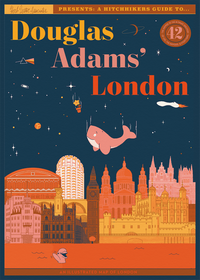
Douglas Adams’ London by Yvette Keller: The Map of London I Never Knew I Needed

Douglas Adams’ London Douglas Adams’ London

by Yvette Keller

DETAILS:
Publisher: Herb Lester Associates
Publication Date: April 15, 2023
Length: 2 pgs.
Read Date: May 6, 2023


What’s Douglas Adams’ London?

This is a map of important locations (42 of them, of course) in London for Douglas Adams, the Dirk Gently series, and/or the Hitchhiker’s Guide series.

The reverse side explains why the locations were selected and gives some biographical information about Adams’ relation to each spot. I loved learning something about Hotblack Desiato, Fenchurch’s apartment, the pizza place Dirk Gently talked about, and so on.

The Design/Art

The map itself has some nice little bits of art scattered throughout—cartoonish little sketches of things like a dolphin, a sperm whale, and a certain depressed android. Just fantastic illustrations that made an already interesting map into something you want to come back to time and again.

The people at Herb Lester Associates who put this together did a simply wonderful job.

So, what did I think about Douglas Adams’ London?

I’ve already given up on my dream of wandering around London—but, boy, howdy, this makes me want to go even more.

Keller is described as “the planet earth authority on Douglas Adams literary tourism,” and will soon publish a travel guide to London. Who better to put something like this together?

Douglas Adams’ London is a gem—even if you never get the chance to put this information into action, it’s great to have.

This post contains an affiliate link. If you purchase from it, I will get a small commission at no additional cost to you. As always, the opinions expressed are my own.
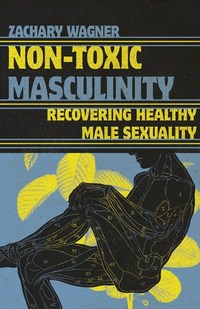
Non-Toxic Masculinity: Recovering Healthy Male Sexuality by Zachary Wagner: A Good Step in the Right Direction

Non-Toxic MasculinityNon-Toxic Masculinity:
Recovering Healthy Male Sexuality

by Zachary Wagner

DETAILS:
Publisher: IVP
Publication Date: April 04, 2023
Format: Paperback
Length: 194 pg.
Read Date: April 23-May 7, 2023


What’s Non-Toxic Masculinity About?

This is one of those books where I could easily go on and on about the arguments and ideas presented within—and I’d like to interact with some of those a bit, too. But this isn’t the place for that—I have to remind myself again—I’ll touch on some of it, but not much.

Wagner starts by reflecting on the Purity Culture that blossomed in the 90s (and since) in Evangelicalism and Conservative Protestantism—and the not-helpful to harmful ways it has impacted the lives of men and women since then. This first part of the book defines the issues and what kind of damage they have wrought.

The next two parts look to define and construct a healthy, i.e., non-toxic mascultinity, based on a Biblical view of masculinity—redeemed masculinity to be precise. After laying out this vision, he suggests ways to implement this vision. Wagner’s idea is rooted in sanctification—not to the exclusion of other areas, but that’s not what this book is about. His view of a sanctified, or at least growing in sanctification, masculinity is not that found in the Purity Culture or some of the works around it, but something greater.

Problems with the Book

I don’t have a lot to quibble with here—my main problem is that I think too much of this book is Zachary Wagner’s story. I think it has its place in this book—and it’s important to see what got him headed down this path of investigation. But I think we got too much about him.

I can easily see other readers disagreeing with me—and perhaps seeing themselves in him and his struggles. At the very least being able to relate to them and appreciating him sharing those struggles—and how he’s come through them. And I do, too. I just think we could use 15-30% less of it.

Similarly, I do wonder if he made the same points too many times in general—maybe accented differently depending on the chapter, but on more than one occasion I wondered “didn’t he already make this point in the last chapter?” Even there, that’s something I wonder with about half the non-fiction works I read anymore, so Wagner’s just fitting in.

An Unexpected Feature

Running throughout the book, but found in a couple of places in particular, is a critique of the more problematic aspects of Every Man’s Battle, the influential work by Stephen Arterburn and Fred Stoeker.

Now, true, the book has become a whipping boy for several authors recently—but I think it’s largely deserved.

Wagner, like me, once swallowed the book and its vision of male sexuality—redeemed or not. But, Wagner argues (convincingly, I’d say) that Every Man’s Battle‘s vision sees all men as permanently adolescent, immature, and lacking any kind of self-control. But if you read Paul, he’s clear that this is not what a mature Christian should be—absolutely, no Christian will reach full maturity in this life—but if you have no more self-control as an adult as you did as a teenager, you’re missing something vital in your spiritual (as well as physical and mental) life.

That’s, of course, a very brief summary of Wagner—his critique is more thorough (and more convincing). Now, is that what I got the book for? No. Did I expect something like that? Also, no. Am I glad Wagner gave it? Yes.

So, what did I think about Non-Toxic Masculinity?

The last chapter, “Death and Resurrection: The Beauty of Redeemed Masculinity,” is a winner. It sums up everything he’s been arguing for in the whole book and then focuses it. Wagner reminds the reader that Christianity is a call to self-denial, self-sacrifice, and dying to self. This includes in the bedroom. If you haven’t been convinced before this point, you likely won’t be by this chapter, but I found the terms he framed in this last chapter in the most convicting. I’d suggest that readers who don’t agree might have missed something. Those chapters leading up to it, are almost as good, too.

Ultimately what Wagner delivers is what I wanted in last year’s How Not to Be an *SS—and then some. So just on those terms, I’m a satisfied reader. But he delivered more than just that—laying out a compelling positive case for a masculinity defined by Scriptural terms, not merely cultural—whether in lock-step with it or in reaction against it.

I can’t—and wouldn’t want to—sign off on every jot and tittle of the work. But it’s far superior to every other thing I’ve read on the subject of what it means to be a man, male sexuality, and ideas of that nature, that I’m tempted to. (although Keith Ronald Gregoire and Andrew Bauman aren’t that far off)

No matter where you fit on the spectrum of those reacting to the purity culture, it’s worth a read. It’s good to consider, and helpful to sharpen your iron.


4 Stars

This post contains an affiliate link. If you purchase from it, I will get a small commission at no additional cost to you. As always, the opinions expressed are my own.
Grandpappy’s Corner: God, Right Here: Meeting God in the Changing Seasons by Kara Lawler, Jennie Poh (Illustrator): A Little Dose of Natural Revelation

Grandpappy's Corner Logo

God, Right Here:
Meeting God in the Changing Seasons

by Kara Lawler, Jennie Poh (Illustrator)

DETAILS:
Publisher: IVP Kids
Publication Date: June 20, 2023
Format: eARC
Length: 32 pg.
Read Date: May 7, 2023


What’s God, Right Here About?

God, right here.
God, right there.
God’s handiwork is everywhere.

With that as a starting point, Lawler takes the reader (and the read-to) on a tour of nature through a year’s worth of seasons. The point isn’t to learn about seasons or weather, or anything, but to see how God’s nature (flora, fauna, weather) reveals His work and care.

Let’s Talk about the Art for a Minute

It’s warm and friendly. Even the scenes depicting a chilly fall and snowy winter make you feel cozy and toasty. There’s a gentleness to the illustrations, too.

I’m failing at describing the art—as usual. Jennie Pho’s Instagram has some really good samples (including a Lucy and Mr. Tumnus drawing).

It’s not technically part of the art, but it’s part of the visual impact of the book, so I’ll talk about it here. The typesetting, or whatever you’re supposed to call it (it’d be lettering comic books), is excellent. There’s a variety of colors emphasizing words to match the theme of the page, it flows all over the page to follow the illustrations and add some movement. It’s eye-catching and serves to augment the art.

How is it to Read Aloud?

This is not the kind of book you have fun with, it’s not a fun read. It’s one to read when you’re trying to settle down—or better yet, have already settled down and want to snuggle up and get comfy.

It’s hard to think of toddlers as thoughtful but this is the kind of book for that kind of time.

It’s one of those where you will point to pictures as you read, and then go off on tangents talking about the ideas in the book. The book itself would take almost no time to read, but I can see this as the sort of thing the Grandcritter and I will linger over as we go through it.

* That’s a horrible stereotype, and I should be ashamed of it. But I know too many of them.

So, what did I think about God, Right Here?

This is a nice and pleasant book. Pleasant is the best word to describe this, really (and now that I’ve used it, my brain is stuck and I won’t be able to use another adjective for the rest of the post).

I feel like I should have another few paragraphs in me, but I don’t. I’ve said everything I can find to say about it (and I think I’ve used 2x the words that the book does). This is a pleasant read that’ll be good to use to talk and quiet down with.

Disclaimer: I received this eARC from InterVarsity Press via NetGalley in exchange for this post, and my honest opinion—thanks to both for this opportunity.


3 Stars

This post contains an affiliate link. If you purchase from it, I will get a small commission at no additional cost to you. As always, the opinions expressed are my own.

Grandpappy Icon

The Book That No One Wanted to Read by Richard Ayoade, Tor Freeman, Jarvis Cocker, Lydia Fox: In Print or Audio, It’s Just Delightful

I am fully aware that the following post overuses the word “delightful.” I wanted to use it at least a dozen more times. This is both a sign that my working vocabulary needs expansion and that this book is a delight. More the latter than the former.


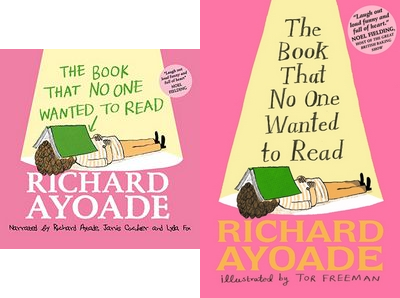
The Book That No One Wanted to ReadThe Book That No One Wanted to Read

(Hardcover/Audiobook)
by Richard Ayoade
Narrated by Richard Ayoade, Jarvis Cocker, Lydia Fox
Illustrated by Tor Freeman

DETAILS:
Publisher: Walker Books US (hardcover); W.F. Howes, LTD. (audiobook)
Publication Date: March 14, 2023
Format: Hardcover/Audio
Length: 108 pg./49 min.
Read Date: April 4, 2023


What’s The Book That No One Wanted to Read About?

This is tricky without giving the whole thing away…but I think I can get close to it. Maybe more idea of the flavor?

We’re told at the very beginning that this book isn’t like others—other books are written by authors, while this book is written by a book. A book with opinions. For example, about authors:

Take it from me, authors can be quite annoying. They go on and on, filling up up page after page, but they have no idea what it’s like to be a book.

or these parts of Top Five Things That Grate My Gears (I’m only giving selections, but I want to give the whole thing):

1. People who fold the corner of the page to save their place.Have these savages not heard of novelty bookmarks? Or paper?…Which part of your body would you most like to have folded back on itself?*

2. People who underline certain words. ALL THE WORDS ARE IMPORTANT!

3. People who skip to the end. If the end was meant to come sooner, it’d be called “the middle.”

and don’t get it started on Ipswitch.

* The accompanying illustration of examples of ways to fold a body is delightful.

This book then goes on to tell a story in the second person about someone (presumably a middle-grade child, but really it could be anyone) who is going through a very large library and comes across the shelf holding The Book That No One Wanted To Read. That book then begins having a telepathic conversation with the “you” about being a book, the book’s plight as being so ignored, and how “you” can help it.

I’m not sure that makes sense—but it should give you an inkling of what you’re in for.

The Narration

Jarvis Cocker handles the bulk of the narration—he’s the voice of the opinionated Book telling the story, and as such is the voice that describes the “you” walking around. I could listen to his portions on repeat for a few hours at a time and be quite content (when I wasn’t laughing).

Richard Ayoade is the voice of the titular book and brings his distinguishing style to that narration. If you don’t smile listening to him as this character, you’re doing something wrong.

Lydia Fox provides the voice for the middle grader in conversation with the book. She’s just as fantastic as the others, and I only mention her last as I went in order of appearance.

This is one of those multi-narrator audiobooks where all the narrators are equally good—capturing the spirit and tone of the text and bringing it to life. I’d say that Cocker is the best narrator of the three, unless you asked me in the middle of one of Ayoade’s lines. Or while Fox was reading. I just loved all the audio aspects of this book.

The Illustrations

Oh, wow. I love the illustrations—they are absolutely great. It’s a sketchy kind of art, immediately relatable (think Jules Feiffer). They grab you right away and are just delightful—as funny as the text, without overshadowing it. They have the same voice, the same kind of humor, but don’t just retell the jokes in the book—sometimes they riff off them, expand them, and sometimes the humor is just adjacent to the jokes in the text.

I don’t normally recommend this kind of thing, but you can pick up the book and just look at the pictures (and read the captions) and have a good time without bothering with anything The Book is trying to convey.

So, what did I think about The Book That No One Wanted to Read?

When I heard about the book a few months ago, I was intrigued and made a mental note to look into it when it was released. Then I promptly forgot about it until I saw it on my library’s app. I’d intended on getting the text version, but I needed something short, so I jumped on it.

I was charmed instantly and loved the experience so much that I ran out to get the Hardcover so I could see the text, re-read portions—and check out the pictures. I haven’t found the time to read the whole book yet—but I have looked at every illustration and read bits of it a few times. This is why I’m giving you this strange hybrid format post.

If you’re going to encounter this book without the vocal stylings of Fox, Cocker, or Ayoade, you need the illustrations to make up for them. If you’re going to read the book without the benefit of the illustrations, you need narrators as strong as those three.

In case you haven’t noticed, I’m doing much better at conveying my reaction to the book than I am the book itself. The voice and tenor of the book are great—it’s goofy and strange, the humor is occasionally dry, it’s imaginative, it’s affirming and encouraging, it wraps you in a blanket of fun and makes you feel good. The characters all three of them—”you”, The Book That No One Wanted to Read, and the Book telling the story—are the perfect way to convey the contents. You don’t want a lot of characters wandering in and out of this one—keep it simple. But you don’t want this to become a monologue or an essay (although judging by the first and final chapter, it’d be great as one of those), so you need the three voices.

The best thing that comes to mind to compare it to is The Phantom Tollbooth. But shorter. And with the humor dialed up by a factor of 50.

I have one reservation. I’m not sure that the style of humor or the content of all the jokes are going to land right with an American Fifth Grader. It feels, perhaps, too British for that. But then again, American Fifth Graders are exposed to more than I was. Also, this could be the kind of thing that trains an 11-year-old’s sense of humor in the same way that stand-up albums I didn’t fully understand did mine. So what do I know?

Bookish adults are going to have a blast with this. Middle-Grade readers who are into slightly off-kilter books will really enjoy this. Most middle-graders, as far as I know, are slightly off-kilter themselves, so maybe they’re all the right audience. Just give them this book in their preferred format and you’ve likely got a winner.

I adore this book—and think it’s going to be a favorite of mine for years to come. I can’t wait to introduce my grandson to it—and frankly, a few older friends and relatives, too.


4 1/2 Stars

This post contains an affiliate link. If you purchase from it, I will get a small commission at no additional cost to you. As always, the opinions expressed are my own.
What is Love? by Kyle Borg: A (too?) Brief Look at a Deep Topic

What is Love?What is Love?

by Kyle Borg

DETAILS:
Series: The Bedrock Series 
Publisher: Grassmarket Press
Publication Date: December 20, 2022
Format: Paperback
Length: 135 pg.
Read Date: February 26, 2023

…deep down we know that love isn’t all we need. We also need to love well. We need to love rightly. So who gets to define that? Which voice is worth listening to, and which voices should be ignored? Is philosophy right? Is psychology right? Sociology? Biology? Politics? Economics? Literature? Hollywood? Music? Social media? Porn? Who gets to tell you what love is?

In the midst of these noisy voices, we need a louder voice. We need a voice that can break through the chatter and clearly, authoritatively, conclusively define for us what love is.

What’s What is Love? About?

This is Borg’s attempt to show what the Bible’s authoritative and conclusive definition of love is. He looks and several texts from all over the canon—spending (naturally) a substantial time in 1 Corinthians 13.

It’s a multi-faceted look at love. Borg considers the love of God demonstrated between the persons of the Trinity as well as toward His creation. But he also looks at the love that humans are to show each other as well as that we’re supposed to show to God.

The seventeen chapters are brief (in 135 pages, they have to be), but he doesn’t shy away from going deep into the topic of the chapter.

So, what did I think about What is Love??

There’s a lot of good material here—helpful, persuasive, and Biblical. But…it seemed to miss the intended goal of the book of giving a strong definition for love. Don’t ask me what was missing, but it just felt to me like Borg fell a little short.

I’ve been listening to Borg for a few years now on a couple of podcasts, and really appreciate his insights and explanations for various topics. So I was a little surprised that I didn’t connect with this the way I expected. I halfway expect that he tried to do too much in such a brief book, and if his goal hadn’t been so lofty, he’d have done better.

The writing is clear and concise—it’s as approachable as you could hope for, no matter your age or groundedness in Christian teaching. This seems to be the intent of the books in the Bedrock series, and Borg succeeded there.

I do recommend the book and think readers will benefit from reading it—I did. While I’m not sure Borg delivered the conclusive definition he intended to, he gave a lot of clear teaching on what the Bible says to lead to that definition, and that’s a good enough place to start.


3 Stars

Swamp Story by Dave Barry: Florida. Just say it’s Florida.

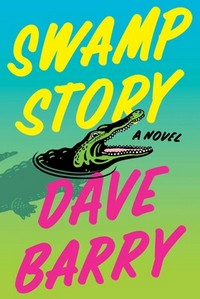
Swamp StorySwamp Story

by Dave Barry

DETAILS:
Publisher: Simon & Schuster
Publication Date: May 2, 2023
Format: eARC
Length: 320 pg.
Read Date: April 19-21, 2023


What’s Swamp Story About?

This is hard to summarize, really. Which is part of the beauty of the book.

Most of the characters in this book aren’t what you’d call likable. They’re not really villains or antagonists, they’re just…people you don’t want to spend time with in real life, people with more greed/ambition than common sense (or decency). There are a couple of guys living in a cabin in the Everglades trying to assemble enough footage for a reality show pilot (basically, the good-looking one of the pair walking around shirtless interacting with native wildlife). Their weed dealer owns a failing convenience store/bait shop and has a “so stupid it just might work” plan to put his family’s store on the map. There’s a would-be talent agent (or just anything to ride the coattails of his buddy who happens to make a little money). Oh, and there’s a lawyer and a cabinet secretary/presidential aspirant, too—can’t forget them.

On the villainous side, there’s the weed dealer’s supplier—a former football player who is still large enough to intimidate active linemen who will not tolerate missed deadlines. Two ex-con brothers who are the textbook definition of nasty are also running around. There’s also an Eastern European gangster and some of his employees from the old country who should make everyone quake with fear.

On the likable side, you have the shirtless would-be star’s girlfriend and mother of his child (who really regrets ever giving him the time of day, no matter how pretty he is). The weed dealer’s brother who really needs something to motivate him to do more than play games on his phone, might have found that motivation in her. You’ve also got a couple of aides to the secretary, who really need a better job. An alcoholic ex-reporter desperate to make a buck is just what the weed dealer wants for his idea. I can’t forget either the aging TV reporter desperate to cling to her former relevance or the champion snake hunter.

Put all these characters in a small geographic region, throw in a large amount of buried Confederate gold and a couple of viral videos, shake well, and serve. Swamp Story is the result.

This Book Could’ve Been Shorter

Around the 70% mark (I’m keeping it vague because I don’t know how it’ll go in the final edition), a couple of the characters have an exchange that essentially goes along these lines:

Character A: I hope nothing else happens.
Character B: What else could happen?
Character A: …

and then there’s a map showing the immediate vicinity and some of the major buildings/landmarks of the story, making it very obvious that, based on what we know, all the characters are really near each other and that the likelihood of them running into each other in the very near future is pretty high. The reader will not be able to look at this map and not start imagining how all that running into each other is going to go.

I made a note at this point, that Barry could’ve ended the novel at that point—that exchange, the map, and the reader’s imagination—and it’d have been a fun and satisfying read.

However, odds are, your imagination isn’t as good as Barry’s is (mine sure isn’t), and as zany as I thought things were going to get from this point, the truth was far zanier. His conclusion to the novel (not just the immediate every character and storyline coming together in one spot, but everything that followed) was better than any of the ideas I came up with (and I liked most of my ideas a lot).

Still, there’s part of me that wishes he’d left things with that line and the map. I’d have laughed hard at that.

So, what did I think about Swamp Story?

I really enjoy reading Barry’s novels, and Swamp Story is no exception. It’s a different kind of humor (largely) than Barry’s columns or books, but it’s just as satisfying. I’d want to say that it’s more subtle, but that’s not true at all. There’s more character-based humor, and some of it’s the dialogue—which strikes you differently than the straight humor pieces he’s best known for.

Now, that said, there’s a scene at the beginning—involving a rich child’s birthday party, a couple of costumed performers, and a difficult-to-crack piñata, that absolutely cracked me up and I’ve been replaying it in my head since I read it—it’s perfect slapstick.

Putting aside the humor, all the story arcs worked really well and I can see toned-down versions of all the arcs working well together in a grim version of this story. I’ve argued recently that a good test of a comedic novel is if the plots would work without the laughs—in this case they largely wood. But they’re so much juicer and more enjoyable in this comic and heightened versions.

There are genuine bad guys, some actual threats, several characters in search of a good idea,* and a couple of people you hope catch a lucky break and escape from everything they’re surrounded by relatively intact. Throw in some good laughs, and some clever writing, and you’ve got yourself a fun few hours of reading. That’s likely what the reader looks for in a Dave Barry novel, and that’s what Swamp Story delivers. Strongly recommended.

* Apologies to Pirandello.


4 Stars

Disclaimer: I received this eARC from Simon & Schuster via NetGalley in exchange for this post—thanks to both for this.

This post contains an affiliate link. If you purchase from it, I will get a small commission at no additional cost to you. As always, the opinions expressed are my own.

The Nicene Creed: An Introduction by Phillip Cary: A Great Primer on the Ancient Creed

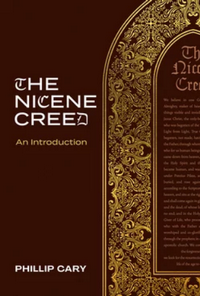
The Nicene Creed: An IntroductionThe Nicene Creed: An Introduction

by Phillip Cary

DETAILS:
Publisher: Lexham Press
Publication Date: March 29, 2023
Format: Hardcover
Length: 211 pg.
Read Date: April 9-16, 2023

What’s The Nicene Creed About?

The subtitle says it’s an introduction to the Creed, and that’s the best way to describe it. Cary breaks the Creed down line by line—subdividing many of the lines to bite-size pieces.

Once in those pieces, Cary takes a variety of approaches—sometimes it’s a commentary on that part of the Creed, sometimes it’s historical background, sometimes it’s a point of grammar about the translation (or the text). Each chapter is short, clear, and to the point—most of all, they’re helpful for the reader to better understand the Creed.

Epilogue

The Epilogue presents “The Trinity in Simple Terms”—it’s the bare bones of the doctrines, drawing upon Augustine, in seven simple points.

I heard Cary give this on a podcast episode recently (calling it something like “Teaching the Trinity in Under Two Minutes”, and it’s a great way to present this material.

So, what did I think about The Nicene Creed?

On the one hand, I can be really brief here—this is a fantastic introduction to the Creed and/or some of the doctrines taught by it. In many cases, it’ll be a review of ideas—but even in those cases, Cary will likely shed a different light on it, or make you think about the idea in a way you’re not used to.

There’s a temptation to go in-depth on various chapters or sections—but I’m going to resist it for a variety of reasons.

This can be a quick and breezy read. It’s a mistake to let Cary’s simple and straightforward text let you read quickly—because there’s a lot to think about and reflect on here. Even if—especially if, actually—you recite the Creed on a regular or frequent basis every Lord’s Day. This is a great way to stop and meditate on these essential truths of the Christian faith.

Now, each section could easily be 2-3 times as long, and I’d read it—but I can see why Cary made the choice he did (but, I’m just saying, if someone wanted him to give a longer introduction, there’s at least one buyer out there)

Cary’s a trustworthy guide through this Creed, and I heartily encourage you to follow him through it.


4 1/2 Stars

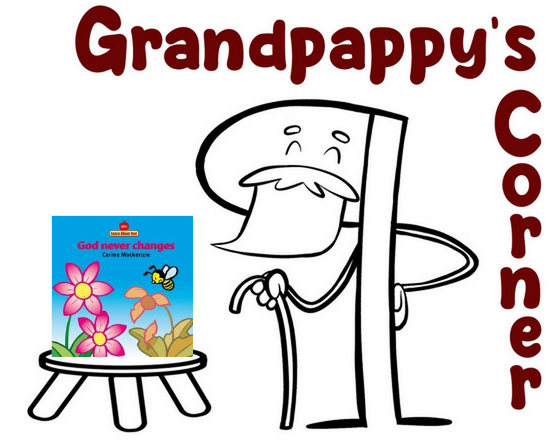
Grandpappy’s Corner: God Never Changes by Carine MacKenzie, Derek Matthews (Illustrator) ★ ★ ★ Small Words About a Big Idea

Grandpappy's Corner Logo

God Never Changes

by Carine MacKenzie, Derek Matthews (Illustrator)

DETAILS:
Series: Learn About God 
Publisher: CF4Kids
Publication Date: September 2015
Format: Board Book
Length: 12 pg.
Read Date: April 22, 2023

What’s God Never Changes About?

This is a quick and yet thorough (at least for the Board Book audience) look at the Immutability of God. Each page starts off by saying, “God Never Changes,” and then comparing Him to various aspects of life and nature that a child can understand and appreciate. And learn from.

Let’s Talk about the Art for a Minute

It’s simple, it’s cute, it’s bright, and attractive. It does the job. I liked it—and can see kids liking it, too.

How is it to Read Aloud?

Very simple. There’s no rhyming or anything (which is good, I think it’d be annoying for this subject matter). It works well for reading aloud and then stopping to talk about the ideas, too.

So, what did I think about God Never Changes?

I picked this one out of the handful from this series sitting on our shelves because I’m in the middle of the discourse on The Immutability of God in Charnock’s The Existence and Attributes of God, and I figured I’d stay on theme. It works remarkably well in conjunction—in fact, Mackenzie uses some of the same argumentation and explanations as Charnock does when it comes to this topic. Just much simpler. My inner geek loved that bit.

I don’t know that this is the kind of thing a child will clamor to have read to them again and again—but you never know. I do think it’s good for teaching at a young age, and that’s the whole point of this series. I do recommend it and look forward to using it with my grandcritter soon.


3 Stars
Grandpappy Icon

Page 22 of 62

Powered by WordPress & Theme by Anders Norén