Category: Non-Fiction Page 22 of 63

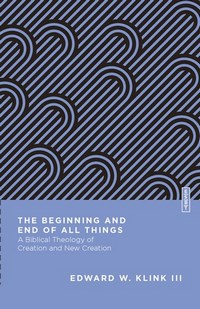
The Beginning and End of All Things: A Biblical Theology of Creation and New Creation by Edward W. Klink III: This Is Our Father’s World

The Beginning and End of All ThingsThe Beginning and End of All Things:
A Biblical Theology of Creation and New Creation

by Edward W. Klink III

DETAILS:
Series: Essential Studies in Biblical Theology
Publisher: IVP Academic
Publication Date: May 30, 2023
Format: Paperback
Length: 172 pg.
Read Date: June 4-25, 2023
Buy from Bookshop.org Support Indie Bookstores

While there is some biblical wiggle room for us to disagree about how God created the world, we better not misunderstand who God is and who humanity was designed to be, or what God intended to do in the world, ultimately through the work and person Jesus Christ, or why God made the world in a way that explains my life and purpose in the world. In short, if we misread the beginning of the story, we potentially misread the rest of the story. And since this story is about the Creator and his creation, the stakes could not be higher.

The Beginning of All Things (Mostly of the Book)

Every time the term creation or even doctrine of creation was used, the Christians in my church were thinking of origins. It was as if the only category the term creation would elicit in their minds was the beginning of time when the world came into existence. The only question was about what happened in the beginning, and even then, the primary focus was clearly on the heavily debated “six days” The rest of the history of the world, the physical reality in which we live our lives, or even the purposes for which the world was created were not even part of the equation. It seemed to me to be like a man who, when asked about his marriage, was unable to think of anything else besides his wedding ceremony. His love and commitment to his wife, the purpose and design of marriage, and even the current state of his marriage and the family it produced were viewed as distinct or unrelated. My point is not to deny the importance of the first six days of creation but to make important every created day.

Klink starts out by stressing that a doctrine of creation is not about what the first two chapters of Genesis mean—it’s not about how God made the Earth. Or at least, it’s not just about that. It’s about why God made the Earth—what was His purpose in creating, what’s His goal for the creation, and so on. It’s about the goodness of the creation and how we are to enjoy and preserve it. It’s ultimately about the new creation, what is going to happen on that Last Day when creation is renewed, restored, and recreated.

With that in mind, Klink then looks at how these (and related) ideas and themes are expressed throughout the Biblical narrative, from the Fall through Christ’s ministry on Earth, and on through the time up to the End.

The End of All Things (and of the Book)

…Creation was good but not yet finished to perfection. Again, quoting Gunton: “As created, it is perfect, because it is God’s project. . . . But it is not pertest in the sense of completion. It has somewhere to go” To be clear, this is eschatology. Not in the sense of the last few years of human history (the end times) but the entirety of human history. Eschatology, therefore, is referring to God’s goal or purpose for creation, his ordained intention and the plot of the world. Thus, eschatology 1s the aim of trajectory of all things, the goal of all things. Our argument in this chapter—and the book as a whole has been that the biblical stary of creation and new creation, which includes redemption, is a biblical theology of the goal of all things. The use of etymology for defining eschatology (the study of the end times) should be banned by royal decree! Eschatology ts only tangentially defined by interpretive questions regarding a millennium, let alone a rapture. Simply stated, eschatology is referring to the intentions of God for the world, even the will of God. Eschatology, which extends from creation to new creation, is the goal of all things.

From the Introduction through the first nine chapters, Klink has kept one eye on the Eschaton (and kept the reader looking for it, too). Chapter 10, Creation’s Consummation, focuses on that. He shows how all those earlier themes bring us to this point, and Creation and Redemption will shape the coming New Creation. This chapter is worth at least half of the purchase price of the book. It’s a great way of tying the book together and reminding the reader what our focus should be during our pilgrimage on Earth.

He follows this with a concluding few pages of Pastoral Reflections. He talks about the importance of thinking—and having pastors getting their flocks to consider—about creation in a fuller sense than just the “beginnings.” He also tries to show ways that the doctrine of creation should be applied and worked out in the believer’s life, what it should look like lived out. It’s a brief few pages, but very powerful.

So, what did I think about The Beginning and End of All Things?

…the Christian life is not merely a spiritual life but a physical life—a life lived in creation and in relation to the Creator. If Christians are united to their Creator in Christ and through the Spirit, then they should be the most aware of their physical existence and createdness. A few examples might be helpful. First, Christians should have a robust theory and practice of the human body and reflect God’s concern for its purpose and care. Second, Christians should be both aware of and concerned for physical creation, especially the earth, which is a gift from God that he both created and will re-create.”’ Both of these topics, however, have been minimized or manipulated by too many Christians for too long. This is not only detrimental to the church’s witness but also to the fullness of its life. In a world filled with creatures who neither know or submit to their Creator, Christians should reflect in word and deed the beauty, awe, and affection of the mystery of creation that is reflective of the new life they have been given by their Creator and Redeemer. Psalm 104 (especially Ps 104:24, 30, 33) provides us with a lens for our appreciation of the physical world and, therefore, the honor and praise due to our Creator.

When Klink started by saying that a doctrine of creation needs to be about more than what happened in Genesis 1-2, he piqued my interest and got me on his side immediately. The Introduction and Chapter 1 were just fantastic.

The “meat” of the book—Chapter 2, Creation’s Curse, through Chapter 8, Creation’s Commission—is refreshing both in outlook and insight. Any quibbles I had with Klink did show up in these chapters but were only in some of the ways he described ideas or on minor points (ultimately due to differences in confessional outlooks).

But as I indicated above, the last chapter and the pastoral reflections were as good (probably better) as the beginning of the book. At least a third of the notes I took about the whole book were on these 24 pages.

On the whole, this book is warm and pastoral, reminding the believer that the world we live in was created very good, and while it groans for the new creation, it remains full of good gifts from our Father for us to use, enjoy, and glorify Him with. I heartily encourage you to pick this up and read it.


4 Stars

This post contains an affiliate link. If you purchase from it, I will get a small commission at no additional cost to you. As always, the opinions expressed are my own.

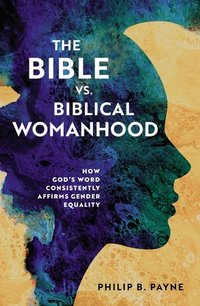
The Bible vs. Biblical Womanhood: How God’s Word Consistently Affirms Gender Equality by Philip Barton Payne: Almost thou persuadest me…

The Bible vs. Biblical WomanhoodThe Bible vs. Biblical Womanhood:
How God’s Word Consistently Affirms Gender Equality

by Philip Barton Payne

DETAILS:
Publisher: Zondervan
Publication Date: April 04, 2023
Format: Paperback
Length: 183 pg.
Read Date: May 14-29, 2023
Buy from Bookshop.org Support Indie Bookstores

The Back of the Book Says

A biblical defense of egalitarianism

In The Bible vs. Biblical Womanhood, New Testament scholar Philip B. Payne shows how Scripture affirms gender equality in the church and in the home. This issue is important because it affects the freedom of Christians to proclaim the gospel and advance God’s kingdom. Payne carefully examines each Bible passage alleged to teach gender hierarchy and demonstrates that the Bible does not endorse gender hierarchy but instead emphasizes:

  • The Holy Spirit gifting all believers for ministry
  • The oneness of the body of Christ (the church) and the priesthood of all believers
  • Humility, service, and mutual submission required of all believers

Payne concludes each chapter by defending his position by providing detailed answers to common objections.

The Bible vs. Biblical Womanhood is for those struggling to reconcile the Bible’s seemingly contradictory teachings about man and woman. Readers will come away with greater confidence in the reliability of Scripture’s consistent, harmonious message of gender equality.

What’s This Look Like?

Essentially Payne looks at 11 Biblical passages that are frequently used to support complementarian/patriarchal positions in the church. He critiques those interpretations and offers his own. The critical portions of each chapter are smaller than the positive portions, I should stress. Payne’s focus is on explaining and defending his interpretations.

Some Problems

I’m not evaluating Payne’s arguments or positions—that’s not what this blog is about. But as a reader, there were a few flags raised that made it hard for me to take the work as seriously as I might otherwise.

So, I got a little uneasy when in one of the introductions, Payne referred to his “discoveries” in his studies of the Biblical texts. At this stage of Church History discoveries are pretty suspect.

What made me really suspicious of Payne’s work was the way he’d slip between Bible translations frequently—essentially you get the idea he cherry-picked translations to support his arguments for him, rather than sticking with one translation (or translating each passage himself) and then explaining his issues with a word choice or two—on the whole, I find that a lot more convincing.

Two of his most pivotal chapters utilize a lot of textual criticism prior to his interpretation of the text—Payne does a thorough job of explaining that criticism and then constructs his argument. I don’t know enough to evaluate his critical work there—I find both arguments plausible, but his positions rely so heavily on them that multiple chapters would crumble without them. I don’t know if his positions can stand without him being right on these points.

I’d love to read good scholarly reactions to his textual critical arguments, I wonder how much water they hold.

So, what did I think about The Bible vs. Biblical Womanhood?

I really liked a lot of the book—and found myself agreeing with most of his critiques of complementarianism/patriarchal positions. I was able to appreciate many—maybe most—of his positive arguments, I don’t think I was won over totally by any, but I didn’t expect that to happen off of one popular-level book (nor was I looking for it).

The book was well-written, engaging, and clear. Payne takes complicated (and almost convoluted) ideas and expresses them in a way that anyone can get their hands around. And even if you’re not convinced—but I can see him convincing those who are looking for it—you will understand the positions, and see a lot of things that look easy are a lot murkier, and require wisdom to work through.

I do think this is worth the time to read and think through, I’m glad I did. I would read other things by Payne in the future. I’d love to hear what other people think.


3 Stars
This post contains an affiliate link. If you purchase from it, I will get a small commission at no additional cost to you. As always, the opinions expressed are my own.

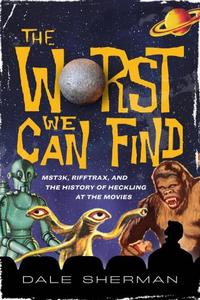
The Worst We Can Find by Dale Sherman: MST3K: The Satellite of Love, The Bots, The Mads, The Movies and Everything Else

The Worst We Can FindThe Worst We Can Find:
MST3K, RiffTrax, and the History of Heckling at the Movies

by Dale Sherman

DETAILS:
Publisher: Applause Books
Publication Date: June 15, 2023
Format: Paperback
Length: 246 pg.
Read Date: June 27-29, 2023
Buy from Bookshop.org Support Indie Bookstores

What’s The Worst We Can Find About?

This is one of those books where the sub-title tells you everything you need to know: “MST3K, RiffTrax, and the History of Heckling at the Movies.” The back of the book does give a fuller explanation:

Had you tuned in to the small television station KTMA on Thanksgiving Day, 1988, you would have been one of the few witnesses to pop culture history being made. On that day, viewers in and around St. Paul, Minnesota, were treated to a genuine oddity, in which a man and his robots, trapped within a defiantly DIY sci-fi set, cracked jokes while watching the terrible 1981 movie Invaders from the Deep. Although its origins may have been inauspicious, Mystery Science Theater 3000 captured the spirit of what had been a beloved pastime for generations of wags, wiseacres, and smart alecks, and would soon go on to inspire countless more.

The Worst We Can Find is a comprehensive history of and guide to MST3K and its various offshoots—including Rifftrax, Cinematic Titanic, and The Mads Are Back—whose lean crew of writers, performers, and puppeteers have now been making fun of movies for over thirty years. It investigates how “riffing” of films evolved, recounts the history of these programs, and considers how a practice guaranteed to annoy real-life fellow moviegoers grew into such a beloved, long-lasting franchise. As author Dale Sherman explains, creative heckling has been around forever—but MST3K and its progeny managed to redirect that art into a style that was both affectionate and cutting, winning the devotion of countless fans and aspiring riffers.

Sherman starts with some commentary on the history of what we now call “meta” and riffing in general—going back to Greek choruses. He then shows how movies started riffing/commenting on themselves (and each other).

He then focuses on MST3K itself—talking about Joel Hodgson’s background and the creation of the show. We actually get some good background on all the major players from the early years. He then describes the transitions in staff/cast as it moves from KTMA to Comedy Central to the movie (and, wow, what an effort to get that made) to SciFi and so on.

We then get a look at what the post-MST3K careers of the central figures look like and how riffing on movies has kept popping up in their lives (largely because people won’t let them stop) and how the show has come back from its ending a time or two.

My Sole Criticism

Sherman only cites previously available material—yes, he dug up a lot of things that many/most fans would never see, never think of looking for. But he doesn’t interview anyone himself, or provide anything outside a couple of personal memories that an industrious fan couldn’t have found on their own.

I don’t want to criticize what he did—it is no small feat to do what he did. And I’m so glad he did it—but the lack of original material keeps me from absolutely raving about this book.

So, what did I think about The Worst We Can Find?

Back when I talked about Scott Ryan’s Moonlighting: An Oral History, I’d said:

When I read a book about a television show, I want a few things—I want something to

    • make me want to rewatch the show
    • make me not really need to, because the book has helped me remember it in such a way that it’s not that necessary
    • give me a lot of behind-the-scenes information about the show
    • help me understand it better (not just information, but reflections on it—its legacy, cultural context, impact on television, et.)
    • Ideally, teach me something about the art and/or business of television (preferably both)
    • and if it can be fun (TV should be entertaining), that’s all the better.

Yeah, that seems like a lot to ask for from a book, but if I’m going to take the time to read a book instead of watching a behind-the-scenes show or listening to a panel discussion, I want bang for my buck—I don’t always get it (and know that going in), but I want it.

The Worst We Can Find delivered on all but the “make me not really need to” because there’s no way that someone could do that in a book form. I have watched some MST3K since then (more than I usually do because I’ve been inspired)—and some Rifftrax, too.

I don’t want ponderous, I don’t want slow. I don’t mind a lot of detail (in fact, I relish it), I don’t mind thoughtful (that’s why I read the book), but I want to be entertained. And Sherman delivered there. His chapter introductions were golden—worth at least half of the purchase price alone. I started to give a couple of examples, but why ruin it for you? So, I’ll be vague. I laughed aloud at Chapter 4’s introduction. Maybe all of them, but Chapter 4 was the point I stopped to make note of it.

I really appreciated the way Sherman pivoted in the last chapter to speak of “we” in reference to fans of the show, it’s clear throughout that he was one of us (there’s no way you do this work without that—or a bigger paycheck than he likely got for this book), but I appreciated the way he did it there.

The last paragraph was perfect, incidentally.

This was a great read, I learned a lot, I chuckled frequently, and I had a great time reminiscing about a favorite show. I think you will, too. I’d say is a must for MSTies. As I said, I can’t rave about it—but I can strongly encourage you to check it out. And keep circulating the tapes.


4 Stars

This post contains an affiliate link. If you purchase from it, I will get a small commission at no additional cost to you. As always, the opinions expressed are my own.

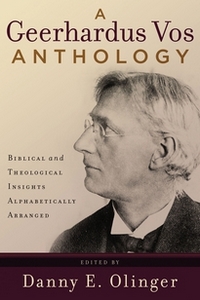
A Geerhardus Vos Anthology edited by Danny E. Olinger: A Collection of Theological Gems

A Geerhardus Vos AnthologyA Geerhardus Vos Anthology:
Biblical and Theological
Insights Alphabetically Arranged

edited by Danny E. Olinger

DETAILS:
Publisher: P & R Publishing
Publication Date: March 11, 2005
Format: Paperback
Length: 363
Read Date: January 1-June 25, 2023
Buy from Bookshop.org Support Indie Bookstores

What’s A Geerhardus Vos Anthology About?

Danny Olinger literally wrote the book on Geerhardus Vos,* but he’s been studying him for a lot longer than that. As a part of his own personal study, he’s taken notes—he’s written quotations that meant a lot to him, seemed important, and so on—basically (as he put it in the Preface) “the best” of what he was reading. He built upon this foundation to assemble this anthology.

* 2018’s Geerhardus Vos: Reformed Biblical Theologian, Confessional Presbyterian.

Arranged topically (and those topics are arranged alphabetically), this is a collection of excerpts of varying lengths (all pretty short) from his published and published writings—the crème de la crème of one of the best of the 20th Century.

There’s also a great introduction by Olinger outlining Vos’ importance and work.

So, what did I think about A Geerhardus Vos Anthology?

My guess is that this book isn’t meant to be a devotional read, it’s a resource—a reference book. A quick way to find some of Vos’ insights and then know what work to consult for more. That’s a better use for it, for sure. But I liked the way I read it.

So I took this as a letter at a time (although some letter’s entries were long enough that I split them in two). It made for a nice few minutes once a week to think about a variety of bite-sized nuggets of Biblical Theology.

Some were pithy, some took a little chewing to get through—all were insightful and useful (although some took some thinking to figure out how they were useful). Most of all, each one made me curious about the work they were excerpted from.

One aspect (I’m not sure if it’s a pro or a con) of this book being a collection of short (1 sentence to 4 paragraphs or so) thoughts is that some jumped out at me more than others, I’m pretty sure that I could restart it today and different things would grab my attention.

This is a great way to get an easy-to-read introduction to Vos. Grace and Glory might be better—but this is nothing to sneeze at.


5 Stars

This post contains an affiliate link. If you purchase from it, I will get a small commission at no additional cost to you. As always, the opinions expressed are my own.

20 Books of Summer 2023: June Check-In

20 Books of Summer
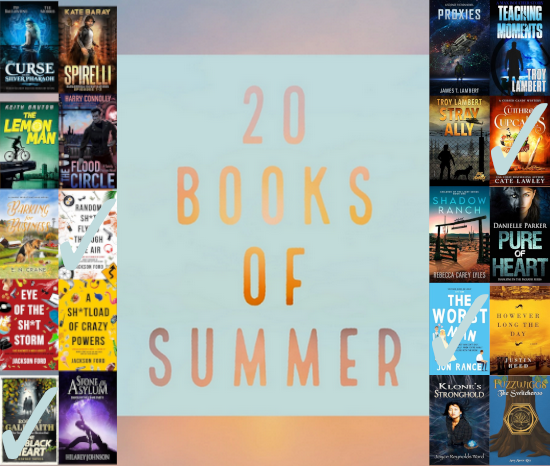
Here’s a quick check-in for this challenge run by Cathy at 746 Books.

So far, I’ve read 4 2/3—which puts me a little behind last year (still far ahead of 2021, though). I should read at least 1 1/3 this coming week, so I’m feeling pretty good about where I am. Since one of those four that I have finished was The Ink Black Heart and that took a week or so, I’m not that worried. None of the rest of these are nearly that much of a commitment.

1. The Curse of the Silver Pharaoh by Pip Ballantine and Tee Morris
2. Spirelli Paranormal Investigations: Episodes 1-3 by Kate Baray
3. The Lemon Man by Ken Bruton
4. The Flood Circle by Harry Connolly
5. Barking for Business by E.N. Crane
✔ 6. Random Sh*t Flying Through the Air by Jackson Ford
7. Eye of the Sh*t Storm by Jackson Ford
8. A Sh*tload of Crazy Powers by Jackson Ford
✔ 9. The Ink Black Heart by Robert Galbraith
10. Stone of Asylum by Hilarey Johnson
11. Proxies by James T. Lambert
12. Teaching Moments by Troy Lambert
13. Stray Ally by Troy Lambert
✔ 14. Cutthroat Cupcakes by Cate Lawley
15. Shadow Ranch by Rebecca Carey Lyles
16. Pure of Heart by Danielle Parker
✔ 17. The Worst Man by Jon Rance
18. However Long the Day by Justin Reed
19. Klone’s Stronghold by Joyce Reynolds-Ward
20. Fuzzwiggs: The Switcheroo by Amy Maren Rice

(subject to change, as is allowed, but I’m going to resist the impulse to tweak as much as I can).

20 Books of Summer '23 June Check In Chart

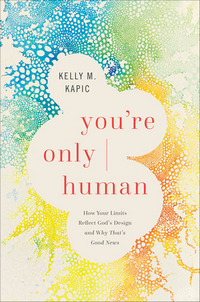
You’re Only Human by Kelly M. Kapic: The Reality and Comfort of Creaturely Finitude

I don’t have time to re-read this book today, so I’m going to read this (and I might as well repost it while I’m at it, right?). Am really feeling the whole “creaturely finitude” thing these last few days—see that opening quotation—and need the reminder that there’s a comfort in it.


You're Only HumanYou’re Only Human:
How Your Limits Reflect
God’s Design and Why
That’s Good News

by Kelly M. Kapic

DETAILS:
Publisher: Brazos Press
Publication Date: January 17, 2022
Format: Hardcover
Length: 228
Read Date: January 23-30, 2022
Support Independent Bookstores - Visit IndieBound.org

What’s You’re Only Human About?

Creaturely finitude is less an idea we discover than a reality we run into.

When we do run into this idea (as we all will), we frequently interpret that reality incorrectly—not recognizing that our limits, our finitude, as part of who we are as creatures (or forgetting that if we do recognize that). As such we can push against them in unhealthy ways, ignore them to our own peril, or see them as the result of sin, not the result of creation.

What Kapic sets out to do is to remind us that part of being a creature is having limits. When we remember that, we can live as we ought—in dependence on the God who made us that way. As he puts it,

Many of us fail to understand that our limitations are a gift from God, and therefore good. This produces in us the burden of trying to be something we are not and cannot be.

Particularity and Limits

Kapic reminds his readers that the doctrine of Creation shouldn’t just be limited to our understanding of Genesis 1-2, but to reflecting on the design, abilities, and limitations of humanity. These limitations would be in place regardless of our fallen state—sure, the fall twists those limitations—but they’re part of the original state.

In the first part of the book, Kapic lays out the theology necessary for this—and ties it to the Gospel, lest we get distracted from what matters most.

Healthy Dependence

The second part of the book talks about the creaturely dependence that flows from this—we aren’t capable of everything we need or want to accomplish, but He is. This is part of created humanity, and it takes on new meaning in Christ.

Tied to this idea of dependence is humility.

Humility consists in a recognition of (and a rejoicing in) the good limitations that God has given us; it is not a regrettable necessity, nor simply a later addition responding to sinful disorders. Even if there had never been a fall into sin, humility would still have the essential character of gratitude for our dependence on God and for his faithful supply of our need. Humility is built on the Creator/creature distinction; its response to sin emphasizes our further need for God to restore us to the fellowship that he always intended us to inhabit.

Kapic spends a lot of time drawing out the implications of this—in light of both Creation and Redemption.

Lament and Gratitude

We can express our humility and dependence in both our lament and our gratitude—this part of the application section of the book was probably the most rewarding to me. Kapic makes the case that they’re mirror concepts rooted in humility and dependence on our Creator and Redeemer, and both ought to be embraced by the believer.

So, what did I think about You’re Only Human?

It took me over a month to be mostly satisfied with what I wanted to say about this book—an example of creaturely finitude, come to think of it. I struggled over this—really wanting to get into all of his ideas and arguments. But that’s not what this blog is for (thankfully, or I’d be working on this post for another six months, minimum). I’ve trimmed this post a few times while putting it together, in fact, because I kept getting in the weeds.

You’re Only Human is the kind of book that I really don’t think I got a handle on after one read—I’m planning on a re-read this summer, in fact. I’ve got a general sense of it, but I want to return to it having a bird’s-eye view, so I can appreciate more of the details.

I don’t know if this is going to hit every reader like it did me—very likely it won’t—but this is just what I needed. Still, I think what Kapic has to say will resonate with and be helpful for many.


4 1/2 Stars

This post contains an affiliate link. If you purchase from it, I will get a small commission at no additional cost to you. As always, opinions are my own.

PUB DAY REPOST: Grandpappy’s Corner: God, Right Here: Meeting God in the Changing Seasons by Kara Lawler, Jennie Poh (Illustrator): A Little Dose of Natural Revelation

Grandpappy's Corner Logo

God, Right Here:
Meeting God in the Changing Seasons

by Kara Lawler, Jennie Poh (Illustrator)

DETAILS:
Publisher: IVP Kids
Publication Date: June 20, 2023
Format: eARC
Length: 32 pg.
Read Date: May 7, 2023


What’s God, Right Here About?

God, right here.
God, right there.
God’s handiwork is everywhere.

With that as a starting point, Lawler takes the reader (and the read-to) on a tour of nature through a year’s worth of seasons. The point isn’t to learn about seasons or weather, or anything, but to see how God’s nature (flora, fauna, weather) reveals His work and care.

Let’s Talk about the Art for a Minute

It’s warm and friendly. Even the scenes depicting a chilly fall and snowy winter make you feel cozy and toasty. There’s a gentleness to the illustrations, too.

I’m failing at describing the art—as usual. Jennie Pho’s Instagram has some really good samples (including a Lucy and Mr. Tumnus drawing).

It’s not technically part of the art, but it’s part of the visual impact of the book, so I’ll talk about it here. The typesetting, or whatever you’re supposed to call it (it’d be lettering comic books), is excellent. There’s a variety of colors emphasizing words to match the theme of the page, it flows all over the page to follow the illustrations and add some movement. It’s eye-catching and serves to augment the art.

How is it to Read Aloud?

This is not the kind of book you have fun with, it’s not a fun read. It’s one to read when you’re trying to settle down—or better yet, have already settled down and want to snuggle up and get comfy.

It’s hard to think of toddlers as thoughtful but this is the kind of book for that kind of time.

It’s one of those where you will point to pictures as you read, and then go off on tangents talking about the ideas in the book. The book itself would take almost no time to read, but I can see this as the sort of thing the Grandcritter and I will linger over as we go through it.

* That’s a horrible stereotype, and I should be ashamed of it. But I know too many of them.

So, what did I think about God, Right Here?

This is a nice and pleasant book. Pleasant is the best word to describe this, really (and now that I’ve used it, my brain is stuck and I won’t be able to use another adjective for the rest of the post).

I feel like I should have another few paragraphs in me, but I don’t. I’ve said everything I can find to say about it (and I think I’ve used 2x the words that the book does). This is a pleasant read that’ll be good to use to talk and quiet down with.

Disclaimer: I received this eARC from InterVarsity Press via NetGalley in exchange for this post, and my honest opinion—thanks to both for this opportunity.


3 Stars

This post contains an affiliate link. If you purchase from it, I will get a small commission at no additional cost to you. As always, the opinions expressed are my own.
Grandpappy Icon

Catch-Up Quick Takes: A Handful February and March Books

Celeste was right, and I don’t have to write about everything—but I have a hard time convincing myself of that. I’m far overdue on saying something about these six listens and one read. So, let’s do a little catch-up (if only so I can feel better about myself). As always, the point of these quick takes posts is to catch up on my “To Write About” stack—emphasizing pithiness, not thoroughness.


The Devotion of Suspect XThe Devotion of Suspect X

by Keigo Higashino, Alexander O. Smith (Translator), David Pittu (Narrator)

DETAILS:
Series: Detective Galileo, #1 (in English, anyway)
Publisher: Macmillan Audio
Publication Date: Feb 1, 2011 
Format: Unabridged Audiobook
Length: 9 hr., 2 min.
Read Date: March 7-9, 2023
Buy from Bookshop.org!

(the official blurb)
A homicide detective consults with his friend, a genius and physicist about a tricky murder. His friend may be a college professor and not a detective, but there’s something about the way his mind works that helps Detective Kusanagi think better, and consulting his friend has worked in the past.

This is the murder of a seemingly odious man and it seems tied to his ex-wife, who’d been avoiding his abusive presence for years. Kusanagi can’t tie her to the killing, but there’s something going on that makes him want to. So he keeps investigating and then his pal gets involved, too.

This was a perfectly satisfying read, but I wasn’t as wowed by it as I expected to be. Sorry, Jeff, still appreciate the recommendation.

3 Stars

The Dead Will TellThe Dead Will Tell

by Linda Castillo, Kathleen McInerney (Narrator)

DETAILS:
Series: Kate Burkholder, #6
Publisher: Macmillan Audio
Publication Date: July 8, 2014
Format: Unabridged Audiobook
Length: 8 hrs., 37 min.
Read Date: March 10-14, 2023
Buy from Bookshop.org!

(the official blurb)
A pair of apparent suicides gets Kate Burkholder to dive into their pasts, and she discovers a common tie—to a 35-year-old murder of an Amish family. This puts her in a race against time to discover what’s (or who has) caused their deaths now, and if she can stop anyone else from dying while maybe solving this old horror.

The cold-case nature of this is a nice change of pace, but at the end of the day, it’s a brutal crime against the Amish. I’d just like to see someone else in her community the victim of a crime.

That came out wrongly. But it’d be nice to let this community have even some fictional relief.
3 Stars

Profiles in IgnoranceProfiles in Ignorance:
How America’s Politicians Got Dumb and Dumber

by Andy Borowitz

DETAILS:
Publisher: Simon & Schuster Audio
Publication Date: September 13, 2022
Format: Unabridged Audiobook
Length: 8 hrs., 51 min.
Read Date: March 13-14, 2023
Buy from Bookshop.org!

(the official blurb)
Borowitz traces how mass media and the political parties (particularly one) have worked to dumb down politics, the electorate, and our elected officials since Reagan’s initial run for governor and ending in the present. It’s insightful, it’s depressing, but it leaves a little room for hope.

I really wish he’d done a better job of making this bi-partisan. While he might be right that one party is guilty of more of what he’s talking about, I refuse to believe they’re alone—which makes this feel like too much of a partisan attack, rather than an exploration of the topic. Both have their place—I’d just have preferred a little more of the latter.

I initially assumed that this would be typical Borowitz humor—which I appreciate. But no, this was serious in intent and execution. Earnest Andy Borowitz is an interesting concept. A little humor crept in, but not much. I prefer him when he’s trying to be funny, but I’d read/listen to more like this from him, too.
3 Stars

Space: 1969Space: 1969

by Bill Oakley, starring Natasha Lyonne and too many others to list.

DETAILS:
Publisher: Audible Originals
Publication Date: 2022
Format: Audible Original
Length: 5 hr., 35 min.
Read Date: March 29, 2023

(the official blurb)
This is more like an audio play than a book (with all the clunky dialogue that implies). Oh well.

So the premise is that Kennedy survived the Dallas shooting and the space race kicked into overdrive—and by 1969, we have a Moon Colony and a space station. Nancy Kranich is a nurse on the station (with an interesting past), and is pretty miserable, oddly enough. Nancy stumbles into a conspiracy involving an intergalactic threat and former vice-president Nixon (a largely forgotten figure by this time).

Without Natasha Lyonne (and most of the voice cast), I don’t know if I’d have finished this. But because of Lyonne, I’d enjoy relistening to it. It was amusing and strange—feeling like a classic radio SF drama but with some really contemporary sensibilities. I’m not sure it’s the best of both of those worlds, but it was a fun combination.

3 Stars

Hunting Fiends for the Ill-EquippedHunting Fiends for the Ill-Equipped

by Annette Marie, Cris Dukehart (Narrator)

DETAILS:
Series: Guild Codex: Demonized, #3
Publisher: Tantor Audio
Publication Date: June 23, 2020
Format: Unabridged Audiobook
Length: 8 hrs., 28 min.
Read Date: February 1-2, 2023
Buy from Bookshop.org!

(the official blurb)
I’m having trouble remembering just what happened in this one—that’s the case for the entire Demonized arc so far, it’s all one story (which is great for the series, a pain when you’re trying to say “this is the one where…”).

I did enjoy the overall plot of this one, but my favorite parts are where this series overlaps with the other series in The Guild Codex—and I found myself increasingly impatient with Robin as she was off doing her own thing.

I am really tired of the will-they-won’t-they between Zylas and Robin—which is really a how-long-can-Marie-stretch-this-out.

3 Stars

Finlay Donovan Jumps the GunFinlay Donovan Jumps the Gun

by Elle Cosimano, Angela Dawe (Narration)

DETAILS:
Series: Finlay Donovan, #3
Publisher: Macmillan Audio
Publication Date: January 31, 2023
Format: Unabridged Audiobook
Length: 8 hrs., 38 min.
Read Date: February 9-13, 2023
Buy from Bookshop.org!

(the official blurb)
I am continuing to enjoy this series—but I’m not sure for how long. It’s getting harder and harder to accept the antics that Finlay and Vero get up to—and the way Finlay treats those around her. This book in particular stretched credulity. I fear that Cosimano is learning the wrong lessons from Evanovich.

I’d also like to see Finlay actually do some more parenting—it’s hard to sympathize with her plight when it comes to custody, etc. when she’s always handing off her children’s care to someone else (although, it does keep them safe).

Dawe’s narration is so good that I will put up with a little more zaniness. But without some changes to the series, I’m not sure how long I’ll stick around.
3 Stars

Anna and the Vampire PrinceAnna and the Vampire Prince

by Jeanne C. Stein

DETAILS:
Series: Anna Strong, #9.5
Publisher: Hex Publishers LLC
Publication Date: April 25, 2017
Format: Paperback
Length: 92
Read Date: February 17, 2023
Buy from Bookshop.org!

(the official blurb)
Anna’s in France dealing with her mother’s death, and her niece’s death is kidnapped. So she has to reach out to her local allies to try to rescue the girl.

The action bits were Stein at her best but the story felt rushed—but this was largely an excuse to revisit the characters, so it didn’t need to be too involved. As a bit of nostalgia, it was nice—but Stein did a good enough job wrapping up the series that I didn’t feel a giant need for something like this (as demonstrated by the fact that it took me 6 years to get around to reading it).

It was just fun enough to justify my time.
3 StarsThis post contains affiliate links. If you purchase from any of them, I will get a small commission at no additional cost to you. As always, my opinions are my own.

In Media Res: The Existence and Attributes of God by Shephen Charnock, edited by Mark Jones

The Existence and Attributes of GodThe Existence and Attributes of God: Updated and Unabridged

by Stephen Charnock, edited by Mark Jones

DETAILS:
Publisher: Crossway
Publication Date: October 18, 2022
Format: Hardcover
Length: 1,615 pg.
Buy from Bookshop.org Support Indie Bookstores

What’s The Existence and Attributes of God?

Crossway has given the world a gift by publishing an unabridged edition of Charnock’s classic work on God’s attributes. Over 14 Discourses (that really could be published individually as books), Charnock describes some of God’s attributes. He starts with almost 100 pages on God’s existence—mostly drawing on the so-called “Classical” proofs, then he moves on to eleven attributes of God, with two bonus discourses on related practical matters.

Some (but not all) of the language has been updated (there’ve been some footnotes added to help explain the bits that haven’t been), punctuation has been modernized, as have paragraph sizes (maybe sentence length, too). Jones cleaned up some of the section numbers and whatnot, too.

Jones has also provided footnotes showing more of Charnock’s citations than the original manuscripts did, demonstrating the wide range of sources he drew from. The nicest addition to this edition from Jones, however, (unless you’re a student or someone wanting to plunge deep into his citations) are the summaries of each discourse, helping the reader to know what they’re in for and what to keep an eye out for.

So, What Am I Thinking About The Existence and Attributes of God?

This is just a great work—it’s not the easiest read in the world, but it’s not that bad, either. Charnock’s on the accessible end of the Puritan spectrum. (Jones’ editorial work no doubt helped a bit with that).

I wasn’t crazy about the two practical discourses—Discourse 2: On Practical Atheism and Discourse 4: On Spiritual Worship. Which were offshoots of Discourse 1: On God’s Existence and Discourse 3: On God’s Being a Spirit. Not that there was anything wrong with them or that I didn’t benefit from the experience of reading them—I absolutely did. But they’re not what I came for, I was reading for explorations of God’s attributes and/or existence. Now, if each discourse had a practical follow-up, I wouldn’t be writing this paragraph. But these two outliers just seemed out of place.

Charnock does a fantastic job explaining these attributes. I’ve read a handful of works (largely shaped by him) in the last few years on these ideas—and I still learned something from each chapter, rather somethings.

Obviously, this isn’t a definitive, exhaustive work—it cannot be (and would be blasphemous to suggest otherwise). But when you’re in the middle of a chapter, it’d be easy to think it is. Not just because of the depth he goes into on each topic, but the angles he approaches it from. In the middle of the Discourse on God’s Knowledge, I was astounded, for example, by how many different ways he talked about it. Now that I’m looking back over the whole first volume, the chapter on God’s eternity is the one that stands out as the high point.

Ask me in a month, and I’m sure I’ll say something else.

So far, I’ve read about God’s Existence (and practical atheism), God’s Being a Spirit (and spiritual worship), God’s Eternity, Immutability, Omnipresence, and Knowledge. Coming up are discourses on His Wisdom, Power, Holiness, Goodness, Dominion, and Patience.

I’m looking forward to diving in. It’s easy to see why this work has stood the test of time and can’t imagine anything in the 21st Century topping it (maybe someone will get their act together in the 22nd).

This post contains an affiliate link. If you purchase from it, I will get a small commission at no additional cost to you. As always, the opinions expressed are my own.

It’s Great to Suck at Something (Audiobook) by Karen Rinaldi: The Book Isn’t Quite Proof of the Title, But…

It's Great to Suck at SomethingIt’s Great to Suck at Something:
The Unexpected Joy of Wiping Out and What It Can Teach Us About Patience, Resilience, and the Stuff that Really Matters

by Karen Rinaldi

DETAILS:
Publisher: Simon & Schuster Audio
Publication Date: May 07, 2019
Format: Unabridged Audiobook
Length: 7 hrs., 15 min.
Read Date: June 12, 2023


What’s It’s Great to Suck at Something About?

The Publisher’s Description is:

When was the last time you tried something new? Something that won’t make you more productive, make you more money, or check anything off your to-do list? Something you’re really, really bad at, but that brought you joy?

Odds are, not recently. We live in a time of aspirational psychoses. We humblebrag about how hard we work and we prioritize productivity over happiness. Even kids don’t play for the sake of playing anymore: they’re building blocks to build the ideal college application. We’re told to be the best or nothing at all. We’re trapped in an epic and farcical quest for perfection and it’s all making us more anxious and depressed than ever.

This book provides the antidote. (It’s Great to) Suck at Something “shows how joy and growth come from risking failure and letting go of perfectionism” (The Wall Street Journal). Drawing on her personal experience sucking at surfing (a sport Karen Rinaldi’s dedicated nearly two decades of her life to doing without ever coming close to getting good at it) along with philosophy, literature, and the latest science, Rinaldi explores sucking as a lost art we must reclaim for our health and our sanity and helps us find the way to our own riotous suck-ability. Sucking at something rewires our brain in positive ways, helps us cultivate grit, and inspires us to find joy in the process, without obsessing about the destination. Ultimately, it gives you freedom: the freedom to suck without caring is revelatory.

My description would be—Rinaldi is a devoted surfer. That doesn’t mean that she’s a good one—she has witnesses and video evidence to back that up. But she doesn’t care—she still loves it. In fact, she’s learned a lot about herself—and probably about the way people tick—from being a lousy surfer, and now she has some good advice to share about being lousy at things (and continuing to do them). She weaves this advice with a semi-meandering recounting of her surfing career in the pages of this book.

A Quick Word About the Narration

Rinaldi’s narration on this was really good—I’d listen to her narrate another book easily. Maybe it’s easier because it’s her book and she knows the emotions she’s trying to evoke—but I’ve heard enough authors not know how to do that for me to really believe it.

So, what did I think about It’s Great to Suck at Something?

I should start by saying that I’m 100% on board with Rinaldi’s central thesis and think it’s something that more people need to embrace and practice. I just have problems with most of the rest of the book.

We’ve all been to those “meetings that could’ve been an email,” right?* As I was listening I kept thinking—this is a book that could’ve been an article. Maybe a series of them. Or a few blog posts. But it had no business being a book.

Of course, not at my current job. I’m talking exclusively about previous positions.

Or at least not this book. If this had been sold as a “memoir of a lousy but committed surfer with some advice you can apply to your own passions/hobbies.” It would’ve been fine. The book wasn’t about the benefits of sucking at things, it was about a big part of Rinaldi’s life, and through it she offered some observations on the human condition—some of which she can offer footnotes to.

The book really didn’t need the turn to spirituality it took toward the end. It was very out of place.

Trim the personal anecdotes to anecdotes/illustrations, amp up the advice (and the reasons for it) and you’ve got a decent, albeit shorter, book. But as it is, it’s hard for me to say that a reader or listener isn’t wasting their time.


2 Stars

This post contains an affiliate link. If you purchase from it, I will get a small commission at no additional cost to you. As always, the opinions expressed are my own.

Page 22 of 63

Powered by WordPress & Theme by Anders Norén