Category: Non-Fiction Page 24 of 63

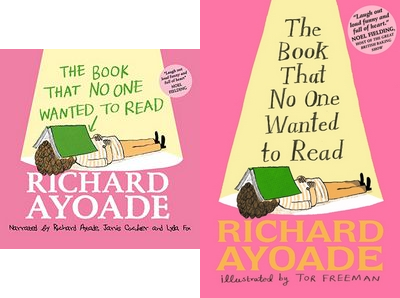
The Book That No One Wanted to Read by Richard Ayoade, Tor Freeman, Jarvis Cocker, Lydia Fox: In Print or Audio, It’s Just Delightful

I am fully aware that the following post overuses the word “delightful.” I wanted to use it at least a dozen more times. This is both a sign that my working vocabulary needs expansion and that this book is a delight. More the latter than the former.


The Book That No One Wanted to ReadThe Book That No One Wanted to Read

(Hardcover/Audiobook)
by Richard Ayoade
Narrated by Richard Ayoade, Jarvis Cocker, Lydia Fox
Illustrated by Tor Freeman

DETAILS:
Publisher: Walker Books US (hardcover); W.F. Howes, LTD. (audiobook)
Publication Date: March 14, 2023
Format: Hardcover/Audio
Length: 108 pg./49 min.
Read Date: April 4, 2023


What’s The Book That No One Wanted to Read About?

This is tricky without giving the whole thing away…but I think I can get close to it. Maybe more idea of the flavor?

We’re told at the very beginning that this book isn’t like others—other books are written by authors, while this book is written by a book. A book with opinions. For example, about authors:

Take it from me, authors can be quite annoying. They go on and on, filling up up page after page, but they have no idea what it’s like to be a book.

or these parts of Top Five Things That Grate My Gears (I’m only giving selections, but I want to give the whole thing):

1. People who fold the corner of the page to save their place.Have these savages not heard of novelty bookmarks? Or paper?…Which part of your body would you most like to have folded back on itself?*

2. People who underline certain words. ALL THE WORDS ARE IMPORTANT!

3. People who skip to the end. If the end was meant to come sooner, it’d be called “the middle.”

and don’t get it started on Ipswitch.

* The accompanying illustration of examples of ways to fold a body is delightful.

This book then goes on to tell a story in the second person about someone (presumably a middle-grade child, but really it could be anyone) who is going through a very large library and comes across the shelf holding The Book That No One Wanted To Read. That book then begins having a telepathic conversation with the “you” about being a book, the book’s plight as being so ignored, and how “you” can help it.

I’m not sure that makes sense—but it should give you an inkling of what you’re in for.

The Narration

Jarvis Cocker handles the bulk of the narration—he’s the voice of the opinionated Book telling the story, and as such is the voice that describes the “you” walking around. I could listen to his portions on repeat for a few hours at a time and be quite content (when I wasn’t laughing).

Richard Ayoade is the voice of the titular book and brings his distinguishing style to that narration. If you don’t smile listening to him as this character, you’re doing something wrong.

Lydia Fox provides the voice for the middle grader in conversation with the book. She’s just as fantastic as the others, and I only mention her last as I went in order of appearance.

This is one of those multi-narrator audiobooks where all the narrators are equally good—capturing the spirit and tone of the text and bringing it to life. I’d say that Cocker is the best narrator of the three, unless you asked me in the middle of one of Ayoade’s lines. Or while Fox was reading. I just loved all the audio aspects of this book.

The Illustrations

Oh, wow. I love the illustrations—they are absolutely great. It’s a sketchy kind of art, immediately relatable (think Jules Feiffer). They grab you right away and are just delightful—as funny as the text, without overshadowing it. They have the same voice, the same kind of humor, but don’t just retell the jokes in the book—sometimes they riff off them, expand them, and sometimes the humor is just adjacent to the jokes in the text.

I don’t normally recommend this kind of thing, but you can pick up the book and just look at the pictures (and read the captions) and have a good time without bothering with anything The Book is trying to convey.

So, what did I think about The Book That No One Wanted to Read?

When I heard about the book a few months ago, I was intrigued and made a mental note to look into it when it was released. Then I promptly forgot about it until I saw it on my library’s app. I’d intended on getting the text version, but I needed something short, so I jumped on it.

I was charmed instantly and loved the experience so much that I ran out to get the Hardcover so I could see the text, re-read portions—and check out the pictures. I haven’t found the time to read the whole book yet—but I have looked at every illustration and read bits of it a few times. This is why I’m giving you this strange hybrid format post.

If you’re going to encounter this book without the vocal stylings of Fox, Cocker, or Ayoade, you need the illustrations to make up for them. If you’re going to read the book without the benefit of the illustrations, you need narrators as strong as those three.

In case you haven’t noticed, I’m doing much better at conveying my reaction to the book than I am the book itself. The voice and tenor of the book are great—it’s goofy and strange, the humor is occasionally dry, it’s imaginative, it’s affirming and encouraging, it wraps you in a blanket of fun and makes you feel good. The characters all three of them—”you”, The Book That No One Wanted to Read, and the Book telling the story—are the perfect way to convey the contents. You don’t want a lot of characters wandering in and out of this one—keep it simple. But you don’t want this to become a monologue or an essay (although judging by the first and final chapter, it’d be great as one of those), so you need the three voices.

The best thing that comes to mind to compare it to is The Phantom Tollbooth. But shorter. And with the humor dialed up by a factor of 50.

I have one reservation. I’m not sure that the style of humor or the content of all the jokes are going to land right with an American Fifth Grader. It feels, perhaps, too British for that. But then again, American Fifth Graders are exposed to more than I was. Also, this could be the kind of thing that trains an 11-year-old’s sense of humor in the same way that stand-up albums I didn’t fully understand did mine. So what do I know?

Bookish adults are going to have a blast with this. Middle-Grade readers who are into slightly off-kilter books will really enjoy this. Most middle-graders, as far as I know, are slightly off-kilter themselves, so maybe they’re all the right audience. Just give them this book in their preferred format and you’ve likely got a winner.

I adore this book—and think it’s going to be a favorite of mine for years to come. I can’t wait to introduce my grandson to it—and frankly, a few older friends and relatives, too.


4 1/2 Stars

This post contains an affiliate link. If you purchase from it, I will get a small commission at no additional cost to you. As always, the opinions expressed are my own.

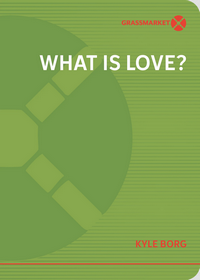
What is Love? by Kyle Borg: A (too?) Brief Look at a Deep Topic

What is Love?What is Love?

by Kyle Borg

DETAILS:
Series: The Bedrock Series 
Publisher: Grassmarket Press
Publication Date: December 20, 2022
Format: Paperback
Length: 135 pg.
Read Date: February 26, 2023

…deep down we know that love isn’t all we need. We also need to love well. We need to love rightly. So who gets to define that? Which voice is worth listening to, and which voices should be ignored? Is philosophy right? Is psychology right? Sociology? Biology? Politics? Economics? Literature? Hollywood? Music? Social media? Porn? Who gets to tell you what love is?

In the midst of these noisy voices, we need a louder voice. We need a voice that can break through the chatter and clearly, authoritatively, conclusively define for us what love is.

What’s What is Love? About?

This is Borg’s attempt to show what the Bible’s authoritative and conclusive definition of love is. He looks and several texts from all over the canon—spending (naturally) a substantial time in 1 Corinthians 13.

It’s a multi-faceted look at love. Borg considers the love of God demonstrated between the persons of the Trinity as well as toward His creation. But he also looks at the love that humans are to show each other as well as that we’re supposed to show to God.

The seventeen chapters are brief (in 135 pages, they have to be), but he doesn’t shy away from going deep into the topic of the chapter.

So, what did I think about What is Love??

There’s a lot of good material here—helpful, persuasive, and Biblical. But…it seemed to miss the intended goal of the book of giving a strong definition for love. Don’t ask me what was missing, but it just felt to me like Borg fell a little short.

I’ve been listening to Borg for a few years now on a couple of podcasts, and really appreciate his insights and explanations for various topics. So I was a little surprised that I didn’t connect with this the way I expected. I halfway expect that he tried to do too much in such a brief book, and if his goal hadn’t been so lofty, he’d have done better.

The writing is clear and concise—it’s as approachable as you could hope for, no matter your age or groundedness in Christian teaching. This seems to be the intent of the books in the Bedrock series, and Borg succeeded there.

I do recommend the book and think readers will benefit from reading it—I did. While I’m not sure Borg delivered the conclusive definition he intended to, he gave a lot of clear teaching on what the Bible says to lead to that definition, and that’s a good enough place to start.


3 Stars

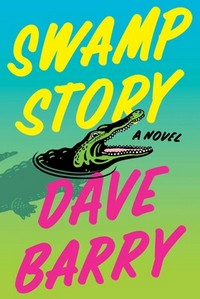
Swamp Story by Dave Barry: Florida. Just say it’s Florida.

Swamp StorySwamp Story

by Dave Barry

DETAILS:
Publisher: Simon & Schuster
Publication Date: May 2, 2023
Format: eARC
Length: 320 pg.
Read Date: April 19-21, 2023


What’s Swamp Story About?

This is hard to summarize, really. Which is part of the beauty of the book.

Most of the characters in this book aren’t what you’d call likable. They’re not really villains or antagonists, they’re just…people you don’t want to spend time with in real life, people with more greed/ambition than common sense (or decency). There are a couple of guys living in a cabin in the Everglades trying to assemble enough footage for a reality show pilot (basically, the good-looking one of the pair walking around shirtless interacting with native wildlife). Their weed dealer owns a failing convenience store/bait shop and has a “so stupid it just might work” plan to put his family’s store on the map. There’s a would-be talent agent (or just anything to ride the coattails of his buddy who happens to make a little money). Oh, and there’s a lawyer and a cabinet secretary/presidential aspirant, too—can’t forget them.

On the villainous side, there’s the weed dealer’s supplier—a former football player who is still large enough to intimidate active linemen who will not tolerate missed deadlines. Two ex-con brothers who are the textbook definition of nasty are also running around. There’s also an Eastern European gangster and some of his employees from the old country who should make everyone quake with fear.

On the likable side, you have the shirtless would-be star’s girlfriend and mother of his child (who really regrets ever giving him the time of day, no matter how pretty he is). The weed dealer’s brother who really needs something to motivate him to do more than play games on his phone, might have found that motivation in her. You’ve also got a couple of aides to the secretary, who really need a better job. An alcoholic ex-reporter desperate to make a buck is just what the weed dealer wants for his idea. I can’t forget either the aging TV reporter desperate to cling to her former relevance or the champion snake hunter.

Put all these characters in a small geographic region, throw in a large amount of buried Confederate gold and a couple of viral videos, shake well, and serve. Swamp Story is the result.

This Book Could’ve Been Shorter

Around the 70% mark (I’m keeping it vague because I don’t know how it’ll go in the final edition), a couple of the characters have an exchange that essentially goes along these lines:

Character A: I hope nothing else happens.
Character B: What else could happen?
Character A: …

and then there’s a map showing the immediate vicinity and some of the major buildings/landmarks of the story, making it very obvious that, based on what we know, all the characters are really near each other and that the likelihood of them running into each other in the very near future is pretty high. The reader will not be able to look at this map and not start imagining how all that running into each other is going to go.

I made a note at this point, that Barry could’ve ended the novel at that point—that exchange, the map, and the reader’s imagination—and it’d have been a fun and satisfying read.

However, odds are, your imagination isn’t as good as Barry’s is (mine sure isn’t), and as zany as I thought things were going to get from this point, the truth was far zanier. His conclusion to the novel (not just the immediate every character and storyline coming together in one spot, but everything that followed) was better than any of the ideas I came up with (and I liked most of my ideas a lot).

Still, there’s part of me that wishes he’d left things with that line and the map. I’d have laughed hard at that.

So, what did I think about Swamp Story?

I really enjoy reading Barry’s novels, and Swamp Story is no exception. It’s a different kind of humor (largely) than Barry’s columns or books, but it’s just as satisfying. I’d want to say that it’s more subtle, but that’s not true at all. There’s more character-based humor, and some of it’s the dialogue—which strikes you differently than the straight humor pieces he’s best known for.

Now, that said, there’s a scene at the beginning—involving a rich child’s birthday party, a couple of costumed performers, and a difficult-to-crack piñata, that absolutely cracked me up and I’ve been replaying it in my head since I read it—it’s perfect slapstick.

Putting aside the humor, all the story arcs worked really well and I can see toned-down versions of all the arcs working well together in a grim version of this story. I’ve argued recently that a good test of a comedic novel is if the plots would work without the laughs—in this case they largely wood. But they’re so much juicer and more enjoyable in this comic and heightened versions.

There are genuine bad guys, some actual threats, several characters in search of a good idea,* and a couple of people you hope catch a lucky break and escape from everything they’re surrounded by relatively intact. Throw in some good laughs, and some clever writing, and you’ve got yourself a fun few hours of reading. That’s likely what the reader looks for in a Dave Barry novel, and that’s what Swamp Story delivers. Strongly recommended.

* Apologies to Pirandello.


4 Stars

Disclaimer: I received this eARC from Simon & Schuster via NetGalley in exchange for this post—thanks to both for this.

This post contains an affiliate link. If you purchase from it, I will get a small commission at no additional cost to you. As always, the opinions expressed are my own.

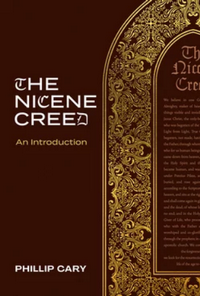
The Nicene Creed: An Introduction by Phillip Cary: A Great Primer on the Ancient Creed

The Nicene Creed: An IntroductionThe Nicene Creed: An Introduction

by Phillip Cary

DETAILS:
Publisher: Lexham Press
Publication Date: March 29, 2023
Format: Hardcover
Length: 211 pg.
Read Date: April 9-16, 2023

What’s The Nicene Creed About?

The subtitle says it’s an introduction to the Creed, and that’s the best way to describe it. Cary breaks the Creed down line by line—subdividing many of the lines to bite-size pieces.

Once in those pieces, Cary takes a variety of approaches—sometimes it’s a commentary on that part of the Creed, sometimes it’s historical background, sometimes it’s a point of grammar about the translation (or the text). Each chapter is short, clear, and to the point—most of all, they’re helpful for the reader to better understand the Creed.

Epilogue

The Epilogue presents “The Trinity in Simple Terms”—it’s the bare bones of the doctrines, drawing upon Augustine, in seven simple points.

I heard Cary give this on a podcast episode recently (calling it something like “Teaching the Trinity in Under Two Minutes”, and it’s a great way to present this material.

So, what did I think about The Nicene Creed?

On the one hand, I can be really brief here—this is a fantastic introduction to the Creed and/or some of the doctrines taught by it. In many cases, it’ll be a review of ideas—but even in those cases, Cary will likely shed a different light on it, or make you think about the idea in a way you’re not used to.

There’s a temptation to go in-depth on various chapters or sections—but I’m going to resist it for a variety of reasons.

This can be a quick and breezy read. It’s a mistake to let Cary’s simple and straightforward text let you read quickly—because there’s a lot to think about and reflect on here. Even if—especially if, actually—you recite the Creed on a regular or frequent basis every Lord’s Day. This is a great way to stop and meditate on these essential truths of the Christian faith.

Now, each section could easily be 2-3 times as long, and I’d read it—but I can see why Cary made the choice he did (but, I’m just saying, if someone wanted him to give a longer introduction, there’s at least one buyer out there)

Cary’s a trustworthy guide through this Creed, and I heartily encourage you to follow him through it.


4 1/2 Stars

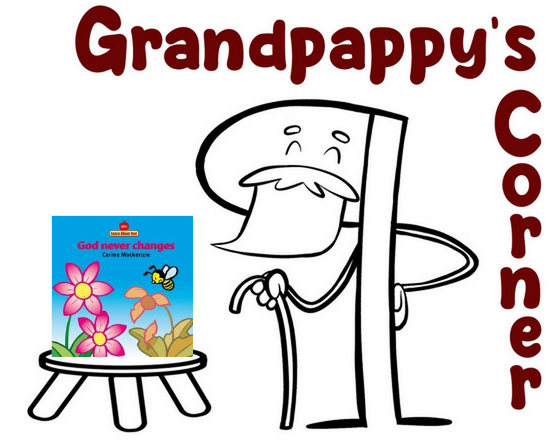
Grandpappy’s Corner: God Never Changes by Carine MacKenzie, Derek Matthews (Illustrator) ★ ★ ★ Small Words About a Big Idea

Grandpappy's Corner Logo

God Never Changes

by Carine MacKenzie, Derek Matthews (Illustrator)

DETAILS:
Series: Learn About God 
Publisher: CF4Kids
Publication Date: September 2015
Format: Board Book
Length: 12 pg.
Read Date: April 22, 2023

What’s God Never Changes About?

This is a quick and yet thorough (at least for the Board Book audience) look at the Immutability of God. Each page starts off by saying, “God Never Changes,” and then comparing Him to various aspects of life and nature that a child can understand and appreciate. And learn from.

Let’s Talk about the Art for a Minute

It’s simple, it’s cute, it’s bright, and attractive. It does the job. I liked it—and can see kids liking it, too.

How is it to Read Aloud?

Very simple. There’s no rhyming or anything (which is good, I think it’d be annoying for this subject matter). It works well for reading aloud and then stopping to talk about the ideas, too.

So, what did I think about God Never Changes?

I picked this one out of the handful from this series sitting on our shelves because I’m in the middle of the discourse on The Immutability of God in Charnock’s The Existence and Attributes of God, and I figured I’d stay on theme. It works remarkably well in conjunction—in fact, Mackenzie uses some of the same argumentation and explanations as Charnock does when it comes to this topic. Just much simpler. My inner geek loved that bit.

I don’t know that this is the kind of thing a child will clamor to have read to them again and again—but you never know. I do think it’s good for teaching at a young age, and that’s the whole point of this series. I do recommend it and look forward to using it with my grandcritter soon.


3 Stars
Grandpappy Icon

Catch-Up Quick Takes: Some Overdue Audiobook Takes

This is a post I’d hoped to get up the first week of February, making it…very late. But here we go…

As always, I want to say that the point of these quick takes posts is to catch up on my “To Write About” stack—emphasizing pithiness, not thoroughness.


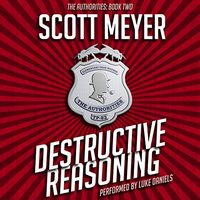
Destructive ReasoningDestructive Reasoning

by Scott Meyer, Luke Daniels (Narrator)

DETAILS:
Series: The Authorities, #2
Publication Date: November 16, 2022
Format: Unabridged Audiobook
Length: 9 hrs., 21 min.
Read Date: January 5-10, 2023

(the official blurb)
This sequel starts off with a sequence as silly, but slightly less cringe-worthy, as the first book before shifting to the major storyline. This one takes the team to Los Angeles to investigate a series of killings. The common thread amongst the victims is that they were playing a version of Dr. John Watson in a movie/TV series.

Not only have there been some killings, but there are three actors in the area who are currently playing Watson (or a Watson-figure), and the team has to investigate and keep them alive.

We get some mocking of the Entertainment Industry, general silliness when it comes to the team, and even a little more backstory on a couple of characters.

Overall, I didn’t like this quite as much, it felt like Meyer was trying too hard to be funny rather than tell a story in his signature way. Still, it was enjoyable enough to finish and want to see more.

Luke Daniels did his typical bang-up job. Ending the audiobook with bloopers was a fun bonus.

3 Stars

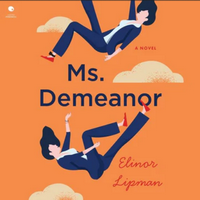
Ms. DemeanorMs. Demeanor

by Elinor Lipman, Piper Goodeve (Narrator)

DETAILS:
Publisher: HarperAudio
Publication Date: December 27, 2022
Format: Unabridged Audiobook
Length: 7 hrs., 27 min.
Read Date: January 17-18, 2023

(the official blurb)
I saw this a few times on my Libby app and decided I wasn’t that interested as cute as it sounded, but at some point, I saw a cover blurb from Richard Russo. So, why not?

Jane Morgan is under house arrest and newly unemployed thanks due to a minor crime, a nosy neighbor, and a judge wanting to make an example of her. She’s forced to try to do things to help the time bearable—including making the acquaintance of someone else in her building also under house arrest.

There’s some romantic comedy here, some self-discovery, and just some warm-hearted fun. It’s not fantastic, but it’s a good way to spend some time. It’ll keep you engaged and entertained.

3 Stars

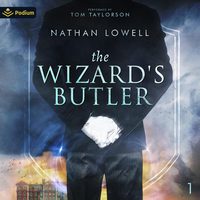
The Wizard’s ButlerThe Wizard’s Butler

by Nathan Lowell, Tom Taylorson (Narrator)

DETAILS:
Series: The Wizard's Butler, #1
Publisher: Podium Audio
Publication Date: April 20, 2021
Format: Unabridged Audiobook
Length: 12 hrs., 10 min.
Read Date: January 25-27, 2023

(the official blurb)
I feel like I should have a lot to say about this one, but I don’t (which kind of bugs me). It’s the story of a man being hired to be a butler/caretaker of an older man for a year. After that year, the unscrupulous relatives that hired him will pay Roger a disgusting amount of money and will ship Joseph Perry Shackleford off to a retirement home and take control of his money and property.

What is going to make this easier is that Mr. Shackleford forward thinks he’s a wizard. Roger could use the money and likes Mr. Shackleford, so he doesn’t care what the old man thinks he is. Roger wants to help him—and he’s pretty sure that his new bosses are up to no good, maybe he can cause them some trouble.

It turns out, however, that the old man actually is a wizard. Roger gets introduced to a world he couldn’t have imagined was real if he tried.

This book was charming as all get out. I really enjoyed the story, the world, the magic system, the characters (I really enjoyed the characters), and the way that Lowell put this together—Taylorson’s narration was effective and engaging, too.

This is the slowest-paced Urban Fantasy I’ve ever read—with stakes that are so far smaller than we’re used to, which doesn’t stop it from being something that holds your attention. It could probably be safely described as Cozy UF—Fred, the Vampire Accountant books have more violence, and it’s typically tame 90% of the time. And I’m more than ready for more of this kind of story.

3 Stars

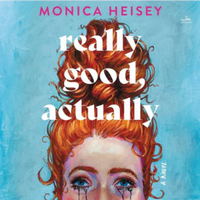
Really Good, ActuallyReally Good, Actually

by Monica Heisey, Julia Whelan (Narrator)

DETAILS:
Publisher: HarperAudio
Publication Date: January 17,2023
Format: Unabridged Audiobook
Length: 10 hrs., 13 min.
Read Date: January 20-25, 2023

(the official blurb)
This is a look at the ups and downs—and further downs, and deeper downs–of a young woman in the year after her divorce. It’s about grieving her relationship, friendship, dating (we’ll be generous/prudish and call it that), and accepting yourself–and accepting help.

I thought the prose and inventiveness in certain scenes were spot-on. There’s a lot of cleverness displayed throughout. But while there are some great moments, but I just didn’t think the journey was worth the destination—and I’m not that crazy about the journey, either.

It’s an utterly fine book.

3 Stars

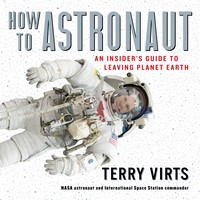
How to AstronautHow to Astronaut:
An Insider’s Guide to
Leaving Planet Earth

by Terry Virts

DETAILS:
Publisher: Workman Publishing Company
Publication Date: July 15, 2022
Format: Unabridged Audiobook
Length: 11 hrs., 23 min.
Read Date: January 27-31, 2023

(the official blurb)
This is exactly what you want in an astronaut memoir—he talks about his interest in the program and why he wanted to become an astronaut, his training–both for the Space Shuttle and ISS—actual service on both—(obviously spending more time on the ISS because he spent more time on it and there was more to talk about), as well as what it’s like after returning to Earth. It’s not glowing about NASA or any space program—he’s frank and honest about problems, his own errors, and difficulties as well as what a fantastic opportunity it was for him.

He’s witty, thoughtful, and reflective throughout (in both the writing and his audio narration). I thoroughly enjoyed it and can see myself returning to this one in the future.

3 Stars

This post contains affiliate links. If you purchase from any of them, I will get a small commission at no additional cost to you. As always, my opinions are my own.


On the Apostolic Preaching by Irenaeus of Lyons: A Timeless Survey of Redemptive History

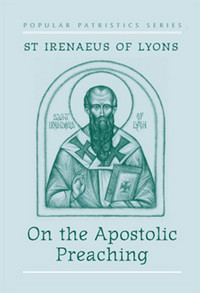
On the Apostolic PreachingOn the Apostolic Preaching

by Irenaeus of Lyons , John Behr (Translator)

DETAILS:
Series: Popular Patristics Series, #17
Publisher: St Vladimir's Seminary Press
Publication Date: September 01, 2003
Format: Paperback
Length: 101 pgs.
Read Date: April 2-9, 2023

What’s On the Apostolic Preaching About?

This is one of the two surviving works we have from the Second-Century theologian, Irenaeus. In this work, he simply recounts the Biblical storyline about the promised and coming and then Incarnate Messiah, His Earthly ministry, death, resurrection, and the spread of the Gospel.

I’m really not sure what else to say—he basically summarizes the Scriptures with a focus on Jesus.

Readability

I said essentially the same thing with the last book in this series that I blogged about, but I think it bears repeating.

For just about every reader (at least we non-scholars) the idea of reading Patristics is fairly daunting—even if you’ve done it before and emerged relatively unscathed (and maybe even learned something or enjoyed it). And it probably shouldn’t be that daunting on the whole (am more than sure that there are plenty of examples of intimidating texts).

There’s a reason that this work has endured through the centuries—it’s not just for its historical significance (although I’m sure that’s a lot of it), but this is something that has benefitted believers through the years from all levels of education and experience. There’s no one who can’t read and learn from this.

So, what did I think about On the Apostolic Preaching?

I started off a little annoyed by one of the introductory essays that stated that the first reading

will probably result in surprise and perhaps disappointment. Irenaeus does not present Christianity, in the way we have come to think of it, as a system of theological beliefs. Moreover, very little place is given to the ecclesiastical or sacramental dimensions of Christianity, nor does he describe the mystical life of prayer.

One, I didn’t know what to expect from this—I really only knew “Irenaeus” and “Popular Patristics” when I bought and then opened the book. Secondly, when I discovered what it was, I wasn’t disappointed. This is exactly what I want to see out of a 2nd Century writer—because it’s the kind of thing I appreciate in a 21st Century Writer. It’s reassuring to see that the central idea of what Apostolic Preaching ought to be is pretty much the same for both eras—yeah, some of what Irenaeus wrote could use some fine-tuning (and he’d likely say the same of what shows up in one of the Essential Studies in Biblical Theology volumes I’ve discussed). But their modus operandi are so similar, that it’s clear that they’re walking in the same direction.

I found this to be a quick, approachable read—as relatable today as it had to have been centuries ago (although I guess it’d be safe to say that many of his readers might not be ready to hear what he said in the same way I was). I was very encouraged by this and wish I’d read it years ago so I could be on my fifth or sixth reading now.

Highly recommended.


5 Stars

This post contains an affiliate link. If you purchase from it, I will get a small commission at no additional cost to you. As always, the opinions expressed are my own.

5 Puritan Women by Jenny-Lyn de Klerk: Brief Portraits of Women You Should Meet

5 Puritan Women5 Puritan Women:
Portraits of Faith and Love

by Jenny-Lyn de Klerk

DETAILS:
Publisher: Crossway
Publication Date: February 07, 2023
Format: Paperback
Length: 137
Read Date: March 26, 2023

What’s 5 Puritan Women About?

Agnes Beaumont, Lucy Hutchinson, Mary Rich, Anne Bradstreet, and Lady Brilliana Harley. Names you probably don’t know—well, maybe Anne Bradstreet is familiar to you. Especially if you ever read any poetry from the New England colonies (probably against your will—nothing against them, but I can’t imagine anyone seeking it out outside of High School/College literature classes). These five women are from (roughly) the Puritan era of British and American History and are brought to the reader’s attention here.

de Klerk writes and speaks frequently on the Puritans and noticed that notable Puritan women are often overlooked, so she highlights these here to bring their contributions forward. Each of them contributed in their own ways—for their family, for the support of the ministry, for the culture, and for the people in the immediate orbit.

Agnes Beaumont was a member of John Bunyan’s congregation who fought off several false accusations about her (and him). Lucy Hutchinson was a well-educated woman who wrote a good deal, including a systematic theology for her daughter. Mary Rich was noted for her benevolence and charity. Anne Bradstreet made a name for herself with her poetry, as I somewhat snidely mentioned before. Lady Brilliana Harley’s correspondence was the source of sage and godly advice. I’m doing a lousy job of summarizing this—but I just tried to do in this paragraph what de Klerk spent a book on.

Here’s My Beef with 5 Puritan Women…

I can’t get my hands on the primary sources. Okay, some of Bradstreet’s poems are in the edition of Norton Anthology of American Literature I used in my undergrad days, so I can re-read those. But Lady Harley’s letters and Lucy Hutchinson’s systematic would be fantastic to read. Can I get those? Not that I can find. You can get Hutchinson’s works for a few hundred dollars, or some sketchy-looking ebooks of some of her works, but nothing affordable.

I’d love to hear that Reformation Heritage, Christian Focus, or Banner of Truth was working on making these works accessible to contemporary readers—even better if de Klerk was working on editing those herself, as she clearly has some sort of affinity for them.

In the meantime, I’m just going to grouse about this a bit—de Klerk makes you want to get to know these women better through their written works, but when they’re not available….it’s just mean.

So, what did I think about 5 Puritan Women?

I really appreciated this book and de Klerk’s style. The writing is clear, approachable, and affable—this isn’t a stuffy introduction to figures from the past, but someone telling you about people she’s come to know and is excited about.

I’m not sure the pairing of the women with Puritan disciplines really adds that much. It’s an okay handle and way to approach things, but I really didn’t need that, their stories and experiences were enough on their own. Your results may vary, obviously, this might be one of the more valuable aspects for some readers.

I recommend this quick and engaging read to all those who are interested in some of those figures in Church History too often overlooked—particularly if you have any affinity for or curiosity about the Puritans—it’s a great reminder that for every John Owen or John Bunyan, there are several other faithful servants we could and should get to know. I found it inspiring, interesting, and even a little moving. I’d definitely read expanded works on any of these—or a sequel, 5 More Puritan Women.


3.5 Stars

This post contains an affiliate link. If you purchase from it, I will get a small commission at no additional cost to you. As always, the opinions expressed are my own.

RE-ISSUE DAY REPOST: The Part About the Dragon Was (Mostly) True by Sean Gibson: A Hilarious Fantasy Filled with Adventure and Shenanigans. Definitely Shenanigans.

The Part About the Dragon Was (Mostly) TrueThe Part About the Dragon Was (Mostly) True

by Sean Gibson

DETAILS:
Publisher: The Parliament House
Publication Date: December 10, 2020
Format: Kindle Edition
Length: 358 pg.
Read Date: March 10-12, 2022


I am, if not the most well-known bard in Erithea (yet), arguably the most talented, and unarguably the cleverest. I also wouldn’t quibble if you suggested that I’m the most beautiful, but that’s just because I’m very agreeable (and beautiful)…

Decades ago, I was sworn to secrecy regarding the true story of the great and terrible “Dragonia,” but recent developments have released me from that promise, and so I can finally tell the tale.

A Quick Bit About the Re-issue

You should probably just read what Sean Gibson said over on his website, but I’ll share a snippet:

Bibliophiles the world over know there’s nothing quite like the feel of a hardcover book in your hands, especially when it’s nattily attired in a gorgeously illustrated dust jacket. It’s so much more than a book—it’s an experience. The story pulsating between the covers, a mystical alchemy of ink and imagination exponentially greater than the sum of its parts, guides you on a journey to an infinity of impossible destinations. When you’re reluctantly ready to return to reality, the stolid feel of those very same covers, just one design element of a marvel of engineering that can’t possibly be improved upon, slowly draws you back—changed, bettered, by the experience, somehow made more whole.

With that spirit in mind (or, perhaps, despite that spirit), Parliament House Press has re-issued this novel in hardcover and brought along Mateusz Wisniewski to provide this dazzling new cover. I liked the original cover, but this one is the kind you want on a hardcover.

I’d love to tell you exactly how snazzy this cover looks in person, but for two days now the tracking information says, “The shipping label has been created. Your package will be picked up by the carrier soon. Check back for updates on your delivery, or sign up for notifications.” Woe is me. You should head over to your local bookstore, Bookshop.org, or wherever you get your books and get your hands on this edition* today!

* Or, like me, an annoying and nowhere-near-as-attractive status update.

Enough about that, let’s talk about what’s behind the cover—as great as the cover is, this is the best part:

What’s The Part About the Dragon Was (Mostly) True About?

This is that true story about Dragonia, told alongside the “official” account so the reader can see how the details were adjusted and tweaked to create the story everyone knows.

The town (or village, depending on who you ask) of Skendrick is being terrorized by a dragon—crops are being ruined, trade is disrupted, and the town is about to fall apart. Desperate, they put out a call for adventurers to come and kill the dragon. But they get no takers—so they go to Plan B. The villagers (or townspeople) pool their meager resources to hire a bard. This bard is to compose a song to make the attempt to kill the dragon sound appealing enough—and its treasure (which may or may not actually exist) enticing enough—to get a band of adventurers to come.

This is where Heloise comes in. She takes the gig and soon gets a new and yet unaccomplished band of adventurers to take up the call to action. I don’t want to get into describing the group, you want to meet them in the book.

They encounter difficulties from without and within; nasty, malodorous geography; orcs and other creatures; and, well, the dragon.

Heloise the Bard

“You’re not half as funny as you think you are, as I suspect you have a very high opinion of yourself.”

“My opinion of myself is in direct proportion to my amazingness,” I said sweetly.

The half-elf, Heloise the Bard is our narrator—as you can tell from the quotations above, she has a fairly high opinion of herself and her abilities. She’s also rather impressed with her hair and certain other physical attributes. Probably her greatest skill is self-promotion.

She decides to accompany the adventurers, to chronicle their journey and the outcome of their clash with the dragon. Her wit and quick thinking prove valuable to their effort and her particular set of skills make all the difference.

She is a hoot. It’d be easy for Heloise to be an annoying, over-the-top character, but somehow Gibson keeps her as an entertaining, over-the-top character. I’ve been trying to come up with a character to compare her to, and I’m failing. Maybe she’s the Fantasy version of Evanovich’s Lula, except Heloise has the skills that Lula thinks she has. Maybe she’s the equivalent of High Fidelity‘s Barry. Somewhere in the Venn Diagram featuring Fantasy, Lula, and Barry, I guess.

She appears in a couple of other books by Gibson, and I’m eager to spend some more time with her.

The Humor

The section could easily be merged with the previous one because the humor displayed in the book is primarily Heloise’s. The jokes are pretty much non-stop—even in the middle of fight scenes, or when death is nigh. The danger is still present, and the combat (and so on) is as deadly as it would be in another book—it’s just surrounded by laughs.

It didn’t take me long before I’d highlighted too many lines to quote—not that it stopped me from going on. My notes on this one are ridiculous. I kept chuckling throughout the reading. I probably would’ve finished the book in 2/3 the time, if reacting to the jokes didn’t make me stop reading for a moment.

If you’ve read The Tales of Pell, you’ve got a good idea for the pace of the jokes—and tone of the book, too.

There’s slapstick, there’s scatological humor, a great Meatloaf (the singer) line, some fantastic bursts of alliteration for the sake of a laugh, some general silliness, clever dialogue, and…honestly, I’m having a hard time thinking of a kind of humor that’s not in there. There’s a running gag (that I’ve alluded to) throughout about whether Skendrick is a town or a village—I can’t tell you how often it’s brought up. And the joke works every time—I should’ve gotten sick of it, and I never did. I don’t know how Gibson pulled that off, but that alone is the mark of a fantastic humor writer.

In addition to The Tales of Pell, if you’ve enjoyed Christopher Healy, Dave Barry, K.R.R. Lockhaven, Peter David, Scott Meyer, Joe Zieja, Jim C. Hines’ Jig the Goblin series, or John Scalzi—you’re going to dig the humor here. And if you dig the humor, you’re going to really enjoy the book. It’s that simple.

So, what did I think about The Part About the Dragon Was (Mostly) True?

You know by this point that one of my main goals in telling this story is to show that the adventuring life isn’t all it’s thought to be. It’s mostly boring, frustrating, dangerous (though not excitingly dangerous), smelly (dear gods, so smelly), and not particularly lucrative. Occasionally, however, it’s exactly how the songs make it sound, and in those moments, it’s easy to see why people—even smart, capable people like Nadi—would devote their lives to doing something so irrational. Let the record show that entering a dragon’s lair for the first time is one of those moments, and it’s fair to say that each member of our intrepid band experienced more than a frisson of excitement as we crept across that threshold.

I think it’s pretty clear that I had a blast with this book, but I should probably make that explicit. I had a blast reading this book.

I think I should not that this is not a book to read if you’re in a “find out what happened and get to the end of the story” frame of mind. This is a “enjoy the trip, not the destination”/”stop and smell the roses” kind of book. The destination/what happens is fully satisfying, but the getting-there is so much better.

In addition to the jokes and the dragon, there is a running commentary on what “the adventuring life” is like outside of the glamorous or exciting bits. A lot of fantasy novels will show bits of it, but not enough of them do—and most don’t do it this way. For example, The Part About the Dragon Was (Mostly) True contains more description of various odors than every 99% of the fantasy novels I’ve read by a significant factor. If this were a scratch and sniff book…well, I can’t imagine anyone would stock it—you just don’t want that in your warehouse/store. Sure, it’s silly talking about realism in a book featuring orcs, halflings, elves, etc.—but this factor does ground the book and give it a seriousness (for lack of a better term) that makes this more than a collection of jokes.

This is the funniest book I’ve read in 2022, and I can’t imagine it’ll face much competition. It’s got it all, go get your hands on it.


4 Stars

This post contains an affiliate link. If you purchase from it, I will get a small commission at no additional cost to you. As always, opinions are my own.

REPOSTING JUST CUZ: The Morality of God in the Old Testament by G.K. Beale

This is a lot shorter of a work than I usually talk about, but I needed a short read to break up longer, heavier reads. So now I guess I get to talk briefly about it before I talked about longer, heavier reads. (not that this is lightweight by any means)


The Morality of God in the Old Testament

The Morality of God
in the Old Testament

by G.K. Beale
Series: Christian Answers to Hard Questions

Booklet, 43 pg.
P&R Publishing and Westminster Seminary Press, 2013

Read: November 21, 2021
Grab a copy from your local indie bookstore!

What’s The Morality of God in the Old Testament About?

Believers and unbelievers alike stumble over some of what seems immoral in the Old Testament. Particularly what seems to be evil on the part of God. For example: God’s commands to exterminate the Canaanites and the imprecatory (cursing) Psalms.

How ought the believer to respond to their own questions about this, much less the questions from those outside the faith?

Beale looks briefly at a couple of popular responses to this and finds them wanting. In their place, he suggests a “plausible fivefold approach.”

There seems to be a better way to look at this problem. We will explore it from five different angles, which will help us to understand it more thoroughly. First, how does the killing of the Canaanites demonstrate God’s justice and righteousness? Second, how could Israel’s unique commission as a “kingdom of priests” (Ex. 19:6) shed light on the extermination of the Canaanites? Third, how does God’s sovereignty over all things help us to better understand that he can be considered blameless in all that he does, despite the problems just mentioned above? Fourth, how does the idea of God’s judgment of unbelieving humanity at the end of time shed light on this problem? Finally, how does the law of loving one’s neighbor now and at the end of time help us to better apprehend the issue about the Canaanites and the psalmist’s cursing of his enemies (though this last point has some overlap with the fourth point)?

Each question gets a couple of pages of explanation before moving on, so that the reader is given the complete fivefold approach along with some idea of how the ideas are worked out.

So, what did I think about The Morality of God in the Old Testament?

Not surprisingly, my main concern is length. I want to see each of these points better developed–I don’t think this has the makings of a 200+ page book or anything, but I think it could easily be twice as long to really flesh out some of the points.

The brevity works against itself primarily in that I don’t get to see the ideas examined thoroughly, or tested. The reader is given enough to understand the fivefold approach, enough to chew on it. But I’d like to see it worked out. I’d like to see Beale work through one of the difficult passages, or one of the Psalms in question and show “here’s where we see this and over there is where you see that aspect in action,” etc.

But the point of this series, the point of this being a booklet is for a short introduction to the idea. It’s supposed to be enough to show the reader that there are answers to the hard questions, just not enough to convince them. So I have to take it on its own terms–as such, it’s fine. Even more than fine. And I think there’s something to that fivefold approach, I just want to be convinced. I’m just going to need to look elsewhere for that.


3.5 Stars

This post contains an affiliate link. If you purchase from it, I will get a small commission at no additional cost to you. As always, opinions are my own.

Page 24 of 63

Powered by WordPress & Theme by Anders Norén