Category: Non-Fiction Page 26 of 63

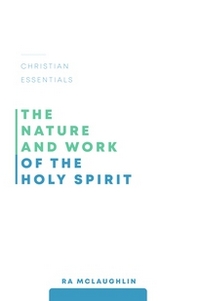
The Nature and Work of the Holy Spirit by Ra McLaughlin: A Broad and Capable Introduction to the Holy Spirit

The Nature and Work of the Holy SpiritThe Nature and Work of the Holy Spirit

by Ra McLaughlin

DETAILS:
Series: Christian Essentials 
Publisher: P & R Publishing
Publication Date: April 26, 2022
Format: Paperback
Length: 153 pg.
Read Date: January 29, 2023
Support Independent Bookstores - Visit IndieBound.org

What’s The Nature and Work of the Holy Spirit About?

As I said about the second volume of the Christian Essentials series, one of its advantages is that I can largely recycle what I said about the others.

This is a basic and broad introduction to Pneumatology—the doctrine of the Holy Spirit from a broadly Evangelical perspective. There’s a good mix of foundational theology and application of it to the Church and the individual believer. The book is adapted from curriculum using language that’s easy to translate—particularly into languages that don’t have a well-developed theological vocabulary—so the English is kept basic, too. There’s almost no academic or technical theological language used, and those that are used are well-defined (including in a handy glossary).

The chapters are short (most around fifteen pages) and well-organized. Each contains a handful of side-bars consisting of a paragraph or two with the contents of interviews with pastors and theologians on the topic under discussion. These interviews were with people from a variety of theological perspectives helping broaden the text so that it’s not exclusively from a reformed perspective.

The Organization of the Work

One thing that really jumped out at me while reading this book is that it wasn’t organized the same way as similar works are—which is refreshing because you get tired after a while of reading remixes on a topic. But mostly refreshing because I thought this was a really good way to approach the subject.

We start with the role of—and revelation of—the Spirit as a member of the Trinity—as seen in the Old Testament, then the New, and then as it was worked out in Church History. Those are three quick chapters that should probably be longer but did the job for the scope of this book.

Then we get chapters dealing with the Spirit’s work in the world—providence, creation, revelation, and common grace. Followed by His work in the Church—through special revelation, covenant grace, and gifts. The last two chapters focus on His work in individual believers—in conversion and sanctification.

So, what did I think about The Nature and Work of the Holy Spirit?

Solid teaching, an effective and helpful organization, all in all, a good book.

Like the rest of this series—the big problem with this book is that it works so hard to not take a particular position that it gives a watered-down presentation on areas of controversy. If they’d only taken a firm stance on (for example) cessationism, and then went on to give a fair presentation of non-cessationist views, that’d be different. Instead, we’re given descriptions of the views written in a way to explain them, but with the aim to avoid particulars and the offense they may carry—and really leads to it being almost useless.

When it’s not discussing intra-mural debates or disagreements, it’s a very useful and helpful work (like the other two books in this series). It’s good on the essentials—although exactly how “essential” is defined might be quibbled with.

For the series, I think this might have been the strongest entry. For just an introduction to the doctrine of the Spirit, it’s a pretty solid one. There are better books about Him and the theology surrounding Him, sure—but they’re of a nature and depth that this doesn’t want to achieve. Like the rest, I’d happily pass this volume on to someone who is just getting their feet wet.


3.5 Stars

This post contains an affiliate link. If you purchase from it, I will get a small commission at no additional cost to you. As always, the opinions expressed are my own.


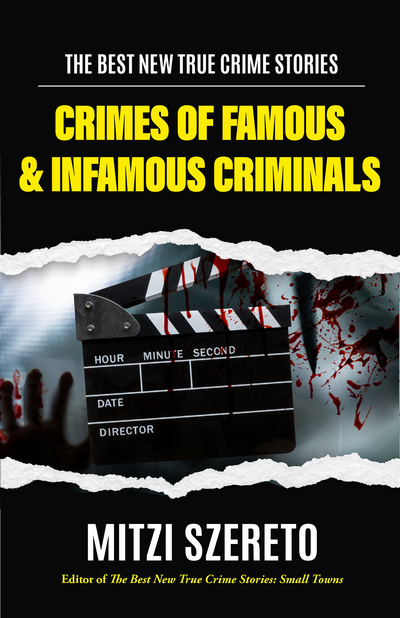
BOOK SPOTLIGHT: Crimes of Famous & Infamous Criminals by Mitzi Szereto

I’m very pleased today to Spotlight Mitzi Szereto’s upcoming release, The Best New True Crime Stories: Crimes of Famous & Infamous Criminals. It comes out on February 14th—just what your Valentine wants. Assuming your Valentine is into true crime, that is. (I’m not being snarky, I know quite a few people who’d do well to pick this up in lieu of chocolates. Or at least in addition to chocolates).

Anyway, before I make this more awkward, let’s move on to looking at the book.

Book Details:

Title: The Best New True Crime Stories: Crimes of Famous & Infamous Criminals
Author: Mitzi Szereto
Genre: True Crime
Publisher: Mange
Release date: February 14, 2023
Format: Paperback/Ebook
Length: 252 pages
Crimes of Famous & Infamous Criminals

About the Book:

Infamous Figures Caught in the Act
People from all walks of life commit crimes. But the ones featured in this anthology aren’t your typical neighbors or subway passengers. Actors, musicians, TV personalities—they aren’t always who they appear to be. You might be surprised at just how many household names and Hollywood stars have led nefarious double lives. And after committing their crimes, the world may have kept on turning, but their infamous legacies remain. Get the stories behind these public figures, both contemporary and historical, who turned to lives of crime. The Best New True Crime Stories: Crimes of Famous & Infamous Criminals offers a fascinating assortment of cases from around the world and from various time frames. Like previous entries in this series, this volume contains all new and original nonfiction accounts penned by international writers from across the literary spectrum, including true crime, crime fiction, and journalism, all expertly arranged by editor Mitzi Szereto. Inside, you’ll find cases that would thrill even the most seasoned true crime addict; stories of Hollywood stars and famous criminals who went down the wrong path; encounters featuring the cases of infamous celebrities like Robert Blake, Jimmy Savile, Fatty Arbuckle, and more.

Book Trailer:

Purchase Links:

Amazon US ~ Barnes & Noble ~ Books-a-Million ~ Amazon UK ~ Blackwells ~ Amazon Canada ~ Chapters/Indigo ~ Angus & Robertson Australia ~ Booktopia

About the Author:

Mitzi Szereto Mitzi Szereto (mitziszereto.com) is an American-British author, anthology editor, and short story writer whose work spans multiple genres. Her widely acclaimed series The Best New True Crime Stories features the volumes Crimes of Famous & Infamous Criminals; Unsolved Crimes & Mysteries; Partners in Crime; Crimes of Passion, Obsession & Revenge; Well-Mannered Crooks, Rogues & Criminals; Small Towns; and Serial Killers. Aside from her many popular books, she has the added distinction of being the editor of the first anthology of erotic fiction to include a Fellow of the Royal Society of Literature. Mitzi has appeared internationally on radio and television and at literature festivals, and taught creative writing around the world. She produced and presented the London-based web TV channel Mitzi TV and portrays herself in the pseudo-documentary British film, Lint: The Movie. Follow her on Twitter, Instagram, TikTok, and Facebook @mitziszereto.

Author Links:

Website ~ Twitter ~ Facebook ~ Instagram ~ Youtube ~ TikTok ~ Goodreads


One more time, it’s out on Feb. 14th—get your preorder in now.

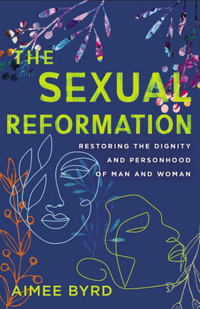
The Sexual Reformation: Restoring the Dignity and Personhood of Man and Woman by Aimee Byrd: There’s a Lot to Commend, but Maybe not Enough

The Sexual ReformationThe Sexual Reformation:
Restoring the Dignity and
Personhood of Man and Woman

by Aimee Byrd

DETAILS:
Publisher: Zondervan
Publication Date: March 7, 2022
Format: Paperback
Length: 207 pg.
Read Date: January 1-15, 2023
Support Independent Bookstores - Visit IndieBound.org

The Back of the Book

Protestants have confessed that the church is always reforming.

But has this been the case when it comes to sexuality?

What if, in trying to be faithful to the beauty of God’s design for man and woman, the church has instead latched onto a pagan concept of our nature and missed the theological meaning of our sexes? We’ve inadvertently robbed both men and women of the dignity of personhood as created in the image of God. Then we miss the beautiful message that our bodies, and our whole selves as men and women, tell: the story of the great joy in which the Son received the gift of his bride, the church.

Through an exploration of the Song of Songs, Aimee Byrd examines what this often-ignored book can teach us about Christ, his church, man, and woman. The Church is ripe for a sexual reformation, and recovering a good theological footing is imperative to it. Byrd invites you to enter into the Song’s treasures as its lyrics reveal the point of it all—not a list of roles and hierarchy, but a love song.

The Song

Like many (most?) contemporary believers, I struggle with The Song of Songs. A lot of the allegorical interpretations seem a little off to me, but I can’t rule them out. I definitely can’t buy the idea that it’s simply an erotic poem and/or erotic manual smack in the middle of the Old Testament.

Byrd draws on both older allegorical interpretations and more recent versions—shaped by the insights of Biblical Theology to come up with her observations on the Song. I found this material fascinating and wanted much more of it. I really should grab some of the works she footnoted and study them.

Call to Reformation

Along with—intermixed with—the Song material is Byrd’s continuing work on re-evaluating the way that men and women relate to themselves in the Protestant Church—particularly the ways that groups like the Council on Biblical Manhood and Womanhood or the Council on Biblical Equality call for. She critiques both poles of these disputed ideas (although she seems to have more to say about CBMW).

Her goal for the book is to bring insights from the Song to the ideas of roles, relations, and treatment of people of both genders—but primarily for women, because that’s where most of the controversy lies.

Her contention is that as we better understand the Song, we’ll better understand the telos of both sexes, which will lead to better—and more harmonious—relations between all the members of the church.

So, what did I think about The Sexual Reformation?

If this book was only the material (expanded) on the Song of Songs, I think I’d really have enjoyed it. If the book was only the other materials, it’d have been thought-provoking—and maybe convincing. But the mix of the two…ehhhhh. I’m not sure. It felt like two half-books that didn’t necessarily belong together. If one (or both) of them got a chance to be fully baked, that’d have been so much better.

Historically, the interpretation of the Song is so varied that it can easily be seen as a wax nose that can be used to say whatever an author wants. I’m not saying that Byrd did that. But I can see where it could be seen that way—yet another reason for the two books to be split.

It’s an accessible read, relatable, and the issues it wants to focus on are very important for believers to wrestle with. Making this the kind of book we need more of (both those that agree with her and those who differ, so we can think about these things). Although we got a little more about what’s going on with Byrd personally than the book really needed, and a lot of the sexual reformation material is a reiteration of her last couple of books, just presented through a different prism.

Ultimately, the Song gives me enough trouble that I’m not really sure what I think of what she says—but I liked it and want to read more like it to see it better. I’m generally on-board with her reformation ideas in broad strokes. So, I’ve got every reason to like this book, but I’m not wholly sold.

Still, I recommend the book for those who want to wrestle with these ideas—or to get pushed on the content of the Song.


3.5 Stars

This post contains an affiliate link. If you purchase from it, I will get a small commission at no additional cost to you. As always, the opinions expressed are my own.

Friends, Lovers, and the Big Terrible Thing: A Memoir by Matthew Perry: A Memoir of Self-Destruction

Friends, Lovers, and the Big Terrible ThingFriends, Lovers, and the
Big Terrible Thing:
A Memoir

by Matthew Perry

DETAILS:
Publisher: Macmillan Audio
Publication Date: October 31, 2022
Format: Unabridged Audiobook
Length: 8 hrs., 49 min.
Read Date: December 6-7, 2023
Support Independent Bookstores - Visit IndieBound.org

My mind is out to kill me, and I know it. I am constantly filled with a lurking loneliness, a yearning, clinging to the notion that something outside of me will fix me. But I had had all that the outside had to offer!

What’s Friends, Lovers, and the Big Terrible Thing About?

This isn’t full of—but does contain—some good, behind-the-scenes stuff about Friends, Fools Rush In, The Whole Nine Yards, Mr. Sunshine, The Odd Couple, Studio 60 on the Sunset Strip, and other projects. But those don’t make up the bulk of the material. And those are interesting, amusing, and support the overall thesis of the book—he’s an addict who has been blessed with more good things than he knows how to handle.

There’s some juicy (largely nameless, but you can read between the lines) bits about his love life—as the title suggests. But again, there’s not much of that overall—and those, too, serve to support the overall thesis—even more than the professional matters do.

Then there’s the Big Terrible Thing—his addictions themselves, how he got started, how he maintained them, and his several attempts to get sober (of varying successes and lengths of success). He also goes into graphic (perhaps too graphic) detail about the physical toll they’ve taken on him—and the financial, emotional, and mental toll they’ve taken on those close to him.

How Perry Comes Across

When this book first came out (or just before it) there were more than a few headlines about some (I’m going to be charitable and call them) questionable jokes he made about Keanu Reeves and some people casting doubt about some of the particulars of some of his stories. Given how impaired he was during most of those disputed events (and just about every other event he recounts), I’m not surprised he doesn’t remember them correctly, and I don’t think it should be held against him. The Reeves jokes, on the other hand, might have seemed like a good idea at the time—but his editors really should’ve stopped them. I jotted down a note after the second one that “someone at Macmillan must have it out for him to let this make it to print.”

But both of those things pale in comparison to everything that Perry admits to in this book. He doesn’t come across as a good guy at all—and I don’t think he’s trying to. Sure, the fact that he’s (seemingly) coming clean about everything and (seemingly) taking responsibility for the lies, destructive behaviors, and despicable actions might make some people want to think better of him—but I don’t think he really wants that.

He comes across—and I realize this could be entirely calculated—as someone who is being honest about his shortcomings, seeking to explain the devastation his addictions have wrought on himself and many, many of those around him—how he’s somehow managed to have some success in the midst of that. He gives credit to some of those who’ve helped him get to this point in recovery—or kept him alive long enough to get there. In the end, however, Perry’s not a good guy and doesn’t pretend to be one. He’s a mess who will very likely kill himself if he relapses a time or two more.

So, what did I think about Friends, Lovers, and the Big Terrible Thing?

I’ve been a big fan of Perry’s since Friends (I can point to the joke that made me one)—I’ve seen almost everything he’s done (sometimes not because of him, but I appreciated his involvement). But I put this book under the category of “will get around to eventually, maybe.” Until I saw people reacting to how much of the focus of the book is on the Big Terrible Thing. And that piqued my interest.

That sounds ghoulish, I realize, but hearing a well-documented addict talking about their struggles is something that I appreciate. It helps me empathize with those I know fighting that fight, and I hope, helps me understand and appreciate their struggles.

Perry’s clear that he’s been given every opportunity, tool, and help to get sober and to maintain that sobriety. And he’s squandered almost every one of them. And it has yet to work. The amounts he takes on a regular basis when he uses is…it’s a shocking amount—and only someone as wealthy as he is could pull it off.

At the same time, there’s a glimmer of hope. A faint glimmer, sure. But there is one—and if someone whose rock bottom is as low as Perry’s was can maybe make it—there’s hope for others, too. And that’s the big thing I took away—there’s hope. Hope for other addicts, hope for Perry.

I thought this was a riveting and disturbing read—made tolerable by Perry’s off-kilter and somewhat humorous telling of the stories. It’s not like most celebrity memoirs I’ve read (but I don’t think it’s that ground-breaking)—but definitely worth the time.


4 Stars
This post contains an affiliate link. If you purchase from it, I will get a small commission at no additional cost to you. As always, the opinions expressed are my own.



			

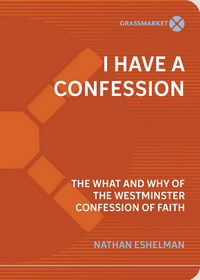
I Have a Confession: The What and Why of The Westminster Confession of Faith by Nathan Eshelman: You Get More than Your Money’s Worth in this Small Book

I Have a ConfessionI Have a Confession:]
The What and Why of the
Westminster Confession of Faith

by Nathan Eshelman

DETAILS:
Series: The Bedrock Series 
Publisher: Grassmarket Press
Publication Date: December 12, 2022
Format: Paperback
Length: 136 pg. 
Read Date: January 15, 2023

What’s I Have a Confession About?

This is an introduction to the Protestant practice of confessions—specifically The Westminster of Confession of Faith.

Eshelman starts out by describing the need for confessions, and what the ecclesiological landscape in the US is like without them. Chapter two lays out “the pillar of confessionalism”—the Scriptures themselves. It’s those Scriptures that give the warrant (chapter 3) for the development and use of confessions. This is what I expected from the book, and when that ended just a little past the halfway point, I was more than a little surprised.

What comes next is truly impressive—Eshelman gives a quick, yet thorough, review of the English Reformation from Henry VIII to the 1640s and the composition of the Westminster Confession of Faith. Then he gives a very brief overview of the contents of the Confession—chapter by chapter.

So, what did I think about I Have a Confession?

Let me start with a minor and really unimportant point—I really like the look and feel of this book. It’s like a field notebook in size, weight, and feel. It works really well for the series.

I’d intended on kicking off this year by rereading R. Scott Clark’s Recovering the Reformed Confession, but a couple of things derailed that (hopefully by the year’s end), but if I couldn’t get into that work, this is a good replacement.

The design of the series is to provide “clear, concise” works on faith and life from a Reformed perspective. Eshelman gives the reader precisely that—clear and concise. Concise, easy to read, and surprisingly thorough for a book of its size.

I was very impressed with this little book—it was everything I expected and more. I’d quibble with a point or two (a couple of his illustrations made me wonder), but only minor things. This is something I’d pass out to people without a second look—and would encourage anyone looking into the idea of Protestant confessions to give it a read.


4 Stars

The Hope of Life After Death: A Biblical Theology of Resurrection by M. Jeff Brannon: A Good Intro to an Oft-Neglected Area

The Hope of Life After DeathThe Hope of Life After
Death: A Biblical Theology
of Resurrection

by M. Jeff Brannon

DETAILS:
Series: Essential Studies in Biblical Theology
Publisher: IVP Academic
Publication Date: November 14, 2022
Format: Paperback
Length: 172 pg.
Read Date: December 18-25, 2022
Support Independent Bookstores - Visit IndieBound.org

…the resurrection of Jesus changes every other day, from now and into eternity. For those who are united to Christ, their future is the future of their Savior, and this reality changes everything.

What’s The Hope of Life After Death About?

Unlike most books about the resurrection from the dead—this isn’t an apologetic work, nor does it focus on Paul’s theology of resurrection, instead Brannon states (fitting with this series) that he wants to take a look at the idea of resurrection from Genesis to Revelation, looking at the shadows, prophecies and promises contained in the Old Testament and the reality demonstrated and guaranteed in the New.

He’s primarily thinking of the resurrection of the believer—although that involves (and is grounded upon) the resurrection of Christ. The resurrection of the believer is such a vital doctrine, that believers should have a better understanding of it—but the amount of literature (both on the academic and popular levels) about it pales in comparison to other areas of Christian doctrine.

One of the hallmarks of biblical theology is the progressive revelation of God’s redemptive plan, which unfolds throughout the Old Testament. In Genesis 3:15 God’s promise that the offspring of the woman will crush the head of the serpent represents an implicit promise of resurrection. In Psalm 49:7-15 the psalmist is convinced that God will redeem his people from death and take them to himself. Isaiah prophesies that God will swallow up death forever (Is 25:7-8) and that there will be a bodily resurrection for God’s people (Is 26:19). All of this reaches its Old Testament climax with Daniel’s prophecy of physical resurrection for both the redeemed and the unredeemed, one to everlasting life and the other to shame and everlasting contempt (Dan 12:1-3). The Old Testament teaching on resurrection sets the stage for God’s revelation in the New Testament, when the lights are turned on.

The Old Testament

The best part of this book was the survey of the Old Testament material—over five chapters—Creation, the Fall, the Pentateuch and Historical Books, the Writings, and the Prophets—Brannon spends about half of the book examining the part of the Bible that’s less-often considered for our understanding of the doctrine.

I don’t know how many times I’ve read or heard that the Old Testament is silent or vague on the idea of bodily resurrection. Brannon puts that assertion to rest easily.

But more importantly, this survey is a great cause for comfort and reassurance for the believer. This idea, this hope, has been before believers of all ages and we can cling to it as believers have for centuries. We have this hope explained in clearer terms—with the lights on, to continue Brannon’s metaphor—so it’s easier to cling to that hope.

So, what did I think about The Hope of Life After Death?

My focus in this book has been on the themes of creation life, death as the result of the fall, and the hope of resurrection life in redemption. The resurrection of Jesus means that the new age, the age of resurrection, has been inaugurated. While life had been promised, prophesied, and pictured in the old covenant, the resurrection of Jesus marks the beginning of the fulfillment of the curse of death being undone through resurrection life.

That’s the argument of the book in a nutshell, and what a great argument it is—one to really relish and depend on.

Brannon is clear and helpful here, and these are ideas we all need to spend time with and have a better understanding of. This is a solid way to start with that.

I do wonder if he could’ve gone a little deeper with a few chapters—I thought it was the easiest book in this series to read, and that’s not just Brannon’s style, I think it was that his approach didn’t require as much thought as others in the series did. I’m not certain about that point, however—and I don’t mean to complain about it. It was just the sense I had while reading the book

It was a good, helpful, and useful book about important and neglected teachings—maybe I wanted it to be a little better, but it’s definitely good. I do recommend it.


3 Stars
This post contains an affiliate link. If you purchase from it, I will get a small commission at no additional cost to you. As always, the opinions expressed are my own.
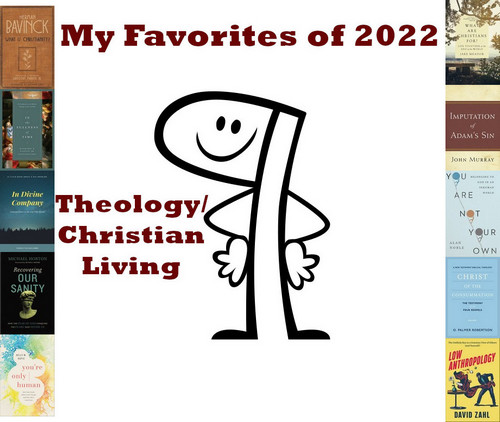
My Favorite Theology/Christian Living Books of 2022

My Favorite Theology/Christian Living Books of 2022
Finally, we’re at the end of my 2022 wrap-up. Thanks for sticking with me for so long! (assuming you have). At a certain point this year, it felt like I was reading a set all around similar/related ideas. The Kapic-Noble-Horton-Zahl books weren’t written in that way, but they hit me that way. I can’t think of one anymore without the others—that’s not the entire reason they all made my favorites list, but I can’t deny there’s a link. The rest are varied enough to show that I didn’t have tunnel vision all year.

As always, re-reads don’t count for these lists.

(in alphabetical order by author)

What is Christianity?What is Christianity?

by Herman Bavinck, Gregory Parker, Jr. (Translator)

My original post
These are two short works by the noted Dutch Theologian newly translated into English. Bavink is clear and convincing without being combative in this pair of brief apologetic pieces. Typically for him, he displays a catholicity in his approach—he’s clearly Reformed Protestant, but he doesn’t disparage other views. I don’t know he accomplishes all he does in so few pages—there’s a lot of subtle theological and apologetic work, here. But there’s also a lot that’s just easy to digest, clear and helpful. Bavinck gives his readers a Christ-centered, Christ-focused definition and description of Christianity (you’d think that’d be a given, but…). As Warfield put it, “We cannot imagine how the work could be done better.”

4 1/2 Stars

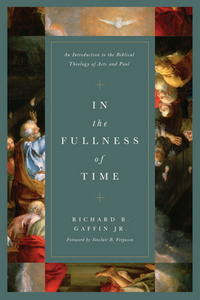
In the Fullness of TimeIn the Fullness of Time: An Introduction to the Biblical Theology of Acts and Paul

by Richard B. Gaffin, Jr.

I haven’t written about this yet, and I’m pretty intimidated to try. I loved every second of it—I felt like I was a beginning student and at the same time, like I was understanding texts with a depth I’m not accustomed to. There’s a lot of depth to Gaffin’s thinking—as one expects every time you read the man—but I thought this work was a bit easier to work through than some of his shorter works. There’s a strong focus on Pentecost and what it means for the rest of New Testament theology (as there should be). Gaffin also sketches out a way to approach Paul’s theology that’s so helpful you wish that it was at least twice as long so he could develop it more and give more examples (although everything in the book is sufficient, I’m just greedy). I’m likely returning to this book this year.

5 Stars

In Divine CompanyIn Divine Company: Growing Closer to the God Who Speaks

by Pierce Taylor Hibbs

My original post
A great work on prayer. Grounding our need for it not in our limitations or sense of need. Nor in the command to do so. Instead, Hibbs focuses on the nature of God as a communicative God and us as His image bearers. Hibbs being Hibbs, this is one of the better-written books on this list.

4 Stars

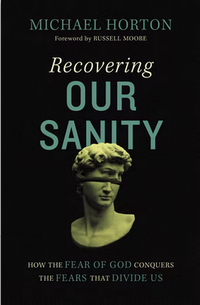
Recovering Our SanityRecovering Our Sanity: How the Fear of God Conquers the Fears that Divide Us

by Michael Horton

My original post
Horton seeks to address several issues facing contemporary American Christians through the filter of the fear of God—the basic thesis is that if we are maintaining that fear as we ought, it’s easier to maintain a proper perspective on our problems and concerns (as real and as valid as they are). There’s a lot of wisdom in these pages, a lot to chew on (and a handful of things to disagree with).

4 Stars

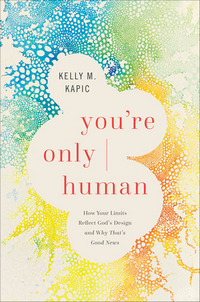
You're Only HumanYou’re Only Human: How Your Limits Reflect God’s Design and Why That’s Good News

by Kelly M. Kapic

My original post
Kapic seeks to apply the doctrine of Creation to remembering that we are created with limits—and, as such, we need to be dependent on one greater than us to help us when we are pushed beyond those limits. There’s a freedom in this realization—we can’t do it all and need to cut ourselves (and others) some slack. Although Kapic states it better than that. The book is a great combination of careful theology and careful application. It’s challenging and reassuring.

4 Stars

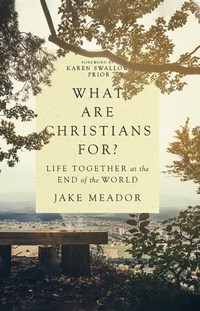
What Are Christians For?What Are Christians For?: Life Together at the End of the World

by Jake Meador

My original post
Meador wants to address American (specifically) and Western (generally) politics from a confessional and Natural Law perspective. He challenges positions and foundations of the Right and the Left calling us all to something deeper and better. And more Biblical. This is a careful book, one that I’m not convinced I completely understood on a first read, but I really appreciated what I did glean from it.

4 1/2 Stars

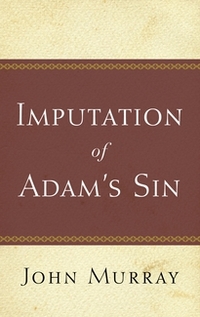
The Imputation of Adam's SinThe Imputation of Adam’s Sin

by John Murray

My original post
This is a very brief work—but as is typical for John Murray, he doesn’t need a lot of words to make his point. He focuses his arguments for the Imputation of Sin on a careful look at Romans 5:12-19. This book is typical Murray—crisp, clear, concise, and convincing. Sure, there’s the drawback that his prose is dry and empty of all personality. The book doesn’t need them (and I’d think it strange to read Murray with it). It’s easy to see why it’s still so heavily used this many years after publication.

4 Stars

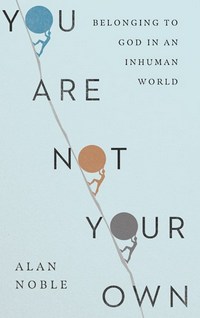
You Are Not Your OwnYou Are Not Your Own: Belonging to God in an Inhuman World

by Alan Noble

My original post
American Christians are too prone to think of themselves as their own, Noble seeks to remind us that (in the words of the Heidelberg Catechism), “I am not my own, but belong with body and soul, both in life and in death, to my faithful Saviour Jesus Christ.” Noble points the believer to recalibrate their understanding of human nature—particularly redeemed human nature—to begin to understand what being the possession of Christ means to our life, our future, our identity. Noble’s writing flows—he’s engaging, compassionate, and relatable. It’s easy to understand even the more complex points he’s making, and his illustrations give the reader plenty to hang on to. Noble’s diagnosis and advice were sound—they seemed to match up with the world around us and the problems we see. More importantly, he points to the One whose grace, mercy, and care offer any true hope and help in this broken and dying world.

4 1/2 Stars

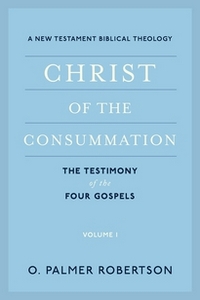
Christ of the Consummation:Christ of the Consummation: A New Testament Biblical Theology Volume 1: The Testimony of the Four Gospels

by O. Palmer Robertson

My original post
This is the first of a three-part exercise in applying the method of Biblical Theolgy for the New Testament as outlined by Vos. This volume focuses on the Gospels (obviously) and is a treasure from beginning to end. It’s not “here’s a whole new way to read/think about the Gospels”—and Robertson would be the last to want something like that. Instead, this is a “here’s a way to profitably consider the way these things were revealed” and “here’s how the Gospels build upon one another and build up each other.” It’s one of those books that mid-way through, you’re already trying to figure out when you can schedule a re-read.

5 Stars

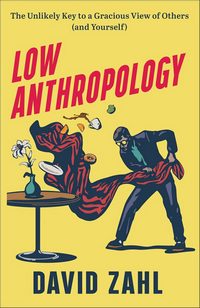
Low AnthropologyLow Anthropology: The Unlikely Key to a Gracious View of Others (and Yourself)

by David Zahl

My original post
Zahl’s concern is the way we think about human nature—our anthropology—not in some academic sense (or just that), but how, individually, what we believe about human nature impacts the way we live and think. A Low Anthropology remembers that we are dust, we are broken, we suffer, in short—we aren’t perfect. This is an engaging, frequently humorous, and grace-filled look at human frailty and how remembering we are that way (and that others are, too).

4 Stars

E.B. White on Dogs edited by Martha White: A Great Collection of Short Pieces

E.B. White on DogsE. B. White on Dogs

edited by Martha White

DETAILS:
Publisher: Tilbury House Publishers
Publication Date: March 7, 2016
Format: Paperback
Length: 177 pg.
Read Date: December 28-31, 2022
Support Independent Bookstores - Visit IndieBound.org

Next year, when Dog Show time comes round, we would like to see a wholly new brand of showmanship introduced into the Garden… A dog should be made to work for his ribbon, each breed in his own wise. Pointers should have to point, Shepherds should be required to herd a band of sheep from the east goal to the west goal. Poodles should be required to jump through a paper hoop, not just follow Mrs. Sherman Hoyt around the ring. English bull terriers should be made to count up to ten, retrievers retrieve rubber ducks, Scotties chew up old shoes. Greyhounds should be put over the high hurdles. St. Bernards carry brandy to anyone in the audience who feels weak, preferably us. Beagles would jolly well have to bealge, or shut up. How about it, dogs—are you dogs or mice?

What’s E. B. White on Dogs About?

This is a collection of essays, articles, letters, and other brief notes written by E.B. White about dogs. In other words, it’s what the title says. Most of the entries are very short—1-2 pages, some are a paragraph long—but (especially toward the end), we get some longer letters and essays.

Most are about White’s dogs—particularly Fred, a beloved dachshund. But there are pieces about dog shows and other dogs, too.

A Few Highlights

This is going to be tough, there are just too many options. Something about Dog Shows brought out the best and/or snarkiest in White, and are possibly my favorite moments.

There’s a point where he describes how a dachshund climbs up and down stairs and the optimum height for said stairs. I don’t know about the height, but he described perfectly how our pug uses the stairs and it’s something I’m going to borrow. He had, over the course of his life, multiple dachshunds and his affection for the breed is evident. But you can tell that Fred had a big impact on White—both during and after his death. The piece White wrote after his death is possibly the highlight of the book.

There’s a long (for this book, anyway) piece about taking a dog on its first coon hunting trip—it’s just wonderful. It’s tonally different from most of the book, which probably helps it stand out—but it didn’t need much help.

Some Non-Dog Moments

Not everything in this book is focused on dogs but involves them tangentially. The best of these pieces are about contemporary politics—I knew some of the names, but not all of them, but that didn’t change things really.

There’s an essay from The New Yorker that I’d probably have paid half the purchase price of the book for—it’s called “Khrushchev and I (A Study in Similarities).” Some newspaper published a feature on the Soviet premier, and from what I can tell, it was the puffiest puff piece around. White takes some parts of that feature to show how much he and Khrushchev are alike—they’re devoted to their families, like walking in the woods, and so on. The last paragraph points out some important differences, too—size, amount of hair left on their heads, the fact that White has never threatened to bury America…the usual differences. And just as he has you chuckling in a different way than he has for a few pages, the last line or two are somber and sober. Fantastic stuff.

So, what did I think about E. B. White on Dogs?

Overall, this was a great collection. It does feel like Martha White hit “Ctrl-F” on an electronic version of everything her grandfather had written and pasted the entire contents of that search into this book. Some of the letters contain one sentence about a dog—not always that cleverly written or interesting—and I had to wonder why she bothered, outside of a drive for thoroughness.

I don’t recommend reading too much of this at once—but maybe that’s just me, my attention waned after too many entries. But if you’re familiar with White’s non-children’s writing, or have the desire to be, and enjoy reading about dogs (and a couple of cats, and a squirrel or two)—you’ll enjoy this.

Speaking of his non-children’s writing—in her note to the reader describing the impetus for the book, and their approach to editing, keeping the pieces “largely as they appeared originally, not attempting to mesh the inconsistencies.” (including some phrasing I don’t think you’d get away with today). Martha White says,

The letters…are more casual in style and my Tillbury House editor was surprised to find that the co-author of The Elements of Style did not always get his that and which correct, especially in the early years. Our hands-off policy nearly killed her.

I feel for that editor and can’t help but chuckle about E.B. White’s divergence from his own book.

All in all, this book delivers what the title promises, and if that’s up your alley, you’ll enjoy it. I sure did.


4 Stars
This post contains an affiliate link. If you purchase from it, I will get a small commission at no additional cost to you. As always, the opinions expressed are my own.

—

My Favorite Non-Fiction Books of 2022

Favorite Non-Fiction 2022
My 2022 Wrap up continues and now we’re on to the Non-Fiction list. While I liked a number of works that didn’t make this list, I felt strange calling them a “favorite.” So, we have 9 instead of the nigh-obligatory 10 for the second year in a row. These are the ones that stuck with me through the year; the ones I cited in conversation; that I thought about when reading something else or watching something on TV. Yeah, there’s some overlap between this list and the audiobook list from yesterday—lately, most Non-Fiction books I work through are in audiobook format. So it makes sense, even if it makes this post seem like an echo.

As always, I only put books that I’ve read for the first time on this list. I don’t typically return to NF books (outside of looking up things for one or three points), but occasionally I do—for example, The Pleasures of Reading in an Age of Distraction by Alan Jacobs would get a permanent spot on this list, were it not for this rule.

(in alphabetical order by author)

Go Back to Where You Came FromGo Back to Where You Came From: And Other Helpful Recommendations on How to Become American

by Wajahat Ali

My original post
I’m just going to remix some of what I said originally, this book was a great mix of memoir, social commentary, and satire—with a little sprinkling of a more general humor thrown in. The way he shifted between the genres was fairly seamless and quite effective—his own story (and that of his parents) were good illustrations of the societal ills he wanted to point to. Ali’s story is the kind that Americans love to tell and hear about success—even if his telling points to many of the flaws in our society. Through grit, determination, perseverance, and endurance, Ali pushes through all sorts of cultural, societal, legal, medical, and circumstantial challenges to arrive where he is. Because he believes in what we can be as a people, based on our (incredibly inconsistently applied and demonstrated) ideals and aspirations. It’s the kind of story we need to see, hear, and read more of.

4 Stars

Black Nerd ProblemsBlack Nerd Problems:
Essays

by William Evans & Omar Holmon

My original post
There are several strengths to this book—the first is the wide scope of the genres and ages of the pop culture they nerd out about. The second is the variety of the ways they express their appreciation (or lack thereof) for these cultural artifacts. Some of these essays are just silly, some are humorous, some touching, some sober—no two are alike in most ways. I wish I could write like this.

4 Stars

A World Without A World Without “Whom”: The Essential Guide to Language in the BuzzFeed Age

by Emmy J. Favilla

My original post
Sure, I disagreed with some of her takes—I’m less enamored with the idea of language as a ruleless entity than she is. But I found it impossible not to enjoy this—even when I thought Favilla was wrong about some particular note of grammar, I appreciated the way she thought about the idea and presented it. Mostly, I enjoyed reading about the process involved in creating and maintaining a style sheet for an entity as big and particular as Buzzfeed. The lists are the kind of thing I could read on a daily basis. As I wrote, “If you’re the kind of person who gets worked up about getting your phrasing juuuuuust right or are bothered when someone doesn’t. If you think reading tributes to commas and em dashes is a good time. Or if you’re curious about why someone would want to eliminate whom or is fine with letting the English subjunctive mood die…this is the book for you.”

(and, yes, I’m still planning on the tattoo inspired by the book)

3.5 Stars

The Stories Behind the StoriesThe Stories Behind the Stories: The Remarkable True Tales Behind Your Favorite Kid’s Books

by Danielle Higley, David Miles (Illustrator)

My original post
I don’t know if I read a better-designed book last year (or the year before). It’s a treat for the eyes. But more importantly, the content is as good—if not better. I can see the book appealing to (and being understood) younger readers curious about some of the books they’ve read or seen at a library. It also was entertaining and edifying for a, um, more seasoned reader familiar with almost all of the books. I was surprised by some of what I read, learned something about all but one of the 20+ books covered and walked away with a hankering to go back and read some of these.

4 Stars

Good TalkGood Talk: A Memoir in Conversations

by Mira Jacob

My original post
Okay, this was pretty well designed, too. This graphic memoir really hit me on several levels. The art is simple, but very effective. The story of Jacob’s life is one that needs to be told—for the sake of those who can relate to remember they’re not alone, and for the sake of those who can’t relate at all to help build some empathy. The framing device of trying to explain race in the U.S. to a biracial child trying to understand the world around him is much-needed, and probably more so all the time. This was more powerful than I expected (and had some great moments of lightness, too!)

4 Stars

The World Record Book of Racist StoriesThe World Record Book
of Racist Stories

by Amber Ruffin & Lacey Lamar

My original post
Back at race again…this time looking at subtle and not-so-subtle, clueless and intentional, probably well-meaning and just mean, ways that one family has to deal with racism on a day-to-day basis. There’s enough silliness to make this book endurable because there are some anecdotes here that are stunningly awful. A strong follow-up to last year’s book.

4 Stars

Friends, Lovers, and the Big Terrible ThingFriends, Lovers, and the Big Terrible Thing

by Matthew Perry

I haven’t found time to write about this book yet, so I’m having trouble boiling things down into a concise paragraph. I’ve been a huge fan of Perry’s since episode 2 of Friends (and was a decently-sized fan based on the pilot), so I was drawn to this right away, but really wanted a break from celebrity memoirs and put off getting it until I read that the book focused so much on the “Big Terrible Thing.” There’s some stuff about his acting career—highs and lows, the usual behind-the-scenes, stuff. But this book is primarily about his mental health problems, his addictions, and the many, many ways he’s hurting himself and those around him. I wouldn’t call this a “warts and all” kind of portrayal of Perry, more of a “warts (and some other things)” look at him. There’s some hope and optimism, too, but it’s tempered.

4 Stars

How to Be PerfectHow to Be Perfect:
The Correct Answer to
Every Moral Question

by Michael Schur (Writer, Narrator)
with: Michael Schur, Kristen Bell, D’Arcy Carden, Ted Danson, William Jackson Harper, Manny Jacinto, Marc Evan Jackson, Jameela Jamil, and Todd May

My original post
This is a solid introduction to ethics and some of the major schools of thought behind contemporary approaches (with historical precedents). The kind of thing you might get in a 100-level course in college. But told in a very approachable way that will no doubt bring a smile to the reader’s/listener’s face occasionally. It’s not perfect, but it’s good. It’s thoughtful, but accessible. And it can—should?—act as a launching pad for further reading and study for those who want to dig in.

4 Stars

E.B. White on DogsE. B. White on Dogs

edited by Martha White

This is another one I haven’t had time to write about yet. I went in assuming this would be a good read—and got that. This is a collection of essays, shorter pieces, and letters written by White about (or mentioning) dogs. There are some solid gems here—honest laughs, amusing thoughts, and devotion to these animals that humans are so strongly drawn to. Readers of this blog know that I love good writing about dogs, and that’s exactly what we get here. There are a handful of things I’m not sure were worthy of including in this book other than for the sake of completeness, but I’m not going to complain.

4 Stars

My Favorite Audiobooks of 2022

My Favorite Audiobooks of 2022
Last year I kicked off my Year-End Retrospective with a look at my favorite audiobooks, I might as well repeat that this year. How do I keep this from being just a rehash of my other year-end lists? By focusing on the audiobook experience over the content. What was it like to listen to it? How engaging was it, how did the narrator do? Was it a good match in terms of tone, content, and performance? All of these books are/were good—but the audiobooks are a bit better because of the narrator and the rest of the people involved in the production.

(in alphabetical order by author)

The LawThe Law

by Jim Butcher

My original post
Sure, I love Harry Dresden—so it’s almost a given that this novella is going to show up somewhere on my end-of-year lists. The fact that Jim Butcher did the narration himself makes this something special (thankfully, he’s still fully intending on having James Marsters do the series). Butcher’s good at this, he’s not great, but he’s good. Hearing his idea about what the characters that we know and love sound like was a lot of fun. Also, after all the epic and emotional moments that Butcher’s put his fans through lately, having something non-epic or world-changing like this is such a nice breather.

4 Stars

Black Nerd ProblemsBlack Nerd Problems:
Essays

by William Evans & Omar Holmon

My original post
Funny, insightful, thoughtful, thought-provoking, passionate (about things both important and trivial). This collection of essays about pop culture, race, and the intersection of those two things was a surprise to me—I thought I’d have a good time with it, I didn’t know I’d have a great time and be moved, too. The authors narrated this themselves—both have backgrounds in poetry jams, and the panache from that shines through. I have quoted this and referred more people to various essays in this than probably anything else this year.

4 Stars

On Eden StreetOn Eden Street

by Peter Grainger, Gildart Jackson (Narrator)

My original post
This one makes the list due to the nature of the book and how well Jackson handled it. The previous book served as a transition point from the DC Smith Mysteries to the Kings Lake series—but this is the one that’s truly different. We have a bunch of new characters to deal with in addition to serving those we’ve grown accustomed to. The nature of the central character and his new boss underlines how different this is from the previous incarnation, but it’s the same books at their core. And Jackson gets both through to the listener. It’s all there in Grainger’s text, no doubt—but it’s the narration that solidifies it for the listener.

4 1/2 Stars

A Wizard's Guide to Defensive BakingA Wizard’s Guide to Defensive Baking

by T. Kingfisher, Patricia Santomasso (Narrator)

My original post
I don’t know if I can put my finger on why this made the list, but as I was looking over the list of audiobooks I read in ’22, as soon as I saw this one, I knew it had to make the list.

Between Kingfisher’s text and Santomasso’s narration, this was just a great experience. The story is fun, the characters (particularly as embodied, or emvoiced?, by Santomasso) were endearing—as a whole, it was an immersive and pleasant time—just what you want in an audiobook.

3.5 Stars

The World Record Book of Racist StoriesThe World Record Book
of Racist Stories

by Amber Ruffin & Lacey Lamar

My original post
My wife assures me that the paper version of this is well-worth reading, but I can’t imagine having the opportunity to listen to Ruffin and Lamar reading this and passing it up—the goofy voices they employ and little tunes they sing in addition to the reading adds a nice little layer to the book that you’re not going to get with the print edition.

This is a more serious, more somber, book than its predecessor was—by design. But because of that, it feels like they dialed the silliness up to help alleviate things. It can’t be an easy balancing act—discussing the horrors of everyday racism in a way that is entertaining enough that it can educate those that need it the most. Ruffin and Lamar hit that balance in both print and in audio.

4 Stars

How to Be PerfectHow to Be Perfect:
The Correct Answer to
Every Moral Question

by Michael Schur (Writer, Narrator)
with: Michael Schur, Kristen Bell, D’Arcy Carden, Ted Danson, William Jackson Harper, Manny Jacinto, Marc Evan Jackson, Jameela Jamil, and Todd May

My original post
Yeah, that’s a huge cast—but 95+% of the work is done by Schur. The contributions of the rest shouldn’t be overlooked, but when you think about the narration, you’re going to be thinking about the author, Mike Schur. My appreciation for Schur’s writing goes back before I knew who he was on a baseball blog that I really enjoyed. After that, I got on board with this TV writing and became a huge fan. What puts this audiobook on this list is the way that Schur is able (thanks to his own writing) to make this introduction to ethics and philosophy so accessible. It doesn’t feel dry, or head-in-the-clouds at all. Yes, I have significant issues with a lot of the thinking in this book (he rules out theism or morality given to us by a deity from the get -go), but that doesn’t mean I can’t learn from it—I can’t gain an appreciation of the thinking through ethical dilemmas.

I had fun, and I think I learned something. You can’t ask for more.

4 Stars

Movies (And Other Things)Movies (And Other Things)

by Shea Serrano, Mario Toscano (Narrator)

My original post
There’s a little bit of the seriousness of Black Nerd Problems in this collection of essays about Movies (and things like it), but Serrano doesn’t spend that much time with it. Serrano’s approach to movies is a wonderful hybrid of fanboy and educated critic that can appeal to people all over that spectrum. This results in a book that’s a great combination of movie knowledge/insight, social commentary, and humor mixed throughout each of these. Even when it came to movies I’ve never seen, have no interest in seeing, or saw ages ago and don’t remember well, Serrano kept me pretty engaged and entertained. Toscano’s narration is so good, so convincing that you have to remind yourself that he’s reading Serrano’s words and isn’t speaking from the heart.

3.5 Stars

We Are Legion (We Are Bob)We Are Legion (We Are Bob)

by Dennis E. Taylor, Ray Porter (Narrator)

My original post
Stumbling across this series is one of the highlights of 2022 for me. Ray Porter doing the narration is what pushed me to give this story a shot, and I’d be happy I did if only for his narration. I can think of a handful of narrators that could’ve got this gig (based on their other work, etc.) and I’m not sure how many of them would’ve got me to come back so quickly—nothing against Taylor’s text, but it’s Porter’s skill and warmth that elevates this book (and the rest of the series) into something I can see myself revisiting often.

It’s not all about Porter, I should make clear—Taylor has a gift for SF comedy. Throw in Bob’s snark and optimism and the great premise that pretty much opens the door for Taylor to do just about anything he wants in the series for as long as he wants to, and you’ve got yourself a real winner.
3 Stars

The HobbitThe Hobbit, or
There and Back Again

by J.R.R. Tolkien, Andy Serkis (Narrator)

My original post
As soon as I read that Serkis was doing audiobook versions of The Hobbit and The Lord of the Rings, I knew I had to listen to them—what could be better? I mean, for the scene between Bilbo and Gollum alone, you know that The Hobbit is going to be worth the time and expense. And it was.

The rest of the book is great, too, make no mistake. Serkis knows what he’s doing with his voice—because of the nature of a lot of his acting jobs, his voice has to carry the performance that his (own and natural) face can’t. It’s a great skill that he brings to bear on an audiobook’s narration. This is just a joy to listen to.

5 Stars

Free BillyFree Billy

by Don Winslow, Ed Harris (Narrator)

My original post
Speaking of actors who can do a lot with their voice, here’s Ed Harris. There’s something so natural about his delivery of this short story that I have to wonder why he hasn’t been making audiobooks for years. It’s like Winslow’s words were written solely for him (I’ve heard three of these Audible Originals from this pair and could listen to another 20 this year). This book is a sequel to The Dawn Patrol—one of my All-Time Desert Island books. You get Ed Harris to do the narration on that, and you know I’m going to love it. People who aren’t me are likely going to enjoy it a lot, too.

(sure, there’s part of me that wishes Ray Porter had been used—his work on the audiobook for The Dawn Patrol was stellar, but why be greedy?)

5 Stars

Page 26 of 63

Powered by WordPress & Theme by Anders Norén