Category: Non-Fiction Page 32 of 61

Catch-Up Quick Takes: Some Audiobooks from Feb. & March 2022

Here are some audiobooks that I’ve listened to in the last couple of months, and I really don’t have much to say about them—all are worth the time to listen to (or read, if you prefer), I just don’t have enough to say to make up a typical post.


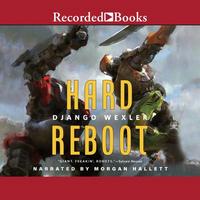
Hard RebootHard Reboot

by Django Wexler, Morgan Hallett (Narrator)

DETAILS:
Publisher: Recorded Books
Publication Date:  May 24, 2021
Format: Unabridged Audiobook
Length: 3 hrs., 57 min.
Read Date: March 14-15, 2022
Support Independent Bookstores - Visit IndieBound.org

(the official blurb)
This just seemed like a lot of fun when it was published last year, so when I saw it on the library site, I had to jump on it. And it was fun.

But it was a bit too shortI know that’s by design, but it felt too abrupt. You got fighting robots on the cover, I want more than two major fights. Sure, the fights we get are pretty cool, but I wanted more.

If this was 20 percent longer, I’d have been happy. As it was? I was satisfied.
3 Stars

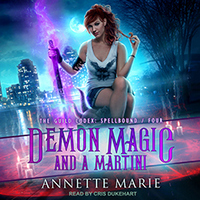
Demon Magic and a MartiniDemon Magic and a Martini

by Annette Marie, Cris Dukehart (Narrator)

DETAILS:
Series: The Guild Codex: Spellbound Series, #4
Publisher: Tantor Audio
Publication Date: April 22, 2019
Format: Unabridged Audiobook
Length: 7 hrs., 15 min.
Read Date: March 9-10, 2022
Support Independent Bookstores - Visit IndieBound.org

(the official blurb)
So, um…yeah. This was okay.

For the second book in a row, we get to peel back the mysterious backstory of one of Tori’s new best friends while they’re battling a new magical threat. This time it’s demonsand rival guilds. One of which is pretty ethically challenged.

It was a bit too similar to the previous book for me. But it delivered the same kind of quippy UF action that characterizes the series. It’s entertaining enough to keep going with the seriesand to recommend themI just want to see a little more out of them.
3 Stars

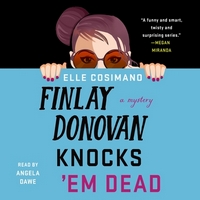
Finlay Donovan Knocks 'Em DeadFinlay Donovan Knocks ‘Em Dead

by Elle Cosimano, Angela Dawe (Narration)

DETAILS:
Series: Finlay Donovan, #2
Publisher: Macmillan Audio
Publication Date: January 31, 2022
Format: Unabridged Audiobook
Length: 9 hr., 20 min.
Read Date: February 25-28, 2022
Support Independent Bookstores - Visit IndieBound.org

(the official blurb)
I was a little worried how the premise would carry over to a sequel, and I clearly shouldn’t havelargely because Cosimano didn’t just repeat the way the first book went. It was very much an “okay, so now with that finished, what comes next?”assuming that Finlay and Vero don’t just wholly abandon their new revenue stream.

We get some important new information about Veromaking a lot of what she did in the first book make sense. Finlay makes some smart romantic movesand there’s some decent movement on the divorce front.

All in all, a solid sequel that shows that this can be a series with legs, not just a quirky one-off.
3 Stars

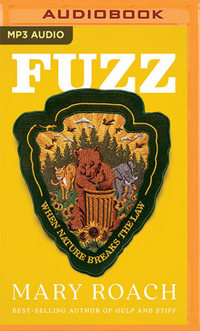
Fuzz: When Nature Breaks the LawFuzz: When Nature Breaks the Law

by Mary Roach

DETAILS:
Publisher: Brilliance Publishing
Publication Date: September 13, 2021
Format: Unabridged Audiobook
Length: 9 hrs., 17 min.
Read Date: January 31-February 1, 2022
Support Independent Bookstores - Visit IndieBound.org

(the official blurb)
So this is about what happens when animals and humans have a hard time co-existingwhich basically means when animals being animals inconvenience (or worse) humans. Was that hiker killed by an animal, or did they die of other causes and become food for an animal? What happens when we put a building where an animal expected to be able to be?

I don’t think it was as amusing as Roach tried to make it. It was interesting, but it went on too long and therefore became less-interesting the longer it went on. I don’t remember anything more specific than thatwhich says something about the book. It just didn’t hold my attention for long.

This is my first Mary Roach bookand maybe would’ve been my last if I hadn’t run into a couple of other bloggers who are Roach fans that were as tepid as I was about the book. Still, I’m going to get a bit more distance between this book and my next.
3 Stars

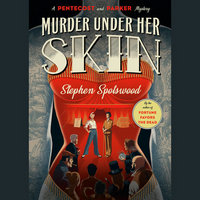
Murder Under Her SkinMurder Under Her Skin

by Stephen Spotswood, Kirsten Potter

DETAILS:
Series: A Pentecost and Parker Mystery, #2
Publisher: Random House Audio
Publication Date: December 6, 2021
Format: Unabridged Audiobook
Length: 9 hrs., 40 min. hrs and 40 mins
Read Date: March 28-29, 2022
Support Independent Bookstores - Visit IndieBound.org

(the official blurb)
The circus that Will used to be in is in troubleone of their performers has been killed and another has been arrested. Will’s mentor, to be specific. So she and Lillian Pentecost head down south to see what they can do.

It’s a culture clash (both the South and the circus) for the duoWill learns the hard way that maybe she’s been gone too longas well as a fish out of water kind of thing for Pentecost. Although not as much as Will and the reader might expect.

I enjoyed this one a lot more than the predecessorit’s still a bit too much about Will and her current love interest than it is about Pentecost and the case they’re supposed to be working on. The mystery was clever, the character arcs were solid and Will’s narrative voice is strong enough to keep the reader/listener locked in.
3 Stars

Free BillyFree Billy

by Don Winslow, Ed Harris (Narrator)

DETAILS:
Series: The Dawn Patrol 
Publisher: Audible Originals
Publication Date: 2022
Format: Audiobook
Length:1 hr., 6 min.
Read Date: March 30, 2022

(the official blurb)
This is a silly, fun, and sweet story in the world of The Dawn Patrol (one of my top 5 All-Time books), all our favorites get a quick appearance and we’re introduced to a couple of new characters.

Despite being in the same world as the crime novels that introduced Winslow to me, there’s no crime to be found here.

Which is fineit’s not needed in this short story. It’s just a fun story about one of Boone’s friends. I laughed audibly more than once, and just enjoyed the story as a wholeI just wish it was longer so I could spend more time in this world. The story didn’t require it.

Ed Harris gives exactly what you’d expect from him in an audiobook narrationnear perfection. I thought his stuff was great.
5 Stars

This post contains affiliate links. If you purchase from any of them, I will get a small commission at no additional cost to you. As always, opinions are my own.

Glorification: An Introduction by Graham A. Cole: A Vital, and Ill-Understood, Topic

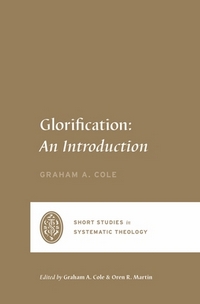
Glorification: An IntroductionGlorification: An Introduction

by Graham A. Cole

DETAILS:
Series: Short Studies in Systematic Theology
Publisher: Crossway
Publication Date: April 19, 2022
Format: Paperback
Length: 121 pg.
Read Date: March 20,

What’s Glorification: An Introduction About?

This book is focused on a particular aspect of individual eschatology—glorification, although Cole touches on the other aspects of eschatology, too. The first chapter focuses on the glory of God—it is His glory shared with believers, so it’s right to start there. The fifth and final chapter gets a bit speculative about who will and won’t be glorified. The three chapters in between those two are the heart and focus of the book. Cole begins by sketching God’s project following the fall in restoring the image (and glory) lost. He then shows the beginning of the work of glorification in the sanctification of believers in this life. He ends this portion of the book by looking at what we know about the glorification in the New Earth—which is where the cosmic and ecclesiastical aspects of glorification are looked at, in addition to the individual.

So, what did I think about Glorification: An Introduction?

Cole talks a little at the beginning of the book about the lack of book-length looks at this topic. I’m not convinced that this is the best way to address the lacuna. It’s good and useful, but maybe it’s too speculative. Maybe setting out to do more than it needed to for this introduction. Throughout the work, Cole takes some close looks at pivotal texts on the topic of glory, sanctification, and glorification—these are the highlight of the work and are very valuable. I’m less convinced that what he does outside of those exegetical portions are nearly as useful. Maybe if given more space to develop some of his ideas, I might have a different impression. In the end, I’m glad I read this and will return to it for the exegetical moments and gladly recommend it.


3 Stars This post contains an affiliate link. If you purchase from it, I will get a small commission at no additional cost to you. As always, opinions are my own. 2022 Support Independent Bookstores - Visit IndieBound.org

REPOSTING JUST CUZ: Who Shall Ascend the Mountain of the Lord? by L. Michael Morales

Fatigue is winning over my will to get the post I intended for today finished. So, I’m going to repost this—I’ve been thinking a lot about this book recently, but I feel like I remember too much of it to commit, even if I want to master the arguments. I didn’t do justice to the book when I wrote the original post, but maybe it’ll nudge someone to read the book.


Who Shall Ascend the Mountain of the Lord Who Shall Ascend the Mountain of the Lord?: A Biblical Theology of the Book of Leviticus

by L. Michael Morales
Series: New Studies in Biblical Theology, #37Paperback, 306 pg.
IVP Academic, 2015
Read: October 16 – November 27, 2016

So this is another one of those books that I’m not really qualified to talk about, but . . . whoops, here I go.

Morales doesn’t give us what you typically find/look for in a study of Leviticus — detailed explanations — or dodges — of the various purity laws and other commands and regulations contained in it. Instead, he begins by explaining his conclusion that Leviticus is the center of the Pentateuch, and that Chapter 16 is the center of it. Beginning in Genesis, everything is leading up to the Day of Atonement, and then everything from that is to be seen as the result of, or in light of that day.

That’s a lousy summary, but that’s the best you’re going to get from me in a couple of sentences. The argument is so detailed, so complex that I can’t really do much better without spending a few pages on it — and no one wants to read that (especially since you can read Morales doing a better job). At first, I thought that it was an interesting idea, but it really didn’t matter much. But as I read on and understood what he was doing better, it started to capture my imagination and draw me in. This was well argued, well researched — and well explained for even non-technical types like me.

But when it comes to Biblical Theology, the proof in the pudding comes from tying in his theses to the unfolding story of redemption — first in Israel’s story and then showing how it leads to Christ and His work on earth, His Ascension and pouring out of His Spirit to prepare a people to meet with Him on Mount Zion. The last two chapters were fantastic — and I’m going to have to reread them a few times to really wrap my brain around it all. There were moments of beauty here — it’s hard for an academically-inclined work to inspire and touch the emotions of a reader, but Morales did it.

This volume is the first I’ve read in New Studies in Biblical Theology (I believe it’s the first I heard of it, too) — the series is edited by D. A. Carson. The series aims “to simultaneously instruct and to edify, to interact with current scholarship and to point the way ahead. . . While volume notes interact with the best of recent research, the text of each work avoids untransliterated Greek and Hebrew or too much specialist jargon. The volumes are written within the framework of confessional evangelicalism, but they also engage a variety of other relevant viewpoints and significant literature.” If this is a representative volume, it won’t be my last in the series. If I can just pick another — the list of 41 is daunting — just too many choices.

Anyway, Who Shall Ascend was a challenging, interesting, educational and inspiring work — there’s not much more that you can ask for. If you’re up for the work, I heartily recommend it.

—–

4 Stars

The Part About the Dragon Was (Mostly) True by Sean Gibson: A Hilarious Fantasy Filled with Adventure and Shenanigans. Definitely Shenanigans.

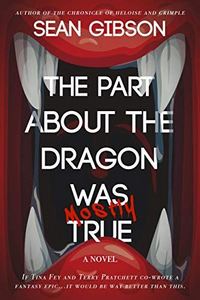
The Part About the Dragon Was (Mostly) TrueThe Part About the Dragon Was (Mostly) True

by Sean Gibson

DETAILS:
Publisher: The Parliament House
Publication Date: December 10, 2020
Format: Kindle Edition
Length: 358 pg.
Read Date: March 10-12, 2022
Support Independent Bookstores - Visit IndieBound.org

I am, if not the most well-known bard in Erithea (yet), arguably the most talented, and unarguably the cleverest. I also wouldn’t quibble if you suggested that I’m the most beautiful, but that’s just because I’m very agreeable (and beautiful)…

Decades ago, I was sworn to secrecy regarding the true story of the great and terrible “Dragonia,” but recent developments have released me from that promise, and so I can finally tell the tale.

What’s The Part About the Dragon Was (Mostly) True About?

This is that true story about Dragonia, told alongside the “official” account so the reader can see how the details were adjusted and tweaked to create the story everyone knows.

The town (or village, depending on who you ask) of Skendrick is being terrorized by a dragon—crops are being ruined, trade is disrupted, and the town is about to fall apart. Desperate, they put out a call for adventurers to come and kill the dragon. But they get no takers—so they go to Plan B. The villagers (or townspeople) pool their meager resources to hire a bard. This bard is to compose a song to make the attempt to kill the dragon sound appealing enough—and its treasure (which may or may not actually exist) enticing enough—to get a band of adventurers to come.

This is where Heloise comes in. She takes the gig and soon gets a new and yet unaccomplished band of adventurers to take up the call to action. I don’t want to get into describing the group, you want to meet them in the book.

They encounter difficulties from without and within; nasty, malodorous geography; orcs and other creatures; and, well, the dragon.

Heloise the Bard

“You’re not half as funny as you think you are, as I suspect you have a very high opinion of yourself.”

“My opinion of myself is in direct proportion to my amazingness,” I said sweetly.

The half-elf, Heloise the Bard is our narrator—as you can tell from the quotations above, she has a fairly high opinion of herself and her abilities. She’s also rather impressed with her hair and certain other physical attributes. Probably her greatest skill is self-promotion.

She decides to accompany the adventurers, to chronicle their journey and the outcome of their clash with the dragon. Her wit and quick thinking prove valuable to their effort and her particular set of skills make all the difference.

She is a hoot. It’d be easy for Heloise to be an annoying, over-the-top character, but somehow Gibson keeps her as an entertaining, over-the-top character. I’ve been trying to come up with a character to compare her to, and I’m failing. Maybe she’s the Fantasy version of Evanovich’s Lula, except Heloise has the skills that Lula thinks she has. Maybe she’s the equivalent of High Fidelity‘s Barry. Somewhere in the Venn Diagram featuring Fantasy, Lula, and Barry, I guess.

She appears in a couple of other books by Gibson, and I’m eager to spend some more time with her.

The Humor

The section could easily be merged with the previous one because the humor displayed in the book is primarily Heloise’s. The jokes are pretty much non-stop—even in the middle of fight scenes, or when death is nigh. The danger is still present, and the combat (and so on) is as deadly as it would be in another book—it’s just surrounded by laughs.

It didn’t take me long before I’d highlighted too many lines to quote—not that it stopped me from going on. My notes on this one are ridiculous. I kept chuckling throughout the reading. I probably would’ve finished the book in 2/3 the time, if reacting to the jokes didn’t make me stop reading for a moment.

If you’ve read The Tales of Pell, you’ve got a good idea for the pace of the jokes—and tone of the book, too.

There’s slapstick, there’s scatological humor, a great Meatloaf (the singer) line, some fantastic bursts of alliteration for the sake of a laugh, some general silliness, clever dialogue, and…honestly, I’m having a hard time thinking of a kind of humor that’s not in there. There’s a running gag (that I’ve alluded to) throughout about whether Skendrick is a town or a village—I can’t tell you how often it’s brought up. And the joke works every time—I should’ve gotten sick of it, and I never did. I don’t know how Gibson pulled that off, but that alone is the mark of a fantastic humor writer.

In addition to The Tales of Pell, if you’ve enjoyed Christopher Healy, Dave Barry, K.R.R. Lockhaven, Peter David, Scott Meyer, Joe Zieja, Jim C. Hines’ Jig the Goblin series, or John Scalzi—you’re going to dig the humor here. And if you dig the humor, you’re going to really enjoy the book. It’s that simple.

So, what did I think about The Part About the Dragon Was (Mostly) True?

You know by this point that one of my main goals in telling this story is to show that the adventuring life isn’t all it’s thought to be. It’s mostly boring, frustrating, dangerous (though not excitingly dangerous), smelly (dear gods, so smelly), and not particularly lucrative. Occasionally, however, it’s exactly how the songs make it sound, and in those moments, it’s easy to see why people—even smart, capable people like Nadi—would devote their lives to doing something so irrational. Let the record show that entering a dragon’s lair for the first time is one of those moments, and it’s fair to say that each member of our intrepid band experienced more than a frisson of excitement as we crept across that threshold.

I think it’s pretty clear that I had a blast with this book, but I should probably make that explicit. I had a blast reading this book.

I think I should not that this is not a book to read if you’re in a “find out what happened and get to the end of the story” frame of mind. This is a “enjoy the trip, not the destination”/”stop and smell the roses” kind of book. The destination/what happens is fully satisfying, but the getting-there is so much better.

In addition to the jokes and the dragon, there is a running commentary on what “the adventuring life” is like outside of the glamorous or exciting bits. A lot of fantasy novels will show bits of it, but not enough of them do—and most don’t do it this way. For example, The Part About the Dragon Was (Mostly) True contains more description of various odors than every 99% of the fantasy novels I’ve read by a significant factor. If this were a scratch and sniff book…well, I can’t imagine anyone would stock it—you just don’t want that in your warehouse/store. Sure, it’s silly talking about realism in a book featuring orcs, halflings, elves, etc.—but this factor does ground the book and give it a seriousness (for lack of a better term) that makes this more than a collection of jokes.

This is the funniest book I’ve read in 2022, and I can’t imagine it’ll face much competition. It’s got it all, go get your hands on it.


4 Stars

This post contains an affiliate link. If you purchase from it, I will get a small commission at no additional cost to you. As always, opinions are my own.

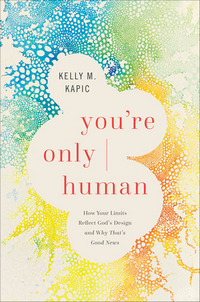
You’re Only Human by Kelly M. Kapic: The Reality and Comfort of Creaturely Finitude

You're Only HumanYou’re Only Human:
How Your Limits Reflect
God’s Design and Why
That’s Good News

by Kelly M. Kapic

DETAILS:
Publisher: Brazos Press
Publication Date: January 17, 2022
Format: Hardcover
Length: 228
Read Date: January 23-30, 2022
Support Independent Bookstores - Visit IndieBound.org

What’s You’re Only Human About?

Creaturely finitude is less an idea we discover than a reality we run into.

When we do run into this idea (as we all will), we frequently interpret that reality incorrectly—not recognizing that our limits, our finitude, as part of who we are as creatures (or forgetting that if we do recognize that). As such we can push against them in unhealthy ways, ignore them to our own peril, or see them as the result of sin, not the result of creation.

What Kapic sets out to do is to remind us that part of being a creature is having limits. When we remember that, we can live as we ought—in dependence on the God who made us that way. As he puts it,

Many of us fail to understand that our limitations are a gift from God, and therefore good. This produces in us the burden of trying to be something we are not and cannot be.

Particularity and Limits

Kapic reminds his readers that the doctrine of Creation shouldn’t just be limited to our understanding of Genesis 1-2, but to reflecting on the design, abilities, and limitations of humanity. These limitations would be in place regardless of our fallen state—sure, the fall twists those limitations—but they’re part of the original state.

In the first part of the book, Kapic lays out the theology necessary for this—and ties it to the Gospel, lest we get distracted from what matters most.

Healthy Dependence

The second part of the book talks about the creaturely dependence that flows from this—we aren’t capable of everything we need or want to accomplish, but He is. This is part of created humanity, and it takes on new meaning in Christ.

Tied to this idea of dependence is humility.

Humility consists in a recognition of (and a rejoicing in) the good limitations that God has given us; it is not a regrettable necessity, nor simply a later addition responding to sinful disorders. Even if there had never been a fall into sin, humility would still have the essential character of gratitude for our dependence on God and for his faithful supply of our need. Humility is built on the Creator/creature distinction; its response to sin emphasizes our further need for God to restore us to the fellowship that he always intended us to inhabit.

Kapic spends a lot of time drawing out the implications of this—in light of both Creation and Redemption.

Lament and Gratitude

We can express our humility and dependence in both our lament and our gratitude—this part of the application section of the book was probably the most rewarding to me. Kapic makes the case that they’re mirror concepts rooted in humility and dependence on our Creator and Redeemer, and both ought to be embraced by the believer.

So, what did I think about You’re Only Human?

It took me over a month to be mostly satisfied with what I wanted to say about this book—an example of creaturely finitude, come to think of it. I struggled over this—really wanting to get into all of his ideas and arguments. But that’s not what this blog is for (thankfully, or I’d be working on this post for another six months, minimum). I’ve trimmed this post a few times while putting it together, in fact, because I kept getting in the weeds.

You’re Only Human is the kind of book that I really don’t think I got a handle on after one read—I’m planning on a re-read this summer, in fact. I’ve got a general sense of it, but I want to return to it having a bird’s-eye view, so I can appreciate more of the details.

I don’t know if this is going to hit every reader like it did me—very likely it won’t—but this is just what I needed. Still, I think what Kapic has to say will resonate with and be helpful for many.


4 1/2 Stars

This post contains an affiliate link. If you purchase from it, I will get a small commission at no additional cost to you. As always, opinions are my own.

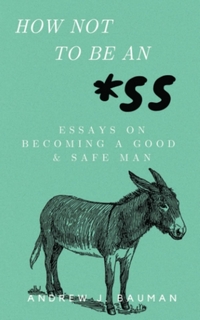
How Not to Be an *SS by Andrew J. Bauman: Essays on Important Topics, That Fall a Little Short

How Not to Be an *SSHow Not to Be an *SS:
Essays on Becoming a Good & Safe Man

by Andrew J. Bauman

DETAILS:
Publisher: Brave Books
Publication Date: December 31, 2021
Format: Kindle Edition
Length: 192 pg.
Read Date: February 20, 2022
Support Independent Bookstores - Visit IndieBound.org

What’s How Not to Be an *SS About?

This is a collection of essays* built around the idea that men who are an *ss (the asterisk is courtesy of Bauman, not me) can change and become a good and safe men.

* Plus a couple of poems. Entirely skippable poems (your results may vary).

Bauman calls men to an authentic, Biblical masculinity—one built on humility, kindness, and service. While offering concrete ways to set aside patterns of abuse and neglect.

Good and Safe Men

Bauman’s description of Good and Safe men is maybe filled with a few too many buzzwords. But when you get past that, I really appreciated what he had to say, and I wish I heard more things like that coming from Reformed and Evangelical men.

His definition of “*ss”

A lot of the time he’s talking about an *ss, he’s talking about something worse. Something like a felon (perhaps not a convicted felon, but someone who should be charged, at least). Most of what he describes as an *ss are abusers. I think we should call them what they are.

Even if you take his *ss as a range—from “The Unaware Fool” (although by definition, some of those he considers unaware, are aware) to “The Narcissistic Coward”—he spends most of his time on “The Narcissistic Coward” when it’s the Fool that would be more open to the help and guidance.

Shortcoming

There are two that seem the most prominent. First, this is an essay collection, not a sustained argument. As a result, it’s a bit scatter-shot and hard to draw any firm conclusions about some of the material. Also, it makes some of the material too surface-level.

Secondly, it’s focused too much on the abusive man, on ways to he can improve. But earlier on, it seemed to be a book for those who weren’t abusive, but are wanting to be better, safer men. Now, don’t get me wrong—I’m all for the former. But I got the impression when I bought the book (and in the early essays) that it was about the latter.

So, what did I think about How Not to Be an *SS?

I’m not sure that what I’ve said here is that helpful without digging in deep into his arguments and suggestions—and to do that is beyond what I have time for here. But hopefully, there’s something useful here.

There’s a lot of good here, a lot of important resources. The theological language is a little imprecise for my taste, but none of it is a deal-breaker for me. The gold outweighs the chaff.

It’s not the book I thought I was getting, but I’m glad that I read it. I wanted more, sure, but I liked what I got.


3 Stars

This post contains an affiliate link. If you purchase from it, I will get a small commission at no additional cost to you. As always, opinions are my own.
Why bother with church? by Sam Allberry: A Too-Brief (for me) but Solid Introduction to The Church

Why bother with church?Why bother with church?:
And other questions about
why you need it and why
it needs you

by Sam Allberry

DETAILS:
Series: Questions Christians Ask 
Publisher: Good Book Co.
Publication Date: February 12, 2016
Format: Paperback
Length: 95 pg.
Read Date: February 13, 2022
Support Independent Bookstores - Visit IndieBound.org

What’s Why bother with church? About?

Allberry starts with talking about one Sunday walking through a park on his way to his church’s service and how he was tempted to just stay and enjoy the park instead—he didn’t, but it raised the question, why not stay in the park? Why bother with church? Which serves pretty well as an introduction to this short book.

The Table of Contents actually does the best, brief job of telling you what to expect in this book. Sure, it uses 82 pages to answer all these questions, so obviously, none of the answers are too thorough, but they’re all complete enough to give someone a solid start on the ideas presented.

  1. What is church?
    Hasn’t the church done more harm than good?
  2. Why do I need church?
  3. What makes a good church?
    How should I pick a church?
    What are baptism and communion for?
  4. How is a church run?
    Can’t I view my small group as my church?
    Should pastors and elders only be men?
    Why are there so many denominations?
  5. How do I survive church?
  6. How can I be a good church member?
    What is the future of the church?

He concludes with an important reminder about what goes on in the church—in both worship and the life beyond the weekly service—pointing to the spiritual realities that are easy to forget.

Highlights

The second level questions appear at the end of the chapter and are a more focused look at something on the chapter’s topic. While I thought Allberry did a decent enough job answering the larger question, these “sub-questions” seem to be a more pressing contemporary question and add good value to the chapter.

The other highlight I’d focus on is Chapter 5, a title that might raise an eyebrow or two. Why would anyone think they need to “survive church”? In this chapter, Allberry tackles the ideas that church can be boring or exhausting (which feel like contradictory ideas unless you’ve actually spent time in a church), which are well and good—and an idea that too few think to tackle. But the best part of the chapter addresses people that have been hurt by the/a church. In too many ways, too many people know that part of church experience. It’s vital that Christians know how to deal with this idea—either for themselves or someone else. I am so glad that Allberry addressed this idea.

Shortcomings

Really, the only thing that stood out was the length—82 pages plus an introduction and conclusion means this is only a primer. For example, the section on “hurt by the church” that I liked so much only gets 12 small-to-medium-sized paragraphs. Which is good, but it’s just a sample of what needs to be said.

I realize that the length of the book is both a strength and a weakness—it’s not intimidating and will be more likely picked up by many than a book that would satisfy this reader. That’s by design, so I don’t hold it against the book, I just find the “sample” length dissatisfying.

So, what did I think about Why bother with church??

Last year, I read The Church: An Introduction and was disappointed with it, thinking it tried to do too much that was beyond an introduction and stumbled most of the time it did that. This was a much better introduction to the idea of The Church. Allberry’s approach was far more approachable, very basic—which doesn’t quite fit that other series. I couldn’t help but think while reading this one that if Allberry’s material was presented with the thoroughness and style of the other one, it’d be a perfect introduction.

That said, given this series’ approach to its topics—very simple, yet careful—or as the publisher describes it, “short, readable books,” this is a great introduction. It covers all the necessary areas in a way that’s clear and understandable by readers from 13 and up (possibly younger). Allberry writes in an easy, conversational tone that’s warm and inviting, you’ll race through the book (possibly requiring deliberate slowing down/rereading).

Is this a book on the topic that I’ll return to? Probably not—I’ll save that for more demanding works. Is this a book on the topic I can give/recommend to anyone looking for something on the idea? Without hesitation.


3 Stars

This post contains an affiliate link. If you purchase from it, I will get a small commission at no additional cost to you. As always, opinions are my own.

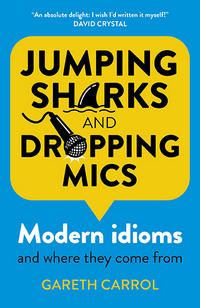
PUB DAY REPOST: Jumping Sharks and Dropping Mics by Gareth Carrol: Adding Some Flavor to Our Speech

Jumping Sharks and Dropping MicsJumping Sharks and Dropping Mics:
Modern Idioms and Where
They Come From

by Gareth Carrol

DETAILS:
Publisher: iff Books
Publication Date: February 25, 2022
Format: eARC
Length:176 pg.
Read Date: February 10-11, 2022
Support Independent Bookstores - Visit IndieBound.org

What’s Jumping Sharks and Dropping Mics About?

The subtitle pretty much tells you everything you need to know. This is a look at several idioms, expressions, and figures of speech that have entered common usage over since the latter half of the twentieth century.

The introductory chapter describes idioms and their usage, the various types of idioms, the history of a few not-modern examples, and so on. This chapter was great and I could’ve used a whole book on this topic. But that’s something for a future library trip, I guess.

Following that we get chapters devoted to: Idioms from TV (including from commercials); Movies; The Internet (memes, hashtags, and so on); Sports; Modern Literature; and then a handful that have entered common usage without a tie to any of the rest, some from the news. that sort of thing.

Carrol talks about the origin and spread of each idiom, notable uses outside the source, and clarifies the meaning—and other commentary or trivia.

Oh, It’s That Kind of English…

Early on there was something in the back of my mind, like I was missing something. Then I ran across the phrase “TV advert,” and a lightbulb went on over my head. This book comes from the other side of the Atlantic, which is going to affect a little bit what idioms are used.

I’m not complaining or anything, I just had to tweak my expectations and go in knowing that there were going to be a few things I had no previous exposure to or that I’d be going into without the necessary frame of reference.

So, what did I think about Jumping Sharks and Dropping Mics?

The Sports chapter did nothing for me—most of that is my utter disinterest in the category, but a decent chunk of that is due to the number of cricket references. They might as well have been in Greek.

On the other end of the spectrum, as one might expect, the chapter devoted to Modern Literature was my favorite. Not just because of the page or two devoted to Douglas Adams, either. The section on The Right Stuff was a lot of fun.

There weren’t a lot of idioms that were new to me, but there were a handful—I’ve tried them out a little bit in the few days since I read the book, I’m not sure they’re going to stick, but you never know. It’s fun to watch people try to suss out what I meant, at least.

The book was a lot of fun, I appreciated re-familiarizing myself with some of these phrases, and I learned a couple of things, too. It was an entertaining read and just the kind of thing that language nerds should really enjoy.

Disclaimer: I received this eARC from John Hunt Publishing Ltd, via NetGalley in exchange for this post—thanks to both for this.


3 Stars

This post contains an affiliate link. If you purchase from it, I will get a small commission at no additional cost to you. As always, opinions are my own.
The Imputation of Adam’s Sin by John Murray: There’s a Good Deal of Theologizing in a Small Number of Pages Here.

The Imputation of Adam's SinThe Imputation of Adam’s Sin

by John Murray

DETAILS:
Publisher: P&R Books
Publication Date: August 31, 1977
Format: Paperback
Length: 95 pg.
Read Date: February 13, 2022
Support Independent Bookstores - Visit IndieBound.org

What’s The Imputation of Adam’s Sin About?

In four short chapters, John Murray examines the doctrine of the Imputation of Adam’s Sin—sketching out a few competing visions of the doctrine as well as laying out the particulars of it—the sin involved, the union between Adam and his posterity in it (from two different viewpoints), as well as the nature of the Imputaion itself.

He does this by examinings and exegeting Romans 5:12-19. More than 90 pages on those verses might seem overkill, but I can’t help but think that Murray was not getting as detailed as he wanted. It’s rather impressive to see him work all the areas I mentioned into this exegesis and interpretation.

So, what did I think about The Imputation of Adam’s Sin?

This was footnoted a couple of times in a book I read recently (probably Why Did Jesus Have to Live a Perfect Life? by Brandon D. Crowe), and I realized that despite seeing I don’t know how many references to it over the years, I’ve never gotten around to reading it. So, now I’ve fixed it. And I’m glad that I did. I learned a good deal more than I expected, and assume I’ll be coming back more than once to chew on this book.

This book is typical Murray—crisp, clear, concise, and convincing. Sure, there’s the drawback that his prose is dry and empty of all personality. The book doesn’t need them (and I’d think it strange to read Murray with it). I wouldn’t have minded a greater scope—like if there’d been another couple of passages to get this treatment other than Romans 5:12-19.

This is a great introduction to the idea of Imputation of Adam’s Sin and I strongly recommend it.


4 Stars

This post contains an affiliate link. If you purchase from it, I will get a small commission at no additional cost to you. As always, opinions are my own.
Jumping Sharks and Dropping Mics by Gareth Carrol: Adding Some Flavor to Our Speech

Jumping Sharks and Dropping MicsJumping Sharks and Dropping Mics:
Modern Idioms and Where
They Come From

by Gareth Carrol

DETAILS:
Publisher: iff Books
Publication Date: February 25, 2022
Format: eARC
Length:176 pg.
Read Date: February 10-11, 2022
Support Independent Bookstores - Visit IndieBound.org

What’s Jumping Sharks and Dropping Mics About?

The subtitle pretty much tells you everything you need to know. This is a look at several idioms, expressions, and figures of speech that have entered common usage over since the latter half of the twentieth century.

The introductory chapter describes idioms and their usage, the various types of idioms, the history of a few not-modern examples, and so on. This chapter was great and I could’ve used a whole book on this topic. But that’s something for a future library trip, I guess.

Following that we get chapters devoted to: Idioms from TV (including from commercials); Movies; The Internet (memes, hashtags, and so on); Sports; Modern Literature; and then a handful that have entered common usage without a tie to any of the rest, some from the news. that sort of thing.

Carrol talks about the origin and spread of each idiom, notable uses outside the source, and clarifies the meaning—and other commentary or trivia.

Oh, It’s That Kind of English…

Early on there was something in the back of my mind, like I was missing something. Then I ran across the phrase “TV advert,” and a lightbulb went on over my head. This book comes from the other side of the Atlantic, which is going to affect a little bit what idioms are used.

I’m not complaining or anything, I just had to tweak my expectations and go in knowing that there were going to be a few things I had no previous exposure to or that I’d be going into without the necessary frame of reference.

So, what did I think about Jumping Sharks and Dropping Mics?

The Sports chapter did nothing for me—most of that is my utter disinterest in the category, but a decent chunk of that is due to the number of cricket references. They might as well have been in Greek.

On the other end of the spectrum, as one might expect, the chapter devoted to Modern Literature was my favorite. Not just because of the page or two devoted to Douglas Adams, either. The section on The Right Stuff was a lot of fun.

There weren’t a lot of idioms that were new to me, but there were a handful—I’ve tried them out a little bit in the few days since I read the book, I’m not sure they’re going to stick, but you never know. It’s fun to watch people try to suss out what I meant, at least.

The book was a lot of fun, I appreciated re-familiarizing myself with some of these phrases, and I learned a couple of things, too. It was an entertaining read and just the kind of thing that language nerds should really enjoy.

Disclaimer: I received this eARC from John Hunt Publishing Ltd, via NetGalley in exchange for this post—thanks to both for this.


3 Stars

This post contains an affiliate link. If you purchase from it, I will get a small commission at no additional cost to you. As always, opinions are my own.
Page 32 of 61

Powered by WordPress & Theme by Anders Norén