Category: Theology/Christian Living Page 16 of 32

REPOSTING JUST CUZ: The Essential Trinity by Brandon D. Crowe and Carl R. Trueman, eds.

(the title’s not entirely true…there’s another re-run because I couldn’t stay awake Saturday to finish a new post. But there’s no event correlating with selecting this book. I’ve got three books to post about in the Sunday evening slot, hopefully you’ll see one of them here next week.)
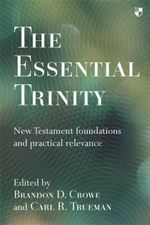

The Essential Trinity The Essential Trinity: New Testament Foundations and Practical Relevance

by Brandon D. Crowe and Carl R. Trueman, eds.

Paperback, 273 pg.
Inter-Varsity Press, 2016

Read: July 31 – August 14, 2016

As far as consistency of quality amongst edited volumes goes, Crowe and Trueman have assembled one of the stronger line-ups I’ve read in a while — men from a spectrum of persuasions of Evangelical-ish thought have given the Church fourteen articles (approximately 20 pages each) to deepen our thinking about the Trinity. The aim was for a volume that “eschews overly technical discussion and focuses attention on the importance of the doctrine for every Christian.”

In Part 1, the articles look at the “trinitarian contours of every corpus of the New Testament, along with a chapter reflecting on the Old Testament roots of trinitarian doctrine.” If there are weak chapters in the volume, they’re in this part — but they aren’t that weak, either. Crowe’s chapter on Matthew is excellent, but the chapters on the Mark, Luke-Acts and John aren’t far off that Mark. Brian S. Rosner’s chapter on “Paul and the Trinity” is worth the price of the book. The chapters on the rest of the epistles are very helpful (particularity Hebrews). Mark S. Gignilliat’s article, “The Trinity and the Old Testament: real presence or imposition?” is very helpful and insightful — and as an added bonus, it’s the most stylistically entertaining and engaging piece in the book.

Benjamin Gladd’s chapter exploring Daniel’s influence on Revelation’s view of the Trinity is the biggest mental workout you’ll get in the book. I appreciated the material covered and the argument Gladd makes, but I’m going to have to read it a few more times before I think I have a good handle on it.

Part 2 addresses the importance of the Trinity for everyday living — many would say the doctrine is impractical and only belongs in Statements of Faith and academia. The authors here show the fallacy of that. It begins with a brief, but excellent, description of the doctrine by Scott R. Swain. Carl Trueman has the next chapter, “The Trinity and prayer,” which is probably as valuable as Rosner’s — it’s actually about more than prayer, but the material specifically on prayer is great — hugely indebted to John Owen (but not uncritically so). Robert Letham’s chapter on “The Trinity and worship” also draws deeply from Owen; if he doesn’t move you to worship as you understand the work of the Trinity in it, you aren’t paying attention (I probably have more problems with some of what he says than anything else in the book). Michael Reeves, typically, made me chuckle in his chapter on preaching — but he did more than that, too.

Timely, convicting, thoughtful and inspiring, this examination of the Trinity in Scripture and Life should be a great benefit to any believer ho reads it. It may not be the easiest thing read all year (but really, it’s not that difficult), but it’ll be one of the most rewarding.

—–

4 Stars

REPOSTING JUST CUZ: Heaven on Earth by Thomas Brooks

Heaven On EarthHeaven On Earth

by Thomas Brooks

ebook
originally published 1654
Read: May 11 – 25, 2014

I just might have myself a new favorite Puritan (I’m not the only one who has a list, right?). I’m kicking myself for not getting to Brooks earlier in life. What a wonderful book — I’m looking forward to getting to read more by him.

Aesthetically, this is fantastic. The language sings — the book begs to be read aloud (and I frequently did so, interrupting whatever anyone around me was doing). You can feel the passion, the fervor throughout. A few paragraphs from different chapters illustrate this:

Divine light reaches the heart as well as the head. The beams of divine light shining in upon the soul through the glorious face of Christ are very working; they warm the heart, they affect the heart, they new mold the heart. Divine knowledge masters the heart, it guides the heart, it governs the heart, it sustains the heart, it relieves the heart. Knowledge which swims in the head only, and sinks not down into the heart, does no more good than the unicorn’s horn in the unicorn’s head.

The only ground of God’s love is his grace. The ground of God’s love is only and wholly in himself. There is neither portion nor proportion in us to draw his love. There is no love nor loveliness in us that should cause a beam of his love to shine upon us. There is that enmity, that filthiness, that treacherousness, that unfaithfulness, to be found in every man’s bosom, which might justly put God upon glorifying himself in their eternal ruin, and to write their names in his black book in characters of blood and wrath. God will have all blessings and happiness to flow from free grace.

Faith is the first pin which moves the soul; it is the spring in the watch which sets all the golden wheels of love, joy, comfort, and peace a-going. Faith is a root-grace, from whence springs all the sweet flowers of joy and peace. Faith is like the bee, it will suck sweetness out of every flower; it will extract light out of darkness, comforts out of distresses, mercies out of miseries, wine out of water, honey out of the rock, and meat out of the eater, Judg 14:14.

But beyond that, the book is sound, it is orthodox, it is Biblical — throughout Brooks points the reader to The Book and The One Who inspired it. His aim is to show “that believers may in this life attain unto a well-grounded assurance of their everlasting happiness and blessedness.” He then goes on to examine the nature of that assurance, hindrances that keep believers from it, reasons to encourage believers to seek it, and how they can go about it, the difference between true and counterfeit assurance, as well as answering questions about assurance. Examining the doctrine from so many angles, you really feel (and probably do) that you come away from this book having an exhaustive look at the doctrine.

Chapter 6 — which takes more than its fair share of space, almost half of the book — is an extended detour from the point of the book, but it still serves to support the theme. He begins by saying, “In the previous chapter, you saw the seven choice things which accompany salvation. But for your further and fuller edification, satisfaction, confirmation, and consolation, it will be very necessary that I show you,” these seven choice things. Which are:

(1.) What knowledge that is, which accompanies salvation.
(2.) What faith that is, which accompanies salvation.
(3.) What repentance that is, which accompanies salvation.
(4.) What obedience that is, which accompanies salvation.
(5.) What love that is, which accompanies salvation.
(6.) What prayer that is, which accompanies salvation.
(7.) What perseverance that is, which accompanies salvation.

It is such a great chapter, and would make a remarkable little booklet unto itself that I really can’t complain too much that it’s such a departure from the rest of the book (though it did take me a little bit to get used to the notion).

Banner of Truth puts this out in paperback, monergism.com puts this out as a free e-book. Either way you go for it, this is a treasure I heartily suggest you grab.

—–

5 Stars

Athanasius of Alexandria: His Life and Impact by Peter Barnes: Tumultuous History and a Stalwart Bishop

Athanasius of AlexandriaAthanasius of Alexandria:
His Life & Impact

by Peter Barnes

DETAILS:
Series: The Early Church Fathers
Publisher: Christian Focus Publications
Publication Date: October 2, 2019
Format: eBook
Length: 176 pg.
Read Date: October 2-9, 2022
Support Independent Bookstores - Visit IndieBound.org

As he wrote to the bishops of Egypt in 356: ‘as therefore the struggle that is now set before us concerns all that we are, either to reject or to keep the faith, let us be zealous and resolve to guard what we have received, bearing in mind the confession that was written down at Nicaea’. And by God’s grace, his victory in that struggle has been of enormous blessing to the church ever since.

The Series

In case you hadn’t read what I thought of the other books I’ve read in this series, let me start with the thumbnail description of the series I came up with:

I literally stumbled on this series, The Early Church Fathers, a few weeks ago and thought it sounded like a great idea. It looked kind of like a mix of Crossway’s Theologians on the Christian Life and Oxford’s Very Short Introductions (incidentally, that’s what it ended up being).

What’s Athanasius of Alexandria About?

In the first chapter, Barnes sketches out what life is like for Christians in Alexandria in the years immediately before Constantine, through the Great Persecution, then he turns the focus on to Athanasius’ early years (and some of the competing theories as to what those were like).

He then spends four chapters reviewing the ecclesiastical movements surrounding the Arian conflict and related controversies. He discusses both the imperial moves, the various councils and reactions to them, and Athanasius’ various exiles and restorations.

After the overview of his life, Barnes discusses his theology and major works, On the Incarnation of the Word of God and Against the Gentiles, before moving into his views on the Bible, Asceticism, and Spirituality. Barnes talks about critiques and challenges as well as the lasting influence of the Bishop of Alexandria.

So, what did I think about Athanasius of Alexandria?

Athanasius considered himself inadequate as a theological writer, and unpracticed in speech. He never entered the fray as a detached academic philosopher. He was first and foremost a Christian, and his declared aim was that a right understanding of theology might strengthen faith in Christ, that ‘you may have ever greater and stronger piety towards him’.

I’m trying not to turn on this series, but they’re making it difficult for me (but I’ve read three of the five, so you know I’m going to finish them). It wasn’t bad, don’t get me wrong, but it didn’t give me enough of what I came looking for and too much of things I didn’t.

Let me try to explain.

Sixty-five percent of the book is the historical material—with an element of biographical material. So much of the history is dry and feels like he’s just rattling off names without really explaining why we should care about the names. This is supposed to be an introduction to Athanasius, not a crash course in Fourth Century History. Yes, most of those names—and the historians who have theories about them—are those a student of Church History should be familiar with. But in this context, it felt like meaningless trivia. It’s too much of this book—sure, it’s a complicated period of history so it takes a lot of work to cover it, but that shouldn’t be the emphasis of a book like this.

The last three chapters—about his works, his theology, his influence, and so on were great. If more of the book had been like that, I’d be singing a different tune. I did walk away feeling like I had a better understanding of Athanasius, but not as much of one as I’d hoped.

I think if my expectations were better, I’d have appreciated it more. Still, I did like it and did benefit from it, I expect others will, too.


3 Stars

This post contains an affiliate link. If you purchase from it, I will get a small commission at no additional cost to you. As always, the opinions expressed are my own.

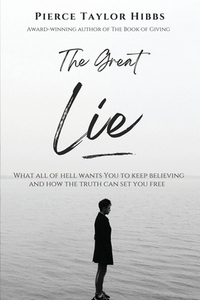
The Great Lie by Pierce Taylor Hibbs: He Is Here, and He Is Not Silent

The Great LieThe Great Lie:
What All of Hell Wants
You to Keep Believing

by Pierce Taylor Hibbs

DETAILS:
Publisher: Truth Ablaze
Publication Date: September 12, 2022
Format: Paperback
Length: 190 pg.
Read Date: September 18-25, 2022
Support Independent Bookstores - Visit IndieBound.org

The great lie is that God is not everywhere and always present in his world.

What’s The Great Lie About?

Hibbs takes as his starting point that God is everywhere present in His world, and given his communicated nature—He is always speaking to us, through both the Creation and His Word. But since the temptation (and then fall) of Adam and Eve, the enemy wants us to think His presence is irrelevant (if He’s present). This is the Great Lie.

Hibbs spends five chapters establishing (or refreshing) the theological framework here—reminding us who God is and how He constantly is communicating to humanity, what the Great Lie is, and how we see it in Genesis 3 and worked out in the lives of some individuals as recorded in Scripture.

The second half of the book then looks at how that looks in our lives today—in the world around us, our words, our thoughts, and our actions. Then he looks at God’s response to this Great Lie.

So, what did I think about The Great Lie?

This pairs nicely with his In Divine Company, building on the idea of God’s communicative nature. This time, applying that in a different direction, but keeping the same central concern.

That alone made this book worth the read for me, I’d thought a little about how to apply thinking of God in those terms to other areas of life after reading the work on prayer, but hadn’t gotten as far as I should have. This book helps see the battle with sin through that lens—not in an exhaustive sense, but in a very real and helpful sense.

It’s incredibly practical and assuring while being grounded in thoughtful theology (as any Christian teaching should be as it aims for practically). This really doesn’t do anything new—Hibbs has no novel teaching. But he frames this in a way we’re not used to thinking about it—and that’s refreshing and challenging at the same time.

Paired with Hibbs’ characteristic clear prose and gift with language and illustrations, it’s a winner of a book. Check it out for sure.


3.5 Stars

This post contains an affiliate link. If you purchase from it, I will get a small commission at no additional cost to you. As always, the opinions expressed are my own.

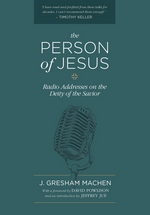
REPOSTING JUST CUZ: The Person of Jesus by J. Gresham Machen

The Person of JesusThe Person of Jesus: Radio Addresses on the Deity of the Savior

by J. Gresham Machen

Paperback, 101 pg.
Westminster Seminary Press, 2017

Read: March 19, 2017


If it’s J. Gresham Machen, it’s gotta be good! Yeah, that might be an oversimplification, but it’s true.

This book is made up of part of a series of radio addresses Machen gave in 1935 — this selection, obviously, focusing on the Person of Christ — his Deity (and what it actually means to describe him as such), what He says about Himself, and what He demonstrated about Himself. These are warm chapters that must’ve been easy to listen to (at one point Machen apologizes for technical language in a way that brought a smile to my face), but rich in teaching. I only wish we had the recordings. I don’t know how, but even with these addresses coming from eight decades ago, they feel like the could’ve been delivered last week.

My favorite chapter, probably, was on The Sermon on the Mount — it’s a long-standing favorite of liberal theologians, and other non-Christians as a way of talking about the “ethics of the New Testament” apart from anything supernatural, miraculous or theological. Machen directly takes on this idea and shows how it’s baseless and impossible to actually do.

These addresses were given towards the end of this life, after he’s gone through “The Presbyterian Conflict” and all the associated drama and trials. Through that experience, he’s a bit more direct. In Christianity & Liberalism Machen’s no less forthright, but he talks about Liberal Theologians, or “other teachers”, etc. Here, he doesn’t waste time — he just calls them “unbelievers.” It’s the same thing, as he demonstrated in his earlier work, but he doesn’t do that here.

This is how apologetics should look — easy to understand and follow, yet rich in doctrine and the Bible. Welcoming and winsome while not giving an inch to his opponents. As always, with Machen, this is how we should all be doing it.

—–

5 Stars

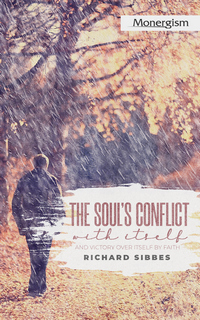
The Soul’s Conflict and Victory Over Itself by Faith by Richard Sibbes: Sibbes Gets a Lot out of Psalm 42:11

The Soul's Conflict and Victory Over Itself by FaithThe Soul’s Conflict and Victory Over Itself by Faith

Richard Sibbes

DETAILS:
Publisher: Monergism Books
Publication Date: July 1, 2022
Format: Paperback
Length: 230 pg.
Read Date: September 4-18, 2022

What’s The Soul’s Conflict… About?

This is a treatise on:

Why art thou cast down, O my soul? and why art thou disquieted
within me? hope thou in God; for I shall yet praise him, who is
the health of my countenance, and my God.—PSALM 42:11.

Sibbes has two types of believers in mind for this—those who are at peace with the world, who enjoy comfort, and those who are constantly troubled. He seeks to disquiet the former and help the latter to find peace.

He spends a chapter giving an overview of the psalm before diving into the discussion. Following it, the book is pretty cleanly divided into two parts—The Soul’s Conflict and The Soul’s Victory Over Itself. It was pretty easy, despite the lack of a Table of Contents saying “Part II,” to tell when Sibbes switched to the Victory side.

Both of these sections are typical of the Puritan era—squeezing every last drop of water out of the rock that was the topic. There is some exegesis, and a little interpretation of the passage, but it can feel like Sibbes was given an assignment for a listicle—here are 12 reasons your soul can be cast down.

So, what did I think about The Soul’s Conflict…?

Faith is an understanding grace; it knows whom it trusts, and for what, and upon what grounds it trusts. Reason of itself cannot find what we should believe, yet when God hath discovered the same, faith tells us there is great reason to believe it. Faith useth reason, though not as a ground, yet as a sanctified instrument to find out God’s grounds, that it may rely upon them. He believes best, that knows best why he should believe. Confidence, and love, and other affections of the soul, though they have no reason grafted in them, yet thus far they are reasonable, as that they are in a wise man raised up, guided, and laid down with reason; or else men were neither to be blamed nor praised for ordering their affections aright; whereas not only civil virtue, but grace itself is especially conversant in ruling the affections by sanctified reason.

I got to the point, I admit, that I had a hard time getting through the first part of the book, and wondered how long it was going to go on. I know that Sibbes actually could’ve—should’ve—gone on longer to be truly exhaustive about the ways we deceive ourselves, find ways to rebel, and so on. I acknowledge I might be one of the ones he targeted as “too comfortable,” who really needed to study and meditate on those parts before going on to the encouraging section.

Or maybe I’m a victim of 21st Century abbreviated attention-span. Or both. But it did go on so long that it felt like he was just stretching things to make word count (I know that’s not true—he didn’t have one). I had a similar reaction in the last couple of chapters of the Victory section, but it took a little longer for that to happen.

I know I’m coming across as negative here, I don’t mean to be. I liked this, just not as much as I expected to. I go into a Sibbes book expecting a 5 Star experience. If I don’t get it, I probably complain too much. Both sides were insightful and helpful—I think I profited more from the last section, a lot of it was great, and some of the better material I’ve read from Sibbes. I certainly think I’d have a different reaction at another time—and I am going to return to this in a couple of years. Both to understand it better and to see how I react.

In the meantime, for a great example of Puritan spirituality, of a spiritual doctor diagnosing and treating his patients (read: readers), you can’t do better than Sibbes (even if he gets tedious). It’s truly rewarding.


3.5 Stars

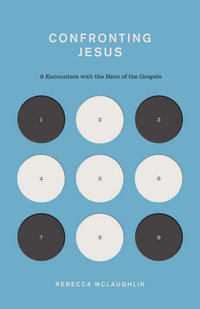
PUB DAY REPOST: Confronting Jesus by Rebecca McLaughlin: Introducing Jesus Without Any Baggage

Confronting JesusConfronting Jesus:
9 Encounters with
the Hero of the Gospels

by Rebecca McLaughlin

DETAILS:
Publisher: Crossway
Publication Date: September 20, 2022
Format: eARC
Length: 208 pg.
Read Date: August 21-28, 2022
Support Independent Bookstores - Visit IndieBound.org

What’s Confronting Jesus About?

Most people have a lot of preconceptions about Jesus, a lot of people have read and/or heard things about Him and the Scriptures that tell about him. But not as many have actually read those Scriptures, particularly the Gospels.

Rebecca McLaughlin tries to clear away some of the cultural debris that has piled up between non-Christians and the Gospels and the subject of the Gospels. For example, as she points out, given Christianity’s impact in shaping Western Civilization, it’s difficult to think of Jesus as non-Western.

The goal of the book is to help the reader (particularly those with little-to-know-exposure to Christianity) begin to see the Gospels for what they really are, not the readers’ preconceptions of them. And the Jesus revealed in the Gospels as the Gospels want to portray him, not what the reader may already think.

It’s a high and lofty goal—possibly too lofty for 200 pages. But this isn’t intended as a definitive work, more like an invitation for the reader to do their own work.

A Menagerie of References

A lot of writers (and preachers, truth be told) will introduce a subject or thought by grounding their introduction in some sort of shared knowledge. Sometimes it’ll be an experience (first day of school), a person everyone knows (George Washington), a current event, or some sort of cultural reference (literature, music, film/TV, etc.). McLaughlin almost always goes for the latter. And, for the overwhelming majority of the time, it’s a very contemporary reference.

She starts off by invoking the musical Hamilton, and does so in-depth—it wasn’t long at all before I made a note, “can we be done with Hamilton now?” The answer was no—she came back to Miranda’s hit time and time again. Thankfully my worries about this being a book about Jesus, the gospels, and a hip-hop musical about a Founding Father quickly evaporated and she moved on to other cultural touchpoints—Harry Potter, Doctor Who, The Princess Bride, Gladiator, The Picture of Dorian Gray, The Lord of the Rings, Jane Austen, A Tale of Two Cities, and more. It’s an interesting mix of pop-culture and more high-brow references.

I’m spending more time on this than I initially intended, but I kept bumping on this tendency of hers, and I ended up spending as much time thinking about it as I did her arguments. Now, I don’t think most readers will do that—but most readers aren’t considering the delivery of the content as they are the content. So I don’t think most readers will be distracted by this as I am.

Still, the volume of pop culture references strikes me as a dangerous strategy (as comfortable and relatable as it might be). It can trivialize the subject matter. It can possibly cause offense (how many people really want to relate to J.K. Rowling right now? A different crowd than those who didn’t want anything to do with her in the 90s, to be sure).

Lastly, it reduces the shelf-life of the book tremendously. Wilde, Dickens, and Austen are references that will stand (and have stood) the test of time—but will The Hunger Games and Ted Lasso? Maybe. But Maybe not. McLaughlin’s arguments and insights may be worth reading in ten years, but will the book as a whole? Or will what makes it most approachable today make it stale and off-putting within a presidential election cycle or two.

(that took a lot more time to express and explain my concerns than I thought it would—this is not a significant detriment to the effectiveness of the book, but it is one)

The Tone

McLaughlin has an approachable, almost breezy style. I started this book while taking a break from a more scholarly book, and the early chapters had some overlap with the other book I was reading. And I suffered a little mental whiplash. I got over it the more of the book that I read (especially as it diverted into different territory from the other), but it almost seemed too shallow. A lot of readers might think that, too. If you persevere, however you’ll see that’s not that case.

McLaughlin comes across as open, honest, and earnest—the kind of person you’d enjoy chatting with—and her grounding things in events with her life or a movie you’ve both seen (or that she’s told you enough about that you want to see it), makes the material something you connect with.

So, what did I think about Confronting Jesus?

I enjoyed the book. I was charmed by McLaughlin’s style and found her arguments compelling—not convincing. But, as I said, I’m not sure she was trying to convince her readers—I think she was set on moving them to do more research, more reading, and to deal with more convincing ideas and arguments. This was an introduction to Jesus, hopefully lowering perceived barriers to him—and a challenge to deal honestly with Him and His claims rather than preconceptions and reputations about Him (and His followers).

That said, I’m predisposed to agree with her. We’re on the same team, and don’t have the same barriers that the non-Christian will have. So I can’t ultimately say how well the book works. Do I think that several of my friends would benefit from it? Sure. But that’s just a guess/hope. The ultimate sign of the quality and effectiveness of this book is going to come from the non-Christian reader.

Also, this book does make me curious about McLaughlin’s other work—and I anticipate grabbing at least one of her earlier books soon.

Disclaimer: I received this eARC from Crossway via NetGalley in exchange for this post—thanks to both for this opportunity.


3 Stars

This post contains an affiliate link. If you purchase from it, I will get a small commission at no additional cost to you. As always, the opinions expressed are my own.

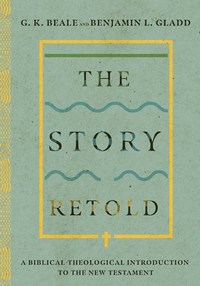
The Story Retold by G. K. Beale and Benjamin L. Gladd: Everything You Want in a NT Introduction and More

The Story RetoldThe Story Retold:
A Biblical-Theological Introduction
to the New Testament

by G. K. Beale, Benjamin L. Gladd

DETAILS:
Publisher: IVP Academic
Publication Date: February 24, 2020
Format: Hardcover
Length: 490 pg.
Read Date: January 2-August 14, 2022
Support Independent Bookstores - Visit IndieBound.org

What’s The Story Retold About?

From the Publisher’s Website:

New Testament introductions fall into two categories: those that emphasize the history behind the text through discussions of authorship, dating, and audience, and those that explore the content of the text itself. Few introductions weave the Old Testament into their discussions, and fewer still rely on the grand narrative of the Old Testament.

But the New Testament was not written within a vacuum. Rather, it stands in continuity with the Old Testament. Israel’s story is the church’s story.

In The Story Retold, G. K. Beale and Benjamin L. Gladd explore each New Testament book in light of the broad history of redemption, emphasizing the biblical-theological themes of each New Testament book. Their distinctive approach encourages readers to read the New Testament in light of the Old, not as a new story but as a story retold.

As an NT Introduction

After three chapters of introductory material: “The Story Line of the Bible,” “The Use of the Old Testament in the New,” and “Introduction to the Gospels” (all pretty self-explanatory), we get a chapter on each book of the New Testament (with some chapters combining multiple books—e.g., The Pastoral Epistles).

Like most NT Introductions (as the description above says), Beale and Gladd discuss authorship, dating, and so on, with a good outline and overview of the book. Some of the ways they phrase things, or organize the material are helpful and unique—but on the whole, they’re helpful and pretty much what you get in every NT Introduction out there.

This isn’t a good or a bad thing, it’s simply saying that on the basics this is a pretty good Introduction.

The Little Something Extra in Each Chapter

The thing that separates this from similar works is the way that the authors tie the particular Biblical book into the overall storyline of the Bible. By focusing on the Biblical Theological/Redemptive Historical themes of the books—specifically grounding them in one or more Old Testament books about the same themes, it helps the reader to deal with, wrestle with, and (frequently) review the use of the OT by the NT in order to further cement and to expand the reader’s understanding of how the Bible as a whole tells the same story about Jesus Christ and His people.

Some of these sections blew me away—all deepened my understanding of the various books. Not just the NT, but seeing how the OT is used by the apostles helps understand those books/passages.

Format

This was produced as a textbook and it’s nice to read one of these again—I haven’t since my undergrad days. It’s a heavy tome, with thick, glossy paper and a lot of pictures. Sure, it’s a bit difficult to curl up with to read—but you can’t help but feel that it’s going to last for years as you read it.

Also, it’s heavy enough to use as a self-defense device.

The format does make this a pretty spendy book (although cheaper than most textbooks I bought in my undergrad days). But it’s worth the purchase price (as I said, it feels like it’s going to last for years).

So, what did I think about The Story Retold?

This isn’t an overly technical read—I think it could be used by older high school students. But sure, it’s aimed at college/early grad-school students, so go to it with the right expectations.

I really don’t know what to say about it at this point—I spent months reading this thing, it feels as if I should have several more pages of things to say. Basically, if the description sounds good to you, it’s going to deliver exactly what it promised.

It’s not what most people think of as devotional material—but it worked for me as such. This is definitely one of the better and more useful books I read this year. It’s also going to serve well as a reference book. Whether you dip in and out or read cover-to-cover, The Story Retold is worth its weight.


5 Stars

This post contains an affiliate link. If you purchase from it, I will get a small commission at no additional cost to you. As always, the opinions expressed are my own.

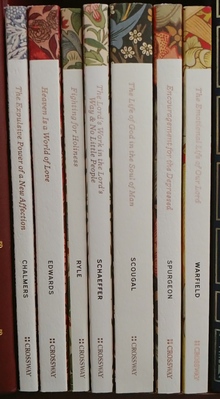
Crossway Short Classics: Scougal

Crossway Short Classics SeriesCrossway Short Classics Series

DETAILS:
Publisher: Crossway Books
Format: Paperback
Read Date: July 2022

Some Thoughts on the Series as a Whole

The point of this series is to take classic short works—sermons, tracts, articles—package them attractively, edit a bit (modernize language, eliminate footnotes, tweak grammar, etc.) and make them widely available. Each is given a short introduction to help the reader get the context and a bit of information about the author.

I think this is a great idea, and I don’t know how I didn’t hear about this until a few weeks ago. I do hope they put out new books in the series (at least one of the books on the original list isn’t out yet, but they did publish one not on that list, so maybe they exchanged the titles).

I wonder a bit about the cover design—I wonder if the floral theme is a bit off-putting (Evangelical publishers usually reserve that for books marketed for women, and I don’t get the impression that this series is designed for that).

I don’t want to try to cover the whole series in one post, so I’m going to do this in chunks. This is the third in the series of posts I’ll be doing (and the last until early next year, when other volumes are due).

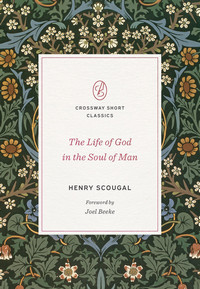
The Life of God in the Soul of ManThe Life of God in the Soul of Man

by Henry Scougal, Joel R. Beeke (Foreward), Robin Taylor (Abridgement)

DETAILS:
Publication Date: May 30, 2022
Length: 181 pg. 
Read Date: July 31, 2022
Support Independent Bookstores - Visit IndieBound.org

I’ve read this book a handful of times, and never walked away from it as impressed as I’ve heard I should be—but I keep trying. It was while reading the foreword by Beeke that I think I got an idea.

In reading Scougal’s work, one must remember that he assumes a doctrinal foundation that he does not explicitly lay out. All that Scougal writes about union with God presupposes the gospel that God the Father sent God the Son to become a man, die for our sins, rise from the dead, ascend into heaven, and reign as Lord, so that by faith in him God the Holy Spirit dwells within the heart. Scougal’s focus is quite narrow—namely, to assert that the Christian religion consists of more than just mental understanding and outward religious life by requiring an inward transformation that arises from spiritual union with Christ and communion with God.

This may say more about me than I intended, but I didn’t get that Scougal was presupposing anything, but always felt he was missing something. Working from that assumption, however, helped a lot during this read.

The last sentence in Beeke’s paragraph is a very effective summary of the book (the rest of the foreword is plenty helpful, too). Scougal focuses on the inward man, the change that has to take place—and the supernatural resources to make that change. His Christianity is an experiential, wholehearted, and supernatural one. It is near-impossible to read his work and not sense your need for deep spiritual renovation.

I don’t know the work well enough to really comment on the abridgment—but I had a couple of thoughts. The work is short enough that I wouldn’t have imagined it needed an abridgment to fit in this series. Despite having been abridged, it feels complete. So that’s got to be a good sign, right?

I’m still not convinced that I fully appreciate Scougal’s work—but I’m closer to it this time. There’s a lot to admire here, and it’s enough to make me want to keep reading until I get it.

3 Stars

This post contains affiliate links. If you purchase from them, I will get a small commission at no additional cost to you. As always, the opinions expressed are my own.

Confronting Jesus by Rebecca McLaughlin: Introducing Jesus Without Any Baggage

Confronting JesusConfronting Jesus:
9 Encounters with
the Hero of the Gospels

by Rebecca McLaughlin

DETAILS:
Publisher: Crossway
Publication Date: September 20, 2022
Format: eARC
Length: 208 pg.
Read Date: August 21-28, 2022
Support Independent Bookstores - Visit IndieBound.org

What’s Confronting Jesus About?

Most people have a lot of preconceptions about Jesus, a lot of people have read and/or heard things about Him and the Scriptures that tell about him. But not as many have actually read those Scriptures, particularly the Gospels.

Rebecca McLaughlin tries to clear away some of the cultural debris that has piled up between non-Christians and the Gospels and the subject of the Gospels. For example, as she points out, given Christianity’s impact in shaping Western Civilization, it’s difficult to think of Jesus as non-Western.

The goal of the book is to help the reader (particularly those with little-to-know-exposure to Christianity) begin to see the Gospels for what they really are, not the readers’ preconceptions of them. And the Jesus revealed in the Gospels as the Gospels want to portray him, not what the reader may already think.

It’s a high and lofty goal—possibly too lofty for 200 pages. But this isn’t intended as a definitive work, more like an invitation for the reader to do their own work.

A Menagerie of References

A lot of writers (and preachers, truth be told) will introduce a subject or thought by grounding their introduction in some sort of shared knowledge. Sometimes it’ll be an experience (first day of school), a person everyone knows (George Washington), a current event, or some sort of cultural reference (literature, music, film/TV, etc.). McLaughlin almost always goes for the latter. And, for the overwhelming majority of the time, it’s a very contemporary reference.

She starts off by invoking the musical Hamilton, and does so in-depth—it wasn’t long at all before I made a note, “can we be done with Hamilton now?” The answer was no—she came back to Miranda’s hit time and time again. Thankfully my worries about this being a book about Jesus, the gospels, and a hip-hop musical about a Founding Father quickly evaporated and she moved on to other cultural touchpoints—Harry Potter, Doctor Who, The Princess Bride, Gladiator, The Picture of Dorian Gray, The Lord of the Rings, Jane Austen, A Tale of Two Cities, and more. It’s an interesting mix of pop-culture and more high-brow references.

I’m spending more time on this than I initially intended, but I kept bumping on this tendency of hers, and I ended up spending as much time thinking about it as I did her arguments. Now, I don’t think most readers will do that—but most readers aren’t considering the delivery of the content as they are the content. So I don’t think most readers will be distracted by this as I am.

Still, the volume of pop culture references strikes me as a dangerous strategy (as comfortable and relatable as it might be). It can trivialize the subject matter. It can possibly cause offense (how many people really want to relate to J.K. Rowling right now? A different crowd than those who didn’t want anything to do with her in the 90s, to be sure).

Lastly, it reduces the shelf-life of the book tremendously. Wilde, Dickens, and Austen are references that will stand (and have stood) the test of time—but will The Hunger Games and Ted Lasso? Maybe. But Maybe not. McLaughlin’s arguments and insights may be worth reading in ten years, but will the book as a whole? Or will what makes it most approachable today make it stale and off-putting within a presidential election cycle or two.

(that took a lot more time to express and explain my concerns than I thought it would—this is not a significant detriment to the effectiveness of the book, but it is one)

The Tone

McLaughlin has an approachable, almost breezy style. I started this book while taking a break from a more scholarly book, and the early chapters had some overlap with the other book I was reading. And I suffered a little mental whiplash. I got over it the more of the book that I read (especially as it diverted into different territory from the other), but it almost seemed too shallow. A lot of readers might think that, too. If you persevere, however you’ll see that’s not that case.

McLaughlin comes across as open, honest, and earnest—the kind of person you’d enjoy chatting with—and her grounding things in events with her life or a movie you’ve both seen (or that she’s told you enough about that you want to see it), makes the material something you connect with.

So, what did I think about Confronting Jesus?

I enjoyed the book. I was charmed by McLaughlin’s style and found her arguments compelling—not convincing. But, as I said, I’m not sure she was trying to convince her readers—I think she was set on moving them to do more research, more reading, and to deal with more convincing ideas and arguments. This was an introduction to Jesus, hopefully lowering perceived barriers to him—and a challenge to deal honestly with Him and His claims rather than preconceptions and reputations about Him (and His followers).

That said, I’m predisposed to agree with her. We’re on the same team, and don’t have the same barriers that the non-Christian will have. So I can’t ultimately say how well the book works. Do I think that several of my friends would benefit from it? Sure. But that’s just a guess/hope. The ultimate sign of the quality and effectiveness of this book is going to come from the non-Christian reader.

Also, this book does make me curious about McLaughlin’s other work—and I anticipate grabbing at least one of her earlier books soon.

Disclaimer: I received this eARC from Crossway via NetGalley in exchange for this post—thanks to both for this opportunity.


3 Stars

This post contains an affiliate link. If you purchase from it, I will get a small commission at no additional cost to you. As always, the opinions expressed are my own.

Page 16 of 32

Powered by WordPress & Theme by Anders Norén