Category: Theology/Christian Living Page 17 of 32

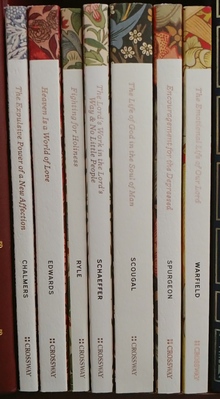
Crossway Short Classics: Schaeffer, Spurgeon, Chalmers

Crossway Short Classics SeriesCrossway Short Classics Series

DETAILS:
Publisher: Crossway Books
Format: Paperback
Read Date: July 2022

Some Thoughts on the Series as a Whole

The point of this series is to take classic short works—sermons, tracts, articles—package them attractively, edit a bit (modernize language, eliminate footnotes, tweak grammar, etc.) and make them widely available. Each is given a short introduction to help the reader get the context and a bit of information about the author.

I think this is a great idea, and I don’t know how I didn’t hear about this until a few weeks ago. I do hope they put out new books in the series (at least one of the books on the original list isn’t out yet, but they did publish one not on that list, so maybe they exchanged the titles).

I wonder a bit about the cover design—I wonder if the floral theme is a bit off-putting (Evangelical publishers usually reserve that for books marketed for women, and I don’t get the impression that this series is designed for that).

I don’t want to try to cover the whole series in one post, so I’m going to do this in chunks. This is the second in the series of posts I’ll be doing.

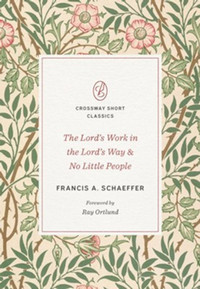
The Lord's Work in the Lord's Way and No Little PeopleThe Lord’s Work in the Lord’s Way and No Little People

by Francis Schaeffer, Ray Ortlund (Foreward)

DETAILS:
Publication Date: May 30, 2022
Length: 90 pg.
Read Date: July 31, 2022
Support Independent Bookstores - Visit IndieBound.org

I’ve never read a sermon (in this case, two) by Schaeffer before, so I was pretty curious. I’ve read a couple of books by him, but there’s a big difference in genres.

I appreciated the content and found it helpful. But for a man who is capable of pretty profound thought, I thought these were a little shallow.

3 Stars

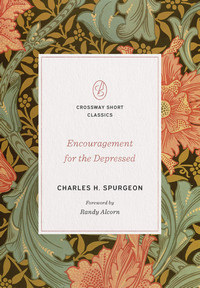
Encouragement for the DepressedEncouragement for the Depressed

by Charles H. Spurgeon, Randy Alcorn (Foreward)

DETAILS:
Publication Date: October 12, 2020
Length: 100 pg.
Read Date: July 31, 2022
Support Independent Bookstores - Visit IndieBound.org

It’s well documented that Spurgeon battled depression through much of his career, so if there’s someone who can speak to the topic with authority, it’s him. These two sermons are pretty helpful.

The first, which bears the name of this slim volume is far superior and is well-named. Not only is it encouraging for the depressed, but there’s plenty of encouragement for those with weak and struggling faith.

The second sermon, “The Minister’s Fainting Fits,” is directed primarily (obviously) toward ministers and preachers. It’s not bad, but it’s hard to relate to or find a lot that’s applicable to most readers of a series like this.

3.5 Stars

The Expulsive Power of a New AffectionThe Expulsive Power of a New Affection

by Thomas Chalmers, John Piper (Foreward)

DETAILS:
Publication Date: October 12, 2020
Length: 72 pg.
Read Date: July 31, 2022
Support Independent Bookstores - Visit IndieBound.org

I was a little disappointed by this one—Chalmers is regularly held up as a model of the best of Presbyterianism, and this sermon is regularly talked about as his best.

Now, I liked every bit of the sermon, I loved the argument and Chalmer’s perspective. I thought the language was a little stilted and the sermon left me a little cold. (those sentences seem contradictory when I read them, but they work in my mind). The central premise of this—that the love of God, in Christ, overpowers and pushes out the sinful inclinations and affections we’re born with. It’s an important emphasis, and one we would all do well to focus on.

This is one of those reads that in retrospect, I think I might not have been in the right headspace for—I’d also read a lot that day, and by the time I got to it, my mind might have been done. I expect when I revisit it, I’ll get more from it and think better of it.
3.5 Stars

This post contains affiliate links. If you purchase from them, I will get a small commission at no additional cost to you. As always, the opinions expressed are my own.

Crossway Short Classics: Warfield, Ryle, and Edwards

Crossway Short Classics SeriesCrossway Short Classics Series

DETAILS:
Publisher: Crossway Books
Format: Paperback
Read Date: July 2022

Some Thoughts on the Series as a Whole

The point of this series is to take classic short works—sermons, tracts, articles—package them attractively, edit a bit (modernize language, eliminate footnotes, tweak grammar, etc.) and make them widely available. Each is given a short introduction to help the reader get the context and a bit of information about the author.

I think this is a great idea, and I don’t know how I didn’t hear about this until a few weeks ago. I do hope they put out new books in the series (at least one of the books on the original list isn’t out yet, but they did publish one not on that list, so maybe they exchanged the titles).

I wonder a bit about the cover design—I wonder if the floral theme is a bit off-putting (Evangelical publishers usually reserve that for books marketed for women, and I don’t get the impression that this series is designed for that).

I don’t want to try to cover the whole series in one post, so I’m going to do this in chunks. This is the first in the series of posts I’ll be doing.

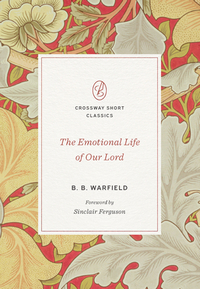
The Emotional Life of Our LordThe Emotional Life of Our Lord

by B.B. Warfield, Sinclair Ferguson (Foreward)

DETAILS:
Publication Date: May 10, 2022
Length: 110 pg.
Read Date: July 10, 2022
Support Independent Bookstores - Visit IndieBound.org

This is the book in the set I was most excited about—I’ve read this a few times, but I’ve only had a photocopy from someone who owned a set of Warfield’s shorter works to use (I’m sure it’s online now, but…). Now I have a nice, attractive, bound copy.

This look at Christ’s emotions—and how they demonstrate his humanity—is a fantastic piece of Christian scholarship. There’s a warmth to the writing, a sense of bringing assurance and comfort to the reader, along with the discussion of the texts. I just loved it.

Also, an Introduction by Sinclair Ferguson? Doesn’t get better than that.

5 Stars

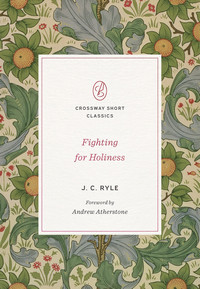
Fighting for HolinessFighting for Holiness

by J. C. Ryle, Andrew Atherstone (Foreward)

DETAILS:
Publication Date: May 10, 2022
Length: 74 pg.
Read Date: July 17, 2022
Support Independent Bookstores - Visit IndieBound.org

The original title of this was Are You Fighting?, and I guess the editors thought that since it wasn’t going to be republished in a series with similar questions, they needed a new title. I think the new title didn’t do it any favors. Fighting for Holiness shouldn’t be seen as Fighting to obtain Holiness or to display Holiness, but on account of Holiness, or in Holiness’ Cause. It may be nit-picking, but to me, the title just didn’t fit.

The fact that I stopped to think about that mid-way through this short work says something about how gripping it was.

This was a description of several of the passages using military metaphors from the Bible, calling readers to be fighters for the Faith. (in a spiritual sense, I should add, because too often today that would be understood as a more physical combat)

I just don’t get why this was picked—Ryle wrote a lot that were this length, and most of them would’ve been better. I can’t say that the work wasn’t well-written or anything, I’m just not sure this is the best work for the use.
3 Stars

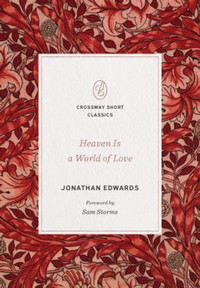
Heaven Is a World of LoveHeaven Is a World of Love

by Jonathan Edwards, Sam Storms (Foreward)

DETAILS:
Publication Date: October 13, 2020
Length: 115 pg.
Read Date: July 24, 2022
Support Independent Bookstores - Visit IndieBound.org

This is one of the several examples of sermons that demonstrate there’s more to Edwards than the caricature of a hellfire and brimstone preacher that’s so prevalent. And you have to think that’s at least part of the reason it was selected.

It’s a typical Edwardsian sermon in that he approaches the subject from several angles—maybe too many (or at least it feels that way a time or two). The focus here is on the love of God, as shown to His creation both in this world and the next (although the emphasis is on the next, hence the title).

Unlike the Warfield book above, I didn’t get the warmth in this one—odd considering the subject. It felt more like a scholarly treatise than a sermon, but that’s typical of Edwards and it’s clearly a sign that it’s been too long since I’ve read Edwards sermons.

It’s a nice sermon, a helpful sermon, and a nice bit of analysis, too.

3.5 Stars

This post contains affiliate links. If you purchase from them, I will get a small commission at no additional cost to you. As always, the opinions expressed are my own.

Reposting Just Cuz: The Last Adam by Brandon D. Crowe

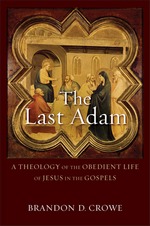
The Last AdamThe Last Adam: A Theology of the Obedient Life of Jesus in the Gospels

by Brandon D. Crowe

Paperback, 215 pg.
Baker Academic, 2017

Read: February 19 – March 19, 2017


I just don’t know how to sum up this book succinctly honestly. After a few attempts that are best never seen by anyone, I decided that no one does it better than Crowe does in the first three paragraphs:

What is the purpose and significance of the life and ministry of Jesus in the Gospels? At one level, this may seem like an obvious question. The Gospels are all about Jesus. Moreover, given the structure of each of the four Gospels, it is difficult to miss the central role played by the Passion Narratives. And yet there is much more in the Gospels beyond the Passion Narratives. Jesus is amazingly active. He preaches, heals, exorcises, prays, rebukes, forgives, calls, authorizes, confounds, challenges, rejoices, weeps, blesses, curses, prophesies, and more. In addition, he consistently draws attention to himself as he does these things.

And then there are the Christmas stories (that is, the infancy narratives). These are among the more familiar parts of the Gospels in today’s culture. But what is the relationship between the infancy narratives and salvation? Jesus appears to be quite passive lying in the manger as he is adored by shepherds, and we do not find him to be very active when the magi come and prostrate themselves before him in Matthew 2. But can we look even to the infancy of Jesus and say that Jesus was somehow already beginning to accomplish something of significance? To ask this question is to lead us back to the driving question of this volume, since Jesus did not bypass infancy, childhood, adolescence, or adulthood on his way to the cross. Why? What was it about the life of Jesus that was necessary for salvation—from the manger to the cross and everything in between? Do the Evangelists themselves give us any indications that this is a question they have in view as they write their Gospels? I will argue that they do.

In this volume I will argue that we find a shared perspective among the diversity of the four Gospels that the obedient life of Jesus—in its entirety—is vicarious and salvific in character. More specifically, I will argue that Jesus is portrayed in the Gospels as the last Adam whose obedience is necessary for God’s people to experience the blessings of salvation. In pursuit of this thesis, I will consider what the Gospels themselves say about the lifelong obedience of Jesus, which concomitantly involves considering how Jesus’s life and ministry are related to his passion. By concentrating on the Gospels I do not intend to imply that these are the only documents in the New Testament that speak to this issue. I do believe, however, that a focus on the Gospels qua Gospels is important because of the way they narrate the life of Jesus, and because their testimony to the significance of Jesus’s life for salvation has often not been given sufficient attention. Thus a sub-aim of this book is to help us read and interpret the Gospels theologically.

So, there’s his aim, rather, there are his aims. How does he go about it? Here’s the Table of Contents to give you a look at how he’s approaching his arguments (yeah, I’m quoting a lot here, but you try to tackle this book in a blog post rather than a dozen or so page review and see how easy it is):

1. A Tale of Two Adams in the History of Interpretation
2. The Last Adam and the Son of Man in the Gospels
3. The Last Adam as the Obedient Son of God
4. The Last Adam and the Fulfillment of Scripture
5. The Glory of the Last Adam in the Gospel of John
6. The Last Adam and the Kingdom of Righteousness
7. The Death and Resurrection of the Last Adam
8. The Last Adam and Salvation: Theological Synthesis and Conclusions

This is primarily an exegetical work — dealing with the text of the Gospels directly. But Crowe leans upon historical and systematic theology as well (especially in Chapter 8). Outside of Chapter 5, he’s primarily dealing with the Synoptics — but not exclusively. It is not impossible to read for the dedicated layman — I’ve read more difficult works in the last few months, but it’s not something you can skim with profit. There are issues that I’m not sure I understand the purpose of addressing, as I’m not aware of all of the academic controversies he’s addressing, but even when you don’t understand everything about those portions of the book, you can still gain from working through them.

I learned a lot. I thought about passages in a way I haven’t before — seeing things in a new light, or at least a different light. I really don’t have a lot to say about this particular book — primarily I just wanted to post about it to maybe get a reader or two to look at it that might not have otherwise. I loved it, even when I had to work a little harder than usual to get what he was saying, it was worth it. This is the kind of thing the Church needs more of.

This is written from a Confessionally Reformed perspective, but not necessarily for the Confessionally Reformed any more than other Evangelical/Evangelical-ish readers. Although, the Reformed will be more used to thinking in some of the categories he uses than others (as Crowe indicates late in this interview).

This is not an easy read, this is not a quick read, but it is a good read (why do I feel like Lewis’ Mr. Beaver now?). This is theology that will lead to doxology — as well as more theological and doxological reflection and study. I wasn’t sure what I expected to get out of this book, but Crowe delivered it and more. I’m not doing a good job summing things up here, just get this book and read it (as well as all the books Crowe writes that you can afford, I’m pretty sure I never got around to posting about his book on the General Epistles which was almost as good as this one (and easier to read)).

—–

4 1/2 Stars

The Attributes and Work of God by Richard L. Pratt, Jr.: A Broad and Capable Introduction to Theology Proper

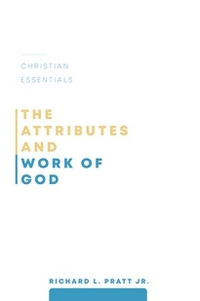
The Attributes and Work of GodThe Attributes and Work of God

by Richard L. Pratt, Jr.

DETAILS:
Series: Christian Essentials 
Publisher: P & R Publishing
Publication Date: April 27, 2022
Format: Paperback
Length: 184 pg.
Read Date: July 31, 2022
Support Independent Bookstores - Visit IndieBound.org

What’s The Attributes and Work of God About?

This is a basic and broad introduction to Theology Proper—who God is, what He does, communicable and incommunicable attributes, the Trinity, etc. It’s adapted from curriculum using language that’s easy to translate—particularly into languages that don’t have a well-developed theological vocabulary—so the English is kept basic, too. There’s almost no academic or technical theological language used, and those that are used are well defined.

The chapters are short (most around ten pages, two are longer than fifteen) and well-organized. Each contains a handful of side-bars consisting of a paragraph or two with the contents of interviews with pastors and theologians on the topic under discussion. These interviews were with people from a variety of theological perspectives helping broaden the text written by a Reformed professor.

A Couple of Issues

It’s difficult, perhaps impossible, writing at the level Pratt is here and for the audience he has in mind to get too detailed on difficult subjects—that’s a given, and I wouldn’t expect that to change. Still, I found the way that subordinationism was covered because there’s a lot of good and a lot of sloppy material being put out about it right now. People at all levels need to be given the tools to look for the good.

Secondly, I was underwhelmed with the sections on foreknowledge, predestination, and election. This again is part of the design of the book—Pratt isn’t writing only for those in the Reformed/Reformed-ish camp, so he attempted to write something on these topics that can appeal to/apply to Reformed and broad-Evangelicals. I don’t think it’s possible to satisfy all corners of this discussion, and Pratt demonstrates it in the disappointing pages on the ideas.

So, what did I think about The Attributes and Work of God?

My problems are in the closing pages of the book—until that point, I was very satisfied. People wanting a broad curriculum to cover the basics in a High School/young College-age Sunday School class or Bible Study would benefit from this—especially if the instructor can augment the material in the subordination/predestination sections.

This was an incredibly easy, but informative, read. The discussion questions and “For Further Study” resource lists at the end of each chapter are stronger than many similar examples that I’ve run across lately.

I’d hoped for something a bit deeper, a bit more thorough. But once I saw—and it took almost no time to register that—that this isn’t at all the aim of this book, I was able to adjust and ended up really enjoying this. I’ll gladly recommend this to someone looking for this level/approach and am looking forward to reading the other entries in this series.


3.5 Stars

This post contains an affiliate link. If you purchase from it, I will get a small commission at no additional cost to you. As always, the opinions expressed are my own.

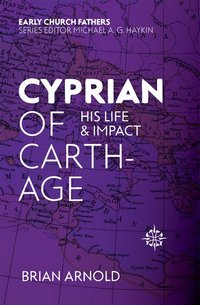
Cyprian of Carthage: His Life and Impact by Brian J. Arnold: An Unfocused Introduction to the Father

Cyprian of CarthageCyprian of Carthage:
His Life & Impact

by Brian J. Arnold

DETAILS:
Series: The Early Church Fathers
Publisher: Christian Focus Publications
Publication Date: February 1, 2018
Format: Kindle Edition
Length: 138
Read Date: July 24, 2022
Support Independent Bookstores - Visit IndieBound.org

The Series

In case you hadn’t read what I thought of the other book I’ve read in this series, let me start with the thumbnail description of the series I came up with:

I literally stumbled on to this series, The Early Church Fathers, a few weeks ago and thought it sounded like a great idea. It looked kind of like a mix of Crossway’s Theologians on the Christian Life and Oxford’s Very Short Introductions (incidentally, that’s what it ended up being).

What’s Cyprian of Carthage About?

Arnold has two aims for this short book: to introduce the third-century Father, Cyprian of Carthage, to his readers and to show that Cyprian has a use and significance for Christians today, especially as Arnold suggests that “Increasingly our world* looks more like Cyprian’s world.”

* Arnold seems to mean the Western world, perhaps, the United States, when he says “our world.”

Introducing Cyprian

Like the biography composed by Pontius, his contemporary, Arnold pretty much ignores Cyprian’s early years and starts with his conversion. It’s clear that he came from a prominent family, and seems to have held some noteworthy position in local government.

Soon after his conversion, he’s made bishop and it’s not long after that when he finds himself embroiled in controversies, some of which come out of the persecution of the Church. Arnold gives a quick overview of the nature of the controversies and Cyprian’s role and positions in each.

His Significance for Today

The latter part of the book focuses on “three areas where modern evangelicals would benefit by retrieving Cyprian: ecclesiology, virtue, and suffering and martyrdom.” Arnold sketches out each of these areas and points to how he thinks we could use the Father’s point of view.

So, what did I think about Cyprian of Carthage?

Because death and torture were always a possibility, Cyprian needed to make martyrdom appealing so that people would not drown in fear under the next wave of persecution.

The idea of making martyrdom appealing is pretty appalling to me. Sure, buttressing the faith of his people so they’d be able to stand fast during the next wave of persecution in the face of the possibility of martyrdom, is one thing. But making it appealing? Really?

Arnold also spends a lot of time discussing whether a certain period of history could be construed as a time of persecution—it’s an interesting question, and one probably worthy of debate with the scholar he’s focused on. But in a book of 138 pages, it’s not worth spending several paragraphs on the question.

I had a few other quibbles with his approach and some details of the writing. But it’s really not worth getting into.

This is a helpful volume, but it could’ve been better if Arnold had been a bit more focused on Cyprian and stayed out of extraneous areas. I do have a better appreciation for Cyprian, and I appreciate that. I just hoped for more.


3 Stars

This post contains an affiliate link. If you purchase from it, I will get a small commission at no additional cost to you. As always, the opinions expressed are my own.

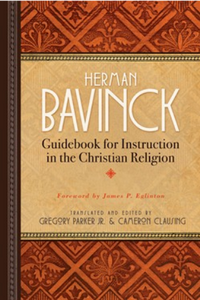
Guidebook for Instruction in the Christian Religion by Herman Bavinck; Gregory Parker Jr., Cameron Clausing (Translators): Dogmatics for Everyone

Guidebook for Instruction in the Christian ReligionGuidebook for Instruction in the Christian Religion

by Herman Bavinck, translated and edited by Gregory Parker Jr., Cameron Clausing

DETAILS:
Publisher: Hendrickson Academic
Publication Date: June 7, 2022
Format: Hardcover
Length: 194
Read Date: July 3-17, 2022
Support Independent Bookstores - Visit IndieBound.org

What’s Guidebook for Instruction in the Christian Religion About?

…in writing this guidebook, I had in mind the pupils in the highest classes of our Christian gymnasium, public schools, in the education of teachers, and in normal schools, etc., and moreover those who desire to understand the main content of our Christian, Reformed confession of faith through a not too comprehensive or expensive book.

That’s it in a nutshell—this book delivers the main content of the Reformed Christian thought directed toward those in High School or those without much education.

In twenty chapters of 10 +/- pages each, Bavinck covers things such as the Knowledge of God, General and Special Revelation, the Trinity, Creation, Providence, The Person and Work of Christ, The Holy Spirit, Salvation, The Church, and The End of the World.

There’s not much more to say than that, it’s shorter and easier to read than Systematic/Dogmatic Theology that I can think of, written by one of the most significant and influential teachers of the Twentieth Century.

[His desire is] to discuss the material in a scriptural sense: that it is not only revealed in its teaching but also in its comforting character, and that it is applied to the heart and conscience. Religious instruction must be education in the true sense of the word, and it must be education in the religion—that is, in the most tender and sacred of what a human soul may possess.

Guidebook and The Wonderful Works of God

While this was an original composition, it is fairly similar to The Wonderful Works of God, published a few years earlier. The Guidebook is streamlined, no doubt, but many passages/paragraphs in both match*, and the translators give footnotes throughout showing that—and when they diverge. There are instances that I’ve found (and will likely see others in future reading/study) that a similar section in the Guidebook helps clarify a point in TWWoG.

* Bavinck says he “intimately connected” the two.

So, what did I think about Guidebook for Instruction in the Christian Religion?

It took three afternoons of semi-casual reading for me to read this—I could’ve done it in two, had I skipped an afternoon nap (much less the three I let myself take over the period). I spent months reading both The Wonderful Works of God and Reformed Dogmatics, I practically gave myself whiplash as quick as this went.

This is incredibly accessible—anyone from fourteen on up should be able to handle it (although parts might take a little work for some—but not often). It covers all the essential matters of Systematic Theology, and occasionally goes beyond. There might be things you’d like him to be a bit more thorough about, but that’s what the other works are for. The translators put it this way:

He traverses a path in which he attempts to bridge the gap between the theology in the academy and theology in the church In doing so, he provides the pilgrim with a theology that is uniquely accessible. For those who found his Reformed Dogmatics alarmingly academic and his Magnalia Dei* intimidatingly thick, Guidebook is the theological porridge that is “just right” for most readers.

* The translators use the Latin title for The Wonderful Works of God throughout the work.

I recommend this without hesitation—as I do everything I’ve read by Bavinck—but without having to worry that someone will be intimidated by it, or decide they’re not up for the work. Although I still maintain that people shouldn’t be as intimidated as they are by him. The translators have given us a gift in making this available to English readers for the first time—as much of a gift as Bavinck gave the church of his time in writing it.

The translators close their Introduction with these words, and I think they’re a great way to sum up the book:

In his Guidebook for Instruction in the Christian Religion, Bavinck has given a gift to the church. The reader will likely find little that is groundbreaking or novel (as one regularly does in Reformed Dogmatics). However, this book supplies the theology of an academic concerned with the life of the church. It is an example of catechetical theology produced by one of the foremost academic theologians of his time.

Above all, we hope this translation helps fulfill Bavinck’s hope for true theology: that it does not remain an object of the head but penetrates the heart and thus becomes an act of confession and praise. As he writes, “Dogmatics, therefore, is… a hymn of adoration and thanksgiving, a ‘glory to God in the highest’ (Luke 2:14). In this book, Bavinck gives us a songbook: setting God before us and calling us to sing God’s praises.

5 Stars

This post contains an affiliate link. If you purchase from it, I will get a small commission at no additional cost to you. As always, the opinions expressed are my own.

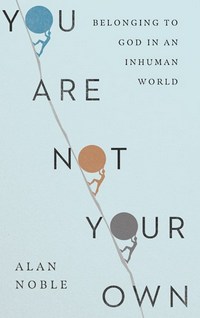
You Are Not Your Own: Belonging to God in an Inhuman World by Alan Noble: Correcting Our Understanding of Humanity

You Are Not Your OwnYou Are Not Your Own:
Belonging to God in an Inhuman World

by Alan Noble

DETAILS:
Publisher: IVP
Publication Date: October 11, 2021
Format: Kindle Edition
Length: 232 pg.
Read Date:  May 29-June 12, 2022
Support Independent Bookstores - Visit IndieBound.org


I’ve tried to write this post 4 times since I finished it—and I’ve struck out each time, because I keep trying to interact with and reflect on Noble’s arguments—because there’s a lot to chew on, a lot to commend, and a great deal to unpack. But that’s not what I’m supposed to be doing here—I’m supposed to talk about the book, talk about how Noble wrote it, and what I thought about it—sure that involves some reflection on the content, but it’s not supposed to be my focus (as much as I might like it to be). So, I’m going to take a more surface-level approach, just so I can get something out.

(I said something similar with Winslow’s The Border recently—you’re probably not going to find a lot of people discussing these two books in similar fashions anywhere else)

The Back of the Book Description

(from ivpress.com)

“You are your own, and you belong to yourself.”

This is the fundamental assumption of modern life. And if we are our own, then it’s up to us to forge our own identities and to make our lives significant. But while that may sound empowering, it turns out to be a crushing responsibility—one that never actually delivers on its promise of a free and fulfilled life, but instead leaves us burned out, depressed, anxious, and alone. This phenomenon is mapped out onto the very structures of our society, and helps explain our society’s underlying disorder.

But the Christian gospel offers a strikingly different vision. As the Heidelberg Catechism puts it, “I am not my own, but belong with body and soul, both in life and in death, to my faithful Savior Jesus Christ.” In You Are Not Your Own, Alan Noble explores how this simple truth reframes the way we understand ourselves, our families, our society, and God. Contrasting these two visions of life, he invites us past the sickness of contemporary life into a better understanding of who we are and to whom we belong.

Acting as If We Are Our Own

The part of the argument from the first paragraph takes the first four chapters and the majority of the book. I guess you could consider this the “Here’s What’s Wrong and Why” part—if we are our own (as we’re told) several problems ensue—personally, culturally, and ecclesially. We (and Noble includes most of the American Church here) have a faulty anthropology, and that results in many problems.

Noble explains where he sees the faulty anthropology leading with compassion and sensitivity, while not pulling any of his punches.

Understanding We Belong to Christ

But for the Christian, our faith begins with the realization that we are not our own (as explained in the words of Heidelberg Catechism Q&A 1). Noble points the believer to recalibrate their understanding of human nature—particularly redeemed human nature—to begin to understand what being the possession of Christ means to our life, our future, our identity.

The strength of this section comes from Noble’s honesty:

At this point you might expect me to introduce my “Five Steps for Changing Your Life by Accepting That You Are Not Your Own.” But as this is a work of nonfiction, I won’t be doing that.

Instead, he gives some advice, based on his own experiences and observations—but he offers no guarantees. I found his honesty refreshing and thought there was a lot of wisdom to his advice, but I was mostly impressed by the humble nature of the approach—advice, not a program or techniques.

So, what did I think about You Are Not Your Own?

I really liked this—I thought it was insightful and helpful. Noble’s diagnosis and advice were sound—they seemed to match up with the world around us and the problems we see. More importantly, he points to the One whose grace, mercy, and care offer any true hope and help in this broken and dying world.

Noble’s writing flows—he’s engaging, compassionate, and relatable. It’s easy to understand even the more complex points he’s making, and his illustrations give the reader plenty to hang on to.

I think Noble’s book would serve as a great companion piece to Kapic’s You’re Only Human: How Your Limits Reflect God’s Design and Why That’s Good News*. Both of these authors remind the reader of our place in the world, and why we’re there—so we can respond in dependence and trust accordingly.

* Meador’s What Are Christians For?: Life Together at the End of the World, and even the better parts of Thompson’s Growing Downward fit here, too, I think—just not as neatly.

I’ve already re-read parts of this book, and find myself chewing on it repeatedly—especially as I compare it to Kapic’s. I heartily recommend and encourage you to pick it up.


4 1/2 Stars

This post contains an affiliate link. If you purchase from it, I will get a small commission at no additional cost to you. As always, opinions are my own.

REPOSTING JUST CUZ: Grace Alone–Salvation as a Gift of God by Carl R. Trueman

Grace Alone--Salvation as a Gift of GodGrace Alone–Salvation as a Gift of God: What the Reformers Taught…and Why It Still Matters

by Carl R. Trueman
Series: The 5 Solas Series
Paperback, 243 pg.
Zondervan, 2017
Read: October 8 – 22, 2017

After struggling through three books in this series, I will admit to some trepidation about this one — thankfully, Carl Trueman is an author I have a bit of experience with, so I figured it’d be worth the effort. Thankfully, there wasn’t that much effort, and the book was absolutely worth the time.

Trueman organizes this book differently than the others — in Part 1, he considers Sola Gratia in Scripture and Church History. Trueman surveys the idea of grace alone through both Testaments (it’s easier than some would lead you to think to find it in the Old Testament), looking at individual texts as well as themes throughout the books. I would have liked this to be a bit longer — but I really can’t complain about it. Following that, Trueman focuses on the teachings of the Church throughout history about Grace — starting with the early church, focusing on Augustine and his Confessions as emblematic of the first centuries of the church. Then he continues to focus on Augustine but shifts the focus to the controversies sparked by the Confessions with Pelagius and his followers as the prism through which the (Western) Church discusses and teaches Grace since those days. In the next chapter, Trueman focuses on Medieval theology about grace using Aquinas as the example. Following that we get chapters on Luther and Calvin (and those who’d be allied to Calvin’s branch of the Reformation), shaking off the accumulated tradition and misunderstandings to get back to the core of Scriptural and Augustinian teaching (with help from Aquinas). Would I have appreciated another chapter or two about post-Reformational history? Sure. But they weren’t necessary to fulfill Trueman’s aims, and we get a taste of what they’d offer in Part 2.

Part 2 is titled “Sola Gratia in the Church.” Grace is communicated to Christians via The Church, Preaching, Sacraments, and Prayer and so Trueman a. defends that idea and then proceeds to discuss how God goes that in chapters devoted to each of those. For those of the Reformed tradition, there is nothing ground-breaking or controversial here, although Protestants from other traditions might find some of the ideas challenging. These are solid chapters of the kind of teaching I expected from this series, and I appreciated them.

In the book’s Conclusion, Trueman attempts to address the questions: “What would a ‘grace alone’ church look like today? What would characterize its life as a church? How might we recognize such a church when we see it?” The answers to these questions are a mix of doctrinal and practical ideas that he lists in ten points showing the interconnections between them. This conclusion (in building on what came before) is worth at least half the price of the book — just fantastic stuff.

I still have one to go in the series, so I may have to modify this, but this one is by far the best of the bunch — accessible, pastoral, and thorough without sacrificing depth. Trueman doesn’t seem to get distracted by pet details, nor to just beat the same obvious deceased equines on this topic. If you’re going to read just one of the five, let this be it. Alternatively, if the some of the others have left you wanting, give this one a shot, I think you’ll appreciate it.

—–

4 Stars

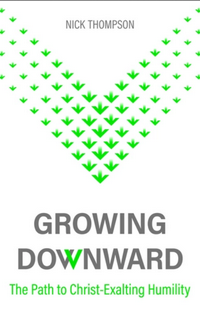
Growing Downward by Nick Thompson: Spiritual Growth is Not an Ascent; It is a Descent

Growing DownwardGrowing Downward:
The Path to
Christ-Exalting Humility

by Nick Thompson

DETAILS:
Publisher: Reformation Heritage Books
Publication Date: May 11, 2022
Format: Kind Edition
Length: 224 pgs.
Read Date: June 19-26, 2022
Support Independent Bookstores - Visit IndieBound.org

Here is the unvarnished truth: pride is your number one enemy at every stage of the game. This is true of you regardless of your vocation; your economic, political, or social status; and your age, ethnicity, or education… I begin here because it is only as we come to understand pride as our greatest enemy that we will learn to embrace humility as our greatest ally.

What’s Growing Downward About?

The Publisher’s Description is:

Author Nick Thompson recognizes that pride is our worst enemy. If pride is our chief foe, then humility is our chief friend, even though its company may be painful. But spiritual growth is a descent—we must grow downward. Defining humility as “the downward disposition of a Godward self-perception,” Thompson walks us through the practical implications of this definition, leading us to embrace a God-centered perspective on the self. With winsome illustration and warm pastoral instruction, Growing Downward shows us that the path of humility, though difficult, is the way to true meaning and fulfillment in Jesus Christ.

Thompson is thorough at arriving at his definition of “the downward disposition of a Godward self-perception”—looking at other definitions offered by notable authors and theologians along the way—evaluating and critiquing them.

From this point, he works out the implications of that definition by looking at Existential Humility, Ethical Humility, Evangelical Humility, Ecclesiological Humility, and Eschatological Humility.

So, what did I think about Growing Downward?

As far as the reading experience goes—this is fine. The writing is crisp, it’s clear, it’s accessible, and Thompson makes certain the reader gets his point.

As far as the content? Ehhhhh, I’m not sure. The Introduction and the first part of the book? Those were really, really strong and convincing—and Thompson had me with him there. But after that? It’s complicated to explain, but I’ll try. I liked the individual chapters, and the topics he covered in them. But they seemed disconnected from the whole. Not all of them even seemed that focused on the idea of humility or Godward self-perception. Good material, but to what end?

Instead of an argument built on several lines of reasoning, which is how the book seems to be designed. It seemed to me to be one argument made, with some essays loosely attached to the topic added on. I can see where a lot of these trains of thought can lead back to the main argument. But I look to an author for that work, to show how

The one thing I tripped on more than once was Thompson’s tone—it frequently struck me as less-than-gracious or compassionate. Generally, within a couple of pages, he’d say something to mitigate what I perceived as harshness (or something like that). But I think it’d be best to not need that mitigation.

That said, I fully expect to be in the minority on this. I think many readers will benefit from this book and not get hung up on those things I did.

I liked enough of this to recommend it to you—but just enough. If you do read it, come back and tell me where I’m wrong, okay?


3 Stars

This post contains an affiliate link. If you purchase from it, I will get a small commission at no additional cost to you. As always, the opinions expressed are my own.

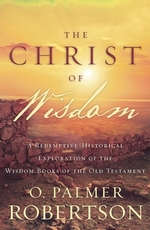
REPOSTING JUST CUZ: The Christ of Wisdom by O. Palmer Robertson

The Christ of WisdomThe Christ of Wisdom: A Redemptive-Historical Exploration of the Wisdom Books of the Old Testament

by O. Palmer Robertson

eARC, 432 pg.
P&R Publishing, 2017

Read: May 7 – 21, 2017


Robertson’s preface laments the way that the Wisdom Literature of the Old Testament is usually ignored in Redemptive-Historical studies —

…how do you fit these wisdom books into the flow of redemptive history that consummates in the Christ? By letting them be what they are in their own distinctiveness. They are, it should be remembered, canonical, divinely revealed, and authoritative writings that tell the world how and what to think about the deeper mysteries of human life. Rather than submitting to the moldings and bendings of modernity, these books broaden our understanding of the nature of redemptive history. Divine progress in the complete restoration of reality does not merely move in a purely linear fashion like the flight of an arrow moving across time and space without deviation until it reaches its target. This “third dimension” of redemptive history moves in a cyclical pattern. For certain aspects of God’s salvation perform according to a pattern of regulated repetition.

To ignore this dimension of redemptive history is to exclude a major portion of the old covenant canon—and that you do not want to do.

So how do you discuss these books from a RH point of view? This is what Robertson seeks to do in this book — not as a final answer, but as the beginning of a search for wisdom along these paths.

In one sense, Robertson could’ve made this easier to talk about this book — there’s not one central argument developed throughout. There’s a general discussion (brief) of wisdom, wisdom Biblically defined, that is. And then using that discussion, Robertson looks at the Wisdom Literature of the Old Testament (and Lamentations, which is not usually considered Wisdom Literature, but can function as such), summarizing each book, looking at the various forms of wisdom described and passed on through it.

Simply,

Wisdom is the ability to understand the basic principles inherent in God’s created order, and to live by those principles. Wisdom enables a person to summarize these basic principles in a succinct and memorable fashion. Wisdom is living out the whole of life with a constant awareness of accountability before a loving, gracious, and just Creator and Redeemer.

The work he does to get to this summary is well worth the time and effort to work through. Actually, that goes for everything in the book, but I’ll hold off on saying that kind of thing for a few paragraphs.

The chapter on Proverbs is, fittingly, the longest and most developed. He discusses various approaches to the book, to understanding its construction and from there trying to understand it:

A much more accurate view of the theology of Proverbs may be gained from a covenantal perspective. The wise sayings of the book are not presented in a vacuum. They are not purely moralistic aphorisms. Instead, they are steeped in theistic assumptions. These wise observations about how the world works assume that God the Creator is none other than Yahweh, the Lord of the Covenant.

This, right here, would help so much of what I’ve read about Proverbs over the last few decades. To get into everything that Robertson says about the pursuit of Wisdom, passing it on and living by it from this book would make this post unbearably long — but it builds the foundation for everything that comes. Proverbs covers Wisdom as a whole — the rest of the book deals with it in specific areas.

While dealing with the personification of Wisdom in Proverbs 8, Robertson gives an excursus, “Athanasius as the Champion of the opponents of Arianism,” that is just gold. I’d love to see this developed into something longer.

Following Proverbs, he moves on to Job. Job doesn’t give us the answers to the puzzling circumstances of life, but for those who understand the book, they learn how to puzzle through the circumstances, how to think about them — how to ask God about them. Yes, there are answers given in the book — not easy answers, not the answers anyone necessarily wants, but answers — answers tied to the hope of the Resurrection. But wisdom knows to look for those answers in the difficulties of life, with a sure faith that is willing to look at dark circumstances and say, “I don’t know why this is happening, but I trust in Him Who does.”

Ecclesiastes, is, naturally, a tricky chapter — Robertson threw me a curveball when setting aside the usual discussion of authorship of the book to note

But a related question of some significance for understanding the book has been generally neglected. This neglected question is the identity of the “target audience”of Ecclesiastes.

Chewing on this a little helps get through some of the discussion of authorship. There are so many divergent readings of Ecclesiastes that your head can swim just trying to get a sense of them, Robertson is a pretty sure guide through them before landing on his conclusion that Ecclesiastes presents a “realistic picture of life” — one that is a precursor to Paul’s discussion in Romans 8, where creation is subjected to frustration, but that this is being renewed. I do think this chapter could’ve been organized in a more straight-forward way, but I appreciate the way that Robertson makes you work through various considerations and themes before leading to his conclusions — which are all very helpful.

His discussion of Lamentations, summed up in the subtitle “How to Weep,” was one of the best things I’ve read on the book (an admittedly too-short list). You may think that’s a pretty easy thing to learn — but there’s a wise way, a godly way to weep over the tragedies that will come into our lives. The book of Lamentations teaches us that — and, here’s the RH emphasis coming through — there’s a hope tied to the wise weeping. A hope tied to faith in God’s commitment to preserving a repentant people to Himself.

Lastly, we get to the wisdom of “How to Love” (in a marital sense) in the Song of Songs. The way he reads the book is a “Redemptive-Historical” way, in

terms of the redemptive work of God in restoring humanity to the situation prevailing at the time of creation . . . a restoration of the initial blessing of man and woman in their relation to each other, just as when they first stood in each other’s presence “both naked” but feeling “no shame” (Gen. 2:25). This Song rejoices in the fullness of God’s redemption of the marriage relationship.

He concludes this chapter uniquely, with a script for a Dramatic Reading of the Song of Songs — I think there could’ve been a bit more instruction on how to approach such a Reading — and why — than he gave. But I really appreciated that part.

He could’ve used a conclusion to wrap things up — returning to the closing admonition of the opening chapter. But that’s probably just a taste thing on my part.

There’s a focus on the literary/poetic forms in each book tying in the themes and teachings of them to the way the author presents them. This kind of discussion — no matter the type of literature (inspired or not) always stretches me. I imagine I’m not alone in that — in fact, I bet many people will skip those parts. This is to their own detriment. Robertson discusses these matters in a way that takes some effort to understand, but it’s effort that pays off.

This is a truly helpful book — not full-fledged commentaries on any of the books, but helpful summaries pointed towards seeing the wisdom passed down in each book, and tied into the Redemptive work going on in history all around us. I found it interesting that the recent A Biblical-Theological Introduction to the Old Testament doesn’t approach some of these books the same way as Robertson — in some ways flatly contradicting him. I’d hoped for more overlap between the two works approaching this material from the same framework — but none of the contradictions or differences change the overall message of the Biblical material, just shadings. Honestly, in each case, I think Robertson’s readings are easier to square with the texts in consideration (and not just because he has more pages to develop his points, either).

Robertson, as always, delivers the goods with this book. The reader has to think about what he says, has to drag out their Bible and use the two books together, but will ultimately come out the better for it. I found this book to be incredibly helpful, insightful and something that drove me back to the fullness and fulfillment of all the wisdom of God — Jesus the Messiah. Just where Robertson wants his readers to focus.

Disclaimer: I received this eARC from P&R Publishing via NetGalley in exchange for this post — thanks to both for this.
N.B.: As this was an ARC, any quotations above may be changed in the published work — I will endeavor to verify them as soon as possible.

—–

4 Stars

Page 17 of 32

Powered by WordPress & Theme by Anders Norén