Category: Theology/Christian Living Page 19 of 32

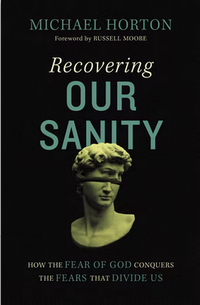
Recovering Our Sanity: How the Fear of God Conquers the Fears that Divide Us by Michael Horton

Recovering Our SanityRecovering Our Sanity:
How the Fear of God Conquers
the Fears that Divide Us

by Michael Horton

DETAILS:
Publisher: Zondervan
Publication Date:  February 14, 2022 
Format: Kindle Edition
Length: 320 pg.
Read Date: February 27-March 13, 2022

Support Independent Bookstores - Visit IndieBound.org

Even in more conservative contexts today, the reading of a “fear of God” passage is often quickly followed up with an explanation, dying the death of a thousand qualifications. The upshot is that fear doesn’t really mean “fear.” In such widespread dismissals we are not only failing to give God his due but are depriving ourselves and each other of the only antidote to the crippling fears that haunt us.

…The fear of God leads to trust, and trust bears the fruit of the Spirit, producing a harvest of blessings for ourselves and for others. Fear really is worship— we fear what we believe is ultimate, what we think has the last word over our lives.

What’s Recovering Our Sanity About?

In Part 1, “The Fear to End All Fears,” the goal is to remind readers about the Biblical virtue of the Fear of God—what it means, how it contrasts to other fears, and how when our focus is on the Fear of God, other fears lose significance and power.

In Part 2, “Facing Our Fears with Eyes Raised to God,” Horton puts shoe leather to this understanding of Fear of God vs. other fears. He looks at our fears of death, suffering, disease, the future—and, perhaps most importantly, other human beings.

Confronting Our Fear of Each Other

Once we regain the fear of God— indeed, of Christ as well (he’s not just the friend of sinners but the judge of all)—and face up to who we are before him, coming with empty hands to receive his Son, we’ll begin to lose this fear of the world. We will not be embarrassed when the unkempt widow sings off-key with the gusto of heartfelt conviction or when the building is drab or if we have never had a brush with greatness and our pastor has never been photographed with anybody in the news. The faithful preaching of the Word, baptism, and the Lord’s Supper; the gracious care, encouragement, and warnings of elders and the wider body; the extension of Christ’s love for temporal needs through the deacons; common prayers, singing, confession of our faith and of our sins, Christ’s declaration of forgiveness, and even God’s greeting at the beginning and his benediction at the end— all these will seem so marvelously familiar and new to us at the same time. And then we will begin to not need the world’s affection any longer.

Roughly the last third of the book is taken up by the third part of Part 2, “Confronts Our Fear of Each Other.” In this Horton talks about the fear we have of other Christians and other people outside the Church—there’s a focus on social and political issues and how American Christians ought to react to them instead of how we tend to. Horton avoids a “Left Wing” or “Republican” response—finding positive things on both sides of an issue (many of which shouldn’t find binary responses, but it seems impossible for Americans to do anything else), as well as things to critique on both sides.

Horton goes out of his way not to demonize those who disagree, but reminds his readers that there are those on each side who are fellow image-bearers, and all need Christ more than they need to be corrected or encouraged about their stances on any issue. The Church’s calling is to set aside the focus on the temporal and point others to the eternal and the world to come, while showing our gratitude for Christ’s work by serving those around us.

This sub-section is worth the price of the book (not that the rest was a waste).

So, what did I think about Recovering Our Sanity?

My goal in this book is not to take sides in cultural and political debates. Instead, it is to raise our eyes to heaven so that our sanity can be restored, as Nebuchadnezzar experienced in Daniel 4.

There were more than a few times where I wondered if Horton had lost track of the thesis of the book—I found each chapter, each topic that he covered very valuable and was impressed by the wisdom that Horton offered.

But I was wrong about that—and by the end, it was easier to see where he was going all along. Horton’s been one of those writers that have been helpful to me for a couple of decades now and it’s good to see that hasn’t changed.

There’s a lot to chew on here, and as I said, a lot of wisdom to be gleaned. I can’t imagine every reader is going to agree with everything he has to say (and I can’t believe that Horton expects that, either)—but his major points are sound, Biblical, and needed by the American Church so that we remember what our priorities are supposed to be.


4 Stars

This post contains an affiliate link. If you purchase from it, I will get a small commission at no additional cost to you. As always, opinions are my own.

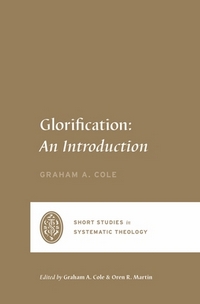
Glorification: An Introduction by Graham A. Cole: A Vital, and Ill-Understood, Topic

Glorification: An IntroductionGlorification: An Introduction

by Graham A. Cole

DETAILS:
Series: Short Studies in Systematic Theology
Publisher: Crossway
Publication Date: April 19, 2022
Format: Paperback
Length: 121 pg.
Read Date: March 20,

What’s Glorification: An Introduction About?

This book is focused on a particular aspect of individual eschatology—glorification, although Cole touches on the other aspects of eschatology, too. The first chapter focuses on the glory of God—it is His glory shared with believers, so it’s right to start there. The fifth and final chapter gets a bit speculative about who will and won’t be glorified. The three chapters in between those two are the heart and focus of the book. Cole begins by sketching God’s project following the fall in restoring the image (and glory) lost. He then shows the beginning of the work of glorification in the sanctification of believers in this life. He ends this portion of the book by looking at what we know about the glorification in the New Earth—which is where the cosmic and ecclesiastical aspects of glorification are looked at, in addition to the individual.

So, what did I think about Glorification: An Introduction?

Cole talks a little at the beginning of the book about the lack of book-length looks at this topic. I’m not convinced that this is the best way to address the lacuna. It’s good and useful, but maybe it’s too speculative. Maybe setting out to do more than it needed to for this introduction. Throughout the work, Cole takes some close looks at pivotal texts on the topic of glory, sanctification, and glorification—these are the highlight of the work and are very valuable. I’m less convinced that what he does outside of those exegetical portions are nearly as useful. Maybe if given more space to develop some of his ideas, I might have a different impression. In the end, I’m glad I read this and will return to it for the exegetical moments and gladly recommend it.


3 Stars This post contains an affiliate link. If you purchase from it, I will get a small commission at no additional cost to you. As always, opinions are my own. 2022 Support Independent Bookstores - Visit IndieBound.org

REPOSTING JUST CUZ: Who Shall Ascend the Mountain of the Lord? by L. Michael Morales

Fatigue is winning over my will to get the post I intended for today finished. So, I’m going to repost this—I’ve been thinking a lot about this book recently, but I feel like I remember too much of it to commit, even if I want to master the arguments. I didn’t do justice to the book when I wrote the original post, but maybe it’ll nudge someone to read the book.


Who Shall Ascend the Mountain of the Lord Who Shall Ascend the Mountain of the Lord?: A Biblical Theology of the Book of Leviticus

by L. Michael Morales
Series: New Studies in Biblical Theology, #37Paperback, 306 pg.
IVP Academic, 2015
Read: October 16 – November 27, 2016

So this is another one of those books that I’m not really qualified to talk about, but . . . whoops, here I go.

Morales doesn’t give us what you typically find/look for in a study of Leviticus — detailed explanations — or dodges — of the various purity laws and other commands and regulations contained in it. Instead, he begins by explaining his conclusion that Leviticus is the center of the Pentateuch, and that Chapter 16 is the center of it. Beginning in Genesis, everything is leading up to the Day of Atonement, and then everything from that is to be seen as the result of, or in light of that day.

That’s a lousy summary, but that’s the best you’re going to get from me in a couple of sentences. The argument is so detailed, so complex that I can’t really do much better without spending a few pages on it — and no one wants to read that (especially since you can read Morales doing a better job). At first, I thought that it was an interesting idea, but it really didn’t matter much. But as I read on and understood what he was doing better, it started to capture my imagination and draw me in. This was well argued, well researched — and well explained for even non-technical types like me.

But when it comes to Biblical Theology, the proof in the pudding comes from tying in his theses to the unfolding story of redemption — first in Israel’s story and then showing how it leads to Christ and His work on earth, His Ascension and pouring out of His Spirit to prepare a people to meet with Him on Mount Zion. The last two chapters were fantastic — and I’m going to have to reread them a few times to really wrap my brain around it all. There were moments of beauty here — it’s hard for an academically-inclined work to inspire and touch the emotions of a reader, but Morales did it.

This volume is the first I’ve read in New Studies in Biblical Theology (I believe it’s the first I heard of it, too) — the series is edited by D. A. Carson. The series aims “to simultaneously instruct and to edify, to interact with current scholarship and to point the way ahead. . . While volume notes interact with the best of recent research, the text of each work avoids untransliterated Greek and Hebrew or too much specialist jargon. The volumes are written within the framework of confessional evangelicalism, but they also engage a variety of other relevant viewpoints and significant literature.” If this is a representative volume, it won’t be my last in the series. If I can just pick another — the list of 41 is daunting — just too many choices.

Anyway, Who Shall Ascend was a challenging, interesting, educational and inspiring work — there’s not much more that you can ask for. If you’re up for the work, I heartily recommend it.

—–

4 Stars

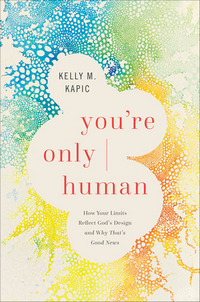
You’re Only Human by Kelly M. Kapic: The Reality and Comfort of Creaturely Finitude

You're Only HumanYou’re Only Human:
How Your Limits Reflect
God’s Design and Why
That’s Good News

by Kelly M. Kapic

DETAILS:
Publisher: Brazos Press
Publication Date: January 17, 2022
Format: Hardcover
Length: 228
Read Date: January 23-30, 2022
Support Independent Bookstores - Visit IndieBound.org

What’s You’re Only Human About?

Creaturely finitude is less an idea we discover than a reality we run into.

When we do run into this idea (as we all will), we frequently interpret that reality incorrectly—not recognizing that our limits, our finitude, as part of who we are as creatures (or forgetting that if we do recognize that). As such we can push against them in unhealthy ways, ignore them to our own peril, or see them as the result of sin, not the result of creation.

What Kapic sets out to do is to remind us that part of being a creature is having limits. When we remember that, we can live as we ought—in dependence on the God who made us that way. As he puts it,

Many of us fail to understand that our limitations are a gift from God, and therefore good. This produces in us the burden of trying to be something we are not and cannot be.

Particularity and Limits

Kapic reminds his readers that the doctrine of Creation shouldn’t just be limited to our understanding of Genesis 1-2, but to reflecting on the design, abilities, and limitations of humanity. These limitations would be in place regardless of our fallen state—sure, the fall twists those limitations—but they’re part of the original state.

In the first part of the book, Kapic lays out the theology necessary for this—and ties it to the Gospel, lest we get distracted from what matters most.

Healthy Dependence

The second part of the book talks about the creaturely dependence that flows from this—we aren’t capable of everything we need or want to accomplish, but He is. This is part of created humanity, and it takes on new meaning in Christ.

Tied to this idea of dependence is humility.

Humility consists in a recognition of (and a rejoicing in) the good limitations that God has given us; it is not a regrettable necessity, nor simply a later addition responding to sinful disorders. Even if there had never been a fall into sin, humility would still have the essential character of gratitude for our dependence on God and for his faithful supply of our need. Humility is built on the Creator/creature distinction; its response to sin emphasizes our further need for God to restore us to the fellowship that he always intended us to inhabit.

Kapic spends a lot of time drawing out the implications of this—in light of both Creation and Redemption.

Lament and Gratitude

We can express our humility and dependence in both our lament and our gratitude—this part of the application section of the book was probably the most rewarding to me. Kapic makes the case that they’re mirror concepts rooted in humility and dependence on our Creator and Redeemer, and both ought to be embraced by the believer.

So, what did I think about You’re Only Human?

It took me over a month to be mostly satisfied with what I wanted to say about this book—an example of creaturely finitude, come to think of it. I struggled over this—really wanting to get into all of his ideas and arguments. But that’s not what this blog is for (thankfully, or I’d be working on this post for another six months, minimum). I’ve trimmed this post a few times while putting it together, in fact, because I kept getting in the weeds.

You’re Only Human is the kind of book that I really don’t think I got a handle on after one read—I’m planning on a re-read this summer, in fact. I’ve got a general sense of it, but I want to return to it having a bird’s-eye view, so I can appreciate more of the details.

I don’t know if this is going to hit every reader like it did me—very likely it won’t—but this is just what I needed. Still, I think what Kapic has to say will resonate with and be helpful for many.


4 1/2 Stars

This post contains an affiliate link. If you purchase from it, I will get a small commission at no additional cost to you. As always, opinions are my own.
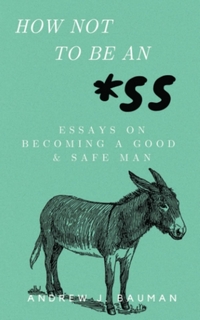
How Not to Be an *SS by Andrew J. Bauman: Essays on Important Topics, That Fall a Little Short

How Not to Be an *SSHow Not to Be an *SS:
Essays on Becoming a Good & Safe Man

by Andrew J. Bauman

DETAILS:
Publisher: Brave Books
Publication Date: December 31, 2021
Format: Kindle Edition
Length: 192 pg.
Read Date: February 20, 2022
Support Independent Bookstores - Visit IndieBound.org

What’s How Not to Be an *SS About?

This is a collection of essays* built around the idea that men who are an *ss (the asterisk is courtesy of Bauman, not me) can change and become a good and safe men.

* Plus a couple of poems. Entirely skippable poems (your results may vary).

Bauman calls men to an authentic, Biblical masculinity—one built on humility, kindness, and service. While offering concrete ways to set aside patterns of abuse and neglect.

Good and Safe Men

Bauman’s description of Good and Safe men is maybe filled with a few too many buzzwords. But when you get past that, I really appreciated what he had to say, and I wish I heard more things like that coming from Reformed and Evangelical men.

His definition of “*ss”

A lot of the time he’s talking about an *ss, he’s talking about something worse. Something like a felon (perhaps not a convicted felon, but someone who should be charged, at least). Most of what he describes as an *ss are abusers. I think we should call them what they are.

Even if you take his *ss as a range—from “The Unaware Fool” (although by definition, some of those he considers unaware, are aware) to “The Narcissistic Coward”—he spends most of his time on “The Narcissistic Coward” when it’s the Fool that would be more open to the help and guidance.

Shortcoming

There are two that seem the most prominent. First, this is an essay collection, not a sustained argument. As a result, it’s a bit scatter-shot and hard to draw any firm conclusions about some of the material. Also, it makes some of the material too surface-level.

Secondly, it’s focused too much on the abusive man, on ways to he can improve. But earlier on, it seemed to be a book for those who weren’t abusive, but are wanting to be better, safer men. Now, don’t get me wrong—I’m all for the former. But I got the impression when I bought the book (and in the early essays) that it was about the latter.

So, what did I think about How Not to Be an *SS?

I’m not sure that what I’ve said here is that helpful without digging in deep into his arguments and suggestions—and to do that is beyond what I have time for here. But hopefully, there’s something useful here.

There’s a lot of good here, a lot of important resources. The theological language is a little imprecise for my taste, but none of it is a deal-breaker for me. The gold outweighs the chaff.

It’s not the book I thought I was getting, but I’m glad that I read it. I wanted more, sure, but I liked what I got.


3 Stars

This post contains an affiliate link. If you purchase from it, I will get a small commission at no additional cost to you. As always, opinions are my own.

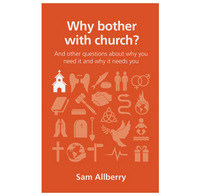
Why bother with church? by Sam Allberry: A Too-Brief (for me) but Solid Introduction to The Church

Why bother with church?Why bother with church?:
And other questions about
why you need it and why
it needs you

by Sam Allberry

DETAILS:
Series: Questions Christians Ask 
Publisher: Good Book Co.
Publication Date: February 12, 2016
Format: Paperback
Length: 95 pg.
Read Date: February 13, 2022
Support Independent Bookstores - Visit IndieBound.org

What’s Why bother with church? About?

Allberry starts with talking about one Sunday walking through a park on his way to his church’s service and how he was tempted to just stay and enjoy the park instead—he didn’t, but it raised the question, why not stay in the park? Why bother with church? Which serves pretty well as an introduction to this short book.

The Table of Contents actually does the best, brief job of telling you what to expect in this book. Sure, it uses 82 pages to answer all these questions, so obviously, none of the answers are too thorough, but they’re all complete enough to give someone a solid start on the ideas presented.

  1. What is church?
    Hasn’t the church done more harm than good?
  2. Why do I need church?
  3. What makes a good church?
    How should I pick a church?
    What are baptism and communion for?
  4. How is a church run?
    Can’t I view my small group as my church?
    Should pastors and elders only be men?
    Why are there so many denominations?
  5. How do I survive church?
  6. How can I be a good church member?
    What is the future of the church?

He concludes with an important reminder about what goes on in the church—in both worship and the life beyond the weekly service—pointing to the spiritual realities that are easy to forget.

Highlights

The second level questions appear at the end of the chapter and are a more focused look at something on the chapter’s topic. While I thought Allberry did a decent enough job answering the larger question, these “sub-questions” seem to be a more pressing contemporary question and add good value to the chapter.

The other highlight I’d focus on is Chapter 5, a title that might raise an eyebrow or two. Why would anyone think they need to “survive church”? In this chapter, Allberry tackles the ideas that church can be boring or exhausting (which feel like contradictory ideas unless you’ve actually spent time in a church), which are well and good—and an idea that too few think to tackle. But the best part of the chapter addresses people that have been hurt by the/a church. In too many ways, too many people know that part of church experience. It’s vital that Christians know how to deal with this idea—either for themselves or someone else. I am so glad that Allberry addressed this idea.

Shortcomings

Really, the only thing that stood out was the length—82 pages plus an introduction and conclusion means this is only a primer. For example, the section on “hurt by the church” that I liked so much only gets 12 small-to-medium-sized paragraphs. Which is good, but it’s just a sample of what needs to be said.

I realize that the length of the book is both a strength and a weakness—it’s not intimidating and will be more likely picked up by many than a book that would satisfy this reader. That’s by design, so I don’t hold it against the book, I just find the “sample” length dissatisfying.

So, what did I think about Why bother with church??

Last year, I read The Church: An Introduction and was disappointed with it, thinking it tried to do too much that was beyond an introduction and stumbled most of the time it did that. This was a much better introduction to the idea of The Church. Allberry’s approach was far more approachable, very basic—which doesn’t quite fit that other series. I couldn’t help but think while reading this one that if Allberry’s material was presented with the thoroughness and style of the other one, it’d be a perfect introduction.

That said, given this series’ approach to its topics—very simple, yet careful—or as the publisher describes it, “short, readable books,” this is a great introduction. It covers all the necessary areas in a way that’s clear and understandable by readers from 13 and up (possibly younger). Allberry writes in an easy, conversational tone that’s warm and inviting, you’ll race through the book (possibly requiring deliberate slowing down/rereading).

Is this a book on the topic that I’ll return to? Probably not—I’ll save that for more demanding works. Is this a book on the topic I can give/recommend to anyone looking for something on the idea? Without hesitation.


3 Stars

This post contains an affiliate link. If you purchase from it, I will get a small commission at no additional cost to you. As always, opinions are my own.

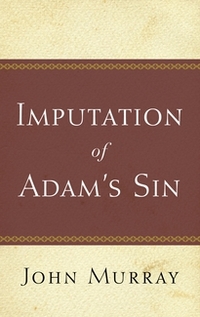
The Imputation of Adam’s Sin by John Murray: There’s a Good Deal of Theologizing in a Small Number of Pages Here.

The Imputation of Adam's SinThe Imputation of Adam’s Sin

by John Murray

DETAILS:
Publisher: P&R Books
Publication Date: August 31, 1977
Format: Paperback
Length: 95 pg.
Read Date: February 13, 2022
Support Independent Bookstores - Visit IndieBound.org

What’s The Imputation of Adam’s Sin About?

In four short chapters, John Murray examines the doctrine of the Imputation of Adam’s Sin—sketching out a few competing visions of the doctrine as well as laying out the particulars of it—the sin involved, the union between Adam and his posterity in it (from two different viewpoints), as well as the nature of the Imputaion itself.

He does this by examinings and exegeting Romans 5:12-19. More than 90 pages on those verses might seem overkill, but I can’t help but think that Murray was not getting as detailed as he wanted. It’s rather impressive to see him work all the areas I mentioned into this exegesis and interpretation.

So, what did I think about The Imputation of Adam’s Sin?

This was footnoted a couple of times in a book I read recently (probably Why Did Jesus Have to Live a Perfect Life? by Brandon D. Crowe), and I realized that despite seeing I don’t know how many references to it over the years, I’ve never gotten around to reading it. So, now I’ve fixed it. And I’m glad that I did. I learned a good deal more than I expected, and assume I’ll be coming back more than once to chew on this book.

This book is typical Murray—crisp, clear, concise, and convincing. Sure, there’s the drawback that his prose is dry and empty of all personality. The book doesn’t need them (and I’d think it strange to read Murray with it). I wouldn’t have minded a greater scope—like if there’d been another couple of passages to get this treatment other than Romans 5:12-19.

This is a great introduction to the idea of Imputation of Adam’s Sin and I strongly recommend it.


4 Stars

This post contains an affiliate link. If you purchase from it, I will get a small commission at no additional cost to you. As always, opinions are my own.
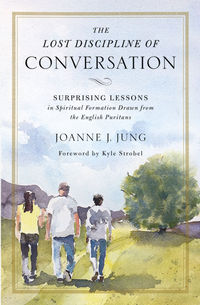
The Lost Discipline of Conversation by Joanne J. Jung: Seemed to Lose the Thread

The Lost Discipline of ConversationThe Lost Discipline of Conversation:
Surprising Lessons in Spiritual Formation
Drawn from the English Puritans

by Joanne J. Jung

DETAILS:
Publisher: Zondervan
Publication Date:  June 12, 2018
Format: Kindle Edition
Length: 224
Read Date: February 6, 2022
Support Independent Bookstores - Visit IndieBound.org

From the Back of the Book:

Recovering Spiritual Practices of the Past titles reach beyond commonly known spiritual formation practices in order to mine the wisdom of the past, bringing to light ways of thinking, living, and growing in Christ that the church today has largely overlooked.

In The Lost Discipline of Conversation, spiritual formation professor and author Joanne Jung walks readers through the Puritan practice of “conference,” or focused, spiritual conversations intended to promote ongoing transformation. An antidote to privatized faith, conference calls believers to biblical literacy and soul care in a context of transparency and accountability.

Useful for believers in any sphere or ministry or stage in life, conference is ultimately a tool for nurturing mutual, godly authenticity within community.

Beyond the Back of the Book

Part I, “Rediscovering a ‘Lost’ Means of Grace,” outlined the need for community and the benefit of this practice (although equating it with the Means of Grace is questionable).

Part II looks at the various contexts in which conferencing can take place and suggests some ways to promote it. I lost track of the idea of conferencing during this Part—it seemed so flexible so as to maybe lose meaning.

Part III

Part III is called “Soul-to-Soul Bible Studies,” and added nothing to the work. They were scripts/prompts to guide you through a one-on-one (or larger) study of a handful of seemingly random New Testament passages. The explanatory notes were redundant, and not incredibly useful.

I didn’t see the point of this part at all.

So, what did I think about The Lost Discipline of Conversation?

Seven years before this was published, Jung published Godly Conversation: Rediscovering the Puritan Practice of Conference, and I can’t help but wonder what my reaction to this book would be if I’d read it first. This feels like it’s building on the work done in the initial book. Maybe I’d walk away from this with a greater understanding of both Jung’s overall project as well as the Puritan practice of conference. Still, this book needs to be able to stand on its own, and it just doesn’t.

The biggest question I have from this book is what’s the foundation for this practice? How is “conferencing” based on, or built on, Puritan thought? You can’t follow Puritan practices (on this or any other point) without their teaching backing it up—it just doesn’t work that way. Leave that to Finney and those who follow in his footsteps, not to Bownd, Owen, or Alleine. Practices without the theology are meaningless actions. It’s not “do X, Y, and Z” to get spiritual growth in a mechanistic/automatic way, it’s not powdered milk where you just add water. The Puritans acted in certain ways (like conferences) because of something. Jung did her readers a disservice leaving that out.

I don’t necessarily contest the value of the practice, but I don’t know that she’s convinced me that it’s as valuable as she sets it out to be. I’ve read a good number of the original sources she cites, and I never got the inkling that this was particularly vital—useful, potentially, but as important as this?

I do have to wonder why the title specifies “English Puritans” when there’s so many citations of New England Puritanism. The distinctions aren’t huge, but there are differences. Just delete the word “English,” and it’s better. That seems picky, and probably is. But at a certain point, the quibbles I had with the material overwhelmed the pros, and the little ones got under my skin more than they should.

I feel bad about thinking like this about the book, because the person that recommended this to me clearly thought I’d appreciate it—and I wanted to. But this is largely a swing and a miss for me. At the risk of repeating myself, I do wonder what my reaction to this would’ve been had I read Godly Conversation first. As it is, though, I’ll chalk this up as a well-intentioned miss.


2 1/2 Stars

This post contains an affiliate link. If you purchase from it, I will get a small commission at no additional cost to you. As always, opinions are my own.

Reposting Just Cuz: In Christ Alone: Living the Gospel Centered Life by Sinclair B. Ferguson

I’ve been thinking about this book lately, and last night, I was so knackered that I couldn’t writ anything, so, I figured that it’d be nice to revisit this. Maybe someone else might want to think about it a bit.

—–

In Christ Alone: Living the Gospel Centered Life
In Christ Alone: Living the Gospel Centered Life by Sinclair B. Ferguson

My rating: 4 of 5 stars

There’s not a lot of in-depth theology here, you won’t come away from this with a deep understanding of any one subject, or a few related ones. This is a compilation of fifty articles, grouped together by topic, which will enable you to gain a refresher on a spectrum of topics, or an introduction to ideas, concepts and texts that you want to come back to and study in the future. As such, it’s a really strong compilation and one that I’m glad I spent an afternoon with.

Don’t get me wrong — it’s not that I didn’t learn anything, or gain a deeper understanding of anything. But compared, say, to his The Holy Spirit or Pundits Folly, it’s (by design) not as in-depth. I thought his framing the book of Romans as a series of exchanges (e.g., man exchanging the truth of God for a lie; the gospel exchange of righteousness and justification instead of unrighteousness and condemnation) was very handy and something I’m trying to internalize. The chapters that followed it were a series of glimpses at the letter to the Hebrews, and now I want an entire book on that epistle by Ferguson.

In the section on “The Spirit of Christ,” he has a chapter called “When the Spirit Comes,” which is an examination of John 16:8-11.

And when he comes, he will convict the world concerning sin and righteousness and judgment: concerning sin, because they do not believe in me; concerning righteousness, because I go to the Father, and you will see me no longer; concerning judgment, because the ruler of this world is judged.

His thesis is that while, yes, there is a continuing relevance of these verses,

we miss their rich significance of we interpret them in a way that bypasses their historical context. In their original setting, these words constitute a prophecy of the Spirit’s work on the day of Pentecost (Acts 2:1 ff).
When we recognize this, we are able to fill out the content of the promise. But when we fail to recognize it, we are in danger of interpreting (and thus remolding and distorting) Scripture in the light of our own experience.

I’ve got to say, I’ve been guilty of this remolding and distorting until today, and will have to set to work on correcting my thinking.

On the whole, the book doesn’t feel too much like a collection if unrelated articles, rather than a book he set forth to write; and as such it doesn’t really suffer from being a compilation — though Part IV, “The Privileges of Grace,” is the weakest and most scattered. That said, the chapters from Part IV, “The Life of Faith” (on “Now faith is the assurance of things hoped for, the conviction of things not seen.”) and “‘The Greatest of All Protestant Heresies’?” (on the doctrine of assurance) were very helpful and thought-provoking. So even at its weakest, this book rewards the reader.

Part V, “A Life of Wisdom,” is really a section on sanctification. But instead of the approach that is usually employed here, Ferguson focuses on the more internal sanctification that needs to happen to result in the external fruit. All of which could use some extended treatment by this author. Particularly, I found the chapter on discernment rich and one that I need to return to for further meditation. His extended look at Psalm 131 to show how to cultivate contentment is, naturally, valuable — Ferguson’s always at his best when discussing the Psalter.

The final chapters center on the idea of spiritual warfare — not the flashy, type that characterize so much evangelical writing on the topic. But the quieter, more difficult, and (dare I say) more Biblical approach — focusing on our sin, our need for mortification, or own worldliness.

The closing chapter on Sabbath rest is far too brief, but excellent. He reminds us that the Sabbath in creation was a “time for Adam to listen to all the Father had to show and tell about the wonders of His creating work,” — a “Father’s Day” every week. Which, of course, was ruined by the Fall, redeemed by Christ and will be fully enjoyed every day in Glory. Practically,

this view of the Sabbath helps us regulate the whole week. Sunday is “Father’s Day,” and we have an appointment to meet Him. The child who asks, “How short can the meting be?” has a dysfunctional relationship problem — not an intellectual, theological problem. Something is amiss in his fellowship with God.

There’s a lot to be mined here for devotional use, as well as a spring-board for future study.

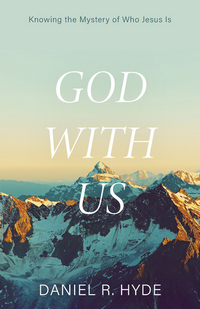
God with Us by Daniel R. Hyde: A Look at The Mystery of the Incarnation

God with UsGod with Us:
Knowing the Mystery
of Who Jesus Is

by Daniel R. Hyde

DETAILS:
Publisher: Reformation Heritage Books
Publication Date: June 29, 2021
Format: Paperback
Length: 155 pg.
Read Date: January 16, 2022
Support Independent Bookstores - Visit IndieBound.org

Machen powerfully stated, “Let us not deceive ourselves; a Jewish teacher of the first century can never satisfy the longing of our souls.” No mere man, however holy, can bring us into fellowship with God.

What is amazing in Scripture is that this is the case because God not only desired to give us grace that met our crimes against Him but that His grace would “super-abound” (hupereperisseusen) beyond our sins (Rom. 5:15-21). Only an infinite Savior could bring us an infinite grace. Had Christ not possessed the two natures of divinity and humanity in His one person, we would be without salvation.

What’s God with Us About?

Hyde begins his Introduction by talking about some of the problematic teachings he was introduced to as a young Christian as an example of the wide range of problematic teachings being promulgated throughout Evangelicalism (whatever that means).

The antidote for that is a better understanding of what the Bible teaches—as developed, defined, and defended by the Early Church. In five chapters he talks about the singularity of the Incarnation, helps the reader to understand the doctrine of the hypostatic union, and also clarifies understanding of Christ’s Human Nature and His Divine Nature. Why was it necessary for Christ to be both God and Man, and the benefits for believers that He was.

Hyde closes with a chapter comparing the Christ presented in the Qur’an and the Christ of the Bible as a means of applying the rest of the work.

So, what did I think about God with Us?

This is the Second Edition of this book, and Hyde refers to improvements he made, but without spending time reading both, I really couldn’t tell you what was changed. He does quote some hymns from The Trinity Psalter Hymnal, that wasn’t published when the first edition was, so I guess that would be a change (he may have cited some of those same hymns before, just from a different hymnal)—oddly, though, he didn’t update his Bavinck quotations from Our Reasonable Faith to The Wonderful Works of God.

Throughout Hyde’s footnotes refer to dense, heavy theological tomes, but he distills the points to easy-to-digest wording.

Not only does he provide good explanations of the teachings of the Early Church as they worked through these doctrines, but he also ties it into the Reformation churches to demonstrate their continuity with the Early Church. Hyde made particular use of the Belgic Confession, of the Three Forms of Unity, it’s the one I see cited the least, so that was nice to see.

The book as a whole was great—Hyde does yeoman’s service in laying out these doctrines in a clear and helpful manner. For me—this time through, at least—the most meaningful chapter was Chapter 6, “The Importance of this Mysterious Doctrine.” Faith, sanctification, worship, personal comfort, evangelism, and more are tied to and grounded by our understanding of the Incarnation, of God truly being one of us. Outside of reading the whole book, it’s a chapter to return to.

Do I recommend this book? Absolutely, for those new to the Christian faith and those who are not—a better understanding, or a refreshed understanding, of these vital truths is always called for and Hyde is a great guide through them.


4 Stars

This post contains an affiliate link. If you purchase from it, I will get a small commission at no additional cost to you. As always, opinions are my own.
Page 19 of 32

Powered by WordPress & Theme by Anders Norén