Category: Theology/Christian Living Page 24 of 32

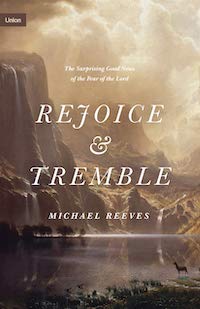
Rejoice and Tremble by Michael Reeves: Gospel Fear

Rejoice and Tremble

Rejoice and Tremble: The Surprising Good
News of the Fear of the Lord

by Michael Reeves
Series: Union

Hardcover, 168 pg.
Crossway, 2021

Read: March 7-14, 2021

What’s Rejoice and Tremble About?

The Publisher’s Description:

“The fear of the Lord is the beginning of knowledge.” —Proverbs 1:7

Fear is one of the strongest human emotions—and one that often baffles Christians. In the Bible the picture can seem equally confusing: Is fear a good thing or a bad thing? And what does it mean to “fear the Lord”?

In Rejoice and Tremble, Michael Reeves clears the clouds of confusion and shows that the fear of the Lord is not a negative thing at all, but an intensely delighted wondering at God, our Creator and Redeemer.

The High Point of the Book

There was one chapter that made the time I spent reading the book as a whole absolutely worth it. It’s called “How to Grow in This Fear.” The focus of the chapter is on how both Scripture and faith work in a believer’s heart and life to increase Godly Fear. I found it inspiring and convicting.

The Series Design and How This Book Deals with It

According to the Series Preface, this is the first book in a series called Union, “an attempt to express and share” certain values. “[W]e long to grow and support men and women who will delight in God, grow in Christ, serve the church, and bless the world.”

All well and good, but later it states,

Each exploration of a subject in the Union series will appear in two versions: a full volume and a concise one. The idea is that church leaders can read the full treatment, such as this one and so delve into each topic while making the more accessible concise version widely available to their congregations.

This not-concise book is 168 pages, the other version is 80—so I guess it’s not as full. But 168 pages of pretty easy reading isn’t what I’d think of as the domain of leaders. If this was the accessible, short version of a 4-500 academic text, I wouldn’t complain (and I’d be interested in that other volume, too). But this? This doesn’t need a simpler, shorter version.

So, what did I think about Rejoice and Tremble?

I truly think this is a better book than I give it credit for. But it didn’t do a whole lot for me.

I think it wasn’t the right time for me to read this—I’m not sure when a better time might be, but I didn’t connect with most of the material. I saw what he was doing (usually), but didn’t find it terribly compelling. I give both the topic and Reeves more credit than that, so I assume it was me.

I also think I was put off by the idea that this was intended to be an inaccessible volume for those who aren’t leaders in the church—there was nothing in this book that my seventeen-year-old couldn’t have handled. I really think reading that Series Preface put me off. If I pick this up again in a couple of years, I’m going to work harder on ignoring that.

It’s a decent read, it’s a good reminder of the place that a Biblical Fear of the Lord should hold in the Christian life. I cautiously recommend it. My guess is that most readers will get more out of it than I did.


3 Stars

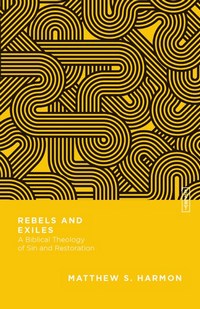
Rebels and Exiles by Matthew S. Harmon: Sin, Its Consequences, and Restoration Through Redemptive History

Here’s where I start to regret my resolution to write a post about every book in this category that I read this year to make up for the absence of them last year. I really don’t have that much to say about it and am afraid I’m making it look dull. Hope I’m not…


Rebels and Exiles

Rebels and Exiles: A Biblical Theology of Sin and Restoration

by Matthew S. Harmon
Series: Essential Studies in Biblical Theology

Paperback, 145 pg.
IVP Academic, 2020

Read: February 7-21, 2021
Grab a copy from your local indie bookstore!

What’s Rebels and Exiles About?

As with everything in this series, Harmon starts with Genesis and the Fall, and finding the pattern there for human disobedience and restoration that the rest of the Biblical narrative uses time after time (after time after time, sadly). Harmon traces the themes and examples of rebellion, exile, and restoration through The Old Testament and the New alike—with Christ inaugurating the final end of exile in his death and resurrection, which will be culminated in his return and the remaking of the world.

OT and NT Exiles

Personally, I found the chapter on Israel and Judah’s exile from Canaan after the rebellion and the chapter showing how the New Testament Epistles see the Christian life as one of exile—giving both hope and direction for that life—to be the most helpful. Particularly as Western culture becomes increasingly inhospitable to The Church and we’re reminded that we’ve become too comfortable in this world where we are pilgrims and exiles, we need these instructions and examples.

But the chapters describing the Restoration of Israel to the Land—as well as the greater restoration promised to them—and the chapter describing Christ’s Life and Ministry as ending exile were probably the most edifying.

So, what did I think about Rebels and Exiles?

I think I may have read the three books in this series a bit too closely together—it felt a little redundant, the themes and approaches in the various books in this series are so similar. That’s on me, not on Harmon, though.

This isn’t to say that I didn’t like the book or find it helpful. “Now these things happened to them as an example, but they were written down for our instruction,” it’s good to focus on these themes and patterns and Harmon’s little book is a good guide through them.


3.5 Stars


This post contains an affiliate link. If you purchase from it, I will get a small commission at no additional cost to you. As always, opinions are my own.

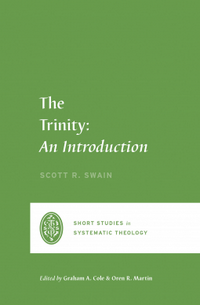
The Trinity: An Introduction by Scott R. Swain: A Brief but Deep Study

The Trinity

The Trinity: An Introduction

by Scott R. Swain
Series: Short Studies in Systematic Theology

Paperback, 133 pg.
Crossway, 2020

Read: January 17-31, 2020
Grab a copy from your local indie bookstore!

What we find in later Trinitarian creeds, confessions, and doctrinal summaries are not improvements upon a latent or undeveloped biblical Trinitarianism but, rather, the church’s attempt to fathom the depth of the riches of biblical Trinitarianism for the sake of various liturgical, pedagogical, and polemical ends. Some of the church’s creeds, confessions, and doctrinal summaries represent such faithful expressions of scriptural teaching and enjoy such wide-ranging ecclesiastical consensus that we dare not transgress the lines they have drawn. Rather, taking them on our own lips, we gladly join the church’s chorus of Trinitarian praise.

What’s The Trinity: An Introduction About?

It’s kind of there in the title, right? This is an introduction to the classical Christian doctrine of The Trinity. He’s not trying to re-invent the wheel, he’s definitely not trying to innovate, but to provide a concise (it’s a Short Study, after all) jumping-off point into deeper studies by providing a solid foundation.

He spends two chapters looking at the primary Biblical texts demonstrating the Doctrine. Chapter 3 is about the Simplicity of God—something too many overlook in a discussion of The Trinity. The following three chapters each focus on a Person of the Trinity. The final chapters are about the “external works” of the Trinity, the “appropriation” of specific works to particular persons, the beneficiaries of God’s work, and assorted topics.

All of that is a lot to ask of 133 short pages. Swain pulls it off by being concise, but he never seems to be leaving out details or avoiding the complicated ideas (although he obviously has to).

Touching on Controvery

This isn’t a polemical work—Swain is here to inform and educate, not combat. Still, he does talk about some Christological errors, including the contemporary dust-ups over EFS/ERAS—Eternal Functional Subordination/Eternal Relations of Authority and Submission.

Swain briefly (again, it’s a Short Study) addresses this error. He’s calm, he’s fair, yet he’s firm. It’s one of the best short treatments of the controversy I’ve seen, and in the context of the larger discussion of the Person of the Son as well as the larger discussions of each of the Persons, it’s incredibly helpful. It also fits where he put it and doesn’t seem like Swain used the opportunity as a digression just to beat a pet theological peeve.

Helpful Supplemental Material

Maybe it’s just me, but I rarely find the post-text material all that helpful. This book was one of the pleasant exceptions—there’s a brief glossary of some of the technical terms. Also, the “Further Reading” suggestions look great and my “To Buy” list grew a bit.

So, what did I think about The Trinity: An Introduction?

Because the persons of the Trinity are internal to God’s life, not external works of God, we can know the persons of the Trinity, as well as their ultimate plan for creation (Eph. 3:9), only if they stoop down and open up the depths of their inner life to us. Only the persons of the Trinity know the persons of the Trinity. Therefore, only the persons of the Trinity can make known the persons of the Trinity. The revelation of the Trinity is a matter of divine self-revelation, divine self-presentation, divine self-naming.

While this is a theological book, drawing on the teaching of the Church, Swain is careful to never lose sight of the source of this Doctrine, the Word of God. We know this, we understand this (as much as we do) because it is revealed to us. That’s vital to an understanding of the doctrine, and vital to the teaching of it. Swain doesn’t let his readers stray from the text.

This is one of those books where my notes keep saying “Chapter X is likely the highlight of the book,” “the section on X is likely the most valuable in the book.” It appears 60-70% of the book is a highlight—and I may not have written all of those parts down. Which is to say, there’s a lot of gold here, very little (if any) dross.

Helpful, insightful, and useful—it also achieves its end for leading on to further study for me. It’s accessible, but not easy, reading. At the same time, it’s a challenging, but not difficult, text.

Also, I like the looks of this series as a whole, I’ll most likely be grabbing more/all of them if they’re all about this quality.


5 Stars

This post contains an affiliate link. If you purchase from it, I will get a small commission at no additional cost to you. As always, opinions are my own.

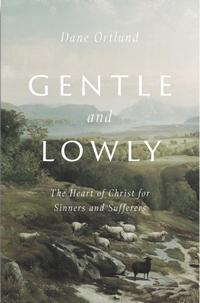
Gentle and Lowly by Dane C. Ortlund: An Encouraging Look at the Heart of Christ

Nothing against this book, but I don’t have a lot to say, but I promised myself I’d do better about posting in this genre, so here we go.


Gentle and Lowly

Gentle and Lowly: The Heart of Christ for Sinners and Sufferers

by Dane C. Ortlund

Kindle Edition, 224 pg.
Crossway, 2020

Read: January 3-10, 2021
Grab a copy from your local indie bookstore!

What’s Gentle and Lowly About?

We are not focusing centrally on what Christ has done. We are considering who he is. The two matters are bound up together and indeed interdependent. But they are distinct.

…It is one thing to know the doctrines of the incarnation and the atonement and a hundred other vital doctrines. It is another, more searching matter to know his heart for you.

Where most books on Jesus Christ focus on His work or nature, Ortland focuses on who He is—what He’s revealed to His people. As you might guess from the title, he focuses on Matthew 11:29 the phrase, “I am gentle and lowly in heart,” in particular. But he develops the idea through numerous Gospel passages.

Ortland does spend time on the Spirit and Father, showing how they are both revealed to have a similar heart. He follows that up with material from the Epistles, focusing on the Risen and Ascended Christ, still displaying the same care, the same heart for His people.

Standing on the Shoulders

In this study, Ortlund draws on insights from the Puritans Thomas Goodwin, Richard Sibbes, and John Owen (some others, including some relatively modern writers, too). Naturally, I found this material very rewarding. Ortland takes his cues from the best of the English Reformed tradition and it shows in his work.

I do sort of wish that the footnotes pointed to things other than various authors collected works, I think in some cases the material is available in other editions, and it’d be nice if it was easier to find, he makes you want to read more by these men on those topics. But that’s beside the point.

So, what did I think about Gentle and Lowly?

“Gentle and lowly” does not mean “mushy and frothy.”

But for the penitent, his heart of gentle embrace is never outmatched by our sins and foibles and insecurities and doubts and anxieties and failures. For lowly gentleness is not one way Jesus occasionally acts toward others. Gentleness is who he is. It is his heart. He can’t un-gentle himself toward his own any more than you or I can change our eye color. It’s who we are.

There’s nothing revolutionary to be found here, but there’s good, solid, reassuring material. It’s impossible to read this book and not be encouraged to draw near to Him and taking His yoke. It’s an easy read, very accessible, and one that’s well worth your time and attention.


3 Stars

This post contains an affiliate link. If you purchase from it, I will get a small commission at no additional cost to you. As always, opinions are my own.

My Favorite Theology/Christian Living Books of 2020

I knew I’d done a lousy job of keeping up on my Theology/Christian Living posts this year. But assembling this post let me see just how bad I’d done—five posts this year, and only one from this list made was covered in them.

Maybe that’s part of why I was rejected by NetGalley for every book along these lines I requested this year? In retaliation, I bought every book I was rejected for. That’ll teach ’em…

Anyway, these books are important enough to me—and this category makes up enough of what I read that I figured I’d keep up the tradition of making this list. And I’ll try to do better on this front in 2021.

As always, re-reads don’t count for these lists. It’s a self-imposed rule, but in a year when I re-read Calvin’s Institutes, some Machen and Prayer by O. Hallesby, it’s just not fair to almost everything else I read.

(in alphabetical order by author)

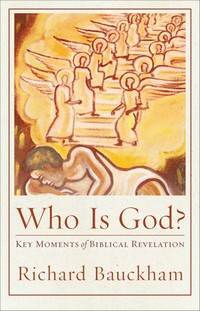
Who Is God?Who Is God?: Key Moments of Biblical Revelation

by Richard Bauckham

This is one of those deceptively easy reads that shouldn’t be read easily. Based on lectures that Bauckman has delivered, the book takes a Redemptive Historical approach to God’s revelation of Himself. “Jacob’s dream at Bethel (the revelation of the divine presence), Moses at the burning bush (the revelation of the divine Name), and Moses on Mount Sinai (the revelation of the divine character)…He then shows how the New Testament builds on the Old by exploring three revelatory events in Mark’s Gospel, events that reveal the Trinity: Jesus’s baptism, transfiguration, and crucifixion.” After looking at the particular text, Bauckman then traces that revelation through Scripture showing how the same thought it echoed and expanded throughout.

As these chapters were originally lectures, they’re not full of footnotes—but they’re clearly the product of a lot of scholarship. There’s deep thought here and great spiritual nourishment.

4 1/2 Stars

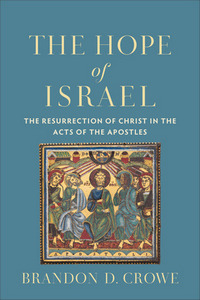
The Hope of IsraelThe Hope of Israel: The Resurrection of Christ in the Acts of the Apostles

by Brandon D. Crowe

It makes no sense to me at all that there hasn’t been a book-length look at the theme of Resurrection in Acts until now. It’s so clearly important to the message of Acts that you’d think there’d be dozens. But nope.

Crowe does a masterful job of filling that lacuna. It is all over Acts—more than I’d have guessed, too. First, he focuses on the topic in general, then focuses on the speeches/sermons of Peter, then those of Paul, and then those of everyone else. The exegetical material is just Part One, and it’s worth the purchase price right there.

But then he goes on to examine the topic from four theological perspectives, fleshing out the exegetical material and it gets so much richer.

This isn’t as easy to read as Bauckman, but it’s not too difficult if you’re willing to put in the work. Fascinating topic and helpful reflections.

4 Stars

From Adam and Israel to the ChurchFrom Adam and Israel to the Church: A Biblical Theology of the People of God

by Benjamin L. Gladd

Gladd traces the idea of the people of God through successive Redemptive Historical eras, showing how each built on the one before and points to the final form in the New Heavens and Earth, fulfilling the original Creation design. A helpful way to look at this topic, it’ll challenge, inform and inspire.
4 Stars

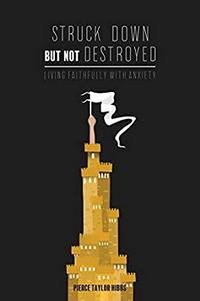
Struck Down But Not DestroyedStruck Down but Not Destroyed: Living Faithfully with Anxiety

by Pierce Taylor Hibbs

Written twelve years after Hibbs was first diagnosed with an anxiety disorder, he takes a different approach to anxiety disorders than you typically see. It’s not about denying the problem, it’s not about overcoming it, and striving to lead an anxiety-free life. Instead, it’s about relying not on our own strength, but on Christ who is sufficient when we are not; it’s about learning to see what God’s purpose in the suffering is, understanding that His hand is guiding all things—including our problems—so how do we in faith (without denying the suffering) rest in faith.

If like me, you don’t suffer from an anxiety disorder, you have your own challenges in your life, ways in which you suffer. It’s easy, thanks to the way Hibbs wrote this, to see how you can apply these principles to your own circumstances.

Very practical, but not at the cost of truth and theological reflection.

4 Stars

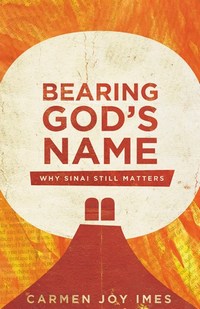
Bearing God's NameBearing God’s Name: Why Sinai Still Matters

by Carmen Joy Imes

I had some real problems with this book—I quibbled with more than a few points, and flat-out disagreed with others (although I think her arguments are interesting and I’d like to see someone who knows what they’re doing dissect them). And I’m not so sure her thesis is all that revolutionary—I’ve heard it in almost every (maybe every) sermon I’ve heard on the Third Commandment in Confessional Presbyterian and Reformed Churches in the last two and a half decades.

That said, it’s a thesis that more people need to hear. The commandment isn’t primarily about our language, it’s about taking the Name of the Lord our God in the sense of “bearing.” When God’s people call themselves that, certain things are expected of them to not bring shame to that name (which will involve treating His name—and the means by which He is revealed—with the due respect).

She starts at Sinai and then traces the idea (a theme in this post, no?) through the rest of Scripture, showing how God’s people have done this—and how they’ve failed at it, too.

It’s a popularized version of a good portion of her dissertation, and is so accessible it’s ridiculous. Thought-provoking and helpful (even when I think she’s wrong about something), it’s a book I can’t help but recommend. My disagreements (and the way she expressed problems that don’t exist with the Reformed understanding of the topics) led to my reduced rating, not anything to do with the way the book was written.

3.5 Stars

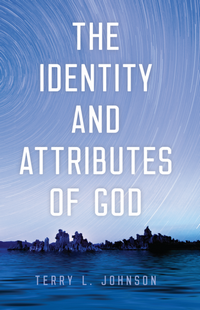
The Identity and Attributes of GodThe Identity and Attributes of God

by Terry L. Johnson

The reason I haven’t written anything about this is simple: I don’t know how to start—or how to finish (or anything in between). This is a modern, less-exhaustive version of Charnock’s The Existence and Attributes of God. Full of quotations and lessons from Puritans and others in church history, this is an excellent introduction (and then some) to the classical doctrine of God so often ignored or downplayed today. If we don’t know who He is, how will we know how to worship and serve Him?

It’s convicting. It’s informative and educational. It’s devotional. It’s probably the best thing that Johnson’s written—and that’s saying something.

5 Stars

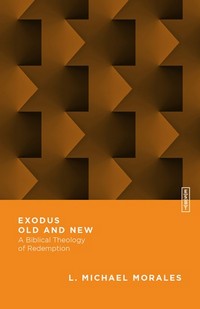
Exodus Old and NewExodus Old and New: A Biblical Theology of Redemption

by L. Michael Morales

“Morales examines the key elements of three major redemption movements in Scripture: the exodus out of Egypt, the second exodus foretold by the prophets, and the new exodus accomplished by Jesus Christ.” Like so many others I read this year this takes a Redemptive Historical approach seeing the way these ideas play out throughout Scripture, are echoed and expanded in successive eras.

The exodus from Egypt is the template (not the best word, but the only one that comes to mind at the moment) for redemption in general, and we see this figure used time and time again in Scripture. Morales is a helpful guide through this progression.

4 Stars

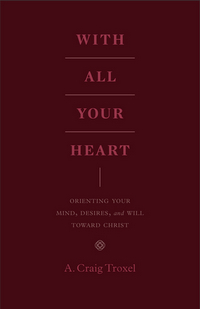
With All Your HeartWith All Your Heart: Orienting Your Mind, Desires, and Will Toward Christ

by A. Craig Troxel

Troxel begins by fleshing out a Biblical understanding of the heart (short version: the governing center of life). That understood, he then moves on to show how we’re to use that heart to fulfill Christ’s commands—how we keep it pure, how we protect it, how we keep it obedient. Most of all, how we respond when we fail (and fail, and fail).

One of the most humbling—yet helpful—books I’ve read in years. Troxel pierces the heart in the best way, so that we can see our need for repentance.

4 Stars

The Teaching of Jesus Concerning the Kingdom of God and the ChurchThe Teaching of Jesus Concerning the Kingdom of God and the Church

by Geerhardus Vos

This work “surveys the teaching of Jesus concerning the kingdom of God. It covers the kingdom in the Old Testament, the meaning of the biblical words for kingdom and kingship, the present and future aspects of the kingdom, the essence of the kingdom, the relationship between the kingdom and the church, and finally the saving benefits of entering the kingdom…Vos exposited an inaugurated kingdom with a future consummation long before G. E. Ladd popularized it.”

This is a slim, dense volume. Vos demands care and close attention to his work—but it’s so worth it (and after a while, you don’t notice how much you’re working to read). Fascinating and still helpful a century later.
5 Stars

Song of SongsThe Song of Songs

by G. I. Williamson

My original post
Yeah, I gave this one only 3 1/2 Stars, but it’s on this list because it stuck with me. It’s been since April and I’ve thought about this book a few times (definitely during the two times this year I’ve read the Song of Songs). Williamson’s wisdom and carefully Christ-centered approach to the book makes these sermons really valuable.


3.5 Stars

Why Would Anyone Go to Church? by Kevin Makins: A Book that Doesn’t Deliver on What it Promises, but is Still Rewarding

Why Would Anyone Go to Church?

Why Would Anyone Go to Church? A Young Community’s Quest to Reclaim Church for Good

by Kevin Makins

eARC, 192 pg.
Baker Books, 220

Read: June 21, 2020
Grab a copy from your local indie bookstore!


I’m sort of torn about this one. So bear with me. Let’s start with the book blurb:

A young community discovers why, despite everything, church still matters

There are plenty of reasons to criticize, judge, and even walk away from the church. When Kevin was twenty-three and didn’t know any better, he started a congregation with some friends who were on the edge of faith. Together they hoped to discover whether the church was worth fighting for. In this brutally honest account, he shares their story of becoming a community of misfits, outcasts, and oddballs who would learn that, even with all its faults, the church is worth being a part of . . . and must be reclaimed for good.

If you’ve been burned or burned out by the church, if you’ve been silenced or misunderstood, if you’ve left or never even joined in the first place, this candid, hopeful book is your invitation to consider what you miss out on when you give up on church—and what the church misses out on when it gives up on you.

That last paragraph is the dicey one for me—it fits the title, Why Would Anyone Go to Church?. But I don’t think the book delivers that, at all. That’s what I read the book for, that’s what I wanted to get (don’t get me wrong, I have answers already, I just wanted to see what this “Young Community” had to offer along those lines), but on those counts, I came away empty-handed.

So what did Makins fill these 192 pages with? Well, something along the lines of the subtitle, A Young Community’s Quest to Reclaim Church for Good.* The church that Makins pastors, Eucharist Church in Hamilton, ON, began meeting in 2010 in an impovrished—and largely churchless—part of the city. They struggled with focus, with identity, with location. But what they had—a sense of community and purpose—carried them through. The book outlines their struggles, triumphs, failings, and perseverance.

* I do think it’s unnecessarily combative—also unproven—to say that the Church is in need of any such reclamation. But that’s for another day.

That’s all I found in these pages, and that’s more than enough. It’s an inspiring story. I’m not sure I’d have picked the book up if that’s what was advertised, but I might have. It would’ve been my loss if I hadn’t.

Are there some lessons that new—or established churches—can take from their story? Yes, there are several that can be extrapolated. But as Makins makes a point of—often—this is a congregation that takes its shape and identity from its community. So much of what he recounts isn’t something that can be duplicated, nor should anyone try (I don’t think Makins suggests that, either).

I’ve repeatedly resolved to read outside my tradition, and repeatedly failed—I do it occasionally, but not as often as I could. I’m pretty sure Makins is about as far outside as I can go and still remain in the bounds of orthodoxy. While I have some problems with the book, it was an encouraging read, reminding me of the truth that, “the purest churches under heaven are subject both to mixture and error” and that part of that mix is a faith that can inspire. Just be sure you know what you’re getting into with this book.

If you come into it with the proper expectations, you should come out of it with a valuable experience. If you come for what the blurb and title suggests? You’ll be disappointed.

Disclaimer: I received this eARC from Baker Books via NetGalley in exchange for this post—thanks to both for this.


3 Stars

This post contains an affiliate link. If you purchase from it, I will get a small commission at no additional cost to you. As always, opinions are my own.

Catch-Up Quick Takes None Greater by Matthew Barrett; Alive by Gabriel N.E. Fluhrer; The Song of Songs by G. I. Williamson; The Ten Commandments of Progressive Christianity by Michael J. Kruger

The point of these quick takes post sto catch up on my “To Write About” stack—emphasizing pithiness, not thoroughness.

None Greater

None Greater: The Undomesticated Attributes of God

by Matthew Barrett
Kindle Edition, 304 pg.
Baker Books, 2019
Read: December 22-29, 2020
Grab a copy from your local indie bookstore!

(the official blurb)
This is a popular-level, very approachable introduction to the Attributes of God—Incomprehensibility, Aseity, Simplicity, Immutability, Impassibility, Eternity, Omnipresence, Omnipotence, Omniscience, Omnisapience, and a few others. He does so using the works of Augustine, Anselm,— and Aquinas to define Classical Theism—with help from Charnock and Bavinck.

Tackling all that in 300 accessible pages is no mean feat. I cannot tell you how many times I thought as I read this that this is the book that R.C. Sproul would have written about the Attributes of God. Sure, the illustrations aren’t the ones that Sproul would’ve used—but they’re of a kind. In my books, that’s a high compliment—we need someone who can communicate like Sproul. Barrett will do fine if he continues to put out this kind of work.

This is a really helpful and useful work—I recommend it strongly to everyone.
4 Stars

Alive

Alive: How the Resurrection of Christ Changes Everything

by Gabriel N.E. Fluhrer
Kindle Edition, 167 pg.
Reformation Trust, 2020
Read: April 5-12, 2020
Grab a copy from your local indie bookstore!

(the official blurb)
The book starts with a look at the evidence for the Resurrection of Christ, and why it’s important to wrestle with it and to be ready to defend it in our current culture. Then Fluhrer moves on to looking at the way the Resurrection was foreshadowed in the Old Testament, described in the Gospels, preached in Acts, explained in the rest of the New Testament, and serves as the basis for our sure hope. He covers all the bases and does so well.

Fluhrer has an apologetic goal for this book, it’s not as compelling as he seems to think it is. Which really describes the book as a whole. In the end, it’s too surface-level. It’s helpful, the theology behind it is the kind of thing we need more of—a robust Redemptive-Historical approach à la Vos and Gaffin—and it’s approachable. I just couldn’t sink my teeth into it. I liked it, I just wanted to like it more.

3 Stars

Song of Songs

The Song of Songs

by G. I. Williamson
Kindle Edition, 112 pg.
P&R Publishing, 2020
Read: April 26, 2020
Grab a copy from your local indie bookstore!

(the official blurb)
This is a great and helpful collection of sermons. This particular book of the Bible is often misinterpreted, so having someone bring careful clarity to the text is valuable. It’s not the final word—Williamson would never claim to be. But it’s helpful.

It’s also Christ-centered. Something far too often neglected when approaching this text. Yes, there’s a focus on love, marriage, sexuality. But with the goal of bringing glory to God through that.

I really appreciated this book and will be returning to it.
3.5 Stars

The Ten Commandments of Progressive Christianity

The Ten Commandments of Progressive Christianity

by Michael J. Kruger
Paperback, 54 pg.
Cruciform Quick, 2019
Read: May 24, 2020
Grab a copy from your local indie bookstore!

(the official blurb)
There’s part of this that’s a tribute to Machen and Christianity & Liberalism, while being an update to it, too. To see how Liberalism is alive and well (running under the moniker of “Progressive” now), he uses two contemporary works to respond to. He stresses repeatedly that the tenents taught in these books aren’t wholesale departures from the faith. However, these half-truths are so misleading they amount to the same. Being half-truths, they’re all the more dangerous and will easily fool some.

The analysis and critique are sharp, spot-on, and easy to read. Well worth your time.

But…

I know that the point of this imprint is “quick,” but this was just too brief to be really valuable. I’d have liked some more depth, for Kruger to use more than just the two works he’s critiquing, that sort of thing. It was an appetizer—and it turns out that after a couple of bites, I wanted a meal.
3.5 Stars

This post contains affiliate links. If you purchase from any of them, I will get a small commission at no additional cost to you. As always, opinions are my own.

Every Day Matters: A Biblical Approach to Productivity by Brandon D. Crowe: Biblical Foundation, Sage Advice, and Helpful Examples

Every Day Matters

Every Day Matters: A Biblical Approach to Productivity

by Brandon D. Crowe

Paperback, 129 pg.
Lexham Press, 2020

Read: February 2-23, 2020
Grab a copy from your local indie bookstore!


I should begin by stating upfront that my take on this book is very different than the other Christian Productivity book I read back in 2015. It’s entirely possible that this makes me a hypocrite. I don’t think so, but I’m not going to go back and re-read the other one. I remember the starting point of that one being different than this, and it makes all the difference to me.

* N.B.: Crowe cites it positively at one point. Do with that what you will.

In Part I, Crowe outlines the need for believers to think about their personal productivity. Then he uses Proverbs and Ecclesiastes to show the foundation of Biblical productivity. Then he further expands on that material by looking at Paul’s teaching about focus, diligence, and self-control. This was my favorite section, and I could’ve easily read something twice as long had Crowe decided to expand on these points.

Part II focuses on Principles. He builds on the Biblical material with a mixture of experience, research into productivity, and application of Christian teaching to help the reader concentrate on responsibility, goal setting, the role of family, the importance of rest and health.

The rubber meets the road in Part III, “Practices.” He discusses spiritual disciplines, organization methods and some pitfalls to avoid. He gives a lot of tips here, illustrated from his own experience (but he also discusses some things he doesn’t personally use). There’s a lot of “this worked for me, give it a shot” kind of writing here. There’s also a handy little appendix on the strategic use of email.

I think Crowe’s use of both the Wisdom Literature and Pauline texts are incredibly helpful; his principles section demonstrates both wisdom and insight; and his application his helpful. Best of all is the general approach, essentially: This is what I’ve learned, you should be able to learn something from it. The important thing is that you think about this kind of thing and find the most effective way for you to serve God and your fellow man (starting with your family). It’s not a one-size-fits-all approach.

That’s exactly the kind of thing I needed to read.

Sure, it’s “only” a 3 1/2 Star book. I know some people see that as a bad thing. The majority of what I read and like is 3 Star. But I’m not the kind of guy who is ever going to give more than that to a productivity book (unless it really makes me laugh or something—it’ll be the writing, not the method that wins me over). I liked this, it provoked some thought and reflection and I’ve applied some of what Crowe has said—and am looking for ways to do more of that. I think that says good things about the book.


3.5 Stars

This post contains an affiliate link. If you purchase from it, I will get a small commission at no additional cost to you. As always, opinions are my own.

A Few Quick Questions With…Ronald Hera

A little bit ago, I posted about the novel Bethlehem’s Brothers, and now it’s time for a few questions with the author, Ronald Hera, who was gracious enough to give me a little of his time.

Tell us about your road to publication—was your plan/dream always to become a novelist and your education/other jobs were just to get you to this point, or was this a later-in-life desire?
I wrote technical papers occasionally for the SAE and enjoyed it, but the idea of writing for publication came when I was about to retire and wondered what I would do to pass the time. Writing has been good for me.
Most authors have dozens of ideas bouncing around their craniums at once—what was it about this idea that made you say, “Yup—this is the one for me.”? What kind of research did you do to prepare for it?
I have three books started now. One is a bad idea and I’ll probably not write that one. But two are promising ideas and are going smoothly. They are more like mystery/action novels. Bethlehem’s Brothers came to my head for two reasons. I see people moving away from their Christian roots and that bothers me. I wanted to show the struggles that went into deciding to be a Christian during the first century. In Jerusalem’s Brothers, I wanted to show how difficult it was during the early persecution and finally in Brothers Forever, the fall of Jerusalem and who the Essenes were.

My research comes from The Complete Works of Josephus, Studies in the Life of Christ by R.C. Foster, The Bible, and the internet. I enjoy the research because it teaches me a lot about a subject dear to my heart.

While writing the book itself, what was the biggest surprise about the process? Either, “I can’t believe X is so easy!” or “If I had known Y was going to be so hard, I’d have skipped this and watched more TV”?
My imagination ran WILD! I found it hard to make the book flow and my sentences were awkward a lot of the time. Editing was lengthy for me. Even naming the characters was a challenge sometimes. I wanted them to be real and meaningful names, so I researched meanings on the internet.
As I’ll discuss in my post about the book, I really appreciated how you merged the Biblical events with your material—it seemed like you exercised great care in that. How did you decide which parts of the life of Christ to have your characters directly interact with?
Thank you for the compliment. I think a fiction writer should make the scenes and surrounding events as real and accurate as possible while making the characters and some events purely fictional. That is a delicate balance. An example is when I had Enoch with Cleopas on the road to Emmaus. The Bible mentions Cleopas and “another”, so I interjected Enoch. One must be careful not to add to the Bible. I thought this might be okay.
As soon as I saw a Cleopas hanging around, I figured this is where you were going to go, and you pulled that part off particularly well.

What’s been the response to this in the years since the original publication?

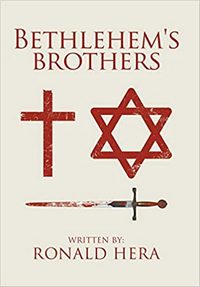
Critics like it. Bethlehem’s Brothers has recommendations from Pacific Book Review and Kirkus. It was also a finalist in the prestigious Montaigne Medal awarded by the Eric Hoffman Award Committee. Of course, I would like more people to read it. Now with e-books, cost isn’t really an issue. Maybe a different cover would help.
There’ve been two sequels to this (and I imagine there aren’t more coming based on the synopses for them), are there other books to come from you?
Certainly. I have a fourth book to add to the series called The Rock of Michael. Michael is an angel who helps the Christians displaced by the destruction of Jerusalem settle in what is now Tel Aviv-Yafo. The other possible novel is another historical fiction piece set on a college campus during protests of the Vietnam war. It has promise.
So much for my imagination 🙂

Thanks for your time and willingness to let me badger you with these questions—again, I really enjoyed Bethlehem’s Brothers and truly hope that it finds the audience it deserves.?

I am confident it will. Perhaps a TV series or a Movie might get the word out to the audience.

Bethlehem’s Brothers by Ronald Hera: First Century Historical Fiction about a Couple of Others Born in Bethlehem

Bethlehem's Brothers

Bethlehem’s Brothers

by Ronald Hera
Series: The Brothers Trilogy, #1

Kindle Edition, 308 pg.
AuthorHouse, 2011

Read: April 12-19, 2020


This historical fiction starts off with a bang—in a small home during the Massacre of the Innocents. One father (probably others, but we’re focused on one family here) tries to prevent the soldier from killing his young son and loses his life, too. Devastated, his widow does the best she can for her two remaining sons—sending one to Jerusalem with a friend of a friend as an apprentice, she takes the other to live with family near the sea of Galilee where the boy will learn to be a fisherman.

After a few chapters where we see them grow up and begin their adult lives, we begin to hear about things like John the Baptizer, and an itinerant preacher surrounded by outlandish rumors. Both boys have been raised quite differently—Simeon, in Jerusalem, was apprenticed to a former rabbi (discharged by the Sadducees for his orthodoxy); Enoch becomes involved with Zealots and was convinced the soon-to-come Messiah would lead a revolt. A few striking events lead them to realize who this Messiah is (although, they’re both pretty shaky about the details).

As the brother’s stories intersect at various points with the Gospel accounts we see John’s arrest, some healings by Christ, the Triumphal Entry, the Crucifixion, and some of those who were raised, the encounter at the Road to Emmaus and more. As they intersect, they, their friends, Simeon’s wife, and others struggle to understand what they’re hearing and seeing.

I was particularly impressed with the way that Hera treated the Biblical material. One of the best ways to evaluate Historical Fiction is based on how it treats actual history and merges the fictional with the fact. I found Hera’s use to be very sympathetic and respectful—it’s a dangerous path in general, but when you’re dealing with Sacred material, it’s even more dangerous.

It is a smooth and easy read, with a pretty engaging text. It’s not perfect, and maybe relies a bit too much on coincidence, but that doesn’t detract from it being a pleasant time. I wanted a bit more out of the dialogue but it wasn’t bad. The focus on this novel is to give an idea—with an eye to historical reality, but not bogged down in the details—what it was like for the faithful Jew to encounter the Messiah. It’s a worthwhile and ambitious goal and it delivers on it. I’d recommend this and will very likely be picking up the next two installments in the trilogy soon.

Note: I received a copy of this book from the author in exchange for this post and my honest opinion.


3 Stars

Page 24 of 32

Powered by WordPress & Theme by Anders Norén