Category: Theology/Christian Living Page 25 of 33

Why Would Anyone Go to Church? by Kevin Makins: A Book that Doesn’t Deliver on What it Promises, but is Still Rewarding

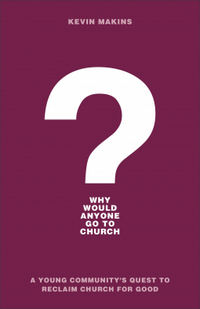
Why Would Anyone Go to Church?

Why Would Anyone Go to Church? A Young Community’s Quest to Reclaim Church for Good

by Kevin Makins

eARC, 192 pg.
Baker Books, 220

Read: June 21, 2020
Grab a copy from your local indie bookstore!


I’m sort of torn about this one. So bear with me. Let’s start with the book blurb:

A young community discovers why, despite everything, church still matters

There are plenty of reasons to criticize, judge, and even walk away from the church. When Kevin was twenty-three and didn’t know any better, he started a congregation with some friends who were on the edge of faith. Together they hoped to discover whether the church was worth fighting for. In this brutally honest account, he shares their story of becoming a community of misfits, outcasts, and oddballs who would learn that, even with all its faults, the church is worth being a part of . . . and must be reclaimed for good.

If you’ve been burned or burned out by the church, if you’ve been silenced or misunderstood, if you’ve left or never even joined in the first place, this candid, hopeful book is your invitation to consider what you miss out on when you give up on church—and what the church misses out on when it gives up on you.

That last paragraph is the dicey one for me—it fits the title, Why Would Anyone Go to Church?. But I don’t think the book delivers that, at all. That’s what I read the book for, that’s what I wanted to get (don’t get me wrong, I have answers already, I just wanted to see what this “Young Community” had to offer along those lines), but on those counts, I came away empty-handed.

So what did Makins fill these 192 pages with? Well, something along the lines of the subtitle, A Young Community’s Quest to Reclaim Church for Good.* The church that Makins pastors, Eucharist Church in Hamilton, ON, began meeting in 2010 in an impovrished—and largely churchless—part of the city. They struggled with focus, with identity, with location. But what they had—a sense of community and purpose—carried them through. The book outlines their struggles, triumphs, failings, and perseverance.

* I do think it’s unnecessarily combative—also unproven—to say that the Church is in need of any such reclamation. But that’s for another day.

That’s all I found in these pages, and that’s more than enough. It’s an inspiring story. I’m not sure I’d have picked the book up if that’s what was advertised, but I might have. It would’ve been my loss if I hadn’t.

Are there some lessons that new—or established churches—can take from their story? Yes, there are several that can be extrapolated. But as Makins makes a point of—often—this is a congregation that takes its shape and identity from its community. So much of what he recounts isn’t something that can be duplicated, nor should anyone try (I don’t think Makins suggests that, either).

I’ve repeatedly resolved to read outside my tradition, and repeatedly failed—I do it occasionally, but not as often as I could. I’m pretty sure Makins is about as far outside as I can go and still remain in the bounds of orthodoxy. While I have some problems with the book, it was an encouraging read, reminding me of the truth that, “the purest churches under heaven are subject both to mixture and error” and that part of that mix is a faith that can inspire. Just be sure you know what you’re getting into with this book.

If you come into it with the proper expectations, you should come out of it with a valuable experience. If you come for what the blurb and title suggests? You’ll be disappointed.

Disclaimer: I received this eARC from Baker Books via NetGalley in exchange for this post—thanks to both for this.


3 Stars

This post contains an affiliate link. If you purchase from it, I will get a small commission at no additional cost to you. As always, opinions are my own.
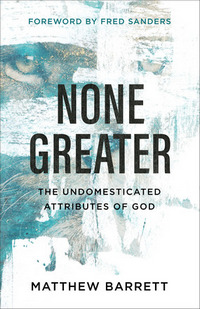
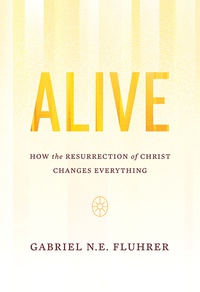
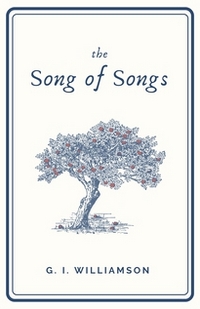
Catch-Up Quick Takes None Greater by Matthew Barrett; Alive by Gabriel N.E. Fluhrer; The Song of Songs by G. I. Williamson; The Ten Commandments of Progressive Christianity by Michael J. Kruger

The point of these quick takes post sto catch up on my “To Write About” stack—emphasizing pithiness, not thoroughness.
—

None Greater

None Greater: The Undomesticated Attributes of God

by Matthew Barrett
Kindle Edition, 304 pg.
Baker Books, 2019
Read: December 22-29, 2020
Grab a copy from your local indie bookstore!

(the official blurb)
This is a popular-level, very approachable introduction to the Attributes of God—Incomprehensibility, Aseity, Simplicity, Immutability, Impassibility, Eternity, Omnipresence, Omnipotence, Omniscience, Omnisapience, and a few others. He does so using the works of Augustine, Anselm,— and Aquinas to define Classical Theism—with help from Charnock and Bavinck.

Tackling all that in 300 accessible pages is no mean feat. I cannot tell you how many times I thought as I read this that this is the book that R.C. Sproul would have written about the Attributes of God. Sure, the illustrations aren’t the ones that Sproul would’ve used—but they’re of a kind. In my books, that’s a high compliment—we need someone who can communicate like Sproul. Barrett will do fine if he continues to put out this kind of work.

This is a really helpful and useful work—I recommend it strongly to everyone.
4 Stars

Alive

Alive: How the Resurrection of Christ Changes Everything

by Gabriel N.E. Fluhrer
Kindle Edition, 167 pg.
Reformation Trust, 2020
Read: April 5-12, 2020
Grab a copy from your local indie bookstore!

(the official blurb)
The book starts with a look at the evidence for the Resurrection of Christ, and why it’s important to wrestle with it and to be ready to defend it in our current culture. Then Fluhrer moves on to looking at the way the Resurrection was foreshadowed in the Old Testament, described in the Gospels, preached in Acts, explained in the rest of the New Testament, and serves as the basis for our sure hope. He covers all the bases and does so well.

Fluhrer has an apologetic goal for this book, it’s not as compelling as he seems to think it is. Which really describes the book as a whole. In the end, it’s too surface-level. It’s helpful, the theology behind it is the kind of thing we need more of—a robust Redemptive-Historical approach à la Vos and Gaffin—and it’s approachable. I just couldn’t sink my teeth into it. I liked it, I just wanted to like it more.

3 Stars

Song of Songs

The Song of Songs

by G. I. Williamson
Kindle Edition, 112 pg.
P&R Publishing, 2020
Read: April 26, 2020
Grab a copy from your local indie bookstore!

(the official blurb)
This is a great and helpful collection of sermons. This particular book of the Bible is often misinterpreted, so having someone bring careful clarity to the text is valuable. It’s not the final word—Williamson would never claim to be. But it’s helpful.

It’s also Christ-centered. Something far too often neglected when approaching this text. Yes, there’s a focus on love, marriage, sexuality. But with the goal of bringing glory to God through that.

I really appreciated this book and will be returning to it.
3.5 Stars

The Ten Commandments of Progressive Christianity

The Ten Commandments of Progressive Christianity

by Michael J. Kruger
Paperback, 54 pg.
Cruciform Quick, 2019
Read: May 24, 2020
Grab a copy from your local indie bookstore!

(the official blurb)
There’s part of this that’s a tribute to Machen and Christianity & Liberalism, while being an update to it, too. To see how Liberalism is alive and well (running under the moniker of “Progressive” now), he uses two contemporary works to respond to. He stresses repeatedly that the tenents taught in these books aren’t wholesale departures from the faith. However, these half-truths are so misleading they amount to the same. Being half-truths, they’re all the more dangerous and will easily fool some.

The analysis and critique are sharp, spot-on, and easy to read. Well worth your time.

But…

I know that the point of this imprint is “quick,” but this was just too brief to be really valuable. I’d have liked some more depth, for Kruger to use more than just the two works he’s critiquing, that sort of thing. It was an appetizer—and it turns out that after a couple of bites, I wanted a meal.
3.5 Stars

This post contains affiliate links. If you purchase from any of them, I will get a small commission at no additional cost to you. As always, opinions are my own.

Every Day Matters: A Biblical Approach to Productivity by Brandon D. Crowe: Biblical Foundation, Sage Advice, and Helpful Examples

Every Day Matters

Every Day Matters: A Biblical Approach to Productivity

by Brandon D. Crowe

Paperback, 129 pg.
Lexham Press, 2020

Read: February 2-23, 2020
Grab a copy from your local indie bookstore!


I should begin by stating upfront that my take on this book is very different than the other Christian Productivity book I read back in 2015. It’s entirely possible that this makes me a hypocrite. I don’t think so, but I’m not going to go back and re-read the other one. I remember the starting point of that one being different than this, and it makes all the difference to me.

* N.B.: Crowe cites it positively at one point. Do with that what you will.

In Part I, Crowe outlines the need for believers to think about their personal productivity. Then he uses Proverbs and Ecclesiastes to show the foundation of Biblical productivity. Then he further expands on that material by looking at Paul’s teaching about focus, diligence, and self-control. This was my favorite section, and I could’ve easily read something twice as long had Crowe decided to expand on these points.

Part II focuses on Principles. He builds on the Biblical material with a mixture of experience, research into productivity, and application of Christian teaching to help the reader concentrate on responsibility, goal setting, the role of family, the importance of rest and health.

The rubber meets the road in Part III, “Practices.” He discusses spiritual disciplines, organization methods and some pitfalls to avoid. He gives a lot of tips here, illustrated from his own experience (but he also discusses some things he doesn’t personally use). There’s a lot of “this worked for me, give it a shot” kind of writing here. There’s also a handy little appendix on the strategic use of email.

I think Crowe’s use of both the Wisdom Literature and Pauline texts are incredibly helpful; his principles section demonstrates both wisdom and insight; and his application his helpful. Best of all is the general approach, essentially: This is what I’ve learned, you should be able to learn something from it. The important thing is that you think about this kind of thing and find the most effective way for you to serve God and your fellow man (starting with your family). It’s not a one-size-fits-all approach.

That’s exactly the kind of thing I needed to read.

Sure, it’s “only” a 3 1/2 Star book. I know some people see that as a bad thing. The majority of what I read and like is 3 Star. But I’m not the kind of guy who is ever going to give more than that to a productivity book (unless it really makes me laugh or something—it’ll be the writing, not the method that wins me over). I liked this, it provoked some thought and reflection and I’ve applied some of what Crowe has said—and am looking for ways to do more of that. I think that says good things about the book.


3.5 Stars

This post contains an affiliate link. If you purchase from it, I will get a small commission at no additional cost to you. As always, opinions are my own.

A Few Quick Questions With…Ronald Hera

A little bit ago, I posted about the novel Bethlehem’s Brothers, and now it’s time for a few questions with the author, Ronald Hera, who was gracious enough to give me a little of his time.

Tell us about your road to publication—was your plan/dream always to become a novelist and your education/other jobs were just to get you to this point, or was this a later-in-life desire?
I wrote technical papers occasionally for the SAE and enjoyed it, but the idea of writing for publication came when I was about to retire and wondered what I would do to pass the time. Writing has been good for me.
Most authors have dozens of ideas bouncing around their craniums at once—what was it about this idea that made you say, “Yup—this is the one for me.”? What kind of research did you do to prepare for it?
I have three books started now. One is a bad idea and I’ll probably not write that one. But two are promising ideas and are going smoothly. They are more like mystery/action novels. Bethlehem’s Brothers came to my head for two reasons. I see people moving away from their Christian roots and that bothers me. I wanted to show the struggles that went into deciding to be a Christian during the first century. In Jerusalem’s Brothers, I wanted to show how difficult it was during the early persecution and finally in Brothers Forever, the fall of Jerusalem and who the Essenes were.

My research comes from The Complete Works of Josephus, Studies in the Life of Christ by R.C. Foster, The Bible, and the internet. I enjoy the research because it teaches me a lot about a subject dear to my heart.

While writing the book itself, what was the biggest surprise about the process? Either, “I can’t believe X is so easy!” or “If I had known Y was going to be so hard, I’d have skipped this and watched more TV”?
My imagination ran WILD! I found it hard to make the book flow and my sentences were awkward a lot of the time. Editing was lengthy for me. Even naming the characters was a challenge sometimes. I wanted them to be real and meaningful names, so I researched meanings on the internet.
As I’ll discuss in my post about the book, I really appreciated how you merged the Biblical events with your material—it seemed like you exercised great care in that. How did you decide which parts of the life of Christ to have your characters directly interact with?
Thank you for the compliment. I think a fiction writer should make the scenes and surrounding events as real and accurate as possible while making the characters and some events purely fictional. That is a delicate balance. An example is when I had Enoch with Cleopas on the road to Emmaus. The Bible mentions Cleopas and “another”, so I interjected Enoch. One must be careful not to add to the Bible. I thought this might be okay.
As soon as I saw a Cleopas hanging around, I figured this is where you were going to go, and you pulled that part off particularly well.

What’s been the response to this in the years since the original publication?

Critics like it. Bethlehem’s Brothers has recommendations from Pacific Book Review and Kirkus. It was also a finalist in the prestigious Montaigne Medal awarded by the Eric Hoffman Award Committee. Of course, I would like more people to read it. Now with e-books, cost isn’t really an issue. Maybe a different cover would help.
There’ve been two sequels to this (and I imagine there aren’t more coming based on the synopses for them), are there other books to come from you?
Certainly. I have a fourth book to add to the series called The Rock of Michael. Michael is an angel who helps the Christians displaced by the destruction of Jerusalem settle in what is now Tel Aviv-Yafo. The other possible novel is another historical fiction piece set on a college campus during protests of the Vietnam war. It has promise.
So much for my imagination 🙂

Thanks for your time and willingness to let me badger you with these questions—again, I really enjoyed Bethlehem’s Brothers and truly hope that it finds the audience it deserves.?

I am confident it will. Perhaps a TV series or a Movie might get the word out to the audience.

Bethlehem’s Brothers by Ronald Hera: First Century Historical Fiction about a Couple of Others Born in Bethlehem

Bethlehem's Brothers

Bethlehem’s Brothers

by Ronald Hera
Series: The Brothers Trilogy, #1

Kindle Edition, 308 pg.
AuthorHouse, 2011

Read: April 12-19, 2020


This historical fiction starts off with a bang—in a small home during the Massacre of the Innocents. One father (probably others, but we’re focused on one family here) tries to prevent the soldier from killing his young son and loses his life, too. Devastated, his widow does the best she can for her two remaining sons—sending one to Jerusalem with a friend of a friend as an apprentice, she takes the other to live with family near the sea of Galilee where the boy will learn to be a fisherman.

After a few chapters where we see them grow up and begin their adult lives, we begin to hear about things like John the Baptizer, and an itinerant preacher surrounded by outlandish rumors. Both boys have been raised quite differently—Simeon, in Jerusalem, was apprenticed to a former rabbi (discharged by the Sadducees for his orthodoxy); Enoch becomes involved with Zealots and was convinced the soon-to-come Messiah would lead a revolt. A few striking events lead them to realize who this Messiah is (although, they’re both pretty shaky about the details).

As the brother’s stories intersect at various points with the Gospel accounts we see John’s arrest, some healings by Christ, the Triumphal Entry, the Crucifixion, and some of those who were raised, the encounter at the Road to Emmaus and more. As they intersect, they, their friends, Simeon’s wife, and others struggle to understand what they’re hearing and seeing.

I was particularly impressed with the way that Hera treated the Biblical material. One of the best ways to evaluate Historical Fiction is based on how it treats actual history and merges the fictional with the fact. I found Hera’s use to be very sympathetic and respectful—it’s a dangerous path in general, but when you’re dealing with Sacred material, it’s even more dangerous.

It is a smooth and easy read, with a pretty engaging text. It’s not perfect, and maybe relies a bit too much on coincidence, but that doesn’t detract from it being a pleasant time. I wanted a bit more out of the dialogue but it wasn’t bad. The focus on this novel is to give an idea—with an eye to historical reality, but not bogged down in the details—what it was like for the faithful Jew to encounter the Messiah. It’s a worthwhile and ambitious goal and it delivers on it. I’d recommend this and will very likely be picking up the next two installments in the trilogy soon.

Note: I received a copy of this book from the author in exchange for this post and my honest opinion.


3 Stars

Everyday Prayer with John Calvin by Donald K. McKim: A helpful, but not overly-interesting devotional

Everyday Prayer with John Calvin

Everyday Prayer with John Calvin

by Donald K. McKim

Hardcover, 117 pg.
P&R Publishing, 2019

Read: March 1-8, 2020
Grab a copy from your local indie bookstore!


Let’s get this out of the way at the beginning: I do not like devotionals. Morning and Evening, Our Daily Bread, Ligonier’s Tabletalk…or any number of other daily helps that millions find helpful. They’re too brief, too…I don’t want to say shallow, but introductory, I guess. The instant they get near depth, they have to wrap up because they’re about to get too long for the format. And I understand why, but I just find them frustrating.

Which is just to say that I should never have bought this book. And so you know that my lack of enthusiasm isn’t necessarily a criticism. This was never going to be a book I really liked.

The term devotional shows up nowhere in the blurb, title, anywhere—”Everyday” was the only clue I overlooked (but I thought the term suggested “ordinary,” “regular,” non-pulpit prayer).

Prayer is central to the Christian life, which is why John Calvin spends more time on prayer than on any other topic in his Institutes of the Christian Religion.

Drawing from the Institutes and Calvin’s Old and New Testament commentaries, Donald K. McKim comments on Calvin’s biblical insights on prayer and intersperses his short readings with Calvin’s own prayers. Reflection questions and prayer points help you to meditate on Scripture, understand Calvin’s teaching, and strengthen your own prayer life.

The ninety readings start with a scripture reference, give a paragraph or so of introduction to the topic, a quotation from one of Calvin’s commentaries or the Institutes—the quotation will be a sentence fragment to a paragraph or so—then some application, a reflection question or a particular thing to pray about. There was nothing wrong in the readings, but they….lacked any real depth or insight. I think it could be helpful for some people, or maybe a useful review of some ideas.

These readings are separated by the occasional longer prayer from a commentary. which are just great—the best part of the book.

It’s based on Calvin—there’s good stuff throughout. But you’re better off reading the source material (the section from the Institutes on Prayer alone is better than this book, never mind the helpful things referred to in the commentaries). If you like devotionals, you may find this of some help. At the least, it’s worth a look.


3 Stars

This post contains an affiliate link. If you purchase from it, I will get a small commission at no additional cost to you. As always, opinions are my own.
Clearing the Deck: Tweet-length thoughts about books I can’t find time to write about

Yeah, I have a daunting TBR stack, but I also have too many books on my “To Write About” pile, and it’s bugging me. So, I’m cutting myself some slack, and am clearing the deck of everything from 2019 and before that I haven’t made time for. This was painful to do, I was looking forward to writing about most of these, but I’m just not going to get to them–and the 2020 books are starting to pile up, too. So, in 144 characters or less, here’s me cutting myself some slack.

(Click on the cover for an official site with more info)

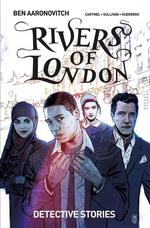
Rivers of London: Detective Stories
3.5 Stars
Rivers of London, Volume 4: Detective Stories by Andrew Cartmel, Ben Aaronovitch, Lee Sullivan
Brief flashbacks showing what Peter et al. get up to between novels/comic series. A fun idea, well executed. Would enjoy another one like this.
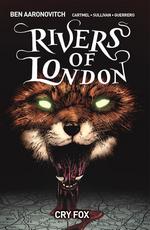
Cry Fox
3.5 Stars
Rivers of London Volume 5: Cry Fox by Andrew Cartmel, Ben Aaronovitch, Lee Sullivan
This was a lot of fun, and showed a new side of a cool recurring character.
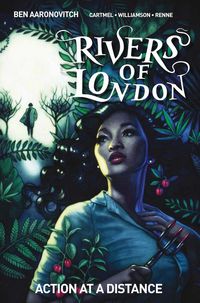
Rivers of London: Action At A Distance
3 Stars
Rivers of London: Action At A Distance by Andrew Cartmel, Ben Aaronovitch, Brian Williamson, Stefani Renne
A serial killer hunt and Nightingale backstory. Great combo.(some nice Molly material, too)
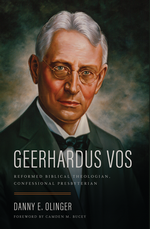
Geerhardus Vos: Reformed Biblical Theologian, Confessional Presbyterian
4 Stars
Geerhardus Vos: Reformed Biblical Theologian, Confessional Presbyterian by Danny E. Olinger
A biography and a discussion of his Vos’ major works. This was an excellent way to gear up for my 2019 Vos reading. Inspirational stuff.
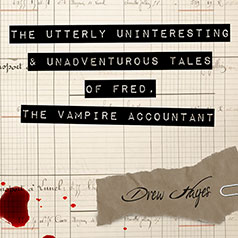
The Utterly Uninteresting and Unadventurous Tales of Fred, the Vampire Accountant
3 Stars
The Utterly Uninteresting and Unadventurous Tales of Fred, the Vampire Accountant by Drew Hayes, Kirby Heyborne (Narrator)
A light Urban Fantasy about misfit monsters. Enjoyable enough to come back for more.
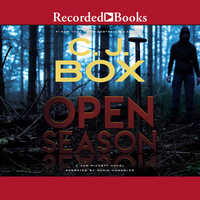
Open Season
4 Stars
Open Season by C. J. Box, David Chandler (Narrator)
Series Debut about a WY Game Warden with a nose for mystery. Loved the dual POVs (Pickett, his daughter). Addicting.
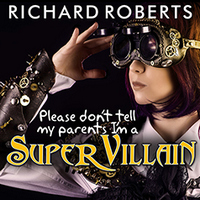
Please Don't Tell My Parents I'm a Supervillain
3 Stars
Please Don’t Tell My Parents I’m a Supervillain by Richard Roberts, Emily Woo Zeller (Narrator)
A cute story about kids of super-heroes/super-villains trying to get started in the biz without their parents’ involvement. Went on longer than it needed to, but fun enough to try volume 2.
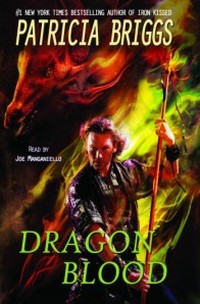
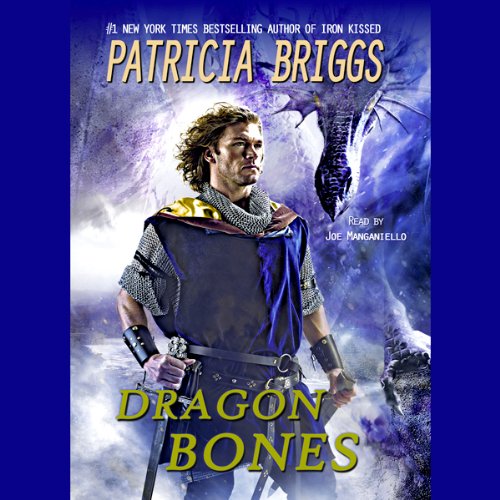
Dragon Blood
3 Stars
Dragon Bones by Patricia Briggs, Joe Manganiello (Narrator)
Manganiello is a great choice for narrator. Nice little stand-alone fantasy story. Great dragons.
Savage Run
3.5 Stars
Savage Run by C. J. Box, David Chandler (Narrator)
Almost as good as the first Pickett novel. Mrs. Pickett gets to shine here, too. I’m so glad I finally got to this series.
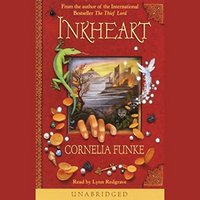
Inkheart
3 Stars
Inkheart by Cornelia Funke, Lynn Redgrave (Narrator)
Gets a bit redundant, but I loved the concept. Better than the movie (which I kind of liked), but still could’ve been better.
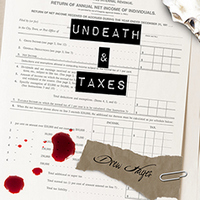
Undeath and Taxes
3 Stars
Undeath and Taxes by Drew Hayes, Kirby Heyborne (Narrator)
A little better than the first volume, an enjoyable way to spend a few hours.
Dragon Bones
3 Stars
Dragon Blood by Patricia Briggs, Joe Manganiello (Narrator)
OK, so Dragon Bones wasn’t a stand-alone. Could’ve been, but it was nice to get a little more with these characters/this world. Still, give me a Briggs Urban Fantasy above this.
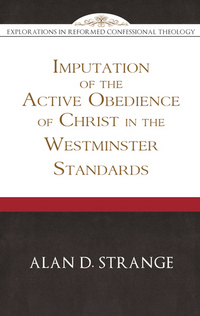
The Imputation of the Active Obedience of Christ in the Westminster Standards
4 Stars
The Imputation of the Active Obedience of Christ in the Westminster Standards by Alan D. Strange
I love this series. Strange packs so much material into this tiny package. Excellent stuff.
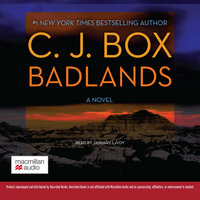
Badlands
3 Stars
Badlands by C. J. Box, January LaVoy (Narrator)
Cassie takes over The Highway series and moves to a new Oil Town in North Dakota. Midwest Winter, Drugs, Murder, Corruption and Too Much Money wreak havoc on her first week on the job.
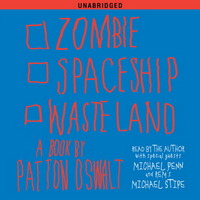
Zombie Spaceship Wasteland (Audiobook)
3.5 Stars
Zombie Spaceship Wasteland: A Book by Patton Oswalt (Audiobook)
The memoir chapters are nice, the comedic bits are odd (and funny). An interesting look at Oswalt.
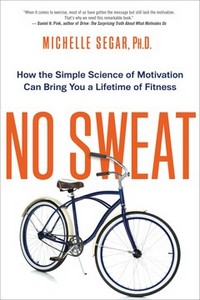
No Sweat
3 Stars
No Sweat: How the Simple Science of Motivation Can Bring You a Lifetime of Fitness by Michelle Segar, Ph.D.
A great way to look at keeping (or getting) yourself motivated to exercise.

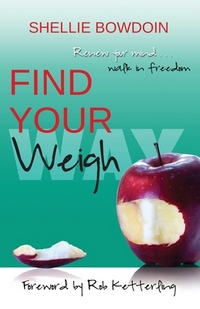
Find Your Weigh by Shellie Bowdoin: A No-Nonsense, but not overly-demanding, approach to Eating right/Weight loss

Find Your Weigh

Find Your Weigh: Renew Your Mind & Walk In Freedom

by Shellie Bowdoin

eARC, 239 pg.
2020

Read: December 21-23, 2019

Grab a copy from your local indie bookstore!

It’s that time when people are hitting the gym, starting diets, and doing all the sorts of things you do at the beginning of the year to “improve” themselves (seriously, having a hard time getting a parking spot at the gym). So it’s also the time for books on exercise, eating well, wellness in general to come out, enter Find Your Weigh. Bowdoin combines sage advice about eating/food/etc. with spiritual guidance.

When it comes to the Food aspects of the book, this is really good. Bowdain doesn’t try to impress with a lot of statistics, research articles and so on. Instead, she talks about her own experiences and then applies what she learned from them to provide examples for the book. Which isn’t to say that she didn’t do her homework, it’s there, but she doesn’t shove it in the reader’s face.

She covers things like honest expectations, mental blocks, habit formation, and the way to approach it all wisely. She does it in a friendly outgoing voice. She’s full of encouragement. She’s got plenty of tips and tricks to help you think about your weight and the effective ways to deal with it. There’s just so much here that is commendable that it’s hard to get into it all without making anyone getting the book on their own moot.

I’ll admit, if I’d known Bowdoin was going to try to bring the Bible into this, I’d have passed on the book. I have little patience for “Christian” diet books. It’s not that I don’t think the Bible is silent on health/diet/etc., but you’re not going to get much more than a pamphlet out of it, unless you’re going to trace themes about feasting, celebration, prayer, fasting, contentment, and so on then apply them via good and necessary consequence.

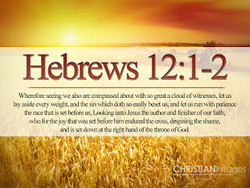
But, Bowdoin did bring the Bible up, so I feel compelled to address it. If she used the Scriptures correctly once, I didn’t notice it. And I’m not talking about holding/teaching a disputed idea from an unclear text. I’m talking about wholescale violence to the text and context she cites from. For example, Romans 7 is not about “learned helplessness” or the struggle against impulses to eat less-than-healthy food, it’s about the mortifying of sinful flesh; the discipline in Hebrews 12 is not self-discipline, but correction from our Heavenly Father; and so on.

If you ignore the Biblical citations/applications (and it’s easy to do, I wish I had), this is a really good book. It’s full of the voice of experience, compassion, and common sense. Written in a way that will likely draw you in, and help you to see how you can eat/act healthier. At the very least, it’s worth a glance (and probably more). This isn’t a once-sized-fits-all approach, but a toolbox that will have a lot of what you need to deal with the problem at hand.

Disclaimer: I received a copy of this book from the author in exchange for this post and my honest opinion.


3 Stars

This post contains an affiliate link. If you purchase from it, I will get a small commission at no additional cost to you. As always, opinions are my own.

My Favorite Theology/Christian Living Books of 2020

I read a lot of good, inspirational, thoughtful and devotional work this year, but these were the ones that stuck out in my mind. I’d encourage the careful reading of all of them.

(in alphabetical order by author)

None GreaterNone Greater: The Undomesticated Attributes of God

by Matthew Barrett

I haven’t had a chance to write about this book yet, but it’s great. Barrett provides a wonderful tool to introduce believers of all ages/background to the main attributes of God to shape belief and practice. It’s a corrective, but not scoldy. It’s deep, but not hard to understand. It appreciates mystery and doesn’t try to overexplain anything but it also grapples with what we’re given to understand. I’ll say more in a week or two, but for now, just know it’s one of the best things I read last year.

4 Stars

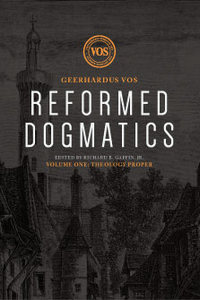
Reformed Dogmatics, Volume 1: Theology ProperReformed Dogmatics, Volume 1: Theology Proper

by Geerhardus Vos, Richard B. Gaffin, Jr. (Translator and Editor)

My original post
Yeah, it’s only a picture of one of the volumes (but they all pretty much look alike). This set concisely, yet comprehensively, discusses the major theological loci in a way that’s scholarly and yet warm and practical.

5 Stars

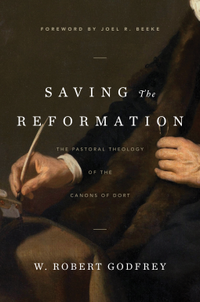
Saving the Reformation: The Pastoral Theology of the Canons of DortSaving the Reformation: The Pastoral Theology of the Canons of Dort

by W. Robert Godfrey

My original post
This look at the Synod of Dort, as well as the Canons produced by it, is well-researched, careful, encouraging and pastoral—this is not dry and dusty history, nor dry and dusty doctrine. This book, like the Synod it focuses on, seeks to defend, protect and further the cause of the Protestant Reformation, the Gospel itself. As such, it succeeds and you’d do well to study it.

5 Stars

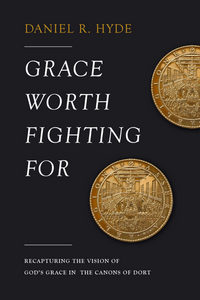
 Grace Worth Fighting ForGrace Worth Fighting For: Recapturing the Vision of God’s Grace in the Canons of Dort

by Daniel R. Hyde

My original post
Is a fantastic companion to the previous book. Hyde focuses on the Canons themselves and what they’re getting at, showing how Church History developed those ideas to this point and how the Reformed church built on them. I didn’t expect anything to beat the Godfrey volume in this year where we got multiple books (thanks to the Canons’s anniversary), but this one did. it’s warm, pastoral and approachable. Anyone over 13 should have no problem with it. Sure, some of the topics will leave some scratching their heads and pondering for a while, but that’s because these are weighty, thought-provoking topics, not because of Hyde’s text. I may have read a better theological book this year, but I can’t think of it off the top of my head. This is simply excellent—rich theology, rich application, solid history, smartly writing, occasionally stirring.

5 Stars

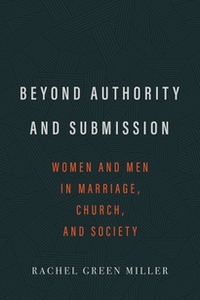
Beyond Authority and SubmissionBeyond Authority and Submission: Women and Men in Marriage, Church, and Society

by Rachel Green Miller

My original post
This book made me re-examine a lot—and will probably continue to do so as I mull on what she has to say (and I’ll probably find a lot to disagree with ultimately, and a lot to agree with—as it ought to be). How much of what I think about how women and men should interact with each other (in the home, Church and society) comes from Scripture and how much from the culture? How much of what I think it means to be a man or what it means to be a woman has more to do with Ancient Greek culture or the Victorians? (more than it should). The core of the message should be heard and weighed, and hopefully, after the hubbub around its publication has died down a bit, we can start to deal with it.

4 Stars

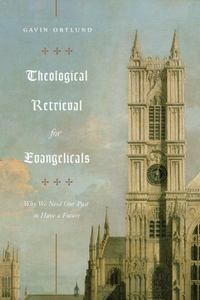
Theological Retrieval for EvangelicalsTheological Retrieval for Evangelicals: Why We Need Our Past to Have a Future

by Gavin Ortlund

My original post
A fantastic mix of theory and practice—showing why and how Evangelicals should mine the treasures of the past to shape the theology of today and tomorrow.

4 Stars

The Imputation of the Active Obedience of Christ in the Westminster StandardsThe Imputation of the Active Obedience of Christ in the Westminster Standards

by Alan D. Strange

I was sure I’d written a post about this book, and was embarrassed to discover that I hadn’t—I somehow let this not be included in the November Retrospective, too. This is why I don’t get paid for this blog, folks.

Anyway, Strange packs a lot into this 176 page tome. It is dense. But somehow, it’s also an easy read. He explores the historical debate—particularly around the Westminster Assembly—around this doctrine and explains why the Standards express things the way they do. Then he applies it to contemporary debate in a straightforward manner. Pound for pound, possibly the most helpful book I’ve read this year.

4 Stars

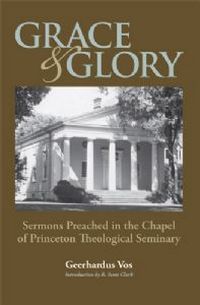
Grace & GloryGrace and Glory: Sermons Preached in the Chapel of Princeton Theological Seminary

by Geerhardus Vos

My original post
This is exactly what a collection of sermons ought to be—the language is clear, precise and almost lyrical. You can almost hear them as you read them. Solid theology, warm application and gospel-centered. My only problem with this collection is that it was so short.

5 Stars

Books that almost made the list (links to my original posts for those I wrote about): The Future of Everything: Essential Truths about the End Times by Willaim Boekestein, The Whole Armor of God: How Christ’s Victory Strengthens Us for Spiritual Warfare by Iain M. Duguid, Rediscovering the Holy Spirit: God’s Perfecting Presence in Creation, Redemption, and Everyday Life by Michael S. Horton, The Prayers of Jesus by Mark Jones, and Baptism: Answers to Common Questions by Guy M. Richard.

Reformed Dogmatics (5 vols.) by Geerhardus Vos, Richard B. Gaffin Jr.: A Twentieth-Century Classic for Heart and Mind Alike

This is going to be a record-setting header section here, get your scrolling finger ready..
—

Reformed Dogmatics, Volume 1: Theology Proper

Reformed Dogmatics, Volume 1: Theology Proper

by Geerhardus Vos, Richard B. Gaffin, Jr. (Translator and Editor)
Hardcover, 256 pg.
Lexham Press, 2012
Read: January 6-February 17, 2019
Grab a copy from your local indie bookstore!

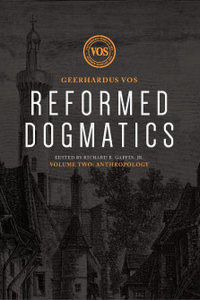
Reformed Dogmatics, Volume 2: Anthropology

Reformed Dogmatics, Volume 2: Anthropology

by Geerhardus Vos, Richard B. Gaffin, Jr. (Translator and Editor)
Hardcover, 176 pg.
Lexham Press, 2013
Read: February 24-March 31, 2019
Grab a copy from your local indie bookstore!

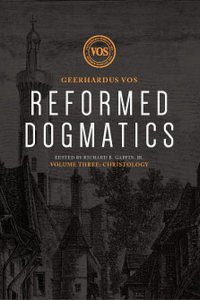
Reformed Dogmatics, Volume 3: Christology

Reformed Dogmatics, Volume 3: Christology

by Geerhardus Vos, Richard B. Gaffin, Jr. (Translator and Editor)
Hardcover, 288 pg.
Lexham Press, 2012
Read: April 7-June 23, 2019
Grab a copy from your local indie bookstore!

Reformed Dogmatics, Volume 4: Soteriology

Reformed Dogmatics, Volume 4: Soteriology

by Geerhardus Vos, Richard B. Gaffin, Jr. (Translator and Editor)
Hardcover, 272 pg.
Lexham Press, 2012
Read: June 30-August 25, 2019
Grab a copy from your local indie bookstore!

Reformed Dogmatics, Volume 5: Ecclesiology, the Means of Grace, Eschatology

Reformed Dogmatics, Volume 5: Ecclesiology, the Means of Grace, Eschatology

by Geerhardus Vos, Richard B. Gaffin, Jr. (Translator and Editor)
Hardcover, 352 pg.
Lexham Press, 2016
Read: September 1-November 24, 2019
Grab a copy from your local indie bookstore!


Why am I talking about this as a set instead of individual volumes? That’s a decent question, but I guessed when I finished Volume 1 that I’d end up saying the same things each time. And now looking back on the set, I think I agree. Sure, I could’ve talked some in some more detail about each one, but I’m not sure there’d have been a lot of profit in that for anyone reading this.

Honestly, what I should do here is just post a link to Lane Tipton’s review/article, Vos’s Reformed Dogmatics and be done with it. Lipton says in two paragraphs, what I would flail around for 10-12 paragraphs to say:

Richard B. Gaffin Jr.’s editorial oversight of the translation of Geerhardus Vos’s Gereformeerde Dogmatiek has brought to light yet another theological treasure from perhaps the finest Reformed theologian since Calvin. The sustained depth of penetration of the traditional loci of systematic theological discussion is coupled with the warmth of a theological reflection pursued in vital communion with the absolute, triune God through Spirit-gifted, faith-union with Christ. This renders it ideal for both seminary instruction and devotional reading.

On the one side, Vos’s work displays the proper, and it seems to me necessary, task of retrieving creedal doctrine in the preservation of Christian theology. On the other side, his work displays the proper, and it seems to me equally necessary, task of reforming that creedal doctrine in the formulation of a confessionally constructive, Reformed theology, tethered to its preceding creedal and confessional expressions, yet advancing organically beyond both, through biblical and systematic theological methods of interpreting the inerrant Scriptures. Vos not only expounds orthodox creedal theology in a faithful way, but, within the boundaries of confessionally Reformed theology, he advances that confessional theology with unparalleled insight. His work presents us with an orthodox, yet constructive, expression of the truth of the Scriptures that faithfully serves to instruct the church in the gospel of Jesus Christ.

But just pointing to (and/or reposting) Tipton would be cheating, albeit efficient. So let’s see what I can say.

This was my big project read for the year and was so worth it. As Tipton said, it’s great devotional reading—and you even learn a little bit. Okay, that’s a gross understatement, you can learn a great deal from these (relatively) slim volumes.

Vos displays a fantastic economy of words here—especially if you contrast his Dogmatics with, say, Bavinck. He’s basically the Hemingway of Reformed Theology. There are no wasted words here, he says everything he needs to say and you rarely say to yourself, “I wished he’d covered something more thoroughly.” The segment on Individual Eschatology, however, works as an example of something he could’ve done more with—if you ignore his addressing the errors like purgatory, soul sleep, and annihilation, there’s practically nothing there.

The downside to his style and vocabulary is, like Hemingway, you can look at his writing and think “oh, this is simple and basic” and read too quickly and without reflection. This is a giant mistake. Vos is subtle. He’s profound. He’s also, thankfully, clear. You read this carefully and you’ll benefit greatly.

As the titles of the individual volumes suggest, he covers the major loci, and not much else. But he covers everything you’d need to cover in those, the topics covered are:

bullet The Knowability of God
bullet Names, Being, and Attributes of God
bullet The Trinity
bullet Of God’s Decrees in General
bullet The Doctrine of Predestination
bullet Creation
bullet Providence
bullet The Nature of Man
bullet Sin
bullet The Covenant of Grace
bullet Names of Christ
bullet Person and Natures of Christ
bullet Offices of Christ
bullet States of Christ
bullet The Ordo Salutis
bullet Regeneration and Calling
bullet Conversion
bullet Faith
bullet Justification
bullet Sanctification
bullet The Doctrine of the Church
bullet Essence of the Church
bullet Organization, Discipline, Offices of the Church
bullet The Means of Grace
bullet Word and Sacraments
bullet Baptism
bullet The Lord’s Supper
bullet Eschatology: The Doctrine of Last Things
bullet Individual Eschatology
bullet General Eschatology

Which looks like a lot for so few pages, but Vos somehow pulls it off.

I expected that I’d have a favorite volume or two out of the set, but I really didn’t. There were sections within each I found more interesting/useful to me, but I am willing to bet that your list would vary from mine. Except maybe the section on the covenants in Volume 2, I can’t imagine there’s anything else in that one nearly as interesting to anyone. Not that the rest of the volume is lacking or uninteresting, it’s just that it’s so good.

The book is clearly written for his Dutch-speaking students in Michigan, focusing on that Church Order and controversies in contemporary Holland. So there are bits and pieces of it that will seem awfully foreign to those of us not in those circles. But even those parts have something we can profit from if we don’t get too bogged down in trying to suss out names/positions/etc.

Gaffin does provide the occasional footnote to explain the text or translation choice, but he’s largely silent, letting Vos speak for himself. I wouldn’t have minded a little more commentary, but honestly, it wasn’t necessary (but maybe was helpful).

I’m glad I read this and will be returning to it in years to come, both for reference and re-reading. I’m also glad that I found an electronic copy on sale over a year ago, so I can keep it on my phone for easy reference. One side-benefit of his pithiness is that you can do a quick check on the high points while having a conversation (something you can’t do so easily with Hodge, Turretin or Bavinck). Scholarly, yet approachable, simple and profound—oh, and piously orthodox–I really can’t recommend it highly enough.


5 Stars

2019 Cloud of Witnesses Reading Challenge
This post contains affiliate links. If you purchase from one, I will get a small commission at no additional cost to you. As always, opinions are my own.
Page 25 of 33

Powered by WordPress & Theme by Anders Norén